University of Pennsylvania
ScholarlyCommons
Publicly Accessible Penn Dissertations
2018
The Network Dynamics Of Social Influence In The
Wisdom Of Crowds
Joshua Becker
University of Pennsylvania, [email protected]
Follow this and additional works at:
https://repository.upenn.edu/edissertations
Part of the
Communication Commons
,
Organizational Behavior and Theory Commons
, and the
Quantitative, Qualitative, Comparative, and Historical Methodologies Commons
This paper is posted at ScholarlyCommons.https://repository.upenn.edu/edissertations/2892 For more information, please [email protected].
Recommended Citation
Becker, Joshua, "The Network Dynamics Of Social Influence In The Wisdom Of Crowds" (2018).Publicly Accessible Penn Dissertations. 2892.
The Network Dynamics Of Social Influence In The Wisdom Of Crowds
Abstract
Research on the wisdom of crowds is motivated by the observation that the average belief in a large group can
be accurate even when group members are individually inaccurate. A common theoretical assumption in
previous research is that accurate group beliefs can emerge only when group members are statistically
independent. However, network models of belief formation suggest that the effect of social influence depends
on the structure of social networks. We present a theoretical overview and two experimental studies showing
that, under the right conditions, social influence can improve the accuracy of both individual group members
and the group as a whole. The results support the argument that interacting groups can produce collective
intelligence that surpasses the collected intelligence of independent individuals.
Degree Type
Dissertation
Degree Name
Doctor of Philosophy (PhD)
Graduate Group
Communication
First Advisor
Damon Centola
Keywords
collective beliefs, collective intelligence, forecasting, social network, team decision-making, wisdom of crowds
Subject Categories
Communication | Organizational Behavior and Theory | Quantitative, Qualitative, Comparative, and
Historical Methodologies
THE NETWORK DYNAMICS OF SOCIAL INFLUENCE IN THE WISDOM OF CROWDS
Joshua Becker
A DISSERTATION
in
Communication
Presented to the Faculties of the University of Pennsylvania
in
Partial Fulfillment of the Requirements for the
Degree of Doctor of Philosophy
2018
Supervisor of Dissertation
________________________
Damon Centola
Associate Professor, Annenberg School Associate Professor, School of Engineering
Faculty, Warren Center for Network and Data Sciences University of Pennsylvania
Graduate Group Chairperson
________________________
Joseph Turow
Robert Lewis Shayon Professor of Communication Associate Dean for Graduate Students
University of Pennsylvania
Dissertation Committee
Damon Centola, Associate Professor of Communication, Associate Professor School of Engineering
Sandra Gonzalez-Bailon, Assistant Professor of Communication
ii
To my partner, Shaina
and my advisor, Damon
both of whom challenged me like nobody else
and showed remarkable patience
and to my parents
iii
ACKNOWLEDGMENTS
This dissertation was made possible by the Wharton Risk Center Russell Ackoff Fellowship at the
University of Pennsylvania, and by the Annenberg School for Communication at the University of
Pennsylvania. I would also like to acknowledge invaluable intellectual contributions by Devon
Brackbill, who co-authored Chapter 2, and all of the Network Dynamics Group at the University of
iv
ABSTRACT
THE NETWORK DYNAMICS OF SOCIAL INFLUENCE IN THE WISDOM OF CROWDS
Joshua Becker
Damon Centola
Research on the wisdom of crowds is motivated by the observation that the average belief in a
large group can be accurate even when group members are individually inaccurate. A common
theoretical assumption in previous research is that accurate group beliefs can emerge only when
group members are statistically independent. However, network models of belief formation suggest
that the effect of social influence depends on the structure of social networks. We present a
theoretical overview and two experimental studies showing that, under the right conditions, social
influence can improve the accuracy of both individual group members and the group as a whole.
The results support the argument that interacting groups can produce collective intelligence that
v
TABLE OF CONTENTS
ACKNOWLEDGMENTS ... III
ABSTRACT ... IV
LIST OF TABLES ... VIII
LIST OF ILLUSTRATIONS ... IX
PREFACE ... X
CHAPTER 1: THE WISDOM OF CROWDS ... 1
Abstract ... 1
Introduction ... 1
Statistical Foundations for the Wisdom of Crowds ... 5
The Diversity Prediction Theorem ... 5
Correlation Framework for the Wisdom of Crowds ... 6
Types of Estimation Problems... 7
Independence and the Wisdom of Crowds... 8
Maximizing the Accuracy of Aggregation Estimates ... 10
Aggregation Methods ... 10
Triangulating Multiple Data Types ... 11
Prediction Markets ... 13
Diversity and Group Composition ... 14
The Social Dynamics of Collective Beliefs ... 15
Herding and Groupthink ... 17
The Delphi Method ... 18
Numeric Estimates in Networks ... 19
Binary Beliefs in Networks ... 21
vi
Relationship to Other Forms Collective Intelligence ... 23
Problem Solving ... 24
Coordination ... 25
Conclusion ... 26
CHAPTER 2: NETWORK DYNAMICS OF SOCIAL INFLUENCE IN THE WISDOM OF
CROWDS... 28
Abstract ... 28
Introduction ... 28
Social Influence and the Wisdom of Crowds ... 30
Formal Model of Social Influence ... 34
Theoretical Predictions ... 35
Experimental Design ... 36
Estimation Tasks. ... 38
Experimental Analysis ... 38
Results ... 39
Social Influence in Decentralized Networks ... 39
Comparison with Control Condition ... 44
Social Influence in Centralized Networks ... 46
Robustness ... 48
Discussion ... 48
Appendix A: Estimation Tasks and Subject Experience ... 49
Appendix B: Theoretical Predictions for Social Influence in the Wisdom of Crowds ... 51
Model Definition ... 51
Social Influence in Decentralized Networks ... 55
Effect of Centralization on Group Accuracy ... 55
Robustness to Variation in Density and Average Degree ... 56
Appendix C: Supplemental Figures ... 57
CHAPTER 3: FROM EFFICIENT MARKETS TO EFFECTIVE INVESTORS
–
INDIVIDUALS AND THE WISDOM OF CROWDS ... 63
Abstract ... 63
Introduction ... 64
vii
Social Influence and the Wisdom of Crowds ... 69
The Wisdom of Financial Crowds ... 71
Methods ... 74
Experimental Design ... 75
Subject Experience. ... 77
Analysis ... 77
Results ... 78
Effect of Social Information on Group Beliefs ... 79
Effect of Social Information on Individual Accuracy ... 80
Who benefits from the wisdom of crowds? ... 81
How does social influence shape forecast accuracy? ... 83
Discussion ... 84
Conclusion ... 86
Appendix A: Theoretical Predictions for the Effect of Social Influence ... 87
Appendix B: Experimental Design Details ... 89
CONCLUSION ... 91
Social Influence in Decentralized Networks. ... 91
Centralization. ... 93
Limiting Assumptions and Next Steps. ... 95
viii
LIST OF TABLES
Tables in Chapter 3
Table 1. Change in individual error as a function of response to social information
ix
LIST OF ILLUSTRATIONS
Figures in Chapter 2
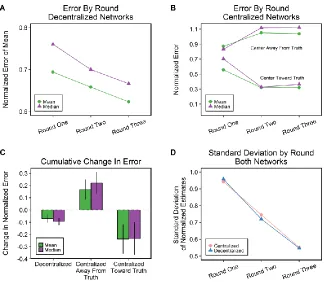
Figure 1. Effect of social influence on group accuracy
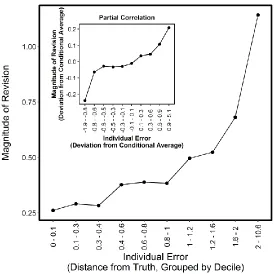
Figure 2. Correlation between revision magnitude and individual error
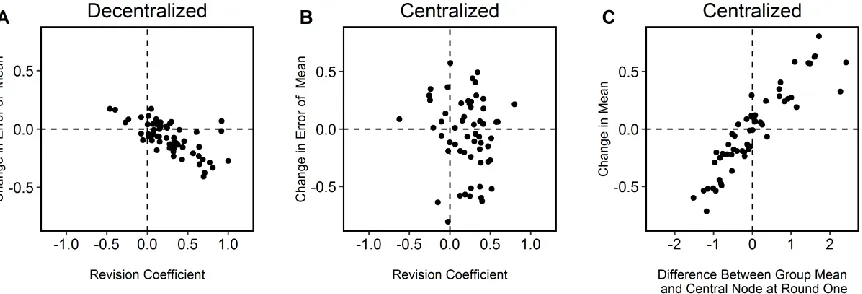
Figure 3. Correlations with changes in group mean.
Figure A1. Screenshot of the experimental interface.
Figure A2. Theoretical effect of social influence on the group mean.
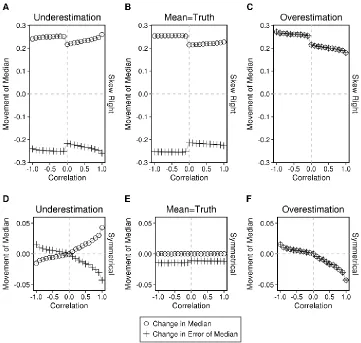
Figure A3. Theoretical effect of social influence on the group median.
Figure A4. Theoretical effect of network centralization.
Figure A5. Theoretical effect of network density.
Figure A6. Theoretical effect of average degree.
Figure A7. Power test based on data reported in previous experiments.
Figures in Chapter 3
Figure 1. Effect of social influence on individual accuracy.
Figure 2. Effect of social influence based on each individual’s initial accuracy.
Figure A1. Theoretical effect of social influence on individual accuracy.
x
PREFACE
Research on the “wisdom of crowds” is motivated by the observation that the average belief of a
large group of people can be surprisingly accurate, even when the group is composed of members
who are individually inaccurate. Due to the theoretical importance of informational diversity, a key
premise in prior research on the wisdom of crowds has been that groups will be accurate only when
their members are statistically independent (Hong, Du, Wang, Fan, & Xu, 2016; Lorenz, Rauhut,
Schweitzer, & Helbing, 2011; Nofer & Hinz, 2014). Intuitively, this claim is based on the idea that
people who are independent have errors who are independent, and therefore those errors will
cancel out in large numbers. When people influence each other, conformity pressure can produce
herding dynamics (Banerjee, 1992) and groupthink (Janis, 1982), undermining the wisdom of
crowds (Surowiecki, 2004).
In contrast with this common theoretical assumption, this dissertation argues that a careful
examination of the theoretical principles underpinning the wisdom of crowds suggests that social
influence will not always undermine group accuracy. Instead, I argue that the effect of social
influence on belief accuracy is contingent on the structure of social networks, and that social
influence can improve belief accuracy when mediated through structured information exchange. In
order to test this theory, we conduct two experiments using an online platform in which subjects
completed estimation tasks both before and after observing the belief of others. In each
experiment, we also study a control group, in which subjects revise their beliefs without social
information. This design allows us to compare independent belief formation with social belief
formation, thus controlling for any individual learning process. The first experiment uses general
xi
studies a task of practical interest—financial forecasting—and the analysis focuses on individual
accuracy.
This dissertation begins with a review of research on the wisdom of crowds, presented in
Chapter 1. In order to present a comprehensive description of group belief formation, this first
chapter not only reviews previous research but also draws on the results of the experiments
described in this dissertation, placing them in context with the broader literature. In this chapter, I
argue that research on the wisdom of crowds can be described in terms of two theoretical
orientations. Research on “collected intelligence” follows a crowdsourcing paradigm which
aggregates the collected beliefs of many independent individuals, using psychological and
statistical principles to extract the most accurate estimate possible. In contrast, research on
“collective intelligence” studies the social processes of belief formation, and shows how groups can
process information in ways that cannot be reduced to a statistical aggregation of independent
individuals. I argue on this basis that statistical models of belief formation cannot be fully defined
using the distribution of individual member characteristics alone, which assumes that individuals
are independent conditional on those characteristics. Though this approach often serves as a
useful approximation, a complete explanation of group belief formation must also account for the
social network structure. Network models of belief formation demonstrate that no one person’s
belief can be predicted without knowing the beliefs of their peers, whose beliefs in turn depend on
their peers, and so on, such that the entire network shapes a single individual’s belief.
Following this review, Chapter 2 describes an experiment designed to test the effect of
social influence on the accuracy of the average belief in a group. This study describes novel
theoretical results showing how social influence can improve the accuracy of the average belief in
a group, but only when groups are embedded in social networks where each individual is connected
to an equal number of others (a “decentralized” social network). In contrast, when groups are
characterized by the presence of disproportionately influential members (a “centralized” social
network), the accuracy of the group depends only on the accuracy of those highly influential
xii
One key principle of the wisdom of crowds is that the accuracy of the average belief is
mathematically distinct from the average accuracy of individual beliefs—i.e., the error of the
average is not equivalent to the average error. This statement, of course, reflects the core principle
of crowd wisdom—groups can be accurate even when individuals are inaccurate. However, this
statement also means that special care must be taken not only to understand how social influence
impacts group-level (average) beliefs, but also to understand how social influence impacts
individual beliefs. Chapter 3 presents an analysis designed to specifically examine the role of
social influence on individual accuracy. This chapter also tackles another limitation of the
experiment described in Chapter 2: while Chapter 2 describes an experiment in which subjects
complete simple trivia-like estimation tasks (e.g., counting the number of gumballs in a jar), the
experiment in Chapter 3 tests the wisdom of crowds in a context of practical importance: financial
forecasting.
Although each chapter in this dissertation is intended to stand alone as an academic paper
(and thus some theoretical repetition should be expected) they also work in concert to form a
coherent whole, a single thesis. Taken together, the research presented in this dissertation
advances our understanding of the wisdom of crowds in several ways. Chapter 2 builds on a
model of the wisdom of crowds (DeGroot, 1974) which predicts that social belief formation is
governed by network structure. As described in Chapter 1, this model in its simplest form predicts
that decentralized networks will converge directly on the mean of independent beliefs, such that
social influence neither helps nor harms group accuracy. However, we found empirically that
individuals who were more accurate also were less responsive to social influence. Simulations
described in Chapter 2 predict that this process will lead to a systematic increase in the accuracy
of the average belief in a group, when that group is embedded in a decentralized network. Thus,
chapter 2 not only provides an empirical test of network theories of social influence, but also
contributes a novel and empirically motivated theoretical prediction: social influence can improve
xiii
The results described in Chapter 3, however, do not replicate this finding: in this
experiment, groups appear to converge directly on the mean of independent beliefs. While we
cannot rule out the possibility of Type II error (i.e., the effects may simply be too weak to observe
given the inherent noise associated with financial forecasting, or the observation that groups were
accurate to begin with) the results presented in Chapter 3 ultimately serve to highlight an incredibly
robust principle of the wisdom of crowds: individuals are nearly always going to become more
accurate as a result of information exchange, even when the average belief does not change
appreciably. In simulation, we find that increased accuracy of individuals is a robust phenomenon
that is expected to hold under a wide range of empirically plausible assumptions. As discussed in
both Chapter 1 and Chapter 3, the theoretical prediction that social influence can improve the
accuracy of individuals follows very directly from the statistical principles of the wisdom of crowds.
Nonetheless, this theoretical prediction is remarkably absent from prior research on the wisdom of
crowds, and thus offers a novel and important theoretical contribution.
Taken together, the theoretical and empirical results presented in this dissertation provide
a crucial correction to previous research on the wisdom of crowds, which commonly assumed that
social influence undermines the wisdom of crowds. In contrast with this common assumption, the
results presented here demonstrate that social influence in structured networks can improve belief
1
CHAPTER 1: THE WISDOM OF CROWDS
Abstract
The wisdom of crowds is an empirical phenomenon that occurs when the average belief in a large
group is accurate even when individuals are inaccurate. Although large groups are not guaranteed
to produce accurate beliefs, statistical principles guarantee that the group belief will always be more
accurate than the belief of a randomly selected individual. In this review, we describe research on
the wisdom of crowds, observing that theoretical and empirical studies can be grouped into two
general paradigms. Under the "collected intelligence" paradigm, researchers collect data from
individuals, ideally independent, in order to generate aggregated crowd-sourced estimates. Under
the "collective intelligence" paradigm, researchers examine how social processes shape belief
formation in ways that cannot be explained solely in terms of the statistical distribution of
independent individuals. This latter body of research has found that groups can actively process
information to produce estimates that are more accurate than the aggregated beliefs of
independent individuals. We argue that the wisdom of crowds represents a distinct social
phenomenon, and we distinguish research on belief accuracy from social learning, collective
problem solving, and coordination in networks.
Introduction
Research on the wisdom of crowds is motivated by the observation that the average belief in a
large group of people can be surprisingly accurate, even when group members are individually
inaccurate. This remarkable observation was made unexpectedly by Galton in 1907, who expected
to find the ignorance of crowds, and the wisdom of crowds and has since been observed in a wide
2
medical diagnoses (Kurvers et al., 2016; Wolf, Krause, Carney, Bogart, & Kurvers, 2015), visual
search tasks (Juni & Eckstein, 2017), geopolitical forecasting (Atanasov et al., 2016a; Mellers et
al., 2014), and sports betting (Herzog & Hertwig, 2011; Peeters, 2018). Although the wisdom of
crowds is an empirically motivated phenomenon, the ability for groups to generate accurate
judgements can be theoretically explained by a set of basic statistical principles. One key principle
is known as the “crowd beats average” law (Page, 2007) and can be derived readily from the
well-known bias-variance decomposition for a statistical estimator. While these principles do not
promise any minimum accuracy for group beliefs, they do provide a mathematical guarantee that
the crowd belief, measured as the mean of individual beliefs, will be always more accurate than the
belief of an average individual.
Early efforts to replicate this finding measured simple laboratory tasks such as estimating
the weight of objects (Bruce, 1935; Gordon, 1924) and identifying the temperature in a classroom
(Knight, 1921 as cited by Klugman, 1945). Belief aggregation has since shown a great deal of
potential for practical application. Wolf et al (2015) tested several methods to pool the judgements
of radiologists classifying mammography screenings, finding that no matter what aggregation rule
was used, the pooled judgement provided both a greater number of true positives (correct
identifications of cancer) and fewer false negatives (incorrect categorizations as healthy) than a
randomly selected individual. These findings have been replicated with other classification tasks,
including other medical procedures (Wolf et al., 2015) and are expected to hold for more general
tasks such as surveillance and search-and-rescue (Juni & Eckstein, 2017). Sports fans (Peeters,
2018) and amateur financial analysts (Nofer & Hinz, 2014) have also been found to demonstrate
the wisdom of crowds, and it is likely that aggregated beliefs will continue to be found useful for
many types of estimates.
One particular area of interest is the prediction of future events. In 1944, Klugman (1947)
surveyed soldiers to estimate when armistice would be reached in World War II. They found that
3
beliefs have become a common tool for forecasting the outcome of democratic elections (Murr,
2015), with so-called “citizen forecasts” outperforming even formal statistical models when properly
calibrated (Graefe, 2014). In addition to geopolitical forecasting, estimate aggregation has become
a widely adopted method for economic forecasting. Economic forecasts can range from
macro-level predictions about metrics such as GDP (Jansen, Jin, & de Winter, 2016; Mellers et al., 2014)
to firm-specific forecasts for such metrics as earnings and revenue (Drogen & Jha, 2013). It is
important to note that in the context of economic forecasting, predictions are not only based on
subjective estimates but are also based on formal statistical models. Clemen (1989) notes that
researchers have reached nearly unanimous agreement that the combination of estimates—
whether formal models, subjective beliefs, or a combination of the two—produces more accurate
estimates than any individual or model alone. Whether subjective human judgement alone can
outperform formal models depends on circumstances. Jansen et al. (2016) found that under typical
market conditions where statistical models can be well calibrated with reliable data, formal
statistical models outperform human judgement. However, they argue that human judgement
offers better predictions than formal models under atypical conditions such as economic crises,
when the assumptions of formal models break down.
A common explanation for the wisdom of crowds is that each individual forms some belief
about the state of the world, plus or minus some individual error term, such that collections of
independent individuals have independent errors that cancel out in large groups (Hogarth, 1978; L.
Hong & Page, 2009). One prominent research paradigm, building on this statistical premise,
attempts to identify how to best use crowd-sourced beliefs to produce accurate forecasts and other
estimates. This research tests different ways to combine individual estimates into a single
wisdom-of-crowd estimate, including methods such as weighting beliefs according to respondents
confidence (Koriat, 2012; Kurvers et al., 2016; Prelec, Seung, & McCoy, 2017) or prior accuracy
4
In contrast with this collected intelligence paradigm, in which each individual independently
contributes their perspective, a growing body of evidence has shown that groups can actively
process information to produce beliefs that are more accurate than those of independent
individuals. Research in this second paradigm shows how collective intelligence can produce
accurate beliefs through social processes that are irreducible to collections of independent
individuals. Research on social influence has not only been helpful in refining the accuracy of
aggregation methods (Kao et al., 2018; Madirolas & de Polavieja, 2015), but is also important to
understanding situations where the outcome of interest is endogenous belief formation, rather than
an estimate generated by an outside party. Even when the ability for an outside aggregator to form
accurate beliefs is of little interest, the population distribution of beliefs may be inherently
meaningful, as in organizational behavior and democratic processes.
This article will begin by reviewing formal theoretical models of group accuracy and
discussing the notion of independence in the wisdom of crowds. Statistical models of the wisdom
of crowds do allow for correlation between individual beliefs, but nonetheless are always consistent
with the assumption that individuals are conditionally independent. Conditionally independent
beliefs may be correlated, for example, if two people share the same information source; those
people are assumed to be independent conditional on that shared information (as in multilevel
regression). In contrast, network models of social influence show that a person’s belief at any point
in time cannot be fully explained without accounting for the beliefs of their peers and the influence
those peers have on them. After laying out this statistical framework, we review research on
estimates based on the collection of many individual beliefs. This research can be described in
terms of a statistical or machine learning framework: researchers identify and optimize a function
that maps data to an estimate. Following this section, we review theoretical models and empirical
research on the effect of social influence on belief accuracy. Finally, we close with a discussion of
related models of collective intelligence, defining the wisdom of crowds against processes such as
5
Statistical Foundations for the Wisdom of Crowds
The ability for groups (either groups of people or groups of models) to produce judgements whose
accuracy exceeds that of any individual can be explained by a model in which each individual
estimate is composed of the true value, plus an error term:
𝑥𝑖 = (θ + ε𝑖) (1)
where xi is the judgement of the ith individual, θ is the true value to be estimated, and εiis the error
of the ith individual (Hogarth, 1978; L. Hong & Page, 2009). Under the assumption that ε iis
distributed identically and independently for all individuals, and that E[ε]=0, then the expected error
of the mean—that is, collective error—will decrease as the group size increases, and approach the
true value. However, the assumption that E[ε]=0 is unlikely to hold in the vast majority of empirical
contexts. In most circumstances, people’s beliefs are subject to common cognitive biases, which
lead to systematic errors, such that a population will tend to regularly under- or over-estimate the
true value (Kahneman & Tversky, 1977; Kao et al., 2018).
The Diversity Prediction Theorem. Fortunately, a well-known statistical regularity proves that the
aggregated belief within a large population will always offer an accuracy benefit regardless of the
presence of systematic bias (L. Hong & Page, 2008; Page, 2007):
𝐸[𝑥
̅
− θ ]2= 𝐸[(
𝑥𝑖− 𝜃)
2 ] − 𝐸[(
𝑥𝑖− 𝑥̅)
2 ] . (2)Equation 2 is well known in mathematical statistics, where it shows that the bias (error) of any
estimator (in this case, the error of the group average, indicated by the leftmost term) is equal to
the mean squared error (average individual error—the first term on the right) minus the variance
(belief diversity—the second term on the right). This statement has recently become known as the
6
estimate depends on both the accuracy of individual estimates as well their variance, or “diversity.”
One important implication of this statement is that when individual error is held constant, group
error decreases as diversity decreases.
The diversity prediction theorem also provides one of the fundamental principles of the
wisdom of crowds, what Page (2007) terms the “crowd beats averages” law. This law is based on
the fact that Equation 2 leads immediately to the inequality
𝐸[𝑥
̅
− θ]2< 𝐸[(
𝑥𝑖− 𝜃)
2 ] (3)which states that the error of the average estimate in a group (of any size) will always be lower than
the average error obtained from any individual estimate alone. Thus, the average belief in a group
will always be more accurate than a randomly selected individual belief. It should be noted that
this identity applies to any sample belief distribution, and is not true only in expectation. It should
also be noted that this identity does not require individuals to be independent.
Correlation Framework for the Wisdom of Crowds. A very similar principle, drawing on statistical
principles commonly used to measure psychometric instrument reliability, describes the
advantages of aggregation in terms of correlation (Hogarth, 1978). Where equation 1 assumes
that every individual belief is drawn from the same distribution, it may also be the case the individual
beliefs come from different distributions. This variation between individual belief distributions may
emerge if individuals are exposed to different signals, for example. In the context of forecasting,
such variation may occur if individuals have access to different data regarding the predicted
outcome. This variation may emerge even if individuals have access to the same data, but interpret
that data differently, reaching different conclusions (L. Hong & Page, 2008, 2009).
Together, these concepts imply a generative model in which each person’s belief is drawn
7
for each distribution determines a person’s expected accuracy. In equation 2, expected error for
each individual is expressed in terms of mean squared error, but this concept can also be
expressed in terms of correlation with the true value. This “reliability” metric (Hogarth, 1978) for
accuracy asks: to what extent does a person’s prediction correlate with the true value? The notion
of correlation emerges from the assumption that an individual belief is drawn from some underlying
probability distribution. This correlation can be measured in practice when people make repeated
predictions over many trials (for example, predicting many future events).
In this conceptual framework, there are three correlations of interest: the reliability of the
group estimate, expressed as the correlation between the group mean and the true value; the
average reliability of the individual estimators; and the correlation between each individual
response. These three terms are related with the following equation given by Hogarth (1978):
𝜌𝑦𝑥̅ = 𝜌̅𝑦𝑥
𝜌
̅𝑥𝑖𝑥𝑗 .
(4)
This equation states that group reliability is equal to the ratio between the average individual
reliability and the correlation between individual estimates. Though equation 4 requires slightly
different assumptions and presents a different form than equation 2, it offers a very similar
statement. Equation 4 states that as average individual reliability (error) is held constant, and
inter-individual correlation is increased—thus increasing the similarity of inter-individual estimates—group
reliability (error) will decrease. In other words, the more individual beliefs are correlated, the less
advantage the group estimate offers (Hogarth, 1978).
Types of Estimation Problems. Equations 2 and 4 make no assumption about the type of random
variable to be estimated, or the conditions under which those beliefs are formed, meaning they
apply to any kind of formal model or wisdom of crowds estimate, including those generated through
8
error of the group will always be lower than the error of the average individual—holds for any type
of belief that might be empirically useful. However, it is nonetheless important to distinguish
theoretically between two basic types of estimation task. In the vocabulary of machine learning or
statistical modeling, the two primary types of estimation are regression tasks, in which data (such
as the information available to an individual) is mapped to a numeric estimate; and classification
tasks, in which data is mapped to a single binary or categorical outcome. This distinction is
important because both empirical and theoretical research on the wisdom of crowds occasionally
yield divergent results depending on the which of the two estimation tasks is being studied. For
example, as will be discussed in more detail below, empirical findings for numeric beliefs point to a
very general correlation between accuracy and self-reported confidence or response to social
influence (Becker, Brackbill, & Centola, 2017; Madirolas & de Polavieja, 2015; Moussaïd, Kämmer,
Analytis, & Neth, 2013). However, the correlation been accuracy and confidence for binary
classification tasks depends on whether common knowledge supports the correct or incorrect belief
(Koriat, 2012; Prelec et al., 2017). Further, while theoretical models of numeric estimates predict
that groups can always benefit from information exchange in networks where everyone is equally
influential, models of binary belief exchange predict that the effect of social influence depends on
the initial majority belief (Mossel & Tamuz, 2017).
Independence and the Wisdom of Crowds. When individual beliefs are assumed to be conditionally
independent, the group belief distribution can be described as a function of the population
distribution of individual characteristics such as demographic characteristics, information exposure,
expertise, and cognitive model. For example, a stock forecast might be determined by the framing
of the local news, the presence (or absence) of professional training, and the mental framework
the forecaster uses to map information to a belief. In terms of the model described above, these
factors all shape the conditionally independent probability distributions from which each individual
9
of distributions. This “collected intelligence” paradigm implies that the observed belief distribution
can be described as a function of all the potentially conditioning variables: X=
Ψ(
I) where X is thevector of individual beliefs, I is the matrix of individual characteristics, and Ψ is a function mapping
individual characteristics to individual beliefs.
While theoretical accounts of beliefs as conditionally independent generate a useful
approximation for a machine learning approach to the wisdom of crowds, these accounts do not
fully explain the formation of collective beliefs. To account for social influence, network models
describe group beliefs as a function of the initial distribution of beliefs as well as a weighted, directed
network of influence (Becker et al., 2017; DeGroot, 1974; Golub & Jackson, 2010). The effect of
social influence means that no person’s belief can be defined independently (even in expectation),
even if all of their individual characteristics are known, because each person’s belief depends not
only on the structure of the network in which they are embedded, but also on their precise location
within that network. This “collective intelligence” paradigm holds that the group belief distribution
must be defined as a function both of the distribution of individual characteristics and also the
network adjacency matrix: X= Ψ(I,A,t) where A is the network adjacency matrix and t is an index
for time, which is necessary due to the dynamic nature of belief formation in networks.
One implication of the collected intelligence paradigm, i.e. the assumption of conditional
independence, is that one sample of N people is equivalent in expectation to any other sample of
N people when the two samples are drawn from the same population: the only difference is
sampling error. However, the effective sample error of a group of N people embedded in a network
is larger than the sample error of N conditionally independent people. This difference emerges
from the fact that two identical groups can diverge as a result of social influence. Practically, this
additional variance means that researchers must take extra care when calculating standard errors
in statistical analysis. Conceptually, this additional variance means that two groups can generate
radically different beliefs even when they are composed of individuals who are in every measurable
10
outcomes is a key principle of collective intelligence versus collected intelligence. When
considering collective processes, one must not only account for the distribution of individual
characteristics, but must also account for distinctly group-level properties, most notably network
structure. Nonetheless, the assumption of crowds as collections of independent individuals
provides a useful approximation, as indicated by the large body of research on crowdsourced
estimate accuracy.
Maximizing the Accuracy of Aggregation Estimates
There are many different approaches to generating an estimate based on the collection of individual
beliefs, all of which share a methodological orientation with machine learning: parameterize an
aggregation function from a set of training data, and then apply it to new data to form estimates or
predictions. As a wisdom of crowds estimator, the sample mean is one of many possible functions.
The mean is a useful theoretical metric due both to its conceptual simplicity and it’s mathematical
tractability; the equations above, for example, are convenient in part because they apply
equivalently to both numeric estimates and classification problems. In practice, however, there are
many different ways to aggregate group beliefs. Galton (1907) studied the median, arguing that
“According to the democratic principle of ‘one vote one value,’ the middlemost estimate expresses
the vox populi, every other estimate being condemned as too low or too high by a majority of the
voters.” Immediately following Galton’s publication, Hooker (1907) raised the question of whether
the mean was a better function. A substantial amount research on the wisdom of crowds seeks to
identify optimal functions for mapping crowd-sourced data to estimations.
Aggregation Methods. Ultimately,The optimal aggregation method depends on the properties of
the underlying belief distribution (Kao et al., 2018). Although it is unlikely that there is a single
11
found to produce more accurate aggregated estimates. For the aggregation of a single distribution
of estimates, with no additional information, Kao (2018) provides evidence that task-specific biases
can be identified and corrected once certain parameters of the belief distribution are known.
Estimates can be further improved by weighting aggregated beliefs more heavily towards those
individuals who demonstrated prior accuracy (Mannes et al., 2014). Budescu and Chen (2014)
note, however, that individual accuracy alone will not always identify those members who make the
greatest contributions to crowd accuracy. For example, if a forecaster only offers predictions for
future events that are easy to predict, they will have an apparently high accuracy. In order to
provide a better method for weighting individual contributions to accuracy, Budescu and Chen
weight forecasters by their relative contribution, which asks: how much more accurate is the crowd
estimate with this forecast added to the pool? This weights the resulting estimate more heavily
towards those individuals who are accurate when everyone else is inaccurate, and places less
weight on forecasters that are accurate only in situations when everyone is accurate.
Welinder, Branson, Perona, and Belongie (2010) go one step further and weight beliefs
according to three relevant characteristics for each contributor. Most notably, they distinguish
between bias (the tendency to under- or over-estimate in numeric estimates, or the tendency
toward false-positives or false-negatives in classification) and “competence,” which reflects an
individual’s consistency and is measured by standard deviation. These distinctions are important
because a person who is consistently wrong in a classification is in fact a remarkably useful data
source—the true classification will always be the opposite of what they say. In addition to
measuring competence and bias, they also estimate contributors’ expertise, which allows individual
weights to vary across topic. This characteristic recognizes that an individual may have high
competence and low bias on some tasks, but low competence and high bias on other tasks.
Triangulating Multiple Data Types. In addition to weighting individuals by accuracy, estimates can
12
(2012) studied binary choice questions and asked subjects to report confidence along with their
answers. They found that people who rate themselves as more confident are also more likely to
be correct, but that this effect is reversed when people’s beliefs are misled by common knowledge
(a finding replicated by Prelec et al., [2017]). These studies thus show that the accuracy of
confidence-weighted estimates can vary by task type, and research on medical decision-making
has found that confidence-weighting can indeed be useful in practically relevant contexts, as it can
be used to improve the accuracy of cancer diagnoses (Kurvers, 2016). Experiments on social
influence suggest that the relationship between confidence and accuracy is not limited to
classification estimates: for numeric estimates, accurate individuals tend to revise their beliefs less
in the presence of social information (Becker et al., 2017; Madirolas & de Polavieja, 2015). By
observing how individuals response to social information, a weighted estimate can be generated
using a process similar to that of confidence-weighted estimates (Madirolas & de Polavieja, 2015).
For classification problems, Prelec, Seung, and McCoy (2017) offer a solution to the
inconsistent relationship between confidence and accuracy. Prelec et al. asked subjects to provide,
in addition to their estimate, a statement about what they think other respondents answer will be.
When an answer receives more votes than responses would predict, that answer is termed the
“surprisingly popular answer.” Prelec et al. derive an argument from Bayesian probability theory
which predicts that the surprisingly popular answer is the most likely to be correct. Drawing on
datasets testing trivia knowledge, fine art valuation, and medical diagnoses, they find empirically
that this method provides estimates that are more accurate than either majority vote or
confidence-weighted voting methods.
Triangulating the wisdom of crowds through supplementary data need not be limited to
survey data. The increasingly popular use of “digital trace data” for research (Lazer & Radford,
2017) has provided wisdom-of-crowds researchers with an array of data sources. In one study,
Nofer and Hinz (Nofer & Hinz, 2014) found that target stock prices posted in an online community
13
Mao, and Zeng (2011) further show how digital content can be used for forecasting even when the
content itself is not an explicit forecast. They found that the emotional content of Twitter posts can
predict shifts in the Dow Jones Industrial Average several days in advance. While Bollen et al
studied only very broad market movements, Chen, De, Hu, and Hwang (2014) conducted a similar
form of text analysis on user posts to an online social network devoted to stock market discussion.
They argued that this data offered valuable predictive power for market returns on specific assets
even after controlling for information contained in traditional media sources.
Prediction Markets. One of the most popular methods for generating accurate crowd-sourced
forecasts is the use of prediction markets, in which individuals place a monetary bet on possible
outcomes for a future event. Prediction markets have been reviewed extensively elsewhere (Arrow
et al., 2008; Tziralis & Tatsiopoulos, 2012; Wolfers & Zitzewitz, 2004) and thus we will discuss them
only briefly here. In one common form, individual participants in a prediction market make a bet
between $0 and $1 on whether a future event will occur, earning $1 if their bet is correct and $0 if
their bet is incorrect. Strictly speaking, participants in a prediction market are not socially
independent, because they observe the market price of a contract before making a purchase.
However, this influence does not appear to play a practically significant role, and theoretical models
can explain market prices based on the independent distribution of beliefs about the probability that
an event will happen. Wolfers and Zitzewitz (2006) derive a theoretical model of price equilibrium
from a distribution of independent beliefs which shows how the market price can reflect the mean
belief. Empirical evidence supports this model, showing both that market prices reflect mean
beliefs and also that market prices are predictive of future events, such that an event trading at 60
cents will occur approximately 60% of the time (Cowgill & Zitzewitz, 2015; Wolfers & Zitzewitz,
2004)
While prediction markets typically involve very large populations, generating the necessary
14
limited contexts such as corporate decision-making (Cowgill & Zitzewitz, 2015). Although efficient
and popular, prediction markets are not necessarily the optimal method for generating
crowd-sourced estimates. In one study that examined the generation of estimates for a wide range of
geopolitical outcomes, Atanasov et al (2016) found that prediction markets produced more accurate
estimates than simple belief aggregation, but that calibrated and weighted belief aggregation
produced the more accurate estimate than prediction markets.
Diversity and Group Composition. In addition to identifying optimal aggregation functions, another
important factor for the optimization of crowdsourced estimates is group composition—e.g.,
deciding whom to include on your team. Equations 2 and 4 above are commonly interpreted to
mean that the wisdom of crowds is maximized when groups are composed of individual whose
beliefs are uncorrelated or have a high variance—i.e., are “diverse” (H. Hong, Du, Wang, Fan, &
Xu, 2016; Lorenz, Rauhut, Schweitzer, & Helbing, 2011; Nofer & Hinz, 2014). Hogarth (1978)
used equation 4 to show formally that the advantage of large groups decreases as the correlation
of individual beliefs increases (ceteris paribus). Similarly, Equation 2 indicates that an increase in
similarity (ceteris paribus) is accompanied by an increase in group error. Since social influence
has been found to increase the similarity between individual beliefs (Asch, 1951; Deutsch & Gerard,
1955), these mathematical principles are often interpreted (with inspiration from Surowiecki’s
popular 2004 book) to mean that the best crowd estimates are obtained when individual
contributors form their beliefs in isolation (H. Hong et al., 2016; Lorenz et al., 2011; Nofer & Hinz,
2014). However, as we will discuss below, the diversity prediction theorem also shows how social
influence can paradoxically increase belief accuracy, not in spite of but because of the increased
similarity between individuals.
While diversity is commonly measured as statistical variance, Page (2007) offers a more
subtle argument on the role of diversity in group belief formation. Page argues that variance alone
15
individuals use to form their beliefs (Economo, Hong, & Page, 2016). The idea of diverse cognitive
models is illustrated by the distinction between “interpreted signals” and “generated signals” (L.
Hong & Page, 2009). A generated signal is one in which an individual’s estimate or prediction is
fully determined by the signal they receive about the true state of the world, which is generated with
some random error as shown in equation 1. When signals are independent, the bias of the crowd
estimate is equal to the expected error of the signal. Variation in individual beliefs is explained by
either random noise, or exposure to different signals. An interpreted signal model, in contrast,
allows for every individual in a population to receive the same signal—i.e., the same information—
but nonetheless reach a different estimate or prediction, due to differing interpretations of that
information. Conditional variation is explained by conditional use of different cognitive models,
operating on the same received information.
It is in this sense of interpreted models that Page (2007) argues for the importance of
diversity in a population, emphasized by their description of a crowd of people as a “crowd of
models.” Page points out that even if individuals are socially independent—such that they do not
influence each other directly—their beliefs will nonetheless be correlated (and share the same
expected error) if they all use the same predictive model. In order to obtain a greater diversity of
beliefs, Page advocates for assembling groups whose members use diverse predictive models.
The Social Dynamics of Collective Beliefs
Because social influence has been found to increase similarity between individual beliefs (Asch,
1951; Cialdini & Goldstein, 2004; Sherif, 1935), the variance component of the diversity prediction
theorem has been invoked to argue that wise crowds must consist of individuals who are socially
independent, i.e. individuals who do not influence each other (H. Hong et al., 2016; Lorenz et al.,
2011; Nofer & Hinz, 2014). However, the critical limitation of this argument is the “ceteris paribus”
assumption—that is, group error decreases as diversity decreases ceteris paribus, holding
16
(in equation 2) or correlation (in equation 4) depends critically on the concurrent change in
individual accuracy. Importantly, social processes that decrease diversity can also paradoxically
increase average individual accuracy. As an extreme but illustrative example, suppose that every
individual after deliberation adopts the average of the group’s initial, independent belief distribution.
By virtue of equation 2, average individual error will necessarily decrease—because individual error
will become equal to group error. Thus, in order to fully understand the effect of social influence
on group accuracy, it is necessary to consider change in both diversity and individual error.
One key formalization that provides a general framework for studying the effect of social
influence is network theory. Although not all belief formation processes take place over an explicitly
defined social network, a network model can often still be used to describe the effect of social
influence. For example, in a committee discussion it is frequently the case that everyone observes
everyone else, thus obviating the need for a network model to describe patterns of information flow.
However, despite the unstructured communication, it may nonetheless be the case that some
members are more influential on other members, and the resulting belief distributions can be
calculated using an adjacency matrix representing the weighted, directed network of influence
(DeGroot, 1974).
If a scholar simply asks, “is social influence helpful or harmful?” then they may find apparent
controversy within research on the wisdom of crowds. However, evidence from theoretical models
(Becker et al., 2017; Golub & Jackson, 2010; Mossel & Tamuz, 2017), observational case studies
(Janis, 1982), and experimental tests (Becker et al., 2017) can all be brought into alignment by
reference to social network theory. Evidence consistently indicates that social information
processing can improve beliefs in “egalitarian” (Mossel, Sly, & Tamuz, 2015) or “decentralized”
(Becker et al., 2017) networks, which are defined as networks in which every individual is equally
influential. The ability for social influence to either improve or undermine belief accuracy can be
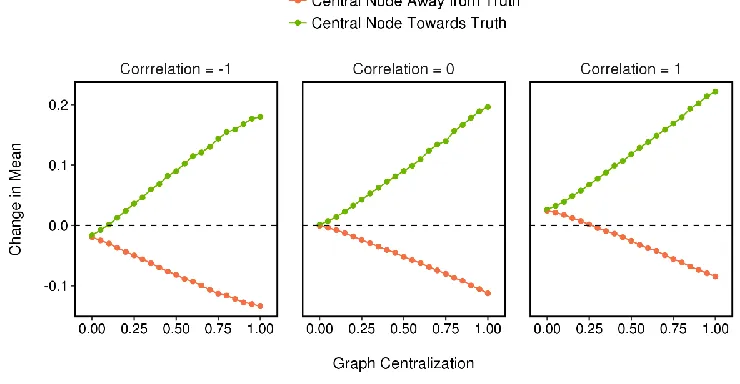
illustrated by a comparison of centralized networks to decentralized networks. In a highly
17
everyone else is relatively uninfluential, either due to the structure of information exchange (the
influential group is more widely observed) or the structure of influence (e.g., the influential group is
more persuasive). As a result, the effective source of information shaping group beliefs is a small
group rather than a large group. Since not everyone’s opinion contributes, the resulting collective
belief represents the wisdom of the few and not the wisdom of the crowd: the group does not use
of all the information held by its members. In a decentralized network, where everyone is by
definition equally influential, then the collective belief represents the combined opinion of all
members. Thus network structure can determine whether social influence improves or undermines
group accuracy (Becker et al., 2017).
Herding and Groupthink. The diversity prediction theorem is not the only source of concern
regarding the potential risks of social influence, and such concerns are further motivated by the
social psychological concept of “groupthink” (Janis, 1982). In developing the theory of groupthink,
Janis conducted a series of case studies on decision-making in organizations, attempting to identify
principles that might lead groups of otherwise intelligent people to make disastrous decisions. One
potential problem they identified is pressure for group cohesion, which can lead individuals to
suppress novel information if it appears to disagree with previously established group beliefs.
Another risk is caused by “directive leadership,” where a single individual directs group beliefs at
the expense of information held by individual members. Although these mechanisms are quite
different than the principle of statistical independence, they nonetheless highlight the importance
of informational diversity—groups only make fully informed decisions if they use all the available
information.
Formal models of herding also show how social influence can lead to widespread
inaccuracy in a population. Banerjee (1992) developed a simple model in which each person has
both a private signal (which differs for each individual) and a public signal (shared for each
18
(thus, a binary classification problem). The key property of this model is that individuals make
sequential decisions, and each individual observes the decision made by individuals earlier in the
sequence. In a population where one person has an incorrect private signal, and all the other
people have correct signals, the entire population will be led astray if the one person with the
incorrect signal is the first person to make a decision—even when each person is acting rationally
according to Bayesian principles (Banerjee, 1992). Because that first person informs the second
person, who then makes an incorrect decision, this initiates an informational cascade
(Bikhchandani, Hirshleifer, & Welch, 1992) that leads the entire population to make an incorrect
decision, even if most individuals would make the correct decision independently. Like Janis’
research on Groupthink (1982), however, the dangers of herding are also consistent with the
expected benefits of decentralized networks: in a sequential interaction, the first person is more
influential than the rest of the population.
The Delphi Method. Given the potential risks of social influence, an important area of research has
been the identification of methods that allow groups to actively process information while avoiding
herding and Groupthink. One early approach was termed the “Delphi” method (an homage to the
Oracle of Delphi), a process which emerged out of military research designed to allow panels of
experts to generate unbiased forecasts (Dalkey & Helmer, 1963). The method is simple: estimates
are first obtained from experts by way of interview or written questionnaire; each expert’s belief is
then shared with the other experts via a mediator or written information exchange, thus avoiding
the risks associated with direct interpersonal communication (such as normative pressures); and
each expert is then asked to provide a revised belief.
In general, the Delphi method has provided more accurate estimates than independent
individuals, but research on this process has produced inconsistent results (for a review, see Rowe
& Wright, 1999). This inconsistency can be traced to methodological limitations leading to
19
varied across studies. It is thus difficult to know why many but not all studies found that the Delphi
method improved accuracy, or to determine what method of information exchange was most
effective. Second, these studies frequently lacked sufficient experimental control, limiting causal
inference. When comparing “staticized” or “nominal” groups (i.e., groups of independent
individuals) with interacting groups, it was common practice for staticized groups to answer the
question only once, while interacting groups had the opportunity to reconsider and revise their
beliefs (see, e.g., Gustafson, Shukla, Delbecq, & Walster, 1973). Thus it is impossible to determine
from these studies whether the improved accuracy resulted from truly social learning effects or
whether they can be explained by individual learning effects. Contemporary research, however,
has begun to combine formal models of social influence with carefully controlled experiments to
provide a more thorough understanding of the effect of social influence on the wisdom of crowds.
Numeric Estimates in Networks. A core feature of Banerjee’s herding model is that individuals
make decisions once, sequentially. In contrast, DeGroot (1974) studies a simple model of opinion
formation in which each individual begins with an independently generated belief, and then revises
their belief by combining their own initial belief with the beliefs of some subset of the population.
This subset can either represent the set of individuals who are observable to them (as in a sparse
communication network) or, alternatively, the set of peers who are influential (i.e., a person may
observe everybody in the population, but be influenced only by a subset). DeGroot showed that
under very general conditions, a group following this process indefinitely will asymptotically
converge on a single, shared belief which is a weighted mean of the group’s initial, independent
belief distribution. The weight that each person contributes is determined by their eigenvector
centrality in the network adjacency matrix. Although DeGroot was not studying accuracy
specifically, this model is readily adapted to examine the effect of social influence on the wisdom
20
Under the assumption that the sum of each person’s outgoing ties (i.e., the total influence
a person has on others) is identical, then each individual is equally central and thus contributes
equally to the final group mean. Under such circumstances, the group will converge on the mean
of independent beliefs, and the mean itself will not be changed by social influence. Thus if
individuals in a population are all equally influential, social influence will improve average individual
accuracy without undermining the wisdom of crowds—since the initial group error is necessarily
less than or equal to initial average individual error, and they become equivalent asymptotically.
This prediction is supported by the results of several experimental studies, including a reanalysis
by Farrell (2011) of the data provided by Lorenz et al (2011), and several other studies (Becker et
al., 2017; Becker & Centola, 2018; Gürçay, Mellers, & Baron, 2015).
The prediction that decentralized networks converge toward the mean assumes that
individuals all respond equally to social influence, or that the response to social influence is
distributed identically throughout a population (Becker et al, 2017). However, in another reanalysis
of the experimental data produced by Lorenz et al (2011), Madirolas & de Polavieja (2015) found
that individuals who hold beliefs closer to the truth also revise their answers less in response to
social information, and thus the response to social information is correlated with beliefs. This
finding is consistent with the observation by Koriat (2012) and Prelec et al (2017) that individuals
who express greater confidence in their beliefs are also, on average, more accurate. This
psychological tendency has collective implications. Becker et al (2017) note that individuals who
place greater weight on their own belief are more central weighted network of social influence,
since the diagonal of the adjacency matrix contributes to centrality—the diagonal indicates network
“self-ties” and represents the influence of a person’s initial belief on their revised belief. In both
simulation and experiment, Becker et al. find that when populations are embedded in networks
where everybody has an equal number of ties, the mean belief improves as it is drawn towards the
21
Binary Beliefs in Networks. While research on the collected wisdom of crowds has examined both
classification tasks (Koriat, 2012; Kurvers et al., 2016; Prelec et al., 2017) and numeric estimates
(Galton, 1907; Klugman, 1947; Nofer & Hinz, 2014), research on social influence has largely
focused on numeric estimates. Network models of categorical belief formation have not received
the theoretical attention of the DeGroot model, but available research suggests that social influence
has fundamentally different effects on categorical beliefs than on numeric estimates.
One popular model known as the “voter” model (Castellano, Fortunato, & Loreto, 2009)
assumes that individuals can hold one of two beliefs, and that people update their beliefs
asynchronously. With each update, a voter randomly selects a neighbor and adopts their opinion.
One variation of this model assumes that each individual adopts the behavior of the majority of their
peers. In both of these cases, as one might expect from symmetry, the consensus belief of the
population is determined by the initial distribution of beliefs. As a result, consensus (if it emerges)
is likely to reflect the initial majority (Castellano et al., 2009; Mossel & Tamuz, 2017). In this respect,
models of binary beliefs are comparable to the DeGroot model, which predicts that groups in
decentralized networks will converge on the mean of independent beliefs. However, as noted
above, people sharing numeric estimates do not all respond equally to social information (Becker
et al., 2017; Madirolas & de Polavieja, 2015). As also noted above, for binary beliefs the correlation
between accuracy and confidence appears to hold only when the majority is already correct. Thus
while inaccurate numeric beliefs appear to self-correct in a population, inaccurate binary beliefs
may in fact become more pronounced.
In the course of developing this article, we have been unable to find any experimental tests
or theoretical models (besides the voter model and its variants) studying the effect of social
influence on the accuracy of binary beliefs in groups in simple information exchange. By simple
information exchange, we mean a scenario in which: individuals first form some estimate based on
a signal about the state of the world (i.e., available information), then learn about the estimates of