The International Journal of the First Year in Higher Education
ISSN: 1838-2959
Volume 5, Issue 2, pp. 21-31
August 2014
Belonging in the first year: A creative discipline
cohort case study
Natalie Araújo, David Carlin, Bronwyn Clarke, Lucy Morieson, Karli Lukas and
Rachel Wilson
RMIT University, Melbourne, Australia
Abstract
Drawing on contemporary transition pedagogy, this paper provides a case study of a suite of transition activities piloted by The Belonging Project in collaboration with a creatively oriented academic program in the School of Media and Communication at RMIT University. Through qualitative research, this case study demonstrates the importance of adopting Kift, Nelson and Clarke’s (2010, p. 6) notion of transition “as a process, not an event.” This paper argues that a sustained program of low cost transition activities that bridge the formal and informal curriculum fosters an essential ”sense of belonging” among first year students. It provides a successful example of an approach that embeds essential social and academic literacies while facilitating positive social, cultural, and academic transitions.
Please cite this article as:
Araujo, N., Carlin, D., Clarke, B., Morieson, L., Lukas, K., & Wilson, R. (2014). Belonging in the first year: A creative discipline cohort case study. The International Journal of the First Year in Higher Education, 5(2), 21-31. doi: 10.5204/intjfyhe.v5i2.240
This article has been peer reviewed and accepted for publication in Int J FYHE. Please see the Editorial Policies under the ‘About’ section of the Journal website for further information.
Introduction
It is widely recognised that the transition to higher education is a critical and complex period of academic, social, and cultural adjustment with wide-ranging implications for students’ long-term wellbeing and success (Hartley, James, & McInnis, 2005; Kantanis, 2000; Kift, 2009; Hausmann, Schofield, & Woods, 2007;). This early period has been tied to students’ motivation and academic performance (Gurin, Dey, Hurtado, & Gurin, 2002), social integration (Scanlon, Rowling, & Weber, 2007), approaches to learning (McInnis & James, 1995), and attrition (Hillman, 2005, Tinto, 1993). As Kift, Nelson, and Clarke (2010) note, entering students “have special learning needs arising from the social and academic transition they are experiencing” (p. 3). It should be an aim of the first year curriculum to recognise and support students as they “journey to become self-managing or self-directed learners” (p. 3). In short, by encouraging identity formation and a sense of belonging during transition, universities create not only inclusive learning environments, but also actively engaged learners.
Whilst the concept of transition is universally important to first year higher education participants, this process can be particularly challenging for those whose pathway to higher education does not coincide with the dominate narrative of the university experience (Reay, 2002; Hurtado & Carter, 1997). Much work has been done documenting that students from low socio-economic status backgrounds, indigenous students, mature age students, international students, part-time students, and those from under-represented or marginalised groups can require extra attention and support (See e.g. Bradley, Noonan, Nugent, & Scales, 2008; Kember,
Lee, & Li, 2001; Universities Australia, 2008,). The experiences of these students require a focus on what the American Association of Colleges and Universities (2007) refers to as “inclusive excellence” or an embedded sensitivity to the needs a diverse cohort. This doctrine of inclusive excellence fits within a larger pedagogical narrative, perhaps most famously argued by Tinto (1993), that increasingly emphasises the importance of a “sense of
belonging” for all students to higher
education outcomes and retention.
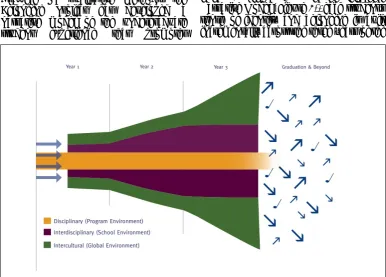
Figure 1: The Belonging Project’s model of the undergraduate student experience – ‘The Trumpet’
The “Belonging Model”
The Belonging Model proposes a three-tiered approach to the student life cycle that emphasises belonging:
1. to a disciplinary/professional cohort
(program);
2. within an interdisciplinary learning
environment (school); and
3. to a wider world of global
intercultural networks (global).
Drawing on qualitative methods, the Belonging Project has developed a narrative model of the undergraduate student experience that promotes
belonging, personal development and
academic success for all students.
Recognising that “stories are powerful tools in learning, because they are one of the most fundamental ways to order experiences and events” (Abma, 2000, p.
226), we have employed a model designed to narrativise the range of academic and social transitions and events that make up the student experience. This model is based on the three-year structures of the undergraduate experience, with a particular focus on the disciplinary and/or professional experiences of our school, one with creative and industry-based programs.
As detailed in Morieson, Carlin, Clarke, Lukas, & Wilson (2013), in the Belonging Narrative Model (Figure 1), each student’s sense of identity and belonging is built incrementally across the three years of the
within an interdisciplinary community represented by a wider school cohort. In the third year, they are encouraged to test their disciplinary and interdisciplinary identity and knowledge by working in a wider network of intercultural and global experiences. Rather than being rigidly fixed to a singular moment in the student lifecycle, the elements of all model tiers are present across the three year undergraduate student experience, but with a shifting emphasis. As such, while driven by the particular context of a creative, industry-based curriculum, the model captures universally relevant competencies and is adaptable to other academic and institutional contexts. Furthermore, the focus on belonging is developed and sustained throughout the student lifecycle rather than emphasised in the first weeks of university transition and then abandoned.
In addition to encouraging a sustained approach to belonging, the Belonging Narrative Model emphasises the role of students as co-creators of their university experience. This recognises the way in which universities are being reimagined as service providers: spaces where value is co-created by so-called consumers within complex frameworks of actors and resources (Karpen, Hall, Katsoulidis, & Cam, 2011). The model has been designed with our institutional context in mind: In the School of Media and Communication at RMIT University, students take the
majority of courses1 in their professional
creative field or discipline, along with a
1 In the RMIT context, a “course” is an individual unit of study, equivalent to a semester long teaching activity and usually offered within a “program”. ”. “Course” is synonymous with “paper” (New Zealand), “unit” and “subject”.
number of common core courses and contextual majors.
While the model is context driven, it is also flexible and can be reimagined and reinterpreted in different institutional and disciplinary settings.
Identifying a need for ongoing
transition initiatives in the first
year
In 2011, the Belonging Project ran a series of workshops with staff in the School of Media and Communication. Staff articulated a strong desire to see the implementation of cohort building initiatives within the School’s twelve undergraduate programs. Staff expressed the view that these activities should occur early in the student lifecycle to facilitate a smooth transition to university life. In addition, it was believed that initiatives should harness diversity and facilitate the development of:
• a sense of belonging that changes
over time as assumptions are challenged
• professional identity which is tied
to reputation and kudos
• peer-to-peer critiquing skills
• collaboration skills
• shared cohort aspirations
• student engagement with staff and
industry
In 2011, The Belonging Project team worked with key programs within the School to develop and trial co-curricular and off-campus activities for program cohorts. It was decided that the pilot initiative would be made available through a core course within the respective programs. This initiative aimed to link the formal and informal curriculum within the respective program. It was envisioned that this would take the form of a fun off-campus activity or series of activities that would simultaneously build social connections and embed academic literacies. In order to encourage maximum student engagement, these activities would ideally be linked to or build toward an assessment task.
The planning, implementation, and evaluation of the initiatives utilised qualitative research methods and processes of co-creation and collaboration between The Belonging Project, program staff, and students. In the first instance, The Belonging Project conducted a series of initial focus groups with students across program cohorts and program year levels. These focus groups allowed students to identify their needs, articulate their desires, and make suggestions for an improved transition experience. Following this initial research with students, we conducted staff workshops to communicate subjective student perceptions, examine staff needs, and discuss initiatives. Belonging Project team members also observed the initiatives as they were implemented. Immediately after the initiatives were carried out, we interviewed staff to document staff perceptions of the initiatives. We carried out a second round of staff interviews several months later to document the longitudinal impact of the pilots. We also
conducted follow-up focus groups with student participants.
In 2012, we piloted the first of these major activities as a “Cohort Day Out” in two of the School of Media and Communication’s twelve programs. The first pilot was carried out in a studio-based, technically-focused program in which collaborative work was the norm. The second pilot, the subject of this paper, was carried out as part of a core first year course in a creative discipline in which work is highly individuated. Whereas in the studio-based program students in focus groups expressed an expectation of collaboration, in this program, students expressed concerns about the prevalence of cliques, lack of bonding among their cohort, guardedness, and competitive behaviors around sharing work.
Moreover, though all students had experienced some form of orientation to their program, the students who participated in our focus groups noted that orientation did not itself foster a sense of belonging. Orientation programs instead primarily transmitted essential information in formal settings. Students, however, expressed a desire for ongoing structured opportunities throughout the first year that would allow for collaboration and “passively” support social belonging. As one student noted in the focus groups:
We all [work] alone. [The work] is not a thing that you need to be with certain technology that you can only get at Uni, all you need is a pen or whatever you write on, a computer, so we never work together.
they did not know or recognise the majority of the other members of their cohort. This created what one student referred to as a “neutral” social environment in which students were architects of their own social integration within the institution.
In focus groups carried out before the initiatives were enacted, this pervasive focus on individualisation within the cohort was demonstrated to extend to the students’ relationships with academic and institutional engagement. One student, echoing the position of others, noted privileging practical, self-directed experiences over formalised classroom learning activities:
I definitely think more about learning something than about being in class. If I’m going to learn more by doing something then I’ll do it.
As a result, for many students interviewed, connections to the University and institutional belonging were weak. Several participants of the focus groups postulated that they would not maintain connections to the University after completing their program.
The individualised nature of the creative and performing arts based program in question was only one factor in the absence of a strong sense of belonging expressed by the participants. RMIT’s urban location and disperse campus also significantly challenged the development of a sense of cohesive community and student belonging. As one student shared,
Because RMIT is so spread out I guess that community feeling is kind of not lost, but you know, like I don’t really know anyone from other courses unless they are my mates from high school or something, so I guess that’s kind of lost.
This challenge is not unique to RMIT. A large number of universities in Australia and around the world have opened city campus to maximise the considerable resources of city environments: career opportunities, industry exposure, and the economic, social, and cultural wealth that such urban environments provide. Still, the urban environment may be socially and culturally confronting. The city is a space rich in cultural capital, but one that while providing opportunities also creates challenges in the forms of isolation and inequalities for example.
The initiative: Creating a sense
of belonging in a creative cohort
It is increasingly argued in the literature (see e.g. Kift, 2008, 2009; Thomas, 2012 that student belonging is developed through sustained programs of small-scale initiatives that meet wide-ranging transition needs. These activities must support peer-to-peer relations, encourage positive interactions between staff and students, and integrate curricular and co-curricular endeavors. Importantly, they must also systemically build the competencies and confidence of participants while engaging career goals and interests.
throughout the first year core courses in semesters 1 and 2.
A series of non-assessed classroom tasks were introduced in the first week of classes. Acknowledging the importance of workspaces to the highly individualised cohort experience, in the first week of the academic semester, the lecturer set a non-assessed activity in which students documented their workspaces. The next week, she picked the three examples that best exemplified the task objectives and showed them to the class in the lecture. The lecturer reported to the Belonging Project that her informal feedback from students indicated that showcasing high-quality examples of students’ activity outputs had served as a motivator for increased participation. Expectation-setting and the importance of respectful critique were also encouraged in these initial weeks. Students, now increasingly comfortable with both producing and sharing their non-assessed work, were asked to more formally engage in critiques of peers’ work.
In week 3 of the semester, this classroom work was complemented and expanded through a Cohort Day Out excursion activity. The First Year Coordinator organised the Cohort Day Out as a two-hour off-campus activity that replaced a normal lecture, thus minimising timetable disruptions and conflicts. As with other embedded transition activities, the Cohort Day Out was not an explicitly required activity but was tied to the curriculum through associated work outputs. The excursion provided an opportunity for students to socialise and develop bonds in a relaxed, off-campus environment, but importantly also tested and developed their critical and discipline-based skills.
On the day of the activity, students met at a central point on-campus and were divided into pre-selected groups. Each group was composed of two students who had grown up in Melbourne and two students from regional, interstate, or overseas areas. The students were briefed about the aims and logistics of the activity. They were given a brief with three fun, collaborative, discipline-related tasks to complete in their assigned groups as they made their way through their destination, the Queen Victoria Markets. In addition, the Belonging Project provided each student with $5 for use in completing the required
tasks.2 Students could use the funds
individually or pool the money within the group. This small monetary contribution not only enhanced the off-campus activity by limiting out of pocket costs for participation, but also had an important psychological effect on participants. In debriefs following the Cohort Day Out, students reported that the small monetary incentive made them feel “valued by the University.”
The excursion, though not required, was tied into the curriculum of the core first year course. Students who participated were asked to bring in the objects they retrieved as part of their brief and discuss the exercises they undertook together in the proceeding course meeting. The lecturer noted that the result was a particularly vibrant classroom discussion that demonstrated students’ enjoyment of the initiative. She also reported that classroom dynamics indicated that the event had “helped to bolster peer-to-peer relationships.”
This observation was reflected in student evaluations and self-reflections collected following the event. Students reported the experience had been positive, fun, and meaningful. Student enthusiasm was also demonstrated in the continuing high levels of participation in the initiative when it was run for a second year. In this first year of the initiative 35 of 50 students participated. In the second year, 45 of 60 joined despite the fact that in 2013 the non-required excursion was held on a public holiday.
The Cohort Day Out built upon individual skills embedded in the first weeks of the cohort experience and expanded these through a fun, city-based activity that introduced collaboration, while returning to the essential core practices of the initial weeks. In this way, it formed part of ongoing, iterative process of embedding student belonging in way that accommodates the multiple transitions— social, cultural, academic—and variations in individual experiences and needs. The benefits of this holistic approach are numerous. One student, who claimed to be too shy to introduce herself to fellow students when she began the course, reported that she appreciated the chance to get to know a small group of people in such a fun setting, and that the initiative enabled her to begin developing her confidence as a practitioner in the cohort community. By structuring transition activities over several weeks, this approach allowed for the organic and sustainable development of a sense of self-identity and belonging. Furthermore, such activities can be used to meaningfully address not only student needs, but also institutional ones. As the lecturer noted:
This [approach] enabled a mingling of students from different backgrounds and
subgroups to get to know one another and share their experience of the city, an activity that reflects [the University’s
strategic goal]3 to “ensure RMIT
campuses are permeable and integrated with the cities with which we engage.”
By aligning with both student and university strategic needs, initiatives such as these may encourage long-term connections not only between peers, but also within and across the institution. The development of such a multilayered sense of belonging can generate mutually beneficial positive outcomes for key stakeholders.
Still, the Belonging Project recognised that even extended transition programs stretching beyond orientation should not be seen as self-contained; they must also build to experiences beyond the first year. Students’ transition to university, though most acutely articulated in the first semester of the first year, extends throughout the first year. For this reason, the Belonging Project worked with the First Year Coordinator to ensure that initiatives that bridged informal and formal curricular were also carried out in the second semester. This both emphasised the continuing process of transition and accommodated students commencing in the second semester or those requiring extended periods of adjustment.
The flagship second semester initiative was a creative exhibition event. Held after-hours, this on-campus social event highlighted work done in class and allowed students to showcase self-selected work to their peers and teachers. Whereas previous initiatives had focused exclusively
3 This is enshrined in RMIT
on the first year cohort, this event was broadened by bringing together years 1-3 of the program. Students were invited to share their work in front of an audience of peers, with the incentive of snacks and refreshments and also prizes for the best works. Approximately 55 students in the program attended the event and 20 of those signed up to present. Members of staff acted as judges for the evening and three students took home prizes. The event was successful in encouraging students to connect with others in different year levels within the program, and also in recognising and rewarding discipline excellence in a public environment beyond the classroom. A small amount of funding was required to pay for food for the participants, but otherwise the event required no funds. It utilised volunteer judges from within the School and took place in an existing student informal space in the school building, the Student Atelier.
This second semester activity capitalised on the successes of the first semester initiatives and expanded them to help build a sense of community across multiple “generations” of the program cohort. While valuable for assisting in the development of sense of personal validation and program identity among the first years that participated in the first semester Cohort Day Out, this activity also benefitted second and third year students by creating informal opportunities to mentor younger students. Furthermore, in line with the Belonging Narrative Model, this second semester activity provided a bridge to interdisciplinary activities. Students reported that the public showcasing of student work resulted in informal collaboration opportunities between the participants and observers from other programs within and outside of the School of Media and Communication.
When interviewed about the overall impact of the various cohort activities, the First Year Coordinator noted that facilitating the development of the sense of community helped inform students’ sense of identity and belonging to their cohort, program, and profession:
This idea of the community and developing a cohort community, or a program community helps to kind of liven up the atmosphere. … I feel a lot of the students … they have a lot of problems and personal issues and they feel quite disconnected from the community. Or personal life takes over. Because they can just prioritise certain things like assessment and just not come in at all.
The First Year Coordinator further commented that a sustained program of events such as those piloted introduced students to the important idea that their classmates are the first professional connections that they will make. Working with peers is a key step to building up both their sense of professional confidence and enduring professional networks.
Conclusion:
Embedding
transition experiences in the
student lifecycle
identified that early in the first semester of first year was a key time to establish key core competencies around work sharing, critique and collaboration. Staff also noted the importance of early and “just in time” initiatives carried out before student cliques formed. This argument was echoed in student focus groups and student evaluations. They were seen in the reflections of the First Year Coordinator, who noted the importance of established core competencies and confidence early:
That’s why I’m trying so hard with these first year, first semester students, because when I taught the second semester students [last year], it was almost like the moment had passed for them to get over their nerves about [work sharing and critique], because they said that in the classes, they hadn’t been doing any work-shopping … or if they were, it was to mixed results.
Without radically altering existing curriculum or assessment models, such initiatives may address the kinds of learning style preferences documented in diverse cohorts (see e.g. Ramburuth & McCormick, 2001). They also demonstrate that “specific activities may foster a broader sense of group cohesion and enhance an individual's sense of affiliation and identification with [higher education]” (Hurtado & Carter, 1997, p. 338).
Importantly, as the First Year Coordinator also emphasised, such initiatives foster a sense of engagement and the development of core competencies through having fun, so that the students know “that there are other things, other than just assessment that they can think about, and engage in and have fun with. [They are] kind of another outlet, outside of the classroom to engage the students”.
Fitting within the larger Belonging Narrative Model, this program of transition initiatives provides a model for easily embedded and sustainable transition activities. Though low cost, student and staff feedback demonstrated that they were high impact. By approaching transition as a year-long process rather than a one-off Orientation Week experience, this model allowed for the introduction of competencies early, promoted the reiteration of skills throughout the first year, and allowed students and staff to reflect and build upon them over the course of the student lifecycle. As such, it promoted the holistic perception of belonging as a lifecycle issue central to the student experience, and not merely a first week, first semester, or first year problem.
References
Abma, T. (2000). Fostering learning-in-organizing through narration: Questioning myths and stimulating multiplicity in two performing art schools. European Journal of Work and Organizational Psychology, 9(2), 211-231. doi: 10.1080/135943200397950
American Association of Colleges & Universities. (2007). Making excellence inclusive. Retrieved from
www.aacu.org/inclusive_excellence/index.cfm. Bradley, D., Noonan, P., Nugent, H., & Scales, B. (2008).
Review of Australian higher education. Final report. Canberra, Australia: Department of Education, Employment and Workplace Relations. Retrieved from http://www.deewr.gov.au/he_review_finalrepo
rt.
Gurin, P., Dey, E., Hurtado, S., & Gurin, G. (2002). Diversity and higher education: Theory and impact on educational outcomes. Harvard Educational Review, 72(3), 330-367.
Melbourne: Centre for the Study of Higher Education, University of Melbourne.
Hausmann, L., Schofield, J., & Woods, R. (2007). Sense of belonging as a predictor of intentions to persist among African American and White first year college students. Research in Higher Education, 48(7), 803–839.
Hillman, K. (2005). The first year experience: The transition from secondary school to university and TAFE in Australia. LSAY Research Reports.
Retrieved from http://research.acer.edu.au/lsay_research/44
Hurtado, S., & Carter, D. F. (1997). Effects of college transition and perceptions of the campus racial climate on Latino college students' sense of belonging. Sociology of Education, 324-345. Kantanis, T. (2000). The role of social transition in
students' adjustment to the first-year of university. Journal of Institutional Research, 9(1), 100-110. Retrieved from http://www.aair.org.au/jir/May00/Kantanis.pd f
Karpen, I., Hall, C., Katsoulidis, T. and Cam, M. (2011). Co-creating the student experience: Conceptual foundations and empirical exploration from an S-D logic perspective. Learning and Teaching Investment Fund (LTIF), RMIT University, Melbourne, Australia.
Kember, D., Lee, K., & Li, N. (2001). Cultivating a sense of belonging in part-time students. International Journal of Lifelong Education, 20(4), 326-341. doi: 10.1080/02601370117754
Kift, S. (2008, June-July). The next, great first year challenge: Sustaining, coordinating and embedding coherent institution–wide approaches to enact the FYE as "everybody’s business". Keynote Address at the 11th Pacific Rim First Year in Higher Education Conference, An Apple for the Learner: Celebrating the First Year Experience. Hobart.
Kift, S. (2009). Articulating a transition pedagogy to scaffold and to enhance the first year student learning experience in Australian higher education: Final report for ALTC senior fellowship program. Strawberry Hills, Australia: Australian Learning and Teaching Council. Kift, S., Nelson, K., & Clarke, J. A. (2010). Transition
pedagogy: A third generation approach to FYE: A case study of policy and practice for the higher education sector. The International Journal of the First Year in Higher Education, 1(1), 1-20. doi: 10.5204/intjfyhe.v1i1.13
McInnis, C., & James, R. (1995). First year on campus: Diversity in the initial experiences of Australian undergraduates. Canberra, Australia: Australian Government Publishing Service.
Morieson, L., Carlin, D., Clarke, B., Lukas, K., & Wilson, R. (2013). Belonging in education: Lessons from the Belonging Project. International Journal of the First Year in Higher Education, 4(2), 87-96. doi: 10.5204/intjfyhe.v4i2.173
Ramburuth, P., & McCormick, J. (2001). Learning diversity in higher education: A comparative study of Asian international and Australian students. Higher Education, 42(3), 333-350. doi: 10.1023/A:1017982716482
Reay, D. (2002). Class, authenticity and the transition to higher education for mature students. The Sociological Review, 50(3), 398-418. doi: 10.1111/1467-954X.00389
RMIT University. (2011). Academic Plan 2011-2015: Transforming the Student Experience. Melbourne, Australia: Author.
Scanlon, L., Rowling, L., & Weber, Z. (2007). ”You don't have like an identity… you are just lost in a crowd”: Forming a student identity in the first-year transition to university. Journal of Youth Studies, 10(2), 223-241. doi: 10.1080/ 13676260600983684
Thomas, L. (2012). Building student engagement and belonging in higher education at a time of change: Final report from the What Works. Student Retention & Success programme. London, UK: Higher Education Academy. Tinto, V. (1993). Leaving college: Rethinking the
causes and cures of student attrition (2nd ed.). Chicago, IL: University of Chicago Press.