414 |
P a g e
IDENTIFY FRAUD & THEFT USING CLOSE CIRCUIT
TELEVISION CAMERA BY IMPLEMENTING
CONCEPT OF MOTION DETECTION IN MATLAB
Vikas Kamra
1, Apoorva Mehta
21
Assistant Professor (CSE), JCDM College of Engineering, Sirsa, (India)
2
M.Tech (CSE), JCDM College of Engineering, Sirsa, (India)
ABSTRACT
Keywords: Accomplishment, CCTV, Fraud Detection, Prototype, Human Inspection
I. INTRODUCTION
With the continuous decline in the price of imaging technology, there is a surge in the use of automatic surveillance systems and closed circuit TV (CCTV). Banks, ATM machines, schools, hospitals, transport walkways employ automatic video recording of their surrounding environments. There appears to be little human inspection (in real-time or otherwise) of these surveillance videos, and thus the system is relegated to a simple deterrence function (mainly for deterrence of possible felonies). However, in many environments it is necessary to understand the contents of the video for subsequent event detection, storage and retrieval. Extraction of the desired events requires a high semantic level of human understanding and requires a prohibitive amount of human processing.
The ACFE outlined fraud as “the use of one‟s occupation for private enrichment through the deliberate misuse or application of other‟s possessions”. Fraud is increasing with the growth of contemporary technology and international communication, leading to substantial losses to the society. Consequentially, fraud detection has become a crucial issue to be checked out. Fraud detection considers recognizing fraud as quickly as doable once it's been perpetrated. It depends upon the implementation of acceptable systems and processes to identify the first warning signs of fraud. Fraud detection strategies area unit endlessly developed to defend criminals in adapting to their methods. the event of latest fraud detection strategies is formed tougher as a result of the severe limitation of the exchange of ideas in fraud detection. Fraud detection sometimes includes a mix of the subsequent techniques particularly proactive and reactive, manual and automatic. It ought to type a part of a society‟s anti-fraud strategy covering the detection and exploration of fraud.
415 |
P a g e
users. A simple and straightforward prototype is developed for society to detect fraudulent activities taking place in the surrounding environment and to report concerns about suspected fraud. The goal of prototype model is to identify the best predictors and to maximize the likelihood that the observations predicted to be fraudulent will indeed be associated with fraud. Effective fraud detection saves money and protects people of the society, promoting the society‟s detection activities can act as a deterrent to fraudsters.The fraud detection prototype serves following purposes:
Reduces exposure to fraudulent activity
Identification of vulnerable persons at risk to fraud
Reduces costs associated with fraud.
Closed-circuit television (CCTV) police investigation has become present in standard of living. Their employment is commonplace in an exceedingly style of areas to that members of the general public have access. While walking down Republic Street, visiting a store or bank or sipping a cup of low, we have a tendency to area unit caught on camera. One feels compelled to recall one in every of St. George Orwell‟s most known novels of the 20th century, titled „Nineteen Eighty-Four‟, wherever Eric Arthur Blair sets in Associate in
Nursing fanciful totalitarian future with every person being subjected to around the clock police investigation. He makes use of daring phrases, the foremost infamous of which being, „Big Brother is looking at you‟. The currently ageing catch-phrase has intrigued producers to make reality tv shows that includes a group folks cohabitation, isolated from the surface world, however endlessly captured on camera for the endless pleasure of televiewers.
Limitations to the knowledge needs could solely be allowed in cases about the bar, investigation, detection and prosecution of criminal offences or the proper of defence, for as long as provision of the knowledge could be accomplishment of the particular functions wanted.
416 |
P a g e
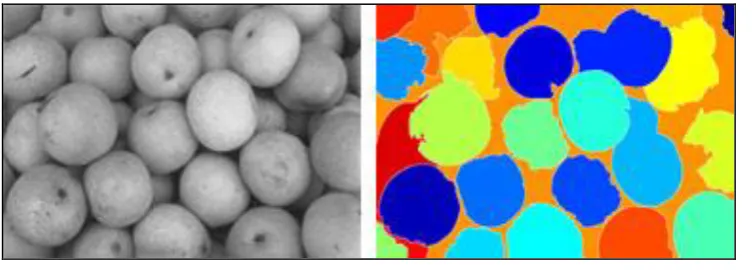
Figure 1: Image Segmentation Sample
All image process operations typically aim at a better recognition of objects of interest, i. e., at finding appropriate native options that may be distinguished from alternative objects and from the background. following step is to ascertain every individual element to check whether or not it belongs to associate degree object of interest or not. This operation is named segmentation and produces a binary image. A pixel has the worth one if it belongs to the object; otherwise it's zero..
II.
LITERATURE
REVIEW
It represents the review of work done by various researchers which give a useful insight in fraud detection, image processing and fuzzy logic. Literature review is a body of text that aims to review the current knowledge including findings, as well as theoretical and practical contributions of a particular topic. Literature review focuses on a research question, trying to identify, select and combine all high-quality research evidence and arguments.
[1] Huang (2004) et al. surveyed fraud detection techniques used in credit card, telecommunication, and computer intrusion. The goal of research was to provide a comprehensive review of different techniques to detect frauds. It involves the characteristics of fraud types, the need of fraud detection systems and several current fraud detection techniques. Due to the security issues, only a few approaches for credit card detection are available in public. Among them, neural networks approach is a very popular tool but difficult to implement because of lack of available data set. For intrusion detection, some techniques have been applied to the real application. However, it is complicated to test existing intrusion detection systems, simulate potential attack scenarios, and duplicate known attacks. Moreover, intrusion detection system has poor portability because the system and its rule set must be specific to the environment being monitored. Most telecommunication fraud detection techniques explore data set of toll tickets and detect fraud from call patterns. These systems were effective against several kinds of frauds, but still had some main problems.
417 |
P a g e
fields of behavior that relate to the different types of fraud identified, and to evaluate the associated ethical implications. The method proved accurate in deducting fraudulent transaction and minimizing the number of false alert. If the genetic algorithm was applied into fraud detection system, the probability of fraud transactions could be predicted soon and a series of anti-fraud strategies could be adopted to prevent banks from great losses and reduce risks .
[3] Shim (2014) et al. studied an advanced detection system which activated emergency alert system to prevent the actual incidence, after computerized evaluation of danger associated behavior captured in CCTV images. The detection of potential danger involved the ability to discern several steps that might ultimately lead to life-threatening event of an object. The system was designed with preset danger-zone within the zone of interest and analysis of blob composition, based on the assumption that probability of life-threatening event was directly correlated with the proportion of one overlapping with the danger zone. Subsequently, the danger level was evaluated accordingly to the range of encroachment into the danger zone of the targeted objects. To achieve this purpose an advanced detection system was proposed to alert the integrated control center regarding any potentially dangerous behavior of individuals among some pedestrians from CCTV-based images. As mentioned previously, it might not always be the case that the dangerous events involve one person, but many individuals resulted analysis of object composition. Also, this study closely measured danger levels using encroachment rates of the danger zone divided into three categories; safe, warning, and emergent.
[4] Ramadevi (2010) et al. discussed interaction between image segmentation using different edge detection methods and object recognition. Edge detection methods such as Sobel, Prewitt, Roberts, Canny, and LoG were used for segmenting the image. EM algorithm, OSTU and Genetic algorithms were used to demonstrate the synergy between the segmented images and object recognition. This paper focused mainly on the image segmentation using edge operators. The interaction between image segmentation and object recognition in the framework of the Sobel, Prewitt, Roberts, Canny, LoG, EM algorithm, OSTU Algorithm and Genetic Algorithm were studied. EM algorithm and OTSU algorithm exhibited stable segmentation effect. Despite of so many edges detection techniques are available, since it is a demanding task to the research communities to detect the exact image without noise from the original image.
[5] Tian (2013) et al. focused on the latest development in image feature extraction and provided a comprehensive survey on image feature representation techniques. This research analyzed the effectiveness of the fusion of global and local features in automatic image annotation and content based image retrieval. As few previous studies reviewed both image feature extraction and image feature representation, which play a crucial role in multimedia processing community. So in this paper, a comprehensive survey was provided on the latest development in image feature extraction and image feature representation.
III.
OBJECTIVES
418 |
P a g e
2. To study the effective means by which the content of the image can be automatically structured, indexed and retrieved.
3. To study the image segmentation techniques.
4. To develop a prototype to capture the unwarranted activities of human being.
5. To implement prototype for direction and movements that can understand and describe a CCTV scene in natural language.
IV.
PROPOSED
METHODOLOGY
It represents the proposes design of prototype for fraud detection using segmentation method and fuzzy logic. A prototype is developed to recognize suspicion activities captured in CCTV footage and depict the same in natural language. This prototype describes objects, object metaphors and object behaviors on the basis of human insight.
Image Segmentation and Feature Extraction
The image processing stage results into:
1. The Region of object is a measure of size of object in the camera.
2. The Distance of object is a measure of how much an object is distant from camera.
3. X and Y coordinates refers to change in x-axis & y-axis of object at two different time slots.
Dynamic Model for Fraud Detection
The dynamic model for Fraud Detection definestwo fuzzy sets for two input variables:
1. X-movement is defined in pixels:
X-movement = {left, right}.
2. Y-movement is defined in pixels:
Y-movement = {up, down}.
Figure 2 shows the input image in png format. It is the actual image that will be segmented in MATLAB.
Figure 2: Segments of CCTV Footage-Last Capture
419 |
P a g e
Results
Figure 3: Motion Detection at Interval 2
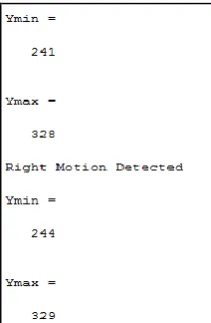
Figure 4: Change in Location And Detection Alert
Tool will display motion detection message with direction (Left/Right). A Alert sound also plays when theft is detecting.
Following is the Graph of Location change during motion:
420 |
P a g e
V.
CONCLUSION
AND
FUTURE
WORK
A prototype is designed for detecting the fraud in surrounding area captured by CCTV camera. Although, CCTV camera is able to track the activity of fraudster but it is more convenient to describe fraudulent activity also in natural language. This clarifies more the understanding of the CCTV footage by the observer. The proposed prototype uses image segmentation and motion detection tools. A prototype has been designed in which the footage is segmented and segment of interest are identified and analyzed. After that some logical rules are applied to estimate the direction of their movement along with speed that is helpful in tracing any fraudulent event.
Although, estimations for the frames are made on the basis of human insight, further testing is required. The testing of static and dynamic models will lead to the accuracy of estimation of fraudulent activities. It is possible to display a degree of belief of the prototype regarding the validity of its conclusions. The degree of belief is the value of the membership of the output variables. The larger the membership value, the higher the level of belief. Low degrees of belief may encourage the collection of additional information before presenting the conclusion. The proposed prototype can be extended to make inferences about other types of activities such as violence or vandalism. It may also be used to study more behavioral aspects of crowds or pedestrians.
REFERNCES
[1] Yufeng Kou, Chang-Tien Lu, Sirirat Sinvongwattana, Yo-Ping Huang “Survey of Fraud Detection Techniques”, International Conference on Networking, Sensing & Control, March 21-23, 2004.
[2] Syed Ahsan Shabbir, Kannadasan R, “An Effective Fraud Detection System Using Mining Technique”, International Journal of Scientific and Research Publications, Volume 3, Issue 5, May 2013 1 ISSN 2250-3153.
[3] Young-Bin Shim, Hwa-Jin Park and Yong-Ik Yoon, “A Study on Surveillance System of Object‟s Abnormal Behavior by Blob Composition Analysis”, International Journal of Security and Its
Applications, Vol.8,No.2 (2014), pp.333-340.
[4] Y.Ramadevi, T.Sridevi, B.Poornima, B.Kalyani, “Segmentation And Object Recognition Using Edge Detection Techniques”, International Journal of Computer Science & Information Technology (IJCSIT),
Vol 2, No 6, December 2010.
[5] Dong ping Tian, “A Review on Image Feature Extraction and Representation Techniques”, International Journal of Multimedia and Ubiquitous Engineering Vol. 8, No. 4, July, 2013.