Corresponding Author E-mail: [email protected]
1296 | Page http://www.ijabbr.com
online at Available
International journal of Advanced Biological and Biomedical Research
Volume 2, Issue 4, 2014: 1296-1303
The Effect of Different Levels of Sesame Wastes on Performance, Milk Composition
and Blood Metabolites in Holstein Lactating Dairy Cows
K. Shirzadegan1* and M. A. Jafari2
1
Department of Animal Science, Faculty of Agriculture, University of Zanjan, Zanjan, Iran 2
Department of Animal Science, Faculty of Agriculture and Natural Resources , Islamic Azad University, Qaemshahe Branch, Iran
Abstract
The objective of this study was to determine the effect of different levels of sesame wastes (SW) on performance, milk composition and blood metabolites in lactating dairy cows. In this order, eight multiparous Holstein dairy cows were used in a replicated 4×4 Latin square design in four periods of 21 days. Treatments were control (no Sesame meal supplementation), and supplemented with 5, 10 and 15 % (dry matter [DM] basis) Sesame wastes respectively. Each period of experiments included 14 days for adaptation to diets and 7days for sampling. Cows were fed as total mix ration (TMR). The results showed that DMI, milk lactose, MUN, BUN and blood glucose and cholesterol were not affected by experimental diets (P>0.05). Nevertheless, milk yield average, milk fat, protein percentage, milk TS, SNF percentage, blood Ca and TG showed significant differences (P<0.05) between treatments and was the highest in control treatment. In addition, dry matter (DM) and organic matter (OM) digestibility were affected by adding sesame waste in diets (P<0.05) and was the highest in control treatment. Generally, showed that sesame waste (as a byproduct) has not obviously positive effects in cows nutrition.
Keywords: Lactating Holstein cow, Sesame waste, Digestibility, Blood metabolites
Introduction
1297 | Page oxalate and phytic acid it contains (Narasinga, 1985) which reduces the physiological value of calcium from the seed. Dehulling reduces the oxalic acid contents of the seed. The sesame seed contains about 50% oil and 20-25% protein (Obeidat et al. 2008). The residue sesame oil cake contains on an average 32% crude protein, 8-10 % oil, total oil and albuminoids of 40-42% and rich in essential amino acids namely methionine and cystine (Johri et al. 1988). Hence, the aim this research was to evaluate the feeding value of sesame wastes (SW) on performance and blood metabolites in lactating dairy cow.
Materials and methods
Cows, diet and treatments
Eight Holstein lactating dairy cows (60±15days in milk) with an average body weight (BW) of 650 kg were randomly assigned in a replicated 4×4 Latin square design with a 21-days period according to the parity. Each experimental period had 14 days of adaptation followed by 7 days for data collection. The experiment was carried out at the dairy barn of the Department of Natural Resources and Agricultural Research center of Mazandaran, Iran.
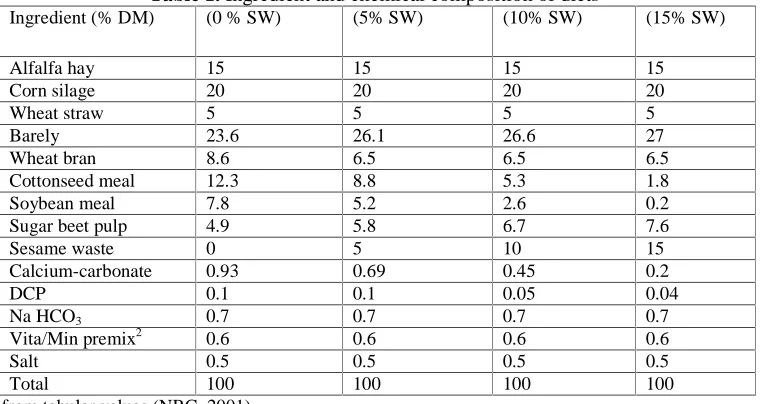
Table 1. Ingredient and chemical composition of diets1
Ingredient (% DM) (0 % SW) (5% SW) (10% SW) (15% SW)
Alfalfa hay 15 15 15 15
Corn silage 20 20 20 20
Wheat straw 5 5 5 5
Barely 23.6 26.1 26.6 27
Wheat bran 8.6 6.5 6.5 6.5
Cottonseed meal 12.3 8.8 5.3 1.8
Soybean meal 7.8 5.2 2.6 0.2
Sugar beet pulp 4.9 5.8 6.7 7.6
Sesame waste 0 5 10 15
Calcium-carbonate 0.93 0.69 0.45 0.2
DCP 0.1 0.1 0.05 0.04
Na HCO3 0.7 0.7 0.7 0.7
Vita/Min premix2 0.6 0.6 0.6 0.6
Salt 0.5 0.5 0.5 0.5
Total 100 100 100 100
1
Estimated from tabular values (NRC, 2001). 2
(Vit/Min was as 50:50 mix), the mineral mix composition was as follows (amounts in 10 g): 0.5 g Mg, 0.3 g S, 1.0 g Na, 1.6 g Cl, 6.0 mg Cu, 0.3 mg I, 45.0 mg Fe, 58 mg Mn, 0.2 mg Se, and 22 mg Zn. The vitamin mix composition was as follows (amounts in 10 g): 4000 IU vitamin A palmitate, 1000 IU cholecalciferol, 53 IU vitamin E acetate, 0.5 mg menadione sodium bisulfite, 0.4 mg biotin, 11 ìg cyanocobalamin, 2 mg folic acid, 30 mg nicotinic acid, 15 mg calcium pantothenate, 7 mg pyridoxine-HCl, 6 mg riboflavin, and 6 mg thiamin HCl.
(Na HCO3 = Sodium bicarbonate).
1298 | Page Water and mineralized salts stone were available for cows through the entire experiment. The diet was formulated to meet or exceed the recommendations of the NRC (2001). Sampling and chemical analyses individual ingredients (alfalfa hay, corn silage and concentrate mixtures) and the TMRs were sampled daily during the last 7 days of each period and composited by period. Orts were sampled daily during the last 7 days of each period. Samples were oven-dried at 55O C for 48 h, ground through a- 1mm screen in a Wiley mill and analyzed for organic matter (OM), crude protein (CP) and neutral detergent fiber (NDF). Analytical DM content of the samples was determined by drying at 110O C (ID 934.01; (AOAC, 2000) and OM content was calculated as the difference between DM and ash contents, with ash determined by combustion at 550 OC for 6 h. Neutral detergent fiber (NDF) without a heat stable amylase and expressed inclusive of residual ash was measured (Tecator, Fibertec System, 1010 heat extractor) according to the methods of a author (Van Soest, 1991). Fat was determined by extraction with ether using a Soxtec system HT apparatus (Tecator, 1043, Denmark) according to the Method 920.39 (AOAC, 2000) .Content of N in the samples were determined by Kjeldahl method in an automated Kjelfoss apparatus (Foss Electric, Copenhagen, Denmark). Body weight was measured at the beginning of the trial and the end of each period.
Blood metabolites
In the end of each experimental period has got 10 cc blood from each cow for consideration of blood parameters and immediately shipped to laboratory for analyze of glucose, cholesterol, triglyceride (TG), BUN and calcium.
Milk yield and samples
Cows milked three times per day at 04:00, 12:00 and 20:00 h. Daily milk yields were recorded throughout the experiment. Milk samples were collect on last 2 days of each experimental period for determining milk composition and analyzed for fat, protein, lactose, SNF and TS using Milko-Scan (133B Foss Electric). Milk urea nitrogen (MUN) was measured by official method of analysis (ID 967.07; (AOAC, 2000). Yields of 4% FCM were computed using the formula of 4% FCM = (0.265 x milk yield (kg) + 10.5 x. fat yield (kg) as stated by (Omar et al. 2002).
Digestibility measuring
In this experiment used the Cr2O3 5g/kg feed (that it is one of the external indicator) for identify of dry and organic matter digestibility. The next of 24h, sampled 500g from lately feces, sited into nylon bags, and maintained in 18OC. Then with determine of indicator and dry and organic matters digestibility, definite the samples appear digestibility.
Feed conversion rate
Feed conversion rate was calculated as the amounts of dry matter intake required to produce 1 kg 4% FCM.
Statistical analysis
Data were analyzed using the GLM procedure of SAS®
(SAS, 2000). Duncan’s New Multiple Range Test (Duncan, 1955) was used to test mean differences at (P<0.05). The experimental data were analyzed as a 4×4 replicated Latin square design using the following model:
Yijk (l)=µ +Sk + Ri(k) + Cj(k) +T(l) +eijk(l)
1299 | Page Results
Performance
In this study, no significant differences were observed among the treatments regarding DMI, and FCM, but the MYN, MYN, MYA, total milk yield and FCR were affected by SW supplementation as significantly (P<0.05) (Table 2), which the highest milk yield and the lowest FCR were related to control group.
Table 2. Effect of sesame waste on dry matter intake, milk yield and FCR of dairy cow
Items Control 51 10 15 SEM
Dry matter intake 20.88 ± 1.6 21.18 ± 2.1 21.78 ± 1.2 21.30 ± 1.0 1.14 MYM (kg/day) 11.38a ± 2.4 10.50ab ± 0.5 10.88ab ± 1.1 10.38b ± 1.1 0.26 MYN (kg/day) 10.50a± 1.9 10.13ab± 1.0 9.75b± 0.8 9.63a± 0.9 0.12 MYA (kg/day) 9.35ab± 1.2 10.25a± 1.1 9.50ab± 1.0 9.25b± 1.7 0.26 Total milk yield 31.25a± 1.8 30.88ab± 2.7 30.13ab± 1.8 29.25b± 0.8 1.14 4 % FCM 29.60 ± 1.2 29.71 ± 3.2 29.13 ± 1.7 28.72 ± 1.0 2.49
FCR 0.67b 0.69b 0.72ab 0.73a 0.01
Levels of sesame wastes.
MYM: Milk yield in morning; MYN: Milk yield in noon; MYA: Milk yield in afternoon; FCR: Feed conversion rate.
Means with different superscript within a row are different significantly (P<0.05).
Milk composition
The SW had a significant effect on the milk fat (%), milk protein (%), TS (kg/day) and SNF (P<0.05)., but had no any significant influence on the lactose and MUN during experiment (P>0.05) (Table 3). This study, sesame wastes (SW) decreased the TS and SNF and increased the milk fat in cows followed by control.
Blood metabolites
On the other hand, some of the blood metabolites (calcium and TG) were affected by SW administration in diet (P<0.05), that the highest calcium (11.42 mg/dl) and the lowest TG (15.25 mg/dl) were belong to control, but there was no significant different for BUN, glucose and cholesterol between groups (P>0.05) (Table 4).
Table 3. Effect of sesame waste on milk composition in dairy cow.
Items Control 51 10 15
Milk fat (%) 3.65c± 0 3.75b± 0.28 3.78b± 0.1 3.88a± 0.1 Milk fat (kg/day) 1.14 ± 0 1.16 ± 0.15 1.14 ± 0 1.13 ± 0 MP2 (%) 3.08ab± 0 3.25a± 0.45 2.88ab± 0.1 2.83b± 0 MP (kg/day) 0.96a ± 0 1.00a± 0.10 0.87b ± 0 0.83b± 0 TS3 (%) 11.87 ± 0.3 11.70 ± 0.24 11.22 ± 0.3 11.24 ± 0.4 TS (kg/day) 3.71a± 0.1 7.61ab± 0.22 7.38bc± 0.1 7.29c± 0 SNF4 (%) 8.22a± 0.2 7.96ab± 0.31 7.43b± 0.2 7.36b± 0.3 SNF (kg/day) 2.57a± 0.1 2.46a± 0.22 2.24b± 0.1 2.15b± 0 Lactose (%) 4.25 ± 0 4.27 ± 0.10 4.24 ± 0.1 4.23 ± 0.2 Lactose (kg/day) 1.33 ± 0 1.32 ± 0.15 1.28 ± 0 1.24 ± 0 MUN (mg/dl) 14.95 ± 1.1 14.30 ± 2.84 14.21 ± 2.4 13.68 ± 3.2
1300 | Page
within a row are different significantly (P<0.05).
Table 4. Effect of sesame waste on blood metabolites in dairy cow
Items (mg/dl)
Control 51 10 15 Pooled
SEM BUN 16.48 ± 1.5 16.10 ± 0.9 15.93 ± 2.9 15.58 ± 2.8 0.481 Glucose 52.50 ± 5.6 53.75 ± 6.5 54.50 ± 5 55.00 ± 7.4 17.145 Cholesterol 198.7 ± 15 199.0 ± 11 200.7 ± 11 199.2 ± 13.5 31.137 TG2 15.25a± 1.2 16.00ab± 0.9 16.75bc± 1.2 17.75c± 1.5 0.645 Calcium 11.42a ± 0.9 11.14a ± 0.5 11.01a ± 0.6 10.66a ± 1.1 0.629
Levels of sesame wastes. 2- Triglyceride
Means with different superscript within a row are different significantly (P<0.05).
Dry and organic matter digestibility
Furthermore, the different levels of SW induced a significant effect on the dry and organic matter digestibility's in cows (P<0.05) (Table 5). So that, the highest and the lowest ingredients (dry and organic matter) digestibilities were related to control and 15% SW treatments respectively.
Discussion
The achieved data from investigation of effect of substitution of the sesame wastes (SW) in diet on dry matter intake of dairy cows represents, the cows fed with control diet to 20.88 kg/day had the lowest DMI and cows fed with 10 % SW to 21.78 kg/day had the highest DMI among groups. Although, there was the null hypothesis for performance parameters, this study similar to others has shown the substitution of barley grain and soybean meal with sesame wastes reduces the unit production cost of the diets and thus improved profitability. It is due to the low cost of sesame wastes compared to the current price of barley grain and soybean meal. Therefore, this study has shown the economic advantages of using sesame wastes in the diets of lactating dairy cow. As well as, Obeidat et al. (2010) reported also a reduction in cost when sesame hull was included at levels of 12.5% and 25% in diets of Awassi lambs is also one of the obtained similar results. In (Table 2) showed that there are significant different in FCR and milk yield between treatments. Cows fed with control diet and 10% SW had the lowest (20.88 kg/day) and the highest (21.78) dry matter intake respectively, that was not significant (P>0.05). Sesame wastes inclusion in the diet of dairy cow improved dry matter intake in 10% SW fed groups compared to 0% and 15% SW groups.
Table 5. Effect of sesame waste on digestibility in dairy cow. Treatments
Studied Characteristics
Control 51 10 15 SEM
Dry matter Digestibility (g/kg DM)
68.35a± 4.3 66.12b± 3.9 64.23c± 3.2 61.15d± 4.8 0.947
Organic matter Digestibility (g/kg DM)
70.52a± 2.8 68.42ab± 3.5 67.11b± 3.1 62.46c± 3.7 2.504
Levels of sesame wastes.
1301 | Page Thus, it is safe to conclude that the presence of SW at a 10% level in the diet, did not affect on palatability. A done research by Obeidat et al. (2009) reported similar results when sesame meal was fed to Awassi lambs at 8% of the diet. Obeidat et al. (2010) investigated the effect of feeding sesame hull in Awassi lambs and found that intake improved when included at levels of 12.5 and 25%.
In addition, the groups fed with control diet have shown the highest milk production and the best FCR and the groups fed with 15 % SW diet have shown the lowest milk yield and the worst FCR. It seems the main cause in milk yield reduction with increase of SW replicating in diet be due to dry matter intake reduction in animals. Likewise, Farran et al. (2000) found that weight gain and feed conversion ratio of starter broiler chicks was reduced when the level of sesame hull in their diets increased to 12%. Similarly, when sesame hull was fed to laying hens at up to 28% of the diet, body weight and egg production decreased and feed conversion ratio increased. In contrast, Khan et al. (1998) evaluated the effect of replacing til (sesame) oil cake with poultry excreta on growth and nutrient utilization at levels of 50 and 100% in growing bull calves. They found that animals fed with til oil cake gained more live weight than those fed the control diet. Furthermore, found that body weight change was similar when sesame meal was fed at a level of 200 g/d in goats (Herano et al. 2002). During a study, Omar et al. (2002) reported that sesame meal addition at 10% and 20% levels improved digestibility of crude protein and fiber, average daily gain, feed conversion ratio, and cost of feed/kg gain in growing Awassi lambs when compared to a commercially fed ration. However, in our study dry matter digestibility was not affected by the inclusion of sesame oil cake (Omar et al. 2002). The achieved data from investigation of effect of substitution of the sesame wastes in diet on milk composition of dairy cows indicated there are significant variations in milk fat, milk protein, TS and SNF among various treatment groups during the experiment period. The cows fed diet containing 15 % SW with 3.88 percent the highest and cow fed control diet with 3.65 percent had the lowest milk fat. Grain in dairy cows diet could be effective premier source on digestible energy requirement for maintenance of high milk production. Overfed grain in spite of milk production stimulate reduce the milk fat percentage and outcomes changes in milk fatty acids. However, in this study the grain amount was equal. About of 60 % long chain fatty acids milk fat generated from diets and SW are contain high levels these fatty acids, which can arises milk fat (Omar et al. 2002). Furthermore, this study was showed no significant variation in lactose among various treatment groups during the experiment periods. MUN is one of the milk normal ingredients and constitute almost 20 to 70 % of milk NPN. As well, MUN concentrations in milk could be affected by the diets nutrient density and nutrient availability for rumen microorganisms. However, in present experiment the MUN not affected by sesame wastes substitution in diets. The cow received 5 % SW and 15 % SW had the highest and the lowest milk protein percent as significantly. Decrease of milk protein density in this study could be related to high fat intake that it induces an insulin resistance in amino acids absorption. According to Table 5, probably reduce in milk total solid (TS) in supplemented diets with SW were because of milk calcium decreasing. Cows fed diets containing 15% SW and control had the highest and the lowest SNF respectively. Of the effective factors in this case can implies to forage: concentrate ratio and season effects. However, the season in present study was similar for all groups Our study was showed no significant variation in blood glucose, cholesterol and BUN among various treatments during the experiment period. According to Table 3, the highest blood urea nitrogen (BUN) was produced by cows fed 15 % SW and the lowest was related to control cows. The lowest glucose and cholesterol was also produced by control diet. Can indicate that fats inducing a disorder in rumen functions and as result decreased protein digestion and ammonia density in rumen and lastly occurs BUN reduction. Meantime, the highest and the lowest calcium were observed in control and 15 % SW respectively. The reasons of this decrease is probably for unnutritional effects of oxalic acid and phytic acid in sesame wastes that inducement a complex to calcium and as a result reduced the calcium absorption.
1302 | Page digestibility were observed by cow fed 15 % sesame wastes and control diets respectively. Omar et al. (2002) reported that the digestibilities of CP and CF were greater in lambs fed diets containing sesame oil cake, whereas DM digestibility was not affected. Khan et al. (1998) found that when til oil cake was replaced by poultry excreta, the DM and nitrogen-free extract digestibilities were not affected, but CP and CF digestibilities were higher in the group supplemented with til oil cake. In addition, digestibilities of DM, OM, CP, and EE were not affected when Awassi lambs were fed with sesame meal (Obeidat et al. 2009). Moreover, found that DM digestibility was higher when goat kids were fed sesame oil cake supplemented with mineral mixture. Thus, it is clear that using sesame hull as an alternative feed ingredient is applicable in feeding black goat kids without affecting nutrient digestibility (Hossain et al. 1989). In our study, seems that unnutritional factors (such as oxalic acid and phytic acid) in sesame wastes are main reason in decrease of organic and dry matters digestibility.
Conclusion
From the results of the present study, it can be conclude that inclusion of sesame wastes in diet of dairy cows not affects on the DMI, BUN, MUN, glucose, and cholesterol. But, induced significant different on the milk yield average, milk fat, protein percentage, milk TS, SNF percentage, blood Ca and TG. Furthermore, the milk fat percent, milk protein percent, milk production average, TS and SNF in control diet were higher than supplemented diets. Overall, in spite of slightly decrease in cows' performance following to sesame waste consumption, SW had not heavy negative effects on the dairy cows. So it could be substitutions instead of soybean quantities in diet.
Acknowledgments
The authors are thankful to the Department of Natural Resources and Agricultural Research center of Mazandaran, Iran, for providing the necessary facilities to carry out this study.
References
1- Al Jassim, R.A.M., Ereifej, K.I., Shipli, R.A and Abudabos, A. (1998). Utilization of concentrate diets containing acorns (Quercus aegilops and Quercus coccifera) and urea by growing Awassi lambs. Small Rumin Res, 29: 289-293.
2- AOAC. Official Methods of Analysis. (2000). Association of Official Analysis Chemists, 17th ed. Washington, DC, p: 2044.
3- Alcaide, M.E., Ruiz, Y.D.R., Moumen, A and Garc M.A.I. (2003). Ruminal degradability and in vitro intestinal digestibility of sunflower meal and in vitro digestibility of olive by-products supplemented with urea or sunflower meal: Comparison between goats and sheep. Anim Feed Sci Technol, 110: 3-15.
4- Abdullah, A.Y and Abdalhafes, B.Y. (2004). Inclusion of Prosopis juliflora pods in finishing Awassi lamb diets. 11th edi. Animal Science Congress, 2: 373-375.
5- Chiofalo, B., Liotta, L., Zumbo, A and Chiofalo, V. (2004). Administration of olive cake for ewe feeding: effect on milk yield and composition. Small Rumin Res, 55: 169-176.
6- Duncan, D.B. (1955). Multiple range test. Biometrics 11: 1–6.
1303 | Page 8- Farran, M.T., Uwayjan, A.M., Miski, A., Akhdar, N.M and Ashkarian, V.M. (2000). Performance of broilers and layers fed graded levels of sesame hull. Poult Sci, 9: 453-459.
9- Hossain, M.A and Jauncey, K. (1989). Studies on the protein, energy and amino acid digestibility of fish meal, mustard oil cake, linseed and sesame meal for common carp (Cyprinus carpio L). Aqua, 83: 59-72.
10- Herano, Y., Kashima, T., Inagaki, N., Uesaka, K., Yokota, H and Kita K. (2002). Dietary sesame meal increase plasma HDL-cholesterol concentration in goats. Asian-Aust J Anim Sci, 15: 1564-1567.
11- Johri, T.S., Rashmi, A and Sadagoban, V.R. (1988). Available lysine an methionine contents of some proteinous feedstuffs. Indian J Anim Nutr, 5: 228 - 229.
12- Khan, M.J., Shahjalal, M and Rashid M.M. (1998). Effect of replacing Til oil cake by poultry excreta on growth and nutrient utilization in growing bull calves. Asian-Aust J Anim Sci, 11(4): 385-390.
13- Panwar, K., Yadav, R and Sihag, S. (2002). Mustard cake, as a source of dietary protein for growing lambs. Small Rumin Res, 44: 47-51.
14- Mahgoub, O., Kdim, I.T., Al-Busaidi, M. H., Annamalai, K and Al-Saqri, N.M. (2007). Effects of feeding ensiled date palm fronds and by-product concentrate on performance and meat quality of Omani sheep. Anim Feed Sci Technol, 135: 210-221.
15- Narasinga, R.M.S. (1985). Nutritional aspect of oil seeds in oil seed productions- constraints and opportunities. Srivastava HC, Bhaskaran S, Vatsya B, Menon KKG. 625-634. New Delhi: Oxford and IBH.
16- National Research Council. (2001). Nutrient Requirements of Dairy Cattle, 7th rev. edi. Natl. Acad. Sci. Washington, DC.
17- Omar, A.J.M. (2002). Effect of feeding different levels of sesame oil cake on performance and digestibility of Awassi lambs. Small Rumin Res, 46:187-190.
18- Obeidat, B.S., Abdullah, A.Y and Al-Lataifeh, F.A. (2008). The effect of partial replacement of barley grains by Prosopis juliflora pods on growth performance, nutrient intake, digestibility, and carcass characteristics of Awassi lambs fed finishing diets. Anim Feed Sci Technol, 146: 42-54.
19- Obeidat, B.S., Abdullah, A.Y., Mahmoud, K.Z., Awawdeh, M.S., Beitawi, N.Z and AL-Lataifeh, F.A. (2009). Effects of feeding sesame meal on growth performance, nutrient digestibility, and carcass characteristics of Awassi lambs. Small Rumin Res, 82: 13-17.
20- Obeidat, B.S and Aloqaily, B.H. (2010). Using sesame hull in Awassi lambs diets: Its effect on growth performance and carcass characteristics and meat quality. Small Rumin Res, 91: 225-230.
21- SAS Institute Inc. (2000): SAS/STAT User's Guide: version 8.1st ed. SAS Institute Inc., Cary,NC.
22- Van Soest, P.J., Robertson, J.B., Lewis, B.A. (1991). Methods for dietary fiber, neutral detergent fiber, and nonstarch polysaccharides in relation to animal nutrition. J. Dairy Sci, 74: 3583–3597.