R E S E A R C H
Open Access
Safety and feasibility of an interactive
workshop and facilitated outdoor walking
group compared to a workshop alone in
increasing outdoor walking activity among
older adults: a pilot randomized controlled
trial
Ruth Barclay
1*, Sandra Webber
1, Jacquie Ripat
1, Theresa Grant
2, C. Allyson Jones
3, Lisa M. Lix
4, Nancy Mayo
5,
Cornelia van Ineveld
6and Nancy M. Salbach
7Abstract
Background:Limited outdoor walking is a marker of frailty and a risk factor for decline in mobility and self-care functioning, social isolation, and reduced health-related quality of life (HRQL). Objectives were to evaluate the safety, feasibility, and preliminary effect of a supervised outdoor walking group and interactive workshop compared to the workshop alone in increasing outdoor walking activity and identify an optimal method for estimating outdoor walking activity among older adults who infrequently walk outdoors.
Methods: A pilot 2-parallel-group randomized controlled trial was conducted. Adults aged≥65 years who reported
walking ≤20 min/week outdoors were randomized in a 2:1 ratio to receive the GO-OUT program
(1-day workshop and 9-week outdoor walking group), or the workshop alone. An external site conducted the randomization after workshop completion. The eight workshop activity stations aimed to build knowledge and skills to safely walk outdoors. The group-based outdoor walking program consisted of repetitive practice of mobility tasks at local parks. The primary outcome of outdoor walking activity used an activity monitor and GPS; secondary outcomes included aerobic, balance, and walking capacity; physical activity; participation; mood; and HRQL. Blinded outcome assessors evaluated participants at 0, 3, and 6 months. Qualitative interviews occurred after 3 months; data were analyzed with qualitative description. Quantitative data were summarized using descriptive statistics.
Results:Forty-eight individuals were screened; 9 were eligible and randomized to the GO-OUT (n= 6) or workshop (n= 3) group. Data from 9 participants were analyzed. Mean age was 77 and 74 years in the GO-OUT and workshop groups, respectively. No falls occurred during the workshop and outdoor walking program. Average attendance of the walking group was 61%. All participants attended the evaluations and workshop. An analysis method combining data from activity monitors and GPS was developed to estimate outdoor walking. Themes from the qualitative analysis included the barriers to outdoor walking, impact of the workshop and GO-OUT walking group, and feasibility and acceptance of the assessment and intervention strategies.
(Continued on next page)
* Correspondence:[email protected]
1Department of Physical Therapy, College of Rehabilitation Sciences,
University of Manitoba, R106-771 McDermot Ave., Winnipeg, Manitoba R3E 0T6, Canada
Full list of author information is available at the end of the article
(Continued from previous page)
Conclusions:The trial protocol was deemed safe and feasible. Results were used to inform changes to the protocol to conduct a full-scale study.
Trial registration:Clinical Trials.gov:NCT02339467.
Keywords:Outdoor walking, Walking group, Older adult, Workshop, Randomized controlled trial, Walking barriers, Accelerometry, Community
Background
Many older adults do not regularly walk outdoors. In fact in Canada, more than 42% of individuals aged 65 years and older walk outside fewer than 3 days per week [1]. Limited outdoor walking is a health concern because it is a marker of frailty [2] and a risk factor for decline in mobility and self-care functioning, social isolation, and reduced health-related quality of life (HRQL) [3,4]. Fur-thermore, decreased walking activity predicts greater healthcare utilization in older adults [5]. With the grow-ing aggrow-ing population, interventions to increase outdoor walking frequency are essential to maintain health and independence.
To improve participation in outdoor walking, behavioral interventions should target modifiable barriers that pre-vent outdoor walking as experienced by older adults. Per-sonal or internal barriersinclude difficulty walking which affects 33% of individuals aged 65–79 years and 55% of in-dividuals over 80 years of age [6]. Fear of moving outdoors was reported by 29% of male and 65% of female community-dwelling older adults [2]. Limited leg strength, diminished balance, decreased balance self-efficacy, lower education, and inadequate access to a car can also limit outdoor walking [2,7]. Many internal barriers are modifi-able through regular practice walking outdoors where contextually relevant (task-oriented) opportunities and self-efficacy theory can be used to improve physical ability and self-efficacy to walk in the community [8,9].
External or environmental barriers that limit outdoor walking among older adults include long walking dis-tances to destination, time limits or attentional demands (e.g., walk signals, crowds), environments that require posture changes (e.g., stairs), poor neighborhood walk-ability (e.g., high levels of traffic, difficult terrain, safety), and inclement weather (e.g., temperature extremes, pre-cipitation, snow, ice, wind, humidity, air quality) [7,10].
Walking outside the home has health and participation benefits for older adults. For example, walking outdoors at least once a week has been associated with achieving more time spent in moderate-intensity physical activity than walking indoors [11]. Dual task practice, such as walking while talking, can build self-efficacy and capacity for com-munity ambulation [12]. The capacity to walk outdoors also provides a means to participate in meaningful activ-ities, such as shopping, and leisure activities (e.g., visiting
friends, pleasure walking). Outdoor walking is associated with improved self-rated health and HRQL [11, 13, 14], and walking in outdoor natural environments improves mental well-being more than walking indoors [15].
Although a number of age-related changes contribute to walking difficulties [16–18], there is evidence that walking ability among older adults is modifiable through training interventions [19]. For example, an indoor trail walking program improved complex task walking and decreased fall risk compared to a regular walking pro-gram [20]. It has been argued that future interventions to improve walking abilities in older adults should consider a task-oriented motor learning approach [21]. Drawing from interdisciplinary fields of research, these authors describe the need to develop new compensatory strategies in order to maintain performance in context-relevant environments. While numerous studies have aimed to increase physical activity among older adults via walking interventions [19], it is the premise of this study that interventions targeting internal barriers to outdoor walking have the potential for additional benefits. Preliminary work with stroke survivors indicates that outdoor walking interventions hold promise for improving community mobility skills [22, 23]. How-ever, no studies have yet examined whether a walking pro-gram designed to target outdoor walking abilities is effective in improving community ambulation skills among older adults. Based on the evidence to date, this study posits that internal barriers are modifiable through regular practice of walking outdoors where contextually relevant opportunities to improve physical ability and self-efficacy to walk in the community are provided.
The purpose of this study was to evaluate the feasibil-ity of a two-group randomized controlled trial (RCT) protocol designed to evaluate the effectiveness of an interactive workshop and outdoor walking group com-pared to the workshop alone in increasing outdoor walk-ing activity (primary outcome) and physical capacity, walking self-efficacy, mood, physical activity, participa-tion, and HRQL (secondary outcomes) among older adults who walk outdoors infrequently.
The objectives were to:
2. Evaluate the preliminary effect and safety of a supervised outdoor walking group program and workshop compared to the workshop alone among older adults who report infrequently walking outdoors
3. Identify the feasibility and acceptability of the study protocol (recruitment, attendance, equipment, frequency of evaluation, acceptability of the outcome measurement scales and
intervention)
Methods Study design
A two-group mixed methods pilot RCT was con-ducted at a single site in Winnipeg, Canada [24]. Older adults who reported infrequently walking out-doors were randomly assigned, using a 2:1 ratio, to receive an interactive workshop and outdoor walking program, or the workshop alone. Primary and sec-ondary study outcomes were evaluated at baseline (i.e., month 0, April 2015), 3 months (immediately post-intervention, July 2015), and 6 months (October 2015). Study participants in each group were invited to participate in a focus group or interviews within their intervention group at 6 months. CONSORT guidelines for reporting were followed.
Conceptual framework
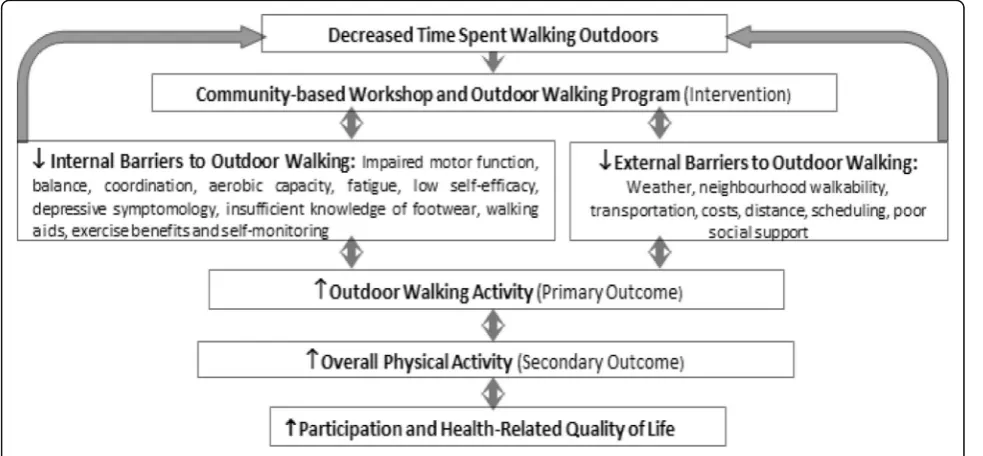
The conceptual framework for this project (Fig. 1) was developed by NS and RB, based on the literature, associations between outdoor walking, physical activ-ity, Bandura’s self-efficacy theory, the task-oriented
approach, and other variables [8–10, 14, 25]. The workshop and walking group were designed to de-crease internal and external barriers as a mechanism for increasing outdoor walking activity and time spent in physical activity. Increasing outdoor walking is ex-pected to enable participation in meaningful activities and improve HRQL.
Participants
Inclusion criteria were as follows: older adults aged≥65 years, self-reported ability to walk continuously on a flat surface ≥1 block independently with or without a walk-ing aid and without supervision, self-reportedly accumu-lating ≤20 min of outdoor walking in a typical week, mental competency, indicated by a score of ≥18 on the telephone version of the Mini-mental State Exam [26]. Exclusion criteria were as follows: active walkers accu-mulating ≥100 min of total (indoor and outdoor) walk-ing per week; ≥2 falls in the prior 12 months or presented with an acute fall [27]; diagnosed with cardiac, respiratory, peripheral vascular, or other health condi-tions that would prevent safe and full participation in the interventions; receiving rehabilitation treatment such as physical or occupational therapy for goals related to walking; postural hypotension determined by measuring lying and standing blood pressure; severe limitations to visual acuity identified using a fall prevention screen; and resting heart rate under 45 or over 100 beats per minute.
To limit fall risk and ensure safety of participants, in-dividuals were screened on the phone and then invited to a physical assessment, which included evaluation of
postural hypotension, visual acuity, and resting heart rate [27]. The PAR-Q+ [28] (an evaluation of physical activity readiness) was completed by each participant. Each participant’s family physician was asked to review PAR-Q+ results and confirm that the participant was able to participate in physical activity.
Recruitment
Potential participants were recruited using community-based recruitment strategies in March and April, 2015. We adver-tised through a seniors group that supports active living, the local newspaper, seniors’centers, an organization supporting those recovering from stroke, and posters in seniors’ apart-ments. Phone and physical screening were completed and in-formed consent was obtained. If the physical screen was passed, a person continued with the baseline assessment.
Measurement
Evaluators were trained in the use of the outcome mea-sures; they were also unaware of group assignment. Eval-uations of primary and secondary outcomes were completed in a university research lab, situated in a re-habilitation hospital.
The primary study outcome of outdoor walking activ-ity was estimated by synchronizing data from an acceler-ometer (ActiGraph GT3X+ activity monitor (ActiGraph, Pensacola, FL)) and a global positioning system (GPS) monitor (Qstarz BT-Q1000XT A-GPS Travel Recorder). The GT3X+ includes a triaxial accelerometer to detect steps and activity counts. This monitor has been shown to be reliable [29] and valid for measuring physical activ-ity under both laboratory [30] and free-living conditions [31]. The Qstarz A-GPS Travel Recorder was chosen for ease of use and capability for accurately recording GPS data (within 3 m) for up to 40 days [32]. The A-GPS Travel Recorder was configured using QTravel software (Qstarz, Taipei, Taiwan) to log GPS data every 5 s. Partic-ipants were asked to wear both monitors over the right hip on a belt around the waist during waking hours for eight consecutive days. Participants completed a log sheet noting when they donned and doffed the monitors each day.
Components of physical capacity that were expected to facilitate outdoor walking and total physical activity were evaluated. These components included aerobic capacity, balance, lower limb strength, and comfortable walking speed, and they were evaluated separately using the 6-min walk test (6MWT) [33, 34], the Berg balance scale [35], the 30-s sit to stand test [36], and the 10-m walk test [33], respectively. The Ambulatory Self-Confidence Question-naire (ASCQ) [37] was used to evaluate walking self-efficacy. Mood was evaluated with the Geriatric De-pression Scale short form [38, 39]. If a participant scored > 9, indicating depression, he/she was not excluded, but
the family physician was notified. Physical activity, walking activity, and participation were evaluated using the Com-munity Health Activities Model Program for Seniors (CHAMPS), a self-reported 40-item measure of social, leisure, and physical activity undertaken by older adults [40]. Specific questions are combined to produce sub-scales for time spent in MVPA, walking and total partici-pation time per week. Health-related quality of life was assessed with the Rand-36 [41], a widely used generic measure of HRQL with eight subscales of physical, mental, and social functioning.
At each evaluation, participants were asked to identify additional interventions they were receiving. There was a risk of over-estimation in self-reporting the time spent in walking outdoors and total physical activity. This was mitigated by the use of a self-report questionnaire in addition to the use of the GPS and activity monitor that objectively measured walking activity. The use of both self-report and objective measures also strengthens the interpretation of results, allowing comparison of differ-ent data collection methods.
Data on age, sex, education level, social support, co-morbidity, self-reported reasons for outdoor walking limitation, and neighborhood walkability were collected at baseline. Neighborhood walkability was evaluated using the 67-item self-report Neighbourhood Environ-ment Walkability Scale (NEWS-CFA) [42,43].
Intervention fidelity was captured by documenting at-tendance and completion of the workshop and walking group activities. The occurrence of adverse events dur-ing the workshop and outdoor walkdur-ing sessions was monitored and documented using an adverse event form. Occurrence of injurious falls, defined as a fall resulting in injury requiring medical care, was tracked. Participants were provided with monthly falls logs and asked to record occurrence of falls over the course of the study; they were also called monthly to determine if any falls had occurred. If a fall occurred, the participant was questioned regarding the cause and circumstances of the fall and if there was an injury requiring medical care.
Randomization
than 0.8 m/s. One married couple that desired to be in the same group was enrolled in the trial. This couple was randomized as a dyad. ID numbers of the remaining participants were then drawn, and group assignment al-ternated until the workshop-only group had three; those remaining were placed in the GO-OUT program.
Interventions Interactive workshop
The 5-h interactive workshop incorporated a series of eight activity stations at which participants worked in small groups of two or three and learned information, strategies, and practiced skills to safely walk outdoors. Each station involved didactic teaching by a facilitator and activities to increase knowledge and skills related to the following: (1) the Canadian Physical Activity Guide-lines for older adults [44]: the guidelines were discussed and participants determined the number of minutes of physical activity they completed in the previous week. (2) Setting SMART goals [45]: participants practiced writing outdoor walking-related goals that were specific, measureable, achievable, realistic, and timely. (3) Use of a pedometer [46–48]: participants were given a pedom-eter, taught how to use it, and practiced using it. (4) Use of Nordic walking poles [49, 50]: participants were instructed in and practiced adjusting poles and walking with the poles. (5) Appropriate footwear selection [51], foot care, and proper walking pattern and use of walking aids [8,45]: participants watched a video of a typical gait pattern, watched a video of their own gait, discussed foot care, and looked at examples of good and poor walking shoes. (6) Fall prevention [52]: participants answered questions on a fall risk questionnaire and discussed ways to prevent falls at home and in the community. (7) Self-monitoring of exercise intensity [53]: the facilitator discussed safety when exercising, the signs of when to stop exercise, and how to gauge one’s own intensity of exercise. (8) Postural awareness and balance exercises: participants practiced a number of balance exercises while the facilitator gave each person individualized sug-gestions for making each exercise more or less challen-ging, as required.
The facilitators at each station were physiotherapy fac-ulty and graduate or undergraduate students. All facilita-tors underwent training for the workshop stations at a training session, utilizing a prepared facilitator training guide which was developed to mirror the participant workbook. Each participant received a workbook which summarized information from each workshop station. The workbook was developed by the research team, using current research evidence, physical activity guide-lines, clinical and research expertise of the team, and older adult preferences [54]. Participants were asked to use the workbook as an information resource and to
record their outdoor walking goals. The pedometer was used by each participant for personal use and goal set-ting. All participants were encouraged to walk outdoors in their own neighborhoods with a partner, such as a family member or friend, for safety. Participants in the control group received the interactive workshop alone.
Outdoor walking program
Participants assigned to the experimental group received the interactive workshop followed by a 9-week facilitated outdoor walking program in summer months (i.e., the GO-OUT program). The walking program was group-based. Participants met twice a week for a 60-min session designed according to physical activity recommendations for older adults [44,53]. Participants met at four city park locations that met the following selection criteria: public ac-cess, availability of benches to rest, and public washrooms. There were a variety of surfaces and environmental factors introduced to challenge the participants, e.g., carrying ob-jects, diverting the walker’s attention, walking up and down curbs, slopes, and level or uneven surfaces [22, 55]. Each session included a 10-min warm-up, a planned walk in the park with a gradual increase of challenges, and a 10-min cool down [53]. Based on the needs of each group member, the physiotherapist facilitator gradually increased continu-ous walking exercise from a start of 10 min [53] to a max-imum of 40 min, with increased difficulty [22, 56, 57]. Guidelines for each session were developed for gait speeds of≥0.8 m/s and < 0.8 m/s. Balance and functional strength-ening exercises were included as a component of the warm-up and planned walk, in recognition that multifactor-ial interventions are important in addition to walking for those who are at risk for falls [58]. Activities for each ses-sion were based on the Patla and Shumway-Cook dimen-sions of community mobility [10], with a focus on different dimensions each week. Dimensions include the following: distance, postural transitions (such as sit to stand), varied terrain, temporal factors (such as crossing a street in time), physical load, attentional demands, and traffic density (such as walking in crowds). Each dimension was targeted with activities in 2 or 3 weeks of the 9-week intervention. The same activity was repeated in the same week to reinforce the skills needed.
Pre-determined reasons to cancel the walking group for the safety of the participants included rain, thunder, or lightning; humidex (what the temperature feels like, taking humidity into account) above 30 °C [59]; temperature above 30 °C; temperature below 5 °C; wind speed or gusts above 30 km/h [59, 60]; and an insuffi-cient ratio of instructors-to-participants to ensure safety, i.e., less than 1 instructor to 3 participants. Environment Canada recommends that outdoor activity be reduced or modified when the humidex is in the mid to high 30s, depending on the age and health of the individual, phys-ical shape, clothing, and other weather conditions [59]. It has been shown that non-uniform winds should be less than 9 m/s (32.4 km/h) to avoid momentary loss of balance, but that performance is unaffected when wind gusts are below this speed [60].
Focus groups and interviews
After the 3-month evaluation, all participants were in-vited to participate in face-to-face focus group or inter-views conducted separately for each intervention group. The interview guide was based on the conceptual frame-work [25] developed by NS and RB (Fig.1) and objectives 2 and 3 of this study. A qualitative descriptive approach with directed content analysis was used [61–63]. We aimed to explore participants’ perceptions of the study protocol, including the benefits, challenges, and potential strategies to improve recruitment; adherence to the inter-ventions; intervention strategies and their components; and data collection procedures. Qualitative description was viewed as an appropriate means to gathering and ana-lyzing the data of the study, as the intent was to seek an understanding of patterns or responses rather than sub-jecting the data to a high degree of interpretation. Inter-views were facilitated by JR and RB, and were digitally recorded, and transcribed verbatim.
Analysis
1. Identify the optimal method for estimating outdoor walking activity, using accelerometry/GPS
ActiLife6 software (ActiGraph, Pensacola, FL) was used to initialize the GT3X+ devices (100 Hz) and download and analyze the data (default filter). Participants with≥4 valid days with a 10-h per day minimum time wearing the de-vices (wear time) were included in the analysis [64]. One-second epoch GT3X+ files were re-integrated into 5-s and 60-s files to allow for synchronization with the GPS data and analyses of activity bouts respectively.
Freedson cut-points were employed to define MVPA (≥1952 counts per minute (cpm)) using the 60-s epoch files [65]. MVPA was also measured using a Lifestyle cut-point (≥760 cpm) which captures activities ≥3.6 METs [66] and has been suggested to reflect older adults’ free-living moderate-intensity activity (for
example, walking) [67]. Total time spent in MVPA (Freedson and Lifestyle cut-points) was determined along with identification of bouts of MVPA (≥10 min at or above Freedson MVPA threshold, ≥10 min and ≥5 min at or above Lifestyle cut-point). Lifestyle bouts were time matched with GPS locations to determine if the ac-tivity bout was indeed outdoor walking. The following parameters were determined from the Lifestyle bouts and GPS (there were only small numbers of Freedson bouts): location of bouts, total number of bouts, dur-ation of each bout, steps per bout, and total walking time in bouts per day. Weekly bouts and minutes of MVPA were calculated by multiplying average bouts per day by 7. Steps per day were also calculated.
GPS data in Qstarz files were combined with the GT3X+ 5-s epoch files using ActiLife6 software to create time-synchronized CSV files (date, time, activity count, latitude, longitude, elevation, and speed data). To deter-mine the location of activity bouts, the start and end time for each Lifestyle bout was noted and matched in the combined GPS/GT3X+ CSV file. If GPS data were available for the time period, then the GPS KML file was opened in Google Earth (Google, Inc., Mountain View, CA) and the latitude and longitude coordinates associ-ated with the time period of the activity were used to identify the location of the bout and determine whether it occurred indoors or outdoors. For bouts that occurred outdoors, mean speed (km/h) was also calculated. Bouts were categorized as occurring indoors, outdoors or at an uncertain location (when the GPS location could not be determined).
2. Evaluate the preliminary effect and safety
As this was a pilot study, we did not test hypotheses re-lated to the effectiveness of the GO-OUT intervention compared to the interactive workshop alone. Primary outcomes were presented as individual scores by group for each participant, assisting with determining feasibil-ity of the analysis methods of the activfeasibil-ity monitor and GPS analysis. For secondary outcomes, we used raw scores to calculate subscale and total scores; descriptive statistics summarized scores by group with medians and 25th and 75th percentile.
Safety was evaluated by determining the number, na-ture, and timing of adverse events, including injurious and non-injurious falls, occurring throughout the study.
3. Evaluate the feasibility and acceptability of the study protocol
of interactive workshop stations finished, and average number of walking groups attended were calculated.
The number of individuals recruited per month and the withdrawal rate at each follow-up evaluation were calculated. The completion and ease of use of study measures and equipment (activity monitor, GPS) were also documented.
Qualitative analysis For the qualitative analysis, a di-rected content analysis approach, using the study’s con-ceptual framework as an initial guide to analysis was used [63]. The transcripts were reviewed and coded indi-vidually by RB, NS, and JR. All three authors met jointly to discuss coding. Similar codes were grouped into cat-egories based on the conceptual framework, while keep-ing open to the possibility of new categories that arose.
Rigor was addressed using triangulation: three re-searchers completed the data analysis, multiple interviews were undertaken and findings were reported with quota-tions of participants to support each category [68,69].
Identifying challenges in the pilot Using both quanti-tative and qualiquanti-tative results, the first two authors dis-cussed challenges that occurred and determined changes to the protocol for a full study.
Results
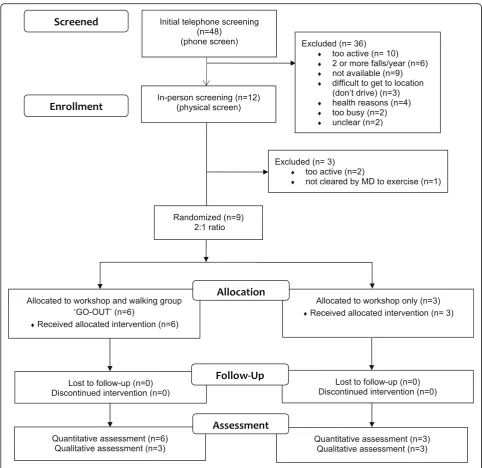
Forty-eight individuals were screened for eligibility. Nine participants were included and randomized. (Please see Fig.2for the CONSORT diagram.) Six participants were randomly assigned to the GO-OUT intervention, and three to the interactive workshop alone. All participants remained in the group to which they were assigned. The demographic characteristics of the participants in each group are described in Table1. The mean (standard de-viation) age of participants was 77 (3) years in GO-OUT and 74 (8) years in the interactive workshop-only group. All participants were retired from paid employment, and only one participant in the walking group used a walking aid (a four-wheeled walker). All participants drove, ex-cept for one woman in the walking group, who was able to utilize local accessible public transport to all of the GO-OUT intervention locations.
Identify the optimal analysis method of outdoor walking activity, using accelerometry and GPS
One participant in the GO-OUT group did not meet minimum activity monitor wear-time criteria at 3 and 6 months, so no valid activity monitor data were collected at these time points for this individual.
Because the number of Freedson activity bouts per day was zero and the number of Lifestyle bouts≥10 min in duration was also < 1/day, we determined the weekly number of ≥5 min Lifestyle bouts as well as the total
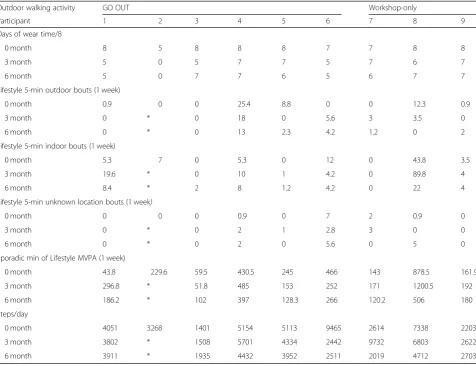
weekly sporadic Lifestyle MVPA minutes. The mean number of steps/day for all participants was 3893 (SD 1929) at baseline, and this value did not change at 3 months or 6 months. However, steps per day reflect all walking, including walking in the home, not specifically outdoor walking. For the outdoor walking outcome, data are presented at an individual level, by group (see Table 2). The Lifestyle bouts were categorized as occur-ring in indoor, outdoor, or unknown locations according to the GPS data.
Evaluate the preliminary effect and safety
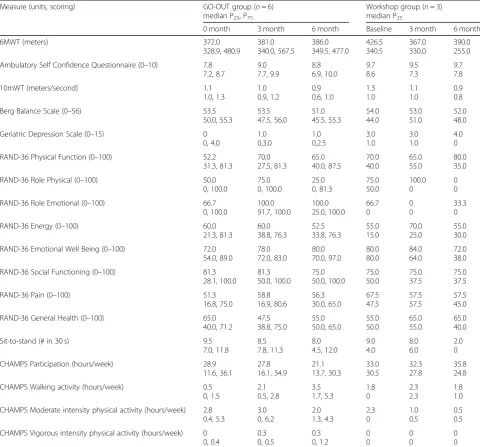
Median scores on measures of secondary outcomes are presented by intervention group in Table 3. No falls oc-curred during the interactive workshop or the outdoor walk sessions. Three participants in the walking group had one fall each while performing usual activities dur-ing the 6-month duration of the study; two saw a doctor after their fall. One of these participants experienced a fall while walking outdoors during a holiday that re-quired a doctor’s visit. One person in the control group had one fall, and sought treatment from a chiropractor. No fractures, hospital visits, or long-term issues were re-ported as a result of the falls.
Identify the feasibility and acceptability of the study protocol
Quantitative
The recruitment rate was approximately 5 participants per month. There were no dropouts; all participants completed the follow-up assessments. All study mea-sures were completed at each assessment time by all participants. There was limited wear time of the activity monitors and GPS devices for one participant.
Two of 18 planned sessions for the GO-OUT group were canceled due to rain. Of the 16 remaining sessions, the average attendance was 61%, with individual attend-ance ranging from 25 to 100%. Removing the two at-tendees with the lowest attendance (a couple), the average attendance of the other four participants was 80%. The GO-OUT group completed all activities for each session as per the guidelines that were prepared for the walk group leaders. GO-OUT participants started keeping track of the number of steps that they took at each session, using their own pedometers, and noted an increase in steps over the weeks. At the interactive work-shop, all participants completed every station, with one participant observing one activity station, due to fatigue.
Qualitative
could not be identified. All participants lived in the city of Winnipeg (pop. 718,000) [70]. Four themes emerged from the analysis: barriers to outdoor walking, impact of the interactive workshop, impact of the GO-OUT walk-ing group, and feasibility and acceptance of the assess-ment and intervention strategies.
Barriers to outdoor walking A primary internal barrier to outdoor walking described by all participants was a lack of motivation. Participants attributed their lack of motivation to decreased confidence in walking alone, an inability to put the knowledge of the importance of
physical activity into action, and the presence of depres-sive symptoms.
Participants described a reluctance to join existing walking groups as shared by one person:
I’m a little hesitant because these are people who already know how to walk….And I would feel really stupid if I was [lagging] behind. (GO-OUT,
participant 3)
beneficial and motivating to walk outdoors more fre-quently. One participant stated:
Well I guess I would put it this way for me, not having a cohort [walking group] was, or a schedule or a, decreased my ability to follow through with the walking. Like to me that is a really important piece. (Workshop, participant 3)
Participants frequently discussed fear of injury, falls, or pain and a sense that there was increased risk in walking outside, particularly in the winter (although the study oc-curred in summer weather). As one participant reported:
Well you can’t walk outside safely. You don’t want to fall. [while walking outside in winter] (Workshop, participant 2)
Perceived impact of the interactive workshop Partici-pants perceived a social benefit of the interactive work-shop, in learning and working through stations with a group of peers. While some participants felt they learned new information at the workshop, most reported that the information provided was a reminder. They felt it
was motivating and inspiring to start being more active, as shared by one individual:
And it just, the workshop was, how do you say it, gives me the inspiration to get started. It was so good. (GO-OUT, participant 2)
However, those in the interactive workshop group felt that, while the workshop increased awareness, it did not lead to meaningful behavior change. All participants were given a pedometer at the workshop, and behavior change appeared to be relative to the use of the pedom-eter. Pedometers were described as motivating, useful for setting goals for steps per day, and provided feedback as to how active they were. All those interviewed stated that they used their pedometers afterwards to some ex-tent, as described by one individual:
And the pedometer, just so I had a better idea of what I was doing…And I use it all the time. (Workshop, participant 4)
The participants in the interactive workshop-only group described some increased walking and goal-setting ini-tially, but it did not appear to be sustained. One
Table 1Demographic characteristics of participants at baseline
Variable GO-OUT group (n= 6) Workshop group (n= 3)
Femalen(%) 4 67 3 100
Self-rated healthn(%)
Excellent 1 17 0 0
Very good 0 0 1 33
Good 4 67 2 67
Fair 1 17 0 0
Poor 0 0 0 0
Chronic conditionsn(%)
Hypertension 4 67 1 33
Heart attack 1 17 0 0
Asthma 2 33 0 0
Arthritis 4 67 1 33
Ulcer disease 1 17 1 33
Diabetes 1 17 0 0
Glaucoma 1 17 2 67
Impaired hearing 4 67 1 33
Other 1 17 2 67
Age (years), mean (SD) 77 3 74 8
Number of medications mean (SD) 5 4 6 3
Minutes walked outdoors per week (self-report from screening) mean (SD)
18 15 20 17
Times/week walking outdoors (self-report from screening) mean (SD)
participant suggested that for a future study, regular phone follow-up asking how much they were walking would be beneficial for the interactive workshop-only group.
Perceived impact of the GO-OUT walking group GO-OUT walking group participants described the benefit of a group format in helping to address their decreased motivation to walk outdoors and to be more active. Peer support was important, and they found it motivating to see other group members improve. They stated that walking in parks in a group was positive as it felt safer than walking alone. The walking facilita-tors created a comfortable, non-competitive atmos-phere; although walking in a group, there still had the opportunity to be challenged individually as there was more than one walking facilitator. The experiential
aspect of the walking group was highlighted as import-ant. One participant reported:
That is because then you can remember better if you actually do it. Like just somebody talking and telling you things like that, that doesn’t stick. It’s when you actually do what they are explaining and teaching you that stays with you. (GO-OUT, participant 2)
All GO-OUT group members discussed how their confidence to walk outdoors improved, leading to a sense of freedom. One participant shared:
But the main effect for me is it did exactly what I wanted….Gave me confidence to walk…It changed my way of thinking. Gave me confidence to go out there and actually walk. (GO-OUT, participant 3).
Table 2Primary outcome—outdoor walking activity measured by accelerometry and GPS
Outdoor walking activity GO OUT Workshop-only
Participant 1 2 3 4 5 6 7 8 9
Days of wear time/8
0 month 8 5 8 8 8 7 7 8 8
3 month 5 0 5 7 7 5 7 6 7
6 month 5 0 7 7 6 5 6 7 7
Lifestyle 5-min outdoor bouts (1 week)
0 month 0.9 0 0 25.4 8.8 0 0 12.3 0.9
3 month 0 * 0 18 0 5.6 3 3.5 0
6 month 0 * 0 13 2.3 4.2 1.2 0 2
Lifestyle 5-min indoor bouts (1 week)
0 month 5.3 7 0 5.3 0 12 0 43.8 3.5
3 month 19.6 * 0 10 1 4.2 0 89.8 4
6 month 8.4 * 2 8 1.2 4.2 0 22 4
Lifestyle 5-min unknown location bouts (1 week)
0 month 0 0 0 0.9 0 7 2 0.9 0
3 month 0 * 0 2 1 2.8 3 0 0
6 month 0 * 0 2 0 5.6 0 5 0
Sporadic min of Lifestyle MVPA (1 week)
0 month 43.8 229.6 59.5 430.5 245 466 143 878.5 161.9
3 month 296.8 * 51.8 485 153 252 171 1200.5 192
6 month 186.2 * 102 397 128.3 266 120.2 506 180
Steps/day
0 month 4051 3268 1401 5154 5113 9465 2614 7338 2203
3 month 3802 * 1508 5701 4334 2442 9732 6803 2622
6 month 3911 * 1935 4432 3952 2511 2019 4712 2703
All participants had 0 Freedson and Lifestyle 10 min bouts MVPAmoderate to vigorous physical activity
Practicing skills and increasing the walking chal-lenges (e.g., distance, terrain) over time facilitated learning in a safe environment. GO-OUT partici-pants identified that their walking distance and en-durance improved over time and some felt that their energy improved on the day of the walk. All three described improved mood, deceased depres-sion, and an improved sense of well-being. They linked their improved mood to an increased sense of coping and a positive outlook as described by one participant:
Getting out and doing something like walking like this, it changes your attitude. I don’t know how it all works but it does. (GO-OUT, participant 2)
GO-OUT participants stated that through participating in the study, they learned about new parks and places to walk. At the time of the focus group, all described con-tinuing to walk outdoors and using their pedometers.
Feasibility and acceptance of the assessment and intervention strategies No issues with the use of the
Table 3Secondary outcomes
Measure (units, scoring) GO-OUT group (n= 6)
median P25, P75
Workshop group (n= 3) median P25
0 month 3 month 6 month Baseline 3 month 6 month
6MWT (meters) 372.0
328.9, 480.9 381.0 340.0, 567.5 386.0 349.5, 477.0 426.5 340.5 367.0 330.0 390.0 255.0
Ambulatory Self Confidence Questionnaire (0–10) 7.8 7.2, 8.7 9.0 7.7, 9.9 8.8 6.9, 10.0 9.7 8.6 9.5 7.3 9.7 7.8
10mWT (meters/second) 1.1
1.0, 1.3 1.0 0.9, 1.2 0.9 0.6, 1.0 1.3 1.0 1.1 1.0 0.9 0.8
Berg Balance Scale (0–56) 53.5
50.0, 55.3 53.5 47.5, 56.0 51.0 45.5, 55.3 54.0 44.0 53.0 51.0 52.0 48.0
Geriatric Depression Scale (0–15) 0
0, 4.0 1.0 0,3.0 1.0 0,2.5 3.0 1.0 3.0 1.0 4.0 0
RAND-36 Physical Function (0–100) 52.2
31.3, 81.3 70.0 27.5, 81.3 65.0 40.0, 87.5 70.0 40.0 65.0 55.0 80.0 35.0
RAND-36 Role Physical (0–100) 50.0
0, 100.0 75.0 0, 100.0 25.0 0, 81.3 75.0 50.0 100.0 0 0 0
RAND-36 Role Emotional (0–100) 66.7
0, 100.0 100.0 91.7, 100.0 100.0 25.0, 100.0 66.7 0 0 0 33.3 0
RAND-36 Energy (0–100) 60.0
21.3, 81.3 60.0 38.8, 76.3 52.5 33.8, 76.3 55.0 15.0 70.0 25.0 55.0 30.0
RAND-36 Emotional Well Being (0–100) 72.0
54.0, 89.0 78.0 72.0, 83.0 80.0 70.0, 97.0 80.0 80.0 84.0 64.0 72.0 38.0
RAND-36 Social Functioning (0–100) 81.3
28.1, 100.0 81.3 50.0, 100.0 75.0 50.0, 100.0 75.0 50.0 75.0 37.5 75.0 37.5
RAND-36 Pain (0–100) 51.3
16.8, 75.0 58.8 16.9, 80.6 56.3 30.0, 65.0 67.5 47.5 57.5 57.5 57.5 45.0
RAND-36 General Health (0–100) 65.0
40.0, 71.2 47.5 38.8, 75.0 55.0 50.0, 65.0 55.0 50.0 65.0 55.0 65.0 40.0
Sit-to-stand (# in 30 s) 9.5
7.0, 11.8 8.5 7.8, 11.3 8.0 4.5, 12.0 9.0 4.0 8.0 6.0 2.0 0
CHAMPS Participation (hours/week) 28.9
11.6, 36.1 27.8 16.1, 34.9 21.1 13.7, 30.3 33.0 30.5 32.3 27.8 35.8 24.8
CHAMPS Walking activity (hours/week) 0.5
0, 1.5 2.1 0.5, 2.8 3.5 1.7, 5.3 1.8 0 2.3 2.3 1.8 1.0
CHAMPS Moderate intensity physical activity (hours/week) 2.8 0.4, 5.3 3.0 0, 6.2 2.0 1.3, 4.3 2.3 0 1.0 0.5 0.5 0.5
CHAMPS Vigorous intensity physical activity (hours/week) 0 0, 0.4 0.3 0, 0.5 0.3 0, 1.2 0 0 0 0 0 0
activity monitors and GPS units for assessment were identified in the interviews. The length of time for the assessments and the type of physical assessments and self-report questionnaires were considered acceptable. Participants in the GO-OUT group enjoyed the inter-vention and participants in the interactive workshop group described wishing they had been allocated to the intervention walking group. There were no suggestions to improve workshop stations. Participants provided ideas for an enhanced recruitment strategy: using public service announcements and advertisements on “oldies” radio stations.
Identifying challenges in the pilot
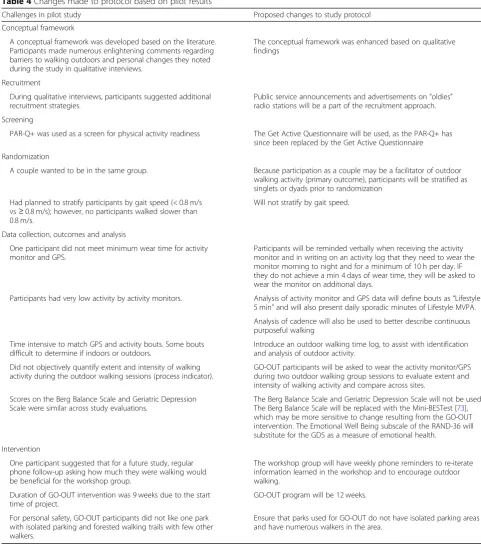
Table 4 represents the changes to the protocol which were made based on the results and experience of the pilot study.
Discussion
Participants were below norms for age in many comes that are considered to be internal barriers to out-door walking. The mean number of steps/day taken by participants in our study was 3893, which corresponds with the average steps/day measured in a large sample of Americans aged 66–75 [71]. The 6MWT results, how-ever, were below norms for the majority of participants [33]; this suggests that while individuals in our study ac-cumulated volumes of activity (steps/day) that were comparable or greater than age and sex-matched peers, they likely accumulated these steps in short bouts of ac-tivity and did not have exercise tolerance levels that would allow them to excel in the 6MWT. Comfortable gait speed at baseline was slightly below norms for age and sex [33]. Median baseline values for all RAND-36 subscales were lower than Canadian norms for age for all participants, except for emotional well-being in the interactive workshop group [72]. Median baseline values of the 30-s sit-to-stand test were lower than mean scores in older adults with low activity levels [36].
Identify the optimal analysis method of outdoor walking activity
The low 6MWT scores correspond with the participants being a low-active group. For this reason, we analyzed the data using a 5-min Lifestyle bout definition, and even using this relatively low threshold, participants re-corded few walks that lasted 5 min or more (Table 2). It is evident that people did walk indoors, and had a small amount of outdoor walking. There are some ‘unknown location’ bouts of walking, which demonstrate some of the challenges in analyzing outdoor walking with GPS. With the exception of one person, all participants had enough days of wear time to enable analysis, suggesting that asking people to wear the activity monitor and GPS
for 8 days is suitable. Progress was made in identify-ing a feasible method of analyzidentify-ing outdoor walkidentify-ing. We are confident that the activity monitor and GPS analyses that we utilized were appropriate. Overall, it was very low-active group; the Lifestyle 5 min bouts represent purposeful walking for this less active group. In future analyses, we will also use cadence as part of the analysis. Cadence can be used to define continuous purposeful walking, e.g., 5 min bouts at a minimum cadence level.
Evaluate the preliminary effect and safety
The total self-perceived time walked per week, ac-cording to the CHAMPS, appeared to improve over time in the GO-OUT group; walking time increased at 3 months in the interactive workshop group, but was not sustained. Walking self-efficacy (ASCQ) im-proved in the GO-OUT group. The interactive work-shop group had higher 6MWT, ASCQ, 10mWT, and physical function at baseline than the GO-OUT group. All participants had Berg balance scores at the higher (better balance) end of the scale. Keeping in mind the small sample size, there were a few out-comes at 3 months that appeared to improve in the GO-OUT group, and decrease in the workshop group: endurance (6MWT), role limitation due to emotional problems (RAND-36), physical function (RAND-36), and emotional well-being (RAND-36). Findings are also similar to a previous study that demonstrated improved HRQL and self-reported walking activity after a peer-led neighborhood walking group [14]. Ex-ternal barriers of community walkability were assessed at baseline with the NEWS. Subscales reflected on average, moderate neighborhood walkability.
In comparing objective physical activity data to self-reported walking and moderate/vigorous activity time in the CHAMPS, there were some similarities. For example, activity monitors worn by the GO-OUT group at 6 months recorded approximately 30 min/day of spor-adic Lifestyle MVPA which (when multiplied by 7 days) is very similar to the median 3.5 h/week reported spent in walking activities. However, these similarities between objective and self-reported physical activity levels did not apply to the control group. The timing of the two assessments was slightly different: the CHAMPS refers to activity in a typical week over the past 4 weeks, whereas the monitor was worn in the week immediately after answering the CHAMPS questionnaire.
The qualitative interviews supported the increased self-reported walking in the GO-OUT group, as well as improved endurance (6MWT), HRQL (RAND-36), and improved ambulatory self-confidence.
outside of intervention time did not appear to be re-lated to the interventions, but rather to activities the participants had previously planned. However, we need to evaluate this further with a larger study. There could be a possibility that as people begin to feel more confident, they take chances they would not have previously taken.
Identify the feasibility and acceptability of the study protocol
The protocol was feasible to implement as noted by the ability to collect all outcomes at multiple time points and successful completion of the interactive workshop and the GO-OUT intervention by all participants; this was also supported by the qualitative data. Participants
Table 4Changes made to protocol based on pilot results
Challenges in pilot study Proposed changes to study protocol
Conceptual framework
A conceptual framework was developed based on the literature. Participants made numerous enlightening comments regarding barriers to walking outdoors and personal changes they noted during the study in qualitative interviews.
The conceptual framework was enhanced based on qualitative findings
Recruitment
During qualitative interviews, participants suggested additional recruitment strategies.
Public service announcements and advertisements on“oldies” radio stations will be a part of the recruitment approach.
Screening
PAR-Q+ was used as a screen for physical activity readiness The Get Active Questionnaire will be used, as the PAR-Q+ has since been replaced by the Get Active Questionnaire
Randomization
A couple wanted to be in the same group. Because participation as a couple may be a facilitator of outdoor walking activity (primary outcome), participants will be stratified as singlets or dyads prior to randomization
Had planned to stratify participants by gait speed (< 0.8 m/s vs≥0.8 m/s); however, no participants walked slower than 0.8 m/s.
Will not stratify by gait speed.
Data collection, outcomes and analysis
One participant did not meet minimum wear time for activity monitor and GPS.
Participants will be reminded verbally when receiving the activity monitor and in writing on an activity log that they need to wear the monitor morning to night and for a minimum of 10 h per day. IF they do not achieve a min 4 days of wear time, they will be asked to wear the monitor on additional days.
Participants had very low activity by activity monitors. Analysis of activity monitor and GPS data will define bouts as“Lifestyle 5 min”and will also present daily sporadic minutes of Lifestyle MVPA.
Analysis of cadence will also be used to better describe continuous purposeful walking
Time intensive to match GPS and activity bouts. Some bouts difficult to determine if indoors or outdoors.
Introduce an outdoor walking time log, to assist with identification and analysis of outdoor activity.
Did not objectively quantify extent and intensity of walking activity during the outdoor walking sessions (process indicator).
GO-OUT participants will be asked to wear the activity monitor/GPS during two outdoor walking group sessions to evaluate extent and intensity of walking activity and compare across sites.
Scores on the Berg Balance Scale and Geriatric Depression Scale were similar across study evaluations.
The Berg Balance Scale and Geriatric Depression Scale will not be used. The Berg Balance Scale will be replaced with the Mini-BESTest [73], which may be more sensitive to change resulting from the GO-OUT intervention. The Emotional Well Being subscale of the RAND-36 will substitute for the GDS as a measure of emotional health.
Intervention
One participant suggested that for a future study, regular phone follow-up asking how much they were walking would be beneficial for the workshop group.
The workshop group will have weekly phone reminders to re-iterate information learned in the workshop and to encourage outdoor walking.
Duration of GO-OUT intervention was 9 weeks due to the start time of project.
GO-OUT program will be 12 weeks.
For personal safety, GO-OUT participants did not like one park with isolated parking and forested walking trails with few other walkers.
did not identify problems with using the GPS and activ-ity monitors, they found the questionnaires reasonable, and those in the GO-OUT group found it beneficial and enjoyable.
Limitations
The small sample size of nine is a limitation to this pilot study. There was only one person that used a walking aid, making it difficult to know how others with walking aids would participate in the GO-OUT intervention. Since it was not possible to blind the participants, there is the po-tential risk of performance bias. The inclusion and exclu-sion criteria were quite strict to ensure safety of the participants in the pilot. This may limit generalizability of the pilot results.
Conclusions
The objectives of the study were met. An analysis method combining accelerometry and GPS to determine outdoor walking was developed for an older adult popu-lation who infrequently walked outdoors. The GO-OUT intervention and interactive workshop were safe, and changes in physical capacity and HRQL appear to have occurred, given the small number of participants. Partic-ipants accepted the frequency and content of the evalu-ation sessions. Participants shared their perceptions of barriers to outdoor walking, impact of the interactive workshop and GO-OUT walking group, and feasibility and acceptance of the assessment and intervention strat-egies. A full-scale four-site study is underway.
Abbreviations
6MWT:Six-minute walk test; ASCQ: Ambulatory Self-Confidence Question-naire; CHAMPS: Community Health Activities Model Program for Seniors; GO-OUT: Getting Older adults OUTdoors; GPS: Global positioning system; HRQL: Health-related quality of life; MVPA: Moderate-to-vigorous physical activity; NEWS: Neighbourhood Environment Walkability Scale
Acknowledgements
Thanks to Sara Braun, Dina Brooks, walking group leaders, research assistants, and participants.
Funding
Research Manitoba—they had no role in the design, analysis, or writing the manuscript.
Availability of data and materials
The datasets generated and/or analyzed during the current study are not publicly available due to small numbers and possible identification of individuals, but are available from the corresponding author on reasonable request.
Authors’contributions
RB and NS were the project leads (PIs) and were responsible for the conceptual development, study design, interpretation of results, and writing of all drafts; SW was responsible for the analysis and analysis plans for activity monitors/GPS; JR lead design and analysis of qualitative component; all others contributed to study design regarding their specialties, commented, and reviewed drafts. All authors read and approved the final manuscript.
Ethics approval and consent to participate
Ethics approval was obtained from the Health Research Ethics Board at the University of Manitoba (H2014:391). All participants received information regarding the study and signed an informed consent.
Consent for publication
NA
Competing interests
The authors declare that they have no competing interests.
Publisher’s Note
Springer Nature remains neutral with regard to jurisdictional claims in published maps and institutional affiliations.
Author details
1Department of Physical Therapy, College of Rehabilitation Sciences,
University of Manitoba, R106-771 McDermot Ave., Winnipeg, Manitoba R3E 0T6, Canada.2Elisabeth Bruyère Hospital, Ottawa, Ontario, Canada. 3
Department of Physical Therapy, University of Alberta, Edmonton, Alberta, Canada.4Department of Community Health Sciences, University of Manitoba, Winnipeg, Manitoba, Canada.5Department of Clinical Epidemiology, McGill University, Montreal, Quebec, Canada.6College of Medicine, University of Manitoba, Winnipeg, Manitoba, Canada.7Department of Physical Therapy, University of Toronto, Toronto, Ontario, Canada.
Received: 28 June 2018 Accepted: 7 November 2018
References
1. Government of Canada. Walking Data, from Canadian Community Health Survey. 2009.
2. Rantakokko M, Manty M, Iwarsson S, Tormakangas T, Leinonen R, Heikinnen E, et al. Fear of moving outdoors and development of outdoor walking difficulty in older people. J Am Geriatr Soc. 2009;57:634–40.
3. Fujita K, Fujiwara Y, Chaves P, Motohashi Y, Shinkai S. Frequency of going outdoors as a good predictors for incident disability of physical function as well as disability recovery in community-dwelling older adults in rural Japan. J Epidemiol. 2006;16(6):261–70.
4. Sirois M, Emond M, Ouellet M, Perry J, Daoust R, Morin J, et al. Cumulative incidence of functional decline after minor injuries in previously independent older Canadian individuals in the emergency department. J Am Geriatr Soc. 2013;61:1661–8.
5. Denkinger M, Lukas A, Herbolsheimer F, Peter R, Nikolaus T. Physical activity and other health-related factors predict health care utilisation in older adults. Z Gerontol Geriat. 2012;45:290–7.
6. Gardener E, Huppert F, Guralnik J, Melzer D. Middle-aged and mobility-limited: prevalence of disability and symptom attributions in a National Survey. J Gen Intern Med. 2006;21:1091–6.
7. King A, Sallis J, LD F, Salelens B, Cain K, Conway T, et al. Aging in neighborhoods differing in walkability and income: associations with physical activity and obesity in older adults. Soc Sci Med. 2011;73:1525–33. 8. Shumway-Cook A, Woollacott M. Motor control - translating research into
clinical practice. 5th ed. Philadelphia: Wolters: Kluwer; 2017.
9. Bandura A. Self-efficacy: toward a unifying theory of behavioral change. Psychol Rev. 1977;84:191–215.
10. Patla A, Shumway-Cook A. Dimensions of mobility: defining the complexity and difficulty associated with community mobility. J Aging Phys Act. 1999;7: 7–19.
11. Kerr J, Sallis JF, Saelens BE, Cain KL, Conway TL, Frank LD, King AC. Outdoor physical activity and selfrated health in older adults living in two regions of the U.S. Int J Behav Nutr Phys Act. 2012;9:89. https://doi.org/10.1186/1479-5868-9-89.
12. Yang Y, Wang R, Chen Y, Kao M. Dual-task exercise improves walking ability in chronic stroke: a randomized controlled trial. Arch Phys Med Rehabil. 2007;88:1236–40.
14. Fisher K, Li F. A community-based walking trial to improve neighbourhood quality of life in older adults: a multi-level analysis. Ann Behav Med. 2004;28: 186–94.
15. Thompson Coon J, Boddy K, Stein K, Whear R, Barton J, Depledge M. Does participation in physical activity in outdoor natural environments have a greater effect on physical and mental well-being than physical activity indoors? A systematic review. Environ Sci Technol. 2011;45:1761–72. 16. Lauretani F, Russo C, Bandinelli S, Bartali B, Cavazzini C, Di Iorio A, et al.
Age-associated changes in skeletal muscles and their effect on mobility: an operational diagnosis of sarcopenia. J Appl Physiol. 2003;95(5):1851–60. 17. Srygley J, Mirelman A, Herman T, Giladi N, Hausdorff J. When does walking
alter thinking? Age and task associated findings. Brain Res. 2009;1253:92–9. 18. Li K, Lindenberger U. Relations between aging sensory/sensorimotor and
cognitive functions. Neurosci Biobehav Rev. 2002;26(7):777–83. 19. Kassavou A, Turner A, French D. Do interventions to promote walking in
groups increase physical activity? A meta-analysis. Int J Behav Nutr Phys Act. 2013;10:12.
20. Yamada M, Tanaka B, Nagai K, Aoyama T, Ichihashi N. Trail-walking exercise and fall risk factors in community-dwelling older adults: preliminary results of a randomized controlled trial. J Am Geriatr Soc. 2010;58(10):1946–51. 21. Brach J, VanSwearingen J. Interventions to improve walking in older adults.
Curr Transl Geriatr Exp Gerontol Rep. 2013;2(4):230–8.
22. Park H, Oh D, Kim S, Choi J. Effectiveness of community-based ambulation training for walking function of post-stroke hemiparesis: a randomized controlled pilot trial. Clin Rehabil. 2011;25:451–9.
23. Lord S, McPherson K, McNaughton H, Rochester L, Weatherall M. How feasible is the attainment of community ambulation after stroke? A pilot randomized controlled trial to evaluate community-based physiotherapy in subacute stroke. Clin Rehabil. 2008;22:215–25.
24. Creswell J. Research design- qualitative, quantitative, and mixed methods approaches. Fourth ed. California: SAGE Publications, Inc.; 2014. 273 p 25. Salbach N, Barclay R, Braun S, Brooks D, Grant T, Jones A, et al.
Theory-informed development of the Getting Older adults OUTdoors (GO-OUT) program: An intervention designed to improve outdoor walking in older adults who infrequently walk outdoors. Montreal: Canadian Association on Gerontology 45th Annual Scientific and Educational Meeting; 2016. 26. Roccaforte W, Burke W, Bayer B, Wengel S. Validation of a telephone version
of the mini-mental state examination. J Am Geriatr Soc. 1992;40:697–702. 27. Panel on Prevention o fFalls in Older Persons. A Summary of the Updated
American Geriatrics Society/British Geriatrics Society Clinical Practice Guideline for Prevention of Falls in Older Persons. J Am Geriatr Soc. 2011;59: 148–57.
28. Canadian Society for Exercise Physiology. PAR-Q+.https://www.ucalgary.ca/ activeliving/files/activeliving/parqplus.pdf. Accessed 19 Nov 2018. 29. Aadland E, Ylvisaker E. Reliability of objectively measured sedentary time
and physical activity in adults. PLoS One. 2015;10:e0133296. 30. Wetten AA, Batterham M, Tan SY, Tapsell LJ. Relative validity of three
accelerometer models for estimating energy expenditure during light activity. J Phys Act Health. 2014;11(3):638–47.https://doi.org/10.1123/jpah. 2011-0167. Epub 2013 Feb 8.
31. Rabinovich RA1, Louvaris Z, Raste Y, Langer D, Van Remoortel H, Giavedoni S, Burtin C, Regueiro EM, Vogiatzis I, Hopkinson NS, Polkey MI, Wilson FJ, Macnee W, Westerterp KR, Troosters T. PROactive Consortium.Validity of physical activity monitors during daily life in patients with COPD. Eur Respir J. 2013;42(5):1205–15.https://doi.org/10.1183/09031936.00134312. Epub 2013 Feb 8.
32. QstarzInternational. Products GPS Travel Recorderhttp://www.qstarz.com/ Products/GPS%20Products/BT-Q1000XT-F.htm2013.
33. Steffen T, Hacker T, Mollinger L. Age- and gender-related test performance in community-dwelling elderly people: six-minute walk test, berg balance scale, timed up & go test, and gait speeds. Phys Ther. 2002;82:128–37. 34. Harada N, Chiu V, Stewart A. Mobility-related function in older adults:
assessment with a 6-minute walk test. Arch Phys Med Rehabil. 1999;80:837–41. 35. Berg K, Wood-Dauphinee S, JI W. The balance scale: reliability assessment
with elderly residents and patients with an acute stroke. Scand J Rehabil Med. 1995;27:27–36.
36. Jones J, Rikli R, Beam W. A 30-s chair-stand test as a measure of lower body strength in community residing older adults. Res Q Exerc Sport. 1999;70: 113–9.
37. Asano M, Miller W, Eng J. Development and psychometric properties of the ambulatory self-confidence questionnaire. Gerontology. 2007;53:373–81.
38. Sheikh J, Yesavage J. Geriatric Depression Scale (GDS). In: Brink T, editor. Recent evidence and development of a shorter version. Philadelphia: The Haworth Press, Inc; 1986. p. 165–73.
39. Ingraham F. The short geriatric depression scale. Clin Gerontol. 1996;16(3):49–56. 40. Giles K, Marshall A. Repeatability and accuracy of CHAMPS as a measure of physical activity in a community sample of older Australian adults. J Phys Act Health. 2009;6:221–9.
41. Hays R, Morales L. The RAND-36 measure of health-related quality of life. Ann Med. 2001;33:350–7.
42. Cerin E, Conway T, Saelens B, Frank L, Sallis J. Cross-validation of the factorial strcuture of the neighborhood environment walkability scale (NEWS) and its abbreviated form (NEWS-A). Int J Behav Nutr Phys Act. 2009;6:10.
43. Brownson RC, Hoehner CM, Day K, Forsyth A, Sallis JF. Measuring the built environment for physical activity: state of the science. Am J Prev Med. 2009; 36(4 Suppl):S99–123.e12.https://doi.org/10.1016/j.amepre.2009.01.005. 44. Canadian Society for Exercise Physiology. Canadian Physical Activity
Guidelines for older adults - 65 years and older. 2018.https://
csepguidelines.ca/wp-content/uploads/2018/03/CSEP_PAGuidelines_older-adults_en.pdf. Accessed 19 Nov 2018.
45. Logan P, Gladman J, Avery A, Walker M, Dyas J, Groom L. Randomised controlled trial of an occupational therapy intervention to increase outdoor mobility after stroke. Br Med J. 2004;329(7479):1372–5 Epub 2004 Nov 25. 46. Talbot L, Gaines J, Huynh T, Metter E. A home-based pedometer-driven
walking program to increase physical activity in older adults with osteoarthritis of the knee: a preliminary study. J Am Geri Soc. 2003;51:287–392.
47. Marshall S, Levy S, Tudor-Locke C, Kolkhorst F, Wooten K, Ji M, et al. Translating physical activity recommendations into a pedometer-based step goal. Am J Prev Med. 2009;36(5):410–5.
48. Tudor-Locke C, Craig C, Aoyagi Y, Bell R, Croteau K, DeBourdeaudhuij I, et al. How many steps/day are enough? For older adults and special populations. Int J Behav Nutr Phys Act. 2011;8:80.
49. Figueiredo S, Finch L, Mai J, Ahmed S, Huang A, Mayo N. Nordic walking for geriatric rehabilitation: a randomized pilot trial. Disabil Rehabil. 2013;35(12): 968–75.https://doi.org/10.3109/09638288.2012.717580. Epub 2012 Oct 15. 50. Parkatti T, Perttunen J, Wacker P. Improvements in functional capacity from
Nordic walking: a randomized controlled trial among older adults. J Aging Phys Act. 2012;20:93–105.
51. Helfand A. Basic considerations for geriatric footwear. Clin Podiatr Med Surg. 2003;20:593–605.
52. WinnipegRegionalHealthAuthority. Prevent Falls. 2013;2013.https:// preventfalls.ca/older-adults/exercise/home-exercise/. Accessed 19 Nov 2018. 53. Nelson M, Rejeski W, Blair S, Duncan P, Judge J, King A, et al. Physical
activity and public health in older adults- Recommendations from the American College of Sports Medicine and the American Heart Association. Circulation. 2007;116:1094–105.
54. Barclay R, Ripat J, Mayo N. Factors describing community ambulation after stroke–a mixed-methods study. Clin Rehabil. 2015;29(5):509–12 Epub Epub 2014 Aug 29.
55. Shumway-Cook A, Patla A, Stewart A, Ferrucci L, Ciol M, Guralnik J. Enivironmental demands associated with community mobility in older adults with and without mobility disabilities. Phys Ther. 2002;82(7):670–81. 56. Brosseau L, Wells G, Kenny G, Reid R, Maetzel A, Tugwell P, et al. The
implementation of a community-based aerobic walking program for mild to moderate knee osteoarthritis (OA): a knowledge translation (KT) randomized controlled trial (RCT): part 1: the uptake of the Ottawa panel clinical practice guidelines (CPGs). BMC Public Health. 2012;12(871):1–14. 57. Yeom H, Keller C, Fleury J. Interventions for promoting mobility in
community-dwelling older adults. J Am Acad Nurse Pract. 2009;21:95–100. 58. Gillespie LD, Robertson MC, Gillespie WJ, Sherrington C, Gates S, Clemson
LM, Lamb SE. Interventions for preventing falls in older people living in the community. Cochrane Database of Systematic Reviews 2012, Issue 9. Art. No.: CD007146.https://doi.org/10.1002/14651858.CD007146.pub3. 59. Government of Canada. Environment and Climate Change Canada. 2017.
https://ec.gc.ca/meteo-weather/default.asp?lang=En&n=6C5D4990-1#heat_ and_humidity. Accessed 19 Nov 2018.
60. Hunt J, Poulton E, Mumford J. The effects of wind on people; new criteria based on wind tunnel experiments. Build Environ. 1976;11:15–28. 61. Sandelowski M. What's in a name? Qualitative description revisited. Res Nurs
Health. 2010;2010(33):77–84.
63. Hsieh H, Shannon S. Three approaches to qualitative Contant analysis. Qual Health Res. 2005;15(9):1277–88.
64. Troiano R, Berrigan D, Dodd K, Masse L, Tilert T, McDowell M. Physical activity in the United States measured by accelerometer. Med Sci Sports Exerc. 2008;40:181–8.
65. Freedson P, Melanson E, Sirard J. Calibration of the computer science and applications, Inc. accelerometer. Med Sci Sports Exerc. 1998;30:777–81. 66. Matthew C. Calibration of accelerometer output for adults. Med Sci Sports
Exerc. 2005;37:S512–S22.
67. Gennuso K, Gangnon R, Matthews C, Thraen-Borowski K, Colbert L. Sedentary behavior, physical activity, and markers of health in older adults. Med Sci Sports Exerc. 2013;45:1493–500.
68. Farmer T, Robinson K, Elliott S, Eyles J. Developing and implementing a triangluation protocol for qualitative health research. Qual Health Res. 2006; 2006(16):377–94.
69. O'Cathain A, Murphy E, Nicholl J. Three techniques for integrating data in mixed methods studies. BMJ. 2010;341:1147–50.
70. City of Winnipeg. Population. 2017.http://winnipeg.ca/cao/pdfs/population. pdf. Accessed 19 Nov 2018.
71. Tudor-Locke C, Schuna J, Barreira T, Mire E, Broyles S, Katzmarzyk P, et al. Normative steps/day values for older adults: Nhanes 2005-2006. J Gerontol A Biol Sci Med Sci. 2013;68:1426–32.
72. Hopman W, Towheed T, Anastassiades T, Tenenhouse A, Poliquin S, Berger C, et al. Canadian normative data for the SF-36 health survey. Can Med Assoc J. 2000;163(3):265–71.