Cloud User Validation For Resource Allocation
Providing Data Security
Karthik Kambhampati
Abstract: Cloud computing has turned into another generation innovation that has immense possibilities in ventures and markets. Organizations can lease resources from cloud for capacity and other computational purposes so their framework cost can be decreased fundamentally. The cloud supplier assumes a noteworthy job particularly giving resources, for example, registering power for the cloud endorser and their applications on different stages anyplace; whenever required. Consequently the cloud clients as yet were having issue for resource the executives in getting the ensured figuring resources on schedule. This will affect the administration time and the administration level understandings for different clients in various applications. The significance of Service Level Agreement (SLA) is showed up which clears up the jobs between a client (i.e., cloud client or Big Data expert) and a supplier for specific administration. The fundamental parts of the SLAs are Quality of Service parameters which must be checked to accomplish a lot of Service Level Objectives (SLOs) and distinguish violation. This paper directs an survey in resource allotment and observing in the Cloud computing condition. We portray Cloud computing and its properties, inquire about issues in resource allocation and the executives for the most part in resource assignment and observing. Subsequently, client confirmation is significant in cloud condition as only validated users are allotted with the resources for providing security to the data in the cloud. Some related access control plans has been proposed to take care of the security issues in cloud, be that as it may, the high calculation cost is a urgent factor in functional use.
Index Terms: Resource allocation, Service level agreement, data security, resource usage, service violation, user validation.
—————————— ——————————
1.
INTRODUCTION
Cloud computing is characterized as an administration model that empowers advantageous, on-request organize access to a huge shared pool of configurable processing resources (e.g., systems, servers, storage, applications, and administrations) that can be quickly provisioned and discharged with negligible administration or specialist organization collaboration [1]. This inventive data framework design, which is in a general sense changing the way that figuring, storage and systems administration resources are allotted and oversaw, conveys various points of interest to clients, including however not restricted to diminished costs, simple access to data, improved adaptability, programmed administration joining and quick arrangement [2]. Despite these preferences, as a developing innovation, Cloud computing likewise faces huge security and protection challenges which ruin its quick selection. Security has been perceived as the top interruption for clients to move to Cloud computing [3].To begin with first, cloud condition, clients re-appropriating their information and applications can just depend on the Cloud Service Provider (CSP) to ensure their security. Second, the novel qualities of Cloud computing present different new security challenges. Third, the security innovations and absence of security administration in the cloud are obstructions to fulfill clients' security needs. Security blackouts in the cloud have undermined clients' trust in receiving this new innovation. The improvement of cutting edge inquire about on cloud security difficulties and arrangements is critical. There are various points of interest of Cloud computing, the most fundamental ones being lower costs, re-provisioning of resources and remote openness. Cloud computing brings down expense by evading the capital consumption by the organization in leasing the physical framework from an outsider supplier. Because of the adaptable idea of Cloud computing, we can rapidly get to more resources from cloud suppliers when we have to grow our business. The remote openness empowers us to get to the
cloud administrations from anyplace whenever. To pick up the most extreme level of the previously mentioned advantages, the administrations offered as far as resources ought to be apportioned ideally to the applications running in the cloud. The accompanying area talks about the hugeness of resource portion.
1.1 Resource Allocation
In Cloud computing, Resource Allocation (RA) is the way toward appointing accessible resources to the required cloud applications over the web. Resource assignment starves administrations if the distribution isn't overseen accurately. Resource provisioning takes care of that issue by enabling the specialist organizations to deal with the resources for every individual module. Resource Allocation Strategy (RAS) is tied in with coordinating cloud supplier exercises for using and designating rare resources inside the cloud condition in order to address the issues of the cloud application. It requires the sort and measure of resources required by every application so as to finish a client work. The request and time of designation of resources are additionally a contribution for an ideal RAS. An ideal RAS ought to move away the accompanying criteria as pursues:
a) Resource disagreement circumstance emerges when two applications endeavor to get to a similar resource in the meantime.
b) Scarcity of resources emerges when there are restricted resources.
c) Resource discontinuity circumstance emerges when the resources are limited. There will be sufficient resources however not ready to dispense to the required application. d) Over-provisioning of resources emerges when the application gets excess resources than the requested one.
_______________________
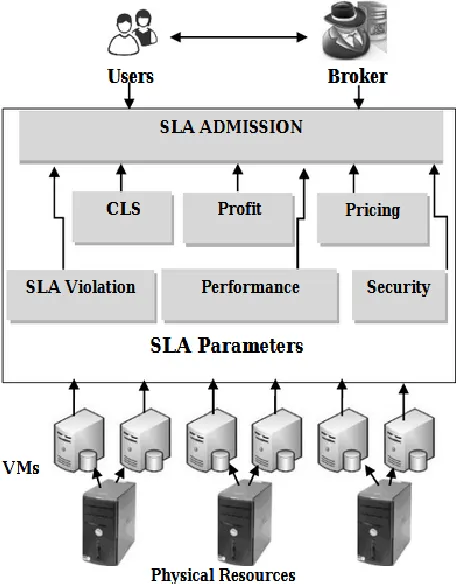
Fig.1. Service Level Agreement Framework
Resource clients' assessments of resource requests to finish an occupation before the evaluated time may prompt an over-provisioning of resources. Resource suppliers' distribution of resources may prompt an under-provisioning of resources. To conquer the previously mentioned disparities, inputs required from both cloud suppliers and clients for a RAS. From the cloud client's edge, the application necessity and Service Level Agreement (SLA) are significant contributions to RAS. The contributions, resource status and accessible resources are the information sources required from the opposite side to oversee and apportion resources to have applications by RAS. The result of any ideal RAS must fulfill the parameters, for example, throughput, inactivity and reaction time. Despite the fact that cloud gives dependable resources, it additionally represents an essential issue in allotting and overseeing resources progressively over the applications. The essential component of resource the board is the disclosure procedure. It includes hunting down the proper resource types accessible that coordinate the application requirements [10]. The procedure is overseen by the cloud specialist co-op. This procedure is being taken by the resource specialist or client dealer to find accessible resources. Revelation comprises of point by point portrayal of resources accessible. The cloud is in charge of giving ongoing administrations, for example, putting away the information, giving application and preparing the information for purchasers through the web. The purchasers can remotely store their information into the cloud and can appreciate the versatile administrations pay-on-request. As a developing innovation, it holds extraordinary potential but with a lot of issues, maybe the most unmistakable among which is guaranteeing security and protection. As in customary ideal models, validation assumes a noteworthy job in security in Cloud computing. Client validation is a significant plan to guarantee just the approved clients can get to the
server. This paper abridges the current verification techniques in Cloud Computing, exhibits an arrangement framework for the different strategies and brings up the favorable circumstances and difficulty of each.
Fig. 2. Components of the resource Management on board.
2 LITERATURE SURVEY
encryption to defeat above previously mentioned issues and downsides of verification plans. Also, we utilize a quick halfway picture encryption plot utilizing Canny's edge discovery with symmetric encryption is done as a second factor. In this plan, the edge pixels of image are scrambled utilizing the stream figure as it holds the vast majority of the picture's information and afterward connected along these lines to confirm substantial clients. Chittaranjan Hota et al. [5]examine about finished and under provisioning of cloud resources, in spite of the fact that the peak burdens can be effectively anticipated, in this way without having a viable versatility model, excessive resources are squandered amid nonpeak times (under-usage) or incomes from potential clients are lost in the wake of encountering a poor administration. The control of the rented resources falls under the customer obligations. The supplier just screens the utilization of the entire resources (CPU, memory, data transfer capacity and so forth.), while the client or the endorser screens the business exchanges, thusly there ought to be a framework which at the same time connected between the applications from the client site and the physical observing resources. Resources or figuring power is an abstracting procedure from physical layer where it is residence in Infrastructure Provider's server ranches. Issues of keeping up a server group are a significant costly with a high energy costs and gigantic carbon impressions. The Issues of energy utilization in resource the executives for the cloud activities is as yet meandering along despite the fact that the presentation of the registering expanded by decreasing time for preparing, however the power effectiveness getting to be lower. G. Aceto et al.[6] proposed control utilization models dependent on expectation so as to spare the energy cost in cloud condition in the private Cloud computing server group. The forecast depends on power count module which portrays the power utilization for each part in a server group cloud. In this way, the expectation model can be improved and upgraded in public cloud which includes progressively heterogeneous parts and will profit the intercloud specialist organization and the purchaser also. Gihun Jung et al [7] has built up the idea of " dynamic dataflows" which use interchange undertakings as extra command over the data flow's expense and QoS. They formalize an advancement issue to speak to organization and runtime resource provisioning that permits to adjust the application's QoS, esteem, and the resource cost. They proposed two greedy heuristics, unified and shredded, in light of the variable-sized container pressing calculation and think about against a Genetic Algorithm (GA) based heuristic that gives a close ideal arrangement. A large portion of the assignment calculations have the disadvantage that, they ordinarily consider either a one-dimensional resource type or treat all resources as one conceptual limit while deciding the succession or mix of utilizations. These resource demonstrating does not concentrate on the way that applications need an assortment of resources, for example, CPU control, memory, organize transmission capacity, etc. Multi-dimensional Resource Integrated Scheduling (MRIS), is a calculation to discover ideal arrangement. This considers resource booking issue to a limited multi-dimensional backpack issue, considering the prerequisite among multi-dimensional resources. A common resource pool organizes employments contrastingly by their favored resource types. To address the issues of resource necessity formalizing a model considering the multi-dimensional resources. The occupations
to a limited extent, based on at any rate keeping up great and in a perfect world developing better, protection upgrading systems and procedures. R. B. Bohn et al., [15] have featured the significance of progressively observing the QoS of virtualized administrations. Their center was to apply powerfully checked the application parts and cloud administrations for programmed QoS control under vulnerabilities. The checking of the administrations would help both the cloud supplier and application designer to augment the arrival on their speculations. Likewise, the observing strategies and administrations can help a cloud supplier or application designer with respect to keeping the cloud benefits and facilitated applications to be worked at effectiveness, recognize changes in administration and application execution, SLA infringement, disappointments of cloud administrations and other unique setup changes. The analysts for the most part focus on SNMP based QoS checking.
3 CONCLUSION
Cloud computing innovation is progressively being utilized in endeavors and business markets. In cloud worldview, a viable resource distribution procedure is required for accomplishing client fulfillment and augmenting the benefit for cloud specialist organizations. This paper outlines the arrangement of RAS and its effects in cloud framework. A portion of the techniques examined above primarily center around CPU, memory resources however are deficient in certain variables. The paper also concentrates on service level agreement violations. Thus this overview paper will ideally influence future analysts to think of more brilliant and verified ideal resource allotment calculations and structure to strengthen the Cloud computing worldview. This examination endeavored to demonstrate different security challenges, vulnerabilities, assaults and dangers that hamper the selection of Cloud computing. Cloud user Validation needs to be performed for using the resources of cloud providing security to the data.
REFERENCES
[1] A. Calatrava, G. Molto, and V. Hernandez, ―Combining grid and cloud resources for hybrid scientific computing executions," in Proc. 2011 IEEE Third International Conference on Cloud Computing Technology and Science, 2011, pp. 494-501. [2] Aarti P Pimpalkar, Prof. H.A. Hingoliwala , ‗A Secure Cloud
Storage System with Secure Data Forwarding‘, ―International Journal of Scientific & Engineering Research‖,Volume4,Issue6, June-2013, page no-3002-3010
[3] Alexa Huth and James Cebula,‖Basics of cloud computing‖, ―United States of emergency leading teams‖,2012
[4] Anitha Y , ―Securiy Issues in cloud computing‖, ―International Journal of Thesis Projects and Dissertations (IJTPD) Vol. 1, Issue 1, PP: (1-6), Month: October 2013
[5] Chittaranjan Hota, Sunil Sanka, Muttukrishnan Rajarajan,SrijithK.Nair,‖Capability-based Cryptographic Data Access Control in Cloud Computing‖, ―Int. Journal of Advanced Networking and Applications‖ Volume: 03; Issue: 03; Pages:1152-1161 (2011)
[6] G. Aceto, A. Botta, W. De. Donato, and A. Pescapè, ―Cloud monitoring: A survey,‖ Computer Networks, vol. 57, no. 9, pp. 2093– 2115, 2013.
[7] Gihun Jung, Kwang Mong Sim, 2011. ―Location-Aware Dynamic Resource Allocation Model for Cloud Computing Environment‖, International Conference on Information and Computer Applications, Dubai, 2011. [6]
[8] H. Narayanan and M. Gunes, ―Ensuring access control in cloud provisioned Healthcare systems,‖ in Consumer Communications and Networking Conference (CCNC), 2011, page no-.247–255.
[9] Jinesh varia,‖ AWS Cloud Security Best Practices‖,‖White Paper‖, November 2013
[10]K. Krauter, R. Buyya, and M. Maheswaran, ―A taxonomy and survey of grid resource management systems for Cloud computing,‖ Software: Practice and Experience, vol. 32, no. 2, pp. 135–164. 2002.
[11]L. Arockiam1, S. Monikandan, ―Data security and privacy in cloud storage using hybrid symmetric encryption algorithm‖, ―International journal of advance research in compute rand communication engineering‖, Voumel2, Issue 8, August 2013 [12]M. Armbrust, A. D. Joseph, R. H. Katz, and D. A. Patterson.
(February 2009). Above the clouds : A berkeley view of cloud computing. Electrical Engineering and Computer Sciences.53(UCB/EECS-2009-28). [Online]. pp. 7-13. Available: http://www.eecs.berkeley.edu/Pubs/TechRpts/2009/EECS-2009-28.html
[13]Nagendram S., Vijaya Lakshmi J., Venkata Narasimha Rao D., Naga Jyothi Ch, 2011. ―Efficient Resource Scheduling in Data Centers using MRIS‖ Indian Journal of Computer Science and Engineering (IJCSE), Vol.2, Issue 5, pages: 764-769. [5] [14]Parsi Kalpana ,‖Data security in cloud computing using RSA‖ ,
International Journal of Research in Computer and Communication technology,ISSN 2278-5841, Volume 1, Issue 4, September 2012.
[15]R. B. Bohn, J. Messina, F. Liu, J. Tong, and J. Mao, ―NIST cloud computing reference architecture,‖ in Proc. 2011 IEEE World Congress on Services, 2011, pp. 594-596.
[16]R. Buyya and R. Ranjan, ―Special section: Federated resource management in grid and cloud computing systems,‖ Future Generation Computer Systems, vol. 26, no. 8, pp. 1189–1191, June, 2010.
[17]Sanjoli Singla, Jasmeet Singh, ―Cloud Data Security using Authentication and Encryption Technique‖, ―International Journal of Advanced Research in Computer Engineering & Technology (IJARCET)‖,Volume2, Issue 7, July 2013
[18]V. Sarathy, P. Narayan, and R. Mikkilineni, ―Next generation cloud computing architecture: enabling real-time dynamism for shared distributed physical infrastructure,‖ in Proc. 2010 19th IEEE International Workshops on Enabling Technologies: Infrastructures for Collaborative Enterprises, 2010, pp. 48–53. [19]V. Vinothina, R. Sridaran, and P. Ganapathi, ―A survey on
resource allocation strategies in cloud computing,‖ International Journal of Advanced Computer Science and Applications, vol. 3, no. 6, pp. 97– 104, 2012.
[20]V. Vinothina, Dr.R.Sridaran, Dr.PadmavathiGanapathi., 2012. ―A Survey on Resource Allocation Strategies in Cloud Computing‖ International Journal of Advanced Computer Science and Applications, Vol. 3, No.6.
[21]Vmware, ‖Securing the cloud, A review of cloud computing, security implications and best practices‖ Miklau and D. Suciu, ―Controlling access to published data using cryptography,‖ in Proceedings of the 29th international conference, 2011, page no- 31-46
[22]Wuqi Gao and Fengju Kang, 2012. ―Cloud Simulation Resource Scheduling Algorithm Based on Multi-Dimension Quality Of Service‖. Information Technology Journal, 11: 94-101.
groups,‖ in Proc. 2011 International Conference on Collaboration Technologies and Systems, 23-27 May, 2011, pp. 134-142. [24]Y. Hu, J. Wong, G. Iszlai, and M. Litoiu, ―Resource provisioning
for cloud computing,‖ in Proc. the 2009 Conference of the Center for Advanced Studies on Collaborative Research, 2009, pp. 101–111.