Prehospital: Emergency Care
Eleventh Edition
Chapter 4
Documentation
Copyright © 2018, 2014, 2010 Pearson Education, Inc. All Rights Reserved
Learning Readiness
• EMS Education Standards, text p. 64.
• Chapter Objectives, text p. 64.
• Key Terms, text p. 64.
Copyright © 2018, 2014, 2010 Pearson Education, Inc. All Rights Reserved
Setting the Stage
• Overview of Lesson Topics
– Functions of the prehospital care report
– Collection of data in PCRs
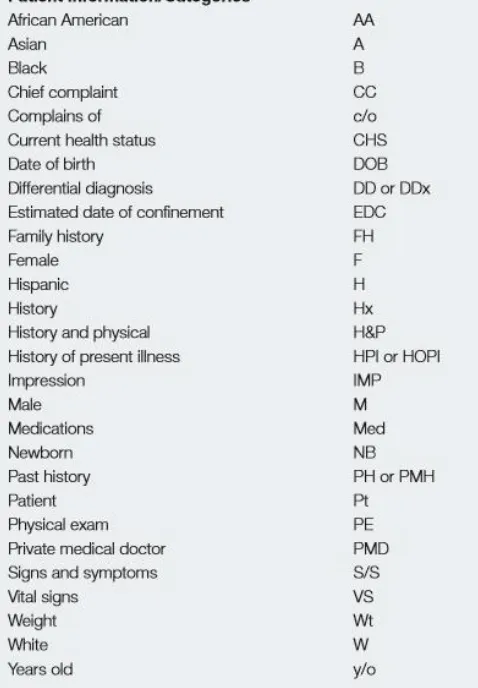
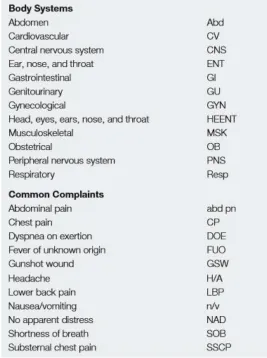
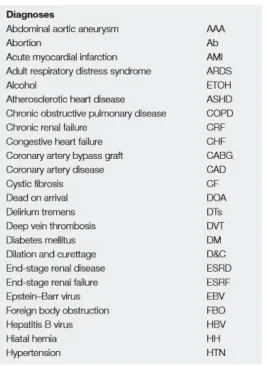
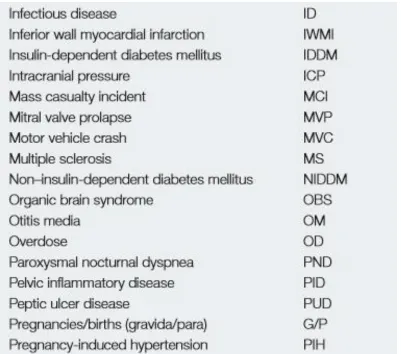
– Medical abbreviations
– Legal concerns
Case Study Introduction
(1 of 2)EMT Rory Bruns picked up the phone in the Station 4 crew room on the second ring. “EMT Bruns. How can I help
Copyright © 2018, 2014, 2010 Pearson Education, Inc. All Rights Reserved
Case Study Introduction
(2 of 2)Case Study
(1 of 4)• How can the PCR help Rory?
• What kind of information will the parties involved in the legal case be looking for in the PCR?
Copyright © 2018, 2014, 2010 Pearson Education, Inc. All Rights Reserved
Introduction
• Documentation of information about EMS calls serve several purposes.
• The record of care provided is called a patient care report (PCR).
Functions of the P
C
R
(1 of 3)1. Continuity of medical care
– Emergency department (ED) personnel will reference the PCR.
2. Administrative uses
– Billing and insurance reimbursement
Copyright © 2018, 2014, 2010 Pearson Education, Inc. All Rights Reserved
Functions of the P
C
R
(2 of 3)3. Legal document
– The patient may be a crime victim.
– Protection in the event of a civil lawsuit.
Functions of the P
C
R
(3 of 3)4. Education and research
– PCRs can be a rich source of data to allow research on many issues.
5. Continuous Quality Improvement
Copyright © 2018, 2014, 2010 Pearson Education, Inc. All Rights Reserved
Collection of Data in P
C
Rs
(1 of 13)• All documentation must be careful and thorough.
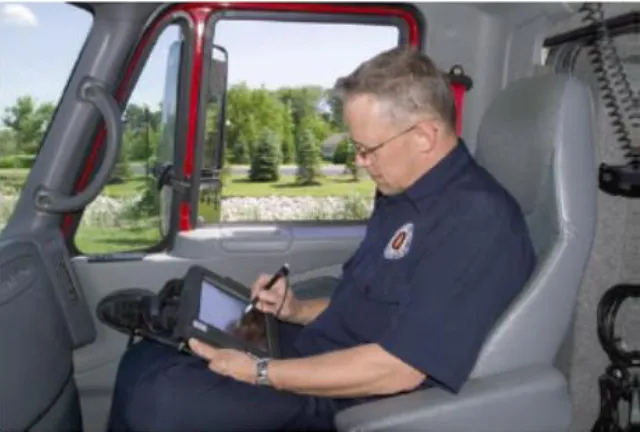
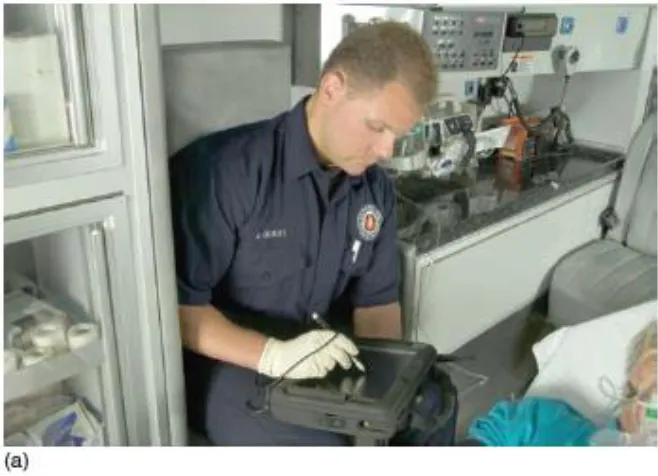
• There are paper and electronic PCRs.
Copyright © 2018, 2014, 2010 Pearson Education, Inc. All Rights Reserved
Figure 4-3 (c) A Toughpad with Human
Collection of Data in P
C
R
s
(2 of 13)• Two basic rules of PCRs
1. If it wasn't written
down, it wasn't done.
2. If it wasn't done, don't write it down.
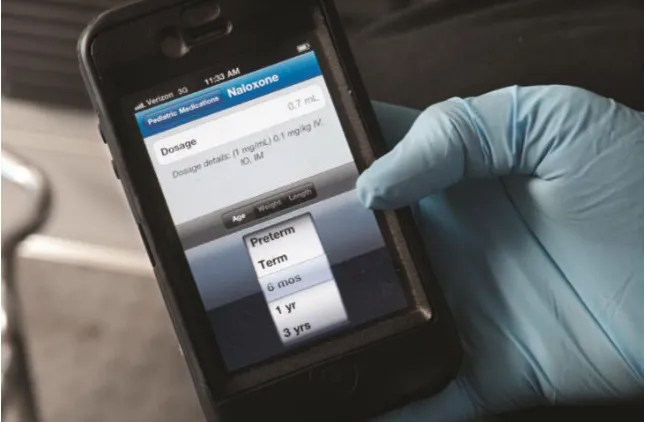
Figure 4-4 A smart phone may have an app for direct data entry that is then transferred to a
Copyright © 2018, 2014, 2010 Pearson Education, Inc. All Rights Reserved
Collection of Data in P
C
R
s
(3 of 13)• US DOT Minimum data set
– Established by the U.S. Department of Transportation (DOT)
Collection of Data in P
C
R
s
(4 of 13)1. Patient Information of Minimum Data Set
– Chief complaint
– Level of responsiveness
– Blood pressure
– Skin perfusion
– Skin color, temperature, condition
Copyright © 2018, 2014, 2010 Pearson Education, Inc. All Rights Reserved
Collection of Data in P
C
R
s
(5 of 13)2. Administrative Information of Minimum Data Set
– Time incident was reported
– Time EMS unit was notified
– Time of arrival at patient
– Time unit left the scene
– Time unit arrived at destination
Collection of Data in P
C
R
s
(6 of 13)• PCRs usually have these sections:
– Administrative information
– Patient demographic and other data
– Vital signs
– Patient narrative
Copyright © 2018, 2014, 2010 Pearson Education, Inc. All Rights Reserved
Collection of Data in P
C
R
s
(7 of 13)• Other Sections of PCR
1. Administrative information (or run data)
▪ EMS unit number and run or call number
▪ Names certification levels of crew
Collection of Data in P
C
R
s
(8 of 13)• Other Sections of PCR
2. Patient demographic and other data
▪ Patient’s name, age, sex, race, birth date
▪ Patient’s home address
▪ Insurance and billing information
▪ Location patient was found
Copyright © 2018, 2014, 2010 Pearson Education, Inc. All Rights Reserved
Collection of Data in P
C
R
s
(9 of 13)• Other Sections of PCR
3. Vital signs
▪ At least two sets of vital signs are needed.
▪ Record the patient's position when vitals were obtained.
Collection of Data in P
C
R
s
(10 of 13)• Other Sections of PCR
4. Patient narrative
▪ Information from the physical exam and pertinent scene information
▪ Includes the chief complaint, patient’s history, and physical exam findings.
Copyright © 2018, 2014, 2010 Pearson Education, Inc. All Rights Reserved
Collection of Data in P
C
R
s
(11 of 13)• Other Sections of PCR
4. Patient narrative
▪ Objective information is verifiable or measurable.
▪ Subjective information is based on perceptions or opinions.
Collection of Data in P
C
R
s
(12 of 13)• Other Sections of PCR
5. Treatment
▪ Detail treatment in chronological order.
▪ Document the time of each treatment.
Copyright © 2018, 2014, 2010 Pearson Education, Inc. All Rights Reserved
Collection of Data in P
C
R
s
(13 of 13)• Use of accurate and synchronized clocks
– Dispatch, vehicle, and EMT timekeeping devices must all agree with one another.
– Needed for accurate documentation of medical care.
Match the Descriptions on the Left with the Type of
P
C
R Information Listed on the Right. Click in Each
Box on the Left to Check Your Answers
1. Fill in the blank pulse rate
2. Fill in the blank EMTs’ names
3. Fill in the blank “Pt. c/o
headache on right side of head for 3 hours.”
4. Fill in the blank 4 LPMO by NC
a. Administrative information
b. Patient demographics
c. Vital signs
d. Narrative
Copyright © 2018, 2014, 2010 Pearson Education, Inc. All Rights Reserved
Case Study
(2 of 4)Case Study
(3 of 4)The county attorney is looking for evidence that might
Copyright © 2018, 2014, 2010 Pearson Education, Inc. All Rights Reserved
Case Study
(4 of 4)• What specific elements of the narrative could be important in the prosecution’s case?
• What weaknesses in the documentation will the defense seek to exploit?
Medical Abbreviations
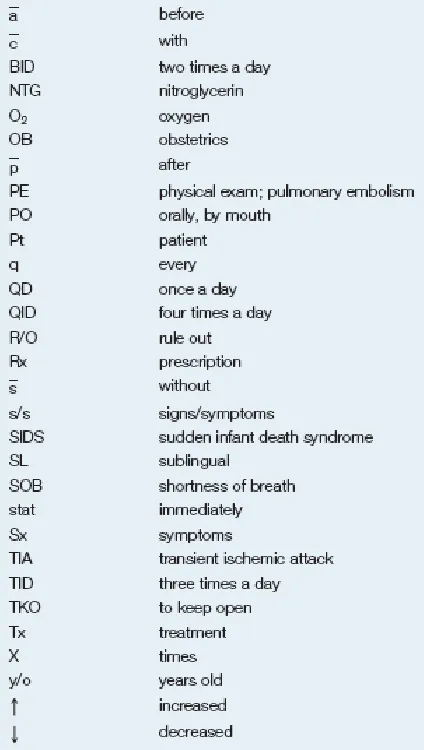
(1 of 2)• Use only universally accepted abbreviations, or those approved by your EMS system.
• You will be mastering medical terminology and abbreviations your entire career.
Copyright © 2018, 2014, 2010 Pearson Education, Inc. All Rights Reserved
Table 4-1 Commonly Accepted
Copyright © 2018, 2014, 2010 Pearson Education, Inc. All Rights Reserved
Table 4-2 Standard Charting
Copyright © 2018, 2014, 2010 Pearson Education, Inc. All Rights Reserved
Table 4-2 Standard Charting
Copyright © 2018, 2014, 2010 Pearson Education, Inc. All Rights Reserved
Table 4-2 Standard Charting
Copyright © 2018, 2014, 2010 Pearson Education, Inc. All Rights Reserved
Table 4-2 Standard Charting
Copyright © 2018, 2014, 2010 Pearson Education, Inc. All Rights Reserved
Table 4-2 Standard Charting
Copyright © 2018, 2014, 2010 Pearson Education, Inc. All Rights Reserved
Table 4-2 Standard Charting
Copyright © 2018, 2014, 2010 Pearson Education, Inc. All Rights Reserved
Medical Abbreviations
(2 of 2)• A 48-year-old man is alert and oriented with a chief
complaint of severe chest pain and trouble breathing. He took two nitro without relief today, he is prescribed Lasix twice daily. He has no known allergies.
• A48 y / o M Pt A & Ox3, c / o CP and SOB. Took 2
Legal Concerns
(1 of 5)• Legal Concerns Include
1. Confidentiality
▪ The PCR contains information that is confidential and which cannot shared with unauthorized
individuals.
Copyright © 2018, 2014, 2010 Pearson Education, Inc. All Rights Reserved
Legal Concerns
(2 of 5)• Legal Concerns Include
2. Distribution
▪ Specific instances in which PCR information can be distributed include:
– To relevant health care providers (ED)
– CQI, medical oversight, billing
– Police, when needed for a investigation
Legal Concerns
(3 of 5)• Legal Concerns Include
3. Refusal of Treatment
▪ Legal issues arise when a patient refuses care.
▪ Establish patient mental capacity and contact medical direction.
▪ Persuade the patient to accept care.
Copyright © 2018, 2014, 2010 Pearson Education, Inc. All Rights Reserved
Legal Concerns
(4 of 5)• Legal Concerns Include
3. Refusal of Treatment
▪ Document the following information:
– If the patient refused any or all assessment and the treatment offered
– The patient’s mental status in making the decision
Copyright © 2018, 2014, 2010 Pearson Education, Inc. All Rights Reserved
Legal Concerns
(5 of 5)• Legal Concerns Include
4. Falsification of PCR information
▪ Falsification compromises patient care.
▪ Can lead to loss of licensure and, possibly, criminal charges.
Special Situations
(1 of 3)• Legal Concerns Include
5. Transfer of care
▪ Used when it is not possible to complete the full PCR and obtain signatures before leaving the facility.
▪ A type a special transfer-of-care form may be used.
Copyright © 2018, 2014, 2010 Pearson Education, Inc. All Rights Reserved
Special Situations
(2 of 3)• Legal Concerns Include
6. Multiple-casualty incidents
Special Situations
(3 of 3)• Legal Concerns Include
7. Special Reports
▪ Suspected child or elder abuse
▪ Possible infectious disease exposure
▪ Injury to the EMS provider
Copyright © 2018, 2014, 2010 Pearson Education, Inc. All Rights Reserved
Alternative Documentation Methods
(1 of 5)• Several formats for narrative documentation are represented by mnemonics.
– SOAP
– CHART
Alternative Documentation Methods
(2 of 5)• SOAP
– Subjective
– Objective
– Assessment
Copyright © 2018, 2014, 2010 Pearson Education, Inc. All Rights Reserved
Alternative Documentation Methods
(3 of 5)• SOAPIE is a variation of SOAP
– Subjective
– Objective
– Assessment
– Plan
– Intervention
Alternative Documentation Methods
(4 of 5)• CHART
– Chief complaint
– History (includes SAMPLE)
– Assessment
– Rx (treatment)
Copyright © 2018, 2014, 2010 Pearson Education, Inc. All Rights Reserved
Alternative Documentation Methods
(5 of 5)• CHEATED
– Chief complaint
– History
– Exam
– Assessment
– Treatment
– Evaluation
Case Study Conclusion
(1 of 2)Rory was eventually called to testify at the trial of the accused perpetrator. Fortunately, because the case
occurred a year after the call, Rory was able to rely on his thorough and accurate documentation to answer the
Copyright © 2018, 2014, 2010 Pearson Education, Inc. All Rights Reserved
Case Study Conclusion
(2 of 2)The defense attorney questioned the meaning of several of the abbreviations Rory used in the PCR. Because Rory
always uses standard, accepted abbreviations, the defense attorney was unsuccessful in discrediting his
Lesson Summary
• PCRs serve several purposes for the EMS system and Emergency Department.
• Good documentation should be accurate, concise, complete, and clear.
• Exercise cautiously in special reporting situations.
Copyright © 2018, 2014, 2010 Pearson Education, Inc. All Rights Reserved
Review Answers
(1 of 5)1. Fill in the blank pulse rate c. Vital signs
Vital signs include
information about the
pulse, respirations, blood pressure, body
temperature, and oxygen level
Review Answers
(2 of 5)2. Fill in the Blank EMTs’ names a. Administrative information
Administrative information
includes times of events, EMS
unit number, run or call number, crew members’
Copyright © 2018, 2014, 2010 Pearson Education, Inc. All Rights Reserved
Review Answers
(3 of 5)3. Fill in the Blank “Pt. c/o
headache on right side of head for 3 hours.”
d. Narrative
Narrative information gives more detailed information about the patient and
problem than allowed for in a checklist or data field format and includes the patient's chief complaint, history, and exam findings.
Review Answers
(4 of 5)4. Fill in the blank 4 LPM O2 by NC
e. Treatment
Copyright © 2018, 2014, 2010 Pearson Education, Inc. All Rights Reserved
Review Answers
(5 of 5)5. Fill in the Blank 45 y/o male b. Patient demographics
Patient demographics
include the patient’s name, age, sex, race, date of
birth, home address,
billing information, where he was found, and care
given before EMTs’ arrival.