c
AAFC, J.P.D. Wanasundaraet al.,Published by EDP Sciences2016 DOI:10.1051/ocl/2016028
Available online at: www.ocl-journal.org
Oilseeds & fats Crops and Lipids
OCL
R
esearch
A
rticle
– D
ossier
O
pen
A
ccess
H
OW MIGHT OILSEEDS HELP MEET THE PROTEIN CHALLENGE?
C
omment les ol
eoprot
´
eagineux peuvent
´
-
ils r
epondre au d
´
efi prot
´
eines
´
?
Canola/rapeseed protein-functionality and nutrition
Janitha P.D. Wanasundara
1,, Tara C. McIntosh
1, Suneru P. Perera
1, Thushan S. Withana-Gamage
1,2and Pranabendu Mitra
1,31 Agriculture and Agri-Food Canada, Saskatoon Research and Development Centre Saskatoon, 107 Science Place, SK Canada, S7N 0X2 2 POS BioSciences, 118 Veterinary Road, Saskatoon, SK Canada S7N 2R4 (Current address)
3 Department of Food Science, Cornell University, 411 Tower Road, Ithaca, NY, 14853, USA (Current address)
Received 30 March 2016 – Accepted 1st June 2016
Abstract – Protein rich meal is a valuable co-product of canola/rapeseed oil extraction. Seed storage proteins that
include cruciferin (11S) and napin (2S) dominate the protein complement of canola while oleosins, lipid transfer pro-teins and other minor propro-teins of non-storage nature are also found. Although oil-free canola meal contains 36–40% protein on a dry weight basis, non-protein components including fibre, polymeric phenolics, phytates and sinapine, etc. of the seed coat and cellular components make protein less suitable for food use. Separation of canola protein from non-protein components is a technical challenge but necessary to obtain full nutritional and functional potential of protein. Process conditions of raw material and protein preparation are critical of nutritional and functional value of the final protein product. The storage proteins of canola can satisfy many nutritional and functional requirements for food applications. Protein macromolecules of canola also provide functionalities required in applications beyond edible uses; there exists substantial potential as a source of plant protein and a renewable biopolymer. Available information at present is mostly based on the protein products that can be obtained as mixtures of storage protein types and other chemical constituents of the seed; therefore, full potential of canola storage proteins is yet to be revealed.
Keywords: Canola/rapeseed storage proteins/cruciferin/napin/protein digestibility/functional properties
Résumé – Protéines de canola et de colza : fonctionnalités et nutrition. Les tourteaux riches en protéines
repré-sentent un coproduit de valeur de l’extraction de l’huile de canola/colza. Dans la graine, les protéines de stockage, notamment la cruciférine (11S) et la napine (2S), dominent la fraction protéique du canola, mais des oléosines, des protéines de transfert de lipides et d’autres protéines mineures non dédiées au stockage sont également présentes. Bien que le tourteau de canola déshuilé contienne 36–40 % de protéines sur poids sec, la présence de composants non pro-téiques, dont les fibres, les polymères phénoliques, les phytates, la sinapine, etc. issus de l’enveloppe de la graine et des composants cellulaires rendent les protéines moins appropriées à une utilisation en alimentation humaine. Cette revue présente les connaissances actuelles en termes de valeur nutritionnelle et fonctionnelle des protéines issues des graines de canola. La séparation des protéines de canola des composants non protéiques représente un défi technique mais nécessaire pour libérer totalement le potentiel nutritionnel et fonctionnel de la protéine. Les protéines de stockage de canola peuvent satisfaire un grand nombre d’exigences nutritionnelles et fonctionnelles pour des applications alimen-taires. Les macromolécules protéiques de canola offrent également des fonctionnalités requises dans les applications dépassant les seules utilisations alimentaires ; un potentiel important existe en tant que source de protéines végétales et de biopolymères renouvelables. Les informations disponibles à l’heure actuelle concernent essentiellement les produits protéiques qui peuvent être obtenus sous forme de mélanges de différents types de protéines de stockage et d’autres constituants chimiques de la graine. Tout le potentiel des protéines de stockage du canola reste donc encore à révéler.
Mots clés : Protéines de stockage / canola/colza /cruciférine /napine/digestibilité des protéines /propriétés
fonctionnelles
Correspondence:[email protected]
D
1 Introduction
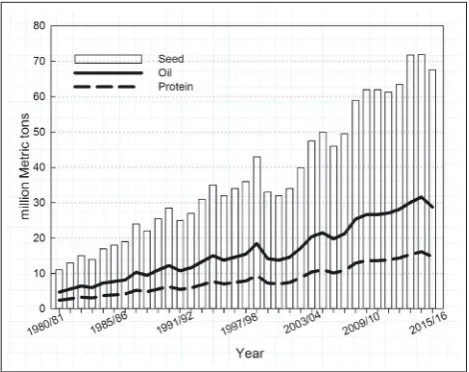
During the last 35 years, the world production of canola/rapeseed (here after referred as canola) has reached 6 times the production volume in 1980 (Fig.1). The term canola (Canada-oil-low-acid) is defined for quality improved rape-seed genetic material consisted of<2% erucic acid contain-ing oil and meal residue (air dried, oil-free, and 8.5% mois-ture containing solid) with<30µmol of glucosinolates of any one or mixture of 3-butenyl, 4-pentenyl, 2-hydroxy-3 butenyl, and 2-hydroxyl-4-pentenyl/g. Improved germplasm of Bras-sica napusandBrassica rapafalls under canola. During last decade, improvedBrassica junceagermplasm to fit into these criteria has been developed as canola-quality juncea. The term rapeseed or double low rapeseed is used in Europe while canola is the preferred term in Canada and Australia. However, compared to the other two,B. napuscanola is mostly cultivated around the world and also the mostly researched. Canola is pri-marily grown for its healthy seed oil for food use however finds many applications including biofuels, cosmetics and other in-dustrial products. The remaining seed components after oil ex-traction are primarily used in animal feed because of its pro-tein, residual oil and fibre. Considering the global production in the past decade, on average, the canola crop has annually generated 10–14 million metric tons of plant protein in paral-lel with 20–30 million metric tons of oil (Fig.1). Primarily, the animal feed industry is benefitted by the nutritional advantages of canola protein, especially in dairy cow rations, contributing to milk protein production. Moreover, the de-oiled canola meal is a competitive protein source that satisfies nutritional require-ments of broilers, laying hens, equine and cultured fish (CCC,
2016). Canola is the second largely cultivated oilseed crop of the world after soy (OECD-FAO,2015).
World protein demand is rising in parallel with the growing population. According to FAO/UN forecast, in 2050, the global food demand, particularly for animal protein (meat and dairy) will be twice the demand in 2013 (FAO,2013). When global food security is considered, protein will become the limit-ing macronutrient and the world population will require suffi -cient quantities of protein with adequate quality. The growing economies with high population density are expected to de-mand more protein, both from animal and plant sources. In ad-dition to the growing world population, the global concerns of environmental changes including rising greenhouse gas emis-sion and ocean temperature, elevation of population suffering from non-communicable diseases putting pressure on public health care systems require mitigation strategies that need re-evaluating our food supply to maintain health and sustainabil-ity. Several non-communicable diseases that prevail in modern economies show the need to have a diet balanced in plant and animal sources, with the emphasis on incorporating more plant foods (Boland,2013).
With the growing demand for protein, as a co-product of oil extraction, canola is well positioned to be a viable source of plant protein because of the volume of production and the nu-tritional and functional qualities of the protein. Assessment of essential amino acid profile and protein utilization efficiency in human subjects show that canola can be ranked as a high qual-ity protein, comparable with milk and egg proteins (Boset al.,
2007; Fleddermann et al., 2013). Canola protein is ranked
Fig. 1.Global canola production data from 1980 to 2015 and
calcu-lated production values for oil and protein based on 43% oil and 22% protein in the seed (Source: FAO, Oilseed Future).
above several plant proteins in protein quality indices and con-tributes more sulphur-containing amino acids and lysine than pulses, and cereals, respectively. It is a known fact that aller-genic 2S proteins are part of canola seed protein complement however unavailability of long-term consumption studies and quantitative data on allergenic protein levels of canola limit providing conclusions on nutritional comparability.
The reviews published on canola protein during the last 5 years by different research groups (Aachary and Thiyam,
2012; Aider and Barbana,2011; Alashiet al.,2013; Tanet al.,
2011; Von Der Haaret al.,2014; Wanasundara,2011) point out the significance and the value of this source as a food protein and also to generate high-value products based on protein. En-vironmental, demographic and economic issues we experience today highlight the advantages of direct use of plant proteins in human diet rather than converting them into animal proteins, and it is becoming a global trend as well as a need. In this context, canola has several advantages; abundance, nutritional compatibility, functional suitability, etc. This review focuses on the canola seed protein fraction for its nutritional and func-tional value as a plant protein source for food use. Potential uses beyond food are also discussed.
2 Proteins of canola seed
Recoverable proteins of canola seed and meal are mostly of storage nature. Besides that some of the structural proteins such as oil body (OB) proteins, lipid transfer proteins (LTP) are also found.
2.1 Storage proteins
The storage proteins are localized in the membrane-bound protein bodies or protein storage vacuoles (PSV) that have morphologically distinct regions in the cell. According to Jiang
et al.(2001) and Huet al. (2013), three regions, the matrix, crystalloid, and globoid can be identified in canola PSV and the storage proteins are primarily in the matrix and crystal-loid regions while phytate crystals are found in the globoid regions. The 11S (or 12S) globulin (legumin type), cruciferin (300–350 kDa) and 2S (or 1.7S) albumin, napin (12–16 kDa) (Crouch and Sussex,1981; Lönnerdal and Janson,1972) are predominant storage proteins found inB. napus. Expression of cruciferin and napin in Brassicaceae species is regulated by multiple genes. A study on European cultivars support that cruciferin and napin are present in the ratio of 0.6 to 2.0 with substantial genotype variation (Malabatet al.,2003).
2.1.1 Cruciferin
Cruciferin, the predominant 11S protein in the Brassi-caceae family, is a protein of cupin superfamily. Structural or-ganization of cruciferin up to quaternary level has been de-scribed (Adachiet al.,2003; Dalgalarrondoet al.,1986; Plietz
et al., 1983; Tandang-Silvas et al., 2010). The mature cru-ciferin contains six subunits or protomers that assemble as two trimer units in which each protomer is comprised of two polypeptide; α- (∼40 kDa, 254 to 296 amino acids and β -(∼20 kDa, 189 to 191 amino acids) chain linkedviaa disul-fide bond (Adachi et al., 2003; Dalgalarrondo et al., 1986; Tandang-Silvaset al.,2010). Canola cruciferin subunits have been identified as CRU1, CRU2, CRU3, CRU4 and CRUA (Sjodahlet al.,1991; Wanasundara, 2011). In the cruciferin hexamer assembly, the inter-chain disulfide bonds betweenα -andβ- chains play a key role (Junget al.,1997). In the forma-tion of hexamer the inter-chain disulfide bonds containing or IE-face1. of the two trimers pile up togetherviaIE face-to-face.
The bonds associated with assembling two trimers together are predominantly non-covalent bonds such as hydrophobic, elec-trostatic, hydrogen, van der Walls and hydrogen bonded salt bridges (Adachiet al.,2003).
1 According to Adachi and group(2001 and 2003), polypeptide
chains of the 11S globulin protomers arrange in such a way to have the inter-chain disulfide bond less buried and located on the interface between the protomers. The intra-chain disulfide bond is more buried and located near the 3-fold axis of the trimer. In the trimer assembly, the two faces perpendicular to the 3-fold axis of trimer are referred to as the inter-chain disulfide bond containing (IE) face and the intra-chian disulfide bond containing (IA) face. The hexamer is formed by interactions between same faces (IE faces) of the trimer, mostlyvia hydrophobic interactions.
2.1.2 Napin
Napin, is a 2S (1.7S) protein of prolamin superfamily and exists as the next abundant storage protein ofB. napus. The mature napin structure comprises of a small (short, 4 kDa) and a large (long, 9 kDa) polypeptide chain linked together by two inter-chain disulfide bonds (Shewryet al.,1995). In addi-tion, the large chain possesses two intra-chain disulfide bonds between cysteine residues (Rico et al., 1996), making four disulfide bridges stabilizing the napin molecule. In canola, six different napin isoforms, namely Napin-1, Napin-2, Napin-3, Napin-1A, Napin-B and Nap1 have been reported in UniPro-tKB (http://www.uniprot.org/).
2.2 Oil body proteins
Oil body proteins (OBP) assist in stabilizing oleosomes or oil bodies (OB), which are subcellular organelles that store oils of canola seed. These proteins exhibit long hydrophobic do-main that can associate with lipid phase of the droplet and a hydrophilic domain that reside on the OB surface. InB. na-pus, oleosins are the dominant OBP followed by steroleosins and caleosins (Jolivetet al.,2009; Tzen,2012). Oleosins are lower in molecular mass (18–25 kDa) (Jolivet et al.,2009; Tzenet al.,1993) than caleosins (27 kDa) or steroleosins (39 or 41 kDa) (Jiang et al.,2008). Oleosins have characteristic triblock structure with two terminal amphipathic regions and a central hydropobic region with a proline knot that is highly conserved (Hsieh and Huang,2004; Jolivetet al.,2009). Cale-osin is known to possess the ability to bind with calcium ions within the seed. Similar to oleosins, caleosins also play an im-portant role in stabilizing OB (Tzen,2012).
3 Nutritional value of canola proteins
Details of canola as a protein source in human diet are rare to find. Compared to the mustard counterparts of the Brassi-caceae family,e.g.,Brassica juncea(oriental/brown mustard),
Brassica carinata(Ethiopean mustard),Brassica nigra(black mustard) andSinapis alba(yellow or white mustard),B. na-pusis not used in food preparations as condiments, flavorants or preservatives. Oil-free canola meal is also not used in food. When compared with the mustard relatives, the types and lev-els of polymeric phenolics of the seed coat, and phenolic acids (free and esterified) and glucosinolates (aliphatic- and indole-, total<30µmol/g meal) of the cotyledon and embryo cells may contribute to the reported bitter and astringent taste that is not favourable to human palate. A list of foods that may use canola meal and meal protein hydrolysates is available in the dossier compiled for canola protein products (GRAS,2010) however, these do not suggest extensive use of the protein fraction. Re-cent development of protein products and ingredients enabled the generation of valuable information on nutritional value of canola protein in human food.
3.1 Canola protein products
Obtaining protein rich products eliminates unwanted non-protein components of canola seed and allows better use
D
of proteins. Protein product preparation from canola meal dates back to the time canola was adopted as an oilseed crop. Canola protein concentrates can be obtained by removing seed coat (reduces fibre fraction), alcohol solubles (reduce sugars, glucosinolates and some phenolics) that enrich protein content up to∼70% (Wanasundara,2011). Preparation of protein iso-lates (>90% protein) that target protein in highly pure form eliminates most of the unwanted non-protein components. De-pending on the method of protein extraction employed, the fi-nal product could vary in terms of the protein content, type, and extent of interaction with non-protein components. Alkali extraction and acid precipitation, protein micellation method (PMM), low pH extraction combined with membrane separa-tion have been described for canola protein isolate preparasepara-tion (Tanet al.,2011; Wanasundara,2011). Among available infor-mation, food-grade canola protein products are described un-der commercial names Purateinr (precipitated micelle protein of near neutral pH protein extracted with salt,>90% protein, 11S/or7S protein mainly) and SuperteinTM(protein remained soluble after micelle formation; Burcon Nutrascience,>90% protein, 2S protein mainly), and IsolexxTM(protein extracted
at near neutral pH and recovered under mild conditions; Teu-Texx Proteins, 60–65% globulin, remaining content albumin and other protein; EFSA,2013).
3.2 Amino acid composition and protein quality
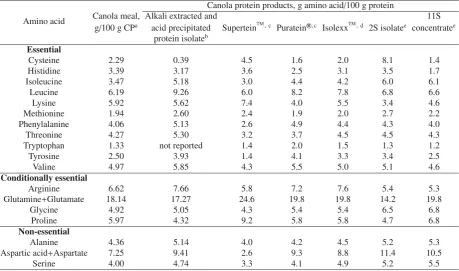
Canola protein provides all the nutritionally essential amino acids with a balanced amino acid profile (Tab.1). The level of essential amino acids in canola protein and products is>400 mg/g protein (Tab.1). The sulphur-containing amino acids (S-AA) are in the range of 3.0–4.0% or 40–49 mg/g protein, which is closer to the reference protein pattern estab-lished by FAO/UNU/WHO requirements for humans and place canola as a richer S-AA source than legume sources (Boset al.,
2007). Klockemanet al.(1997) identified lysine as the first limiting amino acid in canola protein and it is also the most temperature sensitive amino acid that participates in several chemical reactions including Maillard reaction (Newkirket al.,
2003). When the amino acid composition of whole canola seed or meal is compared with the protein products (Tab.1), influ-ence of protein composition (types) of the final product can be observed.
The protein digestibility corrected amino acid score (PD-CASS)2 for canola protein varies depending on the protein
product used for assessment and also with the assessment model involving rats or weaning piglets. Rutherfurd et al.
(2015) points out that the true ileal amino acid digestibility val-ues of several plant foods (cooked forms of pea, kidney beans, rice, and rolled oats, breakfast cereals and roasted peanut), plant protein products (soy protein isolates and concentrate, rice protein concentrate, and pea protein isolate), and animal
2 PDCASS is a score based on the ratio of the amount of the first
limiting dietary indispensable amino acid in the protein source to the amino acid requirement of the 1–2 year old child corrected for protein digestibility based on true fecal N digestibility and using the growing rat as a model for the adult human. Scores that are>1 are rounded or truncated (FAO/WHO,1991).
protein products (milk protein concentrate, whey protein iso-late, and concentrate) obtained from rat models are compara-ble with the values for adult human. Therefore animal model evaluations may provide a reasonable estimation of amino acid nutrition of canola protein which is not in our regular diet.
3.3 Digestibility and amino acid nutrition
Digestibility of protein depends on the enzyme accessi-bility. The molecular structure as well as the other compo-nents associated with protein may affect enzyme accessibil-ity and activaccessibil-ity. Since early studies, glucosinolates and their breakdown products that are isothiocyanates (ITC) such as 5-vinyloxazolidine-2-thione (VOT, goitrin), butenyl-ITC, and pentenyl-ITC, and phenylethyl-ITC in addition to phytates and phenolics were considered responsible for the adverse effects observed in test animals such as reduced growth and thyroid enlargement associated with feeding rapeseed meal. These compounds may have direct effect on reducing proteolytic en-zyme activity as well as bind proteins making them unavailable for enzyme-catalysed hydrolysis to peptides and amino acids. Evaluation of highly pure protein products such as isolates can eliminate the interference of non-protein components to great extent.
Early studies of Savoieet al.(1988) suggested that canola protein concentrate (52%, %N×6.25) exhibits lowerin vitro
digestibility values (83%) than casein (97%) which may be at-tributed to the structural rigidity of canola proteins that resists acid-induced (optimum activity of pepsin is pH 1.3–2.0) de-naturation and unfolding. Evaluation of rapeseed protein prod-ucts in rats (Delisle et al., 1983), pigs (Grala et al., 1998) and humans (Boset al.,2007) indicated that the canola pro-teins exhibit relatively poor digestibilityin vivoand hydroly-sis rehydroly-sistant protein fragments exist in the digested products. Protein efficiency ratio (PER)3 of flour, 2S and 12S fraction of rapeseed was reported as 2.64, 2.49 and 2.12, respectively while casein under identical test conditions reported 3.23 (Delisleet al.,1983). The current FAO recommendation is to replace PDCASS with the digestible indispensable amino acid score (DIAAS)4which uses ileal digestibility rather than fecal
digestibility.
In a comparative study of different protein sources on post-prandial regional N utilization by rats, Boutry et al. (2011) showed that canola protein exhibit greater retention of N in visceral organs (small intestinal mucosa, liver and kidneys) than milk proteins which particularly enriched skin tissues. Higher content of threonine, one of the EAA that is required for mucin synthesis, and the high S-AA level of canola pro-tein isolate may be related in promoting the retention of di-etary N in visceral tissues. Canola protein isolate gave true digestibility value of 95% which was similar to milk pro-tein in this study and it was a somewhat different observa-tion than the low digestibility of canola protein reported in
3 PER is the ratio of body weight gain by a test subject to the
weight of test protein consumed during a given testing period. Usu-ally, mouse is the test subject.
4 DIASS is a score based on true ileal amino acid digestibility
Table 1.Levels of essential, conditionally-essential and non-essential amino acids found in canola meal and protein products derived from canola.
Amino acid
Canola protein products, g amino acid/100 g protein
Canola meal, Alkali extracted and 11S
g/100 g CPa acid precipitated SuperteinTM, c
Purateinr,c IsolexxTM, d
2S isolatee concentratee
protein isolateb
Essential
Cysteine 2.29 0.39 4.5 1.6 2.0 8.1 1.4
Histidine 3.39 3.17 3.6 2.5 3.1 3.5 1.7
Isoleucine 3.47 5.18 3.0 4.4 4.2 6.0 6.1
Leucine 6.19 9.26 6.0 8.2 7.8 6.8 6.6
Lysine 5.92 5.62 7.4 4.0 5.5 3.4 4.6
Methionine 1.94 2.60 2.4 1.9 2.0 2.7 2.2
Phenylalanine 4.06 5.13 2.6 4.9 4.4 4.3 4.0
Threonine 4.27 5.30 3.2 3.7 4.5 4.5 4.3
Tryptophan 1.33 not reported 1.4 2.0 1.5 1.3 1.2
Tyrosine 2.50 3.93 1.4 4.1 3.3 3.4 2.5
Valine 4.97 5.85 4.3 5.5 5.0 5.1 4.6
Conditionally essential
Arginine 6.62 7.66 5.8 7.2 7.6 5.4 5.3
Glutamine+Glutamate 18.14 17.27 24.6 19.8 19.8 14.2 19.8
Glycine 4.92 5.05 4.3 5.4 5.4 6.5 6.8
Proline 5.97 4.32 9.2 5.8 5.8 4.7 6.8
Non-essential
Alanine 4.36 5.14 4.0 4.2 4.5 5.2 5.3
Aspartic acid+Aspartate 7.25 9.41 2.6 9.3 8.8 11.4 10.5
Serine 4.00 4.74 3.3 4.1 4.9 5.2 5.5
a www.canolacouncil.org/media/516716/2015_canola_meal_feed_industry_guide.pdf, b Tzeng et al., 1988, c GRAS Notice 327, 2010, dwww.fda.gov/ucm/groups/fdagov-public/@fdagov-foods-gen/documents/document/ucm277309.pdf,eWanasundara and McIntosh,2013and
Wanasundara, unpublished data.
human (Boset al.,2007), pigs (de Langeet al.,1990; Grala
et al.,1998) or chicks and cockerels (Larbrieret al.,1991). In this rat model study, canola protein isolates showed fairly close performance as milk protein for the protein nutritional parameters; similar postprandial metabolic losses of dietary N
viadeamination of dietary amino acids and excretion in urine, similar digestibility values, and postprandial retention of di-etary N resulting in similar growth rate and body composi-tion of rats. Similarly, Fleddermannet al. (2013) reported that canola protein isolate (soluble protein recovered from fat-free meal at pH 6.8) and canola protein hydrolysate gave 93.3% and 97.3% true nitrogen digestibility values, respectively in a rat model.
The PDCASS values reported for napin-rich SuperteinTM
and cruciferin-rich Purateinr (Burcon Nutrascience protein products) were 0.61 (61%) and 0.64 (64%), respectively. When calculated according to updated FAO/WHO/UNU guidelines in 20075(WHO/FAO/UNU,2007) values of 0.83 and 0.71 for
SuperteinTM and Purateinr, respectively were obtained. The
limiting AA of these protein products were phenylalanine for SuperteinTM and tyrosine and lysine for Purateinr (GRAS,
2010). Calculated PDCASS values for canola protein isolate and canola protein hydrolysate used in the study by Fledder-mann and group (2013) were 0.86 and 1.00, respectively.
In a sub-chronic dietary toxicity assessment by13-week rat feeding study, at 5, 10 and 20% (w/w) inclusion levels,
5 The difference is in the reference amounts of specific AA and the
requirements by age groups of children 1–2 years and 3–10 years.
Purateinr (cruciferin-rich) showed no negative effect on body weight gain, food consumption, blood parameters, motor activ-ity, ophthalmic or clinical pathology observed in the animals at all feeding levels (Mejiaet al.,2009a). At the 20% level of feeding, SuperteinTM(napin-rich) consumed animals showed
lower bodyweight (BW) gain and reduced food intake, partic-ularly during the early weeks of feeding. Although both male and female animals showed an increase in thyroid/parathyroid weight at the 20% feeding level it was not considered as an adverse effect (Mejiaet al.,2009b). For Purateinr, 10% in-clusion level is recommended as the “no observed adverse effect level (NOAEL)”. This level of addition was translated into 11.24 g/kg body weight/day for male and 14.11 g/kg body weight/day for female animals (Mejiaet al.,2009a). The NOAEL for SuperteinTMwas reported as 12.46 g/kg BW/day
for males and 14.95 g/kg BW/day for females (Mejia et al.,
2009b). According to this study none of these two proteins ex-hibited any trend to suggest genotoxic effects (GRAS,2010).
Studies that evaluate canola protein by human feeding are limited. The study by Boset al. (2007) assessed canola pro-tein (36.8% globulin, 41% napin, 2.7% lipid transfer propro-tein and total nitrogen content of 14.9%) in human subjects as a source of meal protein (27.3 g protein, 700 kcal total en-ergy, healthy adults n = 7) and reported comparatively low (84%) real ileal digestibility values indicating low bioavail-ability which was compensated by the high postprandial reten-tion of released amino acids (70.5%). Postprandial biological values reported for wheat (66%), pea (71%) or lupin (74%)
D
proteins (each source was evaluated as their protein-enriched products obtained under mild conditions) assessed under sim-ilar test conditions were much lower than the value resulted in for canola (84%). According to this study, canola protein (protein content as %N×6.25 was 93%, protein isolate ob-tained under very mild conditions) can be placed similar to egg protein that has high biological value because of the high levels of cysteine and methionine; 80% higher than the limit-ing value for S-AA (39.0 mg/g), and the 1:1 ratio of Met: Cys. Using the same canola protein material as the protein source, Deglaireet al.(2009) showed weaning piglet model can pro-duce highly correlated assessment with human testing. Canola protein showed high correlation with true ileal digestibility of nitrogen (r = 0.98, over 3×2, P = 0.11) and amino acids (r = 0.87, over 26×2 data, P < 0.0001) with the data of human and weaning piglet model studies.
In the study by Fleddermann et al. (2013), both canola protein isolate and canola protein hydrolysate resulted in sim-ilar levels of incorporation of amino acids (total, essential, branched chain and non-essential) into the plasma of human subjects and the values were comparable to the soy protein isolate as dietary protein. Assessment of the same canola pro-tein product according to European Food Safety Authority (EFSA) guide lines, it was estimated that intake of 2.2 g/kg body weight per day for “heavy” (mean +2SD) adult con-sumer, 3 g/kg body weight per day for (mean) 4–6 year old group, and the 95thpercentile intake of 4.73 g/kg body weight per day was acceptable (EFSA,2013).
4 Non-proteinaceous compounds associated
with canola protein
Canola seed contains glucosinolates (GSL), phenolic com-pounds, phytates, non-starch polysaccharides that possess sev-eral advantages to the seed. Association of these compounds and their breakdown products with macromolecular protein during protein recovery processes and in the final product is considered a disadvantage due to the potential antinutrient ef-fects, contribution to unfavorable colors and tastes. Chemistry of these components and products in canola has been reviewed in detail by Aider and Barbana (2011) and Wanasundara (2011).
Among the protein products reported for canola, cruciferin-rich Puratein and napin-rich SuperteinTM
contain total intact GSL levels in the range of 1.09–2.53 and 0.39–1.02 µmol/g, respectively with no detectable levels of ITC or nitriles (GRAS, 2010) and IsolexxTM (TEUTEXX Proteins,http://teutexx.com) contained GSL levels less than 0.1 µmol/g (EFSA, 2013). The canola napin isolate and cruciferin concentrate produced according to Wanasundara and McIntosh (2013) contained no intact GSLs normally associated with the seed or meal.
Phytates of canola meal are in the IP6and IP5form and
ac-cording to Matthäuset al. (1995), commercial meal contains 15 to 21 mg/g (1.5–2.1%) and 1 to 2 mg/g (0.1–0.2%), respec-tively. The IP6form is known to bind minerals readily, making
them unavailable for intestinal absorption compared to the de-phosphorylated forms (Chen,2004; Sandberg,2002) and also
known to possess anticarcinogenic (Vergheseet al.,2006) and antioxidative (Grafet al.,1987) properties. In canola protein products, the levels of phytates depend on the conditions that lead to phytate partitioning between products; Purateinand SuperteinTM were reported as 0.12–0.32% and 3.35–3.84% total phytate levels, respectively (GRAS, 2010), 1.45% phy-tates in the cruciferin concentrate and non detectable levels in the napin isolate prepared according to Wanasundara and McIntosh (2013), and 0.44–1.1% phytic acid level of IsolexTM
(EFSA,2013).
In canola protein product preparation, phenolic-protein complexation is difficult to avoid due to the pH, salt, and aqueous conditions involved. The level of extractable pheno-lics of defatted canola meal ranges from 1.59–1.84 g/100 g of defatted canola meal and 0.62–1.28 g/100 g of the seed flour (Dabrowski and Sosulski, 1984; Naczk et al., 1998). Sinapine, the choline ester of sinapic acid is the most promi-nent phenolic compound of canola and the contents range from 6.8–10 mg/g of seed for European cultivars (Matthäus,
1998), 6–18 mg/g of defatted meal for Canadian canola (CCC,
2016), and 13–15 mg/g of defatted meal for Australian canola (Maileret al.,2008). Reported total phenolic acid content in Puratein was 0.40% and SuperteinTM was 0.26%, in which 93-96% was sinapic acid. Canola phenolic compounds, es-pecially sinapic acid, decarboxylation product 4-vinylsyringol (canolol) has strong free radical scavenging ability (Thiyam-Holländeret al.,2014; Zhenget al.,2014) but no reports are found in relation to canolol and canola protein products.
Canola seed contains free sugars consisted of glucose, fructose and sucrose up to 5%. The fibre fraction of defat-ted meal is consisdefat-ted of cell wall fibres of the cotyledon cells, and seed coat. According to Bjergegaardet al.(1991), canola cotyledon dietary fibre (DF) has a higher negative effect on di-gestibility of proteins than DF isolated from seed coat, which is a consideration when meal and protein concentrates as canola protein source. Cellulose and lignins are primarily found in the insoluble dietary fibre (IDF) fraction and pectins, hemicel-lulose, mixedβ-glucans, gums and mucilage are in the soluble dietary fibre (SDF) fraction. Ochodzkiet al. (1995) have re-ported levels of 27.5–33.0% IDF and 3.1–5.2% SDF for spring and winter type rapeseed grown in Europe. About 2.4–6.7% and 11.8–14.0% protein were found in association with SDF and IDF, respectively as constitutive protein which was not susceptible to pepsin-pancreatin digestion (Ochodzki et al.,
1995).
5 Allergenicity of canola proteins
Allergenic proteins, especially the 2S proteins of Bras-sicaceae seeds including canola can end up in cold-pressed canola oil (Poikonenet al.,2008; Puumalainenet al.,2006). Napin is a gastro-intestinal allergen of yellow mustard and rarely reported for inflicting fatal anaphylactic reactions (Monsalve et al., 2001). Among the proteins that are capa-ble of eliciting immunogenic response from B. napus and
prominent (Poikonenet al.,2008; Puumalainenet al.,2006). Presence of four S-S bonds allows tight packing and formation of a compact structure of napin. These molecular features pro-vide special resistance to proteolytic enzyme access and ther-mal unfolding of napin which are the typical features of 2S albumin protein allowing them to reach the gut immune sys-tem safely as intact proteins (Millset al.,2003). Considering the recognition of mustard (B. junceaandS. alba) and derived products as gastro-intestinal allergens of foods in EU countries and Canada, it is recommended that canola protein-containing foods need to be appropriately labelled to indicate potential allergenicity (GRAS,2010).
6 Techno-functionalities of canola protein
Functional properties of proteins are direct manifestation of the physicochemical properties of molecules in the envi-ronment they are in and affected by the processing treatments, storage conditions and the molecules surrounding them. Pro-tein products derived from canola contain either one type of protein or mixtures of the proteins, primarily the seed storage proteins. Investigation of polypeptide profiles of canola albu-mins and salt soluble globulins (Tanet al.,2011) indicates both cruciferin and napin are present in these fractions in different levels.
Functionality of proteins has an intricate relationship with its structure. According to Foegeding and Davis (2011), the functionalities of a protein that are important in food (techno-functionalities) are associated with structural transitions of the molecule such as folding in solution or at an interface. More-over, the biological activity of a protein can be explained by structure-function relationships considering the three dimen-sional structure of the molecule such as certain folds, motifs and surface residues. The simple model of: Native (N)⇔ In-termediate (I)⇒Denatured (D) is used in food protein func-tionality studies. In the reversible conversion of N structure to I state, the native tertiary structure of protein molecule is changed however the secondary structure is conserved, further unfolding of the structure without changing molecular mass or the primary structure brings the protein to D state. When canola protein products are considered, the two structurally distinct cruciferin and napin may be in N, D, or I state in dif-ferent extents depending on the processing history of the start-ing material and protein, especially the conditions employed in seed de-oiling, de-hulling, protein extraction, recovery, con-centration, drying and storage conditions. Although the ter-tiary structure of the cruciferin and napin have been revealed and modelled, the changes in structure in relation to D state of these proteins or the functionalities are less understood. Be-cause of the heterogenic nature of constituent proteins, canola protein concentrates and isolates may contain cruciferin, napin and minor components; their actual contents, degree of asso-ciation and level of protein structure alteration depends on the conditions employed in product preparation. Except few, most of the studies on canola protein functionality are deficient in pertinent information on processing history and product char-acterization (protein types and minor components), making it difficult to reach conclusive estimate of the functional potential of canola protein products.
6.1 Solubility
Solubility is a functional property highly significant in protein dispersions and has strong relationship with the func-tionalities of the colloidal structure development such as gela-tion, foaming, emulsificagela-tion, and liquid (e.g., water, oil) hold-ing. Studies on cruciferin and napin show that the solubility behaviour of these two proteins is different from each other under the conditions such as pH, temperature and salt lev-els (Wanasundara et al., 2012). Canola meal proteins show the least solubility between pH 3.0 and 4.0 (Wanasundara
et al.,2012) although the isoelectric pH (pI, protein has zero net charge i.e. minimally or not soluble) estimated for cru-ciferin is pH 7.2 (Schwenkeet al.,1981) and pH 11 for napin (Crouch and Sussex, 1981). Canola proteins that remain in-soluble at pH 3–4 are predominantly cruciferin while napin is soluble at this pH (Wanasundaraet al.,2012; Wanasundara and McIntosh,2013). It is an indication that between pH 3 and 4, cruciferin is in complex with other chemical entities which has altered the overall charge to achieve neutrality and rendering it insoluble. Both cruciferin and napin are soluble above pH 5.5 and only napin show solubility in a wider pH range of 2 to 10. Abundance of basic amino acids in napin (Tab.1) is exhibited as different solubility behaviour compared to cruciferin. Stud-ies of napin ofB. juncea(Jyothiet al.,2007) showed that hy-drophilic nature of the molecule and the absence of hydropho-bic core also influence solubility behaviour of napin while salts such as NaCl tend to stabilize napin structure by compacting. Wanasundara and McIntosh (2013) have reported that not all but a fraction of napin ofB. napusandS. albaare soluble in ethanol (70–80%, v/v) and iso-propyl alcohol (30%, v/v).
6.2 Interface stabilization
Adsorption at the interface (liquid- liquid or liquid-air) and surface denaturation are necessary qualifications of a pro-tein to perform surface activities to assist in creating propro-tein- protein-stabilized emulsions and foams. Adsorption of protein is mainly driven by hydrophobic interactions. Proteins are de-natured at the interface to adopt a stable conformation and to minimize the interfacial free energy. Therefore, protein structure, and the extent of protein-protein and protein-solvent interactions affect adsorption and surface denaturation of pro-tein at the interfaces (Damodaran,2008). Considering the dif-ferences in the composition of protein types in canola protein products and the processes and inputs used for creating inter-faces, the available data are specific to the study conditions tested.
6.2.1 Oil/Water (O/W) emulsions
The 11S proteins exhibit low O/W emulsifying ability be-cause of the globular conformation maintained at the inter-face contributing to the low surinter-face activity. Albumins showed high surface activity in stabilizing O/W interfaces compared to globulins (Krause and Schwenke, 2001). A high initial surface coverage in the monolayers is generated by albu-mins favouring more intramolecular short-range interactions.
D
Tanet al.(2014a) have studied albumin and globulin fractions of canola separately and showed that proteins in these frac-tions are capable of forming emulsions at pH 4, 7 and 9 and exhibit higher emulsifying capacity (1000–1800 ml/g) than canola protein isolate (mixture of proteins found in albumin and globulin fractions) obtained by alkali extraction and pre-cipitation at pH 4 (500–800 ml/g) or commercial soy protein isolate (500–1500 mL/g). The emulsions formed with these proteins had average droplet size of 18–30µm with an ex-ceptionally large droplet size for globulin stabilized emulsions at pH 4 (80µm). Storage stability of canola globulin and al-bumin stabilized emulsions at pH 4, 7 and 9 were poor com-pared to protein isolates. Moreover, the emulsions formed with canola (alkali extraction and pH 4 precipitation gives mixtures of cruciferin and napin) and commercial soy protein isolates at pH 7 and 9 were quite stable over a 7-day long period. Pres-ence of phytates in canola protein isolate composed of cru-ciferin and napin (70% globulin, 30% albumin and∼1% phytic acid) may cause stable electrostatic protein-phytate complexes thus reduces surface activity of protein molecules (Krause and Schwenke,2001) and enhance interface stabilization. Work-ing with somewhat pure protein, Wu and Muir (2008) and Cheunget al. (2014) showed cruciferin (>80% purity) pos-sesses better emulsifying ability than napin (Cheung et al.,
2015). Wijesunderaet al.(2013) demonstrated that canola pro-tein extracted at alkaline pH (12) and recovered by precipi-tating at pH 6.5 can stabilize O/W emulsions. Emulsions of tuna oil stabilized by this canola protein product showed that the unsaturated lipids can be protected against oxidation. Al-though these authors refer to oleosin as the major protein in the prepared protein products, SDS-PAGE profiles provided in the study clearly show presence of protein bands below 15 kDa and between 20 and 40 kDa representing S-S bonds dissoci-ated polypeptides originating from napin and cruciferin.
6.2.2 Air/water foams
A protein stabilized foam consists of dispersed air (gas) bubbles surrounded by continuous phase of liquid in which soluble protein is at the interface (Foegeding and Davis,2011). The ability of a protein to form a thin film is enhanced by the unfolded structure rather than a globular compact structure (Marinovaet al.,2009).
According to Nitecka et al. (1986) and Nitecka and Schwenke (1986) both 2S and 11S proteins of canola ex-hibit excellent foam forming and stabilizing properties; 1% (w/v) protein levels at pH 7.0 has given 440% foam expan-sion and 90% foam stability lasting for 10 min. Satisfactory foaming ability has been observed for the 11S canola protein obtained by protein micellation (Gruener and Ismond,1997). The differences in the interfacial activity observed for rape-seed 11S and 2S protein in air-protein dispersions, solid phases and emulsions are related to the molecular size (Krause and Schwenke,2001). Napin protein (93% purity) showed excep-tionally high foaming ability and stability (Mitraet al.,2013) compared to cruciferin, whey protein isolate and soy protein isolate.
Protein-polysaccharide complex formation has been stud-ied as a means of altering emulsifying and/or foaming
properties of canola protein products. Using napin with high purity (>90%), Schmidt and group (2010) showed that actu-ally pectin-protein complexes provide high foam stability in contrast to napin alone. Stoneet al.(2013,2014) utilized gum Arabic, and carrageenan (κ,ι, and λtypes) to form electro-static complexes with canola globulin fraction. Although elec-trostatic complexes of protein-polysaccharides are formed and exhibit reasonable functional behaviour, there hasn’t been a significant improvement in solubility, foaming properties or emulsifying properties, however these complexes can be uti-lized as delivery systems for small molecules such as polyun-saturated fatty acids.
6.3 Gel network formation
In the gel formation, protein macromolecules in sol (aque-ous solutions) go through processes that increase intermolec-ular interactions, reach to a point that a continuous network is formed, and elasticity, a macroscopic property is developed. In foods that protein is part of, and also heat treated, the macro-scopic properties of gel network structure such as moisture/fat release and the force required to cause fracture are important sensory attributes that protein contributes to heat-induced gel formation. The intermolecular interactions involved in gel for-mation are of covalent (disulfide bonds and iso-amide bonds) and/or non-covalent (hydrogen bonds and hydrophobic inter-actions, electrostatic interactions) nature and occur to various extents.
Most of the reports on canola protein gel formation are on heat-induced gelation in which thermal energy increases inter-molecular interactions of protein in aqueous solutions (sols). Heat energy is capable of partial or complete unfolding of na-tive structure (N state) of globular proteins and making buried domains of the protein available to interact inter-molecularly to form a three dimensional matrix or network. The network provides the structure and rigidity of the gel. The protein gel network is stabilized through H-bonding, hydrophobic interac-tions and covalent cross links such as S-S bonds (Damodaran,
2008). The thermal stability of cruciferin and napin protein structure contributes to the heat-induced gel formation prop-erty of canola protein products. Studies on canola protein gela-tion properties mainly describe the physical properties of the gel and their response to different factors.
denaturation and formation of hydrophobically associated ag-gregates. The high degree of helical secondary structure and the involvement of several S-S bonds in structure stabilization may lead to re-nature and to re-associate napin molecule upon cooling after heat-induced denaturation. This partial renatura-tion may result in unstable napin gels that show extreme syner-isis. Below pH 4.0, napin undergoes structural modifications upon heating that lead to a significant change in surface hy-drophobicity (S0) indicating that its heat stability is pH
depen-dant (Krzyzaniaket al.,1998). In contrast, the gels formed by canola globulins were stronger than napin gels and the max-imum gel strength was observed around pH 7 (Krause and Schwenke,2001). According to Yanget al.(2014), canola 2S protein in alkaline pH (15% w/v) forms gels at 120◦C. When the properties of the gels are compared, 11S protein at alkaline pH forms gel at 80◦C that possess much higher gel strength and compression strength with more particulate fractal struc-ture than the gels formed at lower pHs. Gels of 11S protein formed at 120◦C had macro-porous structure with dense pore walls (Yanget al.,2014) which may have been facilitated from complete protein unfolding due to S-S bond dissociation.
Canola protein products that contain both cruciferin and napin form heat-induced gels, especially the gels formed at alkaline pH were more stable (Kim et al.,2016; Léger and Arntfield,1993; Schwenkeet al.,1998; Tanet al.,2014b). A range of temperatures has been observed for maximum gela-tion temperature of mixed canola albumin and globulin con-taining protein products; 69◦C for 70% globulins and 30% albumins (15% w/v protein slurry) at pH 9.0 (Schwenkeet al.,
1998), 88◦C for micelle isolate (Murrayet al., 1985), 78.5◦C for isoelectrically precipitated isolate at pH 9 (Murrayet al.,
1985), and 80◦C and 81.3◦C for pH 6 and 10, respectively for 11S globulin (Léger and Arntfield,1993). Around pH 9, glob-ulin and napin mixture (mixed isolate) generated strong heat-set gels indicating interactions of high molecular weight cru-ciferin can overcome weak gel formation properties of napin. Both mixed protein isolates and individual proteins develop opaque gels (Krause and Schwenke,2001).
Canola globulin protein gel network is established pri-marily by hydrophobic forces and electrostatic interactions, and gel stabilization and strengthening is attributed to disul-fide bonding, electrostatic interactions and hydrogen bonding (Léger and Arntfield,1993; Yanget al.,2014). Sodium salts promote protein molecule stability and negatively affect canola protein gel structure formation. Canola protein-hydrocolloid hybrid systems composed of up to 20% (w/w) protein (protein product had 87% protein that is composed of 3% of 2S protein and 97% of 11S(or 7S) protein and 3% (w/w)κ-carrageenan resulted in gels with improved strength and structure and pro-vided more elasticity (Uruakpa and Arntfield,2004) but guar gum produced less elastic gels (Uruakpa and Arntfield,2005). Structure formation and stabilization of the polysaccharide-canola protein gels were mediated by hydrophobic, noncova-lent and covanoncova-lent interactions (Uruakpa and Arntfield,2006). Canola napin can induce thermal aggregation of β-casein, which can be controlled by protein concentration, pH and salt level, and the napin aggregation was found thermoreversible (Schwartzet al.,2015).
6.4 Film formation
Denatured protein due to heat, acids, bases, and/or solvents can form more extended structures than the compact globular structures allowing the polypeptide chains to associate through hydrogen, ionic, hydrophobic and covalent bonding. The de-gree of polypeptide chain extension and the nature and se-quence of amino acid residues affect chain-to-chain interac-tion that produces cohesive protein films while the uniform distribution of polar, hydrophobic, and/or SH groups along the polymer chain improve interactions. Improved polymer chain-to-chain interaction generates films that are stronger but less flexible and less permeable to gases, vapors and liquids. Poly-mers containing groups that can associate through hydrogen or ionic bonding result in films that are excellent oxygen barri-ers but susceptible to moisture. Protein-based edible films are used in individual packing of foods, interfaces between dif-ferent layers of components of heterogeneous foods, and car-riers of antimicrobials and antioxidants (Wittaya, 2012) and canola protein products may have the potential to enter in such applications.
Canola protein products (mixture of cruciferin and napin) generated films (acid denatured at pH 3 and hand casted) with much higher tensile strength, puncture strength, and elas-tic modulus when sorbitol was used as the plaselas-ticizer than polyethylene glycol-400 or glycerol (Chang and Nickerson,
2014). Under optimum conditions, sorbitol-canola protein film (5% protein) showed a tensile strength of 10 mPa and very low water vapor permeability. Shi and Dumont (2014) showed that water absorption of canola protein-glycerol plasticized films can be improved by adding SDS rather than fatty acids such as stearic acid. Canola napin (93% pure) can generate films with high tensile strength and low water vapor permeability by thermal denaturation combined with compression mould-ing at 137◦C and glycerol (up to 50%) as the plasticizer, and crosslinking with HCHO can further improve these properties (Mitra and Wanasundara,2013).
6.5 Canola protein in food product applications
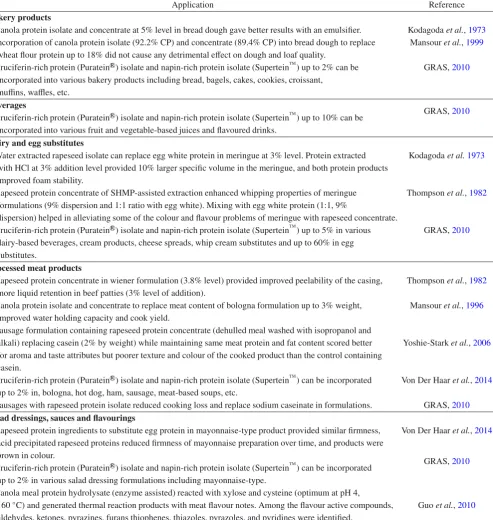
In order to benefit the nutritional value and functional properties of canola protein, studies on incorporation of pro-tein products into foods as substitutes of existing propro-tein, spe-cially animal protein and evaluation of performance and ac-ceptability of such products has been reported since 1970. The colour of canola protein products can range from light tan to dark brown, especially depending on the pH regime employed during processing and temperature involved in the final prod-uct drying. Alternative protein prodprod-ucts in the market today spans over a wide range, for example, hemp protein and algal protein are not necessarily pure white or lighter in colour. It is an indication that, assurance of nutritional value, functional properties, safety and acceptable sensory (mainly taste) char-acteristics are the key for canola protein to stay competitive in the plant protein market. Canola protein products have been described suitable for a range of food products, including bak-ery products, beverages, meat binders, cheese-like products as summarized in Table2.
D
Table 2.Review of edible uses reported for canola protein products.
Application Reference
Bakery products
•Canola protein isolate and concentrate at 5% level in bread dough gave better results with an emulsifier. Kodagodaet al.,1973 •Incorporation of canola protein isolate (92.2% CP) and concentrate (89.4% CP) into bread dough to replace Mansouret al.,1999
wheat flour protein up to 18% did not cause any detrimental effect on dough and loaf quality.
•Cruciferin-rich protein (Purateinr) isolate and napin-rich protein isolate (SuperteinTM) up to 2% can be GRAS,2010 incorporated into various bakery products including bread, bagels, cakes, cookies, croissant,
muffins, waffles, etc.
Beverages
•Cruciferin-rich protein (Purateinr) isolate and napin-rich protein isolate (SuperteinTM) up to 10% can be GRAS,2010 incorporated into various fruit and vegetable-based juices and flavoured drinks.
Dairy and egg substitutes
•Water extracted rapeseed isolate can replace egg white protein in meringue at 3% level. Protein extracted Kodagodaet al.1973 with HCl at 3% addition level provided 10% larger specific volume in the meringue, and both protein products
improved foam stability.
•Rapeseed protein concentrate of SHMP-assisted extraction enhanced whipping properties of meringue Thompsonet al.,1982 formulations (9% dispersion and 1:1 ratio with egg white). Mixing with egg white protein (1:1, 9%
dispersion) helped in alleviating some of the colour and flavour problems of meringue with rapeseed concentrate.
•Cruciferin-rich protein (Purateinr) isolate and napin-rich protein isolate (SuperteinTM) up to 5% in various GRAS,2010 dairy-based beverages, cream products, cheese spreads, whip cream substitutes and up to 60% in egg
substitutes.
Processed meat products
•Rapeseed protein concentrate in wiener formulation (3.8% level) provided improved peelability of the casing, Thompsonet al.,1982 more liquid retention in beef patties (3% level of addition).
•Canola protein isolate and concentrate to replace meat content of bologna formulation up to 3% weight, Mansouret al.,1996 improved water holding capacity and cook yield.
•Sausage formulation containing rapeseed protein concentrate (dehulled meal washed with isopropanol and
alkali) replacing casein (2% by weight) while maintaining same meat protein and fat content scored better Yoshie-Starket al.,2006 for aroma and taste attributes but poorer texture and colour of the cooked product than the control containing
casein.
•Cruciferin-rich protein (Purateinr) isolate and napin-rich protein isolate (SuperteinTM) can be incorporated Von Der Haaret al.,2014 up to 2% in, bologna, hot dog, ham, sausage, meat-based soups, etc.
•Sausages with rapeseed protein isolate reduced cooking loss and replace sodium caseinate in formulations. GRAS,2010
Salad dressings, sauces and flavourings
•Rapeseed protein ingredients to substitute egg protein in mayonnaise-type product provided similar firmness, Von Der Haaret al.,2014 acid precipitated rapeseed proteins reduced firmness of mayonnaise preparation over time, and products were
brown in colour.
•Cruciferin-rich protein (Purateinr) isolate and napin-rich protein isolate (SuperteinTM) can be incorporated GRAS,2010 up to 2% in various salad dressing formulations including mayonnaise-type.
•Canola meal protein hydrolysate (enzyme assisted) reacted with xylose and cysteine (optimum at pH 4,
160◦C) and generated thermal reaction products with meat flavour notes. Among the flavour active compounds, Guoet al.,2010 aldehydes, ketones, pyrazines, furans thiophenes, thiazoles, pyrazoles, and pyridines were identified.
7 Value of canola protein in non-food
and non-feed uses
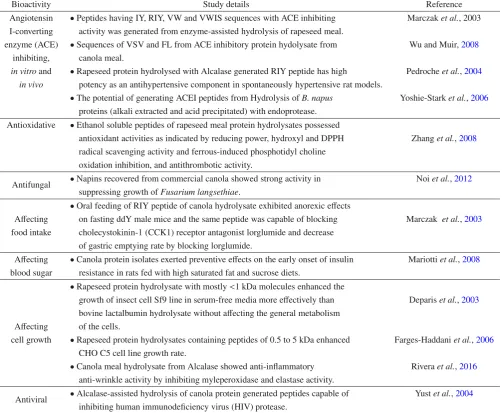
In silico analysis of canola (B. napus) seed storage pro-tein (cruciferin and napin) primary sequences using BioPep database (http://www.uwm.edu.pl/biochemia), Wanasundara (2011) showed that peptide sequences with proven antiamnes-tic, antihypertensive, antithromboantiamnes-tic, antioxidative, anorecantiamnes-tic, etc. are embedded in these proteins. Controlled hydrolysis of
canola protein generates peptides that have potential health benefits as well as pharmaceutical value (Tab.3) and can ex-tend the value of canola protein beyond amino acid-based or protein functionality-based uses.
Table 3.Reported bioactivities of peptides derived from canola protein.
Bioactivity Study details Reference
Angiotensin •Peptides having IY, RIY, VW and VWIS sequences with ACE inhibiting Marczaket al., 2003 I-converting activity was generated from enzyme-assisted hydrolysis of rapeseed meal.
enzyme (ACE) •Sequences of VSV and FL from ACE inhibitory protein hydolysate from Wu and Muir,2008 inhibiting, canola meal.
in vitroand •Rapeseed protein hydrolysed with Alcalase generated RIY peptide has high Pedrocheet al.,2004 in vivo potency as an antihypertensive component in spontaneously hypertensive rat models.
•The potential of generating ACEI peptides from Hydrolysis ofB. napus Yoshie-Starket al.,2006 proteins (alkali extracted and acid precipitated) with endoprotease.
Antioxidative •Ethanol soluble peptides of rapeseed meal protein hydrolysates possessed
antioxidant activities as indicated by reducing power, hydroxyl and DPPH Zhanget al.,2008 radical scavenging activity and ferrous-induced phosphotidyl choline
oxidation inhibition, and antithrombotic activity.
Antifungal •Napins recovered from commercial canola showed strong activity in Noiet al.,2012 suppressing growth ofFusarium langsethiae.
•Oral feeding of RIY peptide of canola hydrolysate exhibited anorexic effects
Affecting on fasting ddY male mice and the same peptide was capable of blocking Marczak et al.,2003 food intake cholecystokinin-1 (CCK1) receptor antagonist lorglumide and decrease
of gastric emptying rate by blocking lorglumide.
Affecting •Canola protein isolates exerted preventive effects on the early onset of insulin Mariottiet al.,2008 blood sugar resistance in rats fed with high saturated fat and sucrose diets.
•Rapeseed protein hydrolysate with mostly<1 kDa molecules enhanced the
growth of insect cell Sf9 line in serum-free media more effectively than Depariset al.,2003 bovine lactalbumin hydrolysate without affecting the general metabolism
Affecting of the cells.
cell growth •Rapeseed protein hydrolysates containing peptides of 0.5 to 5 kDa enhanced Farges-Haddaniet al.,2006 CHO C5 cell line growth rate.
•Canola meal hydrolysate from Alcalase showed anti-inflammatory Riveraet al.,2016 anti-wrinkle activity by inhibiting myleperoxidase and elastase activity.
Antiviral •Alcalase-assisted hydrolysis of canola protein generated peptides capable of Yustet al.,2004 inhibiting human immunodeficiency virus (HIV) protease.
non-protein components. Some of these applications (Tab.4) are quite promising in advancing economic returns for the canola crop as well as supporting the generation of renewable biopolymer and green chemicals.
8 Conclusions
Canola has become a stable and progressive oilseed in the global vegetable oil industry. In the changing landscape of food proteins and renewable polymers, canola has several favourable traits to become a viable plant protein source. Pro-tein containing meal is a co-product of the food-grade canola oil extraction that can be a source of protein product prepara-tion. Protein recovery methods for canola require special con-siderations because of the non-protein components of the seeds such as phenolic compounds, glucosinolates and their break-down products, and phytates. The inherent differences of con-stituent proteins of canola may provide unique advantages over
other plant proteins. The two predominant proteins of canola, cruciferin and napin are different in the genes that are in-volved in their expression, amino acid composition, structural arrangement and properties of the molecules, and abundance in the seed. Because of these inherent differences these two proteins exhibit diverse functional properties while performing differently under the conditions of food processing and prepa-ration. Understanding the details of structure and properties of storage and structural proteins of canola is needed for optimum utilization in nutritional and functional applications.
Acknowledgements. Authors wish to thank funding support provided by Saskatchewan Canola Development Commission (SaskCanola), Agriculture Development Fund (ADF, Saskatchewan Ministry of Agriculture) and Agriculture and Agri-Food Canada (AAFC) to study and investigate canola protein for bioproduct development and al-lowing them to contribute in advancing the scientific knowledge on canola protein. Authors disclose no potential conflict of interest.
D
Table 4.Review of non-food, non-feed applications of protein fraction of canola.
Usage Study details Reference
•Salt soluble canola protein at pH 7 was made into films with glycerol, sorbitol Chang and Nickerson,2014
Films with or PEG 400 as plasticizer with or with genipin as cross linking agent by solution water barrier casting, evaluated for physical properties and moisture resistance.
properties •Salt soluble canola protein isolate made into solution casted films with glycerol as Shi and Dumont,2014
plasticizer, and SDS and stearic acid co-plasticizer. Property evaluation with water absorption properties.
Hydrogel •Hydrogels prepared from hydrolysed canola proteins graft copolymerization of
as acrylic acid monomers, structural evaluation and property identification, showed Shiet al.,2014
superabsorbent very high water absorbing ability with swelling and response to pH and salt.
Protein-based •Amino groups of the canola protein hydrolysate peptides acylated with C10and C12 Sánchez-Vioqueet al.,2001
surfactants/foams/ chains assessed for foam generation and stabilization.
interface active •Grafting long aliphatic hydrocarbon chains and arylsulfonyl groups to lysyl residues Gerbanowskiet al., 1999; molecules of canola cruciferin or napin, efficient way of hydrophobicizing to improve surface Krause,2002
tension reduction in air/water interface and wettability of thin protein films.
Protein-based plastics •Canola protein isolates (alkali extracted and acid precipitated) denatured with Na Manamperiet al.,2010; dodecyl sulfate or Na dodecyl benzene sulfonate and plastic-type material prepared Manamperi and Pryor,2011
by thermal extrusion and injection moulding process with glycerol as plasticizer and with co-polyester, and co-stabilizer PVP and zinc sulfate cross linker and evaluated for material properties.
•Canola napin isolates (pH 3 extracted) plasticized with glycerol and cross linked Mitra and Wanasundara,2013
with HCHO of NaHSO3, made by compression moulding was studied for
mechanical properties and water vapor barrier properties.
Protein-based •Canola protein isolates – poly (glycidyl methacrylate) conjugated formed by free Wanget al.,2014
adhesives radical polymerization evaluated for mechanical properties and water resistance.
Nanoparticles for control •Cruciferin nanoparticles prepared from Ca-induced cold gelation, details of structure Akbari and Wu,2016
delivery of bioactivities and using nanoparticles for encapsulatingβ-carotene for control release.
References
Aachary AA, Thiyam U. 2012. A pursuit of the functional nutritional and bioactive properties of canola proteins and peptides. Crit. Rev. Food Sci. Nutr.52: 965–979.
Adachi M, Kanamori J, Masu da T,et al.2003. Crystal structure of soybean 11S globulin: Glycinin A3B4 homohexamer.Proc. Natl. Acad. Sci. USA100: 7395–7400.
Aider M, Barbana C. 2011. Canola proteins: Composition, extraction, functional properties, bioactivity, applications as a food ingredi-ent and allergenicity – a practical and critical review.Trends Food Sci. Technol. 22: 21–39.
Akbari A, Wu J. 2016. Cruciferin nanoparticles: Preparation, charac-terization and their potential application in delivery of bioactive compounds.Food Hydrocoll.54: 107–118.
Alashi AM, Blanchard CL, Mailer RJ, Agboola SO. 2013. Technological and bioactive functionalities of canola meal pro-teins and hydrolysates.Food Rev. Int.29: 231–260.
Bjergegaard C, Eggum BO, Jensen SK, Sørensen H. 1991. Dietary fi-bres in oilseed rape: Physiological and antinutritional effects in rats of isolated idf and sdf added to a standard diet.J. Anim. Physiol. Anim. Nutr.66: 69–79.
Boland M. 2013. Global food supply-the world’s need for protein. Available from: www.Riddet.Ac.Nz/sites/default/files/content/ 2013%20protein%20supply%20mike%20boland.Pdf (last con-sult: 2016/20/03).
Bos C, Airinei G, Mariotti F,et al.2007. The poor digestibility of rapeseed protein is balanced by its very high metabolic utilization in humans.J. Nutr. 137: 594–600.
Boutry C, Fouillet H, Mariotti F, Blachier F, Tome D, Bos C. 2011. Rapeseed and milk protein exhibit a similar overall nutritional value but marked difference in postprandial regional nitrogen uti-lization in rats.Nutr. Metab. 8: 52.
CCC. 2016. Canola Meal Feeding Guide. Available from: www. canolacouncil.org/media/516716/2015_canola_meal_feed_ industry_guide.pdf(last consult: 2016/29/03)
CGC. 2016. Canadian Grain Commission. Quality of west-ern Canadian Canola 2015. Available from https:// www.grainscanada.gc.ca/canola/harvest-recolte/2015/
hqc15-qrc15-4-en.htm(last consult: 2016/25/05).
Chang C, Nickerson MT. 2014. Effect of plasticizer-type and genipin on the mechanical, optical, and water vapor barrier properties of canola protein isolate-based edible films.Eur. Food Res. Technol. 238: 35–46.
Chen, Q. 2004. Determination of phytic acid and inositol pentak-isphosphates in foods by high-performance ion chromatography. J. Agric. Food Chem.52: 4604–4613.
Cheung L-L, Wanasundara JPD, Nickersen MT. 2014. The effect of pH and NaCl levels on the physicochemical and emulsifying properties of a cruciferin-rich protein isolate.Food Biophys.9: 105–113
Cheung L, Wanasundara JPD, Nickerson MT. 2015. Effect of pH and NaCl on the emulsifying properties of a napin protein isolate. Food Biophys.10: 30–37.
Crouch ML, Sussex IM. 1981. Development and storage-protein syn-thesis in brassica napus l. Embryosin vivoand in vitro.Planta 153: 64–74.
Dabrowski KJ, Sosulski FW. 1984. Composition of free and hy-drolyzable phenolic acids in defatted flours of ten oilseeds.J. Agric. Food Chem.32: 128–130.
Dalgalarrondo M, Robin J-M, Azanza J-L. 1986. Subunit compo-sition of the globulin fraction of rapeseed (Brassica napusL.). Plant Sci. 43: 115–124.