*Corresponding author:Ismael San Mauro Martin ISSN: 0976-3031
Research Article
HEMATOLOGIC CHANGES AFTER A MEDITERRANEAN DIET WITH SEMI-FASTING
INTERVENTION FOR WEIGHT LOSS: A SHORT TERM 6-WEEK TRIAL
Ana Molina Jiménez
1., Elena Garicano Vilar
2., Sara López Oliva
2., Elena Ávila Díaz
2., María
del Carmen Moráis Moreno
2., Begoña de Cuevillas
2., Joaquina Gabella de Prado
2and
Ismael San Mauro Martin
2*
1
Department of Nutrition, BioSabor. Crta. San José, Km 2. 04117, San Isidro de Níjar, Almería (Spain)
2Research Centers in Nutrition and Health, Paseo de la Habana, 43. 28036, Madrid (Spain)
DOI: http://dx.doi.org/10.24327/ijrsr.2018.0905.2185
ARTICLE INFO ABSTRACT
Background: The possible consequences of a fasting-mimicking schedule on certain immune
constituents or haematological variables have not been extensively documented. Aim: To analyze
the effect of an intervention based on Mediterranean diet, with a 5-day semi-fast, on immunology
biomarkers in overweight type II (BMI >27) or obesity (BMI >30) people. Methods: During 6
weeks, levels of immune biomarkers (leukocytes, eosinophils, basophils, lymphocytes, monocytes, neutrophils) and haematological factors (hematocrit, haemoglobin, red blood cells, RDW, MCV, MCH, MCHC, platelets, MPV, PDW) were monitored in 44 overweight type II or obesity subjects,
aged 30 to 65 years. Results: Leukocytes were significantly decreased (p=0.033) during
semi-fasting in comparison with non-semi-semi-fasting, while monocytes only decreased significantly (p=0.006) in the non-semi-fasting group. Lymphocytes were significantly (p < 0.01) increased after semi-fasting. No statistically significant differences (p>0.05) were found for granulocytes. No
differences were observed between both groups for haematological parameters. Conclusion:
Therapeutic fasting may provide substantial benefit for reducing clinical risk; however further research is needed.
INTRODUCTION
The earliest documented examples of voluntary fasting are found as relatively extended religious practices of ancient history. In more recent times, hunger strikes have been used as a form of passive resistance or political action. In the animal world, many species undertake long periods of winter hibernation during which they survive by using energy reserves accumulated during the summer months. Today there are a many health professionals who investigate fasting in order to safely incorporate such techniques into their practice. (1)
Fasting is the metabolic state that occurs in the morning after a night without food intake. As a result of the lack of nutrients, the body activates mechanisms that produce energy substrates to maintain the metabolism of the brain and other vital organs, whilst simultaneously reducing peripheral energy consumption so as to ensure survival. (2)
Although undertaking an absolute fast can be a difficult and daunting prospect, there are a number of less extreme versions that can provide a similar effect. These include: (3)
Intermittent fast: The subject eats on alternate days, one or two days a week (5:2 diet) or 12 hours a day. Periodic fast: This fast is undertaken anywhere from
once a month to once a year for a period of no less than 5 days. During the fasting period daily food intake is restricted (350 calories as liquefied vegetables), or is based on a ‘fasting mimicking diet’. ‘Fasting-mimicking diet’: In this diet calorie intake is
restricted to between 700-1000 kcal per day and follows a strictly controlled regime that recreates the physiological effects of fasting.
Calorie restriction: The subject consumes between 30-40% less than their normal daily calorie intake.
In our case we have undertaken a temporal calorie restriction that is based on organic fruit and vegetables, and simulates a
International Journal of
Recent Scientific
Research
International Journal of Recent Scientific Research
Vol. 9, Issue, 5(I), pp. 27085-27089, May, 2018
Copyright © Ana Molina Jiménez et al, 2018, this is an open-access article distributed under the terms of the Creative Commons Attribution License, which permits unrestricted use, distribution and reproduction in any medium, provided the original work is properly cited.
DOI: 10.24327/IJRSR CODEN: IJRSFP (USA)
Article History:
Received 24th February, 2018
Received in revised form 19th
March, 2018
Accepted 16th April, 2018
Published online 28th May, 2018
Key Words:
‘fasting-mimicking diet’ both in terms of content and calorie intake.
It is hypothesized that intermittent prolonged fasting practiced could positively affect the inflammatory state. So has been investigated in a cross-sectional study (4) were healthy volunteers who practiced Ramadan fasting were recruited for the investigation of immune cells (total leukocytes, monocytes, granulocytes, and lymphocytes), and anthropometric and dietary assessments. Immune cells, especially circulating levels of leukocytes, significantly decreased during fasting period.
Some small, but statistically significant, modifications have been observed (5) in circulating concentrations of haematological parameters (haemoglobin, ferritin, transferrin, creatinine and cortisol), but the mean values for all variables were always within the reference ranges. The minor changes observed during fasting may be explained by changes in patterns of food consumption, activity patterns and by hypohydration. The results suggest that the combination of the changes in eating time and frequency during fasting has no marked effect on the blood profiles.
The Mediterranean diet model has also been linked to a number of beneficial health effects: both fat and non-fat components of the Mediterranean dietary pattern have been shown to exert important anti-inflammatory activities by affecting the arachidonic acid cascade, the expression of some proinflammatory genes, and the activity of immune cells. N-3 polyunsaturated fatty acids, in particular, have been shown to affect lymphocyte and monocyte functions, crucially involved in adaptive and innate immunity. Although some aspects concerning the mechanisms of action through which the Mediterranean diet pattern exerts its beneficial effects remain to be elucidated. (6)
There is little documented information on the changes in standard laboratory haematological and biochemical indices during fasting. The aim of this study, therefore, was to analyze the effect of an intervention based on Mediterranean diet, with and without semi-fast of 5 days, on some immunology biomarkers in persons with overweight type II (BMI >27) or obesity (BMI >30), by comparing semi-fasting and non-semi-fasting subjects before and after intervention.
Experimental Section Study type
Randomized, controlled, prospective, semi-clinical trial
Study Population
A sample of 67 participants, of both sexes, aged 30 to 65 years, was selected from the Community of Madrid in 2017.
Inclusion criteria were as follows: subjects aged 30 to 65 years, of both sexes, with no severe diseases (chronic, autoimmune or neurological diseases, eating disorder, cancer, hepatitis, chronic obstructive pulmonary disease or intellectual disabilities) and no bariatric surgery, with overweight type II (BMI >27) or obesity (BMI >30), who agreed to participate voluntarily, following the diet, and filled in the informed consent. Participants (n=23) who did not meet inclusion criteria, who did not complete all questionnaires, who did not follow the diet as stated, who were under medication or were absent at the 3rd
week supervision were excluded. Hence a total of 44 participants (22.7% boys and 77.3% girls) were finally included.
We followed the Declaration of Helsinki principles and respected the rights of all participants. They all signed an informed consent to participate in the study.
This research project has been evaluated by the Ethical Committee of Clinical Research of Hospital Universitario Severo Ochoa, Madrid (Spain).
Study design
The study population consisted of 44 subjects (n = 27 in group 1 [G1] and n = 17 in group 2 [G2]), who were distributed by randomization. G1 was the study group (semi-fast) and G2 was the control group (standard hypocaloric Mediterranean diet).
A 95% confidence interval and a statistical power of 90%, a deviation of ±2.29 kg for a habitual weight loss in the Spanish obese population in a slimming program with a hypocaloric Mediterranean diet (500 kcal restriction), with a mean loss of 2-4 kg/month, were taken into account. A loss of 3 kg of loss was estimated in the Mediterranean diet group and 5 kg in the semi-fast group, assuming a difference of 2 kg extra in the study group.
Study factors
We conducted an anthropometric study of the subjects participating in the study, and analysed their eating habits with the PREDIMED questionnaire (7) and NHANES Food Frecuency Questionnaire. (8) Data on biochemical markers were also retrieved.
Anthropometric Study: The anthropometric measurements were taken first thing in the morning and included: height, weight, BMI, fat mass, visceral fat, muscle mass and waist circumference. The anthropometric study was done by a single trained researcher, ensuring the homogeneity and standardisation of uniformity criteria and the methodology to follow. Height was measured with the subjects standing barefoot, according to the WHO (9) protocol, with a SECA mobile stadiometer with a 1 mm accuracy. Weight was measured with a digital bioimpedance analyser TANITA model BP-601, ranging from 0.1 to 150 kg. The bioimpedance was also used to measure body fat mass, visceral fat and muscle mass. Quetelet index, based on weight and height, was used to calculate BMI. (10) BMI >27 was considered overweight type II and BMI >30 was considered obese. Waist circumference was measured around the midpoint between the lowest rib and the iliac crest, with non-extensible tape measures (range 0-150 cm).
Diet assessment: G1 (study group) followed the standard hypocaloric Mediterranean Diet for 6 weeks including 5 days of semi-fast. G2 (control group) followed the same standard hypocaloric Mediterranean Diet with no period of fasting.
The general Mediterranean diet guidelines (11) that dieticians provided to participants included the following positive recommendations: a) abundant use of olive oil for cooking and dressing dishes; b) consumption of ≥2 daily servings of vegetables (at least one of them raw, such as in a salad), not including side dishes; c) ≥2-3 daily servings of fresh fruits (including natural juices); d) ≥3 weekly servings of legumes; e) ≥3 weekly servings of fish or seafood (at least one them fatty fish); f) ≥1 weekly serving of nuts or seeds; g) select white meats (poultry without skin or rabbit) instead of red meats or processed meats (burgers, sausages); and h) cooking regularly (at least twice a week) with tomato, garlic and onion, and dressing vegetables, pasta, rice and other dishes with a sauce made by slowly simmering minced tomato, garlic and onion with abundant olive oil. Negative recommendations were also given to eliminate or limit the consumption of cream, butter, margarine, cold cut meat, pâté, duck, carbonated and/or sugary beverages, pastries, industrial bakery products (such as cakes, donuts, or cookies), industrial desserts (puddings, custard), French fries and/or potato chips, and out-of-home pre-cooked cakes and sweets. The aim of the control diet was to reduce all types of fat, with particular emphasis on the consumption of lean meats, low-fat dairy products, cereals, potatoes, pasta, rice, fruits and vegetables. In the control diet, advice on vegetables, red meat and processed meats, high-fat dairy products, and sweets concurred with the recommendations of the Mediterranean diet, but the use of olive oil for cooking and dressing and the consumption of nuts, fatty meats, sausages, and fatty fish were discouraged.
Semi-fast (so-called because the number of calories ingested is greater than that of a fast and less than that of a caloric restriction) consisted of 5 days with two previous days of adaptation and two days of exit from the semi-fast.
The 5-day semi-fast consisted of a liquid diet based on organic fruits and vegetables delivered by BioSabor in boxes specially prepared for the study and with the corresponding instructions. The main recommendations were to ingest only the food supplied made puree and juice and add spices to taste, moderate salt and olive oil.
The one day menu consisted of: a) 700 ml of juice to be distributed throughout the breakfast, mid-morning and afternoon snack. Water could be added to obtain more quantity.
400 ml of puree (add water to taste) to distribute between meal and dinner
500 ml of gazpacho Gluten-free biosabor to be distributed between lunch and dinner
Infusions could be taken without sugar and without sweeteners. The ingredients, zucchini, leek, aubergine, carrot, pineapple, papaya, orange and packaged gazpacho, were adapted to the tastes of each participant. All ingredients were ecological to ensure a free of waste and more nutritious food.
The two previous days of adaptation consisted in: a) 1 whole-yogurt with chopped fruit and oat for breakfast, b) 300 ml of multifruit juice for mid-morning, c) salad with white fish and gazpacho for lunch, d) 300 ml of multifruit juice and 5 nuts for afternoon snack and e) meat or fish with boiled vegetables for dinner.
The two days of exit from the semi-fast contained: a) 1 yogurt and 4 plums or any other fruit for breakfast, b) multifruit juice and yogurt or cooked ham for mid-morning, c) steamed vegetables with white fish and gazpacho for lunch, d) multifruit juice or chopped fruit for afternoon snack, and e) 1 avocado with chopped tomato dressed with olive oil, garlic, salt and lemon, and a French omelette for dinner (day 1); steamed vegetables with white fish (day 2).
Biochemical markers: Venous blood was drawn into EDTA vacutainer tubes, by medical staff, after a 12-hour fasting period of the subjects, following the standard protocol. (12) The biochemical parameters determined were: hematocrit, haemoglobin, red blood cells, RDW, MCV, MCH, MCHC, platelets, MPV, PDW, leukocytes, eosinophils, basophils, lymphocytes, monocytes, neutrophils and sideremia.
Visit schedule: all participants signed informed consent, filled in food habit questionnaires, had blood drawn and anthropometric measures taken at the first visit. Participants were supervised at 3 weeks (diet control and adherence to treatment survey). In the case of G1, participants were indicated how to follow the semi-fast diet between week 3 and 4. The final visit, after 6 weeks of intervention, served to take the final anthropometric measures and a final blood analysis.
Statistical analysis
The statistical analysis entailed descriptive analyses, presenting the results in means, standard deviation and percentages. We used parametric statistical tests such as Student’s t-test to analyse the differences between the means in two groups of quantitative variables and a Chi-square test for non-parametric qualitative variables. A value of p<0.05 was considered a significant difference. Analysis of the data collected was processed with system SPSS® (version 20).
Compliance with ethical standards
This research project has been approved by the Ethical Committee of Clinical Research of Hospital Universitario Severo Ochoa, Madrid (Spain). All procedures performed in studies involving human participants were in accordance with the ethical standards of the institutional and/or national research committee and with the 1964 Helsinki declaration and its later amendments or comparable ethical standards.Informed consent was obtained from all individual participants included in the study.
RESULTS
We evaluated 44 participants aged 30 to 65 years, 10 (22.7%) of the male gender and 34 (77.3%) of the feminine. The baseline characteristics of participants are summarized in Table 1.
Table 1 Baseline characteristics of the participants according to study group
Semi-fast group (61.4 %)
No semi-fast group (38.6 %)
p-value
Sex (%) Men 25.9 17.6 0.01
Women 74.1 82.4
Alcohol consumption (%)
Never 22.2 37.5
0.2
Monthly 25.9 31.3
Weekly 40.7 25.0
Daily 11.1 6.3
Physical exercise (%)
No 22.2 47.1 0.2
Yes 77.8 52.9
Menopause (%)
Yes 90.0 50.0
0.05
No 10.0 35.7
Pre-menopause - 14.3
Mean SD Mean SD
Age (years) 45.89 8.08 47.88 7.67 0.2
Height (m) 1.67 0.08 1.66 0.08 0.53
Weight (kg) 94.81 16.30 97.99 18.05 0.2
BMI (kg/m2) 33.91 5.30 35.92 5.32 0.2
Body fat mass (%) 41.82 7.41 44.51 6.40 0.2
Visceral fat (%) 12.37 3.91 13.12 4.00 0.175
Muscle (kg) 52.00 9.71 51.47 11.16 0.2
Waist circumference (cm) 107.67 12.70 110.49 14.17 0.2
Sleep (h) 7.13 1.11 7.12 0.80 0.009
Tobacco (cigarrettes/day) 2.30 4.85 2.24 4.53 0.003
Exercise (h/week) 4.40 3.25 4.13 3.39 0.2
[[[[[
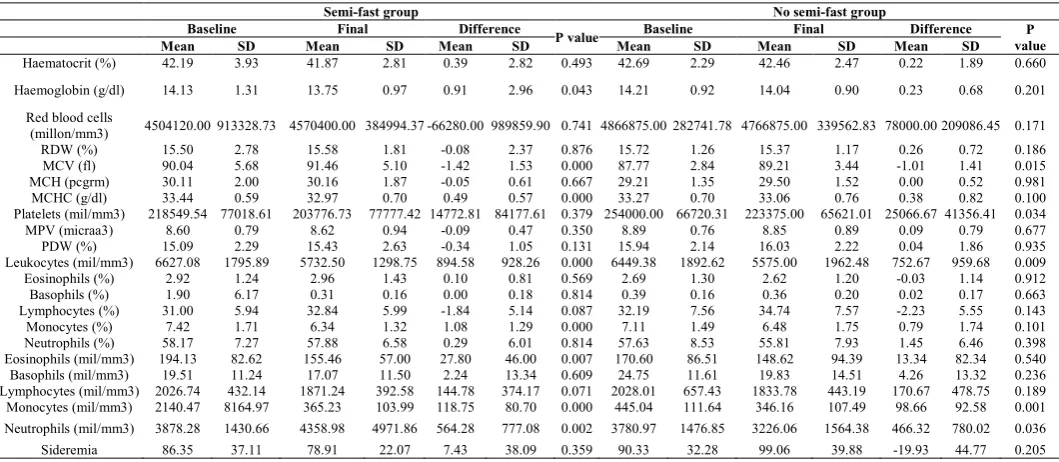
Table 2 summarizes the haematological and immunological parameters measured during the different phases of the study.
The means of the haematological measures were all within the normal reference range for the laboratory. Overall, no differences were observed between the fasting group and non-fasting group for haemoglobin concentration or haematocrit at any phase during the study. However, compared with the concentrations before the intervention, haemoglobin concentration and haematocrit were decreased in both groups.
The total counts of leukocytes (p<0.001) were significantly decreased during semi-fasting and non-semi-fasting (p=0.009), while monocytes only decreased significantly (p<0.001) in the semi-fasting group. Reduction values for white blood cells were more profound than those of other sanguine cells. Of a particular interest, the count of lymphocytes was increased
non-significantly in both groups. No statistically significant differences (p>0.05) were found for granulocytes (neutrophils, eosinophils and basophiles) (Table 2).
DISCUSSION
Intermittent fasting, alternate-day fasting, and other forms of periodic caloric desistance are gaining popularity in the lay press and among research scientists. (13) Both caloric restriction and total caloric desistance require further research, but if the health benefits of total caloric desistance [i.e., intermittent fasting, alternate-day fasting, routine periodic fasting, or intermittent energy restriction] are at least as strong as those of caloric restriction, the less frequent but more intense energy deprivation of total caloric desistance may be preferred. (14) Total caloric desistance may provide not just a greater dose of calorie restriction but powerful metabolic effects. Most human fasting interventional trials have been for the primary endpoint of weight loss and have not used control arms. In our case, the primary endpoints were haematological and immunological changes and a nonfasting control arm was used. The major haematological and biochemical findings of the present study are that in both groups during semi-fasting, the mean values for the measured parameters remained within
the normal reference ranges and that the changes that did occur during semi-fasting were relatively minor.
Fasting reduces global cell proliferation rates, (15) as evidenced in our study by the significant reduction in some immune cell proliferation. Indeed, being in the reference ranges, some white blood cells such as leukocytes and monocytes, were significantly decreased during semi-fasting, except for lymphocytes, which significantly increased after semi-fasting. These results were in accordance with the previous studies on healthy fasting volunteers (5,16) who showed a significant decrease in the total number of white blood cells during Ramadan fasting.
Haemoglobin concentration was decreased from baseline to final values in all study groups. The differences in haematocrit were generally more marked than those in haemoglobin. Some Table 2 Differences between groups in baseline and final biochemical markers values
Semi-fast group No semi-fast group
Baseline Final Difference
P value Baseline Final Difference P
value
Mean SD Mean SD Mean SD Mean SD Mean SD Mean SD
Haematocrit (%) 42.19 3.93 41.87 2.81 0.39 2.82 0.493 42.69 2.29 42.46 2.47 0.22 1.89 0.660
Haemoglobin (g/dl) 14.13 1.31 13.75 0.97 0.91 2.96 0.043 14.21 0.92 14.04 0.90 0.23 0.68 0.201
Red blood cells
(millon/mm3) 4504120.00 913328.73 4570400.00 384994.37 -66280.00 989859.90 0.741 4866875.00 282741.78 4766875.00 339562.83 78000.00 209086.45 0.171
RDW (%) 15.50 2.78 15.58 1.81 -0.08 2.37 0.876 15.72 1.26 15.37 1.17 0.26 0.72 0.186
MCV (fl) 90.04 5.68 91.46 5.10 -1.42 1.53 0.000 87.77 2.84 89.21 3.44 -1.01 1.41 0.015
MCH (pcgrm) 30.11 2.00 30.16 1.87 -0.05 0.61 0.667 29.21 1.35 29.50 1.52 0.00 0.52 0.981
MCHC (g/dl) 33.44 0.59 32.97 0.70 0.49 0.57 0.000 33.27 0.70 33.06 0.76 0.38 0.82 0.100
Platelets (mil/mm3) 218549.54 77018.61 203776.73 77777.42 14772.81 84177.61 0.379 254000.00 66720.31 223375.00 65621.01 25066.67 41356.41 0.034
MPV (micraa3) 8.60 0.79 8.62 0.94 -0.09 0.47 0.350 8.89 0.76 8.85 0.89 0.09 0.79 0.677
PDW (%) 15.09 2.29 15.43 2.63 -0.34 1.05 0.131 15.94 2.14 16.03 2.22 0.04 1.86 0.935
Leukocytes (mil/mm3) 6627.08 1795.89 5732.50 1298.75 894.58 928.26 0.000 6449.38 1892.62 5575.00 1962.48 752.67 959.68 0.009
Eosinophils (%) 2.92 1.24 2.96 1.43 0.10 0.81 0.569 2.69 1.30 2.62 1.20 -0.03 1.14 0.912
Basophils (%) 1.90 6.17 0.31 0.16 0.00 0.18 0.814 0.39 0.16 0.36 0.20 0.02 0.17 0.663
Lymphocytes (%) 31.00 5.94 32.84 5.99 -1.84 5.14 0.087 32.19 7.56 34.74 7.57 -2.23 5.55 0.143
Monocytes (%) 7.42 1.71 6.34 1.32 1.08 1.29 0.000 7.11 1.49 6.48 1.75 0.79 1.74 0.101
Neutrophils (%) 58.17 7.27 57.88 6.58 0.29 6.01 0.814 57.63 8.53 55.81 7.93 1.45 6.46 0.398
Eosinophils (mil/mm3) 194.13 82.62 155.46 57.00 27.80 46.00 0.007 170.60 86.51 148.62 94.39 13.34 82.34 0.540
Basophils (mil/mm3) 19.51 11.24 17.07 11.50 2.24 13.34 0.609 24.75 11.61 19.83 14.51 4.26 13.32 0.236
Lymphocytes (mil/mm3) 2026.74 432.14 1871.24 392.58 144.78 374.17 0.071 2028.01 657.43 1833.78 443.19 170.67 478.75 0.189
Monocytes (mil/mm3) 2140.47 8164.97 365.23 103.99 118.75 80.70 0.000 445.04 111.64 346.16 107.49 98.66 92.58 0.001
Neutrophils (mil/mm3) 3878.28 1430.66 4358.98 4971.86 564.28 777.08 0.002 3780.97 1476.85 3226.06 1564.38 466.32 780.02 0.036
studies (17) suggests that haemoglobin concentrations may fall due to an increased water intake, although fasting subjects tend to be hypohydrated throughout fasting. Hematocrit was not increased, although other studies (18) showed some degree of hemoconcentration, which may be related to the time of study, which was probably in winter. The time of blood collection may also be a determining factor.
Bleeding and clotting times did not change, while platelet count was significantly increased in Sarraf-Zadegan et al. study. (16) Aybak et al. (19) and Kordy and Gader (20) have reported different results regarding the fasting effect on these variables, as well as our results in which platelet count decreased instead of increased. Prothrombin time showed a significant decrease and factor VII and fibrinogen levels were significantly decreased during Ramadan in Sarraf-Zadegan et al. study. (16) Unfortunately, these parameters were not included in our trial so no comparison could be made.
The vast majority of fasting research has been in animals, and evidence in humans of health improvements from fasting is preliminary It is suggested that further studies are to be done in humans to elaborate the impact of semi-fasting on anti-inflammatory and immune cells biomarkers.
CONCLUSION
Overall, no differences were observed between the semi-fasting group and non-semi-fasting group for hematologic parameters at any phase during the study. On the contrary, some immune cell indicators were reduced or increased after the semi-fasting intervention. Therapeutic semi-fasting may provide substantial benefit for reducing clinical risk; however further research is needed to determine whether semi-fasting is effective for improving health in the general population, higher-risk people, and diseased individuals before advocating its use for health purposes.
Acknowledgements
Thank you to BioSabor S.A.T, all participants who enrolled the trial and MDS360 clinic for providing patients.
Conflict of interests: The authors have disclosed that they have no significant relationships with, or financial interest in, any commercial companies pertaining to this article.
Funding
The research was funded by Company BioSabor S.A.T.
References
1. Molina Jiménez A. Lo saludable de los alimentos. Cómo mejorar la salud en cada situación a través de la alimentación. Almeria: Publicaciones Cajamar; 2015. 2. Albero R, Sanz A, Playán J. Metabolismo en el ayuno.
Endocrinol Nutr. 2004;51(4):139-48.
3. Grant B. Running on Empty [Internet]. The Scientist. 2017 [cited 2017 Sep 6]. Available from:
http://www.the-scientist.com/?articles.view/articleNo/49462/title/Runni ng-on-Empty/
4. Faris MAIE, Kacimi S, Al-Kurd RA, et al. Intermittent fasting during Ramadan attenuates proinflammatory cytokines and immune cells in healthy subjects. Nutr
Res. 2012;32(12):947-55.
5. Maughan RJ, Leiper JB, Bartagi Z, et al. Effect of Ramadan fasting on some biochemical and haematological parameters in Tunisian youth soccer players undertaking their usual training and competition schedule. J Sports Sci. 2008;26(3):S39-46.
6. Oliviero F, Spinella P, Fiocco U, et al. How the Mediterranean diet and some of its components modulate inflammatory pathways in arthritis. Swiss Med Wkly. 2015;145:w14190.
7. Estruch R, Ros E, Salas-Salvadó J, et al. Primary Prevention of Cardiovascular Disease with a Mediterranean Diet. N Engl J Med. 2013;368(14):1279-90.
8. National Cancer Institute. NHANES Cuestionario de Hábitos Alimentarios.
9. World Health Organization. Waist Circumference and Waist-Hip Ratio: Report of a WHO Expert Consultation. World Health Organization. 2008.
10. Durnin J V, Fidanza F. Evaluation of nutritional status. Bibl Nutr Dieta. 1985;(35):20-30.
11. Ceriello A, Esposito K, La Sala L, et al. The protective effect of the Mediterranean diet on endothelial resistance to GLP-1 in type 2 diabetes: a preliminary report.
Cardiovasc Diabetol. 2014;13(1):140.
12. Sugiuchi H, Uji Y, Okabe H, et al. Direct measurement of high-density lipoprotein cholesterol in serum with polyethylene glycol-modified enzymes and sulfated a-cyclodextrin. Clin Chem. 1995;41(5):717-23.
13. Horne BD, Muhlestein JB, Anderson JL. Health effects of intermittent fasting: Hormesis or harm? A systematic review. Am J Clin Nutr. 2015;102(2):464-70.
14. Rizza W, Veronese N, Fontana L. What are the roles of calorie restriction and diet quality in promoting healthy longevity? Ageing Res Rev. 2014;13(1):38-45.
15. Varady KA, Roohk DJ, McEvoy-Hein BK, et al. Modified alternate-day fasting regimens reduce cell proliferation rates to a similar extent as daily calorie restriction in mice. FASEB J. 2008;22(6):2090-6. 16. Sarraf-Zadegan N, Atashi M, Naderi GA, et al. The
effect of fasting in Ramadan on the values and interrelations between biochemical, coagulation and hematological factors. Ann Saudi Med. 2000;20(5-6):377-81.
17. Maughan RJ, Bartagi Z, Dvorak J, Zerguini Y. Dietary intake and body composition of football players during the holy month of Ramadan. J Sports Sci.
2008;26(3):S29-38.
18. El-Hazmi M, Al-Faleh F, Al-Mofleh I. Effect of Ramadan fasting on the values of hematological and biochemical parameters. Saudi Med J. 1987;8:171-6. 19. Aybak M, Türkoğlu A, Sermet A, Denli O. Effect of
Ramadan fasting on platelet aggregation in healthy male subjects. Eur J Appl Physiol Occup Physiol. 1996;73(6):552-6.