Module 3
Similarity
What this module is about
This module is about similarities on right triangles. As you go over the exercises you will develop skills in applying similarity on right triangles and solve for the missing lengths of sides using the famous Pythagorean theorem.
What you are expected to learn
1. Apply AA similarity on Right triangles
2. In a right triangle, the altitude to the hypotenuse separates the triangle into two triangles each similar to the given triangle and similar to each other.
3. On a right triangle, the altitude to the hypotenuse is the geometric mean of the segments in which it divides, each leg is the geometric mean of the hypotenuse and the segment of the hypotenuse adjacent to it.
4. Pythagorean Theorem and its application to special right triangles
How much do you know
Use the figure to answer each of the following:
1. What is the hypotenuse of rt. ABC? C
B A
2. If C is the right angle of ABC and CD AB then ABC BDC ___.
3. Complete the proportion:
BD CD
AD ?
4. In rt. PRO, R is a right angle OR = 24 and PO = 26,
find PR:
5. In a 30-60-90 triangle the length of the hypotenuse is 14. Find the length of the longer leg.
6. In a 30-60-90 triangle, the length of the hypotenuse is 11
2 1
. Find the length of the shorter leg.
7. In a 45 - 45 - 90 triangle, the length of the hypotenuse is 16. Find the length of a leg.
8. Find the length of the altitude of an equilateral triangle if the length of a side is 6.
9. Find the length of the diagonal of a square if the length o a side is 10 cm.
10. ΔBAC is a right triangle C is right angle CD AB. Find CD if AD = 14, DB = 6
O
P R
24 26
C
B D
A
What will you do
Lesson 1
Similarity on Right Triangle
Let us recall the AA Similarity Theorem.
Given a correspondence between the vertices of two triangles. If two pairs of corresponding angles are congruent, then the triangles are similar.
From the theorem, if ABC RST and A = R, B = S then ΔABC ΔRST. We can apply this theorem to prove another theorem, this time in a right triangle.
Theorem: In a right triangle, the altitude to the hypotenuse separates the triangle into to two triangles each similar to the given triangle and similar to each other.
Given: Right ΔABC with altitude CP
Prove: ΔACP ΔCBP ΔABC
To prove this theorem, we apply the AA Similarity Theorem A
P B
C
S
T R
B
Examples:
If you are given ΔPRT a right triangle and RM an altitude to the hypotenuse then we can have three pairs of similar triangles.
ΔRMP ΔTRP
ΔTMR ΔTRP
ΔRMP ΔTMR
Try this out
A. Use the figure to answer each of the following:
1. Name the right triangle of ΔABC
2. What is the altitude to the hypotenuse of ΔABC?
3. Name the hypotenuse of ΔABC
4. Two segments of the hypotenuse Are AD and ____.
5. The hypotenuse of ΔBCD if
CD AB is ____.
6. Name the right angle of ΔACD 7. Name the hypotenuse of right ΔBCD 8. ΔADC _____
9. ΔABC _____ 10. ΔABC _____
B. Name the pairs of right triangles that are similar.
1. 2. 3.
R
P
M T
D C
B A
S
R T
4.
5.
6.
C. Use the figure at the right.
1. Name all the right triangles.
2. In ABC, name the altitude to the hypotenuse. 3. Name the hypotenuse in ADC.
4. Name the hypotenuse of ACB.
One of the segments shown is an altitude to the hypotenuse of a right triangle. Name the segment.
5. 6. 7.
Name the three pairs of similar triangles:
8.
9.
10.
A
D
C B
B
C A
D
M
N
O P
M
S
R O
I D
J
K
G F
Lesson 2
Geometric Mean in Similar Right Triangles
The previous theorem states that:
In a right triangle, the altitude to the hypotenuse divides the triangle into similar triangles, each similar to the given triangle.
If : ACB is right with C, the right angle
CD is the altitude to the hypotenuse AB.
Then : ADC ACB
CDB ACB
ADC CDB
Corollary: 1. In a right triangle, the altitude to the hypotenuse is the geometric mean of the segments into which divides the hypotenuse
In the figure:
DB CD CD
AD
Corollary 2: In a right triangle, each leg is the geometric mean of the hypotenuse and the segment of the hypotenuse adjacent to it.
In the figure:
AD AC AC AB
AD B C B C
AB
C
B A
D
C
B D
A
C A
Examples:
1. How long is the altitude of a right triangle that separates the hypotenuse into lengths 4 and 20?
20 4 a a
a2 = 80
a = 80
a = 165
a = 4 5
2. Use the figure at the right to solve for x and y.
8 2 x x x2 = 16
x = 16
x = 4
Solve for y
8 6 y y y2 = 48
y = 48
y = 163
y = 4 3
20 4
a
2
y x
Try this out
A. Supply the missing parts:
1.
? RT RT RW
2.
RS TS WS
?
3.
RS TS TS
?
4.
? RT RT RS
Give the indicated proportions.
5. The altitude is the geometric mean
6. The horizontal leg is the geometric mean
7. The vertical leg is the geometric mean
Find:
8. BS
9. RS
10. ST
B. Solve for x and y:
1.
x = y =
F
S
O P
R
B
T S
8 2
x 4
7
y
T
S W
x y
2.
x = y =
3.
x = y =
4.
x = y =
5.
x =
y =
C.
Given: Right POM OR PM, x y
5
10
6
O
M R
P
10
x y
4 10
y
10
20
Find the missing parts:
1. PR = 5, RM = 10, OR =
2. OR = 6, RM = 9, PR =
3. PR = 4, PM =12, PO =
4. RM = 8, PM =12, OM =
5. PO = 9, PR = 3, PM =
6. PR = 6, RM = 8, PO =
7. PR = 4, RM = 12, OM =
8. PR = 4, PO = 6, RM =
9. PR = 8, OR = 12, RM =
10. PM =15, OM = 12, RM =
Lesson 3
The Pythagorean Theorem
In a right triangle, the square of the length of the hypotenuse is equal to the sum of the squares of the lengths of the legs.
In the figure:
BCA is right with leg lengths, a and b and hypotenuse length, c.
The Pythagorean Theorem in symbol:
c2 = a2 + b2
Pythagorean Theorem is named after Pythagoras, a Greek Mathematician of the sixth century BC. This theorem can be used to find a missing side length in a right triangle.
Examples:
1. In the figure c = 13, b = 12
Find a:
c2 = a2 + b2
132 = a2 + 122
B
C A
a c
b
a = ? c = 13
a2 =132 - 122 a2 =169 – 144 a2 = 25 a = 25
a = 5
2. Find c, if a = 16 and b = 12
c2 = a2 + b2
c2 = 162 + 122
c2 = 256 + 144 c = 400
c = 20
3. c2 = a2 + b2
82 = 42 + b2
b2 = 82 – 42
b2 = 64 –16
b2 = 48
b = 48
b = 163
b = 4 3
Try this out:
A. State whether the equation is correct or not
1.
a2 + b2 = c2
2.
r2 = s2 + t2
a = 16
b = 12 c = ?
a = 4
b = ? c = 8
a c
b
r t
3.
e2 = f2 – d2
4.
a2 = c2 – b2
5.
k2 = l2 – m2
6.
p2 = r2 + q2
7.
x2 = 32 + 42
e d
f
a c
b
l k
m
p
q r
3 x
8.
x2 = 102 – 72
9.
x2 = 42 + 62
10.
x2 = 72 – 52
B. Write the equation you would use to find the value of x.
1.
2.
10 7
x
x 4
6
x 7
5
x 4
3
x 6
3.
4.
Classify each statement as true or false
5. 32 + 42 = 52 6. 102 – 62 = 82 7. 12 + 12 = 22 8. 22 + 22 = 42 9. 72 – 52 = 52 10. 92 + 122 = 152
C. Given the lengths of two sides of a right triangle. Find the length of the third side
1. a = 6, b = 8, c =
2. a = 5, b = 12, c =
3. a = 12, c = 15, b =
4. b = 4, c = 5, b =
5. a = 24, c = 26, b =
6. b = 16, c = 20 x
7 10
x 5
6
a c
b
B
7.
8.
9.
10
Lesson 4
Special Right Triangle
Isosceles Right Triangle or 45 – 45 – 90 Theorem:
In a 45 – 45 – 90 triangle, the length of the hypotenuse is equal to the length of a leg times 2.
In the figure: If ABC, a 45 – 45 – 90 triangle
when AC = BC = s then AB = s 2.
30 - 60 - 90 Theorem:
In a 30 - 60 - 90 triangle, the length of the hypotenuse is twice the length of the shorter leg, and the length of the longer leg is 3 times the length of the shorter leg.
In the figure:
If PRT where R is a right angle and T = 30,
Then: a. PT = 2PR
b. RT = PR 3
a b c
7 24 ?
4 6 ?
7 9 ?
6 3 ? 12
s s
C
B
A 45 45
P
R T
60
Examples:
1.Find the length of the hypotenuse of an isosceles right triangle with a leg 7 2 cm long.
Hypotenuse = leg 2. = 7 2 2
= 7 · 2 = 14
2. Find the length of each leg of a 45 - 45 - 90 triangle with a hypotenuse 12 cm long.
Leg =
2 hypotenuse = 2 12 = 2 2 2 12 = 2 2 12
= 6 2 cm
3. Find the length of the longer leg and the length of the hypotenuse.
Longer leg = shorter leg · 3 = 30 · 3
= 30 3 m
hypotenuse = shorter leg · 2 = 30 · 2
= 60 m
Try this out
A. Use the figure to answer the following:
1. The hypotenuse of a rt. ABC is ___________. 2. The shorter leg of rt. ABC is ___________.
3. The shorter leg of rt. ADC is ___________. 4. The longest side of rt. ADC is _________.
5. The altitude to the hypotenuse of ACD is ________. 6. The longer leg of rt. ACB is _________.
7. The longer leg of rt. ADC is ________. 8. When CD = 2 then ____ = 4.
9. When CB = 6 then _____ = 6 3 10. When CB = 6 then _____ = 3
B. Find the value of x in each of the following:
1. 2. 3.
4. 5. 6.
7. 8. 9.
10. 45 45 10 30 x 60 24 30 x 60 30 x 45 45 12 x 45 45 7 30 x 60 26 30 x 60 18 30 60
x 16
30 60
x y
10 C. Find the missing lengths, x and y.
1. 2.
45 45
3. 4.
5. 6.
7. 8.
60
30
9. 10. 45 y x 5
45 45
x y
3 y x 7 30 10 3 x y 30 x y 5 45 45 y x 2 3
45 45
x y
Beyond the Pythagorean Theorem
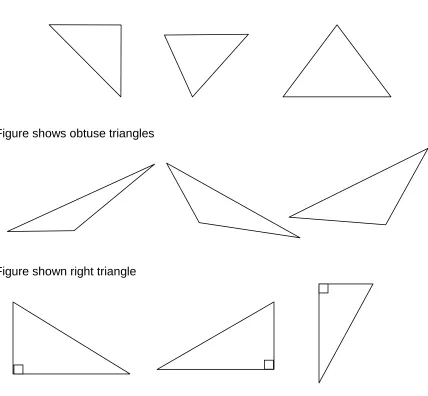
[image:19.612.95.523.208.604.2]In symbol c2 = a2 + b2, where c is the hypotenuse and a and b are the legs of a right triangle.
Figure shows acute triangles
Figure shows obtuse triangles
Activity:
This activity will help you extend your understanding of the relationship of the sides of a triangle.
Materials: Strips of paper cut in measured lengths of 2, 3, 4, 5, 6 and 8 units.
Procedure:
1. Form triangles with strips indicated by the number triplets below. 2. Draw the triangle formed for each number triple.
3. Fill out the table:
Number triplets What kind of
triangle Compute c
2
Compute a2 + b2
1. 3 4 5 Right 52 = 25 32 + 42 = 25
2. 2 3 4 3. 2 4 5 4. 5 4 8 5. 6 5 8 6. 4 5 6 7. 2 3 3 8. 3 3 4
After the computation, the completed table will look like this
Number triplets Kind of
triangle c
2
a2 + b2 Comparison of c with
(a2 + b2 )
1. 3 4 5 Right 25 25 Equal to
2. 2 3 4 Obtuse 16 13 Greater than
3. 2 4 5 Obtuse 25 20 Greater than
4. 5 4 8 Obtuse 64 41 Greater than
5. 6 5 8 Obtuse 64 61 Greater than
6. 4 5 6 Acute 36 41 Smaller than
7. 2 3 3 Acute 9 13 Smaller than
8. 3 3 4 Acute 16 18 Smaller than
1. What kind of did you get from triplet no. 1?
4. For each obtuse triangle compare the result from c2 and (a2 + b2). 5. For acute triangles how will you compare the result of c2 and (a2 + b2)
Fill in the blanks with <, =, >:
6. In a right triangle, c2 ____ a2 + b2 7. In an obtuse triangle, c2 ______ a2 + b2 8. In an acute triangle, c2 ____a2 + b2
Let’s Summarize
Theorem: In a right triangle, the altitude to the hypotenuse separates the triangle into two triangles each similar to the given triangle and similar to each other.
Corollary 1: In a right triangle, the altitude to the hypotenuse is the geometric mean of the segments into which it divides the hypotenuse.
Corollary 2: In a right triangle, each leg is the geometric mean of the hypotenuse and the segment of the hypotenuse adjacent to it.
Pythagorean Theorem: The square of the length of the hypotenuse is equal to the sum of the squares of the legs.
45-45-90 Theorem: In a 45-45-90 triangle, the length of the hypotenuse is equal to the length of a leg times
2.
What have you Learned
Fill in the blanks:
1. The _______ to the hypotenuse of a right triangle forms two triangles each similar to the given triangle & to each other.
2. The lengths of the ________ to the hypotenuse is the geometric mean of the lengths of the segments of the hypotenuse.
3. In the figure
? MA MA
AB
for nos. 3 & 4
4. If BP = 8 AB = 4
Find PM ___
5. If in a right triangle the lengths of the legs are 8 and 15, the length of the hypotenuse is _______
6. Find the length of an altitude of an equilateral triangle if the length of a side is 10.
7. In a 30 – 60 – 90 triangle, the length of the hypotenuse is 8. Find the
length of the shorter leg.
8. - 9. ACB is an isosceles right triangle. CD bisects C, the right angle.
Find AB and CB.
10. What is the height of the Flag Pole?
M
P
B A
C
A B
D 3
Answer key
How much do you know
1. AB 6. 5
4 3
2. ACB 7. 8 2
3. CD 8. 3 3
4. 10 9. 10 2
5. 7 3 10. 2 21
Lesson 1:
A. B.
1. C or ACB 1. ROS RST
2. CD 2. TOS RST
3. AB 3. ROS TOS
4. BD or DB
5. BC 4. MST MOR
6. ADC 5. RSO MOR
7. BC 6. MST RSO
8. BDC
9. ADC
10. BDC
C.
1. ADC, BDC, ACB
2. CD 3. AC 4. AB 5. BD 6. GH 7. OK
8. MNR MPO
9. ONP MPO
10. MNP ONP
Lesson 2
A. B. C. 1. WS 1. x = 2 11 1. 5 2
3. WS 2. x = 10 3 3. 4 3 4. RW y = 30 4. 4 6 5.
SP OS OS SF
3. x = 2 14 5. 27
y = 2 35 6. 4 3 6.
PF PO PO
SP
4. x = 20 7. 8 3
y = 5 5 8. 9
7.
PF OF OF
FS
5. x =
3 2 16 6
100
or 9. 18 y = 10 10. 9.6 8. 4
9. 2 5 10. 4 5
Lesson 3
A. B. C. 1. correct 1. x2 = 32 + 42 1. 10 2. correct 2. x2 = 62 – 52 2. 13 3. not 3. x2 = 102 – 72 3. 9 4. correct 4. x2 = 62 – 52 4. 3 5. correct 5. true 5. 10 6. not 6. true 6. 12 7. correct 7. false 7. 25 8. correct 8. false 8. 2 13 9. not 9. false 9. 130 10. not 10. true 10. 6
Lesson 4
A. B. C. x y
1. AB 1. 12 1. 5 3 5
2. BD 2. 10 3 2. 2 3 2 2 3
3. CD 3. 8 3. 3 3
5. CD 5. 13 5. 2
2 5
2
2 5
6. AC 6. 7 2 6.
2 2 5 . 1
2 2 5 . 1
7. AD 7. 12 3 7. 14 7 3
8. AC 8. 12 2 8. 5 5 3
9. AC 9. 15 3 9. 5 3 15
10. DB 10. 3
3 10
10. 5 10
What have you learned
1. altitude
2. altitude
3. AP
4. 4 2 5. 17
6. 5 3
7. 4
8. 3 2 9. 3
10. 2 3