R E S E A R C H
Open Access
Host genetics influence the rumen
microbiota and heritable rumen microbial
features associate with feed efficiency in
cattle
Fuyong Li
1, Changxi Li
1,2, Yanhong Chen
1, Junhong Liu
1, Chunyan Zhang
1, Barry Irving
1, Carolyn Fitzsimmons
1,2,
Graham Plastow
1and Le Luo Guan
1*Abstract
Background:The symbiotic rumen microbiota is essential for the digestion of plant fibers and contributes to the variation of production and health traits in ruminants. However, to date, the heritability of rumen microbial features and host genetic components associated with the rumen microbiota, as well as whether such genetic components are animal performance relevant, are largely unknown.
Results:In the present study, we assessed rumen microbiota from a cohort of 709 beef cattle and showed that multiple factors including breed, sex, and diet drove the variation of rumen microbiota among animals. The diversity indices, the relative abundance of ~ 34% of microbial taxa (59 out of 174), and the copy number of total bacteria had a heritability estimate (h2)≥0.15, suggesting that they are heritable elements affected by host additive genetics. These moderately heritable rumen microbial features were also found to be associated with host feed efficiency traits and rumen metabolic measures (volatile fatty acids). Moreover, 19 single nucleotide polymorphisms (SNPs) located on 12 bovine chromosomes were found to be associated with 14 (12 of them had h2≥0.15) rumen microbial taxa, and five of these SNPs were known quantitative trait loci for feed efficiency in cattle.
Conclusions:These findings suggest that some rumen microbial features are heritable and could be influenced by host genetics, highlighting a potential to manipulate and obtain a desirable and efficient rumen microbiota using genetic selection and breeding. It could be a useful strategy to further improve feed efficiency and optimize rumen fermentation through targeting both cattle and their rumen microbiota.
Keywords:Cattle, Feed efficacy, Heritability, Host genotype, Rumen microbiota
Background
Ruminants have evolved to possess a diverse symbiotic microbiota in their rumen, mainly consisting of bacteria, archaea, ciliated protozoa, fungi, and viruses [1]. These rumen microorganisms can degrade complex plant fibers and polysaccharides and produce volatile fatty acids (VFAs), microbial proteins, and vitamins, which provide nutrients to meet the host’s requirement for maintenance and growth. Using omics-based approaches, recent studies
have suggested that differences in rumen microbiota are associated with cattle production and health traits, such as feed efficiency [2, 3], methane (CH4) yield [4, 5], milk composition [6], and ruminal acidosis [7]. Hence, the rumen microbiota is a potential target for manipulation to improve ruminant productivity and animal health, as well as to reduce CH4emissions.
Although it has been commonly accepted that diet plays the main role in shaping the gut microbiota [8], more and more evidence from quantitative genetics, es-pecially genome-wide association studies (GWAS), have revealed that host genetics is also an important factor in determining the composition of gut microbiota in
© Crown 2019Open AccessThis article is distributed under the terms of the Creative Commons Attribution 4.0 International License (http://creativecommons.org/licenses/by/4.0/), which permits unrestricted use, distribution, and reproduction in any medium, provided you give appropriate credit to the original author(s) and the source, provide a link to the Creative Commons license, and indicate if changes were made. The Creative Commons Public Domain Dedication waiver (http:// creativecommons.org/publicdomain/zero/1.0/) applies to the data made available in this article, unless otherwise stated.
* Correspondence:[email protected]
1Department of Agricultural, Food and Nutritional Science, University of
Alberta, Edmonton, Alberta T6G 2P5, Canada
humans and mice. For example, 18 quantitative trait loci (QTLs) were found to be associated with the abundance of gut microbial taxa in mice [9], and a follow-up study reported 42 QTLs for the abundance of 39 microbial taxa in a different mouse strain [10]. Two studies found that the abundance of one-third of the identified oper-ational taxonomic units (OTUs) in human gut was herit-able with moderate or high heritability estimates [11,
12]. In addition, substantial associations between specific host genes and the gut microbiota were observed in the UK human population using GWAS [12]. Recently, 58 single nucleotide polymorphisms (SNPs) were also re-ported to be associated with the abundance of 33 fecal microbial taxa in human [13].
In ruminants, studies have also indicated that the rumen microbiota could be influenced by host breed/species [14– 19]. For instance, differences in the composition of rumen microbiota were detected between Holstein and Jersey dairy cows fed the same diet [18]. However, multiple fac-tors are confounded in that study such as lactation cycles and age, and these factors have been reported to contrib-ute to the variation of the rumen microbiota [20,21]. In one recent study investigating the role of rumen micro-biota in CH4 emissions, host genetics was reported to affect the archaea to bacteria ratio in the rumen [17], but it was unclear whether host genetics affect the rumen mi-crobial composition. In another survey of rumen micro-biota of 742 rumen and foregut samples from 32 species/ sub-species of ruminants and foregut fermenters across continents [15], the identified effects of diet, geographical regions, and genetic background of the host were nested and could not be clearly separated. Effects of breed [14] and sire breed [16] on the rumen microbiota were ob-served in our previous studies investigating beef cattle, when rumen microbial communities were characterized using low-resolution methods (PCR-DGGE and qPCR). Our recent studies reported individualized rumen micro-biome of beef cattle even when animals were fed the same diet and managed under the same environment, and iden-tified breed effect on active rumen microbiome using metagenomics and/or metatranscriptomics [2, 19]. In addition, it is notable that heritability estimates of rumen bacterial and archaeal members were recently reported based on 750 lactating Holstein cows from five commer-cial herds [5]. All these findings suggest the important role of host genetics in influencing the rumen microbiota. However, the heritability estimates of rumen microbial features for commercial beef cattle and underlying bovine genotypes associated with these microbial features have not been reported. The lack of such information could be one of the barriers to manipulating the rumen microbiota to improve feed efficiency in beef cattle.
Therefore, in this study, we hypothesized that rumen microbial features of beef cattle are affected by host
additive genetic effects and there are host SNPs contrib-uting to the variation of microbial composition in the rumen, which could partially drive the “individualized” rumen microbiota and influence host feed efficiency. To test these hypotheses, we assessed compositional profiles of rumen microbiota, estimated the heritability, per-formed GWAS for rumen microbial features, and corre-lated these heritable microbial features to feed efficiency traits through surveying a cohort of beef cattle (n= 709) raised under the same farm environment.
Methods
Animal experiments and rumen sampling
efficiency phenotypes and VFA concentrations are summa-rized in (Additional file3: Table S3).
DNA extraction, high-throughput sequencing, and quantitative PCR (qPCR) analysis
Total DNA was isolated from each rumen sample using QIAGEN BioSprint 96 workstation (Valencia, CA, United States) at Delta Genomics (Edmonton, AB, Canada). To assess the rumen microbial profiles, the bacterial V1–V3 region and the archaeal V6–V8 re-gion of 16S rRNA genes were amplified using primers as described previously [15], i.e., for bacteria, the primers were Ba9F (5′-GAGTTTGATCMTGGCTCAG-3′) and Ba515Rmod1 (5′-CCGCGGCKGCTGGCAC-3′); for archaea, the primers were Ar915aF (5′-AGGAATTGGCGGGGGAG-CAC-3′) and Ar1386R (5′-GCGGTGTGTGCAAGGAGC-3′). The paired-end sequencing (2 × 300 bp) of regional ampli-con was performed using the Illumina MiSeq PE300 at Gén-ome Québec Innovation Centre (McGill University, Montréal, QC, Canada). Quantitative PCR was performed to determine the abundance of rumen bacteria and archaea through enu-merating their 16S rRNA gene copy numbers, using U2 primers for bacteria (forward: 5′-ACTCCTACGGGAGG-CAG-3′; reverse: 5′-GACTACCAGGGTATCTAATCC-3′) [26] and uniMet1 primers for archaea (forward:
5′-CCGGAGATGGAACCTGAGAC-3′; reverse: 5′-CGGT CTTGCCCAGCTCTTATTC-3′) [27]. Standard curves were made using serial dilutions of plasmid DNA con-taining a full-length 16S rRNA gene of Butyrivibrio hungatei(for U2 primers, using an initial concentration of 8.50 × 10⁷mol/μl) and partial 16S rRNA gene of
Methanobrevibacter sp. strain AbM4 (for uniMet1
primers, using an initial concentration of 1.58 × 10⁷ mol/μl). Quantitative PCR was conducted using SYBR Green chemistry (Fast SYBR Green Master Mix; Ap-plied Biosystems) in the StepOnePlus Real-Time PCR System (Applied Biosystems), and the 16S rRNA gene copy numbers per milliliter of rumen sample were cal-culated using the formula from a previous study [27].
Microbial composition analysis
Sequencing data were processed using MacQIIME ver-sion 1.9.1. Briefly, paired-end forward and reverse reads were joined, and then primers and homopolymer runs (maximum length, 8) of joined sequences were trimmed. Only sequences ≥400 bp in length, with average quality score ≥25 and with ambiguous bases ≤6 remained for downstream analysis. De novo chimera checking was performed using UCHIME [28] and operational taxo-nomic unit (OTU) picking was conducted using USEARCH [29] to cluster similar sequences sharing ≥ 97% similarity. Representative sequences for bacterial and archaeal OTUs were assigned to the Greengenes 16S rRNA gene database (version gg_13_8) [30] and
RIM-DB database [31], respectively, using BLAST [32]. Samples with < 500 bacterial sequences or samples with < 100 archaeal sequences were removed from the com-positional analysis [15]. To estimate Good’s coverage
and α-diversity indices (Chao1, Shannon index, and Simpson index), the number of bacterial and archaeal sequences per sample were normalized to 2000 and 500, respectively, using 100 subsampling iterations. These α -diversity indices were calculated at the genus level for bacterial communities and at the species level for ar-chaeal communities. β-diversity (Principal Coordinates Analysis [PCoA]) was calculated based on normalized sequence numbers (n= 2000 for bacteria andn= 500 for archaea) using Bray-Curtis dissimilarity matrices. Sam-ples with read number less than these cutoffs were not included in the diversity analysis. Permutational multi-variate ANOVA (Adonis PERMANOVA) based on Bray-Curtis dissimilarity matrices was performed with 1000 permutations to test the differences of rumen microbial communities in the R package vegan ( https://CRAN.R-project.org/package=vegan). The sequencing data were collapsed and summarized at five taxonomic levels (from genus to phylum) for bacteria, and at six taxonomic levels (from species to phylum) for archaea. Only taxa with a relative abundance > 0.5% in at least one sample and with a prevalence > 20% were considered as detected taxa and included in the downstream analysis.
Co-occurrence network of rumen microbiota
Correlations among detected bacterial genus-level taxa and archaeal species-level taxa were inferred using the SparCC program [33] implemented in mothur [34], with default settings apart from “permutations = 10000”. To avoid the potential bias on the co-occurrence calcula-tions caused by different sequencing depth among sam-ples, bacterial and archaeal sequences were subsampled to 2000 and 500 for each sample, respectively, and sam-ples with read number less than these cutoffs were re-moved from the downstream analysis. Bacterial and archaeal taxa that were found in < 20% of animals in the population were also eliminated as previously suggested [35]. The correlation patterns were further filtered to se-lect only correlations with coefficient > 0.3 or <−0.3 and with P value < 0.001, which were then displayed using Cytoscape [36].
Genotyping
for SNPs was performed according to the following cri-teria: (1) P value of chi-square test of Hardy-Weinberg equilibrium > 10−6, (2) minor allele frequency (MAF) < 5%, and (3) genotyping call rate < 90%. Missing genotypes were imputed using the R package synbreed [37]. After that, 42,809 SNPs remained to construct the genomic re-lationship matrix (G) which was used in an animal model to estimate the heritability. In total, 42,374 SNPs with known chromosomal position were used for GWAS (Add-itional file4: Table S4).
Heritability estimations
Only animals with completed rumen microbial profiles, genotype information, breed, sex, diet, and age records were included in this analysis (Additional file 1: Table S1). The relative abundance value of each microbial taxon was log10-transformed [9]. All values of rumen microbial features were plotted and possible outliers (out of mean ± 3SD) were removed, resulting in a total of n= 646~668 animals in the analyses for each micro-bial feature. To capture the additive genetic relationships among individuals, the genomic relationship matrix (G) was constructed based on the SNPs after quality control (n= 42,809) using the method previously developed [38] in the R package synbreed [37]. The heritability of each rumen microbial feature was estimated using the follow-ing animal model in ASReml [39]:
yijklm¼μþbiþsjþdkþglþamþeijklm ð1Þ
Where yijklm is the microbial feature including log10-transformed abundance, alpha-diversity indices, and the top five bacterial/archaeal PCoAs from the Bray-Curtis matrices based PCoA as listed in Table1;μis the overall mean; b is the fixed breed effect with three classes (ANG, CHAR, and HYB);s is the fixed effect explaining differences between bull, heifer, and steer; dis the fixed effect of four different diets;gis the covariate represent-ing the age effect at samplrepresent-ing, ais the random additive genetic effect following a distribution ofN(0,Gσa2), with the genomic relationship matrix Gand the additive gen-etic variance σa2; e is the random residual effect follow-ing N(0, Iσe2), with identity matrix I and residual varianceσe2. The heritability (h2) was defined as:
h2¼σa2= σa2þσe2
ð2Þ
Genome-wide association studies (GWAS)
Firstly, microbial taxonomic features were adjusted for the fixed effects and covariate, includingbreed,sex,diet, and age. Single nucleotide polymorphism (SNP) posi-tions were obtained using the SNPchiMp v.3 web-based
tool [40], and only SNPs with known positions (n= 42, 374) were kept for the analysis. These SNPs were located on 30 Bos taurus chromosomes (29 autosomes [BTA] and the X chromosome; Additional file 4: Table S4). GWAS were performed using rrBLUP [41] in R package as the model below:
yij¼μþaiþmjþeij ð3Þ
Where y*ij is the adjusted values of microbial taxo-nomic features; a and e is the random additive genetic effect and the random residual effect, respectively, with assumptions of distribution, variance and covariance
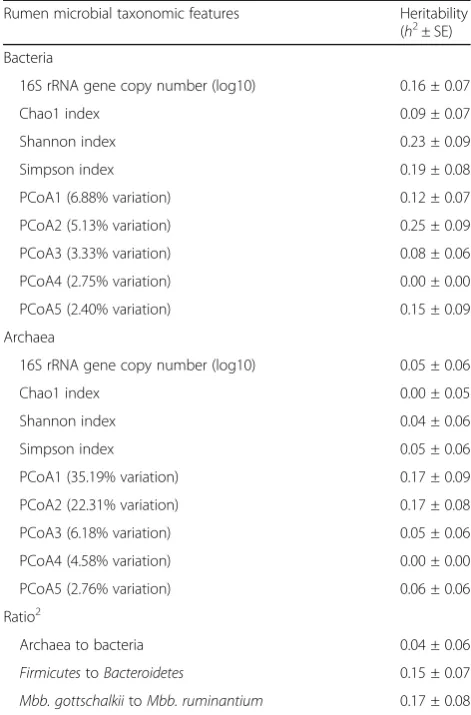
Table 1Heritability estimates of rumen microbial abundance, diversity indices1, and ratios between dominant microbial groups
Rumen microbial taxonomic features Heritability
(h2± SE)
Bacteria
16S rRNA gene copy number (log10) 0.16 ± 0.07
Chao1 index 0.09 ± 0.07
Shannon index 0.23 ± 0.09
Simpson index 0.19 ± 0.08
PCoA1 (6.88% variation) 0.12 ± 0.07
PCoA2 (5.13% variation) 0.25 ± 0.09
PCoA3 (3.33% variation) 0.08 ± 0.06
PCoA4 (2.75% variation) 0.00 ± 0.00
PCoA5 (2.40% variation) 0.15 ± 0.09
Archaea
16S rRNA gene copy number (log10) 0.05 ± 0.06
Chao1 index 0.00 ± 0.05
Shannon index 0.04 ± 0.06
Simpson index 0.05 ± 0.06
PCoA1 (35.19% variation) 0.17 ± 0.09
PCoA2 (22.31% variation) 0.17 ± 0.08
PCoA3 (6.18% variation) 0.05 ± 0.06
PCoA4 (4.58% variation) 0.00 ± 0.00
PCoA5 (2.76% variation) 0.06 ± 0.06
Ratio2
Archaea to bacteria 0.04 ± 0.06
FirmicutestoBacteroidetes 0.15 ± 0.07
Mbb. gottschalkiitoMbb. ruminantium 0.17 ± 0.08
1
To estimate theseα- andβ-diversity indices, the number of bacterial and archaeal sequences per sample were normalized to 2000 and 500,
respectively.α-diversity indices were calculated at the genus level for bacterial communities and at the species level for archaeal communities. Principal Coordinates Analysis (PCoA) was conducted using Bray-Curtis
dissimilarity matrices
2
structure as descripted above in model [a]; m is a fixed effect modeling the additive SNP effect. Genotypes were coded as−1/0/1 for genotype aa/Aa/AA. For each trait,P values from testing the SNP effects were adjusted into genome-wide false discovery rates (FDRs) using the Benjamini-Hochberg method [42]. Associations with FDR < 0.1 were considered significant, and associations with 0.1 < FDR < 0.2 were regarded as suggestively significant.
Correlation analyses among heritable microbial features, feed efficiency, and volatile fatty acids
Relationships among heritable microbial features (e.g., relative abundance of bacterial genera, archaeal species, alpha- and beta-diversity indices, and 16S rRNA gene copy numbers with h2≥0.15), feed efficiency traits, and VFAs were investigated using Spearman’s rank correl-ation in R 3.3.1 [43]. Correlations with P values lower than 0.05 were considered significant.
Results
Survey of rumen microbiota using a large commercial cohort of beef cattle
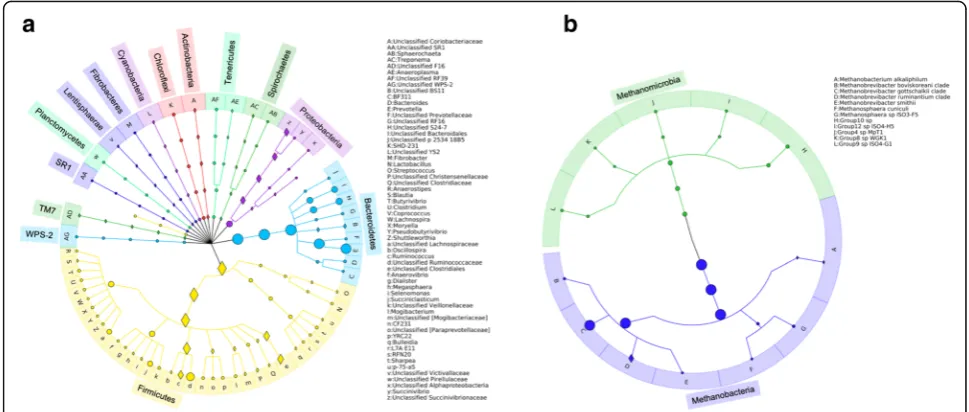
Rumen microbiota were surveyed using a cohort consist-ing of bulls (n= 71), heifers (n= 347), and steers (n= 291) that were born in 2013 and raised at the Roy Berg Kinsella Research Ranch at the University of Alberta. Bacterial and archaeal profiles were successfully gener-ated for 668 and 669 animals (with completed records for breed, sex, diet, age, and genotype information), re-spectively (Additional file 1: Table S1). An average of 8020 ± 98 (mean ± SE) and 1866 ± 22 quality-filtered se-quences were generated per animal for bacteria and for archaea, respectively. Good’s coverages for both bacterial and archaeal communities were higher than 99% (Add-itional file 5: Table S5). After classifying and collapsing these OTUs into different taxonomic levels, 15 phylum-level taxa, 18 class-phylum-level taxa, 21 order-phylum-level taxa, 34 family-level taxa, and 59 genus-level taxa were detected for bacterial communities (with the relative abundance > 0.5% in at least one sample and with prevalence > 20%), representing 87.10 ± 0.17% of total bacterial reads. Meanwhile, taxa belonged to one phylum, two classes, two orders, two families, eight genera, and 12 species were detected for archaeal communities (Additional file6: Table S6), representing 99.94 ± 0.01% of total archaeal reads. The dominant bacterial phyla were Bacteroidetes (44.05%), Firmicutes (36.42%), and Proteobacteria (4.61%), and each of the remaining 12 minor phyla accounted for < 1.00% of abundance. The most abundant archaeal taxa were Methanobrevibacter gottschalkii (85.09%) and Methanobrevibacter ruminantium (9.91%), followed by members of Methanomassiliicoccaceae (3.49%) (Fig. 1 and Additional file 6: Table S6). From those 59 bacterial genus-level taxa and 12 archaeal
species-level taxa, Prevotella, unclassified Ruminococca-ceae, unclassified Clostridiales, unclassified Bacteroi-dales, unclassified Lachnospiraceae, unclassified S24-7, andMethanobrevibacter gottschalkii were found in all of the animals, representing a core rumen microbiota in beef cattle.
Breed, sex, and diet drove the segregation of rumen microbiota
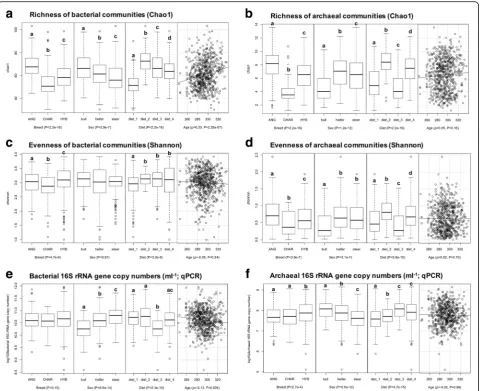
General community structures (Principal Coordinates Analysis [PCoA] based on Bray-Curtis dissimilarity met-rics), alpha-diversity indices (Chao1 for richness and Shannon for evenness), and abundance (16S rRNA gene copy numbers from qPCR) of rumen bacterial and ar-chaeal communities were affected by breed, sex, and diet, while the age effect was only detected for the rich-ness and abundance of bacteria (Figs. 2and 3 and Add-itional file6: Table S6). From 174 detected bacterial and archaeal taxa, 54% (94), 95% (165), 91% (158), and 9% (16) of them were affected by breed, sex, diet, and age (P< 0.05 from the animal model), respectively (Add-itional file6: Table S6).
Specific to the observed breed effect, both bacterial and archaeal profiles differed between ANG and CHAR breeds of cattle, while those from the HYB were overlapped with the two pure breeds (P< 0.05 for both bacterial and archaeal communities based on Adonis permutational multivariate ANOVA [PER-MANOVA]; Fig. 2). Charolais rumen microbiota (bacterial and archaeal) were less diverse (with the lowest Chao1 and Shannon indices) than those of ANG and HYB (Fig. 3a–d; P< 0.05 according to the Kruskal-Wallis rank sum test), while ANG micro-biota had the highest richness (Chao1, P< 0.05; Fig. 3a, b). Meanwhile, a similar level of bacterial abundance was detected among the three breed pop-ulations (P= 0.15 according to ANOVA based on log10-transformed 16S rRNA gene copy numbers per milliliter of rumen sample), with higher archaeal abundance for HYB compared with those in CHAR and ANG (P= 2.7e−4; Fig.3e, f ).
Host additive genetic effects had measurable impact on the rumen microbiota
The proportion of rumen microbial taxon at multiple taxonomic levels was treated as an individual trait as suggested previously [13], and its heritability (h2) was es-timated using an animal model based on the genomic relationship matrix (Gmatrix). In the present study, only microbial taxonomic features with the heritability esti-mate of h2≥0.15 were considered as being heritable.
The results showed that animal additive genetic vari-ation contributed to relative abundance of 59 (56 for bacteria and 3 for archaea) microbial taxa (h2≥0.15; Fig.1 and Additional file6: Table S6) belonging to vari-ous taxonomic levels. Among those 59 heritable bacter-ial taxa, 22 of them belonged to the phylum Firmicutes, including Ruminococcus (h2= 0.16 ± 0.08; mean ± SE), unclassifiedClostridiales(h2= 0.25 ± 0.09),Blautia(h2= 0.18 ± 0.08), etc. However, most members belonging to Fig. 1Composition of rumen microbiota in beef cattle. Bacterial community composition was summarized at genus, family, order, class, and phylum levels (a), and archaeal community composition was summarized at species, genus, family, order, and class levels (b). Heritable taxa (heritability estimate [h2]≥0.15) were indicated using diamonds. These graphs were created using the program GraPhlAn [44]
Bacteroidetes, such asPrevotella, unclassified S24-7, and unclassified Bacteroidales, were less affected by host genetics (h2< 0.15). For the three heritable archaeal taxa, the heritability estimate was 0.23 ± 0.08 for Methanobac-terium, 0.18 ± 0.08 for Mbb. ruminantium, and 0.23 ± 0.08 forMethanobacterium alkaliphilum.
In addition, rumen bacterial diversity indices, includ-ing Shannon index (h2= 0.23 ± 0.09) and Simpson index (h2= 0.19 ± 0.08), were also heritable (Table 1). Mean-while, moderate heritability estimates (h2= 0.15~0.25) were obtained for PCoA2 (5.13% of variation) and PCoA5 (2.40% of variation) of bacterial communities and for PCoA1 and PCoA2 (35.19% and 22.31% of vari-ation, respectively) of archaeal communities (Table 1). Moderate heritability was observed for the bacterial abundance (h2= 0.16 ± 0.07) but not for the archaeal
abundance (h2= 0.05 ± 0.06) (Table 1). Due to correla-tions between bacterial and archaeal abundances (correl-ation coefficient [ρ] = 0.26, P= 3.64e−12; Spearman’s rank correlation), between Firmicutesand Bacteroidetes (ρ=−0.83, P= 2.20e−16;) and betweenMbb. gottschalkii andMbb. ruminantium(ρ=−0.75,P= 2.20e−16) (Fig.4), host genetics effects on these ratios were also estimated. The ratio between Firmicutes and Bacteroidetes (h2= 0.15 ± 0.07), and the ratio betweenMbb. gottschalkiiand Mbb. ruminantium (h2= 0.17 ± 0.08) were both moder-ately heritable (Table1).
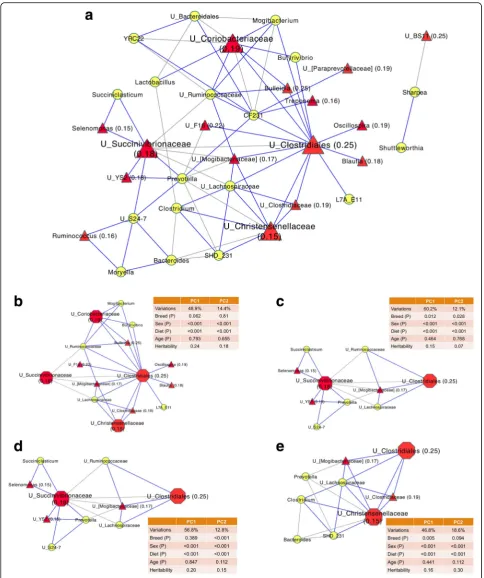
Heritable microbial taxa were keystone members of the rumen microbial co-occurrence network
(Fig. 5), with 72 significant associations (52 positive and 20 negative) (correlation coefficient <−0.3 or > 0.3 and P< 0.001) being identified between bacterial taxa at the genus level. Four major modules comprised of correlated bacterial taxa were observed, centered by four heritable bacterial taxa (unclassified Clostridiales, unclassified Succinivibrionaceae, unclassified Coriobacteriaceae, and unclassifiedChristensenellaceae, respectively) (Fig.5b–e)
.
Heritable microbial features correlated with host feed efficiency traits and VFAs
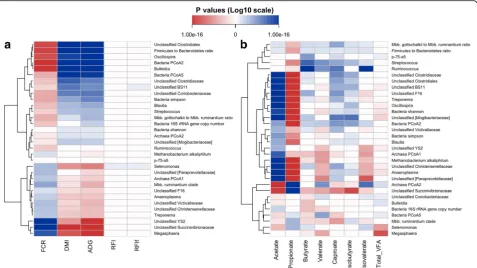
Correlation analysis revealed significant relationships (P< 0.05, Spearman’s rank correlation) between rumen microbial features and host feed efficiency traits. Most of heritable microbial features strongly contributed to the variation of FCR, ADG, and DMI but did not re-late to RFI or backfat-adjusted RFI (RFIf ) (Fig. 6a). Two clusters of heritable microbial features showed strongest correlations with FCR/ADG/DMI (P< 1.42e
−8). The first cluster included Bulleidia, Oscillospira, unclassified Clostridiales, the Firmicutes to Bacteroi-detes ratio, and bacterial PCoA2, while the second one comprised Megasphaera, unclassified Succinivi-brionaceae, and unclassified YS2. Meanwhile, heritable microbial features were also correlated with major rumen metabolic measures (VFAs), especially with acetate and propionate concentrations (Fig. 6b). For example, unclassified Clostridiales, unclassified Chris-tensenellaceae, and unclassified [Mogibacteriaceae] were positively correlated with acetate and negatively correlated with propionate concentrations, while un-classified Succinivibrionaceae was negatively and posi-tively correlated with acetate and propionate concentrations, respectively (P< 1.78e−15).
GWAS identified host SNPs for rumen microbial taxonomic features
When downstream GWAS were performed for mi-crobial taxonomic features with h2≥0.1, 19 SNPs lo-cated on BTA (Bos taurus autosome) 1, 2, 3, 5, 7, 10, 12, 13, 16, 19, 26, and 27 were identified to be associated with microbial taxonomic features at the significance level of false discovery rate (FDR < 0.1) or at the suggestive significance level of 0.1 < FDR < 0.2. Specifically, these SNPs were associated with the abundance of six bacterial genus-level taxa (unclassi-fied BS11, Ruminococcus, unclassified Lachnospira-ceae, YRC22, unclassified [Mogibacteriaceae], and unclassified Victivallaceae), three bacterial families (BS11, [Paraprevotellaceae], and Victivallaceae), one bacterial order (Victivallales), two bacterial classes (Spirochaetes and Lentisphaeria), and two bacterial phyla (Spirochaetes and Lentisphaerae) (Table 2 and Fig. 7). No significant (or suggestively significant) as-sociation was observed for alpha-diversity indices, PCoAs, bacterial and archaeal abundance, and rela-tive abundance of archaeal taxa.
The most significant associations were BS11 family and unclassified BS11 at the genus level with the SNP: rs110670001 on BTA10 (P= 1.43e−07, FDR = 0.006). In addition, four adjacent SNPs (rs110410597, rs41604961, rs109122489, and rs110469969) located in the region of 28.10~ 28.18 Mbp on BTA13, which were in complete linkage disequilibrium (data not shown), tended to be associated with the phylum Spirochaetes and the class Spirochaetes (P= 2.45e−05~2.69e−05, FDR = 0.17~0.19). Moreover, two genus-level taxa (unclassified Lachnospir-aceae and Ruminococcus) tended to be associated with one SNP (rs109961459 on BTA13; P= 2.61e−06, FDR = 0.11) and four SNPs (rs43235157 on BTA1, rs110461771 Fig. 4Relationships between predominant rumen microbial groups.aRatio of bacterial abundance to archaeal abundance, represented by 16S rRNA gene copy number obtained using qPCR.bRatio ofFirmicutestoBacteroidetes.cRatio ofMethanobrevibacter gottschalkiito
on BTA2, rs41656119 on BTA7, and rs110071335 on BTA10; P= 3.88e−06~1.80e−05, FDR = 0.16~0.19), re-spectively (Table2and Fig.7).
Among those identified SNPs, five of them were also related to feed efficiency traits. Specifically, SNP: rs43235157 (associated with Ruminococcus) affected DMI (P= 1.64e−03, ANOVA), SNP: rs110461771 (asso-ciated with Ruminococcus) influenced FCR (P= 0.10), SNP: rs41257422 (associated with YRC22) impacted on RFIf (P= 5.51e−03), SNP: rs41911152 (associated with unclassified Victivallaceae) had an effect on DMI (P= 0.08), and SNP: rs110448978 (associated with unclassi-fied [Mogibacteriaceae]) related to ADG (P= 2.06e−02), DMI (P= 4.23e−02), and FCR (P= 0.08) (Table 2 and Additional file7: Figure S1).
Discussion
Findings from the current study provide answers to some fundamental questions in terms of the rumen microbiota. Firstly, although sex has been suggested as one of the factors affecting the composition of gut microbiota in humans and mice [45, 46], our current study is the first to evaluate the sex effect on the rumen microbiota. This is notable as our study was conducted in a commercial beef cattle operation, and thus cattle
with different sexes were fed with different diets to fulfill their different energy requirements. Therefore, the sex effect detected can be nested or confounded with the dietary effect. To take this nested design into consider-ation, Adonis PERMANOVA was conducted and sex ef-fect was determined through constraining permutations within each diet. This PERMANOVA showed that the sex effect on rumen bacterial and archaeal communities was significant, confirming the sex effect on rumen microbiota. Specifically, we found that the microbiota observed in bulls was distinguishable from that of heifers and steers. A recent study reported that male castration eliminated the gut microbial differences between males and females, and the hormone (e.g., testosterone) treatment prevented the changes of males after go-nadectomy [47]. This suggests that differences in sex hormones could be one of the elements to explain the variation among different sexes, because sex hor-mones affected bile acid profiles [47] and the shifts of bile acid consequently influence the gut microbiota [48]. Meanwhile, males and females may be exposed to different environmental microorganisms due to dif-ferent diets and difdif-ferent activities [45], and thus it could also in part drive the different microbial pro-files between sexes.
Fig. 6Correlation patterns showing that heritable rumen microbial features (h2≥0.15) associated with feed efficiency (a) and rumen volatile fatty
Such a sex effect on the rumen microbiota raises sev-eral questions, especially in beef cattle. Most of the gen-etic improvement for productivity was achieved through breeding sires and passing the desirable characteristics to their offspring steers. Our previous study has sug-gested the sire breed had an effect on the frequency of particular rumen microbial phylotypes in their offspring steers, but the sex factor was not considered [16]. In the current study, three sexes were included for each breed, and sex has now been shown to affect both rumen mi-crobial community structures and relative abundance of
many taxa. However, future research on comparing microbiota from multiple generations of beef cattle with different sexes is needed to determine to what extent rumen microbiota in bulls could be passed to their off-spring and if this differs for female or male offoff-spring. Re-cent human studies also highlight the potential vertical transmission of gut microbiota, especially from mothers to infants [49]. Therefore, the magnitude of the dam’s
effect on the rumen microbiota also needs to be ex-plored since heifers have different rumen microbiota than bulls.
Table 2Identified bovine SNPs associated with rumen microbial taxa
SNP Position Alleles Gene Consequence Associated Taxon FDR3 P FE4
rs109763257 1:155345571 C/T NC region1 NA2 Spirochaetes(phylum) 0.173 1.20e−05
Spirochaetes(class) 0.190 9.43e−06
rs43235157 1:156294225 A/G TBC1D5 Intron variant Ruminococcus(genus) 0.191 1.33e−05 DMI
rs110461771 2:92080445 C/T RAPH1 Intron variant Ruminococcus(genus) 0.164 3.88e−06 FCR
rs29003226 3:51976646 C/G NC region1 NA2 YRC22 (genus) 0.107 2.53e−06
rs41257422 5:6266261 A/G NC region1 NA2 YRC22 (genus) 0.155 7.33e−06 RFIf
rs41656119 7:83551608 A/G NC region1 NA2 Ruminococcus(genus) 0.191 1.80e−05
rs110670001 10:10930797 C/T NC region1 NA2 BS11 (family) 0.006 1.43e−07
Unclassified BS11 (genus) 0.006 1.43e−07
rs110071335 10:81981544 A/C SMOC1 Intron variant Ruminococcus(genus) 0.191 1.46e−05
rs109402398 12:37678844 C/T NC region1 NA2 [Paraprevotellaceae](family) 0.105 4.95e−06
rs110410597 13:28095457 C/T OPTN Intron variant Spirochaetes(phylum) 0.173 2.45e−05
Spirochaetes(class) 0.190 2.69e−05
rs41604961 13:28115879 C/T OPTN Intron variant Spirochaetes(phylum) 0.173 2.45e−05
Spirochaetes(class) 0.190 2.69e−05
rs109122489 13:28149879 C/T MCM10 Intron variant Spirochaetes(phylum) 0.173 2.45e−05
Spirochaetes(class) 0.190 2.69e−05
rs110469969 13:28183389 C/T UCMA Intron variant Spirochaetes(phylum) 0.173 2.45e−05
Spirochaetes(class) 0.190 2.69e−05
rs109961459 13:24202640 A/G NC region1
NA2 UnclassifiedLachnospiraceae(genus) 0.111 2.61e−06
rs41627213 16:78415671 C/T DENND1B Intron variant [Paraprevotellaceae](family) 0.070 1.65e−06
rs41911152 19:30220186 C/T NC region1 NA2 Lentisphaerae(phylum) 0.070 1.64e−06 DMI
Lentisphaeria(class) 0.070 1.64e−06
Victivallales(order) 0.034 8.05e−07
Victivallaceae(family) 0.038 8.92e−07
UnclassifiedVictivallaceae(genus) 0.038 8.92e−07
rs110728224 26:32497450 A/G NC region1 NA2 Spirochaetes(phylum) 0.173 4.73e−06
Spirochaetes(class) 0.140 3.31e−06
rs110448978 26:37871121 C/T KCNK18 Downstream variant Unclassified[Mogibacteriaceae](genus) 0.187 4.40e−06 ADG DMI FCR
rs42620822 27:42776720 A/G NC region1 NA2 Spirochaetes(class) 0.196 3.24e−05
1
NC region = non-coding region
2
NA = not available
3
For each microbial taxonomic feature,Pvalue was adjusted into genome-wide false discovery rates (FDRs) using the Benjamini-Hochberg method. Associations with FDR < 0.1 were considered significant, and associations with 0.1 < FDR < 0.2 were regarded as suggestively significant
4
Secondly, the reported heritability estimates in this study answer the questions to what extent the host gen-etics can affect the rumen microbiota and whether the host can influence all members at the same level, which provide the theoretical foundation to explain the highly individualized rumen microbiota in cattle. Interestingly, as the predominant bacterial phylum, most of the bac-terial taxa (20 out of 22) belonging toBacteroideteshad
[50]. Moreover, polysaccharide utilization loci (PULs), gen-omic regions encoding all necessary enzymes for the bind-ing and degradation of plant structural polysaccharides, were identified in 64 culturableBacteroidetesgenomes [51], and their high occurrences in Bacteroidetes were further confirmed through metagenomic analysis [50], representing a polysaccharide-degradation strategy evolved by Bacteroi-detes. All these results highlight the essential roles of Bac-teroidetesmembers in the degradation and fermentation of plant-structural polysaccharides in the rumen that are the main component of feed materials. Therefore, they are likely to be able to adapt to various diets, and many studies have indeed suggested diet as the major factor determining the abundance of Bacteroidetes, Prevotella, unclassified Bacteroidales, and so on [15]. Such results are in line with studies on human gut microbiota, in which taxa belonging Bacteroideteswere not heritable and showed obvious shifts under dietary interventions [11, 52]. However, a recent study reported that 15 out of 22 heritable rumen OTUs belonged to Bacteroidetes [53], which is inconsistent with our findings. It is notable that they conducted the heritabil-ity estimation with only 47 cows [53], and such a small sample size may lead to biased estimations of the host addi-tive genetic effects on the rumen microbiota.
On the other hand, phylum Firmicutes (the second most abundant phylum) and many taxa belonging to this phylum (21 out of 52) had moderate heritability esti-mates, suggesting that the host genetic effect contributes to the observed variation in this phylum. This is also consistent with a previous study of human gut micro-biota [12]. For example, as the most abundant family in Firmicutes, Ruminococcaceae had moderate heritability. This family is composed of both fibrolytic organisms and members involved in starch hydrolysis, which could produce acetate, formate, succinate, and so on [54, 55]. Unclassified Clostridiales in this family has been re-ported to be affected by both host and diet [15], and the moderate heritability estimate obtained in this study fur-ther confirmed the host genetic effect on its abundance. Although a previous study indicated that unclassified Clostridiales may play a role in biohydrogenation [56], the ecology and functions of phylotypes belonging to this group are largely unknown because most of them are unculturable. Regardless, the observed different her-itability estimates between members of Bacteroidetes andFirmicutessuggest that host effects are not equal on different rumen microbial phylotypes. Therefore, genetic selection and breeding may be applied to alter rumen microbial taxa with moderate heritability estimates, while it is unlikely to have any effects on those members driven by environmental factors.
Coevolution of microorganisms with host might be one of the mechanisms to explain different host genetic effects on different rumen microbial taxa. As described above, we
found that the abundance ofRuminococcuswas influenced by host genetics. It has been reported that members of this genus display large diversity and particular host-association patterns in different mammalian species [57], supporting the suggestion that there are coevolutionary relationships betweenRuminococcusand the host. In addition, as major butyrate producers (e.g., Butyrivibrio, Clostridium, etc.) [54], most members ofLachnospiraceae(9 out of 10) were not heritable in the rumen, whereas most members of this family were reported to be heritable in the human gut [11]. This inconsistency of heritability estimates of Lachnospira-ceae members between ruminant and human further sug-gests there are coevolutionary relationships between host and the gut microbiota. Further scanning and analysis of genomic characters of these heritable rumen taxa, such as the outcomes of the Hungate 1000 project [51] and the 913 microbial genomes assembled from rumen metagenomes [50], will provide more information to explain how host and rumen microorganisms coevolved at the genomic level and provide a better understanding of how host genetics in-fluence these microbial taxa.
Four heritable bacterial taxa (unclassified Succinivi-brionaceae, unclassified Clostridiales, unclassified Corio-bacteriaceae, and unclassified Christensenellaceae) interacted with many other bacterial taxa, suggesting that they may be the keystone members of the rumen microbiota. For instance, members of Succinivibriona-ceaecould utilize hydrogen to generate succinate (a pre-cursor of propionate) [58], thus reducing the H2release and methane emissions. Therefore, they may function as one of the focal points to connect with propionate pro-duction, hydrogen utilization, and methanogenesis in the rumen. Indeed, the abundance of members in Succinivi-brionaceae not only associated with methane emissions [4], but also showed significant correlations with feed ef-ficiency and rumen propionate in the present study. Moreover, it has been reported that there are strong in-teractions between Succinivibrionaceae and other major rumen microorganisms at the transcriptional level [59]. All these above mentioned findings support the sugges-tion that members ofSuccinivibrionaceaeplay an essen-tial role in the rumen due to their ecological and metabolic functions. Therefore, the host genotype may directly control these heritable keystone members and indirectly impact the other taxa through the microbial interactions. Future research on isolating and character-izing members of these heritable keystone members could help define their ecological niches in the rumen and reveal mechanisms between their interactions with the host and other rumen microorganisms.
microbiota of beef cattle. For instance, the SNP: rs110461771 (associated with the variation in the abun-dance of Ruminococcus) is located within the gene RAPH1 (Ras Association (RalGDS/AF-6) and Pleckstrin Homology Domains 1) on BTA2. TheRAPH1 gene is in-volved in cell migration, which is the function that has been suggested to be associated with the nutrient ab-sorption abilities of the rumen epithelia in beef steers [60]. Therefore, polymorphism of theRAPH1 gene may contribute to differences in the rumen epithelial absorp-tion of nutrients such as VFAs. The variaabsorp-tion in ruminal epithelial VFA absorption has been reported to be asso-ciated with differences in ruminal pH [61], and the shift in ruminal pH can influence the rumen microbiota [62]. Another SNP: rs29003226 (associated with the abun-dance of YRC22) is close to the CDC7 (cell division cycle 7) gene on BTA3. TheCDC7 gene encodes the cell division cycle protein with kinase activity and might be involved in the cell division of the rumen epithelium. It has been reported that increased cell division could in-crease the proportion of epithelial cells, papillae length, and papillae number [63], and the variation of these rumen physical structures are expected to have a poten-tial influence on the rumen microbiota [17]. In addition, the SNP: rs41911152 (associated with various microbial groups) is located upstream of MYH3 (Myosin Heavy Chain 3) on BTA19. The MYH3 gene plays a role in muscle contraction [64], and thus it may relate to rumen contraction frequency by affecting the muscle action of the rumen wall. Rumen contraction frequency is associ-ated with the passage rate of rumen digesta which has been suggested to also influence the microbiota [17]. Furthermore, expression of all three genes in the rumen epithelial wall were detected in HYB beef steers raised under the same environment in our previous study [60]. Overall, the above microbiota-associated SNPs suggest that the host genetics driven rumen physical features, and gene expression could drive the composition of rumen microbiota. Future follow-up studies to evaluate the associations between these genes and regions (using higher density SNP markers and/or gene sequencing) and rumen epithelial structure and thickness, passage rate, ruminal pH, and rumen microbiota will provide more direct evidence to support our suggestions.
Five rumen microbiota-associated SNPs also contrib-uted to the variation of feed efficiency traits in the current beef cohort, and four of them have already been located in the QTLs for feed efficiency in previous stud-ies (e.g., rs43235157 and rs41257422 in the QTLs for ADG, rs41911152 and rs110448978 in the QTLs for RFI) [65–67]. Some other microbiota-associated SNPs overlap with known quantitative trait loci (QTLs) for feed efficiency as well. For example, SNPs on BTA1 (rs109763257) and BTA13 (rs110410597, rs41604961,
rs109122489, and rs110469969) are located within the QTLs for ADG [65, 68]. Meanwhile, SNPs on BTA3 (rs29003226) and BTA26 (rs110728224) overlap with QTLs for RFI [67]. Such overlap suggests that these QTLs may have pleiotropic effects on both rumen microbiota and feed efficiency, which may partly explain the associations between rumen microorganisms and feed efficiency [2, 3]. For instance, a pervious study re-ported associations between the unclassified [Mogibacter-iaceae] and feed efficiency [69], and the QTL for feed efficiency on BTA26 overlaps with the SNP: rs110448978 for unclassified [Mogibacteriaceae] in our study. This re-gion may harbor a gene that affects both unclassified [Mogibacteriaceae] and feed efficiency, or the QTL may contain several linked genes that individually or simultan-eously influence these two traits. In addition, it is also pos-sible that host QTLs impact feed efficiency through effects on rumen microbial composition. Further studies are required to confirm these cause-and-effect relation-ships behind these pleiotropic effects between rumen microbiota and feed efficiency.
Analyzing rumen microbiota estimated using 16S rRNA gene amplicon sequencing, in both dairy cattle [5] and the present study, revealed similar heritable rumen microbial taxa, such as unclassified Victivallaceae (h2= 0.2 in both studies) and unclassified BS11 (h2= 0.11 re-ported in [5] vs. h2= 0.25 in this study), even though these two independent studies were based on different cattle breeds, geographical locations, DNA isolation methods, PCR primers, sequencing process, bioinfor-matic pipelines, statistic models, and so on. The consist-ent findings of these two studies not only provided us with stronger biological evidence of host additive genetic effects on rumen microbiota, but also confirmed the technical feasibility to conduct quantitative genetic ana-lysis for gut microbial profiles obtained from a PCR-based approach. It is important to be aware that gut mi-crobial profiles generated from a PCR-based approach may be biased and not truly quantitative due to primer selection [70] and/or amplification condition [71]. Therefore, sequencing PCR amplicons of marker genes is not the ideal strategy to profile the gut microbiota to be used for heritability estimation, GWAS, or other quantitative genetic analysis. To better estimate the host genetic effects on rumen microbiome, PCR-free metage-nomics is recommended for future studies as it repre-sents a more accurate strategy for both compositional and functional levels.
16S rRNA gene sequencing analysis may not generate convenient and reliable taxonomic classification at bac-terial species level, as previously reviewed [72]. Briefly, a certain OTU (> 97% similarity) may contain amplicons from different species, while different OTUs may actu-ally represent amplicons from the same species but mul-tiple gene copies [72]. Due to this technical limitation, both Henderson et al. [15] and the current study analyzed the rumen bacterial community at the genus level, which is one of the limitations in the current study. Potentially, the on-going Hungate 1000 project [51] and the 913 metagenome-assembled genomes [50] will serve as a valu-able reference dataset for both marker-gene-based analysis and metagenomic-based approach in future studies, which could enhance the resolution of rumen microbial profiling and help us better understand interactions between host genetics and rumen microorganisms.
Conclusions
This study assessed the determinant factors for the rumen microbiota, estimated the heritability of rumen microbial taxonomic features, and identified genetic components associated with specific rumen microbial taxa using samples collected from a large cohort of beef cattle (n= 709). Rumen microbiota of these beef cattle are generally consistent with those typically described previously at various taxonomic levels [15, 73]. Multiple factors, including breed, sex, and diet were identified to drive the variation of rumen microbiota among animals. The findings on moderate heritability estimates for rumen microbial taxonomic features and the identified microbial taxa associated SNPs from GWAS show direct evidence that rumen microbial colonization in beef cat-tle can be affected by host additive genetic effects and genotypes. In addition, heritable rumen microbial fea-tures were associated with host feed efficiency and rumen VFAs, and there were SNPs associated with both rumen microbiota and feed efficiency. Therefore, cattle may genetically control their rumen microbiota and con-sequently influence their rumen fermentation and feed efficiency. It is noticeable that when commercial cattle populations were tested, it is challenging to strictly con-trol the diet for every individual, due to breed, sex, and/ or environmental (farm) factors. Although both the pre-vious study for dairy cows [5] and our current study for beef cattle identified the host genetic effect on rumen microbiota, future studies with optimized experimental design to provide an identical diet to all the beef cattle are necessary, which may give us more accurate herit-ability estimates and more convincing associations be-tween bovine genotypes and rumen microbiota. Regardless, together with Difford et al. [5], the findings on host genetics associated rumen microorganisms sug-gest the potential to manipulate these heritable
microbial taxonomic features through genetic selection and breeding, and it could be a useful strategy to optimize rumen fermentation and further improve feed efficiency as well as other rumen microbiota-related traits (e.g., CH4 emissions, milk composition, ruminal acidosis, etc.) through targeting both hosts and their rumen microbiota. In addition, to manipulate those en-vironmentally determined phylotypes with low
heritabil-ity estimates (such as members belonging to
Bacteroidetesand most of archaeal taxa), individual feed-ing schemes could be considered. Therefore, it is import-ant to combine both genetics-based (selection and breeding) and management-based (precision feeding schemes) approaches to achieve optimal host-microbiota-diet interactions and thus enhanced the productivity of beef cattle to address the emerging global food security challenges.
Additional files
Additional file 1: Table S1.Phenotype records and metadata for each individual. (XLSX 171 kb)
Additional file 2: Table S2.Diet information for animal experiments. (DOCX 17 kb)
Additional file 3: Table S3.Feed efficiency traits and VFA concentrations for this beef cattle population. (DOCX 17 kb)
Additional file 4: Table S4.Single nucleotide polymorphisms (SNPs) information. (DOCX 18 kb)
Additional file 5: Table S5.Alpha-diversity indices of this beef cattle population. (DOCX 17 kb)
Additional file 6: Table S6.Relative abundance and heritability estimates of detected rumen microbial taxa, and factors (breed, sex, diet, and age) driving their variation. (XLSX 25 kb)
Additional file 7: Figure S1.Microbiota-associated SNPs contribute to the variation of feed efficiency. (DOCX 477 kb)
Acknowledgements
The authors thank the staff at the Roy Berg Kinsella Research Ranch at the University of Alberta for their assistance in the sampling. We are grateful to Drs. K. Zhao, A. L. A. Neves, T. Yang, F. Zhang, and H. Lei for their advice and technical assistance.
Authors’contributions
FL and LLG designed the study; FL performed all bioinformatics and statistical analysis; FL, YC, JL, and BI collected and sorted out rumen samples; CL and CF performed genotyping and recorded phenotypes for beef cattle; YC and JL conducted the qPCR for rumen samples; CL and CZ provided technical support for heritability estimation and GWAS; CL, BI, CF, and GP raised and managed all beef cattle; FL, CL, GP, and LLG interpreted the data and wrote the manuscript, and all the other authors revised and edited the manuscript. All authors read and approved the final manuscript.
Funding
The present work was supported by the Alberta Livestock and Meat Agency (2013R029R), Alberta Agriculture and Forestry (2018F095R), and NSERC Discovery Grant. Meanwhile, FL was financially supported by the Alberta Innovates-Technology Futures Graduate Student Scholarship.
Availability of data and materials
Ethics approval and consent to participate
The current study received research ethics approval from the Livestock Care Committee of the University of Alberta (protocol no. AUP00000882) according to the guideline of the Canadian Council on Animal Care [23].
Consent for publication
Not applicable
Competing interests
The authors declare that they have no competing interests.
Author details
1Department of Agricultural, Food and Nutritional Science, University of
Alberta, Edmonton, Alberta T6G 2P5, Canada.2Lacombe Research and Development Centre, Agriculture and Agri-Food Canada, Lacombe, Alberta T4L 1W1, Canada.
Received: 9 December 2018 Accepted: 19 May 2019
References
1. Firkins JL, Yu Z. Ruminant nutrition symposium: how to use data on the rumen microbiome to improve our understanding of ruminant nutrition. J Anim Sci. 2015;93:1450–70.
2. Li F, Guan LL. Metatranscriptomic profiling reveals linkages between the active rumen microbiome and feed efficiency in beef cattle. Appl Environ Microbiol. 2017;83.https://doi.org/10.1128/AEM.00061-17.
3. Shabat SK, Sasson G, Doron-Faigenboim A, Durman T, Yaacoby S, Berg Miller ME, White BA, Shterzer N, Mizrahi I. Specific microbiome-dependent mechanisms underlie the energy harvest efficiency of ruminants. Isme J. 2016;10:2958–72
4. Wallace RJ, Rooke JA, McKain N, Duthie CA, Hyslop JJ, Ross DW, Waterhouse A, Watson M, Roehe R. The rumen microbial metagenome associated with high methane production in cattle. BMC Genomics. 2015;16:839. 5. Difford GF, Plichta DR, Lovendahl P, Lassen J, Noel SJ, Hojberg O, Wright
AG, Zhu Z, Kristensen L, Nielsen HB, et al. Host genetics and the rumen microbiome jointly associate with methane emissions in dairy cows. PLoS Genet. 2018;14:e1007580.
6. Jami E, White BA, Mizrahi I. Potential role of the bovine rumen microbiome in modulating milk composition and feed efficiency. PLoS One. 2014;9:e85423.
7. McCann JC, Luan S, Cardoso FC, Derakhshani H, Khafipour E, Loor JJ. Induction of subacute ruminal acidosis affects the ruminal microbiome and epithelium. Front Microbiol. 2016;7:701.
8. Spor A, Koren O, Ley R. Unravelling the effects of the environment and host genotype on the gut microbiome. Nat Rev Microbiol. 2011;9:279–90. 9. Benson AK, Kelly SA, Legge R, Ma F, Low SJ, Kim J, Zhang M, Oh PL,
Nehrenberg D, Hua K, et al. Individuality in gut microbiota composition is a complex polygenic trait shaped by multiple environmental and host genetic factors. Proc Natl Acad Sci U S A. 2010;107:18933–8. 10. Leamy LJ, Kelly SA, Nietfeldt J, Legge RM, Ma F, Hua K, Sinha R,
Peterson DA, Walter J, Benson AK, Pomp D. Host genetics and diet, but not immunoglobulin A expression, converge to shape compositional features of the gut microbiome in an advanced intercross population of mice. Genome Biol. 2014;15:552.
11. Goodrich JK, Waters JL, Poole AC, Sutter JL, Koren O, Blekhman R, Beaumont M, Van Treuren W, Knight R, Bell JT, et al. Human genetics shape the gut microbiome. Cell. 2014;159:789–99.
12. Goodrich JK, Davenport ER, Beaumont M, Jackson MA, Knight R, Ober C, Spector TD, Bell JT, Clark AG, Ley RE. Genetic determinants of the gut microbiome in UK twins. Cell Host Microbe. 2016;19:731–43. 13. Turpin W, Espin-Garcia O, Xu W, Silverberg MS, Kevans D, Smith MI,
Guttman DS, Griffiths A, Panaccione R, Otley A, et al. Association of host genome with intestinal microbial composition in a large healthy cohort. Nat Genet. 2016;48:1413–7.
14. Guan LL, Nkrumah JD, Basarab JA, Moore SS. Linkage of microbial ecology to phenotype: correlation of rumen microbial ecology to cattle's feed efficiency. FEMS Microbiol Lett. 2008;288:85–91.
15. Henderson G, Cox F, Ganesh S, Jonker A, Young W, Janssen PH. Rumen microbial community composition varies with diet and host, but a core microbiome is found across a wide geographical range. Sci Rep. 2015;5:14567.
16. Hernandez-Sanabria E, Goonewardene LA, Wang Z, Zhou M, Moore SS, Guan LL. Influence of sire breed on the interplay among rumen microbial populations inhabiting the rumen liquid of the progeny in beef cattle. PLoS One. 2013;8:e58461.
17. Roehe R, Dewhurst RJ, Duthie CA, Rooke JA, McKain N, Ross DW, Hyslop JJ, Waterhouse A, Freeman TC, Watson M, Wallace RJ. Bovine host genetic variation influences rumen microbial methane production with best selection criterion for Low methane emitting and efficiently feed converting hosts based on metagenomic gene abundance. PLoS Genet. 2016;12:e1005846.
18. Paz HA, Anderson CL, Muller MJ, Kononoff PJ, Fernando SC. Rumen bacterial community composition in Holstein and Jersey cows is different under same dietary condition and is not affected by sampling method. Front Microbiol. 2016;7:1206.
19. Li F, Hitch TCA, Chen Y, Creevey CJ, Guan LL. Comparative metagenomic and metatranscriptomic analyses reveal the breed effect on the rumen microbiome and its associations with feed efficiency in beef cattle. Microbiome. 2019;7:6.
20. Jewell KA, McCormick CA, Odt CL, Weimer PJ, Suen G. Ruminal bacterial community composition in dairy cows is dynamic over the course of two lactations and correlates with feed efficiency. Appl Environ Microbiol. 2015;81:4697–710.
21. Jami E, Israel A, Kotser A, Mizrahi I. Exploring the bovine rumen bacterial community from birth to adulthood. Isme J. 2013;7:1069–79.
22. Nkrumah JD, Crews DH Jr, Basarab JA, Price MA, Okine EK, Wang Z, Li C, Moore SS. Genetic and phenotypic relationships of feeding behavior and temperament with performance, feed efficiency, ultrasound, and carcass merit of beef cattle. J Anim Sci. 2007;85:2382–90.
23. Olfert ED, Cross BM, McWilliams AA. Guide to the care and use of experimental steers. Ottawa: Canadian Council on Animal Care; 1993. 24. Hernandez-Sanabria E, Guan LL, Goonewardene LA, Li M, Mujibi DF,
Stothard P, Moore SS, Leon-Quintero MC. Correlation of particular bacterial PCR-denaturing gradient gel electrophoresis patterns with bovine ruminal fermentation parameters and feed efficiency traits. Appl Environ Microbiol. 2010;76:6338–50.
25. Basarab JA, Colazo MG, Ambrose DJ, Novak S, McCartney D, Baron VS. Residual feed intake adjusted for backfat thickness and feeding frequency is independent of fertility in beef heifers. Can J Anim Sci. 2011;91:573–84. 26. Stevenson DM, Weimer PJ. Dominance of Prevotella and low abundance of
classical ruminal bacterial species in the bovine rumen revealed by relative quantification real-time PCR. Appl Microbiol Biotechnol. 2007;75:165–74. 27. Zhou M, Hernandez-Sanabria E, Le LG. Assessment of the microbial ecology
of ruminal methanogens in cattle with different feed efficiencies. Appl Environ Microbiol. 2009;75:6524–33.
28. Edgar RC, Haas BJ, Clemente JC, Quince C, Knight R. UCHIME improves sensitivity and speed of chimera detection. Bioinformatics. 2011;27:2194–200.
29. Edgar RC. Search and clustering orders of magnitude faster than BLAST. Bioinformatics. 2010;26:2460–1.
30. McDonald D, Price MN, Goodrich J, Nawrocki EP, DeSantis TZ, Probst A, Andersen GL, Knight R, Hugenholtz P. An improved Greengenes taxonomy with explicit ranks for ecological and evolutionary analyses of bacteria and archaea. Isme J. 2012;6:610–8.
31. Seedorf H, Kittelmann S, Henderson G, Janssen PH. RIM-DB: a taxonomic framework for community structure analysis of methanogenic archaea from the rumen and other intestinal environments. PeerJ. 2014;2:e494. 32. Altschul SF, Gish W, Miller W, Myers EW, Lipman DJ. Basic local alignment
search tool. J Mol Biol. 1990;215:403–10.
33. Friedman J, Alm EJ. Inferring correlation networks from genomic survey data. PLoS Comput Biol. 2012;8:e1002687.
34. Schloss PD, Westcott SL, Ryabin T, Hall JR, Hartmann M, Hollister EB, Lesniewski RA, Oakley BB, Parks DH, Robinson CJ, et al. Introducing mothur: open-source, platform-independent, community-supported software for describing and comparing microbial communities. Appl Environ Microbiol. 2009;75:7537–41.
35. Ramayo-Caldas Y, Mach N, Lepage P, Levenez F, Denis C, Lemonnier G, Leplat JJ, Billon Y, Berri M, Dore J, et al. Phylogenetic network analysis applied to pig gut microbiota identifies an ecosystem structure linked with growth traits. Isme J. 2016;10:2973–7.
integrated models of biomolecular interaction networks. Genome Res. 2003;13:2498–504.
37. Wimmer V, Albrecht T, Auinger HJ, Schon CC. Synbreed: a framework for the analysis of genomic prediction data using R. Bioinformatics. 2012;28:2086–7.
38. VanRaden PM. Efficient methods to compute genomic predictions. J Dairy Sci. 2008;91:4414–23.
39. Gilmour AR, Gogel BJ, Cullis BR, Welham SJ, Thompson R, Butler D, Cherry M, Collins D, Dutkowski G, Harding SA. ASReml user guide. Release 4.1 structural specification. Hemel Hempstead: VSN International Ltd; 2014. 40. Nicolazzi EL, Caprera A, Nazzicari N, Cozzi P, Strozzi F, Lawley C, Pirani A,
Soans C, Brew F, Jorjani H, et al. SNPchiMp v.3: integrating and standardizing single nucleotide polymorphism data for livestock species. BMC Genomics. 2015;16:283.
41. Endelman JB. Ridge regression and other kernels for genomic selection with R package rrBLUP. Plant Genome. 2011;4:250–5.
42. Benjamini Y, Hochberg Y. Controlling the false discovery rate: a practical and powerful approach to multiple testing. J R Stat Soc Ser B Methodol. 1995;57:289–300.
43. Core R. Team: R: a language and environment for statistical computing. Vienna: R Foundation for Statistical Computing; 2014.
44. Asnicar F, Weingart G, Tickle TL, Huttenhower C, Segata N. Compact graphical representation of phylogenetic data and metadata with GraPhlAn. PeerJ. 2015;3:e1029.
45. Davenport ER, Cusanovich DA, Michelini K, Barreiro LB, Ober C, Gilad Y. Genome-wide association studies of the human gut microbiota. PLoS One. 2015;10:e0140301.
46. Org E, Mehrabian M, Parks BW, Shipkova P, Liu X, Drake TA, Lusis AJ. Sex differences and hormonal effects on gut microbiota composition in mice. Gut Microbes. 2016;7:313–22.
47. Yurkovetskiy L, Burrows M, Khan AA, Graham L, Volchkov P, Becker L, Antonopoulos D, Umesaki Y, Chervonsky AV. Gender bias in autoimmunity is influenced by microbiota. Immunity. 2013;39:400–12.
48. Li T, Chiang JY. Bile acids as metabolic regulators. Curr Opin Gastroenterol. 2015;31:159–65.
49. Asnicar F, Manara S, Zolfo M, Truong DT, Scholz M, Armanini F, Ferretti P, Gorfer V, Pedrotti A, Tett A, Segata N. Studying vertical microbiome transmission from mothers to infants by strain-level metagenomic profiling. mSystems. 2017;2.https://doi.org/10.1128/mSystems.00164-16.
50. Stewart RD, Auffret MD, Warr A, Wiser AH, Press MO, Langford KW, Liachko I, Snelling TJ, Dewhurst RJ, Walker AW, et al. Assembly of 913 microbial genomes from metagenomic sequencing of the cow rumen. Nat Commun. 2018;9:870.
51. Seshadri R, Leahy SC, Attwood GT, Teh KH, Lambie SC, Cookson AL, Eloe-Fadrosh EA, Pavlopoulos GA, Hadjithomas M, Varghese NJ, et al. Cultivation and sequencing of rumen microbiome members from the Hungate1000 collection. Nat Biotechnol. 2018;36:359–67.
52. David LA, Maurice CF, Carmody RN, Gootenberg DB, Button JE, Wolfe BE, Ling AV, Devlin AS, Varma Y, Fischbach MA, et al. Diet rapidly and reproducibly alters the human gut microbiome. Nature. 2014;505:559–63. 53. Sasson G, Kruger Ben-Shabat S, Seroussi E, Doron-Faigenboim A, Shterzer N,
Yaacoby S, Berg Miller ME, White BA, Halperin E, Mizrahi I. Heritable bovine rumen Bacteria are phylogenetically related and correlated with the cow’s capacity to harvest energy from its feed. MBio. 2017;8.https://doi.org/10. 1128/mBio.00703-17.
54. Russell JB, Rychlik JL. Factors that alter rumen microbial ecology. Science. 2001;292:1119–22.
55. Klieve AV, O'Leary MN, McMillen L, Ouwerkerk D. Ruminococcus bromii, identification and isolation as a dominant community member in the rumen of cattle fed a barley diet. J Appl Microbiol. 2007;103:2065–73. 56. Huws SA, Kim EJ, Lee MR, Scott MB, Tweed JK, Pinloche E, Wallace RJ, Scollan ND. As yet uncultured bacteria phylogenetically classified as Prevotella, Lachnospiraceae incertae sedis and unclassified Bacteroidales, Clostridiales and Ruminococcaceae may play a predominant role in ruminal biohydrogenation. Environ Microbiol. 2011;13:1500–12.
57. La Reau AJ, Meier-Kolthoff JP, Suen G. Sequence-based analysis of the genus Ruminococcus resolves its phylogeny and reveals strong host association. Microb Genom. 2016;2:e000099.
58. Pope PB, Smith W, Denman SE, Tringe SG, Barry K, Hugenholtz P, McSweeney CS, McHardy AC, Morrison M. Isolation of
Succinivibrionaceae implicated in low methane emissions from Tammar wallabies. Science. 2011;333:646–8.
59. Li F, Henderson G, Sun X, Cox F, Janssen PH, Guan le L. Taxonomic assessment of rumen microbiota using total RNA and targeted amplicon sequencing approaches. Front Microbiol. 2016;7:987.
60. Kong RS, Liang G, Chen Y, Stothard P, Guan le L. Transcriptome profiling of the rumen epithelium of beef cattle differing in residual feed intake. BMC Genomics. 2016;17:592.
61. Aschenbach JR, Penner GB, Stumpff F, Gabel G. Ruminant nutrition symposium: role of fermentation acid absorption in the regulation of ruminal pH. J Anim Sci. 2011;89:1092–107.
62. Hernandez J, Benedito JL, Abuelo A, Castillo C. Ruminal acidosis in feedlot: from aetiology to prevention. ScientificWorldJournal. 2014;2014:702572. 63. Xiang R, McNally J, Rowe S, Jonker A, Pinares-Patino CS, Oddy VH, Vercoe PE,
McEwan JC, Dalrymple BP. Gene network analysis identifies rumen epithelial cell proliferation, differentiation and metabolic pathways perturbed by diet and correlated with methane production. Sci Rep. 2016;6:39022. 64. Racca AW, Beck AE, McMillin MJ, Korte FS, Bamshad MJ, Regnier M. The
embryonic myosin R672C mutation that underlies Freeman-Sheldon syndrome impairs cross-bridge detachment and cycling in adult skeletal muscle. Hum Mol Genet. 2015;24:3348–58.
65. de Oliveira PS, Cesar AS, do Nascimento ML, Chaves AS, Tizioto PC, Tullio RR, Lanna DP, Rosa AN, Sonstegard TS, Mourao GB, et al. Identification of genomic regions associated with feed efficiency in Nelore cattle. BMC Genet. 2014;15:100.
66. Li C, Basarab J, Snelling WM, Benkel B, Murdoch B, Moore SS. The identification of common haplotypes on bovine chromosome 5 within commercial lines of Bos taurus and their associations with growth traits. J Anim Sci. 2002;80:1187–94.
67. Sherman EL, Nkrumah JD, Li C, Bartusiak R, Murdoch B, Moore SS. Fine mapping quantitative trait loci for feed intake and feed efficiency in beef cattle. J Anim Sci. 2009;87:37–45.
68. Rolf MM, Taylor JF, Schnabel RD, McKay SD, McClure MC, Northcutt SL, Kerley MS, Weaber RL. Genome-wide association analysis for feed efficiency in Angus cattle. Anim Genet. 2012;43:367–74.
69. Myer PR, Smith TP, Wells JE, Kuehn LA, Freetly HC. Rumen microbiome from steers differing in feed efficiency. PLoS One. 2015;10:e0129174.
70. Hong S, Bunge J, Leslin C, Jeon S, Epstein SS. Polymerase chain reaction primers miss half of rRNA microbial diversity. Isme J. 2009;3:1365–73. 71. Huber JA, Morrison HG, Huse SM, Neal PR, Sogin ML, Mark Welch DB. Effect
of PCR amplicon size on assessments of clone library microbial diversity and community structure. Environ Microbiol. 2009;11:1292–302.
72. Li F, Neves ALA, Ghoshal B, Guan LL. Symposium review: mining metagenomic and metatranscriptomic data for clues about microbial metabolic functions in ruminants. J Dairy Sci. 2018;101:5605–18. 73. Kim M, Yu Z. Variations in 16S rRNA-based microbiome profiling
between pyrosequencing runs and between pyrosequencing facilities. J Microbiol. 2014;52:355–65.
Publisher’s Note