The effects of counterfactual comparison
on learning and reasoning
Ph.D. Thesis
Benjamin Timberlake
31st cycle, Cognitive and Brain Sciences
Center for Mind/Brain Sciences, CIMeC,
University of Trento
Supervisor:
Prof. Giorgio Coricelli
Co-Supervisor:
Dr. Nadège Bault
This work is licensed under the Creative Commons Attribution-ShareAlike 4.0 International License. To view a copy of this license, visit
Introduction Timberlake 3
Abstract
How humans make choices in uncertain and competitive situations is a key
determinant of viability and successful living. Improving those choices requires sometimes
encountering undesirable outcomes and avoiding them, eventually even anticipating them in
novel situations. Learning depends on making choices, encountering errors and updating
evaluations of options. Various models extended from the reinforcement learning framework
compared to human behavior describe in part how individuals heterogeneously make choices.
To peer into the components of these mechanisms, strategic games that emulate real-world
situations provide measurable and manageable environments in which to examine slight
differences in choice behavior among different people. Such differences may be endogenous to
participants (e.g. age or learning disposition) while others derive from external events (e.g.
emotional induction or brain stimulation). We contrasted such behavior in three situations
involving learning or competition, leveraging differences in age, emotional induction and brain
stimulation. We aimed to describe the variations in choice behavior across these differences
and investigated, when possible, how prior conditions generated a transfer of learning from
one domain to another. The work here builds on recent investigations of neural mechanisms
Introduction Timberlake 5
Table of Contents
Structure of this thesis 7
General introduction 9
Chapter 1: Regret, Responsibility and the Brain 13
Introduction 14
Counterfactual information 15
Learning value 17
Responsibility 18
Neural Circuits of Regret 20
Moral Decision Making 24
OFC Lesions Modulate Regret and Morality 27
Psychopathy 29
A Social Dimension of Regret and Agency 32
Conclusion 34
Chapter 2: The effect of aging on regret in decision making 37
Introduction 38
Emotional assistance 41
Positivity effect 42
Risk and emotion 42
Counterfactual learning 44
Experimental questions 45
Methods 46
Lottery choice task 47
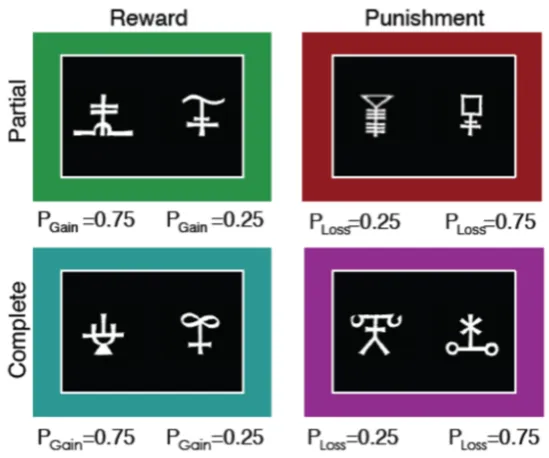
Learning task 48
Emotional rating analysis 50
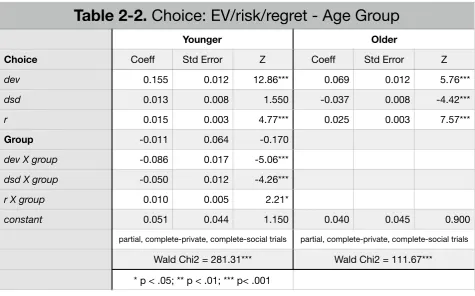
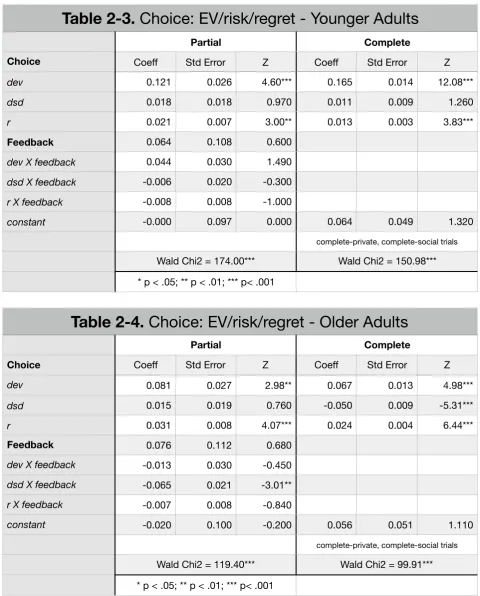
Choice behavior analysis 51
Learning behavior analysis 53
Learning computational models 53
Results 54
Emotional ratings 54
Choice behavior 57
Learning behavior 60
Chapter 3: Priming regret: inducing counterfactual thinking to influence learning 67
Introduction 68
The Patent Race 74
Priming task: Wheel of Fortune 77
Mood priming 78
Hypotheses 80
Methods 82
Regret 84
Participants 85
Procedure 86
Computational Learning models 88
Results 89
Modeling 95
Discussion 95
Chapter 4: Electrical brain stimulation effect on level-k thinking 99
Introduction 100
Brain areas of level-k thinking 103
tDCS 104
Methods 105
Participants 105
Experimental Design and Task 106
Time course of experimental tasks 109
Payment 110
tDCS stimulation 111
Protocols 113
Statistical analysis 114
Results 117
Discussion 120
General Discussion
123
Moral decision making 123
Aging, regret, risk and learning 124
Regret induction 126
Electrical stimulation of sophisticated thinking 128
Introduction Timberlake 7
Structure of this thesis
This thesis comprises four sections, each concerned with modulating processes of
learning, reasoning and decision making. The notion of each effort was to examine speciFic
features of the decision process via deviations from baseline, be they induced or selected. In
the First, a review chapter, I critically examine the intersections between deFicits in moral
decision making and regret decision making in psychopathic and brain-lesion patients, Finding
a number of similarities and mutual deFiciencies. The next chapter consists of analysis of a
previously conducted experiment that considers age as a natural agent of cognitive change. My
analysis examines how the relationship between choice behavior and counterfactual learning
appears to change with age. The latter two chapters consist of experimental studies that I
conducted in their entireties. The First study consists of inFluencing counterfactual learning via
emotional priming in a large group of subjects and using computational modeling to
characterize underlying cognitive mechanisms. The Final chapter takes a yet more direct
approach to test the causal role of two different brain areas in strategic thinking by employing
transcranial brain stimulation in an effort to induce higher levels of strategic thinking in a
Introduction Timberlake 9
General introduction
Humans make innumerable choices during waking life, from simple to complex, leading
to patterns of behavior. Those choices can be changed by new information, that is, learning.
These can be inFluenced by other internal and external factors brought to bear on a decision
maker. Similar situations with only slight differences can give rise to different decisions and
varied patterns of behavior. State of mind, mood, information, social situation, age,
imagination — all may be implicated in modulating choice with other conditions held
constant. From which hand to open a door with to whether it is safe to cross a road; from
which cake to eat to which job to choose — any individual who has made it far enough in life
to be studied in a laboratory experiment has made a mountain of advantageous decisions,
though without doubt, accompanied by plenty of choices whose outcomes were not
immediately beneFicial. Yet, as many a motivational speaker will remind his audience, as much
learning can come from failure as from success. This idea found generalization in the
Rescorla-Wagner model’s precept that learning occurs only when events violate expectations.
Yet the remarkable Flexibility of learning has allowed adaptation to countless
situations. In repeated games, players often exhibit learning behavior in making best choices.
Early reinforcement learning models assumed that players responded only to the results of
their own choices, repeating choices that lead to success and avoiding those that failed. These
models were particularly good at explaining behavior in the context of the bounded rationality
of speciFic decision problems. Later, expanded models such as Fictitious play that accounted for
foregone choices and in social situations anticipated actions of other players proved more
descriptive of observed behavior (Fudenberg and Levine 1995). Yet more recently, adaptive
have accounted for behavior more precisely. These hybrid models, such as
experience-weighted attraction, afford individual-level description of sophistication of learning (Camerer
and Ho 1998). More sophisticated players make choices in response to anticipated actions of
others. The highest-level players further anticipate how their own actions will inFluence the
strategies of competitors and maximize rewards by sometimes taking short-term losses.
In economic models of choice, agents choose options to maximize long-run reward.
Various models applied to behavior, however, can account for long-run reward in different
ways. In the short term, in fact, people often give up a higher expected reward in favor of
avoiding the risk of loss. In repeated probabilistic tasks in limited-information feedback
settings, choices are guided by counterfactual thinking that compares the outcome of a choice
to the best outcome that could have been obtained with that choice. In settings in which
outcomes of unselected choices are known, however, subsequent choices are guided by the
difference between the outcome received and the outcome of a choice not made. This adds to
counterfactual thinking element of responsibility, a crucial component of the experience of
regret. Anticipated regret is so inFluential that in choice problems similar to those that have
brought regret in the past, people increasingly avoid the choices that present the greatest
potential regret – to an even greater extent than they avoid risk (Coricelli, Critchley et al.
2005). A discrete signal in the medial orbitofrontal cortex both accompanies the occurrence of
regret during a task as well as its anticipation during the same task, indicating that
experiencing regret is adaptive. Could this mechanism that functions so vigorously within one
setting carry over and offer its inFluence in another similar but novel situation? This document
proposes to explore that question at several depths.
Proposed circuits of regret learning share some structures and patterns with the
systems implicated in moral decision making, in particular the ventromedial prefrontal cortex.
We start the consideration of decision-making regret by comparing its implementation and
Introduction Timberlake 11 instances in which normal function has been interrupted in both domains, the processes share
some remarkable similarities.
We examined evidence of transfer between a lottery choice task and an instrumental
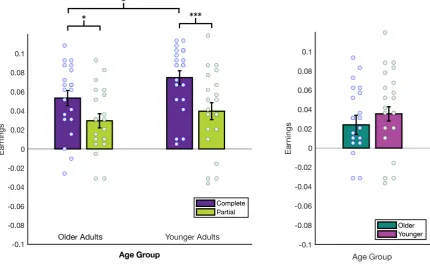
learning task (Chapter 2). Here, we examined choice behavior as an indicator of how learning
might vary between younger adults and older adults. We wanted to see if the relationship and
potential transfer between tasks varied depending on age. Aging is marked by selective areas
of cognitive decline, particularly in the context of decision making (Tymula, Belmaker et al.
2013). Moreover, adults older than 60 have been observed in one study to incorporate
counterfactual information in learning to a lesser extent than younger adults (Tobia, Guo et al.
2016). Examining data from two age-segregated cohorts, we investigated how the choice
behavior of older adults and younger adults in the lottery task indicated different learning
patterns in the second task.
The question of transfer is probed more pointedly in an experiment in which we tried
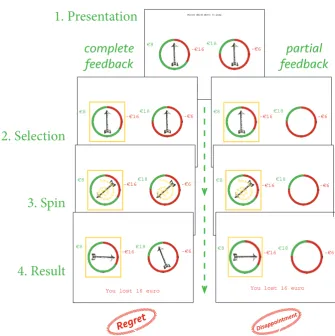
to make people feel very bad right from the beginning, having them lose a stack of money and
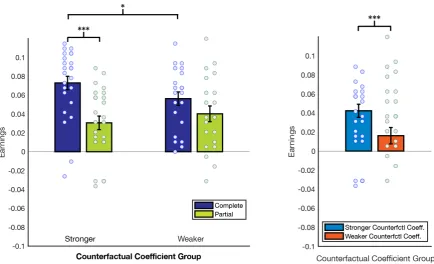
showing them what they could have won if they had made a different choice (Chapter 3). Our
hypothesis was that this induction of regret would elicit counterfactual thinking and make
players learn from counterfactual comparison in a different game they played right after this
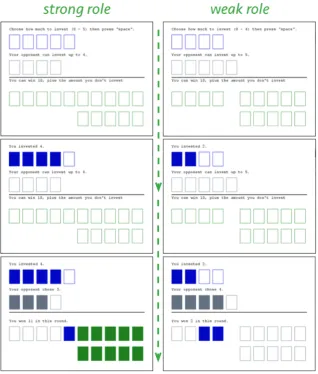
large loss. We employed a limited-space strategic game, and then compared behavior to the Fit
of several models of reinforcement learning and belief-based learning that incorporate
counterfactual thinking and strategic learning to various extents (Sutton and Barto 1998,
Camerer 2003, Zhu, Mathewson et al. 2012). Employment of belief-based learning depends
largely on understanding the broader structure of a system, to which a person already attuned
to regret may be more sensitive if the experience transfers. In the context of the competitive
game, we hypothesized that the consideration of the counterfactual demanded by the prior
Transfer can begin with experience in one activity before commencing another. In the
two previous overviews, this is realized with the outcome of a decision. That information may
then modulate performance in the subsequent task. In a third study, we proposed to skip the
step of introducing information with a behavioral situation and, instead, encourage the brain
to reach a target state via electrical stimulation (Chapter 4). Different people engage in
strategic thinking at various levels of sophistication, and measured brain activity reFlects that
diversity. Imaging studies have located some neural correlates of mentalizing in frontal
cortical areas (Hampton, Bossaerts et al. 2008, Coricelli and Nagel 2009). If those areas are
more active during higher levels of strategic thinking, they may well contribute the behavior.
We therefore suspect that if these areas are stimulated to higher levels of activity, they could
Chapter 1
: Regret, Responsibility and the Brain
Regret, Responsibility
and the Brain
Ben Timberlake1, Giorgio Coricelli1,2 and Nadège Bault1
1Center for Mind and Brain Sciences, University of Trento. 2Departments of Economics, University of Southern California.
Introduction
Regret describes an emotion that arises from a variety of circumstances. We focus here
on a particular type of regret, decision regret, which comes to the study of decision making by
way of traditional economics, along with insights from psychology. This is clearly not the only
formal description of regret, but it bears resemblance to variations studied in other Fields. The
beneFits of this regret deFinition are its formalization, its operationalized measurability and its
attendant body of literature in neuroimaging. This last is critical for comparison to the neural
bases of other phenomena.
Regret refers to a speciFic set of conditions and responses, which include learning from
an imagined alternative outcome that could have been reached through different action by the
person feeling the emotion. This arises after an actor or agent has made a choice, sees its
outcome, and then realizes that another outcome — the result of a different choice of hers —
is more desirable. Decision-based regret or “decision regret” is proportional to the magnitude
of the difference between the obtained and missed outcomes. These elements are the
deFinitive components of decision regret: learning, responsibility and counterfactual
information. Other emotions may arise from any one or two of these elements, but all three
must be present for regret. These situational requirements have long guided the psychological
description of regret (Zeelenberg, Beattie et al. 1996, Zeelenberg and Pieters 2007), and they
persist in the economic deFinition of decision regret (Loomes and Sugden 1982).
Decision-making studies operationalize this description, using both behavior and a modiFied utility
function to quantify the effects of the emotional experience (Bell 1982, Loomes and Sugden
1982).
Like most decision processes, moral decision-making pits multiple options against one
another in an effort to arrive at the most desirable outcome. Moral norms are personal
convictions reFlecting rules of conduct one ought to adopt in a given situation. They represent
Chapter 1 Timberlake 15 appropriate (Manstead 2000). Moral norms play an important role in decision making
because internalized values attributed to a particular course of action are likely to guide
behavior. Consequently, behaving in contradiction to one’s own moral norms is likely to elicit
strong negative emotions. In such a situation, regret is likely to arise, especially if the norm
violation results in a negative outcome. Some studies suggest that feelings of regret are
anticipated at the prospect of violating one’s moral norms (Parker, Manstead et al. 1995).
Other studies have shown that anticipated regret and moral norms are confounded in
explaining choices, especially those with moral implications (Rivis, Sheeran et al. 2009,
Newton, Newton et al. 2013). Despite preliminary evidence from social psychology of a
possible overlap between anticipated regret and moral norms, the cognitive mechanisms
linking the two concepts have not yet been deeply investigated. Evidence from
neuropsychology, however, suggests that the brain mechanisms underlying regret anticipation
and the implementation of moral norms might involve similar neural circuits.
By tracing the brain activity associated with moral decision making and decision regret
behaviors, it becomes clear that some of the same brain areas are similarly implicated in both
processes, suggesting that some connections between the two categories of choices may be
identiFied. Here, we explore this potential connection between moral- and regret-based
decisions by reviewing their features and neural bases.
Counterfactual information
Regret arises from comparison to an alternative result: one that has not actually
occurred. It requires the imagination of an alternative reality that results from a different
choice than the one made. The process of deconstructing the present to imagine a different
reality, called counterfactual thinking, is at the core of regret. Counterfactual thoughts are
thinking, and thus, associated regret, is to learn from mistakes, to generate variant courses of
action suspected to prove more successful when similar situations are encountered in the
future.
In a simple illustration of the deFinition and measurement of decision regret, imagine a
game of chance: a slot machine. A gambler can pull the lever in exactly one way and take
whatever result comes. Win or lose, his actions make no difference (other than the choice to
play the game in the First place). Nature, wearing the guise of probability, determines the
outcome every time. If he loses, the gambler by deFinition feels disappointment (and if he
wins, satisfaction), but not regret. Now imagine two slot machines next to each other. The
gambler must choose one to which to stake his fortunes, yet when he pulls the lever, the
wheels spin on both machines, and he can see both outcomes. Now he sees both his actual
winnings or losses on the machine he chose, as well as what he would have won or lost had he
selected the other machine. If his slot machine loses while the other wins, he can imagine a
world in which he made a different, winning, choice. This identiFication of the counterfactual
precipitates regret. A notion, even an imprecise one, that the counterfactual outcome was
better may give rise to regret, but the discrepancy between speciFic values of obtained and
foregone allow for clearer interpretation at this point. Simulations of this situation have been
used in various experimental settings to measure and compare regret to disappointment
(Camille, Coricelli et al. 2004, Nicolle, Bach et al. 2011, Gillan, Morein-Zamir et al. 2014).
Regret is further characterized by a negative-valence error, which differentiates it from
relief. The error is the difference between the obtained outcome and the imagined
counterfactual outcome. This is an important distinction in regret: that the error must have
negative valence, rather than the obtained outcome itself. This underscores the idea that
regret is the negative result of comparison between outcomes, which may give rise to changes
in behavior. In the slot machine study, even when subjects won with a certain choice but saw
Chapter 1 Timberlake 17 was negative (Camille, GrifFiths et al. 2011). People describe their emotions as more negative
with a better foregone choice, even when the obtained outcome is the same. This comparison
is so clear that the emotion following a good outcome of a choice made (winning $50)
compared to a very good outcome of a foregone choice ($200) can be rated even lower than
that following a bad obtained outcome $50) compared to a very bad outcome avoided
(-$200) (Camille et al. 2004). That is, despite winning more money, people said they felt worse
—because they compared their winnings with what they could have won had they made a
different choice. This ability to imagine an alternative reality after the fact informs decision
problems not yet encountered. In fact, after experiencing regret, subjects made choices in
subsequent tasks that were consistent with trying to minimize that feeling of regret (Coricelli,
Dolan et al. 2007).
Learning value
In a more complex scenario that employs regret in learning, we might assign the two
machines different probabilities of paying out. We could task the decision maker with earning
the most money and therefore the goal of choosing the right (i.e. more likely) machine to play
more often over the course of a number of opportunities. Such a sequential task (as employed
in Daw, O’Doherty et al. 2006) allows the exploration of learning and the comparison of
various models, which can include those that incorporate regret learning. Lohrenz and
colleagues adopt the regret-learning model and rename it “Fictive learning” to discard
emotional connotations and to maintain only the error signal of an unobtained outcome
(Lohrenz, McCabe et al. 2007). Subjects played an investment game, in which the researchers
saw that incorporating Fictive error (the difference between chosen-obtained and
prediction error: the difference between what the subject thought she would win/lose and
what she actually won/lost.
In the scenario of sequential choices of two different gambles, the difference between
the results of the choice the gambler made and those of the one he did not—precisely the
measure we call decision regret—can be described as a signal enlisted to learn to make better
choices. That ability depends on computing that difference, then employing it to foresee a
possible recurrence before the next choice is made, and Finally making a different, presumably
better choice (Coricelli, Critchley et al. 2005). Anticipation of regret induces a disposition to
change behavioral strategies (Ritov 1996), and characterizes an emotion-motivated learning
process in decision making (Zeelenberg, Beattie et al. 1996). In theories of adaptive learning
driven by regret-based feedback (Megiddo 1980, Foster and Vohra 1999, Hart and Mas-Colell
2000, Foster and Young 2003, Hart 2005), learning occurs by adjusting the propensity to
choose an action according to the difference between the total rewards that could have been
obtained with the choice of that action and the realized total rewards. That is, the tendency of
choosing machine A depends on how much would have been won by choosing that machine all
along compared to how much the gambler has actually won. As gamblers, humans tend to be
pretty good at this. Following regret-based learning models, decision makers converge to
optimal choices (Coricelli and Rustichini 2010).
Responsibility
People show strong regularities in the nature of the event they “undo” when reFlecting
on a bad situation. One of these regularities, the agency effect, is particularly at stake in the
experience of regret: though people feel regret both for actions taken and inaction – and
although nostalgia and autobiographical retrospection often highlight missed opportunities –
Chapter 1 Timberlake 19 than inaction (Byrne 2002). Thus, people have greater regret for actions they have taken, more
so than for those they failed to take—at least in the short term. When no action could have
been taken to prevent a bad outcome, and in the absence of agency, people report feeling
disappointment rather than regret. Disappointment is also elicited by counterfactual thought,
though the critical outcome must be due to circumstances beyond the agent’s control,
absolving him of responsibility. The key distinction is this: Disappointment arises from
recognizing that a better outcome might have come given the same choice; regret, from
identifying a better outcome given a different choice (Zeelenberg, van Dijk et al. 1998). Both
emotions come from examining outcomes and seeing that a better one could have been
obtained, but regret is associated with the responsibility of having caused the sub-optimal
outcome by taking a speciFic action. Because regret comes with the outcome of a forgone
choice, it does bring with it greater information, but its effect on subsequent decisions
amounts to more than simply the addition of that data. Rather, the increased information
allows for the recognition of agency, along with counterfactual comparison.
Zeelenberg and colleagues sought to differentiate regret from both disappointment and
a general sense of happiness by repeating and expanding on studies by Connolly, Ordoñez, and
Coughlan (1997). They asked college students to consider scenarios in which Fictional college
students changed their class assignments — either by their own choice or by computer Fiat.
The results of these changes for the Fictional students range from improvement to neutral to
downgrade. The subjects rated how the Fictional students would feel along scales measuring
happiness, regret and disappointment, as well as to what extent students in the stories were
responsible for their outcomes. The researchers found that happiness tracked outcome but
not responsibility, while disappointment and regret were assessed inversely depending on
level of responsibility: that is, the more responsibility subjects perceived, the greater the
Children as young as 5 seem to have some grasp of their agency. In a choice task
involving two boxes containing different amounts of stickers, children reported greater
happiness or unhappiness when they chose which box to open than when the choice was
determined by an experimenter or a roll of dice (Weisberg and Beck 2012). Though it was long
unclear at what age the notion of personal responsibility in choices emerges, recent research
suggests that agency does not inFluence the emotional response to outcomes in children
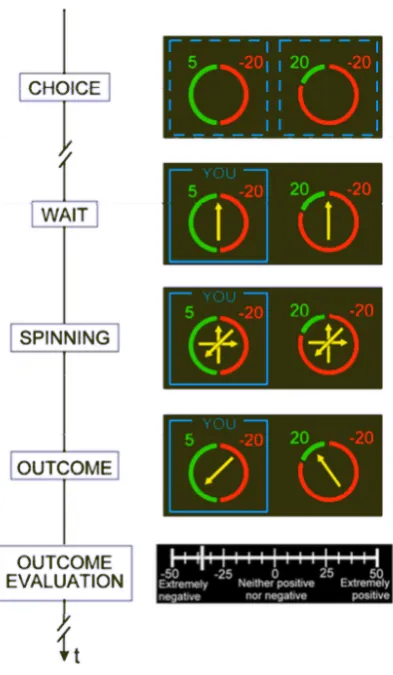
younger than 6 (Guerini, FitzGibbon et al. in press). Using a modiFied Wheels of Fortune task
(with stickers rather than money as the winnings) on children between ages 3 and 10, Guerini
and colleagues found that children were more sensitive to the outcomes of the choice they
made than those the computer made for them — but only in trials with complete feedback,
and only signiFicantly for children ages 6 and older. That is, both counterfactual outcome and
responsibility were required in order for the child to feel the outcome with greater magnitude.
In trials with just partial feedback, the children’s sensitivity to outcomes was similar when
they made the choice and when the computer made the choice — situations that generate
disappointment rather than regret. This evidence of differentiation at young ages further
supports the necessary role of agency in regret.
Neural Circuits of Regret
The comparison between the outcome of a choice and the foregone outcome of an
alternative option triggers speciFic brain responses. The ventromedial prefrontal cortex
(vmPFC) encodes the difference between what has been obtained and the outcome of the
non-chosen option (Coricelli, Critchley et al. 2005). The vmPFC is a functional area that includes
the anatomical medial orbitofrontal cortex (mOFC), an area that encompasses the most
central parts of both hemispheres at the very front of the brain. The vmPFC is believed to hold
Chapter 1 Timberlake 21 areas involved in choice, like the dorsolateral prefrontal cortex and the medial caudate
(Hampton, Bossaerts et al. 2006, Behrens, Hunt et al. 2008). Findings from neuroimaging
studies support the understanding that responsibility is a necessary component of
experiencing regret. Indeed, during the lottery task, activity of the OFC in response to a gain or
a loss was modulated by the outcome of the non-chosen lottery (Coricelli, Dolan et al. 2007).
However, when the outcome of the non-chosen lottery remained unknown, the counterfactual
process between losses (or wins) and any missed outcome of the chosen lottery was
accompanied by a weaker effect in OFC activity. Thus, the OFC appears to encode the
counterfactual comparison between obtained and unobtained outcomes, but only when the
result comes from a choice, rather than misfortune. vmPFC signals the value of the obtained
outcome compared to that of the non-obtained outcome, suggesting that these regret signals
are related to the way the brain evaluates choices and their consequences. It exhibits activity
that correlates with regret at all stages of the choice process: preference, expectation and
reward (Montague, King-Casas et al. 2006).
Correlates of regret have also been measured in parts of the brain considered to have
key roles in assessing and communicating the value of choice (Nicolle, Bach et al. 2011). In
neuroimaging studies, the anterior cingulate cortex (ACC) and hippocampus have also shown
increased activity correlated with regret during choice tasks (Coricelli, Critchley et al. 2005).
The hippocampus, a cortical folding below the cerebral cortex, is implicated in consciously
accessible declarative memory, which is important for making future decisions based on past
events (Coricelli, Dolan et al. 2007), such as trying to avoid previously encountered
sub-optimal outcomes. This ability to guide future actions is a key component in anticipating
regret based on experience.
The vmPFC increased activity during the reported experience of regret reoccurs in the
period just before making subsequent choices—the period leading up to a decision in which
vmPFC appears in other areas, this reoccurrence suggests that the measurement is not merely
of happiness, nor simply an outcome value (Coricelli, Critchley et al. 2005, Van Hoeck, Watson
et al. 2015). It suggests that regret is computed by one brain area and then conveyed to others
that modulate and implement it in subsequent decisions. Critically, the differentiation of
experience and anticipation is clear, though they both involve the vmPFC/mOFC (Coricelli,
Critchley et al. 2005). Thanks to that error signal, along with the opportunity to make a
different choice, modeling regret anticipation is a reliable predictor of choice probability in
certain sequential decision tasks (Coricelli, Critchley et al. 2005, Marchiori and Warglien
2008). Marchiori and Warglien found that incorporating a regret signal into even a simple
learning neural network better predicted human behavior than long-employed models like
reinforcement learning and a hybrid model that combines reinforcement learning with a
player’s beliefs about other players. Coricelli and colleagues observed that, as players
experienced more regret in complete-feedback trials of a sequential Wheels of Fortune task,
they decreasingly chose options more likely to lead to regret. They also saw that the more a
given choice had lead to regret before, the less likely the subject was to choose it again
(Coricelli, Critchley et al. 2005). Regret, then, is not merely a negative emotion, but a
calculated signal that guides agents away from choices that could reproduce that signal. This
effort to minimize regret is a key differentiator in its role as a learning mechanism: the
emotional experience alone would have little meaning beyond sensation, were it not to guide
future behavior.
The examination of choice behavior of patients with lesions in the vmPFC reveals
insight into the causal link between regret-related brain activity and behavior. vmPFC patients
are typically described as making disastrous life decisions despite apparently intact cognitive
abilities. A famous example is the case of ERV, a patient who had a successful career and stable
marital life before he developed a meningioma compressing his OFC. He then lost his job and,
Chapter 1 Timberlake 23 questionable reputation. He went bankrupt, got divorced and then a month later married a
prostitute, a union that lasted just six months. Yet he passed all neuropsychological tests of
intellectual, memory and verbal skills with normal scores (Damasio, Tranel et al. 1990).
Alongside such calamities in their daily lives, experimental evidence shows that people with
vmPFC lesions display abnormal emotions elicited by reward and punishment (Bechara,
Tranel et al. 1996, Bechara, Tranel et al. 2000). Careful investigation of the underlying
computational deFicits has revealed a general deFicit in integrating values attributed to various
actions with the current goals (Camille, GrifFiths et al. 2011), function that has been assigned
to the vmPFC in brain imaging studies. Patients are able to assign a subjective value to options;
however they will not commit to the option with the highest value. Additionally, vmPFC
lesions result in an inability to feel regret after a bad choice, and consequently in anticipating
future regret during the decision process (Camille, Coricelli et al. 2004). Both reported
subjective ratings of the outcome of their choices and the associated skin conductance
responses of vmPFC patients were different from that of controls. Behavior of vmPFC patients
was not signiFicantly changed by knowing the outcome of the alternative option, an absence of
the signature feature of regret. While healthy control subjects changed their choices to avoid
regret over the course of the task, vmPFC patients did not.
While the fMRI and lesion studies mentioned above have identiFied common neural
mechanisms for experienced and anticipated regret, more recent Findings suggest that people
with psychiatric and neurological dysfunction can exhibit one stage of the process but not
another (Gillan, Morein-Zamir et al. 2014, Levens, Larsen et al. 2015). Although brain areas
associated with the several stages of processing and anticipating regret overlap, they are not
coextensive. Damage to the vmPFC may allow the recognition and experience of regret but not
its application to future decisions (Levens, Larsen et al. 2015). Various dysfunctions of this
regret mechanism offer at least partial explanations of the behavior of people with evidence of
indications of psychopathy report feeling regret more keenly but do not avoid it in future
choices to the same extent as healthy subjects (Hughes, Dolan et al. 2013, Gillan, Morein-Zamir
et al. 2014).
Moral Decision Making
The vmPFC, which represents a crucial portion of a proposed regret circuit, also plays a
key role in some emotional components of moral decisions (Moll, Oliveira-Souza et al. 2002,
Blair 2007, Koenigs, Young et al. 2007). Brain imaging studies of moral decision making have
implicated some of the same areas and networks in the frontal cortex that are associated with
emotion and deliberation – often Finding these regions to be in competition during difFicult
choices. A study of moral judgment (without any decision component) implicated the mOFC as
part of a neural circuit that showed higher activity when subjects read sentences with a moral
component. The same areas, which also included the temporal pole and the superior temporal
sulcus, did not show higher activation when subjects read statements with emotional
components but no moral element (Moll, Oliveira-Souza et al. 2002). Researchers have
developed a range of these problems to probe the spectrum of moral decision making, and this
has yielded distinct differences in choice and brain activity. Among the most well-known set of
dilemmas is the family that arises from the trolley problem. Subjects read about a hypothetical
situation in which they are standing next to a set of railroad tracks, while some distance away,
a group of workers is standing on the track. The subjects are told that they see a streetcar
coming down the tracks with no chance of stopping before striking and killing the Five
workers. The subjects are told they are standing next to a lever, which, if they pull it, will
switch the car and send the train onto a side track, where there is a lone worker who will be
struck and killed. Though this would be a difFicult situation in real life, in the hypothetical, it is
Chapter 1 Timberlake 25 consequences is distant and most people presented with the question answer quickly and in
the same manner (Greene, Nystrom et al. 2004). Most people choose to pull the lever, making
a simple utility calculation (Greene, Sommerville et al. 2001). A variant of this dilemma that
brings the decision closer to the subject, however, is the footbridge problem. Now, the subject
is on a bridge over the railroad tracks. He can still see the workers, and there is still a street
car barreling toward them, but instead of a switch, the subject has the opportunity to save the
workers by pushing a large person, who is also on the bridge, off the bridge and into the path
of the street car, saving the Five workers but killing the innocent person. Given simple
calculation of number of people saved versus killed, these situations are identical. Yet
according to measures of three features of these dilemmas identiFied by Greene (2007):
expectation of bodily harm, agency of actor and speciFicity of victims, some dilemmas are
more “up close and personal.” The “closeness” of the action brings the emotional salience of
the problem into conFlict with the pure utilitarian calculation. This antagonism seems to be
carried out in the brain in both processes and areas that bear resemblance to the experience
of regret (Koenigs, Young et al. 2007).
Another family of moral decisions brings an even sharper contrast. It starts with the
easily solved infanticide dilemma, which poses the question of whether or not a teenage
mother should kill her unwanted newborn baby. The prospect of killing a baby in service of
discomfort is easily rejected, and subjects respond quickly and uniformly in the negative.
Brain imaging during this decision showed lower levels of activity in the anterior cingulate
cortex (ACC) and the dorsolateral prefrontal cortex (dlPFC), suggesting little conFlict between
the overwhelming emotional aversion to the choice to kill the baby and the low level of utility.
Subjects also consider a more difFicult analogue of this problem: the crying baby dilemma, in
which subjects are asked to imagine a group of people hiding from a group of outlaws. Among
the people hiding are a mother and her newborn baby, which begins to cry, which could alert
the baby. Subjects are asked if it is morally permissible for the mother to smother her baby to
death, saving the people but killing her own baby. Here, the calculation leads to a simple
utilitarian conclusion that more people are saved by killing the baby. Yet this stands in conFlict
with the stark emotional opposition to killing a baby.
Observations in other brain areas support this framework. Greene and colleagues
observed increased activity in ACC and dlPFC during more difFicult dilemmas like the crying
baby and the footbridge problems, as compared to easier dilemmas. They argue that this
indicates that the ACC detects these conFlicts and that the dlPFC then deliberates and resolves
them. Supporting this proposal, the dlPFC shows even greater activity when the problem
results in a utilitarian judgment that violates personal morality. But it is also possible that the
dlPFC instigates a period of cognitive control, delaying the decision to allow the ACC enough
time to employ a utilitarian cognitive response, thus overriding a more immediate affective
response (Greene, Nystrom et al. 2004). If the ACC is a general arbiter of antagonism, then it is
no surprise that it would be more active both in cases of difFicult moral dilemmas and for
discrepancies between predictions and realities, as in experiences of regret. This shared step
in decision making connects the two processes and suggests that cognitive resolution of
conFlicts of any type may be handled with some similarity.
Notably, the several types of moral dilemma—personal and impersonal, distant and
close—incorporate degrees of action, though Greene et al. (2004) differentiate between the
greater agency of “authoring” and the impersonal deFlection of a threat, described as “editing”.
Regret similarly requires a personal agency—that responsibility attenuated only if the choice
giving rise to the emotion is shared with others (Nicolle, Bach et al. 2011). The role of
responsibility links the two considerations and carries the question of decision-making regret
to a moral level. The more a person gauges himself responsible for an outcome, the more
keenly he feels regret (Frijda, Kuipers et al. 1989). Both ranges of moral decision — those that
Chapter 1 Timberlake 27 areas that compose part of the regret circuit. This observation suggests that the ability to feel
accountable for one’s choice and the phenomenon of feeling regretful in the case of a bad
decision might be the premises for making non-utilitarian decisions in moral dilemmas. It
does not prove the existence of a causal link between the two. Nevertheless, gathering
evidence approaching a causal link, we report the cases of two different populations of
patients — patients with lesions in the vmPFC and psychopaths — which exhibit a
co-occurrence of difFiculties with all previously mentioned processes.
OFC Lesions Modulate Regret and Morality
Patients with particular types of brain damage can demonstrate how those portions of
the brain are implicated in speciFic processes. Brain lesions are disactivations of sections of
the brain due to events like tumors, stroke or head injury. Depending on the type of
precipitating event, lesions may occur in similar regions. Their speciFic location, while not
uniform, can be established for each patient through the use of anatomical MRI and other
brain scanning techniques. By comparing the behavior of healthy controls to that of patients
with lesions in the same region, the role of that brain area in the process can be described. So
people with lesions to areas implicated in moral decision making or regret decision making
may exhibit behavior signiFicantly different from people whose brains are fully functional in
that region. Similarly, people with psychological disorders, which have brain-based causes and
therefore cognitive implications, may exhibit similar types of different behavior from healthy
controls.
Patients with lesions in the vmPFC, like those who demonstrated difFiculty with
applying anticipated regret, also exhibit trouble in following social norms. Both types of
unusual decision outcome accompany damage to the vmPFC, implicating this area in a key role
which demands proximate action, most healthy people cannot overcome the emotional
aversion of the proposition. Conversely, vmPFC patients — whose lesions deactivate portions
of this brain area — exhibited utilitarian behavior, choosing to sacriFice one life in favor of Five,
a decision that appears to consider only the Final tally of the choice and to ignore the
emotional aspects (Koenigs, Young et al. 2007). In a battery of hypothetical situations, these
patients were presented with choices of sacriFicing one life to save multiple other lives. Among
the best-known non-emotionally salient dilemmas is the trolley problem, in which the trolley
is diverted by a lever onto a track with one person, avoiding the death of Five. In this dilemma,
vmPFC lesion patients make the choice to pull the lever about as often as healthy controls do,
making a pure calculation about the impersonal action of pulling a lever. Given that these
patients had impaired autonomic activity in response to emotionally charged pictures, the
authors conclude that the problem in generating “normal” moral judgments come from
impaired emotional processing. This was supported by two other studies showing that vmPFC
patients do not experience aversive emotional responses to moral violations (Ciaramelli and
Pellegrino 2011, Gu, Wang et al. 2015). When a personal element is involved, healthy people
choose to intervene much less frequently (Greene, Sommerville et al. 2001). Not so lesion
patients, who continue to make the utilitarian choice at about the same rate as they did in the
less-emotional impersonal scenario (Koenigs, Young et al. 2007).
Importantly, vmPFC lesions also impair the experience of self-conscious emotions such
as shame or embarrassment (Beer, Heerey et al. 2003). Moreover, the social behavior of lesion
patients in social-norms reinforcing games has been compared to that of psychopaths
(Koenigs, Kruepke et al. 2010). It should also be noted that we do not suggest that the moral
dilemmas described elicit regret. Rather, because the outcome of the choice has consequences
for other people, the anticipated negative counterfactual emotion involved in these situations
would better be described as remorse or guilt: cognitively distinct from regret
Chapter 1 Timberlake 29 studies mentioned here suggest that taking responsibility for one’s own actions, questioning
oneself, feeling regret and reinforcing social norms rely on the same neural circuitry.
Psychopathy
Psychopathy is characterized by diminished inhibitory control, impulsive behavior and
violence. Notably, the psychiatric condition is also attended by unusual morality judgment,
including the conFlation of conventional and moral violations (Blair 1995). While healthy
people see great differences in a conventional violation such as wearing inappropriate clothes
in public and a moral violation such as hitting another person, psychopaths see less difference
between the two types of transgression. Psychopaths are also more tolerant of moral
transgressions against other people, which may stem from a lack of sufFicient aversion to
distress in others (Blair 2007). They display a similar deFiciency for aversion in cost-beneFit
choice series.
The impaired decision making by people with psychopathic tendencies has long been
attributed to their curtailed experience of emotions involving responsibility (Koenigs,
Kruepke et al. 2012), but recent studies suggest that the breakdown in learning via regret
happens further downstream, at the point of employing regret values in subsequent choices
(Hughes, Dolan et al. 2013, Gillan, Morein-Zamir et al. 2014, Baskin-Sommers, Stuppy-Sullivan
et al. 2016). This would suggest that people with psychopathy do indeed feel regret but do not
incorporate the signal into future decisions, a model consistent with some Findings about the
moral decision making of psychopaths. Considering the implication of the vmPFC is such
feed-forward mechanisms, the breakdown may well stem from a diminished vmPFC, which in
psychopathic individuals, has been shown to be reduced in every dimension: volume,
thickness and surface area (Yang, Raine et al. 2005, Baskin-Sommers, Neumann et al. 2016). If
regret, sometimes even at the cost of proFit. Yet the higher people scored on a psychopathy
scale, the less likely they were to avoid regret in a repeated wheels of fortune task
(Baskin-Sommers, Stuppy-Sullivan et al. 2016). It was not simply that the missed opportunity bothered
them less – they reported negative emotions at about the same level as controls, and
sometimes even more. In fact, the highest scorers on the psychopathy self-report scale
reported negative emotions after a bad outcome comparison, yet they seemed to ignore that
information. The bad outcome comparison that serves as a signal to healthy people was not
being used by the people with psychopathy. Their behavior indicated that they employed only
the simpler signal of expected value. This suggests some link between psychopathy and regret
avoidance, though a study that searched explicitly for such a connection in criminal offenders
did not Find one (Hughes, Dolan et al. 2013).
People with psychopathic indications are thus apparently capable of imagining
alternative realities and generating and experiencing the negative emotion associated with the
comparison to actual reality, suggesting that psychopathy is characterized not by a deFicit of
emotion but by weakened general cognitive processes like the ability to maintain previous
counterfactual information and to apply it to subsequent decisions. So if these people were
experiencing the emotion but apparently not employing it in choice tasks immediately
following arousal, it raised the possibility that the information was not being applied to guide
future choice in the manner of predictive models.
The understanding of moral processing in psychopaths is not well understood. Though
people with psychopathy have long been observed to engage in amoral behavior, the
mechanism of that deFiciency has only recently been explored. Psychopathy has been ascribed
to a depleted ability to empathize with a person being harmed as well as a deFicient
mechanism to inhibit violence (Blair 1995). In a study by Blair, criminal offenders considered
several scenarios of moral and conventional violations set in a school, showing that
Chapter 1 Timberlake 31 violations, while non-psychopaths did. Blair rejects several models in which psychopaths
experience moral emotions but do not employ them in mentalization or fail to take
perspectives of others. Rather, he proposes a fault in a separate system, a “violence inhibition
mechanism.” Cima and colleagues (2010), by contrast, argue that while people with
psychopathic traits may have some emotional deFicits, enough emotion is preserved (or in fact
may be unnecessary) to make similar moral judgments to healthy controls. The fact that they
can identify the rightness or wrongness of moral actions, but then by deFinition act in
contrivance, indicates that they may simply not care about morality, the study suggests. This
would again be consistent with psychopaths experiencing regret but not applying it to
subsequent choices. Whatever emotional component that is lacking in people with
psychopathy may be the element responsible for the application of the moral understanding
toward future decisions.
Yet by reFining groups of people by placement on the psychopathy scale and with
greater precision in the moral dilemmas presented, Koenigs and colleagues Find that a
counterfactual mechanism may indeed be at fault for some abnormal moral choices by people
with psychopathy (2012). Using inmates from a Wisconsin prison, the study considered only
those participants who scored in the highest and lowest portions of psychopathy indications,
further reFining the high scorers in terms of assessed anxiety in consideration of a theory that
psychopathy is too broad a term for several possible conditions. Using the same situations as
in the Greene study, both high-anxious psychopaths and non-psychopaths endorsed the
utilitarian outcome of personal dilemmas with approximately the same lower frequency. But
low-anxious psychopaths judged the utilitarian choice acceptable more often than either other
group. The Finding suggests that some subtypes of people with psychopathic indications
resolve the emotion-utility conFlict in a similarly unusual manner to that with which
psychopathic people eschew regret. Where the breakdown occurs in either population and in
debate: psychopaths and lesion patients may experience emotion less, or they may experience
emotion and simply not apply it. Either way, it is clear that people with psychopathic
tendencies do not change their choice behavior in emotional situations to the same extent that
healthy people do, both after experiences that typically generate regret and when confronted
with moral dilemmas.
A Social Dimension of Regret and Agency
The consideration of others connects with regret not only in representing levels of
responsibility. The regret circuit co-locates with neurological phenomena that involve
consideration of others via social versus private situations (Bault, JofFily et al. 2011, Zhu,
Mathewson et al. 2012). Studies on levels of strategic thinking have shown higher levels
associated with the same areas as counterfactual emotions like regret (Bault, JofFily et al.
2011). In an experimental game called the “beauty contest” or guessing game, the choices a
player makes indicate the extent to which he is thinking about other players and how much he
thinks they are thinking about him. Increased amounts of this recursive thinking are
associated with higher levels of brain activity in the mOFC (Coricelli and Nagel 2009), the
location of most of the vmPFC, a key component of the regret circuit. As with so many
co-located brain activities, however, it is necessary to note that anatomical proximity does not
necessarily indicate a functional relationship. Nevertheless, the notion of thinking about the
activity in other brains (in the case of the recursive thinking demanded in the beauty contest)
is different from other types of input in a similar way that the calculation and experience of
counterfactual-based emotions (as in the case of regret) varies from other input—that is, it is
largely internal.
Studies have associated the vmPFC/mOFC with thoughts about others (Frith and Frith
Chapter 1 Timberlake 33 These areas become active not only when thinking about others—when evaluating violations
of social norms, for example—but also when it comes to representing our own mental state,
including emotion (Gallagher and Frith 2003). When subjects were directed to think about a
friend or someone who was similar to them, the vmPFC showed stronger activations (Mitchell,
Macrae et al. 2006). Given the vmPFC/mOFC association with processing information relevant
to the self, Mitchell and colleagues suggest that thinking about related others may depend on
self-evaluations in the vmPFC. This introduces the possibility of a connection between internal
and external considerations: between regret’s internally oriented self-evaluation and thoughts
about others.
In fact, despite regret’s essential interior aspect, it has been shown to be modulated by
the actions of others. If an individual experiences regret that comes as the partial result of the
actions of others, the brain appears to shift some of the blame for the less-then-optimal
outcome to these others—thus reducing at least the anticipation of regret (Nicolle, Bach et al.
2011). As described above, measurable regret is deFined by the notion of agency. It is usually
addressed in a polar manner, however: with agency, the negative feeling associated with a
different outcome is regret; and in its absence, disappointment (Zeelenberg, van Dijk et al.
1998). But within those categorizations, there appears to be room for gradation. Nicolle et al.
had participants complete a task in which they made similar gambling choices as in standard
regret tasks, but on some trials, the choice was determined not by the participant alone, but by
vote (they were told) of a group of which they were a member, ranging from 2 to 8 people in
all. In this case, the participant’s action alone did not determine the choice and its attendant
result. The measured effect saw reduced activity in the amygdala, compared to trials in which
the participant was solely responsible for choices. The amygdala, implicated in emotional
memory, is associated with activity involving personally relevant information. It is also known
to integrate the relationship between stimulus and reward and to send it on to the vmPFC,
increased activity during instances of regret in which the participant is the only decision
maker suggests a kind of “self-blame regret”, Nicolle and colleagues argue. The diminished
sense of responsibility attenuates the negative feeling of regret, and that consequently
appears also to dampen the learning effect. A better response in an alternative reality
becomes clearer in the amygdala with greater individual responsibility. A related question,
unexplored to this point, is how, if at all, shared responsibility for positive outcomes might
modulate brain activity compared to that of negative outcomes, or for positive outcomes that
result from solo choices.
Conclusion
The goal of any decision process is to arrive at the optimal outcome, given the
conditions. But when several important factors come into conFlict in a decision, the brain must
mediate among them. Separately, the processes for moral decision making and choices
involving decision regret have been further explored via brain imaging and lesion studies.
These have shown that segments of these processes share some anatomy and even similar
dysfunction among people with psychopathy or lesions to the vmPFC. Our understanding of
both systems still needs clarity before they can be considered to play any part in each other,
but some recent research proposes frameworks that hint at how they might be joined. Blair
argues that the learning systems in the vmPFC are the foundations of moral decisions that
concern harm to other people (2007). These same systems undergird error signals that
include decision regret, showing heightened activity during both the experience and
anticipation of regret. The work on moral decisions by Greene and colleagues suggests that
the vmPFC might serve in a regulatory role, delaying decisions during high-conFlict or difFicult
dilemmas — especially those involving competition between emotional and utilitarian
Chapter 1 Timberlake 35 Moll and de Oliveira-Souza, however, push back on the Greene model, saying this
conFlict framework is too complex. They hold instead that the lesions attenuate the prosocial
inFluence of the vmPFC, thus allowing utilitarian decisions without the interference of
emotion. The inverse logic is that in healthy people, by contrast, the vmPFC encourages
greater consideration of other people, in contrivance of purely numeric considerations. Yet
this runs against the tonic activity of the vmPFC that maintains value information during a
series of choices. Moral and regret decision processes appear to share patterns, but if those
are reFlections of shared pathways in the brain, studies to this point present contradicting
roles for these areas.
Those who see the greatest connections between learning signals and moral decisions
include Thomas and colleagues, who argue that the vmPFC’s role is similar across reasoning
processes — including moral and complex decision making. In their model, the vmPFC
integrates emotion into judgments of complicated decisions, acting as adjudicator when
considering future consequences (Thomas, Croft et al. 2011). The vmPFC would be
responsible for assimilating the emotional effects of regret experience or imagination of harm
to another into a decision that would otherwise address only the utilitarian concerns of
economic value or number of people protected from harm. Such a broad function could
incorporate either of the Greene or Moll/de Oliveira-Souza proposals.
Separating these competing goals and observing how special populations deviate in
their decisions from they typical allows us to see that regret and morality are at least
occupying some of the same space in the brain. Moral decisions play serious emotional
consequences against preserving the lives (or limbs) of others. Similarly, decision regret pits
the possible emotional pain of making a sub-optimal choice against maximizing gains. In both
cases, the effort to avoid negative emotions comes into competition with the achieving the
most utilitarian outcome. Though the implications of moral versus economic decisions are on
they both require the previous experience or understanding of emotional outcomes and the
incorporation of their possible reoccurrence into a new decision. Thus, these complex types of
decision require the ability to consider the impact of the choice before it is made — they
demand the conception of realities both encountered and imagined. These processes use the
past and a conceptual future to put new realities in conFlict with each other to judge one the
most desirable.
Author note
This work was supported by a European Research Council Consolidator Grant "Transfer
Chapter 2
: The e
ff
ect of aging on regret in decision making
Motivating questions
How do the experience and anticipation of regret during choices evolve with age?
Is the propensity to experience regret after a bad decision linked to counterfactual learning?
Introduction
Older adults make different choices than younger adults under certain conditions, even
in identical situations, suggesting an internal change in the decision process correlated with
aging. These changes are evident in myriad behavioral decision-making studies, most often to
worsening effect (Riggle and Johnson 1996, Denburg, Cole et al. 2007, Löckenhoff and
Carstensen 2007). Older adults make hastier investment decisions and have more difFiculty
justifying those choices (Shivapour, Nguyen et al. 2012). Older adults are also more prone to
be duped by scams and are more susceptible to deceptive advertising (Yoon, Cole et al. 2009).
Aging is marked by selective areas of cognitive decline, including performance in episodic
memory and executive function. While some mental processes remain stable throughout
adulthood, others change in ways that result in less-advantageous outcomes (Tymula,
Belmaker et al. 2013). Performance in both long-term memory and working memory tasks,
which depend on processing capacity, appear to decline beginning almost as soon as
adulthood is reached (Park, Lautenschlager et al. 2002). Due to these several cognitive
constraints, older adults are more likely to rely on heuristic processing to make decisions
(Riggle and Johnson 1996).
Such age-related decline in tasks that involve reward and learning are consistent with
reduced density of dopamine receptors in brain areas implicated in encoding reward
prediction error and in learning. Midbrain dopamine neurons have been robustly
demonstrated to encode for reward prediction error (Schultz, Tremblay et al. 1998, Bayer and
Chapter 2 Timberlake 39 which correlated with reduced performance in tests assessing episodic memory and executive
function (Erixon-Lindroth, Farde et al. 2005, Troiano, Schulzer et al. 2010). Through the
combined lenses of imaging and behavioral studies, these changes can be read as markers of
cognitive decline with age.
Purely cognitive processes like working memory and reward-based learning have been
studied thoroughly, if not exhaustively, but the effect of aging on other aspects of learning and
decision making are less well explored – in particular the inFluence, if any, of emotional affect.
Because the neuronal decline is different in areas implicated in emotion, they may attenuate –
or exacerbate – the decline seen in strictly cognitive tasks. Cognitively enhanced emotions
such as regret and envy employ counterfactual reasoning, an additional vector of learning
processes (Coricelli and Rustichini 2010). Importantly, they appear to follow discrete
pathways, suggesting that their inFluence on learning over the course of aging may be not only
different from simpler models, but also from each other.
Slipping performance accompanies age in tasks that call on episodic memory (recall of
words and Figures and for face recognition) as well as those that employ executive functioning
(visuospatial working memory and verbal Fluency), which correlate with reduced density of
striatal dopamine transporter, a key neurotransmitter in discerning reward (Erixon-Lindroth,
Farde et al. 2005, Troiano, Schulzer et al. 2010). Age-related decline also attends structural
connections between First-order reward-processing areas in the striatum and basal ganglia to
higher-order areas like the prefrontal cortex (Samanez-Larkin, Levens et al. 2012). When
these connections are depleted, the processes that represent value and reward predictions are
attenuated, impeding identiFication and exploitation of rewarding decisions and more
successful strategies (O'Doherty 2004). The combined effect of a reduction in dopamine
density and diminished structural connection in the reward system suggest at least a partial
Similarly impeding these processes, the level of detail of both past events and future
scenarios declines in older adults (Addis, Wong et al. 2008). Suddendorf and Corballis argue
that mental time travel plays a crucial role in predicting future situations because it allows the
recollection of previous events and the anticipation of outcomes when those events are
reencountered (2007). In an evaluation of autobiographical memory, older adults
demonstrate a diminished capacity for this form of mentalization, both in self-projection into
future events and in situating events in the future with regard to the present ( Anelli,
Ciaramelli et al. 2016). This trend has bidirectional implications for learning: both a reduction
in recall of consequences of previous actions and lesser ability to predict outcomes of future
choices.
The types of decision contexts that reveal different performance with age can be
characterized by the several types of probability situations that decision makers encounter
(Mata, Josef et al. 2011). Mata and colleagues outline that A priori probabilities feature known
probabilities and are marked by relatively easy mathematical calculations. Statistical
probabilities, by contrast, demand an empirical gauge informed by experience. A third type
involving rare events brings extreme uncertainty and prompts individuals to make estimates.
Changes in cognitive control may modulate the assessment of the type of probability situation
and therefore how to respond to it. Declines in working memory make strategy selection and
application more difFicult, which compounds the effects of aging since older adults tend to rely
on simpler strategies that require reduced information search and integration (Chen and Sun
2003). In a quintessential example, in a gambling task, while younger people used more
cognitive skills like learning and memory, older adults relied on valence of recent outcomes
(Wood, Busemeyer et al. 2005). The decline in higher cognitive function is made more clear
when age-related performance differences are compared to performance in decision tasks
that do not feature a key learning component, in which older adults and younger adults do not
Chapter 2 Timberlake 41 al. 2011). Meanwhile, older adults perform about as well as younger adults in memory tasks
that demand only storage, such as short-term memory span tasks, compared to signiFicant
deFiciency in tasks that require both storage and processing, as in working memory tasks
(Bopp and Verhaeghen 2005). Such differences emerge in tasks that call on subjects to learn
from feedback over time.
Emotional assistance
The story of aging, however, is not one of broad, continuous decline. Some
meta-features of decision making improve with age, such as performance assessment, in which
older adults seem to have greater understanding of the limits of their knowledge (Hershey
and Wilson 1997). Though much work has been done to speciFically characterize cognitive
decline that accompanies aging, the effort is not yet exhaustive. In particular, much remains to
be understood about the interaction between affective and cognitive processes in learning and
decision making. Those processes that remain relatively intact and that may attenuate
declines in decision making could be teased out. Key components of choice behavior, such as
risk preference, have been measured as not signiFicantly different in older subjects in some
contexts (Tymula, Belmaker et al. 2013). Likewise, some affective processes are relatively
resistant to effects of age (Carstensen, Turan et al. 2011). Decision-making processes that
incorporate both cognitive and affective functions, with their greater and lesser susceptibility
to age, may therefore decline to varying extents. In fact, older adults have been shown to focus
on positive outcomes and events, perhaps at the expense of comparisons that encourage
learning (Mather and Carstensen 2002). We hypothesize that decisions modulated by
cognitively enhanced emotions, such as regret, may maintain stability with age, compared to
more drastic declines in more purely cognitive processes, such as memory, and that how these
Positivity effect
A striking difference between older and younger adults is the positivity effect: the
tendency for older adults to feel positive outcomes more strongly, as well as to recall them
better (Reed, Chan et al. 2014). Yet the variable evidence of subsequent studies suggests that
this phenomenon does not have a singular effect on learning. Various studies have
investigated how age-related depletion in the density of dopamine neurons changes
reward-based learning. A key consideration of feedback is valence – both as it applies to reward itself
as well as to the various types of errors that feedback informs. While the absolute valence of a
reward tends not to be perceived differently depending on age, the valence of its comparison