Introduction
Psoriasis is a persistent cutaneous condition of the skin1
and has a significant impact on the physical, emotional and psychosocial wellbeing of patients.2 It is an incurable,
non-infectious and complex multifactorial disease,3,4
related to a combination of genetic, environmental and immunological factors. Psoriasis is associated with multi-system manifestations including arthritis and obesity3 and
co-morbidities such as diabetes, metabolic syndrome and cardiovascular diseases.5 Patients may go into remission,
with the signs and symptoms of psoriasis subsiding totally, but they may experience exacerbations caused by various trigger factors.5,6,7 Patients living with psoriasis
are stigmatised, their quality of life substantially impaired and they suffer a huge burden due to this disease as highlighted in Figure 1.4
A definite barrier to quality care for people with psoriasis is non-adherence to treatment, preventing patients from achieving the best possible outcome. Poor adherence is partly due to insufficient communication regarding instructions on how to use the medicines, misperception of possible adverse effects and mistaken expectations about the speed of improvement.4
Epidemiology
Although psoriasis has a global occurrence, the prevalence thereof varies between 0.1% and 3%.5 This
variation is due to limited epidemiological, clinical and therapeutic data pertaining to psoriasis in non-Caucasian populations.9 African and Asian populations present with
Psoriasis
Engler D1, BPharm, BScHons (Pharmacology), MScMed (Clinical Pharmacy) Chezuba HP2, BPharm, Masters candidate (Masters in Pharmacy)
Masuku P1, Academic Intern (Masters in Pharmacy)
1 School of Pharmacy, Faculty of Health Sciences, Sefako Makgatho Health Sciences University
2 Pharmacy Department, (Head of Department), Institute of Health Sciences, Molepolole, Botswana
Correspondence to: Deirdré Engler, e-mail: [email protected],
Keywords: psoriasis, immune-mediated, keratinocytes, co-morbidities, pro-inflammatory mediators, cytokines
Abstract
Psoriasis is a non-communicable, complex and multifactorial disease that cannot be cured. It is an immune-mediated, genetic disease manifesting in the skin or joints or both. Psoriasis is mainly a dendritic and T-cell-mediated disease with complex feedback loops. Dysregulated interactions between the innate and adaptive immune system results in psoriatic skin lesions that can cause visible disfiguration. It subsequently has a negative impact on patients’ psychosocial status and quality of life. Co-morbidities including psoriatic arthritis, cardiovascular disease and metabolic syndrome increase the huge burden of the disease. Treatment of psoriasis has evolved with the understanding of the pathogenesis of this chronic condition, leading to more targeted therapy.
© Medpharm S Afr Pharm J 2017;84(5):38-42
Bod, burden of disease; CVD, cardiovascular disease; QoL, quality of life
Figure 1. The burden of psoriasis8
lower frequencies of between 0.4% and 0.7%. The occurrence of psoriasis across gender is similar, however, on average men have more severe forms of the disease compared to women.6 Although
75% of patients have onset before 40 years of age,5 it can present
from birth to advanced age.10 Two peak ages of onset have been
reported: at 20 to 30 years and again at 50 to 60 years of age.5
Types and clinical features of psoriasis
It is a papulosquamous disease with characteristic lesions. Psoriatic lesions are well circumscribed, circular, red papules or plaques
with a grey or white silvery-grey, dry scale (papules: raised lesions < 1 cm; plaques: raised lesions > 1 cm in diameter). Furthermore, the lesions are symmetrically distributed on the scalp, elbows, knees, lumbosacral area, and body folds. The disease may present either as chronic, stable plaques or acute with a rapid progression and widespread involvement. Psoriasis may be symptomatic with patients complaining of intense pruritus and burning.2 Any site of
the skin can become affected, although common areas include the extensor surfaces of forearms and shins, umbilical, peri-anal, and retro-auricular regions and scalp.6,11
Pathogenesis of psoriasis
The aetiology underlying psoriasis is unknown but is believed to be a complex autoimmune inflammatory disease with a genetic basis. It shares immunologic and genetic features with other autoimmune inflammatory conditions including rheumatoid arthritis and irritable bowel disease.14 Besides inflammation,
a hallmark of the disease is hyperproliferation (an epidermal renewal time of 3–4 days instead of the normal 28 days)15 and
abnormal differentiation of keratinocytes.16 This predominant cell
type of the epidermis plays an active role in the generation and expression of an immune response17 and is a vital contributor in
the immunopathogenesis of psoriasis.
The immune system is triggered by various environmental factors including stress, a change in season, medicines (e.g. NSAIDs, lithium, β-receptor antagonists, anti-malarials), smoking, trauma etc.1,3,7,10 Innate (or non-specific) immunity, mediated by natural
killer T (NKT) cells, chemokines, cytokines and dendritic cells, as well as adaptive (or acquired) immunity, mediated by CD4+ and
CD8+ T lymphocytes, are important drivers in the development Table I. Common types of psoriasis2,6,10,11
Plaque psoriasis or
psoriasis vulgaris Guttate (droplet) eruptive psoriasisor flexural psoriasisInverse or Pustular psoriasis Erythrodermic psoriasis
Accounts for 90% of the cases and is genetically predisposed on chromosome 6p. The lesions are typical with sharply demarcated erythematous plaques covered by silvery scales. Plaques can be few or extended over large areas.
Characterised by scaly teardrop-shaped spots. In children, the onset of guttate psoriasis might follow streptococcal infection of the upper respiratory tract. A third of children with this type of psoriasis develop psoriasis vulgaris in later life.
A site-specific variant of the disease, occurring in intertriginous areas (e.g. axilla of the arm, anogenital region, skin folds of the breasts, and between digits). These lesions are usually devoid of scales.
Characterised by white blisters of non-infectious pus.
If psoriasis is uncontrolled or progressive, it can result in generalised exfoliative erythroderma. This is a potentially life-threatening complication of psoriasis. Any form of psoriasis can become eyrthrodermic, affecting the entire body surface.
Palmoplantar pustulosis Generalised pustular psoriasis
Pustular psoriasis of the palms and soles.
A rare but serious form of psoriasis that can develop in patients with or without a history of psoriasis.
Table II. Clinical features of psoriasis13
Psoriasis of the scalp develops in 75–90% of patients suffering from the disease, with subsequent non-scaring alopecia.6
Nail psoriasis is seen in about 50% of patients upon diagnosis with a lifetime occurrence of 80– 90%. Pitting, with yellow or brown discolouration underneath the nail plate, can be seen in mild cases. The end-stage results in complete dystrophy of the nails.6 Nail involvement may be present particularly
in the presence of psoriatic arthritis.2
Patients who have inflammatory arthritis and psoriasis are diagnosed as having psoriatic arthritis
of psoriasis.1 Psoriatic lesions originate due to dysregulated
interactions between the innate and adaptive components of the immune system with resident cutaneous cells.6
Pro-inflammatory mediators from keratinocytes, NKT cells, macrophages, plasmacytoid15 and other mediators of the innate
immune system, activate both immature and mature myeloid dendritic cells of the adaptive immune system. These activated dendritic cells then act as antigen-presenting cells by producing interleukin-12 (IL-12) and IL-23 to the T helper 1 (Th1) and T helper 17 (Th17) cells respectively.14 The Th1 cells release
interferon-gamma (IFN-γ) and TNF-α while the Th17 cells release interleukins-17A, 17F and IL-22 which then activate the keratinocytes and other cytokines of the innate immune system. The resultant activation of the keratinocytes triggers the up-regulation of antimicrobial peptides, pro-inflammatory cytokines and chemokines which are commonly known to be present in psoriatic lesions.1,2,15
The understanding of psoriasis as an immune-mediated skin disorder was elucidated further upon the discovery that a novel p19 protein paired with the IL-12 p40 subunit to form IL-23 cytokine. The main sources of IL-23 (detected from psoriatic lesions) are the activated myeloid dendritic cells and monocytes.7,15
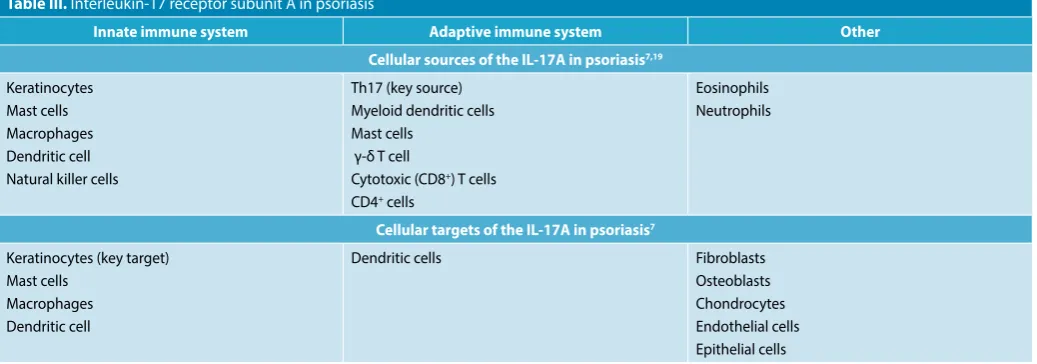
(Table III). The IL-23 activates T cells and expresses the CD4+
cells called T helper 17 (Th17) which regulate the inflammatory processes and the responses of the autoimmune cascade through its main effector cytokine, IL-17A.6,14 Other chemokines produced
by this pathway include IL-17F, IL-22 and TNF-α. The IL-17A together with these other cytokines stimulate the keratinocytes, NK cells, macrophages and dendritic cells within the innate immune system to further produce chemokines – the cycle is thus reinitiated for the formation of more psoriatic lesions.7,19
This recycling (positive feedback mechanism) results in excess chemokine activation and synthesis which constitute the hallmark of pathogenesis of psoriasis and other forms of autoimmune and inflammatory diseases.15,19
Gene expression studies conducted worldwide have consistently demonstrated IL-17 pathway upregulation in psoriasis.19 Treatment
modalities that target the inhibition of this pathway are therefore a focus for clinical research and development.3,7,14
Severity of psoriasis
The disease is characterised as mild, moderate, or severe according to the size of body surface area (BSA) affected, the severity of
Figure 2. Immune-mediated pathways of psoriasis3,6
Table III. Interleukin-17 receptor subunit A in psoriasis
Innate immune system Adaptive immune system Other Cellular sources of the IL-17A in psoriasis7,19
Keratinocytes Mast cells Macrophages Dendritic cell Natural killer cells
Th17 (key source) Myeloid dendritic cells Mast cells
γ-δ T cell
Cytotoxic (CD8+) T cells
CD4+ cells
Eosinophils Neutrophils
Cellular targets of the IL-17A in psoriasis7
Keratinocytes (key target) Mast cells
Macrophages Dendritic cell
Dendritic cells Fibroblasts
redness, thickness, and scaling of the skin as well as the emotional impact of the disease on a patient’s life.
Another tool used to measure the severity and extent of psoriasis is known as a PASI score (Psoriasis Area and Severity Index). This tool scores four body regions (head and neck, upper extremities, trunk, lower extremities) according to the intensity of redness, thickness and scaling, and percentage BSA affected by psoriasis.21
Management of psoriasis
There is no cure for psoriasis and treatment is based on controlling the symptoms, often using a combination of three treatment modalities: topical and systemic therapies as well as phototherapy. Treatment is lifelong and aimed at remission. It is very important to identify co-morbidities e.g. cardiovascular, metabolic and psychosocial conditions as soon as possible and to initiate effective and appropriate management.
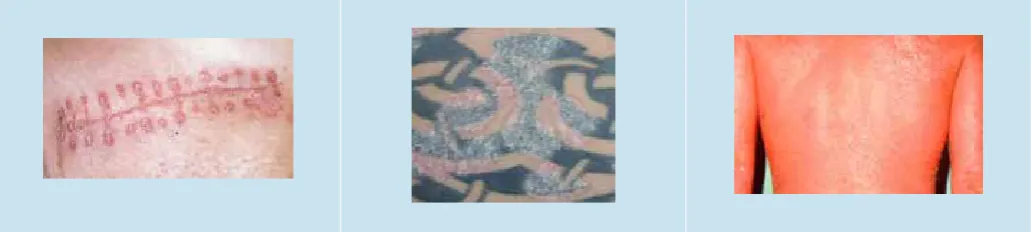
Patients with psoriasis should avoid injury to the skin, including sunburn and other physical trauma, as these areas can develop psoriasis (See Figure 4).
Daily sun exposure, sea bathing, topical moisturisers, and relaxation are some of the simplest treatments for psoriasis. Oatmeal baths may relieve pruritus. Topical therapy is applied to
treat mild psoriasis and stepped up to include phototherapy if the response is insufficient. Various UV light treatments are used, most commonly UVB, although PUVA (psoralen + UVB) is still used. Psoralen is a photosensitiser that is ingested prior to light exposure.13 For facial and intertriginous areas, topical tacrolimus
may be used as an alternative or as a corticosteroid-sparing agent.22
The WHO Model List of Essential Medicines, except for corticosteroid topical agents, also includes medicines affecting skin differentiation and proliferation in the core list: 5% coal tar solution, 5% fluorouracil ointment, 5% salicylic acid solution and 5% to 10% urea cream or ointment.4
Moderate to severe psoriasis requires systemic therapy such as retinoids, methotrexate, cyclosporine, or biologic immune modifying agents.22,23
Table V. Biologic agents used in treatment of psoriasis6,22
Biologic agents##
Anti-TNF agents Anti-IL-12/23 antibody Anti-IL-17 antibody
Adalimumab
Ustekinumab^ Secukinumab&
Etanercept Infliximab
##Except for etanercept, which is a fusion protein, the approved biologics are
monoclonal antibodies.
^Only four injections per year during long-term treatment. &Patients often achieve complete clearance of skin symptoms.
Figure 3. Severity of psoriasis20 (The surface of the hand is equal to 1%
BSA.)
Injured or traumatised areas of the skin can develop psoriasis. This is known as Koebner’s phenomenon or Koebnerisation and prevails in one out of four psoriatic patients. Plaques appear after approximately 10–20 days from injury, but can take as long as two years. Psoriatic patients presenting with Koebnerisation are 30% more likely to develop psoriatic arthritis after injuring a bone or joint.18
Figure 4. Koebner’s phenomenon6,11
Table IV. Treatment options for psoriasis4, 23
Topical therapies (ointments, creams, lotions, gels applied to the skin)
Vitamin D3 analogues% (calcitriol; calcipotriene)
Corticosteroids*$: 0.1% betamethasone valerate ;
1% hydrocortisone acetate Anthralin/dithranol Topical retinoids (tazarotene)
Phototherapy (UV-light therapy)
Systemic therapies** (tablets, injections/ infusions)
Methotrexate Cyclosporine
Systemic retinoids (acitretin#)
Biological agents
%Safest long-term topical treatment.
*Systemic corticosteroids are generally ineffective, and can significantly exacerbate the disease upon withdrawal.
$Selection must be adjusted for the specific skin area to be treated. #It has a 3-year pregnancy prohibition after its use.
Points to ponder
• The oral mucosa and tongue may be involved occasionally. The ring-like patches evolve and spread, changing on a daily basis. When the tongue is involved it is termed a “geographic tongue” as it may resemble a map.2
• Smokers are twice as likely to develop psoriasis when compared to non-smokers. Heavy tobacco smoking has shown psoriasis disease progression.10
• Increased mortality as a result of co-morbid cardiovascular disease has been documented in patients with severe psoriasis.6
Conclusion
Psoriasis as a disease is more than “skin deep” and has important systemic manifestations. The disease can be highly variable in morphology, distribution, severity and course. The different forms of psoriasis can be localised or widespread and disabling. It is mainly a dendritic cell and T-cell-mediated disease with complex feedback loops from antigen-presenting cells, neutrophilic granulocytes, keratinocytes, vascular endothelial cells, and the cutaneous nervous system.⁶ Apart from being a painful, debilitating disease with visible physical symptoms, it is also associated with a multitude of psychological impairments.4 It is important that both the public and healthcare professionals alike increase awareness of and their knowledge about psoriasis and to
educate the community that psoriasis is not a contagious disease, and adherence to treatment is of utmost importance.
References
1. Gaspari AA. 2006. Innate and adaptive immunity and the pathophysiology of psoriasis. J Am Acad Dermatol. 54:S67-80.
2. Langley RGB, Krueger GG, Griffiths CEM. 2005. Psoriasis: epidemiology, clinical features, and quality of life. Ann Rheum Dis, 64(Suppl II). Fromat: https://www.ncbi.nlm.nih.gov/ pmc/articles/PMC1766861/ (Accessed 6 September 2017).
3. Alwan W, Nestle FO. 2015. Pathogenesis and treatment of psoriasis: exploiting pathophysi-ological pathways for precision medicine. Clin Exp Rheumatol, 33(Suppl. 93):S2-S6. 4. WHO. 2016. Psoriasis a global burden, from apps.who.int/iris/bitstre
am/10665/204417/1/9789241565189_eng.pdf (Accessed 31 August 2017). 5. DiPiro JT, Talbert RL, Yee GC, et al. DiPiro J.T., Talbert R.L., Yee G.C., Matzke G.R., Wells B.G.,
Posey L Eds. Joseph T. DiPiro, et al.2014. Pharmacotherapy: A pathophysiologic ap-proach, 9th Ed. New York, NY: McGraw-Hill.
6. Boehncke WH, Schön MP. 2015. Psoriasis. Lancet, 386:983–94, from http://dx.doi. org/10.1016/S0140-6736(14)61909-7 (Accessed 7 September 2017).
7. Lynde CW, Poulin Y, Vender R, et al. 2014. Interleukin 17A: Toward a new understanding of psoriasis pathogenesis. American Academy of Dermatology, Inc, from http://dx.doi. org/10.1016/j.jaad.2013.12.036 (Accessed 7 September 2017).
8. Mrowietz U, Steinz K, Gerdes S. 2014. Psoriasis: To treat or to manage? Exp Dermatol, 23(10):705-9.
9. Alexis FA, Blackcloud P. 2014. Psoriasis in skin of color: epidemiology, genetics, clinical presentation, and treatment nuances. J Clin Aesthet Dermatol, 7(11):16-24, from https:// www.ncbi.nlm.nih.gov/pmc/articles/PMC4255694/pdf/jcad_7_11_16.pdf (Accessed 6 September 2017).
10. Flystrom I. 2012. Different aspects of psoriasis etiology and treatment. University of Goth-enburg, Sweden.
11. The South African Psoriasis Association, from http://www.psoriasis.org.za/#. (Accessed 9 September 2017).
12. Shiel WC. 2017. Psoriatic arthritis, from http://www.medicinenet.com/psoriatic_arthritis/ article.htm (Accessed 10 September 2017).
13. Raboobee N, Aboobaker J, Jordaan HF, et al. 2010. Guideline on the management of pso-riasis in South Africa. SAMJ, 100(4).
14. Fitch E, Harper E, Skorcheva I, et al. 2007. Pathophysiology of psoriasis: recent advances on IL-23 and Th17 cytokines. Current Rheumatology Reports, 9:461-467.
15. Nedoszytko B, Sokołowska-Wojdyło M, Ruckemann-Dziurdzińska K, et al. 2014. Chemokines and cytokines network in the pathogenesis of the inflammatory skin diseas-es: atopic dermatitis, psoriasis and skin mastocytosis. Postep Derm Alergol; XXXI, 2:84–91. DOI: 10.5114/pdia.2014.40920.
16. Bata-Csörgö Z, Szell M. 2012. The psoriatic keratinocytes. Expert Rev Dermatol, 7(5):475-481, from http://www.medscape.com/viewarticle/775775 (Accessed 9 September 2017). 17. Pastore S, Mascia F, Mariani V, Girolomoni G. 2006. Keratinocytes in skin inflammation.,
from https://www.researchgate.net/publication/233628678_Keratinocytes_in_skin_in-flammation (Accessed 9 September 2017).
18. Anonymous. n.d. What is the koebner phenomenon?, from http://www.webmd.com/skin-problems-and-treatments/psoriasis/koebner-phenomenon#1 (Accessed 9 September 2017).]
19. Martin DA, Towne JE, Kricorian G, et al. 2013. The emerging role of IL-17 in the pathogen-esis of psoriasis: preclinical and clinical findings. Journal of Investigative Dermatology, 133,17-26; doi:10.1038/jid.2012.194; published online 7 June 2012.
20. Anonymous. n.d. Psoriasis severity, from https://www.psoriasis.com/psoriasis-severity. (Ac-cessed 8 September 2017).
21. Oakley A. n.d. PASI score, from https://www.dermnetnz.org/topics/pasi-score/. (Accessed 10 September 2017).
22. Feldman SR. 2017. Treatment of psoriasis, from https://www.uptodate.com/contents/ treatment-of-psoriasis (Accessed 8 September 2017).
23. Habashy J, Robles DT. 2017. Psoriasis treatment and management, from http://emedicine. medscape.com/article/1943419-treatment (Accessed on 10 September 2017). A resolution on psoriasis