THE COMPLEXITIES OF KNOWLEDGE, PRACTICE, AND BELIEFS
by Janette Smith
A dissertation
submitted in partial fulfillment of the requirements for the degree of
Doctor of Education in Curriculum and Instruction Boise State University
© 2015 Janette Smith
DEFENSE COMMITTEE AND FINAL READING APPROVALS
of the dissertation submitted by
Janette Smith
Dissertation Title: Transformative Professional Development: Unraveling the Complexities of Knowledge, Practice, and Beliefs
Date of Final Oral Examination: 14 July 2015
The following individuals read and discussed the dissertation submitted by student Janette Smith, and they evaluated her presentation and response to questions during the final oral examination. They found that the student passed the final oral examination.
Keith W. Thiede, Ph.D. Co-Chair, Supervisory Committee Michele Carney, Ph.D. Co-Chair, Supervisory Committee Joe Champion, Ph.D. Member, Supervisory Committee J. Eian Harm, Ed.D. Member, Supervisory Committee
iv DEDICATION
v
ACKNOWLEDGEMENTS
This dissertation would not have been possible without the support of many people. First and foremost, I’d like to thank my family, especially my husband Dave for putting up with me throughout this process. His continued words of encouragement and his extra help with family affairs have meant so much to me. I’d like to also
acknowledge my amazing cohort of fellow doctoral students. Riding this roller coaster together has enhanced my experience at Boise State University.
I would also like to thank my committee for their time, commitment, and support for this dissertation. Specifically, I want to thank Dr. Keith Thiede for answering a plethora of questions in such a timely fashion. I’d also like to acknowledge the support of Dr. Louis Nadelson for his continued long-distance mentoring efforts.
Next, I would like to thank several individuals for their financial support for this research. Kelly Wood, a dear family friend, generously helped fund the materials kits for teachers. I also had the support of various other close friends to help fund these kits. In addition, I received extra financial support from the Bieter Family through the Pat and Eloise Bieter Fellowship, which was much appreciated.
vi ABSTRACT
This study investigated the impact of a comprehensive professional development project focused on inquiry-based integrated lessons to improve the quality of science instruction for elementary teachers. Eleven teachers from three Northwest school
districts participated in this quasi-experimental design study. A focus of the study was to investigate the intricate relationship between four components of a professional
development model: the professional development intervention, teacher practice, student outcomes, and teachers’ self-efficacy for science instruction. Five different measures were used both before and after the intervention: The Local Systemic Change
vii
TABLE OF CONTENTS
DEDICATION ... iv
ACKNOWLEDGEMENTS ... v
ABSTRACT ... vi
LIST OF TABLES ... xii
LIST OF FIGURES ... xiii
LIST OF ABBREVIATIONS ... xiv
CHAPTER ONE: INTRODUCTION ... 1
Background of the Study ... 2
Purpose of the Study ... 3
Research Questions ... 3
Theoretical Framework ... 4
Nature of the Study ... 5
Description of Variables ... 5
Independent Variable ... 5
Dependent Variables ... 6
Definitions... 9
Assumptions ... 10
Delimitations ... 11
viii
Significance... 12
Summary ... 13
CHAPTER TWO: LITERATURE REVIEW ... 15
Introduction ... 15
Science Education Reform: A Historical Perspective ... 16
Theoretical Framework ... 19
Professional Development ... 21
Defining Effective Professional Development ... 21
Components of Professional Development ... 22
Evidence of Effective Elements of Professional Development ... 24
Elements of Effective Professional Development ... 26
Changing Teacher Practice ... 36
Pedagogical Shift in Science Instruction ... 36
Recommended Practices for Teaching Science ... 37
Inquiry Learning ... 37
Authentic Science Practices ... 41
Integrated STEM ... 42
Change in Student Outcomes ... 47
Student Achievement ... 48
Student Engagement ... 49
Teachers’ Beliefs about Practice and Self Efficacy Beliefs ... 52
Teachers’ Beliefs about Practice ... 52
ix
Summary ... 59
CHAPTER 3: METHODOLOGY ... 62
Introduction ... 62
Research Design and Rationale ... 62
Methodology ... 64
Participants ... 64
Description of Treatment ... 65
Instrumentation and Operationalization of Measures ... 69
LSC Observation Protocol ... 69
Project 2061 Assessments ... 70
Science Teachers’ Efficacy Beliefs Instrument ... 71
Project 2061 Assessment for Students ... 72
Engagement Survey ... 72
Administration of Measures ... 73
Data Analysis Plan ... 74
Qualitative Analysis ... 75
Threats to Validity ... 78
Internal Validity ... 78
External Validity ... 78
Ethical Procedures ... 79
Summary ... 79
CHAPTER FOUR: RESULTS AND ANALYSIS ... 80
x
Professional Development ... 80
Content Knowledge of Teachers ... 80
Teacher Practice ... 81
Student Outcomes ... 87
Content Knowledge of Students ... 87
Student Engagement ... 90
Self-Efficacy and Beliefs ... 93
Relationships between Components ... 96
Lesson Quality and Student Achievement ... 97
Teacher Self-Efficacy and Lesson Quality ... 97
Teachers’ Self-Efficacy and Student Content ... 97
Summary ... 99
CHAPTER 5: CONCLUSION ... 100
Introduction ... 100
Summary of Findings ... 100
Conclusions ... 104
Elements of Effective Professional Development ... 104
Complex Relationships between Professional Development Components .. 107
Limitations ... 110
Participants ... 110
Reliability of Measures ... 110
Directions for Future Research ... 110
xi
REFERENCES ... 114
APPENDIX A ... 124
Participant Recruitment Process ... 124
APPENDIX B ... 128
Sample Lesson Plans and Activities from Professional Development Intervention . 128 APPENDIX C ... 139
LSC Observation Protocol ... 139
APPENDIX D ... 144
Student Scores Shared with Teachers and Their Explanations ... 144
APPENDIX E ... 148
IRB Approval and Supporting Consent Forms ... 148
APPENDIX F... 155
Sample Content Misconceptions Test Items ... 155
APPENDIX G ... 157
Teacher Reflection Prompts ... 157
APPENDIX H ... 161
Science Teaching Efficacy Beliefs Instrument (STEBI) ... 161
APPENDIX I ... 163
xii
LIST OF TABLES
Table 1 Participants ... 64
Table 2 Overview of Professional Development Activities ... 66
Table 3 Teacher Scores on Science Content Misconceptions Test ... 81
Table 4 LSC Protocol Scores ... 83
Table 5 Comparisons of Overall Change on Observation Protocol Scores (without Tammy) ... 84
Table 6 Teacher Responses to reflection prompts regarding practice ... 85
Table 7 Student Scores on Science Content Misconceptions Test ... 87
Table 8 Student Average Content Misconception Gains by Teacher ... 90
Table 9 Teacher Responses to Reflections on Student Engagement ... 91
Table 10 Teacher gains in the PSTE portion of the STEBI ... 94
Table 11 Treatment Group Responses to Reflection Prompts Regarding Confidence ... 95
xiii
LIST OF FIGURES
Figure 1. Guskey’s Theoretical Framework (Guskey, 2002) ... 4
Figure 2. Guskey’s Theoretical Framework (Guskey, 2002) ... 20
Figure 3. Professional Development ... 21
Figure 4. Shulman’s Categories of Teacher Knowledge (Shulman, 1987, p. 8) ... 27
Figure 5. Changing teacher practice ... 36
Figure 6. 8 Practices of the Next Generation Science Standards ... 42
Figure 7. Categories of Integration (Hurley, 2001) ... 44
Figure 8. Changing Student Outcomes... 47
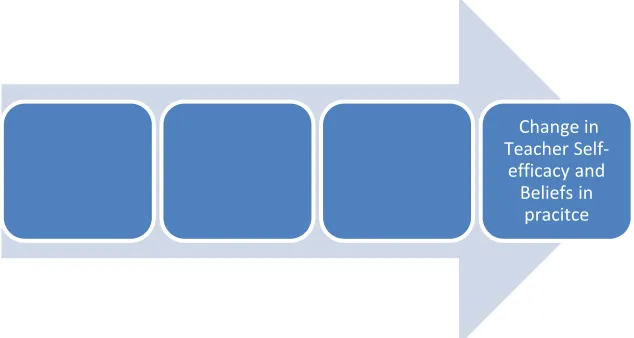
Figure 9. Changing Teacher Self-Efficacy and Beliefs in Practice ... 52
Figure 10. Ajzen’s Theory of Planned Behavior ... 53
Figure 11. Prompts Provided to Teachers for Reflective Journals ... 76
Figure 12. Research Design Graphic ... 77
Figure 13. Themes from reflections on practice over time ... 86
Figure 14. Student scores on Content Misconception Test (dashed=treatment group) ... 89
Figure 15. Themes in teacher reflection regarding student engagement over time ... 92
Figure 16. Themes in reflection regarding efficacy for teaching science over time ... 96
Figure 17. Comparison of changes in Science Teaching Outcome Expectancy portion of the STEBI (Group 1= treatment; Group 2= control) ... 99
xiv
LIST OF ABBREVIATIONS
PD Professional Development
STEM Science, Technology, Engineering, Mathematics
LSC Local Systemic Change
AAAS American Association for the Advancement of Science STEBI Science Teaching Efficacy Beliefs Instrument
mATSI Modified Attitudes Toward Science Inventory NGSS Next Generation Science Standards
NSF National Science Foundation
TIMSS Trends in International Math and Science Study
NCLB No Child Left Behind
RTOP Reformed Teaching Observation Protocol
SCK Science Content Knowledge
NSTA National Science Teachers Association NSES National Science Education Standards
TPB Theory of Planned Behavior
PSTE Personal Science Teaching Efficacy STOE Science Teaching Outcome Expectancy
iSTEM Integrated Science, Technology, Engineering, and Math
CHAPTER ONE: INTRODUCTION
The decline of science instruction in elementary schools is a complicated
phenomenon. Research indicates that a variety of factors have influenced the departure of science from the elementary school day (Blank, 2013; Dorph et al., 2011). Time to teach science has been one of the leading challenges for teachers in recent years due to the pressure to perform on high stakes tests in language arts and mathematics. Coupled with the introduction of Common Core curriculum in both areas, elementary teachers are feeling overwhelmed. Another issue influencing the lack of science teaching in
elementary schools includes a lack of content knowledge, which directly influences confidence (Appleton, 2003; Yager, 2000).
Over the past few decades, numerous efforts have been attempted to ameliorate the problem of science instruction in elementary schools (National Research Council, 1996; American Assciation for the Advancement of Science , 1995). Consensus in the field of teacher education indicates that quality professional development may be one possible solution. Defining quality professional development is an area of education that has received much attention in recent years (Darling-Hammond, Wei, Andree,
an attention to how students learn are commonly referenced as quality indicators of professional development programs (Garet, Porter, Desimone, Birman, & Yoon, 2001; Birman, Desimone, Porter, & Garet, 2000; Desimone, Porter, Garet, Yoon, & Birman, 2002; Diaconu, Radigan, Suskavcevic, & Nichol, 2012; Ingvarson et al., 2005).
Designing professional development with these elements in mind should be a priority for professional development providers.
Background of the Study
There exists a plethora of research identifying elements of effective professional development (Darling-Hammond et al., 2009; Fishman et al., 2003; Garet et al., 2001; Ingvarson et al., 2005; Penuel et al., 2007; Sandholtz & Ringstaff, 2013). The majority of this research has been large scale and has typically utilized self-report data from teachers. In these studies, teachers report common elements that contribute to perceived successful professional development experiences.
models. In this study, these complex relationships are investigated while keeping the elements of effective professional development in mind.
In addition, this study attempts to use observational data instead of self-report data to measure science teaching practices. Concerning science practices specifically, Penuel et al. (2007) suggest that teachers of science are highly aware of the push for inquiry practices, and this in turn could impact their self-reporting of practices used to teach science.
Purpose of the Study
The purpose of this study was to examine the impact of a high quality
professional development project focused on science instruction for elementary teachers. After researching quality PD models, a comprehensive professional development unit was developed incorporating essential elements of effective PD. Elements considered in the creation of the project included a focus on content knowledge, active participation, cohesion, duration, collaboration, and follow-up. Through this comprehensive
professional development opportunity, teachers engaged in experiences designed to help improve the quality of their science instruction by increasing content knowledge,
changing practice, and changing self-efficacy for science instruction. In addition, by trying out new practices, teachers experienced the effectiveness of these practices and will be more likely to adopt them permanently. The intricate relationships between these four essential components were also examined.
Research Questions The following questions were used to guide this study:
o improve the quality of elementary science lessons?
o increase science content knowledge of elementary teachers? o change teachers’ sense of self-efficacy for teaching science?
• Do the students of the teachers who participated in the professional development project
o show increased test scores over students of teachers who did not participate in professional development?
o show increased engagement in science lessons over students who did not participate in professional development?
Theoretical Framework
The theory guiding this study was developed by Guskey (2002). Guskey reports that the central goal of most professional development endeavors is to improve teacher
practice, and as a result, improve student achievement. Guskey argues that many
professional development opportunities lead to teachers trying out new practices in their
classrooms, but only temporarily. Guskey believes that lasting change in practice will
not occur unless teachers see a change in student outcomes. According to Guskey, once
this change is perceived, teachers’ attitudes and beliefs change, and the new practice is
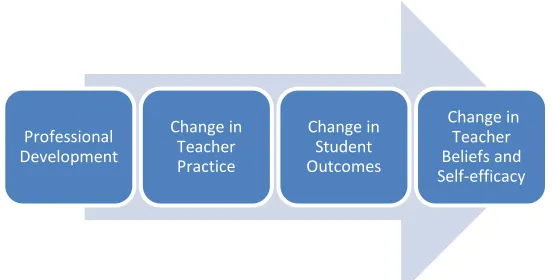
more likely to be permanently adopted (see Figure 1).
Figure 1. Guskey’s Theoretical Framework (Guskey, 2002) Professional
Development
Change in Teacher Practice
Change in Student Outcomes
Although the notion that a connection exists between teacher practice,
self-efficacy and student outcomes is not new, Guskey posits that the order of these
components is important. Unique to Guskey’s model is the idea that lasting change
seldom occurs in teacher practice unless teachers have evidence of its success through
student outcomes.
Nature of the Study
The selected design for this study was a mixed methods quasi-experimental
design. Teachers were randomly assigned to either the control or treatment group.
Student groups were determined based on the teacher to whom they were assigned. The
independent variable in this study was the professional development intervention. The
dependent variables include teacher content knowledge, teacher practice, student content
knowledge, student engagement, and teacher self-efficacy. Several measures were used
to assess each of these constructs both before and after the professional development.
These variables are described in detail in the following section.
Description of Variables Independent Variable
For this study, group (Treatment versus Control) was the independent variable, where the treatment group received professional development and the control group did not. Using research-based findings, six elements of effective professional development were included in the design of the intervention. Common elements of effective
A more detailed and comprehensive description of the professional development intervention can be found in Chapter 3.
Dependent Variables
Using a theoretical framework developed by Guskey (2002), the idea that
effective professional development can lead to a change in teachers’ practice is central to this study (see Figure 1). The constructs of content knowledge, teacher practice, student outcomes, and a change in teachers’ self-efficacy and beliefs will be examined using several measures that will be described in detail in Chapter 3. In this chapter,
descriptions of each of these constructs are detailed below. Content Knowledge
The construct of content knowledge was chosen as a focus for this study for several reasons. To begin, as reported in the literature, content knowledge influences teacher practice (Desimone, 2009). This is especially true for elementary science
teacher to effectively teach someone else about specific content (Shulman, 1987). Although pedagogical content knowledge will not be measured directly in this study, there was a strong focus on PCK for science instruction during the professional development intervention.
Lesson Quality
For the purposes of this study, four areas contribute to a high quality lesson: lesson design, lesson implementation, content knowledge, and classroom culture. Effective lesson design for science instruction includes providing opportunities for students to investigate or explore concepts, ideally through hands-on experiences (Appleton, 2003). A well designed lesson is organized, incorporates opportunities for students to work collaboratively, makes good use of resources, accounts for different learning styles, allows time for sense-making, and includes some sort of wrap up or closure (Banilower et al., 2013). Lesson implementation refers to teacher confidence, pacing, management skills, questioning strategies, and the ability to adjust to student needs (Banilower et al., 2013). Content knowledge, as discussed previously, refers to both the science content knowledge and the pedagogical content knowledge involved in teaching science. Within this context, teachers displaying high content knowledge should also be able to make connections to other content areas, as well as engage students
Student Outcomes
Student outcomes can take different forms. Measurable outcomes are common in the educational arena and include student achievement measures. Another form of student outcome that is often overlooked is the affective outcomes such as student engagement. Student engagement can play a pivotal role in a child’s success in school (Klem & Connell, 2004).
Self-Efficacy
Definitions
Content Knowledge: Within the educational community, this definition has become complicated as several specific components of content knowledge have been identified. For the purposed of this study, the following two definitions will be used:
Science Content Knowledge: Knowledge of science subject matter. Pedagogical Content Knowledge: Content knowledge specific to the art of teaching that enables a teacher to effectively teach someone else about specific content (Shulman, 1987).
Active Participation: The involvement of teachers in planning, discussion and practice during professional development (Garet et al., 2001).
Collaboration: The process of working within a group to achieve a common goal. Duration: Both the number of contact hours and the time span that the
professional development covers (Desimone, 2009; Garet et al., 2001).
Cohesiveness: How well teachers perceive that the professional development aligns their goals and other external factors such as standards and testing (Penuel et al., 2007).
Follow Up: The ongoing support teachers receive after the professional development experience (Guskey, 2002).
Self-Efficacy: Beliefs in one’s own abilities to execute and achieve a specific goal (Bandura, 1997).
Inquiry: One of the most widely accepted definitions of inquiry is from
the National Science Education Standards (NSES) (National Research Council, 1996). The NSES defines inquiry as follows: “Inquiry is a multifaceted activity that involves making observations; posing questions; examining books and other sources of
information to see what is already known; planning investigations; reviewing what is known in light of experimental evidence; using tools to gather, analyze, and interpret data; proposing answers, explanations, and predictions; and communicating results. Inquiry requires identifications of assumptions, use of critical and logical thinking, and consideration of alternative explanations” (National Research Council, 1996).
Authentic Science: Authentic science is commonly conceived as the practices real scientists engage in to answer specific science questions.
Integrated STEM: An approach to teaching and learning that combines the content and skills of science, technology, engineering and math. Several types of integration are indicated in the literature.
Assumptions
teachers considered to be their best lessons. This assumption is important in order to support the need for only one video of each teacher both before and after the intervention.
Delimitations
Several delimitations are present in this study. First, the duration and context may narrow the generalizability of findings specifically to 5th grade teachers teaching a
specific unit. However the choice to narrow the focus stems from the research supporting effective professional development elements of cohesion and collective participation. Professional development that is focused and meaningful to teachers is more likely to affect classroom instruction. By giving teachers specific activities, resources, and practices to use in classrooms that align to standards and curriculum, teachers will be encouraged to implement the new practices in their classrooms.
Allowing teachers opportunities to collaborate with teachers of the same grade level and potentially the same schools will give teachers a sense of support while they implement new practices in their classrooms.
Limitations
There are two main limitations to this study. First, the participant number was limited to 11. This was a direct limitation on the external validity of the study. However, due to the comprehensive nature of the study, the data collected may serve as evidence to help design similar larger scale studies.
Another limitation was the use of video to record science lessons. Video observations, although valuable, do not always capture a complete picture of classroom happenings. Camera angles, obstruction of camera view are just a few of several
limitations to filming teachers. Due to the large number of videos needed for this study, this was the only feasible way to conduct the observations.
Significance
Science instruction in elementary schools is limited due to a conglomerate of issues. Central to this problem is the lack of preparation of elementary teachers to teach science. To ameliorate this problem, there is a desperate need to provide elementary teachers with content specific professional development. Although the literature is replete with studies identifying the elements of effective professional development, studies that include the complex intertwining of all components are limited. This study combines the identified effective elements of professional development with all four components of highly regarded professional development frameworks. Specifically, this study investigates the impacts professional development can have on teachers’ content knowledge, practice, self-efficacy, as well as student outcomes.
national push to increase STEM education in American classrooms. The Next Generation Science Standards (NGSS) have compiled a plethora of evidence that illuminates the urgency to improve STEM education in American classrooms (NGSS Lead States, 2013). Evidence such as a reduction in our economic edge in the
international arena, including a shrinking of U.S. patents, and a diminishing of high-tech exports due to competition with such countries as China are highlighted. Other evidence includes the widening of the student achievement gap between U.S. students and other countries; specifically in the areas of science and math. According to the Program for International Assessment (PISA) the U.S. ranked 23rd in science and 30th in math on the 2012 test (Kelly, Nord, Jenkins, Chan, & Kastberg, 2013). In addition, careers requiring more science and math education have grown exponentially, and companies are having difficulty filling positions with skilled workers. The United States is losing its edge and improving STEM education is viewed as the answer to solving this dilemma. Through research, the most effective approaches to improving teacher practice can be effectively identified and duplicated in larger scale projects to make the most impact.
Summary
CHAPTER TWO: LITERATURE REVIEW Introduction
The decline of science instruction in elementary schools is a complicated
phenomenon. Research indicates that a variety of factors have influenced the departure of science from the elementary school day (Blank, 2013; Dorph et al., 2011). There are multiple influences on elementary teachers’ engagement in science instruction.
According to the National Survey of Science and Mathematics Education only 39% of elementary teachers surveyed felt well prepared to teach science, which contrasts starkly to the 81% of elementary teachers surveyed who felt well prepared to teach language arts, and 77% of elementary teachers surveyed who felt well prepared to teach math
(Banilower et al., 2013). Thus, levels of preparation to teach science and the associated lack of confidence are substantial factors that are likely to influence how elementary teachers engage in science instruction.
Time to teach science has been another challenge for teachers in recent years due to the pressure to perform on high stakes tests in language arts and mathematics.
Coupled with the introduction of common core curriculum in both of these areas,
content knowledge, which limits their motivation and engagement in teaching science. Appleton (2003) also found that those teachers who commonly use hands-on activities for teaching science, borrowed activities that worked from their teaching of other subjects. Thus, there is support for the notion that when teachers engage in science instruction, they tend to draw instructional activities from experience, which may or may not be aligned with the instruction needed to address best teaching practices.
Science Education Reform: A Historical Perspective
In order to understand the current trajectory of science education reform, it’s important to consider the most recent history of science education reform efforts. The following section details the science reform initiatives of the past few decades, and helps set the stage for the current efforts to improve science education in American classrooms.
The Age of Crisis in science education came to a crescendo in 1983 with the publication of the infamous report, A Nation at Risk ( United States National Commission on Excellence in Education , 1983). Published by the National Commission on
contribute any tangible solutions to the asserted problems. In response to this document, Richard Elmore (2004) noted, “…the report is clearer on diagnosis with no prescription” (Elmore, 2004; p. 213). A Nation at Risk spawned a renewed energy to improve science education in America. In 1985, Project 2061 was created by the American Association for the Advancement of Science (American Association for the Advancement of Science, 1995). The goal of this project was, and still is, to increase literacy in math, science, and technology. Project 2061 receives funding from the NSF, NOAA, NASA, and the U.S. Department of Education. This project develops curriculum materials, assessments, as well as offers professional development publications for teachers. Since its inception, Project 2061 has published many notable publications including Science for All Americans in 1989, and Benchmarks for Science Literacy in 1993 (American Assoiciation for the Advancement of Science, 1995).
Undoubtedly one of the most comprehensive science education reforms of the late 20th century was the creation of the National Science Education Standards in 1996. Published by the National Research Council, these standards emphasized inquiry and hands on learning experiences for students (National Research Council, 1996). Around the same time, the first Trends in International Math and Science Study data were
published, revealing that the United States was lagging behind other countries in the areas of science and math (Beaton, 1996). As a direct response, the NSB Task force on Math and Science Achievement, often called the TIMSS Task force, was established (Schmidt & McKnight, 1995).
otherwise known as No Child Left Behind (No Child Left Behind Act of 2001, 2002). With a renewed focus on testing, specifically in math and language, science was moved to the back burner in most American classrooms (DeJarnette, 2012). The testing frenzy exhorted by pressures of making adequate yearly progress for NCLB steered teachers away from best practices in order to get desired results on standardized tests (Elmore, 2004). The performance-based accountability era was born.
Just as educators were catching their collective breath from the damaging effects of NCLB, a new report was published in 2007 by the National Academy of Sciences entitled, Rising above the Gathering Storm (Augustine, 2005). This report elicited an urgent call to improve science and technology education in order to compete in our increasingly global world. The four recommendations of this most recent report include increasing the American talent pool by improving math and science education,
strengthening research, developing, recruiting and retaining top students, scientists and engineers, and positioning the United States at the top in world innovation.
international pack in science and math achievement by 2024. This year alone, these efforts have raised over 700 million dollars from private and corporate donations.
There have been many more initiatives, reports, recommendations and reform efforts than those detailed above. Reviewing this list does instill the sense of science education cycling in and out of favor throughout history. One could also argue that much of the policy and political involvement in reform in general has left our students in no better shape than before. This “policy churn” (Elmore, 2004, p.218), has been largely ineffective. It’s important to consider the missing pieces in the science reform effort. One notable absence is the investment in the training of teachers through quality professional development. In the most recent report from New Horizon Research, a report that compiles teacher survey data on math and science, only 59% of elementary teachers reported participating in some sort of professional development for science in the last 3 years (Banilower et al., 2013). Compared to middle and high school teachers where 82% and 85% reported this type of participation, there appears to be a need to increase these opportunities for elementary teachers.
Theoretical Framework
The ultimate goal of most educational reform efforts is to enhance performance and learning experiences of students through improved practice of teachers. Research indicates that this change is a complicated process (Desimone, 2009; Guskey, 2002). Classroom experiences for students are influenced by the practices teachers enact in the classroom. Research suggests that changing teacher practice involves an array of
instruction. Considerations of these components are essential for development of successful professional development opportunities for educators. Several theoretical frameworks have been developed regarding professional development (Desimone, 2009; Guskey, 2002; Loucks-Horsley & Matsumoto, 1999). The chosen theory for this study was developed by Guskey (Guskey, 2002). Guskey reports that the central goal of most professional development endeavors is to improve teacher practice, and as a result,
improve student achievement. Guskey argues that many professional development
opportunities lead to teachers trying out new practices in their classrooms, but only
temporarily. Guskey believes that lasting change in practice will not occur unless
teachers see a change in student learning outcomes. According to Guskey, once this
change is perceived, teachers attitudes and beliefs change, and the new practice is more
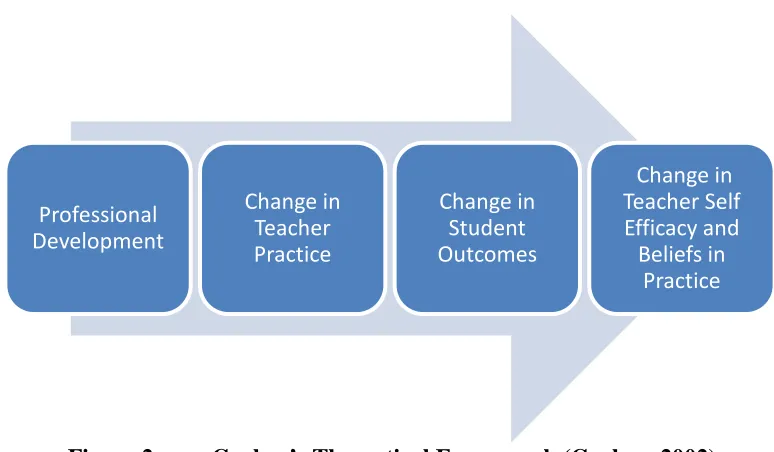
likely to be permanently adopted (see Figure 2).
Figure 2. Guskey’s Theoretical Framework (Guskey, 2002)
Guskey’s theory posits that lasting change seldom occurs in teacher practice
unless teachers have evidence of its success. The link between practice, student
Professional Development
Change in Teacher Practice
Change in Student Outcomes
Change in Teacher Self Efficacy and Beliefs in
achievement, and teacher self-efficacy is not a new idea. What is unique about this
model is the order of progression of these components. Guskey identifies three principles
for professional development. First, recognize that change is difficult and takes time.
Next, teachers need feedback on their students’ learning. Finally, professional
development should not end after the last workshop; teachers need follow up and
continued support while they adjust to changing practice.
The organization of this literature review follows the order of Guskey’s
Theoretical Framework, beginning with professional development, moving to teacher
practice, followed by student outcomes, and finally self-efficacy beliefs.
Professional Development
Figure 3. Professional Development
Defining Effective Professional Development
Consensus in the field of teacher education indicates that quality professional development may be the answer to improving science instruction in elementary classrooms (Birman et al., 2000; Borko, 2004). Defining quality professional
development is an area of education that has received much attention in recent years. The logical goal of successful professional development for teachers is to improve practice in
Professional
order to positively impact student achievement (Guskey, 2002; Penuel et al., 2007). There is a common conception in the educational community that changing practice of teachers is a complicated endeavor (Borko, 2004; Garet et al., 2001). Several models of the professional development process indicate that in order to change practice in teachers, several components must be considered, such as the professional development itself, teacher practice, and self-efficacy, and student outcomes. In the following section, an overview of literature related to the components of Guskey’s theoretical framework for professional development is detailed.
Components of Professional Development
teaching practices; whereas, professional development consisting of less than 39 hours, as well as demographic data including proportion of students on free and reduced lunch, school size, and male teachers were negatively related to inquiry based teaching practices (Supovitz & Turner, 2000).
Similarly, other studies have included different combinations of components from Guskey’s model. Several studies have examined the relationship between content knowledge focused professional development and a change in teacher practice. One such study reported the status of a longitudinal study investigating the impacts of a science professional development program for elementary teachers of rural schools in California
in year two of the study (Sandholtz & Ringstaff, 2013). Participants included 39
teachers from 16 different rural schools in northern California. Teachers participated in
over 100 contact hours per year including an intensive summer institute. Teachers took
tests of content knowledge at different points throughout the study. Analysis of results
indicated a significant increase of teacher content knowledge in both the first and second
years of the study. Changes in instructional practices were also noted in the results when
comparing year one to year two, but not in all categories. The categories where
significance was reported included utilizing real world contexts, using open-ended
questions, encouraging students to consider alternative explanations, and integrating
science with other subjects.
summer workshop for science instruction. Results indicate that self-efficacy was a significant predictor of student achievement. Interesting to note was the year wait time for administering the final self-efficacy survey, suggesting that time to change beliefs may be a significant factor to consider within these frameworks (Lumpe et al., 2012).
In addition to studies focused on just a few components of Guskey’s theoretical framework, a limited number of comprehensive studies have investigated all 4
components within one study. Ingvarson et al. (2005) surveyed 3250 teachers regarding their professional development experiences. Teachers were asked to rate the impact their experiences had on their knowledge, practice, sense of efficacy, and student learning. Findings from this study revealed key features of professional development that increase perceived effectiveness (Ingvarson et al., 2005). These features will be detailed in the following section.
Evidence of Effective Elements of Professional Development
of effective professional development. These included form, duration, and participation. In addition, the researchers identified three core features. These included content focus, active learning, and coherence. Results from the surveys also indicate that professional development opportunities that include these desirable features are limited. Reasons indicated include cost, as well as time for districts to carefully plan effective professional development. In another widely cited article published using the same study data, findings relating to the essential features were included (Garet et al., 2001). Research supporting each of the key features was included in this article. Notable findings included that for collective participation having teachers from the same school and/or grade level is advantageous. Paying significant attention to the ways that students learn was important to include in the content feature. Included in active learning were
opportunities to observe and be observed, opportunities to review student work, as well as presenting leading and writing. With regression analysis each of the six variables of effective professional development along with self-report data of teachers’ perceptions of knowledge and skill enhancement and change in practice were correlated. Knowledge and skill were significantly impacted by a focus on content knowledge, active learning, and coherence. Similarly, change in teacher practice was significantly impacted by contact hours, a focus on content knowledge, coherence, and enhanced knowledge and skill (Garet et al., 2001).
features of professional development: reform type, duration, and collective participation. They also identified three core features: active learning, coherence, and content focus. This study used self-report data from surveys administered at three different points in time: Fall 1997, spring 1998, and spring 1999. The goal was to evaluate the previously determined elements of professional development and their relationship to change in teacher practice over time. The sample was deliberately chosen to represent varying levels of schooling, with a total of 207 teachers’ surveys used for final analysis. Teachers answered surveys with a specific professional development activity in mind. Questions included aspects of the six elements described above. In the area of content, three effective practices were identified: use of technology, use of higher order instructional methods and use of alternative assessment practices. These three elements are the focus of the analysis. Each element was analyzed separately using an HLM design. The grand summary indicates that when teachers experience technology related professional
development, they are more likely to improve practice if they have collective participation as well as active learning. In addition, the results suggest that when professional development focuses on higher order thinking skills or alternative assessment methods, teachers benefit.
Elements of Effective Professional Development
et al., 2005). Other features such as follow-up are less commonly noted in the literature. In the following section, a summary of relevant literature for each of these features is detailed.
Content Knowledge
Content knowledge for education went through a dramatic overhaul in the mid 1980’s (Ball, Thames, & Phelps, 2008). Shulman (1987) introduced several new domains for content knowledge for teachers, most notably, pedagogical content
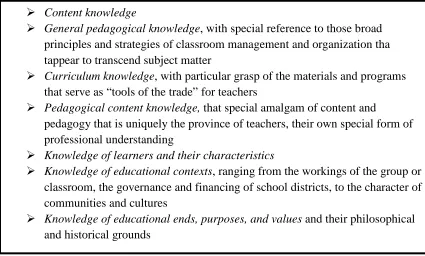
knowledge. This type of professional content knowledge specific to the art of teaching helped to lift the teaching profession to the same levels as other professions that require specific content knowledge (Ball et al., 2008). Shulman (1987) identified seven
categories of teacher knowledge (see Figure 4). He specifically describes pedagogical content knowledge as a “special amalgam of content and pedagogy” (Shulman, 1987, p. 8) that is unique to the teaching profession.
Figure 4. Shulman’s Categories of Teacher Knowledge (Shulman, 1987, p. 8)
Content knowledge
General pedagogical knowledge, with special reference to those broad principles and strategies of classroom management and organization tha tappear to transcend subject matter
Curriculum knowledge, with particular grasp of the materials and programs that serve as “tools of the trade” for teachers
Pedagogical content knowledge, that special amalgam of content and
pedagogy that is uniquely the province of teachers, their own special form of professional understanding
Knowledge of learners and their characteristics
Knowledge of educational contexts, ranging from the workings of the group or classroom, the governance and financing of school districts, to the character of communities and cultures
In more recent work in the area of content knowledge, Ball et al. (2008) have proposed an updated categorization of content knowledge that includes common content knowledge, specialized content knowledge, knowledge of content and students,
knowledge of content and teaching, and knowledge of curriculum. With the intricate components of content knowledge in mind, professional development providers need to address the various aspects of content knowledge, paying specific attention to
pedagogical content knowledge. Increasingly, content knowledge is becoming one of the most influential components of effective professional development, especially for
elementary science teachers (Boyle, While, & Boyle, 2004).
Due to the limited number of science content courses required in elementary teacher preparation programs, many elementary teachers feel unprepared to teach science (Blank, 2013). Coupled with the limited number of professional development
use of unit specific kits in professional development settings to boost the science content knowledge of teachers (Nowicki et al., 2013).
A unique challenge specific to elementary science content is the fluidity of topics as districts adjust curriculum from year to year. Elementary teachers are typically
responsible for three or four content topics in science, but it’s not uncommon for topics to fluctuate between grade levels requiring teachers to have a wide array of science content knowledge over a variety of topics (Nowicki et al., 2013). In addition, with the
pedagogical shift towards a more inquiry-based practice, the demand for a broader content knowledge base is more comprehensive due to the questioning nature of this practice (Fishman et al., 2003). Professional development programs that incorporate content knowledge as a component are more successful (Boyle et al., 2004). Several research findings indicate that what teachers learn in professional development is more important than how they learn it (Ingvarson et al., 2005). When content knowledge is a priority in professional development opportunities, elementary teachers are more likely to gain confidence and improve their practice (Blank, 2013).
development over the course of a school year. Data was collected via a variety of instruments. First, content knowledge data was collected through an online test
developed by Rice University professors. In addition, an observation protocol (RTOP) was used to collect data on the use of inquiry based practices. Data was also collected on leadership skills through a survey. Results indicated that participation in REMSL
significantly increased science content knowledge, and also significantly increased several leadership skills such as providing professional development to other teachers, attending science conferences, and applying for science grants.
knowledge of teachers were validated including years of experience. Interestingly, science courses prior to teaching were not a significant predictor of teachers’ science content knowledge. In regards to student achievement, reading scores were found to be good predictors of science achievement.
Another recent study linking increased content knowledge to student achievement investigated the impacts of three varying science professional development interventions on teachers’ content knowledge and student achievement (Heller, Daehler, Wong, Shinohara, & Miratrix, 2012). Although each of the three interventions had similar content components, the focuses of each varied, in the hopes of teasing out more specific effective approaches of increasing teachers’ science content knowledge, and thus
increasing student outcomes. Incorporating research supported features of effective professional development such as a focus on content knowledge, collaboration, duration, cohesion, and active participation, the researchers designed three specific professional development programs: Teaching Cases, where teachers studied written cases of classroom practice, Looking at Student Work, where teachers frequently analyzed their own students’ work, and Metacognitive Analysis, where teachers focused on their own teaching through reflection. All three interventions focused on a specific 4th grade
up year. Likewise, students of teachers in the Looking at Student Work group were the only students to increase their written justifications in the follow up year. Findings of this study suggest that professional development that integrates content learning with analysis of student work as well as reflective practice can significantly impact teachers’ science content knowledge as well as increase student’s science content knowledge (Heller et al., 2012).
Active Participation
Another feature of effective professional development consistently identified in the literature is active participation, sometimes referred to as active learning (Garet et al., 2001; Ingvarson et al., 2005; Penuel et al., 2007). Active participation has been defined as the involvement of teachers in planning, discussion and practice (Garet et al., 2001). Active participation formats vary, but elementary science teachers need more hands-on, inquiry based experiences in order to change practice (Penuel et al., 2007; Boyle et al., 2004). Inquiry-based instruction in particular may be a more difficult practice to master compared to other instructional practices, resulting in the need for more active
participation and the need for a longer duration of professional development (Supovitz & Turner, 2000). Teachers experiences throughout their own education tend to influence the way they teach (Bencze & Hodson, 1999). Since many teachers grew up in an era of expository learning through textbooks it is important to offer opportunities to learn science concepts with a more constructivist approach (Penuel et al., 2007).
level 1 participants received training through a 4 week summer institute led by university faculty and graduate students. The core theoretical framework of this professional development was to engage teachers as learners in order for teachers to construct their own knowledge of inquiry learning. This active participation component was the driving force of the study. The level 2 participants were teachers that were trained by the level 1 participants. This “train the trainer” model was a key design component of the study. Results from the study indicate that the level 1 teachers experienced a significant change in practice (Shepardson & Harbor, 2004). For the level two participants, effects varied depending on the type of delivery of professional development administered by the level 1 teachers. Not surprisingly, 100% of level 2 teachers who received the active
participation approach to learning the new practice changed their practice. This study validates the need to provide active participation opportunities for teachers learning new science practices, specifically the challenging practice of inquiry-based instruction.
Collaboration
Research indicates that collaboration increases the effectiveness of professional development (Birman et al., 2000; Desimone, 2009; Garet et al, 2001). Sometimes referred to as collective participation, collaboration of teachers from the same schools, the same grade levels, or the same subject areas increases the likelihood of active
professional development gives teachers a sense of belonging and support common in many professional learning communities (Birman et al., 2000).
Cohesion
Cohesion describes how well teachers perceive that the professional development aligns with their goals (Penuel et al., 2007). If teachers don’t see the relevance in what they are learning in a professional development experience, the effectiveness of the professional development will be minimal. Teachers will not implement new practices that are not useful or aligned with the content and curriculum they are required to teach.
Duration
Two types of duration have been described in the literature. The first involves the number of contact hours. The other involves time span that the professional development covers; perhaps measured in weeks, semesters, or years (Ingvarson et al., 2005). Both seem to have an impact on effective professional development (Cotabish, Dailey,
practices such as inquiry-based instruction may require more hours than other practices (Supovitz & Turner, 2000).
Increasing the duration of professional development poses unique challenges. Time is money with professional development; the longer the professional development, the more expensive it becomes. In addition, getting teachers to commit to longer
professional development projects is challenging due to the high demands of their jobs. Follow Up
One of the most neglected elements of effective professional development is follow up (Ingvarson et al., 2005). In fact, much of the literature on effective
professional development does not include the feature of follow up. Follow up refers to the ongoing support teachers receive after the professional development experience. Implementing change is a difficult process for teachers; without continued support after the initial training, many teachers abandon new practices (Guskey, 2002).
Changing Teacher Practice
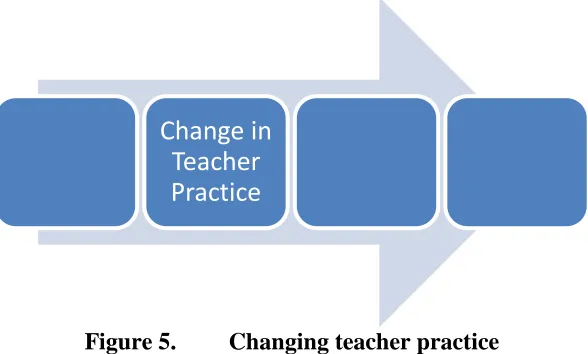
Figure 5. Changing teacher practice
Pedagogical Shift in Science Instruction
Over the past several decades, numerous efforts have been attempted to
ameliorate science instruction in elementary schools (National Research Council, 1996). Recommendations from various respected councils and associations have issued a call to improve science instruction through an overhaul of pedagogical practices. In their
position statement on elementary science, the NSTA states, “… inquiry science must be a basic in the daily curriculum of every elementary school student at every grade level”
(NSTA, 2002). In support of this position, the NSTA statement also includes references
to science reform and research, and the urgent need to engage students in science at
young ages in order to develop problem-solving skills required in our scientific and
technological world. Research supports the positive impacts early exposure to science
experiences can have on students attitudes towards science, which in turn could impact
their choices for majors in college and future career choices (Eshach & Fried, 2005).
Similarly, the National Science Education Standards advocated a science learning
environment where students can learn about science by doing science (National Research
Change in
Teacher
Council, 1996). Although these standards have been around for almost three decades,
teachers have been reluctant to adopt new practices focused on authentic science,
suggesting that professional development support for science educational practice has
been limited and largely ineffective. Cochran-Smith and Lytle (1999) believe that
although there is an abundance of empirical evidence supporting many best practices in
education, the “wide-spread” practices used in classrooms are often due to an array of
factors, including tradition, opinion, lore, inaccuracy, superstition, and delusion
(Cochran-Smith & Lytle, 1999).
Recommended Practices for Teaching Science Inquiry Learning
For the past several decades, inquiry-based learning has gained the top position as a preferred practice in the science education community. Advocated by notable
identifications of assumptions, use of critical and logical thinking, and consideration of alternative explanations” (National Research Council, 1996).
The idea of inquiry as a tool for teaching and learning is not new. As early as 1913, early constructivist, John Dewey wrote about inquiry as a means to learn through doing (Dewey, 1913). Dewey was against traditional learning techniques such as recitation and memorization (Boydston, 1969). Dewey (1913) suggested that students needed to be given inquiry opportunities in learning in order to become better thinkers and problem solvers.
Inquiry learning supports aspects of both cognitive and social learning theory (Driscoll, 2005). Often viewed as interactional theory, and supported by the ideas of Bruner and Vygotsky, inquiry learning has many aspects of constructivism, mixed in with a social component. The main tenet of inquiry involves students exploring and
investigating solutions to problems or questions. In an inquiry lesson, students often arrive at solutions and answers in different ways than other students investigating the same question. Students construct their own knowledge as they try to make sense of their experiences through experimentation. As a result, students are able to manage their own learning and gain a sense of ownership of their learning.
Using carefully thought out probing questions throughout the inquiry process can help students reach and stay in this powerful zone.
The social aspect of inquiry learning is not to be discounted. Inquiry
opportunities for students often involve cooperative opportunities for students. The social interaction involved in the problem solving process is vital to increased
understanding of new concepts. According to Vygotsky, when working in groups or with partners, solutions must be co-constructed, and decision making throughout the learning process must be a joint effort (Driscoll, 2005).
A strong push for the inquiry method of science instruction has created additional challenges for elementary teachers (Fishman et al., 2003). With inquiry instructional techniques, teachers’ content knowledge must be deeper and broader to accommodate the questioning component inherent in this type of practice (Fishman et al., 2003).
A variety of studies exist comparing inquiry-based instruction with traditional approaches, although not many studies have been conducted with elementary-aged students. For the most part, positive differences have been noted with the inquiry approach. Many researchers concede that the positive results of inquiry-based teaching are there, but may not be as stellar as many would have hoped (Anderson, 2002). However, more striking results have been noted with students who have learning
difficulties (Scruggs, Mastropieri, Bakken, & Brigham, 1993). Current research seems to be moving away from the question of whether inquiry is an effective technique to
implementation of the technique itself (Anderson, 2002).
groups. Group 1 received instruction in the more scripted lab approach, while Group 2 received an inquiry-based experience. The inquiry-based group scored 6% higher on a content exam at the end of the semester (Leonard, 1983).
Several meta-analyses that compare different teaching strategies and their impact on student achievement have been conducted. In one such analysis, 61 studies spanning a 24 year period were analyzed for effect size of eight specific teaching strategies,
including inquiry. The effect size for inquiry–based teaching was .65, indicating a moderate to high effect on student achievement (Schroeder, Scott, Tolson, Huang, & Lee, 2007). In a more recent meta-analysis, with an admittedly small sample size due to few studies using true inquiry, guided inquiry lessons had larger effects on student
achievement than student-centered learning (Furtak, Seidel, Iverson, & Briggs, 2009). Another study supporting inquiry involved a three-year study in Detroit public schools (Marx et al., 2004). In partnership with the University of Michigan, inquiry units were developed for middle school students. Teachers were trained to teach using the inquiry method, and then taught the units to approximately 8,000 students over three years. Pre and posttest data on content and process were analyzed using t-tests and showed statistically significant effect size gains over the three years. For one unit on air, effect size gains ranged from.55 in Year 1, 1.25 in Year 2, and 1.84 in Year 3 of the study. Although this study did not compare inquiry to traditional methods, the evidence of the effectiveness of this practice is highly evident (Marx et al., 2004).
to bridge this gap, it is imperative that professional development specialists provide opportunities for teachers to engage in inquiry in order to construct their own
understandings of this practice. Through a constructivist approach, teachers will see the value of inquiry learning and in turn provide similar experiences for their students. Authentic Science Practices
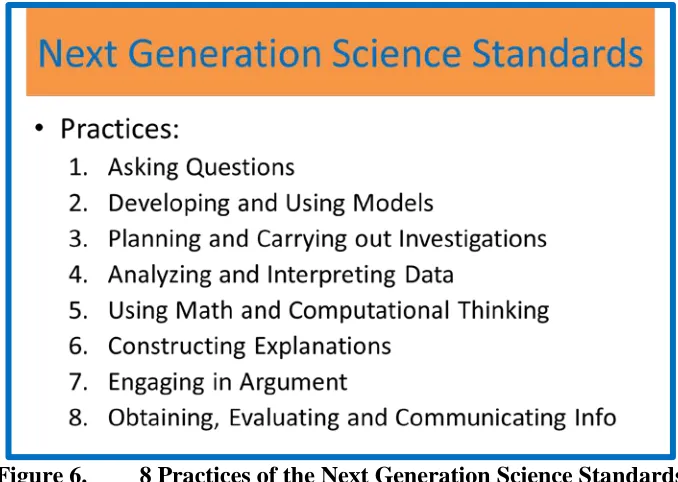
Related to inquiry, the idea of authentic science has gained much attention in recent years. Authentic science is commonly conceived as the practices real scientists engage in to answer specific science questions. Most recently, with the development of the Next Generation Science Standards (NGSS), including essential practices aligned to the idea of authentic science has been a central component of new standards (NGSS Lead States, 2013). Placing a priority on the practices, and giving teachers the tools to help their students engage in these practices, is essential for the successful reform of science education. The eight recommended practices (see Figure 6) of the NGSS were developed by 18 experts from STEM fields (NGSS Lead States, 2013). The goal of the practices is for teachers to provide opportunities for students to engage in authentic scientific
Figure 6. 8 Practices of the Next Generation Science Standards
Integrated STEM
STEM education has gained a tremendous amount of attention in the political arena in the past decade (DeJarnette, 2012; Herschbach, 2011). The pressure to globally compete in the technological age has created a national push to increase STEM education in American classrooms. The NGSS has compiled a plethora of evidence that
illuminates the urgency to improve STEM education in American classrooms (NGSS Lead States, 2013). Evidence such as a reduction in our economic edge in the
is losing its edge, and a push for STEM education is viewed as the answer to solving this dilemma.
The practice of integrating curriculum is not a novel idea. As early as the 1940’s, thematic teaching incorporating math into science was termed “the core curriculum” (Aikin, 1942; Mickelson, 1957). A few studies evaluating the effectiveness of the core curriculum found that students within this group performed slightly better than students who learned in more traditional classrooms. In addition, findings indicate that students involved in core curriculums develop some affective attributes above their traditional counterparts. Attributes such as social awareness and social adjustment have been indicated in noteworthy studies (Mickelson, 1957).
Since the 1940’s an interest in integrated curriculum has waxed and waned. Most recently, mainly due to societal needs and global competition, integration is making a comeback in classrooms, and consequently the literature. According to Beane (1996), new discoveries about how students learn have also rekindled an interest in integration. Student learning has traditionally been fragmented by subject, but research on how students learn indicates that a more connected approach to learning is more effective (Beane, 1996). Beane (1995) notes that traditional curriculum delivery is disconnected and makes no sense to many students. When dealing with real life problems, students will not ask which part is math and which part is science. Beane (1995) describes this separation of subjects approach as irrelevant and this separation will essentially create a “deadening effect” (Beane, 1995, p. 618) for student engagement to learn.
Five hundred fifty five sources, spanning from 1901-1991, were cited in this
bibliography, and later categorized into five sections including curriculum, instruction, research, curriculum-instruction, and curriculum-evaluation (Berlin, 1991). The purpose of this document was and continues to be a resource for teachers, curriculum developers and researchers. Findings from this compilation included a highly variable definition of integration, a lack of research on integration, and a need for assessments that measure achievement across math and science simultaneously (Berlin, 1991).
Within the literature defining integration has been a topic of much debate
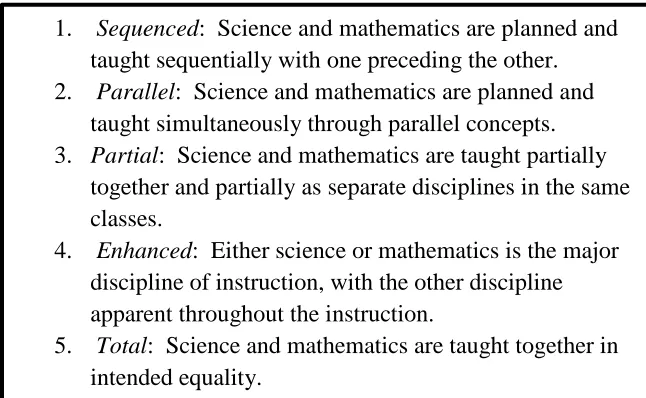
(Czerniak, Weber, Sandmann, & Ahern, 1999; Huntley, 1998; Pang & Good, 2000). In an attempt to answer this question, one meta-analysis reviewed 31 studies and categorized them into five different workable definitions (Hurley, 2001). Using a qualitative
approach, the five categories of integration developed are ordered from least to greatest in terms of integration level (see Figure 7).
Figure 7. Categories of Integration (Hurley, 2001) 1. Sequenced: Science and mathematics are planned and
taught sequentially with one preceding the other. 2. Parallel: Science and mathematics are planned and
taught simultaneously through parallel concepts. 3. Partial: Science and mathematics are taught partially
together and partially as separate disciplines in the same classes.
4. Enhanced: Either science or mathematics is the major discipline of instruction, with the other discipline apparent throughout the instruction.
Once categories were assigned to each of the 31 studies, effect sizes for student achievement in math and science from each study were analyzed and category effect sizes were determined using Cohen’s d . Findings indicate that benefits to math
achievement scores were very small with the exception of the sequenced category (effect size of .85) where math is essentially taught independently. For science achievement, the highest effect size was .66 for enhanced integration. Next was sequenced with an effect size of .34, followed by partial with an effect size of .22. Like math achievement, the parallel integrated studies produced a negative effect size of -.09. This meta-analysis supports integrating math into science lessons as a means to increase science achievement (Hurley, 2001).
In another study with contrasting results, researchers investigated the impact integration of math into science class had on math achievement scores (Judson &
Sawada, 2000). Eighth grade students participated in a quasi-experimental design project where 26 students were assigned to the control group, and 27 students were assigned to the treatment group for a three week unit. Treatment group students used graphing calculators and probes to perform statistical analyses within their science course. Students were given open-ended problems related to the genetics unit that required data collection and analysis. Decisions regarding appropriate statistical methods and
representations were left open to the students. The control group students received “business as usual” instruction on statistics within their mathematics class. Science instruction was also limited to science content in the control groups’ science class. Using a chi-square, statistically different grade distributions were noted between the treatment and control groups, where χ2
A’s and B’s on the statistics test, while the control group only reported 9 (Judson & Sawada, 2000).
Other studies empirically support the integration of math and science. One such program developed by the Mid-California Science Improvement Program (MCSIP) supported teachers in the development of original thematic units that integrate all subjects around a central science theme (Greene, 1991). With unit development workshops through a summer institute, as well as continued support throughout the year, teachers taught the required curriculum through a year-long thematic unit. Evaluation of the program has yielded many benefits. Students and teachers alike have enjoyed increased engagement, and achievement scores for students have increased. National Assessment of Educational Progress (NAEP) scores at the end of the second year produced
statistically significant gains with 78 percent of student improving their scores (Greene, 1991).
Vars (1991) reported that in over 80 studies on integrated curriculum programs, students performed as well as or better than students in non-integrated settings in almost all cases. Likewise, Stevenson and Carr (1993) compiled a collection of studies in which middle school teachers took on the challenge of teaching middle schoolers thematically with integrated units. The qualitative nature of the study clearly indicates that teaching “through the walls” of different subject matter classrooms is beneficial to students and teachers (Stevenson & Carr, 1993).
for successful integration. Basista, Tomlin, Pennington, and Pugh (2001) conducted a study to investigate the impact of professional development for middle grades teachers with a focus on integration of math and science. After participating in an intensive four week summer institute focused on inquiry and integration of mathematics and science, teachers showed significant gains in applying science concepts and mathematical reasoning on post-tests. In addition, results from an institute questionnaire showed a significant increase in self-efficacy for teaching integrated math and science. Qualitative reflections from participating teachers were included in the study and indicate that participants experienced a profound increase in confidence for teaching with an integrated approach (Basista et al., 2001).
What’s noticeably missing throughout the literature on teacher professional development is perhaps the most important component of Guskey’s framework: student outcomes. In the following section, different categories of student outcomes are
examined.
Change in Student Outcomes
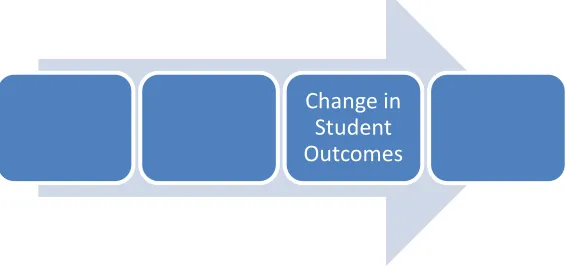
Figure 8. Changing Student Outcomes
Change in Student
Student Achievement
Although student achievement is the goal of almost all theoretical frameworks for professional development, very few studies report student achievement data. In one of the most widely cited articles on teacher professional development, researchers reviewed 1300 studies to investigate the impact of professional development on student
achievement (Yoon, Duncan, Lee, Scarloss, & Shapley, 2007). Of these 1300 studies, only nine met the criteria of this meta-analysis. Of these nine studies, six reported significant effects on student achievement, and only two of those were science professional development (Marek & Methven, 1991; Sloan, 1993).
Marek and Methven (1991) researched the relationship between a professional development project focused on hands on laboratory experiences and student