Geschke Center
Doctor of Nursing Practice (DNP) Projects Theses, Dissertations, Capstones and Projects
Winter 12-13-2013
The Design, implementation and Evaluation of a
Technology Solution to Improve Discharge
Planning Communication in a Complex Patient
Population
Susan M. Manfredi USF, [email protected]
Follow this and additional works at:https://repository.usfca.edu/dnp
Part of theHealth Information Technology Commons,Nursing Commons, and theTranslational Medical Research Commons
This Project is brought to you for free and open access by the Theses, Dissertations, Capstones and Projects at USF Scholarship: a digital repository @ Gleeson Library | Geschke Center. It has been accepted for inclusion in Doctor of Nursing Practice (DNP) Projects by an authorized administrator of USF Scholarship: a digital repository @ Gleeson Library | Geschke Center. For more information, please [email protected].
Recommended Citation
Manfredi, Susan M., "The Design, implementation and Evaluation of a Technology Solution to Improve Discharge Planning Communication in a Complex Patient Population" (2013).Doctor of Nursing Practice (DNP) Projects. 29.
The Design, Implementation and Evaluation of a Technology Solution to Improve Transparency
of Discharge Planning Communication in a Complex Patient Population
Susan M. Manfredi
University of San Francisco
Comprehensive DNP Project
N789
KT Waxman, DNP, MBA, RN, CNL, CENP, Committee Chair
Marjorie Barter, RN, EdD, CNL, CENP, Committee Member
Table of Contents
Section I
Abstract ...pg. 5
Section II - Introduction ...pg. 6
Background Knowledge...pg. 9
Local Problem ...pg. 11
Intended Improvement ...pg. 15
AIM Statement ...pg. 15
Purpose of Change ...pg. 16
Review of the Evidence - Discharge Planning ...pg. 17
Review of the Evidence – Handoffs ...pg. 25
Relation to other Evidence ...pg. 33
Conceptual/Theoretical Framework ...pg. 36
Section III – Methods...pg. 39
Ethical Issues ...pg. 39
Setting ...pg. 40
Planning the Intervention ...pg. 42
Funding/Cost Avoidance ...pg. 46
Implementation of the Project ...pg. 49
Planning the Study of the Intervention ...pg. 50
Methods of Evaluation ...pg. 54
Analysis...pg. 58
Program Evaluation/Outcomes ...pg. 60
Section V – Discussion ...pg. 68
Summary/Key Findings ...pg. 68
Lessons Learned ...pg. 70
Barrier to Implementation/Limitations ...pg. 72
Interpretation/Evaluation ...pg. 73
Conclusions ...pg. 79
References ...pg. 81
Tables
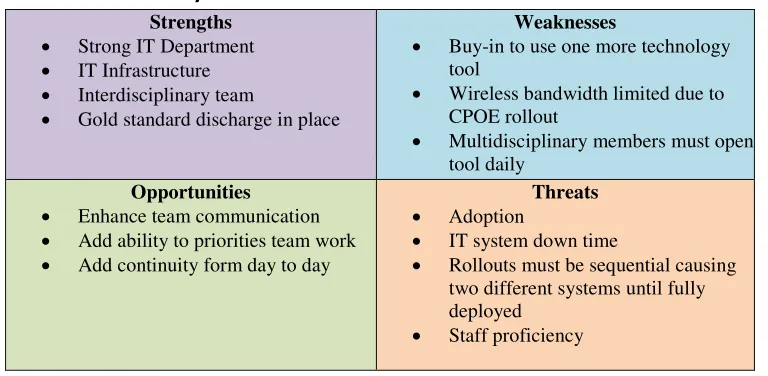
Table 1.0 SWOT Analysis ...pg. 55
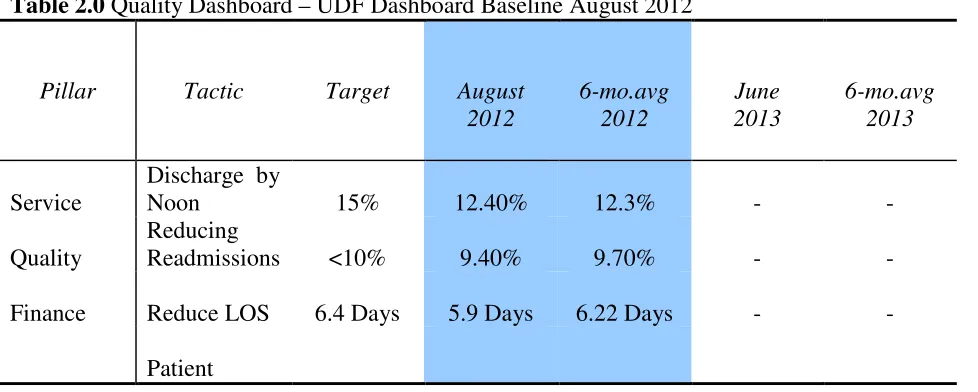
Table 2.0 Quality Dashboard - UDF Baseline August 2012...pg. 59
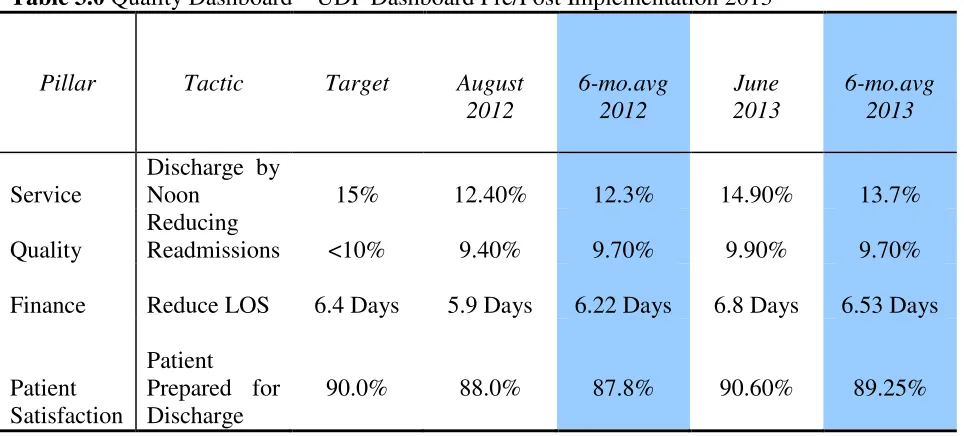
Table 3.0 Quality Dashboard - UDF Pre/Post Implementation 2013 ....pg. 74
Appendices
Appendix A UDF Job Description ...pg. 87
Appendix B Root Cause Analysis ...pg. 90
Appendix C Evidence Summary Table/Discharge Planning ...pg. 94
Appendix D Evidence Summary Table/Handoffs ...pg. 100
Appendix E Hub and Spoke Graphic ...pg. 106
Appendix F Gold Standard Discharge ...pg. 107
Appendix G Roles and Responsibilities ...pg. 111
Appendix H Fishbone Diagram ...pg. 113
Appendix I Project Charter ...pg. 114
Appendix K Discharge Planning Action Plan ...pg. 116
Appendix L Discharge Flow Algorithm ...pg. 117
Appendix M Committee Reporting Structure ...pg. 118
Appendix N Communication Plan ...pg. 119
Appendix O Budget Assumptions ...pg. 120
Appendix P Cost Benefit Projections ...pg. 121
Appendix Q Gantt Chart ...pg. 122
Appendix R Work Breakdown Structure ...pg. 123
Appendix S UDF EWB Talking Points ...pg. 124
Appendix T EWB Training Schedule 2013 ...pg. 126
Appendix U PDSA Cycle ...pg. 128
Appendix V Quality and Process Measures ...pg. 129
Appendix W Standardized UDF EWB ICONs ...pg. 130
Appendix X UDF EWB Screen Shot ...pg. 131
Appendix Y ROI ...pg. 132
Abstract
Unnecessary delays in discharge planning can extend the length of stay (LOS) and add
non-reimbursable days for socially and medically complex patients thereby increasing the
financial burden to healthcare organizations. The literature supports enhanced discharge
communication strategies and the use of checklists to facilitate safe and timely discharges.
Following root cause analyses of significant discharge delays, one hospital identified gaps in
communication as key precursors associated with discharge planning breakdown when
discharging patients to skilled nursing facilities. Review of these events demonstrated the need
for concurrent communication strategies between multidisciplinary care team members in
planning for complex discharges.
Following a complete assessment of the current discharge planning process, a web-based
interactive discharge checklist was designed, implemented and evaluated in the attempt to
provide guided communications to the essential partners of the patient’s team in an effort to
reduce LOS and readmissions. After a six-month rollout of the new technology and concomitant
procedures, the analyses revealed improvement in both the patient’s perception of discharge
planning and the ability to discharge patients by noon. Results for LOS and readmission
demonstrated inconsistent improvement. The use of an electronic checklist as a communication
tool did reduce variability in discharge procedures and provided for continuity in handoff
communication between team members. Staff agreed it promoted continuity and improved
efficiency.
The Design, Implementation and Evaluation of a Technology Solution to Improve Transparency
of Discharge Planning Communication in a Complex Patient Population
Introduction
The pressure to reduce readmissions and length of stay is becoming paramount in
medical centers across the United States as healthcare reimbursements shrink and penalties are
levied. However, the complexity of patient post-hospitalization needs as well as the changing
post-discharge environment significantly impacts the acute care hospital’s ability to discharge
patients safely and in a timely manner. Patients with social and behavioral health co-morbidities
or with limited financial resources have restricted placement options when compared to patients
who have strong funding sources and otherwise straightforward care needs. These barriers to
discharge create unprecedented challenges for organizations in finding safe alternatives for
complex patients requiring skilled post discharge care. Increasingly, patients with formidable
obstacles to discharge remain in inpatient beds on unpaid status while safe transition options are
actively pursued. These variance days add unbillable cost to the organization that reduces the
financial margin. In addition, the inability to transition patients when medically ready impacts
hospital throughput by reducing the number of available elective beds and thereby compounding
the affect to the fiscal bottom-line.
The setting for this project is a 413-bed academic, regional referral, and safety net
hospital located in the state of Washington. This medical center serves as the only Level-One
Trauma and Regional Burn Center in a four-state area and provides care for the most complex
patients from Washington, Alaska, Montana, and Idaho (WAMI region). The mission statement
includes serving the following populations: persons incarcerated in King County jail, mentally ill
third-party coverage, and other vulnerable populations. This high-risk population provides increased
challenges in providing safe, post-discharge placement due to lack of funding, history of criminal
convictions or behavioral outbursts, and substance abuse issues.
This trauma center has an open-door policy and as such there are no diversions. The
front door is always open and patients continue to come from wide geographic areas creating
overcrowding situations when patients cannot be discharged in a timely manner. The back door,
or discharging patients to skilled nursing facilities, however has become increasingly difficult for
this facility due to both internal and external factors. This mismatch of admissions to discharges
has led to severe overcrowding conditions when patients could not be discharged after they met
discharge criteria. The overcapacity issues led to patients being boarded in the emergency
department and in nursing unit hallways thereby limiting the ability to admit elective surgical
patients. The elective population is an essential component in meeting the financial targets for
the organization as a means to help offset the cost of caring for the mission population. Limiting
elective admissions is not a long-term sustainable solution.
There are several external factors that have contributed to the difficulties in discharging
complex patients to skilled nursing facilities. Seven years ago, the Washington State legislature
approved a measure to cut 200 skilled nursing facility (SNF) beds in several counties proximal to
the hospital and with that placed a moratorium in place to limit new SNF’s from opening. At the
time the law was passed the legislature believed the community to be over-bedded with skilled
nursing homes. This reduction in bed capacity significantly decreased the available supply of
post-discharge beds for patients requiring skilled care. Before this legislative measure, all
patients, even those with complex social histories could be placed following discharge given the
The community offered facilities subsidized by the state for specialized populations such
as those with HIV, alcohol and drug addiction. There were specific beds dedicated to homeless
women and separate facilities for homeless men who required post discharge care. After the
reduction in beds a much predicted battle for beds emerged. The law of supply and demand
resulted in pre-selection of the most desirable patients on the part of the skilled nursing facilities,
leaving the most difficult, complex patients languishing in inpatient beds long after they met
discharge criteria. Washington residents, on the other hand, with good payment sources, limited
care needs, and without behavioral or addiction issues had little problem finding placement and
frequently captured the only available aftercare beds leaving no availably for the complex
patient.
Further exacerbating the problem for this safety net hospital was another state ruling that
altered the procedure for undocumented workers that required post discharge services. Patients
that were considered non U.S. citizens and therefore not eligible for Medicaid, could now not be
admitted to any open community SNF bed but rather consigned only to those designated as Alien
Emergency Medical (AEM) beds. Prior to this regulatory change, AEM patients could be
admitted to any SNF bed upon meeting admission criteria. With this governing change, AEM
services in the State of Washington were severely cut, limiting the number of skilled nursing
(AEM) beds to 42 in the entire state. This created a high demand situation for those few beds.
The state boasts a large $46 billion food and agriculture industry and employs
approximately 160,000 people that contribute 13% percent to the state's economy (agr.wa.gov).
Although the Washington State law does not condone the hiring of non-citizen workers, the fact
remains that this hospital experienced a regular inflow of AEM patients from the farming
these workers were frequently airlifted and admitted for treatment. Following the course of care
however, due to the limited number of AEM beds, undocumented patients could not be placed
into a skilled bed until such AEM designated SNF bed became available. The waiting lists
became inordinately long with delays up to three and four months for these limited resources
adding many non-reimbursable days to the hospital length of stay.
Compounding this challenging situation, Washington State Medicaid subsequently
reduced payments to SNFs from $200/per day to $160/day, making it more difficult for patients
requiring additional therapy treatments or expensive medications to be considered for placement.
It was not uncommon for patients with complex care needs, challenging social histories and
without insurance to be rejected by over 160 placement facilities and wait for months to be
accepted into an aftercare facility. This constellation of events resulted in overcapacity census
volumes with occupancy rates from 95-107% at any given time. Multiple barriers to discharge
extended the length of stay (LOS) adding unpaid days with increased expense, and reduced
available beds for emergent and elective patients seeking care at this facility. Census
management and improving throughput by reducing LOS became the organizational focus of the
executive leadership team.
Background Knowledge
In early 2000, a Length of Stay Committee (LOSC) was convened to identify
opportunities to improve throughput after experiencing a rise in Emergency Department
boarding. At that time patients with complex discharge needs were rare and based on data
collected, comprised 10 to 15 percent of the acute care inpatient population. The LOSC defined
complex patients as those patients having one or more co-morbidities including: psychiatric
requiring additional equipment or increased therapy time, tracheotomies and/or respiratory needs
or those patients requiring long courses of expensive antibiotics. Any one of these stipulations
increased placement challenges in discharge planning and post hospitalization placement. Over
the next few years, the LOSC identified and addressed numerous gaps to improve throughput
and shorten LOS but with little sustained improvement. As one issue resolved a new issue arose.
By 2006, high census days with patient boarding were becoming more frequent resulting
in the Emergency Department diverting basic life support (BLS) patients to other facilities to
maintain trauma capacity. It was at this time, the LOSC was charged with performing an
assessment of the current state and providing a proposal to address the throughput issues. The
percentage of inpatients meeting the complexity scale had increased to over 50 percent in the
prior six-year period. The rise in percentage was assumed to be in part due to a reduction in the
admission of lower acuity patients and higher volumes of acute trauma patients with co-morbid
conditions. This discovery led to a complete change in the discharge-planning model.
Up until 2006, the bedside nurses were responsible for all discharge planning with limited
help from a social worker when patients required placement to skilled nursing facilities. The
overall effect of the increasing acuity and complexity of patient assignments resulted in bedside
nurses prioritizing discharge planning to the bottom of the list of activities. Twelve-hour shifts
with three to four days off per week contributed to the discontinuity of discharge planning.
Further complicating the discharge process was the procedure for social worker coverage.
The structure at the time assigned social workers by service lines (e.g., medicine, orthopedics)
resulting in varying workloads. Some social workers had caseloads of over 50 patients per day
while others had less than twenty. Each social worker would round with the service physicians to
limited electronic medical record (EMR) capabilities left the bedside nurse frequently out of the
loop on movement toward discharge. Many attempts were made to increase communication
about discharge through education and directives with little sustained success. The LOS
continued to rise and the LOSC recommended a revamping of the discharge planning process.
The Unit Discharge Facilitator (UDF) Program was created in April 2006, designed to
support the complex patient and care team through the discharge process. The executive team
unanimously approved the multi-million dollar investment necessary to create this program.
Discharge teams consisting of a UDF and SW were placed on every inpatient ward with the
intention that the UDF proactively guide the team to quick and efficient discharge. The UDF is a
registered nurse responsible for coordinating care with multidisciplinary team members (i.e.,
nursing, social work, financial counseling, pharmacy, physicians, utilization management, and
rehab therapy) in order to establish a discharge plan and proactively mitigate any obstacles to
discharge with the goal of reducing length of stay (LOS) and preventing uncompensated days
(see Appendix A for UDF job description).
Local Problem
Within six months the UDF program demonstrated improvement in reducing LOS. The
tenets of the program and additional resources gave structure to the discharge planning process.
The improvement was short-lived however and within a few years the barriers to discharge
became unyielding, throughput again stalled and the LOS metric began to rise. At this time the
LOSC was disbanded and the Transformation of Care Committee (TOCC) was created as a
component of a new and more formalized Process Improvement (PI) program. Given ongoing
issues with overcrowding and increases in LOS, the TOCC was asked by the executive team to
throughput and reduction in LOS. The author of this paper was elected chairperson of the
Transformation of Care Committee.
With full approval of the executive leadership team, authority was given to the chair of
the TOCC, to design an innovative solution to improve throughput, reduce LOS and reduce
readmissions. The executive team issued a directive that the UDF program resources would be
cut from the budget without significant demonstration of improvement. The review began in July
2009 by performing root cause analyses (RCA) on cases with significant avoidable days due to
human factors, process flow, and systems issues. Data analyses as well as interviews with
interdisciplinary team members were analyzed. Numerous issues emerged including ineffective
leadership, poor employee performers, and lack of standardized processes, unclear role
differentiation, unstructured workflows and poor utilization of resources. Over a two-year period
much work was completed to redefine the program, insert proper leadership, streamline
workflows, clarify role definition and establish process structure.
As part of the ongoing process improvement process, RCAs on noteworthy discharge
delays continued. It was from these reviews that communication breakdown was identified as a
significant factor resulting in a discharge interruption. Drilling down on the communication
breakdowns led to significant discoveries.
Although discipline-specific discharge information was available, it was noted to be
documented in silo-fashion and difficult to locate. The inability to locate comprehensive
discharge information created situations whereby the multidisciplinary team did not have access
to the complete picture for the patient or the required sequential actions that must occur to meet
timely discharge objectives. One finding led to the fact that each department had separate and
discharge was documented separately and locally contributing to the breakdown in
communication. To illustrate this point, the financial counseling (FC) team documented
preauthorization for insurance for SNF placement, rehab coverage, and discharge medications in
a unique system called CAT accessed only with restricted entry by the FC team. The UDF’s,
pharmacists, social workers and rehab therapists all required access to this information to move
forward with discharge planning but only the financial counselors had knowledge of the
preauthorization status. This routinely delayed discharge facilitation.
Creating more opacity in attempting to construct the complete discharge picture was the
fact that utilization management (UM) staff documented in a proprietary 3M™ tool and
pharmacy documented in PharmNet™; again neither of which interfaced with the EMR thereby
prohibiting information flow to the team. Further exploration uncovered that three highly
involved services i.e., social work, rehab therapies, and nutrition, all document in the EMR
however, each discipline had a separate note that required sorting chronologically to locate
relevant details about discharge. It became onerous for the UDF or any member of the care team
to envisage the big picture of a patient’s discharge roadmap without taking many hours to mine
through various repositories and making numerous phone calls.
A “huddle round” or team discharge conference was implemented daily on each inpatient
nursing unit to integrate the key pieces of information in an attempt to mitigate this
communication quagmire. Morning huddles were intended to bring the care team together to
specifically discuss the plan for discharge. Upon further investigation it became clear that the
morning huddles did not fully solve the communication gap for a number of reasons. The
structure of the huddle rounds mandated that the entire team be present for 30 minutes to quickly
most up to date information to these rounds from all disciplines and establish next steps.
Continuity of attendance was essential. Almost immediately various team members were unable
to attend due to legitimate patient care priorities. Scenarios ranged from the bedside nurse
attending to a crashing patient to the physician being called to the emergency room. This resulted
in important information being confined to the missing worker or buried in reams of
documentation making this information unavailable. When any essential team member missed
the morning huddle rounds crucial information was lost to the team. It became apparent that even
with daily huddles pivotal information was not fully or easily disseminated.
The tedious nature of obtaining the entire picture of progress towards discharge, and the
inability to identify gaps in preparedness for discharge, resulted in system-based delays and
missed opportunities for discharge. Continuing to drill down on issues through the RCA process
led to further granularity of the issues. One such case identified a unique twist on timely
information: the need to establish and communicate priorities within priorities (see Appendix B
for RCA).
Routinely team members created their own to-do lists based on their own priorities and
worked diligently to complete these tasks. Many worked on different priorities unaware of a
specific need for focused attention on one particular patient. When a pressing situation occurred
it became crucial to mobilize the team quickly to facilitate a specific individual’s discharge. The
ability to orchestrate activities became vital in situations with extremely challenging patients and
limited discharge opportunities. At the point in time when a discharge opportunity arises,
pharmacy, physical therapy, social work, financial counseling, nursing, and the medical staff
time of discharge. In this case the patient missed the discharge opportunity due to the lack of
communication in obtaining preauthorization for discharge medications.
The challenge became how to provide transparent ongoing communication to all
members of the care team who are located in different parts of the hospital. The complexity of
communicating essential information in a non-interfacing mosaic EMR became a formidable
impediment. Without the ability to interface systems and consolidate information it became clear
that a discrete technology solution might be the answer to improve communication.
Intended Improvement
The evidence supports communication as a key factor in aligning goals and targets for
discharge as a way to improve discharge timeliness (Foust, 2007). The goal of this
evidence-based project was to improve on known strategies for the communication of relevant
discharge-planning information by integrating a technology solution that would enhance knowledge
sharing for members of the care team. The need for continuity of information between team
members when planning for complex discharges was deemed essential in securing exiguous post
discharge placements. Thus, the intention of this project was to create a real-time electronic
communication pathway for all team members to share pertinent discharge planning information
in order to expedite the process and reduced length of stay. For this reason, the chairperson of
the TOCC and author of this paper proposed using an evidenced-based approach to address the
problem in discharge coordination.
Aim Statement:
The Medical Center will redesign its discharge communication platform for all patients
admitted to the acute care units. This will be accomplished through recognition that transparent
treatment and to improving hospital throughput. The process improvement measures were
expected to be implemented within twelve months (December 2012) and to demonstrate
improvement within the ensuing six months (by June 2013). The population of concern includes
all patients with complex social histories, co-morbid conditions, financial implications and others
with challenges for post-hospitalization placement. The TOCC made the decision with the full
support of the executive team to move forward with this process improvement initiative based on
the growing concerns about high census and throughput issues. Success will be achieved by
monitoring the following measures:
• LOS < 6.4
• > 15% discharges by noon
• > 90% patient satisfaction with the discharge process
• < 10% readmission rates
• Staff satisfaction with process change
Purpose of Change
The test of change addressed the following question. Can a technology solution be
designed and utilized to enhance handoff communication practices that will provide
multidisciplinary care team members with necessary and timely information in order to 1)
facilitate group priority setting and 2) meet each patient’s milestones for discharge?
The purpose of this project was to apply information technology in the design of an
effective mode of real-time communication that would streamline information flow and improve
handoffs in the discharge planning process. The intention was to create an electronic tool that
would establish a single portal for entry and viewing of all relevant discharge information
to locate essential information. The platform would consolidate all discharge information into
one location and provide a single view where all members of the care team could visualize the
patient’s roadmap toward discharge at a glance and in real-time. One critical objective was to
establish an interactive mode of communication that would grant the UDF, social worker or any
member of the care team, the ability to update the information from any location in the hospital
in order to relay changes in patient status to help expedite priorities to meet discharge targets.
The final product would provide a visual display of patients in various stages toward discharge
highlighting priorities, barriers and milestone completion.
Review of the Evidence – Discharge Planning
The Patient Protection and Affordable Care Act and value-based purchasing requirements
are driving organizations to reconsider processes that will improve patient outcomes and
strengthen the financial bottom line. The pressure to reduce length of stay and readmission rates
is intensifying in medical centers across the nation as healthcare reimbursements shrink and
penalties are levied based on quality indicators. Planning for safe and timely discharge is among
the top list of practices that require review and are the focus of numerous articles, conferences
and round-table conversations searching for evidence-based guidance. According to the Agency
for Healthcare Research and Quality, providing a safe discharge transition is essential in
preventing adverse health consequences upon release from an acute inpatient setting (AHRQ
2012).
The complexity of patient post-discharge needs as well as the changing post-discharge
environment significantly impacts the acute care hospitals’ ability to discharge patients safely
and in a timely manner. Elderly patients and patients with social and behavioral health
emergency department visits and readmissions. These complexities in discharge planning create
unprecedented challenges for organizations in meeting federal and regulatory quality indicators.
The aim of this literature review is to synthesize and present previous research focused on
proven strategies that reduce length of stay (LOS) and readmission rates by improving the
quality of discharge planning. To formulate the questions to guide the search, the PICOT format
is utilized:
P - patients discharged from hospitals that are high risk for readmission
I - tools to improve the discharge process that enhance communication
C – specific intervention
O – decreased LOS, decrease readmission rates, enhanced throughput
T – within 30 days of discharge
Two key questions narrowed the search strategy: what are the known factors to enhance
or hinder team communication in discharge planning? What tested strategies facilitate reducing
LOS and /or readmission rates in patients discharged from an inpatient setting? Improving on
known strategies for discharge planning has broad implications for hospitals in the era of health
care reform.
The literature review was initially undertaken using eight search terms to electronically
scan CINAHL, Medline, PubMed, Cochrane, Ovid, NCBI, NLM, and Google Scholar databases
focusing on studies published between 2003-2013. The following groups of key words and
Medical Subject Headings (MeSH) were combined in various sequences using the Boolean terms
“and” and “or” in the searches: (1) care coordination, (2) discharge planning, (3) continuity of
stay (LOS), and (8) readmissions. Reference lists and author searches were subsequently
incorporated.
The electronic database search yielded 7064 titles and abstracts. These were screened for
duplication, relevance to topic, and specificity to nursing, year published and quality of research.
Opinion pieces, quality improvement and personal case histories were also excluded leaving 48
manuscripts to be eligible for inclusion in this review. The ten publications included in this
review provide a combination of quantitative and qualitative research including meta-analysis.
Key considerations in the selection of these articles are the strength of evidence, relevance to the
topic, and applicability to improve upon known strategies in discharge planning. The Johns
Hopkins Nursing Evidence-based Practices rating scale is used to rate the strength and quality of
the research (Dearholt & Dang, 2012).
All studies reviewed were published from 2005 – 2012 in an attempt to capture the most
relevant and current information on a variety of discharge enhancement strategies. The articles
were published in nine different journals and one was published as a review in the Cochrane
Database of Systematic Reviews. Six reviews were randomized controlled trials, one was a
qualitative designed study, two were meta-analyses of RCTs and one was an integrative review
of quantitative, qualitative and combined quantitative and qualitative studies. Six studies were
performed in American hospitals and four studies were conducted internationally (see Appendix
C for evidence summary table/discharge planning).
For the purpose of this review, all studies reflected a concern for the need to enhance
discharge planning as a mode to improve patient readiness for discharge and as a strategy to
reduce LOS and readmission. Foust (2007) understood the complex aspects of discharge
reports on a qualitative design that follows the naturalistic paradigm of observing eight nurses
throughout their working shift. The outcome of the study was to capture the evolving nature of
discharge planning. The major findings demonstrated that nurses’ expectations of patients’
progress guided their discharge assessments, teaching and planning over time and that discharge
teaching became more of a priority as discharge became imminent. A gap between observed and
documented discharge planning was observed which poses significant challenges for nurses in
completing and communicating the plan for post discharge care (Foust, 2007).
Gaps in early needs assessment, communication to patient and provider, education, hand
offs, and post-discharge care instructions can affect the patients timely discharge home and
ability for self care post discharge. Multiple studies in this review described a variety of
interventions attempted and each with slight permutations resulting in the emergence of several
common themes. Each intervention targeted a specific vulnerability in the discharge continuum.
Two studies (3, 4) focused on the role of a specified discharge nurse or nurse advocate to
design an individualized plan based on patient information. Both programs emphasized early
identification of discharge needs and the formalization of the discharge plan by providing written
information in the form of handouts. In both studies the nurses provided specific education using
targeted patient instructional brochures and information. In one study (3) the patient receive a
follow up home visit and also follow-up phone calls. In the other study (4) there was a follow-up
phone call provided by a pharmacist. In study (3) all indicators of outcomes were significantly
better for patients in the intervention group (IG) than in the control group (CG). Both studies
demonstrated a slight improvement in LOS and both experienced reduction in 30-day
In study (1) (Balaban et al., 2008) agree that patients were often ill prepared for transition
to home, based on the hypothesis that nurses were often too busy to provide routine discharge
care. In an attempt to assist the nurses to target key discharge priorities, the authors designed a
RCT to compare the normal discharge process with the use of a “user-friendly” Discharge Form
to guide the discharge process. The tool specifically addressed communication problems that
occur frequently during transition such as dietary restrictions and medications lists. The study
design also included a follow-up phone call. Four undesirable outcomes were measured. The
results were encouraging with only 25% of the IG experiencing one or more undesirable
outcomes compared to 55% in the CG concluding that a simple inexpensive “user-friendly” form
could improve outcomes.
Three reviews concentrated on a specific population of elderly hip fracture patients (3, 6,
and 7) and focused on comprehensive discharge planning interventions to reduce readmissions
and ED visits. Two of the studies were implemented in the Republic of China (ROC) and the
third was performed in Paris. These international studies corroborate the similarities in discharge
process experiences and the need for enhanced strategies to reduce LOS and post discharge
hospital utilization across continents. Both ROC hospitals conducted RCTs to determine the
effectiveness of comprehensive discharge needs assessment, plan creation, discharge instruction,
coordinated services and discharge placement. The Parisian study (6) was unique such that the
intervention was the use of a trained geriatrician dedicated to targeting three risk factors to
prevent readmission. These focused areas of risk included patient education, comprehensive
medication review and detailed plans for the transition of care all consistent with US strategies
(Legrain et al., 2011). Studies (3) and (6) measured readmissions, with (3) and (7) also
studies demonstrated consistent results in reducing ED visits and post-discharge utilization.
Study (3) demonstrated slight improvement in LOS and study (7) demonstrated no difference in
LOS between the IG and the CG. Study (7) did demonstrate self-care knowledge was
significantly higher in the IG and the QOL outcome was better in the IG at the three-month mark
(Huang & Liang, 2005, Legrain et al., 2011, Lin et al., 2009).
Two of the reviews were meta-analyses with study (5) focusing on synthesizing evidence
found in RCTs on heart failure (HF) management programs and review (10) analyzing RCT
evidence on discharge planning from hospital to home. The objective for study (5) was to
examine whether nurse-led inpatient teams can reduce readmission rates for heart failure patients
compared with a control group. The nineteen RCTs that were selected and reviewed included
nurse-led pre-discharge care delivered by means of discharge planning or inpatient education
and/or evaluation or consultation in addition to the usual care provided by the CG. Studies were
also stratified by subgroups including follow-up and or telephone access. All studies in the (5)
meta-analysis examined the variable of readmission. Statistically significant homogeneity was
observed across studies due to variations in approaches among HF management programs.
Subgroup analysis for home visit interventions showed statistically significant fewer
readmissions for both all-cause and HF readmissions leading authors to conclude nurse-led
discharge interventions may reduce readmission (Lambrinou et al., 2012).
The second meta-analysis (10) is a Cochrane review systematically analyzing the
effectiveness of planning the discharge of patients moving from hospital to home. The selection
criteria were limited to RCTs that compared an individualized discharge plan with routine
discharge care that was tailored to the individual patient. Twenty-one RCTs were included in
patient probably brings about a small reduction in hospital LOS and readmission rates and an
increase in patient satisfaction. The authors describe the reporting of different outcomes
restricted the degree to which data could be pooled. However, data was pooled to demonstrate
data from trials recruiting older patients with a medical condition and found a small significant
reduction in LOS and readmission rates for those allocated to discharge planning (Shepperd et
al., 2010).
Nosbusch et al. (2010) provides an integrated review synthesizing evidence from both
qualitative and quantitative studies investigating practices, perceptions and experience of bedside
nurses relative to hospital discharge planning. In study (8), thirty-eight published articles met
inclusion criteria consistent with the aims to stimulate knowledge development around the
bedside nurse role in hospital discharge planning. Seven themes were identified across the
studies including communication, systems and structures, time, role confusion, care continuity,
knowledge and invisibility of the nurse. Effective communication emerged as a prime issue that
challenged bedside nurses throughout the discharge planning process. The authors suggested
embracing working relationships and team-based approaches to improving communication.
Secondarily there is preliminary evidence that suggests use of a critical pathway improves
communication among nurses as well as between nurses and other disciplines. Lastly the authors
posit the need for additional discharge planning redesign initiatives, which include rigorous
evaluation of patient outcomes (Nosbusch, et al., 2010).
The final review (9) is specific to the high-utilizer psychiatric population in a multicenter
trial in Germany. Medical patients with co-morbid psychiatric illness experience additional
challenges to safe discharge transitions. The authors of this RCT tested the effects of a
treatment episodes, outpatient service utilized, depression and QOL. The authors hypothesize
that insufficient discharge planning and follow-up can be considered an important reason for
readmission and unfavorable outcomes. The participants in this study were allocated to the
intervention group and received two NODPAM intervention sessions (pre-discharge and
monitoring) with nurses using a structured discharge planning intervention for patients with
severe mental illness. Participants allocated to the control group received treatment as usual. The
authors reported no significant difference between the IG and the CG in use of a structured
needs-oriented discharge planning program for patients with severe mental illness and a defined
pattern of high utilization (Puschner et al., 2011).
The review of this evidence supports specific discharge planning strategies more than
others. The use of a user-friendly discharge form to guide the discharge process was proven
effective in a community hospital setting and could be generalizable to other academic and safety
net facilities. The incorporation of home visits and discharge follow-up phone calls demonstrated
a positive correlation with better outcomes in the intervention groups suggesting this is a solid
strategy that proved successful both in the US and abroad. Finally, the use of a designated nurse
discharge advocate or physician-led discharge conference was demonstrated to reduce
emergency department visits and readmissions.
After reviewing the evidence, three practice changes are recommended. The first
approach was to incorporate the development of a discharge nurse advocate role on each nursing
unit to facilitate the coordination of discharge planning with a substantial emphasis focused on
patients with high risk for readmission. The second strategy was to institute the discharge
checklist as a care pathway to guide the bedside nurse toward safe and timely discharge. The
confirm that patients fully understand the discharge instructions to increase the probability of a
successful transition to home. These three evidence-based strategies support the overall aim to
transition patients safely to post discharge care and reduce the risk of readmission.
Review of the Evidence - Handoffs
According to the Joint Commission (TJC), failures in handoff communication contribute
to significant adverse events in healthcare. The Joint Commission further defines handoffs as
contemporaneous, interactive processes for passing patient-specific information from one
caregiver to another for the purpose of ensuring the continuity and safety of patient care. To
heighten awareness of the risk associated with patient handoff, TJC included handover
communication as one of the national patient safety goals in 2006 (TJC, 2007). Atul Gawande,
author of the Checklist Manifesto, postulates that avoidable failures continue to plague
healthcare because the volume and complexity of knowledge has exceeded our capacity as
individuals to properly deliver information correctly, consistently and safely (Gawande, 2009).
As healthcare becomes more complex, the complete transmission of patient care information
between healthcare professionals becomes vital for safe transitions in care for many patients with
chronic and co-morbid conditions.
As patients are preparing for discharge from an acute care hospital, numerous milestones
must be met to ensure a safe transition to the next level of care. To ensure a safe and timely
discharge, all members of the patients care team must be in alignment with barriers and goals.
Ineffectiveness of handoffs can lead to progressive information degradation resulting in
omissions and inaccuracies in the information shared (Arora et al. 2005). When breakdown in
patient days and adding to the LOS. Gaps in handover communication guiding discharge
planning were identified as problematic and required intervention.
The aim of this literature review is to synthesize and present previous research focused on
proven strategies that improve handoffs by improving the quality of the information shared and
the methods utilized to ensure standardization of the process. To formulate the questions to
guide the search, the PICOT format was utilized:
P – hospital inpatients, pediatric and adult
I - tools to improve knowledge and information transfer during handoff
C – specific intervention
O – decreased error rate
T – during transition of care
Two key questions narrowed the search strategy: what are the known factors to enhance
or hinder communication during handoff? What tested strategies facilitate a safe and effective
handoff? Improving on known strategies for information transfer has broad implications for
hospitals in meeting both patient safety goals as well as reducing unnecessary cost.
The literature review was initially undertaken using seven search terms to electronically
scan CINAHL, Medline, PubMed, Cochrane, Ovid, NCBI, NLM, and Google Scholar databases
focusing on studies published between 2007-2013. The following groups of key words and
Medical Subject Headings (MeSH) were combined in various sequences using the Boolean terms
“and” and “or” in the searches: (1) handoffs, (2) communication, (3) patient safety, (4)
randomized controlled trial (RCT), (5) checklist, (6) technology, (7) and nursing. Reference lists
The electronic database search initially yielded 4,044 titles and abstracts. An advance
search limited to years 2009-2013 with search terms reduced to (1) handoff, (2) communication,
(3) patient safety, (4) and checklist honed the list to 82 articles. These were further screened for
language, scholarly journals, duplication, and relevance to topic, year published, and quality of
research. Opinion pieces, and personal case histories were also excluded leaving 14 manuscripts
to be eligible for inclusion in this review. The fourteen publications included in this review
demonstrated a majority of qualitative research including meta-synthesis of qualitative studies,
literature reviews, quality improvement process initiatives and three quasi and non-experimental
studies. Of note is the absence of RCT studies found in the search. Two RCT articles were found
that did not have relevance to the topic and were excluded. Key considerations in the selection
of these articles were the strength of evidence, relevance to the topic, and applicability to
improve upon known strategies in handoff communication. The Johns Hopkins Nursing
Evidence-based Practices rating scale is used to rate the strength and quality of the research
(Dearholt & Dang, 2012).
All studies reviewed were published from 2010 – 2012 in an attempt to capture the most
relevant and current information on a variety of communication handoff strategies. The articles
were published in thirteen different journals. Four reviews were qualitative studies, one was a
meta-synthesis of qualitative designed studies, four were literature reviews, two were
non-experimental, one was quasi-experimental and two were process improvement initiatives. Nine
studies were performed in American hospitals and five studies were conducted internationally
(see Appendix D for evidence summary table/handoffs).
For the purpose of this review, all studies reflected the need for effective handoffs to
focused on systems that supported coordination of information flow as it related to the handoff
process and concomitantly tools utilized to guide the handoff process. Authors (1), (5) (6), (7),
(9), (12), (13) and (14) specifically discussed using a checklist as an intervention to guide the
handoff process. Authors (3), (4), and (7), reviewed standardized processes and protocols for
handoffs without the use of a tool, and three authors, (9), (12), (14) discussed integrating both
checklists and process. Study (10) explored using a specific rating tool to determine handoff
quality. The remaining authors (2), (8), and (11) synthesized current literature to identify themes
that influence the quality of handoff information.
The authors of study (1), Abraham et al. compared the standard SOAP note method of
communication during handoff to a newly designed “HAND-IT” checklist to evaluate the
effectiveness of the new tool (Abraham et al., 2012). The Handoff Intervention Tool
(HAND-IT) was based on a content-specific checklist inspired by the body system format giving
organization to structured information. Based on a pre-post prospective study, when using the
HAND-IT tool, the authors found fewer transition breakdowns, greater tool resilience and
increased learning for inexperienced clinicians. In addition, HAND-IT by its very design,
supported coordination of information flow and decision-making and helped to ensure continuity
of care (Abraham et al., 2012).
The authors of study (5) in a longitudinal study compared three morning handoff
protocols for medical interns consisting of written, electronic and face-to-face methods over
three study phases. This study demonstrated that a scheduled face-to-face handoff process
improved the communication of essential patient care information between cross-covering teams
(Craig et al., 2012). The authors of study (6) reviewed 20 original studies concerning the use of
operating room. These results supported the WHO’s recommendation to use the surgical
checklist in all operative procedures as an instrument for improvement of communication,
teamwork and to improve the culture of safety (Fudickar et al., 2012).
Halm (2013) in article (7) found that highly reliable handoffs incorporate three key
elements: 1) face-to-face 2-way communication, 2) structured written forms, templates or
checklists and 3) content that “captures attention”. Halm reported that preventing
communication failures begins with structured communication. The author continues by
suggesting written tools introduce redundancy that helps the nurse organize large amounts of
information to convey complex issues in a meaningful way (Halm, 2013).
Joy et al. (2011) used a prospective interventional study (9) to study handoffs from the
operating room to the CICU comparing verbal handoffs with that of a checklist of key elements
to guide the handoff process. The authors reported a significant reduction in technical errors and
also information omissions with the use of a checklist guided handoff (Joy et al., 2011).
Supporting the checklist concept, a team from the Veterans Health Administration implemented
Medical Team Training (MTT) and Crew Resource Management (CRM) techniques taken from
the aviation industry to enhance communication and reduce errors (Paull et al., 2010). The
purpose for the study (12) was to understand the effects of a checklist-driven preoperative
briefing on specific patient safety measures. The authors concluded the checklist-driven briefings
were associated with improvements in patient safety metrics for surgical patients.
Petrovic et al. (2012) from Johns Hopkins Hospital (13) piloted a tool for patient transfers
from the OR to the cardiac-surgical ICU as a process improvement initiative to improve patient
transfers, which were associated with communication breakdown and low provider morale. The
information sharing during handoffs that also increased satisfaction of the receiving teams and
decreased distractions (Petrovic et al., 2012). The author of article (14) developed a checklist to
be used to develop situational awareness in the operating room to ensure the exchange of
essential patient information (Wright, 2013). In this non-experimental exploratory study, Wright
(2013) first examined current practice of 300 CRNA’s and then developed, implemented and
evaluated a communication checklist tool designed to improve situational awareness. The
checklist incorporated mnemonic strategies to allow for easy retrieval of information. In
evaluating the PATIENT checklist tool itself, 90% of the respondents believed the length and
scope of the content were appropriate and that the tool lent itself to memory although the study
failed to promote sustained change in the use of the tool (Wright, 2013).
Two studies (3) and (4) focused on contributing factors to communication breakdown
during handoff. Chen et al. (2011) performed an observational, cross-sectional study (3) of
handoff communication events occurring in the PCICU between the cardiothoracic surgery and
anesthesiology team following cardiac surgery. The authors identified three factors that affected
the quality of the handoffs: 1) reliability of attendance at observed handoffs, 2) reliability of
content reported at observed handoff, and 3) number of distractions during communication for
each handoff (Chen et al., 2011). The authors admit the study did not demonstrate
overwhelming positive results but provided opportunity to address identified process
deficiencies.
Clarke et al. (2012) utilized the philosophy and methodology of Appreciative Inquiry
(AI) to investigate the process of patient transfers to determine what aspects were working well
and should be incorporated into standard of practice. The purpose of this quality improvement
(Clarke et al., 2012). Through this process the nurses created the “dream” process, which
included face-to-face handoffs, quiet place to prepare, standardized verbal report, and
standardized checklist. Although the authors admit problems with sustainability in the
interventions, the process of AI was deemed successful as a method to build trust among
stakeholders (Clarke et al., 2012).
Three of the reviews consisted of meta-synthesis, integrative literature reviews and
literature reviews. Study (2) explores the role of documents and documentation in
communication failure among healthcare professionals across the perioperative pathway.
Through review of 59 papers, the authors purport that any document deficient in detail, currency,
accuracy, availability or its function can compromise information and coordination of patient
care (Braaf et al., 2011). The objective for study (8) was to examine the qualitative evidence on
dynamics of knowledge transfer during transitions in care. A systematic review was conducted
on 29 qualitative studies representing more than 800 nursing handoffs. The authors report the
evidence shows handoff to be complex, social interaction highly sensitive to context and cultural
norms (Holly & Poletick, 2013). Holly and Poletick further identify two synthesized findings:
1) individual nurses influence patient care as the gatekeeper of information handed off that is
used for subsequent care decisions, 2) there is an imbedded hierarchy in relation to the handing
over of information that serves as a method of enculturation into the nursing unit.
Study (11) aims to critically examining the literature on methods and modes of delivery
of handover used in healthcare settings to explore the feasibility of computerized handover
system for improving patient safety. The authors reviewed 126 articles considering
communication theory and factors impacting effective clinical decision-making. Matic,
standardization of data definitions, consistency of information communicated and minimization
of ambiguities.
Study (10) aimed to develop and test a rating tool for the quality of patient handoff at
care transitions that can be used in a variety of clinical settings for self-assessment by the
clinicians involved in the handoff (Manser et al, 2010). Two analytical steps in this study
investigated 1) the dimensionality and 2) the predictive validity of the rating tool for handoff
quality. The rating tool identified three factors in predicting handoff quality: 1) information
transfer, 2) shared understanding, and 3) working atmosphere (Manser et al., 2010).
The review of this evidence supports certain handoff strategies more than others. The use
of a user-friendly checklist to guide the handoff process was proven effective in a perioperative,
ICU, and VHA settings and could be generalizable to other academic and safety net facilities.
The incorporation of standardized handover protocols and processes demonstrated a positive
correlation with better outcomes in the checklist groups suggesting this is a solid strategy that
proved successful. Finally, the evidence supports the continued use of a face-to face
communication to add an extra layer of security to prevent poor exchanges of information during
handoff (Chen et al., 2011).
After reviewing and analyzing the evidence, the following practice changes are
recommended. The first approach was to develop and utilize a standardized checklist to
incorporate all necessary components to guide the discharge process. The evidence solidly
supports using checklists to ensure standardization of processes. The literature suggests
checklists provide protection against failures by reminding us of the minimum necessary steps
and make them explicit (Gawande, 2009). Gawande (2009) also believes checklists offer the
shared discharge checklist of key targets and milestones for coordinated use would instill the
structure and transparency necessary to eliminate last minute complications on the day of
discharge. Providing the care team with a checklist of milestones can prevent omissions in the
process that may delay discharge.
The second evidence-based strategy is to utilize face-to-face communications to augment
the checklist and standardized protocols. Maintaining daily in-person communications via
standardized multidisciplinary rounds will allow for further discussion and clarification of
patient specific care issues.
Relation to other Evidence
Communication around discharge needs is a dynamic process that requires data
movement across stages and among service providers in real time. As such, the information must
be documented and easily accessible daily as the patient progresses to discharge. According to
Foust in a study performed assessing patients’ post-hospitalization needs, the documentation of
discharge planning is scarcely done daily and much was not documented until day of discharge
(Foust, 2007). Foust’s results support the need for daily interaction with the patient and these
concepts were used to establish daily rounding patterns for the UDF’s. Determining a patient’s
post-discharge needs should be a collaborative process with the physician. However, Foust
found nurses indirectly learned about physician clinical assessments or plans through medical
records or after rounds when talking with the patient. Actual conversations about discharge
planning with physicians were rarely observed (Foust, 2007).
Maramba et al., support strong communication practices in discharge coordination
(Maramba et al., 2004). Discharge care coordination is the process of identifying and preparing
Interdisciplinary collaboration determines the patient’s post-hospitalization needs and is a
future-oriented process that begins with admission and ends when the patient is discharged. In addition,
according to Morris, the longer patients are in the hospital, the more they are at risk for infection,
pressure ulcers, and the deconditioning that occurs with extended stays (Morris, 2010).
Maramba et al., and Morris agree strong communication practices are essential to prepare the
patient for timely discharge. Discharging patients when they no longer meet inpatient criteria is
good patient care and is in alignment with the Institute of Medicine (IOM) report on reducing
hospital-acquired events (IOM, 2001).
Bauer et al., (2009) agreed that deficient documentation is one of the primary barriers to
the patient discharge process. Oftentimes, the day of discharge is the last chance to identify
unmet needs (Foust, 2007),which can result in discharge delays. The conclusions found in both
articles supported the findings in the Medical Center gap analysis. Considerable care planning is
performed in silos with little interactive communication among key team members and
information can be difficult to find. The new workflows and discharge pathway would address
issues identified by Bauer et al., and Foust, as tools to bridge the gaps in communication to
improve discharge planning.
Knowledge is the content of communication (White & Griffith, 2010). Communication
is an exchange of information between two or more participants. In most organizations
workflows are facilitated by communication. Discharge planning is one such workflow and
requires knowledge sharing in order to meet patient discharge objectives. In high performing
organizations, the ability to provide knowledge components in ways that deliver to each
associate everything they need to know, on time and without error improves strategic
communication showed that almost one-third of attempted communications among providers did
not succeed in their aim, and that more than one-third of these communication failures had
visible effects on the delivery of care (Dayton & Henriksen, 2007). Ghavami believes
information technology can and must play an enabling role in facilitating “high-bandwidth”
communication (Ghavami, 2008). High bandwidth communication results when technology
yields a value-added exchange of knowledge and information (Ghavami, 2008). Understanding
the importance of knowledge and knowledge exchange in creating an electronic communication
tool is an important concept to ensure accurate receipt of the information.
The literature is limited specific to IT solutions related to care coordination, discharge
planning and knowledge transfer. Borrowing from concepts in the manufacturing domain, the
idea of a just-in-time (JIT) delivery model prompted exploration of the idea to leverage
communication and improve staff efficiency. The JIT production is aimed to produce necessary
quantities of key items at a critical point in time (Takahashi & Nakamura, 1998). Furthermore,
in JIT production models, an order is released when the demand arrives at the stage from the
succeeding stage and the parts necessary to process the order are supplied from the preceding
stage (Takahashi & Nakamura, 1998). Orders are released using demand rather than forecasted
information (Takahashi & Nakamura, 1998). Although the concept of providing discharge
information on a JIT basis missed the target for a proactive approach to discharge coordination,
the discussion spurred a deeper exploration of other methodologies.
The Toyota kanban system stimulated more thought due to its prospective approach using
queuing principles (Krieg & Kuhn, 2008). Kanban is a form of visual communication (Krieg &
Kuhn, 2008). According to Krieg and Kuhn, in the classic kanban system, the number of full
the system. Full containers must have a kanban attached, and when one is removed, the kanban
signals the deficit. Active kanbans are collected in one place that is close to the person
responsible for the operation. As a result, that person always has the information necessary to
decide whether to continue the production (Krieg & Kuhn, 2008). This kanban process brought
to mind possibilities of creating signals that trigger action and transparency to all involved in the
discharge process. Although this improvement process involved knowledge transfer and not
product, the concept added value to the discussion. Information from the Technology Work
Group for the National Transitions of Care Coalition relayed that one of the primary benefits of
using technology in health care is the ability to ensure that the right information is available at
critical times during all stages of care for the patient, especially at times of transition (Binder et
al. 2010).
While there are many articles addressing the discharge process, research addressing
information technology (IT) solutions that specifically focus on care coordination and discharge
planning are scant in the literature. Many current EMR designs focus on MD workflow at the
expense of the other care team members. Creating a common pathway with a centralized task
management list including functions of responsibility, timing, priority, and completion is an
opportunity to simplify shared information and offers a method for standardization of care
(Binder et al., 2010). Taking concepts from discharge planning experts, the IT world, and the
business and lean sectors helped germinated what would become the technology solution for
interactive, transparent discharge planning at the Medical Center.
Conceptual Framework
Given the advances in technology and information systems, requirements imposed by
exponentially. Thriving organizations must manage change efforts effectively in order to
achieve overall organizational objectives.
The concept of “change management” is commonly recognized business jargon referring
to the importance of utilizing a thoughtful business approach to move organizational initiatives
forward. In 1951, Kurt Lewin presented a three-step change model identifying barriers to change
in the form of opposing forces known as “unfreezing-change-refreezing theory.” As a social
scientist he postulated that to successfully change behavior, prior knowledge must be rejected
and replaced to break the existing paradigm (Lewin, 1951). Lewin’s cornerstone model identified
concepts of driving forces and restraining forces that needed to be understood and overcome in
order to reach a new state of equilibrium (Lewin, 1951).
Driving forces are those most noted by a push in a direction that causes change to occur
or to move away from the current situation. While driving forces can produce change by
pushing individuals in the desired direction, push strategies are frequently met with resisting
forces that can counter the driving forces. Resisting forces hamper the change process due to
individuals pushing back in the opposite direction often out of fear of the unknown and
discomfort of moving away from what is comfortable (Lewin, 1951).
Unfreezing the existing beliefs and status quo is the first phase in preparing the
organization to accept that change is necessary. This essential step provides the purpose for the
change as the required motivational link, necessary to reduce resistance and group conformity
that frequently hamper change efforts. Following unfreezing, the next stage in Lewin’s process is
“change or movement” when individuals begin to transcend resistance and resolve their
uncertainty and support the new organizational direction. To encourage successful adoption of
phase takes communication, support and time to reach a consensus of the group. The final step,
refreezing the new concepts, ensures integration of the new practices thereby creating a new
equilibrium (Lewin, 1951). Imbedding new practices, policies and accountability structures help
to create a sustainability plan to solidify the changes. Driving and restraining is necessary to
guide effective movement through the stages.
Motivation theory is based on a model of needs-behavior-satisfaction (McClelland et al.
1989). This theory attempts to explain what needs or wants an individual or group has that will
cause certain behaviors to satisfy those needs. McClelland’s Human Motivation Theory (also
known as the Learned Needs Theory) provides a model to help identify people’s motivating
drivers. Based on the individual’s life experiences, culture, and upbringing, staff responds to
different drivers. McClelland identifies three motivators that help to identify the dominant
driving force to help the leader influence how to set goals and reward team members. The three
motivators identified in his theory are achievement, affiliation and power (McClelland, 1985).
The achievement oriented individual has a strong need to set and accomplish challenging
tasks. The person driven through affiliation seeks belonging and group acceptance. Finally,
employees motivated by power gravitate to control and influence others. Leaders pursing change
objectives must understand not only their own internal motivational drivers but also the drivers
of those being sought to change in order to constructively influence group dynamics.
McClelland’s theory of human motivation interrelates with Lewin’s change management
model in all phases but is particularly essential in the unfreezing phase. As with any change
process, predicting how those affected may respond behaviorally based on their specific
motivational drivers, allows the leader to design a strategy that addresses their needs to support