CASE REPORT
Late prosthetic valve endocarditis
with
Mycobacterium tuberculosis
after the Bentall procedure
Qianqian Liu
1, Jialin Jin
1, Lingyun Shao
1, Shanshan Weng
1, Ju Zhou
1, Feng Li
2, Wenhong Zhang
1,3,
Xinhua Weng
1and Yan Gao
1*Abstract
Background: Prosthetic valve endocarditis (PVE) is a rare but severe complication of valve replacement surgery, with an incidence rate of 0.3–1.2% per patient-year. At present, staphylococci are the predominant causative microorgan-ism of PVE. Herein, we report a confirmed case of late PVE in a mechanical aortic valve caused by Mycobacterium tuberculosis.
Case presentation: A 32-year-old immunocompetent man with recurrent fever and 5-kg weight loss had a history of having undergone the Bentall procedure due to congenital heart disease. Nine years after the operation, he devel-oped a paravalvular abscess in the mechanical aortic valve, presented with evidence of pulmonary tuberculosis on CT scan and was diagnosed with tuberculous endocarditis. This case report highlights a rare and non-negligible example of tuberculous endocarditis involving a mechanical valve.
Conclusions: Tuberculous PVE should be considered in patients with a history of valve replacement, recurrent fever, unexplained weight loss, pulmonary tuberculosis and meaningful valvular findings on echocardiogram.
Keywords: Mycobacterium tuberculosis, Prosthetic valve endocarditis, Mechanical valve
© The Author(s) 2019. This article is distributed under the terms of the Creative Commons Attribution 4.0 International License (http://creativecommons.org/licenses/by/4.0/), which permits unrestricted use, distribution, and reproduction in any medium, provided you give appropriate credit to the original author(s) and the source, provide a link to the Creative Commons license, and indicate if changes were made. The Creative Commons Public Domain Dedication waiver (http://creativecommons.org/ publicdomain/zero/1.0/) applies to the data made available in this article, unless otherwise stated.
Background
Prosthetic valve endocarditis (PVE), a rare but severe complication of valve replacement surgery, with an inci-dence rate of 0.3–1.2% per patient-year, accounts for 20% of all cases of infective endocarditis (IE) and has a high mortality rate. At present, staphylococci are the predomi-nant causative microorganism of PVE [1, 2]. We report a confirmed case of late PVE (> 1 year post-surgery) in mechanical aortic valve caused by Mycobacterium tuber-culosis in a patient who previously underwent a Bentall procedure.
Case presentation
A 32-year-old man was admitted to our hospital on June 5, 2018, with a 2-month history of recurrent fever and the loss of 5 kg of weight. Two months prior, he suf-fered chills after eating kebabs, followed by a fever (up to 39 °C), accompanied by a headache and dizziness. He received anti-infective and anti-inflammatory therapy for a pulmonary infection at the local hospital. How-ever, he still had a high fever with fatigue. On April 23, the serum agglutination test for Brucella was positive, with a titer of 1:400. Both the blood and bone marrow cultures were negative, and after he was diagnosed with brucellosis, therapy with doxycycline, moxifloxacin, and streptomycin was initiated. After 1 month of regular anti-brucellosis therapy, although the peak temperature had dropped to 38 °C, he still had the fever and aggravated anaemia. Due to the negative repeat test for Brucella, the regimen was adjusted to isoniazid, levofloxacin, strepto-mycin, rifampicin and dexamethasone anti-tuberculosis
Open Access
*Correspondence: [email protected]
1 Department of Infectious Diseases, Huashan Hospital, Fudan University,
12 Wulumuqi Zhong Road, Shanghai 200040, China
therapy. He continued to experience the recurrent fever until admission to our hospital on June 5.
In March 2009, he had undergone a Bentall procedure and ventricular septal repair due to congenital heart disease and was found to be positive for the hepatitis B surface antigen but did not receive antiviral therapy. The patient was immunocompetent, serologically negative for human immunodeficiency virus (HIV) and denied any history of contact with cattle and sheep.
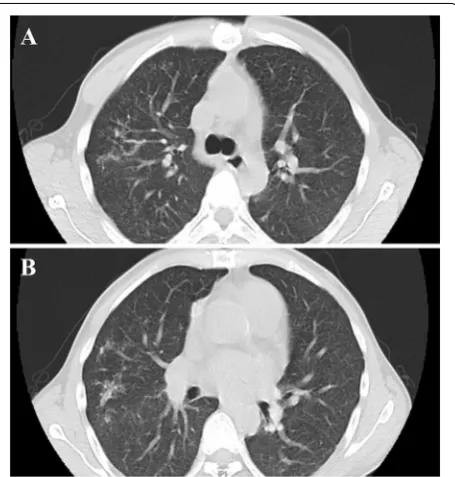
At admission, his body temperature was 37.5 °C, his heart rate was 78 beats/min, his respiratory rate was 18 breaths/min, and his blood pressure was 120/66 mmHg. On physical examination, he was found to be anaemic. His abnormal laboratory findings were as follows: aggra-vated normochromic anaemia (haemoglobin: 71 g/mL), elevated levels of inflammatory markers (C-reactive protein: 43.1 mg/L; procalcitonin: 0.38 ng/mL), acute renal insufficiency (blood urea nitrogen: 23.1 mmol/L; creatinine: 343 μmol/L) and hypoproteinemia (albu-min: 30 g/L) with normal levels of aminotransferase (Table 1). An interferon-gamma release assay (IGRA) for tuberculosis was positive. Furthermore, next-gener-ation sequencing (NGS) detected M. tuberculosis com-plex from two blood samples. However, the Xpert MTB assay and acid-fast bacilli smear for sputum samples were both negative. The blood cultures remained negative. A computed tomography (CT) scan of the chest suggested bilateral pneumonia (Fig. 1). Abdominal ultrasound revealed enlargement of his liver, spleen (169 × 65 mm) and kidney (left: 145 × 67 mm; right: 146 × 52 mm).
Echocardiography showed mechanical prosthetic aortic valve paravalvular abscess without vegetation formation (Fig. 2). Then, the patient was empirically administered fosfomycin and daptomycin as a treatment for gram-positive bacterial infection, but his body temperature remained high (up to 38.4 °C). Thus, the regimen was switched to anti-tuberculosis drugs (isoniazid 0.3 g once daily, ethambutol 0.75 g once daily, moxifloxacin 0.4 g once daily and linezolid 0.6 g once daily); however, his temperature remained between 37 and 38.5 °C.
Then, he was transferred to the Department of Cardiac Surgery, Shanghai Sixth People’s hospital for a second surgery on June 25. Surprisingly, NGS detected a large number of M. tuberculosis complex sequences in intraop-erative samples of the aortic root abscesses. The patient had postoperatively intermittent fever, mostly peaking in the afternoon. After 2 weeks of combined anti-tuberculo-sis treatment with linezolid (0.6 g once daily), rifampicin (0.3 g twice daily), pyrazinamide (0.5 g three times daily), ethambutol (0.75 g once daily), isoniazid (0.3 g once daily) and moxifloxacin (0.6 g once daily), his body tem-perature returned to normal, and his laboratory param-eters improved (Table 1); finally, he was discharged. On July 31, the culture of the aortic valve intraoperative scrapings was found to be positive for M. tuberculosis, which further confirmed the diagnosis of tuberculous PVE. To date, he continues to receive oral anti-tubercu-losis treatment.
Table 1 Laboratory examinations
RBC red blood cell, WBC white blood cell, INR international normalized ratio,
ESR erythrocyte sedimentation rate, CRP C-reactive protein, PCT procalcitonin,
BNP brain natriuretic peptide, BUN blood urea nitrogen, ALT alanine aminotransferase, AST aspartate aminotransferase
Clinical
parameters Reference range On admission Postoperative
RBC (× 1012/L) 4.3–5.8 2.55 3.47
WBC (× 109/L) 3.5–9.5 4.36 5.99
Neutrophil (%) 40–75 80.9 48.3 Haemoglobin (g/L) 130–175 71 105 Platelet (× 109/L) 125–350 126 180
INR 0.92–1.15 1.23 1.54 ESR (mm/h) ≤ 15 14 30 CRP (mg/L) < 8.2 43.1 – PCT (ng/mL) ≤ 0.05 0.38 0.19 BUN (mmol/L) 2.5–7.0 23.1 8.16 Creatinine (μmol/L) 50–130 343 140 ALT (U/L) 9–50 29 9 AST (U/L) 15–40 36 22 Albumin (g/L) 40–55 30 43.7
Discussion and conclusions
In this patient, the lack of specific symptoms increased the difficulty of the diagnosis, and his diagnosis of tuber-culous PVE was finally confirmed by the results of the valve culture 1 month after his second operation. We speculated that the prosthesis infection originated from pulmonary lesions based on the findings on the chest CT, positive IGRA result and detection of M. tuberculosis in two blood samples using NGS, despite the negative blood cultures. Although the initially positive serum agglutina-tion test for Brucella, the history of eating kebabs and the negative results of the blood and bone marrow cul-tures resulted in the diagnosis of brucellosis, the repeated serum agglutination test was negative, and more impor-tantly, his clinical symptoms had not improved after
1 month of anti-brucellosis therapy. Therefore, brucel-losis was ruled out, and other weakly virulent pathogens that can cause atypical clinical signs of IE needed to be considered.
Tuberculous endocarditis (TBE) is rare, and the infec-tion sites in the majority of the previously reported TBE cases were native valves [3]. However, the infection of prostheses, especially mechanical prostheses, caused by M. tuberculosis has rarely been reported [4]. Here, we reported an extremely rare case of TBE involving a mechanical prosthetic aortic valve accompanied by paravalvular abscess, which was confirmed by valve culture that was positive for M. tuberculosis. According to the timing of presentation after valve surgery, PVE is defined as early (< 1 year) and late (> 1 year). Significant differences exist in the microbiology of early and late PVE. Early PVE generally originates from perioperative contamination or infections associated with the central venous catheter, which are mainly caused by staphy-lococci, fungi, and Gram-negative bacilli. In contrast, late PVE is often the result of prosthesis seeding due to transient bacteraemia from a distant site, which is mostly the result of community-acquired infections [4]. Our patient underwent a Bentall procedure 9 years ago, and this procedure is complicated by infection in 1.4% of cases, most commonly within 5 years after the pro-cedure [5]. Currently, IE occurs more than 1 year after Bentall surgery in 65% of patients and within 4 weeks after surgery in only 20% of patients. More importantly, the most common causative pathogen is Staphylococ-cus aureus (45%) [6]. To the best of our knowledge, this is the first report of TBE involving a mechanical valve prosthesis after a Bentall procedure.
Several cases of TBE were reported between 1990 and 2017, and the characteristics of these patients are summarized in Table 2. The median age of TBE patients
Fig. 2 Transoesophageal echocardiogram showing a paravalvular abscess on the prosthetic aortic valve (arrow)
Table 2 Characteristics of reported patients with tuberculous endocarditis
TB tuberculosis, M male, F female, TTE transthoracic echocardiogram, AFB acid-fast bacilli
Patient Year Age/sex Valve Diagnosis Surgery Anti-TB (months) Outcome References
1 2017 70/F Mitral and aortic valves; native TTE Yes 9 Recovery [8] 2 2016 1/F Mitral valve; native Vegetation AFB staining + PCR Yes 12 Recovery [9] 3 2015 21/F Aortic valve; native Blood culture Yes 12 Recovery [10] 4 2015 50/M Mitral and aortic valves; native TTE + sputum culture Yes 9 Recovery [11] 5 2012 17/F Mitral, aortic and tricuspid valves;
native Histopathology of vegetation Yes Unspecified Recovery [12] 6 2010 30/M Mitral valve; native Vegetation culture Yes 12 Recovery [13] 7 2007 63/M Aortic valve; native Histopathology of aortic cusps Yes 9 Recovery [14] 8 2002 35/M Tricuspid valve; native Blood culture Yes 6 Recovery [15] 9 1998 64/M Mitral valve; native Vegetation culture Yes 12 Recovery [16] 10 1990 78/M Aortic valve; native echocardiogram + multiple
was 42.5 years, with a male/female ratio of 3:2. Of note, the infection sites among these TBE patients were all native valves, and most (7/10, 70%) were only single valve infections, with the exception of 3 cases involv-ing multiple valves. In case 8, the patient used intrave-nous drugs, was infected with HIV and was diagnosed with TBE by blood cultures that were positive for M. tuberculosis. However, the other cases were free of HIV infection. Among all cases, the most critical manage-ment strategy was surgical intervention combined with anti-TB therapy. Additionally, the duration of anti-TB treatment in most cases was prolonged to 9 months or even to 12 months.
Despite the low incidence of TBE in valvular prosthe-ses, there were still several cases reported before 1990, and most occurred in bio-prosthetic valves including homograft and porcine valves [7]. In 1979, the first case of TBE affecting a mitral valve prosthesis 5 months post-operation was reported; the patient was diagnosed after the isolation of acid-fast bacilli (AFB) from the mitral valve prosthesis during the autopsy. Subsequently, two patients with miliary TB after prosthetic valve replace-ment survived less than 1 year.
This case suggests that tuberculous PVE should be taken into account in patients with a history of valve replacement, recurrent fever, unexplained weight loss, pulmonary TB and meaningful valvular findings (includ-ing vegetation or abscess) on echocardiogram. Rapid diagnosis facilitates the early administration of clinical treatment and decreases mortality in patients with TBE.
Abbreviations
PVE: prosthetic valve endocarditis; IE: infective endocarditis; TBE: tuberculous endocarditis; AFB: acid-fast bacilli; IGRA : interferon-gamma release assay.
Authors’ contributions
QL drafted the manuscript. JJ, LS, JZ, WZ and XW conducted the clinical examinations. SW and QL performed the systematic review. FL performed the surgery. YG reviewed the manuscript and participated in the design of the report. All authors read and approved the final manuscript.
Author details
1 Department of Infectious Diseases, Huashan Hospital, Fudan University, 12
Wulumuqi Zhong Road, Shanghai 200040, China. 2 Department of Cardiac
Surgery, Shanghai Sixth People’s Hospital, Shanghai, China. 3 Key Laboratory
of Medical Molecular Virology, Ministry of Education and Health, Shanghai Medical College and Institutes of Biomedical Science, Fudan University, Shang-hai 200032, China.
Acknowledgements
Not applicable.
Competing interests
The authors declare that they have no competing interests.
Availability of data and materials
The datasets used and/or analysed in the current study are available from the corresponding author on reasonable request.
Consent for publication
Consent for the publication of this case report and any additional related information was obtained from the patient involved in the study.
Ethics approval and consent to participate
This report received ethical approval from the Ethics Committee of Huashan Hospital, Fudan University. Informed consent to participate was obtained from the patient.
Funding
The present study was partly supported by the National Natural Science Foundation of China (Nos. 81501359 and 81671553).
Publisher’s Note
Springer Nature remains neutral with regard to jurisdictional claims in pub-lished maps and institutional affiliations.
Received: 24 December 2018 Accepted: 19 March 2019
References
1. Wang A, Athan E, Pappas PA, Fowler VG Jr, Olaison L, Pare C, et al. Con-temporary clinical profile and outcome of prosthetic valve endocarditis. JAMA. 2007;297(12):1354–61. https ://doi.org/10.1001/jama.297.12.1354. 2. Habib G, Thuny F, Avierinos JF. Prosthetic valve endocarditis: current
approach and therapeutic options. Prog Cardiovasc Dis. 2008;50(4):274– 81. https ://doi.org/10.1016/j.pcad.2007.10.007.
3. Yuan SM. Mycobacterial endocarditis: a comprehensive review. Revista Brasileira de Cirurgia Cardiovascular. 2015;30(1):93–103. https ://doi. org/10.5935/1678-9741.20140 113.
4. Nataloni M, Pergolini M, Rescigno G, Mocchegiani R. Prosthetic valve endocarditis. J Cardiovasc Med. 2010;11(12):869–83. https ://doi. org/10.2459/JCM.0b013 e3283 36ec9 a.
5. Joo HC, Chang BC, Youn YN, Yoo KJ, Lee S. Clinical experience with the Bentall procedure: 28 years. Yonsei Med J. 2012;53(5):915–23. https ://doi. org/10.3349/ymj.2012.53.5.915.
6. Heuze C, Lepage L, Loubet P, Duval X, Cimadevilla C, Verdonk C, et al. Infective endocarditis after Bentall surgery: usefulness of new imaging modalities and outcomes. JACC Cardiovasc Imag. 2018;11(10):1535–7. https ://doi.org/10.1016/j.jcmg.2017.12.007.
7. Liu A, Nicol E, Hu Y, Coates A. Tuberculous endocarditis. Int J Cardiol. 2013;167(3):640–5. https ://doi.org/10.1016/j.ijcar d.2012.08.009. 8. El Hangouche AJ, Oukerraj L. Mycobacterium tuberculosis endocarditis
in native valves. Pan Afr Med J. 2017;26:194. https ://doi.org/10.11604 / pamj.2017.26.194.11515 .
9. Sass LA, Ziemba KJ, Heiser EA, Mauriello CT, Werner AL, Aguiar MA, et al. A 1-year-old with mycobacterium tuberculosis endocarditis with mass spectrometry analysis of cardiac vegetation composition. J Pediatr Infect Dis Soc. 2016;5(1):85–8. https ://doi.org/10.1093/jpids /piu08 7.
10. Ma GT, Mao R, Miao Q, Zhou BT. A case of tuberculous endocarditis in an immunocompetent patient: difficulty with early diagnosis. Int J Cardiol. 2015;201:497–8. https ://doi.org/10.1016/j.ijcar d.2015.08.033.
11. Abbara A, Newsholme W, Klein JL, Chambers JB. Tuberculous endocarditis in an immunocompetent host without miliary tuberculosis. Int J Tuberc Lung Dis. 2015;19(11):1407–8. https ://doi.org/10.5588/ijtld .15.0429. 12. Shaikh Q, Mahmood F. Triple valve endocarditis by mycobacterium tuberculosis: a case report. BMC Infect Dis. 2012;12:231. https ://doi. org/10.1186/1471-2334-12-231.
13. Sultan FA, Fatimi S, Jamil B, Moustafa SE, Mookadam F. Tuberculous endocarditis: valvular and right atrial involvement. Eur J Echocardiogr. 2010;11(4):E13. https ://doi.org/10.1093/ejech ocard /jep20 2.
•fast, convenient online submission
•
thorough peer review by experienced researchers in your field
• rapid publication on acceptance
• support for research data, including large and complex data types
•
gold Open Access which fosters wider collaboration and increased citations maximum visibility for your research: over 100M website views per year
•
At BMC, research is always in progress.
Learn more biomedcentral.com/submissions
Ready to submit your research? Choose BMC and benefit from:
15. Fumagalli J, Bonifacio C, Gulotta H, Shinzato R, Troncoso A. Bacterial endocarditis: a role for mycobacterium tuberculosis? AIDS (London, England). 2002;16(13):1845–6.
16. Klingler K, Brandli O, Doerfler M, Schluger N, Rom WN. Valvular endo-carditis due to Mycobacterium tuberculosis. Int J Tuberc Lung Dis. 1998;2(5):435–7.