
S T U D Y P R O T O C O L
Open Access
Tian Jiu
therapy for allergic rhinitis: study
protocol for a randomized controlled trial
Wai Kun
1,2, Linda L. D. Zhong
1,2, Liang Dai
1,2, Chung-Wah Cheng
1,2, Ai-Ping Lu
1,2and Zhao-Xiang Bian
1,2*Abstract
Background:Allergic rhinitis (AR) is one of the most common allergic diseases. The conventional treatments of allergic rhinitis are oral anti-histamines, the use of intranasal corticosteroids, and immunotherapy. Dissatisfied with the ineffectiveness and side effects of these treatments, substantial numbers of patients are turning to alternative treatments like Chinese herbal medicine, particularlyTian Jiu(TJ). TJ is a form of moxibustion in which herbal patches are applied to specific acupoints on the skin. This study aims to investigate the efficacy and safety of TJ in the treatment of allergic rhinitis.
Methods/design:This will be a prospective, randomized, single-blinded, controlled trial in patients with AR. After a 1-week run-in period, eligible subjects will be randomly assigned to the TJ group, placebo-control group or
waitlist-control group. The TJ and placebo-control groups will undergo a 4-week treatment with one session per week and one 4-week post-treatment follow-up. Participants in the waitlist-control group will not receive any treatment during the first 4 weeks but will be required to be assessed. The primary outcome will be the change in the weekly average of the Total Nasal Symptom Score recorded from baseline to the end of treatment. The secondary outcomes will be change in symptoms and change in need for medication between baseline and the end of treatment by using the Rhinitis Quality of Life Questionnaire. Rescue medication (RM) needs will be measured using an RM score,
comprising the weekly sum of daily assessments and any form of systemic steroids for allergic rhinitis.
Discussion:This study will be the first study to compare TJ treatment for allergic rhinitis with a placebo-control group, and a waitlist-control group. The investigation of TJ for allergic rhinitis will also suggest recommendations for clinical practice. The results of this study are expected to provide consolidated evidence for the effectiveness and safety of TJ for the treatment of patients with allergic rhinitis.
Trial registration:NCT02470845 (17 May 2015).
Keywords:Allergic rhinitis, Chinese herbal medicine,Tian Jiu, Randomized controlled trial
Background
Allergic rhinitis (AR), which can be acute or chronic, is one of the most common allergic diseases. A number of surveys have documented the high prevalence of AR and the substantial burden to patients and the health care system [1–3]. In the United States, the prevalence of AR was shown to vary from 10 to 30 % [4]. In Europe, the prevalence was around 23 % [5]. In 11 cities in China,
the prevalence of AR was shown to vary from 8 to 24.1 % [6]. The conventional treatment of AR symptoms, such as nasal obstruction, rhinorrhea, sneezing, and itching, includes the use of intranasal corticosteroids, oral anti-histamines with or without decongestants, im-munotherapy, and education [7]. Substantial numbers of patients with AR are dissatisfied with conventional med-ical treatment and repeatedly experience side effects. As a result, many AR sufferers are turning to complemen-tary and alternative treatments [8, 9]. Among them, Chinese medicine, including herbal medicine, acupunc-ture andTian Jiu(TJ), are frequently used to manage AR in East Asia [10].
* Correspondence:[email protected]
1School of Chinese Medicine, Hong Kong Baptist University, 7 Baptist
University Road, Kowloon Tong, Hong Kong, China
2Hong Kong Chinese Medicine Clinical study Center, Hong Kong Baptist
University, 205, Jockey Club School of Chinese Medicine Building, 7 Baptist University Road, Kowloon Tong, Kowloon, Hong Kong
In China, traditional Chinese medicine (TCM) has a long history of using TJ as a measure to prevent asth-matic attacks [11]. TJ as an external application is also known as“drug moxibustion”or“vesiculating moxibus-tion.” Herbal patches are applied on the selected acu-points or the diseased part. In TCM, this treatment regulates the functions of channels and zang-fuorgans. It can warm the channels and disperse coldness. It is also able to invigorateqimovement, harmonize nutrient absorption and defense mechanisms, and resolve stag-nation in the body and stasis of the blood. The mecha-nisms of TJ, which have been studied in recent years, show that it can inhibit the release of mast cell media-tors and modulate serum IgE levels, lymphocyte and/or macrophage activity [12].
Currently, some clinical studies have showed that TJ therapy is effective in treating AR. They have found that TJ therapy is better than placebo for treating clinical symptoms and signs as well as improving quality of life [13, 14]. One previous study has also shown that the TJ group had lower scores for sneezing, rhinorrhea and nasal stuffiness after finishing therapy when compared with the control group and also showed significant im-provement in the scores for the 36-item Short Form Health Survey (SF-36), which measures patients’quality of life [15]. A study using the Rhinitis Quality of Life Questionnaire (RQLQ) to assess quality of life also dem-onstrated that TJ therapy can improve quality of life when compared with a placebo group [16].
In recent years, clinical and basic researchers have found that TJ acts as a modulator of anti-inflammatory cytokines [17] and affects neuro-immunological mecha-nisms, e.g., lowering plasma levels of vasoactive intes-tinal peptides and substance P [18]. However, these studies were done on a relatively small scale and did not use a randomized control design.
In order to further investigate the efficacy of TJ in the treatment of AR, a rigorous randomized controlled trial will be conducted in our clinical centers. The evidence from this rigorous clinical research, if successful, will be-come the basis for a large multi-center study. The over-all goal is to develop evidence-based clinical guidelines for the use of TJ therapy in treating AR.
The research was supported by the Marcoda Co. Ltd. Research Fund and was registered with the identifier NCT02470845 (17 May 2015) at ClinicalTrials.gov. The funding agency had no role in the development of the study design, data collection, or manuscript preparation for publication.
Objective
The aim of this study is to investigate the efficacy of TJ in the treatment of AR, by comparing it with a placebo-control group and a waitlist-placebo-control group, in Hong Kong.
Methods/design Study design
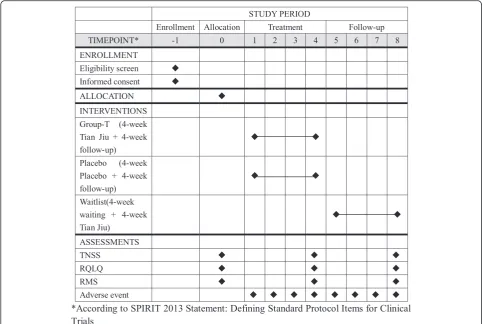
This will be a prospective, randomized, single-blinded, controlled trial in patients with AR. After a 1-week run-in period, eligible subjects will be randomly assigned to the TJ group, placebo-control group or waitlist-control group. Except for rescue medication (RM) drugs, no other routine medication use for AR symptom control will be permitted in the entire study.
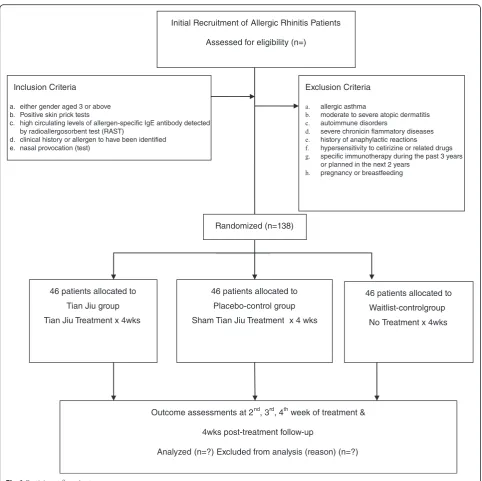
The TJ group will undergo a 4-week treatment with herbal patches for one session per week, and a 4-week post-treatment follow-up of one assessment session per week. The placebo-control group will undergo a 4-week treatment with placebo patches for one session per week, and a 4-week post-treatment follow-up of one as-sessment session per week. The waitlist-control group will receive no treatment during the first 4 weeks but, beginning at the fifth week, this group will receive TJ treatment for 4 weeks as compensatory. All groups will be assessed in the same way throughout the study period. The total study period will be 9 weeks. The par-ticipant flowchart is listed in Fig. 1 and parpar-ticipant time-line is listed in Fig. 2.
The study protocol has been approved by the Hong Kong Baptist University Ethics Committee on the Use of Human Subjects for Teaching and Research (Approval number HASC/13-14/0241), and informed consent was obtained from each participant.
Participants
Setting
The study will be conducted in the research and clinical centers, School of Chinese Medicine, Hong Kong Baptist University (HKBU). All participants will be recruited from the general public via daily outpatient services and advertisements in newspapers and on a website.
Inclusion criteria
Patients who have intermittent or persistent AR, who are 18 years of age or older, regardless of gender, race or educational and economic status will be included. The diagnostic criteria for AR for inclusion will be as follows according to the ARIA criteria [19]: (1) positive skin prick tests, (2) high circulating levels of allergen-specific IgE antibody detected by a specific blood test for allergy called a radioallergosorbent (RAST) test, (3) clinical his-tory or identified allergen, (4) nasal provocation (test). The lowest score of the Total Nasal Symptom Score (TNSS) should be 8 or above.
Exclusion criteria
reactions and hypersensitivity to cetirizine or related drugs, specific immunotherapy during the past 3 years or planned in the next 2 years, and pregnancy or breastfeeding.
Interventions
Medications
Participants in the TJ group will be treated with herbal patches on five acupoints on the back. The formula of the herbal patch consists of Bai Jie Zi (Sinapis semen),
Yan Hu Suo (Corydulis rhizoma), Zhi Gan Sui (Kansui
radix),Xi Xin (Asari radix et rhizama) andRengong She
Xiang (Moschus artifactus). The first four of these herbs
will be ground into a powder, mixed thoroughly with 20 %
Bai Jie Zi (Sinapis semen), 25 % Yan Hu Suo (Corydulis
rhizoma), 15 %Zhi Gan Sui (Kansui radix), and 40 %Xi
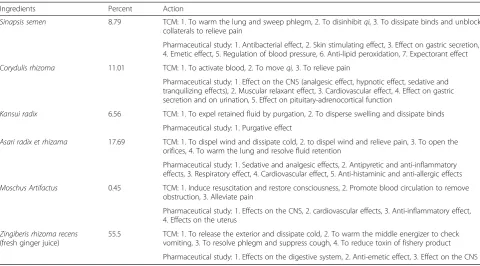
[image:3.595.57.540.84.565.2]water and made in to 1 cm2round patches weighing 2 g. Participants in the waitlist-control group will wait for 4 weeks and will not receive any treatment material. The composition and the action of each herb in the TJ herbal patches are listed in Table 1.
Acupoints
The choice of acupoints was based on a literature review and clinical practice. A survey conducted in 2010 by the School of Chinese Medicine at HKBU revealed that 60 % of patients who were suffering from AR or asthma found their symptoms were alleviated after receiving TJ ther-apy. Amongst the 812 people receiving TJ therapy, 558 (approximately 70 %) were suffering from AR or asthma. The survey covered 224 AR patients and 57 asthma pa-tients, and found that 60 % of each group reported that their symptoms were relieved [20]. The latest clinical study conducted in 2014 revealed that more than 50 % of patients suffering from AR obtained benefit after re-ceiving TJ therapy. The study found that, among the 3438 patients included in the survey, 52–67 % of the pa-tients with AR found that their symptoms were allevi-ated and 32–50 % of those surveyed reported that their body constitution had been improved [21].
Five acupoints will be used: Dazhui (GV 14), Feishu (UB 13) andShenshu(UB 23), on both sides of the body. A TJ patch will be applied to each acupoint, and left on for 2 hours. A 4 cm2piece of hypoallergenic tape will be used to stick one patch on one acupoint. After 2 hours the patches will be removed by our Chinese medicine practitioner (CMP). If a participant cannot tolerate the stimulation or suffers a allergic reaction, the patching time can be appropriately shortened. Names and details of acupoints are listed in Table 2.
Outcomes
The primary outcome will be the change in the weekly average of the Total Nasal Symptom Score (TNSS) re-corded in participants’ diaries from baseline to the end of treatment [22]. The TNSS consists of four nasal symptoms (rhinorrhea, nasal itching, nasal obstruction, and sneezing) using a five-point scale from 0 to 4 (0 = no symptom, 1 = mild, 2 = moderate, 3 = severe, 4 = very severe). The TNSS will be obtained from the sum of all four individual symptom scores, with a total possible score ranging from 0 (no symptoms) to 16 (maximum symptom intensity). This scoring system has been vali-dated [23, 24].
[image:4.595.56.539.88.412.2]The secondary outcomes will be changes in symptoms and changes in need for medication between baseline and the end of treatment. Symptoms will be assessed by using the RQLQ, which has 28 questions in seven domains (ac-tivity limitation, sleep problems, nasal symptoms, ocular symptoms, other symptoms, practical problems, and emo-tional function) ranked from 0 (no impairment) to 6 (se-vere impairment) [25]. Rescue medication need will be measured using an RM score (RMS), comprising the weekly sum of daily assessments. Rescue medicine usage will be scored daily on a four-point scale (0 = no rhinitis medicine; 1 = cetirizine, 10 mg/d, or equivalent; 2 = cetiri-zine, 20 mg/d, or equivalent; 3 = systemic or topical corti-costeroids for AR) (daily range; 0 to 3; weekly range: 0 to 21). If more than one RM is used on the same day, only the maximal score medication will be recorded [26].
For safety concern, we will record every adverse event during the treatment and follow-up, and make statistical comparisons. Treatment will be suspended immediately should serious adverse events occur. Further assessment will be needed to decide whether the trial should be suspended.
Randomization assignment
[image:5.595.57.538.97.363.2]This study is designed as a randomized, waitlist-control trial. Eligible participants will be randomly and equally allocated to one of the three groups: T (TJ) group, P (placebo) group, and W (waitlist-control) group. Ran-dom Allocation Software (version 1.0.0, Isfahan, Iran) will be used to generate a randomization scheme. The principal investigator (PI) will generate the random allo-cation sequence, and will not share it with other
Table 1Composition and action of Tian Jiu (TJ) herbal patches
Ingredients Percent Action
Sinapsis semen 8.79 TCM: 1. To warm the lung and sweep phlegm, 2. To disinhibitqi, 3. To dissipate binds and unblock
collaterals to relieve pain
Pharmaceutical study: 1. Antibacterial effect, 2. Skin stimulating effect, 3. Effect on gastric secretion, 4. Emetic effect, 5. Regulation of blood pressure, 6. Anti-lipid peroxidation, 7. Expectorant effect
Corydulis rhizoma 11.01 TCM: 1. To activate blood, 2. To moveqi,3. To relieve pain
Pharmaceutical study: 1. Effect on the CNS (analgesic effect, hypnotic effect, sedative and tranquilizing effects), 2. Muscular relaxant effect, 3. Cardiovascular effect, 4. Effect on gastric secretion and on urination, 5. Effect on pituitary-adrenocortical function
Kansui radix 6.56 TCM: 1. To expel retained fluid by purgation, 2. To disperse swelling and dissipate binds
Pharmaceutical study: 1. Purgative effect
Asari radix et rhizama 17.69 TCM: 1. To dispel wind and dissipate cold, 2. to dispel wind and relieve pain, 3. To open the
orifices, 4. To warm the lung and resolve fluid retention
Pharmaceutical study: 1. Sedative and analgesic effects, 2. Antipyretic and anti-inflammatory effects, 3. Respiratory effect, 4. Cardiovascular effect, 5. Anti-histaminic and anti-allergic effects
Moschus Artifactus 0.45 TCM: 1. Induce resuscitation and restore consciousness, 2. Promote blood circulation to remove
obstruction, 3. Alleviate pain
Pharmaceutical study: 1. Effects on the CNS, 2. cardiovascular effects, 3. Anti-inflammatory effect, 4. Effects on the uterus
Zingiberis rhizoma recens
(fresh ginger juice)
55.5 TCM: 1. To release the exterior and dissipate cold, 2. To warm the middle energizer to check vomiting, 3. To resolve phlegm and suppress cough, 4. To reduce toxin of fishery product
Pharmaceutical study: 1. Effects on the digestive system, 2. Anti-emetic effect, 3. Effect on the CNS CNScentral nervous systemTCMtraditional Chinese medicine
Table 2Acupoints used in the study
Name of acupoints Areas Special qualification Effects of stimulation Indications
Dazhui(GV 14) In a depression below the
processus spinosus of the 7th cervical and above the 1st thoracic vertebrae
A crossing point by which the leading sinartery communicates with all
yangconduits
Stabilising and regulating the
qiof centre; strengthening the hepatic and pulmonal orb, keeping the nasal passages open
Cough and asthma
Feishu(UB 13) 1.5cunlaterally of the processus spinosus of the 3rd thoracic vertebrae
Dorsal inductor (inductorium dorsale) for the pulmonal orb
Stabilising and harmonizing the pulmonal and the renal orb; regulating theqi; strengthening
theyin
Cough with asthma, common cold, nasal congestion
Shenshu(UB 23) 1.5cunlaterally of the 2nd lumbar vertebrae
Dorsal inductor of the renal orb
Strengthening and harmonizing the renal orb; improving hearing and clearing vision
[image:5.595.56.541.601.733.2]investigators. After the run-in stage, a research assistant (RA) will assign treatments according to the codes which are kept in opaque sealed envelopes with con-secutive randomization numbers. Emergency unblinding can only happen when the intervention information is compulsory for the participant’s future management.
Sample size
Sample size calculations are based on the primary out-come measurement. Since this is a pilot clinical study, the improvement rate of group W would obviously be 0. Subsequently, we assume that there will be 30 % im-provement of TNSS symptoms in group T and 15 % in group P. Considering a power of 80 %, and a alpha value of 2.5 % (two-tailed), the sample size will be calculated using the following formula:
n¼ 2λ
2 sin−1 ffiffiffiffiffiP t p
−2 sin−1 ffiffiffiffiffiffiP w p
2;
Theλis the cut-off value.Ptis 30 % andPwis 0. Then each group will need at least 38 subjects for significance to be detected [27]. Allowing for a 20 % dropout, we plan to recruit 46 subjects in each group, making a total of 138.
Data processing and analysis
All efficacy and safety analyses will be conducted accord-ing to the intention-to-treat (ITT) principle. Missaccord-ing values will be imputed by the last-observation-carried-forward method. The statistical analysis will be per-formed using the Statistical Packages for the Social Sci-ences (SPSS) for Windows, version 21.0. Statistical significance is defined as a two-sided P value of <0.05. Baseline characteristics will be reported as mean (SD). Comparisons between groups will be conducted by using an analysis of covariance (ANCOVA) with baseline as covariate. All items and subscales will be compared be-tween groups for each 4-week period using ANCOVA, with treatment group as a factor in the model and line as the covariate. The changes in scores from base-line to the end-point of treatment will be tested using
repeated measure analysis of variance (ANOVA).
Within-group differences will be assessed using a paired t test for normally distributed data and a Wilcoxon signed-rank test for non-normally distributed data.
Data collection and handling of withdrawal and dropout This is a 9-week clinical trial, in which subjects must take TJ for 8 weeks, attend five assessment visits, complete a set of questionnaires, and stop taking other medications for symptom control. All collected informa-tion will be input into a computer by a RA. In the
meantime, all the files will be stored in numerical order. Participant files will keep in storage for 5 years.
Considering maximization of participants’compliance, we will firstly run a thorough consent process for all subjects by interpreting the details of the trial schedule, potential adverse events, and the responsibilities of re-searchers and participants. In addition, before every visit, a RA will contact the subject to re-confirm the schedule. If a participant shows signs of wanting to withdraw, we would try to understand the possible reasons and aim to find the best option for encouraging the participant to remain in the study.
Discussion
TJ, also known as natural moxibustion is a conventional method of treating respiratory allergic diseases in TCM. The procedure is convenient and inexpensive. Thou-sands of people accept this treatment in China every year. Laboratory study has found that natural moxibus-tion treatment can reduce IgE and interleukin (IL)-4 levels in the plasma of asthmatic rats, as well as airway inflammation [28]. Clinical studies have found that TJ can modulate anti-inflammatory cytokines [17], and that it appears to work by neuro-immunological mechanisms. However, there have been no methodologically con-trolled clinical studies confirming the efficacy of TJ therapy.
Therefore, our team has designed this randomized, single-blinded, controlled trial to evaluate the effective-ness of TJ therapy for AR. To our knowledge, this will be the first study to compare TJ therapy with a placebo-control group, as well as a waitlist-placebo-control group.
We use pigmented flour mixed with water to make the sham TJ treatment. However, some articles mention that in many studies, sham acupuncture is equally effective as acupuncture [29, 30]. Although the sham TJ does not have the pharmacological effects, the operating proce-dures still causes a pressing sensation to the skin. Be-cause we use the same acupoints for both groups, pressing these acupoints may create an effect like the acupressure. Therefore, we have designed the study with three groups. One group (group T) will receive trad-itional TJ therapy, which means the application of herbal patches to specific acupoints on the skin. A second group (group P) will receive sham TJ therapy, which means the application of patches with an inert, similar appearance to the TJ patch on the same acupoints. A third group (group W) will not receive any treatment material in order to examine the influence of sham TJ on the study results.
to Consolidated Standards of Reporting Trials (CON-SORT) statement [31], the Standard Protocol Items: Standards for Reporting Interventions in Controlled Tri-als of Acupuncture (STRICTA) statement 2010 [32], and Standard Protocol Items: Recommendations for Inter-ventional Trials (SPIRIT) statement 2013 [33].
The results of this study are expected to provide con-solidated evidence for the effectiveness and safety of TJ for the treatment of patients with AR.
Trial status
At the time of manuscript submission the study is pre-paring to enroll participants; no patient has yet begun treatment.
Abbreviations
AR:allergic rhinitis; ANCOVA: analysis of covariance; CONSORT: Consolidated Standards of Reporting Trials; CMP: Chinese medicine practitioner; ITT: intention-to-treat principle; PI: principal investigator; RA: research assistant; RMS: rescue medication score; RQLQ: Rhinitis Quality of Life Questionnaire; SD: standard deviation; SPIRIT: Standard Protocol Items: Recommendations for Interventional Trials; SPSS: Statistical Packages for the Social Sciences; STRICTA: STandards for Reporting Interventions in Controlled Trials of Acupuncture; TNSS: Total Nasal Symptom Score.
Competing interests
The authors declare that they have no competing interests.
Authors’contributions
All authors participated in the design of the study and will perform the trial. KW and LZ drafted the manuscript. ZB will supervise and coordinate the clinical trial. KW and LZ are responsible for recruiting subjects. AL gave critical review and advice on the manuscript. LD will participate in assessing the subjects. CC will participate in randomization and statistical analysis. All authors read and approved the final manuscript.
Acknowledgements
The researchers gratefully acknowledge the financial support provided by the Marcoda Co. Ltd. Research Fund. The funding agency had no role in the development of the study design, data collection, or manuscript preparation for publication.
Received: 14 October 2015 Accepted: 15 April 2016
References
1. Anonymous. Worldwide variation in prevalence of symptoms of asthma, allergic rhino conjunctivitis, and atopic eczema: ISAAC. The International Study of Asthma and Allergies in Childhood (ISAAC) Steering Committee. Lancet. 1998;351:1225–32.
2. Weiss KB, Sullivan SD. The health economics of asthma and rhinitis. I. Assessing the economic impact. J Allergy Clin Immunol. 2001;107:3–8. 3. Van Cauwenberge P, Bachert C, Passalacqua G, Bousquet J, Canonica GW,
Durham SR, et al. Consensus statement on the treatment of allergic rhinitis. European Academy of Allergology and Clinical Immunology. Allergy. 2000;55:116–34.
4. Schoenwetter WF, Dupclay L, Appajosyula S, Botteman MF, Pashos CL. Economic impact and quality-of-life burden of allergic rhinitis. Curr Med Res Opin. 2004;20:305–17.
5. Bauchau V, Durham SR. Prevalence and rate of diagnosis of allergic rhinitis in Europe. Eur Respir J. 2004;24:758–64.
6. Zhang L, Han DM, Huang D, Wu YF, Dong Z, Xu G, et al. Self-reported prevalence of allergic rhinitis in eleven cities in China. Int Arch Allergy Immunol. 2009;149(1):47–57.
7. Dykewicz MS, Fineman S, Skoner DP, Nicklas R, Lee R, Blessing-Moore J, et al. Diagnosis and management of rhinitis: complete guidelines of the Joint Task Force on Practice Parameters in Allergy, Asthma and
Immunology. American Academy of Allergy, Asthma, and Immunology. Ann Allergy Asthma Immunol. 1998;81:478–518.
8. Passalacqua G, Bousquet PJ, Carlsen KH, Kemp J, Lockey RF, Niggemann B, et al. ARIA update: I–Systematic review of complementary and alternative medicine for rhinitis and asthma. J Allergy Clin Immunol.
2006;117:1054–62.
9. Schafer T, Riehle A, Wichmann HE, Ring J. Alternative medicine in allergies– prevalence, patterns of use, and costs. Allergy. 2002;57:694–700.
10. Le MS, Pittler MH, Shin BC, Kim JI, Ernst E. Acupuncture for allergic rhinitis: a systematic review. Ann Allergy Asthma Immunol. 2009;102(4):269–79. 11. Zhu XM. Application of intensive moxibustion with ginger paste. Zhongguo
Zhen Jiu. 2013;33(3):233–5. Chinese.
12. Xue CCL, Hugel H, Li CG, Story DF. Efficacy, chemistry and pharmacology of Chinese herbal medicine for allergic rhinitis. Curr Med Chem. 2004;11:1403–21. 13. Dai MY, Wang Y, Tao ZZ. Meta analysis of therapy effect of acupoint
application in treatments of patients with allergic rhinitis. Xiandai Sheng Wu Yi Xue Jin Zhan. 2014;14(25):4895–8. Chinese.
14. Shen X, Fu LX, Zhu Y, Zuo XH, Bian XK. Meta analysis of efficacy of sanfu patching in treatments of patients with allergic rhinitis. Henan Zhong Yi. 2013;33(3):449–52. Chinese.
15. Hsu WH, Ho TJ, Huang CY, Ho HC, Liu YL, Liu HJ, et al. Chinese medicine acupoint herbal patching for allergic rhinitis: a randomized controlled clinical trial. Am J Chin Med. 2010;38(4):661–73.
16. Hu N, Deng G, Xian PF. Effect of point application therapy on the life quality of patients with perennial allergic rhinitis. Shanghai J of Acupunct and Mox. 2012;31:100–2. Chinese.
17. Brinkhaus B, Hummelsberger J, Kohnen R, Seufert J, Hempen CH, Leonhardy H, et al. Acupuncture and Chinese herbal medicine in the treatment of patients with seasonal allergic rhinitis: a randomized-controlled clinical trial. Allergy. 2004;59:953–60.
18. Li YM, Zhuang LX, Lai XS, Jiang GH. Effects of electroacupuncture on plasma vasoactive intestinal peptide and substance P in perennial allergic rhinitis patients. Zhen Ci Yan Jiu. 2007;32(2):136–8. Chinese.
19. Lin J, Su N, Liu G, Yin K, Zhou X, Shen H, et al. The impact of concomitant allergic rhinitis on asthma control: a cross-sectional nationwide survey in China. J Asthma. 2014;51(1):34–43.
20. HKBU eNews. Chinese medicine research finds“Tianjiu”helpful in alleviating asthma. http://enews.hkbu.edu.hk/view_article.php?id=11539.
Accessed 21 Dec 2012.
21. HKBU eNews. HKBU clinical study finds Tian Jiu treatment helps relieve allergic rhinitis and bronchial asthma. http://hkbuenews.hkbu.edu.hk/ ?t=enews_details/689. Accessed 30 June 2014.
22. Park Y, Jo J, Hong K, Kang W, Choi S. Effect of acupuncture on nasal obstruction in patients with persistent allergic rhinitis: a randomized controlled trial. J Kor Acu Mox. 2005;22:229–39.
23. Xue CC, An X, Cheung TP, Da Costa C, Lenon GB, Thien FC, et al. Acupuncture for persistent allergic rhinitis: a randomised, sham-controlled trial. Med J Aust. 2007;187:337–41.
24. Ng DK, Chow PY, Ming SP, Hong SH, Lau S, Tse D, et al. A double-blind, randomized, placebo-controlled trial of acupuncture for the treatment of childhood persistent allergic rhinitis. Pediatrics. 2004;114(5):1242–7. 25. Juniper EF, Guyatt GH, Griffith LE, Ferrie PJ. Interpretation of rhino
conjunctivitis quality of life questionnaire data. J Allergy Clin Immunol. 1996;98:843–5.
26. Kuehr J, Brauburger J, Zielen S, Schauer U, Kamin W, Von Berg A, et al. Efficacy of combination treatment with anti-IgE plus specific
immunotherapy in polysensitized children and adolescents with seasonal allergic rhinitis. J Allergy Clin Immunol. 2002;109:274–80.
27. Yan H, editor. Medical statistics. 2nd ed. Beijing: People’s Medical Publishing House; 2010.
28. Li YM, Ling CM. Effects of natural moxibustion on cytokines and specific transcription factors in asthma rats. Zhongguo Zhen Jiu. 2014;34(4):379–83. Chinese.
29. Birch S, Hesselink JK, Jonkman FA, Hekker TA, Bos A. Clinical research on acupuncture. Part 1. What have reviews of the efficacy and safety of acupuncture told us so far? J Altern Complement Med. 2004;10:468–80. 30. Lund I, Lundeberg T. Are minimal, superficial or sham acupuncture procedures
acceptable as inert placebo controls? Acupunct Med. 2006;24:13–5. 31. Schulz KF, Altman DG, Moher D, CONSORT Group. CONSORT 2010
32. MacPherson H, Altman DG, Hammerschlag R, Youping L, Taixiang W, White A, et al. Revised STandards for Reporting Interventions in Clinical Trials of Acupuncture (STRICTA): extending the CONSORT statement. J Altern Complement Med. 2010;16(10):ST1–14.
33. Chan AW, Tetzlaff JM, Altman DG, Laupacis A, Gøtzsche PC, Krleža-JerićK, et al. Statement: defining standard protocol items for clinical trials. Ann Intern Med. 2013;2013(158):200–7.
• We accept pre-submission inquiries
• Our selector tool helps you to find the most relevant journal • We provide round the clock customer support
• Convenient online submission • Thorough peer review
• Inclusion in PubMed and all major indexing services • Maximum visibility for your research
Submit your manuscript at www.biomedcentral.com/submit
![INFO/C: [Consumer Policy and Health Protection] No 9, November 1993](data:image/gif;base64,R0lGODlhAQABAIAAAP///wAAACH5BAEAAAAALAAAAAABAAEAAAICRAEAOw==)