ISSN 2250-3153
Analysis of Developmental Seaweed Spores
(Kappaphycus alvarezii) on Culture Media Enriched
with a Combination of Nitrogen and Phosphate
Muhammad Sahir1), Rustam2), Gunarto Latama2)
1)Magister Program of Fisheries Science, Hasanuddin University 2) Marine Science and Fisheries Faculty of Hasanuddin University
Makassar – South Sulawesi.
DOI: 10.29322/IJSRP.9.07.2019.p9102
http://dx.doi.org/10.29322/IJSRP.9.07.2019.p9102
Abstract ̶ This study aims to determine the effect of comparative doses of enrichment of Nitrogen and Phosphate on Cyctocarp development and release of spores. This research was conducted in November 2018 to February 2019, in the Laboratory of Seaweed, the Brackish Aquaculture Center for Takalar (BPBAPT). The research location is in Mappakalompo Village, Galesong District, Takalar District, South Sulawesi Province. For analysis of N and P content in the media analyzed at the Laboratory of water quality at Hasanuddin University. The test organism or algae used is Talus seaweed which has a Cyctocarp of ± 3 cm long with ± 1.5 cm diamiter. The experimental container used was a glass bottle with a capacity of 100 ml.
This study used a completely randomized design (CRD) with 6 treatments and 3 replications. A (No enrichment (SW)), B (1N = 0.5 ppm: 1P = 0.5 ppm), C (2N = 1 ppm: 1P = 0.5 ppm), D (3N = 1.5 ppm: 1P = 0.5 ppm), E (1N = 0.5 ppm: 2P = 1 ppm), and F (1N = 0.5 ppm: 3P = 1.5 ppm). Duration of study used for 70 days.
The results showed that the differences in the ratio of enrichment of Nitrogen and Phosphate, showed no significant difference between treatments (p> 0.05). The best treatment was found in C with Cyctocarp development time 14 days and average number of spore release 7.67 ± 1.53b.
Keywords: Kappaphycus alvarezii., Nitrogen, Phosphate, Cyctocarp Development, Spore Release.
I. INTRODUCTION
Seaweed (K. Alvarezii) as an algae that lives in the waters, besides being influenced by good environmental factors, also requires several important nutrients in the right amount and balanced so that production reaches the optimal level. In order to utilize spores in seaweed cultivation, data on the production of spores produced by K. alvarezii should be obtained in a more controlled condition. This is so that the results obtained are more accurate.
To meet the nutritional needs of K. alvarezii, additional nutrients can be used to support Cyctocarp development and the rate of release of seaweed spores. K. alvarezii in its growth is in need of Nitrogen and Phosphorus. The benefits of nitrogen and phosphate for the growth of seaweed cannot be replaced with other elements. This is due to the role of nitrogen as a constituent of protein and phosphate as a provider of energy (Lakitan, 2010). Meanwhile, the two
elements are very limited in number and are said to be limiting factors (Yunus, et al, 2010). This is what underlies the need for research to enrich nutrients in the right amount and balanced. The right balance of nutrients (N and P) is expected to have a positive effect on the release and development of K. alvarezii spores.
Formulation of the problem:
1. K. alvarezii seaweed Cyctocarp experienced
developmental delay because there was not enough macro nutrients in the form of N and P in the media in the right amount and balanced.
2. Proper and balanced availability of nitrogen and phosphate in the media can inhibit the release rate of K. alvarezii Seaweed spores.
II. THE RESEARCH METHOD
This research was conducted in November 2018 to February 2019, in the Laboratory of Seaweed, the Brackish Aquaculture Center for Takalar (BPBAPT). The research location is in Mappakalompo Village, Galesong District, Takalar District, South Sulawesi Province. For analysis of N
and P content in the media analyzed at the Laboratory of water quality at Hasanuddin University.
ISSN 2250-3153
using ± 100 ml seawater which was given 1% iodine for 3 minutes, then rinsed 3 times.
The experimental container used was a glass bottle with a capacity of 100 ml but only filled with 80 ml of media. Before using other containers and tools washed to avoid possible contamination during the research process. The container is then cleaned by using tissue that has been given alcohol along with all the tools used. The next stage, all research equipment was sterilized by autoclaving at 121ºC for 1 hour.
The process of making N and P solutions begins with making a stock solution of 500 ppm each. Determination of stock doses can be determined using the formula:
ppm = Weight of soluteSolution weight x 1.000.000
Water is used to make each stock solution using aquabides. Each stock solution is made 500 ml each. Aquabides are used as much as 500 ml and placed in a measuring cup with a capacity of 1000 ml or 1 liter of water. Element N (NaH2PO4) was used as much as 1 mg then put into aquabides prepared. The stock media, heated by using a hot plate and magnetic stirrer as a stirrer during the heating process. The heating process is carried out for ± 10 minutes (until the solution boils). The same is done for making P elements (NaNo3).
The cooled stock solution is then used as a solution for making maintenance media. Dilution of the stock solution is used according to the dosage in each treatment. The desired dose is determined using a dilution formula, namely: M1 X V1 = M2 X V2.
Known:
M1 = Initial substance concentration V1 = Initial volume
M2 = Concentration after dilution V2 = Volume after dilution.
After the calculation of media dilution, 3 doses of concentration were made, namely 0.5 ppm, 1 ppm, and 1.5 ppm. Based on these doses, the amount of stock solution used is 0.5 ml, 1 ml, and 1.5 ml. The dosage determination was also carried out on P elements. Each study container will be filled with 80 ml of media water with a ratio of 50:50. So each
concentration of comparison will be used 40 ml for the concentration of N and 40 ml for P.
In the maintenance process the talus is carried out in a closed and controlled room with a temperature of 30ºC. The salinity used in the media is ± 31 ppt, the salinity is considered the best salinity in the process of releasing spores and the growth of seaweed (Hariyati, 2014). Talus which is kept in a glass bottle and then installed a raffia rope as a substrate for spores that have been released.
The lighting source will use 18 watt fluorescent lamps with ± 1000 lux light intensity (Syamsuddin, 2013). According to Prihatman (2000), fluorescent lamps produce larger light with lower power than incandescent lamps. This lamp has a lower temperature than an incandescent lamp so it is suitable for supplying light to plants. Lighting settings (dark and light) are adjusted to conditions in nature, namely: 12 hours of light and 12 hours of darkness using a timer. Media water changes are carried out every 7 days or when a change is needed at any time. Observation of Cyctocarp development is done by observing its development once every day.
The spores produced in each study container were observed using a microscope once a day with 40x magnification on a microscope. If the spores produced are small, manual calculation is done through direct observation of the substrate using a microscope. More spores and manual calculations are difficult, so they are calculated using Haemocytometer and converted into formulas to determine the density of spores / ml. Spore density per ml was calculated using the formula Gabriel & Riyatno (1989) as follows:
C = N X 0,25 x 10^6 t
Known:
C = Spore density / ml per ml solution.
t = The total number of spores in the sample box observed.
N = Number of sample boxes observed.
0,25= Is a use correction factorsmall scale sample box inside Haemocytometer.
III. RESULTS
A. Development of Cyctocarp.
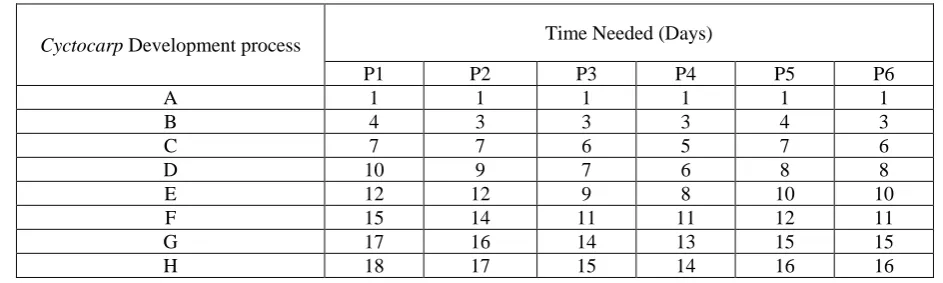
[image:2.595.60.532.645.786.2]The time needed for Cyctocarp development in each treatment is presented in Table 1.
Table 1. The time needed for Cyctocarp development in each treatment.
Cyctocarp Development process Time Needed (Days)
P1 P2 P3 P4 P5 P6
A 1 1 1 1 1 1
B 4 3 3 3 4 3
C 7 7 6 5 7 6
D 10 9 7 6 8 8
E 12 12 9 8 10 10
F 15 14 11 11 12 11
G 17 16 14 13 15 15
ISSN 2250-3153
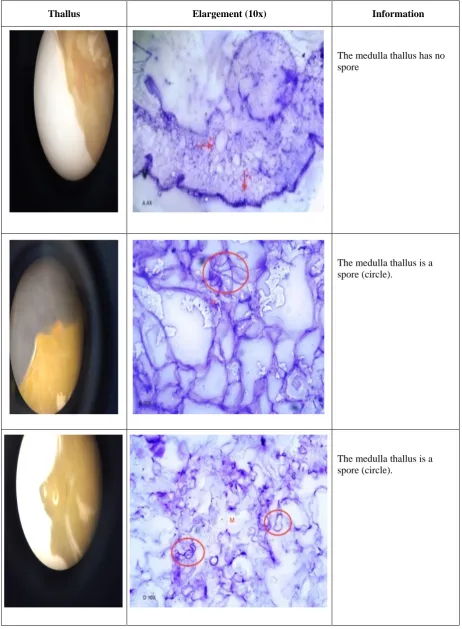
[image:3.595.67.530.120.749.2]The process of developing Cystocarp and spores produced based on the results of observations or histological tests in each of its developments, are presented in Table 2.
Table 2. The process of Cystocarp development based on observations and histological tests.
Thallus Elargement (10x) Information
The medulla thallus has no spore
The medulla thallus is a spore (circle).
ISSN 2250-3153
The medulla thallus is a spore (circle).
The medulla thallus has no spore
The fastest development of Cytocarp in releasing spores is found in treatment D, it only takes 14 days to get to the spore release stage. Comparison of the addition of N and P in media with a ratio of 3: 1 is considered the best treatment of all treatments. This is because the time needed by Cyctocarp to develop faster than other treatments. Faster development is due to the content of N three times more than the element P given. This opinion is in accordance with the statement from Wibowo et al., (2009), that an appropriate comparison in the waters between elements N and P, where element N is three times greater than the element P. Not fulfilling one element will result in a decrease in the quality and quantity of production.
Nitrogen and phosphate are very important for seaweed in regulating metabolism and reproduction. Growth can be achieved well if seaweed is sufficient for nitrogen and phosphate. Seaweed can utilize nitrogen and phosphate through the diffusion process in all parts of the body (Djafar, 2011). The more often seaweed absorbs nitrogen and phosphate in maintenance media, the faster the growth and maturity of Cyctocarp. Nitrogen and phosphate are very important for seaweed in regulating metabolism and reproduction. Growth can be achieved well if seaweed is sufficient for nitrogen and phosphate. According to Yu and Yang, (2008), that the utilization of nitrogen and phosphate by
seaweed is not only from the concentration in the environment, but also with the concentration of internal nitrogen and phosphate in the talus tissue of seaweed.
Nitrogen seaweed extraction and storage can be affected by concentrations of inorganic nitrogen in water. Low concentrations of nitrogen and phosphate in the environment cannot meet the need for seaweed for nitrogen and phosphate for further use, but seaweed has the ability to assimilate and store nutrients from its environment especially at low concentrations (Sakdiah, 2009). Among the elements in nature, N and P elements are the most important elements and are also the main factors that determine water fertility (Handayani, 1999). According to Sidabat (1973), nitrogen is an element that plants need in the process of photosynthesis, also an important component in protoplasm. Based on various statements, it can be seen that the benefits of the elements N and P play a significant role in the development and growth of Cyctocarp K. alvarezii. These statements also show that treatment D, which is the ratio of N and P to media with 3: 1, can be considered the best treatment of all treatments.
ISSN 2250-3153
Spore release data Gathering sea K. alvarezii with different comparison of N and P content, in each treatment is
shown in Annex 3. The average yield of spore release is then presented in picture 1.
Picture 8. Average amount of K. alvarezii spore release in each treatment.
Description: The same letter shows the treatment does not have a significant effect (p> 0.05) on the Amount release of K. alvarezii spores.
The high number of spores produced in treatment D was compared to other treatments, with the average spores which were successfully released from 7.67 ± 1.53b, because the nitrogen and phosphate content in the talus increased. Giving N and P to media with a ratio of 3: 1 provides better nutrition for Cyctocarp. Based on the treatment of nutrition it was seen that the nitrate value in treatment D was 0.282 ppm. This is in the opinion of Boyd (1990), the lowest tolerance limit of nitrate for algal growth is 0.1 ppm while the highest limit is 1 ppm. Mean while ammonium levels in the media were 0.0015 higher than other treatments. The content is also still in a good level for seaweed. Hartomo & Widiatmoko (1994) stated that ammonium levels that are feasible for seaweed growth are 0.5 ppm.
The entry of nitrogen into the body tissues of seaweed through a diffusion process that occurs in all parts of the seaweed thalli. The diffusion process is the transfer of ions from one place to another (Salusbury and Ross, 1992). The absorbed nitrogen is processed through stages, namely: nitrogen fixation, nitrification, assimilation, and denitrification and ammonification. The process of fixation, nitrification, denitrification and ammonification is generally carried out by bacteria, while the assimilation process is carried out by plants including algae (Iksan 2005).
In addition to the nitrogen content in the media, seaweed also requires a certain level of phosphate as a provider of energy (Lakitan, 2010). Energy in seaweed is needed in sufficient quantities to be able to release spores. Phosphate in the media containing 4.0859 ppm is still good in the process of
spore release. According to Gusriana (2006), the proper range of phosphate for seaweed growth is 0.9-1.8 ppm. While according to Effendi (2003) the range is 0.02-1 ppm. The high phosphate content in the media does not make seaweed respond negatively. This is because algae is able to absorb phosphate beyond its needs (Luxury consumtion) and besides it is also able to absorb phosphate at very low concentrations. This is because algae have alkaline phosphatase enzymes which can convert phosphate to orthoposphate which is ready to use. This is one of the causes of the fast depletion of orthoposphate in the waters. Phosphate deficiency will be more critical for aquatic plants including algae (Djafar, 2011).
Yu and Yang (2008) state that increased nutrient supply can improve the physiological process of seaweed, which in turn can increase assimilation. Nitrogen and phosphate added to the media and into research containers are utilized by seaweed. Increased nutrition in the talus of seaweed makes the Cyctocarp in treatment D release more spores than other treatments. Although each treatment is considered successful in the process of releasing spores. However, the results obtained are considered still not optimal. This is suspected because the need for other nutrients is still not fulfilled for seaweed. To grow and develop, seaweed also needs a variety of essential nutrients to support the growth and reproduction process. There are several important nutrients found in PES fertilizers which are also needed by seaweed such as vitamin B12, Thiamine, Biotin, MnSO4, H2BO3, ZnSO4, CoSO4, and Fe (Inscription, 2016). These various
nutrients are thought to be limiting factors for not yet optimal spores produced
by each treatment.
CONCLUSION
Based on the results of research that has been done, it can be concluded that:
Treatment D with a ratio of N and P elements of 3: 1 was the best treatment of all treatments, in the fastest Cyctocarp development process with 14 days and spore release 7.67 ± 1.53b.
SUGGESTION 3,67±1,53a
5,67±1,53a
6,67±1,15ab
7,67±1,53b
5,00±2,00a
4,67±1,53a
0.00 1.00 2.00 3.00 4.00 5.00 6.00 7.00 8.00 9.00
A B C D E F
T
ot
al
S
p
or
e
ISSN 2250-3153
In order for the amount of nutrients to be given, N and P needs to be given as needed from K. alvarezii seaweed. In addition, it is also recommended to review the comparison of N and P elements with more varied doses to obtain the optimal
dose. And in the future in order to pay attention to other nutrients in supporting the growth and development of seaweed.
REFERENCES
Boyd, C.E. 1990. Water Quality in Ponds for Aqua-culture. Birmingham Publishing Co. Birming-ham, Alabama. Djafar, F. 2011. Study of retention of seaweed nitrogen and
phosphate (Kappaphycus alvarezii) at various speeds of water flow. Thesis. Aquatic Sciences Study Program Graduate School, Bogor Agricultural Institute, pp. 41-43. Bogor, West Java.
Effendi, H. 2003. Review of Water Quality for Management of Water Resources and Environment. Kanisius. Yogyakarta.
Gabriel B.P dan Riyatno. 1986. Metarhiziumanisopliae (Metch) Sor: Taxonomy, Pathology, Production and Application. Jakarta: Directorate of Plantation Crop Protection. Agriculture department.
Gusriana. 2006. Seaweed Cultivation. Sinergi Pustaka, Bandung.
Handayani, S. 1999. Characteristic studies of nutrients dissolved in the waters of Tanjung Kelor, Jepara. Bandung Institute of Technology. Bandung.
Hariyati,R.2014. Effect of Differences in Salinity on the Amount of Spores of Gracilaria sp. Department of Biology, Faculty of Science and Mathematics, Diponegoro University. Proceedings of the Entrepreneurship National Seminar Page: 248-254.
Hartomo & Widiatmoko. 1994. Membrane Technology. Andi Offset, Yogyakarta.
Iksan K. 2005. Study of Growth, Production of Seaweed (Eucheuma cottoniii), and Content of Carrageenan in various Seed Weights and Origin of Talus in the Waters of the Village Teachers of North Maluku Oba. [Thesis]. Bogor: Postgraduate Program, Bogor Agricultural Institute.
Lakitan B. 2010. Basics of Plant Physiology. Raja Grafindo Persada. Jakarta.
Prasasti C.E. 2016. Effect of Concentration of Formulation of Growth Regulating Substances (ZPT) Indole Acetic Acid (IAA) and Benzyl Adenim (BA) on Growth of Seaweed Callus Eucheuma cottonii Through Invitro Culture. Essay. Degree program. Muhammadiyah University of Malang.
Prihatman, K. 2000. Light Manipulation to Stimulate Growth of Water Plants. Office of Deputy Minister of Research and Technology in the Field of Utilization and Correctional Sciences and Technology (BAPPENAS). Jakarta. 13 p.
Sakdiah M. 2009. Utilization of Total Nitrogen Waste of Vaname Shrimp (Litopeneus Vannamei) by Seaweed (Gracilaria verrucosa) in Polyculture Cultivation System. [Thesis]. Bogor: Postgraduate Program, Bogor Agricultural Institute.
Salisbury FB, Ross CW. 1992. Plant Physiology. Diah RL and Sumaryono translations. ITP. Bandung
Sidjabat,M.M.1973. Introduction to Oceanography. Bogor Agricultural Institute. Bogor. Thing 17.
Syamsuddin,R.2013.SPORE Discharge and Development, and Carrageenan Content Of Seaweed Kappaphycus alvarezii Illuminated With Different Light Colours. Faculty of Marine Sciences and Fisheries, Hasanuddin University. Makassar.
Wibowo, EK, Suryono, dan Endah Setianingrum MR. 2009. Application of Differences in the Composition of N, P and K in the Cultivation of Eucheuma cottonii in Teluk Awur, Jepara. Department of Marine Sciences, Faculty of Fisheries and Marine Sciences, Diponegoro University, Tembalang Campus, Semarang, Indonesia. Vol. 14 (3): 164 -169.
Yu J, Yu FY. 2008. Physiological and biochemical response of seaweed Gracilaria lemaneiformis to concentration changes of N and P. Journal of Experimental Marine Biology and Ecology 367. hlm 142–148.
Yunus, Indah Wahyuni Abida, dan Firman Farid Mushoni. 2010. Effect of Phosphate (TSP) on Echeuma
cottonii Seaweed Growth. Department of Marine