International Journal of Scientific and Research Publications, Volume 9, Issue 9, September 2019 613 ISSN 2250-3153
Variability Affecting Mathematics Performance
Of Grade 7 Students Of Selected Public High School
In Las Piñas
Reden P. Roma*
*Graduate School, University of Perpetual Help System-DALTA
**Department of Education, Faculty, TS Cruz, Lydia Aguilar National High School
DOI: 10.29322/IJSRP.9.09.2019.p9380 http://dx.doi.org/10.29322/IJSRP.9.09.2019.p9380
Abstract- The study was conducted to determine the significant relationship between teacher-respondents’ attitude, Proficiency, Instructional Practices, and Strategies in Teaching Mathematics towards the performance of Grade 7 students in selected public junior high school in the Division of Las Piñas, using quantitative descriptive correlational as a research design. Purposive sampling technique was used in choosing teacher-respondents and a stratified random sampling technique was also used for specific student-participants. The participants were the selected 382 students’ and 42 teachers teaching Grade 7 Mathematics with complete data which were considered in this study. Descriptive and inferential statistics and relevant literature and studies were utilized to analyze and interpret the data gathered. Significant findings revealed that the performance of students in Mathematics is Satisfactory. Furthermore, results revealed that the teachers Strongly Agree that they treat their students with equity and Agree that they have positive classroom management. Moreover, teachers were found Proficient in Grade 7 topics in Mathematics. It was also revealed that teachers had Often for instructional practices and teaching strategies in active learning, cognitive activation and teacher-directed instruction respectively. The significant relationship between the student’s performance and the teacher-respondents’ variability bore no significant relationships. Thus, it negates the significant correlation on teacher factors towards student performance. It is recommended to always use instructional materials and the teaching strategies to rectify Mathematics teaching that has recognized the importance of addressing effectively the current issues in connection to the totality of the teaching and learning process, by emphasizing the learner-centered curriculum to uplift the student’s academic performance in Mathematics.
Index- Attitude, Instructional Practices, Mathematics Performance, Proficiency, Strategies. I - INTRODUCTION
Mathematics played a major role in modern society in its global modernization and technologically advanced in economics. It is primarily significant to modern society that provides the essential foundational knowledge in the economy. It is also necessary for the physics and related sciences, Information and Communications Technology, financial services, business, and technology. It also has the expanding usefulness in biology, social sciences, as well as in medicine. Mathematics became the foundation of most industrial and scientific research and advanced state of development. To a greater extent, numerous structures and most complex systems in the contemporary world can only be implicit using mathematics, and most of the modern and high-in or technologically design system relied on mathematical products as stated in, Role of Mathematics in the Development of Society, Fatima (n.d.).
ISSN 2250-3153
professional development progress should organize as well as administered regularly to constantly improved the teacher's knowledge and skills (Philippine Government Official Gazette).
In modern times, the expansion of mathematical methods in any field of sciences became more abstract and complex. Thus, it is necessary for all schools to have a curriculum that creates a great demand for mathematical training. Moreover, continuous professional development and training in a research-based and learner-centered curriculum are vital to develop and understand the differences of the continuous changes on the learner's performance towards learning the subject matter individually, and it is also essential for the teachers to have differentiated teaching strategy to address the diverse learners in achieving their goals.
The level of mathematics in junior high school has its own distinctive character particularly in the development in critical thinking which takes place in every grade level. Most especially in grade 7 as foundation of developing the learners’ numeracy skills. A student who entered the 7th grade is mostly immature, wherein this stage, the students’ development is critical on the part of the teachers in teaching mathematics. In four years in junior high school, students are expected to be acquainted with many of the most important mathematical ideas that exist upon entering the 11th grade in senior high
mathematics, as observed in the University of Chicago School Mathematics Project (UCSMP).
The country’s first participation in the International Mathematics Olympiad (IMO) for high school students in 1988, showed continuous improvement on its performance, from 2015 of rank 36 to rank 17 in 2016 to 2018. More than 100 countries participated in the IMO in 2018, which is held annually since 1959.
Also, in 2018 the Philippines won the gold medal in Singapore International Math Olympiad (SIMOC), from different categories, held at Canadian International School, Lakeside Campus, Singapore in its 4th-year run participated by
16 countries in Asia. It observed that many Filipino students excel in mathematical skills individually as they participated in different international mathematics contest.
However, the Trends in International Mathematics and Science Study (TIMSS) as revealed the country’s last participation in the said event in 2003, the Philippines is left behind in neighboring countries in Asia, like Korea, Singapore, Japan, Hong Kong (SAR- Special Administrative Region), Chinese and Taipei, which continuously improved in the comprehensive examination called TIMSS.
Nevertheless, with regard to the significant performance among Filipino students, there are still a lot of students who suffer in their mathematics subjects, despite the teachers’ effort of using different intervention strategies to cater the needs of the slow learner and with difficulties to learn in Math, to cope with their learning style and attitude. Thus, teaching and learning process would be more interactive and more efficient. The use of appropriate different technology advancements like electronic gadgets, computer, modern calculators, and the internet is also integrating with teaching mathematics and recognized by the DepEd to improve the learners learning capability of the students.
Locally speaking, in the Division of Las Piñas, based on the quarterly Assessment or the Periodical Test given by the Schools Division Office, Mathematics is one on the bottom lines or had the lowest scores in terms of Mean Percentage Score (MPS). This similar problem almost occurred in the majority of public schools from the said division which the researcher noticed. It identified as a long-time problem in grade 7 mathematics that has always low in MPS.
Consequently, the negative results prompted the researcher to find out if the teachers’ variability might have influenced the performance of the students in preparing them into the next phase or next grade level in learning Mathematics. With these problems, the researcher’s interest is to pursue this study in finding out the factors that affects the mathematics performance among grade 7 students, considering the learners’ individual differences, and the shifting of environment from elementary to secondary education, a stage of growth and development (adolescence period) and capabilities in a learner-centered curriculum of K-12 program. Likewise, it is also to address the professional development of the teachers’ in attitude, proficiency, instructional practices, and strategies in teaching mathematics, since there were fewer studies conducted about the teacher’s factors that may be contributed or affects the student’s performance in mathematics.
II – METHODOLOGY
A descriptive-correlational design was utilized in this study to investigate the variability that affects the performance of grade 7 students in mathematics.
The total teacher-respondents of the study was forty-two (42) grade 7 mathematics teachers, teaching Mathematics 7 classes from the different public junior high schools in the Division of Las Piñas and 382 student-respondents, selected through random sampling.
There are different sources of data for this study. The main instrument in gathering and collecting the desired data was adapted and modified from the three (3) sources. First, from "Pan-Canadian Assessment Program Main Administration
2010 Teacher Questionnaire”, by Council of Ministers of Education, Canada, 2010, Toronto, ON: Author Copyright 2010
ISSN 2250-3153
with the investigation of classroom practices for Mathematics Teachers that feature the existing three strategies in teaching:
Active Learning, Cognitive Activation, and Teacher-directed Instructions. Third, from “Teacher Affective Attitudes
Inventory: Development and Validation of a Teacher Self-Assessment Instrument” by King (2017) of Antioch University
Repository and Archive. On the initial scale for positive relationships in attitude towards equity is a set of a teacher’s disposition about equitable treatment of students and attitudes towards classroom management for a classroom environment.
This instrument addressed to teachers of mathematics about their academic and professional backgrounds, such as Attitudes towards teaching mathematics, Proficiency in teaching mathematics, instructional practices, and strategies in teaching mathematics. The researcher used it for the survey in grade 7 mathematics teachers in the division of Las Piñas. The researcher also gathered the final mathematics grades of selected grade 7 students that are included in this study.
III – RESULTS AND DISCUSSIONS
[image:3.612.56.461.232.284.2]Data for this study was presented as follows:
Table 1: Mathematics Performance of Selected Grade 7 Students
Mean sd Descriptive Rating
81.33 4.263 Satisfactory
Descriptors: 90-100 Outstanding, 85-89 Very Satisfactory, 80-84 Satisfactory, 75-79 Fairly Satisfactory, Below 75 Did Not Meet Expectations
[image:3.612.55.491.450.609.2]There are 382 grade 7 students who participated in the study. It can be seen from Table 1 that the mean score of the selected grade 7 students is 81.33 and interpreted as satisfactory. It signifies that the selected grade 7 students' performance is approaching proficiency based on the DepEd Order No.31 s. 2012 for the levels of proficiency. Hence, the proficiency performance of grade 7 student’s needs to be enhanced to support the adherence of the K-12 curriculum for the use of the spiral progression approach in ensuring the mastery of knowledge and skills for grade 7 students. It is also associated, with the study of Idowu (2016) that one of the factors is the teacher qualification and its method and approach in teaching mathematics contributed to the poor performance of the students. Furthermore, Also, Koshal, Koshal, and Gupta (2013) suggest that aside from increased investment in education there are also other socio-economic factors that need attention, like attendance to improve students’ performance academically.
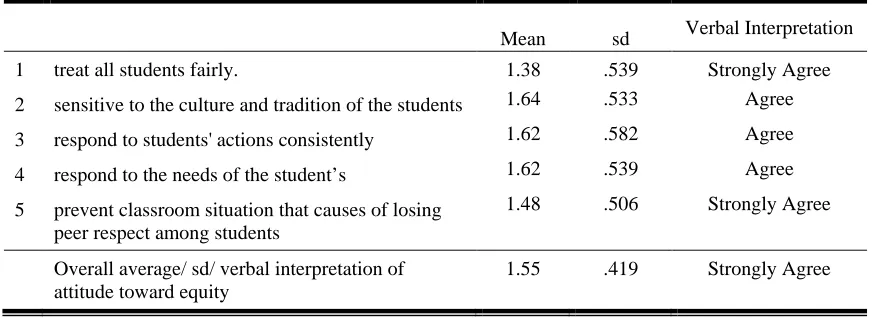
Table 2: Descriptive Statistics for the Attitudes Towards Equity
Mean sd Verbal Interpretation
1 treat all students fairly. 1.38 .539 Strongly Agree
2 sensitive to the culture and tradition of the students 1.64 .533 Agree
3 respond to students' actions consistently 1.62 .582 Agree
4 respond to the needs of the student’s 1.62 .539 Agree
5 prevent classroom situation that causes of losing peer respect among students
1.48 .506 Strongly Agree
Overall average/ sd/ verbal interpretation of attitude toward equity
1.55 .419 Strongly Agree
Legend: 1- Strongly Agree, 2- Agree, 3- Disagree, 4- Strongly Disagree
The results show that among the five items, two have Strongly Agree are, treat all students fairly and prevent classroom situation that causes of losing peer respect among students. And three items having the same result as Agree
which points to, sensitive to the culture and tradition of the students, then having the same Mean with, respond to students' actions consistentlyand followed by respond to the needs of the student’s, which all appear to be the other prevailing attitude of the teacher-respondents.
ISSN 2250-3153
[image:4.612.61.488.105.278.2]the teacher's attitude rather than the behaviour. Likewise, the study of Yavuz, Demirtasli, Yalcin, and Dibek (2017), Ganal and Guiab (2014) that the positive attitude of the teacher significantly affects the student's achievement.
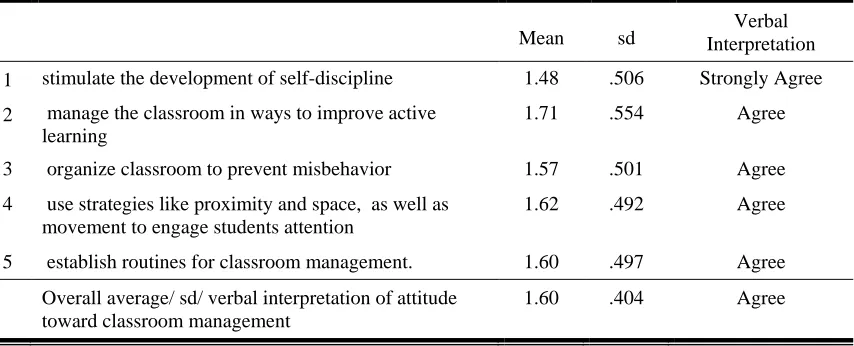
Table 3: Descriptive Statistics for the Attitudes Towards Classroom Management
Mean sd Interpretation Verbal
1 stimulate the development of self-discipline 1.48 .506 Strongly Agree
2 manage the classroom in ways to improve active learning
1.71 .554 Agree
3 organize classroom to prevent misbehavior 1.57 .501 Agree
4 use strategies like proximity and space, as well as movement to engage students attention
1.62 .492 Agree
5 establish routines for classroom management. 1.60 .497 Agree
Overall average/ sd/ verbal interpretation of attitude toward classroom management
1.60 .404 Agree
Legend: 1- Strongly Agree, 2- Agree, 3- Disagree, 4- Strongly Disagree
As seen from table 3, it summarizes the overall interpretation in terms of descriptive statistics for the attitudes towards classroom management as Agree with only one item rated as Strongly Agree in the aspect of stimulate the development of self-discipline, among other five items. This connected to what King ( 2017,) emphasized from the two key factors from the developed instrument, the Positive Relationships and the Classroom Environment the critical role of the teacher in setting a positive classroom environment as a learning stimulus about classroom management.
Table 4: Descriptive Statistics for Proficiency Level in Teaching Mathematics
Mean sd Interpretation Verbal
1 Sets (operations and relations) 1.98 .563 Proficient
2 Real Numbers: Operations on Integers and Rational Numbers
1.93 .558 Proficient
3 Subsets of the Real Numbers, Scientific Notation 2.05 .623 Proficient
4 Measurement: converts from one unit to another both Metric and English system
2.14 .608 Proficient
5 Fundamental Algebra: Translating and evaluating an algebraic expression, Algebraic Expression, and Polynomials
1.86 .647 Proficient
6 Fundamental Algebra: Operations on Polynomials 1.81 .634 Proficient
7 Linear Equations and Inequalities in one variable: Solving Equations and Inequalities
1.93 .601 Proficient
8 8. Basic geometrical concepts and property, angles (pairs), parallel lines and transversals
1.95 .661 Proficient
9 Relations in Geometry: relations involving segments and angles, triangles (angle and sides),
quadrilaterals, polygons, and circle
2.05 .661 Proficient
10 Statistics: collecting, organizing of data, measures of variability and the central tendency for the group and ungroup data
1.93 .558 Proficient
Overall average/ sd/ verbal interpretation of proficiency in teaching Mathematics
ISSN 2250-3153
Legend: 1- Exemplary, 2- Proficient, 3- Approaching Proficient, 4- Developing
[image:5.612.61.499.176.442.2]Table 4 illustrates the overall level of the teacher-respondents' proficiency in teaching Mathematics with 1.96 mean scores interpreted as Proficient, less one step closer to Exemplary. Consequently, the study of Lester (2013), citing several other researchers, and Foster (2010) underscore the importance of teacher's knowledge and proficiencies specifically to the mathematical and pedagogical knowledge as tools to improve the student's academic performance. This is also implied from the study of Sogillo et al. (2016), in evaluating the secondary mathematics teachers, showed proficient in all seven (7) learning domains but significantly different when students' performance was also evaluated in different schools.
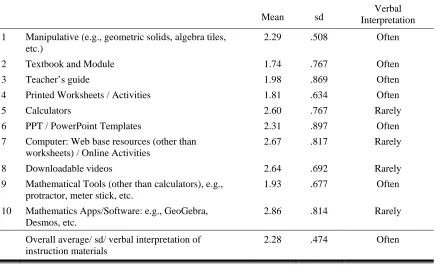
Table 5: Descriptive Statistics for Instructional Materials as Instructional Practices use in Teaching Mathematics
Mean sd Interpretation Verbal
1 Manipulative (e.g., geometric solids, algebra tiles, etc.)
2.29 .508 Often
2 Textbook and Module 1.74 .767 Often
3 Teacher’s guide 1.98 .869 Often
4 Printed Worksheets / Activities 1.81 .634 Often
5 Calculators 2.60 .767 Rarely
6 PPT / PowerPoint Templates 2.31 .897 Often
7 Computer: Web base resources (other than worksheets) / Online Activities
2.67 .817 Rarely
8 Downloadable videos 2.64 .692 Rarely
9 Mathematical Tools (other than calculators), e.g., protractor, meter stick, etc.
1.93 .677 Often
10 Mathematics Apps/Software: e.g., GeoGebra, Desmos, etc.
2.86 .814 Rarely
Overall average/ sd/ verbal interpretation of instruction materials
2.28 .474 Often
Legend: 1- Always, 2- Often, 3- Rarely, 4- Never
On the average scale, table 5 for instructional materials used in teaching mathematics results show an overall average of 2.28 with the verbal interpretation of Often. These in terms of Manipulative (e.g. geometric solids, algebra tiles, etc.) with mean of 2.29, Textbook and Module with mean of 1.74, Teacher’s guide with mean of 1.98, Printed Worksheets/ Activities with mean of 1.81, PPT/ Powerpoint Templates with mean of 2.31 and Mathematics Apps/Software e.g. GeoGebra, Desmos with mean of 2.89. However, Rarely used are calculators, computer: web-based resources (other than worksheets) / online activities downloadable videos and mathematics apps/software. These relate to the study of Mouza and Lavigne (2012), Hoge (2016), Mercado (2017), Bonifacio (2013) about the importance of using technology- aided learning materials as interventions or as means to enhance classroom interaction to motivate the students to produce the desired output, especially in mathematics. This suggests that, Leinward et al., (2014), the effective mathematics teaching practices are; entrenched mathematics aims to focus on learning, provide exercises that can improve and develop reasoning and problem solving, expedite purposeful mathematical discourse, pose important questions, build fluency methods from the conceptual understanding, strengthen beneficial to struggle in learning mathematics, and evoke and make use evidence of student thinking. Also, to Cope (2015), in teaching mathematics involves presenting the curriculum through multiple representations to model math concepts.
Table 6: Descriptive Statistics for Teaching Strategies in Active Learning
Mean sd Interpretation Verbal
1 require the students at least a week to complete their projects
2.21 .750 Often
2 allow students to use ICT in doing assignment and classwork activity
[image:5.612.65.490.651.736.2]ISSN 2250-3153
3 let the students figure out their own or individual progress 1.93 .712 Often 4 facilitate in helping the students to work collaboratively
and have a joint solution on the specific problem
1.83 .621 Often
5 give students time to make a reflection, e.g., Math Journal 2.10 .726 Often Overall average/ sd/ verbal interpretation of active
learning
2.16 .478 Often
Legend: 1- Always, 2- Often, 3- Rarely, 4- Never
[image:6.612.62.488.287.459.2]Table 6 representing the descriptive statistics for teaching strategies in Active Learning presents an overall mean of 2.16 as Often used by the teacher-respondents in their classroom activities. These correlate to the study developed by Le Donne, Fraser, and Bousquet (2016) stating the most common positive teaching strategies promoting positive learning. However, the interpretation result, Rarely, which appeared from the second item allow students used to ICT in doing assignment and classwork activity, would have an impactto their technological skills and literacy as one of the factors in the learning process as cited from the editorial of Contemporary Issues in Technology and Teachers Education Journal (2018), (Mouza and Lavigne, 2012), Mercado (2017), Aunzo (2017, Durmus and Karakirik (2018) citing Sudan and Higgins (1976), Dick and Hollebrands (2011), Tan (2015), Bonifacio (2013), Pantolla (2012) and Hoge (2016).
Table 7: Descriptive Statistics for Teaching Strategies in Cognitive Activation
Mean sd Interpretation Verbal
1 expect students to expound their work on complex problems
2.29 .774 Often
2 motivate students to use their own or individual solutions in solving problems
1.91 .617 Often
3 work together in solving problems 1.69 .517 Often
4 connect mathematical concepts to practical applications and skills in daily living
1.91 .656 Often
5 encourage students to solve problems at home 2.02 .604 Often
Overall average/ sd/ verbal interpretation of cognitive activation
1.96 .413 Often
[image:6.612.69.475.579.732.2]Legend: 1- Always, 2- Often, 3- Rarely, 4- Never
Table 7 shows the result of mean average of 1.96 interpreted as Often based on cognitive activation under the teaching strategies with the same results in 5 items with the highest mean factor in work together in solving problems and expect students to expound their work on complex problems as having the lowest mean of 2.29. This aligns to the K to12 Basic Education Curriculum, specifically in grade 7 Mathematics’ key concepts and principles, which is also stated in Republic Act No. 10533. The study of Le Donṅe et al. (2016) thus confirms that strategies in teaching are related to students learning outcomes achievement in mathematics.
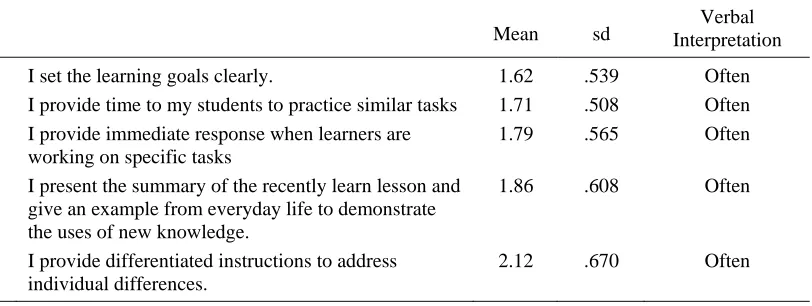
Table 8: Descriptive Statistics for Teaching Strategies in Teacher-directed Instruction
Mean sd Interpretation Verbal
1 I set the learning goals clearly. 1.62 .539 Often
2 I provide time to my students to practice similar tasks 1.71 .508 Often 3 I provide immediate response when learners are
working on specific tasks
1.79 .565 Often
4 I present the summary of the recently learn lesson and give an example from everyday life to demonstrate the uses of new knowledge.
1.86 .608 Often
5 I provide differentiated instructions to address individual differences.
ISSN 2250-3153
Overall average/ sd/ verbal interpretation of teacher-directed instruction
1.82 .435 Often
[image:7.612.70.494.209.472.2]Legend: 1- Always, 2- Often, 3- Rarely, 4- Never
Table 8 reflects the result in teaching strategies in teacher-directed instruction signifying an overall result of Often
carrying the same mean results in each item. These highlight the teaching practices and learning goals of the teacher to support the flow of the lessons. It correlates to the study of Stanford (2001) that teaching strategy generates the desired results which inspire students’ understanding. It also significantly relates to the study of Ismail et al. (2014). That effective teacher has a wide range of specific teaching strategies to use to make teacher's classroom teaching successful.
Table 9: Correlation of Student-respondents Performance and Teacher-respondents Attitudes, Proficiency, Instructional Practices and Strategies in Teaching Grade 7 Mathematics
r p-value Relationship Degree of
1 Attitude towards Teaching Mathematics
1.1 Attitude Towards Equity -.011 .946 Very Low
Correlation
1.2 Attitude Towards Classroom Management
-.183 .246 Very Low
Correlation
2 Proficiency in Teaching Mathematics -.047 .766 Very Low
Correlation
3 Instructional Practices .120 .448 Very Low
Correlation
4 Strategies in Teaching Mathematics
4.1 Active Learning .222 .157 Low Correlation
4.2 Cognitive Activation .110 .489 Very Low
Correlation
4.3 Teacher-Directed Instruction .024 .878 Very Low
Correlation
*. Correlation is significant at the 0.05 level (2-tailed)
Table 9 illustrates the degree of relationship of correlation in terms of student-respondents performance and teacher-respondents attitudes, proficiency, instructional practices, and strategies in teaching Grade 7 Mathematics with six (6) factors having Very Low Correlation and having only one in Active Learning having a Low Correlation. These reflect the bases of impact between the teacher teaching strategies and its relationship to students' performance.
The results are relative to the findings of Ismail et al. (2014) that contradict the relationship of teaching strategies to student's achievement relating to students having the weak foundation of basic Mathematics skills and lack of interest in learning the subject. Mateo (2011) as cited by Ganal and Guiab (2014) also concluded that teaching strategies are not correlated with mathematics achievement. Furthermore, insignificant result in the study of Sogillo et al. (2016) were found from selected teachers from both public and private schools who possessed high proficiency from their CBPAST, yet students from the public school performed low compared to students from the private school.
Table 10: Conclusion about the Null Hypothesis from the Statistical Test
Hypothesis p-value Decision
H₀ 1 The Attitude towards teaching mathematics had no significant relationships with the Performance of grade 7 students in Mathematics.
.511 Not Rejected
2 The Proficiency in teaching mathematics had no significant relationships to the Performance of grade 7 students in Mathematics.
[image:7.612.61.489.636.734.2]ISSN 2250-3153
3 The Instructional Practices of the teacher-respondents had no significant relationships to the Performance of grade 7 students in Mathematics.
.448 Not Rejected
4 Strategies in teaching mathematics had no significant relationships with the Performance of grade 7 students in Mathematics.
.370 Not Rejected
*. Correlation is significant at the 0.05 level (2-tailed)
As shown from the result in Table 10 in conclusion about null hypothesis from the statistical test have Not Rejected
the hypothesis of no significance to the following: the attitude of the respondents, the proficiency of the teacher-respondents, Instructional Practices and in Teaching Strategies of the teacher-respondents with the students’ mathematics performance in grade 7.
This confirms the study of Haider and Hussain (2014), on investigating the relationships between teacher factors and students’ performance in mathematics for which it showed a negative correlation between students’ achievement and teacher-related factors, like designation, pedagogical method, assessment interval, and professional qualification.
IV – CONCLUSIONS
The succeeding conclusions were drawn based on the preceding findings and results of the study.
1. The Mathematics’ performance of student-respondents in grade 7 is Satisfactory or Approaching Proficiency in terms of levels of proficiency.
2. The extent of agreement in the teacher’s attitude towards their disposition about their equitable treatment to their students is Strongly Agree. The classroom management has an interpretation of Agree in the overall rating. It shows that the teacher-respondents have a strong concern towards their students.
3. While in the proficiency level of the teacher-respondents in teaching grade 7 Mathematics showed the same results of
Proficient in ten (10) topics thus having the same Proficient result. In this manner, the teacher-respondents are equipped with the knowledge needed and competent enough to teach the grade 7 mathematics contents or the competencies programmed in the K-12 curriculum.
4. The teacher-respondents Often use the instructional materials in teaching grade 7 Mathematics like manipulative, textbooks and module, teacher’s guide, printed worksheets, PowerPoint presentations, and mathematical tools (e.g., protractor, meter stick). And they are Rarely used of calculators, computer web-based resources, downloadable videos and Mathematics apps or software for their instructional practices in teaching grade 7 Mathematics. With these, the teacher-respondents make used of the availability of the teaching materials and innovative in some resources to make learning more concrete and visual to the students. At the same time needs to uplift technologically incline in terms of used technology in teaching Mathematics.
5. The study showed that the majority of the teacher-respondents Often used the most common teaching strategies that promote a positive outcome in learning Mathematics suchlike, Active Learning, Cognitive Activation, and Teacher-directed Instructions. Strategically teachers’ imposed it in teaching grade 7 Mathematics that aligns with the K-12 Basic Education Curriculum which is stated in the Republic Act No. 10533. These teaching strategies highlighted the practices and goals of the teachers’ to support the flow of the lessons interactively that generates the desired results to make teaching successful and effective.
6. The null hypothesis that there are no significant relationships between the teacher-respondents, Attitude, Proficiency, Instructional Practices, and Teaching Strategies towards the performance of grade 7 students in Mathematics is not rejected. Thus it negates the significant correlations based on variability to the student’s performance in Mathematics. Conclusively, the low academic performance of grade 7 students in Mathematics cannot be attributed to the teachers’ factors.
V - IMPLICATIONS TO MATHEMATICS TEACHING AND LEARNING
The rectify on Mathematics education has recognized the importance of addressing effectively current issues in connection to the totality of teaching and learning process, by emphasizing the learner-centered curriculum to uplift the student’s academic performance specifically in Mathematics.
ISSN 2250-3153
In some uncertainty factors that exist in the environment, there is also a significant factor in raising the achievement of the students that reflect his performance. Indeed, from Educational Research Centre in St. Patrick's College, Dublin, cited OECD (2016), Burge and Sizmur (2015), Perkins and Shiel (2016), relate to the following strategies that have been identified in engaging the low achievement in mathematics.
1. Implement a policy of early diagnosis and intervention for low achieving students. 2. Addressing the lower achievement in mathematics and provide a plan accordingly. 3. Setting high expectations for all students by relating the topics to the student's life. 4. Rising the students’ cognitive engagement in mathematics and
5. provide opportunities for low achievement students to solve more complex problems. 6. Ensuring the learning environment is conducive to learn math.
7. Ensuring the opportunity of the students' to discuss with their peers and reflects on their learning progress. 8. Provide extra support to help students who needed it most.
9. Provide appropriate feedback to raise the confidence and mathematical self-concept of low achieving students.
10. Ensuring the students have an opportunity to use ICT's in mathematics classes to support students learning achievement not only the necessary procedures but also into a higher-level process of skills and exploration of mathematical ideas, and development across a range of areas.
11. Maintain a balance and suitable interplay between traditional approaches and technology-based of instructions and activities in mathematics teaching and learning.
Hamzeh (2014) suggests training on mathematics teachers in the teaching strategies and teaching materials in the classroom that meet the criteria expected to have a better impact than traditional learning. Likewise, an optimistic or pessimistic attitude in mathematics is essential to educators as they would affect the level of instruction that will extend to their students. Guler (2014) also reiterates the need to focus on developing tools for assessing teachers' knowledge in teaching algebra.
ACKNOWLEDGMENT
Foremost, the author wants to offer this endeavor to our GOD Almighty for the wisdom, strength and enlightenment, peace of mind and good health in order to fulfill this research work.
Heartfelt gratitude is rightly expressed to his professors of the Graduate School of University of Perpetual Help System-DALTA for their support through their constructive criticism and a better point of view and also acknowledging the DepEd of Las Piñas for giving the permission to be the respondents of the study.
To his family, friends, and colleagues whose love and support became the source of his inspiration, strength, and perseverance.
REFERENCES
[1] Ahmad, M., (2015). Mathematics, Malmo International School Mathematics. Retrieved from: http://malmomath.blogspot.com/.
[2] Alcantara, E. C., and Bacsa, JM. P., (2017). Critical thinking and problem-solving skills in mathematics of grade 7 public secondary students. Asia Pacific Journal of Multidisciplinary Research, 5(4), 21-27. P-ISSN 2350- 7756, E-ISSN 2350-8442. Retrieved September 8, 2018 from
http://www.apjmr.com/wp-content/uploads/2017/12/APJMR-2017.5.4.2.03.pdf. and www.apjmr.com.
[3] Amineh, R.J., and Asl, H.D., (2015). Review of constructivism and social constructivism. Journal of Social Sciences, Literature and Languages, 1(1), pp. 9 – 16. Jssll.blue-ap.org. Retrieved January 15, 2019 from https://pdfs.semanticscholar.org/3890/3f4a7255496f75124d639e14e9b810c17370.pdf [4] Andaya, O.J.F., (2014). Factors that affect mathematics achievement of Students of Philippine Normal University-Isabela Campus. Research World-Journal of Arts, Sciences and Commerce, Vol: V, (4), 83, E-ISSN2229-4686, ISSN2231-4172. www.researchworld.com. Retrieved
November 18, 2018 from https://docplayer.net/23802887-Factors-that-affect-mathematics-achievements-of-students-of-philippine-normal-university-isabela-campus.html.
[5] Aunzo, R.T. Jr., (2017). Classroom-based integration of text-messaging in mathematics teaching-learning process. Journal of Computers in Mathematics and Science Teaching, V 36 (4), p. 317-337,EJ11646509, ISSN-0731-9258. Retrieved December 28, 2018 from
https://eric.ed.gov/?id=EJ1164509
[6] Bada, S.O. (2015). Constructivism learning theory: A paradigm for teaching and learning. IOSR Journal of Research & Method in Education (IOSR- JRME), 5(6.1), pp. 66-70. e-ISSN: 2320-7388, p-ISSN: 2320-737X. www.iosrjournals.org. Retrieved January 16, 2019 from. DOI:
10.9790/7388-05616670 and https://pdfs.semanticscholar.org/1c75/083a05630a663371136310a30060a2afe4b1.pdf
[7] Belbase, S., (2013). Images, anxieties, and attitudes toward mathematics. International Journal of Education in Mathematics, Sciences and Technology,1(4), ISSN-2147-611X, P230-237. ERIC No. ED547269. Retrieved July 28, 2018 from https://eric.ed.gov/?id=ED547269.
[8] Blazar, D., and Kraft, M. A., (2017). Teachers and teaching effects on students’ attitudes and behaviors. Educational Evaluation and Policy Analysis, SAGE Journal, 39(1), p146-170, ISSN: 0162-3737, ISSN: 1935-1062. Retrieved August 18, 2018 from
https://doi.org/10.3102/0162373716670260 and http://journals.sagepub.com/doi/10.3102/0162373716670260.
[9] Bonifacio, A.L., (2013). Developing information communication technology (ICT) curriculum standards for K-12 schools in the Philippines. Retrieved July 15, 2017 from https://linc.mit.edu/linc2013/presentations/Session7Bonifacio.pdf and
http://linc.mit.edu/linc2013/proceedings/Session7/Session7Bonifacio.pdf.
[10] Caoile, J. B., (2012). Learning difficulties of students in intermediate algebra: basis for intervention. Master’s Thesis, University of Southeastern Philippines. Davao City. Retrieved from http://www.usep.edu.ph/ced/learning-difficulties-of-students-in-intermediate-algebra-basis-for-intervention-graduate-thesis/.
ISSN 2250-3153
[12] Council, Ministers of Education, Canada, PCAP Main Administration (2010). Tools teachers survey. Retrieved October 9, 2018 from https://www.cmec.ca/docs/pcap/pcap2010/English/4_Questionnaire_EN/pcap-teacher-questionnaire.pdf.
[13] Creswell, J.W., (2012). Correlational research design. Educational Research: planning, conducting and evaluating quantitative and qualitative research, 4th ed. ISBN-10: 0-136739-0, ISBN-13: 978-0-13-136739-5. www.pearsonhighered.com. Retrieved January 18, 2019 from http://basu.nahad.ir/uploads/creswell.pdf
[14] Dagar, V., and Yadav A., (2016). Constructivism: A paradigm for teaching and learning. Arts Social Sciences Journal (7) 200, ISSN: 2151-6200. doi:10.4172/2151-6200.1000200. Retrieved November 18, 2018 from https://www.omicsonline.org/open-access/constructivism-a-paradigm-for-teaching-and-learning-2151-6200-1000200.php?aid=76237&view=mobile
[15] David, L., (2015). Constructivism, In Learning Theories. Retrieved November 17, 2018 from https://www.learning-theories.com/constructivism.html. [16] Dick, T.P., and Hollebrands, K.F., (2011). Focus in high school mathematics: Technology to support reasoning and sense making. National Council of Teachers of Mathematics. Reston, VA. https://trove.nla.gov.au/version/171067145. Retrieved December 2, 2018 from National Council of Teachers of Mathematics, NCTM (2015).
https://www.nctm.org/uploadedFiles/Standards_and_Positions/Position_Statements/Strategic%20Use%20of%20Technology%20July%202015.pdf. [17] Durmus, S., and Karakirik, E., (2018). Virtual manipulative in mathematics education: A theoretical framework. Research Gate, Retrieved
fromhttps://www.researchgate.net/publication/255644941_VIRTUAL_MANIPULATIVES_IN_MATHEMATICS_EDUCATION_A_THEORETICA L_FRAMEWORK.
[18] Fatima, R., (n.d). The role of mathematics in the development of society. Retrieved August 26, 2018 from http://www.ncert.nic.in/pdf_files/Final-Article-Role%20of%20Mathematics%20in%20the%20Development%20ofSociety-NCER-.pdf
[19] Ganal, N.N., and Guiab M.R., (2014). Problems and difficulties encountered by students towards mastering learning competencies in mathematics.
International Refereed Research Journal, Vol. V, (4), Researchers World Journal of Arts and Commerce. E-ISSN2229-4686, ISSN2231-4172. www.researchersworld.com. Retrieved November 11, 2018 from
https://www.academia.edu/16269152/PROBLEMS_AND_DIFFICULTIES_ENCOUNTERED_BY_STUDENTS_TOWARDS_MASTERING_LEA RNING_COMPETENCIES_IN_MATHEMATICS
[20] Gumal, A.A., (2016). Factors affecting the teaching of public high school mathematics teachers in the province of Lanao del sur and Maguindanao.
International Journal of Learning, Teaching and Education Research, Vol. 5(4), p-ISSN: 1694-2493, e-ISSN: 1694-2116. Retrieved November 3, 2018 from https://www.ijlter.org/index.php/ijlter/article/view/669.
[21] Haider, S. Z., and Hussain, A., (2014). Relationship between teacher factors and student achievement: A correlational study of secondary schools.
David Publishing, US-China Education Review A,4(7), (465-480), ISSN 2161-623X. Retrieved October 23, 2018 from
https://www.researchgate.net/publication/272073354_Relationship_Between_Teacher_Factors_and_Student_Achievement_A_Correlational_Study_of _Secondary_Schools
[22] Hamzeh, M. A. H., (2014). Teaching strategies used by mathematics teachers in The Jordan Public Schools and their relationship with some variables.
American Journal of Educational Research 2(6), 331-340. Retrieved from DOI:10.12691/education-2-6-1, http://pubs.sciepub.com/education/2/6/1/index.html#.
[23] Hoge, D.M., (2016). The relationship between teachers’ instructional practices, professional development and student’s achievement. University of Nebraska. Retrieved January 28, 2019 from https://www.ncsa.org/sites/default/files/media/dissertations/Hoge_Denise.pdf
[24] Idowu, O. O., (2016). An Investigation of Mathematics performance of high school students in Lagos state, Nigeria: External Factors. Urban Education Research and Policy Annuals. Retrieved March 28, 2019 from https://journals.uncc.edu/urbaned/article/view/431/526
[25] International Mathematics Olympiad, (2018). IMO2018 PH contestant announced. Retrieved from http://pmo.ph/news/imo-2018-contestants/ and http://pmo.ph/news/imo-2018-contestants/
[26] Ismail, SFZH., Shahril, M., and Mundia, L., (2015). Factors contributing to Effective mathematics teaching in secondary schools in Brunei Darussalam. Elsevier Ltd., Procedia-Social and Behavioral Sciences Vol. (186) 474-481. Retrieved June 17, 2018 from
https://doi.org/10.1016/j.sbspro.2015.04.169 and https://www.sciencedirect.com/science/article/pii/S1877042815024295.
[27] Jacobs, G.J., and Spangenberg, E.D., (2014). Mathematics teachers’ attitudes towards the subject: The influence of gender, age and teaching experience. DOI: 10.13140/2.1.4654.5922. Retrieved December 16, 2018 from
http://uir.unisa.ac.za/bitstream/handle/10500/22912/Gerrie%20J%20Jacobs%2C%20Erica%20Spangenberg.pdf?sequence=1&isAllowed=y [28] Juadinez, A. S., (2016). “Teachers’ practices on skills and processes of K12 Mathematics as perceived by grade 9 students”, 4th International
Conference on Education for Sustainable Development (4th ICEDev),Collaboration and Linkages: Keys for Global Educational Integration”. Association of Science and Mathematics Coaches of the Philippines(ASMaC), SEAMEO RECSAM, Penang Malaysia.
[29] King, Holly M., (2017). Teacher affective attitudes inventory: Development and validation of a teacher self-assessment instrument. Antioch University Repository and Archive. Dissertations & Theses. 352. Retrieved January 18, 2019 from http://aura.antioch.edu/etds/352 or https://aura.antioch.edu/etds/352/
[30] Koshal, R. K., Koshal, M., & Gupta, A. K. (2013). Students’ mathematics academic performance: An interaction of inputs from the students, schools, and voters, Perspectives on Global Development and Technology, 12(5-6), 680-698. doi: https://doi.org/10.1163/15691497-12341282 [31] Lancaster, P., (2016). Mathematics and society. The Canadian Encyclopedia. Retrieved from https://www.thecanadianencyclopedia.ca/en and
https://www.thecanadianencyclopedia.ca/en/article/Mathematics-and-society
[32] Le Donne, N., Fraser, P. and Bousquet, G. (2016). Teaching strategies for instructional quality: Insights from the TALIS-PISA link data, OECD Education Working Papers, No. 148, OECD Publishing, Paris. Retrieved February 18, 2019 from: http://dx.doi.org/10.1787/5jln1hlsr0lr-en and http://www.oecd.org/education/school/TALIS-PISA-LINK-teaching_strategies_brochure.pdf also
https://www.oecd-ilibrary.org/docserver/5jln1hlsr0lr-en.pdf?expires=1551878040&id=id&accname=guest&checksum=504CF8FE51ED8B4BFCB67F3B023BF55E [33] Leinwand, S., Brahier, D.J., Huinker, D.A., Berry III, R.Q., Dillon, F.L., Larson, M.R., … Smith, M.S., (2014). Effective mathematics teaching
practices, Principles to actions: Ensuring mathematical success for all. National Council of Teachers of Mathematics (NCTM). Retrieved October 16, 2018 from www.nctm.org/principlestoactions
[34] Lester, F. K. Jr., (2013) "Thoughts about research on mathematical problem-solving instruction," The Mathematics Enthusiast: Vol. 10 : No. 1 , Article 12. Retrieved December 29, 2018 from https://scholarworks.umt.edu/cgi/viewcontent.cgi?article=1267&context=tme and
https://scholarworks.umt.edu/tme/vol10/iss1/12
[35] Loeb, S., Dynarski, S., McFarland, D., Morris, P., Reardon, S., and Reber, S. (2017). Descriptive analysis in education: A guide for researchers. (NCEE 2017-4023). Washington, DC: U.S. Department of Education, Institute of Education Sciences, National Center for Education Evaluation and Regional Assistance. http://ies.ed.gov/ncee/. Retrieved January 18, 2019 from https://files.eric.ed.gov/fulltext/ED573325.pdf
[36] Loren, M. S., (2012). [MATH]A Meta – Analysis of experimental research studies on mathematics teaching. IAMURE International Journal of Mathematics, Engineering and Technology, 3(1). ISSN 2244-1603. Retrieved from https://ejournals.ph/article.php?id=2778
[37] Magayon, V. C., and Tan, E. B., (2016). Learning mathematics and differentiated instruction in the Philippines: A phylogeographical study on strategies and successes of grade 7 students. International Journal of Educational Studies in Mathematics, Graduate School UST-Manila, Philippines, 3(3), 1-14, ISSN:2148-5984. www.ijesim.com, Retrieved October 10, 2018 from
ISSN 2250-3153
[38] Mateo, A., (2011). Teachers’ strategies and social support: Their influence on achievement, attitudes and social behavior of students. Master’s Thesis. Cavite: Adventist University.
[39] Mercado Jr., R. B., (2017). Classroom technology mediation among Schools in Bulacan: Basis for the in-service training of teachers. International Journal of Emerging Multidisciplinary Research, Vol. 1 (1), ISSN: 2546-1583. Retrieved December 3, 2018 from http://ijemr.ascons.org/digital-library/2 and https://doi.org/10.22662/IJEMR.2017.1.1.005
[40] Miheso-O’Connor, K. M., (2011). Proficiency in pedagogical content knowledge in mathematics: secondary school mathematics teachers' interpretations of students' problem-solving strategies in Kenya. Kenyatta University Institutional Repository. Retrieved from
https://ir-library.ku.ac.ke/handle/123456789/540
[41] Miheso-O’Connor K. M., and Berger, M., (2016). Status of teachers proficiency in mathematical knowledge for teaching at secondary school level in Kenya. International Journal of Science and Mathematics Education,14(2): 419-435., ISSN1573-1774. https://doi.org/10.1007/s10763-015-9630-9, Retrieved from https://link.springer.com/article/10.1007/s10763-015-9630-9.
[42] Moursund, D., (n.d). Constructivism, Situated learning, and other learning theories, Retrieved from https://darkwing.uoregon.edu/~moursund/Math/learning-theories.htm
[43] Mouza, C., (2018). Editorial: The role of teachers in teaching and learning with technology. Contemporary Issues in Technology and Teacher Education, CITE Journal, 18(3), 491-493, ISSN 1528-5804. Retrieved from https://www.citejournal.org/publication/volume-18/issue-3-18/ and https://citejournal.s3.amazonaws.com/wp-content/uploads/v18i3editorial1.pdf
[44] Nassaji, Hossein. (2015). Qualitative and descriptive research: Data type versus data analysis. Language Teaching Research. 19(2). 129-132. DOI: 10.1177/1362168815572747. ltr.sagepub.com. Retrieved January 18, 2019 from
https://www.researchgate.net/publication/276397426_Qualitative_and_descriptive_research_Data_type_versus_data_analysis/download
[45] National Council of Teachers of Mathematics (NCTM) (2015). Strategic use of technology in teaching and learning mathematics: A position of the national council of teachers of mathematics. Retrieved from https://www.nctm.org/Standards-and-Positions/Position-Statements/Strategic-Use-of-Technology-in-Teaching-and-Learning-Mathematics/ and
https://www.nctm.org/uploadedFiles/Standards_and_Positions/Position_Statements/Strategic%20Use%20of%20Technology%20July%202015.pdf [46] Organisation for Economic Co-operation and Development (OECD, 2016) Insights from the TALIS-PISA Link Data: Teaching Strategies for
Instructional Quality. website:www.oecd.org/talisor contact us at:[email protected] Retrieved from http://www.oecd.org/education/school/TALIS-PISA-LINK-teaching_strategies_brochure.pdf
[47] Official Gazette, (2013). Implementing rules and regulations of the enhance basic education Act of 2013, Republic Act No. 10533, (2013). S. No. 3286, H. No. 6643. Retrieved from http://www.officialgazette.gov.ph/2013/05/15/ republic-act-no-10533/, http://www.officialgazette.gov.ph/k-12/#section-7.
[48] Pantolla, JM. G., (2017). Comparing the effectiveness of three strategies in teaching selected topics in mathematics on the students’ achievement in and attitude toward mathematics. Journal of International Scholars’ Conference (e-Journal), 1(2). Retrieved November 3, 2018 from
http://jurnal.unai.edu/index.php/JISC/article/view/281 and http://onesearch.id/Record/IOS1624.article-281?widget=1&repository_id=1624#details [49] Patena, A. D.,and Dinglasan, B.L. H., (2013). Students’ performance on mathematics department examination: Basis for math intervention program. Asian Academic Research Journal of Sciences and Humanities, 1(4), ISSN: 2278-859X.www.asianacademicresearch.org, Retrieved from:
http://research.lpubatangas.edu.ph/wp-content/uploads/2014/04/AARJSH-STUDENTS%E2%80%99-PERFORMANCE-ON-MATHEMATICS-DEPARTMENTAL-EXAM.pdf
[50] Perkins, R. and Shiel, G., (2016). PISA in classroom: Implications for the teaching and learning of mathematics in Ireland. Dublin: Education Research Centre. http://www.erc.ie. Retrieved April 6, 2019 from http://www.erc.ie/wp-content/uploads/2016/10/PISA-in-ClassroomsWeb.pdf [51] Ransome, M., El Sharief Mohamed, M., and Puran, B., (2016). Student teachers’ beliefs, feelings and attitudes toward mathematics learning and
teaching at the University of Trinidad and Tobago. World Journal of Education, 6(4). DOI: 10.5430/wje.v6n4p38. and URL: http://dx.doi.org/10.5430/wje.v6n4p38. Retrieved December 28, 2018 from
https://www.researchgate.net/publication/306922217_Student_Teachers'_Beliefs_Feelings_and_Attitudes_toward_Mathematics_Learning_and_Teach ing_at_the_University_of_Trinidad_and_Tobago
[52] Regoniel, P. A. (2014). Data, Analysis, What is a statistically significant relationship between two variables. Retrieved March 8, 2019 from https://simplyeducate.me/2014/05/29/what-is-a-statistically-significant-relationship-between-two-variables/
[53] SEI-DOST & MATHTED, (2011). Manila: SEI-DOST & MATHTED, (2011). Framework for Philippine mathematics teacher education (2011). ISBN 978-971-8600-47-4. pp. 53 Retrieved from http://www.sei.dost.gov.ph/images/downloads/publ/sei_mathteach.pdf
[54] Singapore International Math Olympiad Challenge (SIMOC) (2018). Retrieved from http://simoc.sg/results/, http://simoc.sg/.
[55] Sogillo, RR. O., Guimba, W. D., and Alico, J. C., (2016). Assessment of mathematics teachers in a public and a private school: Implications to the quality of teaching secondary mathematics. Advances in Sciences and Humanities, 2(2), pp. 7-16. Retrieved from doi: 10.11648/j.ash.20160202.11. http://article.sciencepublishinggroup.com/html/10.11648.j.ash.20160202.11.html
[56] SPSS for Intermediate Statistics, Use and Interpretation, 2nd Edition. Retrieved February 18, 2019 from
http://www.fao.org/tempref/AG/Reserved/PPLPF/ftpOUT/Gianluca/stats/SPSS%20for%20Intermediate%20Statistics%20Use%20and%20Interpretatio n%20(2nd%20Ed)%20(2005)%20(ISBN%200-8058-4790-1).pdf
[57] Suratno, J., (2016). The development of student’s worksheet using GeoGebra assisted problem-based learning and its effect on ability of mathematical discovery of junior high students. Proceeding of 3rd International Conference on Research, Implementation and Education of Mathematics and Science, ME57, ISBN 978-602-74529-0-9, Department of Mathematics and Science Education, University of Khairun, YOGYAKARTA, Email: [email protected]. Retrieved from
http://seminar.uny.ac.id/icriems/sites/seminar.uny.ac.id.icriems/files/prosiding/ME-57.pdf
[58] Tabuk, M., (2018). Prospective primary school teachers’ attitudes towards teaching mathematics. Journal of Education and Learning, Vol. 7 (4). ISSN 1927-5250, E-ISSN 1927-5269. Retrieved December 7, 2018 from doi:10.5539/jel.v7n4p225 and https://doi.org/10.5539/jel.v7n4p225. [59] Tan, CK., And Tan, CP., (2015). Effects of the handle’s technology instructional approach on performances of students of different achievement
levels. Elsevier BV: Computer and Education, 82, 306-314, ISSN: 0360-1315. DOI: 10.1016/j.compedu.2014.11.011. Retrieved from https://doi.org/10.1016/j.compedu.2014.11.011 and https://www.sciencedirect.com/science/article/pii/S0360131514002644?via%3Dihub
[60] The National Academies of Sciences Engineering Medicine, The National Academies Press (2018). Proficiency in teaching mathematics, pp. 380 Retrieved from https://www.nap.edu/read/9822/chapter/12#379.
[61] The Times of India, (2015). The importance of math in everyday life. Retrieved from https://timesofindia.indiatimes.com/city/guwahati/The-importance-of-maths-in-everyday-life/articleshowprint/48323205.cms.
[62] The University of Chicago School Mathematics Project (UCSMP). The Importance of the transition years, grade 7 – 10, in school mathematics. Retrieved from http://ucsmp.uchicago.edu/resources/conferences/2004-05-01/
ISSN 2250-3153
[64] Uwalaka, A.J., and Offorma, G.C. (2015).Effect of constructivist teaching method on students’ achievement in French listening comprehension in Owerri north of imo state, Nigeria. Journal of education and Practice, 6(26), ISSN 2222-1735, ISSN 2222-288X, www.iiste.org. Retrieved January 15, 2019 from https://files.eric.ed.gov/fulltext/EJ1077403.pdf
[65] Yavuz, H.C., Demirtaşlı, N.R., Yalçın, S., and Dibek, M.I., (2017). The effects of student and teacher level variables on TIMSS 2007 and 2011 mathematics achievement of Turkish students. Education and Science. 42. pp. 27-47. DOI: 10.15390/EB.2017.6885. Retrieved December 16, 2018 from https://www.researchgate.net/publication/313881038_The_Effects_of_Student_and_Teacher_Level_Variables_on_TIMSS_2007_and_2011_Mathematics_Achi evement_of_Turkish_Students
[66] Yılmaz, N., and Erbas, A. K., (2017). An investigation of middle school mathematics teachers’ knowledge for teaching algebra. Congress of European Research in Mathematics Education (CERME) 10, Feb 2017, Dublin, Ireland. hal-01949142. Retrieve December 14, 2018 from