Learning Technologies Division Dissertations Department of Learning Sciences
Fall 12-21-2018
Living Links: Examining Immigrant Teens'
Experiences in Communication Technology
Enhanced Transnational Spaces
Bethany Massey
Follow this and additional works at:https://scholarworks.gsu.edu/ltd_diss
This Dissertation is brought to you for free and open access by the Department of Learning Sciences at ScholarWorks @ Georgia State University. It has been accepted for inclusion in Learning Technologies Division Dissertations by an authorized administrator of ScholarWorks @ Georgia State University. For more information, please [email protected].
Recommended Citation
Massey, Bethany, "Living Links: Examining Immigrant Teens' Experiences in Communication Technology Enhanced Transnational Spaces." Dissertation, Georgia State University, 2018.
ACCEPTANCE PAGE
This dissertation, LIVING LINKS: EXAMINING IMMIGRANT TEENS’ EXPERIENCES IN
COMMUNICATION TECHNOLOGY ENHANCED TRANSNATIONAL SPACES by
BETHANY MASSEY, was prepared under the direction of the candidate’s Dissertation
Advisory Committee. It is accepted by the committee members in partial fulfillment of the
requirements for the degree, Doctor of Philosophy, in the College of Education & Human
Development, Georgia State University.
The Dissertation Advisory Committee and the student’s Department Chairperson, as
representatives of the faculty, certify that this dissertation has met all standards of excellence and
scholarship as determined by the faculty.
Brendan Calandra, Ph.D. Committee Co-Chair
Gertrude Tinker Sachs, Ph.D. Committee Co-Chair
Laurie Brantley Dias, Ph.D. Committee Member
Jonathan Cohen, Ph.D. Committee Member
Date
Brendan Calandra, Ph.D.
Chairperson, Department of Learning Sciences
Paul A. Alberto, Ph.D.
AUTHOR’S STATEMENT
By presenting this dissertation as a partial fulfillment of the requirements for the advanced
degree from Georgia State University, I agree that the library of Georgia State University
shall make it available for inspection and circulation in accordance with its regulations
governing materials of this type. I agree that permission to quote, to copy from, or to
publish this dissertation may be granted by the professor under whose direction it was
written, by the College of Education and Human Development’s Director of Graduate
Studies, or by me. Such quoting, copying, or publishing must be solely for scholarly
purposes and will not involve potential financial gain. It is understood that any copying
from or publication of this dissertation which involves potential financial gain will not be
allowed without my written permission.
NOTICE TO BORROWERS
All dissertations deposited in the Georgia State University library must be used in
accordance with the stipulations prescribed by the author in the preceding statement. The
author of this dissertation is:
Bethany Gail Massey
Department of Learning Technologies Division College of Education and Human Development
Georgia State University
The directors of this dissertation were:
Brendan Calandra, Ph.D.
Department of Learning Technologies Division College of Education and Human Development
Georgia State University Atlanta, GA 30303
Gertrude Tinker Sachs, Ph.D. Middle and Secondary Education
College of Education and Human Development Georgia State University
CURRICULUM VITAE
Bethany G. Massey
ADDRESS: PO BOX 4761
Frisco, CO 80443
EDUCATION:
Ph.D. 2018 Georgia State University
Learning Technologies Division
Master of Education 2006 Texas A&M University
Department of Educational Technology
Bachelor of Science 2004 Texas A&M University Interdisciplinary Studies
PROFESSIONAL EXPERIENCE:
2018-present Elementary Principal, Assessment Director
South Routt School District, CO
2008-2018 Director of Technology & Assessment
Summit School District, CO
2006-2008 Teacher
Lamar Consolidated ISD, TX
2005-2006 Instructional Design Specialist
Blinn College, TX
PRESENTATIONS AND PUBLICATIONS:
Massey, B. (2017, November) Using assessment data to inform improvement planning.
Breckenridge, CO.
Massey, B., Beck, C., Kilgore H., & Sturch, C. (2017, June). An EdCamp Survival Guide: the un-conference approach to PD. San Antonio, TX.
Tinker Sachs, G., & Massey, B. (2012, October). The marriage of English as a second/foreign language and globalization, the context of 21st century teaching. Atlanta, GA.
Massey, B. (2011, March). Preparing for future careers in Educational Technology (Invited). College Station, TX.
PROFESSIONAL SOCIETIES AND ORGANIZATIONS:
2010-present Association of Colorado Educational Evaluators 2008-present International Society for Technology in Education 2008-present Colorado Association of School Executives
LIVING LINKS: EXAMINING IMMIGRANT TEENS’ EXPERIENCES IN
COMMUNICATION TECHNOLOGY ENHANCED TRANSNATIONAL SPACES
by
BETHANY MASSEY
Under the Direction of Dr. Brendan Calandra, Ph.D., Co-Chair; and Dr. Gertrude Tinker Sachs,
Ph.D., Co-Chair
ABSTRACT
This study examined the technology-enhanced lived experiences of three
Mexican-American secondary students in Southwestern United States. This work extends the research of
Basch, Schiller and Blanc (1994) and Faist (2000) in which they explain that immigrant teens
experience dual lives due to simultaneous connections that may have resulted in barriers and
stressors between their host and home countries. The study answers a call from Velez-Ibanez and
Greenberg (1992) and Gonzales, et al. (2005) for research that regards household practices as
"funds of knowledge" or that are encountered through lived experiences and that may support the
individual in making sense of and giving meaning to life experiences.
The multi-case analysis was guided by the following question: How did three
Mexican-American immigrant teens use social media and messaging apps within transnational social
spaces? The three participants were second-generation immigrants from Mexico. The teens were
between fourteen and seventeen years of age. Data collection took place over the course of the
interviews, and observations of the participants. Findings uncovered funds of knowledge for
these three Mexican-American immigrant teens that existed within a virtual transnational space
that was easily accessible through the affordances of social media and communication
technologies. These cross-border networks provided access to funds of knowledge that included
historical, political, economic and social knowledge. Social media and messaging apps offered a
way for the teens to connect within the school experiences. Teens used social media to position
themselves, develop associations, control access and information, and to overcome distance
barriers that allowed for timely access to information and knowledge. The affordances of
technology were used by teens to advocate for themselves for the instructional, pedagogical and
social realms needed for institutional change. Through the use of the affordances of persistence,
searchability, visibility, scalability, replicability, spreadability, editability and association, the
teens of the study utilized the capabilities of social media to access cross-border funds of
knowledge. The way in which Mexican-American immigrant teens of this study used real-time
virtual spaces within social media applications to access funds of knowledge has not been
addressed within current research. Considering boyd's (2014) affordances of technology theory
as well as Treem and Leonardi’s (2012) affordances, this study examined the way three
Mexican-American immigrant teens leveraged aspects of communication technologies to access
communities and build relationships and funds of knowledge in both the United States and
Mexico as they traversed the immigrant experience. Additional research should extend this work
to consider the application of virtual funds of knowledge accessible by teachers for the inclusion
of instructional and pedagogical structures and content of the classroom.
LIVING LINKS: EXAMINING IMMIGRANT TEENS’ EXPERIENCES IN
COMMUNICATION TECHNOLOGY ENHANCED TRANSNATIONAL SPACES
by
BETHANY MASSEY
A Dissertation
Presented in Partial Fulfillment of Requirements for the
Degree of
Doctor of Philosophy
in
Instructional Technology
in
Learning Technologies Division
in
the College of Education
Georgia State University
Copyright by Bethany G. Massey
DEDICATION
This work is dedicated to my family.
ACKNOWLEDGEMENTS
This work is not a reflection of my efforts, but of the collective efficacy of a support group that carried me through this process.
To my husband, James Massey.
With steadfast dedication, you have been my ultimate champion. Thank you for your personal sacrifices that have allowed for me to complete this work. Had it not been for you, this work would not exist. It is your encouragement, listening ear, and efforts of sole parenting that have made this possible. “Thank you” does not do justice to the gratitude I feel you deserve for your actions and support. May this work contribute to our life’s adventures, but let’s make the next one a little more exotic.
To my boys, Asher and Reed.
Your presence in this world has pushed me to complete this degree as I strive to teach you through my actions that hard work and perseverance can pay off. While you may not remember the exact challenges and sacrifices endured through this process, I write this dedication in hope that it may be an encouragement for you as you face your future life’s challenges.
To my parents by birth and marriage, Keith and Carolyn Perrin and Mike and Nancy Massey. Thank you for teaching me to do hard things. Thank you for your unconditional love that has brought me through challenges in life. Thank you for your support as I make decisions that impact you. Finally, thank you for your efforts through this dissertation process when I needed you. Now maybe we can start paying you back for all those flights and babysitting nights.
To my initial committee chair, Dr. Laurie Brantley-Dias.
You are the reason I have made it to the end of this process. Thank you for the ways you have supported me in more ways than your title and contract will ever recognize. Thank you for being a phone call away, for your honest and critical feedback whenever I needed it, for opening your home and family to support my schooling, and most of all, thank you for remaining my highly devoted advocate and committee member when your own life advancements did not require that you stay.
I am appreciative to the members that served on my committees throughout this process: Dr. Calandra, Dr. Tinker Sachs, Dr. Dias, Dr. Cohen, Dr. Shoffner, Dr. Kinuthia and Dr. Harmon. I am grateful to the participants of this study and their families. Thank you to the aunts, uncles and family friends who followed my progress and offered words of encouragement along this
TABLE OF CONTENTS
LIST OF TABLES ... iii
LIST OF FIGURES ... iv
1 INTRODUCTION ... 1
The Problem ... 2
The Need for Research ... 4
Research Questions ... 9
Historical Context ... 10
Conceptual Framework ... 15
Definition of Terms ... 29
2 REVIEW OF THE LITERATURE ... 31
The Immigration Experience ... 31
Social Group Memberships ... 34
Empowerment Through Social Technologies ... 37
Teen Use of Social Media and Communication Applications ... 39
Conclusion ... 41
3 METHODOLOGY ... 43
Research Plan ... 43
Research Design ... 44
Units of Analysis ... 47
Additional Considerations. ... 67
4 CASE STUDIES OF THREE TEENS ... 73
Christopher Lopez, the Athletic Son ... 74
Ivan Saldana, the Vine Editor ... 91
Isabella Rodriguez, the Loving Daughter ... 106
5 CROSSCASE ANALYSIS ... 118
Climate ... 119
Participants ... 121
6 DISCUSSION AND CONCLUSIONS ... 149
How Did Three Mexican Immigrant Teens use Social Media And Messaging Apps within Transnational Social Spaces? ... 150
What Funds Of Knowledge Do the Teens Choose To Engage In When using Social Media Or Messaging Apps? ... 157
What Affordances Of Messaging And Social Media Apps Do The Teens Use To Participate In Transnational Social Spaces. ... 162
How Does the Personal Use of Social Media and Messaging Apps Connect with School Experiences? ... 164
REFERENCES ...170
LIST OF TABLES
Table 1: First Contact Pre-Screening Data Collected of Participants... 56
Table 2: Conditions of participants that aligned with the case study bounds... 124
Table 3: How Each Participant used Social Media and Technology Tools within Networks 130
Table 4: Cross Reference of Technology Affordances Research Within the Study... 134
LIST OF FIGURES
Figure 1: Theoretical framework outline... 14
Figure 2: MAXQDA software output... 61
CHAPTER ONE
INTRODUCTION
In a reflection of his experience in transitioning from a life in Senegal to his new life as a
high school student in a rural U.S. community, A. Dieng addressed the entire school district staff
body. After describing both struggles and pleasures experienced from his migration story, he
closed the address with a powerful message, “I realize that I can be out of Senegal, but Senegal
can never be out of my heart” (Dieng, A., personal communication, August 8, 2016).
Growing up as an immigrant teen puts a youth between two, often conflicting, worlds: the
country of origin and the country of resettlement (Basch, Schiller & Blanc, 1994). Teens
experience simultaneity as they navigate the differences of living between the two countries.
They must navigate the social spaces that arise from these two locales while managing the
tensions, resources and effects of cross-border or transnational living. As Dieng reflects, this
“country of the heart” that he is physically removed from still offers meaning on his lens of life.
Such cross-border exchanges highlight the changing American society as the number of
immigrant students enrolling in American public schools increases. In 2015, 23% percent of
public school students were of an immigrant household. This increase rose from 7% percent of
immigrant students in 1980 (Camarota, Griffith & Zeigler, 2017). Such changes impact
American education systems as public schools must consider the impacts of the immigration
experience including the consideration and inclusion of native languages other than English,
impacts of economic status on the individual as well as the system, and parents who are
unfamiliar with the U.S. educational system (Camarota, Griffity & Zeigler, 2017;
Suarez-Orozco, Pimentel, & Martin, 2009). School must also consider the “cross-border transactions”
such as the physical and cognitive travel between locations including the constant transfer of
2013) that are a part of the teen’s lived experiences. Moreover, these experiences must be
considered within current practices.
Immigration was once seen with a sense of finality. As described by Basch, et. al,
191994), “The popular image of immigrant is one of people who have come to stay, having
uprooted themselves from their old society in order to make for themselves a new home and
adopt a new country to which they will pledge allegiance” (p.5). The immigration experience
meant a severing of social ties through the relocation to a new place. However, technological
advances, ease and reduction in cost of travel, and many other changing societal factors have
allowed for sustained relationships beyond the initial migration. Specifically, such affordances of
technology has allowed for a flow of connections, communities, and knowledge. Connections
remain between the country of origin and the new host country as a result of the advances in
technology including the social media and messaging applications used by teens. Ties
maintained between the host and home country as a result of these technologies can build bridges
to support the educational experiences of immigrant teens.
The Problem
Mexican-American teens are often members of rich familial and social networks. Even as
their lives cross borders, teens participate in communities among the two countries. Often, life
experiences such as labor histories of families encourage migration through a back-and-forth
tug-of-war between Mexico and the United States (Basch, et al., 1994). The social networks that
emerge and develop from life connections often provide agency or power within social
situations. These networks may offer resources or supports to the family including aid in
understanding cultural systems or accessing provisions from different networks. Often, American
experience. In most American classrooms, the relationships between the home and the classroom
are ignored (Gonzalez, Andrade, Civil, & Moll, 2001). Yet, such inclusions of strategic and
cultural resources, or funds of knowledge (Velez-Ibanez & Greenberg, 1992), that develop from
households of Mexican-Americans can provide agency for students in the classroom. The
connections between home and school, including the cross-border connections, should become
part of the considered conversations of policy and practice for public schools. Gonzalez, Moll,
and Amanti (2005) offer a theoretical framework for theorizing household practices as sources of
knowledge through the valuation of the social, historical, political and economic context of
households and the vast resources found within such life experiences. Policy and practice must
understand and leverage the knowledge and resources available through household practice and
cross border connections. Systemic change to improve instructional classroom practice and
impact educational policy should realize and value current conditions, knowledge and resources
available to immigrant teens within these four contexts.
What must be considered in the labor and familial histories of immigrant teens are the
impacts and changing roles of technologies including social media and messaging applications
that are becoming more prevalent in households. Physical proximity is no longer required to
develop and maintain meaningful connections to others. New research explores the social
connections and information exchanges provided through technology. boyd’s (2014) affordances
of social media within networked publics considers the ways in which social media technologies
are changing the teen experience and will be a useful framework for considering the context of
immigrant teens’ immigration experiences. Current research is exploring how communication
technologies are strengthening ties within transnational social spaces and offering agency
Nedelcu, Merla, & Wilding, 2016; Madianou & Miller, 2012a). Other research is analyzing the
affordances that technologies offer to users (boyd, 2014; Schrock, 2015; Treem, Dailey, Pierce,
& Leonardi, 2015). The current study narrates the way in which three Mexican-American
students are using social media and messaging applications within transnational social spaces.
The Need for Research
In light of the current research that has added to the knowledge base around technology
affordances, transnational social spaces of cross-border associations for immigrant teens, and the
impacts of this research on the K-12 educational experience of students has provided, a
foundation for the need for more research.
Kasun (2014, 2016) labels those who physically or mentally cross-national borders as
“transnationals” or “transmigrants.” Physically, transnationals may spend seasons traveling
between and to locations. Often, the financial earnings of one location may support life on the
other side of the border. Mentally, transnationals are caught in between both places. History,
politics, social news and economic impacts of both countries are within transnationals’ hearts
and minds. Often, transnationals are staying informed on what is happening in both locations.
As such, the individuals experience unique stressors and barriers due to this duality. They must
navigate time and space in searching for one’s place and ability to “survive and thrive” (p. 137).
In Kasun’s study of United States based Mexican-American families, she explored the
nepantlera, or experiences of the “in-between-ness,” to understand the impacts of these
cross-border exchanges and positioning. Through this study, Kasun explored the concept of
bridge-building. This term originated from Anzaldua’s (1987) description of efforts to connect and
move between two communities. In Kasun’s work, a description of the impacts of
oneself within and between groups. Positive experiences and fostering connections to a particular
group may yield a sense of belonging and identity development, and results in attitudes and
behaviors that reflect the norms of the communities to which the individual self-identifies. These
associations bring along access to assets that a community offers. If immigrant teens encounter
barriers to developing an associated belongingness to a particular group, a lowered sense of
pride, self-esteem and ability to utilize the potential assets of the community will result. This is
true also in cases in which an immigrant teen encounters barriers to developing a sense of
belongingness to a community or system because of the way others value or devalue the teen
within this community. An example of such a barrier would be the way participants in a school
system include or exclude an individual as being an insider or outsider in a school system. For
example, often the extracurricular activities that are publicly highlighted and praised do not
represent the demographic populations. Extracurricular activities are established and selected
based on tradition or a select group within the school as opposed to a more representative
participation of the population of the school. A different barrier can come through the devaluing
of particular groups as being less than others within a particular system. Accountability systems
that call out disaggregated groups (e.g. minorities, English learners, special education, etc.) and
highlight achievement gaps among these groups cause the development of stereotypes of that
define individuals that are associated with these deficit groups. The devaluation of groups or
communities by a collective whole to which an individual associates have been attributed to long
term negative effects including mental and physical health impacts, school failure, economic
hardships and behavioral and emotional problems later in life (Appleyard, Egeland, Dulmen &
The appearance of the decreased value often begins as a lack of tolerance or respect, and
ultimately leads to devaluing the individual (Kutz, 1997; Nieto, 1992; Suarez, 2002).
What current advancements have made accessible are unique technological
improvements that allow for connections and communications to exist despite barriers resulting
due to the geographic distance (Madianou & Miller, 2012a, 2012b; Nedelcu, 2012). The role of
social media and messaging applications in this boundary crossing experience may result in new
and varied ways of being together and ways of belonging at a distance (Nedelcu, 2012).
Networks of social exchange formed around commonalities and reciprocal expertise through
participants’ personal histories may empower individuals. The valuation of contributions,
relationships of respect, and developed senses of equality among participants within the
communities support such personal empowerment. Building a sense of relation to communities
of both the country of origin and country of residence may be fostered through social media and
messaging technologies. Such connections offer the potential for building. Such
bridge-building offers access to extended resources as transnational adolescents navigate life on both
sides of the border through these unique social spaces of networks and organizations crossing the
two locations (Faist et al., 2013).
According to Vygotsky’s (1925) social learning theory, social interactions can support
and promote the learning process. Transnational social networks may offer access to additional
social interactions, knowledge, resources and social capital for families (Gonzalez et al., 2005;
Kasun, 2016). Stanton-Salazar (2004) explain how social capital gained through peer relations
offer a mediating role for students to provide value to the individual’s identity and behavior
within the school community. Besides the value of building relationships, new technologies
transcend time and place to communicate as often as desired allows for continued connections to
community groups that promote meaning-making of life and experiences for transnational
adolescents (Lam, 2009).
In her book, Affirming Diversity, Nieto (1992) describes the personal experience of
transitioning from a Puerto Rican heritage and speaking Spanish, to navigating through
American acculturation and adopting the English language. The experience is described through
the struggles of self-identification within the heritage of parents and the traditions of the new
country. Similar struggles have been documented with other students immigrating to the United
States (Kasun, 2016; Stanton-Salazar, 2004). Like Nieto’s (1992) proposal to other immigrants
to consider their personal immigration experiences, within the field of education we should seek
an understanding of immigrants’ cross-border experiences and the potential for building bridges
between life experiences and the K-12 educational experiences.
For the individual participant, participating in networks that cross borders and make
connections to the K-12 experience may serve as an empowering tool. The awakening of the
potential value placed on past experiences, current connections, and potential for self-advocacy
offer agency within the current school experience as well as throughout life.
For the educator, this study explores ways in which the affordances of social media and
messaging applications may transcend borders to access and incorporate students’ funds of
knowledge within the instructional and systemic experience of school. Kasun (2016) expresses a
need for research to “provide a platform for educators... to be more inclusive of student
experiences” (p.140).The valuing of such spaces is what Gonzalez et al. (2005) describes as
with great potential utility for classroom instruction” (p.75) and is what Velez-Ibanez and
Greenberg (1992) have previously demonstrated as useful assets in the classroom.
For the researcher, understanding the possibilities that the technologies offer immigrant
teens in making connections, interacting in transnational social spaces and leveraging additional
resources are important. Such understandings should aid in defining educational policy and
practice. Gonzalez et al. (2005) extend the challenge of continuing research to understand
empowerment possibilities through social networks and the funds of knowledge such
relationships afford to navigating culture, language and systems. Norton and Toohey (2011)
explain that research supporting transnational voice and identity development within
communities is worthy research especially in supporting immigrants through their “struggle for
legitimacy” and “claiming the right to speak and be heard” (p.237). Baldassar et al. (2016)
validate the need for future study in understanding the difference between face-to-face and
technology-based communications and how the migration experience impacts relationship
development among other things.
Bacigalupe and Parker (2015) consider the potential of emerging technologies for
immigrant youth agency and promote the need for additional research within this realm.
Identifying a need for future studies of the ways in which technologies offer teens the ability to
choose to manage relationships with others and choice in how they will interact with other
people or cultures is specifically identified.
Children now assume greater agency in “negotiations of identity and belonging” and find
that with ICT they are able to preserve those parts of their homeland that they miss most
while being in full control of the frequency and intensity of their relationships with its
millennials may choose how to negotiate their transnational identities, so technology
makes acting on their choices much easier….The Internet, then, serves as an alternate
arena in which youth might explore and negotiate the world around them, especially the
family’s culture of origin, which becomes less distant and more tangible. (Bacigalupe &
Parker, 2015, p.65).
This study uses the transnational stories of adolescent Mexican-American immigrant
teens to present an understanding of the impact that the affordances of social media and
messaging applications offer the migration experience through bridge-building for
Mexican-American youth. The current study narrates the way in which three Mexican-Mexican-American students
are using social media and messaging applications within transnational social spaces. Through
this case study approach, interviews will be conducted with participating Mexican-American
immigrant teens. Interviews provide teens the opportunity to reflect and retell personal
transnational stories including the value and resources they have found within such lived
experiences. In return, an exploration of the role of the affordances of social media and
communication applications that offer access to resources and additional funds of knowledge that
build bridges through connections to the K-12 educational experience and their stories is shared.
Research Questions
The current study was guided by the following overarching question:
How did three Mexican immigrant teens use social media and messaging apps within
transnational social spaces?
Sub-questions include:
1. What affordances of messaging and social media apps did the teens use to participate in
2. What funds of knowledge did the teens choose to engage in when using social media or
messaging apps?
Historical Context
Despite an American history that predates Columbus, very little of the experiences and
impacts of the Mexican people have been documented or valued in the historical context of
Mexican contributions to the development of the American nation. What is told through recorded
accounts of Mexican-American people frequently include a history of marginalization, political
and economic oppression, and displacement between the United States and Mexico. Themes of
the people include a search for occupational prospects and the anticipation of a better life.
In and preceding the nineteenth century, immigration of Spaniards into modern day
America was focused on small settlements in the Southwest, predominately in the region from
Texas to California. In the 1830s, many Spanish missions became privately owned rancheros.
The land offered a means for production of goods for trade including both agriculture and
livestock. However, to accomplish this, both sharecropping and servitude played a significant
role (Gilbert, Gonzales, & Fernandez, 1999) which fostered a sense of hierarchy among the
people. This sense of hierarchy was only intensified by the Mexican-American war resulting in
the annexation of Northern Mexico to America. Mexicans living in current day Utah, Nevada,
Arizona, Colorado, New Mexico, Wyoming and California were practically reassigned
citizenship overnight. Additionally, many Spanish or Mexican authorized land grants became
target for settlement. The1862 Homestead Act converted what may have been private land into
public domain and eventually utilized much of this land for railroads or deemed the land national
forest. As Hispanics pursued the court system to obtain justice and reclaim property, often court
During the late nineteenth century and early twentieth century other means for work
emerged in the Southwest (Vargas, 1999). The need for cheap labor within new American
industries encouraged a wave of Mexican immigration as opportunities in Mexico were not as
prolific or profitable at the time. In the 1920s Mexican laborers, both documented and
undocumented were fundamental to the economic development of America (Velez-Ibanez &
Greenberg, 1992). The Mexican family unit and extended kin maintained a familial network on
both the American and Mexican sides of the border and cross-border associations were
commonplace.
The onset of the Immigration Act of 1924 which restricted many laborers, and the Great
Depression which caused competition for jobs, created an anti-Mexican sentiment. The
American government responded by deporting more than 500,000 Mexicans. Such repatriation
and deportation of Mexicans in turn created what Vélez-Ibáñez and Greenberg (1992) called a
“they-us differentiation” in which citizenship was again a defining element of identity resulting
in racial prejudice and marginalization.
Mexicans sought political activist roles to improve living conditions and address the
marginalization of their ethnic group. One such example was Ernesto Galarza’s speech of the
current state of United States-Mexicans. As an immigrant, the autobiographical nature of the
speech identified specific struggles of Mexican immigrants including: unemployment, wage
scale, seasonal migration, and racial prejudice. “Something more should be known also about
how the Mexican lives and why before the stigma of a low standard of living is fastened on him”
(Galarza,1929).
Even in schools the marginalization could be seen through actions such as the use of the
Mexicans needed to be Americanized (Vélez-Ibáñez and Greenberg, 1992). Mexican children
endured elements of racism as many educational school boards prevented Mexican children from
enrolling in the educational system. In 1945, only half of Mexican children were enrolled in
school (Vargas, 1999) and were often in segregated schools that emphasized Americanization
programs attempting to change the Mexican. Programs included the punishment of the child for
speaking Spanish and even included the assignment of new American names to children.
Even with the threat of potential deportation and the end of the Bracero program in 1964,
immigration continued. It was during this decade that the Mexican population began taking a
political stance for reform, political awareness and voting rights. Some reform was gained such
as the integration of the English-speaking Anglo schools with separate immigrant schools,
complimented by an element of a bilingual education offering. Political educational campaigns
proposed the adoption of multicultural programs, equal distribution of state funds to all school
districts, school boards be representative of the community, early-childhood education included
free options, and standardized testing be eliminated to measure achievement unless offered in the
language and culture of the child. Some measures passed while others are still being sought.
The current state of the educational system has caused another divide in the use of hyper
accountability. The current United States policies and practices related to standardized testing
which provide labels of failure for particular people groups are negatively impacting schools by
creating biased stereotypes of certain students’ abilities (Ahlquist, 2011; Cummins, 2015).
Through legislative acts such as the No Child Left Behind (NCLB) policy, standardized
assessment tests are being used to judge the value of students, teachers, schools and the United
States educational system. Such policies create deficit models labeling groups as inferior when
economically biased content (Ahlquist, 2011). Such programs penalize students, teachers,
schools and districts for not meeting the unrealistic expectations. Expectations of schools and
teachers include the requirement to have students participating in and being held to grade-level
expectations set by cut scores of standardized testing, even of students with a primary language
other than English who have recently immigrated to the country. The accountability system
remains despite current research that determines academic language takes between five and ten
years to attain (Cummins, 1979; Krashen, 1982; Kutz, 1997). Students are not offered a
sufficient amount of time to be able to access the content of the test or provided the test in native
languages before being held accountable for scoring at a proficient level on the assessment
content. The results of such tests are used to make claim to the aptitudes of disaggregated groups
of students, stereotyping such findings as inadequacies and often using the data to track students
into lower-level or remedial classes. Such associations devalue the characteristics being
compared and result in public stereotypes of failing groups (Ahlquist, 2011; Kutz, 1997; Nieto,
1992; Suarez, 2002). As Suarez’s (2002) case study accounts, attributes such as speaking
Spanish are cast as lesser within society. Thus, stereotypes result in devaluing of individuals.
Findings such as the study of undocumented families in North Carolina by Bacallao and
Smokowski (2013) identify monolingualism and discrimination, especially for undocumented
Mexicans, as creating deficit mindsets which continue to increase stressors of the individuals
who associate to the group and marginalize the people group within the society. As Ahlquist
(2011) explains, if marginalized people are made to believe they are less than the dominant
culture they will “more readily accept their place in the existing society”(p.11).
Such a place in society comes with a unique history and conflict in and of itself. For
ethnic identity of the individual. In a study of immigrants, Portes & Rumbaut’s (2001) explored
the self-identification of individuals to with their host or home country. A case could be made for
the sense of between-ness revealed through the findings. An example includes the narrative of a
15year old, second generation immigrant student trying to define identity.
“If I said I’m Cuban that’d make my mom mad; and if I said I’m Salvadoran, my
dad would get all upset, so I think I’m … Hispanic!” The Panethnic identity label made
sense for her as a simplified category that focused on shared traits (and was popular with
her Spanish-speaking school friends as well) while avoiding the dilemma of privileging
one or the other parental birth connection. (Portes & Rumbaut, 2001, p.166).
In addition to identity conflict, the cross-border connections create daily conflict as
“immigrants construct and reconstitute their simultaneous embeddedness in more than one
society” (Glick Schiller, Basch & Szanton, Blanc, 1995, p. 48) and are impacted by the social,
cultural, and familial rules and institutions of both countries (Levitt, 2009). As Levitt (2009)
explains, it is the ability to manage the cross-border social networks within and among several
contexts that benefit the individual.
What educational systems need to provide are ways for mutual respect and valuation to
be fostered within and between students. School-based supportive relationships have proven to
“bridge the gap between home and school cultures and provide important feelings of safety and
opportunities for success in school setting” (Suarez-Orozco, et al., 2009, p.741). We must ensure
Mexican immigrants should be provided opportunity to find self-value in schools. Opportunities
should be realized that allow for identifying as a contributing member in the classroom and as an
equally important member in the local communities and beyond. Differences of all students must
others as contributors who are respected and are equally important. Fostering supportive
relationships requires the encouragement of strong identities for teens in which the heritage of
the individual is valued.
Conceptual Framework
The current study narrates the way in which three Mexican-American students are using
social media and messaging applications within transnational social spaces. To frame the study, a
consideration of funds of knowledge, transnational social spaces, and the affordances of
technology offer the context and proposed relationships as they apply to bridge-building across
the academic and transnational worlds of immigrant teens. These three theoretical strands have
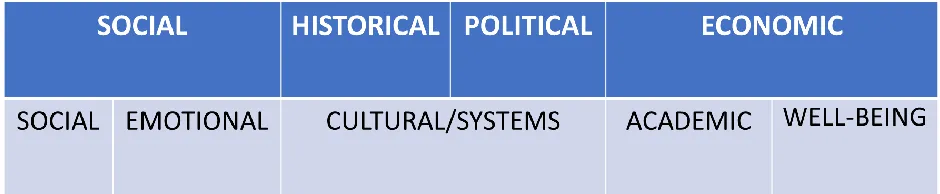
been outlined within Figure 1 and will serve to ground the understanding of the proposed study.
Each lens has been further developed within this section.
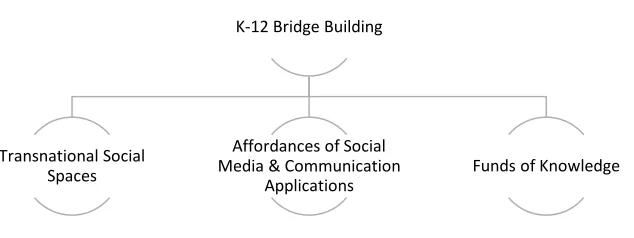
[image:29.612.121.438.390.509.2]
Figure 1: Theoretical framework outline.
The figure establishes a tiered approach to framing the foundational theory of the case study. The
graphic organizer displays the relationship and concepts to be developed.
Funds of knowledge.
In 2005, Gonzalez; et al. published a ground-breaking study referred to as funds of
knowledge. Within this report, the researchers propose that students gain knowledge from
multiple communities and experiences that exist in their lives. The study encourages educators to
K-12 Bridge Building
Transnational Social Spaces
Affordances of Social Media & Communication
Applications
engage in conversations with families to overcome stereotypes and to better understand what
funds of knowledge may exist that can be turned into instructional opportunities. The funds of
knowledge research demonstrates that “building on what students bring to school and their
strengths has been shown to be an incredibly effective teaching strategy” (Gonzalez; et al, 2005,
p. 8). The study encourages educators to dialogue with families around potential family
knowledge and to then consider connections between home and school that may be of value for
the student. These funds of knowledge “make sense of and give meaning to cultural objects and
social practices in a particular way and within the concrete circumstances of life in which we
find them” (p.275). Moreover, they can be incorporated into the school system in a manner in
which schooling is re-conceptualized to serve Mexican-American populations by valuing the
cultural resources that households contain. The funds of knowledge framework encourages an
understanding of living culture. Living culture considers more than traditional or stereotyped
experiences such as holiday celebrations or foods of a nation that immigrant students may or
may not relate to personally. Instead, the funds of knowledge work promotes the investigation of
everyday experiences of students which often include a mix of both traditional and modern
practice and are valued differently by different individuals.
Since 2005, the funds of knowledge concept has become a pivotal research framework to
provide agency to students, specifically within the educational system (Compton-Lily, 2007;
Dabach & Fones, 2016; Dworin, 2006). Work has been used across many domains of research.
Some research focuses on individuals improving instructional practice such as Dworin’s (2006)
work which used the funds of knowledge framework within a family story writing project. Other
uses for funds of knowledge integration include analyzing teacher’s inclusion of home and
Puerto Rican families to students’ in-school experiences and their relation with the teacher. Yet
others such as Dabach and Fones (2016), look at the cross-border communities that exist and the
potential within K-12 instruction for inclusion. This operational goal of transnational research
aligns with this study’s recommendation to apply funds of knowledge work toward social studies
classrooms.
Other research has focused on the ignorance of integration of the funds of individual
students within the school system and has worked to analyze the educational impacts of such
oversight. Ruiz (2011) and Williams (2001) identified examples of marginalization that occur
when a lack of respect toward the home culture is overlooked. Allen (2014), Au (2006), and
Echeverria, Short and Powers (2006) make a case for the need to value heritage language to
avoid negative student impacts. Other educational barriers and stressors studied include a lack of
relational associations with the teacher (Noddings, 2005; Ruiz, 2011; Valenzuela, 1999), barriers
to forming peer relationships (Gunderson, 2000; Harklau, 1994, 2000; Ruiz, 2011), barriers that
exist for newcomers within the United States school system (Ashforth & Mael, 1989; Echeverria
et al., 2006; Valenzuela, 1999) and impacts upon identity (Gee, 2000; Hawkins, 2004; Mead,
1934; Norton, 2000; Stryker & Burke, 2000; Tajfel & Turner, 1986). These studies utilize the
funds of knowledge framework through a deficit model in outlining the negative consequences
that may befall a student if the knowledge of households is not valued.
Within this case study, the inclusion of the funds of knowledge framework has been
incorporated in a manner much more aligned to the work of Dabach and Fones (2016), Gonzalez
et al. (2005) and the initial work of Velez-Ibanez and Greenberg (1992). The inclusion of the
funds of knowledge framework has considered an understanding of the social capital that exits
connections offer additional relations, social experiences, and opportunities for knowledge
formation. These cross-border connections are used to provide support and aid in times of crisis
including the provision of services, access to information or resources and event through the
provision of material aid. Examining the potential funds of knowledge established by teens
virtually provides insight as to how these funds of knowledge can be leveraged to help improve
the educational experience of teens. An understanding of the social, historical, political and
economic context of households offers insights into the ways in which households are
developing and depending on their social networks to navigate the operational and cultural
systems of life. As an educational system, understanding the supports that families need, offers a
way to proactively provide these resources to families. Educational systems can support students
and their families through the provision of knowledge that households need to support their
current and future economic well-being. An understanding of the learning generated within the
home through social relations and understanding the way the teens are learning within social
contexts can transform the educational environments to construct active learning communities
that utilize real world knowledge and real-world application of this knowledge. Additionally, the
understanding of the funds of knowledge of households can be used as building blocks for
developing and establishing positive, constructive relationships between teachers, students and
parents.
Transnational social spaces.
An understanding of the hybridity of the immigration experience of participants is critical
to this study as it helps clarify the necessity of the research. In a study of Peruvians in Chile,
Mora (2008) described the experience of social exclusion that immigrants experienced in both
marginalized experience where the individual struggled with fully adopting the new or former
society’s ways of life which in return resulted in conflict and exclusion. Such between-ness
additionally resulted in migrants who did not fully participate or gain access to the resources,
rights and responsibilities associated with citizenship to either country of origin or migration.
Mora explored the benefits of immigrant’s association to a third community, a transnational
community. Findings revealed the transnational community was “a site for economic exchange
and cultural reproduction, but it is also a social space where migrants identify with others over
common experiences of exclusion” (p. 344).
Mora’s description of the transnational community is derived from the work of Basch et
al., (1994) in which a definition of transnational migration and transnational migrants emerged.
Basch, et al. (1994) propose that the immigration experience “depends on multiple and constant
interconnections across international borders” (p.48), and the transnational migration experience
is one in which “immigrants forge and sustain simultaneous multi-stranded social relations that
link together their societies of origin and settlement” (p.48). Transnational migrants or
transmigrants then, are the people who live in this state of between-ness in which the immigrant
is negotiating simultaneous relationships of more than one nation-state.
Studies have emerged across the globe in which the struggles and stressors of
transnational migrants and the transnational migration experiences create adversity. Morales,
Herrera and Murray (2011) and Yoshikawa (2011) document the unique challenges related to
transnational migrants who are undocumented and living in the United States. Marginalization is
expressed through critical analyses such as Bomer, Dworin, May and Semingson (2008) review
of Payne’s work. Their critique challenges the professional development model as one that
are quantitatively analyzed through outcomes such as graduation rate (Filindra, Blanding & Coll,
2011) and school readiness (Crosnoe, 2006) to analyze policy and politics within the educational
systems of children. The struggle with identity maintenance is also highlighted within research
(Downe, 2001; Jo, 2001; Mills, 2010). Researchers have also analyzed language acquisition
challenges such as marginalization and stereotyping that accompany high stakes assessment
testing and accountability acts such as No Child Left Behind legislation for students with limited
English proficiency (Abedi, 2004, 2008; Abedi & Gandara, 2006). Additionally, many studies
have specifically focused on accounts emphasizing the struggles of the Mexico to United States
migration transition through experiences of the immigrants (Allen, 2014; Anzaldua, 1987;
Bruner, 2014; Massey, Goldring & Durand, 1994; Vasquez, 2010). Many other struggles of the
transnational migrant have and continue to be documented through both qualitative and
quantitative studies.
In addition to the large-scale studies, narratives such as Anzaldua’s (1987) work provide
first-hand descriptions of the experiences and challenges of migration. In the book Borderlands
La Frontera, Anzaldua describes not feeling fully associated to any of the three countries to
which she associated (Mexican, Indian, or white). Her rich descriptions of life-experiences paint
a picture of the struggles endured in a state of between-ness. At one point, a self-reflection
depicts the author as a turtle, carrying one’s home on its back wherever it goes and begging for
an “accounting with all three cultures.” (p.22). Anzaldua narratively expresses what many others
have explored.
As Faist (2000) explains, utilizing a research lens from a transnational perspective offers
a process for looking at cross-border ties, events and activities that are social and that may exist
understood only by examining the actual links between the parts of the world” (p. 11). They
encourage research agendas for transnational social spaces that look at the agency and structures
through the practices and ties across borders, which may reach beyond face-to-face relations. As
immigrants settle, they are engaged, concerned, and affected by events in both the host and home
countries (Faist et al., 2013). These sorts of dual lives are led through simultaneous connections
between multiple locations in what is often referred to as simultaneity (Basch et al., 1994; Faist
et al., 2013). A deeper delve into understanding these connections is called for, especially the
cross-border social phenomena (Gonzalez et al., 2005). Such instances of simultaneity may
include financial and economic connections, social relationships, political experiences, and
cultural connections. Levitt (2009) advises continued research toward simultaneity stating that
“migrants cross-border ties are a variable and to understand contemporary migration, the
strength, influence, and impact of these must be empirically assessed” (p. 1003).
Value within transnational social spaces is found in the increased possibilities for the
immigrant including potential access to assets, possible contributions of the immigrant to
societies, and the provision of voice (Faist, 2000). Faist adds that “transnational spaces require
bonds to both the emigration and immigration countries” (p. 310).
When researching the migration experience without a consideration of the transnational
perspective, studies often depict deficits, marginalization and barriers (Bomer et al., 2008;
Crosnoe, 2006; Filindra et al., 2011; Morales et al., 2011; Radoff, 2011; Stepick & Stepick,
2010; Vasquez, 2010; Yoshikawa, 2011). Thus, for the intent of this study, a lens toward
transitional social space will be utilized as a framework through which understanding toward
simultaneity of available resources can be explored. With the intent that the transnational lens
of immigration and emigration a deeper pool of resources for K-12 meaning making and
supports to the educational experience may be understood. As Gonzalez, et al. (2005) encourage,
the study will focus on “what households actually do and how they think about what they do” (p.
10) to understand “innovations in teaching that draw on the knowledge and skills found in local
households” (p. 71). And, for the purpose of the study, the local households are selected to
include the transnational perspective.
Affordances of technology.
Advances in technology have changed the way in which society interacts and has brought
about a unique period of time in which relationships that may have been weak due to barriers
such as time, space and place (place barriers referring to the conditions that arise as a result of
the environment) may be maintained or developed through technological connections (Castells,
Fernandez-Ardevol, Linchuan Qui, & Sey, 2007; Madianou & Miller, 2012a; Parks & Floyd,
1996; Parks & Roberts, 1998). When thinking of the funds of knowledge that exist for migrants,
a view that encompasses virtual ties within and across borders must be considered. McGinnis,
Goodstein-Stolzenberg and Costa Saliani, (2007) explain, “Schools should consider a range of
ways to bridge youth’s digital worlds with their academic worlds” (p.302). The impact of
communication technologies within the transnational migrant’s social space offers a new
perspective to the migration story.
Technology advancements in today’s society are commonplace. What is here today will
most likely be different tomorrow. With the diffusion of the world wide web, connectivity is
becoming more accessible and prevalent. Besides the technologies themselves changing, these
advancements are causing changes in modern society. For immigrants, the ability of new media
(Brinkerhoff, 2009; Holston & Appadurai, 1996; Panagakos & Horst, 2006) as immigrants can
maintain close ties with others (Alonso & Oiarzabal, 2010; Brinkerhoff, 2009; Estevez, 2009),
share information and resources that would have previously been prevented due to time and
space (Aguila, 2009; Brinkerhoff, 2009), negotiate roles within relationships across time or
place (Aguila, 2009; Horst, 2006), play a caregiving role from a distance (Baldassar, Baldock &
Wilding, 2007; Bohr & Tse, 2009; Carling, 2008; Horton, 2009; Parrenas 2005; Schillmeir &
Domenech, 2010; Wilding, 2006), and develop hybrid identities (Brinkerhoff, 2009; Panagakos
& Horst, 2006). New technologies may also be increasing the interest in migration (Hamel,
2009).
Bacigalupe and Parker (2015) speak to the agency that information and communication
technologies (ICT) offer children, explaining that the control of relationships through
technologies move the young immigrant from a passive observer to a level of agency and
empowerment through the ability to selectively engage in internet-based communities.
Explaining that children may use technologies to dictate the way they interact with the country of
emigration as well as the new host country allows the newcomer the selective ability to invest
and interact in ways the individual chooses. This empowerment through choice may create
different associations to host and home countries that may have previously been inaccessible. As
McGinnis et al. (2007) demonstrate in their study of youth engagement with digital literacy,
transnational identities can be developed with both host and home country.
Current technology standards within the field of education have been adapted and revised
to move away from guidelines that target learning about specific tools or software. Instead,
standards now focus on “skills and qualities we want for students, enabling them to engage and
social media seeks to be platform neutral (Bucher & Helmond, 2017; McVeigh, 2015; Nagy &
Neff, 2015). To accomplish this, a current trend in research studies focus on the affordances of
technology, a term coined by Gibson (1979). The concept of affordance was introduced into the
sciences in an attempt to explain properties of the environment beyond space and time. The
given definition of affordance offered a term to categorize the perceived possibilities a user may
find within a given environment. Gibson expanded upon this notion by extending the term
affordances to perceived properties of objects, substances, places, events, other animals and
artifacts (Gibson, 1979, p. 404) and explains that, beyond environments, “things have
affordances” (p. 407) and the affordances of things can be defined through “what they furnish,
for good or ill, that is, what they afford the observer” (p. 407). Gibson proposes that affordances
are specific to the observer’s perceived utility of the object and conditional to the environment
and “the affordance of something is assumed not to change as the need of the observer changes”
(p. 409). It is this approach at describing the conditional utility of an object or environment that
allows the description of technology as a platform neutral. The goal is not to describe the
features and functions of technology but instead to describe the relationship between the user, the
technology, and the environment. It is the relationship that allows for a platform neutral analysis
to occur.
Such an approach is useful when developing a case study analysis regarding immigrant
teens’ use of social media and communication applications. The importance of the study is not
the features found within the tool but instead the importance comes in how tools are providing
access to transnational social spaces in unique ways.
This is evident in the ground-breaking work of boyd (2010) in an analysis of the social
“publics that are restructured by networked technologies…[and] the imagined community that
emerges as a result of the intersection of people, technology and practice” (2014, p.8). Within the
work, boyd seeks to portray current teen life in a social-media infused era by understanding what
social media may be changing in the lives of modern teens. Four affordances that have shaped
teens’ networked publics are identified in the work of boyd (2010) including
• Persistence, the online expressions are automatically recorded and archived.
• Replicability, the content made out of bits can be duplicated.
• Scalability, the potential visibility of content in networked publics is great.
• Searchability, the content in networked publics can be accessed through search
(boyd, 2010, p.7).
Although very little conceptual changes in the affordances have occurred, by the 2014
revised book publication, boyd’s four affordances have changed in language to include
• Persistence, the durability of online expressions and content.
• Visibility, the potential audience who can bear witness.
• Spreadability, the ease with which content can be shared.
• Searchability, the ability to find content (boyd, 2014, p. 11).
boyd’s work offers one of the most extensive research studies of teens and technology
use as it stretches across ten years. However, the lack of rationale in the development of the four
affordances creates question as to the appropriateness of these selected four terms for the
affordances of social media, especially as boyd’s work offers different words and definitions
within different publications.
What is encouraging is the overlap of the conceptual affordances offered by boyd and
of social media which have some overlap with the work of boyd. As presented, the four
affordances offered by Treem and Leonardi (2012) were reached through a literature review
exploring organizational communication and social media through studies including the words:
social media, Web 2.0, enterprise 2.0 or social software in organizations. Based on their findings
(2012) the following four affordances were proposed.
• Visibility, the effort required to locate information of behaviors, knowledge,
preferences, and communication network connections visible to others (2012,
p.10).
• Editability, the time and effort allowed to craft communications before being
viewed by others (2012, p.25).
• Persistence, the communication that is accessible in the same form after the actor
has finished his or her presentation (2012, p.18).
• Association, the connections between individuals and content or between actor
and a presentation (2012, p.30).
One difference in the work of Treem and Leonardi from boyd is the fact that the former
was exploring the relationship between the impacts of social media within organizations whereas
the latter was reviewing the networked spaces of teens. The social media utilized and rationales
for utilizing these tools differ greatly across these two contexts.
A third study that offers a list of affordances in a related concept is the work of Schrock
(2015) which reviews literature (including the work of boyd and Treem and Leonardi) regarding
mobile media to present communicative affordances. A summary of literature resulted in the
development of the following affordances (p.1235):
• Availability, being constantly connected.
• Locatability, how location delivers new ways for individuals to form relationships
and participate in place-making activities.
• Multimediality, visual communication practices (2015, p. 1236).
Through the summary of literature, Schrock (2015) offers a list of communicative
affordances to “describe the relationship between subjective perception of utility and objective
qualities of a technology that results in altered communication and subsequent patterns of
behavior” (p.1239). However, what must be considered when looking at Schrock’s work is that
the focus of the findings revolves around communicative affordances specifically within the
realm of mobile media, a much more limited scope than the proposed study.
Yet another perspective still is the work of Bucher and Helmond’s (2017) classification
of five affordances or the proposal of five different ways current research has used the term
affordance within research studies including
• Relational properties, something that refers to both the environment and the
person (p.4).
• Perceived affordance, the relationship between human cognition and the design of
devices (p.5).
• Technology affordance, the properties of the world defined with respect to
people’s interaction with it, both perceived and hidden (p.6-7).
• Social affordance, the possibility that technology changes afford for social
relations and social structures (p.9).
• Communicative affordance, the ways in which technologies are socially
What this analysis of literature demonstrates is the vast array of definitions given to the
word affordance as it ranges from describing concrete features and functions or “buttons” that
have been designed within software to a concept where the more abstract concepts are analyzed
such as relationships and social systems. Within the work of Bucher and Helmond (2017)
extremes of affordances were labeled as low-level or high-level affordances. Low-level
affordances are the more concrete affordance studies like the work of Graves (2007) and Norman
(1990). Low level affordance research studies have explored the affordances of technology
systems as features or functions of the virtual application such as Renninger’s (2015) study of
Tumblr, or Naghdipour and Hancioglu Eldrdge’s (2016) analysis of Facebook. The more
abstract affordance studies referred to as “high-level affordances” include analysis such as boyd
(2010), Treem, et al. (2015) and Schrock (2015) which focus on the more abstract dimensions
such as relationships, social interactions and communication opportunities.
When establishing a framework for the case study, what will be of importance will be the
dynamics around high-level affordances. Such high-level analysis will need to consider the
affordance perspectives that are platform neutral and review the dynamics of the relationships
between the people, technology and space. The analysis will need to consider the dynamics and
practices that unfold within transnational social spaces that are accessed through social media
and messaging applications including the challenges and opportunities that exist when engaging
in these environments.
K-12 bridge building.
To work toward an understanding of the funds of knowledge that may exist for the
unique experiences of transnational students, an understanding of the networks that are accessed
review the local, face-to-face communities that students are accessing will provide a limited
scope to the potential funds of knowledge that exist for immigrant students. This case study
research offers a new lens on funds of knowledge, transnational social spaces and affordance of
technology research by exploring how students are using the applications and how the
experiences can be used within schools to bridge academic and transnational worlds.
Definition of Terms
The definitions of terms that are frequently used and key to understanding the content of
this document have been provided below. The definitions offer an operational description of the
intended meaning of terms.
1. Agency –Agency refers to the resistance of power structures that may exist. As defined
by boyd (2010) agency is “power within a social situation, which means that [people]
must either have social status or take measures to effectively resist those who are more
powerful within that situation. Second, people must have a reasonable understanding of
the social situation and context in which they are operating. And third, people must have
the skills to manage the social situation in order to both understand and affect how
information flows and is interpreted” (p. 60).
2. Messaging applications- Digital tools that support interaction or communication
exchanges with another individual or specifically identified individuals through direct
exchanges with the user(s).
3. Funds of Knowledge – The “historically accumulated and culturally developed bodies of
knowledge and skills essential for household or individual functioning and well-being”
(Velez-Ibanez, 1988 as cited in Gonzalez et al., 2005, p. 72).
4. Resources – Support or aid found within cultural systems and networks that can be
5. Social Media – Digital tools that support significant social interaction or enable
communication in online communities that allow participants to create and share their