ScholarWorks @ Georgia State University
Philosophy Theses Department of Philosophy
8-7-2018
A Critique of Compatibilist-Libertarianism
Zachary PeckFollow this and additional works at:https://scholarworks.gsu.edu/philosophy_theses
This Thesis is brought to you for free and open access by the Department of Philosophy at ScholarWorks @ Georgia State University. It has been accepted for inclusion in Philosophy Theses by an authorized administrator of ScholarWorks @ Georgia State University. For more information, please [email protected].
Recommended Citation
by
ZACHARY PECK
Under the Direction of Eddy Nahmias, PhD
ABSTRACT
Christian List has recently defended what he refers to as a compatibilist-libertarian theory of free
will. He attempts to satisfy the libertarian requirement for alternative possibilities without
assuming the falsity of physical determinism. To do so, List relies on a multi-level modal theory
that he developed with Marcus Pivato. In this theory, List and Pivato demonstrate the
compatibility of physical determinism and agential indeterminism. The success of
compatibilist-libertarianism essentially hinges upon whether or not List and Pivato’s theory is truly consistent
with a non-hypothetical conception of possibility. In this paper, I argue that, despite his attempt
to distance himself from a standard compatibilist (i.e. hypothetical) conception of possibility,
List remains committed to such a hypothetical conception. I also argue that List’s theory of
agential causation is implausible given his modal interpretation of agency. Therefore, I conclude
that compatibilist-libertarianism is an implausible theory of free will.
by
ZACHARY PECK
A Thesis Submitted in Partial Fulfillment of the Requirements for the Degree of
Master of Arts
in the College of Arts and Sciences
Georgia State University
Copyright by Zachary Peck
by
ZACHARY PECK
Committee Chair: Eddy Nahmias
Committee: Neil Van Leeuwen
Ed Cox
Electronic Version Approved:
Office of Graduate Studies
College of Arts and Sciences
Georgia State University
ACKNOWLEDGEMENTS
First and foremost, I would like to thank Eddy Nahmias. If I were to indicate all of the
ways in which Eddy has influenced the following work, then the vast majority of the footnotes
would be solely dedicated to acknowledging his contribution. I am quite confident that no one
has ever spent as much time reading my written work as he has. For this, I am incredibly
grateful. In particular, I must thank Eddy for helping me improve the clarity of my writing – not
only in this work, but in general. If anything that follows is particularly clear, it is most likely
because of a suggestion that he has made.
I would also like to thank Neil van Leeuwen and Ed Cox for providing me with many
helpful comments on earlier versions of this work. In particular, I am thankful for the many
hours that they have spent trying to understand my convoluted argumentation – if it weren’t for
their comments and criticisms, the argumentative structure of this paper would be quite poor.
Additionally, I would like to thank Dan Weiskopf for helping me better understand the
philosophical literature on levels. Although I am quite sure that my discussion of levels remains
overly abstract and detached from the practice of actual scientists, I can at least attest to being
aware of this shortcoming thanks to Dan. In the future, I hope to develop a more nuanced
understanding of the concept of levels in science.
Finally, I would like to thank two of my classmates for spending many hours listening to
me ramble about the relationship between modal logic and free will. Both Tiffany Zhu and
Bobby McKinley have helped me clarify many of the ideas in this paper more clearly. In
particular, if it weren’t for the many discussions I have had with Bobby, then there would almost
TABLE OF CONTENT
ACKNOWLEDGEMENTS ... v
LIST OF FIGURES ... viii
1 INTRODUCTION ... 1
2 COMPATIBILIST-LIBERTARIANISM ... 6
2.1 Modality in a leveled world ... 6
2.2 Supervenience, multiple realization, and emergent indeterminism ... 9
2.3 A non-hypothetical conception of possibility ... 14
3 THE INVALIDITY OF CROSS-LEVEL MODAL REASONING ... 19
3.1 The consequence argument ... 19
3.2 The compatibilist-libertarian response to the consequence argument ... 22
4 META-LEVELS ... 25
4.1 Meta-level modality ... 26
4.2 A meta-level version of the consequence argument ... 34
5 A DILEMMA FOR THE COMPATIBILIST-LIBERTARIAN ... 38
5.1 The causal source objection ... 38
5.2 The randomness objection ... 40
6 CONCLUSION ... 45
REFERENCES ... 46
LIST OF FIGURES
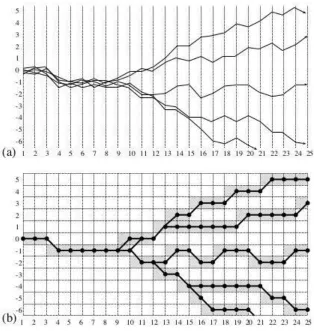
Figure 1. Emergent Indeterminism ... 12
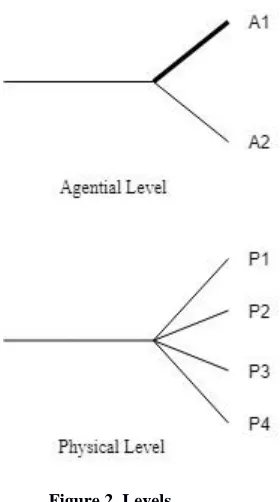
Figure 2. Levels ... 43
1 INTRODUCTION
Christian List (2014) has recently defended what he refers to as a
“compatibilist-libertarian” theory of free will. His theory is compatibilist insofar as it demonstrates that free will
is compatible with physical determinism, while it is libertarian insofar as it requires agential
indeterminism. He suggests that it may be described as both “cross-level compatibilist” and
“agential-level libertarian” (unpublished-1, 18). In other words, he thinks that free will is
compatible with the truth of determinism at the physical level, while it is not compatible with
determinism at the level at which free agency must be described, i.e., the agential level. Notice
that this theory assumes that agential indeterminism is compatible with physical determinism.
Such cross-level compatibility assumes that the truth of determinism is relative to a specific
level,such that determinism may be true at one level while false at another.1
The conceptual support for such a level-specific conception of determinism is what I will
refer to as the multi-level modal theory, asdeveloped by List and Pivato (2014). According to
their theory, agential indeterminism is compatible with physical determinism if we assume (as
they do) that “higher-level states [such as agential states] are typically multiply realizable by
lower-level states” (2014, 20). In their jargon, the basic idea is that a multiply-realized,
higher-level history may have multiple possible (higher-higher-level) futures, despite the fact that each of the
history’s multiple lower-level realizers only has a single possible (lower-level) future. So,
because there are multiple lower-level histories that can realize a single higher-level history,
there may be multiple possible higher-level futures, even though each lower-level history only
has a single possible future. Therefore, List and Pivato conclude that higher-level indeterminism
1 Traditionally, determinism is considered to be a property of entire worlds, such that either determinism is
(more than one possible future) is compatible with lower-level determinism (only one possible
future) if the higher level is multiply realizable at the lower level. The key assumption is that all
of the modal propositions that are relevant to free agency are level-specific.
By demonstrating the compatibility of physical determinism and agential indeterminism,
List attempts to develop a compatibilist theory of free will that satisfies the libertarian
requirement for alternative possibilities, or the possibility of doing (or the ability to do)
otherwise – hence, compatibilist-libertarianism. In order to distance his view from those of
standard compatibilists, List argues that standard compatibilist conceptions of possibility are
either conditional or dispositional, and what unites both of these conceptions of possibility is that
they are hypothetical. According to these views, agents only have alternative possibilities
available to them insofar as things could have been different, assuming some aspect of the past
had been different. Because these conceptions of possibility are all hypothetical, libertarians are
not satisfied. Libertarians want a conception of alternative possibilities in which more than one
future is available to an agent given an identical history in a world with identical laws. Given the
compatibility of agential indeterminism and physical determinism, however, List claims to have
solved this problem for the compatibilist. In other words, he claims to have provided the
compatibilist with alternative possibilities that even a libertarian would (or, at least, should)
accept. One goal of this paper, however, is to argue that List has failed to provide a
non-hypothetical conception of possibility.
In defense of compatibilist-libertarianism, List poses an objection to the consequence
argument. Initially proposed by Peter van Inwagen (1986), the modal version of the consequence
argument concludes with amodal proposition about agents (roughly, no agent ever has the
truth of determinism. For the argument to be valid, there are two rules of inference proposed by
van Inwagen that must also be valid. The first of which, Rule Alpha, says that we can infer an
agential-level modal proposition (e.g., ‘~P is agentially impossible’) from another modal
proposition (e.g., ‘P is necessary’), where the latter modal proposition is entailed by the truth of
determinism. But, according to List, although physicaldeterminism may turn out to be true, we
have good reason to believe that agentialdeterminism is false. Therefore, List argues that any
sound version of the consequence argument must begin by assuming the truth of physical
determinism. But, if we assume physical determinism, then the only way for the argument to
derive an agential-level modal proposition from physical determinism is to assume Rule Alpha
allows for cross-level modal inferences. But if Rule Alpha allows for cross-level modal
inferences, then it must be invalid.2 According to List, agential-level modal propositions (such
as, ~P is agentially impossible) cannot be derived from any physical-level modal proposition
(such as, P is physically necessary). Consequently, List concludes that the consequence
argument is invalid insofar as an agential-level modal proposition (namely, the conclusion that
an agent does not have the possibility of doing otherwise) cannot be derived from a
physical-level modal proposition (i.e., any of the modal propositions entailed by the truth of physical
determinism). In short, his objection to the consequence argument relies on his rejection of
cross-level modal reasoning – according to List, cross-cross-level modal propositions are not well-formed
and cross-level modal inferences are invalid.
In an attempt to revise both the consequence argument and List’s multi-level modal
theory, I propose a way of conceptualizing cross-level modal reasoning that I argue is both
2 Others have argued that Rule Alpha and van Inwagen’s second rule – Rule Beta – are both invalid for
consistent with common instances of such reasoning in science and provides a framework for
understanding the significance of List and Pivato’s argument for emergent indeterminism.
Specifically, I introduce what I refer to as a meta-level. For now, it will suffice to say that what I
have in mind is another application of the levels metaphor in which two or more ‘levels’ are
considered at once.3 With meta-levels and some rules for deriving meta-level modal propositions
from level-specific modal propositions worked into List’s modal theory, I propose a revised
version of the consequence argument designed to avoid the objection posed by List’s response.
What I aim to demonstrate in the revision is that List must be committed to the hypothetical
conception of possibility that he hopes to avoid. In light of this, I argue that
compatibilist-libertarianism provides nothing more a new-fangled version of compatibilism that is stuck with
the hypothetical conception of alternative possibilities, which libertarians should find no more
satisfying than previous versions.
To further develop my critique of List, I also argue that compatibilist-libertarianism
actually fares worse than standard compatibilism. To demonstrate, I describe two caricatures of
popular arguments in the free will literature – the first of which is directed against the
compatibilist, the second is directed against the libertarian. I refer to the first argument as the
causal source objection. In short, this objection states that, if determinism is true, then agents
cannot be considered the causal source of their actions. What seems to be the most common, and
I think the most plausible, response to this objection consists in demonstrating that agents may be
the most plausible difference-makers of the direct consequences of their actions. List and
Menzies (2017), for example, have developed such a strategy in response to the causal exclusion
argument. So far, List’s view seems just as well off as any compatibilist view that invokes a
difference-making account of causation. But after considering the randomness objection – the
second of the two objections I will discuss – I argue that the compatibilist-libertarian is actually
in a worse position than the compatibilist insofar as the difference-making account of agential
causation appears to be inconsistent with agential indeterminism. Assuming agential
indeterminism, what seems to best explain the difference between two worlds with identical
agential histories and divergent agential futures is each world’s distinct physical history (since
each agential future has the same history, while each distinct physical future has a distinct
history). Thus, a difference-making account of agential causation seems to undermine the
plausibility of agential causation within the theoretical framework articulated by List.
I conclude the paper by arguing that List’s has three recourses against my argument: (1)
he could argue that cross-level modal reasoning is intrinsically fallacious (a view I argue against
in this paper), (2) he could accept my construction of meta-levels but insist that free will must be
described solely at the agential level (and at any meta-level that merely includes the agential
level as a base-level), or (3) he could insist that causation is level-specific (a view I will not
argue against in this paper). Insofar as the latter view has been defended, List’s view may remain
plausible without needing to address my objection. In any case, I hope this paper will, at the very
least, call his view into question and place on his shoulders the burden of answering a few more
questions about the coherency of his view. As it stands, I’m not convinced that List’s theory truly
satisfies any libertarian requirement, and I’m concerned that his theory is less coherent than other
versions of compatibilism. At best, I think he has only provided standard compatibilists with a
logical framework for thinking about alternative possibilities hypothetically, but without
satisfying any sort of libertarian requirement for alternative possibilities. At worst, his view is
2 COMPATIBILIST-LIBERTARIANISM
In this section, I introduce the multi-level modal theory to which List is committed. In short,
it’s a way of thinking about modality in a leveled world. A leveled world is simply a world that
can be divided into distinct levels – what this means will, I hope, be made clearer in this section.
List’s multi-level modal theory provides a way for thinking about the modal properties of a
world that is divisible into distinct levels. To be precise, the theory is a logical framework for
deriving modal propositions about multi-level dynamical systems. I emphasize that List has a
level-specific conception of modality,according to which the truth of determinism and other
modal propositions are level-specific. For example, List argues that, even if physical-level
determinism is true, agential-level determinism may be false. The logical consistency of physical
determinism and agential indeterminism is what makes List’s compatibilist-libertarian theory of
free will logically possible. There are three goals in this section: (1) to explain the basic structure
of List’s multi-level modal theory; (2) to explain the logical possibility of physical determinism
and the emergence of indeterminism at higher levels; and (3) to describe List’s theory of free will
and his commitment to a non-hypothetical conception of possibility.
2.1 Modality in a leveled world
I begin by explaining List’s (unpublished-2) unified framework for a system of levels.4
Consider the two levels that he considers for the purposes of defending his theory of free will –
4 His framework is unified insofar as it can account for four distinct conceptions of a level: levels of
the physical level and the agential level.5 Each of these levels (qua levels of description) contains
a specific language capable of describing any possible world at that level (and only that level).
So the language of physics is capable of describing all of the physical facts of any possible world
that has physical facts, while the agential language is capable of describing all of the agential
facts of any possible world that has agential facts. A complete specification of a possible world
at a specific level will include a complete specification of that world’s facts at that level and in
the language of that level. Consequently, the number of possible worlds is relative to the
granularity of the level of analysis. For example, a lower level such as the physical level is
finer-grained than higher levels; therefore, the level of physics will carve logical space into more
possible worlds than a higher one such as the agential level.
List and Pivato refer to each complete specification of a possible world at a specific level
as a history h. For example, there is a single physical history p that specifies all of the physical
facts about our world (even if those facts have yet to be settled at this point in time). Put simply,
histories are level-specific possible worlds. An incomplete specification of a possible world at a
specific level from the beginning of that world until some arbitrary time t is referred to as a
truncated history ht. For example, there is a single truncated physical history pt that specifies all
of the physical facts about our world from the beginning of our world until t.
With the notion of histories (which are simply level-specific possible worlds), the modal
facts of a possible world can be specified. According to List and Pivato, the truth of a modal
proposition about some future state S is determined by the numberof histories [{h1, h2 … hn}
where S∈ h1 and S∈ h2and … S∈ hn] that are nomologically consistent (according to the laws
5 I should note that, throughout this paper, I will only discuss the physical and agential levels. My
of the level at which S is described) with the truncated history ht of the specific world in
question.For example, the physical state P is possible in world w at t if and only if there is at
least one history p such that P ∈ p and p is nomologically consistent with the physical laws of w
and the truncated physical history pt of w. Conversely, P is necessary if there is only one
nomologically consistent history and P is impossible if there are no nomologically consistent
histories. For the purposes of this paper, specific states (which are subsets of histories) will be
notated with capital letters (such as P – a physical state, or A – an agential state), while complete
histories of the world will be notated with lower-case letters (such as p – a physical history, or a
– an agential history). This is consistent with the notation employed by List.
The level-specificity of this modal framework must be emphasized. To say that P is
possible in some world is to say that P is possible relative to the laws of physics and the
truncated physical history of that world. So to say that P is possible is to say that P is physically
possible. But to say that some agential state A is possible is to say that A is agentially possible.
Since the agential level is distinct from the physical, List uses the following level-specific modal
operators for distinguishing physical and agential modal propositions:
Physical necessity and possibility: □ P and ◊ P
Agential necessity and possibility: ■ A and ♦ A
Since these modal operators are relative to level-specific histories and laws, the domain of each
modal operator only includes states that are described at a specific level. Thus, physical states
cannot be agentially possible or necessary, and agential states cannot be physically possible or
necessary. Such cross-level modal propositions are not well-formed according to List and
It is important to emphasize the difference between the conception of modality defined
within the multi-level modal theory and the logical conception of modality.6 According to List
and Pivato (unpublished), their theory is describing a nomological conception of modality in
which a future state is assigned modal properties relative to its consistency with the past and the
natural laws. A state may be nomologically impossible given certain conditions in the actual
world even though it is logically possible. For example, it may be nomologically impossible for
me to perform a better bicycle kick than Cristiano Ronaldo, even though it is certainly logically
possible for me to do so. With this in mind, it is easy to see the difference between physical and
agential modal properties. While it may be physically possible for the collection of physical stuff
that constitutes my body to be moved from one location to another, it may be agentially
impossible if moving to that other location involves placing myself into an undesirable agential
state (such as boredom, fear, or anxiety) given the history of my life as an agent and the laws that
determine my behavior. Put simply, if we are thinking about what is nomologically possible, we
may reach different conclusions depending upon which set of laws we are considering. For the
purposes of this paper, it will be assumed that all references to possibility and necessity are
nomological unless otherwise noted.
2.2 Supervenience, multiple realization, and emergent indeterminism
Nevertheless, there are some cross-level modal properties in a leveled world. In fact, List
argues that, for any collection of levels to truly constitute a system of levels, there must be some
set of supervenience mappings between those levels. In agreement with Kim that a system of
6 Hegel makes a similar distinction between formal (or logical) and real (or relative) possibility. Something
levels need not be linearly ordered, List argues that a system of levels can be partially ordered
according to “higher-than” and “lower-than” relations between levels (unpublished-2, 5). To say
that the agential level ishigher than the physical levelis to say that the agential level supervenes
on the physical. According to List, this entails that there is a surjective mapping of physical
states onto agential states such that every physical state maps onto a specific agential state. 7 A
surjective mapping from one set to another simply means that every member of the first set
corresponds to a single member of the second set, even though some members of the second set
correspond to multiple members of the first set. In short, a surjective mapping from the physical
level to the agential implies that the physical facts determine the agential facts. This means that
each physical state necessitates a specific agential state, even though multiple physical states
may be possible for any given agential state.8 According to List, higher levels, such as the
agential level, are most likely multiply realizable at lower levels, such as the physical level. So
although each physical state must correspond to a single agential state, there may be some
agential states that correspond to multiple physical states. In other words, some agential states
may stand in a one-to-many relation to physical states.9
7 A surjective mapping between lower and higher levels simply means that every lower-level state
corresponds to a single higher-level state, even if some higher-level states correspond to multiple lower-level states. Technically, List may be wrong to think that this mapping is surjective because there are seemingly physical states that do not correspond to any agential state.
8 To clarify, I do intend to say that every physical state necessitates a specific agential state. One might
argue that certain physical states do not necessitate any agential state. For example, puddles of mud do not seem to realize any agential state; therefore, it would be strange to insist that puddles of mud necessitate any sort of agential state. But I would argue that puddles of mud do necessitate the absence of any agential state. I describe necessity relations this way because it captures the idea that supervenience entails the complete necessitation of all supervenient facts by subvenient facts.
9 It may be worth noting that most philosophers would not endorse their conception of multiple realization.
For example, one of List’s examples of multiple realization is that “many different states of the individual water molecules in a flask can instantiate the same aggregate state of the water” (2017, 9). But this disjunction of lower-level molecular arrangements of H2O do not have any relevant differences in the way in which they realize the
Since the agential level is likely multiply realizable, List and Pivato argue that the truth or
falsity of agentialdeterminism is independent from the truth or falsity of physical determinism.
In their jargon, determinism is true if and only if every truncated history is nomologically
consistent with only one possible history; while indeterminism is true if some truncated histories
are consistent with more than one possible history. So if we assume physical determinism, then
we are assuming that every truncated physical history is nomologically consistent (according to
the laws of physics) with only one possible physical history. But assuming the agential level is
multiply realized, there may be multiple agential histories that are nomologically consistent with
any truncated agential history that supervenes on a physically deterministic history.
Figure 1. Emergent Indeterminism
To demonstrate, I have borrowed the above diagram from List and Pivato. Figure 1a
illustrates a deterministic lower level. Each line represents a specific history that can be divided
into truncated histories and futures. Notice that there are no branching histories – for every
truncated history, there is only one possible future. In figure 1b, however, there are many
branching histories. Most notably, the truncated history h8 is multiply realized by five distinct
truncated histories at the lower level. And since h8 is multiply realized by these five distinct and
deterministic lower-level histories, it may have up to five distinct possible futures.10
10 Emergent indeterminism is quite similar to Donald Davidon’s (1980) anomalous monism. While List and
It is important to notice that supervenience mappings establish modal relations that must
hold between the two levels. List even claims that supervenience mappings can be understood as
“necessitation mappings” (2017, 4). Since the agential level supervenes on the physical level, all
of the agential facts in a world are necessitated by the physical facts of that world. But notice that
this makes it seem as if, despite the appearance of agential indeterminism, any world that is
fundamentally physical (i.e. all levels supervene on the physical) and physically deterministic
must be actually deterministic at the agential level. If all of the physical facts about the future are
necessary and all of those facts necessitate a specific agential future, then there isn’t really more
than one possible agential future (because if there were more than one possible agential future,
then there should be facts about that future that are not-necessary). From this perspective, it
would seem as if agential indeterminism is merely epistemic – the agential level only appears to
be indeterministic if we leave out information about the level on which it supervenes.
It is probably not surprising, however, that List and Pivato (2014) acknowledge this
objection and have a response. They argue that, although the motivation for distinguishing
between two levels may be epistemic, the modal properties nomologically defined within each
level are objective. As List puts it, we may initially be motivated to develop a distinct level of
description to describe agents because explaining human behavior solely in the language of
physics would be epistemically impossible. But even if our motivations for describing a new
level are epistemic, the modal properties defined within each level need not be epistemic – they
may be objective features of the world described at the new level. In other words, their
suggestion seems to be that levels are externally epistemic, while internally objective. In a
nutshell, this response simply reiterates their level-specific conception of modality. As I will
explain in more detail in the third section, List argues against the possibility of constructing
cross-level modal propositions and making cross-level modal inferences. For now, it will suffice
to say that List argues that level modal propositions are not well-formed and that
cross-level derivations are fallacious.
2.3 A non-hypothetical conception of possibility
List first proposed his compatibilist-libertarian theory of free will in his paper, “Free will,
determinism, and the possibility of doing otherwise” (2014). Citing the compatibility of physical
determinism and agential indeterminism, he demonstrates that the libertarian requirement that
free agents have the possibility of doing otherwise is compatible with physical determinism.
Moreover, he insists that only a modal (or, as I argue, non-hypthetical) interpretation of the
‘possibility of doing otherwise’ is sufficient to satisfy this requirement – in other words, only a
modal conception of possibility is consistent with libertarianism.
Contra other compatibilists, he argues that both the conditional and dispositional accounts
of the possibility of doing otherwise fail to conceptualize possibilities as actually being available
to agents. In other words, what both the conditional and dispositional accounts have in common
is that they only make sense of the possibility of doing otherwise hypothetically. Consider the
conditional account. On this account, an agent is said to have the possibility of doing otherwise
insofar as they would have acted otherwise if they had chosen otherwise. While on the
dispositional account, an agent is said to have the possibility of doing otherwise insofar as they
would have acted otherwise if some unexercised yet present disposition had been exercised.
doing otherwise if they would have acted differently in some sort of different context. According
to a modal account, however, an agent is said to have the possibility of doing otherwise if and
only if that possibility is consistent with the actual history of that world. In other words, a modal
account requires future states to be possible without hypothetically altering any of the historical
context in order to truly be considered ‘possibilities.’
Not surprisingly, List cites the compatibility of physical determinism and agential
indeterminism in order to demonstrate that a modal conception of alternative possibilities is
consistent with physical determinism. First, if we assume agential indeterminism, then it is
logically possible that an agential history could have been otherwise at time t without altering
any aspect of that agential history prior to t. According to List, this satisfies a libertarian
conception of the possibility of doing otherwise insofar as it does not rely on a hypothetical
account of such possibilities. And since agential indeterminism is logically consistent with
physical determinism, this should also satisfy the compatibilist. Therefore, he refers to his theory
of free will as ‘compatibilist-libertarianism.’
But, as Nadine Elzein and Thomas Pernu (2017) have argued, List’s theory of free will
“fails to break us from [the] deadlock within the free will debate” between compatibilists and
incompatibilists. To be clear, the target of their critique is supervenient libertarian theories in
general. But since List’s compatibilist-libertarianism seems to provide the most formal
representation, or perhaps the most prototypical, of these sorts of theories, they focus their
argument almost exclusively on his theory of free will. Supervenient libertarianism is essentially
the attempt to reconcile the libertarian requirement for alternative possibilities with physical
determinism by employing the distinction between distinct levels – such as the physical and
compatibilist-libertarianism. According to Elzein and Pernu, what truly distinguishes
compatibilist and libertarian accounts of “the ability to do otherwise” is that compatibilists are
“non-actualists” and are satisfied with “conditional and dispositional analyses,” while
libertarians are “actualists” and are committed to a “non-conditional analysis” (222). They argue
that List’s theory of free will can be described as an actualist-compatibilist theory of free will.
However, Elzein and Pernu are skeptical about whether or not List succeeds in
articulating a compatibilist theory of free will that is truly consistent with actualism. The
non-necessary possibilities of agential indeterminism seem to be undermined by the necessity of
physical determinism and the supervenience relations between the physical and agential levels.
Recall that multiple realization is a one way street. Although there are multiple physical states
that correspond to a single agential state, each physical state necessitates a specific agential state.
And of course physical determinism necessitates each physical possibility – in other words, each
physical state is only possible if it is also necessary; or, if (and only if) a physical state is
possible, then it is necessary. So unless List wants to abandon supervenience, it seems to follow
that the non-necessary agential possibilities are only epistemically non-necessary. In fact,
however, only a subset of the agentially non-necessary possibilities are possible given the actual
history of the world. To be precise, only those agential states that are necessitated by their
necessary physical realizers are possible. And because they’re necessitated by necessary states,
they must be necessary themselves.
List, of course, justifies the consistency of agential indeterminism and physical
determinism by appealing to the level-specificity of modality. Elzein and Pernu discuss two
“basic lines of justification” for such a level-specific conception of modality. First, List appeals
appeals to the impossibility of translating agential language into physical language. I do not
challenge List on the plausibility of either of these claims. However, I argue that neither of these
claims is sufficient to restrict his multi-level modal theory to such a level-specific conception of
modality insofar as both of these impossibilities are merely epistemic. As I see it, merely
epistemic reasons for differentiating between the two levels is not sufficient to exclude modal
reasoning that cuts across those levels. In defense of the first claim, he argues that it is
“completely infeasible” to predict human behavior solely at the physical and neuroscientific
levels (2014, 168). And in defense of the second claim, he argues that it may be
“computationally impossible” to ever know the complete set of physical states upon which any
given agential state is multiply realized. But it is both completely infeasible and computationally
impossible to provide an objective measure over which futures are nomologically consistent with
the entire physical history of the world. Nevertheless, List thinks that this idealized way of
thinking provides us with a useful framework for thinking about the modal structure of the
world. Likewise, even though cross-level modal reasoning may be epistemically or
computationally impossible, there is no reason to think that we can’t have an idealized
framework for thinking about the cross-level modal structure of the world.
Elzein and Pernu seem satisfied concluding that List’s theory of free will may be much
closer to the standard compatibilist accounts from which he is attempting to distance himself.
Although they remain skeptical, they are open to the plausibility of List’s level-specific
conception of modality and the coherence of his view as both an actualist and compatibilist
theory of free will. In contrast, however, I attempt to pose a much more damaging critique in
List’s argument. Although they remain open to the plausibility of the level-specificity of the
the next two sections, List’s theory must assume a hypothetical (or, non-actual) conception of
possibility. If this argument is sound, then List’s theory of free will should be considered
compatibilist, plain and simple – it is neither actualist nor libertarian. In the next section, I
describe List’s response to the consequence argument which explicitly relies on two objections
that he makes against cross-level modal reasoning. In both of these objections, List cites formal
reasons against the possibility of allowing for a cross-level conception of modality in his
multi-level theory. In the following section, I attempt to formalize a new concept – namely, meta-multi-levels
– into the theory that avoids both of List’s objections and allows us to make cross-level modal
3 THE INVALIDITY OF CROSS-LEVEL MODAL REASONING
In this section, I explain the consequence argument and List’s response, which cites the
invalidity of cross-level modal reasoning. But more importantly for the purposes of this paper, I
argue that List’s response to the consequence argument commits him to the sort of hypothetical
analysis of alternative possibilities that he claims compatibilist-libertarianism avoids. As I
explain in this section, List’s best counter-response is his argument for the invalidity of both
cross-level modal propositions and inferences. It is important to recognize, however, that these
propositions and inferences are only invalid according to the assumptions of List’s multi-level
theory. In the next section, I argue that we can formally introduce ‘meta-levels’ into his theory
and develop a sophisticated account of cross-level modal reasoning. But before doing so, the
reasons against cross-level modal reasoning should be made clear.
3.1 The consequence argument
The original consequence argument proposed by van Inwagen (1986) presupposes two
rules: Rule Alpha and Rule Beta. I will only be concerned with Rule Alpha insofar as List’s
objection to the consequence argument is that Rule Alpha is invalid. According to van Inwagen’s
formulation, Rule Alpha states:
Original Rule Alpha: □ P →NP
where NP states that “P is true, and there is nothing anyone could have done to make it false.”
According to List, we can replace N with the modal operator ~♦~. So we can revise Rule Alpha
in the modal jargon of List and Pivato:
Rule Alpha: □ P → ~♦~P
When we say that there is “nothing anyonecould have done make P false,” we are saying that ~P
List, the Original Rule Alpha and Rule Alpha as they are depicted above are equivalent – I have
no qualms with this view.
Given the revision of Rule Alpha in the language of the multi-level modal theory, List
reconstructs the consequence argument as follows11:
Rule Alpha: □ P⟝ ~♦~P
Rule Beta: ~♦~(P → Q), ~♦~P ⟝ ~♦~Q
1. □ ((po & L) → P) Determinism
2. □ (p0 → (L → P)) Exportation
3. ~♦~(p0 → (L → P)) Rule alpha
4. ~♦~p0 Assumption
5. ~♦~(L → P) Rule beta
6. ~♦~L Assumption
7. ~♦~P Rule beta
The basic idea is that, if physical determinism is true, then any physical state that is
nomologically possible (relative to the laws of physics and the physical past of the actual world)
is also necessitated by the past and the laws of physics. And since there is nothing anyone can do
to change the past, the laws of physics, or the fact that each possible future state is a necessary
consequence of the past and the laws of physics, then there is nothing anyone can do (or could
have done) to change the fact that some future state must occur.
Before explaining List’s response to the consequence argument, it is important to note
what most compatibilists consider to be the best type of response. Perhaps most notably, David
11 To be clear, if the two iterations of Rule Alpha described above are equivalent (which I assume is the
Lewis (1981) points out that, if the laws had been slightly different, then a different agential state
would have been possible. Notice that this relies on the sort of conditional (or, hypothetical)
analysis of possibility described in the previous section. In fact, Kadri Vihvelin (2013) refers to
Lewis’ response (and similar responses) as conditional. What these sorts of views have in
common is their hypothetical structure – if the laws had been slightly different, or if the past had
been completely different, then some other agential state would have been possible. Both of
these sorts of responses rely on hypothetically altering the actual past or the actual laws in order
to derive alternative possibilities. Although Vihvelin’s own account of the possibility of doing
otherwise is dispositional rather than conditional, it too is hypothetical. The basic idea is that an
agent could have acted otherwise if they had acted on a disposition that was unexercised in the
actual circumstances. This is consistent with the agent having the disposition in question in the
actual circumstances, as long as the disposition was unexercised. So although an agent’s
dispositional constitution need not be hypothetically altered to make sense of the possibility of
doing otherwise, whether or not the disposition was exercised must be. Thus, even the
dispositional account of the possibility of doing otherwise is hypothetical.
As I explained in the previous section, List insists that the theoretical virtue of
compatibilist-libertarianism is that it need not rely on such a hypothetical analysis of the
possibility of doing otherwise. Given his level-specific conception of modality,
compatibilist-libertarianism provides agents with robust modal possibilities, i.e. non-necessary possibilities
that may be considered possible without hypothetically assuming that the entire past or some of
the laws had been different. Therefore, a conditional response to the consequence argument is
not available to List without undermining the libertarian side of his theory of free will. Although
argument are inconsistent with compatibilist-libertarianism. Without an argument to the contrary,
I will assume that a hypothetical response to the consequence argument is inconsistent with the
compatibilist-libertarian theory of free will that List has in mind.
3.2 The compatibilist-libertarian response to the consequence argument
List argues that the primary problem with van Inwagen’s consequence argument is the
invalidity of Rule Alpha. What is invalid about the rule is its cross-level modal structure.
According to List, we cannot infer modal propositions at one level from modal propositions at
another level. And in van Inwagen’s depiction of the argument, Rule Alpha must be used to
derive an agential modal proposition from a physical modal proposition. There are two ways in
which we can understand this inference, both of which are invalid. First, we might interpret P as
a physical state. If so, then the expression ‘~♦~P’ would not be well-formed insofar as the
domain of the agential modal operator ‘♦’ only consists of agential states. Second, we might
interpret P as an agential state. If so, then ‘□ P’ would not be well-formed insofar as the domain
of the physical modal operator ‘□’ only consists of physical states. Either way, Rule Alpha is
invalid because it must rely on an assertion that is not well-formed. Since List believes that the
agential level is most likely both multiply realized and indeterministic (even if physical
determinism is true), he insists that there are often multiple possible agential futures (even
though there may be only one possible physical future). Therefore, he concludes that the
consequence argument, as advanced by van Inwagen, relies on an invalid inference from a
physical-level modal proposition to an agential-level modal proposition.
With that said, List does consider two valid versions of the consequence argument – one
physical, the other agential. The problem is that neither is sufficient to make an inference about
physical determinism. But physical-level modal propositions are not sufficient to determine
whether or not multiple possibilities are available to an agent. Therefore, this version of the
consequence argument is irrelevant with respect to free will despite being both valid and sound.
Alternatively, an agential version is capable of concluding that no agent ever has the possibility
of doing otherwise. But it must assume the truth of agential determinism, which (according to
List) is unlikely to be true. Therefore, the agential version can only undermine the existence of
free will by assuming an implausible premise, rendering it unsound.12 What both of these valid
arguments have in common (besides being insufficient to undermine free agency) is that they are
both level-specific. Consequently, we must conclude that level-specific versions of the
consequence argument are valid but insufficient to undermine free will, while cross-level
versions are sufficient to undermine free will but invalid.
So perhaps the most obvious challenge to List’s view is to reject his level-specific
conception of modality. He considers two possible strategies – one of which involves making a
cross-level inference, while the other involves a cross-level modal proposition. In response to the
first, he points out that any cross-level modal inference must rely on the language of
supervenience, which is the only sort of cross-level logical relation available within his
multi-level modal theory. But, he argues, the language of supervenience only allows us to assert
propositions about the relations between states at different levels – supervenience does not allow
us to assert modal propositions about states at a specific level. And in response to the second
strategy, he points out that cross-level modal propositions (e.g., the agential state A is physically
12 It is worth noting that List’s concession that agential determinism is sufficient to undermine free will
necessary and the physical state P is agentially necessary) are not well-formed propositions
insofar as the domain of such modal operators is level-specific. And since the domain of the
modal operators is level-specific, such cross-level modal propositions are meaningless.
But notice that both of these objections are formal. List is only appealing to the rules of
the system that he has designed. Beyond citing such formal rules, List’s only arguments against
cross-level modal reasoning are epistemic, as I discussed in the previous section. These
arguments, however, only cite epistemic limitations and do not place any normative restrictions
on the type of concepts that we can formalize in a multi-level modal theory. If sufficient
justification were provided to introduce a new concept into the theory that allowed for
cross-level modal reasoning, then both List’s response to the consequence argument and his theory of
free will may be undermined. In order to fill the cross-level gap in List’s multi-level modal
4 META-LEVELS
In this section, I propose an addition to the multi-level modal theory described in the first
section. Specifically, I introduce the notion of a meta-level.13 The purpose of a meta-level is to
provide a formal basis for cross-level modal reasoning. Contra List, I see no reason to exclude
cross-level modal reasoning from the multi-level modal theory. To be blunt, it seems obvious to
me that scientists frequently make inferences about the modal properties at one level based upon
the modal properties at another. In a nutshell, we can describe this sort of cross-level modal
reasoning with the concept of a meta-level. Moreover, as I will argue below, the concept of a
meta-level helps demonstrate the significance of the argument for the emergence of
indeterminism. Without assuming at least one of the rules of inference I introduce in this section,
List and Pivato’s argument for the emergence of indeterminism loses its significance. This
section is divided into two sub-sections. First, I define meta-levels in more detail and defend
their inclusion within the multi-level modal theory by introducing the modal properties of a
meta-level. Second, I revise the consequence argument by describing a meta-level version that is
both valid and (I think) sufficient to undermine free will. At the end of this section, I hope to
have convinced the reader that List must be committed to a hypothetical conception of the
possibility of doing otherwise, and therefore that List’s theory of free will is neither actualist nor
libertarian.
13 For a thorough discussion of the ‘levels’ metaphor, see Carl Craver (2015). He argues that there are many
4.1 Meta-level modality
So what is a meta-level? To start, consider those scientific disciplines that we might think
of as a specific level of description (such as biology) that seem capable of being broken down
into multiple distinct levels of scientific description (such as genetics, organic chemistry, and
neurobiology). What I have in mind is a level that can be broken down into multiple levels –a
meta-level is some level (such as biology) that consists of multiple levels itself.14 The basic idea
is that scientists often operate at some meta-level by considering how the modal properties at one
level determine the modal properties at another level given both sets of level-specific laws and
the laws of supervenience that connect those levels. An important question, then, is – what sort
of theoretical virtue do meta-levels add to the multi-level modal theory discussed in the first
section. I think the justification for thinking about meta-levels comes from the theoretical virtue
of supervenience claims. It seems to me that the entire point of talking about supervenience is to
acknowledge scientifically significant ways in which the processes described at one level stand
in a modal relation to processes at another level. In my view, if we are going to develop a
sophisticated multi-level modal theory, we must recognize that there are levels within levels – or,
according to the formal jargon that I am developing, there are base-levels within meta-levels.
To demonstrate, consider a biological description of the history of a specific organism. At
any given time, the state of an organism includes genetic, cellular, physiological, and neural
arrangements. We could describe the organism solely at the genetic level, or we could describe
14 The term ‘meta-level’ is admittedly vague. I considered referring to meta-levels as ‘levels of abstraction,’
the organism solely at the physiological level.15 But we might want to describe the state of the
organism at a more general level, which we may choose to refer to as the biological level. Such a
description will not specify the state of the organism at a single level; rather, the state of the
organism at the level of biology in general will consist of specifying the state of the organism at
multiple levels. So when we specify the state of an organism at a specific level at a specific time,
we assign the organism a single state at that level. But if we are operating at a meta-level, we
will assign the organism a set of states that includes a single state for each base-level. To be
clear, a meta-level can simply be understood as a conjunctive-level. Nomenclature aside, the
basic idea is that scientists often operate at a ‘level’ that is better understood as a conjunction of
multiple levels.16
So for example, we might specify the state of some human being at the physical level by
assigning it the physical state P, and we might specify the state of that same human at the
agential level by assigning it the agential state A. But if we are operating at some meta-level that
includes only the agential and physical levels as base-levels, we would specify the state of the
human by assigning it the pair of states {P, A}. In general, if we are operating at a meta-level
that consists of n base-levels, then any specification of a system at that meta-level will be a set of
15 It may be argued that you cannot actually talk about an organism at the genetic level. This, I think, helps
make my point – if you want to talk about the organism as a whole, you must talk about how certain high-level properties of the organism (such as its anatomy) supervene on low-level properties (such as its genetic make-up).
16 For skeptics of the notion of a level, I must emphasize that I am not claiming that biology is a
n base-level states. To provide a more formal representation of a meta-level, let’s make the
modal operators described by List more explicit:
□ (P) def = □tw(P | PLw&ptw)
This states that, to say that the physical state P is physically necessary is equivalent to saying that
P is necessary at time t in world w conditionalized upon the physical laws of w (PLw) and the
physical history of w at time t. This notation simply makes explicit what List packs into his
modal operators. Given this notation, I provide a formal definition of meta-level necessity:
□M (P, A) def = □tw(P, A | PLw & ALw & ptw & htw& SLw)
This states that, to say that the physical and agential ‘P & A’ states are necessary at the
meta-level is equivalent to saying that P and A are necessary at t in w conditionalized upon the
physical and agential laws of w, the physical and agential histories of w at t, and the laws of
supervenience connecting each level in w. A corresponding definition can be provided for
possibility.
Since each meta-level is constituted by multiple levels, meta-level modal propositions are
derived from the laws of each level and the laws of supervenience connecting the
base-levels. For example, if we are operating at a meta-level that includes only the physical and
agential levels as base-levels, then the truncated history of some world w at that meta-level will
consist of the pair {at, pt} where at is the agential-level history of w and pt is the physical history
of w. Therefore, modal propositions at this meta-level are determined by the number of pairs {a,
p} that are nomologically consistent with {at, pt} according to both the agential and physical laws
of w and the laws of supervenience that connect the agential and physical levels.
To demonstrate the utility of the notion of a meta-level, I must introduce some rules of
that is not. In general, if a future state is nomologically necessary at the base-level at which it is
defined, then we can infer that the state is nomologically necessary at the meta-level that
includes that base-level. So inferring meta-level necessity from the base-level is justified. But, if
a future state is nomologically possible at the base-level, then we cannotinfer that the state is
nomologically possible at the meta-level. So inferring meta-level possibility or the lack of
necessity from the base-level is not justified.
Let’s start with the inference of necessity. If a state is necessary according to a specific
law, then that state must be necessary according to that law in conjunction with any other set of
laws that are consistent with that law. If a state is necessary according to some set of
nomological information, then there is no additional information that could make that necessary
state non-necessary. Therefore, necessity is overdetermined by level-specific laws – no amount
of additional information that will change the modal fact that some state is necessary. But this is
not true for possibility. A state may be possible according to a specific law even though it is
impossible according to that same law in conjunction with other laws. This is because possibility
and the negation of necessity are underdetermined by level-specific laws. A state may be
possible according to some set of nomological information, even though that same state may be
necessary according to additional information.
Think of this asymmetry between necessity and possibility in epistemic terms. If you
believe that some state P is possible given your incomplete background knowledge K, while it is
in fact impossible relative to a complete set of modally relevant information I (i.e., the laws and
histories at the specific level in question). In this case, it is possible for K to be consistent with I.
You may not know that P is actually impossible simply because of your epistemic limits. In
information need not be inconsistent. Something may have been possible relative to an
incomplete specification of the past or the laws of nature even though it is impossible relative to
a complete specification of the past and those laws. In contrast, if you believe that P is necessary
given K, while it is in fact not-necessary relative to I, then you may not consistently believe K is
true upon learning I. In this case, your belief is mistaken due to your epistemic fallibility. In
other words, K must be incorrect even if it is incomplete, since K must be inconsistent with I. If
your theory predicts that something is necessary and it turns out to be non-necessary, then your
theory must have been false in some way – it could not have been merely incomplete. This
asymmetry between necessity and possibility should not be surprising insofar as necessity, by
definition, has a stronger modal force than possibility.
With this in mind, I introduce the following rules of modal inference between the
meta-level and its base-meta-levels. For the sake of simplicity, I will consider the meta-meta-level that includes
only the agential and physical levels as base-levels. Before I introduce the rules, I must introduce
modal operators that are specific to the meta-level. Henceforth, the modal operators □M and ◊M
will refer to the nomological necessity and possibility at the meta-level that includes only the
agential and physical levels as base-levels. Additionally, any reference to the meta-level will be
in reference to that meta-level that includes only the agential and physical levels. With this, we
can introduce the following rules:
[□ P ⟝ □M P] and ~[□MP ⟝ □ P]
~ [◊P ⟝ ◊MP] and [◊MP ⟝ ◊P]
With these, you can derive:
~ [~□ P ⟝ ~□MP] and [~□MP ⟝ ~□P]
Notice the asymmetry between necessity and its negation, and possibility and its negation. If a
state is necessary at a base-level, then it is necessary at the meta-level – same thing for
impossibility. But just because it’s necessary at the meta-level does not imply that it is necessary
at the base-level – again, same thing for impossibility. On the other hand, if a state is possible at
the base-level, then it may or may not be possible at the meta-level – same thing for the lack of
necessity. With that said, a state cannot be possible at the meta-level without being possible at
the state’s base-level – and again, same thing for the lack of necessity. So although there are no
justifiable rules of inference from base-level possibility (or from the lack of necessity) to the
meta-level, there are justifiable rules of inference from meta-level possibility (or the lack of
necessity) to one of the base-levels.
To demonstrate, suppose that the world is physically deterministic. According to List and
Pivato, the truth of physical determinism implies that all physically possible states are physically
necessary. So, assuming physical determinism and the rules of meta-level modal inference
defended above, we can infer that there is some future state P that is necessary at the meta-level
M. We might also assume agential indeterminism, such that there are two states A1 and A2 that
are both possible and non-necessary at the agential level. But given the above rules of inference,
this is not sufficient to conclude that A1 and A2are either possible or not-necessary at the
meta-level. In fact, given the law of supervenience as articulated by List, there is a surjective mapping
from the physical level onto the agential level. Therefore, there is a single agential state that is
necessitated (as a matter supervenience) by each physical state. So if P is necessary at the
meta-level and P is the subvenient base of A1 but not A2 (since only one higher-level state will
supervene on a specific lower-level state), then A1must be necessary at the meta-level (while A2
At this point, I must emphasize that, without assuming the rules of inference introduced
above, List and Pivato’s argument for emergent indeterminism loses its significance. What
makes this argument significant is the implicit assumption that there is at least some modal
relations that must hold between higher and lower levels. Specifically, the argument assumes that
a higher-level state is possible if and only if its history (at the higher-level) is realized by a
physical history that is also possible. Remove this constraint and the argument for the
consistency of higher-level indeterminism and lower-level determinism becomes trivial. The
simple fact that List and Pivato consider multiple realization to be an essential ingredient in their
argument demonstrates that they make this implicit assumption. Thus, the notion of a meta-level
actually provides a foundation for the significance of their argument. In other words, introducing
meta-levels into the multi-level modal theory does not undermine the argument for emergent
indeterminism; rather, it makes the significance of that argument clear. To be precise, what’s
significant about the argument is that agential indeterminism is consistent with physical
determinism despite the modal relations that must hold between those two levels at the
meta-level.
Finally, I want to emphasize another important implication of my argument. A meta-level
is deterministic if its lowest base-level is deterministic17, while a meta-level is indeterministic if
(and only if) its lowest base-level is indeterministic.18 This is because the state of the system at
the meta-level at any given time will be specified by the pair {P, A}. Assuming physical
17 See Appendix A. There, I provide an argument to demonstrate that determinism at the lowest base-level
entails determinism at the meta-level.
18 To be precise, it is possible for a meta-level to be deterministic even if all of its base-levels are
determinism, we can see that there is only one state P that is possible at any given time. And
since there is only one state A that supervenes on P, there is only one pair {P, A} that is possible
at the meta-level.
Before turning towards the consequence argument, recall List’s two objections against
cross-level modal reasoning. In the first, he points out that any cross-level modal inference must
rely on the language of supervenience. But, he argues, the language of supervenience only allows
us to assert propositions about the relations between states at different levels – supervenience
does not allow us to assert modal propositions about states at a specific level. And second,
cross-level modal propositions (e.g., the agential state A is physically necessary and the physical state
P is agentially necessary) are not well-formed propositions. Since the domain of such modal
operators is level-specific, such level modal propositions are incoherent. However,
cross-level modal inferences made at the meta-level avoid both of these objections. The first objection
states that the language of supervenience cannot be used to assert modal propositions about
specific states. But the language of the meta-level is not identical to the language of
supervenience. Rather, modal propositions at the meta-level are merely conditionalized on the
laws of supervenience. But meta-level propositions are also conditionalized on multiple sets of
level-specific laws which makes the meta-level language capable of asserting modal propositions
about specific states. And since the meta-level has its own modal operators, it can assert modal
propositions about any of the possible states in its domain. Therefore, List’s second objection,
which states that level-specific modal operators cannot be used to assert modal propositions
about states at other levels, does not apply to the meta-level modal operators. By stipulation, the