DEVELOPMENT AND OPTIMIZATION OF PASSENGER CAR FRONT
PROFILE USING POLYNOMIAL RESPONSE SURFACE METHOD
V. Kausalyah
1, S. Shasthri
2, K. A. Abdullah
3, M. M. Idres
3and Q. H. Shah
31Faculty of Mechanical Engineering, Universiti Teknologi MARA, Selangor, Malaysia
2
Faculty of Engineering (Mechanical Division), Universiti Selangor, Selangor, Malaysia
3
Department of Mechanical Engineering, Faculty of Engineering, International Islamic University Malaysia, Kuala Lumpur, Malaysia E-Mail: [email protected]
ABSTRACT
In most developed countries, the statistical data of road traffic accidents involving motor vehicle-pedestrian crashes have registered much cause for concern and consequently, a concerted effort by various sectors have for the past two decades been brought to bear towards mitigation efforts. Amongst the different approaches in this direction, it has been established that pedestrian kinematics during impact plays an important role in the ensuing injuries particularly to the head, and has been shown to have a direct bearing with the vehicle front-end shape. This has eventually led to some optimization efforts of the vehicle front-end geometry but due to the complex nature of the problem, many difficulties have been encountered and an exhaustive comprehensive solution has yet to be achieved. In a step towards an attempt in addressing some of these issues, this paper demonstrates the feasibility of an alternative method for developing an optimization friendly deformable vehicle structure, having simple, easily modifiable profile geometry requiring short processing time for the particular purpose of performing multi-parametric optimization of the vehicle front end shape with the goal of minimizing the sustained head injuries of the pedestrian. The proposed hybrid case model has successfully achieved an efficiency of 99.85% in CPU time in comparison to a full finite element model. The polynomial response surface method is employed to generate the mathematical models which in turn are used for the optimization process. The mathematical models developed are found to show acceptable predictive capabilities with the child model having the highest model fitness of 90.7%. The optimization is successfully able to find a front-end geometry which minimizes the HIC values for both the adult 50th percentile male pedestrian and the 6 year old child pedestrian. Finally, the study further reinforces the necessity for the consideration of the relationship that exists between pedestrian kinematics and vehicle front-end profile in design considerations as well as in development of further test procedures and safety mitigation methods.
Keywords: hybrid vehicle front end, meta models, polynomial response surface method, optimization.
INTRODUCTION
More than 0.8 million people killed and the 10 million injured yearly in road traffic crashes across the world are pedestrians (World Bank Group,2002). In comparison to the injuries sustained by vehicle occupants, pedestrians sustain more multi-system injuries, with concomitantly higher injury severity scores and mortality (Brainard, 1986). The statistical survey done by the police force in Malaysia show that pedestrians rank third in road fatalities after motorists and motorcyclists. Data compiled from the Malaysian Institute of Road Safety Research (MIROS) indicate that 40% of all pedestrian motor vehicle crash (MVC) casualties involve children aged between 6 and 10 years old (MIROS,2013).
Although child pedestrians record a quarter to a third of the casualty figures compared to adults, such a quantitative assessment alone may be premature. Studies show that child physiology makes them much more likely to be prone to severe injuries and fatality compared to adults (Kramlich et al., 2002). About 84% of all pedestrian fatalities involve frontal impacts and it is found that the vehicle front-end structure plays a key role in the determination of severity of injuries ( Liu et al., 2003). Literature shows that apart from the impact velocity, the shape of a vehicle’s front-end is considered the most important vehicle design related factor in determining
pedestrian kinematics (Liu et al., 2003; Linder et al., 2004; Carter et al., 2005). The resulting post-impact kinematics of the pedestrian in turn, determines the head impact speed, impact angle and the impact locations which ultimately influence the injury outcome (Linder et al.,2004; Carter et al.,2005). Parametric studies have been conducted to narrow down the sensitivity of the profile shape dimensions although most of these do not address multiple parameter interactions (Liu et al., 2003; Yao et al. 2007).
used to generate a plan of experiment. A validated (Kausalyah et al.,2014) simplified, deformable vehicle front-end model is used for the simulation testing. The work utilizes the response surface method to generate mathematical models for which optimization is performed. An adult and child pedestrian friendly vehicle front-end profile design is obtained.
SIMULATION AND NUMERICAL MODELS
Pedestrian human dummy and vehicle model
TNO’s (TASS Netherlands) ellipsoid human body model is used in the simulations. The adult 50th percentile male human multi body model is used to represent the adult age group and the Hybrid III 6 year old child pedestrian is used to represent the children group (Fig. 1a). The pedestrian model each consist of 52 rigid
bodies, organised in 7 configuration branches. The outer surface is described by 64 ellipsoids and 2 planes (TNO,2006). The first branch connects the head and thorax to the pelvis. The second and third branch connect the bodies of the left and right arm to T1(main body), respectively. The fourth and fifth branch connect the bodies of the left and right leg to the pelvis, respectively. The heels are each connected to the mid-foot joint by a separate branch (TNO,2006). This model has been extensively validated by TNO using cadavers, both by blunt impact tests on body segments and full body car-pedestrian tests (MADYMO, 2009). Recent validation studies against published cadaver data have found multi-body models to be reliable for pedestrian kinematics and reasonably being able to predict the injury severity in the various body segments (TNO, 2006).
Figure-1.(a) Full Range of TNO’s human models (Multi body ellipsoid dummies) (b) Impact position of vehicle to adult
and child dummy.
Figure-2. Vehicle front-end design parameters and profile shape.
A simplified vehicle model is used to simulate the impact of vehicle to an adult pedestrian (Figure 2). The design and development of the simplified vehicle model consist of a series of non-iterative and iterative, tuned recursively to achieve a simplified vehicle front end profile that is able to represent a full vehicle model in reality. The front-end vehicle model is made to collide with the right-side standing pedestrian at 40 km/h (Figure 1b). Acceleration due to gravity is applied globally to all
METAMODELS
Response surface method (RSM)
The Central Composite Design (CCD) is used to represent the sampling. A circumscribed model is selected to represent the design problem. For 7 parameters, 100 experimental runs are generated consisting of 14 axial value experiments. The range of the design parameters is made to represent the sedan, light vehicle and sports type vehicle groups of cars reported by (Mizuno Y, 2003). Simulation results in the form of HIC values are tabulated individually for both the adult and the child pedestrian as the response function f(y). Post impact kinematics of the pedestrians is also studied. Multi-linear regression analysis for quadratic model is performed and the statistical model is evaluated for fitness following which, the RS (Response Surface) Model equation for both the adult as well as the child is individually stored.
The method of least squares is used to provide an approximation for the unknown coefficients in the model. The true objective or response function is represented by f(x) and f’(x) its approximation is obtained using the second order polynomial in the form,
(1)
where m is the total number of design variables, x is the ith design variable, and the βs are the unknown coefficients. For n sampling of design variables xki(k =1,2
...n, i =1,2,... m) and the corresponding function values f k
(k =1,2... n), Equation. (1) leads to n linear equations expressed as,
(2)
(3)
(4)
The response equation for a 7 parameter design as in the case of this research would specifically take this form,
(5)
DOE, RSM and programming work is carried out using MATLAB 7.11. Quadratic programming is used to perform optimization using the Response Surface models obtained.
RESULTS AND DISCUSSION
Hybrid model development
The proposed simplified hybrid vehicle front end model offers several advantages in terms of model building time, computational analysis time, i.e, processing speed, relative accuracy and ease of modification.
Table 1 displays the comparison between four vehicle models of different characteristics. In comparison to a full FE detailed vehicle model with similar number of processors, the case model shows a notable amount of shortened processing time. The case model has a processing time of 4m 18secs and the full FE Dodge Neon vehicle has a processing time of approximately 47hours. The full FE Toyota Yaris model is also given as a comparison here to note that despite having a very high computational capability, i.e, using a super computer, it nevertheless takes 2 hours 15mins to process the analysis, an increase of about 34 times more computational time compared to the case model.
The multi body model however has a shorter processing time. The set back of the multi body model compared to the case model would be the ease of modifying the geometries in the in the interest of DoE or optimization studies. The deformability of the structure is also not captured in the multi body model which is an important criteria in capturing accurate simulation results for pedestrian kinematics in particular.
Response surface modelling
An empirical model is developed to correlate response to crash analysis. It is based on the second order quadratic model for obtaining the HIC. These models have been simplified through the stepwise reduction method where the less significant coefficients are eliminated. This is done to enhance the accuracy of the mathematical models. Equations (6), (7) and (8) represent the mathematical models for adult, child and combined models, respectively.
(6)
(7)
(8)
Table-2 shows the statistical diagnostics of the response surface methodology for adult, child and combined models using the CCC technique. A total of 100 computational runs for each case were conducted. Initial mathematical model has 36 parameters and after applying the stepwise reduction method, adult model has 14 parameters, child model has 15 parameters and combined model has 16 parameters. It is interesting to note that the parameters recorded for each model differs notably. Only 5 parameters, bumper centre height (x3), hood leading edge
(x4), hood length (x5), interaction of bumper length and hood edge height (x2x7) and interaction of hood length and hood edge height (x5x7) are common amongst the three models. Vehicle parameters that affect injury response in child case are rather different from adult case, as noted in literature surveys in the past (Liu et al., 2003). As mentioned in the earlier sections, these parameters affect the kinematics of fall of the pedestrian upon impact. From the statistical diagnostic values obtained, child model has the best fit with a R2 of 90.7%. The adult model however has a lower fit of 75.6%. The combined model has a good fit of 82.6% and it has the lowest PRESS RMSE value indicating the best accuracy achieved amongst the three models.
Table-2. Statistical diagnostics of RSM using central
composite design (CCC) sampling.
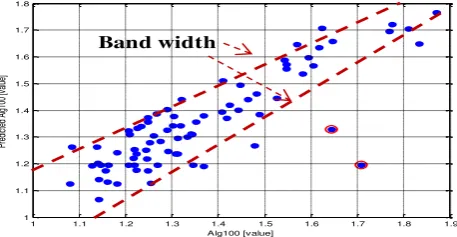
Figures-3, 4 and 5 display the scatter plots of the estimated model and the data obtained for the Adult, Child and Combined models. They show the response data plot versus the predicted response obtained from the ANOVA. It is generated from the PRESS R2 statistic and serves to graphically illustrate the degree of fitness and the predictive capability of a mathematical model. A close cluster of points with limited scatter in a neat, straight diagonal distribution indicates superior goodness of fit. Scatter bandwidth lines (in red) have been added to the figures in which a narrow band width line represents reduced scatter and greater predictively.
Alg100 [value]
Pr
ed
ict
ed
A
lg1
00
[v
alu
e]
1 1.1 1.2 1.3 1.4 1.5 1.6 1.7 1.8 1.9 1
1.1 1.2 1.3 1.4 1.5 1.6 1.7 1.8
[image:4.595.313.542.650.768.2]Band width
Figure-4. Scatter plot for child HIC (CCD-RSM).
Figure-5. Scatter plot for adult- child HIC (CCD-RSM).
Figure-3 representing the Adult model shows relatively greater scatter compared to the child model as witnessed by the broad bandwidth line. Two outlying points are noted that contribute to reduced fitness. A relatively sparse distribution at the higher values is also
noted.It shows that the CCD RSM failed to adequately represent the HIC at higher injury levels.
However, the child model scatter plot in Figure-4 suggest a relatively good fitness and predictive capability. The combined Adult-Child model scatter plot in Figure-5 also shows a fairly acceptable goodness of fit and predictivity despite the lack of data observed at higher HIC values.
Optimization of vehicle profile
Initial single optimization runs are carried out individually for both the adult (Adult-Opt) as well as the child pedestrian (Child-Opt). Typically, some reasonable amount of error is expected due to the highly non-linear nature of the crash scenario owing to the numerous possibility of the pedestrian post impact fall pattern (Carter et al., 2005; Zhao et al. 2010). Thus an allowance is made where a practical error margin of ±100 HIC is given when judging the acceptability of the response surface models in comparison to the observed values of the HIC. Referring to the results shown in Table 3, an acceptable correlation is observed between the predicted HIC values and the observed values.
From Table-3, it is seen that both the Adult-Opt profile and the Child-Opt profile are not mutually applicable to each other for pedestrian safety i.e. that the adult optimized vehicle design is unsafe for child pedestrian and vice versa. The former shows the child model having an HIC of 3195.4 while the later shows the adult model having an HIC of 5332. The difference in HIC values between the child and the adult for either case is quite large. This is expected as similar findings were reported in literature (Carter et al., 2005; Zhao et al. 2010) thus indicating a multiple optimization strategy.
Table-3. Statistical diagnostics of RSM using central composite design (CCC) sampling.
However in this work, combined optimization (C-Opt) is employed to achieve this end. This is essentially utilizing a simple weighted biasing method to reformulate responses for a new objective function. The response for this combined optimization, f(C(n%)) is obtained as per the equation below:
(9)
where,
f(yA) = response for Adult-Opt
f(yC) = response for Child-Opt
n = % targeted bias
CONCLUSIONS
This research is initiated with the aim of improving pedestrian safety provided by car body structures during frontal collisions in a vehicle pedestrian crash. A novel attempt has been made to develop an economical and deformable hybrid model for studying the effect of vehicle front-end geometry on pedestrian fall kinematics and associated head injury. The model is designed to be optimization-friendly,i.e., having simple, easily modifiable profile geometry with the intended application to fulfil the requirements for multi-parametric optimization of vehicle front-end shape, towards mitigation of pedestrian head injuries sustained during impact.In comparison to detailed FE full vehicle or partial vehicle models, fast model building time is achieved due to the use of simple FE planes. The processing time for the hybrid case model with 3234 elements is reduced by approximately 705 times in comparison to a full FE model with 270768 elements and achieving an efficiency of 99.85% in CPU time. The mathematical models developed are found to show acceptable predictive capabilities with the child model having the highest model fitness of 90.7%. Based on the optimization performed, the adult optimized designs are demonstrated to be unsafe for 6 year old child and vice versa. Combined optimization is carried out to successfully find a front-end geometry which minimizes the HIC values for both the adult 50th percentile male pedestrian and the 6 year old child pedestrian. Finally, the study further reinforces the necessity for the consideration of the relationship that exists between pedestrian kinematics and vehicle front-end profile in design considerations as well as in development of further test procedures and safety mitigation methods.
REFERENCES
[1] Brainard, B., (1986). Injury profiles in pedestrian motor vehicle trauma, Annals of Emergency Medicine, 18, 881–883.
[2] Carter, E., Clive, N.S., & Steve, E. (2005). Optimization of Passenger Car Design for the mitigation of pedestrian head injury Using a Genetic algorithm, 5th European MADYMO Users Meeting, Cambridge, 100-110.
[3] Development and validation of FE Model for 2010 Toyota Yaris Passenger Sedan. (2011), Technical Summary, NCAC, 2011-T-001, Nov 2011.
[4] European Enhanced Vehicle Safety Committee (EEVC), (1998), Improved Test methods to Evaluate Pedestrian Protection Afforded by Passenger Cars, EEVC Working Group 17 Report Brussels.
[5] Finite Element Model of Dodge Neon Validation Report. (2009) NCAC, Version 7.
[6] Kausalyah,V., Shasthri,S., Abdullah, K.A., Idres, M.M., Shah, Q.H., & Wong, S.V., (2014). Injury analysis validation of a deformable vehicle front-end model, Applied Mechanics and Material. 465–466, 1334–1338.
[7] Kramlich, T., Langwieder,D., & Hell,W.W. (2002). Accident characteristics in car to pedestrian impacts, Proceedings of IRCOBI Conference, 119–130.
[8] Linder, A., Clark, A., Douglas, C., Fildes, B., Yang, J., & Sparke, L. (2004). Mathematical modelling of Pedestrian crashes: Review of pedestrian models and parameter study of the influence of the sedan vehicle contour, Proceedings. Australian Road Safety Research Policing Education Conference, 8(2).
[9] Liu, X. J., & Yang, J. (2003). Effects of Vehicle Impact Velocity and Front-end Structure on Dynamic Responses of Child Pedestrians, Traffic Injury Prevention, 4,337-344.
[10]MIROS, Critical Factor Associated with Pedestrian Casualties in Motor Vehicle Crashes, (2013), Vehicle Safety Biomechanics, Malaysian Institute of Road Safety Research, MIROS Report 2013.
[11]Mizuno, Y. (2003). Summary of IHRA pedestrian safety WG Activities -Proposed test methods to evaluate pedestrian protection offered by passenger cars, Japan Automobile Standards Internationalization Centre ( JASIC), Japan, 18th Enhanced Safety of Vehicles Conference, Paper Number 580.
[12]Teng, T.L, Chang, F.A, Liu, Y.S, Peng, C.P. (2008). Analysi of dynamic response of vehicle occupant in frontal crash using multibody dynamics method, Mathematical and Computer Modelling, 48(11-12), pp 1724-1736.
[13]The World Bank Group (2002), Road safety. www.worldbank.org/html/fpd/transport/roads/safety.h tm(accessed 8 Mar 2002).
[14]TNO, (2006). MADYMO Human Models Manual, in Madymo 2006, TNO Automotive: The Netherlands.
[15]Yao, J.F., Yang, J.K., & Otte, D. (2007). Head injuries in child pedestrian accidents- in depth case analysis and reconstructions, Traffic Injury Prevention 8, 94–100.