Exploring the influence of Interest Free
Microfinance programmes on empowerment of the
participating women borrowers in Pakistan:
An interpretative inquiry
ADNAN AHMAD
Salford Business School
The University of Salford, Salford, UK
Submitted in Partial Fulfilment of the Requirements of
i
Table of Contents
Table of Contents ... i
List of Tables ... vii
List of Figures ... viii
List of Abbreviations ... ix
Acknowledgments ... x
Dedications ... xi
Abstract ... xii
Chapter 1 Introduction ... 1
1.1 Evolution of the idea ... 1
1.2 Background to the study ... 2
1.3 Research aims and objectives and research question ... 4
1.4 Research Methodology ... 6
1.5 Rationale for carrying this study ... 7
1.5.1 Why focus on empowering women in Pakistan? ... 7
1.5.2 why focus on subjectivity of women empowerment ... 9
1.5.3 Why focus on IFMIs in Pakistan? ... 10
1.5.4 Defining interest free microfinance ... 12
1.6 Organisation of this thesis ... 13
ii
2.1 Introduction ... 14
2.2 Microfinance ... 16
2.2.1 Review of microfinance definitions ... 16
2.2.2 Historical background of the concept ... 19
2.2.3 Development of conventional microfinance ... 21
2.3 Review of leading microfinance models ... 24
2.3.1 Grameen Model ... 25
2.3.2 Banco-Sol Model ... 29
2.3.3 Bank Rakyat Indonesia model (BRI model)... 31
2.4 Theoretical assumptions underpinning microfinance ... 32
2.4.1 Group lending ... 35
2.4.2 Dynamic incentives ... 38
2.4.3 Repayment Structures ... 39
2.4.4 Training and education ... 40
2.4.5 Substituted Collateral ... 42
2.5 Contemporary trends in the microfinance industry ... 42
2.5.1 Financial sustainability vs. social welfare ... 43
2.5.2 Conflicting evidence on the impacts of microfinance ... 46
2.5.3 Emerging Interest Free Microfinance Institutions (IFMIs) ... 51
2.6 Microfinance and women empowerment ... 66
iii
2.6.2 Review of theoretical literature on women empowerment ... 71
2.6.3 Review of empirical literature on women empowerment and microfinance ... 85
2.6.4 Problems in selecting empowerment indicators ... 104
2.7 Microfinance practices in Pakistan ... 114
2.8 Analytical framework for examining the empowering impact of IFMIs ... 120
2.8.1 Relevance of capability approach to women empowerment ... 121
2.8.2 Capability Approach ... 125
2.8.3 Martha Nussbaum’s contributions and criticism ... 131
2.8.4 Resources in capability approach ... 133
2.9 Chapter Summary ... 144
Chapter 3 Research Methodology ... 146
3.1 Introduction ... 146
3.2 Research Paradigm and associated philosophies ... 146
3.2.1 Ontology of this thesis ... 148
3.2.2 Epistemology of this thesis ... 150
3.2.3 Methodology ... 152
3.2.4 Research methods for data collection ... 155
3.3 Recruitment of translator ... 166
3.4 Data analysis and interpretation ... 167
3.4.1 Quality issues in qualitative research ... 172
iv
3.5.1 Akhuwat Foundation ... 174
3.5.2 Key Lending Methodology of Akhuwat ... 177
3.5.3 Organisational Structure of Akhuwat ... 179
3.6 Instrument development ... 183
3.6.1 Designing interview guide ... 183
3.6.2 Implementing pilot study and refining research instrument ... 185
3.7 Participants’ demographic characteristics ... 190
3.8 Key loan characteristics and features of study participants ... 194
3.9 Chapter Summary ... 201
Chapter 4 Findings and analysis ... 202
4.1 Introduction ... 202
4.2 Themes of perceptions on women empowerment: First research question ... 202
4.2.1 Personal empowerment... 206
4.2.2 Financial Empowerment ... 214
4.2.3 Socio-cultural/political empowerment ... 220
4.2.4 Summary of themes conceptualising perceived empowerment ... 234
4.3 Empowerment through seeking interest free loans from Akhuwat: The second research question ... 236
4.3.1 Personal empowerment... 237
4.3.2 Financial empowerment ... 249
4.3.3 Socio-cultural/political empowerment ... 256
v
Chapter 5 Discussion on research findings ... 264
5.1 Introduction ... 264
5.2 Dimensions and indicators of women’s perceived empowerment: A comparison with the literature ... 264
5.2.1 Personal empowerment... 268
5.2.2 Financial empowerment ... 271
5.2.3 Socio-cultural and political empowerment ... 273
5.3 Empowerment through participation in IFMPs: comparison with the literature ... 275
5.3.1 Influence on personal empowerment ... 278
5.3.2 Influence on financial empowerment ... 281
5.3.3 Influence on socio-cultural empowerment ... 284
5.4 Chapter Summary ... 287
Chapter 6 Conclusion and recommendations ... 289
6.1 Introduction ... 289
6.2 Summary of significant findings ... 289
6.2.1 How do women perceive empowerment in a context relevant to their respective lives? ... 290
6.2.2 How does participation in interest free microfinance programmes influence women’s perceived empowerment? ... 291
6.3 Research implications ... 295
6.4 Contributions of the study ... 297
vi
6.4.2 Originality of contributions of this study ... 298
6.5 Research limitations ... 299
6.6 Areas for further research ... 300
References ... 302
vii
List of Tables
Table 2-1 Structure of chapter 2 ... 15
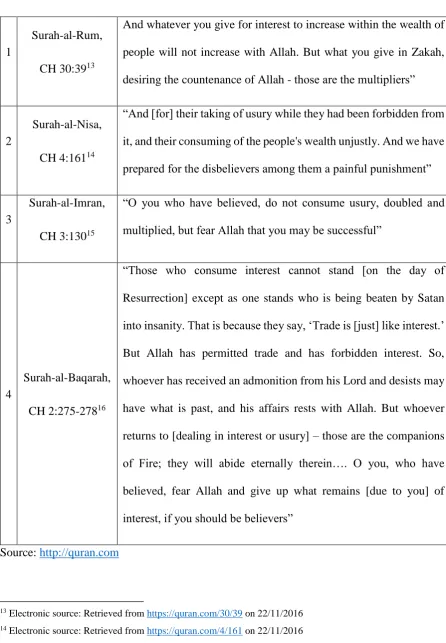
Table 2-2 Quran prohibiting interest in Islam... 54
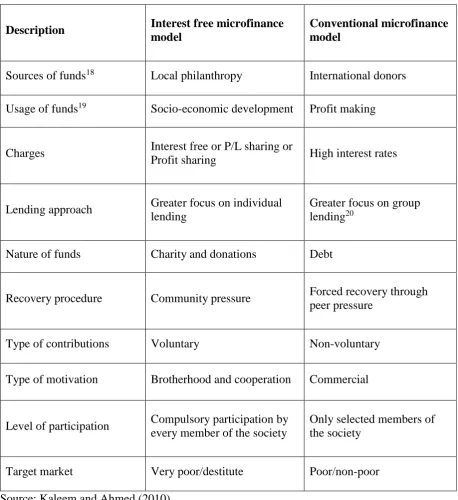
Table 2-3 Features of interest free microfinance in comparison to conventional microfinance ... 57
Table 2-4 Product portfolio of IFMIs ... 60
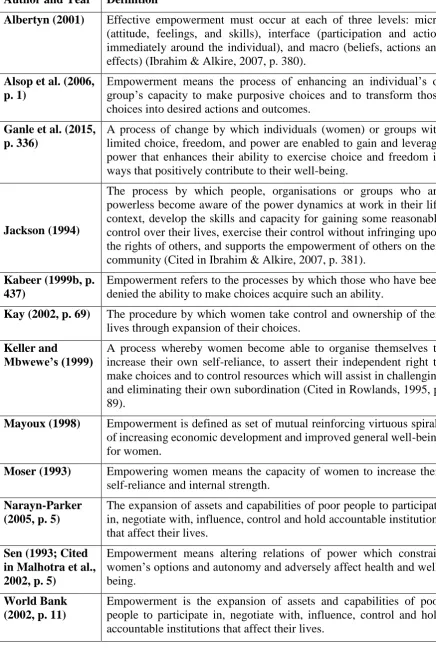
Table 2-5 Definitions and concepts of (women) empowerment ... 75
Table 2-6 Summarising key research studies ... 86
Table 2-7 Indicators of women empowerment ... 107
Table 2-8 Microfinance Providers in Pakistan... 117
Table 3-1 Steps in interpretative phenomenological analysis ... 168
Table 3-2 Cost Structure of Akhuwat ... 175
Table 3-3 Performance of Akhuwat in Pakistan ... 176
Table 3-4 Demographic features of pilot study participants ... 188
Table 3-5 Breakdown of demographic characteristics of women borrowers ... 193
viii
List of Figures
Figure 2-1 worldwide status of microfinance (2014) ... 24
Figure 2-2 Percentage of Female Inclusion in Grameen Banks’ Programmes ... 28
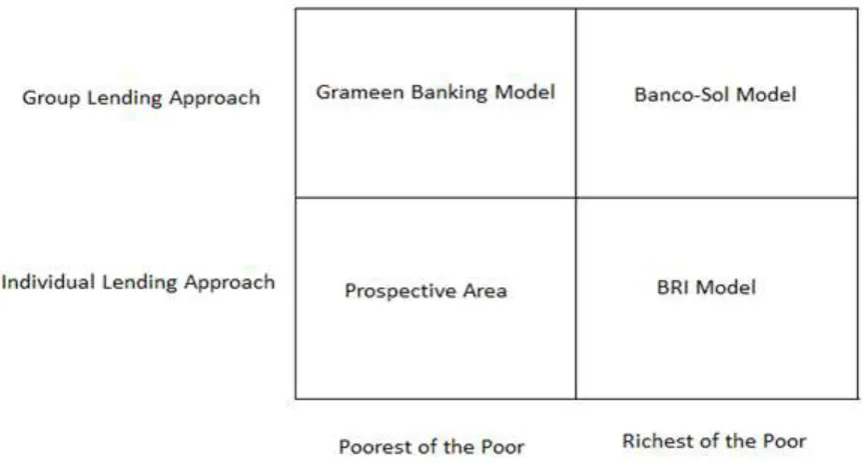
Figure 2-3 Matrix of lending methodology and target market ... 34
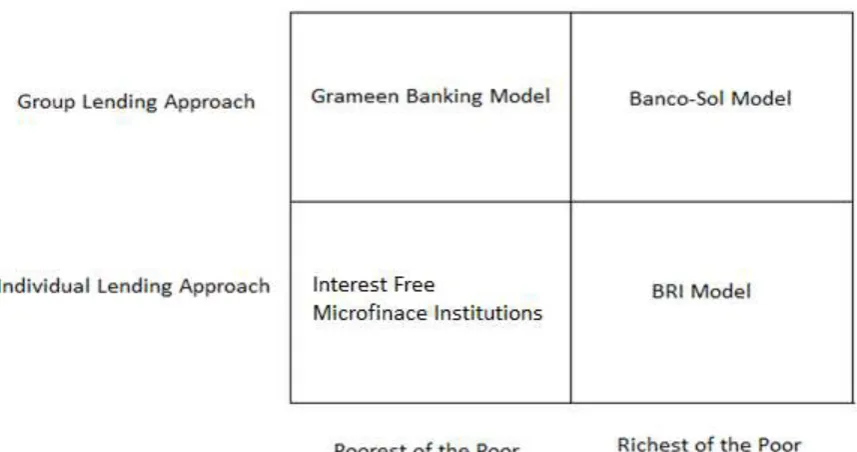
Figure 2-4 Matrix of lending methodology and target market of MFIs ... 52
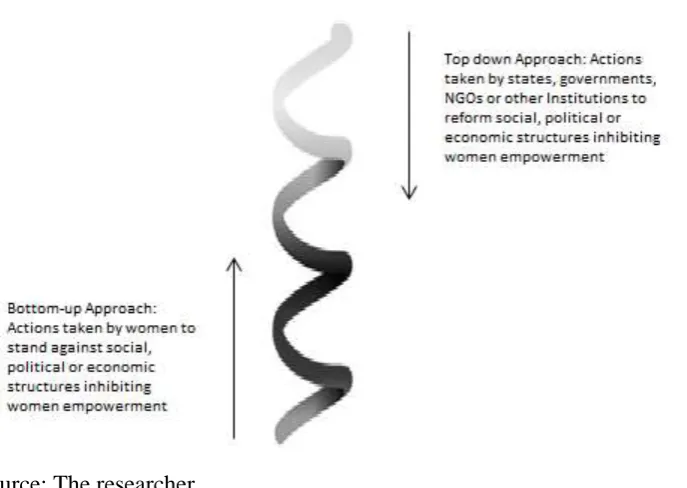
Figure 2-5 Empowerment Spiral ... 77
Figure 2-6 Process of Empowerment ... 82
Figure 2-7 Active borrowers of MFPs in Pakistan (2007-2016) ... 118
Figure 2-8 Gross Loan portfolio (2007-2016) ... 119
Figure 2-9 Capability Analysis ... 134
Figure 3-1 Organisational chart of Akhuwat ... 181
Figure 4-1 Mind-mapping empowerment perceived by the women participants ... 205
ix
List of Abbreviations
BRI Bank Rakyat Indonesia
CGAP Consultative Group to Assist the Poor
EAP East Asia and Pacific
EECA East Europe and Central Asia
GLP Gross Loan Portfolio
IFMIs Interest Free Microfinance Institutions
IFMPs Interest Free Microfinance Programmes
IFM Interest Free Microfinance
LAC Latin America and Caribbean
MDGs Millennium Development Goals
MENA Middle East and North Africa
MFIs Microfinance Institutions
MFPs Microfinance Providers
MIX Microfinance Information Exchange
NBMFIs Non-Bank Microfinance Institutions
NFIS National Financial Inclusion Strategy
NGO Non-governmental Organisations
NRSP National rural support programme
PKR Pakistani Ruppee
PMN Pakistan Microfinance Network
PPAF Pakistan Poverty Alleviation Fund
PRSP Punjab rural support programme
ROSCAs Rotating Savings and Credit Associations
RSPs Rural Support Programmes
SBP State Bank of Pakistan
SRSP KPK/Sarhad rural support programme
SRSP Sindh rural support programme
TRSP Thardeep rural support programme
UK United Kingdom
UN United Nations
USA United Stated of America
x
Acknowledgments
I will start; this special part, by paying lot of thanks to Almighty Allah Who has helped me at each turn of my life and made me able to finish this piece of study. Although, this study’s journey has seriously been challenging, yet satiating, for that I am more than thankful to the people who have been there, whenever I needed.
First of all, I concede considerable thanks to my supervisors Dr. Susantha Udagedara and Prof. Hassan Yazdifar, from The University of Salford, for their incessant assistance, constant help, and encouragement. Their precious and invaluable comments helped me cover weak-spots whilst writing every single chapter of this study. I have been startlingly auspicious to have supervisors like them who endorsed me with freedom to explore on my own and in unison worthy guidance to recover whenever I faltered. They have been there throughout to make this thesis worth writing. I wish to say thanks to Dr. Nazam Dzolkarnaini, who has been part of my supervisory team for almost two years. His critical feedback has helped me understand the subject matter from different philosophical directions.
I wish to extend my special gratitude to the women borrowers of Akhuwat, who have participated in this thesis. I am obliged for the respect and honour I received and sharing their perspective and experiences. Without them, I would not have finished this study in the timeframe allowed for this study. I am also thankful to the staff at Akhuwat head office and Akhuwat branch in Pakpattan city, particularly the field officers in Pakpattan district, for helping me recruit women borrowers and arranging interviews with the women, who consented to participate in this study.
I must say special thanks to my beloved wife, Lubna Adnan, for her worth mentioning love, unconditional care and compassion whilst working on my thesis. She served me with hot tea whenever I was feeling sleepy during writing and she pushed me to continue working, when on earth, I was just lying around and doing nothing. I cannot thank her enough for her prayers and being a source of unbroken motivation and strength for me. I am also indebted to my beloved mother, my brothers and my sisters for their prayers. I wish to say special thanks to Imama Sadia, Najma Baji, Uncle Sharif, Muhammad Imran, Tayyibba Imran, Muzammal Ahmad Bodla, M. Adil Bodla, Zeeshan Bodla, Samra Fatima, Qudsia Fatima and ShahZaib Bodla for giving me a warm welcome whilst my stay in Pakpattan. I wish to thank my friends as well, especially my research fellows at SBS.
xi
Dedications
I would like to dedicate this thesis to my late father; Bashir Ahmad, to
my beloved mother for her unvarying prayers, to my sweet wife;
Lubna Adnan, for her unconditional love, to my sweet daughter;
xii
Abstract
This study has argued that conventional microfinance has failed to serve a large number of Muslim consumers worldwide, which provided an opportunity to interest free microfinance to emerge as a subsector within the microfinance industry to serve this unserved target market. In the last few years, it has acquired particular recognition in Pakistan; however, there is lack of evidence to suggest that interest free microfinance is more successful than conventional microfinance. In this context, this study investigates the influence of interest free microfinance on empowerment of the women borrowers, which is one of the two main objectives of microfinance interventions.
This study has also highlighted that extant microfinance literature has ignored the contextual and subjective nature of women empowerment in conceptualising the impacts of microfinance on women empowerment, which may significantly misrepresent the potential of microfinance. This study has attempted to fill the knowledge gap by employing interpretative phenomenology as a research methodology to achieve two specific research objectives: (a) to explore, in the microfinance context, women borrowers’ perceptions on what empowerment means in their respective lives to identify empowerment indicators; and (b) to explore women’s experiences of participation in interest free microfinance programmes to study the influence of interest free microfinance on women’s perceived empowerment.
Applying theoretical lens of capability approach, this study has used in-depth semi-structured interviews and participant observation to gain insights from women’s perceptions and lived experiences of participation in interest free microfinance programmes. The study has been carried out in Pakpattan district of Pakistan in the context of Akhuwat foundation, which is the largest interest free microfinance organisation in Pakistan. Akhuwat offers a range of small-scale financial products and services to the poor throughout Pakistan.
1
Chapter 1
Introduction
1.1 Evolution of the idea
More recently, interest-free microfinance has evolved as an alternative to conventional
microfinance to address financial needs of the poor Muslim consumers, who are reluctant to
participate in interest-based transactions due to their religious obligations (Hes & Polednakova,
2013). Research has shown that interest-based microfinance has largely failed, particularly in
Islamic countries, to address this segment of consumer market, which consists of more than 1.8
Billion consumers worldwide (Abdullah & Ismail, 2014; Chakrabarty, 2015; Meraj, 2016).
Interest free microfinance institutions (hereafter, IFMIs) are mainly working in Islamic
countries, which is why it is also known as Islamic microfinance, and offer a range of financial
products and services, particularly interest-free credit, to the poor Muslim consumers with an
aim to enhance financial inclusion (Karim et al., 2008; Shaikh et al., 2017). Robinson (2001)
found that IFMIs are achieving their targets of poverty alleviation more successfully than their
counterparts (conventional microfinance institutions, hereafter MFIs) and their outreach in
terms of depth is also better than conventional MFIs. Ekpe et al. (2010) further substantiated
this view by highlighting the far-reaching impacts of IFMIs and their capacity to serve
underserved rural areas and agricultural groups, which is also recognized by the World Bank
as well as United Nations. A report prepared by Karim et al. (2008, p. 1) on behalf of the
Consultative Group to Assist the Poor (hereafter, CGAP) concluded that, “Islamic
microfinance has the potential to expand access to finance to unprecedented levels throughout
the Muslim world”. Shaikh et al. (2017) have further supported this view by reporting in their
study that 26 out of 36 countries including Pakistan, who are members of Organisation of
2
outreach less than 10% of their poor. They found voluntary exclusion due to interest-based
structure of conventional microfinance as one of the major reason for microfinance outreach
gap. Both of these studies, Karim et al. (2008) and Shaikh et al. (2017), signify the importance
of interest-free microfinance for Muslim consumers as well as the potential of IFMIs in Islamic
countries. However, Karim et al. (2008) have also recognised that majority of the research on
the subject of IFMIs has been carried out in Indonesia, therefore, further rigorous research,
particularly from other Islamic and developing countries, is needed to explore this area.
While, there have been few attempts to study the viability of IFMIs to address poverty (Aslam,
2014; Farooq & Khan, 2014; Iqbal et al., 2015; Mahmood et al., 2015), there is lack of evidence
to show participation in IFMIs helps empower women, which is an equally important objective
of microfinance (Norwood, 2013). Furthermore, even in the conventional microfinance
literature, the evidence on the role of microfinance in empowering women is consistently
contested (Ganle et al., 2015; Hashemi et al., 1996; Narishma et al., 2016; Rehman et al., 2015),
which requires further attention as well. Drawing from the extant literature, this study argues
that one of the major reasons accounting for these conflicting findings is the lack of contextual
understanding in conceptualising the impact of microfinance on women empowerment, which
is cited by earlier studies as well (Afshar, 2016; Gram et al., 2016). Against this background,
this study was set to explore how IFMIs empower women borrowers in Pakistan.
1.2 Background to the study
This study investigates the influence of participation in IFMPs on empowerment of the women
borrowers by exploring women’s perceptions on what empowerment means in their lives to
examine how it is influenced by participating in interest free microfinance programmes
3
literature, which centres on microfinance and women empowerment. First, it has argued that
conventional microfinance has failed to serve millions of Muslim consumers worldwide due to
its interest-based structure, which has attracted IFMIs to serve this consumer market requiring
small-scale financial services. However, there is a lack of evidence on the viability of IFMIs to
empower women in Islamic countries, which calls for further rigorous research (Karim et al.,
2008; Meraj, 2016; Rehman et al., 2015). Second, existing microfinance literature has largely
employed pre-established list of empowerment indicators to assess the impact of microfinance
on women empowerment by ignoring the contextual and subjective nature of empowerment,
which may significantly misrepresent the potential of microfinance to empower women
(Sutton-Brown, 2011; Tuuli & Rowlinson, 2007). Third, most of the existing studies have been
carried out from institutional perspective to evaluate the performance of lending institutions;
thus, ignoring the user perspective in conceptualising the impacts of microfinance on women
empowerment (Dormekpor, 2015). Finally, this study has argued that majority of the existing
studies on this subject have used quantitative research methods to quantify an unquantifiable
phenomenon; which cannot address how a change has occurred and what has caused this
change (Ganle et al., 2015), which requires a shift of focus on more interactive and in-depth
qualitative research methods (Henry et al., 2008).
It is noted from the literature that empowerment is a multi-cultural and multi-dimensional
phenomenon (Malhotra et al., 2002; Mayoux, 1998), which makes it highly subjective in nature
(Tuuli & Rowlinson, 2007), which requires researchers to study it in relation to a specific
context. It is equally true for Pakistan, although, empowerment is a new concept for majority
of the women, particularly rural, in Pakistan. However, as mentioned earlier, a large number
of studies have ignored the context in conceptualising the impacts of microfinance services on
empowerment of the women borrowers, which raises question on the validity of the findings
4
empowerment phenomenon as experienced by the women borrowers. It has valued the
perspective of the participating women borrowers to let them talk about their lifeworld and
their experiences of participation in IFMPs offered by Akhuwat in Pakpattan district, Pakistan.
It is unique in a way that it did not intend to evaluate or assess empowerment against objectives
of the lending institutions or their expected outcomes. There are limited studies that have
examined the impact of microfinance on women empowerment from this perspective,
particularly in the context of Pakistan. Drawing from the assumptions of capability approach
(Nussbaum, 1997; Nussbaum & Sen 1993; Sen, 1993, 2001, 2005), this study has argued that
women empowerment is characterised by freedom of choices, availability of options and ability
to choose what women value in their respective lives and hence it should be seen in terms of
both functionings (what women do) and capabilities (what women can do). Therefore, the
framework of capability approach has largely formed the foundation for exploring women’s
experiences of participation in IFMPs to conceptualise the influence of IFMPs on women
empowerment.
1.3 Research aims and objectives and research question
The aim of this study is to explore the influences of interest free microfinance programmes on
women empowerment within the context of Pakpattan district in Pakistan. The study aim will
be achieved with the help of following two specific research objectives:
1. To explore, in the microfinance context, women borrowers’ perceptions on what
empowerment means in their respective lives to identify empowerment indicators
2. To explore women’s experiences of participation in interest free microfinance
5
Having presented the research aim and objectives, the main research question, this study seeks
to answer is: How do interest free microfinance institutions empower women borrowers in the
context of Pakpattan district of Pakistan?
The main research question will be answered by addressing two subsidiary questions:
1. How do the women borrowers of interest free microfinance institutions perceive
empowerment in a context relevant to their lives?
2. How does participation in interest free microfinance programmes influence women’s
perceived empowerment?
This study is particularly important for its unique approach to explore subjectivity of
women empowerment within a specific-context (Garikipati, 2013) of Pakistan by
privileging women’s perceptions, which is the least researched area in this context.
Although, the research area chosen by the researcher is complex and multidimensional
(Chaudhry et al., 2012), yet it is ground-breaking since no previous research has focused
on women empowerment within the context of IFMIs with such a deep apprehension and
profoundness, particularly in Pakistan. The lack of research evidence on women
empowerment from borrower’s perspective is all that made this study more important to
explore empowerment based on women’s perceptions (Leder, 2016) and their experiences
of participation in microfinance programmes. Most of the existing studies used
questionnaires based survey to quantify an unquantifiable phenomenon; therefore, the
findings of this study are significant for both theorists and practitioners, which can help
6
1.4 Research Methodology
In preserving the integrity of the research questions, this study has been executed from the user
perspective without imposing researcher’s own aspirations of what women empowerment
should be. Therefore, qualitative research methods have been selected as an adequate means of
achieving the objectives of answering the research questions posed within this study. It so does
by referring to the extant literature that has recognised the inherited limitations of quantitative
methods and structured surveys to contribute to enhance understanding on the subjectivity of
women empowerment (Ganle et al., 2015; Mayoux, 1998; Roodman & Morduch, 2009).
Majority of the existing studies have attempted to measure the impact of microfinance
programmes on women empowerment by employing quantitative research methods using a
pre-established criterion; however, such an approach can only find the impact in relation to set
goals or objectives to assess only the performance of certain empowerment interventions
(Batliwala & Pittman, 2010). It cannot tell how the change, if any, has happened and what has
caused this change, which implies that traditional quantitative research methods are unlikely to
capture a true picture of the microfinance influences on the empowerment of participating
women borrowers (Batliwala & Pittman, 2010; Mayoux, 1998). Similarly, another argument is
that quantitative research methods are more likely to offer a limited opportunity to profoundly
explore the research participant’s narratives (Ganle et al., 2015).
On the contrary, employing qualitative research methods provided an opportunity to explore
empowerment phenomenon by analysing the research participants’ views, their ambitions, their
living circumstances, the structure of household power relations and any change thereof in
relation to their lived experiences of participation in IFMPs (Ganle et al., 2015; Karnieli-Miller
et al., 2009; Myers, 2013). It enabled the researcher to present a detailed account of contextual
7
more importantly why they valued certain aspects of empowerment over the others and how
participation in microfinance has influenced their perceived levels of empowerment. Moreover,
the potential respondents (poor Pakistani women) of this study were less likely to be able
(comfortable) to read or write to answer the questions; hence, selecting qualitative methods
was indeed a better option. The research methods of semi-structured interviews and participant
observation are informed by the chosen research approach for primary data collection. A
research diary has also been maintained throughout to record important things during the
research process.
1.5 Rationale for carrying this study
The rationale for carrying this study is discussed with the help of following subsections:
1.5.1 Why focus on empowering women in Pakistan?
Throughout the world, the gender inequalities persist be it the opportunities available to women
and men or access to resources; however, such disparities are more common in developing
countries, such as Pakistan (Dunford, 2012; Postmus et al., 2013). It is debatable what
propagates inequality among gender; however, Epstein (1988), in this respect, argues that
gender inequalities are niether accidental nor a fact of nature but are reproduced institutionally.
The most important among the institutions of inequalities is ‘the family’ and the others include
societal factors, economic power, share of work load, abuse and harassment of women etcetera
(Sharma & Varma, 2008). Many others, however, argue that male dominance or patriarchal
culture is the major source of gender inequalities (Nawaz, 2015). In the wake of development,
efforts have been taken to address the issue of gender inequality; however, geneder inequalities
8
One of the most prominent cases of a country struggling with the competing dynamics of
development, modernisation, religion and tradition is indeed Pakistan, which is the sixth most
populous country on the earth. It has been ranked at 143th position out of 144 countries
worldwide according to the reported findings of world Economic forum Gender Gap Report of
2016 (World Economic Forum, 2016). Pakistani women have largely been deprived of their
rights to education, property, health, employment, marriage and even to have a say in
household decision-making (Human Rights Commission of Pakistan, 2012). According to
UNESCO (2012) report nearly half of the rural females in Pakistan has never attended any
schooling, which implies they are more likely to be a victim of gender inequality as well as
disempowerment. In countries like Pakistan, the patriarchal culture prevails that inhibit women
from advancing in their lives. Ali et al. (2011, p. 1) write that, “Pakistan is a patriarchal society
where men are the primary authority figures and women are subordinate”. Qazi et al. (2013, p.
10) by reflecting on this posited that, “national patriarchy society is the place where women
are not only under the men’s power but are also subject to discrimination, dishonor,
exploitation, control, subjugation and violence.” These inequalities exist even in terms of
“basic necessacities like right to food, education, employment, healthcare, and
decision-making power” (Ray, 1994, Cited in Qazi et al., 2013, p. 10). In order for development to take
place in pakistan, these socio-economic gender inequalities need to be addressed. It necessitates
a dire need to work on the economic and social freedom of the women and one way of
addressing this issue is to empower women by giving them access to the pool of resources,
prmiarily, held by the opposite sex. It is also supported by World Bank’s perspective of
empowering women, which emphasised that,
“Invesiting in women is critical for poverty reduction. It speeds economic development
by raising productivity and promoting the more efficient use of resources; it produces
9
considerable intergenerational pay-offs (World Bank, 1995, Cited in Chant, 2016, p.
22)”.
In this respect, microfinance has evolved as an effective tool for empowering women at the
grassroots level by raising the barriers impeding women empowerment (Datta & Sahu, 2017;
Drolet, 2010; Krenz et al., 2014; Rehman et al., 2015). For instance, some studies have proven
that microfinance has helped women with an increased control on economic resources
(Hashemi et al., 1996), improved women’s decision-making abilities (Holvoet, 2005), helped
women in educating their children (You & Annim, 2014), enhanced women’s independency
(Steele et al., 1998) , improved women’s agency dynamics (Krenz et al., 2014) , helped women
build social relations (Holvoet, 2005), positively affected mental health of women (Hansen,
2015) and so on. However, many other studies argue that the financial products and services
offered by these MFIs lack in design, which failed to cater the needs of the poor women
(Garikipati, 2013; Goetz & Gupta, 1996; Meraj, 2016). Largely inconclusive findings of impact
assessment studies call for further rigorous research in this area, which has motivated the
present researcher to study women empowerment in Pakistan, which is the least researched
area in this context. The findings of this study have enhanced current understanding by making
meaningful recommendations to design better pro-women small-scale financial products and
services, particularly in Pakistan.
1.5.2 why focus on subjectivity of women empowerment
It has been observed, from Malhotra et al. (2002) and Rehman et al. (2015) among others, that
context within which to examine empowerment is an important factor in determining the true
nature of empowerment experienced by the women participating in microfinance programmes.
However, majority of the existing impact assessment studies have used pre-defined criteria for
10
empowerment had been assessed or examined. Using a pre-defined criterion might actually fail
to present a true picture of the empowerment experienced by the participating women; hence,
the findings of such studies are highly likely to either under-represent or over-represent the
impacts of microfinance programmes on women empowerment (Garikipathi, 2008, 2013;
Kabeer, 2001). It is based on the premise that empowerment is a complex phenomenon, which
is highly influenced by the cultural and social norms and traditions of a specific context
(Bayissa et al., 2017; Cattaneo & Goodman, 2015; Kabeer, 1999a, 2001, 2005; Kulkarni, 2011;
Malhotra et al., 2002; Mayoux, 1998; Rehman et al., 2015). In this respect, Malhotra et al.
(2002) argued that one or more pre-defined empowerment indicators might be helpful in only
one context and might not even mean empowerment in another context. The present study has
addressed this issue by exploring women’s perceptions on what empowerment means in their
life to identify context specific empowerment indicators to capture a more realistic image of
women borrowers’ empowerment experiences after participation in IFMPs offered by Akhuwat
in Pakpattan district in Pakistan.
1.5.3 Why focus on IFMIs in Pakistan?
Pakistan is an Islamic country, whereby more than 97% people practice the religion of Islam
and Islam prohibits Muslims from participating in any transactions involving interest (Kaleem
& Ahmed, 2010; Rahim & Rahman, 2010). On the other hand, it is also an under-developed
country, which is struggling to tackle many issues including poverty and women empowerment
(Noreen, 2010; Qazi et al., 2013). Pakistan committed, at the UN Millennium Summit of 2000,
to bring overall poverty down to 13% by 2015 (Pakistan MDGs Report, 2004) as well as
introduce measures for empowering women in Pakistan including women’s education and
women rights and safety (Pakistan MDGs Report, 2004, 2013). The reports published by
11
Pakistan Poverty Alleviation Fund (hereafter, PPAF) have oftentimes stated that microfinance
is serving as primary means of achieving MDGs (Pakistan Microfinance Network, 2006, 2013,
2014, 2015). However, the reality is somewhat different. For instance, according to official
sources poverty in Pakistan has in fact risen to 40% in 2015 against the set objective of 15%
(Pakistan MDGs Report, 2013; Pakistan Ministry of Planning, 2016); whereas, non-official
sources claim that more than 50% live below the poverty line in Pakistan (Imran, 2015; Rana,
2016). Similarly, it has failed to achieve the women empowerment objectives as defined by
MDGs (Pakistan MDGs Report, 2013). Pakistan Microfinance Network (2006) reported that
the estimated potential market of microfinance in Pakistan is 27 million borrowers. However,
by taking poverty line as the indicator for potential microfinance borrower, in 2016 the
potential market of microfinance consisted of more than 50 million borrowers. Pakistan had
set the microfinance outreach goals of reaching 3 million borrowers by 2010 and 10 million
borrowers by 2015 (PMN & BR, 2013). However, actual outreach in 2015 was 3.6 million
borrowers, which was far below the target set for the year 2015 (Pakistan Microfinance
Network, 2015). It can be safely established that microfinance sector in Pakistan is not
performing well despite of putting so much efforts in instituting a vibrant microfinance sector
in Pakistan by the government as well as participating public and private organisations. The
present researcher has argued that the major reason for failing to reach the set outreach
objectives is inherited in the religious prohibition of participating in interest-based transactions
irrespective of the personal or business initiatives.
It is substantiated by a recent study undertaken by Meraj (2016), which concluded that majority
of the people in Pakistan are reluctant to participate in conventional (interest-based) MFIs. The
study employed street intercept survey method to collect data from 332 respondents from 6
districts of Karachi. The study findings show that majority of the respondents (65.35%) blamed
12
microfinance programmes do not empower the poor, 66.16% responded that conventional
microfinance do not serve the poorest of the poor, 62% agreed that conventional MFIs do not
alleviate poverty, 67% blamed conventional MFIs for using unethical repayment recovery
methods, and 70.48% responded that conventional MFIs focus more on making profits than
social work. Moreover, in terms of respondents’ choice of potential borrowing, 76% responded
to choose IFMIs for future borrowing, 16% opined that they will use informal sources such as
relatives and friends, whereas only 6% responded to borrow from conventional MFIs. These
findings illustrate the potential of IFMIs in Pakistan and so the rationale for exploring how
IFMIs empower the participating women borrowers. The findings of present study have
contributed to the scarcely existed literature on interest-free microfinance and women
empowerment.
1.5.4 Defining interest free microfinance
In contrast to the conventional microfinance models, interest free microfinance has its origins
in the teachings of Islam, whereby the practice of money lending with an intention of charging
interest, or ‘Riba’ (an Islamic word for interest), is strongly prohibited (Kaleem & Ahmad,
2010; Rahim & Rahman, 2010). Since Islam prohibits interest, Muslims are not allowed to
engage in any activity originating from receiving or giving interest in any kind or form
regardless of personal or business purposes. Although, there is a controversy between Islamic
scholars, and similarly between economists from all over the world, in defining what ‘sort of
interest’ should be considered ‘unlawful’ under the umbrella of Islamic principles and
economic ethics respectively, the majority of Muslim scholars, and hence Muslim consumers,
prefer to stay at length from interest-based transactions (Al-Harran, 1990; Dhumale &
Sapcanin, 1999). Owing to the prohibition of interest in Islam, interest free microfinance has
13
services based on the interest free Islamic principles of trade and lending to cater the financial
needs of Muslim consumers worldwide, particularly in Islamic countries such as Pakistan.
Although, there is a complete code of practice for lending in Islam, a major difference between
conventional and interest free microfinance is that financial transactions are free of any interest
under interest free microfinance.
1.6 Organisation of this thesis
This study is organised in six chapters. Second chapter has presented a review of theoretical
and empirical literature on three important areas. First, it has reviewed the conventional
microfinance literature to highlight emerging trends in the microfinance sector. Second, it has
reviewed the theoretical and empirical literature underpinning interest-free microfinance.
Third, it has reviewed the extant literature on empowerment in the context of microfinance.
Finally, this chapter has presented capability approach as a framework to explore women
empowerment within the specific-context of Pakistan. Chapter three details the research
methodology adopted for this specific study including the research paradigm, research
philosophy, research methodology and methods for data collection. It has also discussed the
research setting as well as the process of developing research instrument, testing research
instrument in a pilot study and refinement of the research instrument. Finally, it has presented
demographic and loan characteristics of the research participants of this study. Chapter four
has presented the research findings in response to the research questions posed within this
study. Chapter 5 has discussed the research findings in a broader context by comparing the
research findings with the existing literature. Chapter 6 has concluded this study by
summarising this study, presenting summary of significant research findings, discussing
implications of this study, highlighting study contributions and acknowledging research
14
Chapter 2
Review of the Literature
2.1 Introduction
This chapter has presented a review of the literature on microfinance and women empowerment
applicable to the context of this study. It was important to revisit theoretical and conceptual
perspectives that are particularly relevant to establish the grounds for this specific enquiry. This
chapter has presented the discussion in a systematic way. First, it has extensively reviewed
literature on conventional microfinance to highlight emerging trends in the microfinance
sector. This particular activity helped to locate interest-free microfinance as an emerging
subsector in the microfinance industry, which is still a less explored area of research. Second,
this chapter has reviewed theoretical and empirical literature that centres on interest-free
microfinance by drawing a comparison between interest-based and interest-free microfinance.
It has assisted the researcher to highlight that majority of the studies have focused on poverty
alleviation aspect of IFMIs; whereas, women empowerment, which is one of the two main
objectives of microfinance, has yet to be explored, particularly in Islamic countries, which
requires attention both from academia and practice. Third, it has reviewed the literature on
women empowerment in the microfinance context to highlight inconclusive and conflicting
nature of research findings reported by existing studies, which calls for further rigorous
research. Lastly, this chapter has presented capability approach as an adequate means of
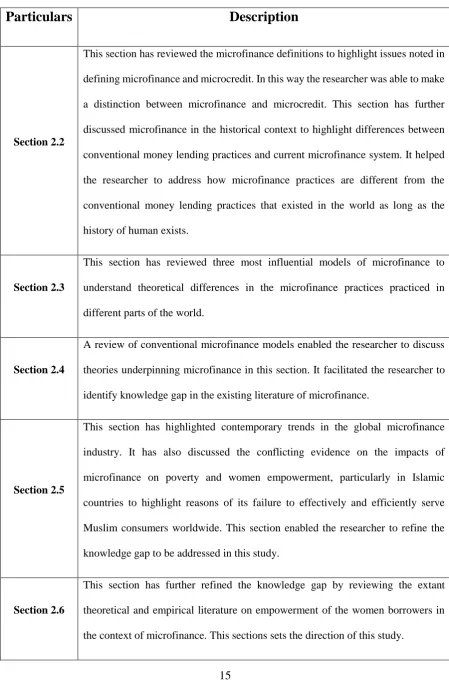
addressing the knowledge gaps highlighted in sections 2.5 and 2.6. The following table 2-1
15
Table 2-1 Structure of chapter 2
Particulars
Description
Section 2.2
This section has reviewed the microfinance definitions to highlight issues noted in defining microfinance and microcredit. In this way the researcher was able to make a distinction between microfinance and microcredit. This section has further discussed microfinance in the historical context to highlight differences between conventional money lending practices and current microfinance system. It helped the researcher to address how microfinance practices are different from the conventional money lending practices that existed in the world as long as the history of human exists.
Section 2.3
This section has reviewed three most influential models of microfinance to understand theoretical differences in the microfinance practices practiced in different parts of the world.
Section 2.4
A review of conventional microfinance models enabled the researcher to discuss theories underpinning microfinance in this section. It facilitated the researcher to identify knowledge gap in the existing literature of microfinance.
Section 2.5
This section has highlighted contemporary trends in the global microfinance industry. It has also discussed the conflicting evidence on the impacts of microfinance on poverty and women empowerment, particularly in Islamic countries to highlight reasons of its failure to effectively and efficiently serve Muslim consumers worldwide. This section enabled the researcher to refine the knowledge gap to be addressed in this study.
Section 2.6
16
Section 2.7
This sections has reviewed the development of microfinance sector in Pakistan and highlighted factors inhibiting the growth of microfinance in Pakistan.
Section 2.8
This section has presented capability approach as a unique way of understanding empowerment as experienced by the women borrowers of microfinance by addressing theoretical and empirical gaps in the extant empowerment literature in the context of microfinance.
Source: The researcher
2.2 Microfinance
2.2.1 Review of microfinance definitions
Microfinance is generally used as a term to refer to providing financial services to poor who
lack collateral assets, have poor credit history or lack access to traditional financial system such
as conventional banks (Abbas et al., 2005; Bateman, 2011). It is based on the assumption that
poor people got a potential to counter poverty provided they have access to adequate financial
resources (Bajwa, 2001; Banerjee et al., 2015). Although, microfinance precisely means ‘small
credit’, the scope of microfinance goes beyond just lending small loans. According to Bliss
(2005, p. 3), “microfinance includes access to a range of financial services and products,
including credit, savings, money transfers, insurance and asset building mechanisms required
by the unique and widely varying needs of poor people to enhance their ability to increase
incomes and mitigate vulnerability in times economic stress”. Whereas, The Microcredit
Summit Report (1997) has frequently used the word ‘microcredit’ in place of microfinance,
which limits the scope of microfinance to only lending small loans. However, Dichter (1999)
17
(1999) as well as Ledgerwood (1999) referred it to ‘the provision of financial services1 to the
poor people, particularly low income self-employed. Likewise, Bateman (2011, p. 1) states,
“microfinance is the provision of tiny loans to the poor to help them establish or expand an
income generating activity, and thereby escape from poverty”.
After carefully looking at these definitions, it can be observed that confusion perseveres in
terms of defining microfinance. Some authors define microfinance as a range of financial
services (such as Ditcher, Otero and Ledgerwood); the others (such as Schreiner) argue that it
only includes loans and savings, whilst few among them (such as Bateman, 2011) just confine
it to the facility of loan-making. Another very good and comprehensive definition comes from
Robinson (1998, p. 9) , which states that, “Microfinance refers to small-scale financial services
for both credits and deposits ---that are provided to people who farm or fish or herd: operate
small or microenterprises where goods are produced, recycled, repaired or traded; provide
services; work for wages or commissions; gain income from renting out small amounts of land,
vehicles, draft animals, or machinery and tools, and to other individuals and local groups in
developing countries, in both rural and urban areas”.
Although, Robinson’s definition is wider in scope, it is still unclear whether microfinance is
limited to ‘loans and savings’ or it includes other services such as insurance and money
transfers. Asian Development Bank supports the later by stating that, ‘microfinance is the
provision of a broad range of financial services such as deposits, loans, payment services,
money transfers, and insurance to poor and low-income households and their
micro-enterprises’ (Asian Development Bank, 2002, p. 2). Another important issue with Robinson’s
definition is that he excluded ‘poorest of the poor’ from his definition by establishing that they
are not the responsibility of the formal sector (Bliss, 2005), which is literally critical to the
18
paramount concept of microfinance; whereby, the promoters of microfinance (Asian
Development Bank, 2007; Pitt et al., 2006; Wright, 1999), claim that microfinance is designed
for the very poor who do not have any collateral or cannot access conventional or formal
financial system or have poor credit history.
These definitions of microfinance are wide ranging and have been repeatedly cited in various
studies; however, some important characteristics of microfinance are not reflected in these
definitions2. For instance, as discussed earlier, these definitions mix microfinance with
microcredit and overlook the training and education components - human capital aspects of
microfinance - since microfinance programmes were originally designed to include these
components to make vulnerable poor stand against poverty (Karlan & Goldberg, 2011; Kessy
& Temu, 2010; Khandker, 2005; Pronyk et al., 2008). Similarly, these definitions do not take
into account the social capital’s aspects (generally defined in terms of trust, norms, and
networks) of microfinance programmes since microfinance programmes directly or indirectly
provide a platform for building networks and social connections by arranging regular meetings
of their clients, or employing joint liability frameworks or using peer-pressure tactics
(Anderson et al., 2002; Harriss & De Renzio, 1997; Ito, 2003).
Another important feature that is not envisioned by these definitions is the nearly exclusive
focus on women (Sanyal, 2009) since it is an important objective of microfinance to empower
women and include them in the development process, which was also manifested in
Microcredit Summit Campaign (2000). The founder of modern microfinance, Muhammad
Yunus, has particularly focused on women inclusion and more than 95% of Grameen Banks’
clients are still women (Grameen Bank, 2014; Shamit, 2016). The prevalent claim of
microfinance of achieving high repayment rates is above all associated with women borrowers
19
(D’espallier et al., 2011). It is, therefore, important to include these characteristics in
articulating a broad definition of microfinance. It is worth avoiding using interchangeably the
terms ‘microfinance’ and ‘microcredit’ since it could potentially affect the conceptual precision
in understanding the wider impacts of microfinance.
To this end, as Noreen (2010) delimits microcredit as an ingredient in the bowl of microfinance,
microcredit in this thesis, is defined as a facility which is limited to lending small scale
non-collateral loans to the poor and un-bankable people, particularly women. whereas,
microfinance is referred to a facility of providing a broad range of financial and non-financial
products and services to the poor, particularly women: financial services may include making
loans, accepting deposits, providing insurance and money transfer facilities (Bliss, 2005);
whereas, non-financial services may include educational and training programmes as well as
information sharing hubs (Khandker, 2005; Kodongo & Kendi, 2013), and platforms for
improving personal, social and professional networks, relationships and connections (Dowla,
2006; Postelnicu et al., 2013).
2.2.2 Historical background of the concept
The study of the evolution of microfinance is crucial in examining the macro-level impacts of
microfinance system; however, it is critical to understand first the operational forms of the
notion. The foundation of microfinance, as practiced today, lies in the centuries-old traditional
and informal system of money lending and credit distribution system that has long been existed
all over the world generally and, particularly in the developing countries (Ming-Yee, 2007).
Although, the literature on microfinance has hardly acknowledged, microfinance is an
innovation in the field of traditional money lending and informal credit distribution system.
Hassan (2002) has reflected on this by referring to community based mutual transactions,
20
mutual, or personal credit suppliers, such as money lenders, rotating savings and credit
associations (hereafter, ROSCAs), or friends and neighbours have always lent to the poor,
providing the right quantity of credit at the right time and place, to low-income households”
(2002, p. 207). Nonetheless, it cannot always cater the needs of the poor households at national
level, particularly in times of catastrophic war and weather conditions; since it is primarily a
role that should be played by the concerned governments.
To this end, microfinance was actually a direct response to the failed attempts (such as
prevailing Subsidised Rural Credit Programmes and Structural Adjustment Programmes in the
developing countries) by international development agencies and the state organisations (Datta
& Sahu, 2017). In 1970s, Professor Muhammad Yunus, the founder of Grameen Bank of
Bangladesh, confronted cataclysmic circumstances in Bangladesh (Aghion & Morduch, 2005)
that were concluded by aftershocks of the war of independence from Pakistan and ongoing
weather conditions. He found that government, in spite of the international support from donor
organisations, was unable to address the large-scale credit requirements (for rehabilitation) of
the poor, particularly living in the rural areas of Bangladesh. Furthermore, the traditional
money lenders were exploiting the rural poor by charging high interest rates on loans
accompanying callous lending conditions. He ended up in lending to the poor women of Jabra
Village, at the outskirts of Chittagong (where Yunus was working as a university professor
after returning from USA), by repaying their entire loan to the money lenders which was barely
equivalent to 27 USD. The aftermath of this coincidental lending was improbable - since Yunus
had not expected too much of this at that time - as the poor women not only managed to pay
him back on time but also succeeded in utilising the credit efficiently in setting sustainable
microbusinesses (Bliss, 2005). Based on the outcome of his small-scale lending experience, he
extended his activities and envisioned a system, which we know as ‘microfinance’ today and
21
Owing to this, majority of the literature on microfinance refers back to 1970s in articulating
the origins of the microfinance; however as discussed earlier, it is deeply rooted in the practice
of money lending, which has probably existed as far as the history of money exists (Ming-Yee,
2007; Shah et al., 2007). Although it is difficult to escape the truth that money lending3 has
never been largely accepted as a praiseworthy profession, it has always been a part of the
centuries-old formal and informal financial system. It is beyond the scope of this study to
present a detailed account on the history of microfinance or more accurately money lending;
since it is well documented elsewhere (See for example: Hasan & Ahmad, 2009; Kochar, 2015;
Roy, 2010).
It is observed from Yahaya and Osemene (2011) that microfinance has long been existed in the
form of “Pasanku in Bolivia”, “Susus in Ghana”, “Cheetu in Srilanka”, “Chit funds in India”,
“Tontines in West Africa”, “Tnadas in Mexico”, and “Arisan in Indonesia”. It was earlier
practiced in the form of ‘credit and saving groups’ and ‘saving clubs and burial societies’ all
around the world since centuries. Likewise, Seibel (2005) mentioned that a similar system had
been functional in Germany and Ireland during 17th and 18th century. It all implies that current
microfinance system is an outcome of various financing and lending experiments, which can
be described as a ‘trial and error approach’ (Siebel, 2005) in the development of current
microfinance system.
2.2.3 Development of conventional microfinance
The popularity of the term ‘microfinance’ can be seen from the development literature; where
it has often been discussed by development agents, practitioners, economists, and scholarly and
academic world. Apparently, the story of lending experiment of the founder of Grameen Bank,
22
discussed in section 2.2, has remarkably contributed in the expansion of microfinance. Today,
this lending model has been replicated virtually everywhere in the world from Asia-Pacific to
Sub-Saharan Africa, from Latin America and Caribbean to Eastern Europe and Central Asia,
from Middle East and North Africa to North America and Western Europe.
In June 1995, the World Bank endorsed the mechanism of microfinance by launching a
Microfinance Programme under CGAP to sponsor similar non-governmental organisation
(hereafter NGO)-style microcredit programmes (Bliss, 2005). The major intention of the World
Bank was to increase the income of the poor on sustainable basis by raising productivity. Its
role in alleviating poverty was further augmented when Prof. Muhammad Yunus and Grameen
Bank were jointly awarded Nobel Peace Prize in 2006. The Nobel Committee acknowledged
that microfinance can be helpful in lifting people out of poverty, which is an important
milestone for achieving long lasting peace and happiness. Subsequently, microfinance
succeeded in attracting the attention of international development agencies and donor
organisations by graduating from just a ‘novel’ idea to a Nobel Prize winning concept of
fighting poverty. It was seen as a global opportunity to embark on raising awareness on the
role and effectiveness of microcredit and microfinance in alleviating global poverty, sharing
good practices, and supporting a sustainable pro-poor financial approach. In this way, the
poorest-of-the-poor could be included in the financial sector; which was in line with the
development agenda of the World Bank and United Nations of achieving global Millennium
Development Goals (hereafter, MDGs), especially empowering women and bringing global
poverty down to 50% by 2015 (Littlefield et al., 2003). It is based on the assumption that
financial inclusion boosts economic development by improving financial stability and
sustainability among the users of financial products and services (Hannig & Jansen, 2010).
The development of microfinance can, therefore, be largely attributed to the efforts of these
23
difficult to say exactly how many microfinance programmes are offering financial services
worldwide but Microfinance Information Exchange (hereafter, MIX) reported that more than
2500 MFIs (hereafter, MFIs) are working in the world. According to Sengupta and Aubuchon,
(2008) more than 50% of the clients live below poverty line4, which implies microfinance has
been able to reach more than 50 million poor people through a range of financial services
organised under MFIs. According to Microfinance Barometer (2016), 1045 microfinance
MFIs, from all over the world, reported their performance to MIX in 2014 as shown in the
figure 2-1. These MFIs served 111.7 million borrowers (81% female and 19% male) in 2014
with funds worth of 87.1 billion USD5. Based on the annual trends in the microfinance sector,
it was estimated that the number of borrowers will increase by 15.8% by 2015. According to
the figures reported in 2014, the dominant region in terms of Gross Loan Portfolio (hereafter,
GLP) was LAC6 (40.6 billion USD) followed by EAP7 (12.9 billion USD) and SA8 (12.8 billion
USD). In terms of outreach, SA took the lead in number of total borrowers with 64.1 million
borrowers followed by LAC (21.6 million) and EAP (15.1 million). SA also succeeded in
serving the highest number of female borrowers (92%) as well. Interestingly, Africa took the
2nd position in number of reporting MFIs (219) after LAC (349 MFIs); however, in terms of
GLP (8.2 billion USD) and number of borrowers (5.3 million), it was far behind than any other
region except EECA9 (11.3 billion USD and 3.5 million) and MENA10 (1.2 billion USD and
2.1 million) respectively. From these data reported, it can be established that microfinance has
4 Marked equivalent to 1.25 USD/day 5 American Dollar
6 Latin America and Caribbean 7 East Asia and Pacific 8 South Asia
24
remarkably expanded from just a 27 USD loaning experiment of 1976 to an 87.1 billion USD
[image:37.595.76.504.163.431.2]industry of 2014 by serving more than 111 million borrowers worldwide.
Figure 2-1 worldwide status of microfinance (2014)
Source: Microfinance Barometer (2016)
2.3 Review of leading microfinance models
In the global microfinance industry, more than 2500 MFIs are working by employing different
models and approaches depending upon the political, social, ideological, and cultural context
of the country in which they operate (Weiss & Montgomery, 2004). In this section, however,
the researcher has discussed the most dominant microfinance models to review the prevalent
25
2.3.1 Grameen Model
The founder of Grameen Bank, Muhammad Yunus, introduced the Grameen banking model in
Bangladesh, which is also known as joint liability model. Traditionally, the poor have been
characterised as non-bankable due to their limited credit history and lack of collateral (Park &
Ren, 2001; Zimmerman & Warschausky, 1998), which limits their ability to use their potentials
in economic activities. Muhammad Yunus noticed that, based on his lending experience, poor
people are not poor due to their lethargic behaviour and lack of brainpower, in fact, the lack of
access to economic resources is the major reason of their privations. Being devastated with the
conventional banking system, he envisioned a system of making financial provisions aimed at
serving the non-bankable with an idea which is globally known as ‘Grameen banking model’
(Yunus, 2003). It was not only adopted in developing countries but developed countries such
as America, United Kingdom and Australia also embraced it with enthusiasm to address issues
of poverty and empowerment.
In Grameen lending model loans are normally disbursed to an organized group of five people
(Sengupta & Aubuchon, 2008). The members of a particular group are chosen by the same
group members to tackle the information asymmetry issues. Thus, the members cross-check
other members and act as a cross-reference for each other. In this way, as Aghion and Morduch
(2005) noted, the members will try to choose only the individuals who they believe will repay
on time. In the first stage, only two people of that particular group receive the loan whist others
are to take their turn. Initially, the amount of loan is less than 100 USD and the interest charged
is around 10 percent per annum (Grameen Bank, 2016); however, as Hulme (2008) noted, the
interest rate varies significantly from 30% to 60% across the countries. The borrowers are
required to deposit 5% of the face value of the loans with the bank immediately following the
loan disbursal. Primarily, this deposit is meant to be used in dealing with emergency financial
26
saving behaviour in this way (Hulme, 2008). After 4-6 weeks, depending upon the successful
repayment of loan from those two members, the next two members of the same group qualify
for the loan. Similarly, after observing those members for another 4-6 weeks and upon
successful repayment the last person, in that group, qualifies to get the loan (Sengupta &
Aubuchon, 2008). The extension of future credit depends upon the successful repayment of
initial loans by all the members of the group (Hulme, 2008).
The members of a particular group are characterised by the same social and cultural
background; hence, they are aware of the economic and financial circumstances of each other
that has been used to cover monitoring cost by Grameen (Sengupta & Aubuchon, 2008). Eight
groups, which are organized in a similar way, are linked to a Grameen Centre. The repayments,
however, are received in a public meeting to up keep the social pressure. In this way, Grameen
Bank not only maintains the transparency, it also let the entire village knows who has/has not
made the repayments. Subsequently, if any member fails to make the repayment he has to face
the whole village with shame. It creates a social pressure among the members of each group
that made Grameen Model successful in Bangladesh (Odell, 2010).
In the Asian context, social pressure, created by group lending, is a strong disincentive to
default on loans, which led “Grameen model or join-liability contract become the most
celebrated lending innovation of the Grameen Bank” (Sengupta & Aubuchon, 2008, p. 12). It
helps in bridging the information gap between the lender and the borrower and brings the cost
down be it operating or monitoring. Ghatak and Guinnane (1999) also support this view by
arguing that group lending methodology mitigates the risks that an outside lender can face such
as moral hazard, lack of access to information regarding the true picture of the business
supported, and the payment enforcement. They further maintain that it helps to address another
important issue of adverse selection of borrowers which impedes outside lenders such as banks
27
financial collateral since it utilizes the social pressure among the members of the group as
social collateral, the members are supposed to possess few assets to be accepted as a member.
A unique feature of Grameen model is the focus on female borrowers that accounts for more
than 95% of the total Grameen borrowers since its inception till today (Grameen Bank, 2016)
as shown in the figure 2-2. Moreover, the Grameen microfinance programmes also include
education and training components which help borrowers in awareness building and collective
bargaining. It also provides information on the rules, regulations and policies of the Grameen
banking model to the borrowers. Prior to obtaining a loan, the members are required to meet
regularly for 5-6 weeks to learn about the loan types, micro-savings options, amount of interest
charged, centre norms, and banks’ social slogans called ‘Sixteen Decisions’ (Grameen Bank,
2016). The members are more often required to cram the memorandum (sixteen decisions) of
Grameen lending. The illiterate members are, however, provided with enough training to at
least sign their loan documents. Based on the outcome of the training sessions, the high
performing groups are called by the centre to make the announcements and sign the documents
for loan approval. Following the next meeting at the centre, the successful group visits the bank
to collect the amount of loan. The net amount plus 10 percent added annual interest is spread
over fifty weeks of equal instalments. The borrowers are supposed to start making the
instalments in the week following the week of loan released. The successful completion, of the
first loan cycle by all the group members, is rewarded by offering an incentive of 10-30%
increase in the initial loan amount (Sengupta & Aubuchon, 2008). Based on this established
28
Figure 2-2 Percentage of Female Inclusion in Grameen Banks’ Programmes
Source: Grameen Bank (Retrieved from http://www.grameen.com/annual-report-1983-2015/ on 13/06/2016)
In the late 90s, Grameen Bank underwent structural changes as a result of ongoing economic
and political conditions and a new structure termed as ‘Grameen Ⅱ’ was introduced to meet
the contextual needs of Grameen Clients (Dowla & Barua, 2006). Although, the GrameenⅡ
was virtually similar to earlier version, it was meant to expand the banking operations to
provide a range of other ‘loan and saving mechanisms’ such as educational and housing loans.
Owing to the joint liability lending structure and popularity of Grameen models, majority of
the literature vigorously focused on the group dynamics of microfinance and the ensuing
impacts of joint liability structure. Consequently, the literature is over-shelved with studies
simply measuring and evaluating the impacts of group based structures of microfinance
models. However, majority of the international MFIs do not follow Grameen banking model,
therefore, this study argues that we need to look beyond the group-based studies to take into
consideration the individual lending microfinance models, Islamic microfinance models and
0% 10% 20% 30% 40% 50% 60% 70% 80% 90% 100%
2005 2006 2007 2008 2009 2010 2011 2012 2013 2014 2015
Total no. of borrowers %age of male