THE USE OF THE INTERNET
IN
SMALL TO MEDIUM-SIZED ENTERPRISES
JAPHET EKE LAWRENCE
Information Systems Research Centre
Information Systems Institute
University of Salford
Salford UK
TABLE OF CONTENTS
List of Figures viii
List of Tables ix
Acknowledgements x
Declaration xi
Abstract xii
CHAPTER ONE: Introduction 1
1.1 , The importance of Internet to organisations 3
1.2 Small to Medium-sized Enterprises 5
1.3 Research questions 6
1.4 Definitions 8
1.5 Delimitation of scope and key assumptions 8
1.6 Outline of the thesis 8
1.7 Conclusion 10
CHAPTER TWO: Background 11
Introduction 11
2.1 The Origins, Growth and Commercialization of the Internet 11
2.2 Internet users 14
2.3 The current Internet business models 17
2.4 Research into business use of the Internet 23
2.4.1 Studies of SMEs use of the Internet 26
2.4.2 Difference between this study and past studies 28
2.5.1 SMEs' information systems capability 32
2.5.2 SMEs characteristics 34
2.5.3 SMEs and the Internet 39
2.5.3.1 Potential opportunities available to SMEs 43
2.6 Conclusion 47.
CHAPTER THREE: Literature Review 49
Introduction 49
3.1 Diffusion of innovation theory 52
3.1.1 Explanation of diffusion theory 54
3.1.2 Criticisms of diffusion theory 57
3.2 Technology acceptance model 59
3.2.1 Explanation of technology acceptance model 61
3.2.2 Limitation of technology acceptance model 62
3.3 Information richness theory 64
3.3.1 Explanation of information richness theory 64
3.3.2 Empirical evidence 68
3.3.3 Relevance to the Internet 71
3.4 Social influence model 73
3.4.1 Explanation of social influence model 74
3.4.2 Empirical evidence 78
3.4.3 Relevance to the Internet 79
CHAPTER FOUR: Research Process 82
Introduction 82
4.1 Philosophical assumptions of positivism and interpretivism 82
4.1.1 Positivist perspective 84
4.1.2 Interpretive perspective 85
4.2 Research approaches 87
4.2.1 Quantitative research 87
4.2.2 Qualitative research 89
4.2.3 Taxonomy of research approaches 90
4.3 Research method chosen for this study 94
4.3.1 Survey method 96
4.3.2 Case study method 97
4.3.3 Limitation of research method 99
4.3.4 Justifications for using mixed-methodology approach 103
4.4 Data collection 107
4.4.1 Survey design 108
4.4.1.1 Sample and procedure 109
4.4.1.2 Measure 110
4.4.2 Case study design 111
4.4.2.1 Case participants 113
4.4.2.2 Interview 114
4.4.2.3 Secondary data 116
4.5 Data analysis 117
4.5.1 Grounded theory 119
4.5.1.1 Reasons for using grounded theory for data analysis 121
4.5.2 Grounded theory procedures 123
4.5.2.1 Coding 124
4.5.2.2 Memo writing 126
4.5.2.3 Theoretical Sampling and comparing 127
CHAPTER FIVE: FIELD STUDIES: Survey Questionnaire 131
Introduction 131
5.1 Background summary of respondents 131
5.2 Analysis of the survey questionnaire 133
5.2.1 Internet use in SMEs 133
5.2.2 Benefits 137
5.2.3 Barriers 138
5.3 Discussion of the survey findings 139
5.3.1 Current Internet usage in SMEs 139
5.3.2 Internet as a medium of communication 142
5.3.3 Internet as an advertising and marketing tool 144
5.3.4 Internet as a competitive tool 145
5.3.5 Benefits of using the Internet 146
5.3.6 Barriers hindering the use of the Internet 148
5.4 Classification of SMEs according to Internet usage 150
5.5 Comparison of this survey with other surveys conducted in the UK 152
5.6 Conclusion 156
CHAPTER SIX: FIELD STUDIES: Case Study Analysis 160
Introduction 160
6.1 Case studies analysis 161
6.1.1 Propositions that emerged from the data analysis 164
6.2 Results of case studies analysis 166
6.2.1 Decision to adopt the Internet 168
6.2.2 Technological factors 169
6.2.2.1 Compatibility 169
6.2.2.3 Benefits of using the Internet 173 6.2.2.4 Perceived richness of the Internet 184 6.2.2.5 Perceived usefulness of the Internet 185 6.2.2.6 Perceived ease of use of the Internet 187
6.2.3 Organisational factors 188
6.2.3.1 Management Support 188
6.2.3.2 Organisational resources 192
6.2.3.3 Organisational size 194
6.2.4 Environmental factors 195
6.2.4.1 Competitive pressure 195
6.2.4.2 External pressure 198
6.2.5 Barriers to Internet adoption 201
6.2.5.1 Security 201
6.2.5.2 Lack of Internet knowledge 204
6.2.5.3 Complexity 206
6.2.5.4 Cost of investment 207
6.2.5.5 Limitation of infrastructure 208
6.2.5.6 Uncertainty about the Internet 209
6.2.5.7 Limitation of personal contact 210
6.2.5.8 Lack of universal electronic payment systems 211
6.3 Conclusion 212
CHAPTER SEVEN: Summary and Conclusions 214
Introduction 214
7.1 Summary of research process 214
7.1.1 Summary of thesis chapters 214
7.1.2 Review of research questions 218
7.1.3 Review of research methodology 221
7.2 Discussion of case study findings 223
7.2.1 Technological factors 224
7.2.1.1 Diffusion of innovation theory 224
7.2.1.2 Technology acceptance model 226
7.2.1.3 Information richness theory 227
7.2.1.4 Social influence model 229
7.2.2 Organisational factors 230
297
298
299
300
305
306
307
7.2.4 Barriers to Internet adoption 232
7.2.5 Limitations of theories 233
7.2.6 Extension of diffusion theory and technology acceptance model 236
7.2.7 Revised integrated model of SMEs' Internet adoption 238
7.3 Conclusion about the research problem 241
7.3.1 Survey questionnaire 241
7.3.2 Case study 244
7.4 Evaluating interpretive research 246
7.5 Contribution of the research 250
7.6 Implications of research findings 253
7.6.1 Implications for research 254
7.6.2 Implications for practice 256
7.7 Limitations of the study 258
7.8 Further research 258
7.9 Reflection on the experience of conducting this research 260
7.10 Conclusion 263
265 BIBLIOGRAPHY
APPENDICES
Appendix 1
Appendix 2
Appendix 3
Appendix 4
Appendix 5
Appendix 6
Sample Cover Letter for Questionnaire
Sample follow-up Letter for Questionnaire
Survey questionnaire
Sample Request letter for Interview
Sample availability form for interview
Appendix 7 Sample extracts from the interviews 308
Appendix 8 How grounded theory was applied to the case study 313
Appendix 9 Background summary of SMEs that participated in this
study 315
List of Figures
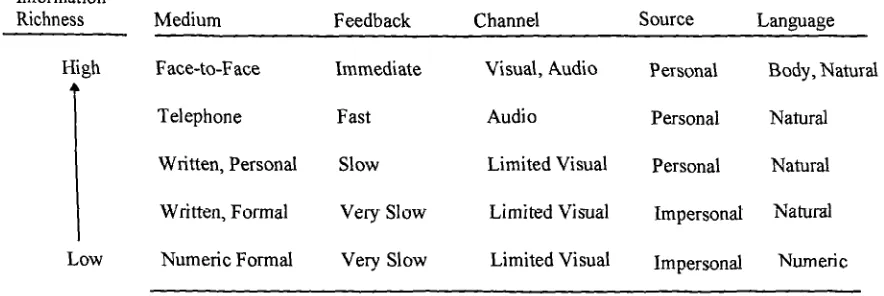
Figure 3.1 Communication Media and Information Richness 66 Figure 3.2 Characteristics of media that determine richness of information 66
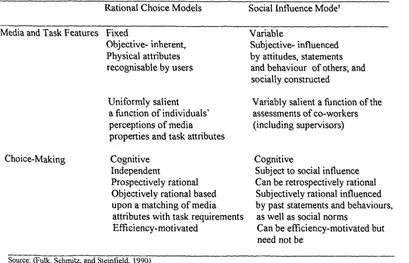
Figure 3.3 A Social Influence Model of Media Use 75
Figure 4.1 Information systems research approaches 91
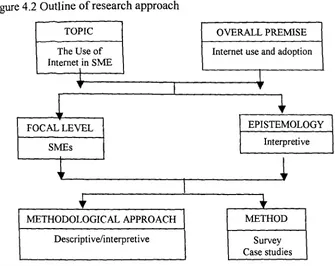
Figure 4.2 Outline of research approach 96
Figure 5.1 Main use of the Internet among surveyed SMEs 133 Figure 5.2 Internet resources used most in business 134
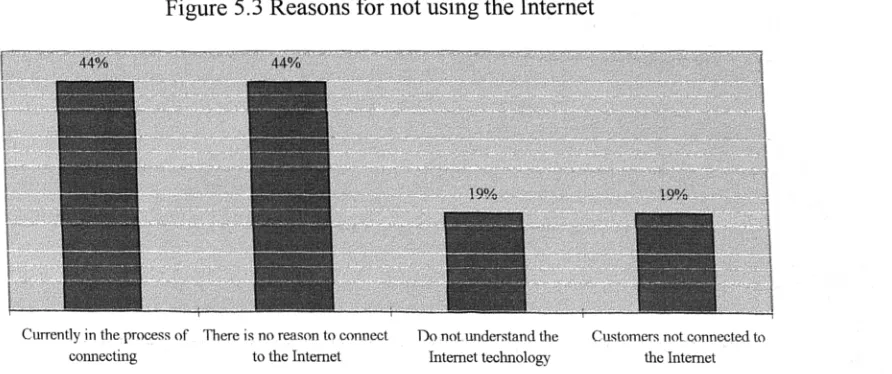
Figure 5.3 Reasons for not using the Internet 135
Figure 5.4 Reasons for not advertising on the Internet 136
Figure 5.5 Benefits of using the Internet 138
Figure 5.6 Percentage of respondents by company size 140
Figure 6.1 SME Internet Adoption Model 168
List of Tables
Table 2.1 Internet business models (1) 19
Table 2.2 Internet business models (2) 21
Table 2.3 Summary characteristics of the specificity of SMEs 37
Table 3.1 Comparison of assumptions 75
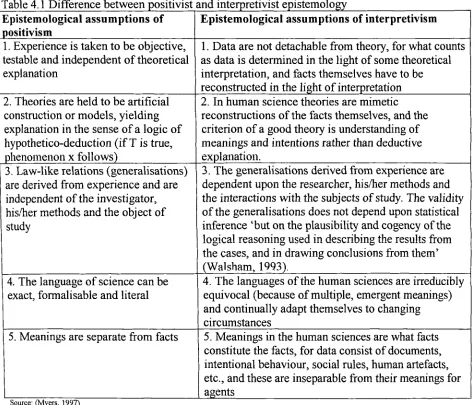
Table 4.1 Difference between positivist and interpretivist epistemology 84
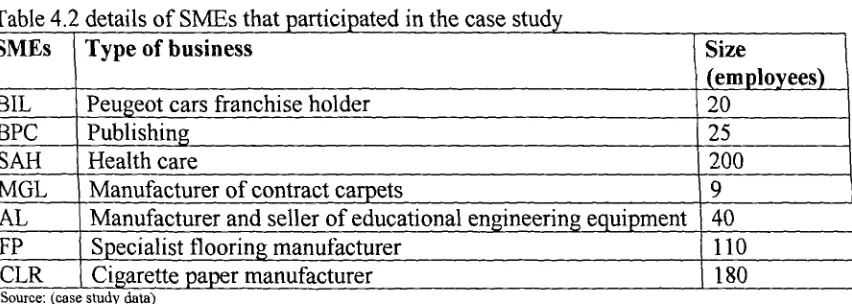
Table 4.2 Details of SMEs that participated in the case study 114
Table 5.1 Demographic profile of respondents 132
Table 5.2 Barriers hindering Internet use 138
Table 5.3 Main use of the Internet by Company size 141
Table 5.4 Reason for not using Internet for advertising by company size 145
Table 5.5 Benefits of using the Internet by company size 147
Table 5.6 Cross tabulation of Main use of the Internet by Internet Web site;
Internet resources by Internet Web site; and Benefits by Internet Web site 151
Table 5.7 Summaries of Spectrum (DTI, 1998) and Continental Research
(Oftel, 2000) surveys 152
Table 5.8 Survey results on Internet usage 155
Table 5.9 Summary of survey findings 159
Table 6.1 List of participating SMEs 161
Table 6.2 Core categories and subcategories that emerged from the data analysis 164 Table 6.3 Propositions that emerged from the data analysis 166
Table 7.1 Framework of SME Internet adoption 246
Table A.1 Sample of the initial concepts that emerged from the analysis
of the first SME case 314
ACKNOWLEDGEMENTS
First and foremost I wish to acknowledge Professor A.T Wood-Harper, my supervisor, for all his encouragement and support. I would also like to thank my advisor Dr J. Hughes for his guidance, support, insight and steady encouragement throughout this research. Without him I could never have kept this project on course.
I deeply appreciate all the time and information provided by the respondents of the companies that I surveyed during the course of this project. I especially want to thank the companies that allowed me to use their companies as 'case studies', their insights and experiences form the core of this thesis. Concerns for confidentiality precludes me from mentioning their names, but their contributions were critical to the success of the research.
DECLARATION
ABSTRACT
Information technology, particularly the Internet has the potential to radically change the way business is conducted, offering a competitive edge and a gateway to the
global marketplace. The explosive growth and commercialisation of the Internet has opened up a vast arena providing more opportunities for businesses, particularly SMEs to sell their products and service to a global audience than they would have be able to afford to reach using the traditional methods. There is tremendous potential for SMEs to harness the power of the Internet to improve their productivity and sharpen their competitive edge in both local and international markets. The Internet is viewed as a means through which SMEs could extend their geographic reach at minimal cost and to integrate and expand their business practices globally. Through such means it is argued that small companies could compete effectively against larger firms as the Internet is believed to be a great equaliser. The contribution of SMEs is extremely
important to the economy of many countries and their contribution cannot be over emphasised. SMEs account for more than 50% of private sector employment in the UK and are currently contributing most of the private sector employment growth.
This research reports on the empirical study of SMEs usage of the Internet. The intention is to present evidence on the current status of Internet use among SMEs and show the factors that influence their decision to adopt the Internet in business.
A questionnaire was used to survey 400 SMEs in the UK and 92 usable response (23%) were received. The survey result shows that communication, customer services, information gathering, and advertising are the areas the Internet is used most in SMEs. While the case study result shows that technological, organisational and
environmental factors influence SMEs' decision to adopt the Internet. These factors are used to develop a theoretical model for conceptualising the organisational issues around the adoption and use of the Internet--issues that have been largely missing from contemporary discussions of Internet usage in SMEs. The study thus has important implications for research and practice. Specifically, the theoretical model and findings suggest that technological and organisational factors, rather than
CHAPTER ONE
INTRODUCTION
This chapter presents an overview of the ideas and issues which form the basis of the thesis. Many of the issues raised are dealt with in depth later in the thesis, but it will suffice at this stage to give a flavour of what is to come.
The primary concern of this study is the adoption and usage of the Internet in small to medium-sized enterprises (SMEs). The study focuses on how SMEs currently use the Internet and the factors that influence their decision to adopt Internet technology in business. The study is limited to SMEs because, unlike their large companies'
counterpart, they account for more than 50% of private sector employment in the UK and are currently contributing most of the private sector employment growth (DTI,
1998). The purpose of this research is to generate a grounded theory, not to test a theory that has been determined a priori. It aims to build on the work done so far by using grounded theory method to develop a theory designed to increase the
understanding of the factors that influence SMEs' decision to adopt and use the Internet in business.
The introduction of new technology frequently presents unfamiliar problems as well as immense opportunities in organisations; the Internet is no exception. In an
increasingly global world, both information and information technology are of great significance to organisations of all sizes. Businesses need information to succeed in today's rapidly changing environment, they need to be able to process data and use information effectively when conducting their day-to-day operations. The use of IT has the potential to play an increasingly important role in organisations in enabling them to substantially gain competitive advantage and compete successfully. Its use can add significant value to an organisation in terms of productivity increase and performance improvements (Kang, 1998).
inception (Ngwenyama and Lee, 1997). The vast majority of this research has been characterised by the application of traditional quantitative methodologies.
Experiments and descriptive questionnaire surveys in large-N studies have been the norm. The findings from quantitative research conducted during the past few years have contributed significantly to the understanding of IT usage in organisations. The impact of IT on organisations, its implementation and information management research has been favoured areas for investigation.
There are, however, increasing calls for more qualitative research in the field of IS (Walsham, 1993, 1995; Myers, 1997; Markus, 1987). Markus (1987) stated that "there are many topics in IS that are best explored by means of qualitative methods of
inquiry". These include investigations into deep understanding of the impact of technology and evaluating technological innovations in organisations. Despite these
calls, Markus (1987) observed that "there have been relatively few published qualitative research studies on the theme of IT usage in organisation, much of the research to date has been technical or descriptive in nature, despite the prominent impact of qualitative research on IS research more generally". Currently, research into non-technical aspects of Internet usage in SMEs' has been largely ignored in most available literature. The majority of research to date addresses the Internet as it is being used, such as demographic use of the Internet (GVU,
http://www.cc.gatech.edu/gvu/user_surveys; Abell and Lim, 1996) and not necessarily why it is adopted and used in organizations. Furthermore, the literature shows to date, no theory of Internet adoption in SMEs has been established. While models of information technology implementation do exist (Ginzberg, 1981; Markus, 1983) these deal largely with the development stages of IS implementation and focus extensively on user involvement and user relations. As a result, they are less applicable to the case of Internet adoption and use in SMEs.
Orlikowski (1993) has examined the adoption of case tool in organisation. As
from the perspectives of the people involved in their natural settings. We need "in-depth, penetrating investigation that strives for relational understanding of all the various factors that comprise and affect the object of the study" (Wolf, 1979).
Literature survey shows that there are many gaps in terms of knowledge and understanding of the factors that influence Internet adoption, in particular there is a lack of attention to the contextual aspect of Internet adoption in organisation. Hence, some of the possible unexplored areas of past research relate to the adoption and usage of the Internet and its impact on the organisation. It is therefore hoped that this research will try to fill this gap, by conducting an empirical study that examines the factors which influence the decision of SMEs to adopt and use the Internet in business. The author argues that research on Internet usage in SMEs has reached a stage where theory development is critical to the accumulation of new knowledge. The development of theory about Internet adoption, grounded in data gathered from -SMEs will contribute significantly to the field of IS and guides in the development of policy for the adoption of the Internet in organisation.
This research adds to the body of knowledge that explores the relationship between factors in an organisation and IT adoption success. It builds on the work of
Orlikowski (1993) and Orlikowski and Baroudi (1991) and it extends the stream of information systems research utilising qualitative techniques (Calloway and Ariav,
1990; Calloway and Ariav, 1995; Lee, 1989; Lee, 1991; Martin and Turner, 1986; Orlikowski, 1993).
1.1 The importance of Internet to organizations
The use of the Internet in organisations has been the focus of many research studies because of its importance in improving organisation performance (Bloch and Segev,
The Internet is already being put to a myriad of different uses: educational, recreational, commercial etc. According to Bloch, Pigneur and Sel,ev (1996), the explosive growth and commercialisation of the Internet has led to widespread usage of online services such as shopping, audio and video applications including telephony and videoconferencing. Burgess and Cooper (1999) point out that being connected to the Internet has become a priority for both large and small companies. Research indicates that commercial activities now account for a large proportion of growth of the Internet (http://vvww.commerce.net ), it offers an increasingly diverse platform for innovative ways of doing business and new opportunities through which organisations can conduct commerce electronically (Golden and Griffin, 2000). It also offers
opportunities to businesses that transcend those of the traditional media; for example easy access to global markets (Department of Trade and Industry - DTI, 1998). The rapid adoption of the Internet as a commercial medium has motivated firms to experiment with innovative ways of marketing to customers, for example amazon.com the biggest Internet bookstore.
There is tremendous potential for SMEs to harness the power of the Internet to improve their productivity and sharpen their competitive edge in both local and international markets (Chatterjee and Sambamurthy, 1999). The use of Internet technology presents a unique opportunity for SMEs to participate in electronic commerce and to extend their capabilities and grow in a global market. Lymer et al (1997) argue that Internet use is becoming increasingly important as a mechanism to increase productivity, reduce costs and facilitates flexibility in SMEs business. The Internet provides global connectivity based on non-proprietary technology. It allows SMEs to access global markets, foster relationships from a business to business perspective and capture new customers and suppliers
(http://www.johnmcguiness.com/ecommerce.html) . It is easy to access the World Wide Web using low-cost browser software, and it is a relatively low-cost information technology infrastructure. This enables SMEs to be involved in electronic commerce technologies most appropriate to their business requirements (Chatterjee and
Sambamurthy, 1999).
space, enabling smaller firms to create entirely new businesses and reach markets they never could have reach before (Quelch and Klein 1996). This opportunity for global reach is being enthusiastically embraced by small and medium sized firms as
evidenced by O'Connor and O'Keefe (1997) who found that SME are firstly building web sites to attract new customers, to maintain and strengthen relationships with current suppliers and customers through increased interaction. The Internet global reach and its range of services (e.g. information dissemination, interactive
communication, and transactional support) make it a potentially powerful business resource (Chatterjee and Sambamurthy). The Internet presents an arena in which small companies can create an electronic commerce strategy that can enable them to compete effectively against large companies.
Despite the unprecedented growth in the use of the Internet by organisations, there are some unresolved issues that have accompanied the growth of the Internet such as security of information and legal issues (Clarke, 1996). Added to these are technology problems such as the lack of standards and overloaded communication lines (Auger and Gallaugher, 1997), resulting in inaccessibility of sites and sources of information and poor response times (Vadapalli and Ramamurthy, 1997).
1.2 Small to Medium-sized Enterprises (SMEs)
Since the commercialisation of the Internet, Internet commerce has evolved as a key development, which promises to change the future of the global economy (Poon and Swatman, 1998). As a result, there has been a concomitant upsurge of research studies into different aspects of Internet commerce (Quelch and Klein, 1996). The literature shows that few of these studies have focussed on the usage of Internet in
organisations. However, there is little or no evidence at present that indicates the factors that influence SMEs to adopt and use this technology.
Therefore the choice of SMEs as the main context of this research is not arbitrary. It is chosen because of the important role SMEs play in the UK economy. There are clear indications that an increasing number of UK SMEs are responsible for creating jobs and an increasing number of SMEs are experiencing the phenomenon of Internet usage in business. SMEs are extremely important to many countries, in some
(Mason, 1997), their contribution to the economy cannot be over emphasised. SMEs comprise firms that make up a significant proportion of UK industry (99.8%, DTI Statistics; Oftel, 2000). They account for more than 50% of private sector
employment in the UK and are currently contributing most of private sector employment growth (DTI, 1998).
As mentioned earlier, the literature shows little or no empirical research has been conducted to enrich knowledge within this area. Surveys that have been conducted by the European Commission clearly demonstrate that the use of electronic commerce provides SMEs with substantial benefits in several areas crucial for their business success (Vassilopoulou, Keeling, Macaulay, and McGoldrick, 2000). Other studies (Behrendorff and Goldsworthy, 1996) have shown that the use of appropriate
electronic commerce technologies by SMEs can be an important factor in facilitating business growth, contribute to productivity, efficiency, and enable access to global markets by eliminating the constraints previously imposed by geographic boundaries.
Given the strategic importance of the SME sector to growth and job creation and the large base of current Internet users as well as potential users, the success of SMEs gaining business leverage from the Internet is critical to the future of global
economies (Poon and Swatman, 1999; Prerost, 1997). It is therefore of importance that insight be gained into the issues affecting the adoption and use of Internet
technology in SMEs. Furthermore, knowing the factors that influence adoption of the Internet would explain why SMEs adopt or do not adopt this phenomenon, leading to a better picture of Internet adoption in this group of organisations. An understanding
of the factors that influence their decision to adopt the Internet in business may provide an avenue for policy-makers and practitioners to influence the rate of adoption of the Internet and consequently, the speed of electronic commerce.
1.3 Research questions
research in this area. To achieve this, the study proposes a more enriched model for conceptualising the technological, organisational, environmental and contextual issues around the adoption and use of the Internet--issues that have been largely missing from contemporary discussions of Internet usage (Orlikowski, 1993).
In order to realise this research objective the study, especially the data-gathering process, is guided by the following research questions:
1. How do SMEs currently use the Internet?
2. What are the benefits that may be gained from the use of the Internet?
3. What are the possible barriers that may prevent them from using the Internet? 4. What are the factors that influence their decision to adopt the Internet?
Because the adoption and use of the Internet in SMEs has received little or no prior attention, the study adopted a two-phased approach to provide answers to the above questions. Phase one is based on a review of the literature. Following this review a survey questionnaire of 400 randomly selected SMEs is conducted across the UK, to elicit information regarding the current status of Internet usage in SMEs. The aims of using the survey are: (1) to describe how SMEs use the Internet (2) to examine the benefits that may be gained from the use of the Internet and (3) to examine some of the possible barriers that prevent SMEs from using the Internet. The survey method is chosen because of its ability to handle a large sample size and a large number of variables simultaneously (Galliers, 1992). While this survey method is very useful, Kraemer and Dutton (1991) suggest that it is greatly improved when used in conjunction with the case study method.
1.4 Definitions
The term Small to Medium-sized Enterprises (SMEs) incorporates two primary classifications i.e. small business and medium business. The Department of Trade and Industry (DTI) defined SMEs as a company employing between 1-249 employees. The current study based on DTI SME defines small business thus: independently owned and managed; being closely controlled by owners/managers who also contribute most, if not all, of the operating capital, having the principal decision making functions resting with the owner/manager; with total number of employees less than 50. While Medium-sized enterprise is defined as business that is larger than small business and smaller than large business with total employees greater 50 and less than 250. See glossary in appendix 10 for the definitions of the Internet, IT, electronic commerce, web and email.
1.5 Delimitation of scope and key assumptions
Small to medium-sized enterprise is chosen as the context of this research. The focus is on SMEs that have adopted or not adopted Internet technology, and not on the characteristics of particular Internet application (e.g. email or web). The experiences of these organisations may differ from the experiences of larger organisations. The study is limited to the examination of how SMEs currently use the Internet and the factors that influence their decision to adopt Internet technology in business. The study is not concerned with the implementation of the Internet in the workplace nor is the aim of this research to examine the process through which an SME passes from first knowledge of the Internet, to developing an attitude toward the Internet, to a decision to adopt or reject to implementation of the Internet, and to confirmation of this decision. It provides an organisational account of the factors that influence adoption of the Internet in SMEs.
1.6 Outline of the thesis
then considers the current Internet business models and the business use of the Internet.
Chapter 3 presents different theoretical perspectives that are relevant in explaining the adoption and use of the Internet in SMEs. The chapter draws upon work on diffusion of innovations (Rogers, 1983), technology acceptance model (Davis, 989),
information richness theory (Daft and Lengel, 1984, 1986) and social influence model (Fulk et al., 1987, 1990, 1991, 1993).
Chapter 4 defines the boundaries of research methods that are considered for this study. It discusses the research methodology and evaluates the selection of the chosen research method adopted for this study. The chapter begins by providing a review of the philosophical assumptions of the research within the field of information systems,
outlining the difference between positivism and interpretivism. Then the choice of research method is presented and the justification for choosing mixed methodology approach is given. The chapter then discusses the research design, the descriptions of the field procedures, which include survey procedures and case studies, and the strategy utilised for data collection and analysis. Finally, the chapter accounts for the choice of grounded theory technique and describes its basic operations.
Chapter 5 presents the analysis and findings of the survey questionnaire phase of the research. The second phase is carried out using multiple case studies (presented in chapter 6) to enable the author to elicit qualitative information to complement the shortcomings of the survey research method.
In chapter 6 the SME cases that participated in the study are presented. The accounts of Internet usage in the participating SMEs are analysed and described using
grounded theory techniques. The chapter proposes an enriched theoretical model that explains the adoption and use of the Internet in SMEs and discusses the research findings with the existing literature.
then revisited and reconsidered in the light of the literature review and the empirical findings. The overall conclusions from the study are drawn in terms of key findings and their implications for practice and for research. The contribution of the research is presented and the chapter identifies some areas for further research. Finally, the chapter reflects on the experience of conducting this research.
1.7 Conclusion
CHAPTER TWO
BACKGROUND
Introduction
Chapter 1 presented an overview of the ideas and issues, which formed the basis of the thesis. The aim of this chapter is to discuss the Internet and small to medium-sized enterprises which form the background to this research. First, a brief origin, growth, and commercialisation of the Internet will be presented, followed by the demographic and behavioural characteristics of Internet users. The difference between this study and past studies is presented. The existing Internet business models, research into business use of the Internet and studies of SMEs use of the Internet are discussed. The reason for choosing SMEs as the context of this study was briefly discussed in section
1.2 of chapter 1. This chapter aims to build on that discussion and describe SMEs information systems capabilities, identify the distinctive characteristics that differentiate SMEs from the large organisation and finally, the SME use of the Internet and the opportunities it offers to them.
2.1 The Origins, Growth and Commercialisation of the Internet
This study uses the term "Internet" to refer synonymously to the Internet, WWW, email s and associated technology and application domains. While the Internet provides the underlying infrastructure, growth in these technologies and applications is spawned by new and innovative approaches to communicating and doing business via the Internet. The Internet has grown from being a tool for individuals and researchers to a mass medium for organisations and societies at large. The origins, growth and evolution of the Internet are presented in this section as background to the rest of the thesis. A more detailed historical overview and discussion of the Internet demographics can be found in Hobbes (1996); Hoffman and Novak (1995);
Commerce Net/Nielsen (1995); FIND/SVP (1996); and Network Wizard (1996).
using a set of communication standards, called the Internet Protocol Suite (EPS), in particular Transport Control Protocol/ Internet Protocol (TCP/IP). It consists of thousands of computer networks at businesses, universities, and governmental agencies all linked together by phone lines, microwave transmissions, or fibre optics (Leiner et al, 1998).
The origins of the Internet date back to the early 1960s when the US Defence Department established the Advanced Research Projects Agency (ARPAnet) to link various military and research institutions. One of its major achievements was the development of a standard protocol, which allowed dissimilar computer systems to communicate. This protocol, known as TCP/IP (Transmission Control Protocol/ Internet Protocol) remains the most commonly used on the Internet today. During the late 1980s, the National Science Foundation (NSF) used the ARPAnet technology to expand its own NSFNET - a high speed backbone network linking campuses and research centres to the NSF's supercomputers.
The Internet came to the world's notice in the 1990's. Since its inception in the 1960s, the Internet has evolved from a communications medium reserved for elite researchers and scientists to a highly sophisticated commercial medium (Sim and Rudkin, 1997). As public interest exploded in the 1990's, the Internet was opened up to other groups, including individuals and companies. Full commercial Internet connections became available in 1991 with the establishment of the Commercial Internet Exchange. This led to a proliferation of commercial sites, which remain the fastest growing part of the Internet today.
The Internet has grown explosively, from only 1000 networks in 1990 to 488,000 networks in July 1996 (Lotter, 1996). In 1995, International Data Corporation (JDC) estimated that there were some 38 million users in 150 countries who were
The size of the Internet in terms of number of users has been one of the most contentious issues surrounding its development as a consumer medium, The figures regarding the number of people using the Internet vary almost as much as the number of citations. However, they all make the same basic point that the growth rate is of immense proportions. Internet usage around the world is doubling every ten days http://www.nw.come/zone/www/report.html . In 1996, IDC estimated the number of Internet users world wide at 80 million. In 2000, Reid estimated 450 million user world wide, reaching 1 billion users by the year 2005. The Internet can no longer be considered a "fad". According to Angus Reid, the Internet is a technology whose design has been written in an indelible ink, with an estimated of 450 million users world wide, the Internet is truly a force to be reckoned with (Reid, 2000,
http://www.angusreid.com).
Although the original purpose of the Internet was for Universities and Governmental agencies to share information, companies have quickly taken over the Internet. According to http://www.commerce.net, commercial businesses are not only the largest, but have become the fastest growing segment on the Internet. One half of the traffic on the Internet originates from commercial sites (identified by the .com extension) who make up the largest percentage of Internet hosts (Lotter, 1995). This increased usage by the business world is a major contributor to the Internet's growing popularity and size.
The Web offers an easy-to-use graphical user interface to an otherwise dreary text-based Internet, allowing marketers to add colour, audio and pretty pictures to their sales pitches (Neely, 1996). It enables information, including text; audio, video and graphics to be accessed anywhere on the Internet using a browser program.
It makes use of HTML (Hypertext Mark-up Language) and HTTP (Hypertext Transfer Protocol) to give access to documents at many different physical locations. Regardless of the type of server, the user interface is the same; users traverse the network by moving from one document to another via hypertext links. The Web makes publishing, display and retrieval of all kinds of media as easy as clicking a mouse. This ease of use, combined with the availability of free software and the existence of a large networked community made the www irresistible. The Web currently accounts for the greatest increase in Internet network traffic.
2.2 Internet users
The aim of this section is to provide insights into the demographic and behavioural characteristics of Internet users and how those characteristics have changed over time. Understanding the Internet from a user perspective makes it possible for any
organisation in the developmental or re-evaluation stages of an Internet business strategy, to understand the changing dynamics of the online industry (Clemente,
1998).
The Internet, which had started out as "just another research project" (Cerf, 1995) has demonstrated astronomical growth. The explosive growth and commercialisation of the Internet has led to widespread usage of on-line services, and being connected to the Internet has become a high priority for both large and small companies (Burgess and Cooper, 1999). It is not uncommon to see newspapers, magazines, and books giving statistics on the size of the Internet. Measuring and describing the Internet population is a big issue for businesses who need to know the number of people using the Internet, to enable them to make strategic investment decisions regarding the Internet. Given the dynamic nature of the Internet, it is impossible to accurately count all of the hosts and users of the Internet. The number of people on the Internet is expected to increase tenfold from 100 million to 1 billion by 2005
Internet and what they are doing there. A good summary of many of the studies available can be found at CyberAtlas (1996).
There is other research currently going on to find out who is on the Internet and their demographic makeup. At the moment, there are regular surveys of the average Internet user (for example, Georgia Institute of Technology's Graphic, Visualisation, and Usability Centre, http://www.cc.gatech.edu/gvu/user_surveysi; CyberAtlas, http://cyberatl as. i nternet. com/b i cture/dem o graphi Nua Internet Surveys, http://www.nua .ie/surveys; Find/SVP & Cyber Dialogue, http://etrg. findsvp. corn ., Angus Reid World Wide, http://www.angusreid.com ; CommerceNet/Nielsen Media Research Internet Demographic Survey, http://www.commerce.net/research) . While methodologies for these studies vary, all agreed that the typical Internet consumer is better educated and more affluent than the average.
According to the tenth survey of over 5,000 Internet participants carried out by http://www.cc.gatech.eduigvu/user_surveys/), the demographics of the Internet community are as follows (it is understood that respondents to an Internet survey are more likely to be heavy users): Gender: male 52%, female 49%; Education: 50.1% at least one degree, 80.9% some college experience; Race: 87.2% white; Average age: 37.6 years; Marital status: 47.6% married 31.7% single; and Location: 84.7% North America. Surveys such as this are useful since it is important to acknowledge the characteristics of the primary users of the Internet.
The survey conducted by Strategis Group on Internet user trends in the US found that the number of Internet users in the US had topped 106 million, with 53% of adults using the Internet and 47% of US households having Internet access. Women made up nearly 60% of new Internet users in the US in 1999. According to Strategis the
US. The survey found that average monthly spending on online purchases was $68.50 in 1999. Nearly 40% of Internet users spent an average of more than $50 per month.
A survey conducted by CommerceNet/Nielsen in 1999 found that of the 46 million adult residents in the UK, 12.5 million of UK adults now use the Internet on a regular basis, of these, 44% log on every day. The study asked those with Internet access how they used the Internet. 40% used the Internet to access information, 27% had
purchased goods online whereas 49% had used the Internet to compare the price of goods and services. The CommerceNet survey revealed that "the Internet users' demographic profile in the UK today is very similar to that of North America two years ago. According to Jerome Samson, Director of Technology and Business
Strategy at Nielsen Media Research. "The UK Internet users, however, are embracing e-commerce much more rapidly than users in North America did in 1997"
(http://www.commercenet.org.uk ).
Another study by Angus Reid on 'the face of the web' found that more than 450 million people were using the Internet in the year 2000 and it is estimated to reach 1 billion users by 2005. The 450 million-user figure was based on a study sample of 28,374 Internet users and consumers conducted by telephone in 34 countries. The study found that Internet users remained highly concentrated in a few countries, showed no sign of slowing in several others, and that hundreds of millions of citizens had no immediate intention of going online. 40% of the survey's respondents were aware of the Internet but had no intention of using it in the next 12 months, with the majority of these respondents citing a lack of interest, knowledge, and relevance to their lives.
Canada ranked second behind the US in many categories, including Internet trial 64%, usage 56%, knowledge 54%, and home PC penetration. In Europe, Germany ranked third in terms of total Internet users with 18 million, and the UK fourth with 14 million. The study found that both Eastern and Southern Europe were showing stalled rates of PC penetration and Internet usage. These countries also had the highest proportions of adults with no interest in going online. In Asia, Hong Kong 35%, Japan 33%, and Singapore 33% made it into Angus Reid's top ten in terms of the percent of the population online. Japan, thanks to its wireless access options and wireless broadband initiatives, was sure to add millions of new users to its 32 million existing
users, the study found.
2.3 The current Internet business models
This section summarises some of the existing Internet business models commonly used for commerce. The discussion in this section draws from Timmers (1999) and Hoffman and Novak (1995).
As business activities on the Internet gain momentum, there are an increasing number of research efforts focusing on the impact of the Internet on existing business models (Cronin, 1995; Benjamin and Wigand, 1995; Hoffman and Novak, 1995, 1996; Quelch and Klein, 1996; Timmers, 1999). There is a great deal of interest and enthusiasm in the Internet's potential for commerce. Some analysts have projected that Internet sales will reach the $12 billion mark by the end of 20 th century (Hsieh and Lin, 1998). Forester Research found that $240 million in sales was conducted through interactive media in 1994. Roughly three-quarters of this total was conducted through the on-line services, with the Internet accounting for most of the remainder. While this figure was still significantly smaller than retail and catalogue sales figures, the Internet sales had grown to this level from virtually $0 in sales in 1993. Anderson (1996) suggested that within three years, Internet commerce would account for ten percent of Internet traffic.
which a many-to-many process exists, and more importantly, consumers can actually interact with the media, unlike television or radio. This means that consumers actively choose whether or not to access a company's web site and "exercise unprecedented control over the management of the content they interact with" (Hoffman and Novak,
1996).
Timmers (1999) defined business model as "an architecture for product, service and information flows, including a description of the various business actors and their roles; a description of the potential benefits for the various business actors; and a description of the sources of revenue". Various Internet business models have been proposed including online storefront, warehouse, Internet presence site, newsgroup mass marketing, content site, mall, incentive site, and search agent (Hoffman and Novak, 1995; Weston, 1995). According to Hoffman and Novak (1995), web sites
could be categorised into two major classes: (1) destination sites (or commercial web sites) which comprise ultimate "destinations" competing for consumers' visits (e.g., online storefronts, warehouse, Internet presence sites, newsgroup mass marketing, and content sites). (2) Web traffic control sites which help to direct consumers to the various destination sites (e.g., malls, incentive sites and search agents). While Timmers (1999) identified the following business models: E-shops, E-procurement, E-malls, E-auctions, Virtual Communities, Collaboration Platforms, Third party Marketplaces, Value-chain Integrators, Value-chain Service Providers, and
Information Brokerage, Trust and Other Services. He classified these models on two dimensions according to their degree of innovations
The first dimension is the degree of innovation, this ranges from what is essentially an electronic version of a traditional way of doing business, to more innovative ways e.g. by externalising via the Internet functions that previously were performed within a
Table 2.1 Internet business models (1)
E-shop: promotion cost reduction, additional outset (seeking demand) E-procurement: cost reduction, additional outlet (seeking suppliers)
E-auction: electronic bidding (no need for prior movement of goods or parties) E-mail: collection of e-shops, aggregators, industry sector marketplace
Third-party marketplace: common marketing front end and transaction support to multiple businesses
Source: (Tin:liners, 1999)
E-shops: This is web marketing of a company and it is done to promote the company
and its goods or services. Any company that creates a web site just to have a web presence can be considered to have created a very basic e-shop. Many companies adopt this model of direct sales on the Internet. The variety and number of products being sold range from one to many, and are presented in electronic catalogues or some other more innovative formats. Purchases can be made simply via fill-out forms (Hoffman and Novak, 1995; Weston, 1995). The possibility of ordering and paying is increasingly added to this very basic e-shop, often combined with traditional
marketing channels. Benefits sought for the company are increased demand, a low-cost route to global presence, and low-cost reduction in promotion and sales. Benefits for the customer can be lower prices compared to the traditional offering, wider choice, better information and convenience in selecting, buying and delivery, including 24-hour availability.
E-procurement: This is electronic tendering and procurement of goods and services.
Large companies or public authorities may implement some form of e-procurement on the web. Benefits sought include having a wider choice of suppliers, which is
E-malls: An electronic mall, in its basic form, consists of a collection of e-shops, usually enhanced by a common umbrella, for example a well-known brand. The mall is best suited to newcomers who desire to be part of a house of online storefronts already commanding a stream of traffic (Weston, 1995). Most e-shops rent a "shop space" from the provider and retail a variety of products. It might be enriched by a common-guaranteed payment method. When they specialise in a certain market segment, such malls become more of an industry marketplace, like Industry.net , which can add further value by virtual community features (frequently asked questions, discussion forums). The e-mail operator may not have an interest in an individual business that is being hosted. Instead, the operator may seek benefits in enhanced sales of the supporting technologies. Alternatively, benefits are sought in services (e.g. Barclays with Barclay Square), or in advertising space and/or brand reinforcement or in collective benefits for the e-shops such as increased traffic, with the expectation that visiting one shop on the e-mail will lead to visits to
'neighbouring' shops.
E-auctions: Electronic auctions on the Internet offer an electronic implementation of bidding mechanisms also known from traditional auctions. This can be accompanied by multimedia presentation of the goods. Usually they are not restricted to this single
function. They may also offer integration of the bidding process with contracting, payments and delivery. The sources of income for the auction provider are in selling the technology platform, in transaction fees and in advertising. Benefits for suppliers and buyers are increased efficiency and time savings, no need for physical transport until the deal has been established, and global sourcing. Because of the lower cost, it becomes feasible to offer small quantities of low value, e.g. surplus goods for sale.
Sources of income for suppliers are in reduced surplus stock, better utilisation of production capacity, and lower sales overheads.
Third party Marketplaces: This is an emerging model which is suitable if companies wish to leave web marketing to a third party. The third-party marketplace is often an additional, online channel to other existing channels, including physical outlets. They all have in common that they offer at least a user interface to the suppliers' product catalogues. Several or all of the additional features, such as branding, payment,
are added to third-party marketplaces. Revenues can be generated on the basis of a one-off membership fee, service fees or a percentage of transaction N alues. Each shop
owner can enhance the basic web site and product offer with his or her own
promotions and brand enhancement. The concept accommodates the virtual as well as the physical world, for example delivery and additional services are still assumed to be happening in the physical stores. It thus strengthens local presence and geographic concentration, which can especially benefit small retailers.
The second dimension is the extent of integration of functions, ranging from single-function business models (e.g. e-shops that only provide the marketing single-function over the Internet) to fully integrated functionality (e.g. value-chain integration), which cannot be done at all in a traditional form, as it is critically dependent on information technology for letting information flow across networks and creates added value from integrating these information flows. See table 2 for the identified models in this dimension.
Table 2.2 Internet business models (2)
Virtual community: focuses on added value of communication between members Value-chain service provider: supports part of value chain, e.g. logistics, payments Value-chain integrator: adds value by integrating multiple steps of the value chain Collaboration platforms: business process co-operation, e.g. collaborative design Information brokers trust providers: business information and consultancy, trusted third-party services
Source: (Thruners, 1999)
Virtual Communities: The ultimate value of virtual communities comes from the
members (customers or partners), who add their information on to a basic
environment provided by the company operating the virtual community. Membership fees as well as advertising generate revenues. A virtual community can also be an important add-on to other marketing operations in order to build customer loyalty and receive customer feedback. Virtual communities are also becoming an additional function to enhance the attractiveness and opportunities for new services of several of the other business models (e.g. e-malls, collaborative platforms, or third-party
Value-chain Service Providers: These specialise in a specific function for the value
chain, such as electronic payments or logistics, with the intention of making that into their distinct competitive advantage. Banks, for example, have been positioning themselves in this way for a long time and may now find fresh opportunities using the open Internet network. New approaches are also emerging in production/stock
management, where the specialised expertise needed to analyse and fine-tune production is offered by new intermediaries.
Value-chain Integrators: These focus on integrating multiple steps of the value chain,
with potential to exploit the information flow between those steps as further added value. Revenues come from consultancy fees or possibly transaction fees. An example value chain integrator is TRANS2000 in the area of multi-modal transport (Timmers, 1999). Marshall offers its customers' added value from transaction information, which is provided through extranet solutions like PartnerNet and MarshallNet. Some of the third-party marketplace providers are moving in the direction of value-chain
integration.
Collaboration Platforms: These provide a set of tools and an information environment
for collaboration between enterprises. This can focus on specific functions, such as collaborative design and engineering, or on project support to a virtual team, for example a team of consultants. Business opportunities are in managing the platform (membership/usage fees) and in selling the specialist tools (e.g. for design, workflow, document management).
Information Brokerage, Trust and Other Services: A whole range of new information
services are emerging, to add value to the huge amounts of data available on the open networks or coming from integrated business operations, such as information search.
Search agents are software agents, which identify Web sites via keyword search through a Web-wide database (Hoffman and Novak, 1995). Examples are Yahoo, lnfoseek, and Web Crawler, with additional contenders entering the market regularly.
advertising as a source of revenue. A special category is trust services, as provided by certification authorities and electronic notaries and other trusted third parties. These services charge subscription fees combined with one-off service fees, with software sales and consultancy as additional sources of revenue. Many consultancy and market research companies are now offering commercial business information services via the Internet.
In summary, this section has provided a classification of business models that are currently found in Internet electronic commerce. Some of these models are essentially an electronic rimplementation of traditional forms of doing business, such as e-shops. Many others go far beyond traditional business, such as value-chain
integration, and seek innovative ways to add value through information management and a rich functionality. Creating these new business models is feasible only because of the openness and connectivity of the Internet. A consequence of the same open nature of the Internet is that it may be rather difficult to keep the details of a business model hidden.
2.4 Research into business use of the Internet
As the explosive growth and business activities on the Internet gain momentum, many reasons and strategies for business use of the Internet have been proposed and
discussed in the media and the IT industry (O'Reilly, 1996). While serious work in this area is still emerging, there are an increasing number of research efforts focusing on the impact of the Internet on business use (Cronin, 1995; Ellsworth and Ellsworth, 1995, 1996); potential advantages of using the Internet (Senn, 1996; Sterne, 1995) and on small business and Internet commerce (Baker, 1994; Baker, Fuller and Jenkins,
1997; Lymer, Johnson and Baldwin-Morgan, 1997; Poon and Swatman, 1995, 1996, 1997; Poon and Strom, 1997; Bloch, Pigneur and Segev, 1996; Jeoffrey and Roberts, 1997) and other studies have concentrated on various aspects of Internet usage (GVU, hftp://www.cc.gatech.eduigvu/usersurveys; Abell and Lim, 1996).
information on the widest range of business issues. Zwass argues that the advent of cheap ubiquitous Internet technology offers companies huge potential to transact business, communicate, share and retrieve information on a global scale at a low cost.
Cronin (1995) categorises business use of the Internet into three main areas of
customer relations, dealing with suppliers and internal company operations, Ellsworth and Ellsworth (1995, 1996) identified ten main business uses of the Internet including: communications (internal and external) using e-mail; corporate logistics used to achieve "real time" communications across distances; globalisation and a levelling of the corporate playing field with SIVIEs using the Internet to achieve more rapid internationalisation; the use of the Internet to achieve competitive advantage, for example, by creating new product opportunities; cost savings, from the use of on-line communications; on-line support of inter firm collaboration; the use of the Internet as an information search and retrieval tool and the establishment of company web sites for marketing and sales promotion.
Similarly, Butler and Peppard (1997) indicated that the Internet can be used in business for different purposes: As a medium for communicating with customers or potential customers, the interactive nature of the Internet allows companies to
establish an active dialogue with customers. As a medium for information distribution and dissemination, the Internet accesses a global audience. Unlike traditional
communications media, the use of voice, video, text and images provide a richer picture of company's products and services. Information can be tailored to the
Sterne (1995) showed the potential advantages to be derived from effective Internet marketing including improved corporate image, improved customer and investor relations; finding new customers; cost reduction, market expansion; and improved communications (Hamill and Gregory, 1997). Indeed, many organisations have been quick to realise the value associated with information and the potential it holds to secure competitive advantage, which has resulted in improved financial margins, and significantly improved customer service (Chesher, 1997). Senn (1996) identified six key features of Internet that attracted businesses to participate in electronic commerce: public resource, global reach, capability to link, shared ownership, platform
flexibility/diversity, and cost advantages. The modest cost of conducting business over the Internet encourages companies to adopt Internet commerce. Several other business benefits can be gained from firms' participation in electronic marketplace. The Internet allows firms to reach and interact with any potential customer or business partner anywhere in the world. This in turn helps foster a firm's presence and
reputation. The wide reach of the Internet is a major influence on a firm's decisions to integrate electronic commerce into their business; such advantage is further enhanced by the flexibility and diversity of the Internet platform. Traditional channels and other non-value-adding inefficiencies are bypassed in electronic markets as the Internet enables firms to achieve direct dealings with actual and potential customers.
In addition, Senn pointed out that two factors motivate firms to use the Internet: new medium capabilities leverage for existing business and support capabilities. Senn suggested that firms should treat the Internet as a new medium to conduct business, instead of viewing Internet commerce from the traditional perspective as a supplement to current business methods. It should be treated as an innovative channel that can be
used to reach out to customers, link up partners and deliver something unique. The adoption of Internet commerce helps firms to reap higher returns and create value, as they are able to maximise existing organisational resources and expertise (Senn,
DTI (1998) indicates that the use of the Internet has created new opportunities both in business-to consumer and business-to business markets. These new opportunities are not restricted to the traditional sectors of information (content, 1T, software and hardware and telecommunications) but completely new opportunities are emerging in fields such as electronic commerce and information services. DTI identifies three similar ways that Internet use can have a positive impact on organisational activities: (1) the use of the Internet can improve efficiency and allow processes to be
streamlined by reducing the time and effort required for communicating and
processing information. (2) lt can improve responsiveness and shorten delivery times by enabling the transformation of business processes and by assisting in
organisational change. (3) It can allow the development of new products and services, opening up new business opportunities.
2.4.1 Studies of SMEs use of the Internet
A number of other researchers have studied different aspects of small business and Internet usage both in the UK and overseas including Poon and Swatman (1995) which discussed the opportunities the Internet makes available to SMEs, particularly in relation to the value of 'virtual alliances'. Baker (1994) was among the first to conduct research on the importance of the Internet for small businesses. Baker
concluded that searching for customer information and obtaining specific information for marketing purposes were the most important benefits the Internet offered to small businesses. Fuller and Jenkins (1995) reported an experimental study on the learning and business transformation process of small business adoption. They found that the information richness of the environment in which the firm operates, the necessity of collaborating in order to compete, and the business cultures present in communicating electronically all play an important role in ongoing Internet use.
reach a global audience more cheaply. Small companies offering specialised niche products are able to find the critical mass of customers necessary to succeed through the world-wide reach of the -Internet. The Internet's low cost communication permits firms with limited capital to become global marketers at an early stage in their development.
Despite variations in topic and approach all of these authors have concluded that small businesses are increasingly using the Internet and that this will radically change the way some small businesses operate. However, as Orlikowski pointed out, most of these studies have primarily focused on descriptions of Internet usage. They have failed to consider the questions of what SMEs use the Internet for and the factors influencing their decision to adopt the -Internet in business.
In searching to understand the adoption and use of information technology in SMEs, more diversified studies on IT usage was discovered. These include factors affecting the adoption of an Internet based sales presence for small businesses (Auger and
Gallaugher, 1997), personal computing acceptance factors in small firms (Igbaria, Zinatelli, Cragg and Cavaye, 1997), determinants of success for computer usage in
small business (DeLone, 1988), motivators and inhibitors for small firm computing (Cragg and King, 1993), the successful use of IT in SMEs (Naylor and Williams,
1994), the adoption of EDT in small business (Iacovou, Benbasat, and Dexter, !995) and information technology threats and opportunities for SMEs (Bull and Raymond,
1993).
Further studies of IT usage in large organisations were discovered including measuring the extent of EDT usage in complex organisations (Massetti and Zmud,
1996), factors affecting electronic mail use (Golden, T3eauclair and Sussman, 1992), a contingency model of Internet adoption in Singapore (Teo, Tan, and Buk, 1997), user acceptance of computer technology (Davis, Bagozzi and Warshaw, 1989), the
influence of 1T management practice on IT use in large organisations (Boynton, Zmud and Jacobs, 1994), a framework for analysing the use of the Internet for business (Vadapalli and Ramamurthy, 1997), an integrated model of adoption of the Internet in organisation (Lim et al, 1998) and adoption of case tool in organisation (Orlikowski,
methodologies. The strengths and weaknesses of each approach is discussed in chapter four, developing the argument that the use of a single methodology often fails to explore all of the issues associated with Internet adoption and usage in SMEs. The use of a mixed method approach is suggested to counteract this weakness and to enhance research into IT adoption and usage.
2.4.2 Difference between this study and past studies
Thus, this study is similar to a number of past research studies on business use of the Internet. However, it differs from past studies in that it considers both current Internet usage and the factors that influence SMEs decision to adopt the Internet in business. Most past studies have failed to consider the factors that influence adoption of the Internet in SMEs. ln fact, most of these studies have been exploratory in nature and
most data has been collected via semi-structured interviews or surveys and used for descriptive purposes (Abell and Lim, 1996; Abell & Black, 1997; GVU,
http://www.cc.gatech.edu/gvu/user_surveys/) with little consideration for the factors influencing adoption and also very little theory development or testing has been reported in this area (Brancheau and Wetherbe, 1990).
The study differs from past studies in that it uses mixed methods of survey and case study to investigate Internet usage and the factors that influence SMEs to adopt the Internet in business. A number of reasons have been put forward for combining
survey and case study methods for this study. The combination of these methods enable the building of a fuller, richer picture surrounding Internet adoption and use, than either method on its own would have been able. Through the use of these methods the robustness of results can be increased; findings can be strengthened through the cross-validation achieved when different kinds and sources of data converged and are found to be congruent (Jick, 1979). These methods can help find explanations for diverging results (Kaplan and Duchon, 1988; Cavaye, 1996). As Jick (1983) argued combining different methods may be used not only to examine the same phenomenon from multiple perspectives, but also to enrich understanding by allowing new or deeper dimensions to emerge. It has also been suggested (Denzin,
overcoming their unique deficiencies. This approach of combining different methods is considered necessary due to the newness and changeable nature of the area of study. This study is also unique because it uses grounded theory method to develop theory of
Internet adoption in SMEs.
The study draws on the IS research tradition of interpretive case studies (Walsham, 1995), that focused on human actions and interpretations surrounding the adoption and use of the -Internet in SMEs (Walsham, 1993). The reason for adopting an interpretive approach for this study, as opposed to positivist is because the author believes that the way to understand a complex phenomenon like the Internet is to adopt an approach which is concerned with understanding peoples' feelings and the real world issues. The interpretive and qualitative research methods are designed to help researchers understand people and the social and cultural contexts within which they live.
The interpretivist researcher does not enter a social setting with a priori constructs. Instead the researcher allows constructs to emerge whilst in the field learning about and trying to understand the phenomenon (Cavaye, 1996) and to interpret and make sense of the complex and dynamic nature of Internet adoption in SMEs. The study's objective fits well with the interpretivist aims of understanding phenomena from the point of view of participants directly involved with the phenomenon under study. The interpretive approach in information systems is "aimed at producing an understanding of the context of the information, and the process whereby the information system influences and is influenced by the context" (Walsham, 1993).
It has been argued (Orlikowski and Baroudi, 1991) that interpretive case study method is appropriate to generating valid interpretive knowledge, as it examines humans within their social setting. Rogers (1983) suggests that an interpretive orientation holds great promise for the study of innovation, arguing that innovation, being so uncertain and intricate, can best be understood from the point of view of the actors involved. Fichman (1992) argues that organisational adoption of technologies is simply too varied and subtle a phenomenon to be usefully studied with cross-sectional survey methods. He suggests that when studying organisational innovation,
2.5 Small to medium-sized enterprises (SMEs)
The choice of SMEs as the context of this study is motivated by several
considerations; the most important of which is the important role SMEs play in the economy (Iacovou, Benbasat and Dexter, 1995; Mason, 1997; DTI, 1998). As previously discussed in chapter one, SMEs are extremely important to many
countries, in some countries these group of organisations provide the foundation for the entire economy (Mason, 1997). In most countries, SMEs constitute more than 98% of the total number of businesses (Poon and Swatman, 1998; Iacovou, Benbasat and Dexter, 1995; D'11, 1998; OECD, 2000a;
http://vvww.johnmcguiness.com/ecommerce.html).
The establishment of an environment in the UK in which SMEs are able to grow and prosper in the emerging global business is considered critical to the development and
expansion of businesses in the UK and the economy. The identification and encouragement of new business opportunities for SMEs, based on information technologies has been the priority of British government. According to DTI (1999), the UK Government's competitiveness white paper set the target of increasing the number of micro-companies and SMEs wired up to the digital marketplace (i.e. by making frequent use of Internet technologies) from 350,000 at the beginning of 1998 to one million by 2002. The DTI (1999) survey reported that SMEs in the UK have seen strong growth in the ownership and usage of ICTs. This growth is destined to continue, underpinned by the low cost of the Internet when compared to other electronic networks and ifs availability 24 hours a day, 7 days a week. The survey revealed that 67% of SMEs now own PCs and 44% have access to the Internet. Both web site ownership and the use of web sites to sell on-line by SMEs have more than doubled since the 1997 survey
(Drr,
1999).Information and communication technologies (ICTs) are seen as playing an
increasingly important role in the growth performance of SMEs and these are taking on new significance in most countries of the world (OECD, 2000a). The advent of Internet-based electronic commerce allows smaller firms to expand their customer base, enter new product markets and rationalise their businesses. Problems of