ScholarWorks @ Georgia State University
ScholarWorks @ Georgia State University
Psychology Theses Department of Psychology
Spring 5-11-2012
The Effect of Situational Attribution Training on Majority Group
The Effect of Situational Attribution Training on Majority Group
Members’ Psychophysiological Responses to Out-group Members
Members’ Psychophysiological Responses to Out-group Members
Ashley Myers
Georgia State University
Follow this and additional works at: https://scholarworks.gsu.edu/psych_theses
Recommended Citation Recommended Citation
Myers, Ashley, "The Effect of Situational Attribution Training on Majority Group Members’ Psychophysiological Responses to Out-group Members." Thesis, Georgia State University, 2012. https://scholarworks.gsu.edu/psych_theses/97
MEMBERS’ PSYCHOPHYSIOLOGICAL RESPONSES TO OUT-GROUP MEMBERS
by
ASHLEY C. MYERS
Under the Direction of Dominic Parrott
ABSTRACT
The present research explored the effects of Situational Attribution Training (Stewart, Latu,
Kawakami, & Myers, 2010) on affective bias utilizing facial electromyography (EMG). Participants
viewed a slideshow of randomly presented photographs of both and White and Black American
men while rating how “friendly” each individual appeared. Simultaneously, corrugator and
zygomaticus region activity, linked with positive and negative affect, respectively, was measured.
Of these participants, half were randomly assigned to complete Situational Attribution Training
beforehand. Results for EMG activity suggested no significant differences in EMG activity for
White compared to Black photographs for either the training or control participants; thus, this study
did not find evidence of affective bias by way of corrugator or zygomaticus activity. However,
errors in slideshow presentation prevent clear interpretation of these results. Suggestions for future
research and ways in which bias errors can be avoided are discussed.
THE EFFECT OF SITUATIONAL ATTRIBUTION TRAINING ON MAJORITY GROUP
MEMBERS’ PSYCHOPHYSIOLOGICAL RESPONSES TO OUT-GROUP MEMBERS
by
ASHLEY C. MYERS
A Thesis Submitted in Partial Fulfillment of the Requirements for the Degree of
Master of Arts
in the College of Arts and Sciences
Georgia State University
Copyright by Ashley C. Myers
MEMBERS’ PSYCHOPHYSIOLOGICAL RESPONSES TO OUT-GROUP MEMBERS
by
ASHLEY C. MYERS
Committee Chair: Dominic Parrott
Committee: Tracie Stewart
Heather Kleider
David Washburn
Electronic Version Approved:
Office of Graduate Studies
College of Arts and Sciences
Georgia State University
This project is dedicated to my supportive and understanding family members, who have made
tremendous sacrifices to help me complete my thesis. It is also dedicated to my grandfather who
ACKNOWLEDGEMENTS
I would like to thank my previous advisor, Tracie Stewart, for her support and guidance
throughout my academic career. I would also like to thank my committee members, Heather
Kleider, Dominic Parrott, and David Washburn for offering their expertise on this project.
Finally, I would like to thank the Russell Sage Foundation, Toby Amoss, Michael Owren, and all
of the hardworking undergraduates who helped collect the many hours worth of data obtained
TABLE OF CONTENTS
ACKNOWLEDGEMENTS ... v
LIST OF TABLES ... vii
LIST OF FIGURES ... viii
1. INTRODUCTION ... 1
2. SPECIFIC AIMS AND HYPOTHESES ... 10
3. METHODS ... 11
3.1 Participants ... 11
3.2 Measures and Proceedures ... 12
4. RESULTS ... 17
4.1 Design ... 17
4.2 Data Preparation ... 18
4.3 EMG Data Analyses ... 19
4.4 Explicit Rating Analyses ... 22
5. DISCUSSION ... 24
5.1 EMG Scores ... 25
5.2 Explicit Ratings ... 30
5.3 Future Directions ... 31
6. CONCLUSION ... 33
ENDNOTES ... 38
LIST OF TABLES
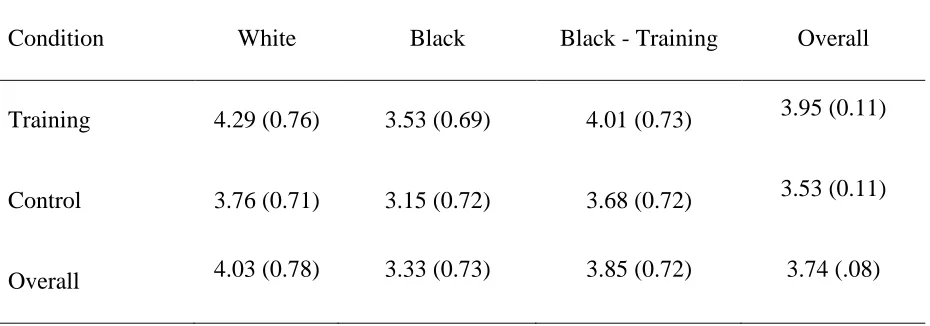
Table 1. Average Friendliness Ratings as a Function of Condition and Photograph Type
LIST OF FIGURES
Figure 1. Intended and Actual Photograph Presentation Scenarios 36
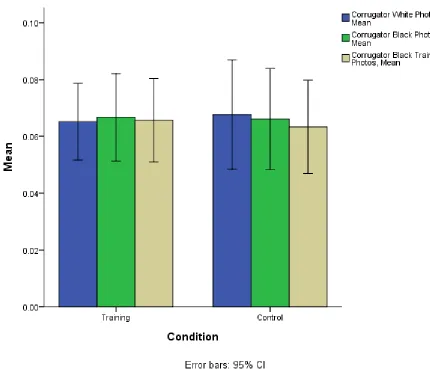
Figure 2. Mean Amplitude Scores for Corrugator Region Activity as a Function of Condition and Photograph Type
37
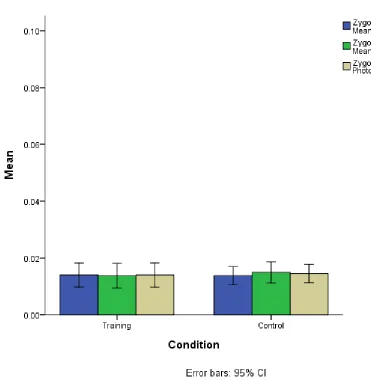
Figure 3. Mean Amplitude Scores for Zygomaticus Region Activity as a Function of Condition and Photograph Type
1. INTRODUCTION
Minority groups in the United States continue to face discrimination based on intergroup
biases such as racial stereotyping and prejudice. As discrimination in areas of employment,
housing, education, and the legal system can substantially affect the lives of those who are targets
of discriminatory behavior, exploring possibilities in reducing biases such as stereotyping has
been an important focus of a substantial amount of research (e.g., Kawakami, Dovidio, Moll,
Hermsen, & Russin, 2000; Kawakami, Dovidio, & van Kamp, 2005; Stewart & Payne, 2008).
Despite the fact that some research suggests stereotyping is automatic and often difficult to
control, even with strong desire to control it (e.g., Devine, 1989; Galinsky & Moskowitz, 2007;
Stewart, Doan, Gingrich, & Smith, 1998), there is new promising evidence that automatic
stereotyping can, indeed, be reduced.
For example, Kawakami, Dovidio, Moll, Hermsen, & Russin (2000) designed a training
task aimed at reducing automatic stereotyping by asking participants to “just say no” to
stereotypic associations. In their training, participants were shown photographs of category group
members (i.e., “skinheads” and “the elderly”) on a computer screen and, over many trials,
responded “NO” by key press when a stereotypic trait was paired with the photograph and “YES”
via key press when a non-stereotypic trait was presented with the photograph. Using both a
primed Stroop task (Stroop, 1935) and the Person Categorization Task (Blair & Banaji, 1996),
two commonly used measures of automatic processing, the authors found that participants who
underwent training demonstrated reduced stereotype activation following their training task.
Later research by Kawakami,Dovidio, & van Kamp (2005) revealed that a modified
version of the Kawakami and colleagues’ (2000) training task not only led to decreased
task. Although these effects were only significant for participants who were not purposefully
avoiding being influenced by training, either due to reduced cognitive resources or the
presentation of a filler task between training and the evaluation task, this research suggests that
addressing stereotyping can lead to effects that extend to behavioral measures of discrimination.
In Kawakami and colleagues’ (2000; 2005) training tasks, participants are essentially
asked repeatedly say “NO” to stereotypic associations and “YES” to non-stereotypic associations,
thereby potentially suppressing their automatic tendency to pair category members with
stereotypic traits. Research has found that stereotype suppression actually may result in an
increase in the accessibility of stereotypic associations later on and, subsequently, greater
automatic stereotyping (Galinski & Moskowitz, 2000). In fact, research by Macrae,
Bodenhausen, Milne, and Jetten (1994) found support for this theory such that participants who
were asked to suppress stereotypes of skinheads exhibited greater automatic stereotype activation
in a later task. The authors deemed this phenomenon a “rebound” effect. The possibility of
rebound is proposed to occur under the assumption that stereotypic beliefs function as any other
thought that is suppressed. Macrae and colleagues explain this rebound effect in terms of the
same mechanisms described in research on priming and construct accessibility – the act of
suppression of a particular stereotype ironically leads to it being more accessible thereafter.
Concern regarding rebound effects has prompted research in which suppression does not play a
key role in decreased stereotype activation and application.
For example, in another research paradigm, reducing automatic stereotyping was
accomplished by addressing a foundational bias – the Ultimate Attribution Error (UAE; Stewart,
Latu, Kawakami, & Myers, 2010). The UAE was characterized by Thomas Pettigrew as, “when
attribute it dispositionally, often genetically, in comparison to the same act by an in-group
member” (Pettigrew, 1979). Therefore, when individuals minimize the influence of situational
factors in explaining a negative behavior of an out-group member and, instead, focus on internal
or dispositional explanations, they are committing the UAE. Evidence of this tendency is
abundant. Duncan (1976) found that White participants attributed the same aggressive shove to
dispositional factors (i.e., “He is aggressive.”) when the actor was Black, yet to situational factors
(i.e., “He was provoked.”) when the actor was White.
It appears that these types of attributions can have substantial consequences for intergroup
relations. Related to biases, the UAE can further reinforce stereotypes and perpetuate
discrimination. For example, when an out-group member’s negative behavior is attributed to
internal factors while situational influences are minimized, it is likely that negative stereotypes
related to the out-group are further reinforced and perpetuated. In fact, evidence suggests that the
tendency to commit the UAE is more pronounced in highly prejudiced individuals (Greenberg &
Rosenfield, 1979; Wittenbrink, Gist, & Hilton, 1997) and for groups with a history of tension and
stereotyped views of one another (see Hewstone, 1990, for a review).
Based on the link between the UAE and automatic stereotyping, as well as evidence
supporting the utility of training techniques in reducing stereotyping, Stewart, Latu, and
colleagues (2010) attempted to “train away” the seemingly automatic tendency to fall victim to
the UAE. Instead of asking participants to suppress stereotypes, however, researchers trained
White participants to make situational (rather than dispositional) attributions for behaviors
considered to be negative and stereotypic of Black males. For example, over many trials,
participants undergoing Situational Attribution Training were presented with a behavioral
computer screen. They were simultaneously presented with two possible explanations for that
behavior – one situational (i.e., “The power went out and reset his alarm”) and one dispositional
(i.e., “He is a particularly irresponsible person”). Using key press, they were instructed to choose
the situational explanation over the dispositional explanation.
In two experiments, Situational Attribution Training was found by Stewart, Latu, and
colleagues (2010) to decrease activation of negative stereotypes about Black men as measured by
a reaction time task, the Person Categorization Task. This task, mentioned previously, involves
randomly presenting photographs of White and Black men immediately following a particular
trait prime. In their research, trials of interest involved positive and negative trait primes that
were determined by pretests to be either stereotypic of Black men (e.g., religious, poor) or
non-stereotypic of Black men (e.g., elegant, naive), although participants were also primed with
race-neutral, White stereotypic, and White non-stereotypic traits. Participants were asked to use a
keyboard to categorize each photograph by race as quickly as possible following the trait prime.
In general, the faster participants are at categorizing a photograph after a certain type of trait
prime, the greater the implicit association between the trait prime and individual depicted in the
photograph. This association is indicative of automatic stereotype activation. For example, a
participant who is quicker to categorize a photograph of a Black male after being primed with the
trait “lazy”, compared to categorizing a photograph of a White male after that trait prime, would
demonstrate a stronger association between Black men and laziness, indicating greater automatic
stereotyping of Black men.
In their research, Stewart, Latu, and colleagues (2010) found that, compared to control
participants, participants who underwent training exhibited reduced automatic stereotype
studies, the authors compared response times for training participants with those of participants
who were involved with one of two control conditions – a Grammar Control (Experiment 1) or
No-Training Control (Experiment 2) condition. In the Grammar Control condition, participants
were exposed to the same stimuli as training participants but were asked to make judgments
regarding the number of nouns or verbs in the behavioral sentences presented. In the No-Training
Control condition, participants were not exposed to any of the stimuli and completed no task
prior to the Person Categorization Task. Despite their differences, type of control condition did
not produce differential effects in this research.
More specifically, Stewart, Latu, and colleagues (2010) found that participants in both
control conditions who did not undergo Situational Attribution Training were quicker to
categorize photographs of Black individuals, compared to White individuals, presented after
negative Black stereotypic primes (i.e., an anticipated automatic stereotyping effect). This
tendency was diminished (i.e., non-significant) for participants who underwent Situational
Attribution Training, a result which Stewart, Latu, and colleagues argue is less susceptible to
rebound effects because no potential suppression is involved in training. This is because
participants choose situational explanations but do not say “NO” or attempt to suppress
dispositional inferences in the task.
In additionally promising research using the Situational Attribution Training technique,
and in support of the hypothesis that rebound effects are less likely under this paradigm, Stewart,
Myers, Latu, and Kawakami (2012) found that these positive results extend beyond immediate
measurement after training to a delay of 24 hours in implementing the dependent measure. In this
unpublished study, Stewart, Myers, and colleagues found reduced stereotype activation for
participants who did not undergo training, even when training group participants completed the
Person Categorization Task 24 hours post-training. Despite this new study and other previous
research supporting the effectiveness of Situational Attribution Training in reducing bias in the
form of automatic stereotyping, there is some research possibly calling the training method into
question.
In her dissertation research, Latu (2010) conducted two studies with the goal of exploring
mechanisms and moderators of Situational Attribution Training. In her research, Latu relied upon
a different measure of automatic stereotype activation than previously used in Situational
Attribution Training research. For example, in one study, Latu randomly assigned participants
either to the Situational Attribution Training condition or a Grammar Control condition and then
had participants complete a modified version of the Probe Recognition Task (modeled after
Wigboldus et al., 2003; Study 2). This task involved presenting participants with a photograph of
either a White or Black male paired with a behavior description indicative of a negative
Black-male-stereotypic trait. After this presentation, participants saw 5 one-word probes, presented
individually, and were asked to indicate via key press whether the word appeared in the
behavioral sentence that preceded it. Two of the probes presented were of interest in this task –
one that was a trait probe not presented in the sentence but that was indicative of a stereotypic
trait, and a control probe that was not presented. Other probes were filler probes that were not
presumably activated/implied or present in the behavioral sentence. In this way, automatic
stereotype activation would be observed when participants take longer to reject (say “NO” to) the
stereotypic trait probe, compared to control probe when paired with a photograph of a Black
Using this task, Latu (2010) failed to find evidence of reduced stereotyping for training
compared to control participants. In fact, neither group demonstrated automatic stereotype
activation. Given the preponderance of data that have found automatic racial stereotyping to be
demonstrated across numerous implicit stereotyping dependent measures, the absence of
evidence of automatic stereotyping in any condition in this study is quite surprising. This failure
to find evidence of any automatic stereotype activation, even for the control participants, may
well be a red flag in terms of the utility of the rarely-used Probe Recognition Task as a measure
of automatic stereotyping, though some may argue it is threat to the utility of the task itself.
The question of whether the Situational Attribution Training technique is, indeed,
effective, along with other questions related to its generalizability to different bias measures,
does still remain. Thus, to aid with further exploring the usefulness of the technique, I conducted
a study utilizing another implicit measure of bias linked to, but theoretically distinct from,
stereotyping – prejudice in the form of negative affect. But (1) why explore this form of bias and
(2) why would it be expected that Situational Attribution Training would influence affective
responses to out-group members?
Foremost, why should research explore if Situational Attribution Training influences bias
in the form of negative affect? As noted by Dovidio, Gaertner, Stewart, Esses, Vergert, and
Hodson (2004), intergroup bias is a multifaceted phenomenon comprised not only of beliefs and
behavioral proclivities but also comprised of emotions. More specifically, the multifaceted
components of bias refer to “prejudice, stereotyping, negative affect, and discrimination,”
(Dovidio, et al., 2004; p. 244) all forms of bias that have been shown to contribute to less
positive intergroup relations. Should Situational Attribution Training influence these multiple
general bias reduction technique. In this way, if training not only reduces automatic stereotyping
of out-group members (which has been shown in three experiments using the Person
Categorization Task) but also reduces negative affective reactions to out-group members, there
should be more confidence in the utility of the task as a measure worth pursuing.
Additionally, researchers have found that individuals exhibit negative implicit affective
responses to out-group members, as measured using facial electromyography (EMG), despite
explicitly reporting positive attitudes toward those out-group members (Vanman, Paul, Ito, &
Miller; 1997). Negative affect has also been found to predict other forms of bias, particularly
discriminatory action (e.g., Vanman, Saltz, Nathan, & Warren, 2004), when other implicit
measures do not. In Vanman and colleagues’ 2004 research, for example, participants were asked
to make hiring decisions regarding Black and White applicants after completing a measure of
implicit bias – the Implicit Association Task (IAT; Greenwald, McGhee, & Schwartz, 1998).
Three weeks later, participants also completed a measure of implicit affective bias in which they
viewed photographs of Black and White men while their facial electromyography (EMG) was
recorded from sites linked to smiling and frowning. In this research, bias as measured by way of
EMG activity predicted hiring decisions although bias on the IAT did not.
It seems important, then, to address the affective component of bias and determine if
Stewart, Latu, and colleagues’ (2010) training can modify affective responses, particularly
negative affective responses. But, why would anyone even expect this effect on affective
responses to occur? The Situational Attribution Training technique targets a fundamental biased
tendency to attribute negative stereotype-consistent behaviors to an internal disposition of an
out-group member, rather than considering situational factors. This tendency perpetuates negative
behaviors to internal factors reinforces that negative stereotype. Gugliemi (1999, p. 124) states,
"Unfavorable judgments about a group and negative emotional reactions to it (prejudice) are
supported by a particular belief structure (stereotypes)..." Considering this, it might be expected
that training has an effect on the emotional component of bias because training is targeting a
foundational bias (the UAE) which, when “trained away,” leads to reduced automatic negative
stereotyping. With the reduced automatic tendency to stereotype negatively, there should be less
support for (i.e., a reduced likelihood of) potential negative emotional reactions to out-group
members to occur, which occurs by default. With less support for prejudice to occur, evidence of
prejudice should be less likely to be observed.
The observations mentioned above speak to the necessity of exploring other measures of
bias often linked with stereotyping (i.e., negative affect), in general, and in relation to the
Situational Attribution Training paradigm, specifically. As previously referenced research
suggests, the most common method of studying implicit affective responses is by way of facial
EMG (e.g., Vanman et al., 2004). In this line of research, researchers often rely on the use of
electromyography (EMG) to assess subtle smile and frown activity and reveal on-line affective
reactions to stimuli (Cacioppo, Tassinary, & Fridlund, 1990). Specifically, researchers investigate
activity along the corrugator supercilia muscle (linked to frown activity) and the zygomaticus
major muscle (linked to smile activity). When an individual smiles or frowns, even below an
observable threshold, EMG can pick up on this activity, which repeatedly has been found to be
associated with negative and positive affect, respectively (e.g., Fidlund & Cacioppo, 1986;
Vanman, Saltz, Nathan, & Warren, 2004). There is some debate, however, regarding the
respective utility of activity at each region (zygomaticus versus corrugator) individually in
Vanman and colleagues (2004) found that cheek and not brow activity predicted racial bias in the
form of job candidate selection, whereas Stewart, Amoss, Elliott, Perrott, Peacock, and Vanman
(2012) found that brow activity better predicted heterosexual social action on behalf of sexual
minorities. With the debate remaining unsettled, continuing to include measures from both
regions in research is important. Thus, in the research detailed here, I attempted to explore how
implicit affective responses, measured using facial EMG recorded along both zygomaticus and
corrugator regions, are potentially affected as a result of the Situational Attribution Training
task. Using another more established measure of implicit affective bias may provide further
support for the technique or, alternatively, it may amplify earlier suspicions brought about
through Latu’s (2010) research that call into question this task as a bias reduction technique, in
general.
2. SPECIFIC AIMS AND HYPOTHESES
In this study, I aimed to replicate the bias reduction effect found in previous research
using the Stewart, Latu, and colleagues (2010) Situational Attribution Training task. However, I
utilized a different measure of bias, facial EMG, to explore the continued utility of training. In
other words, I hoped to address whether the training task also served as a prejudice reduction task
(with prejudice being conceptualized as an affectively-based component of bias), in addition to
being an automatic stereotyping reduction task, by reducing subtle negative affective bias
measured using EMG. I hypothesized that White participants who did not undergo extensive
Situational Attribution Training (i.e., control participants) would exhibit more negative affect
and/or less positive affect when viewing photographs of Black individuals compared to White
activity. In this way, White participants who were not trained extensively to make situational
attributions would demonstrate the tendency to have subtle negative affective responses to Black
males, a tendency that would be reduced for participants who underwent Situational Attribution
Training.
More specifically, I anticipated a Condition (Training vs. Control) X Photograph Type
(White, Black) interaction whereby mean EMG activity when viewing Black compared to White
photographs differed depending upon condition. In other words, given previous evidence that
Situational Attribution Training does indeed reduce implicit affective bias (Stewart, Latu, et al.,
2010), I anticipated Control participants to demonstrate one or both of the affective biases
described above. I expected Situational Attribution Training participants, however, to show no
difference in zygomaticus or corrugator scores for Black versus White photographs.
It is important to note that previous research indicates that due to context effects, trait
judgments made based on one individual may not necessarily generalize to judgments of other
individuals in the same social group (Stewart, Doan, Ginrich, & Smith, 1998). This finding
suggests that effects of training may be most pronounced when participants are making
judgments of Black targets that were previously seen in training compared to never before seen
Black targets. Thus, the present study also examined the potential effect of both types of stimuli:
Black American men never seen before and those seen in training. This exploratory inclusion of
a “seen” versus “unseen” component in this study’s design allowed for the examination of
whether training differentially affects responses to previously seen versus new faces.
3. METHOD
Analyses using G*Power (Erdfelder, Faul, & Buchner, 1996) software suggested that a
sample of approximately 80 participants would provide sufficient power for the project’s design
to detect a medium-sized effect (f=.25) with α = .05. This conservative power analysis was based
on a design investigating corrugator and zygomaticus activity as two separate variables in
separate ANOVAs, due to prior research finding that zygomaticus region activity better predicts
positively of out-group-directed behaviors (Vanman et al., 2004) and other research finding
corrugator region activity is better at predicting such behaviors (Stewart et al., 2012).
In this study, 77 (26 male, 51 female) undergraduate students who self-identified as
native-speaking White Americans participated as a means to fulfill part of an introductory
psychology course requirement. Participants were recruited through online human subject pool
management software whereby students could search and sign up for a variety of available
university research projects. Using a random numbers table, participants were randomly assigned
to either the Situational Attribution Training Condition or a No-Training Control Condition when
they arrived in the laboratory. All procedures described below were approved by the Institutional
Review Board prior to data collection.
3.2Measures and Procedure
Phase 1: Training. At the start of the experimental session, each participant reported to a
lab room containing computers separated by privacy dividers. After providing informed consent,
an experimenter told participants that they were assisting different graduate students with two
separate research projects. Participants were informed that the first project investigated how we
explain others’ behaviors. Those participants randomly assigned to the Situational Attribution
Training condition were told that the first study involved a computer task in which they would be
participants in this condition were also told that they had been assigned to the Black photograph
condition, however, and would see only photographs of Black males. They were also told that
one photograph would be presented on the computer screen with a description of a behavior and
two possible explanations for that behavior – a situational explanation and dispositional
explanation. Participants were asked to choose the situational explanation over the dispositional
one using key press. Definitions of each type of explanation and examples were provided by the
experimenter prior to beginning the task and this information was reiterated in the computer
program. Control participants did not complete this first task but instead proceeded directly to the
second phase of the experiment, the EMG task. The passage of time was not accounted for in this
condition, however. Stewart and colleagues’ (2010) found no significant differences in
responding based upon whether a Grammar Control condition (in which participants viewed the
same stimuli but made decisions regarding the number of nouns or verbs in the behavioral
descriptions) or a No-Training Control condition was used; thus, the No-Training Control
condition was utilized in this research. This control version was selected in order to avoid
incorporating too many tasks into one experimental session and risking participant fatigue. For
this study, then, it is important to note that participants in the Control condition were not exposed
to any of the Situational Attribution Training stimuli.
After instructions and six practice trials with feedback (a red “X” for an incorrect
response), the Situational Attribution Training participants began the training task taken directly
from the Stewart, Latu, and colleagues (2010) experiment. The task was composed of 480 trials
divided into six blocks of 80 trials, completed over the course of approximately two hours.
During each training trial, one of 36 possible photographs of a young Black man was randomly
to the left of the photograph (included to ensure that participants categorized the person in the
photograph; Livingston & Brewer, 2002).A sentence describing a behavior indicated by pretests
to be strongly suggestive of a negative Black stereotypic trait (loud, criminal, unintelligent,
unreliable, irresponsible violent, not honest, dangerous, lazy, promiscuous) was displayed
directly below the photograph. After a 3000 ms delay, the words “I Choose” appeared in the
middle of the screen, below the behavior description, and two possible explanations for the
behavior appeared on the bottom left- and right-hand side of the screen. As mentioned, one of
these explanations was situational and the other was dispositional. For example, the behavior
“Arrived at work an hour late” was accompanied by the situational explanation “The power went
out and reset his alarm” and the dispositional explanation “He is a particularly irresponsible
person.” The location of these explanations on the screen was randomized across trials such that
the situational explanation appeared on the bottom right side for half of the trials and on the
bottom left for the remaining half. Participants chose the situational explanation of the two by
pressing one of two designated keys on the keyboard: the “z” key, labeled “left,” to choose the
explanation on the left side of the screen or the “?” key, labeled “right,” to choose the
explanation on the right side of the screen. The display remained on the screen until a response
was made.
Phase 2: The EMG task. Participants in each condition completed the EMG task in
which they viewed a slideshow of photographs of White and Black men and were asked, as a
cover for the true intention of this task, to rate how friendly each individual in the photograph
appeared to be. While completing this task, participants had six electrodes (referred to as sensors
to participants) attached to their faces. One pair of Ag-AgCl electrodes (4 mm in diameter), filled
supercillia muscle location and another pair was attached above the right brow at the
zygomaticus major muscle location, following recommendations established in the EMG
literature (Fridlund & Cacioppo, 1986; Tassinary, Cacioppo, & Geen, 1989). One ground
electrode was placed on the right forehead. Skin and electrode preparations followed EMG
recording guidelines established by Fridlund and Cacioppo (1986) and Tassinary, Cacioppo, and
Geen (1989). EMG activity was continuously recorded using an MP150 Biopac system (Biopac
Systems, Inc; Goleta, CA) at a 1 kHz sampling rate, during which the signal was rectified and
smoothed using a 10 Hz filter through Acqknowledge software. These data were then scored
off-line using MindWare analysis software during which a 200 Hz high pass and a 10 Hz low-pass
filter were applied. With these scores, more activity (i.e., higher scores) for corrugator data
indicated more negative affect (i.e., more frowning) and more activity for zygomaticus data
indicated more positive affect (i.e., more smiling).
As a cover for the true purpose of the experiment, in an attempt to discourage participants
from either intentionally or unintentionally modifying their facial muscle activity during the task,
participants were told that the electrodes recorded “involuntary neural responses that emanate
from the head” (Vanman et al., 2004, p. 712-713). In addition, this task was described to
participants who completed Phase 1 as a second separate study conducted by a different graduate
student investigating our perceptions of photographs. Computer displays for each phase differed
in terms of font face, color, and size, and background color to aid with the cover story that both
parts of the experiment were unrelated.
During the slideshow presentation, it was intended that all participants viewed a series of
32 photographs, 16 of which were of Black American men and 16 of which were of White
males were meant to be new photographs never seen by any participants (herein referred to as
“Black” photographs). The remaining 8 photographs were supposed to be selected from the
Situational Attribution Training task (herein referred to as “Black - Training” photographs). As a
note, these Black - Training photographs had been seen by participants randomly assigned to the
Situational Attribution Training condition but were all new to Control participants, who did not
complete that phase of the experiment. All photographs were presented in black and white and
depicted men with neutral facial expressions.
Additionally, photographs in each of the three photograph-type groups (White, Black, and
Black - Training) were intended to be randomly presented without replacement within
photograph-type groups. In other words, a White, Black, or Black - Training photograph was
supposed to be randomly selected for each trial by the presentation software. Furthermore, when
a White photograph was randomly selected for presentation, it should have been (and was) taken
from a list of 16 potential White photographs and then removed from the available list of White
photographs to be presented in later trials. However, when a Black or Black - Training
photograph was selected, it was randomly presented with replacement due to an error in
programming. Each participant saw four of these types of photographs, each presented twice.
Thus, eight photographs of each type had been seen more than once during just the slideshow
presentation. The specific photograph repeated was not the same for each participant, however,
because each photograph was randomly presented and returned to the pool of potential
photographs to be randomly drawn for presentation.
In summary, all participants actually saw a total of 48 photographs. Of these 48, 16 were
White photographs all participants had never seen before. They also saw 16 Black photographs
This means a total of 32 photographs of Black American men were seen, 16 of which were seen
more than once (50% of the trials in which Black males were presented). See Figure 1 for a
breakdown of this presentation error and the intended presentation.
Each photograph was presented on the computer screen for 5 seconds and was
immediately followed by a rating task in which participants indicated via key press how friendly
the individual in the previously presented photograph appeared to be. The rating task was
included in order to encourage attending to each photograph presented since some research
suggests attention to out-group members may differ from attention of in-group members,
whereby we pay more attention to in-group members (Chance & Goldstein, 1981). It was
assumed that having the goal of determining the perceived friendliness of each photographed
individual would encourage processing of the individual in the photograph, more so than not
giving participants any task to complete during the viewing phase. Participants were given
unlimited time to provide their rating, since the photograph was no longer displayed. These
ratings, although not a dependent measure of interest, were recorded on a 1 (very unfriendly) to 7
(extremely friendly) point scale. Participants’ corrugator supercilia (brow) and zygomaticus
major (cheek) activation was continuously measured as they viewed and rated each photograph,
although analyses were conducted on data collected during the photograph viewing phase.
Following the EMG task, all participants were debriefed, thanked for their time, and any
questions were answered by the experimenter. Participant responses were not associated with
their names and any identifying information was stored in a locked file cabinet. Data were stored
on a password-secure computer.
4. RESULTS
EMG activity was divided into two distinct dependent variables, due to some prior
research finding that zygomaticus region activity better predicts out-group-directed behaviors
(Vanman et al., 2004) and other research finding corrugator region activity is a better predictor
of such behaviors (Stewart, Amoss, et al., 2012). Therefore, I conducted separate 2 (Condition:
Situational Attribution Training vs. No-Training Control) X 3 (Photograph Type: White vs.
Black vs. Black - Training) mixed model ANOVAs with Photograph Type as the repeated
measure for each of the two dependent variables (corrugator region activity and zygomaticus
region activity). Additionally, I investigated explicit “friendliness” rating scores as a dependent
variable in another 2 (Condition: Situational Attribution Training vs. No-Training Control) X 3
(Photograph Type: White vs. Black vs. Black - Training) mixed model ANOVA with Photograph
Type as the repeated measure.
4.2Data Preparation
Of the 77 participants who completed the study, 13 (16.9%) failed to produce complete
data sets due to computer glitches during training (e.g., a computer froze and participant could
not complete the training task), errors in EMG recording (e.g., impedance readings within a
recommended range could not be obtained within a reasonable period of time), and/or artifacts in
EMG recordings (e.g., participant coughed repeatedly). Thus, the complete data set consisted of
64 usable participants. Corrugator and zygomaticus scores for each of these participants were
determined by separately averaging wavelength amplitude across phases of each photograph type
(White, Black, and Black - Training). Each phase commenced upon presentation of the stimulus
and concluded when the stimulus was removed from a participant’s visual field (a span of 5
Additionally, outlier analysis was conducted on the remaining 64 participants’ EMG
scores, following recommendations set forth by Field (2005). Graphical displays of each
corrugator and zygomaticus activity variable revealed consistent outliers for two participants,
with average scores falling outside of the anticipated range of scores. For these two participants,
one or both absolute z-scores were greater than 3.29; thus, these two participants were removed
from further analysis, leaving 62 participants (21 male, 41 female) in the final data set. Outlier
analysis conducted on explicit rating scores revealed no significant outliers.
4.3EMG Data Analysis
Corrugator Data: Preliminary Analyses. Mauchly’s test indicated that the assumption of
sphericity had been violated with these repeated-measures data (χ2 (2) = 55.45, p <.05),
suggesting that there was a significant difference between the variances of differences between
levels of the repeated measure. Violation of this assumption can lead to a loss of power, which
was already a concern given the smaller than expected sample size and the inability to collect
additional data; therefore, degrees of freedom were corrected using Greenhouse-Geisser
estimates of sphericity (ε = .62).
Homogeneity of variance was explored using Levene’s test. Results indicated that
variances were not significantly different for White means, F(1,60) = .891, p > .05, Black means,
F(1,60) =. 049, p > .05, or Black - Training means, F(1,60) =. 096, p > .05; therefore, the
assumption of homogeneity of variances was not violated with any of the repeated measures
variables. Had this assumption been violated, it would compromise the accuracy of the F-test for
Condition and transformation would be necessary to correct the variances (Field, 2005).
Finally, normality was examined using Kolmogorov-Smirnov test, which evaluates the
deviation from normality). In the Training condition, corrugator data for White photographs,
D(31) = .119, p > .05, Black photographs, D(31) = .122, p > .05, and Black - Training
photographs, D(31) = .126, p > .05, did not significantly differ from normality. In the Control
condition, corrugator data for Black photographs, D(31) = .151, p > .05, and Black - Training
photographs, D(31) = .149, p > .05, did not significantly differ from normality. Data for White
photographs did produce a significant result, D(31) = .176, p < .05, suggesting this distribution
significantly deviated from normality1.
Corrugator Data: Target Analyses. Analyses failed to find a main effect of Photograph
Type, F(1.24, 74.57) = .841, p = .386, or Condition, F(1,60) = .000, p = .989. Similarly, the
Condition X Photograph Type interaction was not significant, F(1.24, 74.57) = 1.09, p = .312.
See Figure 2 for a graphical depiction of the means.
Although a lack of significant interaction for these data did not justify the investigation of
simple effects, simple main effect contrasts were conducted. Post-hoc comparisons were
conducted using Bonferroni corrected alpha level of .017 (.05/3) for each test. For Control
participants, there was a trend toward a simple main effect of photograph type on corrugator
scores, such that there was greater EMG activity when viewing White compared to Black –
Training photographs, t(30) = 1.99, p = .056, d = .087. There was also greater activity when
viewing Black compared to Black – Training photographs, t(30) = 1.98, p = .057, d =.057.
However, there was not a trend toward a difference between scores when viewing White
compared to Black photographs, t(30) = 1.31, p = .202, d = .032. For Training participants, there
were no significant differences or trends toward significant differences between scores when
White compared to Black – Training photographs, t(30) = -.158, p = .875, d = -.012, or when
viewing Black compared to Black – Training photographs, t(30) = 1.285, p = .208, d = .029.
Zygomaticus Data: Preliminary Analyses. Mauchly’s test indicated that the assumption
of sphericity had been violated with these repeated-measures data (χ2 (2) = 15.65, p <.05),
suggesting that there were significant differences between the variances of differences with these
data. Violation of this assumption can lead to a loss of power; therefore, degrees of freedom were
corrected using Greenhouse-Geisser estimates of sphericity (ε = .81).
Levene’s test indicated that variances were not significantly different for White ratings,
F(1,60) = .578, p >.05, Black ratings, F(1,60) =. 157, p >.05, or Black - Training ratings, F(1,60)
=. 340, p >.05; therefore, the assumption of homogeneity of variances was not violated with any
of the repeated measures variables.
Finally, the Kolmogorov-Smirnov test of normality suggested that, in the Training
condition, the distribution of zygomaticus data for White photographs, D(31) = .252, p < .05,
Black photographs, D(31) = .246, p < .05, and Black - Training photographs, D(31) = .233, p <
.05, significantly differed from normality. Likewise, in the Control condition, zygomaticus data
for White photographs, D(31) = .199, p < .05, Black photographs, D(31) = .227, p < .05, and
Black - Training photographs, D(31) = .239, p < .05, significantly differed from normality.
Zygomaticus Data: Target Analyses. Analyses failed to detect a main effect of
photograph type, F(1.62, 97.33) = .694, p = .473, or Condition, F(1,60) = .038, p = .847.
Similarly, a significant Condition X Photograph Type interaction was not found, F(1.62, 97.33) =
1.38, p = .254. See Figure 3for a graphical depiction of the means.
Although a lack of significant interaction did not justify the investigation of simple
with corrugator data analyses, post-hoc comparisons were conducted using Bonferroni corrected
alpha level of .017 (.05/3) for each test. For Control participants, there was a trend toward a
simple main effect of photograph type on zygomaticus scores, such that there was less EMG
activity when viewing White compared to Black – Training photographs, t(30) = -1.891, p =
.068, d = -.084. However, there was not a trend toward a difference between scores when
viewing White compared to Black photographs, t(30) = -1.500, p = .144, or Black compared to
Black – Training photographs, t(30) = .573, p = .571. For Training participants, none of the
comparisons between these means approached even a statistical trend. Observed power (1- β) for
all zygomaticus and corrugator post-hoc analyses ranged from .061 to .076, indicating that these
analyses were consistently underpowered.
4.4Explicit Rating Analyses
Preliminary analyses. Mauchly’s test indicated that the assumption of sphericity had
been violated with these repeated measures data, (χ2 (2) = 19.763, p < .05), suggesting that there
were significant differences between the variances of differences between the repeated measures
factor, Photograph Type. Violation of this assumption can lead to a loss of power; therefore,
degrees of freedom were corrected using Greenhouse-Geisser estimates of sphericity (ε = .78).
Homogeneity of variance was explored using Levene’s test on the between-subjects
factor, Condition. Results indicated that variances were not significantly different for White
ratings, F(1,60) = .188, p > .05, Black ratings, F(1,60) = .098, p > .05, or Training ratings,
F(1,60) = .413, p > .05; therefore, the assumption of homogeneity of variances was not violated
with any of the repeated measures variables.
Finally, normality was examined using Kolmogorov-Smirnov test which tests the
deviation from normality). Ratings of White photographs, D(62) = .071, p > .05, Black
photographs, D(62) = .058, p > .05, and Training photographs, D(62) = .076, p > .05, did not
significantly differ from normality. The same assumption held when tests of normality were
conducted on scores separated by condition.
Target Analyses. A 2 (Condition: Training, Control) X 3 (Photograph Type: White,
Black, Black - Training) mixed ANOVA with Photograph Type as the repeated measures
detected a significant main effect of Condition, F(1,60) = 7.23, p = .009, such that Training
participants (M = 3.95, SE = .11) rated all faces as significantly more friendly than Control
participants (M = 3.53, SE = .11). Similarly, a significant main effect of Photograph Type on
ratings was found, F(1.56, 93.41) = 39.46, p < .001.
Post-hoc comparisons were conducted using Bonferroni corrected alpha level of .017
(.05/3) for each test. Results revealed that participants rated photographs of White males as
significantly more friendly than photographs of Black males not presented in the training task,
t(61) = 8.04, p < .001, d = .927, but not more friendly than those which were presented in the
training task, t(61) = 1.87, p = .066; however, the latter was found at a power (1 – β) of only .294
and an effect size (d) of .240, indicating that this analysis was underpowered to detect an effect.
Finally, Black - Training photographs were rated as more friendly than Black photographs, t(61)
= -9.19, p < .001, d = -0.717. Observed power for all explicit ratings post-hoc analyses ranged
from .293 to .999, with the analyses which were underpowered being noted as such. Thus, for
explicit ratings, most analyses had sufficient power to detect potential effects, unlike all post-hoc
EMG analyses. For a summary of means and standard deviations, see Table 1. Although both
main effects were significant in these analyses, the interaction between Condition and
5. DISCUSSION
The primary goal for this research was to investigate the potential effects of Situational
Attribution Training on implicit bias in the form of negative affect. In this way, negative affect
was measured by recording facial EMG activity along the corrugator and zygomaticus muscle
regions while participants viewed a slideshow of photographs depicting White and Black
American males. To address this goal, I intended to replicate the bias reduction effects found in
previous research (e.g., Stewart, Latu, et al., 2010; Stewart, Myers, et al., 2012) by first
demonstrating implicit affective bias in Control participants. In the current research, this would
mean Control participants would demonstrate greater EMG activity along the corrugator region
(e.g., more frowning and, therefore, more negative affect) and/or lesser EMG activity along the
zygomaticus region (e.g., less smiling and, therefore, less positive affect) when viewing
photographs of any Black compared to White males. I, then, intended to demonstrate a null effect
for Training participants whereby they would not have significant differences in EMG activity
along the corrugator and/or zygomaticus muscle regions. In other words, for Training
participants, implicit affective responses would not be significantly different and, therefore, any
bias found in Control participants would have been reduced as a result of undergoing Situational
Attribution Training.
Assuming support for the previous expectation was found, an additional exploratory goal
of this research was to examine whether the effect of Situational Attribution Training differed
depending upon whether the target of potential bias was an individual seen before compared to
an individual never seen before. The purpose of investigating this “seen before” aspect was to
out-group, or just for those members of the out-group for whom participants had exposure (those
seen previously or “trained against”). To address this goal, EMG activity for each region was
averaged separately for photographs taken from the Situational Attribution Training task (i.e.,
Black – Training photographs) and photographs not taken from the task (i.e., Black photographs);
therefore, separate variables were created for these data and entered in all EMG analyses.
Finally, not as a targeted concern in this research but of interest, and of importance when
investigating the impact of Situational Attribution Training, I attempted to explore explicit
participant ratings of how friendly each individual presented in the photograph slideshow
appeared to be. I was interested in whether these explicit ratings differed depending upon (1)
participant condition (Training vs. No-Training Control), (2) whether the individual presented in
the photograph was White or Black, and, (3) for Black photographs, whether the individual in the
photograph had been seen before in the training task. For all of these intended goals, an error in
methodology described above, which was not detected until the data analysis phase of this
research, led to tentative conclusions being drawn from the present data.
5.1 EMG Scores
Overall, analyses of EMG scores did not support the original hypotheses described above.
Foremost, analyses failed to find any significant differences in corrugator or zygomaticus activity
depending upon photograph-type or condition. Indeed, it was hypothesized that there would be no
difference in EMG activity for Training participants as a result of the bias reduction effects of
training. However, No-Training Control participants also failed to demonstrate any implicit
affective bias to begin with that could be “reduced.” In fact, Control participants who came into
the laboratory and only completed the EMG portion (Phase 2) of the study, seeing all of the men
established in the literature, whereby either corrugator scores were higher for Black compared to
White photograph trials, and/or zygomaticus scores were lower for Black compared to White
photograph trials (Vanman et. al, 1997; Experiments 1, 2, and 3). Contrary to expectations, the
trend in these data actually was for Control participants to respond more negatively to White
compared to Black photographs and more positively to Black compared to White photographs.
For instance, simple main effect contrasts using Control participants’ corrugator data
confirmed that there was, indeed, a trend toward a difference in corrugator activity as a function
of photograph type, an effect that was not present for Training participants. In other words,
Control participants were frowning more while viewing and rating White men in photographs
than Black men whose photographs were taken from the training task (Black - Training
photographs). In this way, it would seem that any present bias was against White males and was
possibly “trained away” as a result of Situational Attribution Training.
However, with these data there also appeared to be a difference in corrugator region
activity when viewing Black - Training compared to Black photographs whereby there was a
trend toward participants frowning more to Black photographs not taken from the Situational
Attribution Training task than to Black photographs not taken from training. Why would this be
the case? Perhaps there was something fundamentally different about the men depicted in the
photographs selected for the Situational Attribution Training task compared to those photographs
not used in the training task. Follow-up research could attempt to address this question by having
participants not expected to complete the target experiment rate each photograph on a variety of
factors other than friendliness, such as attractiveness or perceived criminality, characteristics
which have been shown to influence person perception and judgments on a variety of levels,
Purdie-Vaughns, & Johnson, 2006; Eberhardt, Goff, Purdie, & Davies, 2004). It may be the case that
Black men whose photographs were used in the Situational Attribution Training task appeared
more attractive, less criminal, etc., than those Black men whose photographs were not used in the
task.
Likewise, when examining means for zygomaticus region activity, the data failed to show
main effects of, or an interaction between, condition and photograph type. However, there
appeared to be a trend toward more smiling, though not significantly so, when Control
participants viewed White men than when they were viewing Black men whose photographs
were taken from the Training task. Mean smiling activity was not significantly different for Black
compared to Black - Training photographs in the Control participants. Again, like with
corrugator region means, this “bias” against White men was reduced for Training participants,
for whom there did not appear to be even a trend toward mean differences in subtle smiling
activity. Thus, as with corrugator region EMG activity, this research failed to find evidence of an
implicit bias against Black males when looking at zygomaticus activity, as well, and any potential
differences were actually in line with more implicit affective bias against White males.
This pattern of means and failure to find significant effects with regard to EMG activity
could be attributed to a fairly nonbiased (in the traditional sense) sample taken from a nonbiased
population with whom no affective bias could be found to be “trained away” via Situational
Attribution Training. Despite repeated evidence suggesting that college students posses both
implicit and explicit biases against Black males, the student population sampled in this research
could be unique in that it does not demonstrates such an anti-Black male bias. Being from an
urban population with more diversity than many other locations may mean a sample has been
and/or discrimination than those utilized in previous research, which subsequently influenced
implicit affect measured through EMG activity. However, it is important to note that some of the
research in which such biases had been previously observed was conducted utilizing a sample
taken from the same geographic region (e.g., Stewart, Amoss, et al., 2012; Vanman, et al., 2004).
On the other hand, this population may have experienced significant changes as a result of the
present cultural climate such that perhaps there is less implicit bias than in previous years. Some
may cite the election of an African American President as evidence of a reduction in bias and
better intergroup relations nationwide which could, likewise, be present in this sample
population.
It may also be the case that the measure of implicit bias utilized in this research (i.e.,facial
EMG) does not adequately tap into, or cannot effectively demonstrate, implicit affective bias
and/or that the error in slideshow presentation is to blame for the unexpected and potentially
questionable results. For instance, as research by Latu (2010) led to questioning of the utility of
the Person Categorization Task as an effective measure of implicit bias due to the inability to
demonstrate basic biases found repeatedly in research. So, too, may facial EMG be a
less-than-useful technique for measuring implicit affective bias or, perhaps it is tapping to some construct
other than implicit affective bias. There would need to be research, in addition to work by
Vanman and colleagues (1997; 2004), demonstrating this bias in order to investigate these
possibilities.
Related to the error in slideshow presentation, it is possible that since quite a few
additional photographs of Black compared to White men were seen by all participants, mere
exposure (Zajonc, 1968; Bornstein, 1993) could be confounding and influencing the results
repeatedly, even below the threshold of awareness, increased participants liking for that object or
group and influenced affective responses measured via EMG activity. These potential effects
may have muddied results that would have been clearer, otherwise. To test whether and how the
repeated images of Black men (and for Training Participants, how the repeated images of the
same Black men) influenced responding, it would be necessary to separate the EMG trials from
which a photograph had only been seen once and analyze these trials alone. Likewise, it may
have been helpful to average trials where photographs were repeated and compare those mean
amplitudes to those for trials where photographs were seen only once, in order to determine
whether there was a significant difference in EMG responses depending upon the number of
times a photograph was seen. At the point in which data had already been collected, however, it
was not be possible to pull particular epochs and match them with the photographs presented at
any point in time, given the way in which MindWare software reports data for analysis. It would
be necessary to select phases from the raw EMG signal, manually, and attempt to match each
phase in time with the photograph presentation information recorded in the DirectRT logs. Still,
doing so may not have been informative given the potential confound of repeated exposure,
which may not be limited to just the one photograph presented multiple times, but may also
extend to all similar photographs presented within a set of trials. In fact, research on the mere
exposure effect suggests that there is not only greater liking for specific objects or individuals
repeated within a particular group, but also other members of that group (e.g., Gordon &
Holyoak, 1983; Kramer & Parkinson, 2005; Rhodes, Halberstadt & Brajkovich, 2001). In this
way, trials in which photographs were only once-seen could be influenced by the effect of other
photographs presented more than once. Considering this and the limits of information collected
5.2 Explicit Ratings
As with EMG scores as a measure of implicit bias, friendliness ratings as a measure of
explicit bias did not support my original exploratory hypotheses, either. The primary finding for
these data was that both Training and Control participants saw White American males as
significantly more friendly than Black American males whose photographs were not taken from
the Situational Attribution Training task. Additionally, there was an overall trend toward rating
White American males as more friendly than Black American males whose photographs were not
taken from the training task. There was not a significant difference in ratings for White males
compared to Black males presented in the training task, although there was a trend toward this
difference being significant, in which case White male ratings were higher than those for the
Black males. Collectively, these findings might indicate that participants explicitly stated that
they perceived the White men in the slideshow to be friendlier than the Black men (those whose
photographs were not seen in training), regardless of whether they underwent Situational
Attribution Training, themselves; they possibly saw them as friendlier than the Black men whose
photographs were used in the training task. At the explicit level, then, training did not seem to
reduce bias in the form of seeing others as “more friendly” in that both Training and Control
participants shared similar patterns of friendliness ratings for each type of photograph.
It is important to note that there was also a significant difference in friendliness ratings
for Black compared to Black - Training photographs, regardless of condition, in which men
whose photographs were presented in the training task were rated as more friendly than those not
presented in the training task. Again, this may speak to some characteristically different aspect of
the photographs used in the Situational Attribution Training task which could be explored in
friendliness. Although this explicit data may be subject to demand effects more so than the
implicit data, they suggest that Situational Attribution Training is not influencing bias. Contrary
to the implicit measures used in this research, though, there is evidence of a bias that is not being
reduced by training. Evidence of a bias against Black males (in the form of seeing White males
as more friendly) holds regardless of whether participants were exposed to Situational
Attribution Training. Therefore, this could serve as evidence that, at the explicit level, Situational
Attribution Training does not function as a reliable bias reduction technique since participants
who underwent training demonstrated the same bias against Black males as those who did not.
However, the potential effects of mere exposure potentially confound the results obtained even
for explicit data.
5.3Future Directions
There are many modifications that could be made to the current experiment that would
provide more valid data and a sounder test of the research questions at hand. Foremost, ensuring
the proper presentation of randomized photographs would allow for better comparisons within
photograph groups and across photograph groups and would reduce the potential for confounds
like mere-exposure effects. Additionally, including a control condition in which the same
photographic stimuli are presented to both Control and Training groups would allow for better
comparisons across condition with regard to the potential effects of Situational Attribution
Training. This could be accomplished by using the same Grammar Control condition sometimes
used by Stewart and colleagues (2010) and Latu (2010). Likewise, it would be helpful to have all
White and all Black male photographs matched on a variety of characteristics (both between and
within groups) including perceived friendliness, attractiveness, and emotional expression in order
being more similar to one another, there would be less possibility of any observed changes in
implicit affect being the result of any other variable besides the ethnicity of the individuals in the
photographs and/or Situational Attribution Training.
Additionally, it may be more informative to have participants rate the photographs on a
characteristic other than friendliness during the EMG task, or to have them complete some other
unrelated task that still encourages attending to the stimuli. Choosing to have participants rate the
individuals in the photographs on “friendliness” was done in order to replicate past research by
Vanman and colleagues (2004). In their research, using this task was imperative for ensuring
attention to the photographs presented while also making sure the participants had a stated goal
provided to them rather than risking the potential for participants creating their own goals.
Although the friendliness ratings are informative with respect to tapping into explicit affect, it
could be argued that “friendliness” is not as closely linked to “liking” as merely asking
participants how much they “like” individuals in the photographs. Liking may actually be a better
measure of bias than perceived friendliness.
Finally, having a sample larger than 62 participants (31 in each condition) may have
provided the additional power necessary to detect differences in zygomaticus and corrugator
region activity in this study. As noted earlier, analyses suggested that a sample of approximately
80 participants would provide sufficient power for this design to detect a medium-sized effect
(f=.25) with α = .05 and many post-hoc analyses were underpowered. Therefore, in addition to
addressing the previously discussed issues, it would be beneficial to recruit a much larger sample
of participants in order to account for the loss of data experienced due to participant withdrawal,
technical errors, experimenter error, and so forth, and to obtain approximately 40 participants in