R E S E A R C H A R T I C L E
Open Access
Demonstration of biological activities of
extracts from
Isodon rugosus
Wall. Ex Benth:
Separation and identification of bioactive
phytoconstituents by GC-MS analysis in the
ethyl acetate extract
Anwar Zeb, Farhat Ullah, Muhammad Ayaz, Sajjad Ahmad and Abdul Sadiq
*Abstract
Background:Since long, natural sources have been explored for possible managements of various diseases. In this context, the study is designed to evaluateIsodon rugosusWall. ex Benth for biological potentials including antibacterial, anthelmintic, insecticidal, anti-termites and anti-Pharaoh activities followed by GC-MS analysis of active fraction to identify various bioactive compounds.
Methods:I. rugosuswas investigated against eight bacterial strains using well diffusion method and
microdilution method with ceftriaxone as positive control. Similarly, the insecticidal activity was carried out against Tribolium castaneum, Rhyzopertha dominica, Monomorium pharaonis and Heterotermis indicola following contact toxicity method. Likewise, anthelmintic activity was performed against Ascaridia galli and Pherethima posthuma using albendazole as positive control, in which the paralysis and death times of the worms were observed. The GC-MS analysis of the most active solvent fraction was performed for identifications of various bioactive compounds.
Results: Among the tested samples ofI. rugosus, flavonoids and ethyl acetate fraction exhibited high antibacterial activities. The crude saponins showed highest anthelmintic activity againstPherethima posthumaandAscaridia galliwith death times of 27.67 and 29.22 min respectively at concentrations of 40 mg/ml. In insecticidal activity, chloroform fraction and saponins exhibited notable results againstR. dominica(60 and 70%) andT. castaneum(70 and 76%) at concentration of 200 mg/ml. In anti-termite assay, all the plant samples showed overwhelming results, i.e. all the 25 termites were killed on the 3rd day. Similarly, in anti-Pharaoh activity, the chloroform, ethyl acetate and saponins fractions were most potent, each exhibiting LD50of <0.1 mg/ml. In GC-MS analysis, total of 57 compounds were identified. Some of the bioactive compounds identified in GC-MS analysis are palmitic acid, hinokiol,α-amyrin, phytol, ethyl linolate, cyclohexanone, hinokione, methyl palmitate, ethyl palmitate and stigmasterol acetate.
Conclusions:Based on our current results, it can be concluded that I. rugosus possess strong antibacterial, insecticidal and anthelmintic potentials having crude saponins and ethyl acetate as the most active fractions. The GC-MS analysis and biological assays reveal that ethyl acetate fraction is a suitable target for the isolation of diverse array of bioactive compounds.
Keywords: Antibacterial, MICs, Anthelmintic, Ascaridia galli, Anti-termites, Anti-Pharaoh, Isodon rugosus, GC-ms
* Correspondence:[email protected]
Department of Pharmacy, University of Malakand, Chakdara, Dir, KPK (L)18000, Pakistan
Background
Infectious diseases are among the leading health problems, accounting for 41% of global disease burden [1]. Diseases caused by bacteria and parasites are still chal-lenging to public health. Their impact is particularly large in developing countries due to unavailability of relevant medicines and the emergence of widespread drug resis-tance [2–4]. The clinical efficacy of many existing anti-biotics has been endangered by the emergence of MDR pathogens [5, 6]. To triumph over MDR pathogens, it is important to develop novel and more effective antimicro-bial agents, especially with a different mechanism of ac-tion [7]. It is obvious that despite synthetic compounds, natural raw materials are the key sources for novel thera-peutic agents for the management of various ailments like infectious diseases [8, 9].
Helminthiasis is among the most widespread parasitic infections in humans, distressing an enormous popula-tion of the world. Approximately two billions people are suffering from parasitic worms infections [10]. Majority of helminths mediated infections are limited to tropical regions and cause huge hazard to health leading to undernourishment, anaemia, eosinophilia, physical, men-tal sluggishness and pneumonia [11]. Parasitic infections also cause lymphatic filariasis leading to elephantiasis, onchocerciasis called river blindness and schistosomiasis. These infections are more common in populations living in endemic areas with poor hygiene and socio-economic problems [12]. Livestock and crops are also affected by parasitic worms thus leading to reduction in crops and milk production [13]. There is a substantial improve-ment in helminths control but due to emergence of anthelmintic resistance to currently available drugs. So, it is important to search alternative strategies against gastrointestinal nematodes [14]. Similarly, most of the available insecticidal from chemical sources are hazar-dous to human health and are associated with environ-mental risks [15]. Therefore, alternative resources must be explored to substitute the chemical pesticides. Pesti-cides from natural sources are advantageous as they are selective in targeting specific species and also have unique modes of action [16].
Isodon rugosusWall. ex Benth. belongs to the family Lamiaceae. Isodon, an important genus of this family is a rich source containing a large number of bio-active compounds. The Isodon species have been used as anti-tumor, anticancer, antimicrobial, insecticide and anthelmintic [17, 18]. Isodon rugosus has been used ethnomedicinally as an antimicrobial and anthel-mintic [19, 20]. This plant has also been used trad-itionally against skin infections and for the treatment of scabies [21, 22]. This specie has also been verified scientifically to possess variety of pharmacological activities [23]. Based on the published literature, the
current study is designed to evaluate various fractions of I. rugosus for the antimicrobial, anthelmintic and in-secticidal potentials along with identifications and sorting out of bioactive compounds by GC-MS analysis.
Methods
Plant collection and extraction
The plant was collected from Dir (KPK), Pakistan in the month of June and was identified by plant taxonomist at Department of Botany, Shaheed Benazir Bhuto University Dir (KPK), Pakistan. The plant sample was kept at the herbarium of the same university with voucher number 1016AZ. Fresh aerial parts (11 kg) were separated from the rest of the plant and rinsed with clean water to remove any dust particles followed by shade drying for 23 days. The dried plant parts were cut into small pieces and grinded into coarse powder with the help of a grinder. The powdered material (6 kg) was macerated in 80% methanol (25 L) for 18 days and the process was repeated three times. The filtrates were combined and concentrated under reduced pressure using rotary evaporator [24, 25]. A brown semisolid mass (380 g) of the crude methanolic extracts was obtained.
Fractionation
The crude methanolic extract was transferred into a sep-arating funnel and diluted with 500 ml of distilled water.
n-Hexane (500 ml) was added to it with vigorous shaking and kept for a while to form two layers. The n-hexane layer was separated and repeated the same procedure three times by adding 500 ml ofn-hexane each time. All the n-hexane layers were combined and concentrated at reduced pressure using rotary evaporator. The final con-centrated weight ofn-hexane fraction was 19 g. In a simi-lar way like n-hexane fraction, the chloroform and ethyl acetate fractions were extracted sequentially weighing 27 and 80 g respectively. The dry water residue (aqueous fraction) was collected at the end weighing 125 g [26, 27].
Extraction of crude saponins
chloride solution. The solution was evaporated by keep-ing in water bath to obtained the dried saponins [26].
Extraction of Flavonoids
Plant sample having weight of 20 g was heated at 50 °C in 200 ml of HCl (2 M) under reflux for 30 min. The plant sample was filtered using Whatman No. 42 filter paper after getting cold. The filtrate obtained was poured into a separating funnel and added equal volume of ethyl acetate. The total amount of flavonoids present in the plant sample was precipitated, which were col-lected from the sample using a filter paper. The weight of flavonoids was 1.4 g (7%) [28].
Gas chromatography (GC) analysis
Ethyl acetate fraction was subjected to GC analysis and the GCMS was done by means of an Agilent USB-393752 gas chromatograph (Agilent Technologies, Palo Alto, CA, USA) with HHP-5MS phenylmethylsiloxane 5% with capillary col-umn (30 m × 0.25 mm × 0.25μm; Restek, Bellefonte, PA) equipped with an FID detector. Initially, the temperature of oven was maintained at 70 °C for 1 min, and then increased the required temperature slowly and step wise to 180 °C at the rate of 6 °C/min for 5 min, and at the final stage in-creased the temperature to 280 °C at the rate of 5 °C/min for 20 min. The temperatures of the Injector and detector were set at 220 °C and 290 °C, respectively. Helium was used as a carrier gas with a flow rate of 1 ml/min [29].
Gas chromatography–mass spectrometry (GC/MS) analysis
Ethyl acetate fraction was subjected to GC/MS analysis and the processed was done by means of an Agilent USB-393752 gas chromatograph (Agilent Technologies, Palo Alto, CA, USA) with a HHP-5MS phenylmethylsiloxane 5% with a capillary column (30 m × 0.25 mm × 0.25μm film thickness; Restek, Bellefonte, PA) prepared with an Agilent HP-5973 mass selective detector in the electron impact mode (ionization energy: 70 ev) working under similar experimental background as illustrated for GC.
Identification of components
Identification of the compounds present in the ethyl acetate fraction ofI. rugosuswas carried out on the base of comparison of their relative retention indices of each component with those of the authentic compounds present in the literature. Further identifications of the compounds were carried out from the spectral data ob-tained from the Wiley and NIST libraries and additional identifications were carried out by completed compari-sons of the fragmentation pattern of the mass spectra with the reported in literature [30].
Antibacterial investigations Bacterial strains
Eight bacterial strains including Escherichia coli (739),
Klebsiella pneumoniae (700603), Pseudomonas aerugi-nosa(27853),Enterococcus faecalis(29212),Proteus mir-abilis (13315), Staphylococcus aureus (29213), Bacillus cereus and Salmonella typhi were used to investigate antibacterial potential of plant’s samples. The samples were provided by the Microbiology Laboratory of Department of Microbiology, Quaid-e-Azam University, Islamabad. Bacteria were preserved in freeze-dried con-dition at 4 °C in stab slant agar until later use.
Preparation and standardization of inoculums
Bacterial cultures were grown for 24 h at 37 °C and suspen-sions with cell density of 1 × 10⁸CFU/ml, were prepared using McFarland standard and was further diluted to a cell density of 1 × 10⁶CFU/ml using a UV visible spectropho-tometer (Thermo electron corporation USA) at 625 nm and the standardization was maintained for the period of the study [31].
Antibacterial assay
Preliminary antibacterial activity of plant extracts were investigated using well assay technique [32, 33]. Briefly, Nutrient agar plates were prepared and inoculated with the test organisms aseptically under laminar flow hood and were properly labeled. Wells of 5 mm diameter were made in the plates using sterile cork borer. Samples were prepared having concentrations of 10 mg/ml. From each sample, 100μl of extract was added into each well using micropipette. The standard drug ceftriaxone was used as positive control, which was added into the central well contained in nutrient agar media in each Petri plate. After inoculation and addition of the samples, the Petri plates were kept in incubator at 37 °C for 24 h. Diameter of inhibitory zones were determined around each bore after 24 h and were compared with positive control. Experiments were performed in triplicate and the data obtained was represented as mean ± SEM.
Determination of MICs
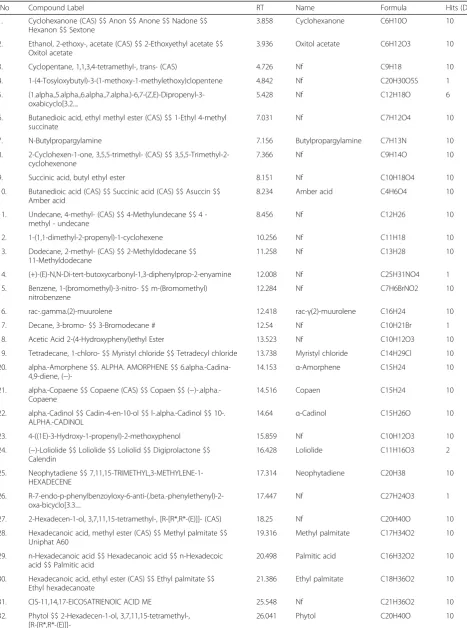
Table 1List of all compounds identified in the GC-MS analysis of ethyl acetate fraction ofIsodon rugosus
S. No Compound Label RT Name Formula Hits (DB)
1. Cyclohexanone (CAS) $$ Anon $$ Anone $$ Nadone $$ Hexanon $$ Sextone
3.858 Cyclohexanone C6H10O 10
2. Ethanol, 2-ethoxy-, acetate (CAS) $$ 2-Ethoxyethyl acetate $$ Oxitol acetate
3.936 Oxitol acetate C6H12O3 10
3. Cyclopentane, 1,1,3,4-tetramethyl-, trans- (CAS) 4.726 Nf C9H18 10
4. 1-(4-Tosyloxybutyl)-3-(1-methoxy-1-methylethoxy)clopentene 4.842 Nf C20H30O5S 1
5. (1.alpha.,5.alpha.,6.alpha.,7.alpha.)-6,7-(Z,E)-Dipropenyl-3-oxabicyclo[3.2....
5.428 Nf C12H18O 6
6. Butanedioic acid, ethyl methyl ester (CAS) $$ 1-Ethyl 4-methyl succinate
7.031 Nf C7H12O4 10
7. N-Butylpropargylamine 7.156 Butylpropargylamine C7H13N 10
8. 2-Cyclohexen-1-one, 3,5,5-trimethyl- (CAS) $$ 3,5,5-Trimethyl-2-cyclohexenone
7.366 Nf C9H14O 10
9. Succinic acid, butyl ethyl ester 8.151 Nf C10H18O4 10
10. Butanedioic acid (CAS) $$ Succinic acid (CAS) $$ Asuccin $$ Amber acid
8.234 Amber acid C4H6O4 10
11. Undecane, 4methyl (CAS) $$ 4Methylundecane $$ 4 -methyl - undecane
8.456 Nf C12H26 10
12. 1-(1,1-dimethyl-2-propenyl)-1-cyclohexene 10.256 Nf C11H18 10
13. Dodecane, 2-methyl- (CAS) $$ 2-Methyldodecane $$ 11-Methyldodecane
11.258 Nf C13H28 10
14. (+)-(E)-N,N-Di-tert-butoxycarbonyl-1,3-diphenylprop-2-enyamine 12.008 Nf C25H31NO4 1
15. Benzene, 1-(bromomethyl)-3-nitro- $$ m-(Bromomethyl) nitrobenzene
12.284 Nf C7H6BrNO2 10
16. rac-.gamma.(2)-muurolene 12.418 rac-γ(2)-muurolene C16H24 10
17. Decane, 3-bromo- $$ 3-Bromodecane # 12.54 Nf C10H21Br 1
18. Acetic Acid 2-(4-Hydroxyphenyl)ethyl Ester 13.523 Nf C10H12O3 10
19. Tetradecane, 1-chloro- $$ Myristyl chloride $$ Tetradecyl chloride 13.738 Myristyl chloride C14H29Cl 10
20. alpha.-Amorphene $$. ALPHA. AMORPHENE $$ 6.alpha.-Cadina-4,9-diene, (−
)-14.153 α-Amorphene C15H24 10
21. alpha.-Copaene $$ Copaene (CAS) $$ Copaen $$ (− )-.alpha.-Copaene
14.516 Copaen C15H24 10
22. alpha.-Cadinol $$ Cadin-4-en-10-ol $$ l-.alpha.-Cadinol $$ 10-. ALPHA.-CADINOL
14.64 α-Cadinol C15H26O 10
23. 4-((1E)-3-Hydroxy-1-propenyl)-2-methoxyphenol 15.859 Nf C10H12O3 10
24. (−)-Loliolide $$ Loliolide $$ Loliolid $$ Digiprolactone $$ Calendin
16.428 Loliolide C11H16O3 2
25. Neophytadiene $$ 7,11,15-TRIMETHYL,3-METHYLENE-1-HEXADECENE
17.314 Neophytadiene C20H38 10
26. R-7-endo-p-phenylbenzoyloxy-6-anti-(.beta.-phenylethenyl)-2-oxa-bicyclo[3.3....
17.447 Nf C27H24O3 1
27. 2-Hexadecen-1-ol, 3,7,11,15-tetramethyl-, [R-[R*,R*-(E)]]- (CAS) 18.25 Nf C20H40O 10
28. Hexadecanoic acid, methyl ester (CAS) $$ Methyl palmitate $$ Uniphat A60
19.316 Methyl palmitate C17H34O2 10
29. n-Hexadecanoic acid $$ Hexadecanoic acid $$ n-Hexadecoic acid $$ Palmitic acid
20.498 Palmitic acid C16H32O2 10
30. Hexadecanoic acid, ethyl ester (CAS) $$ Ethyl palmitate $$ Ethyl hexadecanoate
21.386 Ethyl palmitate C18H36O2 10
31. CIS-11,14,17-EICOSATRIENOIC ACID ME 25.548 Nf C21H36O2 10
32. Phytol $$ 2-Hexadecen-1-ol, 3,7,11,15-tetramethyl-,
considered as MIC of the plant extract against the rele-vant strains of the microorganisms.
Anthelmintic investigations
For the anthelmintic activity ofI. rugosus,adult earthworms (Pherethima posthuma) and roundworms (Ascaridia galli) were used. Earthworms having average length of 7–8 cm and width 0.1–0.2 cm were collected from the muddy soil near Department of Pharmacy, University of Malakand, KPK, Pakistan. The selection of earthworms (P. posthuma)
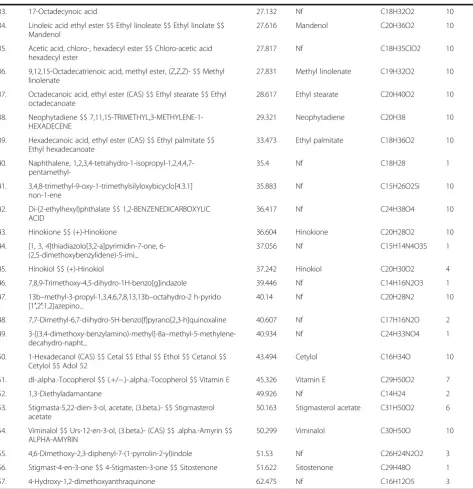
[image:5.595.64.538.97.587.2]is based on close physiologic and anatomic resemblance with the human intestinal round worm parasites Ascaris lumbricoides[35]. Roundworms were collected from the testines of chicken. The chickens were slaughtered, their in-testines were dissected after the removal of fecal material with the help of normal saline and roundworms were col-lected from their intestines. These roundworms (A. galli) have close resemblance with that of the roundworm para-site (Ascaris lumbricoides) found in the human intestine. Both types of worms were divided into different groups, Table 1List of all compounds identified in the GC-MS analysis of ethyl acetate fraction ofIsodon rugosus (Continued)
33. 17-Octadecynoic acid 27.132 Nf C18H32O2 10
34. Linoleic acid ethyl ester $$ Ethyl linoleate $$ Ethyl linolate $$ Mandenol
27.616 Mandenol C20H36O2 10
35. Acetic acid, chloro-, hexadecyl ester $$ Chloro-acetic acid hexadecyl ester
27.817 Nf C18H35ClO2 10
36. 9,12,15-Octadecatrienoic acid, methyl ester, (Z,Z,Z)- $$ Methyl linolenate
27.831 Methyl linolenate C19H32O2 10
37. Octadecanoic acid, ethyl ester (CAS) $$ Ethyl stearate $$ Ethyl octadecanoate
28.617 Ethyl stearate C20H40O2 10
38. Neophytadiene $$ 7,11,15-TRIMETHYL,3-METHYLENE-1-HEXADECENE
29.321 Neophytadiene C20H38 10
39. Hexadecanoic acid, ethyl ester (CAS) $$ Ethyl palmitate $$ Ethyl hexadecanoate
33.473 Ethyl palmitate C18H36O2 10
40. Naphthalene, 1,2,3,4-tetrahydro-1-isopropyl-1,2,4,4,7-
pentamethyl-35.4 Nf C18H28 1
41. 3,4,8-trimethyl-9-oxy-1-trimethylsilyloxybicyclo[4.3.1] non-1-ene
35.883 Nf C15H26O2Si 10
42. Di-(2-ethylhexyl)phthalate $$ 1,2-BENZENEDICARBOXYLIC ACID
36.417 Nf C24H38O4 10
43. Hinokione $$ (+)-Hinokione 36.604 Hinokione C20H28O2 10
44. [1,3,4]thiadiazolo[3,2-a]pyrimidin-7-one, 6-(2,5-dimethoxybenzylidene)-5-imi...
37.056 Nf C15H14N4O3S 1
45. Hinokiol $$ (+)-Hinokiol 37.242 Hinokiol C20H30O2 4
46. 7,8,9-Trimethoxy-4,5-dihydro-1H-benzo[g]indazole 39.446 Nf C14H16N2O3 1
47. 13b–methyl-3-propyl-1,3,4,6,7,8,13,13b–octahydro-2 h-pyrido [1′,2′:1,2]azepino...
40.14 Nf C20H28N2 10
48. 7,7-Dimethyl-6,7-diihydro-5H-benzo[f]pyrano[2,3-h]quinoxaline 40.607 Nf C17H16N2O 2
49. 3-[(3,4-dimethoxy-benzylamino)-methyl]-8a– methyl-5-methylene-decahydro-napht...
40.934 Nf C24H33NO4 1
50. 1-Hexadecanol (CAS) $$ Cetal $$ Ethal $$ Ethol $$ Cetanol $$ Cetylol $$ Adol 52
43.494 Cetylol C16H34O 10
51. dl-.alpha.-Tocopherol $$ (.+/−.)-.alpha.-Tocopherol $$ Vitamin E 45.326 Vitamin E C29H50O2 7
52. 1,3-Diethyladamantane 49.926 Nf C14H24 2
53. Stigmasta-5,22-dien-3-ol, acetate, (3.beta.)- $$ Stigmasterol acetate
50.163 Stigmasterol acetate C31H50O2 6
54. Viminalol $$ Urs-12-en-3-ol, (3.beta.)- (CAS) $$ .alpha.-Amyrin $$ ALPHA-AMYRIN
50.299 Viminalol C30H50O 10
55. 4,6-Dimethoxy-2,3-diphenyl-7-(1-pyrrolin-2-yl)indole 51.53 Nf C26H24N2O2 3
56. Stigmast-4-en-3-one $$ 4-Stigmasten-3-one $$ Sitostenone 51.622 Sitostenone C29H48O 1
each group containing six (6) worms. All the extracts, their fractions, crude saponins and albendazole solutions were prepared in 10, 20 and 40 mg/ml. From each solution, 25 ml of the sample was transferred to sterilized Petri dishes (150 × 15 mm) followed by addition of earthworms using forceps. Observations were made for the time taken when the worms lost their motility as paralysis time and death was concluded when no movement was observed even with vigorous shaking in hot water at 50 °C. Both par-alysis and death times were recorded for different fractions and were compared with the positive control [36].
Insecticidal investigations Anti-beetle
The anti-beetle activity was carried out against R. dominica (grain borer) and T. castaneum (flour beetle) following the procedure previously described [37]. Vari-ous dilutions of extracts were prepared in methanol, i.e., 200, 100 and 50 mg/ml and filter paper was wetted with the 5 ml of each test sample solution in Petri dishes and kept overnight to evaporate the solvent. After evapor-ation of the solvents, 20 healthy insects were shifted to each Petri dish and kept for 24 h at room temperature with 50% of relative humidity. After 24 h, the results were checked by counting the number of dead and alive insects. Permethrin was used as positive control while the volatile solvents were used as negative control.
Anti-termite investigations
The anti-termite activity of crude saponins, methanolic ex-tracts and resultant fractions of I. rugosus was conducted following standard procedure [38]. In this procedure the plant’s samples were assayed against Heterotermes indicola
(termites). Sterilized filter papers were kept in Petri dishes equal to the size of the Petri dishes. Samples were prepared by dissolving 2 mg/ml of each extract of the plant in respective solvents. The filter papers were kept for 24 h so that the solvents become fully evaporated from it. Each fil-ter paper was kept in the labeled Petri dishes. In each Petri
dish, 25 termites were placed and were kept for 24 h at room temperature. After 24 h, the number of dead and alive termites was counted. Similarly, the results were also recorded on the second and third day. This activity was performed in triplicate and the average termites killed each day were recorded. Permethrin was used as positive control. The LD50 of each sample was calculated by graph prism pad software and Microsoft Excel.
Anti-Pharaoh (ants) investigations
The anti-Pharaoh activity was performed by the direct contact toxicity method described by Ahn et al. [37]. From each fraction, solutions of 0.5, 1, 2, 4, 6 and 8 mg/ ml concentrations were prepared. Each concentration was added into Petri dish containing sterilized filter paper and kept for 12–15 h for evaporation of the sol-vent. After evaporation, 20 Pharaoh ants were added into each Petri dish. The Petri dishes containing distilled water treated filter paper served as a control. The Petri dishes were placed at room temperature for 24 h and numbers of dead and alive ants were observed in each Petri dish. Permethrin was used as positive control. The percent mortality of each sample was calculated and was compared with the positive control.
Statistical analysis
Each experiment was performed in three replicates and values were expressed as mean ± SEM. two way ANOVA followed by multiple comparison Bonferroni’s test. The
P values less than 0.05 were considered as statistically significant. LD50 values were calculated by a linear re-gression analysis among the percent inhibition against the extract concentrations via Excel program and Graph-Pad Prism software.
Results
Gas chromatography mass spectroscopy
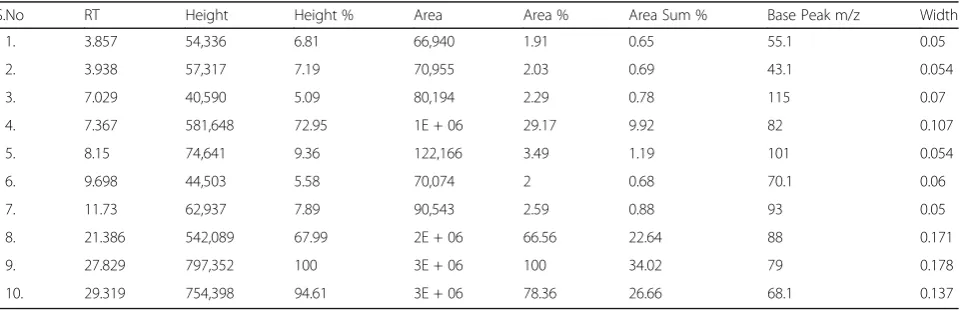
[image:6.595.59.540.577.732.2]The GC-MS analysis of ethyl acetate fraction revealed the identifications of 57 compounds which have been
Table 2Various parameters major compounds in GC-MS of ethyl acetate fraction ofIsodon rugosus
S.No RT Height Height % Area Area % Area Sum % Base Peak m/z Width
1. 3.857 54,336 6.81 66,940 1.91 0.65 55.1 0.05
2. 3.938 57,317 7.19 70,955 2.03 0.69 43.1 0.054
3. 7.029 40,590 5.09 80,194 2.29 0.78 115 0.07
4. 7.367 581,648 72.95 1E + 06 29.17 9.92 82 0.107
5. 8.15 74,641 9.36 122,166 3.49 1.19 101 0.054
6. 9.698 44,503 5.58 70,074 2 0.68 70.1 0.06
7. 11.73 62,937 7.89 90,543 2.59 0.88 93 0.05
8. 21.386 542,089 67.99 2E + 06 66.56 22.64 88 0.171
9. 27.829 797,352 100 3E + 06 100 34.02 79 0.178
enlisted in Table 1. Various parameters of major com-pounds in this fractions i.e., retention time, percent area, base peak, width etc. has also been summarized in Table 2. The GC-MS chromatogram of ethyl acetate fraction (Fig. 1) showed the peak areas for various compounds including the bioactive compounds. The structures of the bioactive compounds are shown in Fig. 2. The inte-gration pattern of dominant compounds determined by GC-MS analysis is provided in Fig. 3.
Antibacterial studies Sensitivity pattern
The bacterial strains were exposed to different antibiotic groups to determine their susceptibility pattern as shown in Table 3. All strains were found resistant to more than three antibiotics and therefore were termed as multi drug resistant (MDR) strains.
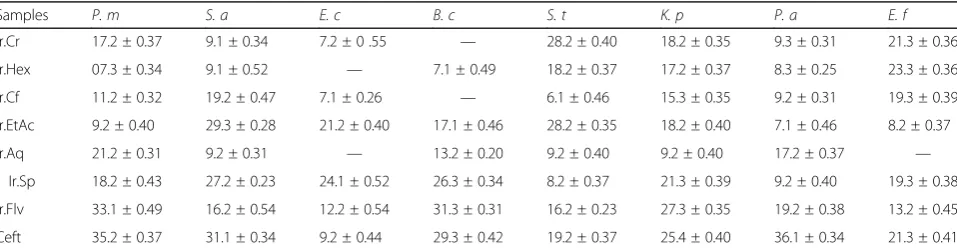
Zone of inhibitions
Results of antibacterial activity (ZOI) are shown in Table 4. Among all the tested samples, flavonoids were most active against all the strains and its anti-bacterial potential was comparable to the standard drug ceftriaxone. Among other fractions, ethyl acetate was most effective against S. aureus and S. typhi dis-playing inhibitory zones of 29.3 ± 0.28 and 28.2 ± 0.35 mm respectively. Crude saponins were also effective against S. aureus, E. coli, B. cereus and
K. pneumoniae causing inhibitory zones of
27.2 ± 0.23, 24.1 ± 0.52, 26.3 ± 0.34 and 21.3 ± 0.39 mm respectively. The crude methanolic extract and chloroform fraction were inactive against
B. cereus, whereas the aqueous fraction was inactive against E. coli and E. faecalis. n-Hexane fraction was also inactive against E. coli. All the test samples were approximately least active against E. coli.
[image:7.595.68.538.88.198.2] [image:7.595.59.541.462.720.2]Minimum inhibitory concentration (MICs)
Among all the tested samples, crude methanolic extract was found most effective againstS. aureus andB. cereus
with minimum inhibitory concentrations (MICs) of 2.50 ± 0.00 and 2.66 ± 1.30 μg/ml. MIC of n-hexane fraction against B. cereus was 1.33 ± 0.60μg/ml which was comparable to positive control ceftriaxone display-ing MIC of 0.83 ± 0.16 μg/ml. The chloroform fraction was most effective against K. pneumonia and E. coli,
whose visible growth was inhibited at 1.16 ± 0.66 and 1.00 ± 0.00 μg/ml respectively. Saponins fraction was most potent againstP. mirabilis, S. aureus andK.
pneu-monia with MICs of 1.00 ± 0.00, 0.83 ± 0.16 and
1.00 ± 0.00 μg/ml respectively. Flavonoids were also found equally effective against the tested microbes. All the results of minimum inhibitory concentrations (MICs) are summarized in Table 5.
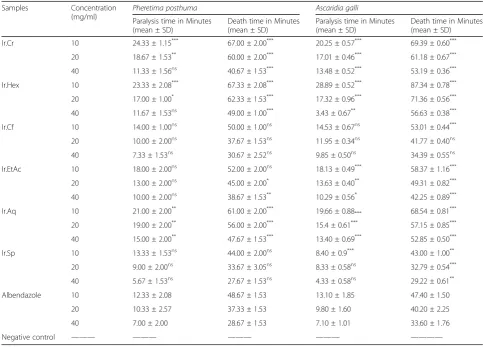
Anthelmintic activity
All the tested fractions were effective in concentration dependent manner as shown in Table 6. The saponins fraction was observed to be most effective against
Phere-tima posthuma with an average death time of
44.00 ± 2.00, 33.67 ± 3.05 and 27.67 ± 1.53 min at
concentrations of 10, 20, 40 mg/ml respectively. The an-thelmintic activity observed for saponins and chloroform fractions were comparable to the positive control alben-dazole. The order of anthelmintic activity for various fractions of the plant against Pheretima posthuma was in an ascending order of saponins > chloroform > ethyl acetate >n-hexane > methanolic extract > aqueous frac-tion. Moreover, crude saponins exhibited a significant result againstAscaridia galliwith an average death time of 29.22 ± 0.61 min at 40 mg/ml concentration. Whereas, average death time for the standard drug albendazole was 33.6 ± 1.76 at the same tested concentration.
Insecticidal activity
[image:9.595.59.539.99.237.2]In finding out the insecticidal potentials of different fractions, saponins caused mortality to a significant level, i.e. 70.67 ± 1.20 and 76.65 ± 1.65% mortality against R. dominicaand T. castaneum respectively at a concentra-tion of 200 mg/ml, while at a concentraconcentra-tion of 50 mg/ml saponins exhibited 61.66 ± 1.20 and 66.67 ± 0.67% mor-tality againstR. dominicaandT. castaneumrespectively. Among other fractions, chloroform was more effective against R. dominica and T. castaneum showing Table 3Antibiotic Susceptibility pattern of selected bacterial strains to different antibiotic groups
Bacterial strains Diameter of the inhibitory zone (mm) Mean ± SEM (n= 5)
Ciprofloxacin Cefixime Amoxycillin Gentamycin Cephradine Cloxacillin
Escherichia coli(739) 24.67 ± 1.20 18.33 ± 0.88 07.67 ± 0.67 26.67 ± 0.67 06.67 ± 0.88 09.33 ± 0.33
Klebsiella pneumoniae(700603) 19.00 ± 0.57 06.67 ± 0.67 08.00 ± 0.57 22.00 ± 0.57 08.67 ± 0.88 06.67 ± 1.20
Pseudomonas aeruginosa(27853) 22.33 ± 0.88 16.67 ± 1.20 07.67 ± 1.20 20.67 ± 1.20 10.33 ± 1.45 08.33 ± 0.33
Enterococcus faecalis(29212) 16.33 ± 0.33 12.33 ± 0.88 09.33 ± 0.88 26.67 ± 0.67 14.00 ± 1.15 06.67 ± 0.67
Proteus mirabilis(13315) 18.67 ± 1.20 06.67 ± 0.33 10.67 ± 0.33 27.33 ± 0.88 10.00 ± 0.57 12.33 ± 0.88
Staphylococcus aureus(29213) 26.67 ± 0.67 08.33 ± 0.33 14.00 ± 0.57 29.00 ± 0.57 12.33 ± 0.88 08.00 ± 0.57
Bacillus cereus 23.00 ± 0.57 11.67 ± 0.67 11.33 ± 0.88 26.00 ± 1.15 12.67 ± 0.67 09.67 ± 1.20
Salmonella typhi 23.33 ± 0.33 26.67 ± 1.20 7.67 ± 1.20 24.33 ± 0.33 10.00 ± 1.15 07.00 ± 1.15
Table 4Antibacterial activity ofIsodon rugosusagainst various bacterial strains expressed in mm as ZOI
Samples P. m S. a E. c B. c S. t K. p P. a E. f
Ir.Cr 17.2 ± 0.37 9.1 ± 0.34 7.2 ± 0 .55 — 28.2 ± 0.40 18.2 ± 0.35 9.3 ± 0.31 21.3 ± 0.36
Ir.Hex 07.3 ± 0.34 9.1 ± 0.52 — 7.1 ± 0.49 18.2 ± 0.37 17.2 ± 0.37 8.3 ± 0.25 23.3 ± 0.36
Ir.Cf 11.2 ± 0.32 19.2 ± 0.47 7.1 ± 0.26 — 6.1 ± 0.46 15.3 ± 0.35 9.2 ± 0.31 19.3 ± 0.39
Ir.EtAc 9.2 ± 0.40 29.3 ± 0.28 21.2 ± 0.40 17.1 ± 0.46 28.2 ± 0.35 18.2 ± 0.40 7.1 ± 0.46 8.2 ± 0.37
Ir.Aq 21.2 ± 0.31 9.2 ± 0.31 — 13.2 ± 0.20 9.2 ± 0.40 9.2 ± 0.40 17.2 ± 0.37 —
Ir.Sp 18.2 ± 0.43 27.2 ± 0.23 24.1 ± 0.52 26.3 ± 0.34 8.2 ± 0.37 21.3 ± 0.39 9.2 ± 0.40 19.3 ± 0.38
Ir.Flv 33.1 ± 0.49 16.2 ± 0.54 12.2 ± 0.54 31.3 ± 0.31 16.2 ± 0.23 27.3 ± 0.35 19.2 ± 0.38 13.2 ± 0.45
Ceft 35.2 ± 0.37 31.1 ± 0.34 9.2 ± 0.44 29.3 ± 0.42 19.2 ± 0.37 25.4 ± 0.40 36.1 ± 0.34 21.3 ± 0.41
Results are expressed as zone of inhibition (ZOI). Data is represented as mean ± SEM, (n= 3). Keys:
P. m Proteus mirabilis, S. a Streptococcus aureus, E. c Escherichia coli, B. c Bacillus cereus, S. t Salmonella typhi, K. p Klebsiella pneumonia, P. a Pseudomonas aeruginosa,
E. f Enterococcus faecalis, Ir.CrCrude methanolic extract,Ir.Hex n-hexane fraction,Ir.Cf Chloroform fraction,Ir.EtAcEthyl acetate fraction,Ir.AqAqueous fraction,Ir.Sp
[image:9.595.59.538.563.688.2]Table 5Minimum inhibitory concentrations for different fractions ofIsodon rugosusagainst the tested bacterial strains expressed asμg/ml
Samples P. m S. a E. c B. c S. t K. p P. a
Ir.Cr 6.66 ± 0.83 2.50 ± 0.00 8.33 ± 0.83 2.66 ± 1.30 12.50 ± 2.88 8.33 ± 0.83 4.16 ± 1.66
Ir.Hex 18.33 ± 0.83 16.66 ± 0.83 2.83 ± 1.16 1.33 ± 0.60 8.33 ± 2.20 10.83 ± 2.20 12.50 ± 1.44
Ir.Cf 2.50 ± 0.00 3.66 ± 1.96 1.00 ± 0.00 5.33 ± 2.60 2.01 ± 0.50 1.16 ± 0.66 2.50 ± 0.00
Ir.EtAc 7.50 ± 1.44 7.50 ± 1.44 4.16 ± 0.83 2.83 ± 1.16 3.33 ± 0.83 1.33 ± 0.60 2.83 ± 1.16
Ir.Aq 9.16 ± 0.83 11.66 ± 0.83 10.00 ± 1.44 10.83 ± 2.20 7.50 ± 1.44 5.00 ± 1.44 5.00 ± 1.44
Ir.Sp 1.00 ± 0.00 0.83 ± 0.16 5.00 ± 1.44 2.50 ± 0.00 4.50 ± 1.89 1.00 ± 0.00 3.33 ± 0.83
Ir.Flv 2.83 ± 1.16 1.00 ± 0.00 1.50 ± 0.50 6.66 ± 2.20 2.00 ± 0.50 2.66 ± 1.30 5.00 ± 1.44
Ceftriaxone 0.50 ± 0.00 0.66 ± 0.16 2.50 ± 0.00 0.83 ± 0.16 0.66 ± 0.16 0.50 ± 0.00 1.33 ± 0.60
Data is represented as mean ± SEM, (n= 3) Keys:
P. m Protius mirabilis, S. a Streptococcus aureus, E. c Escherichia coli, B. c Bacillus cereus, S. t Salmonella typhi, K. p Klebsiella pneumonia, P. a Pseudomonas aeruginosa,
E. f Enterococcus faecalis, Ir.CrCrude methanolic extract,Ir.Hex n-hexane fraction,Ir.Cf Chloroform fraction,Ir.EtAcEthyl acetate fraction,Ir.AqAqueous fraction,Ir.Sp
Saponins,Ir.FlFlavonoids
Table 6Anthelmintic activity of aerial part ofIsodon rugosusagainstPheretima posthumaandAscaridia galli
Samples Concentration
(mg/ml)
Pheretima posthuma Ascaridia galli
Paralysis time in Minutes (mean ± SD)
Death time in Minutes (mean ± SD)
Paralysis time in Minutes (mean ± SD)
Death time in Minutes (mean ± SD)
Ir.Cr 10 24.33 ± 1.15*** 67.00 ± 2.00*** 20.25 ± 0.57*** 69.39 ± 0.60***
20 18.67 ± 1.53** 60.00 ± 2.00*** 17.01 ± 0.46*** 61.18 ± 0.67***
40 11.33 ± 1.56ns 40.67 ± 1.53*** 13.48 ± 0.52*** 53.19 ± 0.36***
Ir.Hex 10 23.33 ± 2.08*** 67.33 ± 2.08*** 28.89 ± 0.52*** 87.34 ± 0.78***
20 17.00 ± 1.00* 62.33 ± 1.53*** 17.32 ± 0.96*** 71.36 ± 0.56***
40 11.67 ± 1.53ns 49.00 ± 1.00*** 3.43 ± 0.67** 56.63 ± 0.38***
Ir.Cf 10 14.00 ± 1.00ns 50.00 ± 1.00ns 14.53 ± 0.67ns 53.01 ± 0.44***
20 10.00 ± 2.00ns 37.67 ± 1.53ns 11.95 ± 0.34ns 41.77 ± 0.40ns
40 7.33 ± 1.53ns 30.67 ± 2.52ns 9.85 ± 0.50ns 34.39 ± 0.55ns
Ir.EtAc 10 18.00 ± 2.00ns 52.00 ± 2.00ns 18.13 ± 0.49*** 58.37 ± 1.16***
20 13.00 ± 2.00ns 45.00 ± 2.00* 13.63 ± 0.40** 49.31 ± 0.82***
40 10.00 ± 2.00ns 38.67 ± 1.53** 10.29 ± 0.56* 42.25 ± 0.89***
Ir.Aq 10 21.00 ± 2.00** 61.00 ± 2.00*** 19.66 ± 0.88*** 68.54 ± 0.81***
20 19.00 ± 2.00** 56.00 ± 2.00*** 15.4 ± 0.61*** 57.15 ± 0.85***
40 15.00 ± 2.00** 47.67 ± 1.53*** 13.40 ± 0.69*** 52.85 ± 0.50***
Ir.Sp 10 13.33 ± 1.53ns 44.00 ± 2.00ns 8.40 ± 0.9*** 43.00 ± 1.00**
20 9.00 ± 2.00ns 33.67 ± 3.05ns 8.33 ± 0.58ns 32.79 ± 0.54***
40 5.67 ± 1.53ns 27.67 ± 1.53ns 4.33 ± 0.58ns 29.22 ± 0.61**
Albendazole 10 12.33 ± 2.08 48.67 ± 1.53 13.10 ± 1.85 47.40 ± 1.50
20 10.33 ± 2.57 37.33 ± 1.53 9.80 ± 1.60 40.20 ± 2.25
40 7.00 ± 2.00 28.67 ± 1.53 7.10 ± 1.01 33.60 ± 1.76
Negative control ——— ——— ——— ——— ————
Values significantly different (*:P< 0.05, **P< 0.01 and ***P< 0.001) as compared to positive control drug. ns: Non significantly different in comparion to control group
Keys:
[image:10.595.55.539.353.700.2]60.00 ± 1.15 and 70.33 ± 0.88% mortality against R. dominica and T. castaneum respectively at concentra-tion of 200 mg/ml, while showed 51.00 ± 1.15 and 59.00 ± 0.57% mortality against R. dominicaandT. cas-taneum respectively at a concentration of 50 mg/ml. The methanolic extract and n-hexane fraction also showed moderate insecticidal effects against both the in-sects as shown in Figs. 4 and 5.
Anti-termite activity
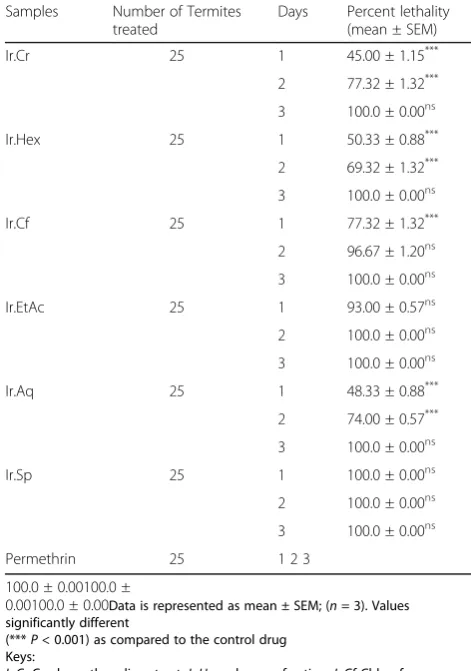
The anti-termite activity of various samples ofI. rugosus
showed prominent lethality against termites. The highest activity was attributed to saponins, killing almost all the termites on the first day as shown in Table 7. The sec-ond highest activity was shown by ethyl acetate fraction which demonstrated 93.00 ± 0.57% lethality on the first day and 100% lethality on the second day. Other frac-tions including chloroform,n-hexane and aqueous frac-tions showed moderate activity causing 77.32 ± 1.32,
50.33 ± 0.88 and 48.33 ± 0.88% lethality respectively on the first day. On the third day almost all the insects were killed by all the plant’s samples.
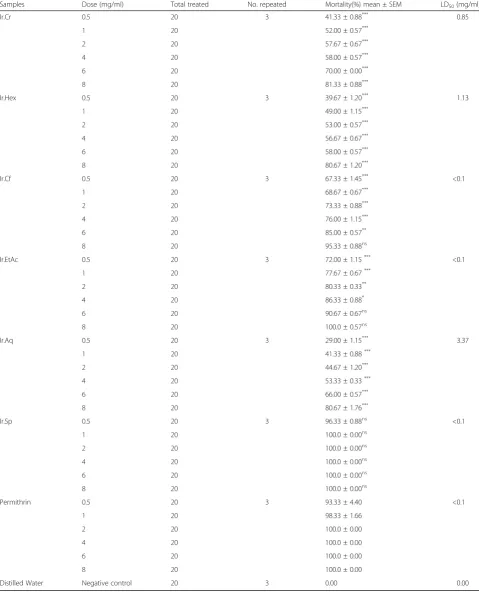
Anti-Pharaoh (ants) activity
The determination of anti-Pharaoh ants potentials of I. rugosus reveal that among all the plant’s samples, sapo-nins showed 100% activity against Pharaoh at all the tested concentrations except at 0.5 mg/ml which was 96.33 ± 0.88%. The second highest activity can be attrib-uted to the ethyl acetate fractions of I. rugosus which displayed 72.00 ± 1.15, 77.67 ± 0.67, 80.33 ± 0.33, 86.33 ± 0.88, 90.67 ± 0.67 and 100.0 ± 0.57% lethality at concentrations of 0.5, 1, 2, 4, 6 and 8 mg/ml respec-tively. The LD50 shown by saponins, ethyl acetate and chloroform fractions were smaller than 0.1 mg/ml, whereas LD50 for methanolic extract, n-hexane and aqueous fractions were 0.85, 1.13 and 3.37 mg/ml re-spectively as shown in Table 8.
50 100 200
0 20 40 60 80 100 120 Ir.Cr Ir.Hex Ir.Cf Ir.EtAc Ir.Aq Ir.Sp Permethrin *** *** *** *** *** *** *** *** *** *** *** *** *** *** *** *** *** ***
v arious conce ntrations
P e rc e n t l e th al it y
Fig. 4Percent lethality of various samples ofIsodon rugosusagainstRhyzopertha dominica
50 100 200
0 20 40 60 80 100 120 Ir.Cr Ir.Hex Ir.Cf Ir.EtAc Ir.Aq Ir.Sp Permethrin *** *** *** *** *** *** *** *** *** *** *** *** *** *** *** *** *** *** Various concentrations P e rc e n t le th a lity
[image:11.595.56.542.88.253.2] [image:11.595.58.543.552.716.2]Discussion
The origin and nature of drug used against specific dis-eases make a sound difference in the therapy and prog-nosis. The efficacy and safety of synthetic and natural drugs have been investigated and compared by multiple reporters [39, 40]. Similarly, the use of drugs derived from natural sources have been found comparatively safe and have been preferred against synthetic drugs [41]. Several groups of natural compounds have been reported to possess variety of potentials, for examples, flavonoids have been shown to possess antimicrobial ac-tivity that is also obvious in our current study [42]. Simi-larly, parasitic worms causing infections of human beings and animals are well-known to have negative health consequences and a significant reduction in body ability to resist other diseases. To find compounds with anthelmintic activity, a variety of substances have been investigated using different species of worms like earth-worms, ascaris, heterakis and nippostrongylus [42, 43]. Among all these species, earthworms have been used generally for the preliminary evaluation of anthelmintic compounds in-vitro due to physiological similarity with intestinal worms, their reaction to anthelmintics and are
easily accessible [44]. It has been established that all those anthelmintics which are toxic to earthworms are regarded as anthelmintic agents. To minimize losses caused by helminths infections, commercial anthel-minthics have been used for decades. However, the threats of anthelminthic resistance, poor availability, risk of residue and high cost especially to low income people in developing countries have led to the need of other al-ternative control methods [45]. Screening and proper evaluation of the claimed medicinal plants could offer the possible alternatives that may both be sustainable and environmentally acceptable instead of those having toxic effect [46].
Results of the current study reveal that saponins were most effective againstP. posthumaexhibiting an average death time of 27.67 ± 1.53 min which was comparable with the standard drug albendazole with average death time of 28.67 ± 1.53 at the same concentration (40 mg/ ml). Furthermore, crude saponins were most effective against Ascaridia galli with average death time of 29.22 ± 0.61 min at 40 mg/ml. The average death time for standard drug albendazole was 33.6 ± 1.76 at the same concentration. Researchers have proven that sapo-nins possess excellent anthelmintic potential which has also been depicted in our investigations [36].
In the current study, we observed that saponins were also active against insects in a similar way reported earlier [47]. Moreover, the saponins have also been reported to possess anthelmintic, antitussive, anticancer, fungicidal and antiviral properties [48–51]. Actually the saponins help the plants to protect against pests and parasites [49, 52–55]. Saponins may cause inhibition of food uptake in the insects’gut and interrupt in their diges-tion which lead to stop their growth [47]. They are considered as first line choice for the proper eradication of insects due to their protease inhibitory properties and interaction with cholesterol by disturbing the synthesis of moulting hormones [56]. The saponins isolated from vari-ous plants have been reported to possess toxicity profile and have been demonstrated with prominent haemolytic potential. The haemolytic potential and toxicity profile of the saponins make it inevitable that the saponins of each and every plant should be subjected for the evaluation of safety profile in regards to the human body.
[image:12.595.54.290.100.436.2]The GC-MS analysis showed 57 compounds in the ethyl acetate fraction of I. rugosus. The bioactive com-pounds identified were palmitic acid, hinokiol,α-amyrin, phytol, ethyl linolate, cyclohexanone, hinokione, methyl palmitate, ethyl palmitate and stigma sterol acetate. The literature survey of the bioactive compounds reveals the importance of I. rugosus regarding various biological activities. The compounds identified in this plant have been reported previously with significant biological activities. Cyclohexanone possess strong antibacterial Table 7Anti-termite effect of various samples ofIsodon rugosus
Samples Number of Termites
treated
Days Percent lethality (mean ± SEM)
Ir.Cr 25 1 45.00 ± 1.15***
2 77.32 ± 1.32***
3 100.0 ± 0.00ns
Ir.Hex 25 1 50.33 ± 0.88***
2 69.32 ± 1.32***
3 100.0 ± 0.00ns
Ir.Cf 25 1 77.32 ± 1.32***
2 96.67 ± 1.20ns
3 100.0 ± 0.00ns
Ir.EtAc 25 1 93.00 ± 0.57ns
2 100.0 ± 0.00ns
3 100.0 ± 0.00ns
Ir.Aq 25 1 48.33 ± 0.88***
2 74.00 ± 0.57***
3 100.0 ± 0.00ns
Ir.Sp 25 1 100.0 ± 0.00ns
2 100.0 ± 0.00ns
3 100.0 ± 0.00ns
Permethrin 25 1 2 3
100.0 ± 0.00100.0 ±
0.00100.0 ± 0.00Data is represented as mean ± SEM; (n= 3). Values significantly different
(***P< 0.001) as compared to the control drug Keys:
Ir.CrCrude methanolic extract,Ir.Hex n-hexane fraction,Ir.Cf Chloroform
Table 8Anti-Pharaoh ant effect of various samples ofIsodon rugosus
Samples Dose (mg/ml) Total treated No. repeated Mortality(%) mean ± SEM LD50(mg/ml)
Ir.Cr 0.5 20 3 41.33 ± 0.88*** 0.85
1 20 52.00 ± 0.57***
2 20 57.67 ± 0.67***
4 20 58.00 ± 0.57***
6 20 70.00 ± 0.00***
8 20 81.33 ± 0.88***
Ir.Hex 0.5 20 3 39.67 ± 1.20*** 1.13
1 20 49.00 ± 1.15***
2 20 53.00 ± 0.57***
4 20 56.67 ± 0.67***
6 20 58.00 ± 0.57***
8 20 80.67 ± 1.20***
Ir.Cf 0.5 20 3 67.33 ± 1.45*** <0.1
1 20 68.67 ± 0.67***
2 20 73.33 ± 0.88***
4 20 76.00 ± 1.15***
6 20 85.00 ± 0.57**
8 20 95.33 ± 0.88ns
Ir.EtAc 0.5 20 3 72.00 ± 1.15*** <0.1
1 20 77.67 ± 0.67***
2 20 80.33 ± 0.33**
4 20 86.33 ± 0.88*
6 20 90.67 ± 0.67ns
8 20 100.0 ± 0.57ns
Ir.Aq 0.5 20 3 29.00 ± 1.15*** 3.37
1 20 41.33 ± 0.88***
2 20 44.67 ± 1.20***
4 20 53.33 ± 0.33***
6 20 66.00 ± 0.57***
8 20 80.67 ± 1.76***
Ir.Sp 0.5 20 3 96.33 ± 0.88ns <0.1
1 20 100.0 ± 0.00ns
2 20 100.0 ± 0.00ns
4 20 100.0 ± 0.00ns
6 20 100.0 ± 0.00ns
8 20 100.0 ± 0.00ns
Permithrin 0.5 20 3 93.33 ± 4.40 <0.1
1 20 98.33 ± 1.66
2 20 100.0 ± 0.00
4 20 100.0 ± 0.00
6 20 100.0 ± 0.00
8 20 100.0 ± 0.00
Distilled Water Negative control 20 3 0.00 0.00
Data is represented as mean ± SEM; (n= 3). Values significantly different (*:P< 0.05, **P< 0.01 and ***P< 0.001) as compared to the control drug
Keys:
activity [57]. Red and white wine containing succinic acid have been reported with strong antibacterial activity [58]. The succinic acid derivatives have been reported to treat the infants urinary tract infection [59]. Similarly, the succinic acid have also been reported for antibacter-ial potentantibacter-ial produced by yeast during fermentation [60]. Palmitic acid have been reported to possess anti-microbial potential [61, 62]. Phytol have been re-ported for its antibacterial [63], antimicrobial [64] and insecticidal potentials [62]. Hinokiol isolated from
Magnolia officinalis have been used for antibacterial activity [65]. Ethyl linolate have been used for the treatment of acne vulgaris [66] and topically as anti-bacterial agent [67]. In the same way, stigmasterol acetate has also been used as antibacterial agent [68]. Likewise, alpha-amyrin possess strong antibacterial ac-tivity [69]. Cyclohexanone have been reported to used as a solvent and as a building block in the production of various organic compounds such as insecticidal [70]. Methyl palmitate have been reported to possess insecticidal activity [71]. Palmitic acid have been re-ported to possess strong anti mosquitoes activities isolated from Acanthus montanus [72]. Ethyl palmi-tate is larvicidal and insecticidal agent and has been used in insecticidal sprays [73]. Similarly, hinokione isolated from Sabina vulgaris have been reported to possess insecticidal potential [74]. Stigmasterol acetate has mosquito repellent property [75]. Alpha-Amyrin have been reported for insecticidal activity [69].
Conclusions
It can be concluded that Isodon rugosus possess strong antibacterial, insecticidal and anthelmintic po-tentials. The gas chromatography-mass spectroscopy analysis also elucidated a collection of biologically important compounds putatively known for their anti-bacterial, insecticidal and anthelmintic potentials. Based on the experimental analysis, it may also be deduced that Isodon rugosus is a good source of anti-bacterial, insecticidal and anthelmintic compounds. The overwhelming role of ethyl acetate fraction in various biological assays and the GC-MS analysis con-firm that this fraction might be an appropriate target for the isolation of bioactive compounds.
Abbreviations
B. c:Bacillus cereus;E. c:Escherichia coli;E. f:Enterococcus faecalis; GC-MS: gas chromatography-mass spectrometry; Ir.Aq: aqueous fraction; Ir.Cf: chloroform fraction; Ir.Cr: Crude methanolic extract; Ir.EtAc: ethyl acetate fraction; Ir.Fl: flavonoids; Ir.Hex:n-hexane fraction; Ir.Sp: saponins;K. p:Klebsiella pneumonia; LD50: median lethal dose; MDR: multi drug resistant; MIC: minimum inhibitory concentration; NCCLS: National Committee for Clinical Laboratory Standards;P. a:Pseudomonas aeruginosa.;P. m:Protius mirabilis;S. a:Streptococcus aureus;S. t:Salmonella typhi; SEM: standard error mean; ZOI: zone of inhibition
Acknowledgements
The authors are grateful to the plant taxonomist Ali Hazrat at Shaheed Benazir Bhuto University Dir (KPK), Pakistan for the identification of plant sample. All the authors are also thankful to the HEJ, University of Karachi, Pakistan for the GC-MS analysis.
Funding
This research received no specific grant from any funding agency in the public, commercial, or not-for-profit sectors.
Availability of data and materials
The data supporting our research results is present within the manuscript.
Authors’contributions
AZ and SA carried out experimental work, data collection and evaluation, literature search and manuscript preparation under the supervision of AS. MA, AS and FU refined the manuscript for publication. All authors read and approved the final manuscript for publication.
Competing interests
The authors declare that they have no competing interest.
Consent for publication Not application for this submission.
Ethics approval and consent to participate Not application for this submission.
Publisher’s Note
Springer Nature remains neutral with regard to jurisdictional claims in published maps and institutional affiliations.
Received: 15 July 2016 Accepted: 17 May 2017
References
1. Noumedem JAK, Mihasan M, Lacmata ST. Antibacterial activities of the methanol extracts of ten Cameroonian vegetables against gram-negative multidrug-resistant bacteria. BMC Complement Altern Med. 2013;13:26. 2. Okeke IN, Laxminarayan R, Bhutta ZA, Duse AG, Jenkins P, O'Brien TF, et al.
Antimicrobial resistance in developing countries. Part I: recent trends and current status. Lancet Infect Dis. 2005;5(8):481–93.
3. Ayaz M, Subhan F, Sadiq A, Ullah F, Ahmed J, Sewell R. Cellular efflux transporters and the potential role of natural products in combating efflux mediated drug resistance. Front Biosci. 2017;22:732.
4. Ayaz M, Subhan F, Ahmed J, Khan A-U, Ullah F, Sadiq A, et al. Citalopram and Venlafaxine differentially augments antimicrobial properties of antibiotics. Acta Poloniae Pharmaceutica ñ Drug Research. 2015;72(6):1269–78.
5. Bandow JE, Brötz H, Leichert LIO, Labischinski H, Hecker M. Proteomic approach to understanding antibiotic action. Antimicrob Agents Chemother. 2003;47(3):948–55.
6. Ullah F, Malik SA, Ahmed J, Ullah F, Shah SM, Ayaz M, et al. Investigation of the genetic basis of tetracycline resistance inStaphylococcus aureusfrom Pakistan. Trop J Pharm Res. 2012;11(6):925–31.
7. Khalafi-Nezhad A, Rad M, Mohabatkar H, Asrari Z, Hemmateenejad B. Design, synthesis, antibacterial and QSAR studies of benzimidazole and imidazole chloroaryloxyalkyl derivatives. Bioorg Med Chem. 2005;13:1931–8. 8. Clardy J, Walsh C. Lessons from natural molecules. Nature. 2004;432:829–37. 9. Ullah F, Ayaz M, Sadiq A, Hussain A, Ahmad S, Imran M, et al. Phenolic,
flavonoid contents, anticholinesterase and antioxidant evaluation ofIris germanicavar; florentina. Nat Prod Res. 2016;30(12):1440–4.
10. Dhar D, Sharma R, Bansal G. Gastro-intestinal nematodes in sheep in Kashmir. Vet Parasitol. 1982;11(2):271–7.
11. Blumenthal DS, Schultz MG. Incidence of intestinal obstruction in children infected with Ascaris Lumbricoides. AmJTrop Med Hyg. 1975;24(5):801–5.
12. Tagboto S, Townson S. Antiparasitic properties of medicinal and other naturally occurring products. Adv Parasitol. 2001;50:199–295. 13. Chiejina S. The epidemiology of helminth infections of domesticated
14. Liu LX, Weller PF. Antiparasitic drugs. N Engl J Med. 1996;334(18):1178. 15. Calabrese EJ, Baldwin LA. Toxicology rethinks its central belief. Nature.
2003;421(6924):691–2.
16. Duke SO, Baerson SR, Dayan FE, Rimando AM, Scheffler BE, Tellez MR, et al. United States Department of agriculture–agricultural research service research on natural products for pest management. Pest Manag Sci. 2003;59(6–7):708–17.
17. Ayaz M, Junaid M, Ullah F, Sadiq A, Ovais M, Ahmad W, Ahmad S, Zeb A: Chemical profiling, antimicrobial and isecticidal evaluations of Polygonum hydropiper L. BMC Complement Altern Med. 2016;16:502.
18. Harris ES. Not-so-traditional Chinese medicine: the example of Donglingcao (Isodon rubescens). Arnoldia. 2011;68(4):23–30.
19. Janbaz KH, Arif J, Saqib F, Imran I, Ashraf M, Zia-Ul-Haq M, et al. In-vitro and in-vivo validation of ethnopharmacological uses of methanol extract of Isodon rugosusWall. Ex Benth.(Lamiaceae). BMC Complement Altern Med. 2014;14(1):71.
20. Haq F, Ahmad H, Ullah R, Iqbal Z. Species diversity and ethno botanical classes of the Flora of Allai Valley district Battagram Pakistan. Int J Plant Res. 2012;2(4):111–23.
21. Ahmad M, Sultana S, Fazl-i-Hadi S, Ben Hadda T, Rashid S, Zafar M, et al. An Ethnobotanical study of medicinal plants in high mountainous region of Chail valley (district swat-Pakistan). J Ethnobiol Ethnomed. 2014;10(1):1. 22. Sabeen M, Ahmad SS. Exploring the folk medicinal flora of Abbotabad city
Pakistan. Ethnobotanical Leaflets. 2009;2009(7):1.
23. Zeb A, Ahmad S, Ullah F, Ayaz M, Sadiq A: Anti-nociceptive activity of ethnomedicinally important analgesic plant Isodon rugosus Wall. ex Benth: Mechanistic study and identifications of bioactive compounds. Front Pharmacol. 2016;7:200.
24. Ayaz M, Junaid M, Ahmed J, Ullah F, Sadiq A, Ahmad S, et al. Phenolic contents, antioxidant and anticholinesterase potentials of crude extract, subsequent fractions and crude saponins fromPolygonum hydropiperL. BMC Complement Altern Med. 2014;14(1):145.
25. Ahmad S, Ullah F, Ayaz M, Zeb A, Ullah F, Sadiq A. Antitumor and anti-angiogenic potentials of isolated crude saponins and various fractions of Rumex hastatusD. Don. Biol Res. 2016;49(1):1.
26. Zeb A, Sadiq A, Ullah F, Ahmad S, Ayaz M. Phytochemical and toxicological investigations of crude methanolic extracts, subsequent fractions and crude saponins ofIsodon rugosus. Biol Res. 2014;47(1):57.
27. Ayaz M, Junaid M, Ullah F, Sadiq A, Subhan F, Khan MA, et al. Molecularly characterized solvent extracts and saponins fromPolygonum hydropiperL show high anti-angiogenic, anti-tumor, brine shrimp and fibroblast NIH/3T3 cell line cytotoxicity. Front Pharmacol. 2016;7:74.
28. Zeb A, Sadiq A, Ullah F, Ahmad S, Ayaz M. Investigations of anticholinestrase and antioxidant potentials of methanolic extract, subsequent fractions, crude saponins and flavonoids isolated fromIsodon rugosus. Biol Res. 2014;47(1):1–10.
29. Ayaz M, Junaid M, Ullah F, Sadiq A, Khan MA, Ahmad W, et al. Comparative chemical profiling, cholinesterase inhibitions and anti-radicals properties of essential oils fromPolygonum hydropiperL: a preliminary anti-Alzheimer's study. Lipids Health Dis. 2015;14(1):141.
30. Adams R. Identification of essential oil components by gas chromatography/ mass spectrometry. Carol Stream: Allured Publishing; 2007. p. 804. 31. Ayaz M, Subhan F, Ahmed J, Khan A-U, Ullah F, Ullah I, et al. Sertraline
enhances the activity of antimicrobial agents against pathogens of clinical relevance. J Biol Res-Thessaloniki. 2015;22(1):4.
32. Sadiq A, Ahmad S, Ali R, Ahmad F, Ahmad S, Zeb A, et al. Antibacterial and antifungal potentials of the solvents extracts fromEryngium caeruleum, Notholirion thomsonianum and Allium consanguineum. BMC Complement Altern Med. 2016;16:478.
33. Shah SM, Ayaz M, Khan A-U, Ullah F, Farhan, Shah A-U-HA, Iqbal H, Hussain S: 1,1-Diphenyl,2-picrylhydrazyl free radical scavenging, bactericidal, fungicidal and leishmanicidal properties of Teucrium stocksianum. Toxicology and Industrial Health 2015, 31(11):1037–1043.
34. National Committee for Clinical Laboratory Standards: 1993 Mfdastfbtga, 3rd ed., Approved standard M7-A3. NCCLS, Villanova, PA.
35. Vigar Z. Atlas of medical parasitology, vol. 2. Singapore: PG Publishing House; 1984. p. 216–7.
36. Ayaz M, Junaid M, Subhan F, Ullah F, Sadiq A, Ahmad S, et al. Heavy metals analysis, phytochemical, phytotoxic and anthelmintic investigations of crude methanolic extract, subsequent fractions and crude saponins from Polygonum hydropiperL. BMC Complement Altern Med. 2014;14(1):465.
37. Ahn Y, Kim G, Cho K: Bioassay system for insecticidal compounds. In: Proceedings of the third symposium on the biochemical methodology for the research and development of the bioactive substances, held at Seoul, Republic of Korea:1995; 1995: 495–506.
38. Salihah Z, Khatoon R, Khan A, Alamzeb SA. A termite trap, NIFATERMAP, for capturing large number of field population of Heterotermes Indicola. Proc Pakistan Cong Zool. 1993;1993:395–400.
39. Ullah I, Subhan F, Ayaz M, Shah R, Ali G, Haq IU, et al. Anti-emetic mechanisms ofZingiber officinaleagainst cisplatin induced emesis in the pigeon; behavioral and neurochemical correlates. BMC Complement Altern Med. 2015;15(1):34.
40. Sadiq A, Mahmood F, Ullah F, Ayaz M, Ahmad S, Haq FU, et al. Synthesis, anticholinesterase and antioxidant potentials of ketoesters derivatives of succinimides: a possible role in the management of Alzheimer's. Chem Central J. 2015;9(1):31.
41. Kahl R, Kappus H. Toxicology of the synthetic antioxidants BHA and BHT in comparison with the natural antioxidant vitamin E. Zeitschrift für Le0bensmittel-Untersuchung und-Forschung. 1993;196:329–38. 42. Cushnie T, Lamb AJ. Antimicrobial activity of flavonoids. Int J Antimicrob
Agents. 2005;26(5):343–56.
43. Theodorides V, Gyurik R, Kingsbury W, Parish R. Anthelmintic activity of albendazole against liver flukes, tapeworms, lung and gastrointestinal roundworms. Cell Mol Life Sci. 1976;32(6):702–3.
44. Viigar Z. Atlas of medical Parasitology. Singapore: Singapore Publishing House; 1984.
45. Waller PJ. Sustainable helminth control of ruminants in developing countries. Vet Parasitol. 1997;71(2):195–207.
46. Shah S, Shah SMM, Ahmad Z, Yaseen M, Shah R, Sadiq A, Khan S, Khan B. Phytochemicals, in vitro antioxidant, total phenolic contents and phytotoxic activity of Cornus macrophylla Wall bark collected from the north-west of Pakistan. Pak J Pharm Sci. 2015;28(1):23-8.
47. Adel MM, Sehnal F, Jurzysta M. Effects of alfalfa saponins on the moth Spodoptera Littoralis. J Chem Ecol. 2000;26(4):1065–78.
48. Wang G-X, Han J, Zhao L-W, Jiang D-X, Liu Y-T, Liu X-L. Anthelmintic activity of steroidal saponins from< i> Paris polyphylla</i>. Phytomedicine. 2010;17(14):1102–5.
49. Yan L, Zhang Y, Gao W, Man S, Wang Y. In vitro and in vivo anticancer activity of steroid saponins of Paris polyphylla var. yunnanensis. Exp Oncol. 2009;31(1):27–32.
50. Marston A, Gafner F, Dossaji S, Hostettmann K. Fungicidal and molluscicidal saponins from< i> Dolichos kilimandscharicus</i>. Phytochemistry. 1988;27(5):1325–6.
51. Amoros M, Fauconnier B, Girre R. In vitro antiviral activity of a saponin from< i> Anagallis Arvensis</i>, Primulaceae, against herpes simplex virus and poliovirus. Antivir Res. 1987;8(1):13–25.
52. Milgate J, Roberts D. The nutritional & biological significance of saponins. Nutr Res. 1995;15(8):1223–49.
53. Oleszek W, Hoagland R, Zablotowicz R. Ecological significance of plant saponins. Principles and Practices in Plant Ecology: Allelochemical Interactions CRC Press, New York; 1999. p. 451–65.
54. Potter DA, Kimmerer TW. Inhibition of herbivory on young holly leaves: evidence for the defensive role of saponins. Oecologia. 1989;78(3):322–9. 55. Shah SMM, Sadiq A, Shah SMH, Khan S: Extraction of saponins and
toxicological profile of Teucrium stocksianum boiss extracts collected from District Swat, Pakistan. Biol Res. 2014;47(1):65.
56. Harmatha J, Dinan L. Interaction of dimeric ecdysteroids, glycosidic ecdysteroid conjugates and ecdysis-disturbing saponins with the ecdysteroid receptor assessed by means of theDrosophila melanogasterB-II bioassay. Arthropods: Chemical, Physiological and Environmental Aspects. 2002:79–84.
57. Ovsyannikova M, Vol’eva V, Belostotskaya I, Komissarova N, Malkova A, Kurkovskaya L. Antibacterial activity of substituted 1, 3-Dioxolanes. Pharm Chem J. 2013;47(3):142–5.
58. Daglia M, Papetti A, Grisoli P, Aceti C, Dacarro C, Gazzani G. Antibacterial activity of red and white wine against oral streptococci. J Agric Food Chem. 2007;55(13):5038–42.
59. Hansson S, Dhamey M, Sigström O, Sixt R, Stokland E, Wennerström M, et al. Dimercapto-succinic acid scintigraphy instead of voiding cystourethrography for infants with urinary tract infection. J Urol. 2004;172(3):1071–4.
61. Yff BT, Lindsey KL, Taylor MB, Erasmus DG, Jäger AK. The pharmacological screening of Pentanisia prunelloides and the isolation of the antibacterial compound palmitic acid. J Ethnopharmacol. 2002;79(1):101–7.
62. Senthilkumar N, Murugesan S, Vijayalakshmi K. GC–MS–MS analysis of Trichili a connaroides (Wight & Arn.) Bentv (Meliaceae): a tree of ethnobotanical records. Asian J Plant Sci Res. 2012;2(2):207–11.
63. Inoue Y, Hada T, Shiraishi A, Hirose K, Hamashima H, Kobayashi S. Biphasic effects of geranylgeraniol, teprenone, and phytol on the growth of Staphylococcus aureus. Antimicrob Agents Chemother. 2005;49(5):1770–4. 64. Padmini E, Valarmathi A, Rani Usha M. Comparative analysis of chemical
composition and antibacterial activities ofMentha spicataandCamellia sinensis. Asian J Exp Biol Sci. 2010;1(4):772–81.
65. Ho KY, Tsai CC, Chen CP, Huang JS, Lin CC. Antimicrobial activity of honokiol and magnolol isolated from Magnolia Officinalis. Phytother Res. 2001;15(2):139–41.
66. Charakida A, Charakida M, Chu A. Double-blind, randomized, placebo-controlled study of a lotion containing triethyl citrate and ethyl linoleate in the treatment of acne vulgaris. Br J Dermatol. 2007;157(3):569–74. 67. Jelenko C, Wheeler M, Anderson A, Callaway B, McKinley J. Studies in burns:
XIV, Heling in burn wounds treated with ethyl Linoleate alone or in combination with selected topical antibacterial agents. Ann Surg. 1975;182(5):562.
68. Sharma RK. Phytosterols: wide-spectrum antibacterial agents. Bioorg Chem. 1993;21(1):49–60.
69. Devi S, Joseph J, Rajkumar J. In silico approach of antibacterial compounds from mangrove-Avicennia Marina through docking analysis. Biomed Res. 2015;26(4):50.
70. Sivaraj C, Reddy BM, Rao PK. Selective dehydrogenation of cyclohexanol to cyclohexanone on cu ZnO al 2 O 3 catalysts. Appl Catal. 1988;45(1):L11–4. 71. Wang Y, Wang H, Jin Y, Bu C, Cheng J, Zhao L, et al. Assessment of the
contact toxicity of methyl palmitate on Tetranychus viennensis (Acari: Tetranychidae). J Econ Entomol. 2010;103(4):1372–7.
72. Amin E, Radwan MM, El-Hawary SS, Fathy MM, Mohammed R, Becnel JJ, et al. Potent insecticidal secondary metabolites from the medicinal plant Acanthus montanus. Rec Nat Prod. 2012;6:301–5.
73. Tisdale WH, Bake LS. Combined fungicidal and insecticidal spray materials. In: Google patents; 1936.
74. Yan H, Feng R, Chen L, Chen A, Li G, Zhang X: Isolation, identification and insecticidal activities of six terpenoids inSabina vulgaris. 2007.
75. Chogo J, Crank G. Chemical composition and biological activity of the Tanzanian plant Ocimum Suave. J Nat Prod. 1981;44(3):308–11.
• We accept pre-submission inquiries
• Our selector tool helps you to find the most relevant journal • We provide round the clock customer support
• Convenient online submission • Thorough peer review
• Inclusion in PubMed and all major indexing services • Maximum visibility for your research
Submit your manuscript at www.biomedcentral.com/submit