Red List No. 12
Ireland Red List No. 12:
Terrestrial Mammals
Ferdia Marnell1, Declan Looney2 & Colin Lawton3
1 Science & Biodiversity, National Parks & Wildlife Service, Dublin
2 Northern Ireland Environment Agency, Belfast
3 Zoology, School of Natural Science, Ryan Institute, National University of Ireland, Galway
Citation:
Marnell, F., Looney, D. & Lawton, C. (2019) Ireland Red List No. 12: Terrestrial Mammals. National Parks and Wildlife Service, Department of the Culture, Heritage and the Gaeltacht, Dublin, Ireland.
Cover photos: Clockwise from top left – Grey seal (Eddie Dunne); Brandt’s bat (Frank Greenaway); Irish Hare (Mike Brown); Badger (Eddie Dunne).
Ireland Red List Series Editors: B. Nelson & F. Marnell
© National Parks and Wildlife Service 2019
Contents
Executive Summary ... 1
Acknowledgements ... 1
Introduction ... 2
Aim ... 3
Red list categories & criteria ... 3
Workshops ... 4
Taxonomic and geographic scope ... 5
Summary of findings ... 6
Implications for the conservation of Irish mammals ... 7
Format of Species Accounts ... 12
Order Eulipotyphla ... 13
Erinaceus europaeus Linnaeus ... 13
Sorex minutus Linnaeus ... 14
Order Chiroptera ... 15
Myotis daubentonii (Kuhl) ... 15
Myotis mystacinus (Kuhl) ... 16
Myotis nattereri (Kuhl) ... 17
Nyctalus leisleri (Kuhl) ... 18
Pipistrellus nathusii (Keyserling & Blasius) ... 19
Pipistrellus pipistrellus (Schreber) ... 20
Pipistrellus pygmaeus (Leach) ... 21
Plecotus auritus (Linnaeus) ... 22
Rhinolophus hipposideros (Bechstein) ... 23
Order Rodentia ... 24
Apodemus sylvaticus (Linnaeus) ... 24
Mus musculus Linnaeus ... 25
Sciurus vulgaris Linnaeus ... 27
Order Carnivora ... 28
Canis lupus Linnaeus ... 28
Lutra lutra (Linnaeus) ... 29
Martes martes (Linnaeus) ... 30
Meles meles (Linnaeus) ... 31
Mustela erminea hibernica Thomas & Barrett-Hamilton ... 32
Vulpes vulpes (Linnaeus) ... 33
Halichoerus grypus (Fabricius) ... 34
Phoca vitulina Linnaeus ... 35
Order Lagomorpha ... 36
Lepus timidus hibernicus Bell ... 36
Oryctolagus cuniculus (Linnaeus)... 37
Order Cetartiodactyla ... 38
Cervus elaphus Linnaeus ... 38
Dama dama (Linnaeus) ... 39
Bibliography & Relevant Literature ... 40
Appendix 1 – Criteria used to evaluate whether a taxon belongs in a threatened category ... 48
1
Executive Summary
A new Red List of Irish terrestrial mammals is presented. This updates and supersedes the Red List published in 2009.
All 27 terrestrial species native to Ireland or naturalised in Ireland before 1500 are assessed. The seals are included for the first time.
Of these, one was found to be regionally extinct (grey wolf Canis lupus), one achieved a threat status of Vulnerable (black rat Rattus rattus), and the remaining 25 were assessed as least concern.
Improvements in the status of the red squirrel, Leisler’s bat and the otter were noted. Brandt’s bat, previously considered data deficient and now considered a vagrant, has been removed from the list.
While the Irish mammalian fauna in general is in good status a number of widespread threats are highlighted. In addition, the absence of reliable population data for many species is a concern. There are also concerns about the underlying status of many of the natural habitats on which Irish mammal species rely.
Current and future research priorities are examined.
Acknowledgements
Introduction
Mammals are particularly important for nature conservation, as they are generally charismatic flagship species whose welfare garners the support and sympathy of the general public. As umbrella species, with comparatively large home ranges, protecting enough habitat for their
populations, will also protect adequate habitat for many other species (Hunter, 1995).
Ireland is comparatively poor in terms of mammal diversity, as it became isolated from mainland Europe relatively soon after the ice retreated following the last period of glaciation. As a result few mammals were able to cross the land-bridges between mainland Europe, Britain and Ireland before
the island of Ireland reformed. Of the 219 terrestrial mammals found in Europe (Temple & Terry, 2007), only 27 or 12.3% are native or long established in Ireland, compared with 43 species found on the island of Britain (NHM, 2009).
Ireland has a long history of mammal recording, with an intense period of recording just prior to the publication of the An Foras Forbatha Atlases (Ní Lamhna, 1979; 1983). Subsequent mammal recording comes largely from single species surveillance or monitoring programmes that
necessarily focus on species of conservation concern. Of particular note are several large scale studies of the badger (Smal, 1995; Feore, 1994), the otter (Chapman & Chapman, 1982; Lunnon & Reynolds, 1991; Preston et al., 2004; Bailey & Rochford, 2006; Reid et al., 2013), the hare (Reid et al. 2009; McGowan et al., 2019) and the squirrels (Carey et al., 2007; Lawton et al., 2015). More recent
collaborative works to map the ranges of several species have been published on bats (Roche et al., 2014) and mammals in general (Lysaght & Marnell, 2016).
We can learn much about the ecology and biology of Irish mammal species from studies conducted
elsewhere in Europe, but there are important differences too. The paucity of species here, and the consequent absence of con-generic or inter-generic competition in many cases, has allowed some mammals to exploit expanded niches in Ireland. For example, in Ireland, in the absence of the brown hare, the Irish hare (Lepus timidus hibernicus) is common in lowlands. Elsewhere in Europe,
where the brown hare dominates the lowlands, Lepus timidus is an upland specialist. The Leisler’s bat (Nyctalus leisleri) provides another example; in Ireland this is our only large bat species and it is widespread and abundant. In most other countries where Leisler’s bat occurs it overlaps with at least one other large bat species (e.g. Noctule Nyctalus noctula) and is far less common.
Ireland’s Atlantic climate and the fact that many mammals are at the north-western limit of their biogeographical range in Ireland has also led to some interesting ecological adaptations here. The probability of finding bats foraging on mild evenings in mid-winter, when their continental
colleagues are hibernating deep in snow-drifted caves is one example.
These local differences displayed by Irish mammal species, supported in some cases by genetic and archaeological work, has led to a reappraisal of the historic and even taxonomic status of some
Irish species (e.g. Finnegan et al., 2007; Martinkova et al., 2007; McDevitt et al., 2009a).
species ecology and status. Dedicated teams of mammal researchers are now present in most Irish
universities and with the continuing development of both field and laboratory techniques and equipment, our understanding of Irish mammals is being advanced on many fronts. A new emphasis in recent years has been on long-term monitoring programmes (e.g. Aughney et al., 2018, Lawton et al., 2015). This has been largely driven by the demands of the EU Habitats Directive
[92/43/EEC], but the results will provide robust trend data for many of our mammal species which in turn will underpin future conservation priorities and initiatives.
While university-led research has produced many scientific publications on Irish mammals over
the last 10 years, public interest has also been stimulated and detailed and popular accounts of Irish mammals can be found in Hayden and Harrington (2000), Fairley (2001), Browne (2005) and Lysaght and Marnell (2016).
Aim
The Ireland Red List of Terrestrial Mammals aims to:
provide a full and objective assessment of species using the International Union for the Conservation of Nature (IUCN) categories and criteria (IUCN, 2001) in conjunction with their guidance on regional assessments (IUCN, 2003).
allow for direct comparisons with the European (Temple & Terry, 2007) and global (IUCN, 2019) mammal assessments.
update the assessment of terrestrial mammals carried out by Marnell et al., 2009.
provide a current and easily updatable list.
identify those species most in need of conservation interventions.
identify the major threats to Ireland’s terrestrial mammals so that mitigating measures can be implemented.
highlight areas of mammal ecology in Ireland requiring further research.
Red list categories & criteria
The IUCN Red List categories and criteria are intended to be an easily and widely understood system for classifying species at high risk of global extinction. The general aim of the system is to provide an explicit, objective framework for the classification of the broadest range of species
according to their extinction risk (IUCN, 2001).
Various versions of the IUCN system have been in use for over 40 years (IUCN 1990), but since the late 1990s the categories and criteria have undergone an extensive review to produce a clearer,
In addition, the IUCN have provided guidance on how to apply the red list categories and criteria
on a regional level (IUCN, 2003). Assessments for a geographically defined sub-global area, assist in conservation prioritisation at a regional level.
For the purposes of this assessment the additional category of “regionally extinct” was included, as recommended by the IUCN regional guidelines (IUCN, 2003). This category was not used in the
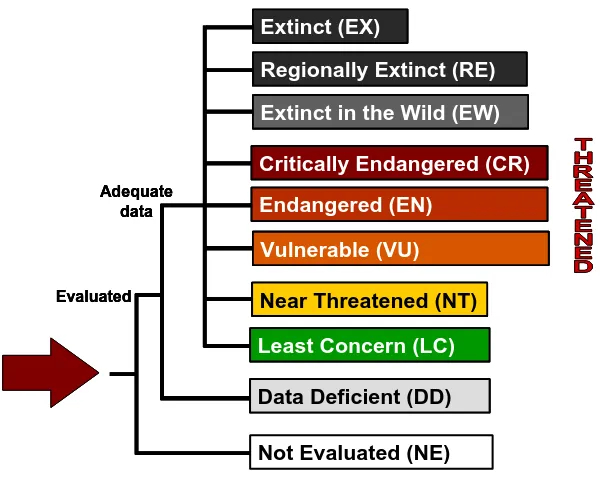
1993 assessment (Whilde, 1993). The “data deficient” category used in this assessment is equivalent to the indeterminate (I) category used in the 1993 assessment. The full list of categories used in this assessment is provided in figure 1.
Appendix 1, taken from IUCN 2008, provides a summary of the five criteria (A-E) used to evaluate whether a taxon belongs in a threatened category (Critically Endangered, Endangered or Vulnerable). In order to complete the current red list, each species was evaluated against each criterion A-D systematically. Criterion E was not used, as sufficient data for a fully quantitative
[image:10.595.105.405.360.602.2]assessment was not available for any of the terrestrial mammals. Where a species met any one of the criteria it was noted, and the highest level of threat achieved by a species became its qualifying category. All of the criteria met at the highest level of threat were listed for each species.
Figure 1 – Red List categories used for the purposes of this assessment. Further details and definitions for
these categories and the criteria for achieving them are available in IUCN (2001, 2003) and Appendix 1.
Workshops
The assessments for all species were carried out on the 6th February 2019 by Dr Declan Looney (Northern Ireland Environment Agency [NIEA]), Dr Ferdia Marnell (National Parks & Wildlife
Service [NPWS]) and Dr Colin Lawton (National University of Ireland, Galway [NUIG]).
Not Evaluated (NE)
Near Threatened (NT)
Endangered (EN)
Critically Endangered (CR)
Vulnerable (VU)
Extinct in the Wild (EW)
Extinct (EX)
Least Concern (LC)
Data Deficient (DD)
Evaluated Adequate
data
Regionally Extinct (RE)
Not Evaluated (NE)
Near Threatened (NT)
Near Threatened (NT)
Endangered (EN)
Critically Endangered (CR)
Vulnerable (VU)
Endangered (EN)
Critically Endangered (CR)
Vulnerable (VU)
Extinct in the Wild (EW)
Extinct in the Wild (EW)
Extinct (EX)
Extinct (EX)
Least Concern (LC)
Data Deficient (DD)
Evaluated
Data Deficient (DD)
Data Deficient (DD)
Evaluated Adequate
data Adequate
data
More recent information on distribution and ecology has been included in the species accounts
where available.
Complete reassessment of this list is recommended in 2029.
Taxonomic and geographic scope
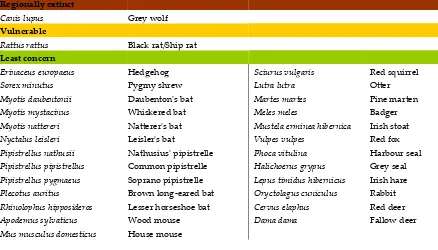
As with the 2009 Red List (Marnell et al., 2009) all terrestrial species native to Ireland or naturalised in Ireland before 1500 were included in the assessment. In addition, for this assessment, the grey
seal (Halichoerus grypus) and harbour seal (Phoca vitulina) which are resident in Ireland and spend much of their time on land, were also included (Table 1).
The geographic scope of this assessment, as with other Irish Red Lists (e.g. King et al., 2011; Nelson
et al., 2011; Wyse Jackson et al., 2016; Allen et al., 2016), covers the whole island of Ireland. The taxonomy follows Wilson & Reeder (2005), apart from where Order names have been revised (O. Eulipotyphla, and O. Cetartiodactyla, Waddell et al., 1999).
No species have been added to the native Irish mammal list since the 2009 assessment, but one has
been dropped. The Brandt’s bat (Myotis brandtii), a cryptic species which was first reported from Ireland in 2003 (Mullen, 2006), was assessed in 2009 as data deficient. Since then an extensive programme of surveys concluded that this species was not resident in Ireland (Boston et al. 2010).
The species is now considered to be a vagrant and has not been considered further in this assessment. Another bat species has also appeared in Ireland since the 2009 assessment – the greater horseshoe bat (Rhinolophus ferrumequinum). Only a single specimen of this species has been reported and hence this species is also considered to be a vagrant (Roche et al., 2014). It has not
[image:11.595.99.537.473.723.2]been evaluated.
Table 1 – Terrestrial mammal species included in this red list assessment, listed according to their status. Regionally extinct
Canis lupus Grey wolf
Vulnerable
Rattus rattus Black rat/Ship rat
Least concern
Erinaceus europaeus Hedgehog Sciurus vulgaris Red squirrel
Sorex minutus Pygmy shrew Lutra lutra Otter
Myotis daubentonii Daubenton's bat Martes martes Pine marten
Myotis mystacinus Whiskered bat Meles meles Badger
Myotis nattereri Natterer's bat Mustela erminea hibernica Irish stoat
Nyctalus leisleri Leisler's bat Vulpes vulpes Red fox
Pipistrellus nathusii Nathusius' pipistrelle Phoca vitulina Harbour seal Pipistrellus pipistrellus Common pipistrelle Halichoerus grypus Grey seal Pipistrellus pygmaeus Soprano pipistrelle Lepus timidus hibernicus Irish hare Plecotus auritus Brown long-eared bat Oryctolagus cuniculus Rabbit Rhinolophus hipposideros Lesser horseshoe bat Cervus elaphus Red deer
Apodemus sylvaticus Wood mouse Dama dama Fallow deer
Mus musculus domesticus House mouse
Nine species were excluded from the 2009 assessment on the basis that they were post 1500
then: hazel dormouse (Muscardinus avellanarius) (Marnell et al., 2013) and coypu (Myocastor coypus)
(Marnell et al., 2019) (Table 2). Species which are known only from the fossil record, or that became extinct before 1500, such as the giant Irish deer or brown bear (Mitchell, 1976; N. Monaghan pers. comm.), have not been included. Brandt’s bat, previously assessed as data deficient, is now considered a vagrant and is also not included in the assessments.
The feral goat (Capra hircus) and feral ferret (Mustela putorius furo) have been excluded as they are known to be descended from domestic animals. Finally, except for the two seal species, marine mammals have not been included.
Table 2 – Terrestrial mammal species present in Ireland, but not included in this red list assessment on the
basis that they are post-1500 introductions.
Cervus nippon Sika deer Neovison vison American mink
Crocidura russula Greater white-toothed shrew Rattus norvegicus Brown rat
Lepus europaeus Brown hare Sciurus carolinesis Grey squirrel
Myodes glareolus Bank vole Sus scrofa Wild boar
Muntiacus reevesi Muntjac deer Muscardinus avellanarius Hazel dormouse Myocastor coypus Coypu
Summary of findings
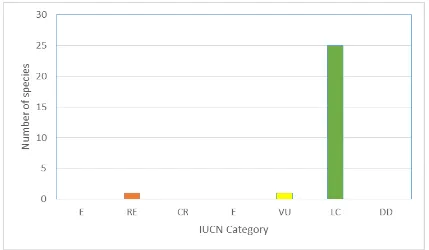
Of the 27 species assessed, one was found to be Regionally Extinct (grey wolf Canis lupus), one achieved a threat status of Vulnerable (black rat Rattus rattus), and the rest were of Least Concern
[image:12.595.54.483.466.716.2](Table 1; Figure 2).
The ‘Near Threatened’ category provides us with a ‘watch’ list of species that may need to be
upgraded to a threat category should their rate of decline increase. Three species were listed in the 2009 report as Near Threatened, Leisler's bat (Nyctalus leisleri), otter (Lutra lutra) and red squirrel (Sciurus vulgaris). All three have been revised to Least Concern in the current report due to population recovery. However, the status of all three, in particular the internationally important
Leisler’s bat and otter, should be carefully monitored in case the recoveries are not sustained. The otter is listed as Near Threatened at European and Global level (www.iucnredlist.org), so the Irish population remains of importance.
A comparison between the previous reports and the current list shows other species retain the same status. The only threatened species is still the black rat, primarily because of its small range at only a single locality. This species is considered a pest species in many situations, has been assessed as Least Concern both globally and in the European Union (EU), and is not considered a
priority for conservation action.
In 2009, Brandt’s bat (Myotis brandtii) was considered Data Deficient, having been recorded on just one occasion. It was intended that the species would be fully assessed for this revision of the Red
List. However, there have been no further confirmed records of the animal despite extensive survey work (see Boston et al., 2010), and so this previous record is now considered to be that of a vagrant, and Brandt’s bat has been removed from the list altogether.
Most terrestrial mammals enjoy some level of legal protection in Ireland, with 13 listed on the EU
Habitats Directive, 22 on national legislation in the Republic of Ireland, and 18 on national legislation in Northern Ireland.
It is notable that the black rat, theoretically Ireland’s rarest terrestrial mammal is not protected
either at a national or EU level. Similarly the rabbit (Oryctolagus cuniculus), although it is considered Near Threatened at a European level, benefits from no legal protection under wildlife legislation in Ireland. Like all mammals, there is relevant protection under animal welfare
legislation. Appendix 2 includes a list of the species covered by this assessment, with their current and previous status in Ireland, together with their EU and global status.
Implications for the conservation of Irish mammals
With only one of our 26 extant native mammal species assessed as Vulnerable, and the rest listed as
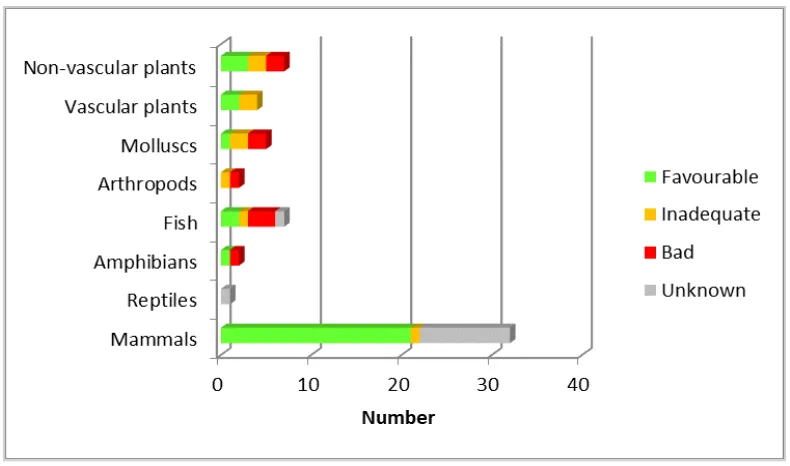
Least Concern, the overall impression is that Ireland’s mammal fauna is in good status. Similar conclusions can be drawn from the recent report on species protected in the Republic of Ireland under the EU Habitats Directive, where almost 60% of mammals were deemed to be in favourable conservation status and none were found to be in bad status (figure 3; NPWS, 2019). The picture is
not so favourable for natural habitats, however, with the majority of those listed on the Habitats Directive considered to be in poor or bad condition (NPWS 2019). While several mammal species have adapted well to managed landscapes, the underlying condition of our natural habitats is a
Figure 3 – The numbers of EU listed species in the Republic of Ireland categorised as Favourable
(green), Inadequate (yellow), Bad (red) and unknown (grey) in 2019 (NPWS, 2019).
Threats
A number of threats are repeatedly cited in the species accounts below. Not surprisingly many of these relate to habitat management issues. Woodland management is an important factor for many
mammals (e.g. bats, red squirrel, pine marten). The spread of forestry in recent decades, albeit predominantly of conifers, has been of some benefit for these species. However, careful planning, particularly at clear-felling, is essential if these habitats are to continue to support healthy populations. New biodiversity guidelines from the Republic’s Forest Service are addressing some
of these issues. Continued consultation between local wildlife officers and woodland managers will also be critical.
Water quality is another important underlying issue. While there is evidence that extreme
pollution events, and the consequential fish kills they cause, are in decline (CFB, unpublished data), there is still some way to go if our rivers and lakes are to meet the requirements of the Water Framework Directive (Tierney & O’Boyle, 2018).
Recent reports of significant invertebrate biodiversity losses (Eisenhauer et al., 2019) could impact
on several mammal species directly, or indirectly through a cascade effect. The impacts of climate change on habitat, food sources and individual species are also a major concern now and in the future.
Significant numbers of mammals are killed on Irish roads every year. For widespread and common species road-kill is unlikely to play an important role in population control. However, for other species (e.g. otter, pine marten, red squirrel and lesser horseshoe bat) which are reliant on commuting corridors for dispersal and migration, road deaths may play a critical part in
can be avoided. Retro-fitting mammal mitigation into older roads is more difficult, although some
success is possible for bats and squirrels with high level ropes and baffles.
Some mammals, despite legal protection, continue to suffer from various forms of persecution. The mustelids in particular, and the bats to a lesser extent, are targeted. Badger baiting still occurs in Ireland and interference with setts is not uncommon. Stoat and pine marten are seen as a threat to
game birds and are illegally trapped and shot. Further efforts will be required by the statutory authorities in both jurisdictions to combat these illegal activities. These issues were highlighted in the 2009 report, and some actions, such as the production of leaflets and a website informing
stakeholders of non-lethal methods of preventing pine martens from attacking game birds or nesting in roof spaces, have been made available (www.pinemarten.ie). A combination of enhanced education and enforcement are required. The tendency of some bat species to roost in attics can bring them into conflict with humans. However, much of this conflict arises from
misinformation and the education work of BCI and the Northern Ireland Bat Group together with the NIEA and the NPWS is helping address this (e.g. www.npws.ie/en/WildlifePlanningtheLaw/
Batsinhouses/).
Conservation actions
To a large extent, but not exclusively, conservation activities over the last decade have been
focused on the mammal species listed in the EU Habitats Directive. Detailed distributional and habitat surveys in both Northern Ireland and the Republic of Ireland have been completed for otter, hare, pine marten, squirrels, deer and many bat species. Many smaller scale studies are also underway across the island, including work on small mammals, hedgehogs and deer. Publication
of the findings of all these studies will further advance our knowledge of the Irish mammal fauna. It is also worth mentioning that ongoing bird research is also advancing our knowledge of Irish mammals, the 2008 discovery of the greater white-toothed shrew (Crocidura russula) being a case in
point (Tosh, 2008).
In some cases surveys have been repeated and robust monitoring programmes are in place. For example, Ireland’s Bat Monitoring Programme includes four separate annual schemes which together collect robust data for six of our nine bat species (Aughney et al., 2018). Two of the
schemes are run on an all-island basis with funding from NPWS and NIEA, while Waterways Ireland, a cross-border body, also supports one of the schemes. The Centre for Irish Bat Research (CIBR), a joint initiative between University College Dublin and Queen’s University Belfast,
funded by NPWS, provides another example of the potential benefits of actively sharing knowledge and experience between the two jurisdictions. The most recent 2019 squirrel and pine marten survey, similarly was completed on an all-island basis by research teams from NUI
Galway, the Vincent Wildlife Trust and Ulster Wildlife. Further opportunities for cross-border cooperation on mammal survey and monitoring need to be explored.
All-Ireland Species Action Plans (SAPs) have been prepared for a number of mammal species, namely red squirrel, Irish hare and vesper bats (see www.npws.ie/en/PublicationsLiterature).
vesper bats) are also published on www.npws.ie/en/PublicationsLiterature. They provide detailed
information on the distribution, habitat and populations of the species concerned before examining the major threats they face and identifying the actions required to manage these threats. The TRPs have helped guide management and research but are now in need of updating.
Current and future research priorities
Most Irish universities now have active teams of mammal researchers. Much has been learned about the distribution, habitat preferences, diet, breeding biology and molecular ecology of many
of our species. Inevitably some species have received more attention than others. The Irish hare has done particularly well, but concerns about potential hybridization and the impacts of coursing are likely to continue to generate interest in the species. The red squirrel has also been well served,
but further work on its interaction with the invasive grey squirrel (Sciurus carolinensis) is required, as the status and range of both species is continuously changing. There has also been a steady interest in Irish bats, although the lesser horseshoe (Rhinolophus hipposideros) and Leisler’s (Nyctalus
leisleri) have probably received more than their fair share. The work undertaken in the Centre for Irish Bat Research has answered some outstanding questions about our rarer Myotis species, (see Boston et al., 2010; Lundy et al., 2012; Buckley et al., 2013), but many questions remain.
Notwithstanding some research on badger diet (Cleary et al., 2009) and the original field surveys
by Smal (1995) and Feore (1994), most of the studies on the badger to date have focused on its role in bovine TB. However, the opportunity to study the ecology of badgers alongside the continuing bovine TB research has recently increased our understanding of this charismatic species (e.g. Mullen et al., 2013).
The decline of the otter has been charted by large scale national surveys. The most recent report (Reid et al. 2013) suggests the species is in recovery after a previous decline. Continuing to monitor this species will require cross-sectoral collaboration between the bodies responsible for nature
conservation, fisheries management and water quality in both jurisdictions. Meanwhile, the pine marten is expanding its range, and is having an adverse impact on invasive grey squirrels (Sheehy & Lawton, 2014). This has encouraged further investigations into this species’ habits in Ireland.
The hedgehog (Erinaceus europaeus) and the stoat (Mustela erminea hibernica) would appear to have
been underrepresented in Irish mammal research to date and more research on the ecology and conservation status of these species would be valuable.
Further research on the impact and control of invasive alien mammals is also required, including
investigations of how to manage the less obvious interactions, such as the hybridising potential of brown hare on Irish hare and of sika deer on red deer. The impact of invasive mammals on native habitats is another area requiring study e.g. the destructive browsing effect of the recently
introduced muntjac deer on forestry plantations and on ground flora. Bird populations may also be effected. The threat posed by American mink to ground nesting birds has been widely reported and discussions are now required on how best to manage this species in Ireland following the review by Roy et al., (2009). The barn owl may be impacted from the recent accidental introduction
necessary nutrition to the bird. It may also be contributing to the loss of pygmy shrew through
competition (Montgomery et al., 2012). Further research on these interactions are needed.
And finally, one of the most significant priorities for mammal research in the coming years relates to the potential impacts of climate change. Studies that help elucidate and anticipate how this global phenomenon will affect the distribution, habitat use and feeding ecology of Irish mammals
Format of Species Accounts
The species accounts for the Red List of Ireland’s Mammals follow the format outlined below:
Species name and taxonomic authority
English language common name
Irish language common name
Irish status – Red list status for Ireland based on this assessment
European status – Red list status for Europe, based on Temple & Terry (2007)
Global status – global Red List status, taken from IUCN Red List of Threatened Species (IUCN, 2019b)
Proportion of global population occurring in Ireland – for species (or sub-species) with a significant proportion of their global populations occurring in Ireland. This is estimated based on available data for endemic and near endemic species, or best expert judgement for species with wider distributions.
Rationale for assessment – a description of how the IUCN category was determined. This will include details of the previous red list status for Ireland, and the rationale behind any population trend estimates. This section should be read in conjunction with the IUCN
guidance documents that were referred to for this assessment (IUCN, 2001; 2003; 2005; 2019a) and the previous Irish assessment (Marnell et al., 2009).
Legal Status – Any legal protection afforded to the species. This will be one or more of the following: EU Habitats Directive [92/43/EEC]; Wildlife Act, 1976; Wildlife (Amendment)
Act, 2000; Game Preservation Act (Northern Ireland) 1928; The Wildlife (Northern Ireland) Order 1985. Where the species is covered by international laws (e.g. Convention on International Trade in Endangered Species of Wild Fauna and Flora (CITES)) this is also
included. Legislated hunting seasons have been included where appropriate. For species listed on the EU Habitats Directive, the number of Special Areas of Conservation (SACs) for which the species is listed as a qualifying interest is also included.
Distribution – a general description of the global distribution of the species, followed by a more detailed description of its distribution in Ireland.
Population in Ireland – an estimate of the effective population size (i.e. adult population) in Ireland, where available, and a description of whether the population is stable, increasing
or declining.
Ecology and habitat in Ireland – a brief summary of the available ecological information for the species, including a description of the species’ broad habitat preferences in Ireland.
Order Eulipotyphla
Erinaceus europaeus Linnaeus
Common name: Hedgehog
Irish name: Gráinneog
Irish status: Least Concern
European status: Least concern
Global status: Least concern
Rationale for assessment: Previously assessed as least concern (Marnell et al., 2009). Widespread range across Ireland, increased records and the European status of least concern justify this assessment.
Legal Status: Wildlife Act, 1976; Wildlife (Amendment) Act, 2000; The Wildlife (Northern Ireland) Order 1985.
Distribution: Widespread range across all counties of Ireland, only absent from the Burren (Co Clare) and the blanket bogs of Connemara (Co Galway) and northwest Mayo and Donegal (Lysaght, 2016). Found throughout western Europe, coastal Scandinavia and parts of north-east Europe (www.iucnredlist.org).
Population in Ireland: There is no population estimate for hedgehogs in Ireland, but frequent records are submitted to the National Biodiversity Data Centre.
Ecology and habitat in Ireland: Present in various lowland habitats, with sufficient food and nesting resources (Morris & Reeve, 2008). Common in suburban gardens and parks, and in woodland/grassland mosaics. Rare in bog or marshy habitat and coniferous woods. More likely in Ireland to utilise arable land than in other parts of their range (Haigh et al. 2012). Primarily nocturnal and solitary, eat a range of ground-living invertebrates, principally beetles, caterpillars, slugs and earthworms. Typically hibernate from late October to early April.
Threats: Hedgehogs are vulnerable to pesticides used in gardens, and many are killed by eating poisoned slugs. Severe winters may kill hibernating hedgehogs, and not reaching a sufficient weight before hibernating is also fatal. Many hedgehogs are recorded from roadkill deaths, although this is not thought to be impacting their populations. Recent reports of global loss of invertebrates could signify a major threat to their food supply (Eisenhauer et al., 2019).
Ph
ot
o:
M
ik
e
Bro
w
Sorex minutus Linnaeus
Common name: Pygmy shrew
Irish name: Dallóg fhraoigh
Irish status: Least concern
European status: Least concern
Global status: Least concern
Rationale for assessment: Previously assessed as least concern (Marnell et al., 2009). Widespread distribution, stable population, and the European status of least concern justify this assessment.
Legal Status: Wildlife Act, 1976; Wildlife (Amendment) Act, 2000; and The Wildlife (Northern Ireland) Order 1985.
Distribution: The pygmy shrew occurs throughout Europe except for southern Iberia and the Mediterranean coast. Their global distribution stretches across much of Russia, into Asia
(www.iucnredlist.org). They are common and widespread throughout the island of Ireland,
although potentially a gap in their range is emerging, centred on Co Tipperary, where the invasive greater white-toothed shrew is established (McDevitt, 2016).
Population in Ireland: There is no population estimate available for pygmy shrew in Ireland, however the animals are frequently encountered and the population appears to be stable.
Ecology and habitat in Ireland: Pygmy shrews are solitary and extremely territorial. They are short-lived, with individuals over-wintering once, breeding in the summer of their second year, and dying before their second winter. They are active 24 hours a day in order to meet their nutritional requirement of up to 250 invertebrate items per day (McDevitt, 2016). Pygmy shrews are found in a variety of habitats from dunes and farmland, to suburban areas (Mitchell-Jones et al., 1999). They require vegetative cover and a good supply of invertebrates.
Threats: The pygmy shrew has been impacted by the introduction of the greater white-toothed shrew, with populations having potentially collapsed in some areas as a result. There may also be a cumulative affect caused by the introduction of the bank vole (Montgomery et al., 2012). The heavy use of pesticides, and the global decline in invertebrates are other potential threats, as they impact on their food supply.
Ph
ot
o:
M
ik
e
Bro
w
Order Chiroptera
Myotis daubentonii (Kuhl)
Common name: Daubenton's bat
Irish name: Ialtóg uisce
Irish status: least concern
European status: least concern
Global status: least concern
Rationale for assessment: Previously assessed as least concern (Marnell et al., 2009). Widespread range across Ireland, no evidence of decline and the European status of least concern justify this assessment.
Legal Status: EU Habitats Directive [92/43/EEC] Annex IV; Wildlife Act, 1976; Wildlife (Amendment) Act, 2000; The Wildlife (Northern Ireland) Order 1985
Distribution: Found from western Europe to Japan and Korea; from Portugal and Italy to southern Scandanavia (www.iucnredlist.org). Widespread in Ireland and found in all counties (Aughney et al., 2018).
Population in Ireland: The population in Ireland is thought to be stable or increasing slightly (Aughney et al., 2018), and is estimated to comprise 81,000-103,000 individuals (Roche et al., 2014).
Ecology and habitat in Ireland: Roosts in small numbers in crevices under bridges and in old stone
buildings near water
(
Roche et al., 2014). Also reported from roofs of old houses (Allen et al., 2000) and from bat boxes and tree crevices (McAney, 2006). Winter cave roosts have been reported (Hopkirk, 1996), but seldom recorded in hibernation as it roosts in cracks and crevices (McAney, 1994, 1997). A number of swarming sites have been identified (Roche et al., 2014).Normally forages along tree-lined rivers and over lakes; avoids uplands (Lundy et al., 2011). The majority of the diet is made up of midges and caddis flies gaffed from the water surface or caught in the air using the tail membrane (Sullivan et al., 1993; Flavin et al., 2001; Warren et al., 2000). Can also be found in other habitats, such as woodland (Russ, 1999).
Threats: Wetland drainage and serious water pollution are concerns; light pollution has also been shown to impact this species (Aughney et al., 2012). Unsympathetic repairs to old bridges and disturbance during hibernation can impact local populations.
Ph
ot
o:
F
ra
n
k
G
reen
aw
Myotis mystacinus (Kuhl)
Common name: Whiskered bat
Irish name: Ialtóg ghiobach
Irish status: least concern
European status: least concern
Global status: least concern
Rationale for assessment: Previously assessed as least concern (Marnell et al., 2009). Widespread range across Ireland, no evidence of decline and the European status of least concern justify this assessment.
Legal Status: EU Habitats Directive [92/43/EEC] Annex IV; Wildlife Act, 1976; Wildlife (Amendment) Act, 2000 ; The Wildlife (Northern Ireland) Order 1985.
Distribution: Mainly palaearctic; from northern Iberia and Morocco to far east. Absent from northern Scotland and northern Scandinavia (www.iucnredlist.org). Records from throughout Ireland, from Donegal to Wexford, but not common. Roche et al. (2014) consider it to be widespread but very localised.
Population in Ireland: The population in Ireland is unknown (Roche et al., 2014); previously estimated to comprise 5,000+ mature individuals (Marnell et al., 2009). Trend unknown but assumed to be stable. No population monitoring programme in place.
Ecology and habitat in Ireland: Summer roosts are normally in buildings (Roche et al., 2014) and a network of roosts can be utilised (Buckley et al., 2013). Usually only small numbers of bats are present, often between rafters and felt and other narrow spaces where they are difficult to locate. Bridge roosts are also known (Smiddy, 1991; Shiel, 1999). Wintering animals are rarely found but a small number have been recorded in caves (McAney, 1994; 1997). Limited evidence of autumn swarming behaviour has been reported from Ireland (Roche et al., 2014). Known to be a woodland species; tree lines, river corridors and farmland also used for foraging (Lundy et al., 2011; Buckley et al., 2013).
Threats: Lack of knowledge about roosting sites and swarming behaviour are concerns (Roche et al., 2014). Building renovation and loss of foraging habitat are potential threats.
Ph
ot
o:
F
ra
n
k
G
Myotis nattereri (Kuhl)
Common name: Natterer's bat
Irish name: Ialtóg Natterer
Irish status: least concern
European status: least concern
Global status: least concern
Rationale for assessment: Previously assessed as least concern (Marnell et al., 2009). Widespread range across Ireland, no evidence of decline and the European status of least concern justify this assessment.
Legal Status: EU Habitats Directive [92/43/EEC] Annex IV; Wildlife Act, 1976; Wildlife (Amendment) Act, 2000 ; The Wildlife (Northern Ireland ) Order 1985.
Distribution: A widespread species, found from Portugal and north-west Africa to the Urals and the near East (www.iucnredlist.org). Widespread in Ireland, but not common. Roost and detector records from Donegal and Antrim to Wexford and Kerry (Roche et al. (2014).
Population in Ireland: The population in Ireland is unknown (Roche et al., 2014); previously estimated to comprise 5,000+ mature individuals (Marnell et al., 2009). Trend unknown but assumed to be stable. Effective monitoring programme needed.
Ecology and habitat in Ireland: Summer roosts are normally in buildings. Usually only small numbers of bats are present, often between rafters and felt and other narrow spaces where they are difficult to locate. Bridge roosts are also known (Roche et al., 2014). Larger roosts (>50 bats) have been found in Church of Ireland churches (McAney, 2006). In winter individuals have been observed in bridges, mines and caves (McAney, 1994; 1997).
This bat gleans most of its prey from foliage, rather than catching it in the air (Shiel et al., 1991). Woodland habitats and river corridors appear to be favoured for foraging. Pastures and hedgerows are also utilised although pasture-dominated landscapes are avoided (Lundy et al., 2011, 2012; Roche et al., 2014).
Threats: Further work on the ecology, habitat requirements and swarming behaviour of this species is required to determine whether it is at risk from specific threats (Roche et al. 2014). However, woodland management and building and bridge renovations are potential threats.
Ph
ot
o:
F
ra
n
k
G
reen
Nyctalus leisleri (Kuhl)
Common name: Leisler's bat
Irish name: Ialtóg Leisler
Irish status: least concern
European status: least concern
Global status: least concern
Rationale for assessment: Previously assessed as Near Threatened due to the fact that Ireland is considered a world stonghold for the species (Marnell et al., 2009). Its European status, widespread distribution in Ireland and recent data showing continuing population increase here (Roche et al., 2014; Aughney et al., 2018) justify this improved assessment.
Legal Status: EU Habitats Directive [92/43/EEC] Annex IV; Wildlife Act, 1976; Wildlife (Amendment) Act, 2000 ; The Wildlife (Northern Ireland.) Order 1985.
Distribution: Found throughout Europe except for Scandinavia, Estonia and Northern Russia. Ireland is considered to be the world stronghold for the species (Mitchell-Jones et al., 1999). Occurs throughout the country; probably the third most common bat species (Roche et al., 2011).
Population in Ireland: The population in Ireland appears to be increasing, and is estimated to comprise 70,000-130,000 mature individuals (Roche et al., 2014; Aughney et al., 2018). Irish population may constitute as much as 20-25% of global population (Marnell et al., 2009), but few hard data from other European countries to confirm this.
Ecology and habitat in Ireland: Nursery roosts are usually in attics of buildings. Some tree roosts are also known. Will also occupy bat boxes (McAney, 2006). Hibernation in trees and buildings recorded (Hopkirk & Russ, 2004; McAney, 2006).
Wide variety of habitats used for foraging including pasture, canal, orchards, open water, roadside hedgerows and streetlights. Small to medium sized swarming insects make up much of the prey (Shiel et al., 1998). Known to migrate long distances on European continent, but no evidence for migration in Irish population (Shiel et al., 2008).
Threats: Accidental and deliberate exclusion of nursery roosts from buildings is the main threat to this species. Unsympathetic woodland management and wind farm developments also of concern (McAney, 2006; Roche et al., 2014).
Ph
ot
o:
F
ra
n
k
G
Pipistrellus nathusii (Keyserling & Blasius)
Common name: Nathusius' pipistrelle
Irish name: Ialtóg Nathusius
Irish status: least concern
European status: least concern
Global status: least concern
Legal Status: EU Habitats Directive [92/43/EEC] Annex IV; Wildlife Act, 1976; Wildlife (Amendment) Act, 2000 ; The Wildlife (Northern Ireland) Order 1985.
Rationale for assessment: Previously assessed as least concern (Marnell et al., 2009). No evidence of decline and the European status of least concern justify this assessment.
Distribution: From Urals to Northern Iberia and southern Scandanavia to the Mediterranean (Mitchell-Jones et al., 1999). Highly migratory, moving south-west for winter and returning to northern latitudes for spring. First recorded in Ireland in 1996; maternity colony located in 1997 in Co. Antrim (Russ et al., 1998) confirmed it as a resident here. Most records from north-east, but also reported from many other counties (Roche et al., 2014; Aughney et al., 2018).
Population in Ireland: Records of the species continue to be collected annually by the car-based monitoring scheme (Roche et al., 2015b), but insufficient data yet to provide any population trend. In Ireland, where the winters are mild, normal migratory behaviour may give way to sedentary lifestyle (Russ et al., 1998). Resident bats may be supplemented during winter by migratory individuals returning from the north-east of the species range (Russ et al., 2001). Roche et al. (2014) estimated the population at 10-18,000.
Ecology and habitat in Ireland: No known maternity roosts in the Republic. In Northern Ireland they occur in cavity walls / under slates of old stone buildings. On the continent they use hollow trees, bat and bird boxes, wooden churches and buildings during summer and crevices in cliffs, hollow trees and buildings in winter (McAney, 2006; Marnell & Presetnik, 2009; Russ, 2008). Considered a woodland species on mainland Europe but more associated with lakes in Ireland (Roche et al., 2014); aquatic Diptera including non-biting midges appear to be its main prey. Also forages along woodland rides and edges.
Threats: Main threats include roost disturbance and destruction of insect-rich foraging habitats such as wetlands, riparian woodland and unimproved grassland. Badly sited windfarms may be a particular threat to this species given its migratory nature. More information on this species’ migratory habitats are needed.
Ph
ot
o:
F
ra
n
k
G
Pipistrellus pipistrellus (Schreber)
Common name: Common pipistrelle
Irish name: Ialtóg fheascrach
Irish status: least concern
European status: least concern
Global status: least concern
Rationale for assessment: Previously assessed as least concern (Marnell et al., 2009). Widespread range across Ireland, no evidence of decline and the European status of least concern justify this assessment.
Legal Status: EU Habitats Directive [92/43/EEC] Annex IV; Wildlife Act, 1976; Wildlife (Amendment) Act, 2000 ; The Wildlife (Northern Ireland) Order 1985.
Distribution: Occurs across much of western and central Europe and along the North African coast. Rare or absent in Scandinavia, Greece and Italy (Jones & Racey, 2008). Most frequently encountered species during Irish car-based monitoring. This monitoring suggests it may be most abundant in south and east, but found in all counties including the extreme west (Roche et al., 2011; Aughney et al., 2018).
Population in Ireland: Very common. The population in Ireland is increasing and is estimated to comprise 1-2 million mature individuals (Aughney et al., 2018).
Ecology and habitat in Ireland: Summer roosts usually in buildings, including modern houses, old abandoned mansions, churches, amenity buildings and farm sheds (e.g. Roche, 1998; 2001; McGuire, 1998). Normally roost in very confined spaces, such as behind window sashes, under tiles and weather-boards, behind fascia and soffits, and within the cavities of flat roofs (O’Sullivan, 1994). Thought to hibernate in buildings and trees but seldom recorded in winter (McAney, 2006).
Forages in a broad range of habitat types including woodlands, lakes, rivers, grasslands and suburban parks (Russ & Montgomery, 2002; Guillot, 2003; Dick & Roche, 2017).
Threats: Use of pesticides; removal of hedgerows, copses and scrub; and illegal disturbance of roosts in domestic dwellings and other buildings are the main threats identified for these species.
Ph
ot
o:
F
ra
n
k
G
reen
aw
Pipistrellus pygmaeus (Leach)
Common name: Soprano pipistrelle
Irish name: Ialtóg fheascrach sopránach
Irish status: least concern
European status: least concern
Global status: least concern
Rationale for assessment: Previously assessed as least concern (Marnell et al., 2009). Widespread range across Ireland, no evidence of decline and the European status of least concern justify this assessment.
Legal Status: EU Habitats Directive [92/43/EEC] Annex IV; Wildlife Act, 1976; Wildlife (Amendment) Act, 2000 ; The Wildlife (Northern Ireland) Order 1985.
Distribution: Occurs sympatrically with the common pipistrelle across much of central Europe, but while the soprano pipistrelle appears to be absent from much of France and northern Iberia, its range extends into southern Scandinavia and Greece (Jones & Racey, 2008). Abundant and widespread throughout Ireland, occurring in all counties (Roche et al., 2014). No particular geographical preferences evident from most recent monitoring (Roche et al., 2011; Aughney et al., 2018).
Population in Ireland: Very common. The population in Ireland is increasing (Aughney et al., 2018), and is estimated to comprise 0.54-1.2 million mature individuals (Roche et al., 2014).
Ecology and habitat in Ireland: Summer roosts usually in buildings, including modern suburban houses, old abandoned mansions, churches, amenity buildings and farm sheds. Also recorded from bat boxes (e.g. Roche et al., 2014). They normally roost in very confined spaces, such as behind window sashes, under tiles and weather-boards, behind fascia and soffits, and within the cavities of flat roofs (O’Sullivan, 1994). Roosts of >1000 soprano pipistrelles are known (McAney, 2006). Thought to hibernate in buildings and trees, but seldom recorded in winter (McAney, 2006).
Although known to forage in a broad range of habitat, P. pygmaeus shows some preference for aquatic habitats – riparian woodland, rivers and lakes (Russ & Montgomery, 2002; Lundy et al., 2011; Dick & Roche, 2017).
Threats: Use of pesticides; removal of hedgerows, copses and scrub; and illegal disturbance of roosts in domestic dwellings and other buildings are the main threats identified for these species.
Ph
ot
o:
F
ra
n
k
G
Plecotus auritus (Linnaeus)
Common name: Brown long-eared bat
Irish name: Ialtóg fhad-chluasach
Irish status: least concern
European status: least concern
Global status: least concern
Rationale for assessment: Previously assessed as least concern (Marnell et al., 2009). Widespread range across Ireland, no evidence of decline and the European status of least concern justify this assessment.
Legal Status: EU Habitats Directive [92/43/EEC] Annex IV; Wildlife Act, 1976; Wildlife (Amendment) Act, 2000 ; The Wildlife (Northern Ireland) Order 1985.
Distribution: Widespread across Europe with records from southern Portugal, Italy and Greece in the south to Scotland and southern Scandinavia in the north (www.iucnredlist.org). Widely distributed throughout the island of Ireland (Aughney, 2016). It has also been recorded on several off-shore islands, and at Tuskar Lighthouse, Co. Wexford (Fairley, 2001).
Population in Ireland: The population in Ireland is thought to be stable or increasing slightly (Aughney et al., 2018), and has been estimated at 64,000-115,000 individuals (Roche et al., 2014).
Ecology and habitat in Ireland: Nursery roosts usually in churches and houses; large, open attics are preferred and a high degree of site fidelity is shown (Aughney et al., 2012). Tend to cluster together, often in the angle created by the rafters where they join the ridge beam. Schwegler bat boxes are also used (McAney, 2006). Tree holes and farm buildings used as temporary roosts when food is in short supply (Entwistle et al., 1997). The few hibernating records come from caves and from ruined buildings (McAney, 1994; 1997).
This species has broad habitat preferences, foraging in broad-leaved woodlands and along tree lines, but also scrub, conifer plantations, gardens with mature trees, parkland and orchards (McAney, 2006; Roche et al., 2014). Main prey items include flies (craneflies and window-midges), moths, caddis flies and earwigs, centipedes and harvestmen (Shiel et al., 1991).
Threats: Vulnerable to roost disturbance given their tendency to roost in buildings. Also considered to be particularly vulnerable to the chemicals used in timber treatment, because of their habit of roosting in close proximity to the timber (McAney, 2006).
Agricultural intensification (e.g. loss of hedgerows and scrub), unsympathetic woodland management practices and light pollution also pose a risk to this species (Roche et al., 2014).
Ph
ot
o:
F
ra
n
k
G
Rhinolophus hipposideros (Bechstein)
Common name: Lesser horseshoe bat
Irish name: Ialtóg crúshrónach/ Crú-ialtóg beag
Irish status: least concern
European status: Near Threatened
Global status: least concern
Rationale for assessment: Previously assessed as least concern (Marnell et al., 2009). Despite restricted range in west of Ireland, robust evidence of population increase and the global status of least concern justify this assessment.
Legal Status: EU Habitats Directive [92/43/EEC] Annex II & IV; 41 SACs listed. Wildlife Act, 1976; Wildlife (Amendment) Act, 2000.
Distribution: Widely distributed through western, central and southern Europe. Extends as far east as Kashmir and through northern Africa to Arabia, Ethiopia and Sudan (www.iucnredlist.org). Ireland represents the most northerly and westerly limits of the species’ distribution and here it is confined to six western counties: Mayo, Galway, Clare, Limerick, Cork and Kerry (McAney, 2016), with some evidence of a growing gap in north Kerry and west Limerick (NPWS 2019). It has the smallest core area of any Irish bat: 5,993 km2 (Lundy et al., 2011).
Population in Ireland: The population in Ireland appears to be increasing (Aughney et al., 2018). It is estimated at approximately 13,000 mature individuals (NPWS, 2019). Some genetic evidence that population isolation is occuring within the wider distribution range (Dool et al., 2013).
Ecology and habitat in Ireland: The lesser horseshoe bat is the only member of the Rhinolophidae occurring in Ireland. Summer roosting sites are often in the attics of old or derelict buildings. They are faithful to a roost site and will return to the same site each year. Hibernation sites are typically caves, souterrains, cellars and icehouses (Roche et al., 2014; Kelleher, 2004).
Lesser horseshoes rely on linear landscape features (e.g. treelines, stonewalls and hedgerows) to navigate and commute from roosts to feeding sites and are reluctant to fly out in the open (Schofield, 2008). The bats forage on a range of insects predominantly in deciduous woodland and riparian vegetation normally within a few km of their roosts (McAney, 2016).
Threats: Lesser horseshoe bats are sensitive to disturbance and normally do not occupy the same buildings as humans.Loss of roosting sites due to deterioration or renovation of old buildings, loss of commuting routes linking roosts to foraging sites and unsympathetic management of foraging sites are the major threats to this species (Roche et al., 2015a).
Ph
ot
o:
F
ra
n
k
G
reen
aw
Order Rodentia
Apodemus sylvaticus (Linnaeus)
Common name: Wood mouse
Irish name: Luch fhéir
Irish status: least concern
European status: least concern
Global status: least concern
Rationale for assessment: Previously assessed as least concern (Marnell et al., 2009). Widespread distribution, presence in broad range of habitats and the European status of least concern justify current assessment.
Legal Status: Not protected.
Distribution: Found across the continent of Europe, to the east of Ukraine, and the southern parts of Scandinavia. Also found in Iceland and along the northern coast of northwest Africa (www.iucnredlist.org). Ubiquitous in Ireland, including many offshore islands (Montgomery, 2016a).
Population in Ireland: There is no population estimate available for Ireland, however there is no evidence of a population decline. Population densities can reach up to 40 individuals per hectare (Flowerdew & Tattersall, 2008).
Ecology and habitat in Ireland: Wood mice can be found in wide range of habitats from sand dunes to their preferred forest habitat (Montgomery, 2016a). They are rare or absent in boggy wet conditions. They are frequently found in urban gardens and parks. They are mainly nocturnal, and diet includes seeds, fruit, buds and a range of invertebrates. They are a very important component of the diet of several carnivorous mammals and birds, due to the lack of alternative rodent species.
Threats: There is some evidence that they have been negatively impacted by the dual invasion of
bank voles and greater white-toothed shrews in certain areas (Montgomery et al., 2012), however, this could be offset by the resulting reduction in predation pressure due to alternative food sources for the carnivores.
Mus musculus Linnaeus
Common name: House mouse
Irish name: Luch thí
Irish status: least concern
European status: least concern
Global status: least concern
Rationale for assessment: Previously assessed as least concern (Marnell et al., 2009). Widespread distribution, association with human settlement and the European and global status of least concern justify this assessment
Legal Status: Not protected.
Distribution: Found globally across all continents, other than Antarctica. Absent from equatorial Africa and central South America (www.iucnredlist.org). Also introduced to many islands. Found throughout Ireland, including inhabited offshore islands, but tend to die out where islands are no longer populated by people (Montgomery, 2016b).
Population in Ireland: Numbers are highly variable, but the population overall is stable.
Ecology and habitat in Ireland: They are usually closely associated with human dwellings, and do not seem to compete with wood mice in woodlands, or even in many urban parks. They are opportunistic omnivores, feeding on many human foods and refuse (Berry et al. 2008).
Threats: Can be the target of rodenticides, although they do show some resistance. They are significant pests due to the contamination of food stores, destruction of crops, structural damage and as a vector of several bacterial and parasitic diseases (Meerburg et al., 2009). They are often the focus of attempts at pest control.
Rattus rattus (Linnaeus)
Common name: Black rat; Ship rat
Irish name: Francach dubh
Irish status: Vulnerable (D2)
European status: least concern
Global status: least concern
Rationale for assessment: Previously assessed as vulnerable (Marnell et al., 2009). Restricted to a single locality, but still found at that locality, so status remains unchanged.
Legal Status: Not protected.
Distribution: Globally, black rats are found across southern European and Asian countries. Also found in south-east Asia and Japan, and many coastal African countries (www.iucnredlist.org). Only recent Irish records come from Lambay Island off the coast of Dublin, where it persists (S. Newton pers. comm.). Used to be much more widespread in Ireland before the 18th century introduction of the brown rat, which may be impacting on numbers in Lambay currently.
Population in Ireland: Thought to be stable, with seasonal fluctuations, but numbers could be declining.
Ecology and habitat in Ireland: Mostly associated with human habitation across its global range, in particular ports. Previously was very commonly found on ships, before modernisation of marine vessels. They are opportunistic omnivores, feeding in particular on stored grain as well as seeds, fruit and invertebrates. Have been noted to target seabird chicks and eggs during the nesting season on Lambay Island (Marnell, 2016a).
Threats: The potential impact on ground-nesting seabirds has brought the black rat into conflict with bird conservation interests.
Globally and historically they have been an important vector of human disease including the plague. They can be a major pest through structural damage and contamination of stored foods.
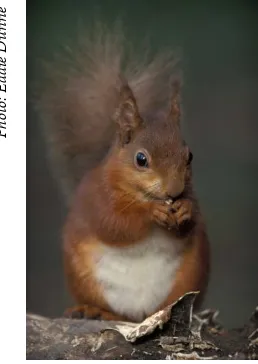
Sciurus vulgaris Linnaeus
Common name: Red squirrel
Irish name: Iora rua
Irish status: least concern
European status: least concern
Global status: least concern
Rationale for assessment: Previously assessed as ‘near threatened’ due to a 20% decline in range in Ireland since the introduction of the grey squirrel (Marnell et al. 2009). Recent surveys however have shown the red squirrel has expanded its range once again in the midlands of Ireland, following the loss of grey squirrels in those areas (Lawton et al., 2015). This recovery, plus the overall widespread distribution across the island of Ireland justify a change of status to least concern.
Legal Status: Wildlife Act, 1976; Wildlife (Amendment) Act, 2000; The Wildlife (Northern Ireland) Order 1985.
Distribution: Found across the Palearctic, from Ireland to Japan. Absent in Europe from some parts of Iberia and much of England and Wales. Red squirrels are widespread across Ireland, where there is sufficient canopy cover and connectivity between woods. May still be absent from some parts of the midlands where the grey squirrel has longest been established, but there has been a considerable recovery due to the recent regional decline of greys (Lawton et al. 2015, Lawton, 2016).
[image:33.595.407.536.45.227.2]Population in Ireland: Previously estimated at 40,000 individuals (NPWS & EHS, 2008); current figure may be higher in correlation with the recent range expansion.
Ecology and habitat in Ireland: Associated very closely with forests and general tree cover, red squirrels have had a mixed history in Ireland due to deforestation. Feed on seeds of conifer and broadleaf trees; are found in higher densities in broadleaved woodland, but are particularly prone to grey squirrel competition in this habitat. In coniferous habitat they can survive at low densities where the introduced grey squirrel cannot become established. Female red squirrels produce one or two litters a year, depending on food availability, and can live up to 6 years of age (Gurnell et al. 2008).
Threats: Due to their close association with forest habitat, red squirrel is very severely impacted by deforestation; its abundance is directly related to woodland available. Invariably lose out to grey squirrel populations in broadleaf and mixed wood habitat, due to competition and the impact of squirrel pox virus, which is carried by the grey squirrel.
Ph
ot
o:
E
dd
ie
Du
Order Carnivora
Canis lupus Linnaeus
Common name: Grey wolf
Irish name: Mac tíre
Irish status: Regionally Extinct
European status: least concern
Global status: least concern
Rationale for assessment: previously assessed as regionally extinct (Marnell et al., 2009). No change.
Distribution: Holarctic, from Scandinavia and Mediterranean through Russia and south and central Asia to North America (Mitchell-Jones et al., 1999).
Population in Ireland: Once widespread in Ireland, but de-forestation and hunting reduced the population. Active persecution during 17th century, brought about extinction, with the last animal reportedly shot in Co. Carlow in 1786 (Fairley, 1984; Hickey, 2016).