©IJRASET: All Rights are Reserved
1711
Presentation Layer Work Based On Cloud
P. Suresh1
1Research Scholar, Department of Computer Science, H.H the Rajah’s College (Autonomous), India
Abstract: The power of cloud enables dynamic scalability of applications facing various business requirements. The world experiences the Internet through the use of the World Wide Web, e-mail, and file-sharing programs. Most of the applications are intuitive; they can be accessed and used without the need to know how they work. As you continue to study the world of networking, it becomes more important to know how an application is able to format, transmit, and interpret messages that are sent and received across the network. In this paper position of Presentation Layer in seven layered Open Systems Interconnection (OSI) model is just below the Application Layer. The presentation layer is the sixth layer of the OSI Reference Model protocol stack, and second from the top. It is different from the other layers in two key respects. First, it has a much more limited and specific function than the other layers; it's actually somewhat easy to describe, hurray! Second, it is used much less often than the other layers; in many types of connections it is not required. The name of this layer suggests its main function as well it deals with the presentation of data. More specifically, the presentation layer is charged with taking care of any issues that might arise where data sent from one system needs to be viewed in a different way by the other system. It also takes care of any special processing that must be done to data from the time an application tries to send it until the time it is sent over the network. When the presentation layer receives data from the application layer, to be sent over the network, it makes sure that the data is in the proper format. If it is not, the presentation layer converts the data to the proper format.
Key terms: compression and translation, encryption and decryption, file format, osi seven layers, protocol.
I. INTRODUCTION
©IJRASET: All Rights are Reserved
1712
handling. The Data-Link Layer also provides error-free delivery of data between the two computers by using the physical layer. It does this by packaging the data from the Network Layer into a frame, which includes error detection information. At the receiving computer, the Data-Link Layer reads the incoming frame, and generates its own error detection information based on the received frames data. After receiving the entire frame, it then compares its error detection value with that of the incoming frames, and if they match, the frame has been received correctly.1. Physical Layer: Controls the transmission of the actual data onto the network cable. It defines the electrical signals, line states and encoding of the data and the connector types used.The presentation layer basic function is to convert the data intended for or received from the application layer into another format. Such conversion is necessary because of how to data is formatted so that it can be transported across the network. Application cannot necessary read this conversion.
Some common data formats handled by the presentation layer include the following:
A. Graphics files
JPEG, TIFF, GIR, and so on are graphics file format that require the data to be formatted in a certain way.
B. Text and data
The presentation layer can translate data into different formats, such as American standard code for information interchange (ASCII) and extended binary coded decimal interchange code (EBCDIC).
C. Sound/videos
MPEG, MP3 and MIDI files all have their own data formats to and from which data must be converted.Another very important function of the presentation of the presentation layer is encryption which is scrambling of data sot that it can’t be read by anyone other than the indented recipient. Given the basic role of the presentation layer that of data format translator it is obvious place for encryption and decryption to take place. In this figure1 work on presentation layer encryption and decryption.
FIG:1
II. LITRATURE SURVEY
“A network is a conduit for information; it can be as simple as two tin cans tied together with a string or as complicated as the internet” *i\iso1]. Networks can develop at various levels :individual (social network), organizational, inter-organizational, and international etc. Castells explains that a network “is constituted by the intersection of segments of autonomous systems of goals”. The evolution of the internet has been widely chronicled. Resulting from a research project that established communications among a handful of geographically distributed systems, the Internet now covers the globe as a vast collection of networks made up of millions of systems. Government corporations, banks, and schools conduct their day-to-day business over the Internet. With such widespread use, the data that resides on and flows across the network varies from banking and securities transactions to medical records, proprietary data, and personal correspondence. The Internet is the “world’s largest collection of networks that reaches universities, government labs, commercial enterprises, and military installations in many countries’.
III. PROPOSED WORK
©IJRASET: All Rights are Reserved
1713
users start the execution of business logic. There are practical reasons, however, not to isolate business logic completely from the presentation layer of client applications. To make a client application convenient to use, some information about the business domain has to be incorporated into the presentation layer.These are some examples:
A. Responsiveness
User input must be validated before its processing, for example a birth date or a credit card number. To make an application more responsive, some validations may need to be performed locally.
B. Performance
Some periodically performed computations may require the evaluation of large amounts of data, for example the analysis of stock quotations. A stateless server component would need to fetch the entire data required for the computation upon each invocation. A rich-client application may locally store and update the available data and perform the same calculations without additional costs.
C. Presentation
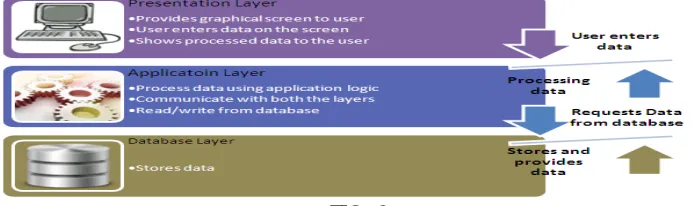
[image:4.612.127.473.605.708.2]Business data may need to be prepared for presentation. This includes the textual representation of business entities or the graphical representation of calculations, for example the presentation of a schedule. How business data is presented may vary between client applications and typically is not an essential part of the business logic. Although multi-tier information systems can be decomposed in many different ways, the implementation of a Layered Architecture ([Evans2004]) has become wide-spread. Suchan architecture mandates a separation of concerns that involves at least separating the presentation layer from the business domain and infrastructure layers.Typically, business domain and infrastructure layers are deployed in an application server whereas the presentation layer is part of a web or rich-client application.The Presentation Layer deals with the cloud organization of data passed from the application layer into the network. This layer allows for the standardization of data and the communication of data between dissimilar hosts, such as platforms with different binary number representation schemes or character sets (ASCII vs. UNICODE, for example.) Presentation Layer protocols typically rely upon a standardized data format for use on the network, and various conversion schemes to convert from the standardized format into and out of specific local formats. The Presentation Layer is another obscure layer, usually hidden deep in the implementation of applications and operating systems. End users may need to be passingly familiar with the outermost details such as JPEG picture formats or SSL encryption, but leave the details to their applications to sort out. For discussion purposes the Presentation Layer can be considered to be all interfaces implemented by or called from an application to prepare and present data to the network for transmission, such as program library functions that take data and re-order into“network-byte” order. Taken more broadly for an information security viewpoint, we canevaluate at this level any system or library functions that take data input and process itinto standard formatting or condition for all purposes. Vulnerabilities at this layer often originate from weaknesses or shortcomings inthe implementation of the presentation layer functions. Continuing on the theme oftaking advantage of the original atmosphere of implicit trust and simple functionality thatsystems were (and continue to be) built in, attackers feed unexpected or illegal inputinto presentation-layer facilities, gaining results that are undesired or contrary to whatthe original designers intended.The Presentation Layer gets its name from its purpose: It presents data to the Application layer. It's basically a translator and provides coding and conversion functions. A successful data transfer technique is to adapt the data into a standard format before transmission.Computers are configured to receive this generically formatted data and then convert the data back into its native format for reading. By providing translation services, the Presentation layer ensures that data transferred from the Application layer of one system can be read by the Application layer of another host. In this figure 2.
©IJRASET: All Rights are Reserved
1714
IV. METHODLOGY USED
The web client interacts with the presentation layer that in turn calls the business domain layer for all business-oriented tasks. The loading and saving of business data is delegated to a persistence layer that communicates with the database server. Typically, business domain and infrastructure layers are deployed in an application server whereas the presentation layer is part of a web or rich-client application. A common architecture for a web application on cloud environments.
FIG:3
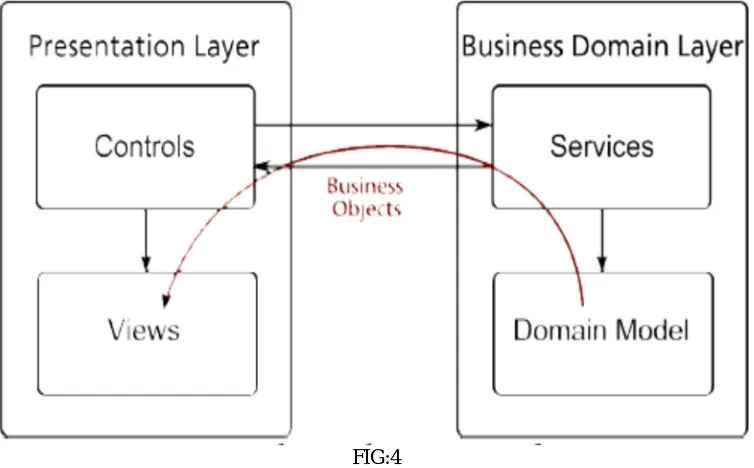
Let the business domain layer return business objects to the presentation layer when requested so that the presentation layer can use them to update the appropriate views. Therefore, add the functionality requested by the presentation layer to the business objects. In this figure(4).
FIG:4
Give each business object a clear and narrow responsibility. Each operation should be implemented in that respective business object that holds or may gather the relevant data. Use polymorphism to implement behavior that differs in sub classes. To resolve the requirements of the example application, the classes of the domain model are extended by client-side business logic, as shown in Fig. 4. Note that all methods that have been viewed are marked in red color.
V. EXPERIMENTAL RESULT
[image:5.612.118.495.325.559.2]©IJRASET: All Rights are Reserved
1715
VI. CONCLUSION &FUTURE WORK
Looking back, we have covered a lot of ground in the examination of the OSI Seven-Layer Model and its use as an information security tool. Having extended it with the inclusion of users and the policy they operate under, we have in many senses covered the entire spectrum of data assurance. In both the standard network context and in the extended context of information security, the seven-layer model is better applied as a tool for organizing concepts and scenarios rather than as a conceptual straight jacket. Examples from both worlds show that exceptions and variances to the model are sometimes desirable. This model in practice has been found to be complex and arbitrary, and lacks the conceptual elegance of the seven-layer model in how the layers interact. ISO leaves the service and mechanism interaction to the implementer, inviting a pick-and-choose approach tailbacks coherence. Hopefully the concepts presented in this paper contribute to a better understanding of how closely related information security and data networking are related, and how the understanding of one topic is essential to success in the other. In this future work ,on this layer to improvement multi cloud organization to implement of presentation layer.
REFERENCES
[1] Shodhganga.inflibnet.ac.in/bit stream/10603/4117/09/09-chapter 202.
[2] Adam, R (2003) The National R&D Strategy and Utilization of Research Findings. Presented at NACI Conference, 9 October, Midrand.
[3] AMTS (2003) A National Advanced Manufacturing Technology Strategy for South Africa, Volume 1 and Volume 2. Pretoria: National Council on Innovation. [4] Murat kayril and ismail kayer,”(IJNGN) VOL 2, NO:3, SEPT(2010).
[5] Hubert zimmermann” OSI REFERENCE MODEL AN ISO MODEL ARCHITECTURE FOR OSI”, In IEEE com-28 , no:4, April 1980.
[6] Alkhatib jamil, Anis mohas and noorihamed (2008) open source: the next big thing in the technology transfer to developing nations , international association for management of technology.
[7] Mizanian, K, Vasef, M. and Analoui, M. (2010)“Bandwidth modeling and estimation in peer to peer networks”, International Journal of Computer Networks & Communications (IJCNC), Vol. 2,No. 3, pp 65-83.
[8] J.Day, Zimmermann H, “The OSI referencemodel” published in IEEE vol.71,issue 12,pages:1334- 1340,1983.
[9] Hubert Zimmermann, “OSI Reference Model- the ISO Model of Architecture for Open System Interconnection” IEEE transaction on communications, vol.28, issue 4, April 1980