Design of Lowpass Fir Filter Using Nuttall and
Taylor Window Techniques
Uday Dewangan1, Hitesh Kumar Yadav2, Naveen Kumar Sahu3, Gaurav Panik4, Pranay Kumar Rahi5 1, 2, 3, 4
BE Scholar, 5Assistant ProfessorDepartment of Electrical & Electronics Engineering Institute of Technology Korba, Chhattisgarh, India
Abstract: The digital filter plays major role and area of communication system. In filtering application unwanted signal provides high attenuation. For removal of attenuation from pass band and stop band region and optimal design of filter is required. In this paper represent an optimal design of low pass fir filter using Nutall and Taylor window techniques. The simulation is done by using MATLAB. The comparative analysis performs in term of magnitude and phase response of proposed filter. The Nutall window design shows better result as compare with Taylor window design.
Keywords: DSP, Digital filter, Low pass filter, FIR filter, Taylor window, Nuttall window, frequency sampling.
I. INTRODUCTION
Digital Signal Processing (DSP) is an area of science And engineering which has evolved rapidly in the past 40 years It is said that the origin of DSP techniques By the seventeenth century can be traced when finite Difference methods numerical integration methods, and Numerical projection methods were developed Solution of physical problems involving constant variables More work This is the result of rapid development Significant progress in digital computer technology And integrated circuit construction DSP techniques are used in different areas, including Speech, radar, sonar, image etc. These techniques are Applied in spectral analysis, channel vocoders, homomorphism processing. [1][2]
type of filter and purpose
SN Filter Purpose
1 low pass filter Passes low frequency band
2 high pass filter Passes high frequency band
3 band pass filter Passes selected range of frequency band
4 band stop filter Stops selected range of frequency
There are two types of filters i.e.
A. Finite Impulse Response (FIR) filter B. Infinite Impulse Response (IIR) filter
II. FINITE IMPULSE RESPONSE
The digital FIR filter has many favorable properties, which is why they are extremely popular in digital signals. One of these properties of processing is that they can display linear steps, which means that the signal in the pass band. There is no dispersion to disperse dispersion occurs when there is a separate delay through different frequency components of the signal a system. The simplest design method for FIR filter is Impulse Response Synchronization (IRT), but unfortunately it is undesirable Due to the event of Gibbs, frequency-domain characteristics are the second design.
III. FILTER DESIGN METHOD
IV. WINDOW FUNCTION
In this method, a certain bandwidth is generated using a truncated ideal low-pass filter, and then we use a selected window to get certain stop-band attenuation. The filter length L can be changed in the transition band to meet a specified roll-off rate. We start with windowed, truncated low-pass filters, and then do it for other kind of filters, like band-stop, bandpass, and high-pass filters can also be achieved by several techniques.
Any finite-length of a low-pass impulse response may be considered as the product of a window function w and the infinite-length low-pass impulse response.
n
M
W
n
M
M
n
w
a
L c
sin
V. NUTTALL WINDOW
Between Blackman, Extract Blackman and Blackman Harris window, The Nuttall window has the most detailed main lobe and the lowest maximum lab level. The equation for the new window is:
( ) =a0−a1cos 2 +a2cos 4 −a3cos 6 ⋯ ⋯ ⋯ ⋯ ⋯ ⋯()
Where n=0, 1, 2….N-1
The equation for the periodic Nuttall
( ) =a0−a1cos 2 +a2cos 4 −a3cos 6 ⋯ ⋯ ⋯ ⋯ ⋯ ⋯()
Where n= 0, 1, 2, N-1.
The periodic window is N-periodic. [4]
The coefficients for this window are given in table:-
Coefficient of Nuttall window
a0 0.3635819
a1 0.4891775
a2 0.1365995
a3 0.0106411
VI. TAYLOR WINDOW
Taylor Loop is used in FIR filter rotation technique in MATLAB is a Taylor loop FIR filter but it is used for feedback and other math works Taylor windows are similar to the windows in the Chebyshev while one Chebyshev is the smallest possible main lobe for the window The specified sandwich level, a teller window allows you to create trade between main lobe width and side lobe level. Taylors delivery avoids the disadvantages of growth, so Taylor window side lobe decreases monotonically, Taylor Window Coefficient is not normalized Taylor windows are usually used in radar applications, such as synthetic weight aperture radar images and antenna designs. [5][6]
VII. DESIGN SIMULATION/RESULT
To design the low pass FIR filter using MATLAB Nuttall and Taylor Window the parameter specifications are:- Table1-Parameter Specification
PARAMETER VALUES
Sampling Frequency(F.s.) 48000 Hz
Cut off Frequency(F.s.) 10800 Hz
FREQUENCY WINDOW TECHNIQUES
NUTTALL TAYLOR
0.1 13.1448 -19.0891
0.2 -12.9642 -20.0534
0.3 -74.6998 -2.5700
0.4 -67.9512 -39.0168
0.5 -76.9714 -5.7209
0.6 -71.0887 -41.4898
0.7 -70.5848 -7.5781
0.8 -77.3212 -36.7980
0.9 -68.9529 -8.4281
-89.8437 -29.2613
Fig1. Time domain and frequency domain of nuttall window
[image:4.612.201.416.484.707.2]Fig3. Phase Response of Nuttall Window Technique
Fig4. Magnitude and Phase of Nuttall Window Technique
Fig5. Filter coefficient on Nuttall Window Technique
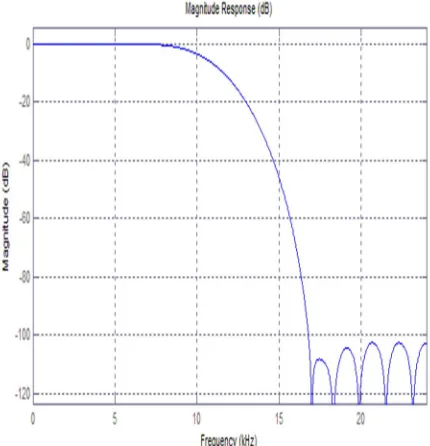
Fig7. Magnitude Response of Taylor Window Technique
Fig8. Phase Response of Taylor Window Technique
Fig9. Magnitude and Phase of Taylor Window Technique
VIII. CONCLUSION
In this research paper, low pass filter has been designed and simulated using Nuttall and Taylor window. By analyzing magnitude and phase response using MATLAB simulation of order 30, it conclude that Nuttall window has better pass band response as compare to Taylor window. So it state that Nuttall window technique is perfect than Taylor window technique.
REFRENCES
[1] Sanjit K. Mitra “digital signal processing” a computer based approach second edition McGraw Hill.
[2] Michael Weeks, “digital signal processing” Using MATLAB and Wavelets, 2007 edition, Infinity Science Press. [3] Carnegie Mellon, “Note on FIR Filter Design Using Window Function”, Signals and System (18-396).
[4] Nuttall, Albert H. “Some windows with very Good Side lobe behaviour”, IEEE Transactions on Acoustic, Speech and Signal Processing, pp. 01-03, February’ 1981.
[5] Carrara, W.G., R.M. Majewski and R.S. Goodman, "Spotlight Synthetic Aperature Radar Signal Processing Algorithms", Artech House Publishers, Boston, Appendix D.2, 1995.
[6] Brookner, Eli, "Practical Phased Array Antenna Systems", Lex Book, Lexington, MA, 1991.
AUTHORS
Uday Dewangan pursuing Bachelor of Engineering in Electrical & Electronics Engineering in 4th semester from Institute of Technology Korba, Chhattisgarh Swami Vivekanand University (CSVTU) Durg, India
Hitesh Kumar Yadav pursuing Bachelor of Engineering in Electrical & Electronics Engineering in 4th semester from Institute of Technology Korba, Chhattisgarh Swami Vivekanand University (CSVTU) Durg, India
Naveen Kumar Sahu pursuing Bachelor of Engineering in Electrical & Electronics Engineering in 4th semester from Institute of Technology Korba, Chhattisgarh Swami Vivekanand University (CSVTU) Durg, India.