Technology (IJRASET)
Simulation Model and Protocol for Energy
Efficient Routing Through AODV
Pankaj Shashikant Kawale1, Dr. Varsha Namdeo2, Mr. Neelesh Sharma3
Electronics and Communication Department, RKDF Inst. of Science and Technology Bhopal
Abstract: In recent years, mobile ad hoc networks have played an increasingly important role in a wide range of applications. A wireless ad hoc network consists of various mobile, self organized and battery–powered wireless devices, such as pdas, laptops and cellular phones. These mobile devices use nickel cadmium or lithium-ion batteries as their power providers and each of them may have different battery capacity and power dissipation characteristics. In this paper, an energy efficient routing protocol is proposed for this purpose which is based on aodv.
in the present work, we propose an energy efficient routing protocol viz. Eerp (energy efficient routing protocol). The protocol reduces the transmission power of a node which is part of an active route if next hop node is closer. The distance between two consecutive nodes is calculated based on rss (received signal strength) from next hop during the route reply process. If the rss is high, it implies that nodes are closer; as a result lesser transmission power will be required to send data. This in turn reduces battery consumption. The performance analysis of proposed protocol is analyzed using qualnet 5.0.2 network simulator and it is compared with existing aodv routing protocol it is found that the performance of proposed eerp protocol is better in terms of in terms of residual battery, energy consumed in transmit and receive mode, average jitter, end-to-end delay and throughput. Energy consumption is found to be 12% less than existing aodv protocol.
Keywords: Ad-hoc networks, throughput, jitter, end-to-end delay, transmission power, eerp.
I. INTRODUCTION
In MANET all nodes are mobile in nature. All nodes are having limited battery charge. The nodes of a network will communicate only when it will come into the range of another node of another network. By continuous change in position and connection, the battery will degrade faster. As Ad-hoc Networks are used in remote areas so it is very difficult to replace as well as recharge the battery. Actually it works without any central coordination like access point and battery sources are not available where it works, so it is very crucial to save battery of those nodes which are having low battery so that the network lifetime can be long lasting. It is really very significant to increase Lifetime of MANET because once the network will not be there how the data will be transfer. The proposed study deals with the energy efficient routing protocol for MANET which has been developed after enhancement in existing AODV algorithm. The study aims at to develop an energy efficient routing protocol for MANET by reducing the transmission power of a node which is part of an active route if next hop node is closer. The distance can be calculated based on RSS from next hop during the route reply process. If this RSS is high, it implies that nodes are closer, as a result of which lesser transmission power can be used to send data. At this point, we reduce the transmission power of the receiving node. This is turn reduces battery consumption. Also it improves throughput and delay.
The present work proposes an enhanced AODV protocol viz. EERP (energy efficient routing protocol) which increases the battery lifetime of MANET nodes by reducing the transmission power of the nearby nodes.
The paper is organized as follows: First part gives the introduction of the ad hoc network. Second section describes the related work done in the field of energy efficiency. Third part explains about the need of energy management in ad hoc networks. Section four describes types of MANET routing protocols and focuses on existing AODV protocol. Fifth part gives the algorithm for proposed AODV protocol. Various performance parameters required for simulation are discussed in section six. Results found are discussed in section seven. Finally the conclusion in section eight gives the gist of the paper.
II. RELATED WORK
Technology (IJRASET)
classifies conventional and energy efficient routing protocols. This work classifies a number of energy aware routing schemes. The work done in [4] first explain that the minimum energy routing schemes in the literature could fail without considering the routing overhead involved and node mobility and then propose a more accurate analytical model to track the energy consumptions due to various factors, and a simple energy-efficient routing scheme PEER to improve the performance during path discovery and in mobility scenarios. Deying Li in [5] proposes three energy efficient multicast routing methods named as a Steiner tree based method, a node-join tree greedy (NJT) method and a tree-join-tree greedy (TJT) method. Next [6] uses a hibernation mechanism, a beacon inhibition mechanism, and a low-latency next-hop selection mechanism for reducing the power consumption in the MAC protocol. The available energy-efficient routing protocols from transmission power control and load distribution approaches have been analyzed in [7]. In [8] the work uses hello packet broadcast mechanism to reduce the routing overhead and improve the efficiency. The proposed protocol is another attempt to provide an energy efficient mechanism in ad hoc network. In this protocol, the battery lifetime of MANET nodes is increased by reducing the transmission power of the nearby nodes.
III. NEED FOR ENERGY MANAGEMENT IN AD HOC NETWORKS
The energy efficiency of a node is defined as the ratio of the amount of data delivered by the node to the total energy expanded. The main reasons for energy management in ad- hoc networks
are:-A. Limited energy reserve.
B. Difficulties in replacing the batteries. C. Lack of central coordination. D. Constraints on the battery sources. E. Selection of optimal transmission power. F. Channel utilization.
In ad-hoc networks, power is the main concern, as we have seen that due to less energy of the nodes they never retain for long time in the network as well as they are [2].
G. Hence due to low power of node following problems may arise 1) Node may detach from the network due to less energy level. 2) Node may not function properly.
3) Whole network may affect due to this node. So our aim i
4) To reduce the transmission power of a node (using AODV) which is a part of an active route, if next hop node is closer.
5) The distance between the nodes can be calculated based on RSS (received signal strength) from next hop during the route reply process.
6) If this RSS is high, nodes are closer and lesser transmission power can be used to send data. This is turn reduces battery consumption. Also it improves throughput and delay.
IV. MANET ROUTING PROTOCOLS
The figure1 depicts three types of routing protocols in MANET: table driven, on-demand driven and hybrid routing protocol. In case of table driven routing protocol, the packets will be sent continuously in comparison to on-demand driven routing protocol. Reactive or on demand routing protocols works only on demand.
These three routing protocols are further divided into several protocols. Among all these protocols, AODV is being considered for energy efficiency. AODV is supposed to be better for this purpose because it is on-demand with route maintenance phase in its process.
Table Driven Protocol (Proactive) These protocols are also called as proactive protocols since they maintain the routing information even before it is needed. Each and every node in the network maintains routing information to every other node in the network. Routes information is generally kept in the routing tables and is periodically update as the network topology changes.
On Demand routing protocols (Reactive) In order to overcome limitations of the proactive protocols in mobile environments, reactive protocols such as AODV, TORA, DSR, and ABR are used.
Technology (IJRASET)
(possible more than) one route to a given destination. These control packets are usually smaller than the control packets used for routing table updates in proactive schemes, thus causing less overhead.
Figure1: Classification of Routing Protocol
Hybrid routing protocols Hybrid routing protocols combine table based routing protocols with on demand routing protocols. They use distance-vectors for more precise metrics to establish the best paths to destination networks, and report routing information only when there is a change in the topology of the network. Zone Routing Protocol (ZRP) is an example of a Hybrid routing protocol [3].
B. AODV Routing Algorithm
There are three phases for operation of AODV routing protocol.
1) Route establishment: This phase generates route request packet to discover best shortest path. It consists of two processes: a) Generate request
b) Processing and forwarding route request.
2) Route handling: This phase handles the route requests generated. Once the route is established all the packets will be sent to the destination through the same route. It includes two processes:
a) Generating route replies.
b) Receiving and forwarding route replies.
(3) Route Termination: It describes when the route will terminate. If there will be any error in the route then route error packet is sent to the sender and intermediate nodes will indicate alternative path to recover from the error. This is explained in the route error message, route expiry and route deletion process [3].
V. PROPOSED AODV ALGORITHM- EERP
In order to make AODV energy efficient, its enhanced version EERP is proposed in this section. All three phases of AODV protocol have been modified for this purpose. In route establishment phase, the modifications has been done in second segment viz. processing and forwarding route requests which includes comparison of current threshold value of RSS with the received signal value. This comparison will decide whether this node will work as forwarding node or not. In route handling phase, changes have been made in processing and forwarding route reply process. Here, the current RSS value of signal is compared with the threshold value. On the basis of it, transmission power of nearby node is reduced in the route reply phase. In the route termination phase, changes have been made in route expiry process which resets the transmission power of node. The subsequent sections describe the different function to execute the EERP protocol.
A. Algorithm
1) Generating Route Requests: While [(Time to wait for last RREQ reply is completed) AND (RREQ Retries < = MAX)] {
If (Node has data to send) {
If (No valid entry in route table for destination)
Technology (IJRASET)
Else If (Have a invalid destination entry in route table) {Generate RREQ with last sequence number; } Save [(RREQ_ID) and (IP address source)]; }
2) Processing and Forwarding Route Requests. : If (Node listen a RREQ) {
If (current RSS < -8 { Discard; }
Note: The above condition helps in ensuring that when reply comes back through this particular route, there are chances that a good RSS value will be received.
Else If (same as forwarded in near past) {Discard; }
Else (This is a new RREQ) {Update the routing table entries; } IF (TTL > 1)
{Decrease the TTL field by one;
If [(Node is Destination for this RREQ) OR (Node has route to destination)] {Send RREP;
Discard RREQ; } Else {Broadcast RREQ; } }}
3) Generating Route Replies: Route Reply Generation by the Destination.
Do some routine task like above for RREP and IP packet; Send RREP; Route Reply Generation by an Intermediate Node. Do some routine task like above for RREP and IP packet; Send RREP to originator; If (Gratuitous flag is set in RREQ){Send RREP to destination also; }
4) Receiving and Forwarding Route Replies. If (current RSS > Threshold Set from GUI) {Reduce Transmission Power }
Note: The above condition results in energy efficient routing protocol. Do { Make valid changes in the routing table with respect to RREP packet { Update Sequence number IF
Sequence number in routing table is marked as invalid.
equence number in RREP is greater than stored sequence number. Update Hop Count IF
equence number is same but route flag is marked as invalid.
equence number is same but new hop count is less than stored hop count. } IF (This node is not ultimate receiver for this RREP)
{Consult from routing table for next hop; Forward RREP; } }
5) Route Error (RERR) Messages, Route Expiry and Route Deletion. IF ((Link is Break for next hop for an active route) OR
(Node has a data packet for a node but not have an active route) OR (Receives a RERR from neighbor for one or more active route)) {Make a list of unreachable destinations;
IF (destination list is not empty) {Send RERR messages to those destinations; } Mark that route as invalid in routing table;
Increment the sequence number for those destinations; Reset the transmission power to initial value.}
V. PERFORMANCE PARAMETERS
Technology (IJRASET)
A. Average JitterJitter is the variation in time between packets arriving, caused by network congestion, timing drift or route change. A jitter buffer can be used to handle jitter.
B. Throughput
Throughput is the average rate of successful message delivery over a communication channel. It is usually measured in bits per second (bit/sec), and sometimes in data packets per second.
C. End-to-End delay
Average amount of time taken by a packet to go from source to destination. This includes all possible delays caused by route discovery latency, retransmission delays and transfer times.
VI. RESULTS AND DISCUSSION
Simulation were done using networks consisting of 2, 4, 6, 8, 10 links. This was performed to evaluate the energy efficiency of Enhanced AODV (EERP) by using parameters such as Energy consumed, Residual Battery, Average Jitter, Average Delay, Throughput, Packets received.
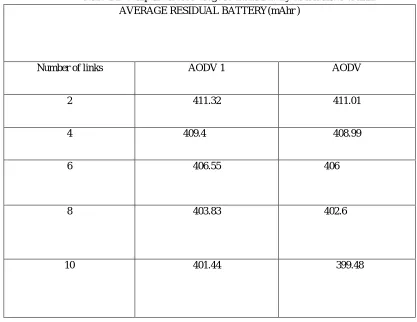
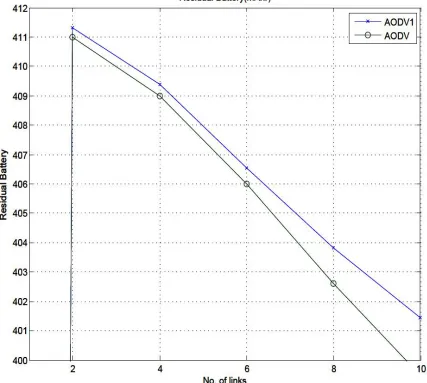
[image:6.612.77.494.327.649.2]The figure 4.1 cites that the Average residual battery of the network is greater in AODV1 as compared to AODV as the number of links increases. In case of AODV1, lesser transmission power is used to send data if the node is closer, therefore residual battery is greater as compared to AODV.
Table 4.1: Comparison of Average Residual Battery with number of links AVERAGE RESIDUAL BATTERY(mAhr )
Number of links AODV 1 AODV
2 411.32 411.01
4 409.4 408.99
6 406.55 406
8 403.83 402.6
Technology (IJRASET)
Figure 4.1: Residual Battery Vs Number of Links (in mAhr)
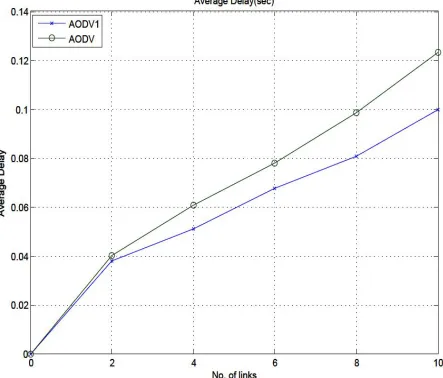
[image:7.612.85.512.88.471.2]A. Average End-to-End Delay (sec) Vs Number of Links
Table 4.2: Comparison of Average End-to-End Delay with number of links Average End-to-End Delay (sec)
Number of links AODV 1 AODV
2 0.037882 0.040016
4 0.050951 0.060833
6 0.067723 0.077921
8 0.080753 0.09872
10 0.099883 0.123266
Technology (IJRASET)
Figure 4.2: Average End-to-End Delay Vs Number of Links (in sec)
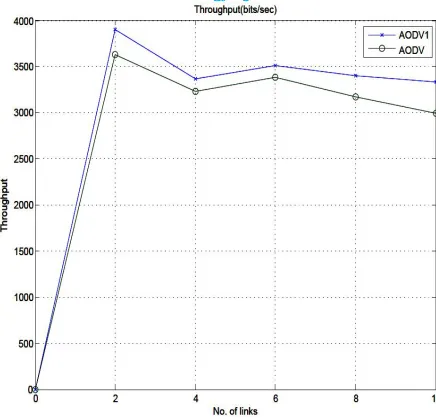
[image:8.612.82.525.84.462.2]B. Throughput (bits/sec) Vs Number of Links
Table 4.3: Comparison of Throughput with number of links Throughput (bits/sec)
Number of links AODV 1 AODV
2 3900.5 3629 4 3363.25 3228.5 6 3514 3382.67 8 3399.12 3170.38 10 3329.4 2994.5
Technology (IJRASET)
Figure 4.3: Throughput Vs Number of Links (in bits/sec)
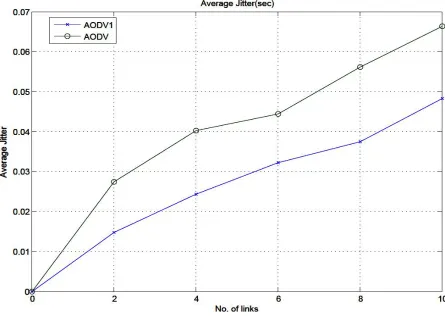
[image:9.612.76.512.75.494.2]C. Average Jitter Vs Number of Links
Table 4.4: Comparison of Average jitter with number of links Average Jitter (sec)
Number of links AODV 1 AODV
2 0.014822 0.027476 4 0.024399 0.040252 6 0.032162 0.044412 8 0.037508 0.056189 10 0.048264 0.066433
Technology (IJRASET)
Figure 4.4: Average Jitter Vs Number of Links (in sec)
D. Energy Consumed in Transmit mode (mJoule) Vs Number of Links
Table 4.5: Energy Consumed (Transmit mode) with number of links Energy Consumed in Transmit mode (mJoule)
Number of links AODV 1 AODV
2 0.16263 0.17998 4 0.282589 0.311918 6 0.458594 0.495085 8 0.616657 0.705765 10 0.771823 0.894985
E. Energy Consumed in Receive mode (mJoule) Vs Number of Links
Table 4.6: Energy Consumed (Receive mode) with number of links Energy Consumed in Receive mode (mJoule)
Number of links AODV 1 AODV
2 0.610952 0.672155 4 1.06822 1.17007 6 1.67508 1.79353 8 2.16489 2.47381 10 2.71416 3.12455
Technology (IJRASET)
[image:11.612.81.534.93.414.2]in both the modes in case of AODV1 since transmission is done at reduced RSS value.
Figure 4.5: Energy Consumed in Transmit mode Vs Number of Links (in mJoule)
VII. CONCLUSION
The simulation has been carried out in Qualnet 5.0.2 and the performance parameters values have been evaluated. For evaluation analysis, some parameters are being considered to compare both AODV and EERP such as residual battery and throughput which is increasing. Average jitter, energy consumed and delay is decreasing. Consequently EERP is better than existing AODV. EERP improves the performance of route selection of AODV due to the fact that it minimizes the interference as a result of transmission power control.
Reducing power consumption in ad-hoc networks has received increased attention among researchers in recent years. Since a node is used as a host and router, design of energy efficient routing protocols must address reducing of power consumption from the view point of the node and network. Although energy efficiency is not the design goals of MANET routing protocols, each routing protocol reacted in a different way with energy aware metrics. This is due to the route discovery and maintenance mechanisms of these routing protocols. In this paper, we evaluate the energy efficiency of existing well known MANETs routing protocols viz. AODV. We propose mechanism which provides energy efficient algorithm for AODV routing protocol. The mechanism reduces the transmission power of a node which is part of an active route if next hop node is closer. The distance can be calculated based on RSS (received signal strength) from next hop during the route reply process. In request phase, if the RSS is high than threshold value then that node will consider for forwarding the packet. In reply phase, if the RSS is high, it implies that nodes are closer; as a result lesser transmission power will be required to send data. At this point we reduce the transmission power of the node. This in turn reduces battery consumption. This energy efficient routing mechanism is incorporated into AODV and provided EERP. Transmission power control which reduces interference extend the battery lifetime of network.
REFERENCES
Technology (IJRASET)
[2] Sajjad Zarifzadeh, Nasser Yazdani, Amir Nayyeri, Energy-efficient topology control in wireless ad hoc networks with selfish nodes, Computer Networks, Volume 56, Issue 2, February 2012, pp. 902-914.
[3] Shiva Prakash, J. P. Saini, S. C. Gupta,” A review of Energy Efficient Routing Protocols for Mobile Ad Hoc Wireless Networks” International Journal of Computer Information Systems, Volume 1, 2010.
[4] Jinhua Zhu and Xin Wang,” Model and Protocol for Energy Efficient Routing over Mobile Ad Hoc Networks”, Proceedings of the Conference on Computer Communications, 2000, pp 22-31.
[5] Deying Li, Qin Liu, Xiaodong Hu, Xiaohua Jia, Energy efficient multicast routing in ad hoc Wireless networks, Computer Communications, Volume 30, Issue 18, 10 December 2007, pp. 3746-3756.
[6] Ren-Hung Hwang, Chiung-Ying Wang, Chi-Jen Wu and Guan NanChen,” A novel efficient power-saving MAC protocol for multi-hop MANETs”, International journal of communication systems 2011, DOI: 10.1002/dac.1328.
[7] Chansu Yu, y Ben Lee and Hee Yong Youn,” Energy efficient routing protocols for mobile ad hoc networks”, wireless communications and mobile computing, Volume 3,2003, pp. 959–973.
[8] Sudip Misraa, Sanjay K. Dhurandherb, Mohammad S. Obaidatc, Pushkar Guptab,
[9] Karan Vermab, Prayag Narulab, An ant swarm-inspired energy-aware routing protocol for wireless ad-hoc networks, Journal of Systems and Software, Volume 83, Issue 11, November 2010, pp. 2188-2199.
[10] Anu Kumari, Arvind Kumar, Akhil Sharma,” Survey Paper on Energy Efficient Routing Protocol in MANET”, International Journal of Advanced Research in Computer Science and Software Engineering” Volume 3, Issue 3, March 2013.
[11] Sajjad Zarifzadeh, Nasser Yazdani, Amir Nayyeri, Energy-efficient topology control in wireless ad hoc networks with selfish nodes, omputer Networks, Volume 56, Issue 2, February 2012, pp. 902-914.
[12] Natalia Vassileva, Francisco Barcelo-Arroyo,” A Survey of Routing Protocols for Maximizing the Lifetime of Ad Hoc Wireless Networks”, International Journal of Software Engineering and Its Applications Volume 2, July 2008, pp. 3
[13] Maurizio D’Arienzo, Francesco Oliviero, Simon Pietro Romano, Can Cooperation improve energy efficiency in ad-hoc wireless networks, Computer Communications, Volume 35, Issue 14,1 August 2012, pp. 1707-1714.
[14] Yalin Evren Sagduyu, Anthony Ephremides, Energy-efficient MAC in ad-hoc networks inspired by conflict resolution concepts, Ad hoc networks, Volume 1, Issue 1, July 2003, pp. 65-86.
[15] Mr. Tushar Gawande, Prof. N.N Mhala,” Network Coding To Improve Performance of AODV Protocol in Wireless Ad-Hoc Network”, International Journal of Scientific Research Engineering & Technology (IJSRET) Volume 1, Issue3, June 2012, pp.033-039.
[16] Zijian Wang, Eyuphan Bulut, Boleslaw K. Szymanski, Energy efficient location services for mobile ad hoc networks. Ad Hoc Networks, Volume 11, Issue 1, January 2013, pp. 273-287.