Page 1 of 193
The London School of Economics and Political Science
Making It Work: The Development and Evolution of Transnational Labour Regulation
Natalie Beinisch
Page 2 of 193 Declaration
I certify that the thesis I have presented for examination for the MPhil/PhD degree of the London School of Economics and Political Science is solely my own work other than where I have clearly indicated that it is the work of others (in which case the extent of any work carried out jointly by me and any other person is clearly identified in it).
The copyright of this thesis rests with the author. Quotation from it is permitted, provided that full acknowledgement is made. This thesis may not be reproduced without my prior written consent.
I warrant that this authorisation does not, to the best of my belief, infringe the rights of any third party.
Page 3 of 193 Abstract
Who has the capacity to regulate production in transnational supply chains and whose interests does this serve? This focus of this thesis is on transnational regulation, specifically the
identification of the actors who participate in setting and implementing regulatory agendas, their interests, capacity and interactions between them.
Transnational regulation is the regulation of activities which take place across national jurisdictions. State and non-state actors are direct participants in transnational regulatory regimes and non-state actors may play leading roles in their development and implementation. While work has been done which examines the roles that non-state actors play in transnational regulatory processes, there has been limited investigation into the relationships between state and non-state actors on transnational standard setting and implementation.
The Governance Triangle, developed by Abbott and Snidal (2009) is a framework that positions the relationships between states, businesses and NGOs as central to transnational regulation. They argue that cooperation is necessary between these groups for there to be sufficient capacity to regulate a transnational problem. However, due to the divergent interests of these actors and the distribution of bargaining powers between them, they posit transnational regulatory standards are likely to be dominated by business interests and will be sub-optimal. This thesis explores the question of whether transnational regulatory programmes dominated by business organizations are necessarily lacking regulatory capacity and whether they remain that way over time by studying the emergence and evolution of two cases of industry self -regulation designed to improve labour standards in the production of toys and chocolate. Building upon the Governance Triangle, this thesis makes three key findings: 1) Bargaining in transnational regulation is not always distributional and that it is possible for acto rs to cooperate to identify and develop frameworks for transnational regulatory problems. 2) Interactions within one actor type and interactions involving all three actor groups can shape power dynamics in the bargaining process and 3) Regulation that is dominated by business actors does begin as sub-optimal. However, over time new bargaining processes can be initiated which lead to incremental developments in the capacity of a system to regulate. This thesis also contributes to the literature on non-state actors in regulation by identifying the actors which participate in transnational regulatory processes and their motivation and
Page 4 of 193
Contents
Chapter One: Context Setting ... 8
Introduction ... 8
Transnational Self- Regulation and the Emergence of Non -State Actors ... 10
Transnational Industry Self-Regulation: Defining the Actors ... 17
Business Actors ... 17
Multinational Corporations ... 17
Suppliers ... 19
Industry Associations ... 20
NGOs ... 22
State Actors in Transnational Regulation ... 24
Multilateral Organizations ... 24
Missing Actors ... 25
Methodology ... 28
Data ... 34
Chapter Two: Emergence of the ICTI CARE Process ... 38
Introduction ... 38
Organization of the Toy Industry ... 38
Issue Emergence ... 40
Nature of the Regulatory Problem... 40
Toycott Campaign ... 41
Toy Coalition ... 45
Intervening Period ... 48
Mattel and Hasbro Implement Codes of Conduct ... 49
Working with the International Toy Council to promote and industry standard ... 50
Limited Adoption of the ICTI CARE Process ... 53
Industry Self-Regulation ... 54
Alan Hassenfeld and the ICTI CARE Process ... 54
Appealing to National Toy Associations and Retailers ... 56
Conclusion: Actors and their Interactions on the Governance Triangle ... 57
Chapter Three: Emergence of the Harkin Engel Protocol ... 63
Introduction ... 63
Organization of the Chocolate Industry ... 63
Issue Emergence ... 65
Political Instability in Côte d’Ivoire ... 65
Page 5 of 193
Industry and State Coordination ... 68
Intervening Period ... 71
Trafficking and Child Slavery in West Africa: Linked to chocolate manufacturing by the media . 71 Etireno Incident and the Anti-slavery taskforce ... 74
Industry Self-Regulation ... 77
News reports about child slavery in the United States stimulates regulatory action ... 77
Tom Harkin offers alternative to statutory regulation ... 78
Negotiating the Harkin Engel Protocol ... 80
The Harkin Engel Protocol ... 83
Conclusion: Actors and their Interactions on the Governance Triangle ... 84
Chapter Four: Evolution of the ICTI CARE Process ... 89
Introduction ... 89
Organization of the CARE Process ... 90
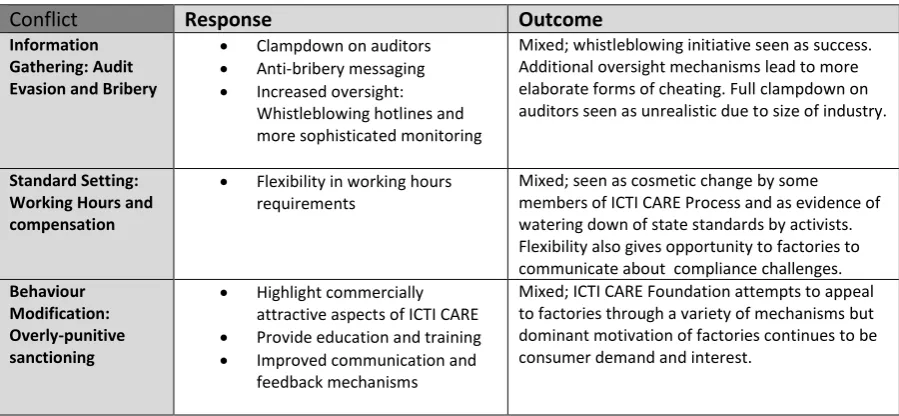
Conflicts in the CARE Process ... 96
Information Gathering ... 96
Standard Setting ... 100
Behaviour Modification ... 102
Conflicts and Actor Positions ... 105
Conflict Management in the CARE Process ... 107
Information Gathering ... 107
Standard Setting... 111
Behaviour Modification ... 113
Conclusion: Evolution of Bargaining in the ICTI CARE Process ... 117
Chapter Five: Evolution of the Harkin Engel Protocol ... 120
Introduction ... 120
Organization of the Harkin Engel Protocol ... 120
Conflicts in the Harkin Engel Protocol ... 129
Information Gathering ... 130
Standard Setting... 136
Behaviour Modification ... 140
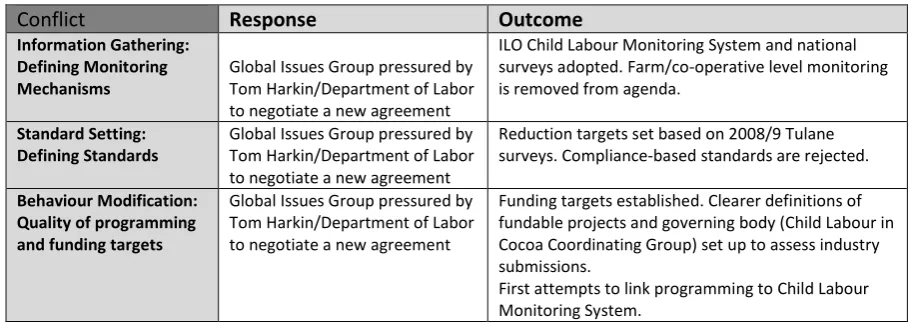
Conflict Management in the Harkin Engel Protocol ... 144
Information Gathering ... 145
Standard Setting ... 150
Behaviour Modification ... 150
Page 6 of 193
Chapter Six: Developing and Implementing Transnational Regulation: Actors and their Interactions
... 155
Introduction ... 155
Distributive and Cooperative Bargaining in Transnational Regulation ... 156
Actor Dynamics: Intra-actor and Three-way Bargaining Processes ... 158
The Evolution of Bargaining in Transnational Regulation ... 160
Actors in Transnational Regulation ... 162
Multinational Companies ... 162
Suppliers ... 164
Industry Associations ... 165
NGOs ... 168
Unions ... 169
States ... 171
Multilateral Organizations ... 172
Missing Actors ... 173
Individual Policy Entrepreneurs ... 173
Media ... 175
Conclusion: Theoretical Contributions and Paths of Inquiry ... 179
Bibliography ... 183
Page 7 of 193 Tables and Figures
Table 1: Motivation and Capacity of State and Non-State Actors ... 27
Table 2 Organizations in the ICTI CARE Process ... 58
Table 3 Key Actors in the ICTI CARE Process ... 58
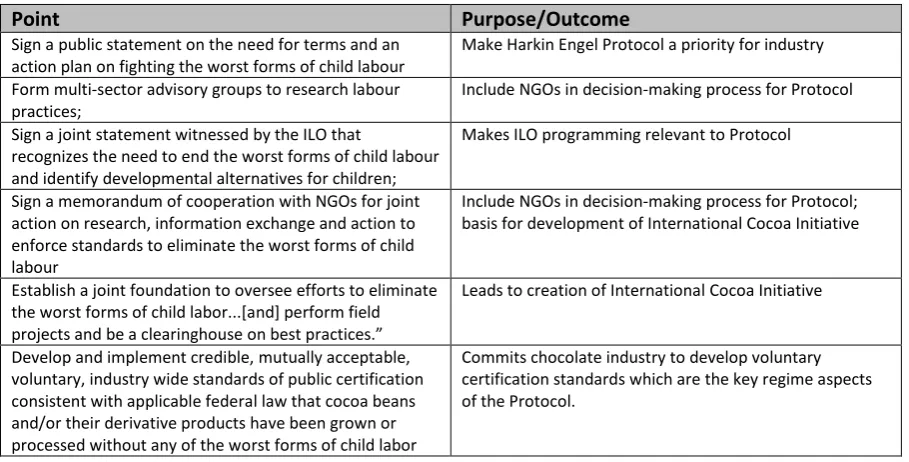
Table 1 Key Points of the Harkin Engel Protocol ... 84
Table 5 Organizations in the Harkin Engel Protocol ... 85
Table 6 Influential Actorrs in the Harkin Engel Protocol ... 86
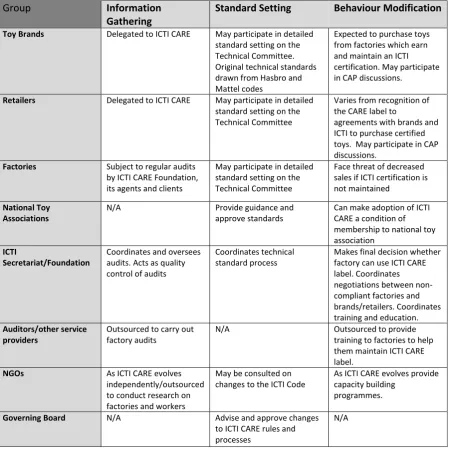
Table 6: Organization of the ICTI CARE Process ... 94
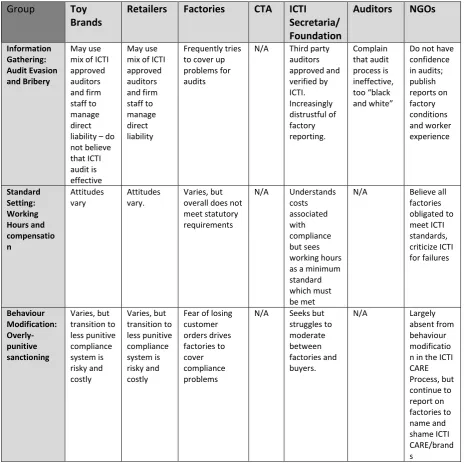
Table 7 Conflicts in the ICTI CARE Process ... 106
Table 8 Adaptation of the ICTI CARE Process ... 116
Table 9: Organization of the Harkin Engel Protocol ... 127
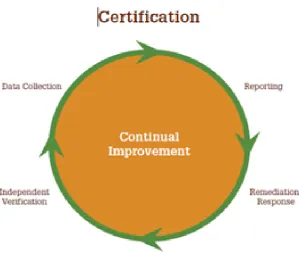
Figure 1: GIG Certification Model ... 137
Table 10: Conflicts in the Harkin Engel Protocol ... 143
Table 11 Adaptation of the Harkin Engel Protocol ... 152
Page 8 of 193
Chapter One: Context Setting
Introduction
Who has the capacity to regulate production in transnational supply chains and whose interests does this serve? This focus of this thesis is on transnational regulation, specifically the identification of the actors who participate in setting and implementing regulatory agendas, their interests, capacity and interactions between them.
Transnational regulation is the regulation of activities which take place across national jurisdictions. The concept is relatively new and has gained prominence as a result of the growth of international trade regimes which began to accelerate in the 1990s.1 The growth of international trade has introduced new types of social and environmental problems that often cannot be addressed by state regulation alone2. One example of such a problem is labour standards in transnational supply chains. This has emerged as an issue because workers from low-income countries who have entered global supply chains often do not have the same levels of protection for their health and welfare which are offered in developed countries, where multinational companies, who are the beneficiaries of this work, are based. Businesses have gradually accepted responsibility to address these types of problems and in the past two decades there has been an explosion of programmes developed by a range of state and non-state actors which are designed to regulate transnational production.
The sheer number of transnational regulatory schemes and the diversity of actors involved means that it is challenging to determine who controls them and what their interests and capacity are to do
1 This is documented in Abbott, K. W. and D. Snidal (2009). "The Governance Triangle: regulatory standards
institutions and the shadow of the state." The politics of global regulation: 44-88.
2 This can be due to legal reasons (ie. States do not have the authority to regulate outside of their
Page 9 of 193
so. While work has been done which examines these issues3, in particular in terms of the roles played by NGOs and businesses organizations in establishing transnational standards, it is an area which remains underexplored because there has been limited investigation into the relationships between state and non-state actors on transnational standard setting and implementation. The interactions between state and non-state actors has only recently been acknowledged as a critical aspect of the transnational regulatory process4.
The Governance Triangle, developed by Abbott and Snidal (2009) is a framework that positions the relationships between states, businesses and NGOs as central to transnational regulation because, in their view, cooperation is necessary between these groups for there to be sufficient capacity to regulate a transnational problem. However, due to the divergent interests of these actors and the distribution of bargaining powers between them, transnational regulatory standards are for the most part sub-optimal. As evidence, Abbott and Snidal (2009) point to the fact that most
transnational regulatory programmes are dominated by business organizations, who have relative bargaining power but nonetheless lack some types of regulatory capacity. This observation leads to a puzzle: are regulatory schemes which are dominated by business organizations necessarily lacking regulatory capacity? If so, do they remain that way over time?
This thesis seeks to answer these questions and thus develop the Governance Triangle in three ways. Firstly, this this thesis focuses on two crucial empirical cases of transnational regulation: the ICTI CARE Process and the Harkin Engel Protocol, which are both forms of industry self-regulation designed to address labour standards in transnational supply chains. This allows greater scrutiny of
3 Some key works include Cutler, A. C., V. Haufler and T. Porter (1999). Private authority and international
Page 10 of 193
bargaining in action, specifically in terms of identifying the actors who participate in industry-based forms of transnational regulation and their relationship to one another. Secondly, this thesis examines not only bargaining between different actor types but also within actor categories. While the Governance Triangle recognizes there is significant diversity of interest and capacity within each category, it views the relationships across different actor groups as the most consequential and so does not pay considerable attention to intra-actor bargaining dynamics, which are a crucial part of business-based forms of regulation5. Thirdly, this thesis examines the development of the ICTI CARE Process and the Harkin Engel Protocol over a period of ten years or more and so broadens the triangle to examine how bargaining evolves over time. In doing so, it addresses the question of whether industry-based systems of regulation respond to capacity problems.
This chapter sets the context for this thesis. It first sets the stage by discussing the development of transnational regulation as a mechanism to address transnational social and environmental problems. Secondly, it outlines the state of knowledge in respect to the identification of
transnational regulatory actors and their interests and capacity to regulate. Thirdly, it situates the Governance Triangle within this work and discusses how this thesis builds upon this framework. Finally, this chapter outlines the methods used for this study.
Transnational Self- Regulation and the Emergence of Non -State
Actors
By definition, states do not have the same regulatory capacity in transnational settings that they have in domestic contexts because they cannot set or enforce rules on activities which take place in other countries. Although states may introduce rules that are intended to control transnational economic behavior through mechanisms such as mandatory self-reporting on overseas activities (as is the case with the Securities and Exchange Commission in the United States) or via government
5 An example on the relationship between brands and their suppliers comes from O'Rourke, D. (2003).
Page 11 of 193
procurement contracts (Jagers 2011), there is no legal basis for the United States or any other country to send labour inspectors to Bangladeshi clothing factories or to prosecute local operators for negligent management practices. Some authors such as Compa (2001) have argued that these types of mechanisms were purposefully left out of trade agreements because state obligations towards workers were deemed “too political” (Compa 2001p. 452) to be included as a formal component. Regardless, the ultimate result is that even the most powerful nation-states face limitations in terms of exercising regulatory authority in a transnational context.
Transnational market activity has nevertheless skyrocketed since the 1980s as barriers to trade have been removed and free trade agreements between countries have exploded. Between 1990 and 2014, inward global FDI flows have increased from 9%-34% of global GDP.6 Likewise, the World Trade Organization reports it has been notified of 400 free trade agreements since the organization was established in 1995 whereas its predecessor, the General Agreement on Tariffs and Trade had only received 124 such notifications between 1948 and 1995.7
Workers who enter the global supply chain, particularly in low income countries, do not have the same levels of protection for their health and welfare that are offered in economically more developed states. The last two decades have borne witness to some of the worst factory disasters since the beginning of the twentieth century. A fire at the Kader toy factory in Thailand, which produced for western multinationals such as Fisher Price, Hasbro and Mattel in 1994 is recorded as the worst industrial fire in history, having claimed the lives of 188 workers. More recently, fires at apparel companies in Pakistan and Bangladesh in 2012 led to the deaths of over 350 workers. Over 1000 people were killed when Rana Plaza, a factory producing textiles for Western brands, collapsed (Van Voorhis 2013).
6United Nations Conference for Trade and Development. (2014). "World Investment Report 2014, Annex Table
7." Retrieved March 4, 2015, from
http://unctad.org/en/Pages/DIAE/World%20Investment%20Report/Annex-Tables.aspx.
7 World Trade Organization. (2015). "Facts and Figures." Retrieved March 3, 2015, from
Page 12 of 193
These problems arise for multiple reasons including systematic repression of workers in exporting countries, who have precarious work contracts and are denied access to grievance mechanisms (Ross 1997, Chan 2001) and a lack of oversight capacity at production sites (Amengual 2008). Yet another factor leading to an overall decline in the conditions and quality of employment, is the mobililty of capital, resulting in what is referred to as a “race to the bottom” in labour standards (Chan 2003, Gitterman 2004, Rosen 2005).
These types of events reveal “governance gaps”: issue areas that are introduced or exacerbated by international trade which states fail to regulate.8 One response to these gaps has been more direct involvement in regulation by non-state actors. Bartley’s (2007) work has documented how NGOs turned to the promotion of private regulatory standards as a result of their failure to lobby for the integration of strong labour and environmental standards into multilateral trade frameworks. Indeed, NGOs and social movements have played an important role in shaping responses to major industrial failures by promoting voluntary self-regulation for business. They have done so through a variety of strategies, one being publicly shaming corporations through media exposes about the working conditions of their suppliers. One of the first multinational corporations targeted in this way was Nike, who after several years of facing NGO campaigns, adopted a code of conduct for its suppliers (Locke 2003). Events like this triggered a “cascade of codes” (Kolk and van Tulder 2005) where businesses adopted codes of conduct in a bid to avoid negative publicity.
The growth of codes of conduct has been accompanied by the development of other types of transnational regulation involving varying levels of participation by state, business and civil society actors9 which has facilitated scholarly interest about their function in the international economy.
8 See for example Kobrin, S. J. (2008). "Globalization, transnational corporations and the future of global
governance." Handbook of Research on Global Corporate Citizenship, Cheltenham: Edward Elgar, Quack, S. (2009). "Law, expertise and legitimacy in transnational economic governance: an introduction." Socio-Economic Review: mwp029.
9 The Governance Triangle provides a succinct overview of the distribution of regulatory responsibilities . See
Page 13 of 193
The focus of this work has primarily been on the role played by businesses and NGOs in establishing transnational standards.
Early work which examines the role of non-state actors in international affairs is focused on how they are able to adopt regulatory roles in the absence of state authority. This work characterizes international politics as a zero-sum game. Writers such as Ohmae (1995), Schmidt (1995), Strange (1996) discuss how the growth of multi-national companies in the latter half of the twentieth century undermine the capacity of national governments to regulate. Other authors such as (Keck and Sikkink 1999)Keck and Sikkink (1999) and Florini (2000) study how NGOs influence international decision-making. Florini (2000) argues NGOs have mobilized to seize an “ever-greater voice in how governments run countries and how corporations do business”(Florini 2000, p.5). These works have prompted debates about whether the ability of states to regulate has actually been compromised by the growing presence of NGOs and business organizations in international affairs. Drezner (2008) for example argues that “the great powers remain the primary actors writing the rules that regulate the global economy” (Drezner 2008 p. 5).
Page 14 of 193
The Governance Triangle is a part of these attempts to conceive of transnational regulation as a set of complex relationships between different actor types. It sets up a framework to examine the relationship between state and non-state actors, specifically in the process of bargaining
transnational environmental standards. The central tenets of the framework are that transnational regulation involves three principle actors: States, Firms and NGOs, who all seek to advance their own partisan interests. The Governance Triangle furthermore defines five regulatory tasks: Agenda-Setting, Negotiation, Implementation and Enforcement; and four associated competencies: Independence, Representativeness, Expertise and Organizational Capacity. No single actor on the triangle possesses all the necessary competencies to fulfil all regulatory tasks and so for regulation to serve the public interest coordination between the different actor types is essential. Negotiating transnational standards is however a form of distributional bargaining where actors can invoke two types of power: to go-it alone, or in other words pursue regulation without the cooperation of other actors and inclusion power, where actors are in a position to leverage their importance to a
regulatory programme. Firms typically have better access to both types of power and so
transnational regulatory standards tend to be sub-optimal because they can marginalize the role of other actors. Evidence for this is found in the way that transnational regulatory schemes are
Page 15 of 193
Fig, 1 The Governance Triangle, taken from The Politics of Global Regulation, Mattli and Woods eds (2009) p 50
While it may be a troubling conclusion that transnational regulatory bargaining favours business actors and thus limits how actors can coordinate in terms of their regulatory capacity, it also presents a puzzle. Are regulatory schemes which are dominated by business organizations necessarily lacking regulatory capacity? If so, do they remain that way over time?
Page 16 of 193
enforced. Furthermore, while state organizations are recognized as substantive actors in the
development of transnational regulatory standards, the Governance Triangle focuses mainly on two-way bargaining dynamics, between NGOs and business organizations, and does not go into detail about the role that states play in constraining or empowering other actors. Another limitation of the Governance Triangle is that it defines bargaining as a distributive process. This overlooks works such as Vogel and Kagan (2004) who show that different actor types may share a common interest in environmental standards, even when they have different motivations. Nor does it take into account the work of Ostrom (1990), which studies the way that private groups can successfully organize in response to shared environmental concerns, nor the work in the literature on industry self-regulation, which has identified ways that business groups work collectively to achieve common goals (Gunningham and Rees 1997). These works indicate that bargaining between non-state actors is not always a distributive process. Finally, the framework is designed to map transnational
regulatory programmes at single points in time. It does not describe the actual process of developing and implementing transnational regulatory standards. This makes it hard use the Governance Triangle as a framework to make empirical observations observe of how power dynamics between actors apply to empirical settings. The Governance Triangle defines transnational regulatory
activities and competencies however they are not straightforward to operationalize. For example, it is not clear how activities such as implementation, monitoring and enforcement are distinct from each other, or what activities they entail. The regulatory competencies defined by Abbott and Snidal (2009) can furthermore be politicized: expertise is for example a contested concept (Cutler 2009).
Page 17 of 193
actors which fall outside of the three actor groups defined by the Governance Triangle which may nevertheless play a role in the bargaining process. The final section discusses how it draws upon methods from the public policy and regulatory literature to examine the relationships of actors who participate in the regulatory process and how their various roles effects regulatory capacity and its evolution.
Transnational Industry Self-Regulation: Defining the Actors
Because transnational regulation covers a broad range of issue areas and regulatory mechanisms there are a wide variety of actors who have been found to participate in it.10 This thesis is focused specifically on the question on the role of business actors in industry dominated regulatory schemes. This section draws upon the regulatory literature and the actors which were identified in the course of studying the ICTI CARE Process and the Harkin Engel Protocol. It primarily uses the schema of the Governance Triangle to define the variety of actor types and their corresponding interests and capacity. However, some actors, including the media and individuals were identified over the course of study did not fit easily onto the Governance Triangle. These have been identified as “missing actors”.
Business Actors
The business actors which have been identified in the regulatory literature and in the cases in this study include (1) multinational corporations, (2) small and medium enterprises and (3) industry associations. Each of these actor types serves a different function in the transnational regulatory process. However, there is still a high level of diversity within each which is explored in this thesis.
Multinational Corporations
The motivation of multi-national companies to self-regulate is most often presented as a
reputational concern. As the Nike case described in the first section illustrates, multinationals were
10 For overviews see Cutler, A. Claire, Virginia Haufler, and Tony Porter, eds. Private authority and international
Page 18 of 193
an early target for NGOs, which campaigned for improvements to worker welfare. Sustained NGO campaigns such as this have demonstrated the sensitivity of global brands to negative publicity and the extent to which they are ready to take action to protect their brand image (Haufler 2001, Locke, Amengual et al. 2009). Reputational concerns can also be a basis for collective action. Studies of industry-self regulation at the domestic level by Rees (1996) and Gunningham and Rees (1997) have found that business motivation is based on a shared sense of reputational necessity, called a
“reputational commons”. The concept of a reputational commons has been used by other authors to
explain the take-up and success (or lack thereof) of industry self-regulation, particularly in the management literature, such as studies of the chemical industry by King et al (2002), Barnett and King (2008), Yue and Ingram’s (2012) study of the New York Clearinghouse Association.
However, not all multinational companies are as visible as those which are in the consumer goods sector and not all attach the same level of significance to their brand reputations. In this respect, competition also drives business motivation to self-regulate. For example, Levy and Prakash (2003) document the case of Dupont, a chemical company which endorsed more stringent CFC regulation because it saw this part of its business as low-margin and had already begun to invest in alternatives. Hainemueller et al. (2011) also find that consumer demand grows for products that carry fair-trade labels. In this sense regulation can be seen as a way to spur innovation and access new markets.
Another source of motivation may also come from shareholders who pressure management to adopt voluntary forms of regulation (Brown and Woods 2007). However, in some cases such as Responsible Care, which was introduced after a major industrial accident in the chemical industry , voluntary regulation is used to pre-empt more stringent forms of statutory legislation (Gunningham and Rees 1997).
Page 19 of 193
requirements. In low-income countries where state regulators face significant budgeting difficulties, these types of investments have been found to complement the work national business labour inspectorates (O'Rourke 2006, Amengual 2008).
A second type of regulatory capacity of multinationals is related to their position as dominant buyers in global supply chains. Research on global value chains has found that in commodity chains that are buyer-driven, that is dominated by a few buyers and a diffuse number of suppliers, multinationals have governance potential due their ability to control suppliers through procurement contracts (Gereffi and Korzeniewicz 1994). However, accounts of the poor outcomes from factory auditing such as those by Egels-Zandén (2007) and Locke (2013) suggest that the social parameters of procurement requirements alone do not translate into implementation.
Multinationals are in short believed to support self-regulation when there is a commercial interest to do so. Their commercial interests may be shared, particularly where reputation is concerned and may help to drive collective action. Multinational companies are furthermore believed to be
powerful standard setters when they occupy dominant positions in the supply chain but they do not necessarily have the resources or capacity to play as significant roles in the implementation of standards as the burden to implement them falls upon their suppliers. The potentially collective nature of reputational motivation and the dependency of multinational companies on suppliers to implement regulation underscore that the relationships across multinational companies and other types of business actors is a critical component which drives their motivation and capacity to regulate.
Suppliers
Page 20 of 193
to its high volume of toy manufacturing, about 90% of manufacturers are small businesses (Want China Times 2015). In Côte d’Ivoire and Ghana, where over 70% of the world’s cocoa is grown, there are over 1.5 million cocoa farms which are mainly small-scale and family-run (International Cocoa Initiative 2011).
Despite this substantial role, motivation of suppliers to improve labour standards is often fairly limited. Agreement to self-regulate is usually the result of contractual pressure from multinationals, but the burden of complying with voluntary schemes is not shared equally. As David Vogel puts it "for all of the widespread and widely believed rhetoric for CSR, many developing country producers regard the civil regulations imposed by western firms as a burden: meeting the requirements of western codes raises their costs, but does not increase the prices they receive"(Vogel 2009p. 186). In industries where margins for SMEs are low and competition is high, compliance to voluntary codes can therefore be perceived as a threat to business.
There is limited research on suppliers and their role in implementing transnational regulatory standards. If suppliers are considered as SMEs, the work of Hutter and Jones (2007), which studies self-regulation in the British food industry, may be relevant.They find that the capacity of SMEs to self-regulate is limited by a lack of knowledge, expertise and resources. This is a central issue impacting improvement of labour standards in transnational supply chains as standards are usually set and enforced by multinational companies for their smaller suppliers. However, it is not one that has received meaningful empirical attention: the Governance Triangle does not specifically reference SMEs, nor is there substantial work on their role in implementing transnational standards.
Industry Associations
Page 21 of 193
has been at the domestic level. This work has identified ways in which industry associations demonstrate powerful regulatory capacity; in his work on industry self-regulation in the nuclear industry, Rees (1997) describes how the Institute of Nuclear Power Operators (INPO) established “communitarian” authority, meaning that businesses were motivated to comply with norms set by
the industry association because it enabled them to participate in and identify with the broader industry community (Gunningham and Rees 1997). Prakash and Potoski (2007) have similarly described industry associations have the potential to provide “club” standards (Prakash and Potoski 2007). They argue that when businesses receive some type of benefit from membership to a club, such as improved reputation they are motivated to comply to voluntary norms. Gunningham and Rees (1997) have also pointed out how industry associations can develop administrative capacity, especially in terms of monitoring how its members are complying with standards (Gunningham and Rees 1997). Nevertheless, the capacity of industry associations to sanction members is varied and as Gunningham and Rees (1997) observe, often depends on whether the state actively supports self-regulation. Without an underlying threat of state sanctions, several authors have found that
industry associations have limited capacity to actually enforce voluntary standards (Gunningham and Rees 1997, King and Lenox 2000). This problem is especially relevant in transnational regulatory environments, where state influence is more limited.
Another limitation of the regulatory capacity of industry associations is that they tend to be representative of the interests of larger businesses, either because smaller organizations do not have the resources to participate in meaningful ways, or because they are simply not members (Hutter and Jones 2007).
The motivations of industry associations to promote self-regulation may also be mixed as
Page 22 of 193
While one may extrapolate from work carried out in domestic settings that industry associations can play an important role in transnational regulation, there is little work to date which examines their role.
NGOs
In general, both NGOs and unions are considerably smaller than multinational companies they target. Even the largest NGOs such as Greenpeace and the World Wildlife Fund have operating budgets that are a fraction the size of a large multinational. They have considerably less resources to influence policy making through traditional lobbying channels and often lack technical business expertise, yet have been found to play a meaningful role in terms of changing corporate attitudes towards supply chain responsibility.11As Keck and Sikkink (1999) have argued in their work on transnational advocacy networks, NGOs in developed countries have been able to conduct successful campaigns against corporations based on research provided by NGOs in developing countries where labour standards or human rights violations are taking place. This coordinated approach to lobbying has enhanced the overall agenda-setting capacity of NGOs. Apart from influencing multinationals to self-regulate, NGOs have also influenced standards setting, either by working directly with firms to set up codes of conduct or introducing competing compliance systems which serve to strengthen business regulation (Hutter 2006, Bernstein and Cashore 2007,
Overdevest 2010).
Ideological divisions between NGOs have materialized in the years since the first codes of conduct have been implemented. These divisions reflect tensions that can also be seen at the domestic level between organizations which work with business and those who are more hostile to them.12 In rolling out regulatory programmes, business organizations have sought to co-opt NGOs in an effort
11 See for example Bartley, Tim. "Institutional emergence in an era of globalization: The rise of transnational
private regulation of labor and environmental conditions." American journal of sociology 113.2 (2007): 297-351.)
12 Sasser, Erika N., et al. "Direct targeting as an NGO political strategy: Examining private authority regimes in
Page 23 of 193
to bolster their legitimacy or make use of their capacity to reach marginalized groups (Arts 2002, Abbott and Snidal 2009). Some NGOs have taken a pragmatic approach and participate in business-sponsored programmes and may carry out activities from formulating standards, monitoring
compliance and providing assistance and education to workers and communities that are affected by regulation (Arts 2002, Utting 2002, Linton 2005). The influence of NGOs in these arrangements is nonetheless understood to be fairly weak as businesses are unlikely to attach strategic priority to financing NGO activities that support regulation unless there is a considerable threat to their legitimacy (Abbott and Snidal 2009, Jamali and Keshishian 2009).
Other NGOs are fundamentally opposed to business self-regulation. For example Greenpeace has opposed business initiatives such as the United Nations Global Compact due to concerns that its enforcement mechanisms are too weak (Berliner and Prakash 2012). These NGOs believe that weak voluntary mechanisms are used mainly to protect the reputation of businesses but do not result in meaningful behavioural changes. They nevertheless continue to play a role in the broader regulatory arena through advocacy campaigns that critique weak regulatory schemes and promote more stringent alternatives (Jagers 2011).13
Finally, while this discussion has lumped unions together with NGOs, primarily because they often worked with NGOs or took on the same advocacy features as NGOs in the two cases studied, considering the nature of the cases, which centre on labour regulation, it is also worthwhile to consider them as distinct actors. The inaccessibility of workers in export-oriented countries to grievance and collective bargaining mechanisms is believed to be considerable hindrance for them to enjoy basic labour rights (Ross 1997, Chan 2001). Unions have also been in notable decline in a number of developed countries including the United States and the United Kingdom (Farber and Western 2001). The marginalization of collective bargaining raises the question of the role that
13 Hutter (2006) frames this according to a Regime Perspective as groups that are a part of the “context” of
Page 24 of 193
unions play in transnational regulatory processes which focus on the improvement of labour standards.
The conflicting nature of the interests between NGOs which are more pragmatic and willing to coordinate with business organizations and those who are hostile may affect their bargaining dynamics. This relationship is explored in this thesis.
State Actors in Transnational Regulation
While the Governance Triangle recognizes that states play a role in transnational regulation, it is a relatively vague about the nature of that role, indicating that states have “preferences of their own” which are determined “not only by their situations (e.g., level of development) and domestic constituencies, but also by other international concerns, such as trade and strategic interests.” (Abbot and Snidal 2009 p. 61). In other words, non-state actors regulate in “the shadow of the state” so regulatory activities carried out by non-state actors are influenced by state policy and
preferences. For example, Polaski’s 2006 work on improving conditions at Cambodian textile factories, provides an example of how the United States Department of Labour (DoL) and the Cambodian government set goals on achieving better workplace standards which were tied to a bilateral tariff agreement, but monitoring compliance to the agreement was contracted out to third party organizations. Abbott and Snidal (2009) also point out that states can be a source of funding for transnational regulatory schemes; an example is the financial support provided by the Dutch government for the Global Reporting Initiative. It however unclear whether and how state preferences are integrated into transnational standards and whether states have capacity to play direct roles in implementing transnational regulation. The selection of the cases for this study, which include varying levels of participation by state actors helps to address this issue.
Multilateral Organizations
multi-Page 25 of 193
lateral organizations often have motivations and capacities that are distinct from state organizations. Barnett and Finnemore (2004) for example have argued they should be treated as independent from state actors because they exist not just for international cooperation, but also because they are bureaucracies, which have their own internal order and interests. The International Labour
Organization has been a prominent global standard-setter and is the most relevant multilateral actor to the regulation of labour in transnational supply chains. Its core standards, which cover issues such as pay, discrimination, forced and child labour are the most widely used standards on workplace welfare in private business regulation today. Nevertheless, there is limited
documentation of the ways in which the International Labour Organization has worked to advance these standards and the extent to which this has been done to facilitate international cooperation or to advance a specific organizational agenda.
Missing Actors
Individual entrepreneurs have played significant roles in the cases; however they do not receive significant attention in the literature.
Since Kingdon (1984) wrote about policy entrepreneurs, who take advantage of opportune policy streams to advance a policy goal, individual entrepreneurs have been an area of focus in the public policy literature. However there is limited work to date which investigates whether or how
Page 26 of 193
Another actor-type which is not well-represented on the Governance Triangle but appeared
Page 27 of 193
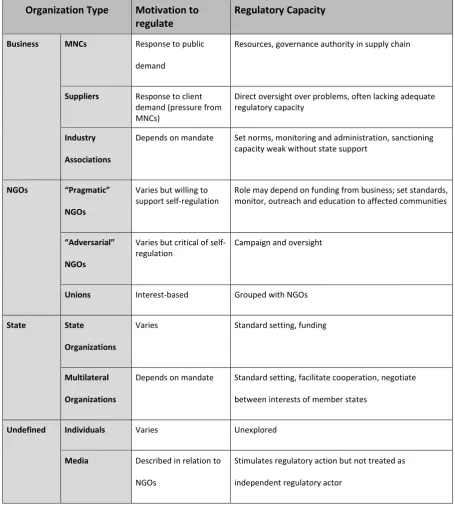
Table 1: Motivation and Capacity of State and Non-State Actors
Organization Type Motivation to regulate
Regulatory Capacity
Business MNCs Response to public
demand
Resources, governance authority in supply chain
Suppliers Response to client demand (pressure from MNCs)
Direct oversight over problems, often lacking adequate regulatory capacity
Industry
Associations
Depends on mandate Set norms, monitoring and administration, sanctioning capacity weak without state support
NGOs “Pragmatic”
NGOs
Varies but willing to support self-regulation
Role may depend on funding from business; set standards, monitor, outreach and education to affected communities
“Adversarial”
NGOs
Varies but critical of self-regulation
Campaign and oversight
Unions Interest-based Grouped with NGOs
State State
Organizations
Varies Standard setting, funding
Multilateral
Organizations
Depends on mandate Standard setting, facilitate cooperation, negotiate
between interests of member states
Undefined Individuals Varies Unexplored
Media Described in relation to
NGOs
Stimulates regulatory action but not treated as
independent regulatory actor
Page 28 of 193
Methodology
The central questions this thesis seeks to answer are whether regulatory schemes which are dominated by business organizations are necessarily lacking regulatory capacity, and if so, whether they remain that way over time. In answering these questions, this thesis seeks to build on Abbott and Snidal’s (2009) Governance Triangle by exploring the transnational regulatory process in action. Due to the exploratory nature of this thesis and its emphasis on identifying actors and their
relationships with one another, a case study approach was deemed the most suitable method of inquiry. A comparative two-case approach was chosen so that more than one set of actor relationships could be studied yet still allow for a deep exploration of each case.
Labour standards were chosen for the case studies because labour issues are fundamentally about conflicting interests: pitting the interests of capital against those of workers. It is thus far less likely for interests between different actors to converge as can happen in environmental regulation, where the business motivation to improve process standards is sometimes more obvious. That interests are more easily identifiable and conflict between actors is more likely, make the study of labour standards an accessible way to examine the interaction and power dynamics between competing interests along the Governance Triangle.
Industry self-regulation has been selected as the regulatory mechanism of study. This is a distinct form of transnational regulation in which businesses coordinate to meet regulatory goals. It is an industry-dominated form of regulation which involves multiple actors and therefore multiple interests and capacity. Multiple businesses participate in industry frameworks. As observed in the literature on industry self-regulation at the domestic (Gunningham and Rees 1997), it is also likely to involve participation by other actors, particularly the state, which is an actor that is relatively under-analyzed in the Governance Triangle.
Page 29 of 193
coordinated programme. The multiple actors involved in this form of transnational regulation helps to widen the net so to speak, to allow for the broadest possible exploration of the actor
constellations and interactions along the Governance Triangle.
Two cases were chosen for this study, the ICTI CARE Process and the Harkin Engel Protocol. The ICTI CARE process regulates the toy industry, which operationally resembles the apparel and sporting goods sectors. These are sectors which have received a higher proportion of attention in the literature. The toy industry features large, broadly American buyers, who benefitted from the growth of free trade regimes to outsource production to low-cost locations. In the 1990s, production shifted to China, where regulatory standards were lax and, where, after a series of serious safety incidents, the industry came under pressure to self-regulate. The ICTI CARE Process follows a standard method of social certification, where independent monitors audit participating factories to assess whether they are meeting certification criteria and is an example of an industry-based regulatory programme which is mainly controlled by business actors.
The Harkin Engel Protocol on the other hand, is an agreement made by the chocolate industry with an American Senator. Cocoa production is far less mobile than with consumer goods and state actors play both a significant role in the cocoa economy. Cocoa is grown primarily on small-hold farms which are scattered across Ghana and Cote d’Ivoire. In this environment, traditional models of social certification are not practical to implement. The central participation of the state in this case helps to illuminate the ways that the preferences and capacity of state actors manifest themselves in transnational regulatory programmes; an issue which is currently under-explored by the Governance Triangle.
Page 30 of 193
emerged through the 1990s and early 2000s, under an institutional backdrop of growing trade liberalization. This is the backdrop which spurred the development and growth of transnational regulation. It is the central point of focus of the Governance Triangle and facilitates greater cross-case comparison.
There are limits to the case study approach and to the design of this research. Importantly, this study does not claim to be explanatory in the same way as quantitative or experimental studies. While quantitative studies of industry self-regulation do exist: Lenox and Nash (2003) and Barnett and King (2008) use data from the Toxics Release Inventory (TRI), a database on waste management activities in the United States, to examine industry-self regulation in the American context, the purpose of this study is to explore relationships and processes. Furthermore, design of this study provides room to examine two different sets of actor relationships, it ignores many other types of transnational regulatory coordination, particularly those where other organizations, such as states or businesses may be more central. Consequently, while this study presents an analysis of actor
relationships, it is not comprehensive.
Chapters two and three of this thesis examine the emergence of the ICTI CARE Process and the Harkin Engel Protocol; Chapters four and five examine the evolution of the two regulatory
programmes. An inductive approach was utilized, meaning that the starting point was open-ended, so as to gather as much information as possible about the background and development of the regulatory process in each of the cases. Extensive interviews with many interested actors helped to identify key events gradually some patterns emerged.
Page 31 of 193
capacity, was extremely helpful in terms of identifying the organizations which ultimately played a role in the two cases. Whereas the focus Gerreffi and Korzeniewicz’s (1994) work is principally on direct participants in the supply chain, I also mapped the organization of peripheral organizations such as industry organizations.
The second framework draws on the public policy literature. The literature review showed that while significant media events were a catalyst in the development of both regulatory systems studied the issues addressed by industry self-regulation had already appeared in some form or another way earlier and there was some continuity in terms of the actors who were influencing these issues. Another important finding which emerged was that industry self-regulation was one choice among many different regulatory mechanisms. It did not inevitably occur even after an issue had
crystallized into one that might ultimately be regulated. Finally, while each case followed a distinct path, industry self-regulation only fully emerged once a critical mass of large multinational
companies agreed to collectively self-regulate.
The survey of Parsons and Parsons (1995) on the policy cycle, which breaks up the policy process into stages was helpful in examining the emerging patterns. The policy cycle literature has a long history; Laswell (1951) identified policy-making as a sequence of intelligence, recommendation, prescription, invocation, application, appraisal and termination. Although different authors have proposed different labels and sequences, the policy cycle is broadly defined as a logical chain of actions (Bridgman and Davis 2003). A stagist approach to the policy cycle underlines there are distinct components of the policy process, each of which serve a specific purpose. While the actual descriptions of these stages as they were laid out in the policy cycle literature did not bear a
Page 32 of 193
Chapters two and three of this thesis examine the emergence of the ICTI CARE Process and Harkin Engel Protocol across three stages identified in the drafting process. These stages are:
1. Issue Emergence The point at which an issue is identified as a policy problem.
2. Intervening Stage The period in which different policy options are considered or tested.
3. Industry Self-Regulation The time at which industry self-regulation is introduced.
In breaking down the cases into stages, these chapters trace key events and important actors that ushered the process towards industry self-regulation. This approach provides deeper insight into the range of actors in the cases, their interests and capacity and their relationships with each other.
Chapters four and five study the evolution of the ICTI CARE Process and the Harkin Engel Protocol. The framework which is used to do this is a Regime Perspective developed by Hood, Rothstein et al. (2001). Hood, Rothstein et al (2001), define regulatory regimes as “the complex of institutional geography, rules, practices and animating ideas that are associated with the regulation of a particular risk or hazard” (Hood, Rothstein et al. 2001p. 9). They describe regulatory regimes as having three linked components: information gathering, which is the capacity to monitor compliance to the regime, standard setting, which is the ability to set rules, and behavior modification, which is the ability to change the behaviours of regime participants. These components are dynamically linked, meaning that a change in one component leads to changes in others. These changes are not necessarily productive; Hood et al describe them as toothpaste tube-like; pressure in one
component of the regime leads to bulges in others. For example, higher standards may lead to more erroneous reporting.
non-Page 33 of 193
state actors in regulation, Hutter (2006) has noted that content and context are more difficult to distinguish due to the fact that organized groups may play a direct role in regulating. For this reason, the focus of this study is on regime content and not context.
What makes a Regime Perspective useful is that it is a flexible model that can be used to explore regulatory activities and their relationship to one another. By asking fairly open questions to interview participants which were focused on their roles or their opinions about rules, monitoring systems and sanctioning, discussions could stay focused and did not risk becoming un-necessarily technical. Furthermore, the notion that regulatory components are linked, is a concept that is missing from Abbott and Snidal’s (2009) work on the Governance Triangle, but proved to be crucial in identifying the source of conflict in the cases, which is a point that is emphasized by their
description of transnational bargaining as a distributive process. Similarly, because Chapters two and three address Agenda-Setting and Negotiation by looking at the emergence of the ICTI CARE Process and the Harkin Engel Protocol, Hood, Rothstein et. al’s (2000) definition of the three regulatory components are at the same time more flexible and more specific than those defined by Abbott and Snidal (2009). Information gathering and behaviour modification imply a wider set of regulatory mechanisms than Monitoring and Enforcement, and a wide range of mechanisms were observed in the two cases.
Page 34 of 193
The second way a Regime Perspective is used is to examine whether the regulatory components of the ICTI CARE Process and the Harkin Engel Protocol are dynamically linked. This is done by
examining conflicts at each regulatory component in the two cases and helps to establish the orientation of different actors and how the conflicts between actors enables or undermines regulatory capacity. The final way a Regime Perspective is used is to look at the way conflicts were managed over time. This helps answer the second question asked by this thesis of whether business-dominated transnational regulatory systems remain sub-optimal or develop capacity over time.
Data
In order to examine key events and actors which participated in the ICTI CARE Process and the Harkin Engel Protocol over a period of more than a decade, extensive effort was made to study documentary materials, conduct interviews and visit sites that were relevant to the cases. Initially, I reviewed all websites and newspaper articles which I could locate which contained material that referred to the two cases. I kept a record of the names of people and organizations who were associated the cases and got in touch by email or post to request face to face or telephone interviews. I used snowball tactics to get additional referrals. Casting a net this wide, I could get multiple perspectives about the respective cases and got a better understanding of how various organizations played direct or indirect roles in the cases. Interviews were semi-structured, I was interested in understanding what kind of role interview participants played in the regime,
particularly in terms of regime development, standard setting, information gathering and behaviour modification. Eventually, in both cases this process led me to a small group of individuals or
Page 35 of 193
still involved. In general, they were very generous in their time and willingness to answer questions. Multiple interviews with these more critical participants, often in more informal settings, such as over dinner, or a drink. The informality was conducive to allowing participants to speak freely about their experiences and opinions.
In total, fifty-four participants were interviewed for this study. Forty participants were interviewed face-to-face and the remaining fourteen were contacted by telephone or by Skype.14 Where possible interviews were recorded and transcribed but in some cases recording was not possible, either because interviews were in public spaces where there was too much background noise or because it was the interviewee stated a preference to speak without a voice recording. In these cases, extensive notes were taken and typed immediately after the interview. Interviews followed Chatham House Rules lasted between twenty minutes and four hours.
In total, there were twenty-three interviews conducted by participants representing individual business and industry organizations, thirteen with industry associations, eleven with NGOs, four with government representatives and three with universities. The relatively high proportion of people representing business who were interviewed reflects the nature of the cases I was studying, where business organizations were central. Business organizations and industry associations were broadly enthusiastic to participate in this study, however there were groups who were less accessible or willing to be interviewed. For the ICTI CARE case Chinese factory managers did not participate in interviews for language reasons and/or due to lack of response to interview requests. In the Harkin Engel Protocol, a civil war was under way in Côte d’Ivoire making responding to interview requests a low priority for most regime participants. These blind spots in the interview data mean that it is possible for selection bias to exist.
The main biases from the interview process stem from the disproportionate number of people who were representative of business and those that had English language skills. As such it was possible to
Page 36 of 193
make conclusions that placed too high an emphasis on the interests and perspectives of these actors. Key administrative roles were however primarily staffed by business organizations and regulation was predominantly conducted in English. The main perspectives which were not as strongly captured in this study were the targets of regulation: SMEs in China and family farms in Côte d’Ivoire and Ghana. I do not make assumptions about these interests and focus this study as much
on possible on the administrative aspects of implementation, which is where I had most access. I also addressed this problem by attempting to do as much work “on the ground” as possible.
Regardless, seeing and experiencing the cases in action was central to this research and I visited all locations where there were formal operations to administer the regimes. This included site visits to China where I observed factory audits and had the assistance of a translator to speak with factory managers, travel to Geneva to spend two days with the International Cocoa Initiative, an
organization formed as a part of the Harkin Engel Protocol, time spent in Washington to meet lobby groups and government officials involved in the Harkin Engel Protocol and travel to Ghana, where I met people involved with implemented the monitoring and educational programmes for the Harkin Engel Protocol. Through deeper participation and interaction in the institutional context where regulation was taking place I was able to get a better understanding of the types of resources that had been allocated to implementing the regimes as well as the range of individual capacity and commitment that were dedicated to them.
Page 37 of 193
to monitor the performance of the Protocol from 2007-2011, was a very rich source of documentary materials. In the case of the ICTI CARE Process, the programme was also evaluated by the University of Mannheim in conjunction with an NGO in 2012, which also provided additional information. I have also benefitted from telephone discussions with Niklas Egels-Zandén, from the University of Gothenburg, who conducted research about the compliance of suppliers to Swedish toy brands to codes of conduct. 15
Chapters two and three examine the emergence of the ICTI CARE Process and the Harkin Engel Protocol and maps the actors who participated in the development of these programmes. Chapters four and five look at the evolution of the ICTI CARE Process and the Harkin Engel Protocol using a Regime Perspective. Finally, the concluding chapter brings these chapters together to help to answer the question of the capacity of business-dominated transnational regulatory systems and how this evolves over time.
15 Egels-Zandén, N. (2007). "Suppliers’ compliance with MNCs’ codes of conduct: Behind the scenes at Chinese
Page 38 of 193
Chapter Two: Emergence of the ICTI CARE Process
Introduction
This chapter examines the emergence of the ICTI CARE process within the framework of the Governance Triangle. The types of actors involved in the development of the ICTI CARE Process are identified and described in terms of interests and capabilities. The chapter goes on to examines how the different actors interacted to set up an industry-wide certification programme.
In order to capture the range of interests and capabilities within the industry itself, the chapter
starts out by mapping the organization of the toy industry using a global commodity approach. The next part of the chapter breaks down the development of the ICTI CARE Process into three stages: 1) Issue Emergence, which is the period when the topic of health and safety in Chinese toy factories appeared as a salient issue for global toy brands; 2) Intervening Period, which is the stage in which different policy alternatives were considered to address the problem and 3) Industry Self-Regulation, the point at which the ICTI CARE Process became the dominant industry standard to regulate labour practices in Chinese toy factories. This analysis is useful to identify additional actors who played a role in shaping the ICTI CARE Process and to study interactions between industry and non-industry groups. The chapter concludes with a discussion of the significant actors who played a role in the development of the ICTI CARE Process and how they participated in the bargaining process.
Organization of the Toy Industry
Page 39 of 193
equipment manufacturers, who license from brands and purchasing agents, who act as
intermediaries between multinational companies and manufacturers. Large discount retailers are also influential business actors in the toy industry because they serve as significant clients to brands. For example, Mattel’s three largest clients in 2014 were the retailing giants Wal-mart, Target and
Toys R Us. Together, these three firms accounted for 35% of Mattel’s sales (Datamonitor 2015).
At the international level, the industry is unified by the International Toy Council, an industry organization which was established in 1975. The potential for industry associations to play a regulatory function has been discussed by Rees and Gunningham (1997), Rees (1997) and Haufler (2001). The mandate of the International Toy Council is to coordinate on policy issues that affect trade. In fact, the origins of the International Toy Council are connected to efforts in the industry to harmonize safety standards in the United States and Europe (International Council of Toy Industries 2015). The International Toy Council is unique insofar as it convenes a broad range of industry actors. The members of the International Council include the national associations of all the world’s major toy consuming and producing nations including the United States, Hong Kong and China.
Outsourcing has been a historical component of the toy industry. The modern toy industry emerged in the late 20th century in Germany, where sub-contracting manufacturing of component toy parts became a central feature of production (Hamlin 2007). Sub-contracting on a transnational basis emerged as early as the 1930s when American toy companies outsourced production to Japan due to its low cost of labour. This was a trend which gathered significant momentum in the 1950s (Cross and Smits 2005).
Page 40 of 193
quickly moved production across the border. By 1992, 90% of factory production in Hong Kong had migrated to Guangdong (1992) and by 1994, 80% of toy manufacturing was concentrated in China (Schrage 2004). Over the next decade, this figure increased to nearly 90% of global toy production (European Competitiveness and Sustainable Industrial Policy Consortium 2013).
The organization of the toy supply chain thus fits Gereffi and Korzeniewicz’s (1994) description of a buyer-driven commodity chain, where a handful of large, predominantly American retailers and toy brands have purchasing power over a smaller and more dispersed set of toy manufacturers, which are mainly located in China. The supply chain is furthermore dynamic, with global production shifting according to changes in labour and production costs. This capacity for large buyers to quickly switch production from one country to another is suggestive of footloose capital, where states power to regulate is weakened vis a vis that of corporations (Strange 1996, Evans 1997).
Issue Emergence
Health and safety emerged as issues for the toy industry following its transition to outsourcing from China’s Special Economic Zones where basic labour laws were not enforced. This section describes
the treacherous working conditions in Chinese factors and the obstacles to improving them through regulations. It traces how NGOs in the United States initially conflated working conditions in Chinese toy factories with un-related human rights violations by the Chinese government and how this led to an unsuccessful campaign against toy brands and retailers. It finally studies the Toy Coalition, a transnational NGO campaign organized as the direct result of two catastrophic fires at toy factories in Thailand and China and how this campaign worked with business groups to establish a Code of Conduct for the toy industry.
Nature of the Regulatory Problem
From an early stage, workers in China’s Special Economic Zones faced a difficult and unsafe work
Page 41 of 193
and high tolerance for bribery.16 Workers were typically young female migrants with limited knowledge of their rights or confidence to exercise them (Chan 2001). Consequently, health, safety and other types of welfare breaches were met with limited resistance from the state or workers, leaving managers unaccountable.
Over time there was growing evidence that migrants who came to Guangdong were overworked, underpaid and exposed to serious health and safety risks17. A newspaper article published in Hong Kong in 1992 reports:
"the special economic zones have become a lawless region…Chinese law has set eight-hour workdays but factory employees work from seven in the morning till 10:30 at night, seven days a week, 365 days a year. An official media report tells of women collapsing in
exhaustion after working three consecutive days and nights to finish an order in a toy factory. The report said the workers had been locked in to prevent their escape." (Sharma 1992)
Toycott Campaign
The first campaign by NGOs which targeted American toy brands and retailers was the Toycott campaign. In the United States concerns about the treatment of Chinese workers were connected to its poor human rights record and the Toycott was organized by US-based unions and human rights organizations. The campaign was opportunistic and based on limited circumstantial evidence so businesses were easily able to dismiss it.
Trade relations between China and the United States became established with the passing of the 1974 Trade Act. Under the terms of the Act, Congress had to decide on an annual basis whether to offer “Most Favoured Nation”18 trading rights to China, a designation which assures terms of trade are equal to all trade partners with that status. Until 1989, the designation was granted relatively routinely and without controversy based on the rationale that market reforms in China would
16Data for period is not available. Interviews conducted in 2010 as well as published work on the Kader and
Zhili fires emphasize these points. For example IC2 explained that only 1/180 toy factories in Guangdong had been visited by a labour inspector in 2010 and O'Leary, G. (1998). Adjusting to capitalism: Chinese workers and the state, ME Sharpe.
17 For a broader discussion of working conditions in Chinese manufacturing see Chan, Anita. China's Workers
Under Assault: The Exploitation of Labor in a Globalizing Economy. ME Sharpe, 2001.; Tsai, K. S. (2007). Capitalism without democracy: The private sector in contemporary China, Cornell University Press.;Ngai, P. (2005). Made in China: Women factory workers in a global workplace, Duke University Press..
Page 42 of 193
eventually lead to political reforms (Brick 1990, Tsai 2007). However when the Chinese military quashed the Tiananmen Square protests, a pro-democracy movement in China, advocacy groups sought for trade to be conditional on human rights (Suettinger 2004). This politicized the annual decision.
One of the organizations that became active internationally as a result of the Tiananmen Square Protests was the American Federation of Labor Organizations. A key concern of that organization was that China’s suppression of human rights involved the widespread use of prison-labour camps,
to make goods for export. As one representative from the union explained in 1990 ``there are today 20 million prisoners in China who work for so-called manufacturing companies that are, in fact, the worst concentration camps in world history'' (Hodel qtd.Brown 1990). According to the American Federation of Labor Organizations, the consequences of this were “that the massive Chinese prison labor system has destroyed American jobs in the shoe, toy, garment, textile, hand-tool and
electronics industries at a minimum” (Fielder qtd.Southerland 1991).
In the aftermath of the Tiananmen protests, the American Federation of Labor Organizations launched the Toycott campaign over the 1989 Christmas shopping season. While the boycott of toys targeted industry, the main goal of the campaign, which was organized in cooperation with the Tibetan Rights Campaign, was to raise awareness about human rights issues in China and promote more restrictive trade policies in the United States to pressure China for more reforms. According to one of the campaign’s organizers “Since there is no way to be certain if a product is made by
prisoners, we make toys the target of our symbolic protest.'' (Jin qtd.Brown 1990).
A key claim of the Toycott campaign was that China used prison labour to manufacture goods for export. This claim was extrapolated largely from anecdotal evidence. Neither the American