ISSN: 1992-8645 www.jatit.org E-ISSN: 1817-3195
T2WSN: TITIVATED TWO-TIRED CHORD OVERLAY
AIDING ROBUSTNESS AND DELIVERY RATIO FOR
WIRELESS SENSOR NETWORKS
1T. Peer Meera Labbai, 2S.Jothi Prasanna
1, 2
Department of Computer Science and Engineering, SRM University, Kattankulathur, Chennai – 603 203
E-mail: [email protected], [email protected]
ABSTRACT
Wireless Sensor Network (WSN) is the embryonic field of research in the past few years due to its appealing applications in need of mobility. The efficiency of message transfer gets a noteworthy amendment if mobility is assimilated in certain applications. Bettering some performance metrics improves applicability of the applications in several sporadic scenarios like military and disaster surveillance, industrial product line monitoring, agricultural and wildlife observation and health care. In this article, the subsisting C2WSN for static nodes is amended with a periodic light weighted CREIDO packet to improve the robustness and packet delivery ratio in the two-tiered chord overlay for wireless sensor networks. The simulated experiments also show that an improvement in robustness leads to increase in packet delivery ratio.
Keywords: Overlay, CREIDO, Chord, Sensor, PDR.
1. INTRODUCTION
In the past decade, there has been a prudent interest shown on the development of wireless communication technologies. A special kind of ad-hoc network is the Wireless Sensor Network (WSN). This WSN is marshalled of several low and high powered tiny nodes with actuators, sensing devices and a transceiver [1].A numerous number of sensor nodes should be deployed to oversee a large area which may not be monetarily feasible. This also needs a large radio interference [2].
Customarily, WSN is arrayed with static sensor nodes. Due to the strenuous changes in environment, a pure static WSN may face the following problems [3]:
Deployment of the sensor nodes in hostile region is by the scattering them from an airplane or by robots. This initial deployment may not cover the entire sensing field and even though numerous number of nodes are deployed connectivity of the whole network is not guaranteed [4].
A sensor node must be able to cope-up with all the tasks in a mission [5]. For example, a large number of static sensor nodes has to be deployed in the case of object tracking application which need to cover all aspects.
For some military applications, pressure sensors are deployed along the boundary to detect
intrusion of enemies. These must be well-equipped so that it can even capture image of what object is passing through it. It is very tedious to equip every static sensor with camera. This sophistication cannot be done for all in case of static nodes [3].
Hence, incorporating mobility in some or all sensor nodes handles above mentioned problems and gives some of the following advantages [6][7][8].
• Improved Lifetime of the network • Greater Channel capacity.
• Improved Targeting and coverage. • Enhanced Performance.
• Improved data fidelity.
In this paper, we modify the working of T2WSN protocol to improvise PDR for Wireless Sensor Networks.
The flow of paper is as follows. Section I gives a brief introduction to the article. Section 2 elucidates the literature review for the paper. Section 3 explains the existing C2WSN protocol. Sections 4 explains the current modification to the protocol giving proposed work of this paper. Section 5 gives the Simulation Setup used for the simulation of proposed work. Section 6 gives the Performance analysis and results of the simulation work. Section 7 details the conclusions and future directions.
ISSN: 1992-8645 www.jatit.org E-ISSN: 1817-3195
2. LITERATURE REVIEW
In the recent years, research on WSN primarily focus on collection of data [9, 10]. The attempts of applying database concepts in sensor network is rapidly increasing to assist querying in WSN’s [11]. These were majorly on application layer. Whereas, [12] focuses on applying these concepts on network layer. Recent trend in MSN research is the search of collected data because end users not only consume data also they do generate [13, 14]. The technique presented in [15] uses combining clustering and Directed Diffusion protocol [16] could aggregate data and join the local cluster head during the process of sending data to gateway node independent of the environment. Even though the per-node configuration is slightly high.
In Tiny Aggregation (TAG) approach [17], time slots are specified to various levels of routing tree. So, each node depends on its position in the routing tree to send data. Even though this type of node synchronization reduces the average energy consumption, application of this technique is tedious in the erratic mobility of nodes.
In [18], authors presents a technique to select cluster heads based on the residual energy and the distance factor to the sink nodes. But the detriment is that the cluster formation is completely decided and communicated by the sink node which may comparatively seize some time to form the clusters if mobile elements are present and in case of dynamic networks.
In [19], authors devise V-LEACH an energy efficient alternative that outperforms traditional LEACH by having an alternative cluster head ready to obtain the role of a cluster head in the case where cluster head dies. But when the mobile element is elected as v-CH as per [19], this v-CH may also die due to mobility feature leading to a conflict.
This search of data can be potentially aided by the mainstream P2P structured overlay protocols involving Distributed Hash Tables (DHT’s) like Chord [20], Pastry [21] and Content Addressable Networks [22]. In this way comes the two tired chord overlay protocol [12] completely dedicated for sensor networks that works similar to the Chord protocol for P2P networks [12].
In this paper, conventional C2WSN is applied to MWSN in addition to a new technique to improve the robustness of chord overlay structure applied on MWSN. This in turn improves message delivery to 15% than the conventional two tired C2WSN protocol for WSN.
3. C2WSN: TWO TIRED CHORD
OVERLAY PROTOCOL
[image:2.612.339.511.228.366.2]In spite of the existence of quite a few DHT protocols, C2WSN adhere to the design conceptions of chord because they provide deterministic lookup time, effective handling of concurrent node joins and failures and scalability [12].
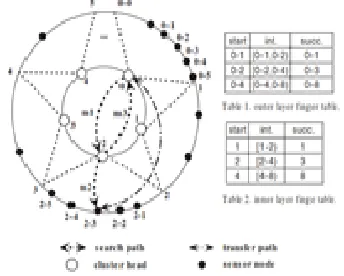
Fig. 1 from A two tired chord architecture for WSN
Consider a set of mobile and static sensors with N nodes. Even clustering algorithm is deployed to form M clusters each with λi nodes. With the help of Chord protocol two rings are created namely inner ring and outer ring. Inner ring consists of cluster heads and the outer ring is composed of other sensor nodes. The outer ring is split into arcs illustrating each cluster with its cluster head. Chord protocol aids the organization of each arc segment. (See Fig.1 [12]) depicts the organization of C2WSN protocol.
With the scarce sensor nodes in a cluster, a cluster head assigns and locate keys with the help of consistent hashing [18] by tracking all other sensor nodes. If a user queries for an information, query is directly sent to the cluster head. Cluster head looks-up its outer layer finger table for the information, if not found query is forwarded to the neighboring cluster head to search for information in the other clusters. In [12], authors divulge that the maintenance of overlay network i.e. node join or departure in the chord overlay network is purely handled as same as the basic chord overlay protocol.
A new node into the network accomplishes the following three tasks [12].
ISSN: 1992-8645 www.jatit.org E-ISSN: 1817-3195
• Renovates the fingers of existing nodes to manifest the inclusion of new node in the network.
• Acquaint higher layer software to renew the values associated with the new node. To improve the lookups, predecessor and successor pointers of the node should be up to date. The following three behaviors will be unveiled if a node join or node exit affects the chord ring before stabilization occurs [20].
• The nodes in the affected region may have inaccurate successor and predecessor pointers or inaccurate keys impelling to failure of lookups.
• In other case, successor and predecessor pointers may be correct but the keys may be inaccurate.
• The final case may be the nodes may have accurate successors, predecessors and keys yielding to a successful lookup.
4. TITIVATED C2WSN WITH CREIDO
PACKETS
In the basic chord overlay protocol, the node joins and departs is exposed with the help of a stabilize function [20]. The archetype discussed in [20] elucidates the following scenario. Node n becomes the member of a chord system with Node ID resting between np and ns. n would procure ns as its successor. When n notifies ns, the later takes n as its predecessor. After the run of next stabilize function, np queries ns for its successor. ns expounds its successor as n to np. Now, np gets hold of n as its successor. Finally np will notify n and n acquires np as its predecessor. At this juncture, all the successor and predecessor pointers are up-to-date. By this method, [12] makes its chord architecture robust. Even though this makes the chord ring stable, the drawback of this kind is perceiving node joins and departs in the periodical run of stabilize function. The message being sent in between the failure and join of one node and the run of stabilize function will not reach the destination from source in case of inaccurate fingers or keys. The naming scheme as insinuated in [29] is followed in this paper so as to reduce the overhead.
Node joins and departures are notified periodically by the stabilize function in the existing protocol. This is the main detriment. If a node joins or departs from the overlay ring, it is notified to the neighbours only after the next run of stabilize function. Till then the successor, predecessor pointer and fingers are erroneous priming to lookup
insolvency. For example, ruminate a scenario of a node joining or departing the overlay abruptly after the run of stabilize function. Until the next run, the pointers and fingers are inaccurate leading to lookup insolvency. This can be mended with the help of periodic CREIDO packets being passed between the neighbours alluded in this article. Whenever the CREIDO finds a change in the topology, stabilize function is run and the finger table is fixed so as to cope up the dynamic topological changes. The CREIDO packet structure is as given below (See Fig. 2).
Fig. 2 CREIDO packet specification
VERSION - Indicates the version of Protocol.
SOURCE ID - Holds the 6 bit Source ID. DEST. ID - Holds the 6 bit Destination ID. LAYER - Holds 0 or 1.
0 -Indicates Inner cluster holding Cluster Heads.
1 -Indicates Outer cluster holding common sensor nodes.
RESERVED -2 bits are reserved for future use.
5. SIMULATION SETUP
OverSim [25] a framework of OMNeT++ [26] is used for extensive simulation of the proposed protocol.
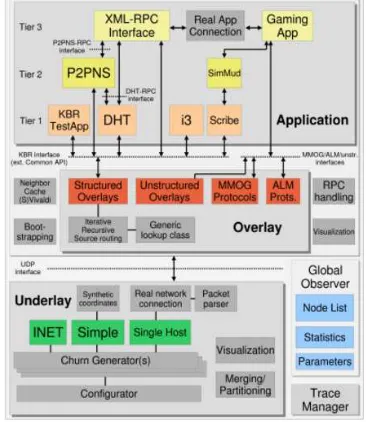
[image:3.612.347.530.502.713.2]ISSN: 1992-8645 www.jatit.org E-ISSN: 1817-3195
Architecture of OverSim in OMNeT++ is clearly depicted in the above figure (see fig. 3). OMNeT++ provides features that enables developers to create custom underlay network. A custom underlay sensor network is configured with the help of INETMANET and MiXiM modules. In the OverSim framework, CREIDO packet specification is included with chord protocol. Finally, the custom underlay is imported into OverSim and results has been obtained.
5.1 Network Model
This simulation is simulated in a free space with aforementioned mobility models. Initially, all nodes are placed such that every nodes are in the network. Nodes are said to be in contact, if they fall within the specified sensing range.
5.2 Performance Metrics
For the comparison and performance analysis of the existing and proposed system, the followings are used as metrics.
Packet Delivery Ratio: It is the ratio of number of
data packets delivered to the destined node to the number of data packets generated at the source node during simulation time.
Throughput: It is the fraction of channel capacity
used in the total available channel.
Control packet overhead: Control packet
overhead is the overhead which occurs due to the CREIDO packet transits that occurs when the network stabilizes after topology change.
5.3 Mobility Model
Mobility plays a vital role in Ad-hoc Networks. It increases the capacity and packet delivery ratio [27, 28]. For this simulation, outer ring nodes (i.e.) the cluster heads follows Boundless area simulation [27] and the inner ring nodes traces Nomadic community movement model [30, 31] with cluster head nodes as the reference point and the nomadic node abides random waypoint model as the reference model.
Boundless area simulation model: The
simulation area is differently handled in this model. Unlike other models, mobile nodes that reach one side of the simulation area doesn’t bounce back rather continues mobility and reappear on the opposite side of simulation area [27].
Nomadic community mobility model: In this
model, group of nodes moves from one point to another [30]. Here, nomadic nodes choose an entity model and roam around a given reference point [30, 31]. If this reference point changes to a new
location, all nomadic nodes in the group travel to a new location defined by the reference point and then starts roaming around the new reference point. The parameters for this model define how far a node roam from the reference point [31].
Random Waypoint Mobility model: This
Model was first developed by Einstein in 1926 [25]. This is analogous to erratic movement [30]. In this model, a node moves from its extant location to a new location by randomly choosing a direction and speed. Each node moves in the Random Walk Mobility Model occurs in either a constant time interval t or a constant distance travelled d. If a node which moves according to this model reaches a simulation boundary, it rebounds off the simulation area border with predetermined angle determined by the incoming direction and continues along a new path [30].
5.4 Simulation Parameters
This section describes the parameters smeared for the simulation analysis for the purported protocol. The performance analysis is studied by the simulation of the conventional protocol and the titivated protocol by insinuating the parameters in simulation parameters table (see Table 1).
Table 1: Simulation Parameters.
Parameter Value(10s) Value(15s) Value(25s)
Examined Protocol C2WSN & T2WSN C2WSN & T2WSN C2WSN & T2WSN Routing type Recursive routing Recursive routing Recursive routing Transmissio
n range 150m 150m 150m
Message
Bundle Size 512 bytes 512 bytes 512 bytes CREIDO
periodicity 10s 15s 20s
No. of
nodes 25 nodes 25 nodes 25 nodes Area 3000m*3000
m 3000m*3000 m
3000m*3000 m Simulation
Time 1500s 1500s 1500s
Propagation
Model Free space Free space Free space
Movement model Random Waypoint model, Boundless area model &Nomadic community model. Random Waypoint model, Boundless area model &Nomadic community model. Random Waypoint model, Boundless area model &Nomadic community model. Pause time
ISSN: 1992-8645 www.jatit.org E-ISSN: 1817-3195
Maximum
speed 10m/s 10m/s 10m/s Entity
model for nomadic nodes
Random waypoint model
Random waypoint model
Random waypoint model Reference
range for nomadic nodes
500m
500m 500m
6. PERFORMANCE ANALYSIS AND
RESULTS
Fig 4. Packet Delivery Ratio 10s
Fig 5. Throughput 10s
Fig 6. Control packet overhead 10s
Fig 7. Packet Delivery Ratio 15s
[image:5.612.85.513.62.665.2]ISSN: 1992-8645 www.jatit.org E-ISSN: 1817-3195
[image:6.612.92.540.51.703.2]Fig 9. Control Packet Overhead 15s
[image:6.612.95.291.68.676.2]Fig 10. Packet Delivery Ratio 20s
Fig 11. Throughput 20s
Fig 12. Control Packet Overhead 20s
The proposed technique is simulated with a scattered network consisting of 25 mobile sensor nodes parameters. When two nodes encounter each other in their transmission range, communication is ensued. The influence of packet delivery ratio, throughput and control packet overhead of the protocol put forward in this article is swotted by varying the CREIDO periodicity facilitated by the parameters as given in the section 5.4 and its performance is analyzed with the metrics throughput, packet delivery ratio and control bundle overhead as defined in the section 5.2.
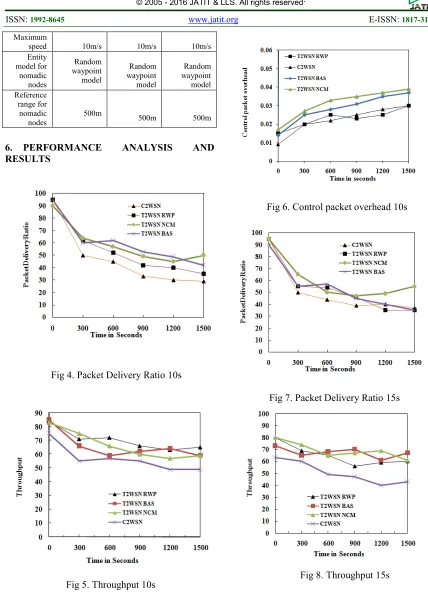
Fig.4 depicts Packet delivery ratio while the CREIDO periodicity is set as 10 seconds. While Random waypoint (RWP) mobility model shows an average 12% of increase in delivery ratio, Boundless area simulation (BAS) and Nomadic community (NCM) mobility models shows 21% and 20% of average increase in delivery ratio.
Fig.5 portrays throughput while the CREIDO periodicity is set as 10 seconds. In RWP model throughput is increased to 10% in average. 13 % of average increase in BAS model and 17 % of average increase in NCM model are achieved.
Fig.6 describes Control packet overhead when CREIDO bundles are transmitted at a period of 10 seconds. Control overhead rate is averagely increased to 9%, 13%, 14% in RWP, BAS, and NCM respectively. Even though increase in Control Bundle overhead is a havoc, it is tolerable because average Control Bundle overhead is 20% in an average.
ISSN: 1992-8645 www.jatit.org E-ISSN: 1817-3195
community (NCM) mobility models attains 19% and 16% of average increase in delivery ratio respectively.
Throughput obtained for the CREIDO periodicity set at 15 seconds are illustrated in Fig. 8. RWP model has 14% increased average whereas BAS model pulls off 17 % increase in average and NCM model accomplishes 13 % of average improvement. The throughput decreases slightly when the transitions of CREIDO bundle falls off due to comparative increase in CREIDO periodicity.
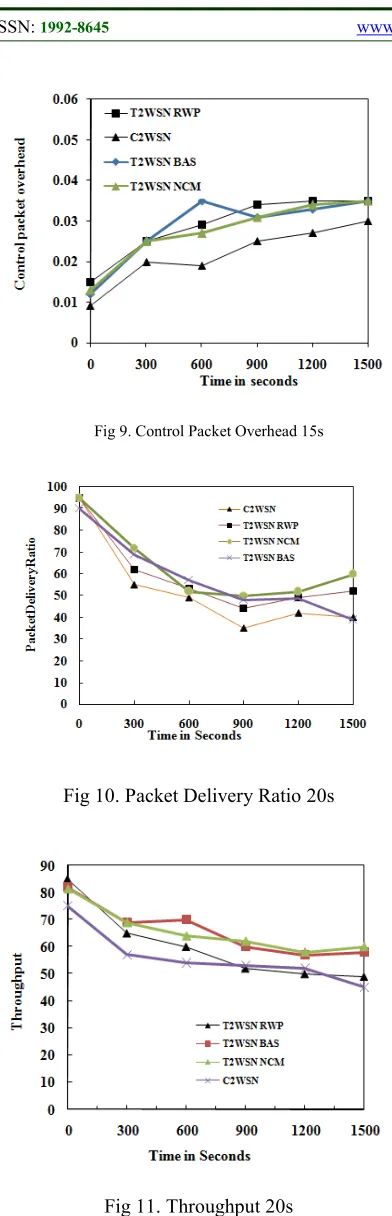
Fig.9 illustrates control packet overhead when CREIDO packets are transmitted at a period of 15 seconds. Control overhead rate is averagely elevated to 12%, 11.9%, and 13.3% in RWP, BAS, and NCM respectively. Control Bundle overhead decreases significantly as the CREIDO periodicity increases.
Fig.10. portrays the Bundle delivery ratio while the CREIDO periodicity is set as 20 seconds. While Random waypoint (RWP) mobility model shows an average 17% of increase in delivery ratio, Boundless area simulation (BAS) and Nomadic community (NCM) mobility models shows 15% and 15.5% of average increase in delivery ratio. Fig.11 describes throughput while the CREIDO periodicity is set as 20 seconds. In RWP model throughput is increased to 13% in average. 10.17 % of average increase in BAS model and 12 % of average increase in NCM model. The throughput slightly decreases as the number of transitions of CREIDO bundle is decreased due to comparative increase in CREIDO periodicity.
Fig.12 gives a picture of control bundle overhead when CREIDO bundles are transited at a period of 20 seconds. Control overhead rate is averagely increased to 9%, 10.97%, and 12% in RWP, BAS, and NCM respectively. Control Bundle overhead decreases comparatively because of the increase in CREIDO periodicity.
7. CONCLUSION
This article concocts a pristine approach by ensconcing the periodic CREIDO packets over the prevailing C2WSN for Mobile sensor networks. Massive simulations were carried out with the succor of Oversim [25], a framework of OMNeT++ [26]. This ameliorated the intricate study of alluded performance metrics and noteworthy recuperated results were obtained. The purported T2WSN for mobile sensor nodes enriches the performance of the existing C2WSN with reference to the described performance metrics when imperiled to assorted
movement models. An average of 17% step-up in Packet Delivery Ratio, 13% proliferation in throughput and 12% escalation in control packet overhead is realized. The imminent prospect will be endured on mitigating the security issues that may occur due to the amendment made by the CREIDO packet.
REFRENCES:
[1] Akyildiz, Ian F., et al. "A survey on sensor networks." Communications magazine, IEEE 40.8 (2002): 102-114.
[2] Amundson, Isaac, Xenofon Koutsoukos, and Janos Sallai. "Mobile sensor localization and navigation using RF doppler shifts." Proceedings of the first ACM international workshop on Mobile entity localization and tracking in GPS-less environments. ACM, 2008.
[3] Rezazadeh, Javad. "Mobile Wireless Sensor Networks Overview." International Journal of Computer Communications and Networks (IJCCN) 2.1 (2012).
[4] Dhillon, Santpal Singh, and
KrishnenduChakrabarty. Sensor placement for effective coverage and surveillance in distributed sensor networks. Vol. 3. IEEE, 2003. [5] Cao, Guohong, et al. "Purposeful mobility in tactical sensor networks." Sensor Network Operations (2006): 113-126.
[6] Gandham, Shashidhar Rao, et al. "Energy efficient schemes for wireless sensor networks with multiple mobile base stations." Global telecommunications conference, 2003. GLOBECOM'03. IEEE. Vol. 1. IEEE, 2003. [7] Kansal, Aman, et al. "Intelligent fluid
infrastructure for embedded
networks."Proceedings of the 2nd international conference on Mobile systems, applications, and services. ACM, 2004.
[8] Wang, Guiling, et al. "Sensor relocation in mobile sensor networks." INFOCOM 2005. 24th Annual Joint Conference of the IEEE Computer and Communications Societies. Proceedings IEEE. Vol. 4. IEEE, 2005.
ISSN: 1992-8645 www.jatit.org E-ISSN: 1817-3195
[10] Li, Jian, and PrasantMohapatra. "Analytical modeling and mitigation techniques for the energy hole problem in sensor networks." Pervasive and Mobile Computing 3.3 (2007): 233-254.
[11] Bergbreiter, Sarah, and Kristofer SJ Pister. "Cotsbots: An off-the-shelf platform for distributed robotics." Intelligent Robots and Systems, 2003.(IROS 2003). Proceedings. 2003 IEEE/RSJ International Conference on. Vol. 2. IEEE, 2003.
[12] Yu, Jiguo, Wenjun Liu, and Jingjing Song. "C2WSN: A two-tier chord overlay serving for efficient queries in large-scale wireless sensor networks." Advanced Computing and Communications, 2007. ADCOM 2007. International Conference on. IEEE, 2007. [13] Campbell, Andrew T., et al. "People-centric
urban sensing." Proceedings of the 2nd annual international workshop on Wireless internet. ACM, 2006.
[14] Krčo, Srdjan, David Cleary, and Daryl Parker. "Enabling ubiquitous sensor networking over mobile networks through peer-to-peer overlay networking."Computer communications 28.13 (2005): 1586-1601.
[15] S. Chatterjea and P. Havinga, “A Dynamic Data Aggregation Scheme for Wireless Sensor Networks,” Proceeding Program for Research on Integrated Systems and Circuits, Veldhoven, November 2003.
[16] Ch. Intanagonwiwat, R. Govindan and D. Estrin, “Directed Diffusion: A Scalable and Robust Communication Paradigm for Sensor Networks,” Proceedings of the 6th Annual International Conference on Mobile Computing and Networking, Boston, August, 2000.
[17] S. Madden, M. J. Franklin, J. M. Hellerstein and W.Hong, “TAG: A Tiny AGregation Service for Ad-Hoc Sensor Networks,” Proceedings of the 5th Symposium on Operating Systems Design and Implementation, Boston,9-11 December 2002, pp. 131-146. doi:10.1145/1060289.1060303.
[18] S. Hwang, G. J. Jin, C. Shin and B. Kim, “Energy-Aware Data Gathering in Wireless sensor Networks,” 6th IEEE conference on Consumer Communications and Networking, CCNC, Las Vegas, 10-13 January 2009. [19] M. B. Yassein, A. Al-zou'bi, Y. Khamayseh
and W.Mardini, “Improvement on EACH Protocol of Wireless Sensor Network (VLEACH),” International Journal of Digital
Content Technology and Its Applications, Vol. 3, No. 2, 2009, pp. 132-136.
[20] Stoica, Ion, et al. "Chord: A scalable peer-to-peer lookup service for internet applications." ACM SIGCOMM Computer Communication Review 31.4 (2001): 149-160.
[21] Rowstron, Antony, and Peter Druschel. "Pastry: Scalable, decentralized object location, and routing for large-scale peer-to-peer systems." Middleware 2001. Springer Berlin Heidelberg, 2001.
[22] Ratnasamy, Sylvia, et al. A scalable content- addressable network. Vol. 31. No. 4. ACM,
2001.
[23] FIPS, PUB. "180-1. Secure hash standard." National Institute of Standards and Technology 17 (1995).
[24] Ali, Muneeb, and Zartash Afzal Uzmi. "An energy-efficient node address naming scheme for wireless sensor networks." Networking and Communication Conference, 2004. INCC 2004. International. IEEE, 2004.
[25] Baumgart, Ingmar, Bernhard Heep, and Stephan Krause. "OverSim: A flexible overlay network simulation framework." IEEE Global Internet Symposium, 2007. IEEE, 2007. [26]Varga, András, and Rudolf Hornig. "An
overview of the OMNeT++ simulation environment." Proceedings of the 1st international conference on Simulation tools and techniques for communications, networks and systems & workshops. ICST (Institute for Computer Sciences, Social-Informatics and Telecommunications Engineering), 2008. [27] Davies, Vanessa Ann., “Evaluating mobility
models within an ad hoc network”. MS thesis. advisor: Tracy Camp, Dept. of Mathematical and Computer Sciences.Colorado School of Mines, 2000.
[28] Grossglauser, Matthias, and David Tse. "Mobility increases the capacity of ad-hoc wireless networks." INFOCOM 2001. Twentieth Annual Joint Conference of the IEEE Computer and Communications Societies. Proceedings. IEEE. Vol. 3. IEEE, 2001.
[29] Bai, Fan, and Ahmed Helmy. "A survey of mobility models." Wireless Adhoc Networks. University of Southern California, USA 206
(2004). Available Online:
ISSN: 1992-8645 www.jatit.org E-ISSN: 1817-3195
[30] Camp, Tracy, Jeff Boleng, and Vanessa Davies. "A survey of mobility models for ad hoc network research." Wireless communications and mobile computing2.5 (2002): 483-502. [31] Haas, Zygmunt J. "A new routing protocol for