Antibacterial Efficacy of Selected Enterococcus Strains
Isolated from Traditional Rice Beverage “Handia”
Sujogya Kumar Panda
1, Laxmipriya Padhi
1, Akshaya Kumar Bastia
2,*1Department of Zoology; North Orissa University; Baripada, India-757003 2Department of Botany; North Orissa University; Baripada, India-757003
*Corresponding Author: [email protected]
Copyright © 2013 Horizon Research Publishing All rights reserved.
Abstract
The present study was conducted to evaluate the antibacterial efficacy of four bacteriocin producing Enterococcus strains isolated from traditional rice beverage, sourced from different sites of Baripada, Odisha, India. The strains were tested against three Gram-positive bacteria viz. Bacillus subtilis, Staphylococcus aureus, S. epidermidis and Pseudomonas aeruginosa, Salmonella typhimurium, Vibrio cholerae by agar cup method. Surprisingly, it was noticed that most of the Gram-positive bacteria were inhibited by cell free supernatant of isolated strains. The results indicated that the tested Gram-positive bacteria found more sensitive than Gram-negative, and were inhibited. Upon verification, all the isolated strains are found Gram-positive coccus, have the ability to resist the physiological concentration of bile salt, grow at temperature 10 to 42oand purify the bacteriocin produced from the strains.
Keywords
Enterococcus, Enterocin, Bacteriocin, Lactic Acid Bacteria, Rice Beer, Fermented Food, Enteric Pathogens, Traditional Knowledge1. Introduction
Bacteriocins are ribosomally synthesized peptides that exert their antimicrobial activity against either strains of the same species as the bacteriocin producer (narrow range), or even to more distantly related species (broad range) [1]. Bacteriocins have wide antibacterial spectrum with potential applications in agriculture, food and pharmaceutical industry. It has been noted that a pronounced number of lactic acid bacterial strains of different species and Archaea may produce bacteriocins [1,2]. Although many bacteria can produce bacteriocins, but the potential applications of bacteriocins from lactic acid bacteria have received escalating attention in food and health care, since these bacteria are GRAS (generally regarded as safe) status [3,4]. Almost, all LAB based bacteriocins exert their activity at
nanomolar concentrations and against a number of bacterial pathogens [2,5]. Even multidrug-resistant nosocomial pathogens such as methicillin-resistant Staphylococcus aureus (MRSA) and vancomycin-resistant enterococci (VRE) may be inhibited [6,7].
Among LAB, the members of the genus Enterococcus are found in many food products with common occurrences in traditional food. Enterococci have the ability to produce bacteriocins, the so-called enterocins, used as probiotics [8]. Enterocin belongs to class IIa bacteriocin composed of small thermostable peptides (<10 KDa). According to Cintas et al. [9] enterocin have selective antimicrobial activity. The past few years have seen the emergence of class IIa bacteriocins as one of the most interesting groups of antimicrobial peptides for use in food preservation and medicine, as antibiotic complements in treating infectious diseases or antiviral agents [10], or therapeutic agents [11].
Handia, is an inseparable fermented food item in the life of tribals of Mayurbhanj and most other districts of the state of Odisha. The word Handia finds its origin from the word Handi in Odia (local language), means large earthen pot. Handia occupies a key position in the social, cultural and economic life of tribesand accepted as a traditional drink. It is prepared from rice along with some of the locally available plant parts through some indigenous method. Otherwise known as country liquor or “poor man’s whiskey”, it is relished by one and all and in most occasions.
On the assumption that a specific bacteriocin will have its own unique properties and usefulness in targeting microbial pathogens, this study was aimed to screen the bacteriocin-producing enterococci from Handia against a battery of pathogenic bacteria.
2. Materials and Methods
2.1. Isolation and Enumeration of LAB
Handia samples in duplicate were collected during the study period in clean, sterilized one liter capacity glass bottles from Baripada, Odisha, India. Enumeration of four Gram-negative bacteria viz. Escherichia coli,
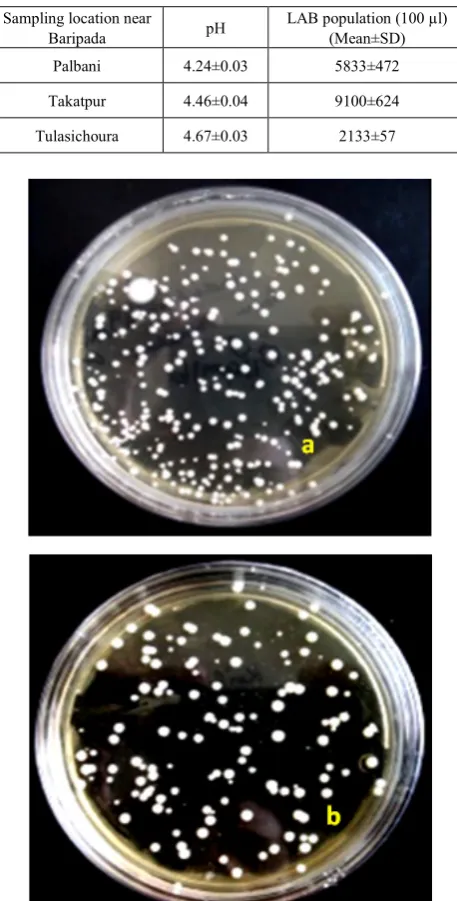
microbial flora like lactic acid bacteria (LAB) was carried out using MRS agar (Man, Rogosa and Sharpe Agar, pH=6.4; Himedia, India) supplemented with Nalidixic acid (20 µg/ml). One ml of each sample was homogenized with 9 ml of sterile water. The homogenate was serially diluted to 10-6 dilution and 100 µl aliquots of the appropriate dilutions directly inoculated into petriplate containing reference isolation media. The petri-plates were incubated at 35o C for 48 hours to calculate the population of bacteria by using colony counter (Table-1; Figure-1). The purity of the organisms was checked by streaking them in the same media, followed by microscopic examination. Pure cultures were maintained in agar slants at 4oC and glycerol at -20 oC.
Table 1. Enumeration of LAB on MRS agar Sampling location near
Baripada pH LAB population (100 µl) (Mean±SD) Palbani 4.24±0.03 5833±472
Takatpur 4.46±0.04 9100±624 Tulasichoura 4.67±0.03 2133±57
Figure 1 (a&b). Colonies of LAB on MRS agar collected form two different localities (a. Palbani; b. Tulsichoura)
2.2. Isolation and Identification of Enterococcus
The following tests were carried out for presumptive identification of the isolates; observation of colony characteristics and cell morphology, Gram staining, catalase and oxidase production, growth at 10 o o
esculin hydrolysis on bile-esculin agar (BEA) [12]. Those colonies belonging to the Enterococcus genus were identified to species level by means of sugar fermentation according to the Manero and Blanch scheme [13].
2.3. Screening for Antimicrobial Activity
2.3.1. Bacterial Strains and Growth Conditions
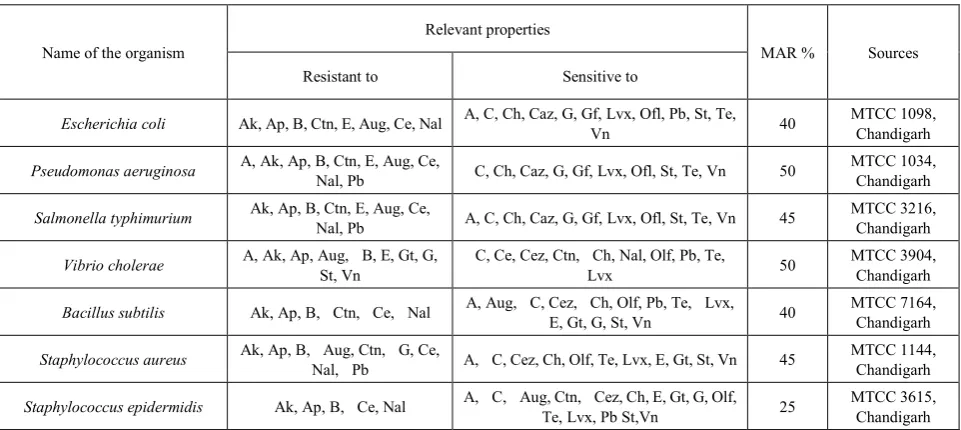
The bacterial strains used as indicator microorganisms as well as conditions for growth are listed in Table 2. The bacterial cultures were maintained on MRS agar slants and stored at4 оC. Activation of the bacterial strain was carried out by streaking culture from the slants on to a Muller Hinton agar (MHA) plate and incubating overnight at 37 оC. Single colony was picked up from each plate and transferred to nutrient broth, incubated for 1 day at 37 оC prior to the test. Antibiogram was done by disc diffusion method[14] with commonly used antibiotics. Antibiotic sensitivity was tested in MHA plates. The test microbes were removed from the slant aseptically with inoculating loops and transferred to separate test tubes containing 5.0ml of sterile distilled water. Inoculum was added until the turbidity equaled 0.5 McFarland (108 CFU/ml). For each of the bacteria, one milliliter of the test tube suspension was added to 15-20 ml of nutrient agar and transferred to the agar plate (90 mm diameter). After cooling the inoculated agars at room temperature for 25 min, antibiotic sensitivity test discs were placed on the surface of solid agar. The plates were incubated at 37 °C and zone of inhibition formed around the discs were measured (in mm) (Table-2). The multiple antibiotic resistance index was determined by using the formula,
2.3.2. Detection of Inhibitory Activity
Cell-free culture supernatants (CFSs) obtained by centrifugation of overnight cultures at 8000 RPM, maintained at 4 °C for 10 min were adjusted to pH 7.0 with 0.5 mol/l NaOH and heated at 100 °C for 5 min in order to inactivate endogenous proteases. Afterwards, CFS was filtered using 0.22 µm pore size cellulose filter (Millipore) and stored at -20 °C for further use. The antimicrobial activity of the CFS was determined by the agar well diffusion assay (AWDA) [15]. The supernatant (40 µl) was placed in wells (6 mm in diameter) cut in MHA plates (20 ml) seeded with a stationary phase cell suspension of the each pathogenic bacteria listed in Table 1. The plates were incubated at 37 °C for 24 h.
Table 2. Antibacterial resistance and MAR index of all tested bacteria
Name of the organism
Relevant properties
MAR % Sources Resistant to Sensitive to
Escherichia coli Ak, Ap, B, Ctn, E, Aug, Ce, Nal A, C, Ch, Caz, G, Gf, Lvx, Ofl, Pb, St, Te, Vn 40 MTCC 1098, Chandigarh
Pseudomonas aeruginosa A, Ak, Ap, B, Ctn, E, Aug, Ce, Nal, Pb C, Ch, Caz, G, Gf, Lvx, Ofl, St, Te, Vn 50 MTCC 1034, Chandigarh
Salmonella typhimurium Ak, Ap, B, Ctn, E, Aug, Ce, Nal, Pb A, C, Ch, Caz, G, Gf, Lvx, Ofl, St, Te, Vn 45 MTCC 3216, Chandigarh
Vibrio cholerae A, Ak, Ap, Aug, B, E, Gt, G, St, Vn C, Ce, Cez, Ctn, Ch, Nal, Olf, Pb, Te, Lvx 50 MTCC 3904, Chandigarh
Bacillus subtilis Ak, Ap, B, Ctn, Ce, Nal A, Aug, C, Cez, Ch, Olf, Pb, Te, Lvx, E, Gt, G, St, Vn 40 MTCC 7164, Chandigarh
Staphylococcus aureus Ak, Ap, B, Aug, Ctn, G, Ce, Nal, Pb A, C, Cez, Ch, Olf, Te, Lvx, E, Gt, St, Vn 45 MTCC 1144, Chandigarh
Staphylococcus epidermidis Ak, Ap, B, Ce, Nal A, C, Aug, Ctn, Cez, Ch, E, Gt, G, Olf, Te, Lvx, Pb St,Vn 25 MTCC 3615, Chandigarh
2.4. Analysis of Extracellular Enzymes
Extracellular enzymes such as amylase, gelatinase, lipase and protease were analyzed through plate test by growing individual bacterial isolates in Starch agar (amylase), Gelatin agar (gelatinase), Peptone agar (lipase) and Skim milk agar (protease). After four days of incubation at 35 ºC, culture plates were tested for enzyme activity by adding iodine solution in amylase plates, HgCl2 (15% HgCl2 in 20% HCl) for gelatinase in respective plates. The clear zone formation around the growing colony was considered as positive. The lipase activity of bacterial isolates was determined on lipase test medium and the formation of opaque whitish zone around the growing colony was considered as positive. The formation clear of zone of inhibition in skim milk agar was considered as positive for protease activity.
2.5. Screening of Haemolytic Activity
Production of haemolysis was determined by streaking the Enterococcus strain (grown in MRS broth for 18 h) in Blood agar plates supplemented with 50 ml human blood. After incubation at 37 °C for 24 h under aerobic conditions, plates were examined for haemolysis. Presence of clear zone around the colonies was interpreted as β-haemolysis
3. Results
Fourteen Enterococcus strains isolated from Handia were assayed for their antibacterial activity with potent
bacteriocin against three Gram-positive bacteria (B. subtilis, (E. coli, P. aeruginosa, S. typhimurium, V. cholerae) by AWDA. Four strains viz. 38M1B, 68M1, 129M1B and 144M1 exhibited inhibitory activity against at least two test bacterial species. Subsequently, these strains were subjected to further study such as growth at different temperature, pH, salt tolerance, bile tolerance and enzymatic activity such as amylase, gelatinase and protease.
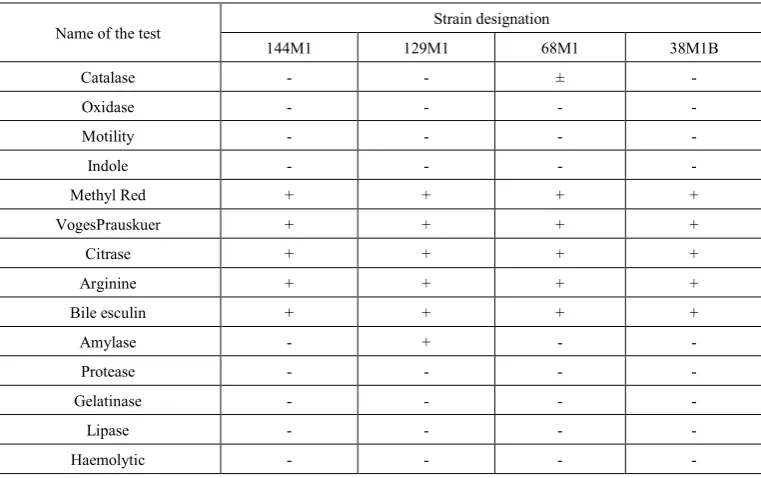
The tests commonly used to assign Gram-positive groups in form of coccus and as member of genus Enterococcus are listed in Table-3,4,5. All these strains were identified as the members of the genus Enterococcus based on the following test viz. absence of catalase and oxidase, Gram-positive coccus (Figure-2) with ability to grow at temperature identification to species level was based on carbohydrate fermentation. The genus is charecterised by production of acid from sugars such as manitol, sorbitol, lactose, sucrose, xylose, rhamanose and esculin. Arginine dehydrolysis test resulted that all these strains have capability to deaminate arginine. The strains show negative for indole test while positive for methyl red, Voges-Praskuer and citrate test (Table-4). The isolates were distinguished based on biochemical and sugar fermentation test, identified as Enterococcus faecium (arabinose+ve, glycerol-ve) and E. faecalis (arabinose-ve, glycerol+ve) (Table-5). None of the test strains demonstrate haemolytic activity when grown in human blood agar. Also the strains do not have the ability to produce extracellular enzyme such as protease, amylase and lipase.
S. aureus, S. epidermidis) and four gram-negative bacteria
Figure 2 (a. b & c). Different forms of Enterococcus shown by Gram stain
Table 3. Growth characteristics of selected Enterococcus species
Characteristic of the organism Gram-positive Cocci
144M1 129M1 68M1 38M1B
Chain formation - + - -
Gas from glucose - ± - -
Growth at 10 °C + ± - +
[image:4.595.178.431.81.307.2]Growth in 5% NaCl +++ +++ +++ +++ Growth in 8% NaCl ++ ++ +++ +++
Table 4. Results of biochemical test of selected Enterococcus species
Name of the test Strain designation
144M1 129M1 68M1 38M1B
Catalase - - ± -
Oxidase - - - -
Motility - - - -
Indole - - - -
Methyl Red + + + +
VogesPrauskuer + + + +
Citrase + + + +
Arginine + + + +
Bile esculin + + + +
Amylase - + - -
Protease - - - -
Gelatinase - - - -
Lipase - - - -
Haemolytic - - - -
Growth at 42 °C + + + +
Growth at pH 4.5 ++ ++ ++ ++
[image:4.595.115.496.518.757.2]±, response varies when repeated
Table 5. Results of sugar fermentation
Strain
Designation Identification
Sugar utilization
1 2 3 4 5 6 7 8 9 10 11 12 13 14 38M1B E. faecalis - + - + - - + + - - + + + + 68M1 E. faecium ± + ± - - - + + - - + + + +
129M1B E. faecalis - + - + - - + + - - + + + + 144M1 E. faecalis - + - + - - + + - - + + + +
[image:5.595.114.498.103.215.2]6-Inulin; 7-Lactose; 8-Mannitol; 9-Mannose; 10-Raffinose; 11-Rhamnose; 12-Sorbitol; 13-Sucrose; 14-Xylose; Sugar concentration (0.5%)
Table 6. Screening of bacteriocin produced Enterococcus isolated from Handia
Strain Designation
Bacterial strain
Gram-negatives Gram positives
Ec Pa St Vc Bs Sa Se
38M1B - - - - + ++ +
68M1 - + - - - + -
129M1B - - - ++ +
144M1 - - - + +
(-) No inhibition, (+) Zone of inhibition ≤ 10 mm, (++) Zone of inhibition ≤ 15 mm; All zone of inhibition including
4. Discussion
The genus Enterococcus is the most controversial group of lactic acid bacteria [16]. On one hand, enterococci have been used in many different applications as starters or adjunct cultures, and they are well known for their major role in improving flavour development and quality of food products [17]. On the other hand, the role of enterococci in disease has raised questions on their safety for use in foods or as probiotics since they are important nosocomial pathogens that cause bacteraemia, endocarditis and other infections [18,19]. They also play beneficial roles in foods and have relatively low virulence. The β-haemolysin/bacteriocin is a conformed enterococcal virulence factor. This is a cellular toxin that enhances virulence in animal models [20]. However, none of the test strains display haemolytic activity when grown in human blood agar.
Proteases are also believed to be involved in enterococcal pathology. Gelatinase is an extracellular metalloendopeptidase that acts on collagenous material in tissues. Production of gelatinase increased pathogenicity in an animal model [21]. Our results showed no degradative activity of the enzyme on any of the strains tested following gelatinase agar.
traditional rice beverage Handia was isolated and displayed
antagonistic properties. The most active strain (129M1) was identified as E. faecalis. These results are in agreement with the earlier reports with narrow spectrum action due to presence of enterocin [22]. Though, the bacterial strains did not have any enzymatic activity such as gelatinase and protease, the activity may be due to the formation of bacteriocin like inhibitory substances.
The result indicated that the test Gram-positive bacteria are highly sensitive in compared to Gram-negatives. The absence of inhibitory activity against Gram-negative bacteria is not surprising as most of LAB bacteriocin inhibit the growth of closely related Gram-positive bacteria. Authors supposed that this may be due to composition of the cell wall among Gram-positive and Gram-negative bacteria. It may be recalled that penicillin and some of other prominent antibiotics are also selective in their inhibitory action; most of them inhibit Gram-positive bacteria. Gram-negative bacteria have an outer phospholipid membrane carrying the structural lipopolysaccharide components. This makes the cell wall impermeable to antimicrobial substances. The Gram-positive bacteria on the other hand are more susceptible, having only an outer peptidoglycan layer which is not an effective permeability barrier. Therefore, the cell walls of Gram-negative organisms are more complex in lay out than the Gram-positive ones, acting as diffusion barrier and making them less susceptible to the antimicrobial agents
6 mm cork borer; Ec-Escherichia coli; Pa-Pseudomonas aeruginosa; St-Salmonella typhimurium; Vc-Vibrio cholerae;
“+” = Acid production; “-“=No production of acid; 1-Arabinose; 2-Esculin; 3-Glucose; 4-Glyceral; 5-Glycine;
In the present study four isolates of Enterococci from
than that of Gram-positive bacteria. Enterococci, plays the major part of the human gastrointestinal micro flora [23], are widespread in various food especially associated with fermented foods [24]. Generally, the presence of Enterococci in food products is considered as a sign of fecal contamination, but more recently they became accepted as part of the normal flora and are commonly used as probiotics [25].
5. Conclusion
The bacteriocin produced by the Enterococcus strains from Handia showed antibacterial activity. These strains lack enzymatic activity (protease, haemolytic and gelatinase), that signifies the activity is due to the formation of bacteriocin like inhibitory substances. Further research is necessary to purify the bacteriocin and study their detail character; as a result it can be widely applied in food and pharmaceutical industry.
Acknowledgements
The present research has been funded by theDepartment of Science and Technology, Government of Odisha (Grant No. ST-BIO-70/2010/ST). We are grateful to the authorities of North Orissa University for providing necessary facilities to carry out this research.
REFERENCES
[1] Y Belguesmia, K Naghmouchi, N Chihib. Class IIa bacteriocins: current knowledge and perspectives. In D. Drider, & S. Rebuffat (Eds.), Prokaryotic antimicrobial peptides, New York: Springer Publishing Company, 171-195, 2011.
[2] OB Chahad, M El Bour, P Calo-Mata, A Boudabous, J Barros-Velàzquez. Discovery of novel biopreservation agents with inhibitory effects on growth of food-borne pathogens and their application to seafood products. Research in Microbiology, Vol. 163, No. 1, 44-54, 2012.
[3] S Anastasiadou, M Papagianni, G Filiousis, L Ambrosiadis, P Koidis. Growth and metabolism of a meat isolated strain of Pediococcus pentosaceus in submerged fermentation. Purification, characterization and properties of the produced pediocin SM-1. Enzyme and Microbial Technology, Vol. 43, 448-454, 2008.
[4] M Papagianni, S Anastasiadou. Pediocins: The bacteriocins
of Pediococci. Sources, production, properties and
applications. Microbial Cell Factories, Vol. 8, No. 3, 1-16, 2009.
[5] K Indira, S Jayalakshmi, A Gopalakrishnan, M Srinivasan. Biopreservative potential of marine Lactobacillus spp. African Journal of Biotechnology, Vol. 5, 2287-2296, 2011.
[6] B Karska-Wysocki, M Bazo, W Smoragiewicz. Antibacterial activity of Lactobacillus acidophilus and Lactobacillus casei against methicillin-resistant Staphylococcus aureus (MRSA). Microbiological Research, Vol. 165, No. 8, 674-686, 2010. [7] N Mojgani, C Amirinia. Kinetics of growth and bacteriocin
production in L. casei RN 78 isolated from a dairy sample in IR Iran. International Journal of Dairy Science, Vol. 2, 1-12, 2007.
[8] FP Rivas, MP Castro, M Vallejo, E Marguet, CA Campus. Antibacterial potential of Enterococcus faecium strains isolated from ewes’ milk and cheese. LWT - Food Science and Technology, Vol. 46, 428-436, 2012.
[9] LM Cintas, P Casaus, LS Havarstein, PE Hernandez, LF Nes. Biochemical and genetic characterization of enterocin P, a novel sec-dependent bacteriocin from Enterococcus faecium
P13 with a broad antimicrobial spectrum. Applied and Environmental Microbiology, Vol. 63, 4321-4330, 1997. [10] D Drider, G Fimland, Y Héchard, LM McMullen, H Prévost.
The continuing story of class IIa bacteriocins. Microbiology and Molecular Biology Reviews, Vol. 70, No. 2, 564-582, 2006.
[11] J Jasniewski, C Cailliez-Grimal, E Gelhaye, AM Revol-Junelles. Optimization of the production and purification processes of carnobacteriocins Cbn BM1 and Cbn B2 from Carnobacterium maltaromaticum CP5 by heterologous expression in Escherichia coli. Journal of Microbiological Methods, Vol. 73, No. 1, 41-48, 2008. [12] K Schleifer, R Kilpper-Bälz. Transfer of Streptococcus
faecalis and Streptococcus faecium to the genus Enterococcus
nom. rev. as Enterococcus faecalis comb. nov. and
Enterococcus faecium comb. nov sp. International Journal of
Systematic Bacteriology, Vol. 34, 31-34, 1984.
[13] A Manero, AR Blanch. Identification of Enterococcus spp. with a biochemical key. Applied and Environmental Microbiology, Vol. 65, 4425-4430, 1999.
[14] AW Bauer, WMM Kirby, JC Sherris, M Turck. Antibiotic susceptibility testing by a standardized single disk method. American Journal of Clinical Pathology, Vol. 45, 493-496, 1966.
[15] U Schillinger, FK Lücke. Identification of Lactobacilli from meat and meat products. Food Microbiology, Vol. 4, 199-208, 1987.
[16] MR Foulquié Moreno, P Sarantinopoulos, E Tsakalidou, L De Vuyst. The role and application of enterococci in food and health. International Journal of Food Microbiology, Vol. 106, 1-24, 2006.
[17] M Hugas, M Garriga, MT Aymerich. Functionality of
enterococci in meat products. International Journal of Food
Microbiology, Vol. 88, 223-233, 2003.
[18] G Giraffa. Enterococci from foods. FEMS Microbiology Reviews, Vol. 26, 163-171, 2002.
[19] N Ben Omar, A Castro, R Lucas, H Abriouel, NMK Yousif, CMAP Franz, et al. Functional and safety aspects of
enterococci isolated from different Spanish foods. Systematic
and Applied Microbiology, Vol. 27, 118-130, 2004.
plasmid pAD1-encoded cytolytic toxin system and its relationship to l antibiotic determinants. Journal of Bacteriology, Vol. 176, 7335-7344, 1994.
[21] KV Singh, TM Coque, GM Weinstock, BE Murray. In vivo
testing of an Enterococcus faecalis efaA mutant and use of efaA homologs for species identification. FEMS Immunology and Medical Microbiology, Vol. 21, 323-331, 1998.
[22] CM Franz, MJ Van Belkum, WH Holzapfel, H Abriouel, A Gálvez. Diversity of enterococcal bacteriocins and their grouping in a new classification scheme. FEMS Microbiology Reviews, Vol. 31, 293-310, 2007.
[23] MM Huycke, DF Sahm, MS Gilmore. Multiple-drug resistant
enterococci: the nature of the problem and an agenda for the
future. Emerging Infectious Diseases, Vol. 4, 239-249, 1998. [24] CM Franz, ME Stiles, KH Schleifer, WH Holzapfel.
Enterococci in foods-a conundrum for food safety.
International Journal of Food Microbiology, Vol. 88, 105-122, 2003.