Final Report - 7
Human Resources in R&D
Center for Higher Education Policy Studies, University of Twente
Liudvika Leisyte, Paul Benneworth, John File, Andrea Kottmann, Egbert de Weert
Table of Contents
Executive Summary 1
1. Introduction 9
1.1 Aims of the Work Package 11
1.2 Research Questions 11
1.3 Methodology 12
1.4 Structure of the Report 12
2. Career Structures 14
2.1 Introduction 14
2.2 Academic staffing structure 14
2.3 Recruitment of academic staff 16
2.4 Working conditions 17
2.5 Aspects of the career structure 23
2.6 Human resources management 26
2.7 Career structures in European contexts 31
2.8 Policy recommendations 38
3. Researcher mobility 41
3.1 Introduction 41
3.2 International mobility 43
3.3 Cross-sector researcher mobility 51
3.4 Inter-institutional mobility 55
3.5 European good practices 55
3.6 Conclusions and recommendations 57
4. Doctoral training 59
4.1 Introduction 59
4.2 Characteristics of doctoral education in the Czech Republic 59
4.3 Doctoral process 64
4.4 Issues and concerns 68
4.5 European good practices 70
4.6 Conclusions and policy recommendations 77
5. The HR Challenges of potential new fields for R&D&I and current investments in
R&D&I infrastructure 81
5.1 Introduction 81
5.2 Analysis of research questions 82
5.4 The functioning of regional innovation systems in the Czech context 88
5.5 The regional dynamics of innovation and growth sectors in the CR 91
5.6 Human resources for emerging opportunity sectors in the CR 96
5.7 Structural funds in the Czech Republic 101
5.8 The HR impacts of the Centres of Excellence and Regional Centres 105
5.9 Analysis 107
5.10 Policy Recommendations 111
6. Cooperation and concentration of human resources in R&D&I 116
6.1 Introduction 116
6.2 The importance of concentration of human resources in R&D&I 116
6.3 The importance of concentration of human resources for the CR 118
6.4 Concentrating human resources in R&D&I in the CR 118
6.5 Conclusions and policy recommendations 128
6.6 European good practices 129
7. European good practice 131
7.1 Career structure 131
7.2 Research Mobility 133
7.3 Doctoral education 133
7.4 New opportunities 134
7.5 Co-operation and concentration 136
8. Conclusions and Recommendations 139
8.1 Main Findings 139
8.2 Recommendations for the Human Resources in R&D&I 142
Appendixes 147
Appendix A : Examples of European university-industry collaborative training 147
Appendix B : European Best Practice in New Opportunities: learning from STRIDE
& RIS 156
Appendix C : The regional geography of the Czech Republic 159
Table of Figures
Figure 1 Ability to attract sufficient qualified personnel (%), N=769. ... 17
Figure 2 Degree of satisfaction of different categories of staff with their working conditions... 18
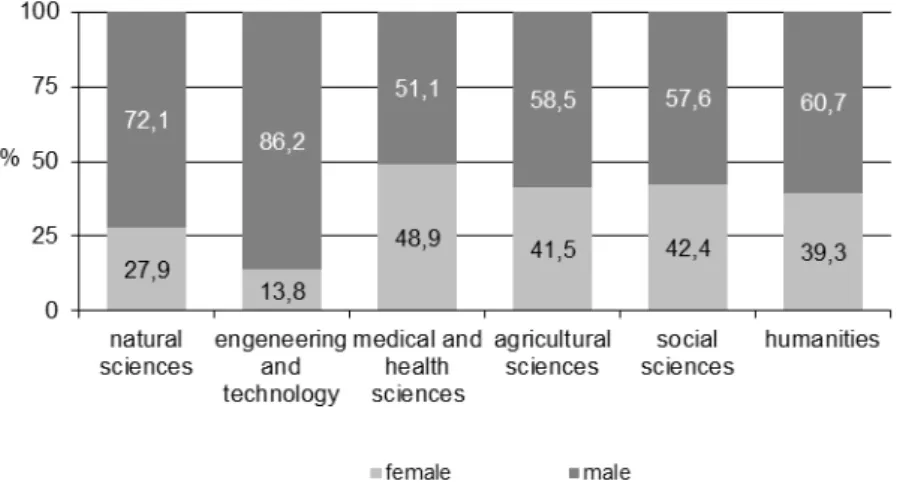
Figure 3 Share of female researchers by fields of study in 2008 (in FTE) ...25
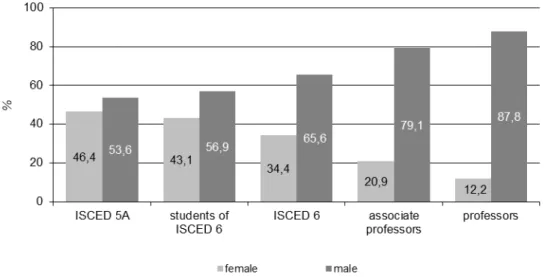
Figure 4 Share of female researchers by qualification and position in 2008 (%)...26
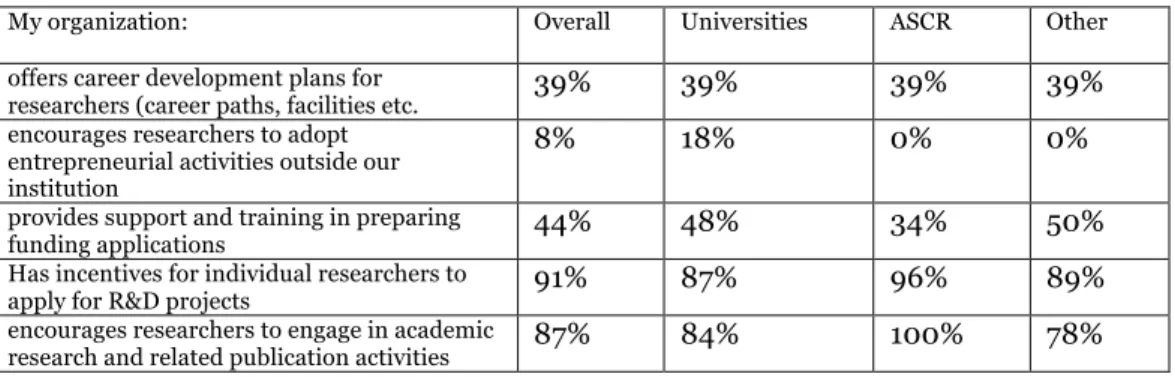
Figure 5 Role of the own organisation regarding human resources (N=973)...28
Figure 6 Schematic illustration of the diversity of research careers in the European Research Area (ERA), using Finland as a concrete example ...32
Figure 7 Major problems to find suitable doctoral students ( %)N= 74...62
Figure 8 The Czech Republic’s place in the ‘World of R&D 2010’... 81
Figure 9 Regional employment by sector and region, 2008 ...86
Figure 10: The main regional spatial structure of the Czech Republic’s economy ... 88
Figure 11 The regional geography of R&D in the Czech Republic, 2008... 91
Figure 12 The location of selected R&D and technology centres in the Automotive sector, Czech Republic. ...92
Figure 13 Public University student regional distribution, Czech nationals by home residence, 2009...93
Figure 14 Percentage of population at university as % population 20-24ys ...96
Figure 15 Employment in R&D by Czech region, 2007 ...98
Figure 16 Eligibility for EU Structure Funds, by region, 2007-2013... 101
Figure 17 Specific Objectives Operational Programme, R&D for Innovation, 2007-2013 ... 104
Figure 18 The stylised model of the Regional Innovation Strategy process... 157
Figure 19 Map of the Czech Regions, 2011 ... 159
List of Tables
Table 1 Importance of sectors to recruit R&D staff, current and future recruitment (%),
N=74)...16
Table 2 Average monthly salary of scientists and engineers by research fields (in CZK) ... 20
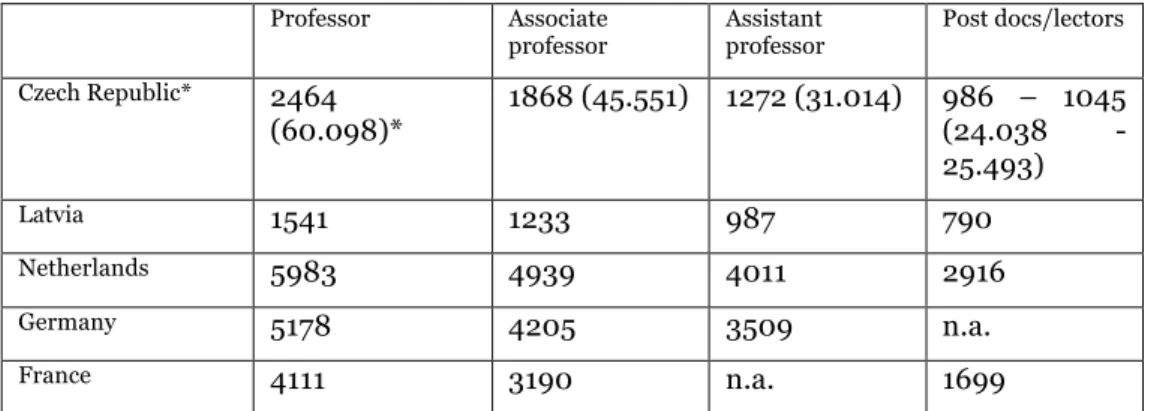
Table 3 Average salaries per categories in selected countries (middle of scale), data 2008/09 in Euros...21
Table 4 Research staff by type of contract (in FTE) ... 23
Table 5 Barriers for R&D&I performance in the Czech Republic ...27
Table 6 Characteristics of the organization on a 5-points scale; responses 1 and 2 (to a large or very large extent) (%), N= 74... 29
Table 7 Barriers for international R&D staff mobility (%) ... 49
Table 8 Availability of institutional financial support to attend conferences (%)... 49
Table 9 Institutional consulting about mobility funding schemes (%)... 50
Table 10 Barriers for cross-sector R&D staff mobility in the Czech Republic ... 53
Table 11 Organization provides information on cooperation opportunities with business (%) ... 54
Table 12 Organization provides matching funds for collaborative research projects (%) ... 54
Table 13 Organization gives temporal leave to work in another sector (%) ... 54
Table 14 Development of total number of doctoral students, presence and combined study paths ... 60
Table 15 Most important reasons for students dropping out (N=74)... 65
Table 16 Employment sectors of PhD holders in Germany from graduate schools compared with other PhD holders, 40 months after graduation (%) ...75
Table 17 FDI flows supported by Czechinvest, Q1-2 2008, by sector, jobs created and deal value... 85
Table 18 The Dispersion of Regional GDP per inhabitant, EU + selected MSs, 1995-2007... 86
Table 19 Regional GDP by PPS, Czech regions... 87
Table 20 Innovative SMEs collaborating with others as % all innovating SMEs ... 89
Table 21 Share of commercial linkages as innovation source by partner geographical location ... 90
Table 22 Share of mutual R&D investment by geographical location (%) ... 90
Table 23 Gross Expenditure in R&D (GERD) by Czech region, 2002-08 ... 92
Table 24 Regional Distribution of Universities and Student numbers by Czech Region 2007... 94
Table 25Regional distribution of students undergraduate/ postgraduate 2005/06 ... 95
Table 27 Human Resources in Science and Technology, Czech Republic, 1998-2009. 97
Table 28 Balance of public R&D jobs extrapolated from private R&D regional distribution ...99
Table 29 Funds for the Czech Republic (€bn), 2007-2013... 102
Table 30 Breakdown of financing Operational Programme, R&D for Innovation, 2007-2013... 103
Table 31 The potential funding gap, OP R&D&I, Prague and Rest of CR, 2007-2013. ... 105
Table 32 A SWOT analysis for using OP R&D&I to contribute to emerging technological areas ...108
Table 33 Base regional data for the 14 Czech regions ... 160
Abbreviations
ASCR Academy of Sciences of the Czech Republic
BA Bachelor’s degree
CF Cohesion Fund
CZK Czech Crowns
DFG German Research Foundation
EIT European Institute of Technology
ERA European Research Area
ERC The European Research Councils
ERDF European Regional Development Fund
ESF European Social Fund
FDI Foreign Direct Investments
FTE Full time equivalent
GDP Gross Domestic Product
GERD Gross Expenditure on R&D HEI Higher education institution -
HR Human Resources
HRM Human Resource Management
KNAW Dutch Royal Academy of Sciences
MA Master’s degree
MEYS Ministry of Education, Youth, and Sports
MIT Ministry of Industry and Trade
NSF U.S. National Science Foundation
NWO Dutch Research Councils
OECD Organisation for Economic Co-operation and Development OP EC Operational Programme Education for Competitiveness OPIE Operational Programmes for Industry and Enterprise OPEI Operational Programme for Enterprise and Innovation
OP R&D&I Operational Programme Research and Development for Innovation
PhD Doctor of Philosophy
PPS Purchasing power parity
SVTP Science and Technology Park Association
SME Small and Medium-sized Enterprise
Executive Summary
The Report on Human Resource in the Czech R&D&I system focuses on the analysis of the Czech R&D&I system of academic careers, researcher mobility, doctoral training, challenges of HR for new R&D&I fields and new infrastructures in a regional setting and discusses the issues surrounding cooperation and concentration of human resources in the Czech R&D&I system. Based on European good practices extensively presented in this report a number of recommendations are proposed.
Career Structures
The study addresses various aspects of the career structure in the Czech Republic such as the recruitment and promotion, contractual relationships, remuneration and career schemes, and human resource management at universities and research institutions. A number of key findings emerged from the study. These were as follows.
For institutions the most important recruitment source are their own graduates, and this source is expected to increase in the near future. For research institutes the regional institutions are an important source as well, while recruitment on the national level is considered considerably less important. This indicates that the Czech academic labour market is quite internally oriented, partly due to prevailing recruitment policies and partly to the disinclination of Czech academics to move between institutions.
Among Czech academics there is a high level of dissatisfaction with their pay and working conditions. Although comparisons with other employment sectors and academic salaries internationally are difficult to make, available data show that for some disciplines salaries in the private sector are substantially higher (e.g. physics), whereas for scientists in other fields the difference is negligible. Compared to international figures, the yearly salary average of researchers in the CR is far under the EU average. However, when corrected in terms of purchasing power parities the Czech average approximates the EU average. International comparisons of academic salaries show a quite large average salary range. In the CR the range is quite wide allowing larger salary differences within and between academic ranks.
The career and promotion structure is very cumbersome and rigid. Indicative for this are the relatively high age of academics within the highest hierarchical ranks (more than 86% of professors are aged above 50) and the low representation of women (half the EU-27 average). Climbing to the top is a very demanding life-long endeavor. Respondents were quite critical about the capability of their organization to develop human resources policies and to provide career opportunities for researchers. Major barriers were: limited career development plans, inadequate regulatory frameworks for young researchers’ careers, and insufficient training possibilities. These themes are very actual in many countries and references have been made to initiatives on the European level for a renewal of career paths regarding recruitment and retention, promotion and reward systems.
Recommendations (in order of priority)
1. Strengthen the role of Human Resource Management (HRM) on the central institutional level. Counteract the loose federative structure with decision-making powers at the lowest level by active HR policies regarding recruitment and careers and correcting current age and gender imbalances and in-breeding at all levels. Adherence to principles of open competition for positions and transparency of appointments and promotion procedures should be given particular attention. 2. Manage the academic career in a flexible manner. Develop career plans that
appointments, junior positions that break through the current long hierarchical career ladders. These plans should be oriented to make the academic career more attractive to young researchers.
3. Apply more diverse criteria to assess and reward the performance of academics. Performance assessment should not predominate, but should constitute part of a broader set of criteria, including the perspectives of individual staff and combined with staff development plans and training possibilities.
4. Encourage research collaboration and interaction with external organisations. Work outside the traditional academic framework, for example through staff exchange or adjunct appointment systems, should be recognized more in academic appointments and careers, and become part of performance appraisals and rewards. There should be no legislative barriers to prevent institutions from encouraging this.
5. Create greater stability for human resource policy. Multi-annual research budget allocations rather than annual allocation of the budget would create greater stability and certainty in the policy environment for HE institutions.
Researcher Mobility
The study addressed the barriers and facilitators of researcher’s mobility in the Czech Republic by identifying the trends in outgoing and incoming researcher mobility. In the past decade the Czech government support for researcher mobility in R&D was not very high on the policy agenda. The White Paper on R&D&I 2008 was an important document, which has identified low horizontal mobility of researchers and professional staff and insufficient migration policy as weaknesses of researcher mobility for R&D in the country. It proposed a number of recommnendations although no concrete implementation tools. A further document that identifies research mobility as an important policy goal is the National R&D&I Policy 2009-2015. Its goal 6 “Ensuring human resources for R&D&I” defines three core activities to be implemented by 2015 which are related to international or inter-sectoral researcher mobility. Recently, the Czech government has signed the agreement for the ERC CZ grant and RETURN grants (‘NAVRAT’)–which is a positive step towards providing longer term funding for researchers. Further, interviews revealed the Regional Reintegration Fund is a good example of an initiative at the regional level to support international mobility. The government programmes do support inter-sectoral cooperation, although only to some extent, since they are rather focused on some fields and are only few in number. Further since 2005 the Czech government has adopted strategic documents aiming to facilitate the integration of immigrants in the Czech Republic. International research mobility is regulated bythe immigration law in the Czech Republic.
The number of incoming foreign researchers has increased in the Czech Republic; especially this is true for researchers from non-EU countries. However the attractiveness of a research career in the Czech Republic for foreign nationals is relatively low due to complicated administration of visas and often non-competitive level of earnings compared to the average in the EU-15 countries.
Human resource mobility between sectors has been limited, since as noted by respondents in interviews and focus groups, it is difficult to ensure an academic career if one leaves business and industry. The example of successful entrepreneurs who left academia shows that often for financial reasons, former academics who are successful entrepreneurs do not intend to come back to academia full time. At most they do occasional teaching.
There is a long-standing collaboration between institutes and universities; most of the researchers working at ASCR institutes are the graduates of those universities and they still teach at universities. At the same time, university academics like to use the equipment available at research institutes.
The key concern of most respondents was the lack of national strategy on how to attract talented academics to the country. In this respect, the absence of horizontal cooperation between ministries and different departments was emphasized, since the issue of mobility includes various spheres, such as education, social welfare, immigration and science.
For the incoming foreign researchers the strong barriers are the low level of academic salaries in the Czech Republic, complicated immigration procedures, bureaucracy and language barriers. Salary ceilings were mentioned as a strong barrier if institutions want to attract top scientists from abroad.
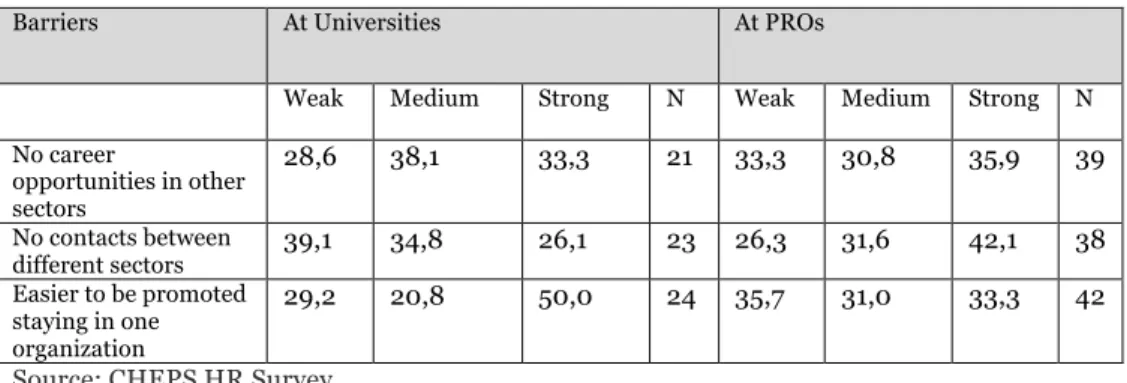
HR Survey data shows a number of barriers for the inter-sectoral mobility of academics and researchers. According to respondents at universities, 50% think that a strong barrier for inter-sectoral mobility is linked to inbreeding. Other identified barriers from the researcher’s point of view include the differences in the duration of projects between industry and academia, which limits for example, linking industrial projects to PhD projects. The unpredictability of business and markets has been indicated as another important reason
The focus group discussions with R&D entrepreneurs revealed a number of perceived barriers from the point of view of industry for inter-sectoral mobility. The most common concern was the difference in the worlds of academia and industry in terms of work speed and targeted problem solving. The preparation of graduates was a concern for entrepreneurs, since in their view PhD candidates and postdoctoral researchers lack soft skills, problem solving capabilities and entrepreneurial spirit. A strong limitation of the system is the difficulty to get temporary leave in the system, which limits extended work, either in industry or a university abroad.
Recommendations (in order of priority)
1. Create an explicit inter-ministerial strategy and action plan on how to coordinate immigration (visas and permits), pension schemes and mobility promotion activities both at universities and ASCR research institutes.
2. Stress the human resources dimension in university-industry collaboration schemes besides infrastructure development and the creation of technology transfer offices.
3. Increase the transparency of hiring in the R&D system via requirements to advertise the new positions nationally and internationally in media and on the Euraxess jobs and other international portals.
4. Use a comprehensive approach to attract foreign top researchers as well as expats back to the Czech Republic by combining financial and ‘soft’ mechanisms – support to families, housing, institutionalised help with visas, residence permits (e.g. translation services at the institutions within the international offices). 5. Create subsidies for Czech academic staff to go abroad for longer periods
(post-docs) with the requirement to return to the home country upon completion of the programme.
Doctoral Education
This section reviews the position of doctoral education. Since 1990 universities have been legally allowed to provide doctoral education and to award the PhD degree and they obtained later the full responsibility for doctoral education. The most common form is the “apprenticeship model” of the student-supervisor relationship. There are clearly defined regulations regarding the set of requirements throughout the PhD process. For students the whole process is well-structured, but very demanding involving research training, state examinations, ‘pedagogical practice’ and publishing a scientific article. The following critical issues were identified.
• A high proportion of students do not complete in time or drop out. One issue concerns the dependency of students on the availability of good tutors. This varies considerably across different institutions and disciplines.
• Doctoral students receive low financial support. Students are often forced to accept others jobs that negatively affect their study progress, and may explain the high drop-out rate.
• In some fields there is concern about attracting enough students who meet the quality standards. Often vacancies can be filled, but it would be good to have more eligible candidates to choose from. A relationship was made between the low doctoral grants which makes it difficult to compete with salaries earned elsewhere or internationally.
• Controversies between universities and institutes of the ASCR regarding the training of and responsibilities for doctoral students continue to exist. Although much cooperation exists as well, from the side of the ASCR there are feelings they are not in an equal position and the view was expressed to return to the situation prior to 1990 when the ASCR had an independent role in providing doctoral studies.
• There is little cooperation with industry and generally little financial support from the private sector. However, examples were found where doctoral research is taking place in the context of an industrial project, with a second supervisor from industry.
• Developments in other European countries show how doctoral education can be of greater relevance by including both core skills and wider employment related skills. More attention has been given to prepare doctoral students for careers in the knowledge intensive sectors outside academia.
Recommendations (in order of priority)
1. Improve the remuneration of doctoral students. A combination of different resources is seen as most effective, such as targeting specific priority areas, stimulating collaborative forms of doctoral education, the quality of the programme or the balance between supply and demand of PhD graduates on the labour market.
2. Strengthen the internal and external quality assessments of doctoral education. Despite the general high level of doctoral education, the quality varies in the system as a whole. Although some structures are in place, the quality assessment of doctoral programmes should be more integrated into institutional policies and HR strategies.
3. Strengthen the relationship between universities and AS research institutes. There is currently much cooperation although also controversies have been noticed. Rather than taking legislative steps to have PhD degrees awarded by the ASCR as well, it is recommended to strengthen the model of cooperation between universities and AS institutes utilizing their respective strengths. Other European countries provide examples to find creative solutions for practical problems. 4. Develop critical mass in doctoral education. This can be achieved by creating
larger settings where students are confronted with a broader range of knowledge than in the prevailing master-apprenticeship model. Structured forms of graduate training that are emerging in Europe such as graduate schools and research schools are means to achieve such critical mass.
5. Encourage the international orientation of doctoral education. The current initiatives and co-supervisor arrangements with universities abroad should be expanded where possible. This is an important instrument for recruiting international students and increases the compatibility among doctoral programmes internationally. These initiatives should be supported by policy, for example by providing adequate funds or research grants.
6. Increase labour market consideration and monitoring of PHD graduates. The growing relevance of PhD graduates on the labour market implies that it is important to know what doctoral students are being prepared for and how well this is being done. This includes exploration of the skills and competences that PhD graduates require informing doctoral programmes as well as their rates of return.
The HR Challenges of potential new fields for R&D&I and current
investments in R&D&I infrastructure
In the next two decades, the Czech economy is likely to modernise in two phases; R&D&I will contribute to each of these phases although in very different ways.
• The first following phase in the Czech industrial transition is in the upgrading of its manufacturing activities from assemblies and mass production towards more knowledge-intensive and value added manufacturing.
− The most important new businesses will emerge in fields supplying into
existing supply chains e.g. automotive, but on an increasingly global scale rather than exclusively within the Czech Republic. Creating these businesses requires a mix of technological and entrepreneurial skills, and primarily the absorption of D&I through technology transfer.
− Some D&I is necessary to reorient declining heavy industries e.g. chemicals,
steel, mining, and retain competitiveness and some employment.
• The second phase (in around a decade) will be the emergence of new high-technology economic sectors. The most immediate change necessary is an upskilling of the workforce reflecting the Czech Republic’s diminishing status as a low-wage economy and the need for a much higher degree of workforce flexibility to deliver customisation.
− In the next decade, firms in entirely new technology sectors will begin to
emerge, moving beyond existing supply chains, creating novel sectors in the Czech Republic that from 2020s will become increasingly important to Czech economic performance. This is the main outlet for the application of ‘R’ (Research).
These changes will reinforce existing patterns in the distribution of private sector researcher employment:
• Numbers in Prague will be very low, reflecting a domination of Prague’s economy by the knowledge-intensive business services sector (with a very low R&D&I input).
• Strong R&D employment growth in Central Bohemia reflecting locations of corporate headquarters seeking proximity (‘clustering’) with Prague agglomeration
• Strong growth in (R&)D&I employment in the growing non-Capital regions (southern Bohemia, Brno).
• Some growth in D&I employment (as part of overall employment declines in manufacturing) in the old industrial regions of northern Bohemia and Silesia-Moravia.
There will be a strong bias towards Prague in terms of the location of publicly funded researchers (in universities and research institutions). This is only a problem if there is a crisis and one sector sheds jobs more rapidly than the other can create them. Both elements of the Operational Programmes (OP) could help in both phases of these activities, creating innovative businesses in existing clusters/ supply chains and creating new micro-clusters of globally active innovative endogenous business.
• The Regional Centres have a strong role to play in terms of technology transfer and knowledge exchange around existing sectors, in particular in process and management innovations.
• The Centers of Excellence (CoEs) have got the potential to create new, innovative businesses in existing and emerging sectors, which could in turn support novel technology sectors in the 2020s.
The focus of the new infrastructure is primarily on R&D, and there is a clear, obvious lack of demand-side pull for the most novel innovations. There is a risk that the new infrastructures neglect technology transfer and knowledge exchange in favour of ‘upstream R&D activity’ that fails to drive innovation.
There is a need to create strong framework conditions for innovation in the regions in which the centres are created. These include technology transfer activities, venture capital support, advice for potential high-growth, high-technology firms and entrepreneurship stimulation schemes. There is limited current ‘natural’ demand for these services but without their stimulation, there is limited potential for the OP infrastructure investments to translate into new high-technology sectors of significance for the Czech economy.
The HR challenges relate to the historical continuity. There has historically been a substantial problem around stability of research teams and an important challenge to recognise is that of long-term sustainability and mainstreaming against the risk that the infrastructure fails to deliver longer-term structural change.
A key element of the sustainability challenge is the way the new infrastructure contributes to researcher mobility at the European scale. There is a real risk that these new centres help improve mobility without equipping the attracted researchers to move into the Czech economy particularly in the D&I end of the R&D&I spectrum. Given the necessity of improving the innovation environment, there are also skills shortages around technology transfer, knowledge exchange, business growth, entrepreneurship and venturing. There is no clear regional innovation leadership in the Czech regions outside South Moravia, and there is an urgent need to ensure fit-for-purpose knowledge-exploitation infrastructure is created to match the new knowledge-generation infrastructure.
Main recommendations (in order of priority)
1. Early and effective budget planning is necessary to ensure that the Czech innovation system benefits from the full €2bn community resources made available through OP R&D&I.
2. Human resources policies for those centres funded under OP R&D&I should ensure that employees funded through this route receive due recognition and are managed to deliver a national leadership/ ‘hub’ function in their field, to strengthen these fields across the Czech Republic as a whole.
3. Swift progress need be made in identifying Centres of Excellence and in developing scientific programmes and institutions, which transcend the existing problems in R&D&I in Czech universities.
4. The Centres of Excellence must be implemented in such a way as to strengthen rather than disrupt disciplinary activities elsewhere in the Czech Republic.
5. There is a need to retain a central (national/ regional) oversight of technology transfer activities under OP R&D&I, to ensure that there is not ‘project sprawl’ and that activities are contributing to strengthening the Czech, and regional, innovation system.
Co-operation and concentration of human resources in R&D&I
The main objective of this component is to analyze the trends in the Czech Republic regarding co-operation between research institutions and industry in concentrating human resources in R&D&I and to identify which factors encourage or discourage such co-operation and concentration.
In general, a systematic approach towards human resources development in R&D is required. Highly qualified researchers and academics are essential for high quality R&D systems. In such systems qualified R&D workers on all levels are needed in academia, research institutions as well as in industry.
Developing and securing human resources for R&D&I is a long term and complex process including multiple activities and measures targeted at different groups including science communication; science learning centres; support for students in the technical and natural sciences; support for researcher mobility; support for young and talented researchers from abroad; and platforms and networks linking researchers and industry.
It is obvious that the issues of research-industry collaboration and human resources development/concentration have been paid increasing attention in the Czech Republic over the last decade. The importance of this issue has been underlined in many documents, although often in rather general terms.
There is awareness within the science and business communities as well as within the state administration that concentration of human resources in R&D&I is very important as is co-operation between science and industry to achieve this concentration. This high level of awareness is an important first step towards the formulation and implementation of a coherent and efficient policy.
In terms of the concentration of human resources in R&D&I, representatives of academia and business share the opinion that a strategic, long-term approach to this issue is missing in the Czech Republic. At the same time, there is a high level of consensus that such an approach/policy is highly desirable – especially in areas in which a certain level of excellence has already been achieved and where good teams have been formed. In their view the political situation in the Czech Republic over the last few years has been an important factor influencing the research & development field in general. According to many stakeholders, political instability since 2006 has had a major impact on the overall atmosphere in higher education and research. There are valuable strategic and analytic documents in many areas of R&D, innovation, and higher education. Yet at the level of implementation, those measures and activities that have been put in place have been mainly ad-hoc and have often not been sufficiently integrated with each other given that an overarching direction is missing.
Looking at the personal mobility as one way of cooperation, one can note that traditionally in the Czech Republic it is not typical for researchers to move from industry to science and vice versa. Co-operation in training and education is much more intensive than personal mobility but is still very dependent on a specific field and a specific institution. Many institutions (higher education institutions) attempt to involve people from industry in various phases of teaching. Partners from industry participate in the process of creating or modifying study programmes or selected people from industry deliver lectures. However, the involvement of external staff in teaching is limited due to accreditation procedures and conditions.
Activities, measures or programmes that support mutual co-operation between science and industry (for example mutual R&D projects) have an indirect impact on R&D&I human resources concentration
The Operation Programme Education for Competitiveness (OP EC) pays special attention to human resources in R&D by creating it as a specific area of intervention. Projects supported by the OP EC are in various phases. Many of them are already in operation, some of them are waiting to be granted support, and a few calls for proposals have still to be announced. As all of the projects financed through EU structural funds in the 2007-2013 programming period are still in progress, it is very difficult to predict the overall impact of the supported activities. At the same time, the content of the projects are not in the public domain so it is almost impossible to assess which activities are taking place, how they are being implemented, and with what results. Nevertheless, some projects seem to be promising as judged from the information that is available on their websites.
According to the interview and focus group remarks, the EU structural funds projects have been submitted on various levels – not only on the university and faculty level, but also on the department level. According to some observers it is then very complicated to co-ordinate these activities at the central university level and to find synergies. Secondly, many receivers of project grants complain about the very high level of administrative burden involved. A significant amount of time and resources is dedicated to administration. At the same time the focus of the managing authority is mainly on formal outputs (number of participants, detailed budget items) rather than on the actual impact of the projects. Finally, many institutions perceive the structural funds (especially the OP EC) mainly (if not only) as compensation for decreasing support from the state budget.
Recommendations (in order of priority)
1. The implementation of policies and strategic intentions needs to be tackled systematically. Many critical issues have addressed in analytic and strategic documents drafted by various bodies (ministries, advisory bodies, etc.) but implementation has lagged behind.
2. Co-operation between the various key actors needs to be strengthened – especially the Ministry of Education, Youth and Sports; Ministry of Industry and Trade; the Council for R&D&I; and other relevant players. All measures and programmes need integration into a comprehensive set of complementary tools targeted at various levels of the education and R&D&I systems.
3. Increased attention should be paid to measures and programmes supporting science-industry links in general. These projects can have a significant impact on human resource development.
4. Detailed monitoring and evaluation is essential in the area of the new R&D infrastructure funded by the OP R&D&I. The newly built capacities will require high quality human resources. At the same time, the Prague region (still a leading locality in terms of the quality and quantity of R&D) is entitled only to a small fraction of the EU structural funds in the 2007-2013 programming period. Developments in Prague in terms of human resources in R&D&I in comparison to the rest of the Czech Republic should be carefully analysed.
5. The contribution of the education system at all levels to developing human resources for R&D&I should be carefully analysed. The recommendations of the OECD Thematic Review of Tertiary Education in the Czech Republic need to be acted upon.
1. Introduction
Highly qualified R&D human resources are essential in today’s knowledge economies. At the European level and in many member states, various programmes have been developed to motivate young people to be mobile, to enter higher education and to pursue academic and research careers. Despite some encouraging developments, the European Commission still argues, “significant weaknesses remain with science teaching in some Member states”1. There are still only a limited number of women in
science, most universities in Europe do not attract top talent, the commercialisation of research needs to be improved and inter-sectoral mobility is low. Reaching the Lisbon agenda goals of becoming a powerful world knowledge economy is a challenge for Europe.
However, there are good practices in human resources policies in various R&D systems in Europe, which could be more widely applied and could help governments learn from each other’s experience in how to foster the growth and development of a strong base of highly skilled R&D staff in their higher education and research systems. Developing and securing human resources for R&D&I is a long term and rather complex process including multiple activities and measures targeted at various groups.
The International Audit is part of a broader review and reform of R&D&I in the Czech Republic. In particular it follows Green and White Papers on this subject in 2008, a new R&D Act in 2009, and an extensive analysis of the state of R&D&I in the Czech Republic in comparison with EU/OECD countries published by the Research and Development Council in December 2008.
We have attempted to locate the Human Resources work-package within this broader context by indicating how the White Paper assessed the R&D&I human resources situation in its SWOT analysis and in its policy recommendations. (The issues in italics have a direct linkage to this work package.)
SWOT Analysis: Human Resources for R&D&I (from White Paper): • Strengths
− Number of researchers has been growing more rapidly than in the EU − Level of some research teams is comparable to the best in the world − Tradition in education in engineering fields
− High employment rate in medium high-tech and high-tech industries • Weaknesses
− Low number and unsatisfactory professional structure of HEI graduates − Low number of researchers
− Low horizontal mobility of researchers and professional staff − Unsatisfactory age structure of the research and pedagogic staff − Low awareness of industrial property rights
− Insufficient knowledge and use of modern methods of management
1 EC, COMMUNICATION FROM THE COMMISSION TO THE EUROPEAN PARLIAMENT, THE COUNCIL, THE EUROPEAN ECONOMIC AND SOCIAL COMMITTEE AND THE COMMITTEE OF THE REGIONS
− Low participation in lifelong learning
− Low language skills and internationality of students − Lacking “soft skills“ education
− Insufficient migration policy • Opportunities
− Use of resources from Structural Funds for 2007-2013 − Better coordination and implementation of the NP R&D&I
− Rise in the attractiveness of the Czech Republic for researchers and other
experts from abroad
− Strengthening of “entrepreneurial spirit” in research institutions and at HEIs − Increased awareness of industrial property rights
− Adoption of tertiary education reform • Threats
− Critical shortage of researchers in relation to extending R&D capacities
through EU Structural Funds
− Brain drain and a barrier to brain gain due to low wages
− Lack of qualified labour in enterprises related to the development of
production
− Rigid educational system and its breakaway from the needs of innovative
enterprises
Policy recommendations: targets in the area of human resources for R&D&I (from White Paper):
• Provide enough qualified human resources for research, development and innovation:
• Increase the number and quality of researchers
• Improve the capabilities of human resources for the needs of a knowledge-based economy
• System measures needed to achieve targets:
− Create favourable conditions for arrival of researchers and experts from
abroad
− Differentiate HEIs according to their quality, including strengthening the role
of research faculties and institutes
− Create a system of functional professor positions
− Differentiate study programmes and create interdisciplinary study
programmes in co-operation with the application sphere
− Introduce enterprise and IPR-related fields of study at HEIs, train for
entrepreneurship
− Create a system of HEI financing that will motivate education tied up to the
needs of a knowledge-based economy • Motivational measures needed to achieve targets:
− Motivate students of SSs and HEIs to research work and science and
engineering fields of study
− Encourage two-way horizontal mobility between HEIs, other ROs and the
enterprise sphere
− Improve the school facilities and teaching of subjects regarded as crucial for a
knowledge-based economy
− Support the enhancement of managerial skills among employees of ROs,
including HEIs
− Support the gaining of practical knowledge by HEI graduates − Develop motivation for involvement in lifelong learning
1.1
Aims of the Work Package
In the area of Human resources for R&D&I the Tender Document asks for an audit report and policy recommendations on the following issues:
1.2
Research Questions
We have interpreted and regrouped these six sub-work packages in the light of our understanding of the context of the International Audit and the policy review work that has already been undertaken in the Czech Republic. We believe the following are the key research questions:
• What are the career structures, promotion criteria/processes and remuneration schemes for researchers in the university, public research centre and private R&D sectors? What are the possible impacts on R&D&I in the Czech Republic in comparison with other European countries? (Career structures)
• What are the trends in terms of researcher mobility between institutions and sectors (including international mobility)? Are there particular barriers and obstacles? What supporting measures and policies (in general, and to encourage the return of capable young scientists from international placements in particular)
• How effective is the Czech system of doctoral education and training? What are the competencies of PhD graduates; where, at what level and in which sectors/branches do they find employment? (Doctoral training)
• What are possible new industrial fields for the application of R&D&I and what could this mean for the regional distribution of organisations employing researchers? How could this relate to the major new investments in research facilities and technological parks (through the operational programmes of the structural funds)? What are the human resource challenges of these possible developments? (New opportunities)
• What are the trends in the Czech Republic in terms of co-operation between research institutions and industry in concentrating human resources in R&D&I? Which factors encourage or discourage such co-operation and concentration?
(Co-operation and concentration)
• What might the Czech Republic learn from European countries with a successful track-record in R&D&I in terms of the above five areas relating to human resources for R&D&I? (European good practice)
In this chapter on Human Resources in R&D&I we present current trends and evaluate Human Resources policies in R&D&I in the Czech Republic following the structure of the research questions outlined above. We also provide European good practice examples in each area.
1.3
Methodology
The WP f, Human Resources in R&D&I study is based on a range of data sources and data collection methods. To ensure the validity of our findings, a national human resources in R&D&I consultative workshop was held in Prague in mid-April. The data included the review of major Czech documents (Green and White Papers, OP Programmes, Strategic documents, institutional websites), secondary literature (EU, OECD and national studies, as well as scientific publications on R&D&I). Statistical information was gathered with the help of the Technology Center and the Czech Statistical Office. For certain components, for example doctoral education, the data was scarce so we conducted an HR survey among university deans and Academy of Sciences of the Czech Republic (ASCR) research institute Directors (n=74).
We also contributed questions to, and analysed the data from, the International Czech R&D&I Audit survey of researchers. This online survey was conducted in January and February 2011. In addition, three focus groups were organised with researchers, academic entrepreneurs and industry representatives respectively. Finally, 55 interviews were held with various actors in the Czech R&D&I system that in one way or the other deal with HR policies or are the target group of such policies. We interviewed officials at the Ministry of Education, Youth and Sports; Ministry of Labour and Social Affairs; ASCR; National Training Foundation; Euraxess centres; university administrators and academics; PhD students; postdocs; research institute directors and researchers. The plethora of interviews substantiated the data gathered from the survey and other data sources and provided a solid ground for analysis and conclusions.
1.4
Structure of the Report
This chapter follows the structural logic of our research questions. Each component in this report identifies main policies and trends, analyses these, suggests European good practices and makes recommendations. The chapter starts with the presentation and the analysis of the Czech R&D&I system of academic careers. It identifies the main categories of academic careers, and evaluates the trends in academic careers. The second component on researcher mobility discusses the policy context and trends of international, inter-sectoral and intra-sectoral mobility. It focuses on the barriers to and facilitators of mobility in the Czech R&D&I system. The third component highlights the main structures of doctoral training in the country, and evaluates their
strengths and weaknesses. The fourth component analyses the challenges of human resources for new R&D&I fields and new infrastructures in a regional setting. The fifth component presents and discusses the policies and trends in concentration of human resources. In particular, it highlights the factors which foster this concentration to boost the development of a knowledge economy in the Czech Republic. The last chapter presents the good practices found in European R&D&I systems in addition to those presented in each component. The conclusion ends the report with the list of main strengths and weaknesses of the HR in the R&D&I system in the Czech Republic and provides a list of recommendations.
2. Career Structures
2.1
Introduction
The aim of this component is to analyse the prevailing career structures of researchers at universities and R&D&I research organisations. Special focus will be on:
• Recruitment, appointment and promotion policies and procedures: national regulations, institutional policies.
• Conditions under which institutions are able to attract and retain well qualified researchers in competition with other employment areas. Human Resources (HR) strategies and practices.
• The impact of internal and external labour markets on the attractiveness of pursuing a research career.
This text is organised as follows. The first two sections outline the academic staffing structure and appointments in Czech higher education and research institutions. Next the working conditions will be discussed with attention to the remuneration and employment relationships and satisfaction levels of Czech academics on a number of issues. The age structure and the position of women in science will then be considered in more detail. This is followed by examining the ability to develop human resources and the practices and barriers to provide career opportunities for researchers.
Against the background of the Czech context and practices, the career structure for researchers will be placed in the European context, with reference to particular national policies to make the research career more attractive, in particular to young researchers. Finally, some policy recommendations will be provided with some directions in which human resource management in the Czech Republic might evolve in the future.
2.2
Academic staffing structure
Czech academics and researchers operate in both higher education institutions and in independent research institutes. This separation is the legacy of the Soviet dual model of the ASCR focusing on (basic) research, whereas HE institutions were expected to focus on teaching. Although legislation in the 1990s maintained this dual system till the present, the universities were assigned a role in research as well. Since then the engagement of universities in research increased significantly. Nowadays the research institutes of the ASCR and the universities collaborate especially in the provision of doctoral studies and in establishing joint research centres. Nevertheless in the area of research, competition often prevails over cooperation.2
Academic staff at universities devotes more or less the same amount of time to teaching and research, although teaching is the main source of income, accounting for about 60 per cent of the total salary, while 25 per cent comes from research activities3.
The academic staffing structure distinguishes six categories: Professors (10% of all academic staff), Associate Professors or ‘docents’ (20%), Senior Assistants (50%), Assistants (8%), Lecturers (3%) and Researchers (9%). The law also permits experts
2 Melchiar, M. & P. Pabian (2009) Czech Republic: A state of the report on the Czech academic profession.
In: Locke, J. & U. Teichler (eds.) The Changing Conditions for Academic Work and Careers in Select Countries, INCHER Kassel: Werkstattberichte 66, pp. 39-56; See also Roskovec, V. (2006) The Role of
Tertiary Education in Research and Innovation. In: Sebková, H. (ed.) Tertiary Education in the Czech Republic: Country Background Report for OECD Thematic Review of Tertiary education , Prague: CHES, pp.41-48.
who are not members of the academic staff to teach in higher education institutions. Internal regulations of the institution define the position of a visiting professor. There is no legislation prescribing pedagogical qualifications for academics. Career development is a matter for internal institutional regulations. For becoming a docent the scientific qualifications of the applicant are examined, partly on the basis of the habilitation. Professors are appointed by the president of the Czech Republic on the recommendation of the higher education institution’s council, submitted through the Minister of Education. Academic careers are hierarchical and consecutive, but the general procedures and requirements for career tracks may vary according to particular procedures. Generally the appointment of the associate professor (or docent) marks the transition from junior to senior staff.
The staffing structure of researchers employed at the institutes of the ASCR of Sciences (ASCR) is based on general directives, although institutes have quite some freedom to define the different positions. Generally four basic categories are distinguished. The first is the post doc position, usually those between 0 - 5 years after a PhD, the ‘scientific assistant’ or junior scientist, scientist, and finally the group leader or independent scientist. The group leader is the top position and heads independent research groups. Researchers from the ASCR are often engaged in university teaching, regularly on a part-time employment contract and have a task to supervise doctoral students. Individual career purposes play a role here, as only through university channels can the official academic titles leading to the professoriate be obtained. Group leaders at the AS institute are formally equivalent to professors, whether this person has the formal title of professor or not. As a director of an institute notes: ‘It looks nice, but it is not important’.
Like in many other countries in the Czech Republic the number of students enrolled in higher education had risen substantially in the last decade, from 203,500 in 2001 to 370,000 in 2008. Statistics show that the number of professors and assistant professors employed by public universities and HEIs increased only modestly from 4,537 (in 2001) to 5,275 (2008) and the number of other academic staff increased from 9,104 (2001) to 11,704 (in 2008). In total staff at public HE institutions increased by about 25 percent while student numbers increased by more than 140 per cent, resulting in an almost doubling of the student-teacher ratio. These data suggest that the massification of students has been counterbalanced by an increase in the number of staff in lower academic functions.
Several aspects of the academic career structure have been identified in the Green and White Paper on Research, Development and Innovation in the Czech Republic4 as weaknesses regarding human resources. Most notable are the low number of researchers in the system, the low horizontal mobility of academic staff leading to a clear pattern of inbreeding, and unsatisfactory age and gender imbalances. These will be discussed in subsequent sections.
Another aspect concerns the institutional and legal arrangements regarding human resources and the employment status of academics. In the Czech Republic legislation has reduced the role of the State transforming a highly centralized system into a system based on a high level of institutional autonomy in higher education. In particular when it comes to staffing issues institutions have, apart from national procedures regarding appointments and general employment conditions, extensive self-governing rights and decision-making powers which have been further decentralized to the faculty and departmental level. The employment relationship can be characterized as one where institutions employ individual academics in a market-driven decentralized system. Working in non-governmental public institutions, academics have the legal status of ‘public employees’ and their jobs are regulated by
4 Karel Klusácek, Zdenek Kucera & Michael Pazour, White and Green Paper on Research, Development and
contracts of employment under private law. Compared with civil service status in several West European countries, public employee status in the Czech Republic is more likely to result in flexible employment practices and to facilitate professional and organizational change. The emanating career system strongly tends towards the decentralization of academic terms and conditions, which intends to be able to adapt more easily to demands of staff flexibility. The employment relationship and job security will be discussed below.
2.3
Recruitment of academic staff
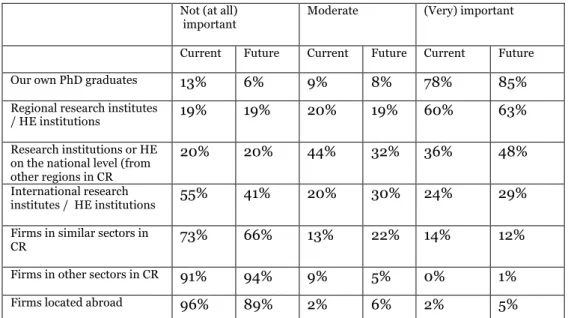
In the survey of directors of research organisations a question was asked about the importance of several sectors from which R&D staff are being recruited. A distinction has been made between current and expected future sectors (table 1).
Table 1 Importance of sectors to recruit R&D staff, current and future recruitment (%), N=74)
Not (at all)
important Moderate (Very) important Current Future Current Future Current Future
Our own PhD graduates 13% 6% 9% 8% 78% 85%
Regional research institutes
/ HE institutions 19% 19% 20% 19% 60% 63%
Research institutions or HE on the national level (from other regions in CR
20% 20% 44% 32% 36% 48%
International research
institutes / HE institutions 55% 41% 20% 30% 24% 29%
Firms in similar sectors in
CR 73% 66% 13% 22% 14% 12%
Firms in other sectors in CR 91% 94% 9% 5% 0% 1%
Firms located abroad 96% 89% 2% 6% 2% 5%
(Question asked on a 5-points scale, the two on both ends of the scale combined)
The table shows that own PhD’s are by far the most important recruitment source and that this source is expected to increase in the near future. Universities rely more on them than the ASCR research institutes and in the future recruitment of own PhD graduates is even expected to increase. An important part of this recruitment process is the practice to encourage desirable people to apply, people that are most of the time already known within the organization.
Regional research institutions and universities are in particular an important recruitment source for research institutes. Research institutes or HE institutions on the national level are considered less important, although re research institutes attach more value to this than universities. The other sources play hardly any role of significance in recruiting academic staff.
These findings indicate that the Czech academic labour market is quite internally oriented towards own students and staff and is geographically mainly regionally oriented. To understand the reasons for this outcome we asked about the extent to which national legislation would foster the institution to use these recruitment sources. This appears hardly to be the case and the question arises whether this internal orientation is the effect of prevailing HR policies of institutions or the low mobility of staff due to the mentality of many Czechs who tend to stay in the region after their graduation. In the interviews both explanations were mentioned.
A director of an ASCR institute states that the recruitment process is mainly an internal affair. Research groups have their own responsibility to choose their own people and research group leaders are quite independent in selecting their own researchers.
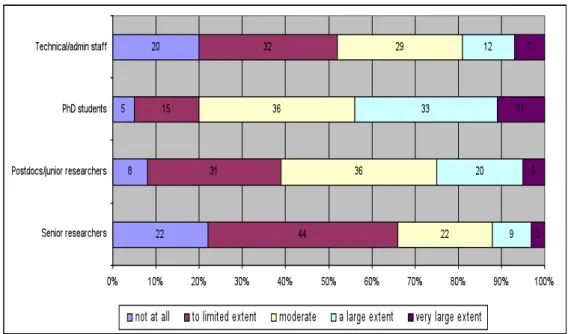
Figure 1 presents the extent to which institutions are able to attract sufficient qualified personnel for some different staff categories.
Figure 1 Ability to attract sufficient qualified personnel (%), N=769.
The figure summarises the views of all respondents in the survey as the different staff groups (teacher/researchers, managers) hardly differ in their views to attract sufficient qualified personnel. The management group, top professor and top researchers gave the same level of ratings, only the low teaching/research group show overall a lower rating, especially as far as attracting post docs/junior researchers is concerned.
Asked about hindrances and facilitators when hiring new R&D staff, the majority of respondents indicated that working conditions, available technical equipment, career opportunities offered and the reputation of the institutions were important facilitators. The most important hindrance to hiring new staff is the research funding available at the institution. Obviously, these factors may differ between institutions, but these are considered as important competitive conditions in attracting new R&D staff.
2.4
Working conditions
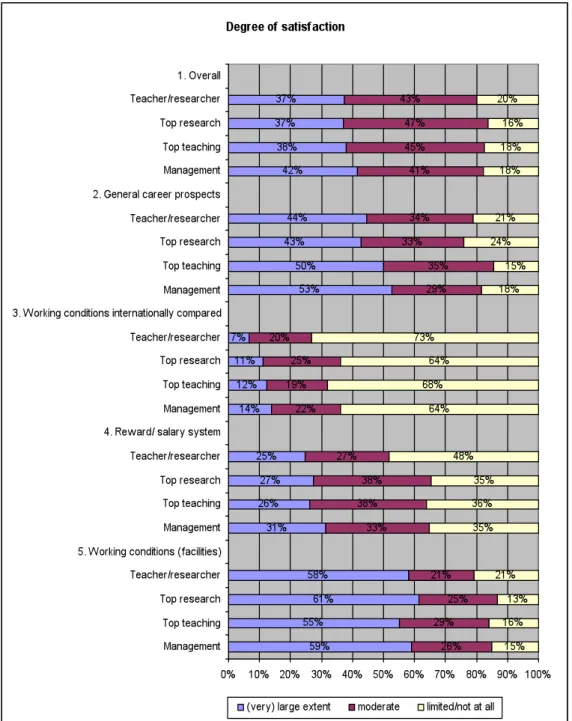
Working conditions involves a broad range of issues such as remuneration, terms and conditions of employment, security of work and career prospects as well as the available facilities and equipment. In the survey academics were asked to indicate to what extent they are satisfied with some of these working conditions (see figure 2).
Figure 2 Degree of satisfaction of different categories of staff with their working conditions
Question: To what extent are you satisfied in each of the following categories, related to your primary organisation?
Total N = 978: Management (408), Top teach (274), Top research (205), teacher/researcher (91), (5-points scale, the two extremes on both sides combined). (Top teach = professors + associate professors at universities; Top research = senior researchers at ASCR; teacher/researcher = all lower and junior positions at universities and ASCR institutes).
The first impression from this figure is that most of the different groups have quite a similar score on most of the working conditions and that there is much agreement on most of the issues. It is notable that the category of teacher/researcher as the lower and junior position is not significantly more dissatisfied with overall working conditions and career prospects. Only in the international comparison and the salary/ reward system are they more dissatisfied, but not as high as might be expected given their position in the academic hierarchy.
These findings correspond with recent international data that show little variance amongst different groups of academics. In the so-called CAP project (the “Changing Academic Profession”), a survey among academics in 18 countries worldwide, younger academics overall were not more dissatisfied than senior staff.
In the UK 45% of academics described their overall satisfaction with their current job as high or very high. Young academics appear to be satisfied the most (51%) and the least dissatisfied (14%) whilst the group of older, established academics appear to be the least satisfied5. Responses to statements about the academic career support these findings and academics from the UK are more likely than those from other countries to agree with the assertion that: ‘This is a poor time for any young person to begin an academic career in my field’, and ‘If I had to do it over again, I would not become an academic’. On the first question 47% of the young academics in the UK agreed or strongly agreed against 59% of the older academics. In the Netherlands, however, these percentages were the reverse: 33% of the younger academics (strongly) agreed against 25% of their older counterparts.
In the literature such findings have been attributed to the changing working environments for academics and their impact on the traditional intrinsic motivations of academics (such as a low degree of job descriptions and control, priority of doing challenging research). The increasing demands of accountability and financial constraints play a role as well.
Compared with these figures, younger Czech academics do not seem to have a more favourable view on their general career prospects than their counterparts in other countries. Further comparison would be necessary to get a better understanding. What in particular singles out are the views on salary/reward system (remuneration) and the employment relationship.
2.4.1
RemunerationThe previous figure shows that there is most dissatisfaction with the working conditions and the salary system compared to other employment sectors in the Czech Republic as well as to equivalent jobs abroad (respectively item 3 and 4 in the figure). Competitive remuneration with other employment sectors outside higher education requiring a similar level of education is a continuous source of dissatisfaction. It should be added that according to some interviewees in the field of life sciences, the differences between salaries earned in biotech companies and in academic institutions are very small. The first might be slightly higher but not so much that this would motivate researchers to work there.
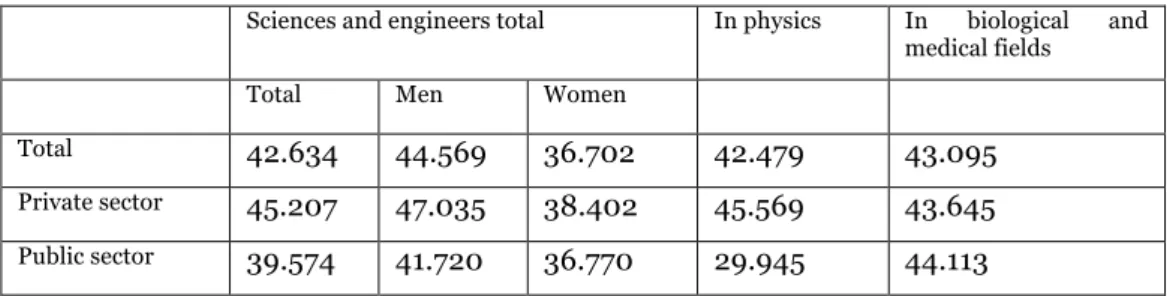
Table 2 shows the salary differences between scientists and engineers working in the public and the private sector. These are substantively higher for scientists in physics. For scientists in biological and medical fields the difference is negligible. Remarkably are also the salary differentials between men and women, an inequality that persists within higher education.