Repository and Information Exchange
Theses and Dissertations2017
The Role of Aid for Trade and Foreign Direct
Investment in Poverty Reduction: A Panel Data
Analysis of 91 Developing Countries
Olivia Durowah
South Dakota State University
Follow this and additional works at:http://openprairie.sdstate.edu/etd Part of theEconomic Policy Commons, and theEconomics Commons
This Thesis - Open Access is brought to you for free and open access by Open PRAIRIE: Open Public Research Access Institutional Repository and Information Exchange. It has been accepted for inclusion in Theses and Dissertations by an authorized administrator of Open PRAIRIE: Open Public Research Access Institutional Repository and Information Exchange. For more information, please [email protected].
Recommended Citation
Durowah, Olivia, "The Role of Aid for Trade and Foreign Direct Investment in Poverty Reduction: A Panel Data Analysis of 91 Developing Countries" (2017).Theses and Dissertations. 1187.
THE ROLE OF AID FOR TRADE AND FOREIGN DIRECT INVESTMENT IN POVERTY REDUCTION: A PANEL DATA ANALYSIS OF 91 DEVELOPING
COUNTRIES
BY
OLIVIA DUROWAH
A thesis submitted in partial fulfillment of the requirements for the Master of Science
Major in Economics South Dakota State University
ACKNOWLEDGMENTS
I would like to express my sincere gratitude and appreciation to the God Almighty for his faithfulness, love, strength, directions, and guidance in the writing of my thesis and my two years of graduate studies. My special thanks goes to my advisor and thesis committee chair, Dr. Evert Van der Sluis, for his immense support and guidance throughout the writing of my thesis. His hard work and patience were essential to the completion of this thesis. I also thank my committee members, Dr. Joseph Santos, Dr. Matthew Elliot, and Dr. Krystal Levesque, for their suggestions and advice. I would like to extend my utmost appreciation to my parents and my brothers for their moral support and advice. My sincere gratitude also goes to my pastors, David and Jeanne Kaufman, and to my friends, Solomon Adu and Charlotte Owusu-Smart for their prayers, love, and encouragement. Additionally, I would like to thank all faculty members and secretaries in the Economics Department and all my fellow graduate students for their moral support and friendship. It was wonderful working with you all, and I enjoyed every moment of it. May God bless and keep you safe.
CONTENTS
LIST OF FIGURES ... vi
LIST OF TABLES ... vii
ABSTRACT ... viii CHAPTER ONE ... 1 INTRODUCTION... 1 1.0 Background ... 1 1.1 Objectives ... 3 1.2 Justification ... 4 1.3 Thesis overview ... 4 CHAPTER TWO ... 6 LITERATURE REVIEW ... 6 2.0 Chapter overview ... 6 2.1 Poverty ... 6
2.3 Foreign aid and poverty reduction ... 14
2.4 AFT and poverty reduction ... 20
2.5 Impact of FDI on poverty ... 23
2.6 Foreign aid and FDI interaction ... 26
CHAPTER THREE ... 28
METHODOLOGY AND DATA DESCRIPTION ... 28
3.0 Introduction ... 28
3.1 Theoretical framework on the impact of AFT and FDI on poverty reduction ... 28
3.2 Empirical approach ... 31
3.3 Data ... 32
3.4 The model ... 47
CHAPTER FOUR ... 50
RESULTS AND DISCUSSION ... 50
4.0 Chapter overview ... 50
CHAPTER FIVE ... 62
CONCLUSIONS AND RECOMMENDATIONS ... 62
5.1 Conclusions ... 62
5.3 Research limitations and directions for future research ... 64
REFERENCES ... 65
APPENDIX 1 ... 76
LIST OF FIGURES
Figure 1 Poverty Headcount ratio in developing countries. ... 35
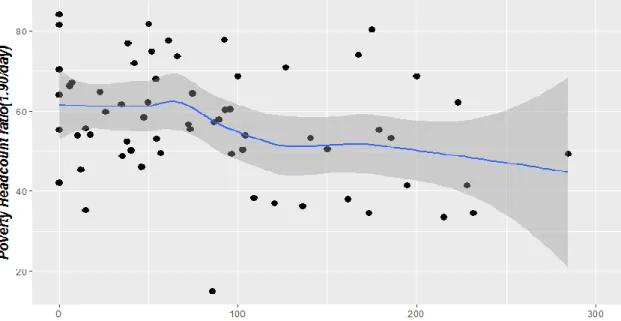
Figure 2 Poverty and total AFT in LICs ... 36
Figure 3 Poverty and AFT to infrastructure in LICs ... 36
Figure 4 Poverty and AFT to Productive Capacity in LICs... 37
Figure 5 Poverty and AFT to Trade Policy and regulation in LICs... 37
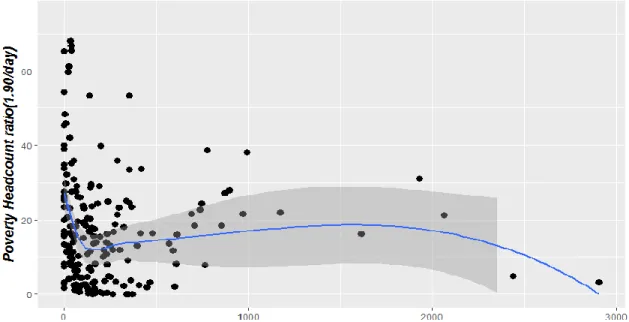
Figure 6 Poverty and total AFT in LMICs... 38
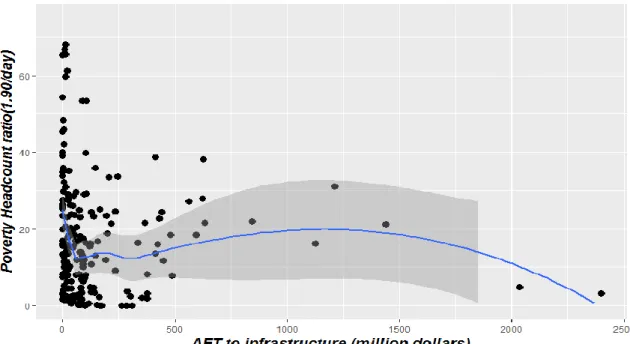
Figure 7 Poverty and AFT to infrastructure in LMICs ... 39
Figure 8 Poverty and AFT to Productive Capacity in LMICs ... 39
Figure 9 Poverty and AFT to Trade Policy and regulations in LMICs ... 40
Figure 10 Poverty and Total AFT in UMICS ... 41
Figure 11 Poverty and AFT to infrastructure in UMICs... 42
Figure 12 Poverty and AFT to Productive Capacity in UMICs... 42
Figure 13 Poverty and AFT to Trade Policy and reg. UMICs ... 43
Figure 14 Foreign Direct Investment and Total AFT in developing countries... 44
Figure 15 Foreign Direct Investment and Total AFT in LICs ... 44
Figure 16 Foreign Direct Investment and Total AFT in LMICs ... 45
LIST OF TABLES
Table 1. How Aid for Trade can address different market and governance failures ... 12
Table 2. AFT categories and Definitions ... 13
Table 3 Descriptive statistics ... 34
Table 4 Variable definitions and sources ... 46
Table 5 Correlation matrix ... 51
Table 6 Effect of aggregate AFT and FDI on poverty ... 53
Table 7 Long run effect of AFT on poverty. ... 55
Table 8 Disaggregated effect of AFT on poverty ... 57
Table 9 Effect of AFT in low-agricultural and high-agricultural economies ... 59
ABSTRACT
THE ROLE OF AID FOR TRADE AND FOREIGN DIRECT INVESTMENT IN POVERTY REDUCTION: A PANEL DATA ANALYSIS OF 91 DEVELOPING
COUNTRIES OLIVIA DUROWAH
2017
Aid for trade (AFT) focuses on helping developing nations to overcome supply-side constraints in trade to maximize trade benefits and use trade to achieve economic growth and poverty reduction. Since its inception at the 2005 Hong Kong ministerial conference, AFT has become viewed as a crucial tool for helping developing countries and donors continue to shift their attention to AFT programs, even in times of prolonged global financial crisis. AFT programs ultimately seeks to achieve growth poverty reduction. Thus, this study focuses on assessing the role of AFT and foreign direct investment in poverty reduction using the headcount ratio (1.90 dollars a day) to measure poverty. Specifically, the impact of AFT and FDI is analyzed across different income groups of countries and between agricultural-dependent economies and non-agricultural dependent-economies. This thesis also evaluates the impact of the different components of AFT on poverty as well as assessed how each individual AFT component relates to FDI and lastly, examines whether the effectiveness of AFT is conditioned on the policies and institutional qualities of the aid-receiving country. Using data for 91 developing countries and controlling for other variables that may affect poverty, we employ fixed effects and random effects models for the analysis. The empirical analyses indicate that AFT flows have a robust and positive effect on poverty reduction but the effect differs across countries by income groups and the
impact is largest in LDCs. The analyses also show that while AFT may be effective, the extent to which it reduces poverty depends on the policies and quality of institutions in the recipient country. Also, AFT directed to infrastructure and AFT directed to trade policies and regulations is effective in reducing poverty. Furthermore, AFT is more effective in reducing poverty in low-agricultural economies compared to high-agricultural economies. Lastly, the analyses show that AFT directed to infrastructure as well as trade policies and regulations increase net FDI inflows but AFT to productive capacity reduces net FDI inflows. An implication of these findings is that donors could consider focusing their investments on AFT for infrastructure and AFT for trade policies and regulations because these two investments have a significant effect on mitigating poverty in developing countries. Also, in order to attract FDI in developing countries, AFT investments could focus on infrastructure development and improving trade policy regulations.
CHAPTER ONE
INTRODUCTION
1.0 Background
Poverty eradication has long been a top priority for most developing countries’ governments and international development agencies because high levels of poverty can hinder growth and development. For example, the United Nations’ Sustainable Development Goals (MDGs) prioritize poverty eradication. This UN initiative has achieved remarkable progress in poverty reduction, as measured by the MDG1 target of halving the 1990 poverty rate by 2015, which was achieved five years ahead of schedule (in 2010). The 1.95 billion people who lived on less than $1.9 a day was reduced to 896 million people by 2012 (World Bank 2016). In spite of the progress made, the number of people who live in abject poverty globally remains unsatisfactorily high. Thus, the issue of poverty is still more than worth the attention of policy makers in order to help eradicate poverty to the barest minimum and make way for growth and development. Consequently, many least developed countries’ governments have resorted to the reliance on foreign assistance (bilateral, multilateral and through non-governmental organizations) from developed countries as a means of capital formation to foster growth and a major supplement to government expenditures to reduce poverty.
Official Development Assistance (ODA), commonly known as foreign aid, has numerous developmental objectives which are premised on a long-standing assumption
that aid works to reduce poverty.1 Yet the effectiveness of aid in poverty reduction has been questioned for the past few decades and continues to be debated in the development economics discourse. This debate is partly due to the clear fact that many aid-dependent countries long remain at the top of the poverty rankings. Also, empirically, there is no clear consensus about the effectiveness of foreign aid in poverty reduction (Collier and Dollar, 2002; Dalgaard et al., 2004; Dalgaard and Hansen, 2001 and Moyo, 2009). Nonetheless, donors still believe that foreign aid can be used effectively to reduce poverty. Hence, in 2005, the World Trade Organization (WTO) in collaboration with the Organization of Economic Corporation and Development (OECD) launched the Aid for Trade initiative. This initiative seeks to increase the amount of ODA that targets trade-related activities in order to maximize trade benefits and to use trade as an instrument for growth and poverty alleviation.
Besides the debate on aid effectiveness, the effects of foreign direct investment (FDI) on poverty in host countries has also caught the attention of researchers.2 As a matter of fact, considering the significant FDI inflows to developing countries and their associated positive effects such as job creation, a growing body of literature explores whether these flows are accompanied by poverty reduction in host countries (Klein et al., 2001; Ucal, 2014; Gohou, and Soumaré, 2009). Overall, these studies conclude that net FDI inflows
1 Official Development Assistance refers to foreign aid provided by official agencies, including
state and local governments, or by their executive agencies with the aim of promoting the economic development and welfare of developing countries (OECD, 2009).
2 Foreign direct investment is commonly defined as “an investment involving a long-term
relationship and reflecting a lasting interest and control by a resident entity in one economy (foreign direct investor or parent enterprise) in an enterprise resident in an economy other than that of the foreign direct investor” or “an investment in which a foreign investor acquires 10 percent or more of the holdings of a company in another country through investment” (OECD, 2008)
reduce poverty in host economies. Incidentally, most studies find an interaction between foreign aid and FDI though they are two different types of capital flows (Bhavan et al., 2011). Owing to this, a recent extension to the development economics literature has involved making a comparison between the impacts of aid and FDI and whether they are complements or substitutes (Kang et al., 2011; and Kimura and Todo, 2010).
In light of the above discussion on aid and FDI, this thesis attempts to extend the literature by analyzing the individual effects of aid for trade (AFT) and FDI on poverty levels in recipient countries, all of which are developing countries. AFT and FDI may contribute to poverty reduction through different transmission channels such as growth, export expansion, export upgrade and employment under the conditions of good governance and pro-poor policies (De Matteis, 2013; and Ghimire, 2013). Thus, this study attempts to answer two main questions:
Do AFT and FDI flows into developing countries reduce poverty levels?
Are AFT and FDI substitutes or complements across the different income groups?
1.1 Objectives
The overall objective of this study is to examine the impact of AFT and FDI on poverty. We are particularly interested in analyzing the impact of AFT and FDI on poverty levels in developing countries. Specifically, for the purpose of our analysis, we examine the effect of the different components of AFT on poverty reduction by using the three categories of AFT as defined by the OECD (OECD, 2006). We also analyze the effect of the different components of AFT on FDI to examine whether AFT creates an enabling environment to attract foreign investments or crowds out foreign investments. That is, we check for substitutability or complementarity between AFT and AFT. Lastly, we assess the
effectiveness of AFT in economies with high levels of employment in agricultural sector and those with low agricultural employment.
1.2 Justification
Most previous work on the relationship between aid and poverty reduction used aggregate ODA as a measure of international assistance, but this study focuses on AFT instead of aggregate ODA. The reasons for using AFT is because ODA has several different priorities, some of which do not necessarily target poverty directly, but AFT prioritizes poverty reduction as the second most important item (OECD/WTO, 2011). Thus, using AFT may be more appropriate than ODA for the purpose of this study. Another reason for using AFT lies in the fact that there exist scant empirical evidence on the impact of AFT on poverty, though AFT is often assumed to produce net positive impacts on reducing the incidence of poverty. A relatively large number of studies assessing AFT’s impacts employ qualitative approaches in the form of case studies, surveys and reports conducted by the OECD/WTO AFT Committee. The few other studies employing quantitative analysis limit their focus on assessing the impact of AFT on trade and do not consider its role in reducing poverty. Thus, this study is unique in the sense that we examine the impact of AFT and FDI on poverty, using fixed effect estimation techniques.
1.3 Thesis overview
The rest of this thesis constitutes four chapters which are structured as follows. Chapter 2 presents the literature review of empirical studies on the effectiveness of ODA, AFT and FDI on poverty reduction to provide a basis for the discussion. Chapter 3 presents the conceptual framework of the relationship between AFT and poverty, FDI and poverty and AFT and FDI. It also highlights the variable selection for the model, provides the
justification for their inclusion, and discusses the model structure and the estimation techniques. Chapter 4 presents the data analysis and the discussion of results, while Chapter 5 discusses the conclusions from the study and policy implications based on the conclusions drawn.
CHAPTER TWO
LITERATURE REVIEW
2.0 Chapter overview
This chapter presents a discussion of previous literature on the effectiveness of aid and FDI on poverty reduction in recipient economies. It is composed of four sections. The first section discusses poverty, the various indicators or measurements of poverty and the indicators adopted for the study. The second section is subdivided into two parts, describing (1) the historical evolution of foreign aid and (2) the concept of the aid for trade initiative. The third section provides an overview of empirical studies on aid, AFT and FDI. The last section presents a summary of the literature and discusses its gaps in and show how this study helps to address the gap identified.
2.1 Poverty
Analyzing poverty in developing countries is not an easy task due to the lack of reliable poverty data in many of these countries. Besides the issue of data availability, there is the multi-dimensional nature of poverty and the lack of a clear-cut definition or measurement for poverty. Poverty is context-specific and has different meanings to different people. As such, researchers have proposed different measures of poverty (Alkire et al, 2015), which can broadly be classified as monetary and nonmonetary measures of poverty. The monetary aspect of poverty is measured based on income or on consumption. In the case of income, people who fall below a predefined income threshold which is considered sufficient, are classified as poor. The consumption measure of poverty classifies as poor, those people who cannot afford a basket of food deemed to provide the necessary
nutrients for normal human growth. The consumption measure of poverty is mostly preferred to the income measure because the former reflects a household’s actual standard of living and ability to meet basic needs.
The nonmonetary definition of poverty cuts across different aspects of welfare, including health, education, security, and social relations, among others. Recent literature advocates the use of this measure of poverty. One example of the nonmonetary approach is the capability approach by Sen (1999). This approach describes poverty as the lack of specific crucial capabilities to function in society in the areas of education, health care and ability to act freely. However, the nonmonetary definition of poverty lacks a clearly defined scope and has no specific measurement.
As a result of the complexities associated with the nonmonetary measure, most researchers resolve to the use of the poverty lines proposed by the World Bank (2016), which currently uses a $1.90 per day poverty line at international prices. The $1.90 poverty line is the average national poverty line in the world’s poorest countries measured in international dollars.3 That is, for each country, the national poverty line was converted to 2011 dollars using the individual consumption PPP to obtain each country’s poverty line. The World Bank develops different indicators of monetary poverty based on this poverty line. One such measure is the poverty headcount ratio (HCR) at $1.90 a day.4 Another indicator used by the World Bank is the poverty gap index which not only reports on the incidence of poverty but also takes into account the depth of poverty. It is defined as “the
3 International dollarsis US dollars adjusted for purchasing power parity (PPP) and the average
international commodity prices.
4 The headcount ratio is the percentage of the population living on less than $1.90 a day at 2011
mean shortfall from the poverty line (counting the non-poor as having zero shortfall) as a percentage of the poverty line.” 5 A final measure is the poverty gap squared which accounts for inequality among the poor and is estimated by squaring the poverty gap for each household before calculating the average shortfall.
2.2.1 Historical evolution of aid
Foreign aid dates back to the late 1940s and started off as international post-war assistance as part of the Marshall Plan with the aim of reconstructing the war-devastated Western European economies (Edwards, 2015). The success of the Marshall Plan raised hopes that international financial transfers in the form of foreign aid could help low- income countries to develop as the Western European economies did. Subsequently, foreign aid became a necessity for the economic development of many developing countries. This was followed by the formation of key international organizations such as the United Nations, International Monetary Fund (IMF) and World Bank, which were charged with the responsibilities of allocating international funds.
The global recession in the early 1980s caused by the oil price shock of the 1970s left many developing countries heavily indebted. In order to help developing countries manage their debt, donor countries and the said international financial institutions provided loans to help them manage their debt under the condition of making structural adjustments. The end of the Cold War in 1989 saw an increased rate of participation in development projects by philanthropic organizations in developing countries to achieve poverty alleviation as well as economic growth and development. Later in the 1990s, some
developing countries were still stagnating and struggling to repay the loans, so the donors deemed it appropriate to grant them debt relief (Phillips, 2013).
Questions were raised about the effectiveness of aid as some recipient countries remained poverty gripped. This was indicative of the fact that numerous forms and large amounts of aid did not always achieve their intended goals. As such, researchers from various academic discourses began to examine, based on theories and empirical studies, the effectiveness of aid on economic growth, development and poverty reduction. Donors have relied heavily on economic research to decide on their foreign aid policies. For example, the Harold-Domar growth model motivated the decision by donors to ignore human development and channel aid into highly capital-intensive projects. There was a turn of events in the late 1960s and 1970s, when the neoclassical growth model emerged that emphasizes a basic-needs approach to welfare economics. Donors switched aid policies towards social programs such as health and education targeted at poverty reduction and human development. Subsequently, in the 1980s and 1990s, the emphasis was on the contribution of openness and export expansion to growth inspired by the work of Krueger and Bhagwati (1973). During that time, aid became increasingly conditioned on the willingness of developing countries to adopt trade liberalization policies, such as reducing import tariffs and eliminating quantitative import restrictions.
At present, a growing number of foreign aid policies is geared towards poverty reduction. One such policy is the AFT approach, which involves foreign aid channeled into trade-related activities. The next sub-section provides a detailed discussion of AFT.
2.2.2 Aid for Trade
Neoclassical trade theory argues that increased openness to trade in a non-distorted way improves the returns to those factors of production that are relatively less scarce in the country. In least developed countries, this would mean redistributing wages in favor of the poor, which would then result in poverty reduction (Page, 2007). However, due to supply-side capacity limitations, some developing countries are unable to exploit fully the benefits from trade to embark on sustained economic growth in general, and reduce poverty in particular. Upon detecting the supply-side constraints, the WTO and OECD realized that the interactions between trade, aid, and broader development policies and reforms are important. Accordingly, in 2005, the two organizations collaborated to launch the AFT Initiative at the Hong-Kong WTO Ministerial Conference. This initiative was to support the MDG 8 (developing a global partnership for development) targeted at facilitating multilateral trade, and improved market-access including duty-free, quota-free market access to trade for least developed countries.
In February 2006, the WTO and OECD jointly formed a taskforce charged with the operations of AFT. The role of the Task Force is to identify the needs within recipient countries through a monitoring and evaluation program, respond to donors and act as a bridge between donors and developing countries. The main objectives of AFT include to enhance effective participation and competition in local, regional and international markets; to build supply-side capacity and trade-related infrastructure in order to facilitate their access to markets; to facilitate, implement and adjust trade reforms; and to assist in the implementation of trade agreements. AFT priorities are focused on competitiveness,
economic infrastructure and export expansion to satisfy a broad development agenda such as economic growth and poverty reduction (WTO, 2011).
The first joint WTO/OECD review of AFT in 2007 showed that donors increased the budget of AFT to about 30 percent of ODA despite the decline in total ODA, which indicates that AFT policies were replacing other foreign aid policies. In 2008, the Monterrey Consensus also affirmed the concept of AFT and described AFT as the most effective way to use foreign aid to achieve poverty reduction (WTO, 2011). 6 Cali and te Velde (2011) argue that unlike other types of aid, AFT is designed in a way that addresses some of the market and governance failures which impede the success of foreign aid. In particular, a monitoring and evaluation program tracks the successes of all AFT programs, summarized in Error! Reference source not found.. The Table suggests that if employed ffectively, AFT can be useful in achieving a number of trade-related targets, in accordance with the AFT categorization suggested by the Task Force. These include improving trade policy co-ordination (the trade development category); developing standards to improve access for exports (the trade facilitation category); enhancing skill formation (the trade-related adjustment category); improving infrastructure (the infrastructural AFT category);
6 The Monterrey Consensus emerged from the 2012 International Conference on Financing for
Development in Monterrey, Mexico, which was a conference at which more than 50 heads of state along with representatives of the World Bank agreed on taking joint actions to eradicate poverty. One of the agreements was “Mobilizing and increasing the effective use of financial resources and achieving the national and international economic conditions needed to fulfil internationally agreed development goals, including those contained in the Millennium Declaration, to eliminate poverty, improve social conditions and raise living standards, and protect our environment, will be our first step to ensuring that the twenty-first century becomes the century of development for all”(Haque & Burdescu, 2004).
and overcoming governance failures, such as weak institutions or weak administrative procedures (the trade policy and regulations).
Table 1. How Aid for Trade can address different market and governance failures Broad source/ area
of failure
Examples of failure Responses: policies and activities
Role for Aid for Trade Market failures
Coordination • Externalities ignored • Linkages not exploited • Complementarities not exploited
• Capacity building for trade policy to identify linkages and externalities • National trade strategy
Yes, training and institutional development
Developing, adapting and adopting technologies
• Incomplete and imperfect information
• Network externalities
• Facilitate
technology transfer and adoption • Support for quality control to meet export standards
Yes, trade facilitation, assisting in coordination with the private sector
Skills formation Underinvestment in training owing to inability to appropriate externalities
• Better coordination and/or subsidies for training
• Strengthen information flows
• Mostly not included under Aid for Trade
• Could be included in trade-related adjustment
Capital markets – access to finance
• Difficult access to credit
• High interest rates • Credit schemes • Formal sector subsidy based on improved information about borrowers
Mostly not included under Aid for Trade
Infrastructure Lack of good quality infrastructure because lumpy investment gets postponed in uncertain times
• Provide incentives for public–private partnerships • Provide grants in the case of low financial return/high economic return
Yes, aid to economic infrastructure, better coordination with development finance institutions/private sector Governance failures Regulatory and administrative structure Burdensome administrative requirements Streamline administrative procedures and regulation
Yes, Aid for Trade facilitation
2.2.3 Defining and measuring AFT
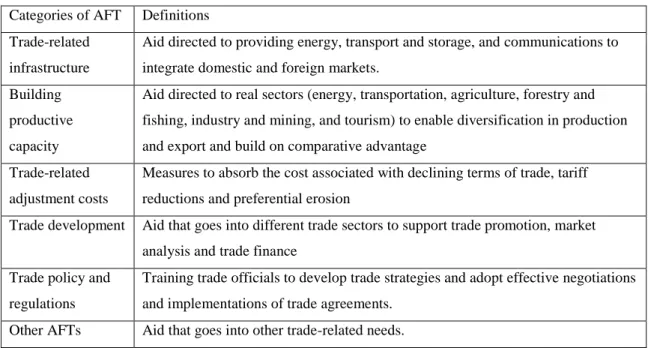
AFT is a broad concept with no clearly-defined limits. This, sometimes coupled with data limitations, makes it problematic to estimate the impact and effectiveness of aid for trade. Thus, most studies have relied on data-driven definitions provided by the WTO/OECD Taskforce. The Taskforce defines AFT based on six categories, as outlined in Table 2.
Table 2. AFT categories and Definitions Categories of AFT Definitions
Trade-related infrastructure
Aid directed to providing energy, transport and storage, and communications to integrate domestic and foreign markets.
Building productive capacity
Aid directed to real sectors (energy, transportation, agriculture, forestry and fishing, industry and mining, and tourism) to enable diversification in production and export and build on comparative advantage
Trade-related adjustment costs
Measures to absorb the cost associated with declining terms of trade, tariff reductions and preferential erosion
Trade development Aid that goes into different trade sectors to support trade promotion, market analysis and trade finance
Trade policy and regulations
Training trade officials to develop trade strategies and adopt effective negotiations and implementations of trade agreements.
Other AFTs Aid that goes into other trade-related needs. Source: WTO (2006).
There is a high level of heterogeneity in the way AFT has been measured in the literature. Some authors use total AFT while others either use one category or consider different kinds of aggregation of AFT flows in ways that answer their research questions. Cali and te Velde (2011), for example, focus on the trade policy and regulations category to analyze the impact of AFT on trade costs in 130 developing countries from 2005 to 2009. Then they use the economic infrastructure and the productive capacity categories to assess the impact of AFT on export. Busse et al. (2011) use total aid for trade, the aggregate of all
six categories, and limit their analysis to one category for further analysis of aid for trade effectiveness in 99 LDCs and Non-LDCs from 2004 to 2009. Also, Ivanic et al. (2006) combine AFT for infrastructure, trade development and trade policy to create a trade facilitation variable. Similarly, Ferro et al. (2011) pool AFT for infrastructure and AFT for productive capacity to create a variable, which they refer to as “trade facilitation”. They used this variable to assess the impact of AFT on the services sector in six developing regions over the period from 1988 to 2004. Several other researchers use different combinations of AFT categories as their research questions demand.
2.3 Foreign aid and poverty reduction
This section presents a brief review of empirical analyses on foreign aid and poverty. The issue of aid effectiveness in poverty reduction is a rather complicated question which researchers have tried to analyze in several different ways. In this study we classify the aid-poverty literature into three broad strands. The first strand of research is skeptical about aid and concludes that aid is ineffective, causes the Dutch Disease (which holds that increases in international financial transfers lead to local currency appreciation which in turn makes a country’s exports less competitive on the international market, encourages imports and destroys local industries) and even goes as far as to label aid as harmful (e.g. Moyo, 2009). The second strand consists of those studies which conclude that aid is effective in poverty reduction (e.g. Sachs, 2005), while the last group assumes an intermediate position that aid effectiveness in poverty reduction is contingent on recipient country characteristics. The latter has gained much attention in recent years as most researchers subscribe to it (De Matteis, 2013 and Beynon, 2003).
It is worth noting that the aid-poverty literature commonly assumes that growth is good for poverty reduction; hence, most studies use growth as a proxy for poverty reduction. Thus, the literature review for this study draws mainly from the aid-growth literature in addition to the few studies that analyze the direct impact of aid on poverty. Some of the empirical support for the aforementioned strands of research are discussed in the subsequent paragraphs.
2.3.1 Arguments against aid effectiveness
Boone (1996) draws on data from 97 developing countries to investigate the impact of aid on investment and poverty. Using infant mortality, primary education and life expectancy to measure poverty, he finds no significant impact of aid on poverty. Rajan and Sunramanian (2011) argue that aid is harmful because it perpetuates poverty by causing the Dutch Disease. The argument is grounded in the theoretical works of Corden and Neary (1982) and Wijnbergen (1985) under the assumption of a two-good model. Rajan and Sunramanian (2011) argue that unequal distribution of aid towards non-tradable sectors (health, education, and social) will lure skilled labor into the non-tradeable sector to cause a rise in wages in the tradeable sector. They argue further that if the international price of traded goods is fixed, the higher wages in the traded sector will lead to a decline in profitability, undermine competitiveness and reduce exports.
Moyo (2009) argues that African countries receiving large amounts of aid have slipped further into poverty, while African countries which have been ignored by donors are doing much better. She argues that foreign aid encourages corruption, makes recipient countries dysfunctional, promotes aid dependency and perpetuates poverty. Williamson (2008) focuses on health aid to analyze how aid impacts human development. By
employing a fixed effects model while controlling for reverse causality to prevent interruptions in her results, she finds no evidence to support the claim that aid contributes to human development, even after several different model specifications including replacing health aid with total ODA.
This strand of the aid literature seeks to show that practically all foreign aid either makes no contribution to development or is counterproductive. Much of this literature is based on the assumption that capital imports reduce savings. The authors of these studies argue that foreign aid for development does not simply add an equivalent amount to total investment, but is partly or even largely consumed and thereby reduces the savings rate. One of the reasons given for a reduction in the savings rate is that foreign aid enables governments to shift some of their expenditures from investment projects financed by foreign aid to social programs, or to reduce taxes. However, this assumption is flawed in both the analysis and statistical methods employed because (1) the statistical correlation does not show causality and (2) though some of the foreign aid may go into consumption, growth could still be increased by foreign aid through increased investment so long as domestic savings do not decline by the full amount of foreign aid. 7
In sum, the above studies are skeptical of the impact of foreign aid and argue that aid is detrimental to growth because it displaces domestic savings, finances consumption and leads to overvaluation of real exchange rate, along the lines of the Dutch Disease.
7 See Mikesell et al. (1983) for more details on the flaws of the assumption that scarce capital is
2.3.2 Arguments for aid effectiveness
Contrary to the above arguments, Masud and Yontcheva (2005) evaluate the effectiveness of foreign aid in reducing poverty through its impact on human development indicators. Far from the conclusion by Boone (1996), their results indicate that foreign aid is effective in poverty reduction. They also find that aid from NGOs is more effective than official bilateral aid in reducing the infant mortality rate. They find a weak but significant effect of aid on education. Similarly, Kosack (2003) uses the human development index as a proxy for poverty to test the impact of foreign aid on poverty reduction. Kosack uses separate cross-country analyses for autocratic and democratic countries. His results reveal that aid reduces poverty, but does so more in democratic countries than in autocratic countries. Senbeta (2009) analyzes the direct impact of foreign aid on poverty. After controlling for growth and income distribution, the author finds that foreign aid reduces the incidence of poverty at different poverty lines. His results also reveal that different components of aid have different impacts on poverty.
A similar study by Hansen and Tarp (2001) involved a cross-country analysis for 56 developing countries using ordinary least square estimators (OLS) and generalized method of moments (GMM) to study the impact of aid on poverty proxied by growth in the regression. They explore several cross-country regressions to analyze the link between aid and poverty. They employ the standard growth model, capture the non-linear effect of growth on aid, exclude the aid-policy interaction term and find a positive link between aid and growth. They then conclude that the effectiveness of aid on growth and poverty are independent of policy environments.
In a nutshell, the above-mentioned studies argue that foreign aid has a direct positive impact on economic growth and poverty reduction, irrespective of the conditions present in the recipient countries.
2.3.3 Conditional arguments for aid effectiveness
A growing number of recent empirical studies assumes the intermediate position that the impact of aid on poverty is conditioned on certain factors such as policy environments, type of aid and quality of governance (Easterly 2003). Stockemer et al. (2011) referred to such research as the ‘conditional literature’ based on good policies, the right institutions and the ‘medicine model’- suggesting that aid is effective only when the correct dosage or amount is employed under favorable conditions. This strand of the aid literature is very diverse, because different researchers analyze aid based on a wide spectrum of conditions ranging from donors’ motives to recipient country characteristics. Burnside and Dollar (2004) investigate the impact of aid on growth in a favorable policy environment. The authors use a panel dataset of 56 countries and six four-year time periods from 1970-73 until 1990-93, and interact a policy index variable (based on a regression of policies on inflation, budget surpluses and openness) with aid in a regression of growth on aid. They find robust evidence that foreign aid promotes growth in a favorable policy environment after doing different sensitivity analyses.
In a similar study, Dollar and Collier (2002) show this empirically by providing a poverty-efficient aid allocation – an allocation rule for which the marginal impact of an additional million dollars in aid is equalized across aid-receiving countries. They draw a similar conclusion that aid increases growth in countries having favorable policy environments. A revisit of Dollar and Collier (2002) by Beynon (2003) suggests that
improvements in aid efficiency in the 1990s were due to declining aid volumes accompanied by good policy environments. Beynon (2003) then concludes that aid effectiveness is affected by diminishing marginal returns. That is, a large increase in aid reduces its effectiveness. In a similar vein, De Matteis (2013) examines the aid-growth-poverty nexus to contribute to the debate that aid is effective only in favorable policy environments. His results indicate that aid is relatively more effective in reducing poverty under conducive policy environments when its allocation is poverty-focused (i.e. an aid allocation that aims at growing sectors where the poor are economically involved).
Likewise, Kasuga (2008) shows empirically that the quality of bureaucracies and the level of corruption in recipient countries can serve as impediments to an efficient inter-sectoral allocation of aid and so inhibit aid effectiveness in poverty reduction. Still on aid effectiveness and policies, Verschoor and Kalwij (2006) find that foreign aid combined with good economic policies and governance increase economic growth as well as pro-poor growth. In contrast, a study by Guillaumont (2008) shows that aid is more effective in reducing poverty in small and vulnerable countries where the likelihood of poor governance is high. The author finds that structural vulnerability (defined by economic mismanagement, weak public institutions and lack of social inclusion) increases the marginal effectiveness of aid. Thus, he concludes that aid should be allocated to the most vulnerable and fragile countries that suffer from structural handicaps. Similarly, McGillivray (2003) proposes a broader framework for a poverty-efficient aid allocation.8 He argues that aid allocation is not only contingent on the quality of recipient countries’
8 A poverty-efficient allocation of aid is an allocation rule for which the marginal impact of an
policy regimes but a wide range of factors which include political instability, economic vulnerability, democracy and post-conflict reconstruction.
The above studies use aggregate measures of aid (total ODA) in their analyses and the results are inconclusive. This explains why the effectiveness of foreign aid in poverty reduction has been questioned. In this study, we use AFT instead of ODA to model the impact of aid on poverty reduction. The following paragraphs discuss the empirical work on AFT.
2.4 AFT and poverty reduction
Though trade-related assistance has existed for decades, it did not gain major research attention until when the AFT initiative was launched in 2005. Thus, there exist only a few published studies on the impact of AFT programs on the poor. Nonetheless, the evidence of the impact of AFT on poverty reduction could be likened to the impact of trade on poverty. Turner (2013) argues that trade has a positive impact on growth and a long-run impact on poverty; but the direction of the impact on poverty depends on whether the growth occurs in sectors where poor people are economically active. Much like trade, the impact of AFT on poverty is context-specific and depends on the structure of the economy. As a result, there exist complex linkages between trade and poverty which make it difficult to analyze this relationship. Thus, most of the analyses on the impact of AFT on poverty are based on case studies (reports from the AFT monitoring and evaluation program) to examine the direct impact of small projects on the poor. Despite the econometric difficulty of linking AFT to poverty reduction, a few empirical studies have identified several transmission channels through which AFT can reduce poverty. Among these channels, the focus is on how AFT can reduce poverty through a reduction in trade cost, trade facilitation,
export expansion, income growth and job creation. Some of these studies are discussed in the subsequent paragraphs.
Helble et al. (2009) evaluate the link between the various AFT categories and trade performance using aid data for 40 donor countries and about 170 country trading pairs from 1990 to 2005 and employing a fixed effects estimation technique. They found that a one percent (US$ 219 million) increase in AFT for trade facilitation (as measured by trade policies and regulations) is associated with about 33 percent (US$ 291 million) additional exports for aid-receiving countries. Thus, US$ 1 of AFT is associated with US$ 1.33 of additional exports by aid receiving nations. A similar study by OECD/WTO (2011) presents an econometric analysis of the impact of AFT on exports of developing countries. Their result confirms that AFT increases exports of recipient countries by 10 percent. Busse et al. (2011) analyze the impact of total AFT and trade facilitation (proxied by policies and regulations) on trade cost from 2004 to 2009 for 99 developing countries in separate fixed effects regressions. Their analysis seems to support the view that AFT significantly reduces trade costs in developing countries. However, they argue that the impact of AFT is conditional on the category of AFT used. While the authors found a relatively less significant impact of total AFT on trade costs, comparatively stronger results were seen when particular AFT categories are used.
De Melo and Wagner (2015) show that AFT has a positive relationship with poverty reduction when controlling for a nation’s economic size. By using the 2 dollars per day headcount ratio for 109 developing countries, the authors find that an increase in AFT by 5 billion dollars on average reduced the poverty headcount ratio by 27 percent between 2005 and 2010. They also analyzed previous studies and found that AFT is effective when
it targets (i) increasing productive capacity, especially in agriculture where the poor are mostly employed and (ii) countries with high trade costs. For example, building roads to connect rural farmers to distant markets reduces the monopsonistic power of traders and raises incomes of poor farmers.9 Likewise, Porto (2005) examines the effect of trade costs on poverty reduction using the case of Moldova, a lower middle-income country. He finds that a one percent reduction in trade costs decreases the poverty headcount ratio by an average of 3.9 percent. In a similar study but using different data, Porto et al. (2011) analyze the impact of trade cost reductions on poverty levels in Argentina. Using access to markets (infrastructural AFT) as a proxy, they find that improvements in access to markets was associated with declining poverty rates.
Diop et al. (2005) did a similar analysis for Rwanda, one of the poorest countries in the world with a large percentage of its population working in farming. They find that market access and trade costs are very crucial determinants of poverty rates. Their results revealed that a one percent fall in transport costs raises producer prices by 20 percent, which in turn reduces poverty levels by 6 percent. Based on their results, Diop et al (2005) argue that a cut in transportation costs favors the poor section of the population. Similarly, Ivanic et al. (2006) analyze the impact of AFT on trade costs and welfare using the AFT categories of trade policy and trade facilitation. The authors find that AFT for trade policy is most significant in lowering trade costs while AFT for trade facilitation generates the highest welfare gains.
9 A monopsony is a market with one buyer and many sellers. In this case, the few buyers offer low
prices to farmers, which reduce farmers’ revenues and lower their incomes and welfare.
Hayashikawa (2009), and Higgins and Prowse (2010) suggest that, in order to make AFT poverty-efficient, donors and recipients must be capable of determining the impact of trade-induced growth on sectors where a greater percentage of the poor are economically engaged; the impact of the growth on employment creation and wage increments; the amount of growth that translates into improving other sectors that can take in excess labor; and lastly, the absorptive capacity in the form of human capital to benefit from the new jobs as a result of increased trade. Hayashikawa (2009) maintains further that AFT coupled with effective pro-poor policies helps developing countries turn trade prospects into economic growth and poverty reduction. This is echoed by Basnett et al. (2015) and Hallaert and Munro (2009) who argue that the impact of aid for trade on poverty reduction depends on the structure of the economy and complementary government policies.
In summary, the empirical analyses reviewed in this section show that there is no coherent evidence that AFT has a harmful impact on economic performance and poverty. However, the impact of AFT tends to vary substantially depending on the type of AFT policy intervention, the GDP and geographical region of the recipient country and the sector to which AFT flows are channeled. However, very little research has been done to assess its impact on poverty in spite of AFT gaining so much prominence among donors and recipients of aid.
2.5 Impact of FDI on poverty
It is commonly assumed that benefits that might accrue from FDI include the creation of employment, technology and knowledge spillovers, and competitive business environments that lead to production efficiency, all of which tend to reduce poverty (Jenkins, 2005). However, all these benefits associated with FDI are contingent on the
absorptive capacity (enough mechanisms in place to optimize these benefits) of the host country (Wu and Hsu, 2012). Much like the literature on the impact of AFT on poverty, a limited number of empirical studies focus on the impact of FDI on poverty. A handful of authors have tried to estimate the direct impact of FDI on poverty but found no significant results. FDI may directly impact poverty at the micro level through spillovers to the private sector, both as backward and forward linkages. The spillovers may occur if FDI has the potential to generate positive vertical spillover effects with domestic producers either through backward or forward linkages.10 Through increased competition and the introduction of new technologies, FDI may also be accompanied by positive horizontal spillovers.11 In addition to these positive spillovers to local firms, FDI can have a direct impact on welfare through job creation which will produce income for people. For FDI to reduce poverty, FDI must be channeled into labor-intensive sectors such as agriculture where it can spike pro-poor growth.
At the macroeconomic level, most studies analyzing the impact of FDI on poverty find that FDI is not an end in itself but a means to an end (Mold 2004). Thus, even if FDI does not impact poverty directly, it increases growth just as do other investments. These studies draw on the impact of FDI on poverty through indirect transmission channels such as exports, growth and employment. Tambunan (2005) studied the impact of FDI on
10 Backward linkages refer to the demand-side connections a firm has with other existing firms in the
region, whereas forward linkages refer to the supply-side connections a firm has with other existing firms in the region and provide a measure of the size of the potential market for an entrant into the region.
11 Horizontal spillovers are the increase in efficiency of the production process of local firms as a
result of copying new technologies or hiring trained workers and managers from foreign-owned companies within the same sector or industry. Vertical spillovers are the increase in production efficiency by firms from sectors other than that of the foreign company as a result of being in direct business with the foreign company(Stancik, 2007).
poverty in Indonesia through its effect on export growth, technological transfers and pro-poor government programs financed by tax revenues from FDI. He shows that FDI causes poverty reduction only through export but does not find enough evidence to support the other two transmission channels he hypothesized. He also finds that the positive impact of FDI can only be realized if FDI is complemented with pro-poor policies.
Gohou and Soumaré (2009) investigate the regional differences in the impact of FDI on poverty in Africa. Using the assumption that growth implies poverty reduction, they choose per capita GDP as a proxy for the Human Development Index (HDI). They employ the Granger causality Wald test to show that FDI increases per capita GDP, implying a reduction in poverty. However, they find that the impact of FDI on poverty differs across regions. Similarly, Igberi and Ogunniyi (2014) empirically analyze the link between FDI and poverty reduction. They apply ordinary least square estimation techniques to time series data on Nigeria from 1980 to 2012. Using per capita income as a proxy for poverty, their results show that FDI has a positive but insignificant impact on real per capita income. They conclude that FDI does not have the potential of reducing poverty in Nigeria due to under-development of human capital and crowding out of domestic investment. Using a random panel data analysis for 21 countries from 2000 to 2009, Assadzedeh and Pourqoly (2013) examine the effect of FDI and institutional quality on poverty. Using the Human Development Index as a proxy for poverty, they find that FDI significantly reduced poverty in these 21 countries. They finalize their study with the suggestion that FDI should be channeled into productive sectors in order to create jobs and raise income earnings.
From the above studies, the impact of FDI on poverty depends on the absorptive capacity of the recipient country. For example, FDI’s impact on reducing poverty depends on how adequate and prepared the human capital in the host economy is to absorb the technological changes associated with FDI. This explains why the conclusions are mixed in these studies.
2.6 Foreign aid and FDI interaction
An essential part of the aid effectiveness debate is whether or not foreign aid supports a private sector enabling environment. As a result, it is important to assess the relationship between aid flows and FDI inflows.
Kimura & Todo (2010) employed a gravity estimation technique to examine the effect through which aid from donor countries increase the attraction of FDI from the same donor countries. With a large dataset of developing countries, they find that foreign aid in general has very little positive effect on FDI inflows. However, they find robust evidence that Japanese aid has a significantly positive effect on attracting FDI from Japan but does not attract FDI from other countries. The authors attribute this finding to the fact that 50 percent of Japanese aid is allocated to building economic infrastructure which in turn attracts FDI.
Selaya and Sunesen (2012) use two-stage least squares estimation to examine the effect of aid on FDI in developing countries. They find that aid invested in factors complementary to physical capital increases FDI, while aid directly channeled into physical capital crowds out FDI. They conclude that in order to attract FDI, aid should target complementary inputs which tend to improve absorptive capacity and increase FDI without causing capital flight. Bhavan et al. (2011) obtain a similar result using data for
South Asian economies from 1995 to 2007. They categorize aid into two forms, namely aid directed to physical capital (aid that goes directly into production) and aid to human capital and infrastructural development (aid that goes into the provision of roads, electricity, etc., to complement production). Employing co-integration analyses to examine the long-run equilibrium relationship between FDI and aid, they find that both types of aid have a long-run positive effect on FDI in Bangladesh, India and Sri Lanka, but find no evidence of a long-run relationship for Pakistan. They also use a fixed effect estimation technique to test this relationship and find similar results.
A general deficit in the aid-poverty literature is the lack of consensus on the specification of the aid-poverty relationship. Another noticeable gap in the literature is the assumption that increased economic growth indicates poverty reduction. This assumption is highly debatable because growth can only lead to poverty reduction if the former occurs in sectors where the poor are economically involved. A similar gap could also be found in the FDI-poverty literature. Given these shortcomings, this study first analyzes the impact of foreign aid and FDI directly on poverty. Second, we do a robustness test by analyzing the effect of the different components of AFT in reducing poverty for the aggregate group of developing countries and for the different income groups. Another unique aspect of this study is that we group countries into low-agricultural and high-agricultural economies based on the proportion of labor in agriculture in each country to assess the effectiveness of AFT in reducing poverty in both groups.
CHAPTER THREE
METHODOLOGY AND DATA DESCRIPTION
3.0 Introduction
This chapter lays out the study’s approach to analyzing the research problem. First, we present the theoretical framework by examining a series of hypotheses. Next, we discuss the data used for the analysis, the variables and the data sources. We then develop an econometric model based on the underlying theoretical framework. Lastly, we discuss the estimation techniques employed for the analysis and the reason for doing so. We use the R statistical software to carry out all the analyses.
3.1 Theoretical framework on the impact of AFT and FDI on poverty reduction
Drawing on the literature discussed in the previous chapter, as well as on the general objectives of aid and those of the AFT initiative laid out in the Hong Kong Ministerial in particular, we first discuss the expected impact of aid (AFT) on poverty reduction. Next, we discuss the expected impact of FDI on poverty reduction based on the empirical literature reviewed. Finally, based on the empirical literature, we consider any possible interaction (complement or substitute) effects between aid (AFT) and FDI and their expected impacts on poverty reduction.
With respect to the first discussion, we expect that AFT interventions lead to poverty reduction in host countries under conditions of favorable policies and governance. Concerning the impact of FDI on poverty, we expect FDI to reduce the incidence of poverty in host countries after controlling for other variables. With regards to the third discussion on the expected interaction effect of AFT and FDI on poverty, we expect a complementary
relationship which leads to poverty reduction. Lastly, the effect of AFT on donor countries’ exports is expected to be ambiguous.
3.1.1 The expected impact of AFT on poverty reduction
As shown in Table 2 in Chapter two, the WTO AFT Task Force categorizes AFT into policies which include productive capacity, trade-related assumptions, trade-related adjustments, trade development, trade policy and regulations and other trade-related needs. However, the OECD groups AFT in only three main policies:
Economic Infrastructure AFT, which comprises transport, communications, and
energy generation supply,
Productive Capacity AFT, which encompasses agriculture, financial services,
business and other services, industry, mineral resources and mining, fishing and tourism and
Trade Policy and Regulations AFT which includes trade policy and regulations and
trade-related adjustments.
We employ these three categories of AFT by the OECD to analyze the effect of AFT on poverty. By using this disaggregation, we are able to account for how much impact each AFT policy has on poverty and examine whether or not the composition of AFT matters for the different income groups of countries in reducing poverty. We expect a positive relationship between each component of AFT and poverty.
3.1.2 The expected impact of FDI on poverty
The conventional Heckscher-Ohlin (H-O) model of international trade considers two countries that are identical, except for their resource endowments. The theory states
that a capital-abundant country will export the capital-intensive good, while the labor-abundant country will export the labor-intensive good. Put differently, capital-labor-abundant countries produce capital-intensive goods while abundant countries produce labor-intensive goods. Thus, based on the H-O theory and the empirical studies reviewed, we assume that FDI inflows to developing countries are channeled into labor-intensive production sectors. Accordingly, an increase in FDI would be expected to drive up the demand for labor, increase employment and wages, which would tend to reduce poverty in the presence of an equitable income distribution. Therefore, we expect that FDI will contribute to poverty reduction. This is in line with Agarwal and Atri (2015) who indicate that FDI inflows cause poverty reduction.
3.1.3 The expected interaction effect between AFT and FDI
Following Selaya and Sunesen (2012) we adopt the Solow growth model for a small open economy. In this model, output per capita, 𝑦, grows with the accumulated physical capital per capita, 𝑘 (financed by domestic and foreign investments), and improvements in total factor productivity, 𝐴 (which comprise all factors complementary to the accumulation of physical capital per capita, such as technological progress, favorable policies and institutions) such that
𝑦 = 𝐴𝑘 (1) We assume that foreign aid has two components, where one component consists of
aid that increases physical capital and the other increases the complementary factors. The former may be thought of as aid going directly into productive sectors and the latter as aid for improving infrastructure, policies and institutions, which are complementary to physical capital.
In the presence of unrestricted foreign capital mobility, the marginal product of capital (the return to capital) would be the same across countries. Thus, foreign aid channeled directly into productive sectors would reduce the return to capital in the recipient country and crowd out FDI. However, foreign aid that goes into improving complementary factors such as infrastructure and technological progress tends to increase returns to capital and attract additional FDI.12
This analysis implies that the effect of total aid on FDI is in theory ambiguous, because total aid yields the combined effect of aid for physical capital investments and aid to complementary factors. This could explain why some empirical studies that use total aid find insignificant or ambiguous results. We therefore assume that the effect of aid on FDI depends on the composition of aid; thus, we use a disaggregate aid to model this relationship.
3.2 Empirical approach
Several empirical studies have attempted to examine the impact of aid on growth and poverty in developing countries [see for example, Yontcheva and Masud (2005), Kosack (2003) and Beynon (2003)]. The conclusions reached by the authors of these papers differ widely and these studies were faced with numerous econometric difficulties. While our ultimate goal is similar to that of the previous studies - to measure the impact of aid on poverty using regression analysis - our approach differs in that;
i. we explicitly model this relationship using AFT instead of total ODA,
12 See Caselli and Feyrer (2007) for a more detailed discussion on this topic. For example, if foreign
aid is used to finance a project that could have been financed by private investors (local and foreign), controlling for domestic investment, foreign aid will at least partially crowd out private investment.
ii. we examine the direct effect of aid and FDI on poverty using the headcount ratio at the $ 1.90/day poverty line, and
iii. we assess the effect of AFT in reducing poverty in low-agricultural and high- agricultural developing economies.
3.3 Data
The analysis is conducted on an unbalanced panel dataset comprising 91 AFT-recipient countries spanning through 2000-2014. The data on AFT are from the OECD Creditor Reporting System Database. Data on the rest of the variables are obtained from the World Bank's World Development Indicators (WDI) database. In all the databases, countries are classified according to region, income or continents.
The original dataset contained all AFT-recipient developing countries including low income countries (LICs), lower middle income countries (LMICs) and upper middle countries (UMICs). To clean the data for better analysis, we dropped all the countries with fewer than two observations on the poverty headcount ratio measure. We also dropped war-prone counties such as Afghanistan and Syria because aid to such areas is highly fungible since they may be concerned about peacekeeping rather than poverty reduction. The remaining sample contains 91 countries which still represent all income levels, continents and regions.13 The data are divided into LICs, LMICs and UMICs for further analysis.
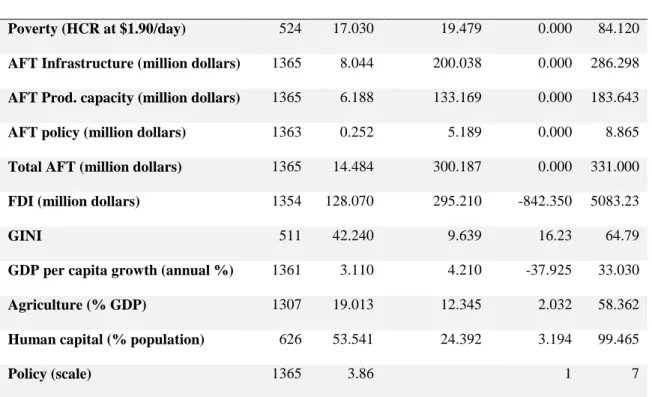
Table 3 shows the descriptive statistics of each of the variables included in our models. The sample consists of 91 developing countries with 23 LICs, 35 LMICs and 33
13 For the 2016 fiscal year, LICs are those countries with GNI per capita of $1,045 or less based on
the calculations of the World Bank Atlas method; LMICs fall between a per capita GNI of $1,046 and $4,125; while UMICs fall between per capita GNI of $4,126 and $12,736 per year.
UMICs. This explains the great heterogeneity in the data, which is evident in the minimum and maximum values of the variables shown in Table 3. For instance, the minimum value of FDI is -7.12 billion dollars, representing a negative net FDI inflow for Angola in 2013, which is quite surprising and could perhaps be an accounting issue, while China received the maximum net FDI inflow of 291 billion dollars in 2013.
The maximum total AFT record for total AFT is 3,162 million dollars, which was received by Turkey in 2014. Turkey, Vietnam, India and Pakistan appear to be the four largest AFT-recipients. The maximum amount of AFT directed to infrastructure is 2,397 million dollars in 2014 for Vietnam. AFT directed to productive capacity has a maximum value of 2,162 million dollars received by Turkey in 2014. AFT to trade policies and regulations has a maximum value of 69 million dollars and countries in the LIC group are the largest recipients of this component of AFT. These summary statistics clearly show that AFT to trade policies and regulations is by far the smallest component of total AFT, as noted before.
The mean poverty headcount ratio for the sample is 17 and the maximum and minimum poverty headcount ratio are 84 and 0, respectively. Burundi recorded the maximum poverty headcount ratio in 2000, whereas Ukraine, Azerbaijan, Belarus and Montenegro recorded the minimum poverty headcount ratio in recent years. The AFT variables in Table 3 and all other variables show similar trends. Table 3 also shows that our dependent variable, poverty and two other variables, which are the GINI coefficient and the human capital variable have a substantial number of missing values, but the remaining variables have none or at most 5% missing observations. Table 3 further shows that the minimum value for GDP per capita growth is -37 percent, which corresponds to
the GDP growth per capita for Central African Republic in 2013. On the other hand, Azerbaijan recorded the maximum GDP per capita growth of about 33 percent in 2006.
Table 3 Descriptive statistics
Statistics N Mean St. Dev. Min Max
Poverty (HCR at $1.90/day) 524 17.030 19.479 0.000 84.120
AFT Infrastructure (million dollars) 1365 8.044 200.038 0.000 286.298
AFT Prod. capacity (million dollars) 1365 6.188 133.169 0.000 183.643
AFT policy (million dollars) 1363 0.252 5.189 0.000 8.865
Total AFT (million dollars) 1365 14.484 300.187 0.000 331.000
FDI (million dollars) 1354 128.070 295.210 -842.350 5083.23
GINI 511 42.240 9.639 16.23 64.79
GDP per capita growth (annual %) 1361 3.110 4.210 -37.925 33.030
Agriculture (% GDP) 1307 19.013 12.345 2.032 58.362
Human capital (% population) 626 53.541 24.392 3.194 99.465
Policy (scale) 1365 3.86 1 7
Note: Most of the low-income countries had insufficient records for poverty variable and this could affect the reliability of the regression result.
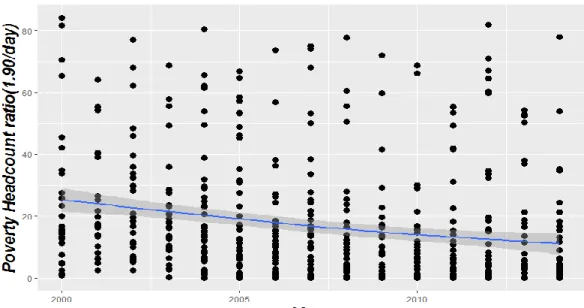
The following are the graphical summaries of the variables of interest in the aggregated dataset and in the respective income groups. Figure1 shows the poverty head count ratio for the aggregate dataset between the periods of 2000 and 2014. While the figure shows a downward trend in the poverty headcount ratio over time, on the average, the number of people living under 1.90 dollars a day is still unsatisfactorily high.
Figure 1 Poverty Headcount ratio in developing countries.
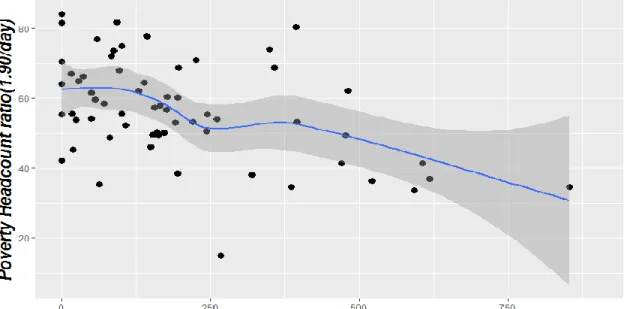
Figure 2 shows the relationship between the poverty headcount ratio and total AFT while Figure 3, Figure 4 and Figure 5 show the relationship between the three sectoral AFTs and the headcount ratio in low-income countries. All three figures show a decreasing trend, indicating that the poverty headcount ratio in low-income countries decreases as AFT increases. However, these negative correlations between the three categories of AFT and poverty headcount ratio seen in the graphs are not enough to imply causation. One thing worth noting is that, based on visual inspection, the slope of the poverty headcount ratio with respect to total AFT is almost the same as in the case of AFT to infrastructure. This similarity may be attributed to the fact that AFT to infrastructure forms about 80% of total AFT.