EVALUATION OF UNDERGRADUATE NURSING
STUDENTS’ CLINICAL LEARNING IN A
DEVELOPING COUNTRY:
A FORMATIVE ASSESSMENT FRAMEWORK
Annie Nancy Msosa
A thesis submitted to the Faculty of Health Sciences, University of the Witwatersrand for the Degree of Doctor of Philosophy
DECLARATION
I, Annie Msosa, declare that this thesis is my own, unaided work. It is being submitted for the degree of Doctor of Philosophy at the University of Witwatersrand, Johannesburg. It has not been submitted before for any degree or examination at any other University.
………..
DEDICATION
I dedicate this study to my family Edson, Mphatso, Annie, Florence and Nompumelelo
In memory of
My father Shadreck Magombo (1979) My mother Mary, Fennia Magombo (2009)
CONFERENCE PRESENTATIONS
Poster Presentation: July 2014
“The Nurse Educators’ Perspectives of Clinical Teaching in the Skills Laboratory: A Malawian Experience”. Presented at the Sigma Theta Tau 26th International Nursing Research Congress in Puerto Rico, USA, 23-27 July 2015.
Oral Presentation: August 2015
The OSCE Experience: Perspectives of Nurse Educators in a Developing Country”. Presented at the Sigma Theta Tau International 15th Annual Tau Lambda at-Large Conference, Sunnyside Park Hotel, Johannesburg, South Africa, 12-14 August 2015.
Oral Presentation: July 2016
“Towards Clinical Teaching and Learning Excellence Using a Formative Assessment Framework in the Skills Laboratory,” Presented at the Sigma Theta Tau International's 27th International Nursing Research Congress, International Conference Centre, Cape Town, South Africa, 21-25 July 2016.
ABSTRACT
Simulation laboratories help students build a strong foundation of clinical competence in an environment that is stress free prior to clinical placements. A number of Investigations regarding simulation impact in college-based training institutions in developed countries have taken place. However, there is paucity of such research from nursing education institutions in developing countries. With this in mind, an evaluation study was conducted to assess how clinical teaching, learning and the OSCE method of evaluation are experienced from the nurse educators’ and students’ perspectives in the skills laboratory. Additionally, the study sought to determine the effect of the Formative Assessment Framework for learning in the skills laboratories. The specific objectives were to explore the students and educators’ perspectives of teaching and learning and describe how the current mode of assessment, namely, the OSCE is experienced. From these perspectives, the researcher extrapolated the factors and issues that affect students’ clinical learning and the OSCE. Finally, the objective was to develop, validate, implement and evaluate the impact of a Formative Assessment Framework (FAF) by determining and comparing students’ competence in selected general nursing and midwifery skills between and within the experimental and control groups.
A sequential, mixed methods design was chosen, starting with a qualitative approach in phase 1 followed by a quantitative approach using a quasi-experimental design in phase 2. In phase 1, in-depth and focus group interviews were used to collect data from nurse educators (n=6) and students (n=45). Data were organized and managed with the MAXQDA software version 11 and were analysed thematically. The synthesis of the teaching, learning and evaluation gaps with input from the literature reviewed on concepts of formative assessment and deliberate practice supported the development of a Formative Assessment Framework (FAF). The FAF involved a minimum of 2 demonstrations on each procedure before and after practise sessions, a minimum of two supervised return demonstrations, feedback and supervised practise. Nursing education experts validated the FAF using the Delphi technique. Quantitative data from the senior students (n= 101) and junior students (n= 160) was collected using the FAF. Data was collected using structured checklists from the eighteen selected nursing and midwifery procedures. Pre and post-testing of the students’ performance and competence was tested. Quantitative data were analysed using the STATA software version 13.
Qualitative findings showed that demonstrations and return demonstrations contribute effectively to students teaching and learning in the skills laboratories. The practise sessions, presence of the nurse educators and availability of resources make the learning environment more conducive than teaching and learning in the practice sites. However, students have limited practise sessions, which seriously affect teaching and learning in the skills laboratories
negatively. In terms of the OSCE, the method is good because the environment resembles the clinical setting; it is appropriate for large student numbers and ensures standardization of the examinations. However, the preparation for the OSCE is inadequate.
Quantitatively, the paired t-tests, Wilcoxon sum rank and Wilcoxon, sign rank tests, were used to test the results. Usage of a formative assessment framework had a significant effect on senior students’ clinical performance in physical examination of a pregnant woman, the triage process in under five clinic, contraceptive implant insertion, contraceptive implant removal, breast examination, episiotomy repair, management of the third stage of labour, subsequent examination of the newborn and speculum examination procedure among the junior students. There were also significant effects on the junior students’ performance in the procedures of blood transfusion, female catheterisation, health education, and insulin intravenous injection, naso-gastric tube insertion, airway suctioning and wound dressing except on colostomy care. The mean differences between the control and experimental groups for most of the tested procedures were significantly different. The results were statistically significant with a p-value of <0, 05, set at 95 % confidence intervals.
In conclusion, the integration of the FAF in students’ learning in the skills laboratories has the capacity to improve the student’s clinical performance and competence. The use of the FAF has the capacity to prepare a student adequately for the summative OSCE in the skills laboratory and ultimately, his/her clinical competence for better patient and client care.
ACKNOWLEDGEMENTS
I acknowledge the support of supervisors, college management and staff, friends and students from the University of Witwatersrand and Kamuzu College of Nursing
Professor Judith Bruce, a supervisor who has been faithful and true in correcting and guiding me through the process. Although you have many responsibilities as head of school, your timely feedback has helped me to progress well with my research work
Professor Rosemary Crouch, a supervisor who has been faithful, true and comforting from the inception to the conclusion of the study. Your comforting words during moments of discouragement were an encouragement. The words of a mother echoed many times after every feedback session “Annie, you are doing very well” are remembered. Thank you for editing my work. May God grant you good health
I have also benefited from the support of many people at the University of Witwatersrand. The list is long. However, may I acknowledge the support of the staff from the postgraduate office for their support during the registration process, the residence and accommodation staff for their support during times I needed accommodation.
Irene for all the technical support that I needed and Grace for the moral support. I have also benefitted from the Faculty of Health Sciences Research office for their timely support.
I acknowledge the support of my family, prayer mates, friends who helped me with their prayers, resources, support and computer skills to organise my thesis. Many thanks to them and may God richly bless them.
The Head of Department and staff in the Nursing Education department for their academic and moral support.
The University of Witwatersrand for the financial and material resources for all that I needed for the conferences and completion of the study.
I also want to thank the nursing education experts from the University of Witwatersrand, South Africa, Nurses and Midwives Council of Malawi, Ministry of Health, Malawi and the Kamuzu College of Nursing for their expertise.
The Ministry of Health and Population for granting me the scholarship and NEPI Malawi, for the financial contributions in support nursing education in Malawi
Kamuzu College of Nursing for the financial support and for granting me a study l
I thank the staff and students of Kamuzu College of Nursing for their participation in my study
Above all, I would like to give glory to the Almighty God and the unseen heavenly host that kept me company. Glory and Honour be to YOU.
Finally,
“Let us hear the conclusion of the whole matter: Fear God and keep His commandments, for this is the whole duty of man” (Ecclesiastes 12 v 13)
TABLE OF CONTENTS
Page Declaration………..………... ii Dedication………..……….. iii ConferencePresentations………... v Abstract.……… vi Acknowledgements………..……….. vii Table of Contents………... ixList of Tables………..…... xiv
List of Figures………...…... xv
List of Abbreviations………... xvi
1. Chapter One: Introduction and Background………. 1
1.1 Introduction and Background………... 1
1.2. Nursing Education in Developing Countries………..……. 3
1.2.1 The Malawian Context………... 3
1.2.2 Kamuzu College of Nursing Context……….…... 4
1.3 Motivation to the Study………... 5
1.4 Overview of the Theoretical Underpinnings……… 5
1.5 Curriculum………... 5
1.5.1 Deliberate Practice………... 7
1.5.2 Formative Assessment………... 8
1.6 Assumptions………... 8
1.7 Problem Statement………... 9
1.8 Study Purpose and Objectives………... 10
1.9 Rationale for the Study………... 11
1.10 Significance of the Study………... 11
1.11 Definition of Study Variables………... 11
1.12 Thesis Overview………... 12
1.13 Conclusion……….……….. 13
2. Chapter Two: Literature Review……… 14
2.1 Introduction……….………. 14
2.2 Historical Background of Nursing and Nursing Education World-Wide……. 15
Page
2.4 Nursing Curricula……….……… 16
2.5 Curriculum Models……….………. 18
2.5.1 Competence-Based Curriculum……… 18
2.6 Nursing Education Theories of Clinical Teaching and Learning………. 20
2.7. The Environment for effective Clinical Teaching and Learning………... 20
2.8 Clinical Sites Teaching and Learning ………. 21
2.9 Simulation and Skills Laboratories………... 23
2.10 Motivation Strategies during Simulation Learning………. 28
2.11 Student Clinical Performance Evaluation……… 29
2.11.1 Use of the Objective Structured Clinical Evaluation Strategy……….. 30
2.12 Conclusion……….……….. 33
3. Chapter Three: Research Design and Methods……… 34
3.1 Introduction……….………. 34 3.2 Research Design……….………... 34 3.3 Methods in Phase 1……….………... 35 3.3.1 Population………. 35 3.3.1.1 Inclusion Criteria……….………. 35 3.3.1.2 Exclusion Criteria……….………... 36
3.3.2 Sampling and Sample Size……….……….. 36
3.3.3 Study Settings……….………. 37
3.3.4 Pilot Study……….………... 37
3.3.5 Data Collection Process……….……… 38
3.3.5.1 In-Depth Interviews……….……… 38
3.3.5.2 In-Depth Interview Setting and Preparation……….….. 39
3.3.5.3 Interview Session……….………... 39
3.3.5.4 Focus Group Interviews……….……….... 39
3.3.5.5 Focus Group Interview Setting and Preparation……… 39
3.3.5.6 Focus Group Interview Session……….………... 40
3.3.6 Thematic Data Analysis……….………...…………. 40
3.3.7 Summary of the Development and Validation of the Formative Assessment Framework……….………..…. 43
3.4 Methods in Phase 2……….………... 44
Page
3.4.1.2 Undergraduate Nursing and Midwifery Students………... 45
3.4.1.3 Nursing, Community and Midwifery Procedures……… 46
3.4.2 Instruments for Pre-test and Post-test……….………… 46
3.4.3 Study Settings……….………. 47
3.4.4 Data Collection Process……….……… 47
3.4.5 Quantitative Data Analysis………. 48
3.5 Issues of Rigour……….. 49
3.6 Ethical Considerations……… 51
3.7 Conclusion……….……….. 52
4. Chapter Four: Results and Discussion: Phase 1……….………… 53
4.1 Introduction……….………. 53
4.2 Part A: Nurse Educators Perspectives Of Clinical Teaching……… 53
4.2.1 Demographic Characteristics of Nurse Educators……… 53
4.2.2 Themes and Sub-Themes………. 54
4.2.2.1 Theme One: Clinical Teaching Experiences……….. 54
4.2.2.2 Theme Two: Factors Affecting Skills Laboratory Teaching……….. 62
4.2.2.3 Theme Three: Coping and Improvisation Strategies………. 67
4.2.2.5 Conclusions Drawn from Nurse Educators’ Clinical Teaching Perspectives. 70 4.3 Part B: Nurse Educators’ Perspectives of the OSCE………...…. 71
4.3.1 Themes and Sub-Themes………. 72
4.3.1.1 Theme One: Preparation………..…. 72
4.3.1.2 Theme Two: Making Sense of the Experience……….…. 81
4.3.1.3 Theme Three: Performance Feedback……… 84
4.3.1.4 Conclusions Drawn from Nurse Educators Perspectives of the OSCE……. 88
4.4 Part C: Students Perspectives of Clinical Learning………... 89
4.4.1 Demographic Characteristics of Undergraduate Nursing and Midwifery Students……….……….. 89
4.4.2 Themes and Sub-Themes……… 89
4.4.2.1 Theme one: Positive Learning Perspectives……….. 90
4.4.2.2 Theme two: Nature of Practise Sessions……… 97
4.4.2.3 Theme Three: Factors Affecting Clinical Learning………. 102
4.4.2.4 Conclusions drawn from the Students Perspectives on Clinical Learning…. 107 4.5 Part D: Students’ Perspectives of the OSCE……….. 108
Page
4.5.2 Conclusions Drawn from the Students’ Perspectives of the OSCE………… 116
4.6 Summary of Similarities and Differences……… 117
4.7 Summary……….………. 118
5. Chapter Five: The Formative Assessment Framework……….. 119
5.1 Introduction……….………. 119
5.2 Process of FAF Development………... 119
5.2.1 Planning Stage……….………... 118
5.2.1.1 Review of Formative Assessment and Deliberate Practice Concepts……… 119
5.2.1.2 Factors Affecting Clinical Teaching, Learning and Evaluation from Phase 1 124 5.2.2 Development Stage……….………... 124
5.2.2.1 Operation of the Formative Assessment Framework……… 130
5.2.3 Validation Phase……….……… 131
5.2.3.1 Delphi: Round One……….……… 131
5.2.3.2 Delphi: Round Two……….……… 133
5.2.4 Implementation Stage……….……… 133
52.4.1 Implementation Outcome ………. 134
5.2.5 Conclusion……….……….. 134
6. Chapter Six: Results and Discussion: Phase 2……… 133
6.1 Introduction……….………. 133
6.2 Results……….………. 133
6.2.1 Junior Students……….……….………. 133
6.2.1.1 Comparison between Experimental and Control Group………... 134
6.2.1.2 Comparison within Groups (t-test)……… 136
6.2.1.3 Comparison between Experimental and Control Group Tests……… 137
6.2.1.4 Comparison within Groups……….………... 138
6.2.1.5 Linking the Results to Formative Assessment Framework……… 139
6.2.2 Senior Students……….……….. 140
6.2.2.1 Comparison between Experimental and Control Group (t-tests)……… 140
6.2.2.2 Comparison within Groups (t-test)……… 143
6.2.2.3 Comparison within Groups (Wilcoxon Sign Rank Test)……… 144
6.2.2.4 Comparison within Groups……….………... 145
6.2.2.5 Comparison within Groups……….………... 146
Page
6.4 Conclusion……….……….. 148
7. Chapter Seven: Main Findings, Recommendations and Conclusion…. 149 7.1 Introduction……….………. 149
7.2. Main Findings……….………. 149
7.2.1 Qualitative Findings……….………..………. 149
7.2.1.1 Clinical Teaching and Learning Perspectives………. 149
7.3.1.2 The OSCE Perspectives……….………..………. 150
7.3.2 Quantitative……….………. 150
7.3.2.1 Performance of Junior Students………... 151
7.3.2.2 Performance of Senior Students……….. 151
7.3.3 Implications of the Study………. 153
7.3.3.1 Nursing Education………... 153
7.3.3.2 Research……….………. 153
7.3.4 Limitations……….………... 153
7.3.5 Conclusion……….……….. 154
8. References……….………. 159
Appendix A : University of Witwatersrand Ethics Clearance………. 177
Appendix B : University of Witwatersrand Protocol Approval………... 178
Appendix C : University of Malawi Ethics Clearance (COMREC)………. 179
Appendix D : Permission from Kamuzu College of Nursing……….. 180
Appendix E : Information Sheet for Educators and Students Interviews………. 182
Appendix F : Student Information Sheet for Participation in the Quasi Experiment.. 184
Appendix G : Informed Consent for Participation in the Quasi Experiment…………. 186
Appendix H : Informed Consent for Use of Video Recording Device………... 187
Appendix I : Informed Consent for Utilisation of the FAF Assessment Grades…… 188
Appendix J : In-Depth Interview Questions………. 189
Appendix K : Transcribed Interview from In-Depth Interview……… 191
Appendix L : Focus Group Interview Questions……….. 201
Appendix M : Transcribed Interview from Focus Groups……… 203
Appendix N : Junior Students Sample Checklist………. 214
Appendix P : Delphi Round 2 Questionnaires………. 218
Appendix Q : Information for Delphi Experts……… 220
Appendix R : Informed Consent: Delphi Experts………. 222
Appendix S : Turn it in Report……… 223
Appendix : Informed Consent for Participants……… 224
LIST OF TABLES
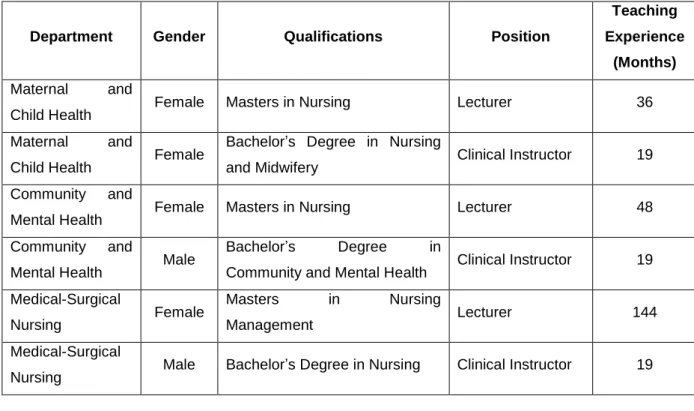
Page Table 3.1 : Nurse Educator Characteristics………. 37Table 3.2 : Undergraduate Student Characteristics……….. 37
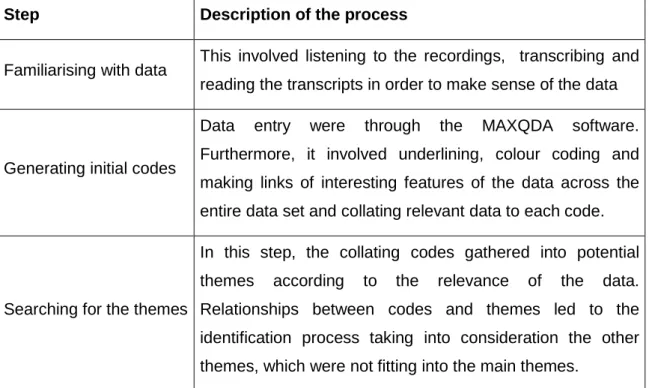
Table 3.3 : A Step By Step Thematic Analysis Process……… 42
Table 3.4 : Nursing Procedures for the Junior and Senior Groups………. 46
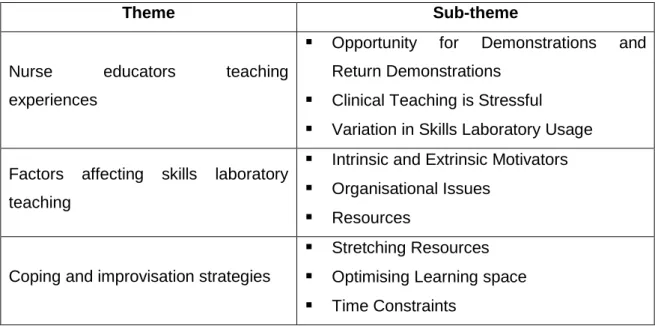
Table 4.1 : Themes and Sub-Themes……….. 54
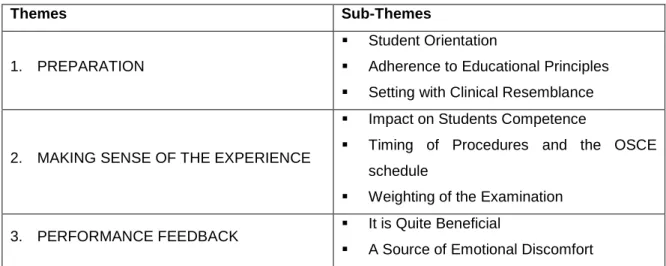
Table 4.2 : OSCE Themes and Sub-Themes………. 73
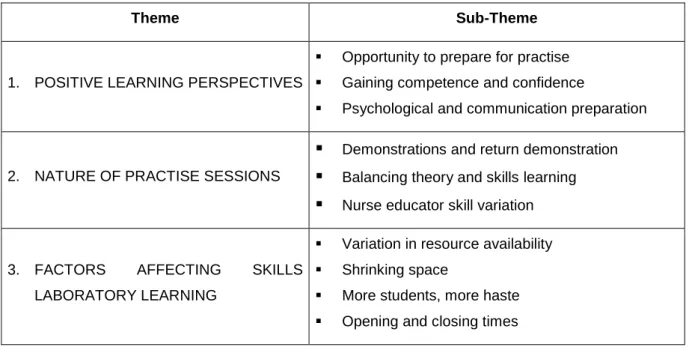
Table 4.3 : Themes and Sub-Themes……….. 91
Table 4.4 : Students’ OSCE Theme and Sub-Themes………. 109
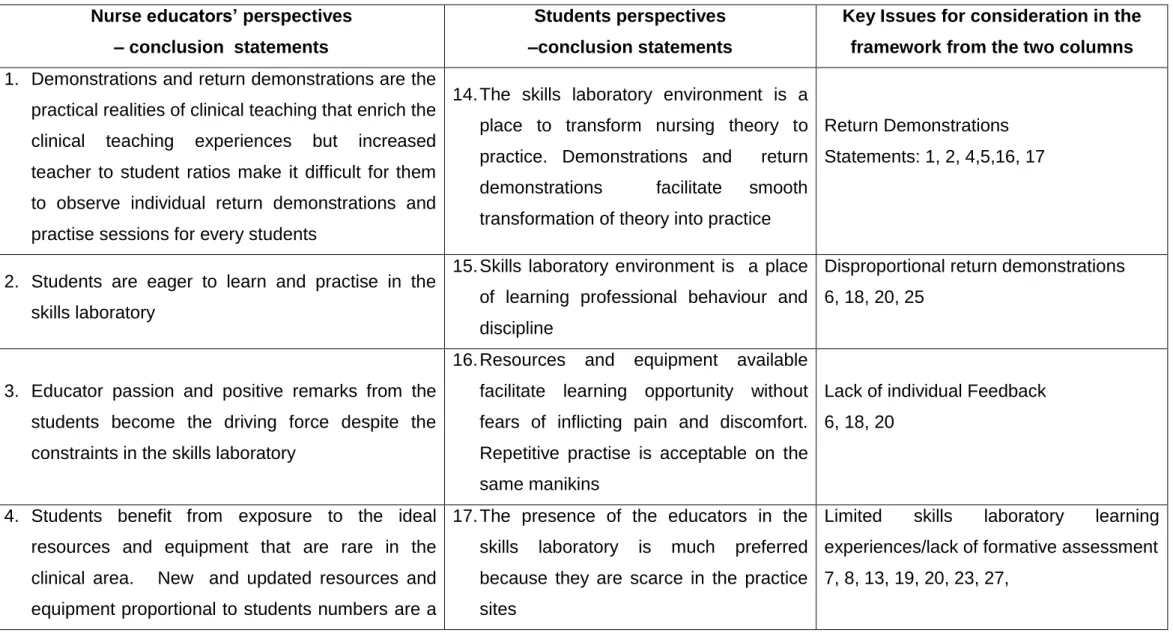
Table 5.1 : Factors Affecting Clinical Teaching, Learning and Evaluation (OSCE) from Phase 1 ………..………. 125
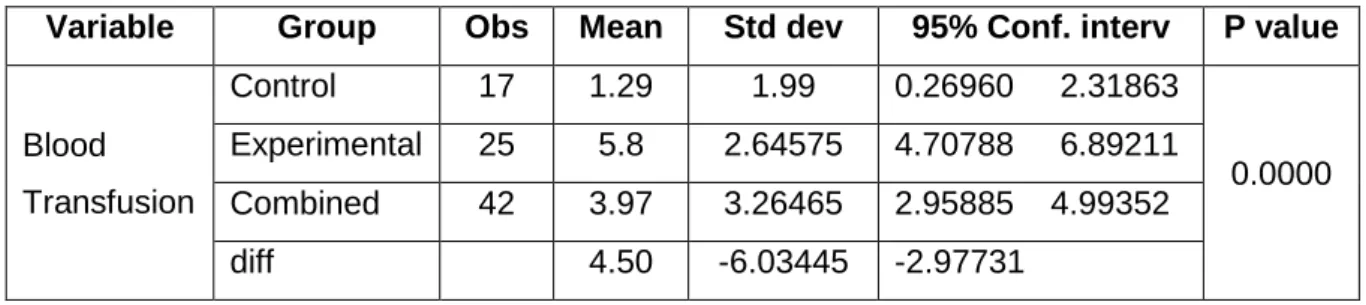
Table 6.1 : Blood Transfusion: Between-Group Comparison of Junior Students……. 134
Table 6.2 : Nasogastric Tube Insertion: Between-Group Comparison of Junior Students………..……….. 135
Table 6.3 : Health Education: Between-Group Comparison of Junior Students……... 135
Table 6.4 : Wound Dressing: Between-Group Comparison of Junior Students……... 135
Table 6.5 : Female Catheterisation: Between-Group Comparison of Junior Students 136 Table 6.6 : Suctioning the airway: Between-Group Comparison of Junior Students… 136 Table 6.7 : Within-Group Comparison of Junior Students’ Skill Performance………... 137
Table 6.8 : Insulin Injection and Colostomy Care: Between-Group Comparison of Junior Students………..……….. 138
Table 6.9 : Insulin Injection and Colostomy Care: Within Group Comparison of Junior Students……….... 139
Table 6.10 : Physical Examination: Between-Group Comparison of Junior Students… 141 Table 6.11 : Triage Process: Between-Group Comparison of Junior Students……….. 141
Table 6.12 : Implant Insertion: Between-Group Comparison of Junior Students……… 141
Table 6.14 : Episiotomy Repair: Between-Group Comparison of Junior Students……. 142
Table 6.15 : Speculum Examination: Between-Group Comparison of Junior Students. 142 Table 6.16 : Third Stage Management: Between-Group Comparison of Junior Students………..……….. 142
Table 6.17 : Subsequent Newborn Care: Between-Group Comparison of Junior Students………..……….. 142
Table 6.18 : Comparison within Groups………. 144
Table 6.19 : Breast Examination and Second Stage of Labour: Within Group Comparison for Senior Students………... 145
Table 6.20 : Breast Examination and Second stage: Comparison within Groups…….. 146
LIST OF FIGURES
Page Figure 2.1 : Literature Map………..……… 14Figure 2.2 : Components of a Competence-Based Curriculum……… 19
Figure 3.1 : Schematic Diagram of Mixed Methods……… 35
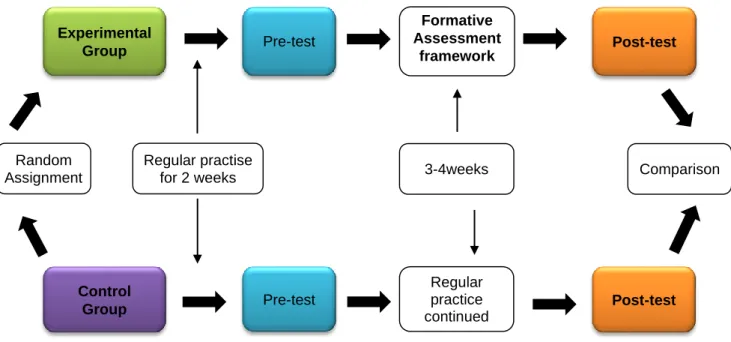
Figure 3.2 : Diagrammatic Representation of the Quasi Experiment……….. 48
Figure 5.1 : Diagrammatic Representation of the Formative Assessment Framework………..………. 130
LIST OF ABBREVIATIONS
BSN - Bachelor’s Degree in Nursing
COMREC - College of Medicine Research Ethics Committee FAF - Formative Assessment Framework
HREC - Human Research Ethics Committee KCN - Kamuzu College of Nursing
NLN - National League of Nursing
OSCA - Objective Structured Clinical Assessment OSCE - Objective Structured Clinical Examination
CHAPTER ONE
ORIENTATION TO THE STUDY
1.1 INTRODUCTION AND BACKGROUND
Since its origin, nursing education internationally and nationally has gone through many changes from what it was to what it is today. Prior to and during the era of Florence Nightingale, the training of nurses took place at the hospitals by skilled nurses and midwives working in mission hospitals (Sellew and Nuesse, 1946). The ward sisters conducted the training (Potgieter, 1992). Nursing and midwifery training used the apprenticeship model, where learners acquired their skills while providing a service to the patients in hospitals (Bastable, 2006). Since then, remarkable changes have taken place in nursing education. Apart from moving away from the hospital-based training, new developments such as the amalgamation of colleges of nursing and midwifery, their transfer into higher education and the need for nurses and midwives to attain higher degrees or a higher level of study have occurred (Nicol and Glen, 1999). These changes have led to an increase in the time spent studying other subjects such as psychology, sociology and health service management systems, to mention a few, in order to comply with the standards of higher education (Russell, 2005). As a result, time spent in the clinical sites reduced for students to transfer theory into practice appropriately (Scheckel, 2009). This has led to the recommendation by many researchers to increase the utilization of college simulation laboratories. It has been suggested that simulation laboratories help students build a strong foundation of clinical competence in an environment that is stress free prior to clinical placements (Lateef, 2010; Aggarwal, Mytton, Derbrew, Hananel, Heydenburg, Issenberg, MacAulay, Mancini, Morimoto, Soper, Ziv and Reznick, 2010). Advancement in nursing programs also led to the development of accreditation boards to ensure that the quality of nursing and midwifery care and nurse-midwifery training programs are being met (Keating, 2006; Quinn and Hughes, 2007; Scheckel, 2009; Armstrong and Rispel, 2015).
O’Connor (2006) asserts that college laboratories/simulation laboratories or resource centers provide an opportunity for students’ introduction to the technical skills they will be using throughout their career as professional nurses and midwives. O’Connor (2006) further explains that a well-designed laboratory facility enables the student to practice the full range of nursing and midwifery activities including communication techniques, problem-solving strategies and documentation practices, in addition to the usual technical skills. Such hands-on experience provides a good foundation for the eventual transfer of skills to real life clinical exposure (O’Connor, 2006). As a result, the use of
simulation laboratories to strengthen clinical teaching and learning among students has been widely supported by the literature. Nursing and midwifery training institutions, therefore introduced college-based clinical training initiatives which have guided nursing institutions on the types and implementation of curricula methods of instruction and evaluation of learners in the classroom, the use of simulation laboratories and clinical sites (Doll in Billings and Halstead, 2012; Gaberson and Oermann, 2007; Quinn and Hughes, 2007). With the emerging technologies, the skills laboratory has expanded from being just a center for psychomotor skills practice and performance. Carton (2012) asserts that the contemporary skills laboratory serves as a multifunctional teaching and learning center. In addition, Carton states that the learning resource center, regardless of the different names used by various institutions, remains a central hub of clinical instruction for students. The nursing curricula prescribe the appropriate knowledge, skills and attitudes good for the learner to be a safe practitioner, having acquired the prescribed competencies upon completion of the program. In many developing countries, the skills laboratory remains a center for clinical teaching and learning of students and not for continuous professional development, as is the case in developed countries (Carton, 2012).
Findings from studies investigating the impact of the college-based training initiatives from developed countries exist, but there is paucity of such research from nursing education institutions in developing countries. With this in mind, the author sought to conduct an inquiry into how clinical teaching, learning and the OSCE experiences from a developing country perspective in the skills laboratory. Furthermore, the impact of the Formative Assessment Framework on teaching and learning of the students in the skills laboratories was tested. Thus, the present study wanted to provide evidence to support or refute the effectiveness of clinical training initiatives in the college-based skills laboratories from a developing country perspective. Quinn and Hughes (2007) point out that there is a wide range of curriculum models existing for clinical teaching and learning, each reflecting the “particular ideological stance of the author”. However, for the purposes of this research, the study was based on the behavioural objective (product) model type of curriculum, which is currently in use for the training of the undergraduate nurses and midwives at Kamuzu College of Nursing in Malawi.
1.2 NURSING EDUCATION IN DEVELOPING COUNTRIES 1.2.1 The Malawian Context
Although nursing and midwifery education has developed rapidly in many developed countries, African nursing and midwifery education has lagged behind in many countries (Mogobe, Bruce and Meyer, 2009; Klopper and Uys, 2013). A number of factors have contributed to the delay, with poverty being one of the major setbacks to the delayed development in many African countries. This background has had an impact on nursing and midwifery education and nursing practice as well. Thus, the health sector has lost a high number of nurses and midwives to developed countries in search for better living conditions and education. Malawi is one of the African countries that has endured the most of an exodus of nurses and midwives to the United Kingdom and others. In a survey conducted in 2011 by the Malawi Ministry of Health and its development partners, reports that there is a 65% shortage of nurses and midwives in Malawian health facilities (Malawi National Training Operational Plan, 2011). In another study conducted by Hoffman, Mofolo, Salima, Hoffman, Zadrozny, Martinson and Horst (2012) on the use of guardians in Malawian hospitals, reported that there is only one health care professional to every 277-hospital patients resulting in poor patient care. Additionally, the clinical teacher to student ratio in Malawi is one to twenty or more students (Malawi National Training Operational Plan, 2011). As a result, clinical teaching and the students’ learning has been extremely difficult compromising the students’ learner role. More often, the teacher becomes the provider of care while the learner is like a pair of hands due to the severe nurse and midwife shortage (Stockhausen, 2005). The extreme shortage of nurses and midwives in Malawi compelled the government of Malawi to mandate to all nursing and midwifery training institutions to increase the intake of students because they are a major contributor of nurses and midwives in the country (Malawi National Training Operational Plan, 2011). KCN is one of the colleges that responded to the nation’s need for more registered nurses and midwives by increasing students’ intake from 115 to 250 students beginning from 2012. The Malawi government has pledged to support and maintain quality teaching and learning in all nursing education institutions by educating lecturers in clinical teaching and conducting preceptorship programs in clinical teaching, learning and evaluation. In addition, the government has also pledged to support the college with clinical supervisors on secondment. However, clinical teaching still remains a challenge to the college because of the few registered nurses and midwives in the hospitals to teach the students, when the nurse educators are busy with other academic responsibilities (Peabody, Taguiwalo, Robalino and Frenk, 2006; Olson, Davis, Milazi, Lufesi, Miller, Preidis, Hosseinipour and McCollum, 2013). There is also a lack of appropriate resources for clinical teaching in the hospitals because their priority is on resource mobilisation for patient care. As a
result, the college staff realised the need to strengthen clinical teaching and learning in the skills laboratory so that students could develop their competencies prior to graduation. As part of this initiative, the college provides teaching resources to students allocated in the hospitals, to improve their learning experience.
1.2.2 Kamuzu College of Nursing Context
The Kamuzu College of Nursing opened in 1979 with two campuses, the main campus situated in Lilongwe and the other in Blantyre. It is the oldest college for the training of high calibre registered nurses and midwives in Malawi. The initial programs were diploma in general nursing and a certificate in midwifery on a compulsory basis. Currently, it runs a four year integrated Bachelor’s degree program in nursing and midwifery for undergraduate students, a two-year post-basic Bachelors’ degree for mature entry students, Masters and Doctor of philosophy programs for postgraduate students. The college has over 500 undergraduate nursing and midwifery students from year one to year four. It utilises a competence-based curriculum for the generic Bachelor of Science degree in Nursing and Midwifery (BSN) program. The undergraduate students in year one and two cover the foundation courses of nursing including community, medical and surgical courses. In addition, allied courses such as sociology and psychology became part of the course. Students in year three and four learn reproductive health courses, such as gynaecology, midwifery and community midwifery. The college uses a semester system beginning with theoretical courses with exception of the fourth year. Clinical teaching and learning in all courses takes place in both the skills laboratory and various clinical placements. The curriculum has stipulated hours for clinical learning in the skills laboratory, during all theoretical blocks, to allow teacher demonstrations and student practice. As such, students are expected to use the skills laboratory during the allocated times, as well as during their free time to observe demonstrations, practise different skills and have feedback. These laboratories have basic resources for each level to allow the students to acquire new knowledge, skills and attitudes and to attain the required competences appropriate for each level. Implementation is through a modular system and all nursing courses with a practical component have specific practice modules. Apart from clinical assignments and projects, student clinical performance evaluation occurs through objective structured clinical examination (OSCE) both in the clinical laboratory and at the clinical sites at the end of each semester. OSCE grades are weighted more (70%) than the marks the students obtain from the clinical assignments and projects (Kamuzu College of Nursing Curriculum, 2008).
1.3 MOTIVATION TO THE STUDY
A great deal of research has been done in nursing education globally to identify the issues and factors that promote or hinder effective clinical teaching and learning in both the clinical sites and the simulation laboratories from a developed world perspective. Thus, most of the knowledge in nursing education is from these countries and not all fits with the needs and conditions of the developing world. To date, very little research findings exist on enhancing teaching and learning without compromising the quality of nursing education, in the developing world skills laboratories. This poses a big challenge to adaptation and implementation of the evidenced-based ways of teaching, learning and evaluation because in most cases feasibility studies have not been undertaken. In some situations, there is bench marking prior to implementation. As such, this prompted the researcher to conduct the present study to evaluate how clinical teaching, learning and the OSCE experiences in the skills laboratory since its inception at the college. The other observation is that Kamuzu College of Nursing and all the other nursing institutions in Malawi adopted the skills laboratories for clinical teaching and learning as well as the OSCE as a method of nursing students’ evaluation. There is minimal usage of the skills laboratories despite the evidence that support their effectiveness.
1.4 OVERVIEW OF THE THEORETICAL UNDERPINNINGS
This section briefly introduces the theoretical concepts that anchor the entire study. The major concepts for the study include curriculum, deliberate practice and formative assessment. Some of these concepts together with results from phase one of this study led to the development of a Formative Assessment Framework. The section begins with a literature review on a competency-based curriculum followed by a discussion of the literature on formative assessment and deliberate practice. A detailed discussion on reviewed literature follows in the appropriate chapters.
1.5. CURRICULUM
The term “curriculum” describes a plan or design that guides an education institution to administer its programs (Quinn and Hughes, 2007). It encompasses all the educational elements such as learning outcomes, the subject matter, teaching and learning process and assessment under the umbrella of education and training (Quinn and Hughes, 2007). Quinn and Hughes (2007) further postulate that the elements relate to each other in that curriculum development begins with the formulation of learning outcomes. These learning outcomes guide decisions about selecting the subject matter and the teaching and learning strategies that are relevant and appropriate for the institution (O’Neill, 2010). Some of these strategies include lectures, skills laboratory learning experiences, portfolios and clinical placements, which help the learner to achieve the learning
outcomes. Finally, the curriculum stipulates the learners’ mode of assessment using relevant assessment methods to determine the achievement of the learning outcomes stipulated in the curriculum. However, a wide range of curriculum models exist such as subject centred models, problem-based models and experiential and social critical models just to mention a few (O’Neill, 2010).
In this study, the focus is on a competence-based curriculum model in use at KCN. Emphasis in this model is on developing competent learners through the acquisition of specified competencies (Kouwenhoven, 2009). For the purposes of this study, competence is the potential ability and capability of a student to achieve the key up-to standard professional tasks in the different levels of academic progression characterising the nursing profession (Schroeter, 2008; Kouwenhoven, 2009; Carton, 2012). At the college, teaching and learning is structured according to the competence-based curriculum but the curriculum is not actually followed in practice. Theory is presented according to the number of hours stipulated in the curriculum. Likewise, the clinical practice schedule is adhered to with the correct number of practical hours. However, a gap exists in the teaching and learning of students in the simulation laboratories at the institution. Although the timetables stipulate the number of hours for skills laboratories teaching and learning experience, most of the hours are for theory, which results in inadequate readiness of the undergraduate nursing students for successful clinical learning practice. In addition, the Objective Structured Clinical Examination is the stipulated mode of evaluation for most of the undergraduate nursing courses in assessing students’ clinical competence in the skills laboratory. However, most of the students gain their clinical learning experiences in the hospitals and community outreach clinics. Students have very minimal clinical learning exposure in the skills laboratory. Thus, using this evaluation strategy in the skills laboratory does not correlate with the principles of teaching and evaluation in a competence-based curriculum. It is recommended that students be examined where they have had appropriate learning experiences in the same learning environment where teaching and learning has occurred (Quinn and Hughes, 2007; Kouwenhoven, 2009). Kouwenhoven (2009) further derived a list of characteristics that form what this researcher calls the ‘archetype’ of a competence-based curriculum, in that the educational process places the learner as the focus, and considers learning to be an active process and not a passive process. Furthermore, the learner, exposed to regular practice and feedback has room for improvement in the performance outcomes.
In addition to the above characteristics of a curriculum, Harris, Eccles, Ward and Whyte (2012) advocated marrying the concept of deliberate practice in nursing as a framework for simulation. Engaging in deliberate practice provides opportunities for individuals to
determined to be relevant. This background led to the development of a formative assessment using the concepts of deliberate practice and formative assessment in order to fill the gap identified from the qualitative experiences of the teaching, learning and evaluation at the college.
1.5.1 Deliberate Practice
Deliberate practice is a concept that has been studied mostly in music, sports and chess (Wiel, Bossche, Jansen and Jossberger, 2010; Ericsson, 2015). Deliberate practice refers to the individualised training activities that aims at improving the individual’s performance through repetition and successive refinement (Ericsson and Lehmann, 1996). Similarly, Barr (2012) defined it as a highly structured activity aiming at improving performance when coupled with immediate and regular feedback. The emphasis for its success is placed on supervised regular practice designed by a teacher or coach and immediate feedback to allow the learner to identify the learning gaps and refine them with new knowledge, skills and attitudes within the period of practice. The impact of deliberate practice was tested from violin students attending an international music academy was done (Ericsson, 2015). On evaluation, the violinists indicated that time spent practising individually, on weekly set goals by their teachers was the main activity that improved their performance. The results showed that violinists with many practice sessions had significant differences than those with less time of practice. In medical education, deliberate practice enhanced the quality of laparoscopic surgical performance in a randomised controlled trial (Hashimoto, Sirimanna, Gomez, Beyer-Berjot, Ericsson, Williams, Darzi and Aggarwal, 2015). Similarly, Joyce, Byrne, O’Connor, Lydon and Kerin (2015), in their study results showed significant differences in reduction of blood products prescribing errors through deliberate practice. Macus, Vakhari, Kirkman, Murphy and Nandi (2012) commented that the application of deliberate practice is limiting in neurosurgical trainees because the costs of failures is very high (death or serious morbidity). In addition, it is not always possible for the trainees to benefit from the surgeons and the opportunities to repeat a neurosurgical procedure is unpredictable. Further research in simulation-based deliberate practice is proposed. This is contrary to the findings of a systematic review by McGaghie, Siddall, Mazmanian and Myers (2009) who commented that deliberate practice is best suited in medical simulation education and conforms to the adult education principles. Its goal is to have a constant improvement in skill and knowledge acquisition other than just aiming at a minimum level. However, in relation to nursing education, Liou, Chang, Tsai and Cheng (2013) conducted a study at Chang Gung University in Taiwan. The purpose was also to examine the effects of deliberate practice and technical skill testing conducted before the clinical practicum on nursing students’ clinical competence. The learners
were taught different technical skills tasks and tested before and after on the performance and feedback sessions. Analyses on the different subscales revealed significant differences on the students’ professional ethical behavior, core nursing skills and procedures, developing nursing care plans and performing advanced nursing procedures. Analysis of the findings from the few studies above concluded that deliberate practice is a concept that has not been a common practice in nursing education. However, it has the capacity to improve students’ clinical performance in nursing students based on the study by Liou, Chang, Tsai and Cheng (2013). Sessions of practice and feedback improved performance and professional ethical behavior of the students. Lessons from the writings of Macus, et al. (2012), the author, attempted to test the concept of deliberate practice in conjunction with the concept of formative assessment in the skills laboratories. In the same manner, an attempt in this research is made, to determine the effect of the formative assessment framework during the teaching and learning of students in the skills laboratories.
1.5.2 Formative Assessment
Formative assessment in this case is a feedback process in which both the teacher and the learner receive feedback from the response of teaching and learning and make necessary adjustments before the final summative evaluation (Dunn and Mulvenon, 2009). Summative evaluation refers to the final assessment where the teacher measures the achievement of learning outcomes (Peterson, 2008). Peterson (2008) states further that formative assessment enhances motivation, helps the learner to identify the learning gaps, fosters self-effort, clarifies desired outcomes and helps in the diagnosis of specific misunderstandings.
Some principles in Malawian nursing students are adhered during theoretical teaching and learning but irregularly in practice sites and the skills laboratory. The use of summative clinical evaluation has been a common practice in the skills laboratory at the end of each semester. Thus, the study aimed at assessing clinical teaching and learning and the OSCE experiences by both nurse educators and learners. Furthermore, the study aimed at assessing whether deliberate practice embedded in formative assessment (Formative Assessment Framework) in the college skills laboratory would make a difference to students’ clinical competencies.
1.6 ASSUMPTIONS
At present, the college skills laboratories have basic resources for all the nursing students pursuing the undergraduate Bachelor’s degree, such as simulation manikins for
students to practice a number of skills, such as bed bathing, bed making, oxygen and drug administration, conducting normal and abnormal deliveries of babies, and insertion of a catheter. The environment is more conducive to learning than the clinical sites where the students go for their clinical experience. The author’s assumption is that having these resources in big or small quantities in the skills laboratory, the nurse educators and students should use these skills laboratories as learning centres to develop new skills. They have the ideal environment for maximising practice prior to clinical placements. In addition, the students will gain more hours of learning as preparation since OSCE, the method of evaluation, which has more weighting than the other methods of student evaluation, is used there.
1.7 PROBLEM STATEMENT
The competency-based curriculum model, which places emphasis on the achievement of learning outcomes, is the model of choice for nurse education in Malawi. Nursing courses within such a curriculum have specific modules with a practical component to meet the clinical learning outcomes. Skills laboratories are widely used in nursing education institutions worldwide, as well as in Malawi to allow the students to acquire the appropriate clinical competencies in their different levels of study. Regular practice, formative assessment and feedback are implicit for learning effectiveness in an environment that allows mistakes and their rectification, without fear of causing harm to patients. Anecdotal evidence and laboratory attendance records suggest that college students use the skills laboratory irregularly and infrequently, despite specified practical hours on students’ weekly schedules during theoretical blocks. Students, lecturers and the institution as whole lack the commitment in the use of the skills laboratories. Comparing the learning environment in the skills laboratories and the clinical practice, skills laboratories are equipped with adequate resources than the practice sites. Students require many hours to practice more in the clinical site that currently is not feasible due to staff shortage, in adequate learning resources and increased patient population (Hoffman, Mofolo, Salima, Hoffman, Zadrozny, Martinson and Horst, 2012). Evaluation of students’ competence occurs through the Objective Structured Clinical Examination strategy in the skills laboratory contributing to 70% of the final clinical grade for the students. Yet students spend most of their clinical learning practise outside the skills laboratories. In addition, there is students’ apathy regarding learning and weakened lecturer accountability for practical teaching in the skills laboratories. This among others is not in tandem with curriculum expectations.
RESEARCH QUESTIONS
Identifying the gaps in teaching and learning in the skills laboratory would help the students and nurse educators to identify the need for regular practice. Additionally, it helps the students make corrections through the feedback that eventually improve their competencies (Peterson, 2008). Therefore, the following research questions guided the study:
How is clinical teaching and learning perceived and characterized in the skills laboratory from both the student and educator perspectives?
How is the OSCE method of evaluation experienced by the nurse educators and students
What needs to be changed or modified in the teaching, learning and OSCE, as a result of their perspectives?
How does a Formative Assessment Framework affect clinical teaching, learning and OSCE in the skills laboratory?
1.8 STUDY PURPOSE AND OBJECTIVES
The purpose of the study was to evaluate clinical teaching, learning and the OSCE method of evaluation in the college-based skills laboratories and determine how a Formative Assessment Framework (FAF) affects the quality of clinical teaching and learning. The specific objectives of the study were set in two phases as follows:
Phase 1:
To explore and describe the students’ and educators’ perspectives of clinical teaching and learning in college-based skills laboratories.
To explore how nurse educators and students experience the current mode of assessment, namely the OSCE.
To extrapolate from these perspectives, the factors and issues that affect students’ clinical teaching, learning and the OSCE in the skills laboratories.
To develop and validate a Formative Assessment Framework (FAF) for the assessment of clinical teaching and learning in the skills laboratories
Phase 2:
To implement the validated Formative Assessment Framework for the assessment of clinical teaching and learning among students in experimental and control groups; and
- between experimental and control groups of students and - within groups
1.9 RATIONALE FOR THE STUDY
Although simulation-based teaching and learning has been in existence for more than 40 years, much of its successes come from the experiences of Western countries like the United Kingdom, United States of America, Canada and Australia. There is little evidence on the successes and challenges of the use of simulation laboratories in a developing country. Therefore, the study evaluated teaching and learning in the skills laboratories in developing countries. In addition, an assessment of the OSCE method evaluation took place. The findings from the study would inform the nursing institutions in Malawi and other nursing education institutions for proper modifications. The identified gaps in teaching and learning and the OSCE led to the development of the FAF. The success of the use of the FAF in teaching and learning will contribute to the body of knowledge in nursing education.
1.10 SIGNIFICANCE OF THE STUDY
Conducting an evaluation of clinical teaching, learning and the OSCE method of evaluation in a college-based skills laboratory is very vital in institutions of learning. The evaluation process critically examines the activities, characteristics and outcomes to make judgments that help improve the quality of teaching, learning and evaluation strategies. The use of the newly developed and tested formative assessment framework has the capacity to improve the quality of teaching and learning in the skills laboratories. The adoption of the FAF by educational institutions in teaching and learning and other researchers will eventually improve clinical teaching and learning practises, assessment and evaluation of the students. Thus, students’ clinical competences upon graduation should improve.
1.11 DEFINITION OF CONCEPTS
A student is the undergraduate learner pursuing a Bachelor of Science in Nursing and Midwifery degree at the University of Malawi, Kamuzu College of Nursing. ‘Student’ will be used interchangeably with ‘learner’.
Junior students are the students in the second of study while senior students are the students in third and fourth year of study
Nurse educators refer to both lecturers and clinical instructors responsible for the clinical teaching of students in the college laboratory and in clinical placements.
Clinical learning refers to the acquisition of the cognitive, affective and psychomotor nursing skills by the student nurse. The context for skills acquisition in this study was the skills laboratories.
Skills laboratory or simulation laboratory is a designated college space that is equipped with simulated material resources for students to practice nursing skills and the professional roles of patient care.
Formative assessment framework is defined as a process of incorporating assessment clinical learning tools and activities in simulated learning to determine evidence on what students know, identify teaching and learning gaps on students’ clinical performance and modify instruction to improve clinical learning and competence. It is characterized by regular supervised practice and individual feedback during teaching to improve clinical knowledge, skills, attitudes and competencies.
Competence refers to the potential ability and capability of a student to achieve the key up-to standard professional tasks in the different levels of academic progression characterising the nursing profession.
1.12 THESIS OVERVIEW
The thesis has seven chapters. Chapter one contains the introduction, background and describes the context of the study and the theoretical underpinnings that guided the study. Chapter two describes the literature reviewed and studies that are relevant to the study. Chapter three describes the research design and methods used to answer the research questions and meet the study purpose. Both qualitative methods followed in phase one and quantitative approaches followed in phase two have been described. The chapter has also highlighted the ethical permissions obtained prior to the conduct of the study in both phases. Chapter four presents the results and discussion from phase one supported with the relevant literature and verbatim excerpts. The results are in four parts: parts A and B contains the results from the in-depth interviews with the nurse educators and parts C and D present the results from the focus group interviews with the undergraduate nursing and midwifery students. In chapter five the process of developing and validating the Formative Assessment Framework has been described. Chapter six presents the results and discussion from phase two while chapter 7
1.13 CONCLUSION
In this chapter, the introduction, purpose and study objectives are presented. The context where the study occurred has been described, followed by, a brief description of the theoretical background, motivation, problem statement, research significance and the meanings of the terms used in this study. Finally, the outline for the thesis outlined. The next chapter presents the literature review that aided the process of enquiry
CHAPTER TWO
LITERATURE REVIEW2.1 INTRODUCTION
Research regarding theory-practice integration has been going on for a number of decades worldwide. Many studies have been conducted to demonstrate that the use of the skills laboratories help students integrate theory and practice in practical settings. In this chapter, a review of the literature relevant to the study of undergraduate nursing students’ clinical teaching and learning and the OSCE is presented. In addition, the literature in relation to formative assessment and a review of deliberate practice. However, most of the reviewed literature and research studies available are from the developed countries. The literature as well as research findings from developing countries are very scant.
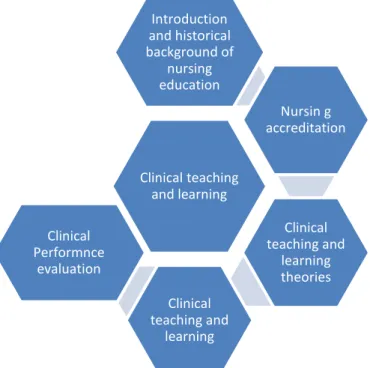
The chapter begins with a brief background of nursing education globally that reflect the progress of nursing education and the related developments with a special focus on clinical nursing education. This is followed by the theoretical underpinnings of the study which have guided the process of inquiry to answer the research questions and to develop a Formative Assessment Framework (Figure 2.1)
Figure 2.1: Literature Map
Clinical teaching and learning Introduction and historical background of nursing education Nursin g accreditation Clinical teaching and learning theories Clinical teaching and learning Clinical Performnce evaluation
The literature map highlights how nursing education came into existence emanating from the historical background of nursing. It also explains the phases of nursing and nursing education developments to meet higher education requirements and still maintain professional nursing and midwifery standards.
2.2 HISTORICAL BACKGROUND OF NURSING AND NURSING EDUCATION WORLDWIDE
Nursing and nursing education concurrently, have gone through tremendous changes throughout the time man has lived. Irrespective of the tremendous developments that experience internationally and nationally, nursing originates from the concept of caring which has been there throughout human history. Important to note, is the fact that nursing and medicine developed concurrently for many centuries (Sellew and Nuesse, 1946). Although modern scientific medicine developed rapidly, nursing development lagged behind. Bedside care was of poor quality though the medical profession appeared to be developing. The different challenges in the hospitals of the world such as lack of good bedside care for patients and the advent of the humanitarian movement which revealed and published the sufferings of the poor, the sick, children and many more led to developments in the caring aspect as well (Sellew and Nuesse, 1946). Therefore, the modern profession of nursing founded by Florence Nightingale became a response in order to improve the caring of the poor, the sick, the children and the wounded. The public recognition to her devoted services in the army hospitals, led to a contribution of money for her to establish a school for nurses (Seymer, 1960). The aim was to train nurses for various hospitals in need of nursing services upon completion.
Thus, the opening of the Nightingale school in 1860 marks the beginning of modern nursing and nursing education era. Marked progress existed in nursing education in many places where nurse training was non-existent under the influence of the Nightingale nurses (Seymer, 1960).
In pursuit of new ideas was Florence Nightingale who believed that nursing education should take place outside the hospitals (Scheckel, 2009). The rationale was that nursing students needed to learn more theory in anatomy and physiology, surgery, chemistry, nutrition, sanitation and professionalism (Stewart, 1943 cited in Scheckel, 2009). Several nursing leaders also continued to believe in university education for nurses and persistently advocated for baccalaureate nursing education. Therefore, in 1909, a new nursing program began at University of Minnesota (Scheckel, 2009). Scheckel (2009) further states that after the initial nursing program, efforts by the
National League for Nursing (NLN) to redesign the diploma nursing programs took place. Since then, many nursing schools followed the university system nationally and internationally. These developments trickled down to all countries including Africa though literature is silent on how nursing education developed in most African countries. The number of hours for theory and clinical practice varies from one institution to the other. The new developments led to the advent of accreditation organizations at national level for monitoring purposes.
2.3 NURSING EDUCATION ACCREDITATION
Advancement in nursing programs led also to the development of accreditation boards to for quality nursing care and nursing programs. Accreditation refers to the review by an external accreditation body to determine whether the college or school of nursing is meeting the professional standards (Scheckel, 2009). It is a means of fostering quality improvement through the feedback given after accreditation process. In measuring the quality of nursing programs, the accreditation body nationally establishes standards or criteria for use in this process. These standards consider how the school is fulfilling its mission, philosophy, curriculum and to what extent the qualifications of the nursing faculty facilitate the preparation of the proper nurse graduate (Keating, 2006; Quinn and Hughes 2007; Scheckel, 2009). Different countries have different accreditation boards but with one common agenda, to monitor and approve nursing education. The nursing education programs prepare graduates to practice professionally and meet the required standards and competencies. In Malawi, the Nurses and Midwives Council (NMC) is the regulatory body of nursing and midwifery education, training, practice and professional conduct of nursing and midwifery personnel. The NMC opened in 1966 under an Act of Parliament and Cap36:02. However, currently, the nursing council operates under the Nurses and Midwives Act No.16 of 1995. The overall objective of the Council is to develop, maintain, monitor and evaluate the nursing and Midwifery nursing education. It also regulates and controls nursing and midwifery profession in order to improve the health status of people in Malawi.
2.4 NURSING CURRICULA
Many authors have defined curriculum in different ways. Doll (cited in Billings and Halstead, 2012) defined it as the formal and informal content and process through which learners gain knowledge, understanding and develop skills that alter attitudes, appreciations and values. In education, Quinn and Hughes (2007) describes curriculum as a plan or design in which an education provision is based on. It encompasses all the educational elements such as learning outcomes, the subject matter, teaching and
relate to each other. From this premise, a nursing curriculum is the overall nursing education program reflecting the schools mission, philosophy, course of study, and outcomes of learning and methods of program evaluation (Quinn and Hughes, 2007; Scheckel, 2009; Doll, 2012). To date, different nursing curricula exist. However, common to all curricular are the four basic components namely, learning outcomes, subject matter, teaching and learning processes and assessment (Quinn and Hughes, 2007). What differs is the point of emphasis based on the models that the institution has adopted. During the Nightingale era, the curriculum aimed at developing character traits and habits for a service to the hospital (Tomes, 1984 cited in Keating, 2006). As such, the number of theoretical hours and practice were depended on the needs of the hospital the schools were affiliated. The program length varied from one year to three years. In all the nursing schools, lectures and practice were common but the length, quality and arrangement varied. In some schools, the proportion of theoretical hours was larger than clinical and vice versa in other schools. Thus, in response to these differences, a standard curriculum developed in 1913 by the American National League of Nursing to guide those responsible for nursing schools (Symer, 1956; Keating, 2006). This was in form of recommendations in book form and the reaction of others to this second curriculum led to a series of reviews in 1917, 1927 and 1937 with input from a smaller group to a broader group in the later developments (Keating, 2006). Upon each review, the curriculum book increased the number of classroom hours while decreasing the recommended hours for patient care. Keating (2006) further states that between 1950 and 2000 nursing curricular transformation occurred tremendously with the influence of accreditation processes. The quality of nursing programs became an important issue. The basic principles behind accreditation were and still are to ensure that the graduate nurse has the right professional status and interests legally safeguarded and to protect the public from semi or untrained nurse-midwives (Seymer, 1956; Keating, 2006; Scheckel, 2009).
With the ongoing developments, discoveries of new theories and curriculum models of teaching and learning in general education and nursing education occurred. Therefore, the next section will briefly present the literature reviewed on nursing education theories and models currently in use in nursing education.
2.5 CURRICULUM MODELS
Because of the advances in technology, nursing knowledge, new trends and issues in patient care, a variety of nursing curriculum models are in use today. Some of the models include the Stenhouse’s process model of curriculum, the Beattie’s fourfold model and the behavioural objectives model of curriculum also known as a competence-based curriculum (Quinn and Hughes, 2007). However, in this study the discussion centers on a competence-based curriculum because of its use at the college. Institutions have a mandate to use a combination of models and are not limited to one model.
2.5.1 Competence-Based Curriculum
According to Tyler (cited in Quinn and Hughes, 2007) education is a means of transforming behaviour of human beings in terms of thinking, feeling and overt action. In this model, curriculum designers ought to answer the following four questions during the development of this curriculum:
What educational objectives should the school seek to attain? How learning experiences be selected to attain the objectives?
How learning experiences should be organised for effective instruction?
How the effectiveness of the learning experiences be evaluated in the learner?
In summary, the cornerstones of the model derived from the above questions include learning outcomes, content, methods and evaluation with emphasis placed on achievement of objectives. Kouwenhoven (2009) further asserts that in this model of curriculum the emphasis is on developing competent learners through the acquisition of specified competencies. Quinn and Hughes (2007) further postulate that the elements of a curriculum relate to each other in that curriculum development begins with the formulation of learning outcomes (see Figure 2.1).
In a competence-based model, the learners’ behavioural outcomes or competencies become the point of emphasis. Billings and Halstead (2012) assert that shifting the focus from the teacher and teaching, learner centered curriculum focuses on student learning needs. Furthermore, Billings and Halstead (2012) state that in a competence-based curriculum, understanding the learning background, experience of the students to enroll in the program, identifying how the courses fit into the overall program outcomes and competencies becomes core prior to course design. Thus, learning objectives and competencies should be according to the different levels of learning domains: cognitive, affective and psychomotor domains. In accordance to the different levels of academic
to clinical practice and be able to guide performance evaluation. Faculty are held responsible for quality learning experiences and have to consider strategies that facilitate effective learning even when student numbers increase (Burruss and Popkess, 2012). Student competences become the subject matter theoretically as well clinically. As such, in a competence-based curriculum, the learner competences become the subject matter. Thus, it dictates the teaching and learning environment for theory-practice integration.
LEARNING OUTCOMES
Subject matter
Teaching and learning experiences
Methods of evaluation
Figure 2.2: Components of a Competence-Based Curriculum (Quinn and Hughes, 2007)
In this case, at the college under study, faculty have shown lack of sensitivity to students’ learning environmental needs. The under-utilization of the skills laboratories, the use of the skills laboratories hours for theory and clinical placements away from the teaching institutions have shown that there is partial commitment to curriculum requirements and expectations on students learning environment.
In summary, nursing education curricula remain dynamic. Its response to the various trends and issues affecting the consumer of nursing will continue to influence the nature and implementation of nursing curricular today and in future. In order to produce a competent nurse-midwife for the ever-changing health care system teaching and learning environments needs improvement. . The section that follows describes the environment for clinical teaching and learning in a competence-based curriculum and the theoretical underpinnings adopted in the study for the development of a Formative Assessment Framework.
2.6 NURSING EDUCATION THEORIES OF CLINICAL TEACHING AND LEARNING A number of nursing