Asia-Pacific Society for Computers in Education
1
THE UTILIZATION OF DATA ANALYSIS TECHNIQUES IN PREDICTING STUDENT PERFORMANCE IN MASSIVE OPEN ONLINE COURSES (MOOCS)
GLYN HUGHES
School of Computing and Mathematical Sciences, Liverpool John Moores University, Byrom Street
Liverpool, L3 3AF [email protected]
CHELSEA DOBBINS
School of Computing and Mathematical Sciences, Liverpool John Moores University, Byrom Street
Liverpool, L3 3AF [email protected]
The growth of the Internet has enabled the popularity of open online learning platforms to increase over the years. This has led to the inception of Massive Open Online Courses (MOOCs) that enrol, millions of people, from all over the world. Such courses operate under the concept of open learning, where content does not have to be delivered via standard mechanisms that institutions employ, such as physically attending lectures. Instead learning occurs online via recorded lecture material and online tasks. This shift has allowed more people to gain access to education, regardless of their learning background. However, despite these advancements in delivering education, completion rates for MOOCs are low. In order to investigate this issue, the paper explores the impact that technology has on open learning and identifies how data about student performance can be captured to predict trend so that at risk students can be identified before they drop-out. In achieving this, subjects surrounding student engagement and performance in MOOCs and data analysis techniques are explored to investigate how technology can be used to address this issue. The paper is then concluded with our approach of predicting behaviour and a case study of the eRegister system, which has been developed to capture and analyse data.
Keywords: Open Learning; Prediction; Data Mining; Educational Systems; Massive Open Online Course; Data Analysis
1. Introduction
The evolution of technology, and ease of communication through the Internet and World Wide Web (WWW) has dramatically altered the landscape of teaching and learning in higher education (Kop, 2011). In its infancy, the first iteration of the WWW (Web 1.0) was simply a place for users to gather information, from static web pages, to supplement their learning and offered very little communicative capabilities (Nath, Dhar, & Basishtha, 2014). However, the inception of Web 2.0 provided a new platform where users could read, write, modify and update content online (Nath et al., 2014). This development enabled users to become active participants of the web and has allowed
technologies and websites, such as blogs, YouTube and wiki’s to be at the forefront of the user’s learning experience (Duffy, 2008). As technology develops and more devices become connected, the convergence of people, process, data and things, will enable the Internet of Everything (IoE) to be the next trend of the Internet’s evolution (Bradley, Barbier, & Handler, 2013). This rapid growth has created a $14.4 trillion market and has seen approximately over 10 billion devices being connected to the Internet, with this number set to increase to 50 billion by 2020 (Bradley et al., 2013). As such, the IoE will enable educational institutions to be available to people who previously didn’t have access and will improve a number of issues, including 1) access to content by addressing scalability issues so that course material and recordable instructions can be available on any device, at any time, 2) improved quality of learning by enabling people to access and study material at their own pace and 3) the ability to access proactive content, free materials and customization of curriculum (Bradley et al., 2013). This shift of instant connectivity has produced a new type of student who now have the option of learning online, without having to formally attend an institution, and who are experiencing education in different ways. This phenomenon is known as e-learning and can be described as a new framework for education whereby considerable amounts of information, which describe a variety of teaching–learning interactions are endlessly generated and ubiquitously available (Félix Castro, Vellido, Nebot, & Mugica, 2007).
One outcome of this improved connectivity are massive open online courses (MOOCs), which are quickly developing as a popular way for a wide-range of communities, who may not have access to an institution, to become involved in online distance education (Clarà & Barberà, 2013). Through such high-profile platforms, including Coursera, EdX and Udacity, free courses have become available from a range of exclusive universities, which is altering the way people are undertaking learning (Jordan, 2014). Furthermore, the benefit of instantly accessing high-quality educational material, regardless of location and educational background, has attracted a large range of students onto these courses (Balakrishnan & Coetzee, 2013). As such, the development of large-scale MOOCs has increased over the years, with enrolment on such courses averaging around 33,000 students (Jordan, 2014). Nevertheless, whilst enrolment is quite high, only 7.5% of students complete their course, with the main reason for withdrawal being attributed to poor time management skills (Jordan, 2014; Nawrot & Doucet, 2014). In order for MOOCs to have an impact in the educational sector maintaining and supporting student engagement is a necessity (Ramesh, Goldwasser, Huang, Daume, & Getoor, 2013). In order to alleviate this issue, to a certain extent, data analytic techniques can be used to study student engagement with their course in order to identify and predict trends about a student’s performance. This is important as engagement is positively linked to academic performance (Carini, Kuh, & Klein, 2006). By providing this information to the student at an early stage it is hoped that this will serve as a motivational tool to improve. As described by Simpson (2006), predicting student success in distance education is particularly important for new students as the pre-course information is sometimes inadequate and withdrawal often occurs very early. Measures
such as sex, previous educational qualifications and age, have been used in logistic regression analysis to identify a new student’s chance of withdrawing (Simpson, 2006). However, analysis of engagement with course material, via Learning Management Systems (LMSs), offers a considerable amount of more information that is very valuable for analysing behaviour and predicting success (Romero, Espejo, Zafra, Romero, & Ventura, 2013).
Globally, data has increased substantially over the past 20 years, with hundreds of Petabytes (PB) being processed monthly (M. Chen, Mao, & Liu, 2014). This growth of information can be attributed to the medium of Web 2.0 services, the IoE, social networks, medical applications, online education services and cloud computing; data is everywhere and in every sector (M. Chen et al., 2014). As such, the term ‘big data’ is often used to describe datasets that have grown in size well beyond Exabyte’s and Zettabyte’s. These datasets reach a point where the ability to capture, manage, and process such items, within a reasonable amount of time, cannot be achieved with commonly used software tools (Kaisler, Armour, Espinosa, & Money, 2013; Xindong Wu, Xingquan Zhu, Gong-Qing Wu, & Wei Ding, 2014). This type of data can be characterised by the four Vs – volume, variety, velocity and veracity. Volume relates to the amount of data that an organisation can access but not necessarily own (e.g. social media and IoE). Variety pertains to the richness of the data that has been obtained from multiple sources (text, images, video, audio, etc.). Velocity is the speed at which data is created, streamed and aggregated, whilst veracity relates to the accuracy of the data (Kaisler et al., 2013; O’Leary, 2013). In terms of MOOCs, a variety of information can be gathered about a student to indicate engagement with their course, including engagement with online course materials, communication with the online community by posting in forums and asking and answering questions or by watching lectures and taking quizzes, without such interaction (Ramesh et al., 2013). This data can then be used to profile them and predict their performance. As these courses gain popularity a concern in this new era of data generation and open learning is the rapid extraction of vital and valuable information from such big datasets that can be used to the benefit of people and institutions (M. Chen et al., 2014). However, the application of data analysis and mining techniques can be used to overcome this problem. This area brings together the fields of statistics, pattern recognition and Machine Learning (ML) to extract knowledge and detect patterns from complex sets of data (Félix Castro et al., 2007). In the case of MOOCs, such techniques can be used to analyse student generated data in order to find patterns of system usage and behaviour, which can be used to indicate performance and predict trends (Félix Castro et al., 2007). As such, educational data mining (EDM) has emerged as a field in itself to resolve such research issues (Romero & Ventura, 2010).
With the advent of smarter devices, technology has become instrumental in the development of open learning and is widening the availability of such services to people who may have been previously restricted from the chance to enhance their education. As enrolment on MOOC’s increases and students generate more data, the pool of information that is available to obtain knowledge is becoming richer. This paper explores
the impact of technology on opening learning and examines how data analytics can be used to identify and capture relevant data about student performance and engagement to predict trends.
2. Background
The landscape of our environment is becoming more and more digital, with online learning and MOOCs becoming increasingly popular. Nevertheless, despite their benefits and popularity, completion levels are low, which can be attributed to the openness of the environment. In one sense, the far-reaching nature of such courses is an advantage; however, it is also a hindrance as almost anyone can enrol and the consequences for failing are minimal (Balakrishnan & Coetzee, 2013).
In order to increase the completion rates of such courses requires insight into potential issues that could hinder a student’s success of finishing their course. However, pinpointing concerns, in a timely manner, becomes harder in an online environment, where the student could potentially be on another continent. In this instance, advanced techniques are required that are able to analyse a student’s online presence and engagement with their course in order to predict their performance so that issues can be flagged up in a timely manner.
2.1. Student engagement and performance in MOOCs
MOOCs attract a wide variety of students, from all over the world and who all have different learning styles. As such engagement, maintaining a level of interest and tailoring the learning environment is more difficult (X. Chen, Barnett, & Stephens, 2013). As such, in this type of online learning environment, engagement cannot be observed in person and thus becomes more challenging to recognise and measure (Ramesh et al., 2013). For instance, in a classroom setting, if a student is struggling, they have the benefit of building up relationships with their lecturers, who can encourage and talk to them personally about their issues. Furthermore, traditional monitoring mechanisms, such as registers, can be used to pinpoint low attendance, which is linked to poor motivation and performance retention (Field, 2012; Muir, 2009). As such, issues that could contribute to weak performance and that could be monitored and dealt with in an institution cannot be employed in a distance learning environment. However, by monitoring their online presence, engagement with course materials and online communities could offer an insight into a student’s behaviour, which could be used to predict their performance and probability of completion.
Due to the large numbers of participants and complex nature of such courses the definition of participation and engagement has led to a number of frameworks (Bayne & Ross, 2014). For instance, the ‘funnel of participation,’ as described by Clow (2013), attempts to conceptualise the idea of participation into four steps of awareness, registration, activity and progress. The greatest concentration of students is at the first stage of awareness; as people move through each stage participation is reduced until only a small number progress and complete the course. In contrast, Kizilcec et al. (2013)
categorise learners into patterns of engagement (completing, auditing, disengaging and sampling). Completing students mirror traditional classroom based learners and complete the majority of their assessments; auditing learners prefer watching video lectures and completed their assessments infrequently; disengaged students start off strong at the beginning and then decrease their engagement as the course progresses; whilst sampling learners briefly explore the material and preferred to watch videos at the beginning of the course for only a couple of assessments (Kizilcec et al., 2013). Another approach, posited by Hill (2013), offers a similar method of classifying students into five categories (shows, observers, drop-ins, passive participants and active participants). In this study, no-shows appear to be the largest group, with people registering but never logging back in to take part. A trend that has occurred is that, all of the groups witnessed a decline in engagement as the weeks progressed (Hill, 2013). Meanwhile, Milligan et al. (2013) use a similar approach of three categories of participation (active, lurking and passive). In their study, ‘lurkers’ seemed to be the largest category of engagement. These types of learners did follow the course but didn’t actively engage with other student’s. They preferred to learn independently without communication with the community, such as with the use of blogs or forums. It can therefore be agreed that in order to profile engagement, interaction with course material is vital in understanding the behaviour patterns of students. Even though people might not interact with the community their use of course material still offers a glimpse into their uptake of the course. Furthermore, other avenues, such as blog posts and social media interaction, also pose another interesting line of enquiry to pursue.
Many studies have been undertaken that have explored the use of such variables to determine engagement and performance. For instance, Balakrishnan and Coetzee (2013) used measures including 1) total time spent watching lecture videos, 2) number of threads viewed on forums, 3) number of posts made on forums and 4) the number of times the course progress page was checked within Hidden Markov Models (HMMs) to study student behaviour and retention in MOOCs. This approach was successful in predicting retention and offered an interesting insight into patterns of behaviour. For instance, students who rarely or never check their progress, watch no lectures and don’t post/view forums are more likely to drop out (Balakrishnan & Coetzee, 2013). In other works, Anderson et al. (2014) have developed a taxonomy of behaviour by investigating the role that forum participation plays to the course and by also examining the behavioural patterns of high and low achieving students. This work separated students into different engagement styles (viewers, solvers, all-rounders, collectors and bystanders) by determining the number of assignment questions they attempted and the lectures that they have watched. Furthermore, their final grade is proportional to their activity, with increased interaction with the course (completed assignments, quizzes, viewed lectures and forum threads) all contributing to a better overall score (Anderson et al., 2014). This work is also of interest as they have tried to increase participation with the introduction of badges as an incentive to participate, with more interaction earning a student more
badges. The results concluded that “making badges more salient produced increases in forum engagement” (Anderson et al., 2014).
MOOCs are still in their infancy and as with any growing market, they need to ensure that they employ means to maximise their existence in the long-term by understanding their customer-base (Nawrot & Doucet, 2014). Despite their popularity and extraordinary enrolment rates, their high drop-out rate is problematic in ensuring this longevity (Nawrot & Doucet, 2014). In order to be a viable method of learning it is therefore, vital to increase this completion rate by understanding student engagement in order to minimize dropout rates (Ramesh et al., 2013). As such, interaction with their course in crucial in understanding student behaviour so that measures can be employed to reduce the occurrence of dropping out.
2.2. Data analysis techniques in predicting student performance in MOOCs
Investigating a student’s online behaviour and course interaction to predict performance requires sophisticated algorithms and data analysis techniques. One thread of research that is promising in this area is the application of data mining (DM) techniques that are able to turn large datasets into useful information and knowledge (Hanna, 2004). Data is being created at a phenomenal rate and can now be stored in many different types of databases, with data warehousing technologies, including data cleansing, integration and on-line analytical processing (OLAP), becoming increasingly popular (Hanna, 2004). This type of technology is especially useful for mining educational data as it is known for its universality in many applications and for its high performance (Mansmann, Ur Rehman, Weiler, & Scholl, 2014). Such data warehouses are usually comprised of five layers (see Figure 1).
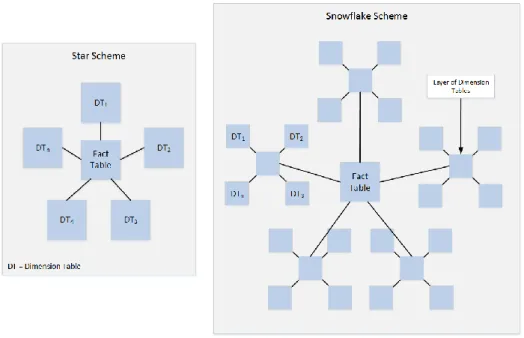
In this architecture, raw data is obtained and processed through the ETL (Extraction, Transform, and Load) layer to ensure that its format is compatible before it can be stored in the warehouse. Within this layer, ETL is composed of three stages that are concerned with extracting, transforming and loading data. The Extract stage is concerned with low level extraction of data from many data sources. These may include databases from numerous commercial vendors (i.e. Microsoft, Oracle, DB2, etc) or web services, such as RESTful or WSDL based. This data can also be in many formats, including flat file CSV’s (Comma Separated File) or semi-structured data such as eXtensible Markup Language (XML). Transform refers to a wide ranging set of processes that performs various data operations upon data series such as sorting, grouping, merging and pivoting data. Typically the aim of this process is to separate numerical statistics from their textual descriptions. This facilitates the eventual loading of data into structures known as Star/Snowflake Schemas (see Figure 2).
It is these schemas that form the basis of any Data Warehouse. In Figure 2 we firstly see the Star Schema in which a single Fact Table containing all numerical and summative values resides. Any number of dimensions then describes each row in the Fact Table. Dimensions typically represent (in the scope of education) Dates, Courses, Modules, and Topics etc. The Snowflake Schema is a logical extension that allows for greater
granularity of querying i.e. instead of just Dates, they can be decomposed into Years, Semesters, Weeks, Days etc.
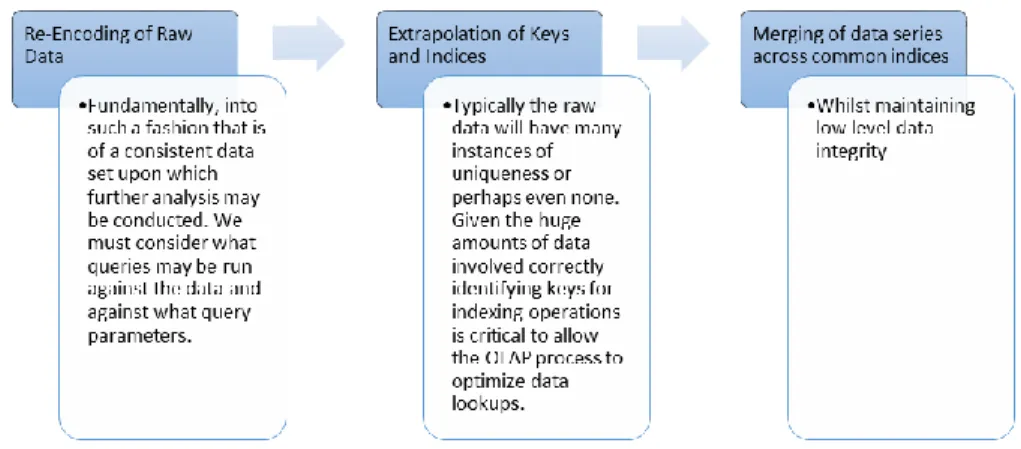
In such a system, raw data can be obtained from a range of sources. Interaction with course content, such as lecture videos watched, tests taken and forum views/posts, can be recorded, as well as personal details (e.g. name, age, gender and past qualifications) (Hanna, 2004; Mostow et al., 2005; Romero et al., 2013). Additionally, activity on blogs, wiki’s and social media sites are a place where self-directed learners can advance and support their learning and provide a wealth of behavioural data about an individual (Kop & Fournier, 2011). In such an environment, analysing such a heterogeneous set of information requires advanced techniques that can transform this set of raw data into knowledge that can be used to predict performance and to potentially prevent such dramatic drop-out figures. In summary, this process requires data to be encoded, extrapolated and merged into a set of common indices (see Figure 3).
Once stored, data analysis techniques (OLAP, data mining, etc.) can be employed to obtain knowledge from this information before it is visually communicated to the user (in this case the student) (Mansmann et al., 2014). Whilst not restricted OLAP, data mining is a common way of categorising data by identifying patterns that a data series exhibits. The actual methods employed stem from a multidisciplinary arc of computer science and mathematical algorithms. There are several areas that data mining can be employed: a) Anomaly Detection: Concerned with isolating seemingly erroneous records either for
the purpose of anomaly research or correction of errors in the original data series. For example, there are students who defy all preconceptions about the methods of learning yet still succeed or vice versa (Chandola, Banerjee, & Kumar, 2009).
b) Dependency Modelling: Concerned with linking knowledge about one data series with knowledge of another. For example, do students spend the same amount of time in study regardless if it be private study or direct contact? (Giraud-Carrier & Povel, 2003)
c) Clustering: Perhaps the most significant, is concerned with normalising a wide data series into groupings that typically have some association with the mean metric of the group to which they belong (Jain, 2010).
d) Summarization: Refers to the process of summarizing the incoming stream of data or further analysis by transforming raw data into information. For example we are typically more concerned with the Mean and Standard Deviation, the Minimum and Maximum etc. of a set of student’s metrics rather than the raw data itself, though anomalies do need to be examined, as per Anomaly Detection above (Maimon & Rokach, 2010).
As it can be seen, as number of techniques can be employed to predict student performance in an online community. The following sections present an overview of two interesting lines of enquiry, namely machine learning and social media analytics, which utilise varies data mining approaches.
2.2.1 Machine learning
As previously discussed, the prevalence of data generation is phenomenal and can be collected from a range of sources, thus producing Exabytes of information regularly. However, such streams of information are often unstructured or semi-structured and come from a variety of sources, which makes them more difficult to analyse (Jain, 2010). As such, “the increase in both the volume and the variety of data requires advances in methodology to automatically understand, process, and summarize the data” (Jain, 2010). This type of data is a fairly recent development in the world of data storage, with the notion of the NoSQL database (Not Only Structured Query Language). These databases do not exclusively rely on the tried and tested models of database design, dating from the 1970s. Instead, they utilize the massive increase in hardware performance to run rapid search/sort and filter algorithms on linear streams of data known as name-value-collections. Examples of such systems are frequently associated with big data analysis and serve to complement rather than replace typical SQL database systems. As such, the area of Machine Learning (ML) is a popular area of research that can be applied to such heterogeneous sets of data to find patterns for predictive modelling, i.e. training data is used to predict the behaviour of the previously unseen test data (Jain, 2010). This type of learning can either be supervised (classification), where the data is labelled to determine how powerful the algorithm is at learning the solution to the problem, or unsupervised (clustering), where the data is unlabelled and the system forms natural groupings (clusters) of patterns automatically (Duda, Hart, & Stork, 2000).
Kloft et al.’s (2014) work uses support vector machines (SVM’s) in order to predict when during the course a student will leave. Their work used clickstream data from 3,475,485 web logs from page and lecture video views to train the classifier. The work achieved a moderately good accuracy rate of approximately 72% at the beginning of the course and this steadily improved over the duration. In other works, Ramesh et al. (2014)
use probabilistic soft logic (PSL) to predict whether a learner will complete assignments and quizzes, scoring more than zero, and whether the learner will finish the course. This approach also produced moderately good accuracy rates of 72% and greater and illustrated that people who were engaged at the start and middle exhibited passive behaviour, whilst at the end they become more active (Ramesh et al., 2014).
Jiang et al. (2014) use logistic regression to predict performance using a mixture of a student’s achievement in the first assignment and social interaction within the MOOC community. This work achieved an accuracy of 92% in predicting whether a student achieved a distinction or normal certificate and achieved 80% accuracy in predicting whether someone achieved a normal certificate or didn’t complete (Jiang et al., 2014). In other works, Romero et al. (2013), have developed a data mining tool for Moodle that compares the performance of data mining techniques, including statistical methods, decision trees, rule and fuzzy rule induction methods, and neural networks, to predict a student’s final mark. This work used data from quizzes, assignments and forums and achieved a very moderate accuracy of 65%.
In contrast, Ezen-Can et al. (2015), have used an unsupervised clustering approach to gain an insight into the structure of forum posts in MOOCs. The k-medoids algorithm has been used to gain an insight into conversations that learners have on discussion forums. This is an important step in building systems that can automatically understand the topic of the discussion in order to provide adaptive support to individual students and to collaborative groups (Ezen-Can et al., 2015). The literature demonstrates that whilst it is possible to predict student performance from their interaction with course content further work is required that uses more and different students’ attributes as inputs (Romero et al., 2013).
2.2.2 Social Media Analytics
Social media sites offer a plethora of information about a user, their behaviours and their preferences that can be collected and analysed. Such outlets are now so pervasive that 91% of adults use social media, and spend more than 20% of their time on these sites, (Fan & Gordon, 2014). Additionally, Twitter has 255 million active users who collectively send 500 million tweets per day, whilst Facebook has 1.01 billion mobile monthly active users who have created 50 million pages (Bennett, 2014). In order to capitalize on this growth, many companies employ social media analytics to extract useful patterns and intelligence from this data (Fan & Gordon, 2014). One key technique in this area is sentiment analysis that can uncover and reveal a variety of behaviours and attitudes of a learner by using text analytics, computational linguistics and natural language processing to extract emotion or opinion on a subject (Fan & Gordon, 2014; Wen, Yang, & Rosé, 2014).
In one such approach, Wen et al. (2014) have used data from Twitter to study drop out behaviour across three MOOCs (teaching, fantasy and Python courses). In order to achieve this, posts about the specific courses, the lecture topic and assignments were identified and used in the analysis. The results determined that there was a significant
correlation between the mood in the posts and the number of students who drop the course (Wen et al., 2014). In other works, Kop and Fournier (2011) have used blog posts, Twitter and Moodle participation to identify activities and relationships between learners on the Personal Learning Environments, Networks and Knowledge (PLENK) program; a free course that lasted 10 weeks with 1641 registered participants. Using such data, the findings illustrated that over this period, 900 blog posts and 3,104 Tweets were generated; however, regular contributions were only made by 3% of the group (approximately 40-60 people). The largest group of people were silent and did not produce artefacts nor participate extensively in discussions but they did feel engaged with the course (Kop & Fournier, 2011). This study is important as it “provided some clarity on the nature of the interactions between course participants, resources and networks,” whilst highlighting how analytics can be used to understand learners in a distributed, open networked environment (Kop & Fournier, 2011).
In other works, Koutropoulos et al. (2014) have analysed the Twitter stream of a six-week MOOC and have illustrated that positive emotions were displayed throughout the course and that content was mostly produced during the first few weeks. Furthermore, Twitter itself seems to have been used as an outlet to engage in community learning as participants mainly tweeted to 1) share links containing news and resources, 2) comment about participation or to reflect on learning or to 3) comment on the live sessions of the course. As such, this data source seems to have become a medium for troubleshooting and broadcasting your activities, outside of the course (Koutropoulos et al., 2014). As it can be seen, social media provides an ideal and open platform to analyse the behaviour of learners, outside of the course environment, and provides vital information about behaviour and sentiment that should be included when predicting performance. This is useful for predictive modelling where disengaged students can be targeted to ensure that drop-out rates do not increase.
2.3. Visualisation of data
An often overlooked area of data analysis is the conversion of data into readily readable formats. Many learning analytics solutions are “pedagogically neutral”, and do not feature or support formative feedback and simply solely address how educators monitor and provide summative feedback to learner (Alabi, Code, & Irvine, 2013). Furthermore, many solutions produce raw data in fantastically un-tabulated/ungrouped data series. However, careful analysis of these results need presentation, which typically involves transforming their raw data into visually appealing graphs and charts. As such, “Business Intelligence Dashboards” have become a key component in performance management and are a tool to visually summarise large amounts of data (Watson & Wixom, 2007). Many implementations exist that can either perform the entire ETL > OLAP > Reporting process or provide front ends to connect to existing OLAP data. Furthermore, such interfaces can display the relevant data to students to indicate their key performance indicators (KPIs) (Golfarelli, Rizzi, & Cella, 2004). For instance, Filva et al.’s study
(2014), use Google Analytics to visualise data about student’s behaviour in accessing Moodle content. Data was displayed in a series of graphs, within the dashboard, to illustrate their interaction with the course material. Similarly, Alabi et al. (2013) have visualised learner’s trace data as a timeline that is intended to be tool to provide formative feedback in order to improve educator efficacy and timely feedback.
In order to effectively communicate a learner’s performance close attention is required in organising and displaying such information so that it is useful. If data is not organised efficiently then it risks becoming meaningless and as a tool to improve performance is useless.
3. An approach to learner predication in MOOCs
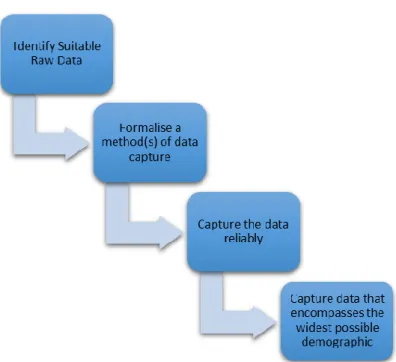
In order to predict a student’s performance to ascertain their probability of completing a MOOC we first need to address what information is required. To this end, it is necessary to conduct a series of steps to formalise information and the data from which it derives (see Figure 4).
During this process, identifying suitable data is a human-driven judgement. However, drawing on the literature, it is safe to assume measures such as sex, previous educational qualifications, age and social media presence, which have been used in previously, are a
good starting point (Koutropoulos et al., 2014; Simpson, 2006). It is important during the next stage to formalise a method of data capture that is neither controversial ethically, or problematic conceptually. In any system that collects and utilises personal data privacy concerns arise and questions are raised, including “Who keeps and who owns the record of personal preferences? Can individuals view their own records, and what right of response do they have if that information is wrong? What happens if this information is released deliberately or is stolen in a security breach?” (Ashman et al., 2014). These are important points to consider in any system and when addressing such issues it is important to protect privacy by restricting access to data by adding certification or access control to the data entries and by anonymizing data such that sensitive information cannot be pinpointed to an individual (Xindong Wu et al., 2014). A related issue arises in the next stage of data capture as information must be collected reliably to ensure that the mechanisms through which we undertake this collection are secure and deliver unmolested results. Furthermore, in striking a balance between privacy and data, it is also important to capture data that encompasses the widest possible demographic to ensure that we are sampling the breadth of samples as to not distort the results. However, in the experience of the authors the above is rarely likely to be total in its participation. Indeed, how does one measure a student who doesn’t exist in terms of the metrics defined? Nevertheless, the following approach assumes total engagement with the measured metrics.
3.1. Are we big data?
The authors at this stage avoid the term big data for the purposes of this investigation. Big data is a moniker? When is something broad enough or deep enough to warrant the title “big”? When is data disparate enough to warrant analyses that make it “big”? As such, Big Data has complicated practical and ethical considerations. For example, if we are to measure every aspect of a student’s engagement a course, academically and otherwise then the data collected could quite easily be misused for any purposes. Considering the aim is to support student learning by identifying trends, positive or negative there is only so much that can be done to anonymise the origins of the data. Regardless of what data we capture from what sources, there is typically an issue of the format it is in and whether or not it is fit for purpose in its native condition. More often than not, this will not be the case and it must be pre-processed through refactoring / augmentation either before or during the stages of ETL. Extraction is either strait forward or a tedious process of accumulating data. One must be careful in assuming that any large data set is big data. Big data is an umbrella term, meaningless in itself until it is placed in context. How much data in depth does take? How much data in breadth does it take? When does one decide this data is big? These are important points to consider when designing any system that requires data to be analysed to derive meaning.
3.2. Theory driven vs results driven analysis
One might wish to pose hypothetical (theory driven) queries to data analysis systems such as “do students who study topics one by one typically perform better than those students who study their topics side-by-side?” In order to answer such a query, there is a predominantly bottom-up process of data analysis, i.e. turning data into information. First, we must isolate the sets that represent polar groupings (clearly being one case or the other) as well as those that lie in groupings somewhere in between. However, on its own this may not be sufficient to produce any firm conclusions. In a system which must analyse many differing metrics there is a tangible problem of false positives and vice versa. To that end, numerous relatively simple queries should be posed and answered and then their results themselves analysed in a second round of hypothetical querying.
In contrast, one might wish to identify any commonality between students in a given grouping such as “what characteristics (learning or otherwise) do students who excel at practical topics have?” This type of query can be seen as a more top-down process as we already have the result set but now wish to dig into the metrics that define that set. The issue here is one of metrics explosion as we are attempting to turn information back into data and there could be a great deal of data to sift through. It is not unreasonable to see if each approach complements the other with one generating information from raw data and the other deriving the raw data that makes up that information.
3.3. Asking correct questions of suitable data
A critical step in the analysis of any data series is to ensure that we firstly know what we are trying to learn or prove / disprove. Secondly we should be confident that the metrics we are submitting for analysis are actually capable of supporting the derivation of the results we desire. This is not a straight forward requirement as a hypothetical query by its very definition is speculative and the meaning of any results only apparent once they have been generated.
Furthermore the experimental nature of such data analysis may be prone to the aforementioned false positives and vice versa. When we incorporate a new metric to be measured alongside previously stabled metrics we need to carefully monitor that new metric’s effect. It will either contradict, reinforce or have no effect upon the already established patterns.
We must also design in thresholds that cater for anomalies. There will always be a few blocks of raw data that “rock the boat”. When this happens a choice must be made to exclude them from the overall trend or depending on their frequency of occurrence, perhaps produce additional trends so as to have both conventional data patterns and unusual ones.
3.4. Do we like the results?
Ethical issues perpetually make their presence known, not least in capturing student behaviour. In reality, many students many not be overly concerned about monitoring of
their learning activity. That said, a spot check by the authors showed that 100% of students would not like a system to predict their “academic destiny if the outlook was going to be negative”. Rather, do the results of these analysis need to be confined to “need to know” people? Who owns this data; the student or the institution?
3.5. eRegister case study
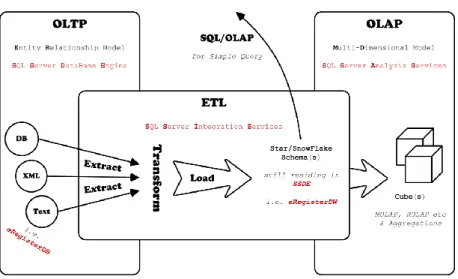
For seven years, the School of Computing Mathematical Sciences, within the Faculty of Technology and Environment, in Liverpool John Moores University has run an attendance monitoring system, aptly named “eRegister”. The system began life as an exploration into the metrics of students in a controlled group. Over the years, it has grown in depth and breadth. The results it has produced have been interesting, often supporting many well established viewpoints of university learning. Figure 5 illustrates how eRegister fits into the grander scheme of OLTP, ETL and OLAP, which all use Microsoft SQL Server as the basis of the data analysis.
Whilst not fitting directly into the MOOC model, the data capture, analysis, reporting model that eRegister represents is easily extendable into many metrics. As mentioned earlier, the issue of data capture is not as nearly problematics than the analysis of that data. In this scenario, eRegister captures all forms of student attendance (i.e. lecture or lab). Various vectors were employed ranging from direct entry (via eRegister produced print outs), to RFID scanning to post logon Windows NT.x scripts.
As data capture takes place, the database utilizes the process defined in ETL to “fill in the blanks” and normalise the data into consistent a series that is process able together as
one result set. The end result is series of reports that describe Course, Module, or Student attendance.
3.6. Evaluation
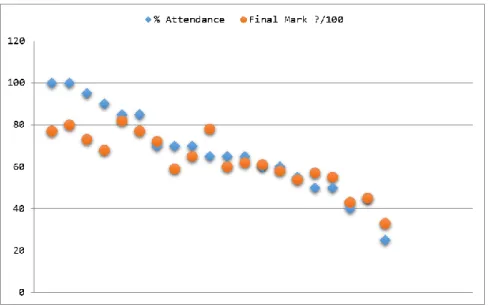
Recent work has involved placing the reported attendance data, alongside assessment data both, in terms of an overall module attendance vs final score as well as trends throughout the year. For example it was found that students attended more during exam revision periods then they did for coursework revision periods but did not necessarily score better in examinations. As Figure 6 illustrates, it was however fairly conclusive that attendance does have a real tangible effect on attainment generally. This information could then be discussed with students.
Ideally students would be able to take a reflective look at their own learning style and make changes should they be needed. By seeing anonymised overall trends they should be able to identify the simplest areas in which to improve or rather the areas which the trends suggest would allow them to perform to higher standard.
By comparing patterns from year to year the system would be able to self-evaluate both its effectiveness in highlighting problems and the student’s attempts (or lack of) to rectify those problems through changes in their approach to learning.
This work and the related concepts are easily transferrable to a MOOC environment, where attendance can relate to engagement with lecture videos and assignments, as opposed to physically attending a lecture. As it can be seen, as engagement declines so
does the student’ final mark. Using this information, data analysis methods can be employed to predict performance when attendance begins to fall, around 70%. This would then be visually communicated to the learner that if their current engagement patterns continue that their marks would suffer so that intervention measures can be utilised before attendance drops dramatically.
4. Summary and future work
The development of the Internet and communication technologies has enabled massive open online courses (MOOCs) to quickly become a new method for engaging a wider community in open learning. Such developments alter the traditional learning institution paradigm into an open and distance approach, whereby there are no entry qualifications and students study “at their own risk” (Simpson, 2006). Nevertheless, in such an environment it is still important to predict a learner’s chance of success as open institutions have a vested interest in retaining students or risk losing funding (Simpson, 2006).
This paper has explored the role that technology can play in open learning to predict a learner’s performance. This is important as identifying “at risk” students before they drop-out has the potential to increase MOOC completion rates. As part of the analysis, various areas have been explored, which can be used to predict performance, namely machine learning and social media analytics. The paper has then been concluded with a case study that explores how current techniques, within our institution, can be adapted to such an environment. The eRegister system supports the notion that high engagement and attendance is reflective of higher marks. Although the system has been used within an institution, it’s relevance within the MOOC community can be seen and as a proof of concept clearly illustrates a need for predictive systems within learning communities.
Future work would consider implementing a version of the eRegister system within a MOOC environment in order to monitor its effect on retention. In this instance, the system could track engagement with course material. A dashboard could also be implemented that would profile an entire course, an individual module, different types of learning activity undertaken as well as individual students so that the lecturer could see how the whole group interacts with the course, as well as the performance/engagement of individuals. For instance, if a student has not been interacting with the course, then the lecturer can be notified so that they can communicate with the student before they disengage completely. Using the system in this way would provide detailed statistics of individuals and would provide an insight into their behaviors.
Biographies
Glyn Hughes has been researching and lecturing at Liverpool John Moores University for 11 years across a broad range of predominantly technical computer science topics. His current research interests are focused upon virtualisation management and data analytics.
He is also an accomplished software developer who has produced numerous business applications
Dr Chelsea Dobbins is a Senior Lecturer at the School of Computing and Mathematical Sciences at Liverpool John Moores University. She received her PhD in Computer Science, focusing on Human Digital Memories and Lifelogging, from Liverpool John Moores University in 2014. Her research interests include Machine Learning, Mobile Computing, Lifelogging, Pervasive Computing, Big Data, Artificial Intelligence, and Physiological Computing.
References
Alabi, H., Code, J., & Irvine, V. (2013). Visualizing Learning Analytics: Designing A Roadmap For Success. In World Conference on Educational Multimedia, Hypermedia and Telecommunications (Vol. 2013, pp. 951–959). Victoria, Canada: Association for the Advancement of Computing in Education (AACE).
Anderson, A., Huttenlocher, D., Kleinberg, J., & Leskovec, J. (2014). Engaging with Massive Online Courses. In Proceedings of the 23rd International Conference on World Wide Web (WWW ’14) (pp. 687–698). New York, New York, USA: ACM Press. doi:10.1145/2566486.2568042
Ashman, H., Brailsford, T., Cristea, A. I., Sheng, Q. Z., Stewart, C., Toms, E. G., & Wade, V. (2014). The ethical and social implications of personalization technologies for e-learning. Information & Management, 51(6), 819–832. doi:10.1016/j.im.2014.04.003
Balakrishnan, G., & Coetzee, D. (2013). Predicting Student Retention in Massive Open Online Courses using Hidden Markov Models.
Bayne, S., & Ross, J. (2014). The pedagogy of the Massive Open Online Course (MOOC): the UK view.
Bennett, S. (2014). Facebook, Twitter, Instagram, Pinterest, Vine, Snapchat – Social Media Stats 2014. Adweek. Retrieved March 3, 2015, from http://www.adweek.com/socialtimes/social-media-statistics-2014/499230
Bradley, J., Barbier, J., & Handler, D. (2013). Embracing the Internet of Everything To Capture Your Share of $ 14.4 Trillion.
Carini, R. M., Kuh, G. D., & Klein, S. P. (2006). Student Engagement and Student Learning: Testing the Linkages. Research in Higher Education, 47(1), 1–32. doi:10.1007/s11162-005-8150-9
Chandola, V., Banerjee, A., & Kumar, V. (2009). Anomaly Detection: A Survey. ACM Computing Surveys (CSUR), 41(3), 1–58. doi:10.1145/1541880.1541882
Chen, M., Mao, S., & Liu, Y. (2014). Big Data: A Survey. Mobile Networks and Applications, 19(2), 171–209. doi:10.1007/s11036-013-0489-0
Chen, X., Barnett, D. R., & Stephens, C. (2013). Fad or Future: The Advantages and Challenges of Massive Open Online Courses (MOOCs). In Research-to Practice Conference in Adult and Higher Education (pp. 20–21).
Clarà, M., & Barberà, E. (2013). Learning online: massive open online courses (MOOCs), connectivism, and cultural psychology. Distance Education, 34(1), 129–136. doi:10.1080/01587919.2013.770428
Clow, D. (2013). MOOCs and the funnel of participation. In Proceedings of the Third International Conference on Learning Analytics and Knowledge (LAK ’13) (p. 185). Leuven, Belgium: ACM. doi:10.1145/2460296.2460332
Duda, R. O., Hart, P. E., & Stork, D. G. (2000). Pattern Classification (2nd ed.).
Duffy, P. (2008). Engaging the YouTube Google-Eyed Generation: Strategies for Using Web 2.0 in Teaching and Learning. The Electronic Journal of E-Learning, 6(2), 119–130.
Ezen-Can, A., Boyer, K. E., Kellogg, S., & Booth, S. (2015). Unsupervised Modeling for Understanding MOOC Discussion Forums: A Learning Analytics Approach. In Proceedings of the International Conference on Learning Analytics and Knowledge (LAK’15). Poughkeepsie, NY, USA: ACM.
Fan, W., & Gordon, M. D. (2014). The Power of Social Media Analytics. Communications of the ACM, 57(6), 74–81. doi:10.1145/2602574
Félix Castro, Vellido, A., Nebot, À., & Mugica, F. (2007). Applying Data Mining Techniques to e-Learning Problems. Studies in Computational Intelligence (SCI), 62(2007), 183–221. Field, S. (2012). Understanding Attendance and Non-Attendance Motivation Amongst First Year
Undergraduate Students. In SOLSTICE & CLTR Conference 2012 (pp. 1–12).
Filva, D. A., Guerrero, M. J. C., & Forment, M. A. (2014). Google Analytics for Time Behavior Measurement in Moodle. In 2014 9th Iberian Conference on Information Systems and Technologies (CISTI) (pp. 1–6). Barcelona, Spain: IEEE. doi:10.1109/CISTI.2014.6877095 Giraud-Carrier, C., & Povel, O. (2003). Characterising Data Mining software. Intelligent Data
Analysis, 7(3), 181–192.
Golfarelli, M., Rizzi, S., & Cella, I. (2004). Beyond Data Warehousing: What’s Next In Business Intelligence? In Proceedings of the 7th ACM International Workshop on Data Warehousing and OLAP (DOLAP ’04) (pp. 1–6). New York, New York, USA: ACM Press. doi:10.1145/1031763.1031765
Hanna, M. (2004). Data mining in the e-learning domain. Campus-Wide Information Systems, 21(1), 29–34. doi:10.1108/10650740410512301
Hill, P. (2013). Emerging student patterns in MOOCs: A (revised) graphical view. e-Literate. Retrieved March 2, 2015, from http://mfeldstein.com/emerging-student-patterns-in-moocs-a-revised-graphical-view/
Jain, A. K. (2010). Data Clustering: 50 years beyond K-means. Pattern Recognition Letters, 31(8), 651–666. doi:10.1016/j.patrec.2009.09.011
Jiang, S., Williams, A. E., Schenke, K., Warschauer, M., & O’Dowd, D. (2014). Predicting MOOC Performance with Week 1 Behavior. In Proceedings of the 7th International Conference on Educational Data Mining (pp. 273–275).
Jordan, K. (2014). Initial Trends in Enrolment and Completion of Massive Open Online Courses. International Review of Research in Open and Distance Learning, 15(1), 133–160.
Kaisler, S., Armour, F., Espinosa, J. A., & Money, W. (2013). Big Data: Issues and Challenges Moving Forward. In 2013 46th Hawaii International Conference on System Sciences (pp. 995–1004). Wailea, Maui, HI, USA: IEEE. doi:10.1109/HICSS.2013.645
Kizilcec, R. F., Piech, C., & Schneider, E. (2013). Deconstructing Disengagement: Analyzing Learner Subpopulations in Massive Open Online Courses. In Proceedings of the third international conference on learning analytics and knowledge (pp. 170–179). Leuven, Belgium: ACM. doi:10.1145/2460296.2460330
Kloft, M., Stiehler, F., Zheng, Z., & Pinkwart, N. (2014). Predicting MOOC Dropout over Weeks Using Machine Learning Methods. In Proceedings of the 2014 Conference on Empirical Methods in Natural Language Processing (EMNLP) (pp. 60–65). Doha, Qatar: Association for Computational Linguistics.
Kop, R. (2011). The Challenges to Connectivist Learning on Open Online Networks: Learning Experiences during a Massive Open Online Course. The International Review of Research in Open and Distance Learning, Special Issue - Connectivism: Design and Delivery of Social Networked Learning, 12(3).
Kop, R., & Fournier, H. (2011). New Dimensions to Self-Directed Learning in an Open Networked Learning Environment. International Journal of Self-Directed Learning, 7(2), 2–20. Koutropoulos, A., Abajian, S. C., DeWaard, I., Hogue, R. J., Keskin, N. O., & Rodriguez, C. O.
(2014). What Tweets Tell us About MOOC Participation. International Journal of Emerging Technologies in Learning (iJET), 9(1), 8–21. doi:10.3991/ijet.v9i1.3316
Maimon, O., & Rokach, L. (2010). Data Mining and Knowledge Discovery Handbook. (O. Maimon & L. Rokach, Eds.) (Second Edi., Vol. 40). Springer New York. doi:10.1002/1521-3773(20010316)40:6<9823::AID-ANIE9823>3.3.CO;2-C
Mansmann, S., Ur Rehman, N., Weiler, A., & Scholl, M. H. (2014). Discovering OLAP dimensions in semi-structured data. Information Systems, 44, 120–133. doi:10.1016/j.is.2013.09.002 Milligan, C., Littlejohn, A., & Margaryan, A. (2013). Patterns of Engagement in Connectivist
MOOCs. MERLOT Journal of Online Learning and Teaching, 9(2), 149–159.
Mostow, J., Beck, J., Cen, H., Cuneo, A., Gouvea, E., & Heiner, C. (2005). An Educational Data Mining Tool to Browse Tutor-Student Interactions: Time Will Tell! In Proceedings of the Workshop on Educational Data Mining, National Conference on Artificial Intelligence (pp. 15–22). Pittsburgh, PA, USA: AAAI Press.
Muir, J. (2009). Student Attendance: Is It Important, and What Do Students Think? CEBE Transactions, 6(2), 50–69. doi:10.11120/tran.2009.06020050
Nath, K., Dhar, S., & Basishtha, S. (2014). Web 1.0 to Web 3.0 - Evolution of the Web and its various challenges. In 2014 International Conference on Reliability, Optimization and Information Technology (ICROIT) (pp. 86–89). Faridabad: IEEE. doi:10.1109/ICROIT.2014.6798297
Nawrot, I., & Doucet, A. (2014). Building Engagement for MOOC Students: Introducing Support for Time Management on Online Learning Platforms. In Proceedings of the Companion Publication of the 23rd International Conference on World Wide Web Companion (pp. 1077–1082). International World Wide Web Conferences Steering Committee. doi:10.1145/2567948.2580054
O’Leary, D. E. (2013). Artificial Intelligence and Big Data. IEEE Intelligent Systems, 28(2), 96–99. doi:10.1109/MIS.2013.39
Ramesh, A., Goldwasser, D., Huang, B., Daume, H., & Getoor, L. (2013). Modeling Learner Engagement in MOOCs using Probabilistic Soft Logic. In NIPS Workshop on Data Driven Education (pp. 1–7).
Ramesh, A., Goldwasser, D., Huang, B., Daume, H., & Getoor, L. (2014). Uncovering hidden engagement patterns for predicting learner performance in MOOCs. In Proceedings of the First ACM Conference on Learning @ Scale Conference (L@S’14) (pp. 157–158). doi:10.1145/2556325.2567857
Romero, C., Espejo, P. G., Zafra, A., Romero, J. R., & Ventura, S. (2013). Web Usage Mining for Predicting Final Marks of Students That Use Moodle Courses. Computer Applications in Engineering Education, 21(1), 135–146. doi:10.1002/cae.20456
Romero, C., & Ventura, S. (2010). Educational Data Mining: A Review of the State of the Art. IEEE Transactions on Systems, Man, and Cybernetics – Part C: Applications and Reviews, 40(6), 601–618. doi:10.1109/TSMCC.2010.2053532
Simpson, O. (2006, August 19). Predicting student success in open and distance learning. Open Learning: The Journal of Open, Distance and E-Learning. Routledge. doi:10.1080/02680510600713110
Watson, H. J., & Wixom, B. H. (2007). The Current State of Business Intelligence. Computer, 40(9), 96–99. doi:10.1109/MC.2007.331
Wen, M., Yang, D., & Rosé, C. P. (2014). Sentiment Analysis in MOOC Discussion Forums: What does it tell us? In Proceedings of the 7th International Conference on Educational Data Mining (EDM 2014) (pp. 130–137).
Xindong Wu, Xingquan Zhu, Gong-Qing Wu, & Wei Ding. (2014). Data Mining with Big Data. IEEE Transactions on Knowledge and Data Engineering, 26(1), 97–107. doi:10.1109/TKDE.2013.109