University of Huddersfield Repository
Concannon, Michael An exploration of how ethics informs physiotherapy and podiatry practice Original Citation Concannon, Michael (2016) An exploration of how ethics informs physiotherapy and podiatry practice. Doctoral thesis, University of Huddersfield. This version is available at http://eprints.hud.ac.uk/30242/ The University Repository is a digital collection of the research output of the University, available on Open Access. Copyright and Moral Rights for the items on this site are retained by the individual author and/or other copyright owners. Users may access full items free of charge; copies of full text items generally can be reproduced, displayed or performed and given to third parties in any format or medium for personal research or study, educational or notforprofit purposes without prior permission or charge, provided: • The authors, title and full bibliographic details is credited in any copy; • A hyperlink and/or URL is included for the original metadata page; and • The content is not changed in any way. For more information, including our policy and submission procedure, please contact the Repository Team at: [email protected]. http://eprints.hud.ac.uk/An exploration of how ethics informs
physiotherapy and podiatry practice.
Michael James Concannon
A thesis submitted to the University of Huddersfield in partial fulfilment of the requirements for the degree of Doctor of Philosophy
The University of Huddersfield Submission date: 1st May 2016
2 Copyright statement
The author of this thesis (including any appendices and/or schedules to this thesis) owns any copyright in it (the “Copyright”) and he has given The University of
Huddersfield the right to use such copyright for any administrative, promotional, educational and/or teaching purposes.
Copies of this thesis, either in full or in extracts, may be made only in accordance with the regulations of the University Library. Details of these regulations may be obtained from the Librarian. This page must form part of any such copies made. The ownership of any patents, designs, trademarks and any and all other intellectual property rights except for the Copyright (the “Intellectual Property Rights”) and any reproductions of copyright works, for example graphs and tables (“Reproductions”), which may be described in this thesis, may not be owned by the author and may be owned by third parties. Such Intellectual Property Rights and Reproductions cannot and must not be made available for use without the prior written permission of the owner(s) of the relevant Intellectual Property Rights and/or Reproductions
3
Abstract
IntroductionMoral complexities exist in every day health care practice creating conflicting responsibilities in providing care. Health care ethics (HCE) enable an applied
practical linkage of theory and practice to create professional behaviour that focuses on service user benefit. This thesis explored how physiotherapists and podiatrists embodied health care ethics in their practice.
Methods
Interpretative Phenomenological Analysis (IPA) as a hermeneutical approach was utilised in order to explore how HCE informs physiotherapy and podiatry practice. Whilst always involving interpretation, this method has the ability to describe the human experience as it is lived. Using a framework embedded in hermeneutic IPA facilitated an inquiry that promotes the participant’s own reflections of experiential practice (phenomenology) and then interpreting them (hermeneutical) in the relevant and wider context.
Purposively sampled individual interviews were carried out (n=21) in an attempt to interpret the participants’ lifeworld of embodied HCE. The preliminary findings were taken to one purposively sampled group interview for discussion which contributed to further interpretation.
Findings
Five themes emerged from the data. The themes indicated that there is a desire by participants to extol ethical practice, but acknowledged various limitations in the reality of achieving this.
The place of empathy has a key role in HCE for clinical reasoning and decision making which may prevent HCPs from passively following performance guidelines and checklists. If empathy and virtue ethics can be taught and utilised by HCPs then guidelines may be considered for individual implementation as an outcome, rather than a prerequisite, of ethical decision making.
Conclusion
Ethical decision making may be enhanced by reconsidering the education of character virtues including empathy. Empathy is a basic condition and source of morality. As a central component of phronesis, empathy may enable understanding of a service user’s needs and increase motivation for HCPs to act in a caring way, thus making the service user the bearer of an ethical interaction.
4
Contents
CHAPTER 1: INTRODUCTION 13
1.1 Reflexive position statement 13
1.2 Reason for study 16
1.3 Current understanding of ethics in the context of
health care 20
1.3.1 Frameworks and guidelines 20 1.3.2 Obligation and governance 22
1.3.3 Regulation of physiotherapists and
podiatrists 22
1.4 Introduction to the thesis 24 1.5 The organisation of the thesis 25
CHAPTER 2: LITERATURE REVIEW 26
2.1 The literature review method 26
2.2 The foundation of ethics 28
2.3 Models, theories and modern perspectives
influencing health care ethics 29
2.3.1 Consequentialism 29
2.3.2 Deontology 30
2.3.3 Virtue ethics 31
2.4 Ethics in health care 32
2.5 Health care ethics and person-centred decision
making 36
2.5.1 Patient autonomy and informed consent 36 2.5.2 Decision making supported by the use of
evidence and guidelines 37
5
CHAPTER 3: METHODOLOGY/PHILOSOPHICAL INFLUENCES 45
3.1 Theoretical Framework – ethical decision making in
health care 45
3.2 Empathy achieved through hermeneutics 47 3.3 Phronesis with a dialogical approach 51 3.4 Methodological approach/Philosophical Influences:
Heidegger/Stein/Gadamer 53
3.4.1 Phenomenology 54
3.4.2 Hermeneutics 56
3.4.3 Critical justification of IPA 58 3.4.4 Alternative methodological approaches
considered 59
3.5 Sample 59
3.5.1 Sample size 60
3.5.2 Data collection – Interviews 62
3.6 Trustworthiness of data collection 65
3.7 Pilot interview 66
3.8 Data analysis 67
CHAPTER 4: WORKING METHODS 69
4.1 Population 70 4.1.1 Sampling strategy 71 4.2 Ethics 72 4.2.1 Access 73 4.2.2 Interview procedures 73 4.2.3 Confidentiality 74 4.2.4 Anonymity 74
4.2.5 Psychological support for participants 75 4.2.6 Researcher safety/support 76 4.2.7 Dissemination of data from the findings 76
4.3 Data Collection 76
6
4.3.2 Interviews 78
4.4 Data analysis 78
4.5 Trustworthiness of the research 82
4.5.1 The group interview 83
4.5.2 Further strategies to authenticate
trustworthiness of the findings 85
CHAPTER 5: FINDINGS OVERVIEW 87
5.1 Demographics 87
5.2 Overview 88
5.3 Individual Interview 89
5.4 Preliminary findings 92
5.5 Group interview 92
5.6 The process of analysis 93
CHAPTER 6: THEME 1 – THE PERCEIVED UNDERSTANDING OF
HEALTH CARE ETHICS 94
6.1 Difficulties in the understanding of HCE 94 6.2 Generalised principles of HCE 96 6.3 Formation and evolution of HCE 102
6.3.1 Ethics education – undergraduate, post
graduate or vicarious learning 102 6.3.2 Personal ethics contributing to virtue
ethics 110
6.3.3 No evidence of formation or consideration
to develop ethics 114
CHAPTER 7: THEME 2 – THE PERCEIVED EMBODIMENT OF
HEALTH CARE ETHICS 118
7.1 HCE embodied in: Standards, guidelines and
evidence based practice (EBP) 118 7.2 Autonomy – personal, professional or clinical 124
7
7.3 Organisational influence in accountability and
autonomy 128
7.4 Consequentialism 133
7.5 Embodying ethics through personal virtue 141 7.6 Person-centred care ethics 143
CHAPTER 8: THEME 3 – THE PERCEIVED CHALLENGE OF
IDEALS 145
8.1 Differences between NHS and private sector
service 145
8.2 Utilitarian influence on organisational ethics 152 8.3 Consent and communication 156
8.4 Resource limitations 158
8.4.1 Criteria based commissioning/care 158
8.4.2 Physical resources 161
8.4.3 No perceived restrictions 163
8.5 Unethical practice 164
8.5.1 Direct unethical practice 164 8.5.2 Indirect unethical practice 166
CHAPTER 9: THEME 4 – PERSON-CENTRED CARE 172
9.1 Empowerment 172
9.2 Joint decision making 175
9.3 ‘Lip service’ to joint decision making in service user
involvement 177
CHAPTER 10: THEME 5 – INTERPRETATION OF THE EMBODIMENT
OF HEALTH CARE ETHICS 192
10.1 Disaffected health care practitioners – Compromise
from idealism 192
8
10.2.1 Disenfranchised with Consequentialistic
or Utilitarian ethics 198
10.2.2 Organisational influences creating ethical
challenges 205
10.2.3 Passivity towards moral agency 216 10.2.4 Passivity due to a lack of HCE education 221
10.3 Empathy 231
10.3.1 How empathy affects the motivation to act 236
CHAPTER 11: CONCLUSION 244
11.1 Unique contribution 244
11.1.1 The place of empathy in HCE 245 11.1.2 The role of ethics in clinical reasoning and
decision making 247
11.1.3 How this work informs/influences the use
of clinical guidelines 248
11.1.4 How to teach HCE 250
11.2 The findings contextualised in the theoretical and
philosophical frameworks 254
11.3 Limitations of this study 258 11.3.1 Limitation due to the adopted
methodological approach 258 11.3.2 Limitations created by data collecting via
interview 260
11.4 Potential outcome 262
11.5 Recommendations for further research 262
Word count: 97179
9
Table of Definitions
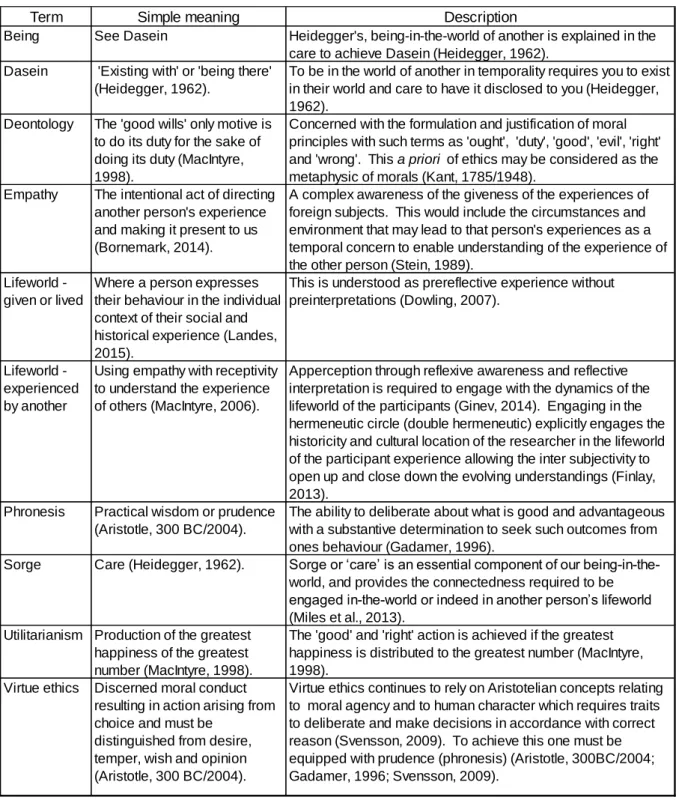
The table below offers a definition of terms related to ethical terminology used in this thesis and is pertinent to the theoretical framework.
Term Simple meaning Description
Being See Dasein Heidegger's, being-in-the-world of another is explained in the care to achieve Dasein (Heidegger, 1962).
Dasein 'Existing with' or 'being there' (Heidegger, 1962).
To be in the world of another in temporality requires you to exist in their world and care to have it disclosed to you (Heidegger, 1962).
Deontology The 'good wills' only motive is to do its duty for the sake of doing its duty (MacIntyre, 1998).
Concerned with the formulation and justification of moral principles with such terms as 'ought', 'duty', 'good', 'evil', 'right' and 'wrong'. This a priori of ethics may be considered as the metaphysic of morals (Kant, 1785/1948).
Empathy The intentional act of directing another person's experience and making it present to us (Bornemark, 2014).
A complex awareness of the giveness of the experiences of foreign subjects. This would include the circumstances and environment that may lead to that person's experiences as a temporal concern to enable understanding of the experience of the other person (Stein, 1989).
Lifeworld - given or lived
Where a person expresses their behaviour in the individual context of their social and historical experience (Landes, 2015).
This is understood as prereflective experience without preinterpretations (Dowling, 2007).
Lifeworld - experienced by another
Using empathy with receptivity to understand the experience of others (MacIntyre, 2006).
Apperception through reflexive awareness and reflective interpretation is required to engage with the dynamics of the lifeworld of the participants (Ginev, 2014). Engaging in the hermeneutic circle (double hermeneutic) explicitly engages the historicity and cultural location of the researcher in the lifeworld of the participant experience allowing the inter subjectivity to open up and close down the evolving understandings (Finlay, 2013).
Phronesis Practical wisdom or prudence (Aristotle, 300 BC/2004).
The ability to deliberate about what is good and advantageous with a substantive determination to seek such outcomes from ones behaviour (Gadamer, 1996).
Sorge Care (Heidegger, 1962). Sorge or ‘care’ is an essential component of our being-in-the-world, and provides the connectedness required to be engaged in-the-world or indeed in another person’s lifeworld (Miles et al., 2013).
Utilitarianism Production of the greatest happiness of the greatest number (MacIntyre, 1998).
The 'good' and 'right' action is achieved if the greatest happiness is distributed to the greatest number (MacIntyre, 1998).
Virtue ethics Discerned moral conduct resulting in action arising from choice and must be
distinguished from desire, temper, wish and opinion (Aristotle, 300 BC/2004).
Virtue ethics continues to rely on Aristotelian concepts relating to moral agency and to human character which requires traits to deliberate and make decisions in accordance with correct reason (Svensson, 2009). To achieve this one must be equipped with prudence (phronesis) (Aristotle, 300BC/2004; Gadamer, 1996; Svensson, 2009).
10
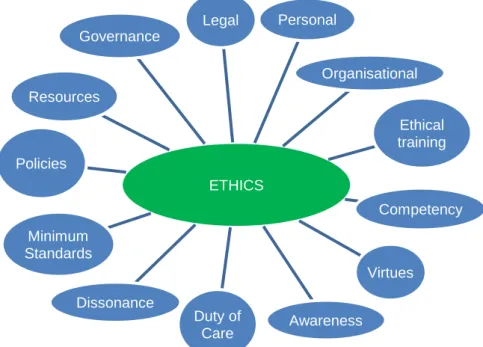
List of Figures
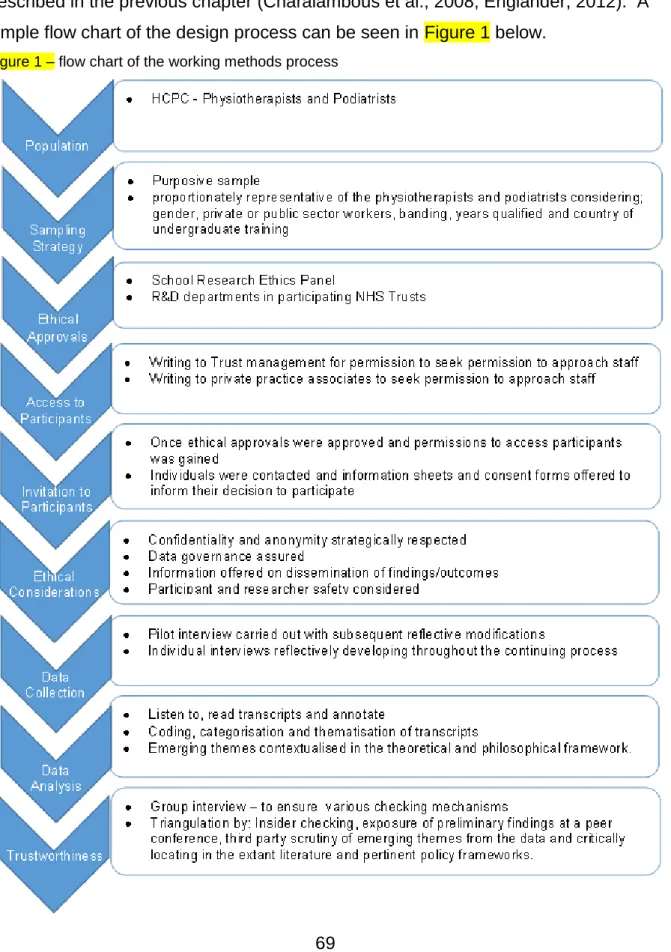
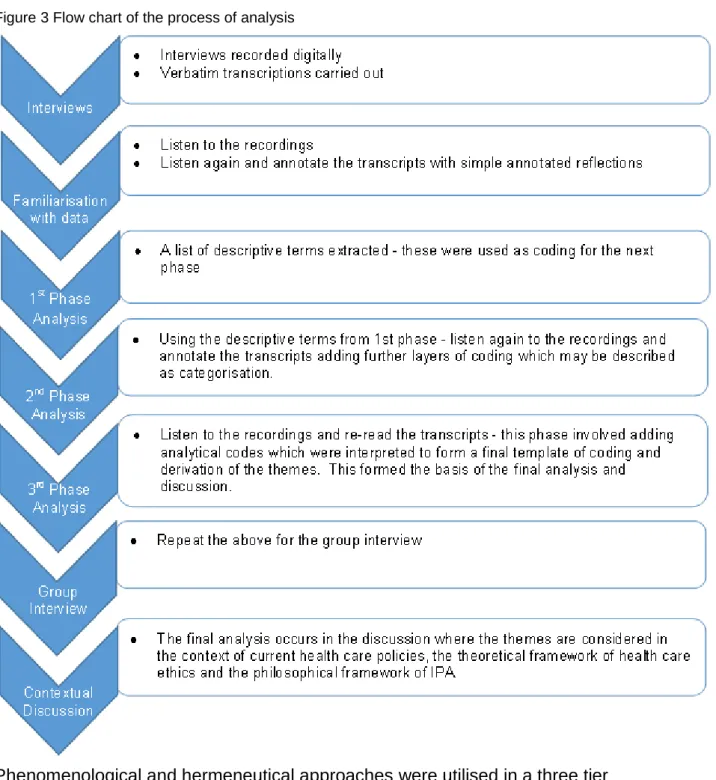
Figure 1 - Flow chart of the working methods process 69 Figure 2 – a priori themes considered for the formation of the
pilot interview 77
Figure 3 - Flow chart of the process of analysis 81 Figure 4 – HCPC Registrant statistics 89 Figure 5 – HCPC Registered physiotherapists and podiatrists 90 Figure 6 – Sample participant physiotherapists and podiatrists 90 Figure 7 – Gender analysis, comparing HCPC registered
physiotherapists and podiatrists with the sample 90 Figure 8 – Experience post qualified in number of years 91 Figure 9 – Workplace analysis comparing HCPC registrant
data to sample 91
11
List of Tables
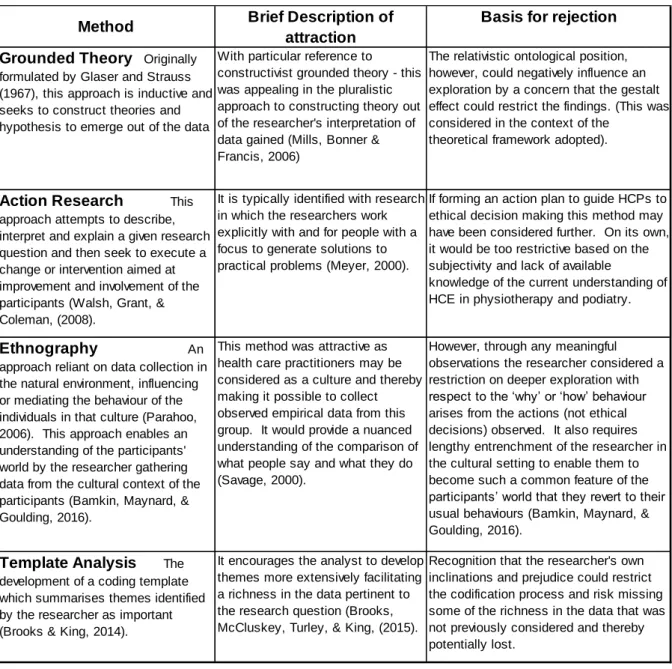
Table 1 – Terms used for literature searching 27 Table 2 – Alternative methodological approaches considered 59 Table 3 - Target population from HCPC, NHS and
professional body data 71
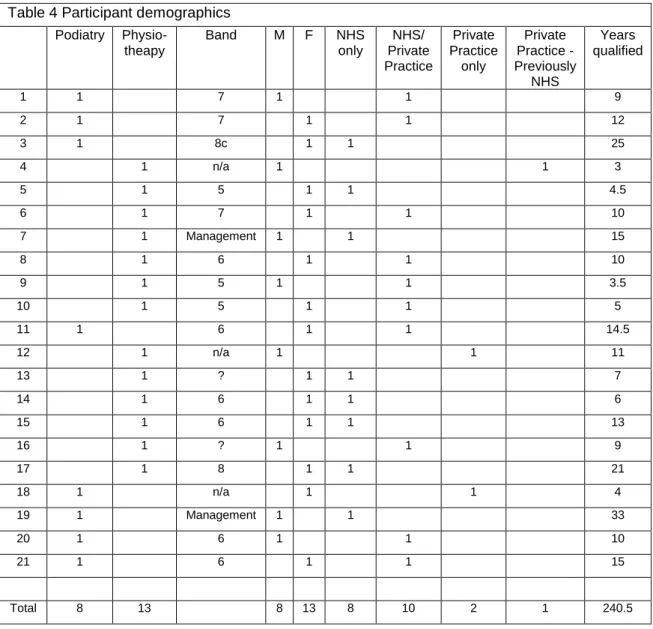
Table 4 – Participant demographics 87 Table 5 – Analytical process of findings 93 Table 6 – Group interview summaries of potential areas of
12
List of abbreviations
ADP - Advanced Development Programme BMA - British Medical Association
CPD - Continuing Professional Development CQC - Care Quality Commission
CSP - Chartered Society of Physiotherapists DoH - Department of Health
EBM - Evidence Based Medicine EBP - Evidence Based Practice GMC - General Medical Council HCE - Health Care Ethics HCP - Health Care Practitioner
HCPC - Health and Care Professions Council IPA - Interpretative Phenomenological Analysis NHS - National Health Service
NICE - The National Institute for Health Care Excellence NSF - National Service Framework
SoCaP - Society of Chiropodists and Podiatrists SoP - Standards of Proficiency
13
CHAPTER 1: Introduction
This chapter offers a justified explanation as to why the study was initiated. It does this by locating health care ethics pertinent to physiotherapy and podiatry in the context of contemporary practice in the UK.
1.1 Reflexive position statement
Diligence was required by me as the researcher when considering what had
emerged from the data before attempting a deeper interpretation of the meaning of what was found (Finlay, 2013). To achieve this it was essential that fore-structures, which are inevitable, were explicitly acknowledged and worked reflexively (Finlay, 2013). This awareness is seen as a protection from imposing my assumptions on the study (Laverty, 2003). Fore-structures in this study are those which may be understood or known in advance of interpretation (of the participant findings) and could be considered as an anticipation of meaning or prior awareness of a context dependent experience or knowledge (Mackey, 2005). This research was embedded in the philosophies of Heideggerian and Gadamerian hermeneutic phenomenology where the constructing of ‘our’ reality from ‘our’ experience of being-in-the-world, demanded assurance that rigour was applied throughout the analysis (McConnell-Henry et al., 2009). Analysis in this way attempted to ensure that the potential influence from my ‘fore structures’ did not detract from the data, through hidden bias and prejudice, but permitted entry to the ‘things in themselves’ (Miles et al., 2013). Gadamer refers to prejudice as ‘tradition’ where Heidegger uses terms such as ‘background’, ‘co-constitution’ and ‘preconceptions’ (Koch, 1996). Koch (1996), draws on Merleau-Ponty’s (1945/2012), analogy that we do not need to see the light, but only what it illuminates, but without the light nothing would be seen. This
contextualises how my background in health care provision may draw on
experiences offering the participants further background meanings and frames of reference. Prejudices are part of the contribution to the personal horizon from which new horizons are being continuously formed (Annells, 1996). Annells (1996), points out that whilst forming horizons, self-reflection by the interpreter is a vital aspect, but self-understanding is always ‘on-the-way’ and is a path where the completion is a
14
clear impossibility. The horizon can never be complete, but is being acknowledged and evolved over time through data analysis at macro and micro levels and ensuring that the analysis does not move beyond the data and out of the hermeneutic circle (Whitehead, 2004). The participants’ life events combined with my own perspectives resulted in the co-constituted interpretation and the Gadamerian ‘fusion of horizons’ (Koch, 1996). It is the process of dwelling with the horizons of meaning that
facilitated the phenomenological attitude that opened the intersubjectivity to be engaged, without which only the subjective account of experience would have been reported (Finlay, 2013).
During the reflexive and iterative process of data collection and interpretation I recognised the use of intuition, which permitted flexibility in the decisions to stop, steer in different directions or to probe deeper. Intuition in this way allowed the essential use of ‘self’ to facilitate emerging data that was be meaningful (Parahoo, 2006). In the pursuit of rigour it was essential to fully explicate any preconceptions and any of my contributions which co-created data from the interview process
(Lowes & Prowse, 2001). This was a vital asset of IPA, but a criticism of the method if I did not explicitly recognise the theoretical preconceptions and my role in
interpretation (Brocki & Wearden, 2006). If achieved, Brocki and Wearden (2006), claim that this ensures the accessibility and clarity of the findings.
My ongoing critique and appraisal allowed the unavoidable inclusion of self-interests to be incorporated into the inquiry (Koch & Harrington, 1998). Rather than suspend or attempt to bracket these interests, it may be argued that, through Gestalt psychology, the observable and empirical ‘figure’ appeared by virtue of the ‘ground’ that supported it and was only given its form by the necessary context, without which meaningful phenomena could not appear (Murray & Holmes, 2014). The
intersubjective context of me, as interviewer, was included in the interpretation of the participant’s experiences. The rigour that had been applied in the analysis is
evidenced in sections 3.6 and 4.5 and gives credibility and trustworthiness to the data obtained and the process of interpretation of that data.
Interpretative rather than traditional phenomenology alone allowed a broader canvas for me to paint a description of the phenomena reviewed (Caelli, 2000), but
15
highlighted that reflexivity must therefore have assumed a key role (Dowling, 2007). The rationalisation advocating reflexivity is to develop the human science attempting to embrace the intersubjectivity of both the methods and philosophies involved (Finlay & Gough, 2003). Rigorous reflexivity offered self-awareness and thoughtful analysis of the intersubjective dynamics from the data that allowed me to form conclusions and in turn transformed what was perceived as a problem into an opportunity (Finlay & Gough, 2003). Although there is a diverse understanding surrounding the definition of reflexivity, common agreement involved the examination of my preconceptions and motivations (Finlay & Gough, 2003) and any recognisable influence that was drawn into the interpretative process. Ensuring a reflexive attitude not only allowed me to properly enter the hermeneutic circle, but it also enhanced credibility by offering the reader transparency of the decision making throughout the data collection and interpretation. This trail of decisions is theoretical, philosophical and methodological and has the potential to clarify the research process for the reader, thereby improving the trustworthiness of the process (Austgard, 2012; Koch, 1996).
After the first two interviews a period of reflexivity was utilised, allowing brief analysis of the data captured before continuing with further interviews. This formed part of the iterative process to review and alter the method of interviewing. Using this strategy the initial horizons and prejudices were not eliminated, but acknowledged and accepted to be inextricably linked to the interpretation contributing to the
analysis (Whitehead, 2004). This is a defining feature of qualitative research which enabled me to accept my role as a central figure actively sampling participants, gathering data and constructing interpretations from it (Finlay & Gough, 2003). The same reflective and reflexive approach was used throughout the interview process. The changes to the interview method at this stage were subtle alterations to
encourage meaningful discussion around HCE. Open ended questions were used with a cautious approach in challenging the participants. After further reviewing of the literature on research methods, the interview technique continued to be modified and following various adaptations, I became more willing to have meaningful
16
Reflexivity was an integral part of the epoché adopted throughout this
phenomenological approach. Epoché achieved through reflexivity illustrates self-critique and self-appraisal which provided an explanation from the findings of how my own experiences were reflected in the research process and contributed to the rigour of this research (Koch & Harrington, 1998; Murray & Holmes, 2014).
Bracketing or Epoché, from the Greek word meaning ‘to refrain from’, is
fundamentally linked to phenomenological research, characterised by Husserl as abstention, dislocation from, unplugging or exclusion from the normal faith given to the reality of what is experienced (Moran, 2000). Effectively it allowed me to ensure awareness of my own prejudices and recognise the influence on the participants at data collection or throughout the analysis. Various phenomenologists have this issue at the heart of their methods (as discussed in the philosophical influences of Heidegger and Gadamer in Chapter 3). Whilst some believe bracketing should take place prior to, during and after data collection, alternatively others believe it ought to be done only during analysis as it is inappropriate during the interviews where the relationship with the other person takes the priority (Dowling, 2007). For this, I followed the Heideggerian philosophy where bracketing is acknowledged in the analysis phase. The questions used throughout the interview process were
evolutionary and emerged from the varied perspectives of the participants and their experiences shared (Crist & Tanner, 2003). Contact sheets were used for each interview which allowed the documentation of any temporal and none recorded influences that were recognised. This along with the verbatim transcription allowed a full analysis of all data, recognising the researcher to be a part of the data collection. Offering enhancement through intuition of the research questions contributed to generating meaningful data for interpretation that was faithful to the research methods and added to the trustworthiness of the findings (Hicks 2004).
1.2 Reason for Study
Ethics may be considered as the summation of morals, values and codified laws of professional behaviour (Meffert, 2009). For Health Care Practitioners (HCPs), ethics embodies an applied practical linkage of theory and practice in an amalgam of
character building professionalism and organisational skills (Kulju, Suhonen & Leino-Kilpi, 2013; Milllstone, 2014). Morality and health care are inextricably entwined
17
(Hamilton, 2010) and are inherent to the practice of HCPs (Drolet & Hudon, 2015). Ethical dilemmas have continued to challenge health providers historically and in the modern context (Franzblau, 2010; Williams, 2005; Winkler & Gruen, 2005). As the study and practice of ethics have evolved, the accepted ethical norms have changed through many dimensions, but what remain consistent are the principles
underpinning the ethos of health care. Ethics of health has its roots in ancient civilisations evidenced by the Code of Hammurabi 1740 B.C. and the Hippocratic Oath 400 B.C. circa (Ivanov & Oden, 2013). Health Care Ethics (HCE) may have been of interest to philosophers and physicians since the time of Hippocrates, but the rising of medical ethics as an academic discipline has only emerged since the 20th Century and perhaps only in the last few decades has this manifested as clinical
ethics in the UK (McClimans, Dunn & Slowther, 2011).
Hippocrates, who is often referred to as the father of western medicine, is credited with the (Hippocratic) Oath that, in part, hoped to ensure that the individual person responsible for health care provision was, and always remained, mindful of their duties, as laid down in the swearing of the Oath (Gupta, 2015; Katsambas & Marketos, 2007; Lang, Wyer & Haynes, 2007). Though the Oath is extolled as a paragon and paradigm of medical ethical codes, it should not be treated as though it represents a set of abstract ethical principles pertinent for all ethical dilemmas, but rather should guide the HCP to learn how to act as a moral agent (Sansom, 2013). Taking an oath may be considered as a dynamic form of reflective practice that connects us deeply to our own core values both as human beings and as professionals (Gaufberg & Batalden, 2014). The premise of the original oath
assumes the individual clinician will, to the best of their ability and judgment, attempt to do no harm to service users, but also to maintain accepted professional ethical standards. The principles of this oath remain part of the philosophy of care in all medical institutions (Franzblau, 2010; Gupta, 2015; Katsambas & Marketos, 2007; Kumar, 2010).
For the purpose of this study, HCE ethics are considered as those that focus on patients’ best interests and rely on interventions of proven benefit and acceptable risk (Beauchamp & Childress, 2013). HCE is an applied branch of ethics or moral philosophy that attempts to decipher the rights and wrongs of practice in the light of
18
philosophical analysis (Campbell, Gillett & Jones, 2005). For HCPs, operating ethically means to treat each other with careful attention, sensitivity and compassion using an integrated set of values, principles and morals that allows systematic and deliberate promotion and protection of human dignity (Weinstein & Nesbitt, 2007). This respect for the inherent worth of the dignity of the individual is fundamental in the principles underlying health care (Dugas, 2005). This form of ethical reasoning and justifiable decision making is contextualised in health care policy and the clinical environment providing health care to individuals (McClimans et al., 2011).
As a HCP and educator, the author has worked in health and social care since 1991 and recognises the challenge for individuals who pro-actively reconcile
organisational and individual ethical standards impacting on service delivery. There is potential for internal conflict in decision making, where the HCP may feel torn between the correct behaviour as dictated by a code of ethics and their employer expectations or personal expediency (Weinstein & Nesbitt, 2007). The influence of the health environment on professional integrity and standards of practice is not consistently understood and can be antithetical to the philosophy of client-centred practice espoused by HCPs (Carpenter, 2010). Ethical decisions are the final analysis of the individual, but ethical/unethical decisions are not made in a vacuum and the organisational culture and context serve to influence the individual decision making process (Jackson, Wood & Zboja, 2013; Kulju et al., 2013). HCPs frequently have to make both explicit and implicit choices that extend beyond the objective and practical and into the contested and ethical, and yet they receive little training and guidance on how to reach an ethical decision (Schröder-Bäck, Duncan, Sherlaw, Brall & Czabanowska, 2014). The principles of clinical ethics are often discussed when considering clinicians’ obligations to patients, but there are no comparable and agreed set of ethical principles to guide individual decision making (Winkler & Gruen, 2005).
Moral complexity exists in every day practice, creating conflicting responsibilities in providing health care due to the refashioning and restructuring of provision to contain costs, for example redefining the inclusion and exclusion criteria for service provision (Hurwitz & Richardson, 1997). Cost containment may have caused the basic values of health care to be forgotten, namely charity and caring (Balch, 1998). This may
19
have been evidenced in the Mid Staffordshire scandal where the Francis report illustrated failures to tackle an insidious negative culture involving a tolerance of poor standards and a disengagement from managerial and leadership responsibilities (The Mid Staffordshire NHS Foundation Trust Public Inquiry, 2013). This failure, according to Francis, was in part the consequence of allowing a focus on reaching national access targets, achieving financial balance and seeking foundation trust status at the cost of delivering acceptable standards of care. One of the
recommendations of the Francis report was to make all those who provide care for patients, individuals and organisations, properly accountable for what they do and to ensure that the public is protected from those not fit to provide such a service.
Individual HCPs appear to value ethical principles, but do not seem to actually use them directly in the decision making process (Page, 2012). Cognitive dissonance and an agentic shift may explain how a moral compass can be overlooked causing an erosion of agency (Jackson et al., 2013). The conflicting responsibilities
challenge the principle of autonomy for a HCP, autonomy being one of the four ethical principles that are widely disseminated and accepted from a pluralist
approach to ethics in health care (Duncan, 2010). Autonomy may be considered as the ability, skill or trait of the autonomous person to have the capacity of
self-governance over their understanding, reasoning, deliberating and management of independent choices (Beauchamp & Childress, 2013). However, normative ethics in health care may alter the dynamics underpinning ethical autonomy of HCPs and potentially even disenfranchise them (Balch, 1998; Nakayama, 2007; Traynor, Boland & Buus, 2010). By itself, autonomy is a weak foundation for HCE especially if separated from the categorical imperative that Kant expounds (Svenaeus, 2003). Svenaeus (2003), takes this further by suggesting that autonomy can lead to a peculiar form of relativistic nihilism thereby undermining the potential of a HCP to establish good ethics. Yet HCPs are expected to have the capacity and duty to act autonomously in their day to day practice (Health and Care Professions Council [HCPC], 2013a; HCPC, 2013b). The issue of agency and autonomy is complicated by the corporate structure and the effect this has on the decision making of an individual, which can lead to a deterioration of ethics based on the actions of individuals (Jackson et al., 2013). Actual decisions made may seldom be fully rational and may not measure up to the ideal, but fall along an axis that radiate from
20
the ideal, if, however, the choice appears to respect the autonomy of the service user then it may be justified (Kultgen, 2014).
There is a paucity of evidence available within the field of physiotherapy and podiatry to facilitate explication of these issues. Of the available research, it appears that ethical knowledge is rarely used to analyse the issues raised in practice and that gaps exist in the theoretical frameworks currently used for ethical analysis (Drolet & Hudon, 2015). Part of this study will include consideration across the literature from other health care settings and empirical data collected in this study to explore how ethics is interpreted and how it may influence practice amongst physiotherapists and podiatrists. This study explores and delineates these issues within a philosophical framework of hermeneutical phenomenology in the context and theoretical
framework of HCE.
1.3 Current understanding of ethics in the context of health care
1.3.1 Frameworks and guidelines
Bioethics as a discipline informs health care professionals and enables them to identify and respond to moral dilemmas (Kass, 2001). A set of ethical principles expresses and values underlying rules that can be provided by an analytical
framework that represent common morality (Winkler & Gruen, 2005). The limitations of such frameworks, Winkler and Gruen (2005), highlight, are the abstract and
universality of the principles in general. They indicate that even where agreement on the principles has been achieved it does not provide a method for resolving the conflicts between them, but that such frameworks help to clarify what is morally at stake and identify the irresolvable aspects of the situation. Furthermore, a rule-governed decision making process can fail if conflict over competing demands remains unresolved (Tyreman, 2000). A health care organisation may be viewed as a trustworthy service provider if it enables the staff who deliver care to be advocates for their patients, part of which may involve the creation, critique and improvement of organisational guidelines (Winkler & Gruen, 2005).
21
In health care throughout the UK, there are various levels of governance which aim to encourage the achievement of quality assurance. Examples of this are; the National Institute for Health and Care Excellence (NICE) and National Service Frameworks (NSFs) which are funded and advised through the UK’s Department of Health (DoH). The NICE guidelines and NSFs are intended for use by the NHS, Local Authorities, employers, voluntary groups and anyone else involved in
delivering care or promoting wellbeing and are designed to promote good health and prevent ill health (National Health Service [NHS] Choices, 2012). The guidance is produced by the people affected by it, including health and social care professionals, service users and the public. The purpose of guidance that NICE creates is based on the best available evidence and that it will provide a service that represents good value for money, weighing up the cost and benefits of treatments (The National Institute for Health and Care Excellence [NICE], 2012). Guidelines are primarily developed to assist HCP and service user decision making about appropriate care for particular clinical circumstances (Ouimet, Landry, Amara & Belkhodja, 2006). Dichotomously, the use of rules (including guidelines and frameworks) as the
essence of critical thinking could cause confusion masking ideals of knowledge and truth, which results in formal rules becoming one resource among several for rational construction (Hoffmaster & Hooker, 2009). Ubiquitous disclaimers inferring that clinicians ought to rely on their professional judgment in applying guidelines,
paradoxically encourages HCP heuristics to be developed (McDonnell Norms Group, 2006).
Guideline adherence may be considered a static construct and one opposed to the dynamic requirements that HCPs are expected to be able to use to distinguish between evidences for appropriate decision making, which is the hallmark of critical thinking (Huang, Newman & Schwartzstein, 2014). What is, therefore, required for science, for ethics and for health care is a new and richer conception of rationality that underpins the development of norms including the applied norms of criticality in ethical decision making (Hoffmaster & Hooker, 2009).
22 1.3.2 Obligation and governance
It is incumbent on health care professionals to conduct themselves in accordance with their code of ethical practice (HCPC, 2012b). Primarily this is obligated upon HCPs externally and spans all known generations of medical providers. The Hippocratic Oath described the basic ethics of medical practice and was the initial expression of a moral code of conduct in medicine (Raina, Singh, Chaturvedi, Thakur & Parihar, 2014; Willacy, 2011). There has been a resurgence of
professional interest in medical oaths and codes of conduct leading to The British Medical Association in 1997 publishing the first draft of a revised Hippocratic Oath to be considered by the World Medical Association (Hurwitz & Richardson, 1997). The General Medical Council (GMC), whose role it is to protect, promote and maintain the health and safety of the public by making sure that doctors follow proper standards of medical practice (General Medical Council [GMC], 2014), provide the Good Medical Practice Guide (GMC, 2013) which is to be adhered to by all
registered medics in the UK. Almost all medical schools in the USA and around half in the UK administer an oath of some kind (Hurwitz & Richardson, 1997). However, what is not well documented is if this is voluntarily adopted or if it influences practice. The BMA have found that when resisting human rights abuses or considering the resolve of doctors’ integrity when acting in extreme circumstances, then the oaths affirm a commitment to firm moral parameters (Hurwitz & Richardson, 1997). Consequently, the BMA recommends that medical ethics are incorporated into the core curriculum and that all medical graduates ought to make a commitment by means of affirmation to observe an ethical code (Hurwitz & Richardson, 1997). Affirming a professional oath may not prove that one will act better than others, but it does state a claim that there is the potential to drift away from the highest standards and the oath illustrates the need to reflect and act to resist that drift (Meffert, 2009).
1.3.3 Regulation of physiotherapists and podiatrists
The regulation of physiotherapists and podiatrists actions and behaviours has taken various forms over many decades. The British Medical Association set up the Board of Registration of Medical Auxiliaries (BRMA) in 1937 as a non-profit making
23
podiatry who both functioned with their own committees within the BRMA. This evolved into the Council for Professions Supplementary to Medicines in the early 1960’s and eventually into the Health Professions Council (HPC) from April 2002 (now Health and Care Professions Council (HCPC) since August 2012). Any complaints about the ethical practice of a registrant would be undertaken by the Conduct and Competence Committee. This was a statutory committee and advised the Council on issues related to conduct performance and ethics of all registrants. Currently when a complaint relating to the ethics of a registrant arises, then the HCPC’s Fitness to Practise Committee initiates an investigation (HCPC, 2014a).
Ethics maintains a critical relationship with professional codes of conduct and guidelines, but it is a branch of philosophy that cannot be simply reduced to a set of practice rules (Drolet & Hudon, 2015). Ethics are, however an integral part of the demands and expectations placed on all HCPs. The HCPC acts as the regulatory body for physiotherapists and podiatrists in the UK and set the Standards of Proficiency (SoP) which every registrant must meet in order to enter and maintain registration (HCPC, 2013a; HCPC, 2013b). As autonomous professionals,
registrants need to make informed and reasoned decisions about their practice to ensure that they meet the Standards (HCPC, 2013a; HCPC, 2013b). The HCPC remind registrants that they are autonomous in their professional role, but need to seek advice from appropriate sources to enable them to justify their decision making process, if called to do so (HCPC, 2013a; HCPC, 2013b). The HCPC also provide registrants with the Standards of Conduct Performance and Ethics. These
Standards provide a focus to registrants based on the HCPC’s expectations of their behaviour. This can play an important role in helping the HCPC make decisions about the character of the people who apply to the Register and also in cases where judgment is made about whether someone is fit to practise (HCPC, 2012b). They have been written in broad terms in order to take account of changes in best practise, technology, the law and wider society in the future.
Physiotherapists and podiatrists working in NHS settings may also be scrutinised under the Care Quality Commission (CQC). The CQC monitor, inspect and regulate services to ensure they meet fundamental standards of quality and safety (Care Quality Commission [CQC], 2015). The CQC’s remit is to answer five questions
24
about the services they are inspecting relating to: safety, effectiveness, caring, responsiveness and leadership (Brown, 2014). They also publish their findings in order to help people make informed choices about their care (CQC, 2015). This ensures not simply safe, but effective, compassionate and high-quality care (NHS Choices, 2015).
1.4 Introduction to the thesis
This work considers ethical policies and perceived ethical practice in the
philosophical framework of hermeneutical phenomenology. This was considered in the conceptual and theoretical framework of dialogical and phronetical ethics.
Health care practice implicitly or explicitly involves discussion of values, norms and virtues in order to make good choices for which dialogue plays an important role (Widdershoven, Abma & Molewijk, 2009). To safeguard and further develop medical ethics Svenaeus (2014), points to the Aristotelian concept of phronesis. Since health care practice is complex, it requires HCPs to have abilities over and above
knowledge and technical acumen, which can be achieved through phronesis, offering a paradigm for the entire process of clinical reasoning (Tyreman, 2000). Phronesis or practical wisdom, considers the right action for an individual person in a concrete situation and can be enlightened through Gadamer’s dialogical approach, since dialogue is the vehicle for understanding another person (Austgard, 2012). From a position of improved understanding lies the art of medicine, which allows the HCP to enter the lifeworld of the service user where they express their behaviour in the individual context of their social and historical experience (Landes, 2015). This allows the existential character of the HCP (practising phronesis) to permit better action towards human needs rather than producing something that superficially follows the application of guideline based care, which could be deployed blindly (Landes, 2015).
25 1.5 The organisation of the thesis
Chapter 2 - explores the extant literature contextualising ethics in health care. Chapter 3 - discusses the key philosophical paradigms that have influenced the research methods and the underpinning concepts of ethical practice.
Chapter 4 – presents the working methods that were used to progress data collection and analysis.
Chapter 5 – offers an overview of the findings.
Chapter 6 – presents a discussion of the findings of Theme 1 which is the perceived understanding of HCE.
Chapter 7 – presents a discussion of the findings of Theme 2 which is the perceived embodiment of HCE.
Chapter 8 – presents a discussion of the findings of Theme 3 which is how the perceived ideals in health care are challenged.
Chapter 9 – presents a discussion of the findings of Theme 4 which considers the service user as the centre of health care.
Chapter 10 – presents a discussion of the findings of Theme 5 which is the interpretation of the embodiment of HCE.
Chapter 11 – is a discursive conclusion of the key findings of the research, balancing potential outcomes against the recognised limitations of this study.
This introductory chapter has considered governance, guidelines and frameworks as a part of the ethical decision making of physiotherapists and podiatrists. The
following chapter explores the extant literature surrounding ethics and the impact towards service provision for physiotherapists and podiatrists.
26
CHAPTER 2: Literature Review
This chapter considers the extant literature to contextualise HCE in terms of the theoretical antecedents along with the lived demands of the practical application of ethics.
2.1 The Literature Review Method
The literature review has been informed by conducting a series of literature searches using the University of Huddersfield’s search facility, Summon. Summon does not draw from databases, although it does contain some data from abstracting & indexing (A&I) services. Instead it predominantly receives article data (usually including the full-text) directly from journal publishers. In most instances, one might expect the same content that is indexed in specific database (e.g. Emerald, Science Direct (Elsevier), Wiley Online Library, Sage Online and Springer Link) to also be indexed in Summon. Summon accesses journal databases directly from the journals themselves. This system will access approx. 80% of the content on CINAHL
(Cumulative Index of Nursing and Allied Health Literature).
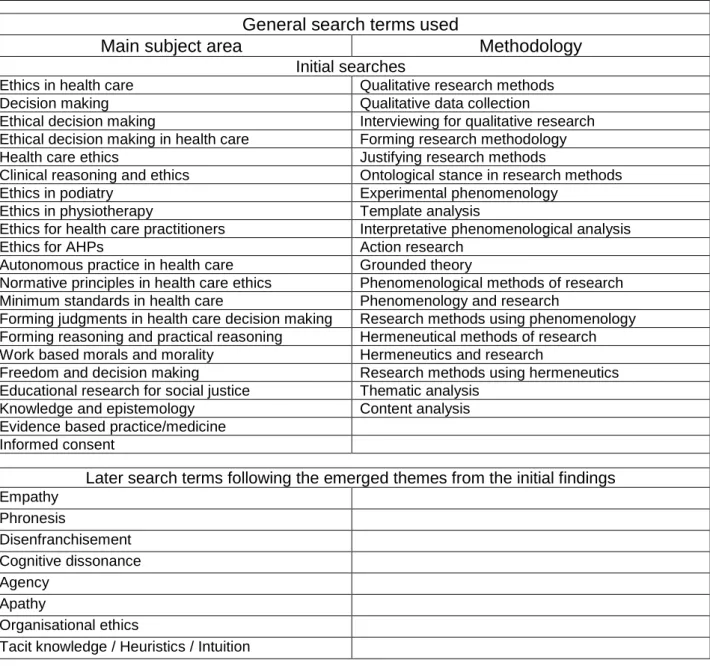
During the early stages of this research, Medline, Pubmed, PsycINFO, CINAHL and the Cochrane Library were also searched as a method of retrieving published work from the wider systems available. This allowed confidence when comparing these databases with Summon. A summary of search terms are in Table 1 below. There were no limits set by date or content, providing they were available in English and were pertinent to the unfolding themes.
Conducting a literature review prior to commencing data collection may prejudice the research by reliance on background understanding, which influences the data
constructing (Finlay, 2011). Engaging in an early literature review may narrow the analytical field of vision leading to specificity in focusing on certain aspects of the data or conversely may enhance analysis by sensitising the reviewer to more subtle features of the data (Braun & Clarke, 2006). Husserl’s phenomenological approach negates or limits this concern through bracketing the prior knowledge (McConnell-Henry, Chapman & Francis, 2009). Alternatively, the Heideggerian philosophy of a
27
hermeneutical enquiry accepts and even encourages prior knowledge which can facilitate meaningful questions being formed throughout the data collection process (McConnell-Henry et al., 2009). Conversely the risk of completing a literature review after data collection may render the participant recruitment unnecessary and
therefore unethical if the review in any way invalidates the necessity for such research (Lowes & Prowse, 2001).
Table 1 Terms used for literature searching
General search terms used
Main subject area Methodology
Initial searches
Ethics in health care Qualitative research methods
Decision making Qualitative data collection
Ethical decision making Interviewing for qualitative research Ethical decision making in health care Forming research methodology
Health care ethics Justifying research methods
Clinical reasoning and ethics Ontological stance in research methods
Ethics in podiatry Experimental phenomenology
Ethics in physiotherapy Template analysis
Ethics for health care practitioners Interpretative phenomenological analysis
Ethics for AHPs Action research
Autonomous practice in health care Grounded theory
Normative principles in health care ethics Phenomenological methods of research Minimum standards in health care Phenomenology and research
Forming judgments in health care decision making Research methods using phenomenology Forming reasoning and practical reasoning Hermeneutical methods of research Work based morals and morality Hermeneutics and research
Freedom and decision making Research methods using hermeneutics Educational research for social justice Thematic analysis
Knowledge and epistemology Content analysis Evidence based practice/medicine
Informed consent
Later search terms following the emerged themes from the initial findings Empathy Phronesis Disenfranchisement Cognitive dissonance Agency Apathy Organisational ethics
Tacit knowledge / Heuristics / Intuition
The fundamental premise of performing a literature review serves to contextualise key aspects of the new research in relation to the existent literature. It also
establishes what gaps may prevail in the general pool of knowledge on a given subject area which in turn allows the selection of an appropriate research question
28
and study design. At the end of this process one may be considered an expert in the current state of knowledge of that subject area (Davis, Thompson & Panacek, 1995). Despite this suggestion, the author recognised the need to constantly re-review the literature to continue the exploration and interpretation of available published work in the context of HCE. Themes emerged during the process of analysis which
illuminated new areas of knowledge that were not anticipated previously and required framing into various contexts (Smith, Flowers & Larkin, 2009). These themes can be seen in Table 1. This reflexive and exploratory continuum remained part of this research throughout the process.
2.2 The foundation of ethics
Ethical decision making arises from choice and deliberation in determining voluntary actions that are believed to be modifiable to best reach the end in which one directs one’s actions (Aristotle, 300 B.C./2004). In the pre-philosophical writings of the Homeric poems to the Sophists, the Greeks had realised that the meaning of key words involving the framing of a moral question was no longer clear and the concepts defining the moral frameworks were rendered problematic (MacIntyre, 1998). The ancient ethical theories promote reflection of oneself as the moral agent based on a teleological framework and the pursuit of happiness in reaching such ends (Annas, 1995). The concepts expounded during that era were inextricably linked to the social order of the recognised hierarchy and only those who function within that hierarchy would be able to apply those value predicates (MacIntyre, 1998). In current health care systems, ethics are not optional and are inclusive of all stakeholders since they are an integral and essential part of care provision
(Limentani, 1998). HCE concerns the moral responsibility, authority and power of all physicians and health care professionals (McCullough, 2000).
The concept of Virtue Ethics that had been retained from the ancients collapsed with the science of the sixteenth and seventeenth centuries, resulting in Aristotelian teleology being rejected for autonomy, secularisation and linking ethics to the natural and observable order, separating it from the lived experience (Goodman & Marcelli, 2010; Schneewind, 1990). During the late 18th century, Kant attempted through his ‘categorical imperative’ to assist moral decision making, facilitated through universal
29
principles. A consequence of this shift systematically divorced morality or ethics from reason and human identity leaving an impoverished language from which to understand ethics and morality (Goodman & Marcelli, 2010). During the 20th century the advancing theories of the phenomenologists recaptured ethics in the context of phronesis (practical wisdom). The Gadamerian and Aristotelian concept of phronesis can only be acquired through long experience in concrete and practical matters of life (Svenaeus, 2003). Svenaeus (2003), clarifies Gadamer’s thesis, that applied hermeneutics is not the application of universal rules, but the hermeneutics of medicine ought to be grounded in the interaction between the HCP and service user. It is through the relationship and understanding forged out of that interaction that the merging of horizons may arise through interpretation in a dialogical
understanding. This involves the lived experience of the service user and the HCPs’ professional and technical understanding of the health concern. Horizon is a
metaphor for how we perceive and interpret reality (Austgard, 2012) and it is the merger or fusion of horizons through language and dialogical interaction that offers better understanding of another’s situation. The dialectical and dialogical
understanding, developed more fully through philosophical hermeneutics (Spence, 2001), offers a platform to the understanding and practice of HCE.
2.3 Models, theories and modern perspectives influencing health care ethics
Moral theorising influencing HCE in recent decades has been promoted through subsequent publications of Beauchamp & Childress’ work (Upton, 2011). The modern concepts of ethics have not, however, emerged out of a vacuum in history, but are a continuation of existing ideas borne out of Greek ideology, Augustinian introspective processes and Christian conceptualisations of the human subject (Goodman & Marcelli, 2010).
2.3.1 Consequentialism
‘The greatest happiness for the greatest number’ is a common interpretation of the concept most associated with utilitarianism (a common form of consequentialism) (MacIntyre, 1998). The adoption of utilitarian ethical decision making in
30
parties involved, whereas deontological approaches guide actions on the principle and duty which emphasises the nature of the action rather than the outcomes (Pimentel, Kuntz & Elenkov, 2010). However, critics assert that defining happiness or pleasure is difficult to convert to utility and it is only applicable with any kind of moral legitimacy in a society where non-utilitarian norms of decent behaviour are assumed to be upheld (MacIntyre, 1998). To highlight a problem of using utilitarian ethics, Upton (2011), discusses the short fall between moral theorising and
determinacy of decisive action in any given situation. He suggests that to maximise the good, one has to have used the theory in one’s deliberations or to have
established if the action eventually held true to justify a greater good. Upton (2011), highlights that the failings may be due to a number of causes e.g. not having
sufficient time to calculate the necessary action, not informed suitably to perform the calculations and not being free from bias to make the correct judgment. This renders moral theorising difficult to use by busy HCPs despite the fact that they most need it (Upton, 2011).
2.3.2 Deontology
Deontological ethics could be considered as being dutiful to actions driven by adherence to rules, regulations, laws and norms (Chakrabarty & Bass, 2015). Deontology is commonly associated with Immanuel Kant, who expounded the categorical imperatives as formula of universal laws, one of which he expressed as: “I ought never to act except in such a way that I can also will that my maxim should become a universal law” (Kant, 1785/1948 Chapter 1:17p67). This places emphasis on the ‘good wills’ only motive as doing its duty for the sake of doing its duty
(MacIntyre, 1998). This is difficult to apply in practice where health is hard to define and is not simply the absence of disease. The provision of health care aims to consider the person’s individual needs (Department of Health [DoH], 2005b), but is at the same time bound to a system of commissioning and criteria based provision with various guidelines, frameworks and policies possibly dictating which services can be distributed to those seeking care (DoH, 2005c). If a person has a medical need which falls out of the local agreement of commissioned services, the HCPs’ response to the patient may influence the health outcome for that person. This may depend on which ethical theory influences their decision making. For this to be
31
achieved within a deontological framework, the HCP is considered to be both the moral agent and the decision maker. A moral agent is a person who is capable of thinking, deliberating, deciding and acting in accordance with personal and
professional moral principles (Carpenter, 2010). Kant fused sensibilities with empirical principles to claim that each person has innate structures affording
rationality and agency and giving individuals access to the moral laws which ought to be followed (Goodman & Marcelli, 2010). Kant’s duty bound ethics reject the moral significance of consequences (Upton, 2011), but fails to guide the HCP into knowing what is considered ‘right or wrong’ (Pimentel et al., 2010). Whilst deontology
remains a part of ethics education it must be accompanied by the autonomous and rational construction of ethical values centred on critical reflection and appropriation of professional duty and commitment to society (Ramos et al., 2013).
2.3.3 Virtue Ethics
Moral reasoning has long served as the foundation for ethical decision making (Levitt & Aligo, 2013). Virtue centred ethics considers the character at the core of morality and supposes that the question is not ‘what ought I to do?’, but rather, ‘what sort of person am I to be?’ thereby rendering the primary moral judgment directed towards the character of moral agent (Schneewind, 1990). The purpose of virtue ethics is to recognise that ethics is not merely a matter of what one does, but who one is, thus making it an agent centred theory rather than action centred (Meagher, 2011). In virtue ethics the conditioning of one’s actions towards morality is a matter of habit and should be developed (Pimentel et al., 2010). Contemporary virtue ethics
continues to rely on Aristotelian concepts pertaining to human character, constituted by well entrenched dispositions or traits to deliberate and make decisions in
accordance with correct reason (Svensson, 2009). Svensson (2009), adds that one has to reliably act in appropriate ways whilst being properly affected in desire and feeling. To achieve this, Svensson (2009), comments that one must be equipped with practical intelligence or wisdom (phronesis). This provides an ability to appreciate the salient features determining what would constitute the appropriate thing to do in particular situations. From a phenomenological and hermeneutical perspective, virtue ethicists claim that only by the appropriation of phronesis can medical ethics be both epistemic and phronetic (Svenaeus, 2003). Prominent
32
theories in Stoicism referred to virtue as a skill or techné (Annas, 1995). This infers that virtue ought to be teachable or learnable and thereby developed and embodied by HCPs.
2.4 Ethics in health care
Health is a complex issue partially concerning social, psychological and physical matters which may be morally defined in ways that change for every patient and across time (Landes, 2015). The Hippocratic Oath was originally taken not just by the physician, but also the physicians’ assistants and associates, whereas moral challenges affecting different members of the modern day health care team may manifest with conflicting responsibilities and obligations that are bound, not by a single oath, but by different codes of conduct (Hurwitz & Richardson, 1997). Codes of conduct, policies, guidelines and minimum standard are intended to support or enhance clinical excellence, yet they have the potential to disenfranchise
autonomous practice and decision making (Nakayama, 2007; Traynor et al., 2010). They offer a replacement for individual accountability and responsibility (Eriksson, Höglund & Helgesson, 2008) and may have resulted in the modern interpretation of ethics now being effectively appropriated to ticking boxes with regulatory and
guideline adherence/compliance (Loughlin, Upshur, Goldenberg, Bluhm & Borgerson, 2010).
When attempting to apply ethical practice to clinical situations, the potential benefit of a hermeneutical appropriation of phronesis offers alternatives to the conceptualised bioethical models that exist in principle-based theory (Svenaeus, 2003). This suggestion implies that ethics in medical practice should not merely be applied as a medical science, but as a hermeneutical enterprise (Svenaeus, 2003). The
hermeneutical enterprise could manifest as a dialogical approach and may be compared to reflective equilibrium which is a process of considering initial moral judgments and integrating them with more general principles and theories placed in the context of the individual stakeholders (Widdershoven et al., 2009).
Widdershoven et al. (2009), believe that this process allows the ethical practitioner to change as a partner in this dialogue, the result of which alters the practical and
33
theoretical perspectives through respect of service user autonomy, through empathy and attentiveness to their individual needs.
Wood (2001), advocates the use of ethical approaches and principles when resolving ethical dilemmas, especially where the choices may involve equally unsatisfactory alternatives. She highlights this using a fictitious case study and guiding the reader through a process. She then applies Curtin’s (1979), six step model of ethical decision making, i.e. (1) Perception of the problem, (2) Identification of ethical components, (3) Clarification of persons involved, (4) Exploration of
options, (5) Application of ethical theory and (6) Resolution/Evaluation. The conclusions drawn are that clinical expertise and skills in moral judgment are necessary in order to recognise and manage ethical issues involving decision
making between equally unsatisfactory alternatives (Wood, 2001). What appears to be overlooked is whether or not someone is able to perceive or recognise the issue at hand as an ethical dilemma. This determines whether or not a decision will be made on the basis of moral or non-moral considerations (Street, Douglas, Geiger & Martinko, 2001). Wood’s (2001), paper uses a framework that pre highlights the problems for consideration as ‘ethical concerns’. There is, however, a presumption that HCPs will automatically recognise the phenomena presented to them as ethical in nature.
There are few studies that identify ethical issues that physiotherapists or podiatrists face routinely in practice (Delany, Edwards, Jensen & Skinner, 2010a; Delany, Spriggs, Fry & Gillam, 2010b). The recognition of certain events as ethical issues may require a particular skill base that only appears through a philosophical lens. McGrath, Henderson and Holewa (2006), state that bioethics has evolved from its origins in philosophy to the present broad sociological perspective. In forming ethical decision making, McGrath et al. (2006), expounds Gilligan’s (1982), theory to
suggest that there have been recent advances in bioethics and that prior
philosophical thinking in some way inadequately omitted important non-rational factors associated with the social context and relationships. They offer no
suggestions as to how prior philosophy has ignored these issues. They also fail to qualify their assertion of how Gilligan’s theory has laid the foundation for a more sophisticated understanding of ethical decision making. McGrath et al. (2006),
34
states that this has consequently begun to pose a sociological challenge of how to explore organisational processes that facilitate a systemic health response to ethical concerns. In McGrath et al.’s (2006), small pilot study (18 participants who were all staff at the same hospital) the participants were drawn from a population working on an acute medical ward. Their findings were not consistent with other studies that found that decision making remains variable, dependent on the organisation and other external factors. Nixon and Aruguete (2010), found that the majority of their participants adopted a utilitarian strategy when allocating limited health care resources.
External factors such as organisational culture play a significant role in affecting the behaviour and actions of its employees (Johnstone et al., 2004; Nelson & Donnellan, 2009). External factors influencing the practice of physiotherapists and podiatrists, for example resource limitations, has the potential to blind them from recognition of the ethical context of decision making that may be embedded in the culture of their environment/employer (Freeman & Sweeney, 2001). Reducing human action to juridical or economic issues are factors that influence ethical thinking (Numminen, Leino-Kilpi, van der Arend & Katajisto 2010). Aware of their professional codes of conduct, HCPs may abandon their ethical principles during their professional careers which can drive a wedge between organisational and personal values (Weinstein & Nesbitt, 2007). This may be attributed to the institutional imperative i.e. a business model of service provision (Weinstein & Nesbitt, 2007).
Leadership in organisations can also influence the ethical conduct of its individual members, but has the potential to become largely procedural and institutionalise what are agreed values (Piementel et al. 2010). One example of this is the
institutionalisation of confidentiality where an organisation may create ‘processes’ to facilitate this concept such as computer protected passwords, policies and protocols (Winkler & Gruen, 2005). According to Winkler and Gruen (2005), this may resolve only one category of problems, that of organisational barriers to enabling ethical practice. Confidentiality, as described by the Hippocratic Oath requires ‘discretion’. Where the potential for conflicting values arise, substantive principles in health care organisations are required to guide deliberation about ethical dilemmas and promote understanding of broader moral concerns (Winkler & Gruen, 2005). Recognising the
35
influence of organisational ethics on service provision, the American College of Health Care Executives [ACHE] produced an ethics self-assessment tool (ACHE, 2013). The voluntary members of this association agree to a code of conduct which recommends that self-assessment is completed with a philosophy of reflection and a view to foster changes within their organisation. The self-assessment tool is
comprised of 65 questions which are categorised under four work life headings. Although self-reflection is engendered and thus may challenge the conscientious thinker, the tool may fail with an individual who is less skilled in self-awareness. There is also a potential for cognitive dissonance to disarm honest or true reflection since the questions are targeted to the individual’s application of work. This
demands judgments on them as a person rather than exploring a hypothetical scenario. It does, however, provide a stimulus to effect individual change for those who are able to engage with its designed intention. The instructions given with the tool propose that it ought to be used as a method to change recognised failings and it also offers advice of how to attempt to effect such change in practical ways.
A fundamental principle of applied ethics is the ability to recognise what constitutes a dilemma requiring ethical decision making (Curtin, 1979; Wood, 2001). Many of the empirical studies that refer to ethical decision making are centred on matters that overtly relate to ethics, such as end of life issues (Cooper, Frank, Hansen & Gouty, 2004; Johnstone et al., 2004). Both Cooper et al., (2004), and Johnstone et al., (2004), have produced empirical data on nurse’s experiences of ethical issues; both studies however, use similar methods for data collection, adopting a questionnaire which presupposes an understanding and recognition of ethics. Johnstone et al.’s (2004), research was based on 398 voluntary responses from Australian nurses with an average of 19.8 years of experience and Cooper et al.’s (2004), research was based on 295 American Staff Nurses. Without generalising their findings beyond the limitations of their studies, the samples were sufficient enough to offer a key sense of ethical issues encountered. One of these issues is a critical examination of
accredited ethical education programmes at under graduate and post graduate level along with the nature and availability of continuing professional development