Middlesex University Research Repository
An open access repository of
Middlesex University research
http://eprints.mdx.ac.uk
Njuba-Bwaya, Norah (2017) Executive performance: a framework for executive coaching in Uganda. DProf thesis, Middlesex University.
Final accepted version (with author’s formatting)
This version is available at:http://eprints.mdx.ac.uk/21873/
Copyright:
Middlesex University Research Repository makes the University’s research available electronically. Copyright and moral rights to this work are retained by the author and/or other copyright owners unless otherwise stated. The work is supplied on the understanding that any use for commercial gain is strictly forbidden. A copy may be downloaded for personal, non-commercial, research or study without prior permission and without charge.
Works, including theses and research projects, may not be reproduced in any format or medium, or extensive quotations taken from them, or their content changed in any way, without first obtaining permission in writing from the copyright holder(s). They may not be sold or exploited commercially in any format or medium without the prior written permission of the copyright holder(s).
Full bibliographic details must be given when referring to, or quoting from full items including the author’s name, the title of the work, publication details where relevant (place, publisher, date), pag-ination, and for theses or dissertations the awarding institution, the degree type awarded, and the date of the award.
If you believe that any material held in the repository infringes copyright law, please contact the Repository Team at Middlesex University via the following email address:
The item will be removed from the repository while any claim is being investigated.
EXECUTIVE PERFORMANCE: A FRAMEWORK FOR
EXECUTIVE COACHING IN UGANDA
DProf thesis, Middlesex University
A project submitted to Middlesex University in Partial Fulfilment of
Requirements for the Degree of Doctor of Professional Studies
(Executive Performance)
Norah Njuba Bwaya
March 2017
Word count: 64,389 (Excluding references and appendices)
ii
Disclaimer: The views expressed in this document are mine and are not necessarily the views of my supervisory team, examiners or Middlesex University.
iii
DEDICATION
To my friend, mentor, promoter and husband – Sam, here is to you!
To my mother and late father; they laid the foundations upon which I am building lives.
iv
ACKNOWLEDGMENTS
Several people have sacrificed and devoted their time, resources and intellectual abilities to support me in writing this thesis. The list is long, I can only mention a few.
I am greatly indebted to Paul Furey, my project adviser and supervisor, who guided and advised me throughout the entire project. He read the initial scattered thoughts that made no sense—written in ‘Uglish’ but still worked with me until the end. I am grateful for his patience and commitment to make sure that this thesis has a life. Jacqui Farrants my consultant, supported and encouraged me, and shared her expert knowledge unreservedly. Ian Daniell, gave me invaluable comments. David Lane supported and encouraged me at critical moments in the process, and Stephen Watt and Carole Ferro provided the administrative support.
Sylvia Nannyonga-Tamusuza, my Ugandan supporter, walked the course of the journey with me and bent backwards to transform me from a plain practitioner to the scholar I have become. She taught me, challenged me, inspired and encouraged me and spent uncountable hours reviewing the numerous drafts from the jumbled stories to the final academic thesis. Sam Bwaya, my cheer-team leader played every role and provided the support I needed emotionally, physically, socially, economically, intellectually, and spiritually. Justinian Tamusuza, accommodated my intrusion in his space and time, and offered moral support and encouragement.
v
Carol Ocama, Ivan Byankya and Richard Semakula, my research team, supported the data collection and analysis phases.
I am grateful to the honourable participants that I cannot name for ethical reasons: the 69 corporate executives and 10 coaches for sharing their personal stories and experiences. I thank Coach Africa Limited (CA), for the part-sponsorship, allowing me time off to do this project, and permission to use coaching-client files as a source of data.
In a special way, I thank my children, Nezi, Norsam and Natenella, for accepting my absence during this project, and the sacrifices made to allow me the peace of mind I needed to complete the project. Thank you all so much, I will remain indebted to you for your unconditional love. Finally, and most of all, I thank my God for the wisdom and for life.
vi
ABSTRACT
As the world is becoming more globalised, there is pressure to deliver better results using fewer resources. As such, performance of executives is core for the survival of organisations. This thesis is an ethnographic case study of corporate executives in Uganda, and what it takes to get the executives to perform. With a Ugandan culture lens, I examine the determinants and obstacles of executive performance, and I propose a framework for coaching for performance. I used a qualitative research design and case study approach, and gathered data from 69 middle and top corporate executives in 22 organisations, and 10 coaching-practitioners. I employed purposive, snowball and convenience sampling techniques. Semi-structured interviews, client and coach records, and literature reviews informed this study. The thesis also draws on my 18 years of experience as a corporate executive at different levels, 9 as an executive coach, and 4 years of scientific research. The study revealed that: 1) Ugandan executives do perform under the ‘right’ conditions. 2) Performance is mostly dependant on: the leaders’ background, experience, ethos, mind-set, and motivation. 3) The major obstacles to performance are typically poor work ethics, and socio-cultural factors such as: disabling beliefs; executives’ perceptions about self, about their leaders, and about performance; and lack of a sense of urgency. The framework I propose combines a self-assessment tool showing 8 critical pillars of executive performance, and a goal alignment model for igniting intrinsic motivation to perfom. I recommend: A change in focus from performance interventions directed at knowledge and skills building, to those targeting mind-set and attitude change of executives at top and middle management levels; and a deeper consciousness about socio-cultural issues
vii
underlying the performance environment. I also recommend areas for further study including: testing the effectiveness and effects of the proposed framework.
viii
Table of Contents
ACKNOWLEDGMENTS ... iv
ABSTRACT ... vi
ABBREVIATIONS ... xiv
CHAPTER ONE: INTRODUCTION ... 17
1.1 Introduction ... 17
1.2 Coaching Industry in Uganda ... 18
1.3 Ugandans and Performance ... 19
1.4 Cultural Conceptualisation of Performance in Uganda ... 22
1.5 Researcher’s Background ... 26
1.6 Problem Statement ... 27
1.7 Objectives ... 29
1.8 Research Questions ... 30
1.9 Conceptual Framework... 30
1.10 Rationale and Benefits of the Study... 32
1.11 Scope of the Study ... 33
CHAPTER TWO: LITERATURE REVIEW ... 35
2.1 Introduction ... 35
2.2 Executive Performance ... 35
2.2.1 Research on the Definitions of Performance... 36
ix
2.2.3 Research on Determinants of Executive Performance ... 45
2.2.4 Research on Performance Obstacles for Middle and Top Executives 50 2.3 Executive Coaching... 52
2.3.1 Research on Definitions of Coaching... 52
2.3.2 Nature of Research on Coaching ... 57
2.3.3 Research on Coaching as a Performance Intervention ... 60
2.3.4 Research on Executive Coaching Models ... 63
CHAPTER THREE: METHODOLOGY ... 79
3.1 Background to the Research ... 79
3.2 Research Methodology in a Snapshot ... 82
3.3 Research Design ... 85
3.4 Research Method ... 86
3.5 Research Process ... 88
3.5.1 Participant Category 1 – 50 top and middle corporate executives ... 88
3.5.2 Participant Category 2 – 4 Chief Executive Officers ... 104
3.5.3 Participant Category 3 – 15 Coaching-Clients ... 119
3.5.4 Participant Category 4 – 10 Coaching-Practitioners ... 124
3.5.5 The Researcher as a Participant ... 128
3.6 Data Analysis ... 130
3.7 Validity ... 131
x
3.9 Limitations of the Study ... 136
CHAPTER FOUR: RESULTS ... 141
4.1 Introduction ... 141
4.2 Results from the 50 Corporate Executives’ Interviews ... 141
4.3 Results from the CEO Interviews – Participant Category 2... 150
4.4 Results from the 15 Coaching-Client Files – Participant Category 3 ... 165
4.5 Results from the Coaching-practitioners – Participant Category 4 ... 172
4.6 Results for the Application of the Definition of Personal Success ... 177
4.7 Consolidation of Findings ... 179
4.7.1 Key Determinants of Executive Performance in Uganda ... 180
4.7.2 Obstacles to Executive Performance ... 213
4.7.3 Summary of Determinants and Obstacles for Performance ... 229
4.7.4 Context of Executive Coaching in Uganda ... 230
4.7.5 Possible Benefits of the Study ... 233
CHAPTER FIVE: A FRAMEWORK FOR EXECUTIVE COACHING ... 238
5.1 Introduction ... 238
5.2 The Need for a Culturally Appropriate Framework ... 238
5.3 Goal Alignment Model (GAM)... 243
5.4 Executive Performance Tool (EPT) ... 253
CHAPTER SIX: CONCLUSION ... 267
xi
6.2 Conclusions of the Study... 270
6.3 Recommendations ... 275
6.4 Personal Reflections and Lessons Learnt ... 278
REFERENCES ... 282
APPENDICES ... 299
Appendix 1: Informed Consent Forms ... 299
Appendix 2: Coaching Interview Guide for the 50 Corporate Executives .... 302
Appendix 3: CEO Briefing ... 305
Appendix 4: CEO Semi-structured Interview Guide ... 307
Appendix 5: Coach Africa Coaching Process ... 308
Appendix 6: Session ‘0’ Sample ... 310
Appendix 7: Session ‘1’ Sample ... 314
Appendix 8: Session ‘2’ Sample ... 318
Appendix 9: Session ‘n’ Template ... 321
Appendix 10: Coaching Plan Template ... 322
Appendix 11: Session Preparation Form ‘x’ ... 323
Appendix 12: Sample CEO Transcribed and Summarised Story ... 324
Appendix 13: Data from the 15 Coaching-client Files ... 333
Appendix 14: Standard Coach / Coachee Agreement Template ... 340
Appendix 15: Data from the 10 coaching practitioners ... 342
xii LIST OF FIGURES
Figure 1.1: Labour Market Efficiency—Pay and Productivity Ranking ... 20
Figure 1.2: Conceptual Framework ... 31
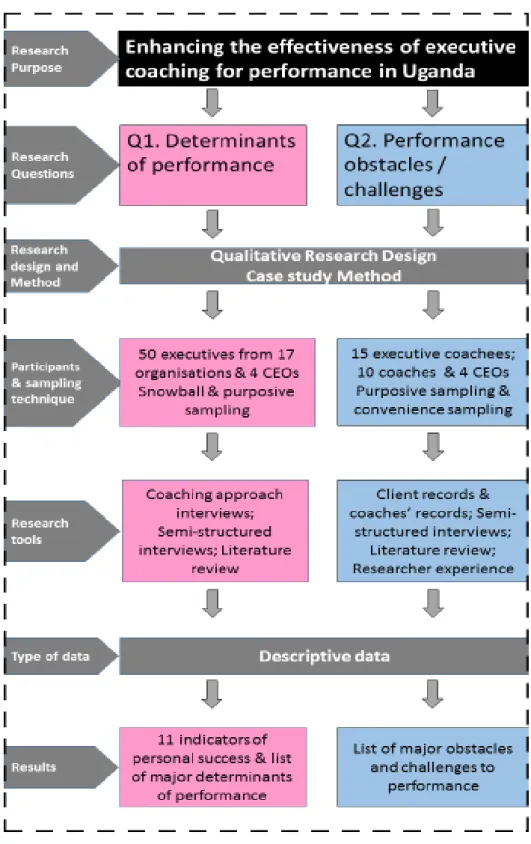
Figure 3.1: The Research Process ... 82
Figure 3.2: Summary of the Research Methodology ... 84
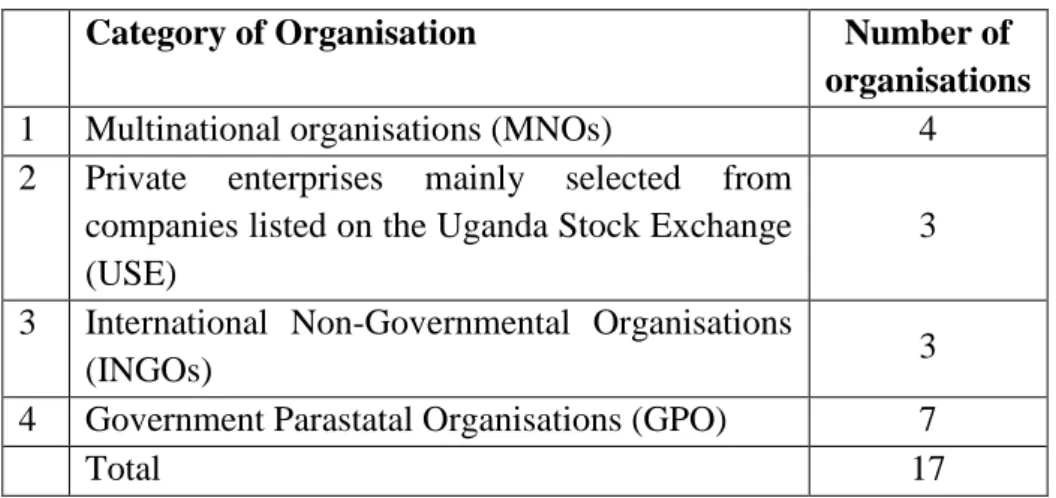
Figure 3.3: Organisations that Participated in the Study ... 91
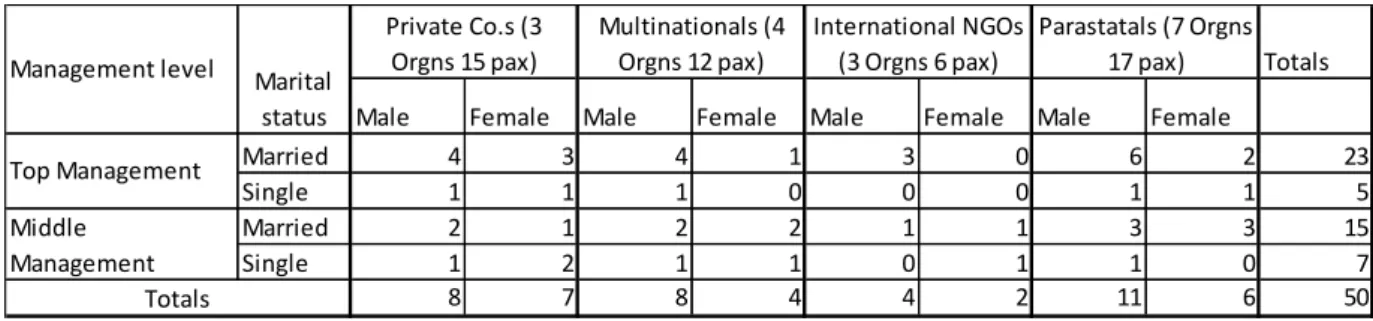
Figure 3.4: Composition of the 50 Corporate Executives ... 92
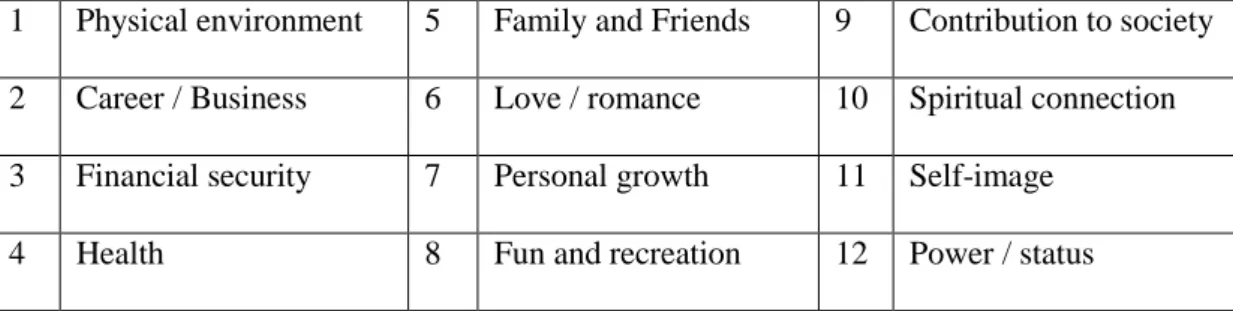
Figure 3.5: A Selection of Life Values ... 95
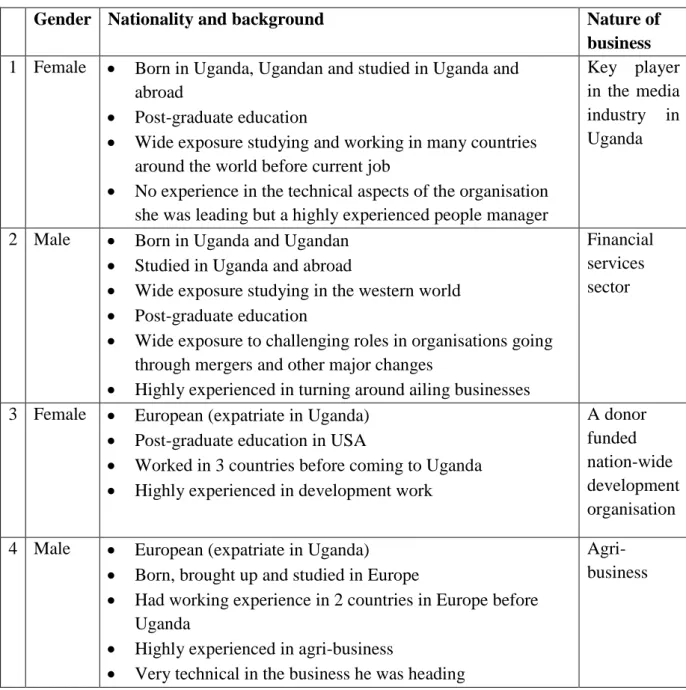
Figure 3.6: Description of the CEOs in the case study ... 109
Figure 4.1: Summary of Corporate Executives’ Definition of Personal Success ... 142
Figure 4.2: Gender and the Meaning of Personal Success to Corporate Executives ... 147
Figure 4.3: Marital Status and the Meaning of Personal Success to Corporate Executives ... 147
Figure 4.4: Class and the Meaning of Personal Success to Corporate Executives ... 147
Figure 4.5: Classification of Organisation and the Meaning of Personal Success to Corporate Executives ... 148
Figure 4.6: Summary of Key Points from the CEO Stories ... 151
Figure 4.7: Summaries of Findings / Themes from the CEO Case Studies ... 158
Figure 4.8: Aggregated Challenges Listed by Nature and Gap Owner ... 165
Figure 4.9: Summary of Data Gathered from Coaching-practitioners ... 172
xiii
Figure 4.11: Applications of the Definition of Personal Success to the Executive
Coaching Process ... 178
Figure 4.12: Executive Performance Pillars and their Data Sources ... 229
Figure 4.13: Benefits of the Project to the Different Stakeholders ... 233
Figure 5.1: Key Aspects of the Context of Executive Coaching in Uganda ... 239
Figure 5.2: Relevant Findings from the Review of Coaching Models... 241
Figure 5.3: Examples of Actions that Motivated Staff to Perform ... 244
Figure 5.4: Goal Alignment Model ... 246
Figure 5.5: Justifying a new Working-culture using the Definition of Personal Success and GAM ... 252
Figure 5.6: Illustration of the Executive Performance Pillars ... 255
Figure 5.7: Executive Performance Tool ... 256
Figure 5.8: Description of Scoring Scales ... 262
Figure 5.9: EPT as a Tool to Guide Priority Setting for Performance Enhancement Action ... 263
Figure 5.10: Suggested Guide to Interpretation of the Scores ... 264
Figure 5.11: The Application of GAM and EPT in an Executive Coaching Program ... 265
xiv
ABBREVIATIONS
ACCA Associate of Certified Chartered Accountants
APCM Association of Professional Coaches and Mentors
BDS Boss-Dependency Syndrome
CA Coach Africa Limited
CACR Coach Africa Client Records
CCL Centre for Creative Leadership
CCU Coaching Community in Uganda
CEO Chief Executive Officer
CICS Coach in Control Style
CIMA Chartered Institute of Management Accountants
COACH Connect, Open, Apply, Check, Highlight
CV Curriculum Vitae
EAC East African Community
ECS Empowered Coachee Style
EVP Employee Value Proposition
EPP Executive Performance Pillars
xv
FACTS Feedback, Accountability, Courageous Goal, Tension, Systems Thinking
GAM Goal Alignment Model
GAS Goal Attainment Scaling
GPO Government Parastatal Organizations
GROW Goal, Reality, Opportunity or Options, Will
HRMAU Human Resource Managers’ Association of Uganda
HRM Human Resource Manager
ICF International Coach Federation
ICSA Institute of Chartered Secretaries and Administrators
IGT Informative Group Training
INGOs International Non-Governmental Organisations
ISO International Organisation for Standards (ISO 9001:2008)
MBA Masters in Business Administration
MBTI Meyers Briggs Type Indicator
MDD Music, Dance and Drama
MDG Millennium Development Goals
MMR Mixed Methods Research
xvi MTN Mobile Telephone Network
NDP National Development Plan/s
NGO Non-Government Organisation
OJT On-Job-Training
ON Observation Notes
OD Organisational Development
PIP Performance Improvement Plan
PRISM Personal, Realistic, Interesting, Specific, and Measurable
PCC Professional Certified Coach
PESTEH Political, Economic, Social, Technological, Environmental, and Historical
RACSR Relationship, Assessment, Challenge, Support, Results
SCO Social Cultural Orientation
SPSS Statistical Package for the Social Sciences
SMART Specific, Measurable, Agreed, Realistic, and Timeline
TRG Training Resource Group
USE Uganda Stock Exchange
UTL Uganda Telecommunications Limited
17
CHAPTER ONE: INTRODUCTION
1.1Introduction
To frame the context of this study I give a background to the study specifically introducing the setting in terms of five perspectives: 1) the country, Uganda; 2) the coaching industry in Uganda; 3) Ugandans and performance; 4) the cultural conceptualisation of performance in Uganda; and 5) the background of the researcher. The introduction also covers the problem statement, objectives, research questions, conceptual framework, and the rationale and scope of the study.
Uganda has been striving to develop economically over the past 50 years, since independence in 1962. With a population of 34.9 million people and per capita income at USD 506, about USD 1.39 a day, Uganda is classified as an underdeveloped country (Uganda Bureau of Statistics 2014: 6, 13). Among the most critical challenges Uganda is facing is the low productivity of its labour-force and therefore, there is a drive to increase productivity to eradicate poverty. In fact, Uganda’s planning authority reports that, ‘Uganda is faced with low labour productivity levels with a total factor productivity index of less than a unit compared to the global competitiveness standard of at least five units’ (National Planning Authority 2015: 65). There are also documented policies and strategies that are hoped to enhance poverty eradication by 2040. This drive towards poverty eradication is further documented in the National Vision Statement: ‘A transformed Ugandan society from a peasant to a modern and prosperous country within 30 years’ (Uganda Government n.d. :3).
18
Movement from peasant to modern economy calls for strategies to improve labour productivity. Uganda government is focusing on removing the critical barriers to productivity through skills development, curriculum and education system change, infrastructure development, and performance tools. Among the number of strategies that are being employed towards improving labour productivity is massive skills development and re-deployment of human resources into modern export oriented goods and services, and the private sector (National Planning Authority 2010). In addition, these strategies target rural communities and youths because they form much of the working population in Uganda. This thesis is positioned within the context of improving labour productivity in urban settings; especially that of corporate executives since they offer leadership that is core to organisational performance. Most specifically, this study focuses on executive coaching as a performance enhancement intervention, and addresses cultural issues, attitudes, mind-sets and perceptions.
1.2Coaching Industry in Uganda
Coaching has been defined differently among Ugandans as will be discussed later. The International Coach Federation’s definition informs this study: ‘partnering with clients in a thought-provoking and creative process that inspires them to maximize their personal and professional potential’ (International Coach Federation, n.d.). Since coaching is about optimising potential, executive coaches keep searching for more effective ways of mining executives’ potential.
19
While executive coaching is a relatively new intervention in Uganda (just over ten years), elsewhere in the world coaching has become widely recognised. For example, there were at least 44,000 coaches in the world by 2008/9 compared to 20 in Uganda (Frank Bresser Consulting 2009). Over the years, it has become desirable, even fashionable, to use coaching as a tool to support talented leaders in achieving stretch goals (Blakey and Day 2012). To remain relevant, coaching needs to suit the changing environment, corporate needs, and client expectations. This study contributes a coaching framework for the Ugandan context as well as exposing the Ugandan coaching industry to the rest of the world.
1.3Ugandans and Performance
There is a general view among top managers (that I have worked with as an executive coach) that Ugandans are poor performers. Ugandans are the laziest people in East Africa with the lowest labour productivity in terms of its value-added per worker (Baguma 2010). In fact, the World Economic Forum (2014) ranks Uganda’s labour productivity in position number 126 out of 144 countries. Further, in Figure1.1, I give a comparative ranking to position Uganda’s productivity within the East African region, using the findings Schwab (2014).
20
Figure 1.1: Labour Market Efficiency—Pay and Productivity Ranking
Country Value Rank/144
Kenya 4.1 56
Rwanda 4.0 68
Tanzania 3.3 122
Uganda 3.2 126
Data source: Global Competitiveness Report (2014: 233, 323, 359, 371, 377) (Schwab, 2014)
As shown in Figure1.1, compared to other countries within the East African Region, Uganda has the lowest labour productivity. The Government of Uganda also acknowledges that: ‘Addressing labour productivity and opportunity remains a major challenge for the Ministry [Ministry of Gender, Labour and Social Development] and the Government as a whole’ (Office of the Prime Minister 2012:14).
It is important to note that the level or quality of performance in Uganda is also informed by the work ethics, which is rooted in the cultural environment in which Ugandans are socialised. In fact, the World Economic Forum (2014:370) lists ‘poor work ethic in the national labour force’ as number seven (out of sixteen) of the most problematic factors for doing business in Uganda (and business is usually about productivity). The poor work ethic in both private and public sectors have a historical trace from the 1960s:
Uganda has witnessed persistent poor employee performance in public organizations since mid-60s, which researchers attribute to the 1966/67 crisis and the political turmoil of the early 70s up to mid-80s. Despite government’s effort to avert the crisis by
21
introducing reforms to improve employee performance, the situation has not improved.
Kyamanywa (2011:15)
The timing mentioned matters because there is no record of having had baffling performance issues before the mid-60s. Until 1962, Uganda was a British protectorate but communities were still much connected to the local kingdoms / chiefdoms and traditional customs. In the mid-60s the kingdoms and chiefdoms were abolished and with them went the emotional connection to authorities and the sense of community. What, within those changes, could have caused the change of mind-sets? I discuss that question briefly in Chapter 5.
From the point of view of individual employers in the Ugandan labour market, one expatriate client complained: ‘I have tried all the rules in the book to get my executives to deliver results and nothing seems to work’. Another client, a Ugandan, from a higher education institution had turned down an opportunity to be promoted to senior management level within her department before I met her in a coaching session. She told me that: ‘people do not want to perform and I do not know how I can make them perform. It is so difficult to change their attitudes towards work; they want to be paid for work not done’. Performance at the work place is a challenge irrespective of sector, industry, or employee category.
22
1.4Cultural Conceptualisation of Performance in Uganda
Having explored the concept of culture, Plaister (2015) writes that culture is not only complex, it has varying definitions which are also sometimes conflicting. She presents culture as, among other things, the cultivation of learning. ‘Culture is to a human collectivity what personality is to an individual’ (Hofstede 2001: 10). In this study, when I use the word culture I mean one’s beliefs and total way of life. In a similar way that Reuel Khoza (1994) describes the ‘collective unconsciousness’ that encompasses specific distinctive ways of behaviour, expression, and spiritual self-fulfilment. Since there are indications that the performance problem is also rooted in the history and traditions of the peoples of Uganda, it is important to shade some light on the cultural dimension of performance. Cultural orientation plays an important role in shaping perceptions and work ethics (Ernst and Chrobot-Mason 2011). Uganda has a wide diversity of cultures originating from many different African peoples: Bantu, Sudanese, Nilotics and Nilo-Hamites (Trowell and Waschmann 1953). As would be expected in such a diverse community, there are many languages (at least 45) and numerous dialects (Jjingo 2011). While Ugandans have different languages and cultures, there are some common elements that cut across most ethnic groups. For example, all cultures promote obedience, respectfulness, friendliness, politeness, calmness, and patience with other people, most especially the elders.
Ugandan work ethic requires people, including corporate executives, at all levels to apply these characteristics, collectively called Ubuntu. According to Brubaker (2013: 101) ‘Ubuntu is a term commonly used within Bantu languages in East, Central and
23
Southern Africa to refer to a worldview, or philosophical approach to human relationships, that elevates the importance of humanness and shared community’. The concept developed out of the need to depend upon, and support, each other (Gade 2011: 317). In its use within management, Ubuntu is often conceptualized based on five social values (survival, spirit of solidarity, compassion, respect, and dignity)’ (Brubaker 2013:101). Further, ‘Ubuntu is associated with kindness, gentleness, humility, respect and love’ (Mayer 1980 cited in Gade 2011: 309). For example, it is not uncommon to get staff taking a day off because a neighbour has lost a close family member. A person with Ubuntu is expected to treat his or her neighbours as they would a member of their family. As Brubaker (2013: 101) suggests, in business environments, Ubuntu may be expressed through open-handedness and concern for the needs and interests of others in the organization’. In summary, Ubuntu is ‘an excellent African quality’ (Davis, et al.1936 cited in Gade 2011: 308).
While Ubuntu values may have advantages for performance, there are many traditions and practices in Uganda that do not support the conceptualisation of performance which focuses on optimising results. Some of these beliefs and practices are evident in proverbs, sayings and tales, (among other cultural archives) which are passed on from one generation to another. An example of such a saying is that among the Baganda (of central Uganda): ‘Nkole mpoomye; Nalunga yagoya amayuni,’ literally meaning, to be creative, Nalunga went to the extent of mashing yams, yet among the Baganda yams are not mashed. Nalunga was a king’s concubine who wanted to be different, or creative, by changing the way of cooking but she ended up committing a taboo. When people try to be different, they are seen as rebels or people that are
24
showing off, a behaviour that is criticised and shunned in the cultural context of Uganda.
Further, elders, leaders or generally people in authority are considered to be all-knowing and their views are highly regarded. Another saying among the Baganda illustrates this point: ‘Etemwa omukulu: tenyiigirwa. What is decided by legitimate authority [or an elder]: is not resented by the subjects’ (Walser 1982, Proverb no.1798). This saying suggests that subordinates should implement their superiors’ decisions without question. Yet, another saying goes: ‘Akulembera: y’akuwa amagezi. He who walks in front (of you): gives you wisdom’ (Walser 1982, Proverb no.291). Moreover, another proverb says: ‘Omutaka akulembedde: nti nnaabula? Meaning that for if you are following the leader, you should not worry about getting lost’ (Walser 1982, Proverb no.4337). Through these proverbs, the Baganda emphasise the dependence on leaders or elders for wisdom and decision-making.
Generally, Ugandans are socialised to trust in the ability of the leader to provide guidance and so, employees tend to believe that if they are following the leader, performance is guaranteed. Therefore, performance in the Ugandan cultural setting is understood as doing whatever one is told to do and respectfully following the guidance of leaders; which is performance by instruction. However, many leaders in the corporate setting do not appreciate performance by instruction; they would rather have staff that take the initiative to perform without being instructed. There seems to be a mismatch between the cultural idea of performance and the corporate understanding of performance. Plaister-Ten (2015) refers to coaching (which is an example of a
25
performance management intervention) having emerged from a western culture that has a tendency towards goal and performance-orientation. And yet, the Ubuntu
cultural values primarily focus on people’s feelings and maintaining social harmony. Performance, in form of results delivery, is therefore a foreign concept to many Ugandans and in many ways, it is perceived to be inhumane (lacking Ubuntu). The challenge for corporate leaders in Uganda therefore is how to express Ubuntu while enforcing performance and, sustaining that balance. When such a balance happens, leaders get a place in the ‘hearts and minds of their employees’ Nkomo and Kriek (2004: 87). However, if not controlled and if results are not emphasised, Ubuntu may have a negative effect on performance.
From the cultural and social perspectives of the Ugandan culture, performance mainly depends on the leaders’ ability to make the right decisions and give the right instructions in a humane manner. In addition, performance considers the common good of a community and feelings of the performer. However, considering changing times and expectations, the traditional ‘all-knowing’ and humane leader that directs an obedient work-force may not be the way forward to enhancing performance in modern Uganda.
Another cultural aspect that affects the performance of Ugandans is time management. In Uganda, time is a period; it is a range, not a point. One of the common challenges that my clients present is; staff not keeping deadlines. A manager to say that one has not performed because he or she did not keep the deadline is considered as being malicious, petty and extremely unreasonable. Even in ordinary life, outside business,
26
it is common for someone to be 2 hours late for an appointment and still expect the person with whom the appointment was made to be waiting. The person that comes late would do as much in similar circumstances; and so, they expect the same from others. Addressing time management misconceptions takes a lot of effort.
The above sections have framed the environment within which executives in Uganda perform. Most noteworthy are: That poor work-place performance is a national challenge; the importance of the Ubuntu cultural values on perceptions about performance. There are good and bad aspects of this age-old concept; people in authority are given so much importance and power almost to a fault, and in addition, there is too much dependence on the leader; performance is understood differently by people with different cultural/education/working backgrounds; and lastly, that time is a period, not a point. There is generally no sense of urgency in results delivery.
1.5Researcher’s Background
This study draws from my educational and career background as well as experience as a practitioner-researcher. My education background includes: a Bachelors in Commerce (Accounting) Honours from Makerere University; Associate of the Australian Insurance Institute; and Certified Professional Coach (CPC). I bring to this study a work experience of 28 years, across 4 careers (accounting, marketing, insurance, and coaching), in 13 African countries.
27
I have been in full-time executive coaching business specialising in coaching for performance for over 10 years and I have offered service to top and middle executives in more than 100 organisations. Throughout this period, I have become increasingly interested in performance for top and middle corporate executives who are also my core clients. At the time of the study I was a coordinator of the Coaching Community in Uganda (CCU). CCU is an association of coaches in Uganda formed to spearhead the development of the coaching industry. Its membership includes professional coaches practicing in Uganda. I am also the founder of Coach Africa Limited (CA), the first coaching firm in Uganda. I established and managed CA for 6 years before handing it over to a management team. Apart from executive coaching, I develop and deliver coaching skills training programs for leaders. In addition, I facilitate learning and development of leadership skills for corporate executives at top and middle management levels.
This background has positioned me in a place where I have personally encountered numerous organisational performance challenges, and received many calls from my clients for solutions in addressing such challenges. As a performance coach, I have been drawn into the search for performance enhancement solutions and it is from that background that I will be sharing experiences and lessons learned in this study.
1.6Problem Statement
On 1 July 2010, Kenyan President Mwai Kibaki officially launched the East African Common Market Protocol, which opened the way for the free movement of labour,
28
capital, goods and services within the East African Community (EAC). The EAC is an intergovernmental organisation comprising five countries: Burundi, Kenya, Rwanda, Tanzania and Uganda. With the advent of the free movement of labour, perception of the productivity of labour becomes a significant factor because employers in competitive sectors tend to opt for the human resource they perceive to be best value for money. There has been a perception that productivity of Ugandans at the workplace is relatively low compared to other countries in the EAC (Baguma 2010; Ssemogerere 2005). Considering that Uganda is part of the EAC, there is a danger that Ugandans will lose out on top corporate assignments.
My involvement with top private and non-governmental organisations over the past 20 years reveals that increasingly, non-Ugandans are running several big organisations in Uganda. Indeed, using the list of organisations in this study as an example, 9 out of the 17 organisations (53%) are headed by non-Ugandans. The organisations represented are a cross-section of the top employers in Uganda. If 50% of top private and international non-government organisations prefer non-Ugandan top executives, there is a problem. In neighbouring countries, a similar sample would show more nationals occupying the top jobs. Corporate organisations in Uganda choose to face the extra cost, and administration burden, of hiring expatriates because expatriates are perceived to perform better than Ugandans.
Indeed, this problem has also been recognised at the National level (National Planning Authority 2010) and is specifically addressed under the plans for mass capacity and skills development, and the improvement of performance management systems in the
29
National Development Plan (NDP). The NDP outlines a range of strategies, mainly targeting rural masses, to uplift capacity and skills of different categories of people that are the priority for the national government, such as: the unemployed youth, women and people with disabilities. However, in the NDPs published so far, there are no interventions specifically directed at improving productivity and performance of corporate executives within the private sector and Non-Government establishments. Further to that, these strategic documents (the NDPs) have so far not included coaching as an intervention for low productivity, or any other of the listed challenges. However, at a global level, executive coaching has been observed to be an effective performance enhancement intervention for leaders (ICF Turkey Chapter 2014; Lawless 2009), although it is little known among Ugandan corporate executives and policy makers in Uganda. This research contributes towards addressing the problem of poor performance among corporate executives in Uganda focussing on coaching as a key intervention. Specifically, I identify the pillars of executive performance and suggest a framework that coaches and leaders may adopt to improve executive performance.
1.7Objectives
The overall purpose of this study is to develop a framework to improve the effectiveness of executive coaching for performance in Uganda. Specific objectives include:
1. To study executive performance in Uganda by examining the determinants and obstacles/challenges for performance to identify opportunities to improve the effectiveness of executive coaching
30
2. To suggest a framework for executive coaching in Uganda based on the findings of this study
1.8Research Questions
1. What are the key determinants of executive performance in Uganda? 2. What are the obstacles to executive performance?
1.9Conceptual Framework
This study is prompted by the perception that Ugandans, and specifically Ugandan corporate executives, are poor performers. The conceptual framework is informed by 3 major elements: 1) understanding the performance environment. This includes the key players (executives, their staff and supervisors), their perceptions about performance, and the environment within which performance happens; 2) the factors that contribute towards performance (enablers and obstacles to performance); and 3) the models, tools and techniques that might successfully address poor performance. The entire study is about identifying new insights and gaps within the 3 areas, and using the knowledge to propose a framework that will positively impact executive coaching for performance. Figure 1.2 is a diagrammatic representation of the conceptual framework.
31 Figure 1.2: Conceptual Framework
This conceptual framework is based on Blakey and Day’s (2012: 188) definition of performance: “Performance = understanding x capability x motivation”. The authors contend that for one to perform, all the three factors (understanding, capability, motivation) must be considered: first, the degree to which the performer understands him and herself and their job environment; second, the performer’s level of competence or capability; and thirdly, the performer’s willingness to do the job. This definition summarises the concept of performance as presented by other researchers (West and Milan 2001; Baser and Morgan, et al. 2008; Shafudah 2011; Nassazi 2013) and the role that coaches and leaders play in supporting the executives to perform. Using Blakey and Day’s formula, this conceptual framework suggests that I begin the search for performance solutions by understanding the performance environment (represented by the wider rectangle that embraces all the elements). With the lessons learnt from understanding the environment, including the socio-cultural aspects, I get
32
pointers to both determinants and obstacles for performance. These pointers in turn provide the raw material that informs the development of appropriate interventions for executive performance. And lastly, the conceptual framework shows that when appropriate interventions (including models, tools and techniques) are used to address performance obstacles and strengthen the executives’ ability towards the determinants, executive performance will be enhanced.
1.10 Rationale and Benefits of the Study
I focus on coaching for performance because of the performance challenge that has been explained in the problem statement. It is also what is most relevant for my practice since I am a performance coach. The results of this professional doctorate will be used to strengthen service provision at Coach Africa (CA). The following stakeholders have been identified as beneficiaries of this study, each in a different way: 1) CA (the organisation under which I offer services as executive coach); 2) the Coaching Community in Uganda, representing the coaching industry in Uganda; 3) the Human Resource Managers Association of Uganda (HRMAU), HR managers are the biggest influencers and users of coaching services in Uganda; and 4) the corporate executives. For better flow, since the benefits are linked to results, I have given an elaborate description of the benefits in Chapter 4 where I present the results of the study.
33 1.11 Scope of the Study
Performance, in the organisational setting, could take numerous directions including: the individual performers, managers of performance, organisation structures and systems that support performance, and the wider society and environment in which the organisations perform. This study covers work place performance as it relates to corporate executives in Uganda, specifically targeting performance of middle and top managers as performers and as managers of performers. My interest as an executive coach is directed towards the executives that directly influence the performance of an organisation. The study also covers professional executive coaching in a corporate environment and tools that may be used by such executive coaches, and the executives, to address performance challenges. The scope of this project does not cover the tracking, monitoring and evaluation of the results obtained by applying the framework and ideas shared.
Executive coaching is just over 10 years old in Uganda (Bwaya and Coaching Community in Uganda 2013). However, there is a lot to learn from other countries and communities that have applied executive coaching for a longer period. While the scope is 10 years (2005 to 2015), I have included relevant studies from earlier periods.
Geographically, the study is positioned within an urban setting covering organisations that operate in Kampala District. Kampala, being the capital city of Uganda, hosts the largest organisations in all sectors, and most coaching-clients and executive coaches work and live in Kampala.
34
In the introductory chapter, I have given a background against which to understand this study. I have also stated the foundations of the study: the problem statement; research objectives and questions; the conceptual framework; rationale of the study; and scope of the study. In the next chapter, I present the review of related literature.
35
CHAPTER TWO: LITERATURE REVIEW
2.1 Introduction
Given the fact that coaching in Uganda has had a short history, there is inadequate research on coaching corporate executives for performance. Until recently, employee training has been the most common human resource development strategy in both public and private sectors in Uganda (Nassazi 2013). As such, training as a performance tool has had more research attention and indeed research on executive coaching has lagged. While there is inadequate research on executive coaching in Uganda, there is quite a gamut of work done outside Uganda (Abbott 2006; Grant, et al. 2009) and this will form the bulk for this review.
In this chapter, I review literature related to the present research topic guided by the following themes: 1) executive performance; and 2) executive coaching for performance. For each of these themes, I review the state, type and trend of research, main arguments and research methodology. In addition, I identify the gaps in these studies and articulate the contribution of the present study.
2.2 Executive Performance
To get a better understanding of executive performance, I review the following areas: its definitions; what has been researched about executive performance; performance determinants; and performance obstacles for middle and top managers.
36
Since the declaration of the Millennium Development Goals (MDGs) in 2000, performance became an area of focus in the public and development sectors of the Uganda’s economy. In fact, performance is reflected in a few Uganda Government policies and project interventions including the National Development Plan (2010) and the National Local Government Capacity Building Policy (NLGCBP) (2005). The subject of performance has also drawn international attention (World Bank 2002; International Finance Corporatio 2006; Smith, et al. 2008; Schwab 2014). Organisational performance has also formed an important area of research by both national and international researchers. Research by Uganda-based authors has mostly taken the form of graduate dissertations (Katera 2003; Namusisi 2005; Mpanga 2009; Mwesigwa 2010; Kyamanywa 2011; and Nassazi 2013) while several international researchers (Nickols 2003; Therkildsen and Tidemand 2007; Baser, et al.2008; Ryan 2010; Kuye and Sulaimon 2011; Prywes 2012; Bagorogoza, et al. 2013) have undertaken a wider range of studies and presented them in different formats including journal articles, reports and chapters or sections in books. As such, in the last decade, the growing literature on organisational performance in Uganda draws as well on studies from outside Uganda.
2.2.1 Research on the Definitions of Performance
Authors have defined performance in different ways depending on the disciplines from which they come, and therefore, there is no single definition that is universally accepted (Namusisi 2005; Baser, et al. 2008). Indeed, authors with an interest in
37
human resource have defined performance differently from those informed by business and organisational development perspectives.
Human Resource (HR) Perspective
Nassazi (2013) defines employee performance as the contribution the employee makes towards achieving the organisation’s goals. In this case, performance is presented as a function of the employee’s contribution towards the organisation’s desired results. While that may be true, Nassazi’s definition is silent about the employee’s personal goals and how these may affect his or her contribution to the goals of the organisation. I argue that if performance is only about the achievement of the organisational goals, it is one-sided and therefore performance will not be optimized on either side. The employee will have performed if, in addition to meeting the organisational goals, he or she meets his or her personal goals. People are more motivated to perform if personal goals are also achieved. I articulate this argument in Chapter 4 and 5. Presenting a slightly different version of a human resource-based definition, West and Milan (2001: 18) suggest that, ‘Performance = potential – interference’. In other words, performance is achieved by having the right person for the job (one with potential) if impediments, obstacles or interferences are minimised. Obstacles may be physical, psychological or even social.
The above human resource-based definitions assume that employees have the ability and willingness to perform. The two definitions are limited in a way that they place the responsibility of performance on the employer and yet, the employee has the key
38
to enhancing his or her performance. In Nassazi’s case, whatever the employee does towards goal achievement (effort) may be considered performance irrespective of the quality and quantity of output. West and Milan emphasise that the onus is on the organisation to remove obstacles and offer the right environment for performance. Hinging performance on such a condition (removing obstacles) may not be appropriate in highly competitive sectors where an individual’s personal resolve to pursue results is paramount.
Business Perspective
Contrary to the human resource (HR) perspective, business oriented definitions tend to put more emphasis on the performer (Katera 2003; Shafudah 2011). Katera (2003) adopts the Kaplan and Norton (1992) point of view and defines performance as production of quality in relation to the expected results or set goals. In the same way, Shafudah relates performance to work done in relation to the organisation’s mission. Shafudah (2011: 8) states, ‘Performance means an action by an employee that has produced an output relevant to an employee or organization’s goals’. Shafudah’s definition of performance, which recognises employees’ goals as performance in a corporate setting, is rare. I would concur with this position if Shafudah used the conjunction ‘and’ instead of ‘or’. This definition should read: ‘an action by an employee that has produced an output relevant to an employee [and] organization’s goals’. Adding ‘and’ is a recognition of the importance of both employee and employer in the performance equation. Although both authors refer to expected results, Katera emphasises the aspect of quality while Shafudah focuses on incremental contributions towards accomplishing the job.
39 Organisation Development (OD) Perspective
Informed by the organisation development perspective, Baser, et al. (2008: ii) define performance as, ‘the ways in which organisations or systems apply their capabilities, and the results of that application in terms of the ability to deliver and to function’. They further contend that performance ‘is about execution and implementation, or the application and use of capacity’ (Baser, et al. 2008: 85). In contrast to the business (output) and the human resource management (input) definitions, the Baser, et al. definition focuses on application of capability and capacity – this is working within the space between the input and the output. In this case, performance is not only the input and the output, but also the efficiency in working with the input to generate an output that is commensurate. This view implies that performance is not only about the functioning of the inputs or the outputs, but it also matters what capability and capacity is engaged in the mix; bringing into play the process of performance as a third dimension (after the inputs and the outputs).
Considering the viewpoints from different authors and practitioners, performance is defined in terms of the inputs that feed into the process, the effectiveness and efficiency of the processes, the outputs produced from the process and the outcomes or goals resulting from the outputs. It is also important to note that each successive step is cumulative and therefore focusing on outcomes automatically includes outputs, processes and inputs.
40 Coaching Perspective
As an executive coach from a business perspective, I define performance as the application and use of resources towards meeting personal and organisational goals. In this sense, ‘resources’ covers the abilities (active or latent), willingness, time, tools and facilities available to both the employee and the organisation for the execution of a task. Coaching is typically target-oriented and it also has interest in the innate potential (untapped capacity) of the performer and the organisation. The goal of a coach is to catalyse the coaching-client’s performance process in such a manner that the available resources are used more effectively and efficiently than they would otherwise have been without a coaching process. As a performance coach, I measure performance in relation to the set goals and the resources available. Spencer (1998) as cited in Namusisi (2005: 34) has also established the linkage of personal and team goals. Spencer contends that, ‘organizational performance arises from individual performance and team performance, which must be directed by the organisational vision, goals and strategy as well as their competencies’ (2005: 34). In this case, performance may be the actual performance of the executive/ the leader; it could also be performance of teams that executives are responsible for, considering that leaders achieve some of their results through other people. The definition from the coaching perspective serves as a bridge to address the gaps in the reviewed definitions from the business, human resource management and organisation development perspectives. The coaching perspective seems to consider 3 variables: Inputs, the process, and the quality and quantity of outputs. It also includes goal achievement for both the individual and the organisation.
41
Having considered literature on executive coaching, next I present my findings from the literature on executive performance.
2.2.2 Research on Executive Performance
Examining the available research on corporate business in Uganda reveals that there has been significant focus on private organisations and social service departments in Uganda’s public sector. There is substantive research on performance covering private multinational organisations (Namusisi 2005; Nassazi 2013; Bagorogoza et al. 2013). This is supported by the vital role multinationals play in the Ugandan labour market. In addition, multinational organisations have supported research on organisation performance because it helps them to develop better understanding of the local market and so there is mutual benefit between the researchers and the funding organisations. Further, donor agencies sponsor studies on the performance of the public departments they support to evaluate the value realised from the funds they invest (see also Nalule 2011).
Namusisi (2005) studies the relationship between what she calls operant competencies, empowerment, commitment and organisational performance in Uganda’s insurance industry focusing on agents and their supervisors. Inclined with Druckman et al. (1997), Namusisi recognises that there is no proof to justify determinants of performance in organisations. She adds to the understanding of performance in the Ugandan setting by concluding that articulating specific skills and behaviours required
42
to perform a role would enhance results delivery. She points out the challenge of organisation survival in an ever-changing environment and advises that, commitment and empowerment of employees are critical ingredients in sustained goal achievement. Namusisi states that there is low performance in the insurance industry in Uganda and that answers to the performance challenge are still sought. While Namusisi’s study focuses on the insurance industry, her research feeds into the present study on corporate executives. Her study is important in establishing my argument about low performance of executives in Uganda.
Focusing on telecommunications companies and specifically, Uganda Telecommunications Limited (UTL), Warid Telcom and Mobile Telephone Network (MTN), Nassazi (2013) examines the impact of training on the performance of employees in the telecommunication industry in Uganda. She concludes that enhancing staff capacity through training and development affects performance at the workplace. While the present study agrees that training is important in performance enhancement, training does not stand alone without other interventions. The current study fills the gaps in Nassazi’s research as discussed in Chapters 4 and 5.
Mpanga (2009) carries out a study based on the argument that performance management is a key factor to achieving results in Uganda’s public sector. He makes an evaluation of the implementation of performance management in Uganda’s public sector and looks at how Uganda’s Ministry of Public Service manages its human resource. Mpanga (2009: 83) recognises the performance challenges in Uganda’s public sector and concludes that, while the Ministry of Public Service has a defined
43
performance management system in place, the system is not implemented as set. However, my personal experience has been that however good a system is, the expected results may not materialise if the people that are supposed to use it do not have the right mind-set. This forms my point of departure for discussion in Chapter 5.
Similarly, Nalule (2011) studies the relationship between performance management practices and employee performance in public organisations in Uganda. After studying 517 participants in 2 government institutions, she asserts that despite the various reforms, performance in government institutions has not improved. Her conclusion is that, ‘selected performance management practices (decision rights, performance contracts, organization resources and performance measurement) had a significant positive relationship with employee performance in public organizations in Uganda’ (2011: 170). In other words, the government reforms may not be focusing on the aspects that most affect performance. Both Mpanga (2009) and Nalule (2011) highlight the importance of employee engagement in results delivery and they also provide insights into performance in public institutions such as the ones included in this study. In this study, I explore more into the employee engagement aspect proposed by the 2 researchers (Nalule and Mpanga) to seek for determinants of performance.
To fill the gaps created by the limited scholarship on performance in Uganda, especially for corporate executives as individual performers, it is necessary to review studies on performance outside of Uganda. Binney, et al. (2009) studied forty leaders over four years to come up with a leaders’ guide for influencing teams to optimise
44
results. Their book describes what it takes to achieve ‘living leadership’ and packages the recommendations in 6 guidelines: 1) don’t be a hero; 2) get connected; 3) get real; 4) get help; 5) don’t panic, you’re only human; and 6) become more versatile as a leader. This study covers the same sample population as in the current study and it offers comparison with the performance situation in Uganda.
Further, Ernst and Chrobot-Mason (2011) carried out a research through two Centre for Creative Leadership (CCL) projects: Leadership Across Differences and Leadership at the Peak. They contribute enormously to the research on leaders’ performance. Their ten-year project involved over fifty global researchers and 2,800 interviews across six world zones (the authors do not specify the zones). The result of their work is a book that gives instruction on how to achieve direction, alignment and commitment and therefore achieve peak performance with diverse work teams. They suggest 6 practices for solving problems, driving innovation, and transforming organizations: 1) buffering, defining boundaries to create safety; 2) reflecting, creating understanding of boundaries to foster respect; 3) connecting, suspending boundaries to build trust; 4) mobilizing, reframing boundaries to develop community; 5) weaving, interlacing boundaries to advance interdependence; and 6) transforming, cross-cutting boundaries to enable reinvention. They also studied personal identity as it relates to leadership, and concluded that identity is a critical issue in leadership because, ‘it allows us to meet two fundamental needs: integration and differentiation’ (Ernst and Chrobot-Mason 2011: 42). Writing on the performance context or organisation environment, the authors suggest that talent, culture and learning systems affect the effectiveness of leaders working across different boundaries. As such, any assessment of organisational performance should not focus on the leadership style alone, but the
45
environment of performance as well. And yet, these two factors do not function alone; it is also important to consider the employees’ capabilities to perform and / or employees’ motivation to perform. The present study considers the performers’ environment as a key factor in performance as discussed in Chapter 5.
From the studies reviewed thus far, I observe that performance is still a challenge (Nalule, 2011) and so there is a justification for contributing towards the discourses on performance enhancement interventions. There are many different perspectives of performance that have been studied already in various contexts. I further note that most of the research that has been done about performance in Uganda has been based on case studies and personal experiences. Looking at individual performance from the point of view of corporate executives is a gap that this study addresses.
2.2.3 Research on Determinants of Executive Performance
Several studies have paid attention to strategies that improve performance. Mwesigwa’s (2010) public sector study focuses on education and particularly performance of secondary school teachers. The study was conducted in Ibanda District (Western Uganda), a typical rural setting. Mwesigwa’s work has a unique place in the study of performance because there is inadequate research on organisational performance from a rural setting. Mwesigwa examines the impact of training on employee work performance behaviour among secondary school teachers using a self-administered questionnaire, observation checklist and an interview guide. The findings revealed that training has a positive impact on the teachers’ work behaviour and
46
improved performance. Mwesigwa’s study findings are very similar to those of Nassazi (2013) even though the settings are different. While Mwesigwa’s research is on public sector, education, rural and purely local administration, Nassazi addresses a private sector, telecommunication, urban, and multi-national organisation. Mwesigwa and Nassazi’s differences in context notwithstanding, in both studies training is seen to have a direct relationship to results delivery.
Studying high performance in financial institutions in Uganda, Bagorogoza, et al. (2013) argue that performance is determined by, “management quality, workforce quality, long-term orientation, continuous improvement, openness and, action orientation”. They advise that the high-performance organisation framework should be adopted to address performance challenges in the financial institutions. While I concur with Bagorogoza and team, I note that their findings do not cover the socio-cultural aspects of performance and this is one of the gaps addressed in Chapter 3.
Another area, which has attracted the attention of researchers, is about the factors that shape performance at the work place (Katera 2003; Nickols, 2003). In his study, Katera (2003: x) takes a business management perspective and examines “corporate governance (Transparency, Fairness and Accountability) and its predictive strength on perceived performance in selected cases of failed, poorly and well performing organizations in Uganda”. Katera presents a range of indicators for business performance, “good corporate environment and the associated re-evaluation of production processes and adoption of innovative solutions” (p.41). However, he does not explain the performer’s role nor does he present specific tools to generate the
47
performance. The current study covers the gaps in Katera’s study of the performer’s role and tools to support performance enhancement.
Similarly, Nickols (2003) examines seven factors that affect the performance of an individual in the workplace: 1) goal clarity; 2) repertoire; 3) knowledge of structures; 4) feedback; 5) mental models; 6) motivation; and 7) environment. He discusses how these factors contribute to achieving results. Building on Nickols’ findings, Chapter 5 in the current study goes further to establish the techniques that leaders may employ in order to get executives to perform.
Meyer (2004) contends that executives play a pivotal role in the success of organisations and therefore, leadership is the major determining factor in organisational performance (see also Bacal 1999; Armstrong and Murlis 2004; Binney, et al. 2009; Lombardo and Eichinger 2009; Ernst and Chrobot-Mason 2011). In fact, Lombardo and Eichinger (2009) gave a detailed leadership competence framework of sixty-seven competences including their descriptions and how they can be achieved. They argue that leaders need to be competent in the relevant set of leadership competences if they are to perform. They contribute to performance enhancement by making it easier to isolate aspects of the key competences that may need intervention. The authors argue that a more accurate diagnosis of the competence gap is likely to lead to the selection of suitable interventions, and consequently performance enhancement.
48
Leadership style is a major factor in performance. In fact, Armstrong and Murlis (2004) argue that leadership style needs to be coupled with the organisational climate to determine performance. Indeed, there is a dialogical relationship between style of leadership and the organisational climate. While the organisational climate affects the leadership style, the leadership style in turn shapes the organisational climate. Similarly, in their search for what makes effective leadership, Binney, et al. (2009: 19) agreed that among other things, ‘the success or failure of leaders is dependent on the ability to work with the context’, which Armstrong and Murlis (2004) call ‘organisation environment’. Binney, et al. (2009) also suggest that in order to perform, a leader needs ‘to get connected, to get real, to acknowledge [his or her] limits and value who [he or she] really [is]’ (ibid.). As such, inter-dependence among the team is very important.
According to Wolmarans (2004: 211), performance is influenced by an intersection of three factors: 1) motivation – “want to do”; 2) competence “can do”; and 3) opportunity “allowed to do”. She argues that, to achieve expected performance, the performer needs to be motivated to perform, he or she should have the competences required to perform, and should also be given an opportunity to perform. The findings in the present study include all three of Wolmaran’s factors that influence performance. However, regarding the third factor, “allowed to do” the challenge in the context of Uganda is that staff often do not exercise authority even when they can do. Wolmaran’s findings seem to imply that a motivated and able performer will perform if they are given the opportunity.
49
Embracing a wide range of determinants of performance, Armstrong and Murlis (2004: 60) present four principles for continuous performance improvement: 1) planning [which affects understanding and motivation]; 2) managing, including coaching for performance improvement [which affect employees’ capacity and motivation]; 3) feedback and reviews [affecting capacity and motivation]; and 4) reward and recognition [affecting motivation]. These principles culminate into what Armstrong and Murlis have called ‘performance management’. The authors define performance management as the process for establishing a shared understanding about what is to be achieved and how it is to be achieved. It is an approach to managing people that increases the probability of achieving success. As such, performance should be managed, it does not just happen and the process of managing performance is critical to the outcome. Indeed, Bacal (1999: 93) advises that performance is determined by people, resources and systems”.
In reviewing literature on determinants of performance, the following are my findings: Leadership related determinants [good governance, continuous improvement, openness, planning]; performance management related [goal clarity, performance systems and structures, performance monitoring and evaluation, rewards]; staff related [competence, motivation, openness, innovation]; and understanding of self, the work environment and people. While this debate is pertinent to performance, in the context of Uganda, there is need to go beyond what Ernst and Chrobot-Mason (2011), Wolmarans (2004), Armstrong and Murlis (2004), and Bacal (1999) have presented. In this study, I suggest that performance is also contingent on the performer’s attitude and cultural orientation, which I set out in Chapters 4 and 5.
50
2.2.4 Research on Performance Obstacles for Middle and Top Executives
There are many challenges that leaders face, categorising and prioritising them generally is difficult. Studying leadership perspectives in Southern Africa, and specifically considering leaders’ challenges, Makwana (2004) presents a structure that may also be used to identify challenges from different perspectives: PESTEH which stands for Political, Economic, Social, Technological, Environmental and Historical. That structure helps us consider perspectives that may otherwise be neglected. For example, in the case of South Africa, the historical angle in PESTEH is critical while scrutinising leadership. From his analysis of social challenges, he singles out moral authority as a big challenge for leaders in Africa and gives Nelson Mandela as an example of a leader that had what he calls, ‘The most profound phenomenon of leadership – moral authority’ (Makwana 2004: 40). He concludes that purposeful leadership goes beyond titles; he gives Nelson Mandela as an example of a leader that personified such leadership. (Makwana 2004: 41). In other words, developing a credible sense of purpose and having moral authority are big challenges for leaders, and yet purpose and moral authority provide the foundation for leaders’ decisions and actions.
Many researchers have also addressed the challenges leaders face in the process of performing. For instance, Lombardo and Eichinger (2009) have studied the typical competences required for leaders to perform in corporate settings and categorised them under 8 factors including: strategic skills; operating skills; courage; energy and drive;