Disclaimer: The Rapid Response Service is an information service for those involved in planning and providing health care in Canada. Rapid responses are based on a limited literature search and are not comprehensive, systematic reviews. The intent is to provide a list of sources of the best evidence on the topic that CADTH could identify using all reasonable efforts within the time allowed. Rapid responses should be considered along with other types of information and health care considerations. The information included in this response is not intended to replace professional medical advice, nor should it be construed as a recommendation for or against the use of a particular health technology. Readers are also cautioned that a lack of good quality evidence does not necessarily mean a lack of effectiveness particularly in the case of new and emerging health technologies, for which little information can be found, but which may in future prove to be effective. While CADTH has taken care in the preparation of the report to ensure that its contents are accurate, complete and up to date, CADTH does not make any guarantee to that effect. CADTH is not liable for any loss or damages resulting from use of the information in the report.
Copyright: This report contains CADTH copyright material and may contain material in which a third party owns copyright. This report may be used for the purposes of research or private study only. It may not be copied, posted on a web site, redistributed by email or stored on an electronic system without the prior written permission of CADTH or applicable copyright TITLE: Mindfulness Interventions for the Treatment of Post-Traumatic Stress Disorder,
Generalized Anxiety Disorder, Depression, and Substance Use Disorders: A Review of the Clinical Effectiveness and Guidelines
DATE: 19 June 2015
CONTEXT AND POLICY ISSUES
Post-traumatic stress disorder (PTSD) is the recurring and intrusive recollection of an
overwhelming traumatic event.1 Individuals with PTSD relive the traumatic event in a variety of ways (e.g. memories, flashbacks, dreams), avoid stimuli associated with the event (e.g. places, people, thoughts, feelings, dissociation), and experience symptoms of increased arousal (e.g. difficulty sleeping, irritability, decreased concentration, hypervigilance).1 A Canadian study based on a nationally representative sample of 3,006 adults reported that the prevalence rates of lifetime PTSD was estimated to be 9.2%, with one month prevalence rates of
2.4%.2Furthermore, it was estimated that 63.0%, 44.7%, and 41.3% of PTSD patients had major depression, substance abuse and dependence, and alcohol abuse and dependence,
respectively.2 The treatment for PTSD includes psychotherapy (e.g. exposure psychotherapy, supportive psychotherapy) and drug therapy.1
Generalized anxiety disorder (GAD) is a chronic and disabling disorder that is primarily
characterized by excessive anxiety and uncontrollable worry about everyday life.3,4 The patient must present with three out of the following six symptoms for a definitive diagnosis:
restlessness, difficulty concentrating, sleep disturbances, irritability, muscle tension, and becoming easily fatigued.3 Patients with GAD are often functionally impaired and can be
significantly distressed due to their symptoms.4 The onset of GAD tends to be gradual in nature, it can fluctuate in severity, and is generally both recurrent and chronic.4 According to the
International Psychopharmacology Algorithm Project, the 12-month prevalence of GAD ranges between 1.1% and 3.6% while the lifetime prevalence is estimated to range between 4.1% and 6.6%.4 In Canada, the lifetime prevalence rate of GAD is 8.7%.5 While GAD can be a pure and singular disorder,6 it is most often observed alongside other co-morbid conditions such as panic disorder, health anxiety, obsessive-compulsive disorder, major depression, and phobic anxiety disorders.7 GAD is associated with consuming a large proportion of health services as it is one of the most common mental health disorders encountered in primary medical care.7
Depression may refer to a mood state, a syndrome which is a constellation of symptoms and signs (e.g., major depression or minor depression), or a mental disorder that identifies a distinct clinical condition (e.g., unipolar major depression).8 Symptoms of depression can include depressed mood, loss of interest or pleasure, change in appetite or weight, sleep disturbance, fatigue or loss of energy, neurocognitive dysfunction, psychomotor agitation or retardation, feelings of worthlessness or excessive guilt, and suicidal ideation and behavior.8 Worldwide estimates of the proportion of people who are likely to experience depression in their lifetime range between approximately 4% and 10% for major depression, and between approximately 2.5% and 5% for low grade chronic depressive symptoms.9 In Canada, the lifetime prevalence rate of major depression episodes is 11.3%.5
Substance use disorders include substance dependence and substance abuse.10 The criteria for substance dependence is a pattern of drug and alcohol use leading to three or more of the following within the same 12-month period: tolerance, withdrawal, substance taken in larger amounts or over longer period than intended, persistent desire or unsuccessful efforts to modify use, great deal of time spent in activities necessary to obtain the substance, reduction in social, occupational, recreational activities, and continued drug and alcohol use despite knowledge of problems.10 The criteria for substance abuse is a pattern of drug and alcohol use leading to one or more of the following within the same 12-month period: failure to fulfil major role obligations, recurrent use in physically hazardous situations, recurrent drug and alcohol-related legal problems, continued use despite having persistent or recurrent problems.10 In Canada, the lifetime prevalence rate of substance use disorder is 21.6%.5
Mindfulness is an integrative, mind-body based approach that helps people change the way they think and feel about their experiences.11 It is a way of paying attention to the present moment by using meditation, breathing techniques, and yoga. Mindfulness involves consciously bringing awareness to thoughts and feelings, without making judgments , allowing the individual to become less enmeshed and better able to manage them.11 The objective of this review is to summarize the clinical effectiveness and guidelines for the use of mindfulness interventions for the treatment of PTSD, GAD, depression, and substance use disorders in adults.
RESEARCH QUESTIONS
What is the clinical effectiveness of mindfulness interventions for the treatment of adults with PTSD, GAD, depression, or substance use disorders?
What are the evidence-based guidelines regarding the use of mindfulness interventions for the treatment of adults with PTSD, GAD, depression, or substance use disorders?
KEY FINDINGS
There is evidence to suggest that mindfulness may be beneficial as a monotherapy or
adjunctive therapy for treating depression. The effectiveness of mindfulness for treating PTSD, and GAD is unclear. One RCT of low methodological quality suggested that mindfulness intervention is more effective than treatment as usual in lowering risk of relapse to substance use and heavy drinking. Six evidence based guideline documents considered the use of
mindfulness in clinical practice. Four guidelines for depression suggested that mindfulness may be useful in reducing relapse in patients with depression, to be used in the maintenance phase of major depression, or used during the continuation phase of treatment with patients at high risk for relapse. One guideline suggested that mindfulness may be considered for adjunctive
treatment of hyperarousal symptoms, although there is no evidence that these are more effective than standard stress inoculation techniques. Another guideline suggested that
mindfulness can be used to treat problematic drug and alcohol use problems by suitably trained and experienced drug and alcohol professionals.
METHODS
Literature Search Methods
A limited literature search was conducted on key resources including Ovid Medline, Ovid PsycINFO, PubMed, The Cochrane Library, University of York Centre for Reviews and Dissemination (CRD) databases, ECRI, Canadian and major international health technology agencies, as well as a focused Internet search. Methodological filters were applied to limit retrieval to health technology assessments, systematic reviews, meta-analyses, randomized controlled trials, and guidelines. Where possible, retrieval was limited to the human population. The search was also limited to English language documents published between January 1, 2005 and May 21, 2015.
Rapid Response reports are organized so that the evidence for each research question is presented separately.
Selection Criteria and Methods
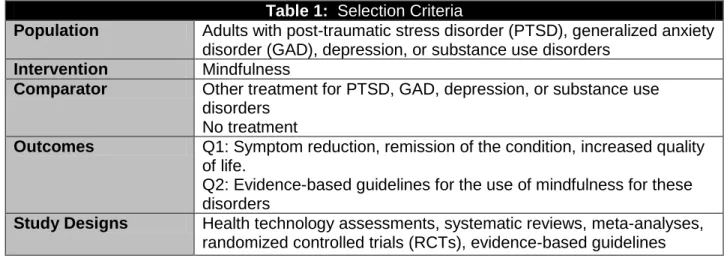
One reviewer screened citations and selected studies. In the first level of screening, titles and abstracts were reviewed and potentially relevant articles were retrieved and assessed for inclusion. The final selection of full-text articles was based on the inclusion criteria presented in Table 1.
Table 1: Selection Criteria
Population Adults with post-traumatic stress disorder (PTSD), generalized anxiety
disorder (GAD), depression, or substance use disorders
Intervention Mindfulness
Comparator Other treatment for PTSD, GAD, depression, or substance use
disorders No treatment
Outcomes Q1: Symptom reduction, remission of the condition, increased quality
of life.
Q2: Evidence-based guidelines for the use of mindfulness for these disorders
Study Designs Health technology assessments, systematic reviews, meta-analyses,
randomized controlled trials (RCTs), evidence-based guidelines
Exclusion Criteria
Articles were excluded if they did not meet the selection criteria outlined in Table 1, they were duplicate publications or included in a selected systematic review/meta-analysis, or if the systematic reviews/meta-analyses or RCTs were published prior to 2013. Systematic reviews/meta-analyses with a more recent update were considered duplicates and were excluded; the most recent update was considered as the primary publication.
Critical Appraisal of Individual Studies
The methodological quality of the included systematic reviews and meta-analyses was
evaluated using the AMSTAR checklist.12 The Downs and Black Checklist was used to assess included RCTs,13 and evidence-based guidelines were assessed with the AGREE II
instrument.14 Summary scores were not calculated for the included studies; rather, a review of the strengths and limitations of each included study were described.
SUMMARY OF EVIDENCE Quantity of Research Available
A total of 502 citations were identified in the literature search. Following screening of titles and abstracts, 442 citations were excluded and 60 potentially relevant reports from the electronic search were retrieved for full-text review. 13 potentially relevant publications were retrieved from the grey literature search. Of these potentially relevant articles, 50 publications were excluded for various reasons, while 23 publications met the inclusion criteria and were included in this report. Four systematic reviews,15-18 two meta-analyses,19,20, eleven RCTs,21-31 and six evidence-based guidelines9,10,32-35 were included in this review. Appendix 1 describes the PRISMA flowchart of the study selection.
Appendix 6 presents a list studies that met the inclusion criteria but were published prior to 2013.
Summary of Study Characteristics
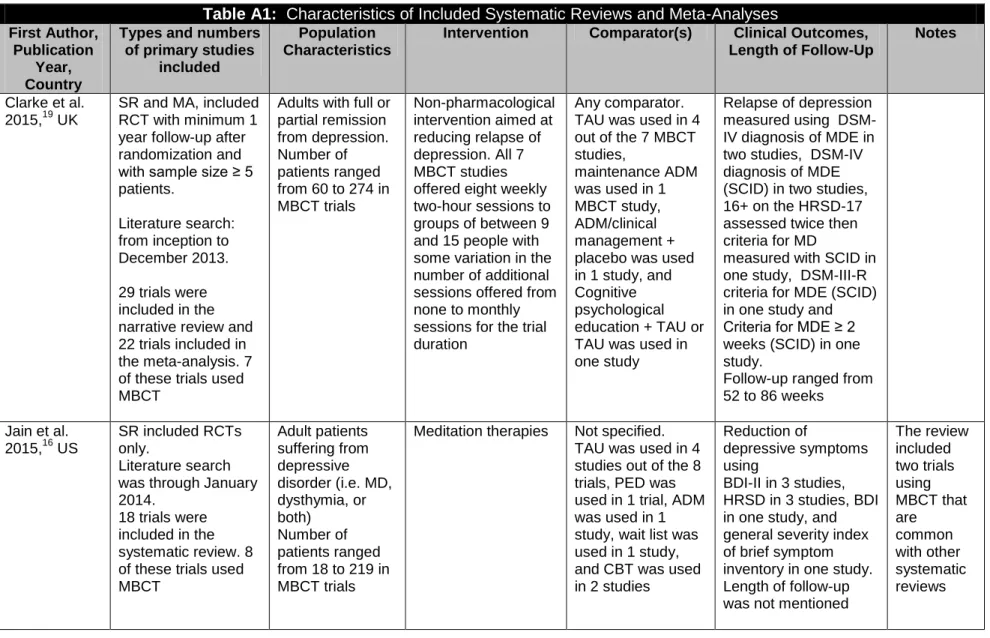
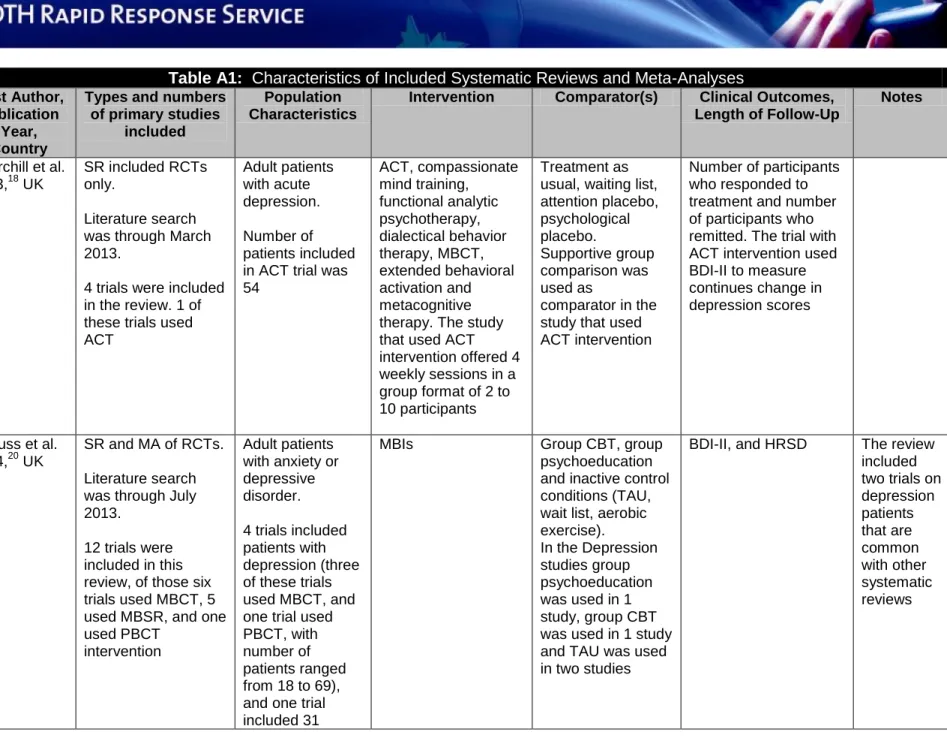
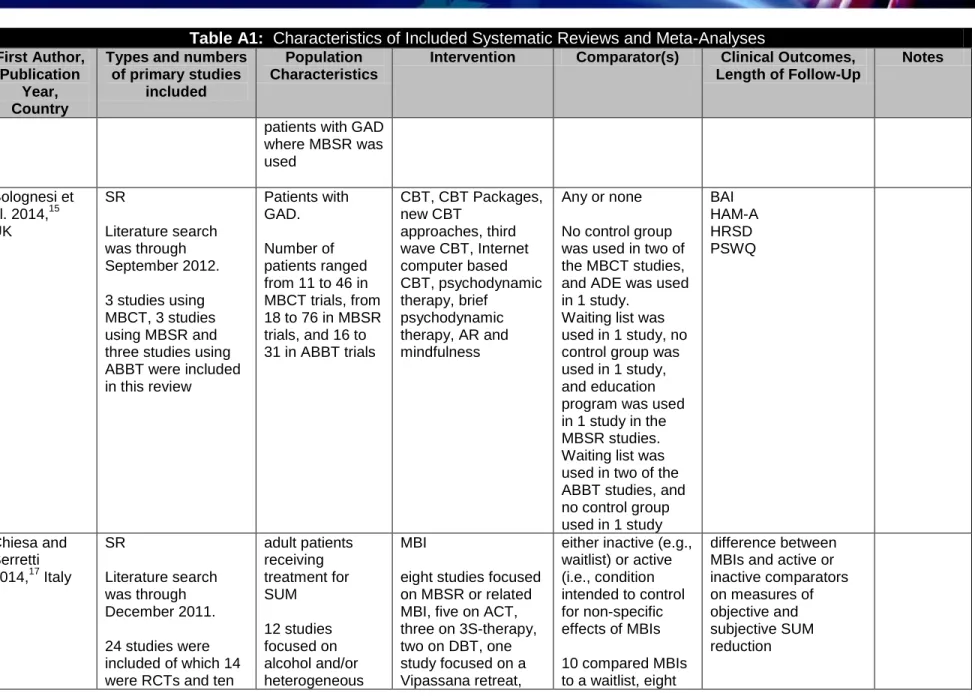
A summary of the characteristics of the included studies is provided in Appendix 2 and a
detailed description of study interventions used in the included RCTs is provided in Appendix 5. What is the clinical effectiveness of mindfulness interventions for the treatment of adults with PTSD, GAD, Depression, or substance use disorders?
Post-traumatic stress disorder
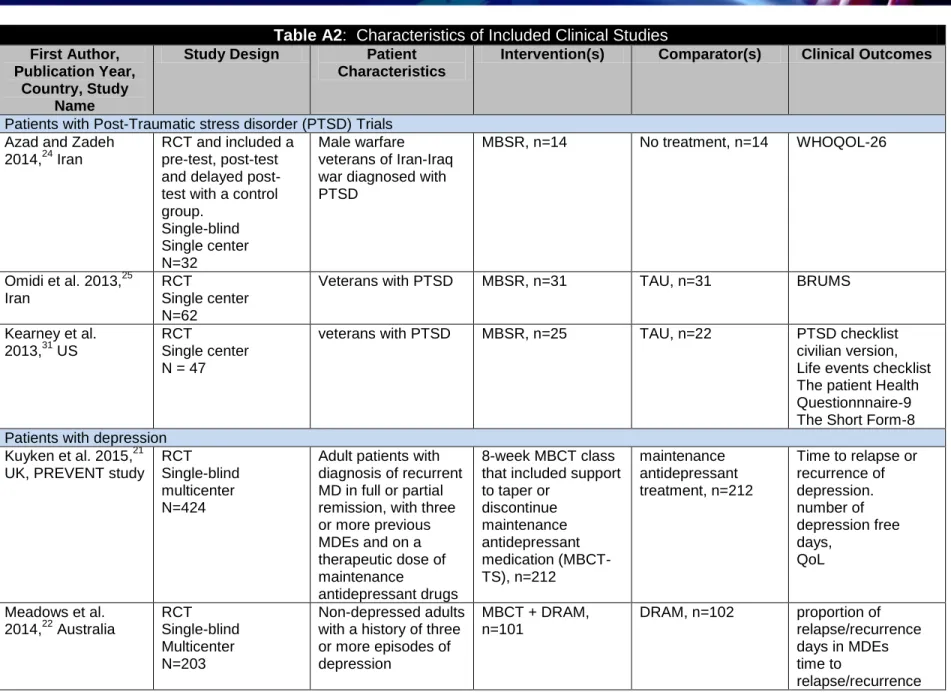
Three RCTs comparing mindfulness interventions with control groups in patients with PTSD were identified.24,25,31 Two of these were conducted in Iran,24,25 and one in the US.31 All three studies included veterans diagnosed with PTSD.24,25,31 Two of these studies compared mindfulness-based stress reduction with treatment as usual ,25,31 and one study compared mindfulness-based stress reduction with no treatment.24 Omidi et al. investigated the efficacy of mindfulness-based stress reduction on mood, emotional and behavioral function of veterans with PTSD.25 Azad et al. investigated the effect of mindfulness-based stress reduction on the quality of life (QoL) of the veterans with PTSD,24 and Kearny et al. investigated the efficacy of mindfulness-based stress reduction on PTSD symptoms, depression and QoL in veterans with PTSD.31 All studies used a parallel-group design and sample sizes ranged from 3224 to 62 participants.25 Follow-up was conducted at 4 months in Kearny et al.,31 at 2 months in Azad et al.24 No follow-up was mentioned for Omidi et al.25
Depression
A total of 4 systematic reviews,16,18-20 and five RCTs21-23,26,27 comparing mindfulness
interventions with control groups in patients with depression were identified. Three18-20 of the systematic reviews were conducted in the UK and one16 in the US. One systematic review by
Clarke et al.19 included 7 RCTs comparing mindfulness-based cognitive therapy to any comparator in adults with full or partial remission from depression. The number of patients included in the trials ranged from 60 to 274. Another systematic review by Jain et al.16 included 8 RCTs comparing mindfulness-based cognitive therapy to any comparator in adult patients suffering from depressive disorder. The number of patients included in the trials ranged from 18 to 219. Two of the trials using a mindfulness-based cognitive therapy intervention included in the systematic review by Jain et al.16 were also included in the systematic review by Strauss et al.20 The systematic review by Churchill et al.18 included one RCT comparing acceptance and commitment therapy to a support group in adult patients with acute depression. The systematic review by Strauss et al.20 included four trials assessing mindfulness interventions in patients with depression. Three of these trials used mindfulness-based cognitive therapy, and one trial used person-based cognitive therapy.
One RCT was conducted in each of the following countries: UK,21 Australia,22 Italy,23 Netherlands,26, and Canada27. Kuyken et al.21 included adult patients with a diagnosis of recurrent major depression in full or partial remission. This study investigated the impact of mindfulness-based cognitive therapy on time to relapse or recurrence of depression, number of depression free days, and QoL when compared to maintenance antidepressant treatment. Meadows et al.22 included non-depressed adults with a history of three or more episodes of depression investigating the impact of mindfulness-based cognitive therapy plus depression relapse active monitoring on the proportion of patients who relapsed or had a recurrence, days in major depressive episodes and time to relapse/recurrence when compared to depression relapse active monitoring alone. Chiesa et al.23 included patients aged between 18 and 65 years diagnosed with major depression, single or recurrent episode, on treatment with
antidepressants and failed to achieve remission. Chiesa et al.23 investigated the impact of mindfulness-based cognitive therapy on major depression severity, anxiety, and QoL when compared to psychoeducation. Tovote et al.26 included patients aged between 18 and 70 years with type 1 or 2 diabetes and having symptoms of depression. This RCT compared
mindfulness-based cognitive therapy with cognitive behavior therapy or a waiting list for the reduction in depressive symptoms. Bedard et al.27 included adult patients with symptoms of depression after a traumatic brain injury and compared mindfulness-based cognitive therapy to a waiting list for the reduction in depression symptoms.
Generalized anxiety disorder
One systematic review,15 and two RCTs29,30 assessing mindfulness interventions in patients with GAD were identified. The systematic review by Bolognesi et al.15 was conducted in UK, while both RCTs29,30 were conducted in the US. Bolognesi et al.15 assessed the impact of mindfulness on anxiety and depression and included three studies using mindfulness-based cognitive
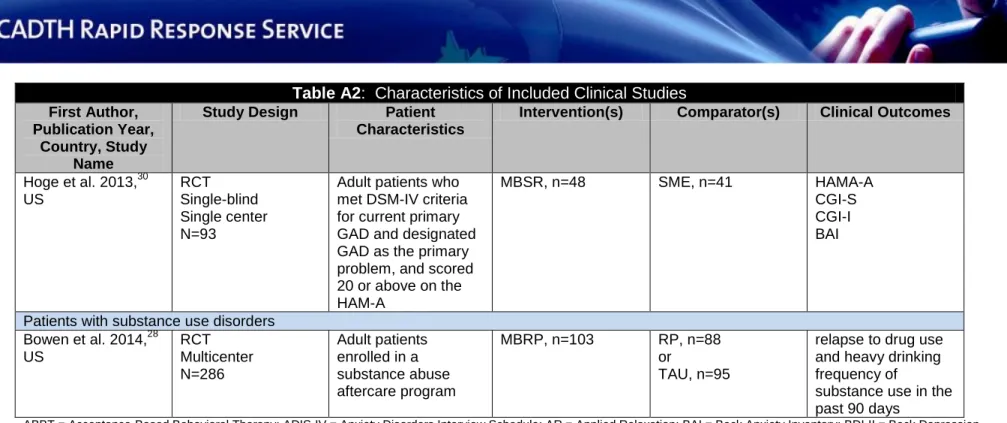
therapy, three studies using mindfulness-based stress reduction and three studies using acceptance-based behavior therapy. Hayes-Skelton et al.29 compared acceptance-based behavior therapy with applied relaxation in adult patients with principal diagnosis of GAD. Anxiety and QoL were assessed in this RCT. Hoge et al.30 compared mindfulness-based stress reduction to stress management education in adult patients with current primary GAD. The impact of a mindfulness intervention on anxiety was assessed in this trial.
Substance use disorders
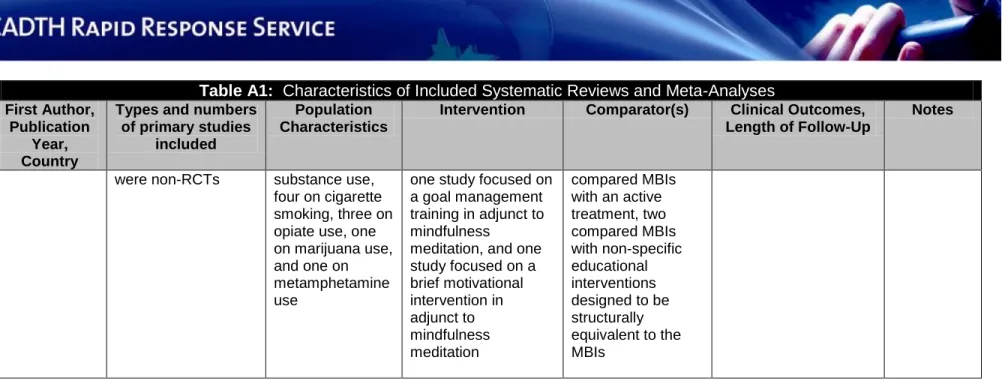
One systematic review,17 and one RCT28 assessing mindfulness interventions in patients with substance use disorder were identified. The systematic review by Chiesa and Serretti17 was conducted in Italy and included 24 studies (14 RCTs and ten non-RCTs). Twelve studies focused on alcohol and/or heterogeneous substance use, four on cigarette smoking, three on
opiate use, one on marijuana use, and one on metamphetamine use. Eight studies focused on mindfulness-based stress reduction or related mindfulness-based interventions (MBIs), five on acceptance and commitment therapy, three on Spiritual self-schema therapy , two on Dialectical behavioral therapy, one study focused on a Vipassana meditation (where individuals assume a seated position and focus their attention onto the breath), one study focused on goal
management training in adjunct to mindfulness meditation, and one study focused on a motivational intervention in adjunct to mindfulness meditation. Ten of the included studies compared MBIs to a waiting list, eight compared MBIs with an active treatment, two compared MBIs with non-specific educational interventions designed to be structurally equivalent to the MBIs. Bowen et al.28 included adult patients enrolled in a substance abuse aftercare program. Mindfulness-based relapse prevention was compared to relapse prevention or treatment as usual in this RCT. Relapse to drug use and heavy drinking frequency of substance use in the past 90 days was assessed.
What are the evidence-based guidelines regarding the use of mindfulness interventions for the treatment of adults with PTSD, GAD, depression, or substance use disorders?
Post-traumatic stress disorder
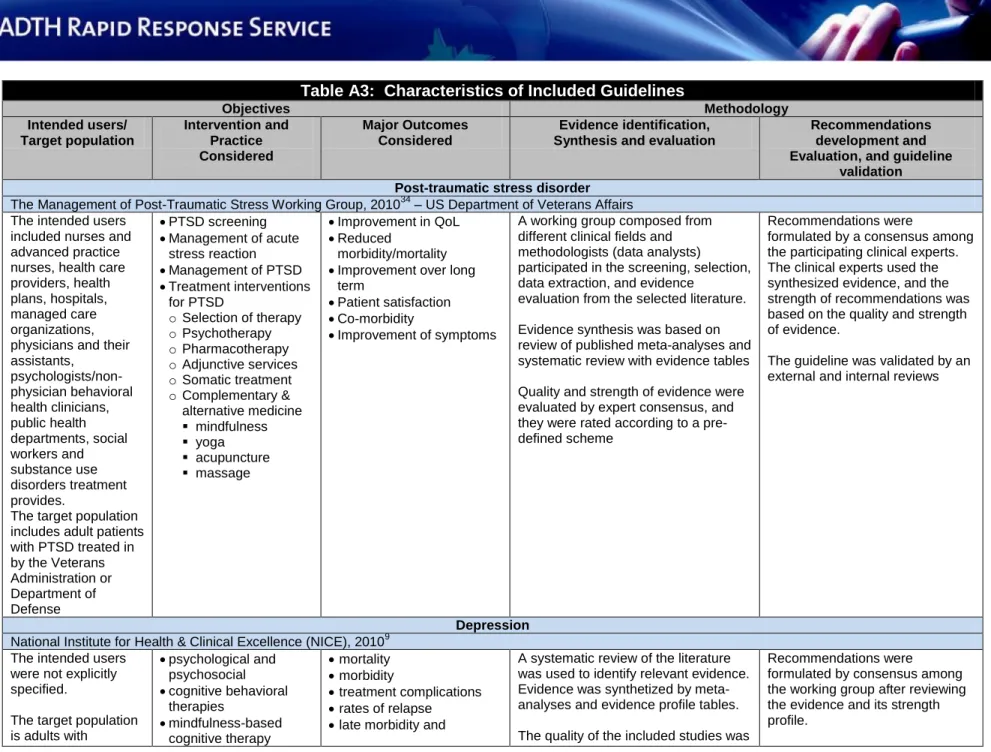
The scope of the Management of Post-Traumatic Stress working group guidelines was to provide recommendations for the management of adult patients with PTSD.34 The guidelines provided recommendations on screening, acute phase management, and treatment for PTSD. Recommendations were reported for pharmacotherapy, psychotherapy, somatic treatment, and complementary and alternative medicine which included mindfulness. The working group considered the following outcomes: QoL, morbidity/ mortality, patient satisfaction and PTSD symptoms.
Depression
The objective of the NICE guidelines was to provide practice advice on the care of adults with depression.9 The guidelines provided recommendations on several interventions including psychological and psychosocial therapy, cognitive behavior therapy and mindfulness-based cognitive therapy. The authors considered the following outcomes: mortality/morbidity, treatment complications; rates of relapse, return to work, physical and social functioning, QoL, and costs. The SIGN guidelines targeted adult patients with depression, their caregivers, and health care providers.33 The guidelines provided recommendations on self-help, structured exercise, and several psychological therapies including mindfulness-based cognitive therapy. The primary outcome was depression symptoms. Secondary outcomes included illness duration, relapse, QoL and patient satisfaction.
The Canadian Network for Mood and Anxiety Treatments (CANMAT) targeted adults with major depression.32 The guidelines provided recommendations on several interventions including cognitive behavior therapy and mindfulness-based cognitive therapy. Outcomes were not explicitly reported in the guidelines.
The Management of Major Depressive disorder working group35 targeted adult patients with major depression The guidelines provided recommendations on pharmacotherapy and
psychotherapy interventions including acceptance and mindfulness. The authors considered the following outcomes: depressive symptoms, functional status, suicide risk, adverse effects, tolerability and adherence to treatment.
Substance use disorders
The New South Wales Department of Health guidelines10 provided recommendations on cognitive behavior therapy, mindfulness based stress reduction, dialectical behavioral therapy, acceptance and commitment therapy, psychodynamic and interpersonal approaches, emotion regulation, and family approaches. The guidelines did not specify outcomes, but several co-morbidities were evaluated. These included depression, anxiety, psychosis, personal disorders, trauma, anger/aggression, pain and blood-borne viruses.
Summary of Critical Appraisal
A summary of the critical appraisal of individual studies is presented in Appendix 3.
What is the clinical effectiveness of mindfulness interventions for the treatment of adults with PTSD, GAD, Depression, or substance use disorders?
Post-traumatic stress disorder
All three RCTs for PTSD24,25,31 had a small sample size (trials sample sizes ranged from 3224 to 6225). The randomization method, allocation concealment, and blinding were not described in Azad and Zadeh24. In the RCT by Omidi et al.,25 the randomization method was not described, and patients and investigators were not masked to treatment allocation. In the RCT by Kearney et al.31 allocation was concealed, but the method used was not described. The randomization method was not described, and patients and investigators were not masked to treatment allocation.
Depression
A comprehensive literature search based on pre-defined criteria was used in all four systematic reviews.16,18-20 The methodological quality were evaluated systematically and risk of bias of individual studies was assessed in the systematic reviews by Clarke et al.19, Churchill et al.18, and Strauss et al.20 In the systematic reviews by Strauss et al.20 and Jain et al.16 it was unclear if literature selection and data extraction were conducted by two reviewers independently, and the list of excluded studies was not provided. Publication bias was not assessed and the quality of the included studies was not evaluated in Jain et al.16
The RCT by Kuyken et al.21 was of good quality where allocation was concealed, research assessors were masked to treatment allocation for the duration of the follow-up period, and choice of sample size was justified. Allocation concealment was not described in the RCT by Meadows et al.22. The RCTs by Chiesa et al.23 and Tovote et al.26 had small sample sizes (23 and 31 patients in the mindfulness-based cognitive therapy treatment arms in RCTs by Chiesa et al.23 and Tovote et al.26, respectively). Assessors were not blinded in Tovote et al.26. It was not clear if allocation was concealed in the RCTs by Tovote et al.26 and Bedard et al.27
Generalized anxiety disorder
In the systematic review by Bolognesi et al.15 it was unclear if the literature selection and data extraction were conducted by two reviewers independently. Also, the list of excluded studies was not provided, publication bias was not assessed, the quality of the included studies was not evaluated, and non-RCTs were included. The inclusion of non-RCTs, which are of typically of lower methodological quality, could have greater risk of bias on the results, especially with interventions where blinding is not possible. In the RCTs by Hayes-Skelton et al.29, it was not clear if assessors were blinded. In the RCT by Hoge et al.30, it was not clear if allocation was concealed.
Substance use disorders
In the systematic review by Chiesa and Serretti17, the literature selection and data extraction were conducted by two reviewers independently, the methodological quality were evaluated systematically, the list of excluded studies was provided, however risk of bias was not assessed and it included non-RCTs. In the RCT by Bowen et al.28 it was not clear if allocation was
concealed, and if assessors were blinded.
What are the evidence-based guidelines regarding the use of mindfulness interventions for the treatment of adults with PTSD, GAD, depression, or substance use disorders?
The guidelines by the Management of Post-Traumatic Stress working group,34 NICE,9 SIGN,33 and the Management of Major Depressive Disorder Working Group35 were developed by working groups of professionals from relevant clinical fields and expertise. These guidelines were based on systematic reviews of the literature, evidence synthesis and evaluation, and included clear processes of recommendation formulation. The guidelines were validated with different review processes. The reviewers did not identify relevant limitations for the four guidelines.
The CANMET guidelines by Parikh et al.32 was based on a systematic review of the literature, and was validated though an internal and external review process. However, the authors did not report the composition of the working group and their backgrounds, and it was not clear if the quality of the included studies and evidence was critically appraised.
The New South Wales Department of Health guidelines was developed by a working group of allied health workers.10 The authors of this guideline did not report the methods used to search and select literature and evidence. Further, the methods to evaluate the quality of evidence, formulate the recommendations, and validate the guidelines were not reported.10
Summary of Findings
A summary of individual study findings is presented in Appendix 4.
What is the clinical effectiveness of mindfulness interventions for the treatment of adults with PTSD, GAD, Depression, or substance use disorders?
Post-traumatic stress disorder
The RCT by Azad and Zadeh24 reported that in comparison with the control group, there was a statistically significant increase in the mean scores of the QoL measures of the mindfulness-based stress reduction group in the post-test and delayed post-test in veterans with PTSD (P < 0.01, Table A7). The RCT by Omidi et al.25 indicated that in veterans with PTSD, mindfulness-based stress reduction and treatment as usual showed that anger and vitality scales have no statistically significant differences, but on the other scales for depression, dizziness, fatigue and tension showed statistically significant differences between the two groups in favour of
mindfulness based stress reduction (P <0.01, Table A7). The RCT by Kearney et al.31 indicated that among veterans with PTSD, there was no statistically significant difference between mindfulness-based stress reduction and treatment as usual groups in PTSD and depression symptoms at the post treatment and 4-month time points. For the mental health-related QOL measure, there was a medium-to-large effect size in favour of mindfulness-based stress
reduction at post treatment with a mean difference in the Mental Component Summary Score of the SF-8 (0.69, 95% CI: 0.07, 1.32, Table A7), but at 4 months there was no statistically
significant difference between treatment groups. For the physical health-related QOL measure, there was no statistically significant difference between treatment groups at post treatment but at 4 months there was a medium-to-large effect size in favour of mindfulness based stress reduction mean difference in the PCS Physical Component Summary of the SF-8 (0.73, 95% CI: 0.09, 1.37, Table A7).
Depression
The systematic review and meta-analysis by Clarke et al.19 found that the average risk of developing a new episode of depression by 12 months was reduced by 21% for the
mindfulness-based cognitive therapy group (relative risk = 0.79, 95% CI, 0.69 to 0.91, Table A7). The systematic review and meta-analysis by Strauss et al.20 reported that there were significant post-intervention between-group differences for individuals diagnosed with a
depressive disorder with a large effect size in favour of the MBI group (Hedges g = -0.73, 95% CI,-1.36 to -0.09, P = 0.03, Table A7). The systematic review by Churchill et al.18 reported a statistically significant difference in depression levels, favouring acceptance and commitment therapy compared with treatment as usual with a mean difference of -0.60 (95% CI -1.16, -0.04, P = 0.035, Table A7). The systematic review by Jain et al.16 reported that relative to the control group (waiting list or treatment as usual), the between-group effect sizes (Hedges g) favoured mindfulness-based cognitive therapy (Hedges g effect size, 0.47 to 1.09, Table A7). The authors reported that the between-group effect size favoured mindfulness-based cognitive therapy when compared to a psychoeducation control group (Hedges g effect size, 0.75, Table A7). There were no statistically significant differences between mindfulness-based cognitive therapy and cognitive behavior therapy in reduction of depressive symptoms among patients with major depression in two studies.16
Kuyken et al.21 found that the time to relapse or recurrence of depression did not differ between mindfulness-based cognitive therapy with support to taper or discontinue antidepressant
treatment and maintenance antidepressants over 24 months, nor did the number of serious adverse events. Also there was no statistically significant difference between treatment groups for depression symptoms and QoL. Meadows et al.22 reported that the average number of days with major depression was 65 for mindfulness-based cognitive therapy participants, significantly less than those for controls (112 days). It was also reported that fewer mindfulness-based cognitive therapy participants relapsed in both year 1 (89 [33.7%] vs. 94 [46.8%]) and year 2 (89 [27.0%] vs. 89 [39.3%]) compared to controls. The Kaplan-Meier survival analysis for time to first depressive episode was non-significant, although trends favoring the mindfulness-based cognitive therapy group were suggested. Chiesa et al.23 reported that both Hamilton Rating Scale for Depression and Beck Depression Inventory II (BDI-II) scores, as well as QoL showed higher improvements, which were particularly evident over the long-term period, in the
mindfulness-based cognitive therapy group than in the psychoeducation group. Tovote et al.26 found that participants receiving mindfulness-based cognitive therapy and cognitive behavior therapy reported significantly greater reductions in depressive symptoms compared with patients in the waiting list control condition. Both mindfulness-based cognitive therapy and cognitive behavior therapy also had significant positive effects on anxiety, and well-being. Bedard et al.27 reported a greater reduction in BDI-II scores for the mindfulness-based cognitive therapy group than the control group. The improvement of BDI-II scores were maintained at the 3-month follow-up. On the other hand there was no statistical significance for either The Patient Health Questionnaire-9 or Symptom Checklist-90-Revised) depression scales.
Generalized anxiety disorder
The systematic review by Strauss et al.20 included one study for patients with GAD indicating a statistically significant post-intervention between-group differences favoring MBI on primary symptom severity when compared with the inactive control group (mean difference [-5.29, 95% CI -6.87, -3.72]). The systematic review by Bolognesi et al.15 reported that in one study, an 8-week group intervention based on mindfulness-based stress reduction significantly reduced anxiety and depressive symptoms, while another study reported a significant reduction in anxiety symptoms, but not in depressive symptoms among GAD patients treated with
mindfulness-based stress reduction compared to an education program group. Another study found that eight weekly group classes of mindfulness-based stress reduction had sustained beneficial effects compared with a wait-list comparison group. It also indicated that in two open-label non-controlled studies, the efficacy of 8 weeks of mindfulness-based cognitive therapy significantly decreased anxiety, tension, worrying and depressive symptoms. In another study, the mindfulness-based cognitive therapy group demonstrated significantly greater decreases than the education program across all anxiety and depression scales. Another study reported that acceptance-based behavior therapy was associated with considerable improvements in anxiety, worrying and depression at the conclusion of treatment, with benefits persisting at 3 months follow-up. In two studies, acceptance-based behavior therapy was more effective in decreasing anxiety and depressive symptoms when compared to a waiting list.
Hayes-Skelton et al.29 indicated that there was no statistically significant difference between acceptance-based behavior therapy and applied relaxation in clinician’s severity rating, Structured Interview Guide for the Hamilton Anxiety Rating Scale (HAM-A), and Quality of Life Inventory scales, while Hoge et al.30 reported that there was no significant difference between mindfulness-based stress reduction and stress management education groups in HAM-A scores. Mindfulness based stress reduction, was associated with a significantly greater reduction in anxiety as measured by the Clinical Global Impression of Severity, the Clinical Global Impression of Improvement, and the Beck Anxiety Inventory. Mindfulness-based stress reduction was also associated with greater reductions than stress management education in anxiety and distress ratings.
Substance use disorders
The systematic review by Chiesa and Serretti17 indicated that mindfulness-based relapse prevention outperforms programs based on the 12-step program, and that dialectical behavioral therapy was significantly more effective than no-treatment conditions for the reduction of
substance use and misuse in heterogeneous samples of drug users. Smoking cessation studies consistently document that different MBIs including acceptance and commitment therapy and mindfulness-based relapse prevention can be as or more effective than some established treatments for smoking cessation and that mindfulness-based stress reduction could have at least a non-specific effect on smoking cessation. Positive findings were likewise observed in participants with opiate dependence and in marijuana misusers. Lack of randomization details, objective measures of drug use and of information about treatment adherence, as well as small sample sizes raised concerns as to whether observed findings were actually due to the
delivered interventions or are more properly attributable to methodological biases of included studies.
Bowen et al.28 reported that compared with treatment as usual, participants assigned to mindfulness-based relapse prevention reported significantly lower risk of relapse to substance use and heavy drinking and, among those who used substances, significantly fewer days of substance use and heavy drinking at the 6-month follow-up. Relapse prevention showed an
advantage over mindfulness-based relapse prevention in time to first drug use. At the 12-month follow-up, mindfulness-based relapse prevention participants reported significantly fewer days of substance use and significantly decreased heavy drinking compared with relapse prevention and treatment as usual.
What are the evidence-based guidelines regarding the use of mindfulness interventions for the treatment of adults with PTSD, GAD, Depression, or substance use disorders?
Post-traumatic stress disorder
The Management of Post-Traumatic Stress working group suggested that mindfulness might be used as adjunctive therapy of hyperarousal symptoms of PTSD.34 However, the authors
reported that there was no evidence that mindfulness is more effective than standard stress inoculation techniques.
Depression
The guidelines by NICE,9 SIGN,33 CANMAT,32 and the Management of Major Depressive Disorder Working Group35 recommended that use of mindfulness in the maintenance phase for patients who have high risk of depression relapse.
Substance use disorders
The guideline by the New South Wales Department of Health suggested that mindfulness could be used to treat problematic drug and alcohol users.10
Limitations
There were no systematic reviews and only three RCTs identified for PTSD in this review; therefore, there is limited evidence available to address the research question regarding PTSD. All three RCTs had small sample size which limits the generalizability of the findings. All three RCTs used a mindfulness-based stress reduction intervention, hence there no evidence on other mindfulness interventions on PTSD. The study results were inconsistent in terms of statistical significance of the between-group difference. The evidence-based guidelines on PTSD lacked specific information regarding which behavioural interventions should be
considered for PTSD. Due to the limited number of mindfulness studies identified and the poor quality of the clinical trials, it is difficult to draw definitive conclusions regarding the clinical effectiveness of mindfulness on PTSD.
Although numerous studies have been published on this topic, considerable heterogeneity was found in this review in terms of patient population and interventions studied. This is expected given that depression is broad term describing classes of common psychiatric disorders. Furthermore, these conditions may be associated with a range of comorbidities. Indeed, this review identified studies that have evaluated the effectiveness of mindfulness in patients with comorbidities. The majority of the literature on depression has been focused on mindfulness-based cognitive therapy, hence there is limited evidence on the impact of other mindfulness interventions on depression.
The literature search did not identify evidence-based guidelines regarding the use of
mindfulness interventions for the treatment of adults with GAD. One systematic review and two RCTs were identified in this review for GAD. The methodological quality of the systematic review was low. Therefore, there is limited evidence available to address the research questions
regarding GAD. Each of the RCTs investigated a different mindfulness intervention with no replication of findings. Both RCTs had a small sample size.
One systematic review, one RCT, and one set of evidence-based guidelines were identified in this review for substance use disorders. The SR, RCT and the guideline were all of low
methodological quality. The guideline recommendation was supported by at least Level 3 research and expert clinical opinion.
In all RCTs, methods for allocation concealment were not documented, and due to the nature of the intervention, patients participating in mindfulness interventions could not be blinded to treatment allocation arms.
CONCLUSIONS AND IMPLICATIONS FOR DECISION OR POLICY MAKING
Mindfulness is a form of complementary and alternative medicine with an emerging evidence base for the treatment of patients with mental health disorders including PTSD, GAD,
depression and substance use disorders. The strongest evidence base exists for the use of mindfulness in treating depression. Two meta-analyses, two systematic reviews and five RCTs suggest that mindfulness may offer some benefit compared to treatment as usual or psycho-education, but may not offer additional benefits as an adjunct to pharmacological therapy when compared to pharmacological treatment alone. The type of mindfulness provided appeared to influence the effectiveness of the intervention. Conclusions based on this collective evidence base are limited due to the heterogeneity between studies and the highly selected patient populations.
The effectiveness of mindfulness in treating PTSD is unclear. Three RCTs found opposite effects in veterans with PTSD, where one RCT found that mindfulness training can improve the QoL of veterans with PTSD when compared with no treatment; another RCT found no
significant differences in anger and vitality scales, but other scales such as depression,
dizziness, fatigue and tension significantly favoured mindfulness when compared with treatment as usual. The third study found no significant difference between mindfulness and treatment as usual in PTSD and depression symptoms.
The effectiveness of mindfulness in treating GAD is unclear. While one systematic review concluded that mindfulness techniques may have beneficial effects in treating GAD, one included RCT reported no significant difference between acceptance-based behavioral therapy and applied relaxation in clinician’s severity rating, anxiety and QoL scales. Another included RCT reported no significant difference between a mindfulness-based stress reduction program and a stress management education program in one of the anxiety measure, while there was significant difference between both groups in favour of mindfulness-based stress reduction in other anxiety measure.
The evidence for the efficacy of mindfulness as a treatment for individuals with substance use disorders was limited, where only one RCT was identified which concluded that the mindfulness intervention was more effective than treatment as usual in lowering risk of relapse to substance use and heavy drinking. The only systematic review for substance use disorders included in this report concluded a lack of randomization or of randomization details, objective measures of drug use, and of information for treatment adherence, as well as small sample sizes, and raised concerns as to whether observed findings were actually due to the delivered interventions or are more properly attributable to methodological biases of included studies.
Six evidence-based guidelines considered the use of mindfulness in clinical practice, of which one suggested that mindfulness may be considered for adjunctive treatment of hyperarousal symptoms in patients with PTSD, although there is no evidence that these are more effective than standard stress inoculation techniques. Four guidelines stated that mindfulness is
recommended to reduce relapse in patients with depression, or during the continuation phase of treatment with patients at high risk for relapse, or as second-line therapy for maintenance phase of major depression. One guideline suggested that Mindfulness-Based Stress Reduction can be used to treat problematic drug and alcohol use problems by suitably trained and experienced drug and alcohol professionals. No guidelines were found for GAD.
PREPARED BY:
Canadian Agency for Drugs and Technologies in Health Tel: 1-866-898-8439
REFERENCES
1. Greist JH. Posttraumatic stress disorder [Internet]. In: Porter RS, editor. Merck manual: professional version. Kenilworth (NJ): Merck Sharp & Dohme Corp.; 2014 May [cited 2015 Jun 12]. Available from:
http://www.merckmanuals.com/professional/psychiatric-disorders/anxiety-and-stressor-related-disorders/posttraumatic-stress-disorder?qt=stress. 2. Van Ameringen M, Mancini C, Patterson B, Boyle MH. Post-traumatic stress disorder in
Canada. CNS Neurosci Ther. 2008;14(3):171-81.
3. Davidson JR, Feltner DE, Dugar A. Management of generalized anxiety disorder in primary care: identifying the challenges and unmet needs. Prim Care Companion J Clin Psychiatry [Internet]. 2010 [cited 2015 Jun 19];12(2). Available from:
http://www.ncbi.nlm.nih.gov/pmc/articles/PMC2911006
4. IPAP GAD algorithm notes [Internet]. International Psychopharmacology Algorithm
Project; 2006 Nov 16. [cited 2015 Jun 19]. Available from: http://www.ipap.org Registration required.
5. Pearson C, Janz T, Ali J. Health at a glance. Mental and substance use disorders in Canada [Internet]. Ottawa: Statistics Canada; 2013 Sep. [cited 2015 Jun 15]. Available from: http://www.statcan.gc.ca/pub/82-624-x/2013001/article/11855-eng.pdf
6. Ballenger JC, Davidson JR, Lecrubier Y, Nutt DJ, Borkovec TD, Rickels K, et al.
Consensus statement on generalized anxiety disorder from the International Consensus Group on Depression and Anxiety. J Clin Psychiatry. 2001;62 Suppl 11:53-8.
7. Baldwin DS, Allgulander C, Bandelow B, Ferre F, Pallanti S. An international survey of reported prescribing practice in the treatment of patients with generalised anxiety disorder. World J Biol Psychiatry. 2012 Oct;13(7):510-6.
8. Lyness JM. Unipolar depression in adults: clinical features. 2015 Jan 17 [cited 2015 Jun 5]. In: UpToDate [Internet]. Waltham (MA): UpToDate; 1992 - . Available from:
www.uptodate.com Subscription required.
9. National Collaborating Centre for Mental Health (UK). Depression: the treatment and management of depression in adults (updated edition) [Internet]. Leicester (UK): British Psychological Society; 2010. [cited 2015 Jun 19]. (National Institute for Health and Clinical Excellence: Guidance). Available from:
http://www.ncbi.nlm.nih.gov/pubmedhealth/PMH0016605/
10. Drug and alcohol psychosocial interventions professional practice guidelines [Internet]. Sydney (AU): New South Wales Department of Health; 2008 May 7. [cited 2015 Jun 5]. Available from: http://www0.health.nsw.gov.au/policies/gl/2008/pdf/GL2008_009.pdf
11. Halliwell E. Mindfulness report 2010 [Internet]. London (GB): Mental Health Foundation; 2010. [cited 2015 Jun 12]. Available from: http://www.mentalhealth.org.uk/publications/be-mindful-report/Mindfulness_report_2010.pdf?view=Standard
12. Shea BJ, Grimshaw JM, Wells GA, Boers M, Andersson N, Hamel C, et al. Development of AMSTAR: a measurement tool to assess the methodological quality of systematic reviews. BMC Med Res Methodol [Internet]. 2007 [cited 2015 Jun 19];7:10. Available from:
http://www.ncbi.nlm.nih.gov/pmc/articles/PMC1810543/pdf/1471-2288-7-10.pdf
13. Downs SH, Black N. The feasibility of creating a checklist for the assessment of the methodological quality both of randomised and non-randomised studies of health care interventions. J Epidemiol Community Health [Internet]. 1998 Jun [cited 2015 Jun 19];52(6):377-84. Available from:
http://www.ncbi.nlm.nih.gov/pmc/articles/PMC1756728/pdf/v052p00377.pdf
14. Brouwers M, Kho ME, Browman GP, Burgers JS, Cluzeau F, Feder G, et al. AGREE II: advancing guideline development, reporting and evaluation in healthcare. CMAJ [Internet]. 2010 Dec [cited 2015 Jun 19];182(18):E839-E842. Available from:
http://www.ncbi.nlm.nih.gov/pmc/articles/PMC3001530/pdf/182e839.pdf
15. Bolognesi F, Baldwin DS, Ruini C. Psychological interventions in the treatment of
generalized anxiety disorder: a structured review. Journal of Psychopathology / Giornale di Psicopatologia. 2014;20(2):111-26.
16. Jain FA, Walsh RN, Eisendrath SJ, Christensen S, Rael Cahn B. Critical analysis of the efficacy of meditation therapies for acute and subacute phase treatment of depressive disorders: a systematic review. Psychosomatics. 2015 Mar;56(2):140-52.
17. Chiesa A, Serretti A. Are mindfulness-based interventions effective for substance use disorders? A systematic review of the evidence. Subst Use Misuse. 2014 Apr;49(5):492-512.
18. Churchill R, Moore TH, Furukawa TA, Caldwell DM, Davies P, Jones H, et al. 'Third wave' cognitive and behavioural therapies versus treatment as usual for depression. Cochrane Database Syst Rev. 2013 Oct 18;10:CD008705.
19. Clarke K, Mayo-Wilson E, Kenny J, Pilling S. Can non-pharmacological interventions prevent relapse in adults who have recovered from depression? A systematic review and meta-analysis of randomised controlled trials. Clin Psychol Rev. 2015 Jul;39:58-70. 20. Strauss C, Cavanagh K, Oliver A, Pettman D. Mindfulness-based interventions for people
diagnosed with a current episode of an anxiety or depressive disorder: a meta-analysis of randomised controlled trials. PLoS ONE [Internet]. 2014 Apr 24 [cited 2015 May
28];9(4):e96110. Available from:
http://www.ncbi.nlm.nih.gov/pmc/articles/PMC3999148/pdf/pone.0096110.pdf
21. Kuyken W, Hayes R, Barrett B, Byng R, Dalgleish T, Kessler D, et al. Effectiveness and cost-effectiveness of mindfulness-based cognitive therapy compared with maintenance antidepressant treatment in the prevention of depressive relapse or recurrence
(PREVENT): a randomised controlled trial. Lancet. 2015 Apr 20.
22. Meadows GN, Shawyer F, Enticott JC, Graham AL, Judd F, Martin PR, et al. Mindfulness-based cognitive therapy for recurrent depression: A translational research study with 2-year follow-up. Aust N Z J Psychiatry. 2014 Mar 4;48(8):743-55.
23. Chiesa A, Castagner V, Andrisano C, Serretti A, Mandelli L, Porcelli S, et al. Mindfulness-based cognitive therapy vs. psycho-education for patients with major depression who did not achieve remission following antidepressant treatment. Psychiatry Res. 2015 Apr 30;226(2-3):474-83.
24. Azad Marzabadi E, Hashemi Zadeh SM. The effectiveness of mindfulness training in improving the quality of life of the war victims with post traumatic stress disorder (PTSD). Iran J Psychiatry [Internet]. 2014 Oct [cited 2015 May 28];9(4):228-36. Available from:
http://www.ncbi.nlm.nih.gov/pmc/articles/PMC4361826/pdf/IJPS-9-228.pdf
25. Omidi A, Mohammadi A, Zargar F, Akbari H. Efficacy of mindfulness-based stress reduction on mood states of veterans with post-traumatic stress disorder. Arch Trauma Res [Internet]. 2013 [cited 2015 May 28];1(4):151-4. Available from:
http://www.ncbi.nlm.nih.gov/pmc/articles/PMC3876494/pdf/atr-01-151.pdf
26. Tovote KA, Fleer J, Snippe E, Peeters AC, Emmelkamp PM, Sanderman R, et al.
Individual mindfulness-based cognitive therapy and cognitive behavior therapy for treating depressive symptoms in patients with diabetes: results of a randomized controlled trial. Diabetes Care. 2014 Sep;37(9):2427-34.
27. Bedard M, Felteau M, Marshall S, Cullen N, Gibbons C, Dubois S, et al. Mindfulness-based cognitive therapy reduces symptoms of depression in people with a traumatic brain injury: results from a randomized controlled trial. J Head Trauma Rehabil. 2014
Jul;29(4):E13-E22.
28. Bowen S, Witkiewitz K, Clifasefi SL, Grow J, Chawla N, Hsu SH, et al. Relative efficacy of mindfulness-based relapse prevention, standard relapse prevention, and treatment as usual for substance use disorders: a randomized clinical trial. JAMA Psychiatry. 2014 May;71(5):547-56.
29. Hayes-Skelton SA, Roemer L, Orsillo SM. A randomized clinical trial comparing an
acceptance-based behavior therapy to applied relaxation for generalized anxiety disorder. J Consult Clin Psychol [Internet]. 2013 Oct [cited 2015 May 28];81(5):761-73. Available from: http://www.ncbi.nlm.nih.gov/pmc/articles/PMC3783580/pdf/nihms485896.pdf
30. Hoge EA, Bui E, Marques L, Metcalf CA, Morris LK, Robinaugh DJ, et al. Randomized controlled trial of mindfulness meditation for generalized anxiety disorder: effects on anxiety and stress reactivity. J Clin Psychiatry [Internet]. 2013 Aug [cited 2015 May 28];74(8):786-92. Available from:
http://www.ncbi.nlm.nih.gov/pmc/articles/PMC3772979/pdf/nihms-477969.pdf
31. Kearney DJ, McDermott K, Malte C, Martinez M, Simpson TL. Effects of participation in a mindfulness program for veterans with posttraumatic stress disorder: a randomized controlled pilot study. J Clin Psychol. 2013 Jan;69(1):14-27.
32. Parikh SV, Segal ZV, Grigoriadis S, Ravindran AV, Kennedy SH, Lam RW, et al.
Canadian Network for Mood and Anxiety Treatments (CANMAT) clinical guidelines for the management of major depressive disorder in adults. II. Psychotherapy alone or in
combination with antidepressant medication. J Affect Disord. 2009 Oct;117 Suppl 1:S15-S25.
33. Non-pharmaceutical management of depression in adults: a national clinical guideline [Internet]. Edinburgh: Scottish Intercollegiate Guidelines Network (SIGN); 2010 Jan. [cited 2015 Jun 5]. Available from: http://www.sign.ac.uk/pdf/sign114.pdf
34. VA/DoD clinical practice guideline for management of post-traumatic stress [Internet]. Washington (DC): Department of Veterans Affairs (US); 2010. [cited 2015 Jun 5]. Available from:
http://www.healthquality.va.gov/guidelines/MH/ptsd/cpgPTSDFULL201011612c.pdf
35. VA/DoD clinical practice guideline for management of major depressive disorder (MDD) [Internet]. Washington (DC): Department of Veterans Affairs; 2009 May. [cited 2015 Jun 5]. Available from:
APPENDIX 1: Selection of Included Studies
442 citations excluded
60 potentially relevant articles retrieved for scrutiny (full text, if
available)
13 potentially relevant reports retrieved from other sources (grey
literature, hand search)
73 potentially relevant reports
50 reports excluded: -irrelevant population (11) -irrelevant intervention (3) -irrelevant design (6) -irrelevant outcomes (2)
-already included in at least one of the selected systematic reviews (8) Published prior to 2013 (13)
-other (review articles, editorials)(7)
23 reports included in review 502 citations identified from electronic literature search and
APPENDIX 2: Characteristics of Included Publications
Table A1: Characteristics of Included Systematic Reviews and Meta-Analyses
First Author, Publication
Year, Country
Types and numbers of primary studies
included
Population Characteristics
Intervention Comparator(s) Clinical Outcomes,
Length of Follow-Up
Notes
Clarke et al. 2015,19 UK
SR and MA, included RCT with minimum 1 year follow-up after randomization and with sample size ≥ 5 patients. Literature search: from inception to December 2013. 29 trials were included in the narrative review and 22 trials included in the meta-analysis. 7 of these trials used MBCT
Adults with full or partial remission from depression. Number of patients ranged from 60 to 274 in MBCT trials Non-pharmacological intervention aimed at reducing relapse of depression. All 7 MBCT studies offered eight weekly two-hour sessions to groups of between 9 and 15 people with some variation in the number of additional sessions offered from none to monthly sessions for the trial duration
Any comparator. TAU was used in 4 out of the 7 MBCT studies, maintenance ADM was used in 1 MBCT study, ADM/clinical management + placebo was used in 1 study, and Cognitive psychological education + TAU or TAU was used in one study
Relapse of depression measured using DSM-IV diagnosis of MDE in two studies, DSM-IV diagnosis of MDE (SCID) in two studies, 16+ on the HRSD-17 assessed twice then criteria for MD
measured with SCID in one study, DSM-III-R criteria for MDE (SCID) in one study and Criteria for MDE ≥ 2 weeks (SCID) in one study.
Follow-up ranged from 52 to 86 weeks Jain et al. 2015,16 US SR included RCTs only. Literature search was through January 2014.
18 trials were included in the systematic review. 8 of these trials used MBCT Adult patients suffering from depressive disorder (i.e. MD, dysthymia, or both) Number of patients ranged from 18 to 219 in MBCT trials
Meditation therapies Not specified. TAU was used in 4 studies out of the 8 trials, PED was used in 1 trial, ADM was used in 1 study, wait list was used in 1 study, and CBT was used in 2 studies Reduction of depressive symptoms using BDI-II in 3 studies, HRSD in 3 studies, BDI in one study, and general severity index of brief symptom inventory in one study. Length of follow-up was not mentioned
The review included two trials using MBCT that are common with other systematic reviews
Table A1: Characteristics of Included Systematic Reviews and Meta-Analyses
First Author, Publication
Year, Country
Types and numbers of primary studies
included
Population Characteristics
Intervention Comparator(s) Clinical Outcomes,
Length of Follow-Up Notes Churchill et al. 2013,18 UK SR included RCTs only. Literature search was through March 2013.
4 trials were included in the review. 1 of these trials used ACT Adult patients with acute depression. Number of patients included in ACT trial was 54 ACT, compassionate mind training, functional analytic psychotherapy, dialectical behavior therapy, MBCT, extended behavioral activation and metacognitive therapy. The study that used ACT intervention offered 4 weekly sessions in a group format of 2 to 10 participants
Treatment as usual, waiting list, attention placebo, psychological placebo. Supportive group comparison was used as comparator in the study that used ACT intervention
Number of participants who responded to treatment and number of participants who remitted. The trial with ACT intervention used BDI-II to measure continues change in depression scores Strauss et al. 2014,20 UK SR and MA of RCTs. Literature search was through July 2013.
12 trials were included in this review, of those six trials used MBCT, 5 used MBSR, and one used PBCT intervention Adult patients with anxiety or depressive disorder. 4 trials included patients with depression (three of these trials used MBCT, and one trial used PBCT, with number of patients ranged from 18 to 69), and one trial included 31
MBIs Group CBT, group
psychoeducation and inactive control conditions (TAU, wait list, aerobic exercise). In the Depression studies group psychoeducation was used in 1 study, group CBT was used in 1 study and TAU was used in two studies
BDI-II, and HRSD The review included two trials on depression patients that are common with other systematic reviews
Table A1: Characteristics of Included Systematic Reviews and Meta-Analyses
First Author, Publication
Year, Country
Types and numbers of primary studies
included
Population Characteristics
Intervention Comparator(s) Clinical Outcomes,
Length of Follow-Up
Notes
patients with GAD where MBSR was used Bolognesi et al. 2014,15 UK SR Literature search was through September 2012. 3 studies using MBCT, 3 studies using MBSR and three studies using ABBT were included in this review Patients with GAD. Number of patients ranged from 11 to 46 in MBCT trials, from 18 to 76 in MBSR trials, and 16 to 31 in ABBT trials CBT, CBT Packages, new CBT approaches, third wave CBT, Internet computer based CBT, psychodynamic therapy, brief psychodynamic therapy, AR and mindfulness Any or none No control group was used in two of the MBCT studies, and ADE was used in 1 study.
Waiting list was used in 1 study, no control group was used in 1 study, and education program was used in 1 study in the MBSR studies. Waiting list was used in two of the ABBT studies, and no control group used in 1 study BAI HAM-A HRSD PSWQ Chiesa and Serretti 2014,17 Italy SR Literature search was through December 2011. 24 studies were included of which 14 were RCTs and ten
adult patients receiving treatment for SUM 12 studies focused on alcohol and/or heterogeneous MBI
eight studies focused on MBSR or related MBI, five on ACT, three on 3S-therapy, two on DBT, one study focused on a Vipassana retreat,
either inactive (e.g., waitlist) or active (i.e., condition intended to control for non-specific effects of MBIs 10 compared MBIs to a waitlist, eight difference between MBIs and active or inactive comparators on measures of objective and subjective SUM reduction
Table A1: Characteristics of Included Systematic Reviews and Meta-Analyses
First Author, Publication
Year, Country
Types and numbers of primary studies
included
Population Characteristics
Intervention Comparator(s) Clinical Outcomes,
Length of Follow-Up
Notes
were non-RCTs substance use, four on cigarette smoking, three on opiate use, one on marijuana use, and one on metamphetamine use
one study focused on a goal management training in adjunct to mindfulness
meditation, and one study focused on a brief motivational intervention in adjunct to mindfulness meditation compared MBIs with an active treatment, two compared MBIs with non-specific educational interventions designed to be structurally equivalent to the MBIs
3S-therapy = Spiritual self-schema therapy; ABBT = Acceptance-based behavior therapy; ACT = Acceptance and Commitment Therapy; ADE = anxiety disorder education program; ADM = antidepressant medication; BAI = Beck Anxiety Inventory; BDI-II = Beck Depression Inventory II; DSM = Diagnostic Statistical Manual; CBT = cognitive behavior therapy; GAD = Generalized Anxiety Disorder; DBT = Dialectical behavioral therapy; HAM-A = Hamilton Anxiety Rating Scale; HRSD = Hamilton Rating Scale for Depression; MA = meta-analysis; MBCT = Mindfulness-Based Cognitive Therapy; MBI = Mindfulness-based intervention; MBSR = Mindfulness-Based Stress Reduction; MD = major depression; MDE = Major Depressive Episode; PBCT = Person-Based Cognitive Therapy; PED = psychoeducation group; PSWQ = Penn State Worry Questionnaire; RCT = randomized controlled trial; SCID = Structured Clinical Interview for DSM Disorders; SR = systematic review; SUM = substance use and misuse; TAU = treatment as usual
Table A2: Characteristics of Included Clinical Studies
First Author, Publication Year,
Country, Study Name
Study Design Patient
Characteristics
Intervention(s) Comparator(s) Clinical Outcomes
Patients with Post-Traumatic stress disorder (PTSD) Trials Azad and Zadeh
2014,24 Iran
RCT and included a pre-test, post-test and delayed post-test with a control group. Single-blind Single center N=32 Male warfare veterans of Iran-Iraq war diagnosed with PTSD MBSR, n=14 No treatment, n=14 WHOQOL-26 Omidi et al. 2013,25 Iran RCT Single center N=62
Veterans with PTSD MBSR, n=31 TAU, n=31 BRUMS
Kearney et al. 2013,31 US
RCT
Single center N = 47
veterans with PTSD MBSR, n=25 TAU, n=22 PTSD checklist
civilian version, Life events checklist The patient Health Questionnnaire-9 The Short Form-8 Patients with depression
Kuyken et al. 2015,21 UK, PREVENT study
RCT Single-blind multicenter N=424
Adult patients with diagnosis of recurrent MD in full or partial remission, with three or more previous MDEs and on a therapeutic dose of maintenance antidepressant drugs 8-week MBCT class that included support to taper or discontinue maintenance antidepressant medication (MBCT-TS), n=212 maintenance antidepressant treatment, n=212 Time to relapse or recurrence of depression. number of depression free days, QoL Meadows et al. 2014,22 Australia RCT Single-blind Multicenter N=203 Non-depressed adults with a history of three or more episodes of depression MBCT + DRAM, n=101 DRAM, n=102 proportion of relapse/recurrence days in MDEs time to relapse/recurrence
Table A2: Characteristics of Included Clinical Studies
First Author, Publication Year,
Country, Study Name
Study Design Patient
Characteristics
Intervention(s) Comparator(s) Clinical Outcomes
Chiesa et al. 2015,23 Italy RCT N=43 Patients diagnosed with MD, single or recurrent episode, age between 18 and 65 years, on
treatment with antidepressants at adequate dosages for at least 8 weeks before study
beginning and failure to achieve remission during the screening visit MBCT, n=23 Psychoeducation, n=20 HRSD BDI-II BAI PGWBI Tovote et al. 2014,26 Netherlands RCT Single-blind Multicenter N=94 Patients aged between 18 and 70 years with type 1 or 2 diabetes diagnosed at least 3 months prior to inclusion and having symptoms of depression as indicated by BDI-II score of ≥ 14 MBCT, n=31 CBT, n=32, waiting list, n=31 BDI-II HAMD-7 Bedard et al. 2014,27 Canada RCT Multicenter N=105
adults with symptoms of depression after a traumatic brain injury
MBCT, n=57 Waiting list, n=48 BDI-II PHQ-9 SCL-90-R Patients with generalized anxiety disorder
Hayes-Skelton et al. 2013,29 US
RCT N=81
Adult patients with principal diagnosis of GAD with at least moderate severity were included
ABBT, n=40 AR, n=41 CSR
SIGH-A QOLI
Table A2: Characteristics of Included Clinical Studies
First Author, Publication Year,
Country, Study Name
Study Design Patient
Characteristics
Intervention(s) Comparator(s) Clinical Outcomes
Hoge et al. 2013,30 US RCT Single-blind Single center N=93
Adult patients who met DSM-IV criteria for current primary GAD and designated GAD as the primary problem, and scored 20 or above on the HAM-A MBSR, n=48 SME, n=41 HAMA-A CGI-S CGI-I BAI
Patients with substance use disorders Bowen et al. 2014,28 US RCT Multicenter N=286 Adult patients enrolled in a substance abuse aftercare program MBRP, n=103 RP, n=88 or TAU, n=95
relapse to drug use and heavy drinking frequency of
substance use in the past 90 days
ABBT = Acceptance-Based Behavioral Therapy; ADIS-IV = Anxiety Disorders Interview Schedule; AR = Applied Relaxation; BAI = Beck Anxiety Inventory; BDI-II = Beck Depression Inventory II; BRUMS = Inventory of mood status; CBT = cognitive behavior therapy; CGI-S = Clinical Global Impression of Severity; CGI-I = Clinical Global Impression of Improvement; CSR = clinician’s severity rating; DRAM = Depression Relapse Active Monitoring; HAM-A = Hamilton Anxiety Rating Scale; HAMD-7 = 7 Item Hamilton Depression Rating Scale; HRSD = Hamilton Rating Scale for Depression; MBCT = Mindfulness-Based Cognitive Therapy; MBCT-TS = MBCT with support to taper or discontinue antidepressant treatment; MBRP = Mindfulness-based relapse prevention; MBSR = Mindfulness-Based Stress Reduction; MD = major depression; MDE = major depressive episodes; PGWBI = Psychological General Well Being Index; PHQ-9 = The Patient Health Questionnaire-9; PTSD = post-traumatic stress disorder; QoL = Quality of Life; QOLI = Quality of Life Inventory; RCT = randomized controlled trial; RP = relapse prevention; SCL-90-R = Symptom Checklist-90-Revised; SIGH-A = Structured Interview Guide for the Hamilton Anxiety Rating Scale; SME = Stress Management Education; TAU = treatment as usual; WHOQOL-26 = World Health Organization Quality of Life Questionnaire
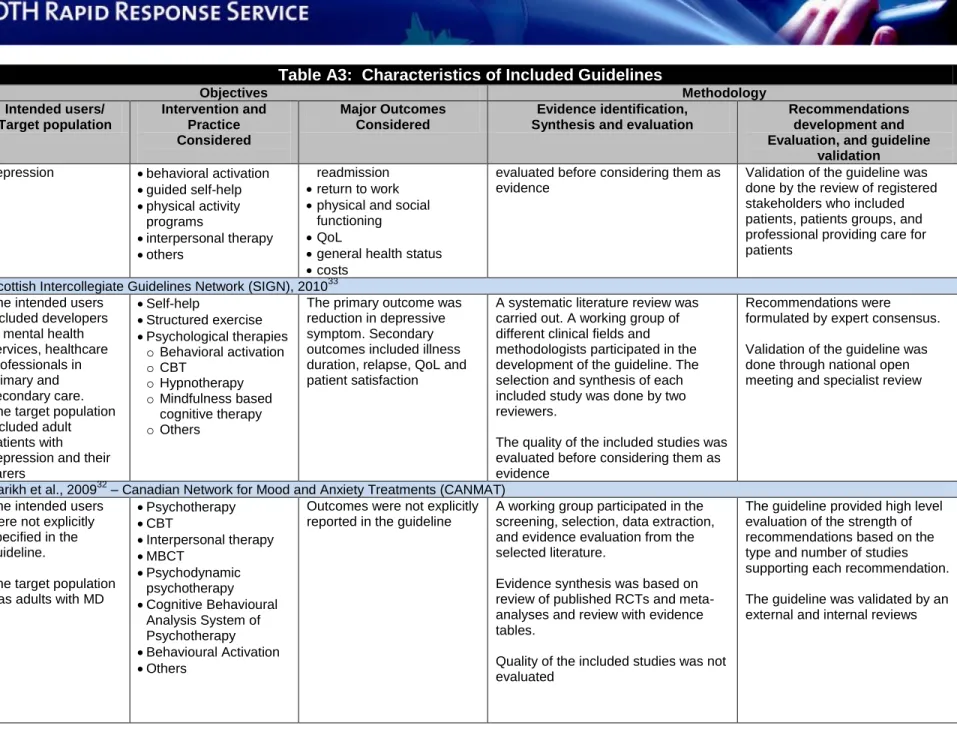
Table A3: Characteristics of Included Guidelines Objectives Methodology Intended users/ Target population Intervention and Practice Considered Major Outcomes Considered Evidence identification, Synthesis and evaluation
Recommendations development and Evaluation, and guideline
validation Post-traumatic stress disorder
The Management of Post-Traumatic Stress Working Group, 201034 – US Department of Veterans Affairs The intended users
included nurses and advanced practice nurses, health care providers, health plans, hospitals, managed care organizations, physicians and their assistants, psychologists/non-physician behavioral health clinicians, public health departments, social workers and substance use disorders treatment provides.
The target population includes adult patients with PTSD treated in by the Veterans Administration or Department of Defense PTSD screening Management of acute stress reaction Management of PTSD Treatment interventions for PTSD o Selection of therapy o Psychotherapy o Pharmacotherapy o Adjunctive services o Somatic treatment o Complementary & alternative medicine mindfulness yoga acupuncture massage Improvement in QoL Reduced morbidity/mortality Improvement over long
term
Patient satisfaction Co-morbidity
Improvement of symptoms
A working group composed from different clinical fields and methodologists (data analysts) participated in the screening, selection, data extraction, and evidence
evaluation from the selected literature. Evidence synthesis was based on review of published meta-analyses and systematic review with evidence tables Quality and strength of evidence were evaluated by expert consensus, and they were rated according to a pre-defined scheme
Recommendations were
formulated by a consensus among the participating clinical experts. The clinical experts used the synthesized evidence, and the strength of recommendations was based on the quality and strength of evidence.
The guideline was validated by an external and internal reviews
Depression National Institute for Health & Clinical Excellence (NICE), 20109
The intended users were not explicitly specified.
The target population is adults with psychological and psychosocial cognitive behavioral therapies mindfulness-based cognitive therapy mortality morbidity treatment complications rates of relapse late morbidity and
A systematic review of the literature was used to identify relevant evidence. Evidence was synthetized by meta-analyses and evidence profile tables. The quality of the included studies was
Recommendations were formulated by consensus among the working group after reviewing the evidence and its strength profile.