Medical Development Division, Ministry of Health Malaysia, Level 4, Block E1, Complex E, Precinct 1,
Federal Government Administrative Centre 62590, Putrajaya, Malaysia
Copyright
The copyright owner of this publication is the Malaysian Health Technology Assessment Section (MaHTAS), Medical Development Division, Ministry of Health Malaysia. Content may be reproduced in any number of copies and in any format or medium provided that a copyright acknowledgement to the Malaysian Health Technology Assessment Section (MaHTAS) is included and the content is not changed, not sold, nor used to promote or endorse any product or service, and not used in an inappropriate or misleading context.
DISCLAIMER
This Health Technology Assessment has been developed from analysis, interpretation and synthesis of scientific research and/or technology assessment conducted by other organisations. It also incorporates, where available, Malaysian data, and information provided by experts to the Ministry of Health Malaysia. While effort has been made to do so, this document may not fully reflect all scientific research available. Additionally, other relevant scientific findings may have been reported since completion of the review.
Please contact : [email protected], if you like further information.
For further information please contact:
Health Technology Assessment Section (MaHTAS), Medical Development Division
Ministry of Health Malaysia Level 4, Block E1, Precinct 1 Government Office Complex 62590 Putrajaya
Tel: 603 88831246 Fax: 603 8883 1230
Available at the following website: http://www.moh.gov.my,
Health Technology
Assessment Report
E
NDOBRONCHIAL
U
LTRASOUND
(EBUS)
I M M U N O C H E M I C A L FA E C A L
OCCULT BLOOD TEST (IFOBT)
FOR COLORECTAL CANCER (CRC)
SCREENING
AuthoRS
Mr. Syful Azlie bin Md Fuzi
Senior Assistant Director
Health Technology Assessment Section (MaHTAS) Medical Development Division
Ministry of Health Malaysia
Dr. Junainah binti Sabirin
Senior Principal Assistant Director
Health Technology Assessment Section (MaHTAS) Medical Development Division
Ministry of Health Malaysia
Prof. Dr. Samsinah binti Hussain
Lecturer
Pharmacy Department Faculty of Medicine University of Malaya
EXPERT COMMITTEE
Dato’ Dr. Muhammad Radzi bin Abu Hassan
Consultant Physician and Gastroenterologist Hospital Sultanah Bahiyah, Alor Setar, Kedah
Prof. Dato’ Dr. Aminuddin bin Ahmad
Senior Consultant Physician and Gastroenterologist Universiti Teknologi Mara (UiTM), Shah Alam, Selangor
Dato’ Dr. Hj. Rosemi bin Salleh
Consultant Gastroenterologist
Hospital Raja Perempuan Zainab II, Kota Bharu, Kelantan
Datin Dr. Nik Raihan binti Nik Mustapha
Consultant Histopathologist
Hospital Sultanah Bahiyah, Alor Setar, Kedah
Dr. Jasiah binti Zakaria
Colorectal Surgeon
Hospital Tunku Jaafar, Seremban, Negeri Sembilan
Dr. Hjh. Rosaida binti Mohd Said
Consultant Physician and Gastroenterologist Hospital Ampang, Selangor
Dr. Tengku Norita binti Tengku Yazid
Consultant Chemical Pathologist Hospital Selayang, Selangor
Dr. Muhammad Azrif bin Ahmad Anuar
Oncologist and Lecturer UKM Medical Centre
EXPERT COMMITTEE
(CONT.) Dr. Nor Saleha binti Ibrahim TaminSenior Principal Assistant Director Disease Control Division
Ministry of Health Malaysia
Datin Dr. Rugayah binti Bakri
Head, Health Technology Assessment Section (MaHTAS), Deputy Director
Medical Development Division Ministry of Health Malaysia
EXTERNAL REVIEWERS
Dr. Sia Koon Ket
Consultant Gastroenterologist Hospital Ampang, Selangor
Dr. Gerard Lim Chin Chye
Senior Consultant Clinical Oncologist & Head of Department Department of Radiotherapy and Oncology
Hospital Kuala Lumpur
(Head, Radiotherapy and Oncology Service, Ministry of Health Malaysia)
ACKNOWLEDGEMENT
The authors for this Health Technology Assessment Report would like to express their gratitude and appreciation to the following for their contribution and assistance:
• Health Technology Assessment and Clinical Practice Guidelines Council. • Technical Advisory Committee for Health Technology Assessment.
• Madam Sin Lian Thye and Madam Norkiah binti Ujang from MaHTAS for their contribution in retrieval of the evidence
DISCLOSURE
The authors of this report have no competing interest in this subject and the preparation of this report is totally funded by the Ministry of Health, Malaysia.
EXECUTIVE SUMMARY
BackgroundColorectal cancer (CRC) is one of the most common forms of gastrointestinal (GI) cancer in the world today. It is the fourth most common form of cancer worldwide and the most frequent in North America, Australia, New Zealand, Argentina, and parts of Europe. According to the latest report of the National Cancer Registry (NCR) in Peninsular Malaysia 2006, CRC was the second most common cancer after breast cancer. It is the first among male and also second among female. The incidence of CRC has increased over the past decade. The age-standardised incidence rate (ASR) was estimated to be 8.1 per 100,000 population in 1987; 11.9 in 1998; and 13.9 in 2002; whereas it was 18.4 in 2006 in Peninsular Malaysia. Although high incidence of CRC was reported, there is no national CRC screening programme implemented. The diagnosis of CRC raises many questions and there is a need for clear, understandable answer, and the only contentious issue is which screening test to use. Therefore, the purpose of this Health Technology Assessment (HTA) on immunochemical faecal occult blood test (IFOBT) was to evaluate whether, and under what conditions, it would be effective, safe, and cost-effective tests for CRC screening among general population in Malaysia.
Technical features
Faecal occult blood refers to blood in the faeces that is not visibly apparent. A faecal occult blood test (FOBT) is designed to identify hidden or small quantities of blood in faecal sample. There are two main types of FOBTs: guaiac-based faecal occult blood test (gFOBT) and IFOBT which is also known as faecal immunochemical test (FIT). Guaiac-based test are the long established and most commonly used in the average risk population for CRC screening programme. However, a wide variety of newer commercially IFOBT are now available, either qualitative or quantitative test methods. The qualitative test method for IFOBT require minimal processing and involve developing a test strip with controls and reading a colour reaction while the quantitative method require more extensive laboratory processing which provide automated instrumental test development and reading with adjustable sensitivity threshold. The reference or gold standard for these tests is colonoscopy with biopsy. Policy Question
i. Should IFOBT be used in Malaysia as a screening test for CRC?
ii. Which test method (qualitative or quantitative) for IFOBT is the most suitable to be used for CRC screening?
Objective
i. To assess the diagnostic accuracy of the various types of IFOBTs used for CRC screening among general population.
ii. To assess the effectiveness of CRC screening using various types of IFOBT among general population compared to no screening.
iii. To assess the safety of the various types of IFOBT used as a screening test for CRC.
iv. To assess the economic implication of the various types IFOBTs used for CRC screening among general population.
v. To assess whether CRC screening using various types of IFOBT have issues related to the ethical, legal, and organizational aspects.
Methods
Electronic databases such as MEDLINE, PubMed, EBM Reviews-Cochrane Database of Systematic Reviews, EBM Reviews-Cochrane Central Register of Controlled Trials, EBM Reviews-Health Technology Assessment, EBM Reviews-Cochrane Methodology Register, EBM Reviews-NHS Economic Evaluation Database, Database of Abstracts of Reviews of Effects (DARE), Horizon Scanning database, INAHTA database, HTA database and FDA database were searched. No limits were applied to the search. Additional articles were identified from bibliographies of retrieved articles and hand-searching of journals. All relevant literature was appraised using the Critical Appraisal Skills Programme (CASP) and evidence was graded based on guidelines from U.S./Canadian Preventive Services Task Force and NHS Centre for Reviews and Dissemination (CRD) University of York, Report Number 4(2nd Edition), March 2001 for test accuracy studies.
Results and conclusion:
Diagnostic accuracy and effectiveness
There was fair level of evidence to suggest that the sensitivity and specificity of IFOBT varies with the cut-off points or positivity threshold of haemoglobin. The sensitivity of IFOBT (cut-off point between 100 ng/ml to 150 ng/ml) is around 89.0% for CRC whereas specificity around 97.0%. Positive predictive value (PPV) ranged from 4.0% to 34.0% for CRC and from 11.2% to 40.3% for high risk adenomas. False positive rate ranged from 1.5% to 6.0% for CRC. Immunochemical faecal occult blood test (IFOBT) identified small adenomas (≤ 9 mm) with a level of sensitivity that was higher than the false positive rate (7.0% versus 4.5%, p<0.001).
Several studies have revealed that the diagnostic accuracy or performance of IFOBT was influenced by two important factors: high temperature and lag time before the faecal sample is analyzed because of haemoglobin stability. There was a significant difference in the proportion of IFOBT positive results in the summer than in winter as there was a significant fall in haemoglobin concentration at higher ambient temperatures. A recent study has reported that the performance of the IFOBT decreased (occurrence of false negative results) when there was a delay in time between faecal sampling and arrival of the specimen to the laboratory because of haemoglobin degradation.
A two-day faecal collection method was found to be more cost-effective compared to three-day faecal collection method for use in IFOBT as a means of screening for CRC. A screening programme using IFOBT can be effective for prevention of advanced CRC (risk of developing advanced CRC was reduced from 28.0% to 46.0%) and reduced mortality from 23.0% to 60.0%. Regular IFOBT can detect precancerous lesions and CRC in early stages and thus reduce mortality from CRC.
Safety
There was no retrievable evidence on the safety of IFOBT for CRC screening. However, several test methods on IFOBT have United States Food & Drug Administration (US FDA) approval.
Economic evaluation
There was evidence to suggest that IFOBT or FIT was cost-effective in comparison with no screening. The generated incremental cost-effectiveness ratios (ICERs) were USD$905 and CAN$611 per quality-adjusted life year in Taiwan and Canada, respectively. An economic evaluation in Canada also revealed that annual FIT with mid-range testing characteristics, was more effective and less costly compared to all strategies (including no screening). By using this modality, it was postulated that the number of CRC could be reduced to about 71.0% and the numbers of CRC deaths to about 74.0%, while saving CAN$68 per person.
There was no retrievable evidence on the exact price or cost of the IFOBT fully automated analyzer. However, a population screening programme conducted in Italy (2004) reported that they spent €2,066 for three months on renting the analyzer. In the Malaysian context, the cost for qualitative IFOBT ranged from to
per test.
Recommendation
Based on the above review, IFOBT can be used in Malaysia as a screening test for CRC. The use of fully automated IFOBT assay would be highly desirable should a screening programme is to be introduced because of the large number of tests to be done and involving large number of laboratories. Automation allows time to be saved and could reduce the number of staff required to perform analysis, better standardization of results, and the application of very strict quality control criteria. However, one has to take cognizance of the staff with the skills required to use the automated equipment that they must be well trained.
From the viewpoint of diagnostic validity and cost-effectiveness, the recommended cut-off points varied from 100 ng/ml to 150 ng/ml. A two-day faecal collection method was found to be more cost-effective compared to three-day faecal collection method for use in IFOBT as a means of screening for CRC.
However, organizational issues such as training, manpower, good referral centre or system, and funding as well as sample collection, storage condition, sample analysis, and transportation need to be addressed at all levels. One must recognized methods to minimise the effect of high temperature and lag time before the faecal sample can be analyzed.
TABLE OF CONTENTS
Disclaimer i
Authors ii
Expert committee ii
External reviewers iii
Acknowledgement and Disclosure iii
Executive summary iv Abbreviations viii 1.0 BACKGROUND 1 2.0 TECHNICAL FEATURES 4 3.0 POLICY QUESTION 10 4.0 OBJECTIVE 10 5.0 METHODS 11 6.0 RESULTS 13
6.1 Diagnostic accuracy and effectiveness 15
6.1.1 Diagnostic accuracy of IFOBT and factor effecting 15
6.1.1a Effect of variation in ambient temperatures on IFOBT 21
6.1.1b Effect of delayed sample return 22
6.1.2 Colorectal cancer (CRC) mortality 23
6.1.3 Detection of precancerous lesions and advanced CRC 24
6.1.4 Interval cancer 25 6.2 Safety 26 6.3 Cost/cost-effectiveness/economic evaluation 26 6.4 Competing technologies 32 6.5 Other considerations 33 6.5.1 Organizational 33
6.5.2 Ethical and legal consideration 35
7.0 DISCUSSION 36
8.0 CONCLUSION 39
8.1 Diagnostic accuracy and effectiveness 39
8.2 Safety 40 8.3 Cost/cost-effectiveness/economic evaluation 40 8.4 Competing technologies 40 8.5 Other considerations 41 9.0 RECOMMENDATION 41 10.0 REFERENCES 42 11.0 APPENDICES 45
Appendix 1 - Hierarchy of evidence for effectiveness studies 45
Appendix 2 - Hierarchy of evidence for diagnostic accuracy studies 46
Appendix 3 - Health Technology Assessment Protocol 47
Appendix 4 - Search strategy 53
Appendix 5 - Screening criteria 55
Appendix 6 - Evidence Table (included studies) 58
GLOSSARY AND LIST OF ABBREVIATIONS
HTA Health Technology Assessment
IFOBT Immunochemical faecal occult blood test
CRC Colorectal cancer
GI Gastrointestinal
NCR National Cancer Registry
ASR Age-standardised incidence rate
USPSTF United States Preventive Services Task Force
DCBE Double-contrast barium enema
CTC Computed tomographic colonography
DRE Digital rectal examination
gFOBT guaiac faecal occult blood test
FIT Faecal immunochemical test
DNA Deoxyribonucleic acid
NSAID Nonsteroidal anti-inflammatory drug
FOBT Faecal occult blood test
RPHA Reversed passive haemagglutination test
LAT Latex agglutination test
ELISA Enzyme-linked immunosorbent assay
nm nanometre
ng/ml nano gram per millilitre
SU Standard Unit
mm millimetre
US FDA United States Food & Drug Administration
RCT Randomised controlled trial
CASP Critical Appraisal Skills Programme
WHO World Health Organization
PPV Positive predictive value
NPV Negative predictive value
HRA High risk adenoma
GP General Practioner
ROC Receiver operating characteristics
OR Odd ratio
CI Confident interval
TNM Tumour Nodes Metastasis
IC Interval cancer
HRD Hospital discharge record
AAT Average ambient temperature
ICER Incremental cost-effectiveness ratio
PCR Polymerase chain reaction
L-DNA Long-fragment DNA
fDNA Faecal DNA
DIA DNA integrated assay
QdHPLC Quantitative-denaturing high performance liquid chromatography
HEALTH TECHNOLOGY ASSESSMENT (HTA)
IMMUNOCHEMICAL FAECAL OCCULT BLOOD TEST (IFOBT)
FOR COLORECTAL CANCER (CRC) SCREENING
1.0 BACKGROUND
Colorectal cancer (CRC) is one of the most common forms of gastrointestinal (GI) cancer in the world today. It is the fourth most common form of cancer worldwide and the most frequent in North America, Australia, New Zealand, Argentina, and parts of Europe.1 In the United States, it is the third most common cancer diagnosed in both men and women; and for 2010, the estimated number of new cases of colon cancer and rectal cancer were 102,900 and 39,670, respectively.2 The incidence of CRC has increased over the past decade. The age-standardised incidence rate (ASR) was estimated to be 8.1 per 100,000 population in 1987; 11.9 in 1998; and 13.9 in 2002; whereas it was 18.4 in 2006 in Peninsular Malaysia. According to the latest report of the National Cancer Registry (NCR) in Peninsular Malaysia 2006, CRC was the second most common cancer after breast cancer. It is the first among male and also second among female. A total of 2,866 cases were registered with NCR in 2006 and it represented 13.2% of all cases registered. The incidence was slightly higher among males (ASR of 21.6 per 100,000) compared to females (ASR of 15.4 per 100,000). The incidence was highest among Chinese where the ASR was 21.4 per 100,000 and were lower in Indian and Malay where the ASR was 11.3 per 100,000 and 9.5 per 100,000 respectively.3
Colorectal cancer (CRC) is cancer of the colon and the rectum. The colon and rectum are parts of the digestive system, which is also called the gastrointestinal (GI) system (Figure 1). The first part of the digestive system processes food for energy while the last part (the colon and rectum) absorbs fluid to form solid waste (faecal matter or stool) that passes from the body. The colon has four sections: ascending colon, transverse colon, descending colon, and sigmoid colon (Figure 2).2
Tumours of the colon and rectum are growths arising from the inner wall of the large intestine. Benign (non-cancerous) tumours of the large intestine are called polyps. Malignant tumours of the large intestine are called cancers. Benign polyps do not invade nearby tissue or spread to other parts of the body. Benign polyps can be easily removed during colonoscopy and are not life-threatening. If benign polyps are not removed from the large intestine, they can become malignant over time.
Most of the cancers of the large intestine are believed to have developed from polyps. Cancer of the colon and rectum (also referred to as CRC) can invade and damage adjacent tissues and organs. Cancer cells can also break away and spread to other parts of the body (such as liver and lung) where new tumours form. The spread of colon cancer to distant organs is called metastasis of the colon cancer. Once metastasis has occurred in CRC, a complete cure of the cancer is unlikely.2
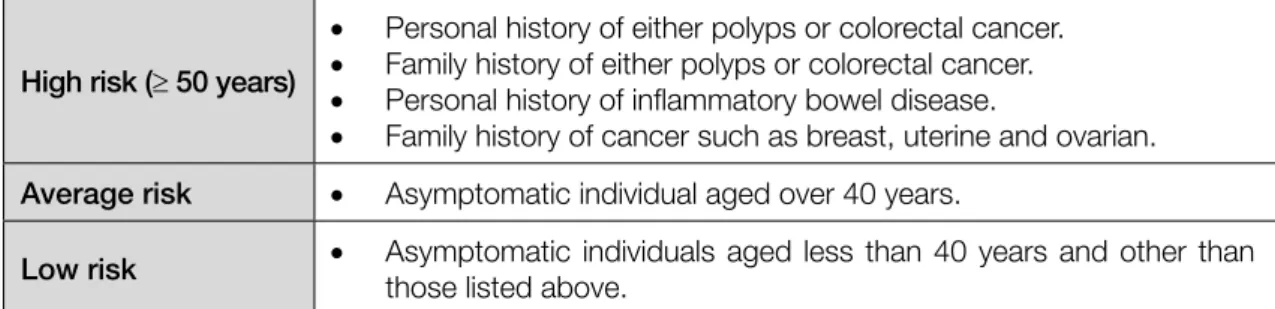
In general the population at risk for colorectal cancer can be subdivided into high, average and low risk groups. The following is a summary of this groups.2
High risk (≥ 50 years)
• Personal history of either polyps or colorectal cancer.
• Family history of either polyps or colorectal cancer.
• Personal history of inflammatory bowel disease.
• Family history of cancer such as breast, uterine and ovarian.
Average risk • Asymptomatic individual aged over 40 years.
Low risk • Asymptomatic individuals aged less than 40 years and other than those listed above.
Figure 2: Anatomy of large intestinal (colon)
Several major organizations, including the United States Preventive Services Task Force (USPSTF) which is a group of experts convened by the U.S. Public Health Service, the American Cancer Society, and professional societies, have developed guidelines for CRC screening. Although some details of their recommendations vary regarding which screening tests to use and how often to be screened, all of these organizations support screening for CRC. It is important that a screening test, which is directed at healthy people, have an impact measurable at the population level. People are inherently reluctant to undergo invasive and inconvenient tests for screening such as colonoscopy without strong motivation.4, 5
The diagnosis of CRC raises many questions and there is a need for clear, understandable answer. There was evidence to show screening for CRC using gFOBT will reduce CRC mortality 6-8 and the only contentious issue is which screening test to use. The most widely used screening strategy in the average risk population remains the gFOBT whose efficacy was shown in three randomised controlled trials (RCTs).6-8 However, gFOBT which detects the peroxidise activity of haem or haemoglobin, has important limitations. It is not specific for human haemoglobin and false positive and false negative results can result from certain compounds or medications in food such as red meat, certain uncooked vegetables, vitamin C, and nonsteroidal anti-inflammatory drugs (NSAIDs); that should be avoided before and during the faecal sample collection period. Another important limitation is the low diagnostic performance for precursors to CRC. As a consequence, alternatives to gFOBT are increasingly becoming a subject of interest. In particular, the IFOBT is often considered as a potential substitute for gFOBT. Immunochemical faecal occult blood test (IFOBT) that use specific antibodies against human blood components overcome the problem of diet
In Malaysia, a screening programme for CRC has not been implemented even though high incidence of CRC was reported. At present, surgical resection continues to be the best hope of cure for patients with colorectal cancer. However, by the time the patient presents to the physician with symptoms, the cancer is frequently advanced with little hope of cure. Therefore, a Health Technology Assessment (HTA) is required to look into the suitability of using IFOBT for CRC screening in general population. This HTA was requested by the Consultant Physician and Gastroenterologist in Hospital Sultanah Bahiyah Alor Setar, Kedah.
2.0 TECHNICAL FEATURES
2.1 Colorectal cancer (CRC) screening test
There are several different tests that can be used to screen for CRC. The test can be divided into two broad groups: 2
i. Tests that can find both colorectal polyps and cancer
These test will look at the structure of the colon itself to find any abnormal areas. This is done either with a scope inserted into the rectum or with special imaging (x-ray) tests. Polyps found before they become cancerous can be removed, so these tests may prevent CRC. This includes flexible sigmoidoscopy, colonoscopy, double-contrast barium enema (DCBE), CT colonography (virtual colonoscopy), and digital rectal examination (DRE). However, these tests are invasive and may not be acceptable as a primary screening tool in asymptomatic individuals.
ii. Tests that mainly find cancer
These involve testing the stool (faeces) for sign of occult or hidden blood that may be present. These tests are less invasive and easier to be conducted such as guaiac-based faecal occult blood test (gFOBT), immunochemical faecal occult blood test (IFOBT) which is also known as faecal immunochemical test (FIT), and faecal DNA test. The rational of using this technology as a screening test is based on the concept that blood vessels at the surface of larger colorectal polyps or cancers are often fragile and easily damaged by the passage of faeces and will bleed, and therefore become detectable.
2.2 Faecal occult blood test (FOBT): Technology description
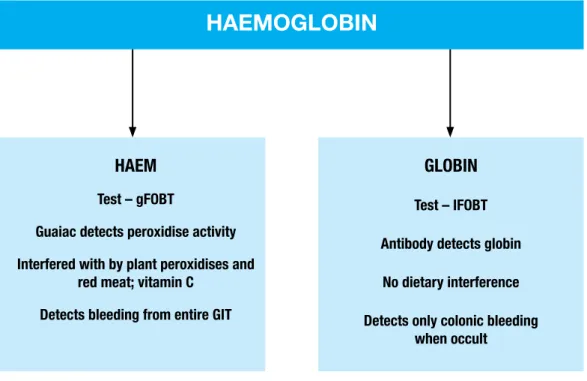
There are two types of commercially available FOBTs: the long established gFOBT and the newer IFOBT. The gFOBT detects haem while the IFOBT detect globin (Figure 3).5
Figure 3: Scheme for haemoglobin breakdown in faeces and associated issues with the two FOBT technologies
Detection of haem by gFOBT is dependent on the peroxidise activity of haem. Dietary peroxidises (found in a range of certain fruit and vegetables especially if raw) can cause false positive results with gFOBT. Dietary haem from red meat also causes false positive results. Antioxidants such as vitamin C may interfere with the chemistry of the reaction to cause false negative results. Haem is also reasonably stable in the gut and gFOBT may detect bleeding from any site in the GI tract although they are more sensitive for lower GI bleeding. This means that gFOBT are not selective for bleeding from colon or rectum.5
Detection of globin by IFOBT is based on antibodies which are generally specific for human haemoglobin and some of its luminal-derived degradation products. IFOBT are not subject to interference by diet or drugs and do not require proscription of any foods or drugs prior to sampling faeces. As globin is rapidly digested in stomach and small intestine, IFOBT are much more selective for occult bleeding of colorectal origin than gFOBT.5
Haemoglobin
HAEM
Test – gFOBT
Guaiac detects peroxidise activity Interfered with by plant peroxidises and
red meat; vitamin C Detects bleeding from entire GIT
GLOBIN
Test – IFOBT Antibody detects globin
No dietary interference Detects only colonic bleeding
This may be conducted in the home, clinician’s office or a pathology laboratory. The most accepted regimen for faecal occult blood testing involves two faecal samples for three consecutive days. There are several alternative sampling methods associated with faecal occult blood testing. These include utilising either a wooden spatula or a brush, method which involve a different degree of stool handling. The samples are then usually transferred onto a sample card which can be delivered by post to the appropriate location for development and interpretation. A single positive sample in the series is counted as a positive result. Nearly all FOBT manufacturers make analytical sensitivity claims (in vitro detection limits). The analytical sensitivity of a test represents the smallest amount of substance that can be measured in a biological sample. Examples of these sensitivity claims from manufacturer’s product sheets are listed below (Table 1).10, 11
Table 1: In vitro detection limits of commercially available FOBTs
Product Type Manufacturer In vitro detection limits
Hemoccult®
guaiac
Beckman Coulter Inc.
50% at 300 µg Hb/g faeces Hemoccult® II
Hemoccult® SENSA®
guaiac 75% at 300 µg Hb/g faeces
Hemoccult® II SENSA®
Hemoccult® ICT immuno 30 µg human Hb/g faeces
FlexSure® OBT immuno 300 µg human Hb/g faeces
Magstream HemSp® immuno 300 µg human Hb/g faeces
Instant-View® FOBT II immuno Alpha Scientific Desings Inc. 50 µg human Hb/g faeces
InSure® immuno Enterix, Inc. 50 µg human Hb/g faeces
ImmoCARE®
immuno Care Products, Inc. 30 µg human Hb/g faeces ColonCARE®
HemeSelect®
immuno Fujirebio (Japan) 300 µg human Hb/g faeces Immudia HemSp®
OC-Hemodia® immuno Eiken Chemical (Japan) 40 µg human Hb/g faeces MonoHaem® immuno Nihon Pharmaceuticals (Japan)
Chemicon International, Inc. (Australia) 1 to 2 mg Hb/g faeces Sure Vue® guaiac Fisher Scientific Co. Inc. 0.3 mg Hb/g faeces Coloscreen® ES guaiac Helena Laboratories Inc. 0.3 mg Hb/g faeces Sure Vue® ES guaiac Fisher Scientific Co. Inc 2 mg Hb/g faeces HemaPrompt® guaiac Aerscher Diagnostics Inc. 10 mg Hb/g faeces
Hemostick® immuno Ventec S.A. (Belgium) 100 µg human Hb/g faeces Actim Fecal Blood® immuno Medix Biochemica 25 to 50 µg human Hb/g faeces
2.3 IFOBT: Methods and brand names
Aside from the classical gFOBT, there has been the development of IFOBT specifically designed to detect human haemoglobin in dried faecal samples. They involved the use of an anti-human monoclonal antibody, targeted at intact human blood-borne proteins (usually haemoglobin). These tests therefore have the theoretical advantage of not being affected by haem, peroxidases or anti-oxidases in the diet. In addition, immunochemical tests will not detect proximal bleeds, since in this case haemoglobin is digested before being passed in the faeces.10
A wide variety of newer commercially IFOBT are now available, either qualitative or quantitative methods such as reversed passive haemagglutination tests (RPHA), latex agglutination tests (LAT), the enzyme-linked immunosorbent assay (ELISA), the fluorescence enzyme immunoassay, the gold-coloric method and the immunocolorific method. The qualitative test method for IFOBT require minimal processing and involve developing a test strip with controls and reading a colour reaction while the quantitative method require more extensive laboratory processing which provide automated instrumental test development and reading with adjustable sensitivity threshold.11
Some of the IFOBT brand names that have been widely used as a screening test for CRC screening programmes (Japan, China, Taiwan, Italy, Germany, Netherlands, Canada and Uruguay) were Immudia Hem-Sp or Hemeselect (qualitative; RPHA), Monohaem (qualitative; immunocolorific method), OC-Hemodia (qualitative; latex agglutination test) developed with the OC-Sensor Micro (quantitative, fully automated instrument; latex agglutination test), FOBT Gold (quantitative, fully automated instrument; latex agglutination test), and Magstream 1000/Hem SP (quantitative, fully automated instrument; magnetic particles agglutination).16-30
2.3.1 Immudia Hem-Sp (Fujirebio, Tokyo, Japan) or Hemeselect (SmithKline
Diagnostic, Palo Alto, California, USA)
These RPHA tests used chicken-erythrocytes coated with antibodies to human haemoglobin. The coated chicken-erythrocytes are agglutinated in the presence of haemoglobin in human faecal sample. Immudia Hem-Sp or Hemeselect were interpreted at 1:8 dilutions according to two positivity thresholds: positive (+) or borderline (±). After erythrocytes coated with anti-human haemoglobin antibodies were added to the diluted extract of faecal specimens, test reactions were consider negative when no agglutination was evident. Reactions were considered as borderline (±) when erythrocytes formed a ring around a compact button, slightly greater in diameter than in control well, with slight peripheral agglutination. Immudia Hem-Sp or Hemeselect was considered positive (+) when erythrocytes formed a ring greater in diameter and thinner than that in the negative control well or appeared filmy and spread out, uniformly covering the well bottom with or without centripetal sliding.16, 27, 29
2.3.2 Monohaem (Nihon Pharmaceutical, Japan)
The Monohaem test incorporates an immobilised monoclonal antibody on a slide which selectively binds human haemoglobin from the faecal sample. The principles and procedures of the immunological slide Monohaem are as follows: firstly, those being screened are asked to make a thin faecal smear on the test filter paper. If human haemoglobin is present in the faecal sample, an antigen-antibody reaction will occur with the monoclonal antibody in the filter paper. The reacted sample is then washed to remove components other than the haemoglobin and a colour coupler is added. Oxygen is dissociated from hydrogen peroxide by the peroxidise-like activity of the human haemoglobin, which oxidises tetramethylbenzidine, leading to the subsequent appearance of a green colour. The presence of human haemoglobin is thus indicated by the appearance of this green coloration. The procedures of this test are uncomplicated.24
2.3.3 OC-Hemodia and OC-Sensor Micro (Eiken, Tokyo, Japan)
OC-Hemodia is an IFOBT based on the reaction of latex agglutination by antibody specific to human haemoglobin, and developed with the 10-tube rack OC-Sensor Micro, a fully automated analyzer allowed an average processing of approximately 100 tests per hour. The principles and procedures of the immunological slide, OC-Hemodia are as follows: the instructions provided with the kit required sampling stools at six different points, placing the stool samples in a test tube filled with a buffer solution (ammonium) and returning the samples to the centre in a cold box. For the processing of the tests, the OC-Sensor Micro was used with quantitative determination. Two drops from the liquid containing the faecal samples in the test tube are put in round wells and mixed with an anti-human haemoglobin antibody that is attached to polystyrene latex particles. The assay is based on the flocculation reaction between the agglutinated human haemoglobin/polystyrene latex complexes and measured by reading flocculation as an optical change (increased absorbance at 660 nm) compared to a standard calibration curve. This automated immunochemical system measures agglutination optically with a haemoglobin concentration range 0 to 1,200 ng/ml. The detection threshold (cut-off) can be adjusted by the user to the concentration determined by screening programme. The procedures of this commercial test are not complicated and are performed in a hospital laboratory or a physician’s office.16-18, 20-22, 25-26, 28, 30
2.3.4 FOBT Gold (Sentinel Diagnostics, Milan, Italy)
FOB Gold is a fully automated assay developed with the Aeroset instrument (Abbott Diagnostics, Abbott Park, USA), a quantitative latex antigen-antibody agglutination assay that uses polyclonal anti-human haemoglobin antibodies that can also be run on high throughput automated clinical chemistry analysers, allowed an average processing of approximately 500 tests per hour. The assay is based on the flocculation reaction between human haemoglobin and polyclonal anti-haemoglobin polystyrene-adsorbed antibody. The haemoglobin concentration is measured by reading flocculation as an optical change (increased absorbance at 572 nm and 804 nm) compared to a standard calibration curve. The cut-off points is set by the user.22, 30
2.3.5 Magstream 1000/Hem SP (Fujirebio, Tokyo, Japan)
Magstream 1000/Hem SP is based on the Immudia Hem-Sp test, which was the original version of Hemeselect (Beckman Coulter, Palo Alto, California, USA). The haemagglutination technique using chicken red cells in the Immudia Hem-Sp test was replaced by magnetic particles agglutination. The system used an immunologic indirect agglutination method to detect faecal occult blood with rabbit anti-human haemoglobin, which was attached to magnetic gelatine particles. This modification led to faster agglutination and produced a more stable agglutinate, which allowed automated result interpretation. Agglutination of the magnetic gelatine particles was accelerated by the use of magnetic force to draw particles together at the bottom of a V-shaped well. The plate then was titled to 60° from horizontal to allow free magnetic particles to run down the slope of the well and form a measurable line. In the presence of human haemoglobin, particles remained in the shape of a tight button or a short line during tilting. The length of the line was determined optically using reflected 690 nm light and was measured in standard units (SU) (1 SU=0.03 mm). The cut-off recommended by the manufacturer was 100 SU, but the cut-off level was adjustable.23
2.4 Competing technology: faecal DNA testing
Faecal sample testing using molecular diagnostic tests is emerging as a potentially important new approach that has the potential of providing accurate and cost-effective, early detection of CRC. The most prominent of genetically based faecal tests exploits the concept of chromosomal instability with mutations progressively accumulating in the adenomatous polyposis coli, p53 tumour suppressor genes, and the K-ras oncogene.
This test relies upon preservation of naked DNA in human stool samples. The test requires a large-volume faecal sample from which purified DNA is prepared using oligonucleotide-based hybrid capture. The genetic mutation sites are detected and quantified with real time polymerase chain reaction (PCR). A different marker found in DNA from cancer cells exfoliated into the gut lumen is so-called long-fragment DNA (L-DNA), thought to reflect disrupted apoptosis (normal mode of cell death) in cancer cells.12
2.5 Reference or ‘Gold Standard’
Clinical sensitivity and specificity are often used to compare the diagnostic capabilities of a test and they traditionally rely on the performance of a given test, used at a specific test threshold, when compared to a reference or ‘gold standard’ that is supposed to give the ‘true’ diagnosis. It is mandatory that any positive IFOBT be investigated by an appropriate diagnostic procedure. The ‘gold standard’ diagnostic procedure and the procedure of choice for this investigation is colonoscopy with biopsy. If the colonoscopy is ‘incomplete’, then a DCBE is generally used to ensure complete visualisation of the colon. A DCBE plus flexible sigmoidoscopy may replace the colonoscopy if there are difficulties with local availability or expertise, or if the patient prefers.10, 11
3.0 POLICY QUESTION
3.1 Should IFOBT be used in Malaysia as a screening test for CRC? 3.2 Which test method (qualitative or quantitative) for IFOBT is the most
suitable to be used for CRC? 4.0 OBJECTIVE
4.1 To assess the diagnostic accuracy of the various types of IFOBTs used for CRC screening among general population.
4.2 To assess the effectiveness of CRC screening using various types of IFOBT among general population compared to no screening.
4.3 To assess the safety of the various types of IFOBT used as a screening test for CRC.
4.4 To assess the economic implication of the various types IFOBTs used for CRC screening among general population.
4.5 To assess whether CRC screening using various types of IFOBT have issues related to the ethical, legal, and organizational aspects.
5.0 METHODS
5.1. Literature search strategy
Literature search was done by two Information Specialists who searched for published articles pertaining to the use of IFOBT for CRC screening. The following electronic databases were searched: MEDLINE (1950-Week 1 June 2011), EBM Reviews-Cochrane Database of Systematic Reviews (2005 to May 2011), EBM Reviews-Cochrane Central Register of Controlled Trials (2nd Quarter 2011), EBM Reviews-HTA Databases (2nd Quarter 2011), EBM Reviews-Cochrane Methodology Register (2nd Quarter 2011), EBM Reviews-ACP Journal Club (1991 to May 2011), EBM Reviews-NHS Economic Evaluation Database (2nd Quarter 2011) via OVID, PubMed, INAHTA database, HTA database and US FDA database. The last search was run on 10 August 2011. No limits were applied to the search. Detailed search strategy is as in Appendix 4. Additional articles were identified from reviewing the bibliographies of retrieved articles and hand-searching of journals. General search engine was used to get additional web-based information.
5.2. Study selection
Based on the policy question the following inclusion and exclusion criteria were
used:-5.2.1 Inclusion criteria
a. Study design
Cross-sectional diagnostic accuracy studies, HTA reports, systematic review, randomised controlled trial (RCT), cohort, case-control, and economic evaluation studies.
b. Population Adults, general population c. Intervention Various types of IFOBT d. Comparator i. No comparatorii. Faecal DNA testing
e. Outcomes
i. Primary outcome: sensitivity, specificity, positive predictive value (PPV) and negative predictive value (NPV)
ii. Mortality, incidence rate, detection rate
iii. Adverse events related to the use of IFOBT for CRC screening iv. Cost, cost-benefit, cost-effectiveness, cost utility, and economic evaluation of using IFOBT
5.2.2 Exclusion criteria
i. Animal study ii. Narrative review iii. Laboratory study
iv. Non English full text articles
Based on the above inclusion and exclusion criteria, study selection were carried out independently by two reviewers. The titles and abstracts of all studies were assessed for the above eligibility criteria. If it is absolutely clear from the title and/or the abstract that the study was not relevant, it was excluded. If it was unclear from the abstract and/or the title the full text article was retrieved. Two reviewers assessed the content of the full text articles. Disagreement was resolved by discussion.
5.3 Quality assessment strategy
The methodological quality of all the relevant full text articles retrieved was assessed using the Critical Appraisal Skills Programme (CASP) tool depending on the type of study design.13 Quality assessment was conducted by two reviewers. Disagreements were resolved by discussion. All full text articles were graded based on guidelines from the U.S./Canadian Preventive Services Task Force (Appendix 1) or NHS Centre for Reviews and Dissemination (CRD) University of York, Report Number 4(2nd Edition), March 2001 for test accuracy studies (Appendix 2).14, 15
5.4 Data extraction strategy
Data were extracted from included studies by a reviewer using a pre-designed data extraction form (evidence table as shown in Appendix 6) and checked by another reviewer. Disagreements were resolved by discussion and the extracted data was presented and discussed with the expert committee. The data extracted was as
follows:-5.4.1 Details of methods including study design.
5.4.2 Study population characteristics including age, trial inclusion and exclusion criteria.
5.4.4 Types of outcome measures including diagnostic accuracy of the various types of IFOBTs (sensitivity, specificity, PPV, and NPV), effectiveness of CRC screening using various types of IFOBTs (mortality, incidence rate, detection rate), adverse events related to the use of IFOBT, cost, cost-benefit, cost-effectiveness, cost utility, and economic evaluation of using IFOBT, and any information on ethical, legal and organizational aspect related to CRC screening using various type of IFOBT.
6.0 RESULTS
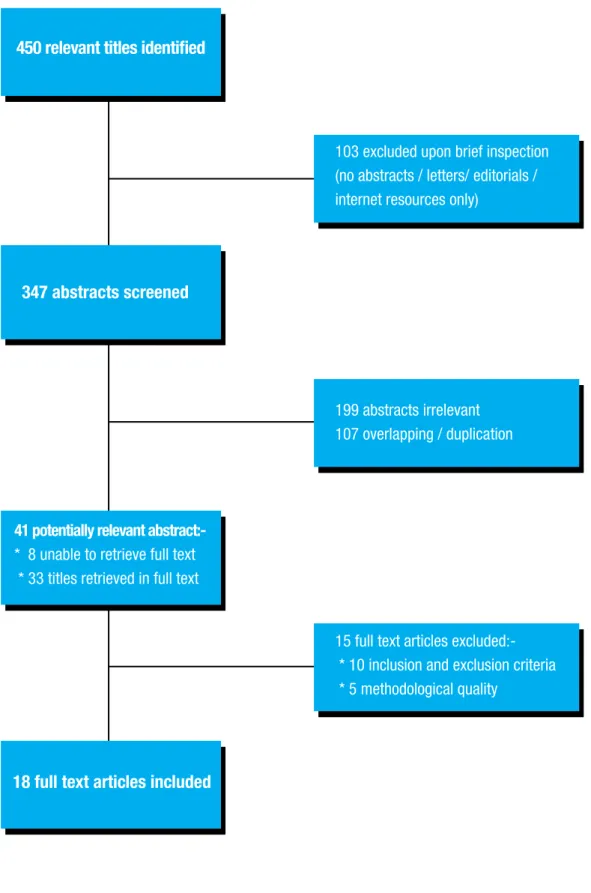
Search strategies yielded many published articles related to IFOBT for CRC screening. A total of 450 relevant titles were identified and 347 abstracts were screened using the inclusion and exclusion criteria. Of these, 199 abstracts were found to be irrelevant and 107 abstracts overlapping/duplication. Forty-one potentially relevant abstracts were attempted for retrieval. Of these, 33 potentially relevant articles were retrieved in full text, and full text for eight abstracts cannot be retrieved. After reading and appraising the full text articles, 18 full text articles were included, as shown in Figure 4. Fifteen full text articles were excluded based on inclusion and exclusion criteria, and quality of the studies are listed in Appendix 7. The articles comprised nine cross-sectional diagnostic accuracy studies, two cohort studies, two case-control studies, and five economic evaluation papers. We also included one article by the World Health Organization (WHO).
Figure 4: Flow chart of retrieval of articles used in the results
450 relevant titles identified
347 abstracts screened
18 full text articles included 41 potentially relevant
abstract:-* 8 unable to retrieve full text * 33 titles retrieved in full text
103 excluded upon brief inspection (no abstracts / letters/ editorials / internet resources only)
199 abstracts irrelevant 107 overlapping / duplication
15 full text articles excluded:-* 10 inclusion and exclusion criteria * 5 methodological quality
6.1 DIAGNOSTIC ACCURACY AND EFFECTIVENESS 6.1.1 Diagnostic accuracy of IFOBT and factor effecting
There was limited evidence available from studies on the diagnostic accuracy of various IFOBTs used, and that there were no RCTs evaluating diagnostic performance.
There was a study comparing the qualitative and quantitative IFOBT for CRC screening. Castiglione G et al. (2000)compared the performance of two IFOBTs, Immudia Hem-Sp or Hemeselect (RPHA) with the OC-Hemodia (LAT), the latter was developed by a completely automated procedure provided by the manufacturer and interpreted according to three positivity thresholds: 100 ng (Hdia100), 150 ng (Hdia150), or 200 ng (Hdia200) of haemoglobin/ml of the specimen solution. Both tests were completed by 5,884 average risk participants (2,997 women, mean age 59.6 years and 2,867 men, mean age 59.5 years) in a population-based screening programme, in 28 municipalities of the Province of Florence, Italy. The participants were instructed to collect faeces samples using RPHA cards and Hdia sticks on a single bowel movement and returned kits as soon as possible after faeces collection. No dietary restriction was required.
Participants with positive IFOBT results were then invited to undergo colonoscopy with biopsy or a combination of partial colonoscopy and DCBE when colonoscopy is impossible. Positivity rates and PPV for CRC or high risk adenomas were calculated for each test and then compared. High risk adenoma (HRA) was assumed to be present in those with adenoma/s larger than 9 mm or who presented with villous or tubulovillous pattern, or severe dysplasia. The study found that for RPHA, positivity rate was higher (3.3%, 95% Confidence interval, CI: 2.9% to 3.8%) compared to Hdia150 (2.5%, 95% CI: 1.5% to 4.3%) and Hdia200 (2.0%, 95% CI: 1.3% to 4.1%), but slightly lower when compared to Hdia100 (3.5%, 95% CI: 3.1% to 4.0%). However, there was no significant difference between tests was found for the PPV for CRC or adenomas. The authors concluded that Hdia100 was as sensitive as RPHA for cancer and HRA, and increasing the positivity threshold of Hdia up to 150 ng and 200 ng of haemoglobin/ml of specimen solution is not advisable.16 level 3
A recent study by Castiglione G et al. (2002) interpreted the overall experience with OC-Hemodia (LAT), which developed with OC-Sensor, a fully automated analyzer. A population-based screening programme involved subjects aged 50 to 70 years, invited every two years to have an IFOBT in Florence, Italy. A total of 11,774 subjects attended screening for the first time (6,063 women, mean age 59.1 years and 5,711 men, mean age 59.2 years); and 7,358 at subsequent screening (3,746 women, mean age 60.5 years and 3,612 men, mean age 60.8 years). Subjects who agreed to perform the OC-Hemodia (LAT) collected faecal samples by means of the stick provided by the manufacturer. The returned specimens were stored at 2 to 10° Celcius and assayed within one week of collection in laboratory by a completely automated analyzer. In their preliminary study and the current study, only tests with concentration of 100 ng haemoglobin/ml sample solution or higher were considered positive and the subjects were invited to undergo colonoscopy with biopsy or a combination of partial colonoscopy and DCBE. Subjects with negative IFOBT were invited to repeat screening after two years and to visit their general practitioners (GP) for any bowel complaint occurring in the interval between screenings. Performances of the test were interpreted with 11 positivity thresholds put at every 10 ng/ml intervals between 100 ng/ml and 200 ng/ml. Progressively increasing the positivity threshold from 100 ng/ ml to 200 ng/ml showed:
i. A decreased in positivity rates from 4.2% to 2.4% and from 3.4% to 1.6% in first and subsequent screening, respectively.
ii. A decrease in detection rates for CRC (3.3‰ to 2.7‰) or HRAs (7.9‰ to 5.9‰) in first screening; and 1.6‰ to 1.4‰ for CRC or 4.9‰ to 2.3‰ for HRAs in subsequent screening.
iii. An increase in PPV for cancer from 9.0% to 13.4% and from 5.5% to 10.9% in first and subsequent screening, respectively.
iv. An increase in PPV for HRAs from 21.3% to 28.9% and from 16.6% to 18.5% in first and subsequent screening, respectively.
The authors concluded that increasing the positivity threshold of the OC-Hemodia (LAT) reduces recall rate and improve PPV for cancer or HRAs but substantially decreases the detection rate of CRC and HRAs. For this reason increasing the positivity threshold is not advisable. On the other hand decreasing the positivity threshold would increase recall rate and sensitivity of screening.17 level 3
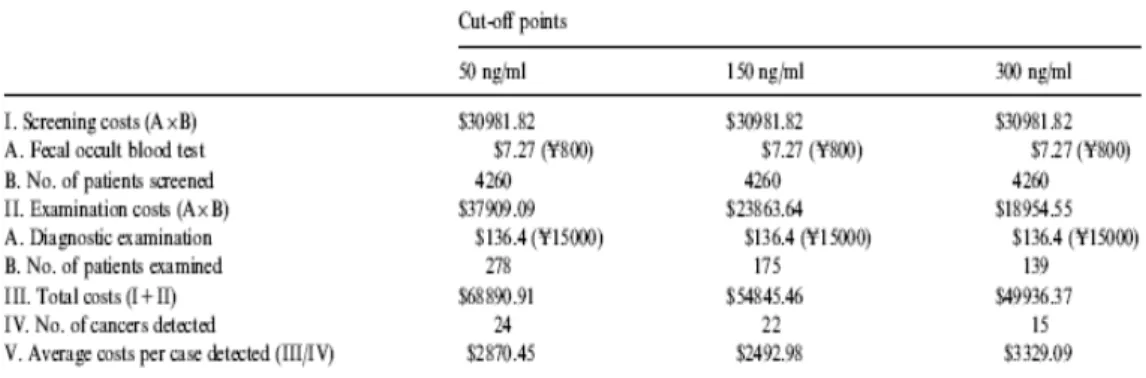
A cost-effectiveness and diagnostic validity study by Nakama H, Zhang B, and Zhang X in 2001 assessed the optimum cut-off point of faecal haemoglobin (50 ng/ml, 150 ng/ml, and 300 ng/ml) using OC-Hemodia, which interpreted using OC-Sensor, a fully automated analyzer. A total of 4,260 asymptomatic people aged over 40 years who participated in a medical check-up for CRC between April 1990 and March 1999 served as subjects of this study. Four samples of two consecutive days stool from each subject were tested without dietary or medicinal restriction. Faecal smears from the subjects were collected at the laboratory within a day and tested immediately. Meanwhile, all the participants received a colonoscopy examination with biopsy. Accordingly, the sensitivity and specificity were reported as:
i. 24/27 (89%) and 3,979/4,233 (94%) for the 50 ng/ml level ii. 22/27 (81%) and 4,080/4,233 (96%) for the 150 ng/ml level iii. 15/27 (56%) and 4,109/4,233 (97%) for the 300 ng/ml level
There was a significant difference in the sensitivity between the 50 ng/ml level and 300 ng/ml level (p<0.05) as well as between the 150 ng/ml level and 300 ng/ml level (p<0.05), and a significant differences in the specificity between the 50 ng/ml level and 300 ng/ml level (p<0.05). However, no significant difference was observed in the specificity between the 50 ng/ml level and 150 ng/ml levels. The findings indicated that the cut-off point of 150 ng/ml faecal haemoglobin was recommended for IFOBT by OC-Hemodia.18 level II-3 Li SC et al. (2007) conducted an analysis to determine the optimal cut-off point of IFOBT (brand names not stated) for population-based CRC screening in Taiwan, by using receiver operating characteristics (ROC) curves. Data used for producing ROC curve analysis were derived from 56,968 subjects (including 21,502 men and 35,466 women). Out of 56,968 subjects, 22,672 subjects aged 50 years or older were invited annually to have an uptake of IFOBT (58.0% were woman). The mean age was 63.36 ± 9.20 years. Two stage screening procedure was used to ascertain asymptomatic adenoma and invasive carcinoma of the colon and rectum. One day IFOBT method with a brush type sampler was given to each eligible subject while he/she was invited to out-reaching screening. The participants returned the collected stool sample within three to five days to each health centre in the vicinity where the screening activity was held. The stool sample was uploaded to the automated machine to yield a series of quantitative readings of IFOBT value. All subjects with IFOBT levels ≥ 100 ng/ml were defined as having positive IFOBT. From the ROC curve analysis, the area under curve was 0.87 (95% CI: 0.81 to 0.93). The optimal cut-off was 100 ng/ml at which the corresponding sensitivity, false positive and odds of being affected given a positive result (OAPR) for detection of CRC were 81.5% (95% CI: 70.2% to 89.2%), 5.7% (95% CI: 5.4% to 6.0%), and 1.24 (95% CI: 1.19 to 1.32), respectively.19 level II-3
In 2004, Crotta S et al. performed a pilot study in two municipalities of the region Valle d’Aosta, with the aim of evaluating the feasibility of a regional screening programme for CRC using IFOBT. The IFOBT used was based on OC-Hemodia (LAT), which interpreted using OC-Sensor, a fully automated analyzer. A total of 2,961 subjects (1,403 males and 1,558 females) aged 50 to 74 years were invited by mail to perform a one-day IFOBT without any dietary restrictions and with a positive threshold put at 100 ng/ml. Patient with positive tests were then invited to undergo colonoscopy with biopsy and DCBE if colonoscopy was incomplete. Patient with negative tests were suggested to repeat screening after two years and to visit their GP with any bowel complaint occurring during that period. The study revealed that out of 1,631 patients who performed the screening test, 72 (4.4%) had a positive IFOBT and 67 of which 72 patients (93.1%) agreed to undergo colonoscopy. Positive predictive value (PPV) for cancer and adenomas were 4.5% and 40.3%, respectively. The authors concluded that the use of a one-day quantitative latex IFOBT with no dietary restriction, automation of the analytical procedure, and a positive threshold of 100 ng/ml has shown that a programme based on this test is feasible in both organizational and attendance terms.20 level 3
An observational prospective study was carried out by Fenocchi E et al. (2006) in Uruguay to evaluate the feasibility of CRC screening using IFOBT. A total of 11,734 (3,663 men, mean age 61.3 ± 9.6 years and 8,071 women, mean age 61.2 ± 9.1 years) volunteers were enrolled in the CRC screening programme. Each volunteer received one IFOBT kit (OC-Hemodia) to be used at home on a single day and returned the samples to the centre in a cold box. An automated system (OC-Sensor II) was used for processing the samples with a 100 ng/ml cut-off haemoglobin level. Only participants with positive IFOBT results were offered a video colonoscopy with biopsy. The study showed that out of 11,734 study participants who received an IFOBT test kit, 10,573 (90.1%) returned samples for screening. The results of 1,170 (11.1%) of the responders were positive. Subsequently, colonoscopy was performed on 879 (75.1%) of the participants with a positive test results and showed neoplasia in 330 participants. They reported PPV of 8.6% and 11.2% for cancer and HRA, respectively. The authors concluded that the high compliance and high detection rates for cancer and HRA achieved in the CRC screening programme verifies the feasibility of an IFOBT in screening an average risk population in Uruguay.21 level 3
A study by Rubeca T et al. (2006) was conducted to compare the diagnostic efficacy of a recently commercialized IFOBT assay (FOB Gold, Sentinel = SENT) compared to the assay currently employed in the Florence screening program (OC-Hemodia, which developed with OC-Sensor, a fully automated analyzer). A total of 4,133 subjects (2,117 women and 2,016 men, age range between 50 to 69 years) from three municipalities of the Florence district were invited to participate in the study. They were provided with OC and SENT kits and were asked to perform both samplings on the same bowel movement. No dietary restrictions were prescribed. Test tubes were delivered to the lab within two days of sampling and stored at 2 to 8°C before processing. Subjects with a positive IFOBT results (100 ng/ml haemoglobin cut-off) were referred for total colonoscopy with biopsy and DCBE when colonoscopy was incomplete. The study indicated that the PPV for cancer was 5.0% for OC and 3.8% for SENT. The PPV for CRC+HRA was 31.4% for OC and 28.2% for SENT. The specificity for CRC+HRA was 97.7% for both methods. Based on finding, the authors concluded that SENT assay is less sensitive than OC assay for CRC and HRA, but since the observed difference did not reach statistical significance, further study were needed for confirmation; also needed is a detailed study of the analytical aspects in order to investigate intrinsic accuracy differences between the two assays.22 level 3
Morikawa T et al. (2007) conducted a cross-sectional study to investigate the sensitivity of IFOBT with special attention to small adenomas (≤ 9 mm), using a large-scale cohort of patients who underwent colonoscopy and IFOBT. A total of 21,805 subjects (15,694 males and 6,111 females; mean age 48.2 ± 9.3 years) completed the protocol of undergoing IFOBT and colonoscopy examination with biopsy. All eligible subjects were asymptomatic and participated voluntarily. They performed a one-day IFOBT which participants were asked to prepare a faecal sample from a stool specimen using a collection kit provided by manufacturer. The participants then brought the collection tubes to the hospital or clinic on the day of colonoscopy, and the samples were sent to the laboratory within 24 hour for immediate testing using Magstream 1000/Hem SP, an automated analyzer for IFOBT. The study showed that the sensitivity to adenomas ≤ 9 mm was significantly higher than the false positive rate as revealed by analysis of all eligible subjects (7.0% versus 4.5%, p<0.001). Subanalysis of the sensitivity to small adenomas according to patient age and gender revealed that the test was more sensitive in men than in women, and that the sensitivity increased as subjects aged (6.1% in men < 50 year and 11.3% in men > 60 year). In women, on the other hand, the sensitivity to small adenomas was not significantly higher than the false positive rate in any generation (5.1% versus 4.7% for all eligible women, p=0.72). The authors made a conclusion that IFOBT detected a small percentage of small adenomas at a rate that is significantly higher than the false positive, at least in male patients. However, clinical relevance of small adenomas is still controversial and therefore comparative studies between gFOBT and IFBOT with the end point of CRC-related death are expected.23 level 3
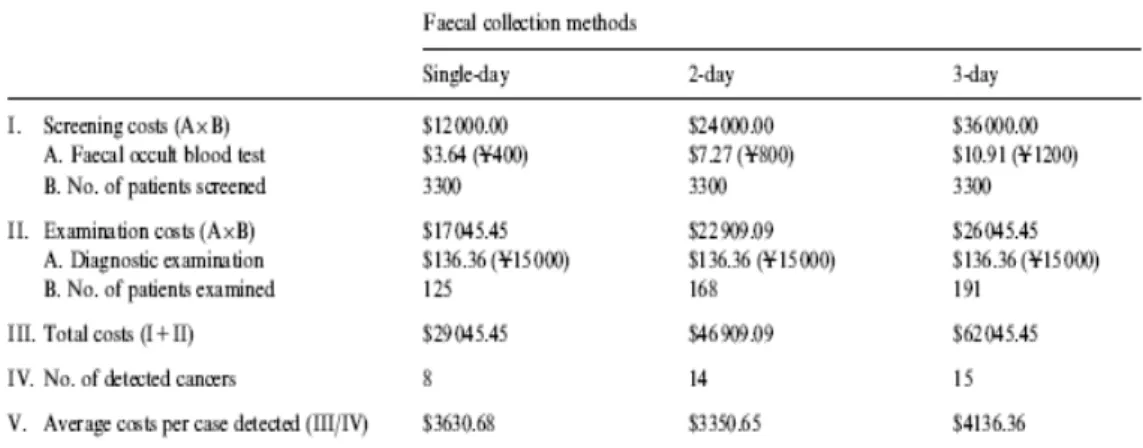
A cost-effectiveness and diagnostic accuracy study was carried out by Nakama H, Zhang B, and Fattah ASMA in 2000 to assess, the optimum number of faecal specimens to collect for use in IFOBT as a means of screening for CRC. A total of 3,300 asymptomatic people aged over 40 years who participated in a medical check-up for CRC served as subjects of this study. The six samples of three consecutive days’ stool from each subject were tested by a qualitative IFOBT Monohaem, without dietary or medical restriction according to the test principle. Faecal smears from the subjects were collected at the laboratory within a day and tested immediately. Meanwhile, all the participants received colonoscopy examination with biopsy. For evaluation of the optimum number of sampling specimens, the results of the first day of sampling, those of the first and second day, and those of samples taken for three consecutive days were considered as the single-day method, the two-day method and the three-day method, respectively. The study revealed that 17 patients with CRC were diagnosed by colonoscopy. Positive cases of an IFOBT were 125 (3.8%), 168 (5.1%), and 191 (5.8%) in the single-day, two-day and three-day methods. The numbers of patients with CRC detected by colonoscopy examination were eight, 14 and 15 in the single-day, two-day and three-day methods. Accordingly, the detection rate and the false positive rate were reported as:
i. 47% and 3.5% for the single-day method of collection ii. 82% and 4.7% for the two-days method
iii. 88% and 5.3% for the three-day method
There was a significant difference in the detection rate between the single- and two-day methods (p<0.05) and between the single- and three-day methods (p<0.05). There was no significant difference in the detection rate and false positive rate between the two-day and three-day methods. The authors concluded that the two-day faecal collection method is recommended for IFOBT by Monohaem.24 level II-3
Pertinent details of theincludeddiagnostic accuracy studies are provided in Appendix 8.
6.1.1a Effect of variation in ambient temperature on IFOBT
Immunochemical faecal occult blood test (IFOBT) detects the intact globin moiety of human haemoglobin or its early degradation products, but little is known about its stability under different storage conditions. A recent study by Grazzini et al. (2010) is the first to describe a relationship between the seasons and the haemoglobin concentrations measured in faecal samples in a screening programme for CRC. The aim of the study was to examine the performance of IFOBT (OC-Sensor Micro instrument) in the Florence screening programme over several seasons to evaluate the impact of variations in ambient temperature on the performance of the screening test. A total of 199,654 IFOBT (93,191 men and 106,463 women) were performed in the CRC screening programme. Participants in the screening programme received detail written and oral information about preparing faecal samples and were asked to return the test samples as soon as possible in order to avoid degradation of haemoglobin. Subjects who tested positive were offered a full colonoscopy with biopsy during dedicated sessions at an accredited assessment clinic. Measured haemoglobin concentration was aggregated into seasons with their average ambient temperature (AAT). Using logistic regression, the AAT over the period preceding the test measurement was analysed. This period included the time between faecal sampling and return of the test sample (mean seven days) and the time in the laboratory refrigerator before analysis (mean four days). The AAT from day five to 11 before analysis of the test sample was considered a determinant of test positivity. A non-parametric test (Kruskal-Wallis rank test for quality) was used to evaluate the difference across the seasons. The probability of the IFOBT being positive (haemoglobin concentration ≥ 100 ng/ml) and of diagnosing a neoplastic lesion (cancer or advanced adenoma) was studied using a logistic model adjusted for sex, age, season and episode of screening (first or repeated test). The study revealed that mean IFOBT seasonal haemoglobin concentration were:
i. 27.6 ng/ml in spring (95% CI: 26.2 to 29.1) ii. 25.2 ng/ml in summer (95% CI: 23.1 to 27.3) iii. 29.2 ng/ml in autumn (95% CI: 27.2 to 30.6) iv. 29.5 ng/ml in winter (95% CI: 27.9 to 31.1)
The results of the logistic regression showed that there was a 17.0% lower probability of the IFOBT being positive in summer than in winter. An increased in temperature of 1.0°C produced a 0.7% reduction in probability of an IFOBT being positive. In the summer the probability of detecting a cancer or an advanced adenoma was about 13.0% lower than in the winter. They concluded that there was a significant fall in haemoglobin concentration at higher ambient temperatures. The observations described in this study need to be confirmed by other programmes working under a variety of different climatic conditions.25 level II-2
6.1.1b Effect of delayed sample return
IFOBT performed at home by screening participants are promising in population-based screening for CRC. Some IFOBT’s are quantitative, and the faecal sample is stored in a sample bottle containing haemoglobin stabilizing buffer. However, the stability of faecal haemoglobin in the stabilizing buffer has not been studied comprehensively. Several factors may influence haemoglobin stability such as storage conditions and lag time before the faecal sample is analyzed. Delayed return of IFOBT samples to a laboratory might cause false negative because of haemoglobin degradation.
Therefore, van Rossum LGM et al. (2009) studied the effect of delay between sampling and laboratory delivery on IFOBT (OC-Sensor Micro instrument) performance. A large prospective population-based screening study in more than 20,000 persons in Netherlands (aged 50 to 75 years) was performed from June 2006 to February 2007. Half of the screening population was randomly allocated to receive an IFOBT. Participants performed the sampling for the test at home and were instructed to return the test as soon as possible by mail. They were asked to report the date of faecal sampling on the sample tube. IFOBT positivity threshold (≥ 50 ng/ml haemoglobin) in CRC screening participants without delay (< 5 days) was compared with positivity in participants with ≥ 5 and ≥ 7 days delay. Only patients with an IFOBT positive result went for colonoscopy with biopsy. The OR and 95% CI were presented for the difference between participants with delay compared with participants without delay. Odds ratio was corrected for age, gender and place of residence with multivariate logistic regression analysis. Additionally, positive tests were stored at room temperature and retested five times within 10 to 14 days. They measured the mean and the median decreased of faecal haemoglobin in the sample solution over time and estimated the risk of false negative due to degradation of faecal haemoglobin (< 50 ng/ ml). The study showed that OC-Sensor tests were positive (≥ 50 ng/ml) in 265/3062 (8.7%) of tests delivered without delay, in 42/705 (6.0%) with a delay ≥ 5 days and in 8/195 (4.1%) with a delay ≥ 7 days. Compared with OC-Sensor tests returned without delay, the positivity rate was significantly decreased after a delay ≥ 5 days (OR 0.7; 95% CI 0.5 to 0.9), and after a delay ≥ 7 days (OR 0.5; 95% CI 0.2 to 0.9). Of the 170 participants positive OC-Sensor tests (≥ 50 ng/ml) 139 (82%) had a colonoscopy with biopsy. They found that 45/139 (32.4%) had advanced adenomas and 8/139 (5.8%) had CRC. In patients with advanced adenomas, haemoglobin in the sample was < 50 ng/ml in 5/45 (11.1%) two to three days after the initial test and in 16/45 (35.6%) after 10 to 14 days. Only after seven days, 2/8 (25.0%) of the samples of participants with CRC became false negative.
The authors concluded that the performance of the IFOBT (OC-Sensor Micro instrument) was decreased by delay in time between faecal sampling and laboratory delivery. Later stage CRC patients will probably not be missed due to this delay, but at least a relevant proportion of patients with advanced adenomas and possibly stage I CRC might be missed even with a delay of a few days. Until a less sensitive haemoglobin stabilizing buffer is produced, monitoring delay between faecal sampling and laboratory research should be part of quality control for screening with IFOBT. Inviting participants to perform a second test when delay is ≥ 5 days could be considered.26 level 3
6.1.2 Colorectal cancer (CRC) mortality
Saito H et al. (1995) conducted a case-control study to evaluate the reduction in risk of mortality from CRC by faecal occult blood screening using qualitative single-day immunochemical hemagglutination test. This test (Immudia-Hem Sp or HemeSelect) has been performed since 1986 in Aomori Prefecture. The entire population of the 26 study areas combined was 296,439 (154,715 males and 141,724 females) at the time when the screening program was started. Case subjects are defined as those who:
i. Died of CRC during the period between April 1, 1986 and December 31, 1992
ii. Were diagnosed as having CRC between the ages of 40 and 79 after the screening program was started
iii. Had been living in the same area since the screening program was started
iv. Had not had previous histories of CRC before the screening program was started in 1986 or 1987
Three controls were randomly selected from the list of individuals who were alive at the time of diagnosis of the corresponding case and had been living in the same area as the case, matched by gender and age. Conditional logistic regression analysis was used to calculate the OR of dying of CRC for those screened within one to five years before case diagnosis versus those not screened in the corresponding intervals. Odds ratio (OR) was also calculated by number of years since the most recent screening history, to study the optimal screening interval. A total of 193 cases and 577 controls were used in the analysis. The study revealed that the risk of developing fatal CRC was reduced by 23% to 60% among those who had a screening history, relative to those not screened. The OR for those screened within one, two and three years of case diagnostic versus those not screened were 0.40 (95% CI: 0.17 to 0.92), 0.41 (95% CI: 0.20 to 0.82), and 0.48 (95% CI: 0.25 to 0.92), respectively. Based on the findings, the results suggested that CRC screening by the IFOBT would reduce mortality from CRC.27 level II-2
6.1.3 Detection of precancerous lesions and advanced CRC
Yang H et al. (2011) evaluated the effectiveness of IFOBT for the screening of precancerous lesions and CRC. Immunochemical faecal occult blood test (IFOBT) was performed on 5,919 adults (3,268 men and 2,651 women; mean age 55.18 ± 15.67 years) who received periodic health examination in the health care centre of Renji Hospital, Shanghai. The exclusion criteria were as follows: cases with gingival haemorrhage, epitasis, menses, anal fissure, haemorrhoid, and other diseases that could influence the test result; patients who were reluctant to provide faecal samples; and patients who refused colonoscopy and/or DCBE examinations. The test was performed using an OC-MICROTM instrument and the positivity threshold was set at 100 ng/ml of haemoglobin. Diagnosis was confirmed by histopathological analysis which all pathologists were blinded to the IFOBT results. From the study, 314 out of 5,919 adults screened were found to be positive (5.3%), whereas 201 cases (64.0%) were male and 113 cases (35.9%) were female. Further examination was made in 264 IFOBT positive cases. Out of the 264 cases investigated, 116/264 (43.9%) were found to have CRC (16 cases) and precancerous lesions (94 cases with colorectal adenomatous polyps and six cases with active ulcerative colitis). The TNM classification of 16 CRC cases was as follows: TNMI in eight cases (50.0%), TNMII in seven cases (43.8%), and TMIII in one case (6.3%), indicating IFOBT can detect CRC in the early stages. The authors concluded that regular IFOBT can detect precancerous lesions and CRC in early stages and can thus reduce mortality from CRC.28 level 3
A case-control study was conducted by Nakajima M et al. (2003) to evaluate whether screening with the IFOBT reduces the risk of developing advanced CRC in the area where annual screening with the IFOBT has been performed. CRC screening has been conducted using single-day IFOBT test (Immudia-Hem Sp) since 1986 in Aomori Prefecture. Screening was annually offered to all men and women, who held national health insurance, aged ≥ 40 years. Screeners who tested positive for FOBTs were recommended to undergo diagnostic investigation by total colonoscopy with biopsy. Cases were defined as the consecutive patients clinically diagnosed as having advanced CRC that invaded to the muscularis propriae or deeper, which required surgery. For inclusion, case subjects were ≥ 40 years at the time of diagnosis and had been living in the same area since 1986 when the screening programme was started. Patients with a previous history of CRC were excluded. Potential case subjects were obtained from the files of cancer registries that cover the whole prefecture. Diagnoses of CRCs were scrutinised by reviewing medical records for colonoscopic and/or radiographical findings, anatomic location of the cancer, histological diagnosis and depth of cancer invasion. For each case, three controls were randomly selected from the list of residents in 1986 in the study area, where the corresponding case lived, matched by gender, and residential area within the town or village.