CHAPTER THREE
16 Department of Innovation Annual Report 2009–10
Role AnD functIons
The Department of Innovation, Industry, Science and Research strives as a key priority to encourage the sustainable growth of Australian industries by developing a national innovation system that drives knowledge creation, cutting-edge science and research, international competitiveness and greater productivity. The department is committed to developing policies and delivering programs, in partnership with stakeholders, to provide lasting economic benefits ensuring Australia’s competitive future. The department also works to boost innovation by Australian industry and improve social and economic benefits for the Australian community.
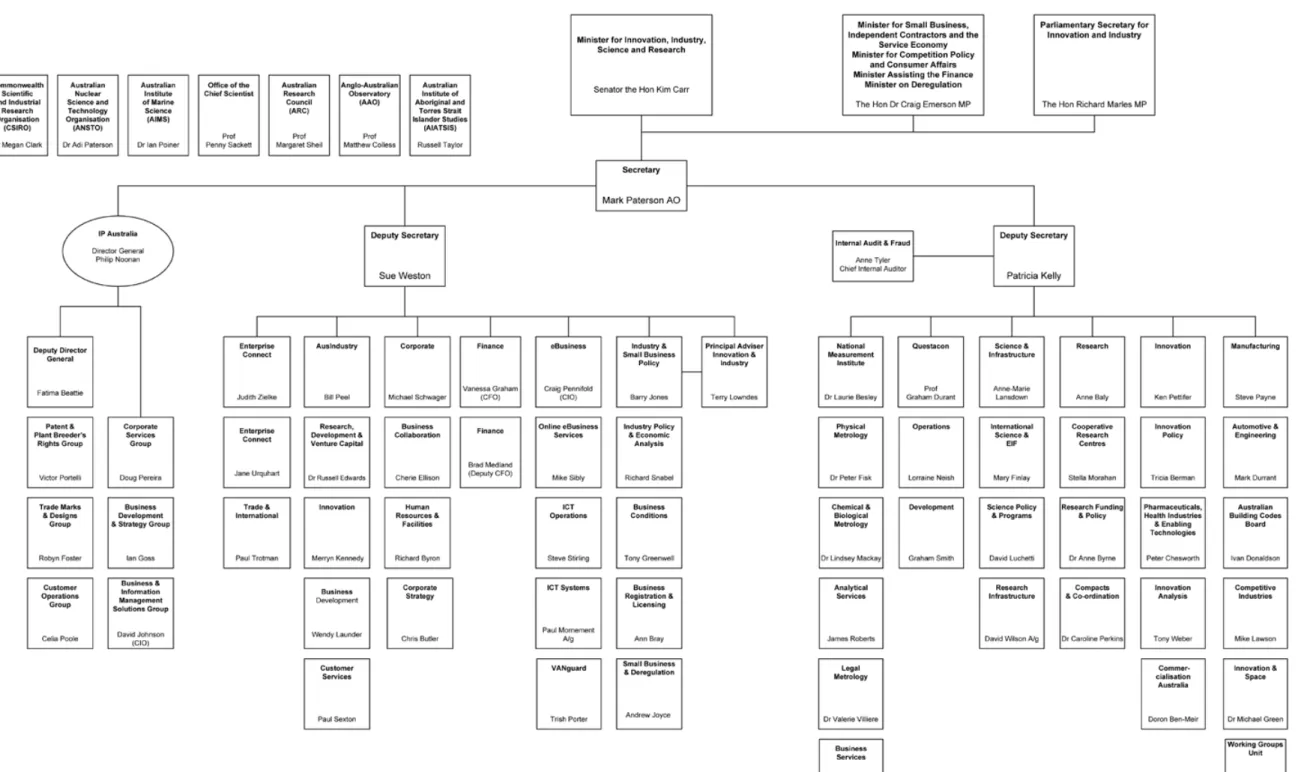
Figure 3.1 shows the organisational structure of the department.
Vision
The department’s vision is increased prosperity for all Australians through internationally competitive and sustainable business.
Mission
The department achieves its vision through its mission:
■ To enhance the development of internationally
competitive and sustainable business through excellence in policy formulation and implementation
■ To excel in business program and service
delivery
■ To be a respected source of knowledge
through our understanding of the business environment and business networks.
3. Department overview
objectiVes
The Department of Innovation, Industry, Science and Research is responsible for two government outcomes.
The department strives to meet these Outcomes by focusing on four key areas or themes: Innovation; Industry; Science and Research; and Small Business and Deregulation.
Innovation — building a culture of innovation and new ideas by strengthening investment in creativity and knowledge generation through a streamlined, national innovation system.
Industry — improving the economic viability and competitive advantage of Australian industry.
Science and Research — building a strong Australian science and research capability in universities, publicly funded research agencies and business that can effectively contribute to the achievement of national economic, social and environmental objectives.
Small Business and Deregulation — improving the growth, performance and competitiveness of small business.
P
art A: Ov
ervie
w
17
Chapter 3: Department overview
OrganisatiOnal struCture
The department is structured into 11 divisions, as shown in Figure 3.1.
18 Department of innovation annual report 2009–10
lOCatiOns
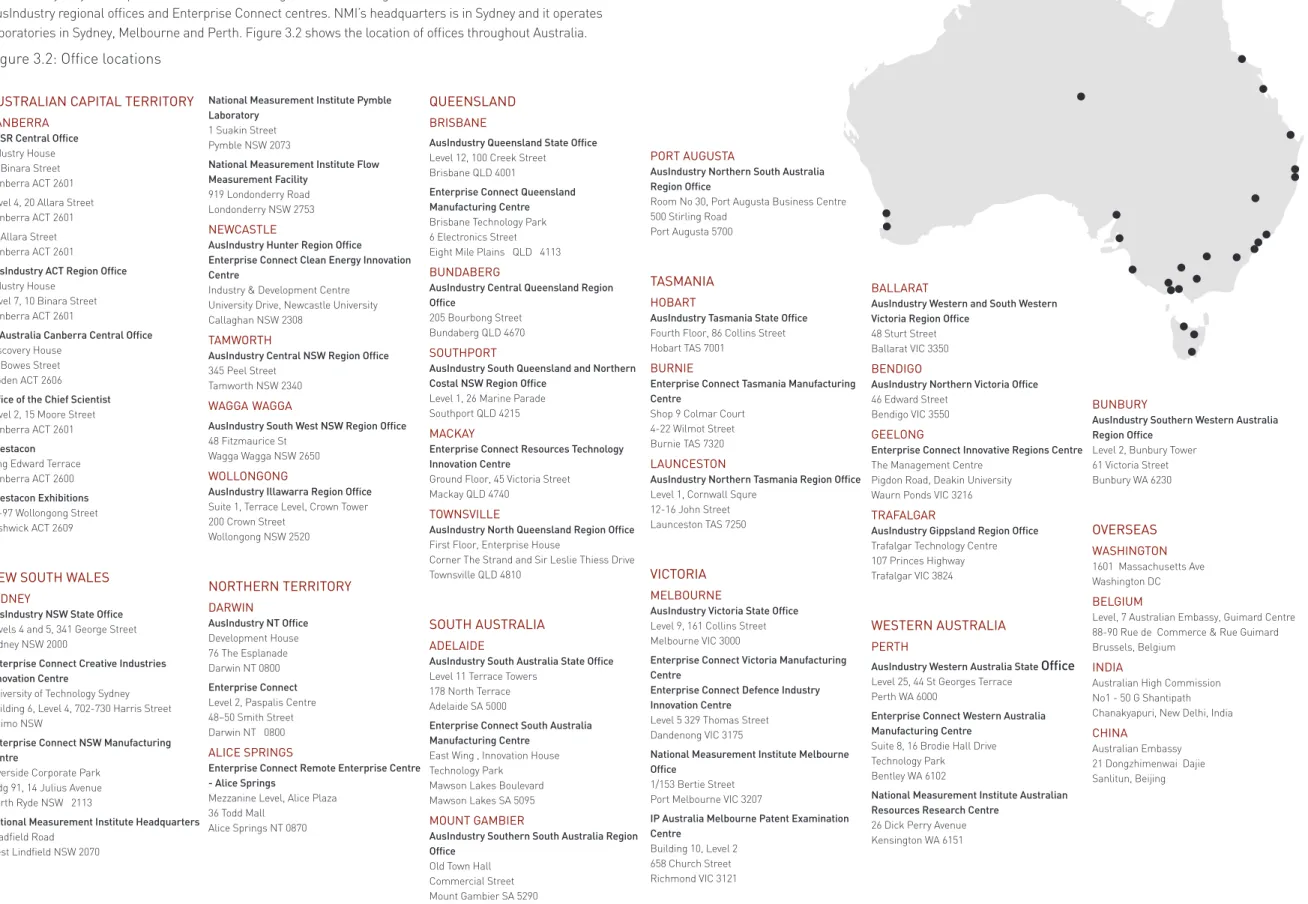
The department has its headquarters in Canberra; state offices in Adelaide, Brisbane, Hobart, Melbourne, Perth and Sydney; and a presence in a number of regional areas throughout Australia in the form of
AusIndustry regional offices and Enterprise Connect centres. NMI’s headquarters is in Sydney and it operates laboratories in Sydney, Melbourne and Perth. Figure 3.2 shows the location of offices throughout Australia.
Figure 3.2: Office locations
australian Capital territOry
Canberra
DIISR Central Office Industry House 10 Binara Street Canberra ACT 2601 Level 4, 20 Allara Street Canberra ACT 2601 51 Allara Street Canberra ACT 2601
AusIndustry ACT Region Office Industry House
Level 7, 10 Binara Street Canberra ACT 2601
IP Australia Canberra Central Office Discovery House
47 Bowes Street Woden ACT 2606 Office of the Chief Scientist Level 2, 15 Moore Street Canberra ACT 2601 Questacon King Edward Terrace Canberra ACT 2600 Questacon Exhibitions 95-97 Wollongong Street Fyshwick ACT 2609
new sOuth wales
syDney
AusIndustry NSW State Office Levels 4 and 5, 341 George Street Sydney NSW 2000
Enterprise Connect Creative Industries Innovation Centre
University of Technology Sydney Building 6, Level 4, 702-730 Harris Street Ultimo NSW
Enterprise Connect NSW Manufacturing Centre
Riverside Corporate Park Bldg 91, 14 Julius Avenue North Ryde NSW 2113
National Measurement Institute Headquarters Bradfield Road
West Lindfield NSW 2070
National Measurement Institute Pymble Laboratory
1 Suakin Street Pymble NSW 2073
National Measurement Institute Flow Measurement Facility
919 Londonderry Road Londonderry NSW 2753
newCastle
AusIndustry Hunter Region Office
Enterprise Connect Clean Energy Innovation Centre
Industry & Development Centre University Drive, Newcastle University Callaghan NSW 2308
tamwOrth
AusIndustry Central NSW Region Office 345 Peel Street
Tamworth NSW 2340
wagga wagga
AusIndustry South West NSW Region Office 48 Fitzmaurice St
Wagga Wagga NSW 2650
wOllOngOng
AusIndustry Illawarra Region Office Suite 1, Terrace Level, Crown Tower 200 Crown Street Wollongong NSW 2520 nOrthern territOry Darwin AusIndustry NT Office Development House 76 The Esplanade Darwin NT 0800 Enterprise Connect Level 2, Paspalis Centre 48–50 Smith Street Darwin NT 0800
aliCe springs
Enterprise Connect Remote Enterprise Centre - Alice Springs
Mezzanine Level, Alice Plaza 36 Todd Mall
Alice Springs NT 0870
QueenslanD
brisbane
AusIndustry Queensland State Office Level 12, 100 Creek Street
Brisbane QLD 4001
Enterprise Connect Queensland Manufacturing Centre Brisbane Technology Park 6 Electronics Street Eight Mile Plains QLD 4113
bunDaberg
AusIndustry Central Queensland Region Office
205 Bourbong Street Bundaberg QLD 4670
sOuthpOrt
AusIndustry South Queensland and Northern Costal NSW Region Office
Level 1, 26 Marine Parade Southport QLD 4215
maCkay
Enterprise Connect Resources Technology Innovation Centre
Ground Floor, 45 Victoria Street Mackay QLD 4740
tOwnsville
AusIndustry North Queensland Region Office First Floor, Enterprise House
Corner The Strand and Sir Leslie Thiess Drive Townsville QLD 4810
sOuth australia
aDelaiDe
AusIndustry South Australia State Office Level 11 Terrace Towers
178 North Terrace Adelaide SA 5000
Enterprise Connect South Australia Manufacturing Centre
East Wing , Innovation House Technology Park
Mawson Lakes Boulevard Mawson Lakes SA 5095
mOunt gambier
AusIndustry Southern South Australia Region Office
Old Town Hall Commercial Street Mount Gambier SA 5290
pOrt augusta
AusIndustry Northern South Australia Region Office
Room No 30, Port Augusta Business Centre 500 Stirling Road
Port Augusta 5700
tasmania
hObart
AusIndustry Tasmania State Office Fourth Floor, 86 Collins Street Hobart TAS 7001
burnie
Enterprise Connect Tasmania Manufacturing Centre
Shop 9 Colmar Court 4-22 Wilmot Street Burnie TAS 7320
launCestOn
AusIndustry Northern Tasmania Region Office Level 1, Cornwall Squre
12-16 John Street Launceston TAS 7250
viCtOria
melbOurne
AusIndustry Victoria State Office Level 9, 161 Collins Street Melbourne VIC 3000
Enterprise Connect Victoria Manufacturing Centre
Enterprise Connect Defence Industry Innovation Centre
Level 5 329 Thomas Street Dandenong VIC 3175
National Measurement Institute Melbourne Office
1/153 Bertie Street Port Melbourne VIC 3207
IP Australia Melbourne Patent Examination Centre
Building 10, Level 2 658 Church Street Richmond VIC 3121
ballarat
AusIndustry Western and South Western Victoria Region Office
48 Sturt Street Ballarat VIC 3350
benDigO
AusIndustry Northern Victoria Office 46 Edward Street
Bendigo VIC 3550
geelOng
Enterprise Connect Innovative Regions Centre The Management Centre
Pigdon Road, Deakin University Waurn Ponds VIC 3216
trafalgar
AusIndustry Gippsland Region Office Trafalgar Technology Centre 107 Princes Highway Trafalgar VIC 3824
western australia
perth
AusIndustry Western Australia State Office Level 25, 44 St Georges Terrace
Perth WA 6000
Enterprise Connect Western Australia Manufacturing Centre
Suite 8, 16 Brodie Hall Drive Technology Park
Bentley WA 6102
National Measurement Institute Australian Resources Research Centre
26 Dick Perry Avenue Kensington WA 6151
bunbury
AusIndustry Southern Western Australia Region Office
Level 2, Bunbury Tower 61 Victoria Street Bunbury WA 6230 Overseas washingtOn 1601 Massachusetts Ave Washington DC belgium
Level, 7 Australian Embassy, Guimard Centre 88-90 Rue de Commerce & Rue Guimard Brussels, Belgium
inDia
Australian High Commission No1 - 50 G Shantipath Chanakyapuri, New Delhi, India
China
Australian Embassy 21 Dongzhimenwai Dajie Sanlitun, Beijing
P
art A: Ov
ervie
w
19
chapter 3: Department overview A brief description of the responsibilities of each
division follows.
Ausindustry
AusIndustry is the Australian Government’s principal business program delivery division in the Department of Innovation, Industry, Science and Research.
AusIndustry delivers a range of more than 35 business programs — including innovation grants, tax and duty concessions, small business development, industry support and venture capital — worth $2 billion — to more than 12,000 businesses and about 70,000 individuals every year.
corporAte
The Corporate Division provides a range of essential business services and facilities to support the department and Ministers in meeting the priorities and goals of the portfolio. Consistent with the government’s decision, the Corporate Division also provides specific services to the Department of Resources, Energy and Tourism via a shared services agreement.
ebusiness
The eBusiness Division manages the provision of infrastructure and information technology services within the department and provides, on a whole-of-government basis, online services to Australian businesses through initiatives such as the business.gov.au website and VANguard. The business.gov.au site provides Australian businesses with in-depth information on planning for, starting and running a business, including such things as insurance, franchising, importing, licences and environmental management. VANguard supports business by allowing business users to conduct transactions securely with government agencies (federal, state or local government) using a digital credential. The VANguard e-authentication model is designed to support a range of business scenarios as well as support a range of digital credentials.
The division also provides ICT support services to the Department of Resources, Energy and Tourism.
enterprise connect
Enterprise Connect Division is responsible for policies and programs aimed at improving productivity, global competitiveness and market access through enterprise development; innovation advice and support; trade and customs policy; and technical standards and conformance infrastructure.
industry And sMAll business policy
The Industry and Small Business Policy Division provides policy advice and analysis to portfolio Ministers on industry and small business policy issues to facilitate increased competitiveness and sustained growth for Australian businesses. It focuses on a range of issues affecting business, including broad economic conditions, business deregulation, taxation, business finance, independent contracting, franchising, competition, infrastructure, skills, workplace relations and climate change, and cultivates effective links and consultation with the business community and its representative organisations. The division promotes small business interests within government, and helps government agencies understand the factors influencing small businesses.
innoVAtion
The Innovation Division aims to encourage innovation by small and large Australian businesses by providing policy analysis and advice and support through business innovation programs, including Commercialisation Australia. The division also supports the development of globally competitive pharmaceutical, biotechnology and medical technology businesses in Australia, and promotes the responsible use of enabling technologies to foster business productivity and competitiveness.
20 Department of Innovation Annual Report 2009–10
MAnufActuring
The Manufacturing Division provides policy analysis and advice to the government on the following sectors: automotive; aerospace; books; building and construction; ICT; marine; printing; pulp and paper; space; steel; textile, clothing and footwear industries; and defence manufacturing industries. In addition, it facilitates Australian industry participation in major investment projects and global supply chains through initiatives which support the Australian Industry Participation National Framework. There is an added focus on the sustainability of manufacturing processes, products and services.
nAtionAl MeAsureMent institute
The National Measurement Institute (NMI) is responsible for Australia’s national infrastructure for physical, chemical, biological and legal measurement. It is responsible for maintaining Australia’s national standards of measurement and their traceability to the international system, and for disseminating measurement standards, including through calibration services and chemical reference materials. NMI also provides high-level measurement services for government, industry and the community.
QuestAcon
Questacon presents creative, interactive science exhibitions and programs to emphasise the importance of science, technology and innovation, and to encourage students to pursue careers in science, maths and engineering. Questacon operates seven outreach programs, which target a range of audiences and have been developed to support national science and education priorities. Questacon’s other program activity includes delivery of the Prime Minister’s Prizes for Science and National Science Week.
reseArch
The Research Division advises the government on policy and programs relating to higher education research. It provides advice on major strategic research policy issues, including collaboration between researchers and between researchers
and industry, research training, research workforce and quality, funding and accountability. The division administers the government’s Cooperative Research Centres Program and research block grants. It develops policy to help Australia achieve a strong research capacity, including the introduction of mission-based compacts for universities. The division also covers issues relating to research in the establishment of the Tertiary Education Quality and Standards Agency and is responsible for administering the strategic relationship between the Commonwealth and the Australian National University.
science And infrAstructure
The Science and Infrastructure Division advises the government on policy and programs in areas of science and research infrastructure. It administers government science and research infrastructure funding programs and develops policy to help Australia achieve a strong science and research capacity and to be engaged internationally on science and research issues.
P
art A: Ov
ervie
w
21
Chapter 3: Department overview
OutCOme anD prOgram struCture
Department of InnovatIon, InDustry, scIence anD research
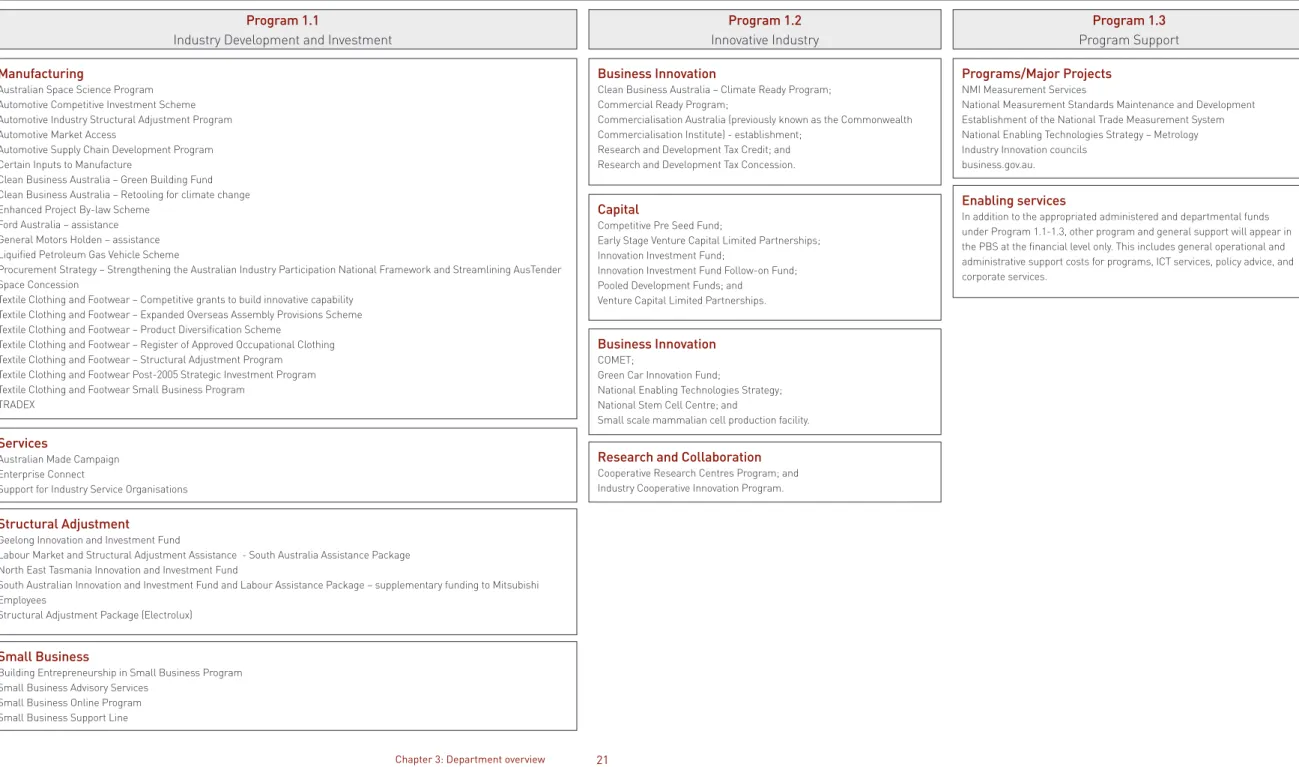
During 2009–10, the department reported against a revised and streamlined set of outcome statements as a result of the Operation Sunlight Outcome Statements Review. In 2009–10 the department reported on a program basis against two outcomes and six related programs. The new reporting framework is illustrated in Figure 3.3.
Figure 3.3: Outcome and program structure
Outcome 1
Enhanced opportunities for business innovation and growth through national leadership in converting knowledge and ideas into new processes, services, products and marketable devices; fostering business cooperation; delivering advice; assistance; and business, measurement and online services.
Program 1.1
Industry Development and Investment
Manufacturing
Australian Space Science Program Automotive Competitive Investment Scheme Automotive Industry Structural Adjustment Program Automotive Market Access
Automotive Supply Chain Development Program Certain Inputs to Manufacture
Clean Business Australia – Green Building Fund Clean Business Australia – Retooling for climate change Enhanced Project By-law Scheme
Ford Australia – assistance General Motors Holden – assistance Liquified Petroleum Gas Vehicle Scheme
Procurement Strategy – Strengthening the Australian Industry Participation National Framework and Streamlining AusTender Space Concession
Textile Clothing and Footwear – Competitive grants to build innovative capability Textile Clothing and Footwear – Expanded Overseas Assembly Provisions Scheme Textile Clothing and Footwear – Product Diversification Scheme
Textile Clothing and Footwear – Register of Approved Occupational Clothing Textile Clothing and Footwear – Structural Adjustment Program
Textile Clothing and Footwear Post-2005 Strategic Investment Program Textile Clothing and Footwear Small Business Program
TRADEX
Services
Australian Made Campaign Enterprise Connect
Support for Industry Service Organisations
Structural Adjustment
Geelong Innovation and Investment Fund
Labour Market and Structural Adjustment Assistance - South Australia Assistance Package North East Tasmania Innovation and Investment Fund
South Australian Innovation and Investment Fund and Labour Assistance Package – supplementary funding to Mitsubishi Employees
Structural Adjustment Package (Electrolux)
Small Business
Building Entrepreneurship in Small Business Program Small Business Advisory Services
Small Business Online Program Small Business Support Line
Program 1.2
Innovative Industry
Business Innovation
Clean Business Australia – Climate Ready Program; Commercial Ready Program;
Commercialisation Australia (previously known as the Commonwealth Commercialisation Institute) - establishment;
Research and Development Tax Credit; and Research and Development Tax Concession.
Capital
Competitive Pre Seed Fund;
Early Stage Venture Capital Limited Partnerships; Innovation Investment Fund;
Innovation Investment Fund Follow-on Fund; Pooled Development Funds; and
Venture Capital Limited Partnerships.
Business Innovation
COMET;
Green Car Innovation Fund;
National Enabling Technologies Strategy; National Stem Cell Centre; and
Small scale mammalian cell production facility.
Research and Collaboration
Cooperative Research Centres Program; and Industry Cooperative Innovation Program.
Program 1.3
Program Support
Programs/Major Projects
NMI Measurement Services
National Measurement Standards Maintenance and Development Establishment of the National Trade Measurement System National Enabling Technologies Strategy – Metrology Industry Innovation councils
business.gov.au.
Enabling services
In addition to the appropriated administered and departmental funds under Program 1.1-1.3, other program and general support will appear in the PBS at the financial level only. This includes general operational and administrative support costs for programs, ICT services, policy advice, and corporate services.
22 Department of innovation annual report 2009–10 Outcome 2
The generation, utilisation and awareness, of science and research knowledge through investment in research, research training and infrastructure, science communication, skill development and collaboration with industry, universities and research institutes domestically and internationally.
Program 2.1
Investment in Higher Education and Research
Postgraduate Student Support
Australian Postgraduate Awards; and
International Postgraduate Research Scholarship Scheme.
Research
Commercialisation Training Scheme; Institutional Grants Scheme; Joint Research Engagement program; Research Infrastructure Block Grants; Research Training Scheme; and
Sustainable Research Excellence in Universities.
Research and Collaboration
Cooperative Research Centres Program; and Industry Cooperative Innovation Program.
Program 2.2
Science and Research Capacity
Awareness
Higher Education Research Promotion Learned Academies (Supplementation); and Science Connections Program.
Infrastructure
Anglo-Australian Observatory; Clean Energy Initiative;
Education Investment Fund – Round 1 Institution of Photonics; and
New Horizons – Monash University Project. Education Investment Fund – Round 2
Australian Institute for Innovative Materials; Building the Sydney Institute of Marine Science; Centre for Climate Change and Energy Research; Institute for Marine and Antarctic Studies; La Trobe Institute for Molecular Sciences; National Centre for Synchrotron Science; and The Centre for Neural Engineering.
European Molecular Biology Laboratory partner facility; Excellence in Research for Australia (ASHER & IAP); Giant Magellan Telescope
National Collaborative Research Infrastructure Strategy; Super Science – Future Industries;
Super Science – Marine and Climate; and Super Science – Space and Astronomy.
International
International Education and Training (Australia-India Strategic Research Fund); and International Science Linkages program.
Program 2.3
Program Support
Programs/Major Projects
Questacon Chief Scientist Square Kilometre Array
Enabling services
In addition to the appropriated administered and departmental funds under Program 1.1-1.3, other program and general support will appear in the PBS at the financial level only. This includes general operational and administrative support costs for programs, ICT services, policy advice, and corporate services.