system for smartphones using
machine learning algorithm
Khurram Majeed
Faculty of Life Sciences and Computing
London Metropolitan University
This dissertation is submitted for the degree of
Doctor of Philosophy
I hereby declare that except where specific reference is made to the work of others, the contents of this dissertation are original and have not been submitted in whole or in part for consideration for any other degree or qualification in this, or any other University. This dissertation is the result of my own work and includes nothing which is the outcome of work done in collaboration, except where specifically indicated in the text. This dissertation contains around 30,000 words including appendices, bibliography, footnotes, tables and equations and has 115 references.
Khurram Majeed January 2015
Acknowledgements
Words can’t explain my gratitude for Almighty Allah without whose mercy I would never be able to achieve what I have. I would like to express my special appreciation and thanks to Dr. Dusica Novakovic, Prof. Karim Ouazzane and Dr. Yanguo Jing for being great pillars of this research process, with their kind supervision, valuable suggestions and intellectual activities, inexhaustible energy to steer forth the research and keeping my spirits up during this journey, without which it would have been incomplete. I would also like to thank London Metropolitan University for providing me Scholarship and staff at the School of Computing and research office for their support during my studies. I would also like to extend my heartfelt gratitude to my fellow research students, especially, Majid Djennad, Samson Habte, Deepthi Ratnayake, Teresa Formisano, Victor Costonov and Abu Mansoor for making our research time together, truly memorable and supporting me in the moments when there was no one to answer my queries. Last but not least, I would like to extend special thanks to my family. Words cannot express how grateful I am to my parents, my wife and her parents for all of the sacrifices that they have made on my behalf. Their prayer for me is what sustained me thus far.
In this research, we propose a novel, platform independent behaviour-based anomaly detection system for smartphones. The fundamental premise of this system is that every smartphone user has unique usage patterns. By modelling these patterns into a profile we can uniquely identify users. To evaluate this hypothesis, we conducted an experiment in which a data collection application was developed to accumulate real-life dataset consisting of application usage statistics, various system metrics and contextual information from smartphones. Descriptive statistical analysis was performed on our dataset to identify patterns of dissimilarity in smartphone usage of the participants of our experiment. Following this analysis, a Machine Learning algorithm was applied on the dataset to create a baseline usage profile for each participant. These profiles were compared to monitor deviations from baseline in a series of tests that we conducted, to determine the profiling accuracy. In the first test, seven day smartphone usage data consisting of eight features and an observation interval of one hour was used and an accuracy range of 73.41% to 100% was achieved. In this test, 8 out 10 user profiles were more than 95% accurate. The second test, utilised the entire dataset and achieved average accuracy of 44.50% to 95.48%. Not only these results are very promising in differentiating participants based on their usage, the implications of this research are far reaching as our system can also be extended to provide transparent, continuous user authentication on smartphones or work as a risk scoring engine for other Intrusion Detection System.
Table of contents
List of figures xiii
List of tables xvi
Nomenclature xx
1 Introduction 1
1.1 Research aim and objectives . . . 5
1.2 Methodology and working assumptions . . . 6
1.3 Thesis structure . . . 6
2 Literature review 8 2.1 Introduction . . . 8
2.2 Evolution of the mobile communication . . . 9
2.3 Mobile devices . . . 11
2.4 Taxonomy of mobile security risks . . . 13
2.5 Propagation vectors . . . 14 2.5.1 Social engineering . . . 14 2.5.2 Bluetooth . . . 16 2.5.3 Messaging . . . 16 2.5.4 Internet . . . 17 2.5.5 Removable media . . . 17
2.6 Security threats . . . 18 2.6.1 Theft of information . . . 18 2.6.2 Denial-of-service (DOS) . . . 19 2.6.3 Unsolicited information . . . 20 2.6.4 Theft-of-service . . . 20 2.7 Damage . . . 22 2.8 Spreading mechanism . . . 22
2.9 Mobile malware evolution . . . 23
2.9.1 Future attacks . . . 25
2.10 Mobile device security controls . . . 26
2.10.1 Authentication . . . 26
2.10.2 Mobile antivirus solutions . . . 28
2.10.3 Mobile firewall products . . . 29
2.10.4 Mobile encryption . . . 29
2.11 Threats vs security controls . . . 30
2.12 Malware detection and prevention schemes . . . 31
2.12.1 Signature based approach . . . 32
2.12.1.1 Real-time I/O scanning . . . 33
2.12.1.2 Signature scanning . . . 33
2.12.1.3 Generic decryption scanning . . . 34
2.12.2 Behaviour based approach . . . 34
2.12.2.1 Heuristic classifier . . . 35 2.12.2.2 Redundant scanning . . . 36 2.12.2.3 Integrity checker . . . 36 2.12.2.4 Behaviour blocker . . . 36 2.12.2.5 Data mining . . . 37 2.13 Summary . . . 37
Table of contents viii
3 Biometrics authentication solutions for smartphones 39
3.1 Introduction . . . 39
3.2 Biometrics based authentication . . . 40
3.2.1 Face recognition . . . 40
3.2.2 Fingerprint recognition . . . 40
3.2.3 Gait recognition . . . 41
3.2.4 Handwriting recognition . . . 41
3.2.5 Voice identification . . . 42
3.2.6 Transparent authentication system (TAS) . . . 42
3.3 Behaviour profiling based authentication . . . 44
3.4 Telephony service based profiling . . . 45
3.5 Mobile user location based profiling . . . 47
3.5.1 Migration mobility . . . 47
3.5.2 Migration route . . . 50
3.6 Application usage based profiling . . . 51
3.7 Comparison of behaviour based profiling . . . 51
3.8 Summary . . . 54
4 Machine learning for user behaviour profiling 55 4.1 Introduction . . . 55
4.2 Machine learning for behaviour profiling . . . 56
4.3 K-means clustering . . . 58
4.3.1 Algorithm . . . 58
4.3.2 Choosing cluster seeds (initial clusters) . . . 61
4.3.3 Choosing number of clusters (k) . . . 62
4.4 Cluster evaluation . . . 63
4.4.2 Cluster silhouettes . . . 64
4.4.3 Silhouette range . . . 66
4.4.4 Local minimisation issue . . . 67
4.5 Summary . . . 67
5 User behaviour profiling system 68 5.1 Introduction . . . 68
5.2 Rationale for implementation of proposed system . . . 69
5.2.1 Google Android: the user’s choice . . . 69
5.2.2 Google Android: hackers haven . . . 70
5.3 Use cases for HIDS . . . 72
5.4 The components of HIDS . . . 73
5.5 Feature extractor . . . 74
5.6 Machine learning processor . . . 79
5.6.1 Training mode - profile generation . . . 80
5.6.1.1 Input preprocessing . . . 80
5.6.1.2 Scaling for consistency . . . 81
5.6.1.3 Determining number of clusters . . . 82
5.6.1.4 Profile generator . . . 84
5.6.2 Testing mode - anomaly detection . . . 87
5.6.2.1 Profiling accuracy . . . 89
5.7 Alert manager . . . 90
5.8 Remote administrator . . . 90
5.9 Inter operability with other IDS . . . 91
5.10 Summary . . . 93
6 HIDS Evaluation 94 6.1 Introduction . . . 94
Table of contents x
6.2 Dataset for evaluation . . . 95
6.3 Descriptive statistical analysis . . . 98
6.3.1 Calling behaviour . . . 100
6.3.1.1 Comparison of user 1 and 8 . . . 100
6.3.1.2 Comparison of user 3 and 4 . . . 101
6.3.1.3 Comparison of user 8 and 9 . . . 101
6.3.2 Messaging behaviour . . . 108
6.3.2.1 Comparison of user 1 and 8 . . . 108
6.3.2.2 Comparison of user 3 and 4 . . . 108
6.3.2.3 Comparison of user 8 and 9 . . . 109
6.3.3 Data traffic usage behaviour . . . 113
6.3.3.1 Comparison of user 1 and 8 . . . 113
6.3.3.2 Comparison of user 3 and 4 . . . 113
6.3.3.3 Comparison of user 8 and 9 . . . 115
6.3.4 Application usage and system load . . . 119
6.3.4.1 Comparison of user 1 and 8 . . . 119
6.3.4.2 Comparison of user 3 and 4 . . . 119
6.3.4.3 Comparison of user 8 and 9 . . . 120
6.3.5 User mobility behaviour . . . 127
6.3.5.1 Comparison of user 1 and 8 . . . 127
6.3.5.2 Comparison of user 3 and 4 . . . 127
6.3.5.3 Comparison of user 8 and 9 . . . 128
6.4 MLP test 1 . . . 133
6.4.1 Training phase . . . 133
6.4.2 Input selection . . . 133
6.4.3 Data standardisation . . . 134
6.4.5 Training phase - usage profile generation . . . 146
6.4.6 Testing phase - anomaly detection . . . 146
6.4.7 Discussion of results . . . 147
6.4.7.1 Comparison of user 1 and user 8 . . . 148
6.4.7.2 Comparison of user 3 and user 4 . . . 149
6.4.7.3 Comparison of user 8 and user 9 . . . 150
6.5 MLP test 2 . . . 151 6.5.1 Visual analysis . . . 152 6.5.2 Training phase . . . 163 6.5.3 Input selection . . . 163 6.5.4 Data standardisation . . . 164 6.5.5 Silhouette Test . . . 164
6.5.6 Training phase - usage profile generation . . . 165
6.5.7 Testing phase - anomaly detection . . . 166
6.5.8 Discussion of results . . . 167
6.5.9 Comparison of user 1 and user 8 . . . 169
6.5.10 Comparison of user 3 and user 4 . . . 171
6.5.11 Comparison of user 8 and user 9 . . . 171
6.6 Summary . . . 172
7 Conclusion 174 7.1 Contributions of the research . . . 174
7.2 Limitations . . . 176
7.3 Suggestions for future work . . . 178
7.4 The Future of security for mobile devices . . . 179
Table of contents xii
Appendix A 189
A.1 Feature extractor application . . . 189
Appendix B 192
2.1 Wireless technologies . . . 9
2.2 Security Risks . . . 13
2.3 Mobile malware in 2013 . . . 24
2.4 Pattern lock on android mobile . . . 27
2.5 Mobile malware detection . . . 33
2.6 Generic Behaviour Detector . . . 35
3.1 TAS framework . . . 43
4.1 Cluster seed initilisation . . . 59
4.2 Cluster Initiation . . . 60
4.3 Cluster update . . . 60
4.4 Clustering completion . . . 61
4.5 Incorrect seeds . . . 62
4.6 Cluster silhouette . . . 65
4.7 Cluster dissimilarity score . . . 65
4.8 Silhouette score . . . 66
5.1 Mobile OS distribution . . . 70
5.2 HIDS use cases . . . 72
List of figures xiv
5.4 Feature extraction flow chart . . . 75
5.5 MLP flow chart . . . 79
5.6 Multidimensional scaling . . . 83
5.7 Profile generation flow chart . . . 85
5.8 Anomaly detection flow chart . . . 88
5.9 Hybrid IDS for mobiles . . . 92
6.1 HIDS evaluation flow chart . . . 96
6.2 Calling behaviour of user 1 . . . 103
6.3 Calling behaviour of user 3 . . . 104
6.4 Calling behaviour of user 4 . . . 105
6.5 Calling behaviour of user 8 . . . 106
6.6 Calling behaviour of user 9 . . . 107
6.7 SMS sending behaviour of user 1 and 8 . . . 110
6.8 SMS sending behaviour of user 3 and 4 . . . 111
6.9 SMS sending behaviour of user 8 and 9 . . . 112
6.10 Data traffic consumption for user 1 and 8 . . . 116
6.11 Data traffic consumption for user 3 and 4 . . . 117
6.12 Data traffic consumption for user 8 and 9 . . . 118
6.13 System load for user 1 . . . 122
6.14 System load for user 3 . . . 123
6.15 System load for user 4 . . . 124
6.16 System load for user 8 . . . 125
6.17 System load for user 9 . . . 126
6.18 Mobility behaviour of user 1 and 8 . . . 130
6.19 Mobility behaviour of user 3 and 4 . . . 131
6.21 Silhouette score for user 1 . . . 136
6.22 Silhouette score for user 2 . . . 137
6.23 Silhouette score for user 3 . . . 138
6.24 Silhouette score for user 4 . . . 139
6.25 Silhouette score for user 5 . . . 140
6.26 Silhouette score for user 6 . . . 141
6.27 Silhouette score for user 7 . . . 142
6.28 Silhouette score for user 8 . . . 143
6.29 Silhouette score for user 9 . . . 144
6.30 Silhouette score for user 10 . . . 145
6.31 MDS plot of normalized input data from user 1 . . . 153
6.32 MDS plot of normalized input data from user 2 . . . 154
6.33 MDS plot of normalized input data from user 3 . . . 155
6.34 MDS plot of normalized input data from user 4 . . . 156
6.35 MDS plot of normalized input data from user 5 . . . 157
6.36 MDS plot of normalized input data from user 6 . . . 158
6.37 MDS plot of normalized input data from user 7 . . . 159
6.38 MDS plot of normalized input data from user 8 . . . 160
6.39 MDS plot of normalized input data from user 9 . . . 161
6.40 MDS plot of normalized input data from user 10 . . . 162
A.1 Device usage statistics . . . 190
List of tables
2.1 Evolution of mobile communication networks . . . 10
2.2 Applications with their risk scores . . . 12
2.3 Damage by Mobile Malware . . . 21
2.4 Malware Spreading Mechanisms . . . 23
2.5 The distribution of mobile malware by category . . . 25
2.6 Mobile security mechanisms vs. Mobile security threats . . . 30
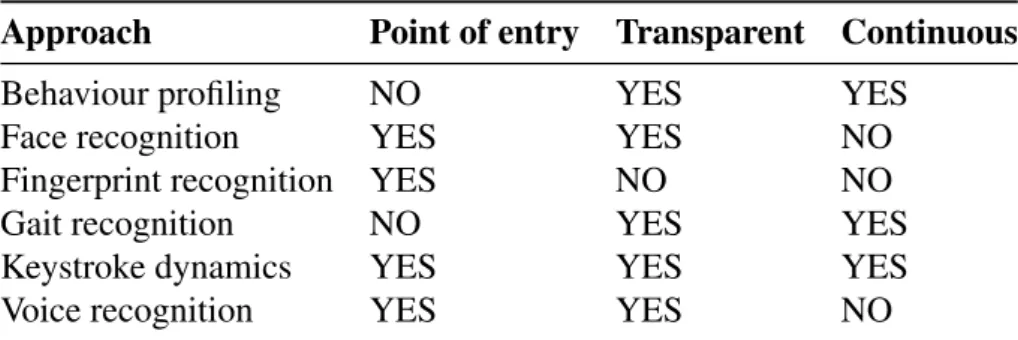
3.1 Biometric authentication approaches on mobile devices . . . 43
3.2 Comparison of behaviour profiling systems . . . 53
5.1 Observation time to TIME_SLICE mapping . . . 78
5.2 Database to CSV file mapping . . . 81
5.3 Silhouette Score for different values of k . . . 84
6.1 Testers for data collection . . . 97
6.2 Summary of mobile device usage . . . 98
6.3 Calling behaviour of user 1 and 8 . . . 100
6.4 Calling behaviour of user 3 and 4 . . . 101
6.5 Calling behaviour of user 8 and 9 . . . 102
6.6 SMS usage behaviour for user 1 and 8 . . . 108
6.8 SMS usage behaviour for user 8 and 9 . . . 109
6.9 Data usage (MB) behaviour for user 1 and 8 . . . 114
6.10 Data usage (MB) behaviour for user 3 and 4 . . . 114
6.11 Data usage (MB) behaviour for user 8 and 9 . . . 115
6.12 Application usage and system load for user 1 and 8 . . . 119
6.13 Application usage and system load for user 3 and 4 . . . 120
6.14 Application usage and system load for user 8 and 9 . . . 120
6.15 Mobility range for user 1 and 8 . . . 127
6.16 Average distance per day for user 1 and 8 . . . 127
6.17 Mobility range for user 3 and 4 . . . 127
6.18 Average distance per day for user 3 and 4 . . . 128
6.19 Mobility range for user 8 and 9 . . . 128
6.20 Average distance per day for user 8 and 9 . . . 129
6.21 Optimum number of cluster based on silhouette scores . . . 135
6.22 Profile accuracy results . . . 147
6.23 Average Accuracy . . . 148
6.24 User 1 and 8 profile comparison . . . 148
6.25 Cluster boundary comparison . . . 149
6.26 User 3 and 4 profile comparison . . . 149
6.27 User 8 and 9 profile comparison . . . 150
6.28 Cluster boundary comparison . . . 151
6.29 Optimum number of cluster based on silhouette scores . . . 165
6.30 Profile accuracy results . . . 168
6.31 Average Accuracy . . . 169
6.32 User 1 and 8 profile comparison . . . 170
6.33 Cluster boundary comparison . . . 170
List of tables xviii
Acronyms / Abbreviations
1G First Generation Wireless Network
2G Digital Cellular Network
3G Mobile Broadband Network
4G Fourth Generation Wireless Network
ANN Artificial Neural Network
ASPECT Advanced Security for Personal Communication Technologies CFCA Communications Fraud Control Association
CSV Comma Separated Values
DOS Denial-of-Service
EER Expected Error Rate
EWMA Exponentially Weighted Moving Model
FAR False Accept Rate
FDMA Frequency Division Multiple Access GPRS General Packet Radio Service
Nomenclature xx
GPS Global Positioning System
GSM Global System for Mobile
HIDS Host-Based Intrusion Detection System HSDPA High-Speed Downlink Packet Access
IDAMN Intrusion Detection Architecture for Mobile Networks
IDS Intrusion Detection System
IMSI International Mobile Subscriber Identity
ISP Internet Service Provider
KBTA Knowledge-based Temporal Abstraction
NFC Near Field Communication
NICA Non-Intrusive and Continuous Authentication NMT Nordic Mobile Telephones
PIN Personal Identification Number
RBF Radial Basis Function
SIM Subscriber Identity Module
SMS Short Messaging Service SOM Self Organizing Map SVM Support Vector Machine
TACS Total Access Communication Systems
Introduction
Smartphones have evolved from simple mobile devices into complex yet compact minicomputers which can connect to a wide assortment of communication networks to service its users, such as: voice calling and messaging through cellular network, video conferencing through 3G, 4G and Wi-Fi, Door-to-Door navigation by Global Positioning System (GPS), multimedia sharing through Bluetooth, mobile payments by using Near Field Communication (NFC), data synchronisation with personal computer, high end gaming.
While this plethora of features intends to provide convenience to users of mobile devices, there are also threats which can make their life less comfortable. Some of these inconveniences include, but are not limited to, loss or theft of the device, service fraud, mobile malware, information disclosure, Denial-of-Service (DOS) attacks, Smishing and Vishing. In 2004, the first articles about smartphone malware were published stating that the mobile devices were the next generation of targets (Dagon et al., 2004; Piercy, 2004). Statistics show that more than 1000 smartphone malware variants, such as worms, Trojan horses, other viruses and spyware have been unleashed against the mobile devices in the world since 2004. In the last year alone 143,211 new modifications of mobile malware were detected (Chebyshev and Unuchek, 2014).
2
A number of security techniques have been developed to combat these threats, both on the mobile device and the service provider’s network. Most commonly used host-based mobile security solutions include personal identification number (PIN) number/pattern based authentication, mobile anti virus for malware detection and firewalls to block unwanted network traffic. Although PIN number and pattern based authentication is widely used on today’s smartphones, many users don’t employ them properly which limits their usefulness (Clarke and Furnell, 2005; Kurkovsky and Syta, 2010). Unwanted network traffic is generally blocked by firewalls while signature-based antivirus software solutions use a signature of known malware for their detection. Obtaining latest virus signatures and network traffic rules are not easy tasks. As a consequence, mobile antivirus software leave smartphone users exposed to new malware until the signature is available and the security solution provider releases a patch (zero day attacks).
Bulygin researched propagation of MMS and Bluetooth worms and demonstrated that in the worst case a MMS worm targeting phone book numbers can infect more than 0.7 million devices in about three hours (Bulygin, 2007). Furthermore, Oberheide et al. demonstrated that the average time required for a signature-based anti-virus engine to become capable of detecting new threats is 48 days. In some cases, malware instances target a specific and relatively small number of mobile devices (e.g. for extracting confidential corporate information or track owners location) and will therefore take longer to be discovered (Oberheide et al., 2008). The growth rate for the virus signature list for mobile viruses in last two years is equivalent to the growth rate of the virus signature list for personal computers in twenty years. Additionally, current mobile devices are unable to support the existing anti-virus technologies available for personal computers because of limited processing power, storage space, battery life and memory (Alexander Gostev, 2006b; Denis Maslennikov, 2011)
With the rising threat of smartphone malware, both academic community and commercial anti-virus companies proposed many methodologies and products to defend against smartphone malware. Since the modern malware also rely on mutation and very sophisticated cryptography techniques to evade detection by anti-virus or malware detection systems. Research work carried out to evaluate the effectiveness of these defence mechanisms against existing and unknown malware and their findings show that in some instances Android anti-malware systems had average accuracy of 50.95%. They also showed that almost all anti-malware products are suspectable to common evasion techniques (Rastogi et al., 2013; Zheng et al., 2013)
So as it stands, these techniques have serious shortcomings that make them ineffi-cient for mobile devices. This leads us to explore more sophisticated systems such as Intrusion Detected System (IDS). Historically, service providers have implemented such systems on the network-side to monitor mobile user’s calling and migration activities to detect telephony service fraud. Hilas et al. used Artificial Neural Network (ANN) in order to detect anomalous behaviour indicating a fraudulent use of the operator services (Hilas and Mastorocostas, 2008; Shabtai et al., 2012).
More recent research has focused on using anomaly detection techniques on mobile devices for malware detection. These studies have utilised classification of normal and malicious applications samples based on their signatures, permissions or system calls at the kernel level (requiring customised version of OS to be installed on the devices) (Dini et al., 2012). Other researchers in the field of anomaly detection have also utilised Machine Learning e.g. Clustering or Support Vector Machine (SVM) or Artificial Neural Networks e.g. Self Organising Map (SOM) to build behaviour based mobile malware detection systems. Mostly, these studies only relied on generating malware behaviour signature based on CPU usage, memory load and system calls and contextual information to high accuracy results (Burguera et al., 2011; Schmidt et al., 2007; Zhao et al., 2011).
4
Since today’s smartphones have the ability to access multiple communication channels and accommodate a wide variety of services, which makes mobile devices hosts of sensitive information. Now user identity verification on mobile device has also gained paramount importance. Existing network-based security mechanisms are unable to offer a comprehensive protection for mobile devices. Host based security solutions for mobile devices can only detect anomalies arising from mobile malware through more application of sophisticated behaviour profiling techniques with high accuracy. Nevertheless, these solutions don’t have the ability to detect anomaly arising from device misuse by unauthorised users.
We explored different methods of Artificial Intelligence for generating profiles of
smartphone users. Based on our exploration we concluded that, aRule Basedexpert
system, can’t be used in our experiment because they require both declarative and procedural knowledge to emulate reasoning process of human experts in a particular domain (McGraw and Harbison-Briggs, 1989). The expert systems are composed three basis entities: the knowledge base, an inference engine and a user interface. The knowledge base contains rules expressing the heuristics for the domain. The inference engine is made up of the rules that are used to control how the rules in the knowledge base are used or processed and the user interface allows communication between the expert system and the end user. So, a rule based system would require eliciting the relevant domain knowledge from experts, a process that is often hard and time consuming (Amershi and Conati, 2007). The knowledge acquired from experts can only recognise and interpret generalised expected behaviour from smartphone users and lacks the ability to handle unanticipated behaviour.
ANeural Networkcan be used for classification problems given that the correct
class of every observation in the input data (training set) is known. Cluster analysis
is the task of grouping a set of objects in such a way that objects in the same group (called a cluster) are more similar to each other than to those in other groups (clusters).
It is a main task of exploratory data mining, and a common technique for statistical data analysis, used in many fields, including machine learning, pattern recognition and information retrieval when the class/group of data is not known. Based on these facts, we decided to use clustering to determine patterns of smartphone usage dataset. K-Means clustering, which is a very simple machine learning algorithm was used to validate our framework in the tests we conducted in a simulated environment. Both, machine learning and behaviour profiling are a not new concepts, however their application for profiling mobile device users’ behaviour is novel.
1.1
Research aim and objectives
The aim of this research is to investigate the application of machine learning to model smartphone users’ behaviour for anomaly detection that stems from misuse. The main idea behind user profiling is that past behaviour of a user can be accumulated in order to construct a profile of what might be the expected values of the user’s behaviour. Future behaviour of the user can then be compared with his profile in order to examine the consistency with it (normal behaviour) or any deviation from his profile, which may imply fraudulent activity. It is envisaged that this system not only has the ability to detect mobile device misuse but it can also be extended to provide transparent and continuous user authentication.
The overall aim of this research is reached through the following objectives: 1. To investigate the characteristics and requirements of a behavioural profiling
approach for smartphone security.
2. To compose a comprehensive review of anomaly detection and user authentica-tion methods and examine the pertinency of a behaviour profiling techniques on smartphones.
1.2 Methodology and working assumptions 6
3. To conduct an experiment for exploring the feasibility of using behaviour profil-ing approaches on smartphones.
4. To implement a behavioural profiling based security system on smartphones. 5. To evaluate the effectiveness of the behaviour profiling system through a series
of tests.
1.2
Methodology and working assumptions
In 2004, researchers from MIT created a mobile device usage dataset from 100 users of Nokia 6600 mobile phone (Nathan Eagle, 2006). This dataset only includes call logs, Bluetooth devices in proximity, cell tower IDs, application usage, and phone status (such as charging and idle). Since this dataset doesn’t include features like internet usage, user mobility, user installed applications etc, it doesn’t complectly cover all aspect of today’s smartphone usage. Meanwhile, researchers at Cambridge University developed a more modern smartphone usage dataset but it was not publicly available until the end of our research (Wagner et al., 2014). So we developed our own data collection application for Google Android platform, which our participants installed on their smartphones. Due to security concerns from the participants our dataset was limited to 16 features only. These included telephony, internet, application usage and other contextual information.
The data collection happened over a period of two weeks and automatically trans-ferred to a server, where we used K-Means clustering algorithm to create a usage profile for each participant. To test profiling accuracy i.e dissimilarity of smartphone usage among the participants we used simulation using Matlab.
1.3
Thesis structure
The rest of the document is organised as follows. Chapter 2 presents a discussion of previous research in the field of smartphone security solutions. Chapter 3, extends this discussion to the use of biometric and behaviour profiling technique for user authentication on smartphones. The rationale for choosing our behaviour profiling system and its methodology is presented in Chapter 4, followed by an architecture of our behaviour based user profiling system in Chapter 5. The evaluation procedure and the discussion of results are presented in Chapter 6. Subsequent chapter concludes the thesis with discussion on the fulfilment of the aims and objectives of the research, limitations and potential directions for future work.
Chapter 2
Literature review
2.1
Introduction
Smartphones have evolved from simple mobile devices designed to provide telephony services via a cellular network into complex yet compact minicomputers which can connect to a wide assortment of communication networks to service its users, such as: voice calling and messaging through cellular network, video inferencing through mobile cellular networks and Wi-Fi, Door-to-Door navigation by GPS, multimedia sharing through Bluetooth, mobile payments by using NFC, data synchronisation with personal computer, high end gaming.
On the flip side of this evolution, since the mobile devices can host various services and store sensitive information at the same time, this brings a number of security threats to the mobile environment, such as service fraud, DOS attacks, malware and information disclosure (Muir, 2003; Stajano and Anderson, 1999) This chapter will present a comprehensive overview to understand how mobile has evolved based on evolution of all three streams of mobile telecommunication technologies i.e. networks, devices and applications. Then mobile security threats will be investigated followed by mobile security strategies that have been put in place to combat these threats.
2.2
Evolution of the mobile communication
The last few years have witnessed a phenomenal growth in the wireless industry, both in terms of mobile technology and its subscribers. There has been a clear shift from fixed to mobile cellular telephony, especially since the turn of the century. By the end of 2010, there were over four times more mobile cellular subscriptions than fixed telephone lines. Both the mobile network operators and vendors have felt the importance of efficient networks with equally efficient design. This resulted in Network Planning and optimisation related services coming in to sharp focus (Sanou, 2012). The evolution of mobile cellular services over the last 30 years is illustrated in Table 2.1. In
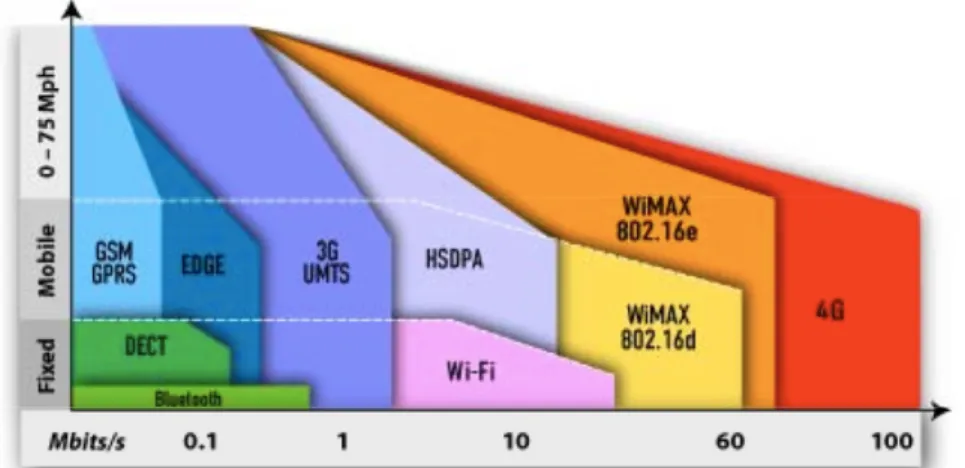
Fig. 2.1 Data rates associated with wireless technologies (Neel, 2010)
addition to these cellular communication technologies, mobile devices are also capable of communicating with a number of other technologies, namely Wi-fi, Bluetooth, NFC, ZigBee and USB. The cellular communication technologies predominantly used nowadays provide a safe and untethered operating environment, nevertheless their effective data throughput is much limited. Conversely, other communication technologies provide more reliable and higher data rate but it happens at the expense of reduced mobility. Figure 2.1 illustrates the relationship between the data rates and mobility of various mobile communication technologies that exist to date.
2.2 Evolution of the mobile communication 10 T able 2.1 Ev olution of mobile communication netw orks T echnology 1G 2G 2.5G 3G 3.5G 4G T ime P eriod 1970 to 1980 1990 to 2000 2001 to 2004 2004 to 2005 2006 to 2010 since 2010 Cor e Netw ork PSTN PSTN PSTN, P ack et netw ork P ack et netw ork P ack et netw ork Internet Band width 14.4 kbps (peak) 9.6/14.4 kbps 384 kbps 3.1 Mbps (peak) 14.4 Mbps (peak) 100-300 Mbps (peak) Standards AMPS, NMT & T A CS TDMA & CDMA GPRS CDMA 2000, UMTS & EDGE HSP A L TE, W iMAX & W i-Fi Multiplexing FDMA TDMA & CDMA TDMA, CDMA CDMA, WCDMA CDMA OFDM Ser vice Analogue data Digital narro w-band circuit data P ack et data Digital broadband pack et data P ack et data ALL IP F eatur es V oice only V oice & data Internet & Multimedia streaming Multimedia services with streaming. Uni v ersal access & portability Higher throughput V ery high data rates, HD streaming & increased portability
2.3
Mobile devices
Motorola DynaTAC 8000X was the first commercially available handheld cellphone that was released three decades ago. It took many years to build a network and keep production costs under control in order to make it a viable product. With a price tag of $3,995 it was considered a gimmick and a rich man’s toy. Measuring 13 x 1.75 x 3.5 inches and weighing 28 ounces, the 8000X was so big and heavy, even its creators had
nicknamed it"The Brick"that you could only use for a half an hour before the battery
gave out. At the time many people didn’t know this technology would change the world. Three decades later there is no doubt of mobile’s impact on society. (Wolpin, 2014)
Along with the rapid development of mobile communication technology, the mobile device has also experienced a dramatic evolution. Traditionally, people could only use the handset to make voice calls. Currently, the mobile has become a multimedia and multi-network computing device. The primary driver of device technology evolution has been the mobile operating system starting from the Blackberry OS to Android, Windows or iOS. Secondly, it was input device technology which revolutionised the user interface and made it extremely user friendly. It has moved from large keypads to touch screens. Even the touch screen has evolved significantly as it provides more features like multi-touch gestures. In the future, we may see haptic gestures even captured by sensors on mobile devices.
Below is the summary of some important facts regarding the mobile phones usage (Calloway, 2012; Cisco, 2014; PewResearch, 2013):
• Mobile phones have become such an integral part of our daily life that the mobile adoption is growing 8 times faster than web adoption did in the 1990s and early 2000s. Today’s mobile devices rank similarly to a computer in terms of networking, processing power and data capacity. According to latest research,
2.3 Mobile devices 12
there are more than 6 billion mobile subscribers that equates to more than 86% of the world’s population. This is just the beginning of the evolution of mobile devices. It is estimated that there will be 8.6 billion mobile devices by 2017. And by 2018, there will be more than 10 billion mobile-connected devices, including M2M modules exceeding the world’s population which is expected to be around 7.6 billion by that time.
• There are total 1.2 mobile internet users which account for 8.49% of the global website hits. In US, 25% of internet users are mobile only.
• 8 trillion text messages were sent in 2011.
• Mobile users spent $3.3 billion through mobile advertisement in 2011 and is predicted to be $20.6 billion in 2015. Google alone accumulates $2.5 billion in annual revenue for mobile advertising.
• More than 300,000 mobile applications have been released in past 3 years with 10.9 billion downloads.
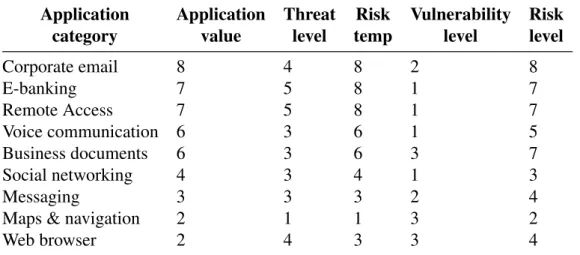
Table 2.2 Applications with their risk scores
Application category Application value Threat level Risk temp Vulnerability level Risk level Corporate email 8 4 8 2 8 E-banking 7 5 8 1 7 Remote Access 7 5 8 1 7 Voice communication 6 3 6 1 5 Business documents 6 3 6 3 7 Social networking 4 3 4 1 3 Messaging 3 3 3 2 4
Maps & navigation 2 1 1 3 2
There are several criteria which effect the mobile application’s risk impact on the mobile system security. These include their connection types, the amount and nature of information they associate with, their threat level.
Table 2.2 shows the risk level of associated with their application categories based on the work by researchers from Portsmouth University (Clarke et al., 2011). The impact on mobile device’s security increase with applications risk level. Based on the risk level of the individual application different security controls can be applied. In general, an application with higher risk score requires more stringent security controls.
2.4
Taxonomy of mobile security risks
Mobile devices are becoming malware targets mainly because of vulnerabilities iden-tified by various researchers (Dagon et al., 2004; Leavitt, 2005; Mikko Hypponen, 2006; Nixon, 2011; Piercy, 2004). Commercial Smartphone anti-virus software is generally adopted from traditional personal computing (PC) environment and mostly relies on signature-based techniques. According to (Bulygin, 2007) and (Oberheide et al., 2008) these are not suitable and a more comprehensive security solution tailored for Smartphones is needed. In addition, mobile devices are much more connected to the outside world than PC’s. Security researchers’ attack simulations have shown
2.5 Propagation vectors 14
that hackers could infect mobile phones with malicious software that deletes personal data or runs up a victim’s phone bill by making toll calls or steal financial data. The attacks could also degrade or overload mobile networks. As a glimpse of what future holds for modern Smartphone malware arena, a teenage Dutch hacker used a SSH vulnerability to upload ransom ware application to a number of unsuspecting iPhone users demanding $5 ransom payment (Dancho Danchev, 2009). This was followed by iKee.A worm and iKee.B botnet for Apple iPhone platform within weeks of first ransom ware (Porras et al., 2010). Mobile phones are prone to attacks because they offer internet connectivity, operate like minicomputers, and can download applications or files, some of which could carry malicious code. Therefore, it is vital to distinguish security risks of mobile phones. Figure 2.2 represents a list of risks to mobile phone security.
2.5
Propagation vectors
In order to identify and prevent mobile phone malware, propagation vectors need to be identified. Some of the possible infection routes utilised by the mobile malware are discussed below.
2.5.1
Social engineering
Cyber criminals are now taking over mobile devices by using many of the psychological tricks used to con people online. For several years, social engineers have been trying to fool unsuspecting users into clicking on malicious links and giving up sensitive information by pretending to be old friends or trusted authorities on email and social networks.
And now that mobile devices have taken over our lives, social engineering is an attack method of choice to gain access to a person’s smartphone or tablet. Current
social engineering tricks used by criminals to get inside your mobile device include the following:
Malicious apps that look like legitimate apps are very hard to distinguish from le-gitimate apps, when user downloads from non reputable sources. What users may end up with is an application with unwanted things behind it (Dunn, 2011). In 2011, Google removed over 50 malicious apps from Android Market that seemed turned out to be variants of the DroidDream trojan, but looked like legitimate applications and had names like Super Guitar Solo (Brener, 2011). Security experts advise not to rely on application’s ratings because many users might be enjoying the app’s features without realising that it contains a malicious functionality.
Malicious mobile apps that come from advertisements are also gaining popularity among malware authors. A legitimate application on a smartphone may run a bad advertisement and if the user clicked on the advertisement, they are taken to a web site that tricks the victim into thinking their battery is inefficient, The person is then asked to install an application to optimise the battery consumption, which is instead a malicious application.
Fake security application is another new mobile attack vector used by malware that actually originates with an infected PC. When a user visits a banking site from an infected computer, they are prompted to download an authentication or security component onto their mobile device in order to complete the login process. Most the banks now use two-factor authentication to secure online transactions. In many cases that second factor is implemented as a one-time password sent to the user’s phone by the banking provider.
To get access to the phone, once the PC is infected, the person logs onto their bank account and is told to download an application onto their phone in order
2.5 Propagation vectors 16
to receive security messages, such as login credentials. But it is actually a malicious application from the same entity that is controlling the user’s PC. Now they have access to not only the user’s regular banking logon credentials, but also the second authentication factor sent to the victim via SMS. (Dunn, 2011; Zester, 2011)
2.5.2
Bluetooth
The viruses written so far haven’t used any actual vulnerability in Bluetooth but it allows malware to spread among vulnerable phones by mere proximity, almost like the influenza virus in humans. A Bluetooth-equipped Smartphone can identify and exchange files with other Bluetooth devices from a distance of up to 30 meters. As victim travels, their phones can leave a trail of infected mobile devices. And any event that attracts a large crowd presents a perfect breeding ground for Bluetooth viruses. Cabir was the first proof-of-concept network worm which transfers itself as a SIS file disguised as a “Caribe Security Manager” utility which propagates via Bluetooth. It continuously scans for Bluetooth-enabled devices and hence critically reduces the battery life and Bluetooth performance (Alexander Gostev, 2006a; Dagon et al., 2004).
It is a general perception that Wi-Fi and Bluetooth are short-range communication standards and considered as a minimal threat because users would have to be physically near a malicious party to be attacked. However, a team at Flexilis was able to establish a Bluetooth connection with a standard mobile phone more than one mile away with a 19dbi panel antenna (Ho and Heng, 2009).
2.5.3
Messaging
Since the early days, mobile malware have employed Short Message Service (SMS) and Multimedia Messaging Service (MMS) as widely used propagation vector.
Commwar-rior.A worm spreads via MMS by attaching an infected SIS (Symbian OS distribution) file to MMS message sent to all contacts in the phone’s address book. Another worm called Mabir spreads via SMS and MMS, reads the phone address book, monitors received messages and sends fake replies which include a copy of the malware (Leavitt, 2005; Reinhardt A. Botha, 2009). To mitigate such malware, smartphone users should not open URL links or attachments like images from unknown senders to reduce the chances of being a victim.
2.5.4
Internet
Smartphones have now transformed into always connected devices. They offer services like email, instant messaging and social networking. These have become some of the essential features of Smartphones, only made possible with adoption of technolo-gies like 3.5G, High-Speed Downlink Packet Access (HSDPA) and Wi-Fi hotspots etc. Mobile internet has been used successfully by recent malware for iPhone as propagation medium making it vulnerable to more sinister attacks in future (Dancho Danchev, 2009; Porras et al., 2010). When an infected web page is browsed by using mobile phone’s browser, the malicious code hidden in web page may execute causing damage to the mobile phone security. Other risks involved with browsing internet include downloaded illegal applications on the mobile because the community that develops these applications can make infected mobile applications available online to unsuspecting users. Smartphone users should refrain from installing applications from un-trusted sources, keep the system software up to date and take extra care while open links from less reputable websites.
2.6 Security threats 18
2.5.5
Removable media
Removable media like memory cards can also be used by malware to propagate and cross-platform mobile malware further complicates the issue. The Cardtrp worm infects mobile devices running the Symbian 60 operating system and spreads via Bluetooth and Multimedia Messaging Service (MMS) messages. If the phone has a memory card, Cardtrp drops the Win32 PC virus known as Wukill onto the card. Two proof-of-concept Trojans, Crossover and Redbrowser, further show how widespread attacks could simultaneously hit desktops and mobile devices. Both Trojans can infect certain mobile devices when connected to PC as a removable media (Buennemeyer et al., 2008; Peikari, 2006). SMS, MMS, Bluetooth, and the synchronisation between computers and mobile devices are all examples of potential attack vectors that extend the capabilities of malicious actors. Inherent vulnerabilities exist in modern mobile device operating systems that are similar to those of PC’s and may provide additional exploitation opportunities. For example, Apple recently fixed vulnerabilities in a security update for iPhone OS for scenarios where playing a maliciously crafted mp4 audio file, viewing a malicious Tagged Image File Format (TIFF) image, or accessing a malicious File Transfer Protocol (FTP) server could result in arbitrary code execution (Apple, 2012; Ho and Heng, 2009).
2.6
Security threats
To anticipate the type of future threats, it is vital to classify existing threats. The mobile threat detection and prevention systems are still immature. The early mobile network security research was focused on routing issues, and more recently on protocol security. With the emergence of feature packed powerful Smartphones, attackers have shifted their attention to exploiting applications to breach mobile platform security. Hence mobile malware threat analysis has become very significant towards achieving the
security goal of providing confidentiality, integrity and availability (Dagon et al., 2004). Some of the prominent threats against the phones themselves as described hereafter.
2.6.1
Theft of information
Hackers often target information residing on the devices and recently the focus has been shifted towards information theft for financial motives. Two categories of information theft attacks exist: transient and static information theft. Transient information includes the phone’s location, its power usage, and other data the device does not normally record (Koong et al., 2008). Even without advanced location services, attacks can still locate mobile devices with mobile regions, also when the phones are not in active use. Static information attacks target information stored and sent by the mobile devices over mobile network. These attacks compromise user data such as contact information, phone numbers, and programs stored on smart phones. Bluesnarfing and Bluebugging attacks are examples of such attacks. These attacks were made possible primarily because of wrongly configured Bluetooth settings on mobile devices and not because of vulnerabilities in the Bluetooth stack.
2.6.2
Denial-of-service (DOS)
The DOS attack is a hacking method used to force a mobile device or network to become inaccessible to its users. One common DOS technique involves oversupplying the targeted mobile device or network with outside communications requests so that it cannot process real information traffic, or it is accessed so sluggishly that it might as well have been unavailable. Other types of DOS attacks involve utilising other communication protocols, for example Bluetooth, to drain the battery constantly so that mobile device is rendered useless. According to Krishan Sabnan, the monitoring of mobile networks with terminal battery life and limited bandwidth against DOS
2.6 Security threats 20
attacks is of the utmost importance right now (Dominic Laurie, 2009). Possible attack combinations against mobile data networks includes the following scenarios:
1. Prevent the mobile device from going into sleep mode through the delivery of packets. The attack can involve as little as sending 40 bytes every 10 seconds. This attack wastes radio resources and drains mobile batteries.
2. Create congestion at radio network controllers via the re-establishment of connec-tions after they’ve been released, which results in problems for actual subscribers to the ISP.
3. Infect devices with malware, which causes connected devices to produce exces-sive port scanning.
2.6.3
Unsolicited information
This type of attack works in opposite direction to the one described earlier. Instead of stealing information attackers and in some cases legitimate companies target mobile device users with cold calling, advertising, messaging, and other unsolicited informa-tion. Spam SMS messages are one of the most common attack scenarios. This attack has become even easier recently, as is the case in UK where companies (e.g. 118118) offers mobile number directory service. This company claimed to have more than 15m phones numbers in June 2009 on its database, collected from free to purchase public domain (Dominic Laurie, 2009). This clearly suggests the ease with which a motivated malicious hacker can use publicly available information to launch such an attack against unsuspecting mobile device users.
2.6.4
Theft-of-service
A mobile device provides many services through a telecommunication service provider network connection, such as voice calling, text messaging and web surfing. In order
to utilise these services, a charge needs to be paid to the service providers. However, when a person uses such services without paying a charge, a service fraud occurs.
Some malware might attempt to use the victim’s phone resources. Possibilities include placing long-distance calls, sending expensive SMS messages, and so on. The Mosquitos virus is perfect example of such attack (McCue, 2004). Pirated copies of games were infected with a virus that sends expensive SMS messages when users played the game on the mobile device (Dagon et al., 2004; Piercy, 2004).
When a mobile device is stolen, an unauthorised person could access the mobile services within a relatively small time frame until the owner of the device reports the incident to their service provider, who then has the power to terminate the connection. In order to maximise the window of opportunity for abusing the services, criminals could plot more sophisticated attacks which have a smaller footprint for detection, such as a Subscriber Identity Module (SIM) card cloning attack. By exploring the coding flaws within a cellular network authentication process, criminals could clone a victim’s SIM card and abuse the services at the victim’s expense (Rao et al., 2002). In such a case, even at the end of a billing month, a mobile owner may not notice the abuse has occurred unless a thorough checking of their statements is undertaken. Moreover, criminals could launch a far larger scale of attack against the telecommunication service providers by using the SIM cloning trick. According to the Global Fraud Loss Survey 2009, service fraud is estimated to cost telecommunication service providers $72-80 billion every year around the world (Aaronoff, 2009).
2.7
Damage
Damage caused by mobile malware can occur in different ways. It can take up enough memory space on the device or by maliciously utilising other the resources to deny user access to the device hence jeopardising the device performance. At worst it can
2.8 Spreading mechanism 22
Table 2.3 Damage by Mobile Malware
Damage Type Examples
Functionality
Battery draining
Disables antivirus products
Prevents access to messaging services Overwrites normal phone utilities Modifies mobile devices display Lower mobile system performance
Inconveniently Locks the mobile devices multimedia card
Economic loss
Sends messages to expensive toll numbers Continuously send SMS or MMS
Deletes private files
Disturb a mobile network Denial-of-service attacks
Loss of network bandwidth
Privacy
Data theft
Loss of confidential information Phone hijacking
Data modification
modify user data, delete valuable files and cause unwanted billing. It can cause an end-user a lot of time and money to fix up a problem due to a malware. A summary of various examples of damages by mobile malware are outlined in Table 2.3.
The damage caused by mobile malware depends on the attack vector used. Malware can use messaging services to cause unwanted billing, spread spam. Fraudsters use ransomware that encrypts the data held on the mobile device for financial gain. Due to the sensitive nature of data held on mobile devices, state and enterprise level espionage is also becoming common place for smartphones.
2.8
Spreading mechanism
A mobile malware utilises ever evolving propagation mechanisms. There is a danger of increasing trend towards automation as seen in the case of IKee.A worm and iKee.B
botnet (Dancho Danchev, 2009; Porras et al., 2010). Other propagation vectors include sending malicious applications via messages, opening TCP/IP connections directly from the applications and therefore offering greater opportunities for the malware to spread. By analysing different families of epidemic malicious codes found until now, mobile phone malware can be defined as:
"A piece of data or program that spreads among Smartphones by the communication interfaces and can influence the usage of handset or leak out sensitive data" (Yap and Ewe, 2005).
Mobile malware transmitting via MMS and email can transmit data by GPRS and Wi-Fi. For the mobile phone virus that spread by electronic file, it can transmit data by Bluetooth and IrDA. Although there are four wireless transmission ways, some need relay nodes or directional angle. It is suggested that Bluetooth is the best choice for virus writer (Morales et al., 2006). Modern smartphone operating systems like Apple iOS have built in tightened security features to limit the use of Bluetooth for malicious purposed. A possible subset of spreading mechanisms used by mobile malware, as summarised by Shih et al. (2008) are shown in Table 2.4.
Table 2.4 Malware Spreading Mechanisms
Channel Distance (m) Direction Neighbour discovery Relay
Telephony 1,000 Non-directional Appointed Yes
Wi-Fi 100 Non-directional Appointed Yes
Bluetooth 10 Non-directional Automatic No
Infrared 1 Directional Automatic No
File transfer 0 Non-directional Automatic No
2.9
Mobile malware evolution
The first mobile virus appeared in 2004 but since the emergence of high end, feature rich smartphones the number of mobile malware targeting these devices has seen
2.9 Mobile malware evolution 24
tremendous growth. The popularity of smartphones and the increase in the number of new services they offer means a parallel increase in the number of malicious programs used by cyber criminals to make money from mobile device users. It is safe to say that today’s cyber criminal is no longer a lone hacker but part of a serious business operation.
There are various types of actors involved in the mobile malware industry: virus writers, testers, interface designers of both the malicious apps and the web pages they are distributed from, owners of the partner programs that spread the malware, and mobile botnet owners. This division of labor among the cyber criminals can also be seen in the behaviour of their Trojans. In 2013, there was evidence of cooperation (most probably on a commercial basis) between different groups of virus writers. It is now clear that a distinct industry has developed and is becoming more focused on extracting profits, which is clearly evident from the functionality of the malware.As of January 1st 2014, Kaspersky Lab detected a total of 143,211 new modifications of malicious programs targeting mobile devices in all of 2013. Furthermore, cyber criminals used 3,905,502 installation packages to distribute mobile malware in the yesteryear (Chebyshev and Unuchek, 2014).
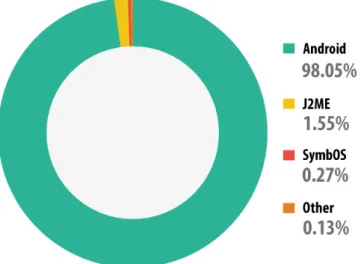
It is an alarming trends and calls for a robust security mechanism for mobile devices. Recent distribution of different mobile device operating systems has seen a tremendous change. The Android operating system is consistently winning over new users, leaving other mobile platforms a long way behind. The Apple iOS has also increased its market presence. Android remains a prime target for malicious attacks. 98.05% of all malware detected in 2013 targeted this platform, confirming both the popularity of this mobile OS and the vulnerability of its architecture (Figure 2.3). Malicious programs and attacks have, in general, become more complex and the awe-inspiring majority of the malicious programs detected in the past year are
Fig. 2.3 The distribution of mobile malware detected in 2013 by platform (Chebyshev and Unuchek, 2014)
designed to steal money from mobile device users. Table 2.5 shows the distribution of mobile malware released in 2013 based on their categories.
Table 2.5 The distribution of mobile malware by category
Malware category Distribution
Trojan-SMS 33.5% Backdoor 20.6% Trojan 19.4% Adware 7.1% Risktool 6.0% Trojan-Downloader 5.8% Trojan-Spy 4.0% Others 3.6%
2.9.1
Future attacks
Malicious software that attacks users of mobile banking accounts continues to develop and the number of programs is growing rapidly. It is obvious that this trend will continue, with more mobile banking Trojans and new technologies to avoid detection and removal. Of all the mobile malware samples detected in 2013, bots were the most
2.10 Mobile device security controls 26
numerous category. The attackers have clearly seen the benefits of mobile botnet when it comes to making profits. New mechanisms for controlling mobile botnet may appear in the near future. It is expected that in 2014 vulnerabilities of all types will be actively exploited to give malware root access on devices, making removal even more difficult. 2013 saw the first registered malware attack on a PC launched from a mobile device. SMS Trojans are likely to remain among the mobile malware leaders and even conquer new territories. (Chebyshev and Unuchek, 2014)
2.10
Mobile device security controls
In order to counter the highlighted mobile security threats, various security projects have been proposed. For instance, employing an authentication technique to stop unauthorised usage, using mobile antivirus products to detect and remove mobile malware, taking advantage of mobile firewall to filter unwanted traffic, utilising an encryption mechanism to protect the information stored on the devices, and making use of battery based mobile IDS systems to detect malware presence. These security controls will be discussed hereinafter.
2.10.1
Authentication
A PIN is a knowledge based authentication technique. A user is required to enter the correct PIN before accessing a mobile device. Two types of PINs can be deployed: the first is for the mobile device itself and the second is for the SIM card. Normally, a mobile PIN contains between 4 and 8 digits. The PIN is a point-of-entry technique and is therefore only required when a device is initially switched on. Without the correct PIN, the device would not start and the SIM card would not authenticate with the cellular networks. However, most of the time the user will not be required to re-enter the PIN until the next reboot. This provides plenty of opportunities for
attackers to abuse a mobile device. Recently, the use of the PIN technique has become more sophisticated; PINs can now be set to be requested again after a certain period of time dependent upon the user’s preference. This would significantly reduce the possibility of the device being abused. Nonetheless, in practice, as many mobile users do not employ the technique properly, such as never changing the PIN, sharing it with friends or writing it down on paper, this makes the PIN based authentication technique inadequate as a protection of mobile devices (Clarke and Furnell, 2005; Kurkovsky and Syta, 2010). With increasing hardware availability, a significant portion of mobile
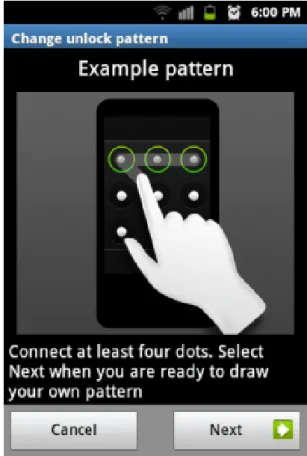
Fig. 2.4 Mobile user authentication based on pattern lock
devices are equipped with new technologies (e.g. touch screens and built-in cameras). This provides opportunities for developing other authentication techniques on the mobile devices, such as the Android password pattern, a type of graphical password. Users are required to draw a shape on the 3 by 3 contact points on a touch screen as
2.10 Mobile device security controls 28
their password (as demonstrated in Figure 2.4). As users can only link two adjacent contact points together, this means the points which are not neighbouring with each other (e.g. 1 and 3) can never be used as a combination. As a result, the Android password pattern provides less password combinations than the traditional PIN based password technique can. In consequence, this method is more vulnerable to a brute force attack. As this method is also a knowledge based approach, it suffers several disadvantages as mentioned earlier, such as never being changed or being shared with others. In addition, research showed that this type password can be easily determined when a screen is greasy. (Aviv et al., 2010; Zhang et al., 2012)
2.10.2
Mobile antivirus solutions
Since the discovery of the first mobile phone virus in 2004, the antivirus software industry started to shift its attention from the traditional computing environment towards to the mobile platform. The first mobile antivirus software was developed by F-Secure and became available on the market in August 2005 (BBC, 2005). Since then, other antivirus companies also developed their counterparts. Mobile antivirus software was initially designed to detect and remove malware for the Symbian and Windows CE platforms due to their large market shares in the past. Latest mobile antivirus products also encompass other mobile platforms, such as Android based mobile devices because of its increasing popularity.
Just like traditional antivirus software, mobile antivirus software needs to update its signatures regularly to detect the latest malware. This process requires a dedicated Internet connection which was not available for mobile devices several years ago. However, with the growing availability of 3G and Wi-Fi technologies, it makes the updating process much easier and mobile devices could get the latest signatures promptly.
2.10.3
Mobile firewall products
As mentioned in the last section, the mobile device could be exposed to various network based attacks due to its ability to access multiple wireless networks. In order to protect a mobile device from network based attacks, a mobile firewall software monitors the network traffic continuously and only allows legitimate services (e.g. web browsing) to go through a mobile device. Two types of firewalls can be implemented: on the network or on the mobile device. Nokia Corporation proposed a network based firewall which can be implemented on the mobile service provider’s networks. It can be used for blocking malicious data going into a mobile device (Mullins, 2007). As the filtering process is undertaken by the network service providers, there is no overhead for mobile devices. However, it would be impossible for the service provider’s firewall to protect mobile devices when they are connected with other networks such as Wi-Fi or Bluetooth. For the host based firewall, several security firms have already released products. As the firewall runs on the mobile device itself, it has the ability to monitor all networks that the mobile handset connects with. Nevertheless, due to the complexity of the multi-network environment, it is difficult to assess how well these host based mobile firewalls perform.
2.10.4
Mobile encryption
Encryption techniques transform information to an unreadable format unless a key for the secured data is provided. As mentioned in earlier sections, mobile devices have the ability to store large amounts of information that could be related to both individuals and corporations. Without encrypting the information, anyone obtaining the device could access the information. In order to protect the information stored on the mobile devices, a number of encryption methods have been proposed. According to the Goode Intelligence mSecurity survey, 40% of organisations are planning to
2.11 Threats vs security controls 30
deploy data encryption methods on their mobile devices (Welch, 2012). Nonetheless, encryption methods require a certain level of education for the average mobile device user before they can implement this technique.
2.11
Threats vs security controls
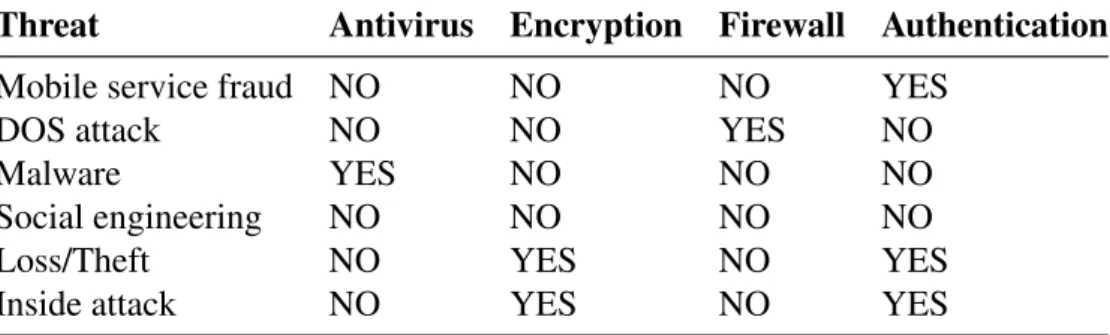
Table 2.6 Mobile security mechanisms vs. Mobile security threats
Threat Antivirus Encryption Firewall Authentication
Mobile service fraud NO NO NO YES
DOS attack NO NO YES NO
Malware YES NO NO NO
Social engineering NO NO NO NO
Loss/Theft NO YES NO YES
Inside attack NO YES NO YES
Although antivirus software can detect the presence of malware, firewall applica-tions can block malicious network traffic, battery based mobile IDS can sense both malware and network related attacks and encryption can translate information to an unreadable format unless a secret key is provided, their abilities of identifying any user related activities are rather limited. For instance, they cannot determine the legitimacy of a user when a voice call is made or a file is accessed. Knowledge based authentication, such as using a PIN, can provide a basic level of protection for the mobile services and information being misused by unauthorised users. For example, without entering a correct PIN, a user will not be able to access any mobile services nor the information on the mobile devices. However, due to a bad practice, such as choosing a simple password, never changing it, writing it on paper or sharing it with co-workers, unauthorised users are able to misuse the mobile device. Moreover, as the PIN is a point-of-entry based authentication method, as long as a correct password is given, a user will be granted access regardless of their true identity. In addition, this
raises another issue with the knowledge based authentication approaches. When an authorised user forgets their PIN, they will be denied access despite their legitimacy. Therefore, none of the existing security controls can truly protect the multimedia and multi-networking mobile devices. As a result, a novel security control which can continuously protect both the mobile services and information based upon the users’ legitimacy is desperately needed. Table 2.6 illustrates a comparison between existing mobile security mechanisms and mobile security threats
2.12
Malware detection and prevention schemes
The first computer virus infecting mobile devices was identified on June 14, 2004 for Symbian platform while the first malware to infect handhelds running Windows Mobile operating system was released July 17, 2004 (Piercy, 2004). This marked the start of a new era for the virus and antivirus community. The number of anti-malware software available at that time was just a fraction of security solutions available today.
Majority of mobile device users were vulnerable to any possible malware attack. The Security solution providers released antivirus solutions adopted from traditional PC’s in an intransigent effort to protect against those threats. Even today, a large proportion of mobile device users don’t use antivirus software due to lack of knowledge, limited memory and processing power as compared to PC’s (Morales et al., 2006). But even with antivirus software installed not all users can and will keep the signature database up to date which renders the anti-malware system useless for new types of malware that emerge every day.
In order to implement a highly effective security solution tailored to the resource constraint mobile devices, a thorough analysis of existing malware detection and prevention techniques has to be carried out. Once the shortcomings in the existing
2.12 Malware detection and prevention schemes 32
techniques are identified and rectified, mobile malware will be effectively prevented from causing harm to mobile devices.
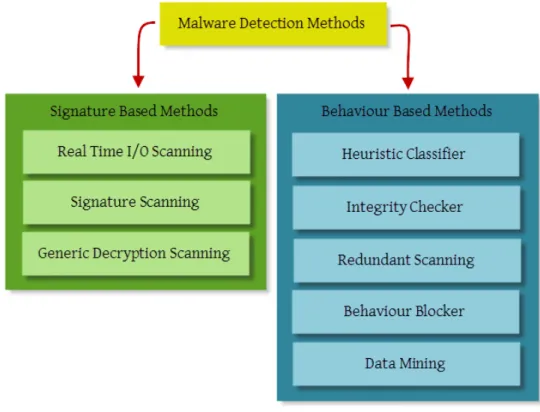
Anti-virus technology, a key player in tackling malware these days, is primarily based on two complementary approaches. Signature based methods rely on the identification of unique strings in the binary code. Whenever a new type of malware is unleashed, anti-virus vendors need to catch an instance of the new malware, analyse it, create a new signature and update their clients.
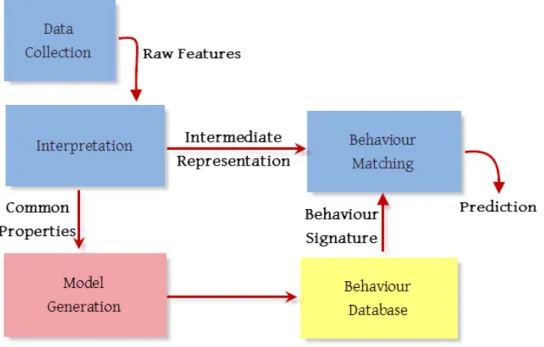
During the period between the appearance of a new (unknown) malware and the update of the signatures of the anti-virus clients, these mobile devices are vulnerable to the new malware. Therefore, while being very precise, this approach is useless against previously unidentified malware (Christodorescu and Jha, 2004; Oberheide et al., 2008). Behaviour based methods involve heuristic based methods, which use rules determined by experts to define a malicious behaviour, or a benign behaviour by scrutinising the execution behaviour of a program in order to enable the detection of unknown malware (Jacob et al., 2008).
A list of different types of malware detection approaches (Shih et al., 2008) is shown in the Figure 2.5 and described hereafter.
2.12.1
Signature based approach
Commercial antivirus scanners look for signatures which are typically a sequence of bytes within the malware code to infer the nature of the scanned program. The signature generation process is either performed by a security expert or done automatically. This technique is the most commonly used in industry.
2.12.1.1 Real-time I/O scanning
In this technique the malware detection engine monitors the input and output streams of the device during the file execution. As with all pattern matching techniques, this
Fig. 2.5 Techniques used for malware detection
approach must also update the virus definition pattern for new malware to be detected, hence the data transfer rate is affected dramatically.
2.12.1.2 Signature scanning
The oldest and most popular technique for malware detection is signature scanning. The main problem with this approach is that it can only identify and remove malware whose signature already exists in the database, hence it is futile against new malware. This is particularly devastating because majority of the users don’t keep signatures up-to-date. On the bright side, the major benefit from this technique is that a malicious application can be detected without execution.
2.12.1.3 Generic decryption scanning
A scanner that uses generic decryption relies on this behaviour to detect polymorphic malware. Each time it scans a new program file, it loads this file into a self-contained