California Social Work Education Center
C A L S W E C
Pathways to Collaboration
Factors That Help and Hinder
Collaboration Between Substance
Abuse and Child Welfare Fields
Laurie Drabble
Kathy L. Osterling
Marty Tweed
Carol A. Pearce
San José State University
School of Social Work
TABLE OF CONTENTS
Abstract iv
CalSWEC Preface vi
About the Authors viii
Acknowledgements xi Introduction xiii Curriculum Overview Objectives…xvii Intended Audience…xix Organization of Curriculum…xx
Time Estimates and Tips for Training…xxiii Other Suggested Tools and Materials…xxv
xvii
CalSWEC Curriculum Competencies xxvi
Section I: Literature Review: Collaboration Between Child Welfare, Substance Abuse, and Related Fields
Learning Objectives…2
Public Child Welfare Competencies…2 Agenda and Suggestions for Instructors…3 Materials Needed…4
Introduction…5
Core Elements of Collaboration…8
A Systems/Ecological Perspective of Collaboration…10 A Developmental Perspective of Collaboration…12 A Process Perspective of Collaboration…14
Perspectives of Collaboration Summary…15
Factors That Affect Collaboration Between the CW and AOD Systems…17
1
Section II: Core Elements of Promising Collaborative Models Between the CW and AOD Systems
Learning Objectives…26
Public Child Welfare Competencies…26 Agenda and Suggestions for Instructors…27 Materials Needed…28
Matrix of Progress in Linkages: A Tool to Assess and Guide Collaboration…29
Core Elements of Collaboration in Action: Descriptions of Successful
Development of Concrete Programs…34 Conclusion…40
Section III: Factors That Help and Hinder Collaboration: Findings from Interviews
Learning Objectives…44
Public Child Welfare Competencies…44 Agenda and Suggestions for Instructors…45 Materials Needed…46
What Helps Collaborative Practice…48 Preconditions for Collaboration…48 Factors for Advancing Collaboration…50
The Everyday Workings of Collaboration: Communication, Relationship Building, and Creating a Culture of Learning…54
What Hinders Collaborative Practice…54 Discussion of Findings…58
Limitations…62
43
Section IV: The Structure and Spirit of Collaboration: Building Pathways for Communication Across Systems
Learning Objectives…67
Public Child Welfare Competencies…67 Agenda and Suggestions for Instructors…68 Materials Needed…69
Importance of Addressing Communication and Confidentiality Issues….70 Themes From the Study About the Everyday Workings of Collaboration and
Communication, Relationship Building, and Creating a Culture of Learning…71
Demystifying and Working Effectively in the Context of Federal Regulations Related to Confidentiality and Substance Abuse Treatment…74
History of Confidentiality Regulations…75 Obtaining a Release Form…76
66
Section V: Building Bridges Between Systems: Resources and Next Steps Learning Objectives…83
Public Child Welfare Competencies…83 Agenda and Suggestions for Instructors…83 Materials Needed…84
Review of Highlights From the Study…85 Resources/Websites…88
82
Appendixes
Appendix A: Research Methods…97 Appendix B: Interview Guide…103
96
Handouts
Section I – Handout 1: Activity 1 – Introductory Activity…108 Section I – Handout 2: Activity 2 – Models of Collaboration…109 Section I – Handout 3: Activity 3 – Developing an Integrated Service
Plan…110
Section II – Handout 1: Matrix of Progress in Linkages Among Alcohol and Drug and Child Welfare Services and the Dependency Court System…111
Section II – Handout 2: Core Elements of CW and AOD Systems…117 Section II – Handout 3: Collaborative Practice Illustrations…118
Section III – Handout 1: Mediation Exercise: Addressing Factors That Hinder Collaboration…129
Section III – Handout 2: Mock Collaborative: Roles of Collaborative Members…130
Section IV – Handout 1: Activity IV-2: Quiz on Confidentiality of Patient Records for Alcohol and Other Drug Treatment…133 Section IV – Handout 2: Protecting Clients’ Privacy…135
Section IV – Handout 3: Confidentiality of Patient Records for Alcohol and Other Drug Treatment…152
Section IV – Handout 4: Incomplete Release Form…155
Section V – Handout 1: References and Resources: Collaborative Practice Between Child Welfare and Substance Abuse Fields…158 Section V – Handout 2: Activity V-2: Questions for Identification of Next
Steps in Practice or Work Setting…161
ABSTRACT
Research over the past decade has documented the importance of developing innovative models for collaborative practice between the fields of child welfare, substance abuse treatment, and dependency courts (U.S. Department of Health and Human Services [DHHS], 1999; Young & Gardner, 2002). Models of collaborative practice that appear to hold promise for effective intervention with substance-abusing families who are concurrently involved in the child welfare system include dependency drug courts; outstationed substance abuse specialists in child welfare agencies; recovery coaches to facilitate child welfare-involved parents to participate in substance abuse treatment; and institutionalization of formalized interagency agreements, cross-training, and information exchange systems (Hunter, 2003). In order to initiate, implement, and maintain collaborative practice, there is a need for greater understanding between both service providers and policy makers of the underlying factors that may both help and hinder successful collaborative programs, policies, and practice.
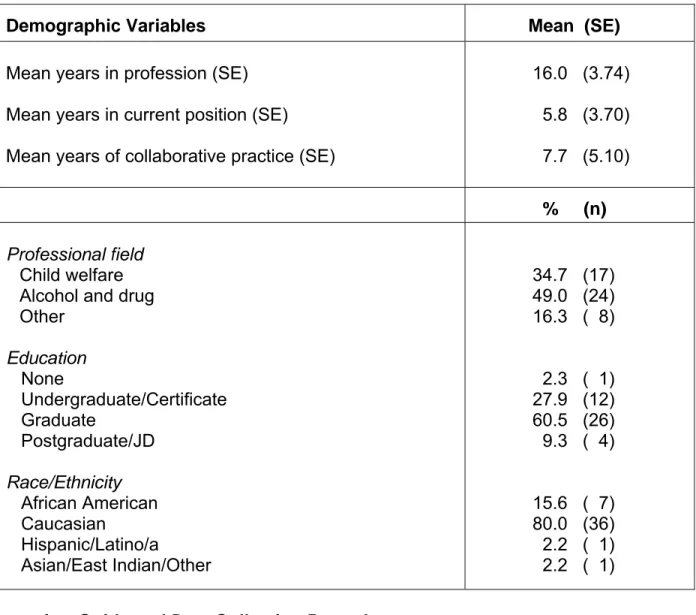
This study examined factors that help and hinder the process of collaboration based on in-depth interviews with respondents (N = 49) from substance abuse and child welfare fields working in five California counties with established formal collaborative policies and programs*. This curriculum, which is grounded in the findings from the study, provides highlights of research and experiential activities in four primary areas that may be used independently or in combination: (a) overview of research on
cross-systems collaboration, (b) promising models and elements for collaborative practice, (c) factors that help and hinder collaboration, and (d) facilitating communication and dealing with confidentiality issues across systems.
* Note: A first phase of this study examined similarities and differences in values and perceived capacity for collaboration between substance abuse and child welfare fields based on survey data using a “Collaborative Values Inventory” and “Collaborative Capacity Instrument” from 350 respondents in 12 counties in California. A curriculum based on this study is available on the California Child Welfare Resource Library website (http://www.csulb.edu/projects/ccwr). The California Child Welfare Resource
CalSWEC PREFACE
The California Social Work Education Center (CalSWEC) is the nation’s largest state collation of social work educators and practitioners. It is a consortium of the state’s 16 accredited schools of social work, the 58 county departments of social services and mental health, the California Department of Social Services, and the California Chapter of the National Association of Social workers.
The primary purpose of CalSWEC is an educational one. Our central task is to provide specialized education and training for social workers who practice in the field of public child welfare. Our stated mission, in part, is “to facilitate the integration of education and practice.” But this is not our ultimate goal. Our ultimate goal is to improve the lives of children and families who are the users and the purpose of the child welfare system. By educating others and ourselves, we intend a positive result for children: safety, a permanent home, and the opportunity to fulfill their developmental promise.
To achieve this challenging goal, the education and practice-related activities of CalSWEC are varied: recruitment of a diverse group of social workers, defining a continuum of education and training, engaging in research and evaluation of best practices, advocating for responsive social policy, and exploring other avenues to accomplish the CalSWEC missions. Education is a process, and necessarily an ongoing one involving interaction with a changing world. One who hopes to practice successfully in any field does not become “educated” and then cease to observe and learn.
welfare field, CalSWEC funds a series of curriculum sections that employ varied research methods to advance the knowledge of best practices in child welfare. These sections, on varied child welfare topics, are intended to enhance curriculum for Title IV-E graduate social work education programs and for continuing education of child welfare agency staff. To increase distribution and learning throughout the state, curriculum sections are made available through the CalSWEC Child Welfare Resource Library to all participating schools and collaborating agencies.
The section that follows has been commissioned with your learning in mind. We at CalSWEC hope it serves you well.
ABOUT THE AUTHORS
Laurie Drabble, PhD, MSW, MPH, is an Associate Professor at the San José
State University School of Social Work. Dr. Drabble was Principal Investigator for the research project Pathways to Collaboration: Understanding the Role of Values and System-Related Factors That Contribute to the Adoption of Promising Practices Between Child Welfare and Alcohol and Drug Systems. Dr. Drabble has been involved in a number of research projects related to alcohol and drug problems among marginalized populations of women and improvement of service delivery systems. She is an Affiliate Associate Scientist with the Alcohol Research Group and she was a Co-Investigator for the San José State University College of Social Work study Factors Related to the Over-Representation of Children of Color in the Santa Clara County Child Welfare System. She also conducted a study for the U.C. Davis Center for Human Services/Northern California Children and Family Services Training Academy examining the substance abuse training needs of child welfare professionals in 14 Northern California counties. In her earlier career, Dr. Drabble was Executive Director of the California Women's Commission on Alcohol and Drug Dependencies (CWCADD). She has a long history of working statewide on a wide range of projects related to collaboration including developing training curricula, conducting training needs assessments, and organizing trainings/conferences.
Kathy Lemon Osterling, PhD, MSW, is an Assistant Professor at San José
collaboration between substance abuse and child welfare systems, she has had experience on several research projects in the School of Social Work at San José State University, including a study on factors related to the disproportionate representation of children of color in Santa Clara County’s child welfare system, an examination of factors related to college attendance among former foster youth, and most recently, a study examining mental health services among child welfare clients. Dr. Osterling has also served as a research assistant for the Bay Area Social Services Consortium at the School of Social Welfare, U.C. Berkeley, where she worked on reports reviewing evidence-based practice on promising programs for low-income families, interventions to reduce racial/ethnic disproportionality in the child welfare system, substance abuse interventions for parents involved in the child welfare system, and research on child welfare outcomes. Dr. Osterling’s dissertation focused on examining the impact of poverty on immigrant children’s mental health.
Marty Tweed, MSW, LCSW, was a full-time member of the faculty at San José
State University from 1993-2003, serving in various capacities (Title IV-E Faculty Field Liaison, lecturer, and MSW Admissions Director). She was employed in public child welfare services from 1984-1993 and held positions including that of social worker and supervisor. Ms. Tweed is currently working as the Field Program Coordinator and lecturer at the Department of Health, Human Services and Public Policy of California State University Monterey Bay (CSUMB). Ms. Tweed’s practice interests include public child welfare, permanency planning, mediation, adoptions, graduate admissions, and outcomes-based education. She is responsible for assisting with adaptation of the
CalSWEC-funded Pathways to Collaboration research report into this curriculum. Ms. Tweed also developed curricula based on other research projects funded by the California Social Work Education Center (CalSWEC) including curricula for the first phase of the Pathways to Collaboration research project, a project on foster care youth, and a project about mental health service utilization and outcomes for children and youth in the child welfare system.
Carol A. Pearce, BA, MLIS, served as a Graduate Research Assistant for the
Pathways to Collaboration project while a graduate student in the School of Library and Information Sciences at San José State University. Ms. Pearce assisted with a wide array of research activities at all phases of research and curriculum development including searching research literature, tracking and transcribing interviews, writing summaries of county case examples for inclusion in the curriculum, and reviewing draft documents. Ms. Pearce formerly served as consultant for the San José State University College of Social Work study on Factors Related to the Over-Representation of Children of Color in the Santa Clara County Child Welfare System. Among other projects, she continues to assist the Child Welfare Research Collaborative, School of Social Work, with web design.
ACKNOWLEDGEMENTS
This project would not have been possible without the assistance of dedicated individuals from participating counties who embraced the goals of the project, allowed us to introduce the project to stakeholders in their counties, and helped to identify prospective interviewees among leaders and practitioners in their counties. These dedicated and generous individuals are listed by county.
Contra Costa County
Amalia Gonzalez del Valle, Contra Costa County Alcohol and Other Drug Services Administration
Debi Moss, Contra Costa County Children and Family Services Brenda Underhill, Alcohol and Other Drug Services Administration
Merced County
David Schilling, Merced County Human Services Agency
Troy Fox, Merced County Department of Mental Health, Alcohol and Drug Services
Sacramento County
Elizabeth English, Sacramento County Department of Health and Human Services, Alcohol and Drug Services Division
Toni Moore, Sacramento County Department of Health and Human Services, Alcohol and Drug Services Division
San Diego County
Rhonda Sarmiento, San Diego County Health and Human Services Agency, Child Welfare Services
Shasta County
Susan Hacking, Shasta County Alcohol and Drug Programs
Lynne Jones, Shasta County Social Services, Children & Family Services
To all the respondents who participated as interviewees, our research team extends our heartfelt appreciation. The interviewees from counties listed above (but not listed by name in deference to maintaining their confidentiality) were generous in their
willingness to share openly of their time and insights in order to document “lessons learned” that might benefit others in future collaborative efforts. We honor them all for their contributions to this study and for their extraordinary dedication and perseverance in advancing collaborative programs in their own counties.
Special thanks are extended to Nancy Young, Executive Director of Children and Family Futures, for her assistance in conceptualizing and realizing this research project—as well as for her extraordinary ongoing work in advancing collaboration and improving services for children and families. Other staff members of Children and Family Futures (CFF), the collaborating organization for this project, offered valuable advice and assistance including Sharon Boles, Sid Gardner, and Deborah Werner.
Susan Jacquet, Research Specialist with the California Social Work Education Center, was remarkable in her willingness to go “above and beyond the call of duty” to provide advice and support toward the betterment and success of all phases of this project.
INTRODUCTION
Research over the past decade has documented a strong relationship between substance abuse and problems of child abuse and neglect (Curtis & McCullough, 1993; Karoll & Poertner, 2002; Kelleher, Chaffin, Hollenberg, & Fischer, 1994; Magura & Laudet, 1996; Maluccio & Ainsworth, 2003; McAlpine, Marshall, & Doran, 2001; Peterson, Gable, & Saldana, 1996; Smith, 2003; Sun, Shillington, Hohman, & Jones, 2001; Tracy & Farkas, 1994; Widom & Hiller-Sturmhofel, 2001). Although many data collection systems do not gather accurate data on substance abuse and child welfare, most studies in the U.S. suggest parental substance abuse is a factor in one third to two thirds of child involvement in the child welfare system (U.S. Department of Health and Human Services [DHHS], 1999). Lower estimates tend to be associated with initial reports of child abuse and higher estimates are generally associated with out-of-home placements (DHHS, 1999). Parental substance abuse appears to be strongly associated with higher rates of physical abuse or neglect among families in community (non-clinical) samples (Chaffin, Kelleher, & Hollenberg, 1996; Kelleher et al., 1994), higher rates of substantiated child maltreatment in cases referred into child welfare (Sun et al., 2001), higher rates of out-of-home placements (Barth, 1994; Maluccio & Ainsworth, 2003; Zuravin & DePanfilis, 1997), re-reports of abuse, and reentry into foster care (Berrick, Brodowski, Frame, & Goldberg, 1997; Government Accounting Office [GAO], 1998; Wolock & Magura, 1996).
welfare, as well as growing recognition of the importance of consistency in caretaking in child development, particularly among infants, has fueled a number of policy changes on both national and state levels. The Adoption and Safe Families Act (ASFA), which was enacted in 1997 and reauthorized in 2003, accelerates permanent placements of children in foster care. Some states in the U.S. have also enacted legislation that allows for further expedited permanency planning for children who meet specific criteria. These recent changes in national and state law that limit timelines for potential reunification, combined with the high prevalence of children of substance abusing families in out-of-home placements, have intensified the need for effective collaboration between substance abuse and child welfare fields (Young & Gardner, 2002).
Significant barriers to collaboration between systems are described in the literature (Feig & McCullough, 1997; Young & Gardner, 2002; Young, Gardner, & Dennis, 1998). One area of difference involves who is defined as a client (a perception of the child as the primary client in child welfare services and a focus on the substance-abusing parent in substance abuse treatment). Another issue involves conflicting attitudes and values about parents with alcohol or drug addiction. Significant differences in focus, policy, and practice between systems may also serve as barriers to collaboration. For example, systems may differ in relation to expected timing for reunification efforts, in which child welfare professionals focus primarily on the safety and developmental needs of the child and treatment staff are concerned primarily with the parental process of recovery and relapse.
that appear to hold promise for effective intervention with substance-abusing families who are concurrently involved in the child welfare system. Some of these promising practices include dependency drug courts (Harrell & Goodman, 1999), outstationed substance abuse specialists in child welfare agencies (McAlpine et al., 2001), recovery coaches to facilitate child welfare-involved parents to participate in substance abuse treatment (Ryan, 2006), and institutionalization of formalized interagency agreements, cross-training, and information exchange systems (Hunter, 2003). Although the need for collaborative practice in these cross-cutting areas have been established (DHHS, 1999; Young & Gardner, 2002), research is needed to examine the practical mechanisms by which these fundamental collaborative strategies are developed and sustained toward creating and institutionalizing shared programs, policies, and practices between fields.
This curriculum is based on findings from the second phase in a research and curriculum development project funded with support from the California Social Work Education Center (CalSWEC): Pathways to Collaboration: Understanding the Role of Values and System-Related Factors That Contribute to the Adoption of Promising
Practices Between Child Welfare and Alcohol and Drug Systems.1 The primary aim of
Phase II of the study was to examine factors that have helped and hindered the process of collaboration based on in-depth interviews with respondents (N = 49) from substance
1 The first phase of this study examined values and perceived capacity for collaboration among child
welfare and alcohol and other drug treatment professionals from counties that have adopted formal collaborative models and counties that are just starting collaboration. This research was based on survey data from managers, supervisors, and line staff from 12 counties in California using two inventories: a Collaborative Values Inventory (CVI) and a Collaborative Capacity Instrument (CCI). The final report and
abuse and child welfare fields working in counties with established formal collaborative policies and programs.
This curriculum provides a review of key research literature related to cross-systems collaboration between substance abuse and child welfare fields (Section I) as well as promising models for collaborative practice (Section II). The curriculum also provides a summary of findings and activities centered on factors that have helped and hindered collaborative practice in relation to developing effective collaborative relationships, structures, programming, and practices (Section III) as well as operational innovations to improve collaboration in daily practice, such as written memorandum of understanding between systems as well as forms and procedures for obtaining releases of information and sharing information about client progress or changes (Section IV). The curriculum also includes a general summary of the study and resources for continued learning about collaborative practice (Section V).
CURRICULUM OVERVIEW
This curriculum has three overall goals: (a) help participants increase their understanding of the specific factors that help and hinder the collaborative process between the child welfare and substance abuse treatment systems by highlighting findings from current research, (b) increase the knowledge and skills necessary in the collaborative process by presenting specific collaborative models involving child welfare and substance abuse fields that appear promising, and (c) provide specific training in developing individual and organizational communication protocols to facilitate collaborative case planning.
Objectives
The curriculum objectives for each section are described below.
Section I – Literature Review: Collaboration Between Child Welfare, Substance Abuse, and Related Fields
By the end of this section participants will: • Articulate a working definition of collaboration, • Describe various models of collaboration, • Develop an integrated service plan, and
• Identify 4-5 factors that impact the collaborative process between the child welfare and alcohol and drug systems.
Section II – Core Elements of Promising Collaborative Models Between the Child Welfare and Alcohol and Drug Systems
By the end of this section participants will:
• Be able to describe core elements of collaboration and apply to their own county practice, and
• Be able to articulate 1-2 examples of promising program models. Section III – Overview of Qualitative Findings From the Study
By the end of this section, participants will:
• Become familiar with factors that both hinder and enhance collaboration as discussed in the research,
• Be able to view the perspectives of professionals from various disciplines in interdisciplinary work, and
• Identify strategies to advance collaboration and address potential resistance to collaboration.
Section IV – The Structure and Spirit of Collaboration: Building Pathways for Communication Across Systems
By the end of this section, participants will:
• Identify themes related to communication in daily practice,
• Understand the need for effective communication across systems in the context of legal timeframes,
• Understand federal confidentiality law in alcohol and drug treatment systems, and
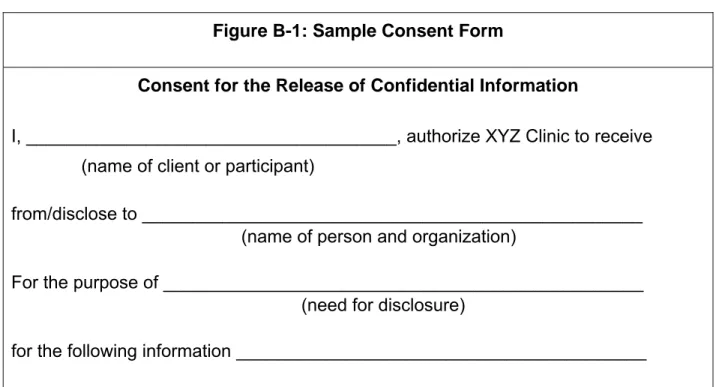
• Have the ability to create a valid consent form with the correct elements. Section V – Building Bridges Between Systems: Resources and Next-Steps
By the end of this section, participants will:
• Have increased knowledge of available resources and how to access those resources for more effective outcomes, and
• Identify and articulate “next steps” to implement new knowledge and skills into their own practice and in their local service delivery systems.
Intended Audience
The primary audience for this curriculum is MSW Title IV-E students and entry-level child welfare professionals; however, some of the material may be used with more experienced practitioners. In addition, although some of the materials emphasize the child welfare field, many of the sections may be used or adapted to students and professionals in a variety of disciplines who may work with issues of substance abuse and child maltreatment. Material in this curriculum may also be adapted for use with BSW students at a more basic level.
The sections of this curriculum may be used together or independently. Instructors who elect to use a later section may find it valuable to cover the content from the first few overheads in Section I that review why collaboration is important. Each section also includes several experiential learning activities directly related to the content of the section. The length of time required to implement each section is flexible and largely dependent on how many activities a given instructor elects to use. Instructor guidelines at the beginning of each section contain suggestions about which activities may be most appropriate to different audiences and many of the activities include alternative options that instructors may use to easily adapt activities to the meet the educational or training needs of their audience.
The curriculum sections may be used in courses or training focused on practice, policy, or human behavior. Section I includes content that would be useful in both policy and practice instruction. The models presented in Section I may also be used in HBSE courses. Sections II, III, and the first part of Section IV contain content that may easily
be used to examine collaborative practice on various levels: individual, group (task groups and case conferencing), organization, and service delivery systems. The second half of Section IV, which focuses on policy and practice related to confidentiality, may be most useful in practice classes and with professionals in the field. Section V, which focuses on resources and next steps for practice, may be used with any groups and in conjunction with any other Section in this curriculum.
Organization of Curriculum
The curriculum sections are intended to build upon one another; however, it is possible for instructors to use each of the sections independently or in combination. A brief description of each section follows:
Section I – Literature Review: Collaboration Between Child Welfare, Substance Abuse, and Related Fields. This section examines the literature on collaboration with a special focus on the implications for collaboration between child welfare and substance abuse fields. Specifically, this section identifies the core elements of collaboration and presents three models of collaboration that are useful in understanding characteristics of successful collaborative practice from different perspectives (i.e., systems, developmental, and process). The section concludes with a discussion of factors that affect collaboration between the child welfare and alcohol and drug systems.
• Introduction
Introduction of trainer(s) and participants (if not part of ongoing class) Introduction to section content
Activity I-1: Introductory Activity (Definitions, benefits, and barriers to collaboration)
• Overview of Concept of Collaboration: Three Models of Collaboration Definitions of collaboration
Models of collaborative practice
− A systems/ecological perspective − A developmental perspective − A process perspective
Activity I-2: Models of Collaboration (small group review)
• Factors That Affect Collaboration Between the Child Welfare and Alcohol and Drug Systems
Review of factors
Activity I-3: Developing an Integrated Service Plan
Section II – Core Elements of Promising Collaborative Models Between the Child Welfare and Alcohol and Drug Systems. This section introduces participants to the core elements of successful collaboration and provides specific illustrations of successful collaborative programs models. This section addresses the following content:
• Overview of 10 dimensions of successful collaboration
Activity II-1: Application of the 10 Domains of Collaboration
• Core elements of collaboration in action: Descriptions of successful models Activity II-2: Applying Elements of Effective Collaboration
Section III – Overview of Qualitative Findings From the Study. This section shares findings from recent research about the factors that both help and hinder collaboration between systems based on interviews with experts from five counties in California with a strong history of collaboration. This section describes each of these
areas in detail and then concludes with an opportunity for participants to participate in a “mock collaborative.” This section addresses the following content:
• Overview of findings from the research on factors that enhance collaboration Activity III-1: Factors That Enhance Collaboration
• Overview of findings from the research on factors that hinder collaboration
Activity III-2: Mediation Exercise: Addressing Factors That Hinder Collaboration
• Implications for practice: Building collaborative programs Activity III-3: The Mock Collaborative
Section IV – The Structure and Spirit of Collaboration: Building Pathways for Communication Across Systems. This section: (a) presents additional findings from the research on successful collaboration in daily practice related to communication, and (b) provides specific training related to working effectively across systems in the context of federal confidentiality regulations. Specifically, this section addresses the themes that emerged from the interviews with professionals from both child welfare and substance abuse treatment systems about communication and collaborative practice. This section also provides a review of federal confidentiality regulations and the types of documents, forms, and protocols used in cross-system communication.
• Overview of themes from the research about communication in daily practice Why a special focus on communication and confidentiality
What each system needs to know from the other
Themes from the study: Development of communication protocols, building relationships, and acculturation to collaborative practice
• Demystifying and working effectively in the context of federal confidentiality regulations and substance abuse treatment
Provisions of 42 CFR (Handout IV-2)
Activity IV-2: Federal Confidentiality Law Quiz
Activity IV-3: Consent for the Release of Information Form (creating and using consent forms)
Optional Activity IV-4: Role Plays
Section V – Resources for Bridging Values Gaps and Enhancing Cross-Systems Collaboration. The final section provides participants an opportunity to explore resources for continued professional development in collaborative practice and reflect on how knowledge about collaboration gained from this curriculum may be translated into practice. This section addresses the following content:
• Overview of resources for advancing cross system collaboration Activity V-1: Website Exercise
• Closing discussion on take home ideas Activity V-2: Take-Home Ideas
Time Estimates and Tips for Training
Addressing issues related to improving collaboration across systems is an important component of any training related to working effectively with the child welfare and substance abuse treatment systems. As such, the sections in this curriculum may be used in conjunction with other training materials that focus on other facets of direct service with substance-abusing families or models of collaborative practice between the substance abuse and child welfare systems.
approximately 6 hours. Instructors may, however, elect to condense the background information (based on assessment of participant knowledge, skill, and experience) or to integrate components of this training into other training or class sessions on direct or indirect collaborative practice. The time estimates may also vary considerably based on which learning activities are selected and how the instructor chooses to adapt them for a specific class or training. Estimated time for completing the sections are as follows:
Section Description Estimated Time
Section I Content: Literature review on collaboration between child welfare and substance abuse-related fields. Activity I-1: Introductory Activity (Definitions, Benefits & Barriers to Collaboration)
Activity I-2: Models of Collaboration
Activity I-3: Developing an Integrated Service Plan
75 minutes
Section II Content: Core elements of promising collaborative models.
Activity II-3: Application of the 10 Dimensions of Collaboration
Activity II-1: Applying Elements of Effective Collaboration
75 minutes
Section III Content: Overview of findings from the study: Factors that help and hinder collaboration
Activity III-1: Factors That Enhance Collaboration Activity III-2: Mediation Exercise
Activity III-3: The Mock Collaborative
90 minutes
Section IV Content: Successful communication in daily practice Activity IV-1: Communication Protocols
Activity IV-2: Federal Confidentiality Law Quiz Activity IV-3: Creating and Using Consent Forms Optional Activity IV-4: Role Plays
90 minutes
Section V Content: Resources for advancing cross-systems collaboration.
Activity V-1: Website Exercise Activity V-2: Take-Home Ideas
Other Suggested Tools and Materials
Courses or trainings with graduate students or new workers may want to provide additional content on basic knowledge and skills in direct practice with substance-abusing families in addition to the material presented in this curriculum. It is recommended that instructors also review the CalSWEC curriculum based on the first phase of this study, which focused on understanding the role of values and system-related factors in collaboration between child welfare and substance abuse treatment. This curriculum is available in PDF format through the California Child Welfare Resource Library, which is a division of CalSWEC (http://www.csulb.edu/projects/ccwrl).
In addition, online tutorials are available at no cost through the National Center on Substance Abuse and Child Welfare. These tutorials are appropriate for both students and professionals in the field. Understanding Substance Use Disorders, Treatment and Family Recovery: A Guide for Child Welfare Professionals provides a primer on alcohol and drug addiction, substance abuse treatment and recovery, enhancing treatment readiness and treatment effectiveness, cross-system communication and collaboration, as well as contact information for other national resources. Understanding Child Welfare and the Dependency Court: A Guide for Substance Abuse Treatment Professionals is designed to provide comprehensive information regarding child welfare issues for the substance abuse treatment professional (both available at http://www.ncsacw.samhsa.gov/tutorials/index.asp).
CALSWEC CURRICULUM COMPETENCIES
The list of CalSWEC Curriculum Competencies for public child welfare was created for use by the graduate schools of social work to prepare their child welfare students for effective work in this complex field of practice. These competencies reflect the common priorities of schools and agencies, yet allow each institution suitable autonomy. This curriculum address the competencies listed below for both MSW and BSW students. In addition, each section of this curriculum provides a list of competencies specifically addressed in that section.
MSW Competencies
I. Ethnic Sensitive and Multicultural Practice
1.5 Student demonstrates the ability to collaborate with individuals, groups, community-based organizations, and government agencies to advocate for equitable access to culturally sensitive resources and services.
II. Core Child Welfare Practice
2.4 Student is able to gather, assess, and present pertinent information from interviews, case records, and other collateral sources required to evaluate an abuse or neglect allegation.
2.10 Student understands policy issues and child welfare legal requirements and demonstrates the capacity to fulfill these requirements in practice.
2.11 Student understands the process of the legal system and the role of social workers and other professionals in relation to the courts.
2.17 Student demonstrates the ability to assess his or her own emotional responses to clients, co-workers, and situations in which the worker’s values are challenged. 2.20 Student understands and utilizes the case manager’s role to create and sustain a
helping system for clients, a system that includes collaborative child welfare work with members of other disciplines.
IV. Workplace Management
4.2 Student is able to work effectively with agency personnel and clients in an environment characterized by human diversity.
4.3 Student understands client and system problems and strengths from the perspectives of all participants in a multidisciplinary team and can effectively maximize the positive contributions of each member.
4.4 Student is able to identify an organization’s strengths and limitations and is able to assess its effects on services for children and families.
4.6 Student is able to seek client, organization, and community feedback for evaluation of practice, process, and outcomes.
4.7 Student understands and is able to utilize collaborative skills and techniques in organizational settings to enhance service quality.
VI. Advanced Child Welfare Practice
6.1 Student demonstrates knowledge of the philosophy, purpose, requirements, and application of federal and state child welfare policy and legislation.
VII. Human Behavior in the Social Environment
7.4 Student is able to identify agency and legislative policies and procedures that create barriers to the growth and development of children and families.
VIII. Child Welfare Policy, Planning, and Administration
8.2 Student understands how political activities and regulatory, legislative, and judicial processes at local, state, and national levels influence agency policies, procedures, and programs.
8.3 Student understands how leads/managers use the collaborative process for the purpose of planning, formulating policy, and implementing services.
8.5 Student demonstrates knowledge of how organizational structure and culture affect service delivery, worker productivity, and morale.
8.6 Student demonstrates basic knowledge of various federal, state, and local child welfare funding sources and consequent implications for agency policy, objectives, and service delivery.
8.8 Student understands how professional values, ethics, and standards influence decision-making processes in public child welfare practice.
BSW Competencies
1.5 Student demonstrates the ability to collaborate with individuals, groups, community-based organizations, and government agencies to advocate for equitable access to culturally sensitive services.
2.8 Student demonstrates a beginning understanding of legal process and the role of social workers and other professionals in relation to the courts, including policy issues and legal requirements affecting child welfare practice.
2.12 Student is developing the capacity to utilize the case manager’s role in creating a helping system for clients, including working collaboratively with other disciplines and involving and working collaboratively with biological families, foster families, and kin networks.
2.15 Student demonstrates the ability to assess his or her own emotional responses to clients, co-workers, and situations.
4.4 Student has a working knowledge of collaboration with multidisciplinary teams and can work productively with team members in implementing case plans.
SECTION I
LITERATURE REVIEW: COLLABORATION BETWEEN CHILD
WELFARE, SUBSTANCE ABUSE, AND
SECTION I
INSTRUCTIONAL GUIDE
Learning Objectives
This section examines the literature on collaboration with a special focus on the implications for collaboration between child welfare and substance abuse fields. Specifically, this section identifies the core elements of collaboration and presents three models of collaboration that are useful in understanding characteristics of successful collaborative practice from different perspectives (i.e., systems, developmental, and process). The section concludes with a discussion of factors that affect collaboration between the child welfare and alcohol and drug systems.
By the end of this section, participants will be able to: • Articulate a working definition of collaboration,
• Describe various models of collaboration, • Develop an integrated service plan, and
• Identify 4-5 factors that impact the collaborative process between the child welfare and alcohol and drug systems.
Public Child Welfare Competencies
1.5 Student demonstrates the ability to collaborate with individuals, groups, community-based organizations, and government agencies to advocate for equitable access to culturally sensitive resources and services.
2.10 Student understands policy issues and child welfare legal requirements and demonstrates the capacity to fulfill these requirements in practice.
2.11 Student understands the process of the legal system and the role of social workers and other professionals in relation to the courts.
4.3 Student understands client and system problems and strengths from the perspectives of all participants in a multidisciplinary team and can effectively maximize the positive contributions of each member.
4.7 Student understands and is able to utilize collaborative skills and techniques in organizational settings to enhance service quality.
8.8 Student understands how professional values, ethics, and standards influence decision-making processes in public child welfare practice.
Agenda and Suggestions for Instructors
Time allocation: Approximately 75 minutes (depending on use of activities) • Introduction
Introduction of trainer(s) and participants (if not part of ongoing class) Introduction to section content
Introduction to topic (basic facts and “why bother” of collaboration)
Activity I-1: Introductory Activity (Definitions, benefits, and barriers to collaboration)
• Overview of Concept of Collaboration: Three Models of Collaboration Definitions of collaboration
Models of collaborative practice
− A systems/ecological perspective − A developmental perspective − A process perspective
Activity I-2: Models of Collaboration (small group review)
• Factors That Affect Collaboration Between the Child Welfare and Alcohol and Drug Systems
Review of factors
Activity I-3: Developing an Integrated Service Plan
Instructors are encouraged to use this section in a range of ways that meet their needs. For example, instructors may elect to present all material in the section, or focus more specifically on one of the subsections for more in-depth analysis. For practice
classes or for trainings with professionals, the instructor may elect to provide a brief review of the first two segments and focus more time on the last section and Activity I-3 (Developing an Integrated Service Plan Based on a Case Study). For MSW or BASW courses on human behavior and the social environment, the instructor may elect to emphasize the review of different models of collaboration. Instructors of policy courses may cover highlights of all three sections, but may elect to emphasize Activity I-1, with a special focus on macro facets of collaboration.
Materials Needed
• Either an overhead projector and PowerPoint presentation on transparencies or a computer and PowerPoint presentation online
• Markers and flip chart or white board (optional—for writing key points in response to small and full group discussions)
SECTION I
LITERATURE REVIEW: COLLABORATION BETWEEN CHILD
WELFARE, SUBSTANCE ABUSE, AND RELATED FIELDS
Introduction
Parental substance abuse is a pervasive problem within the child welfare system. Rates of substance abuse within child welfare cases range from approximately 30-80% (Bellis et al., 2001; Famularo, Kinscherff, & Fenton, 1992; Murphy et al., 1991; DHHS, 1999). The majority of substance abuse-related cases in the child welfare system involve an allegation of neglect, and although there is no difference in substance abuse prevalence between mothers and fathers, most child welfare cases involve substance-abusing mothers (DHHS, 1999). Research also suggests that children in the child welfare system with substance-abusing parents generally experience worse outcomes than children whose parents do not have a substance abuse problem. In general, children in the child welfare system with substance-abusing parents tend to be younger, have higher out-of-home placement rates, are more likely to have a case plan of adoption, and tend to spend more time in out-of-home care (U.S. Department of Health and Human Services Children's Bureau, 1997).
Child welfare practitioners, researchers, and policy makers are becoming increasingly aware of the problem of substance abuse in the child welfare system and the need to implement effective interventions within the time limits mandated by the Adoption and Safe Families Act (ASFA) of 1997. ASFA timelines combined with the increasing number of substance-abusing parents in the child welfare system have
created a critical need to ensure that parents receive timely access to effective treatment. Research indicates that participation in substance abuse treatment is linked to higher reunification rates (Smith, 2003); however, some scholars suggest that systemic barriers between the child welfare (CW) and alcohol and other drug (AOD) systems interfere with parents’ immediate access to accurate substance abuse assessments and effective treatment options (Young & Gardner 2002; Young, Gardner, & Dennis, 1998). As a result, many substance-abusing parents may not be receiving adequate assessment or treatment.
To improve linkages between the CW and AOD systems, many localities are implementing collaborative models that seek to ensure that substance-abusing parents have access to treatment and that both systems are working together to improve outcomes for children and families. A study was conducted to explore some of the “lessons learned” from several such localities in California. Specifically, professionals in the fields of child welfare, substance abuse treatment, and dependency courts from five California counties were interviewed to learn about factors that have helped and hindered their own successful collaborative programs, policies, and practices. Many of the interviewees who had been in practice before, during, and after implementation of collaborative practice were able to describe the impact of this change on both providers and consumers of services. The quote below typifies the “before and after” picture described by many interviewees.
I can’t imagine going back to the old school where you would interview someone and give them three names to treatment programs and say “take care of it.”…
The difference is that they are reunifying quicker. Pre-[collaborative programs] our average was 36 months to reunification and now we are down to 14 months. The kids are getting the benefit and that is what we want.
The positive outcomes described by interviewees are supported by the research literature. If collaborative practice is more effective, there are several questions that might arise for practitioners in different fields:
1. What is collaboration and what are the some of the issues that arise in collaborative practice between substance abuse and child welfare fields? (addressed in the remainder of this section)
2. What are the elements of successful collaborative practice and what are some of the specific models that seem to “work”? (addressed in Section II)
3. What are the factors that facilitate or impede the development of these kinds of effective collaborative practices? (addressed in Section III)
4. What are some of the specific strategies that allow for collaborative case planning in daily practice, including issues related to confidentiality? (addressed in Section IV)
Activity I-1: Introductory Activity
Purpose:
This exercise gives participants an opportunity to interact, raise awareness about the complex process of collaboration, and identify common experiences and assumptions related to collaborative work.
Instructions:
Share the purpose of the exercise and the following assumption: The process of collaboration can be as frustrating as it is beneficial to effective practice…and to client outcomes.
Invite participants to form small groups. In the groups, they will have three topics to discuss, followed by a brief report back of highlights from each group. (See Handout I-1 for instructions that may be given to the small groups). Each small group should be instructed to:
1. Define collaboration in your own words.
2. Brainstorm the benefits of collaboration at different levels: micro (i.e., “What’s in it for me?”), mezzo (groups, community) and macro (organizations, systems). Be sure to include specific examples to illustrate.
3. Despite potential benefits to collaboration, there are often barriers on micro, mezzo, and macro levels. Discuss what some of these barriers might be.
Groups briefly share their findings with the larger group to facilitate discussion. Instructor may also share definition of collaboration provided in Section I on page 9. After the exercise, debrief with participants. Point out that the next two segments of this section will review models of collaboration and some of the factors that affect collaboration between the CW and AOD systems based on research, and that many of these ideas may well include, elaborate, or add to some of the ideas that they discussed in their small groups.
Core Elements of Collaboration
Collaboration between individuals and between organizations is becoming increasingly necessary in order to effectively serve clients (Bronstein, 2003). Certainly, collaboration between the CW and AOD systems has become a central issue within discussions of substance-abusing parents in the CWS (Young & Gardner, 2002).
Although the term “collaboration” is used widely in the social service literature, a helpful starting point in the discussion of the core elements of social service collaboration is to provide a definition of the term. Whittington (2003) provides a definition of collaboration that draws on the concept of partnership: “Partnership is a state of relationship, at organizational, group, professional, or interpersonal level, to be achieved, maintained and reviewed. Collaboration is an active process of partnership in action” (p. 16). Further, collaboration is considered to be:
…the collection of knowledge, skills, values and motives applied by practitioners to translate the following into effective practice:
• formal systematic joint working arrangements (such as inter-disciplinary or integrated teams)
• less formalized joint work between different professions and agencies arising in the course of assessing for, arranging, providing and evaluating services (sometimes called multi-agency or multi-professional networks) • the goals of participation, empowerment and social inclusion of service
users and carers (Whittington, pp. 15-16).
From this definition, collaboration can be considered to involve an active process that draws on relationships; can be formal or informal; involves the use of knowledge, skills, values, and motives; and seeks to involve practitioners and clients. Bronstein (2003) also provides a useful definition of interdisciplinary collaboration “…interdisciplinary collaboration is an effective interpersonal process that facilitates the achievement of goals that cannot be reached when individual practitioners act on their own” (p. 299). In essence, collaboration encompasses the formation of relationships that promote the attainment of mutually beneficial goals.
A Systems/Ecological Perspective of Collaboration
Various models describing the core elements of social service collaboration have been proposed. Figure 1 provides a summary of three models of collaboration. Whittington (2003) proposes a model of collaboration that draws on systems theory. A synthesis of this model suggests that three system levels affect the collaborative process: (a) the micro system level (personal factors such as individual characteristics), (b) the mezzo system level (professional/interdisciplinary factors), and (c) the macro system level (organizational factors). This systems perspective on collaboration provides an overview of the main elements involved in the collaborative process.
Micro Level: Personal Factors. All people possess individual characteristics and experiences that shape their social identity, ideologies, and willingness and ability to form partnerships. Characteristics such as gender, race/ethnicity, religion, sexual orientation, politics, and general life circumstances all affect one’s perceptions of the world and of the collaborative process. A key interpersonal process that is often affected by personal factors is the establishment of trust within a collaboration. Whittington (2003) suggests that personal factors and interpersonal processes related to the establishment of trust are fundamental within collaborations.
Mezzo Level: Professional Factors. Within interdisciplinary collaboration, professionals bring with them varying educational and training backgrounds that shape their understanding of their work. Social workers and other professionals form significant professional identities that are shaped by professional systems and structures (e.g., formal training, membership in professional organizations) that
reinforce the perspectives of one’s particular profession. Interprofessional collaboration requires practitioners from various disciplines to understand the commonalities between professions, the unique contributions of each profession, how professions can complement one another, and areas of potential conflict (Whittington, 2003). In addition, interdisciplinary collaboration also requires practitioners to address the following demands:
• Maintaining one’s professional identity while remaining flexible,
• Maintaining confidence in the distinctive contribution of one’s profession, while not using this confidence as a barrier to working with others,
• Understanding when differences are legitimate and when they are merely a reflection of discipline differences, and
• Understanding and accurately representing the policies of one’s agency, while also reconciling these priorities with one’s own professional values.
Such competing demands within the context of interprofessional collaboration can create challenges in the collaborative process and collaborations may require support and assistance in overcoming some of these barriers (Whittington, 2003). Factors that can facilitate interdisciplinary collaboration include: equality among collaborating practitioners, shared values, flexibility, openness, commitment to the collaboration, making communication a priority, and encouraging a collaborative culture that empowers members to be creative (Molyneux as cited in Whittington).
Macro Level: Organizational Factors. The degree of organizational support for collaboration can greatly impact the success of a collaborative model. Organizational factors that can impact the effectiveness of collaboration are often centered on support
provided by senior level administrators and managers. Moreover, the use of strategic plans or other planning documents may facilitate interorganizational collaboration (Whittington, 2003). Other key factors involved in successful collaborations between different organizations include:
• Recognizing and accepting the need for partnership, • Developing a shared mission,
• Ensuring commitment and ownership, particularly at the upper management level,
• Developing and sustaining trust,
• Creating clear guidelines for working together, and
• Continual monitoring of the collaborative process and making changes as necessary (Hardy et al., as cited in Whittington).
A Developmental Perspective of Collaboration
Robertson (1998) proposes a developmental model of collaboration that incorporates specific processes needed to develop strong interorganizational collaborations. As such, his focus is largely on the macro level of collaboration between organizations. Robertson suggests that effective interorganizational collaboration depends largely on four key antecedents, including: (a) incentive to collaborate, (b) willingness to collaborate, (c) ability to collaborate, and d) capacity to collaborate.
Incentive to Collaborate. Interorganizational collaboration is often motivated by specific needs on the part of the collaborating parties. Collaborations can be motivated by a need to share resources, use existing resources more efficiently, gain access to information, address problems, or gain legitimacy and political advantage. In general,
organizations collaborate when the benefits of collaboration appear to outweigh the costs of collaboration (e.g., time and energy to form the collaboration, loss of autonomy; Robertson, 1998).
Willingness to Collaborate. Willingness to collaborate is based primarily on the level of interpersonal and interorganizational trust, respect, commitment, and shared values and norms between the collaborating parties. A sense of equity in the collaborative relationship and faith in the notion that all parties involved are fulfilling their commitments helps to establish trust, respect, commitment, and shared norms and values. In addition, open communication among all parties also helps to create a sense of trust within the collaboration. Commitment to the collaboration can be fostered by strong organizational support from senior management within the organization (Robertson, 1998).
Ability to Collaborate. The ability to collaborate is related to the types of skills and knowledge that participants bring to the collaboration. Being able to work together on a shared task, as well as the ability of participants to add the work of collaboration on top of their regular work duties are necessary skills required for effective collaboration. In order for these skills and knowledge to be acquired, training and education may be needed. Requiring practitioners to take on the added responsibility of collaboration without proper preparation can hinder collaborative efforts (Roberston, 1998).
Capacity to Collaborate. The capacity of organizations to collaborate may involve the establishment of systems and structures to facilitate the collaboration. The more mechanisms that are in place to facilitate the capacity to collaborate, the more
effective the collaboration will be. Robertson (1998) suggests three mechanisms to foster the capacity to collaborate among organizations: (a) the use of supraorganizational groups (e.g., task forces, advisory committees) that can serve as a forum for discussion of how to effectively collaborate and guide decisions affecting the collaboration, (b) the use of a broker or strategy maker who can coordinate activities and communication between collaborating parties, and (c) the use of rules and regulations to guide collaborative activities, including contracts or memorandums of understanding.
A Process Perspective of Collaboration
In addition to Robertson’s model of collaboration, Bronstein (2003) proposes a model of interdisciplinary collaboration that draws on the types of processes that occur within effective collaborations. She suggests that effective interdisciplinary collaboration is reflected in five key factors: (a) interdependence, (b) newly created professional activities, (c) flexibility, (d) collective ownership of goals, and (e) reflection on process.
Interdependence. Interdependence within interdisciplinary collaboration is reflected in circumstances that make professionals dependent upon one another to accomplish a shared goal. Interdependence requires professionals to understand the differences between each others’ roles and is characterized by formal and informal meetings, oral and written communication, and respect for the opinions of other professionals (Bronstein, 2003).
Newly Created Professional Activities. Collaborations between professionals can create widespread changes to existing service delivery, thereby creating new
professional activities. Such changes have the potential to increase service effectiveness above and beyond what each party acting independently could achieve. Often interdisciplinary collaboration can bring about changes in organizational policies, priorities, and services (Bronstein, 2003).
Flexibility. Flexibility in collaboration is characterized by the ability to blur professional roles, a willingness and ability to compromise during disagreements, and adaptability within the face of changing circumstances. Flexibility is fostered within collaborations that are egalitarian and non-hierarchical (Bronstein, 2003).
Collective Ownership of Goals. Collective ownership of goals is reflected in a process that allows participants to work together to develop and achieve common goals. Each participant shares in the responsibility of developing collective goals and ensuring that goals are met. Effective interdisciplinary collaboration involves shared goals that are clearly defined and widespread involvement in the decision-making process (Bronstein, 2003).
Reflection on Process. Successful collaborations also include participants’ reflections on the collaborative process. A commitment to reflection on the collaborative process includes openly addressing any conflicts within the collaboration. Attention to and communication about the collaborative process, followed by incorporation of these reflections can improve collaborations (Bronstein, 2003).
Perspectives of Collaboration Summary
Taken together, the three models of collaboration provide insights into the core elements of effective collaboration. Collaboration can be viewed from a systems
perspective as being influenced by micro-level factors related to the characteristics of each individual, mezzo-level professional factors related to the training and educational backgrounds of the professionals involved in the collaboration, as well as by macro-level organizational factors related to the macro-level of support for the collaboration (Whittington, 2003). A developmental model of collaboration focuses on the types of conditions necessary in order for strong collaborations to develop. Essentially, collaborations must have an incentive to collaborate (often related to sharing resources or information); a willingness to collaborate that is characterized by trust, respect, commitment and shared values and norms; an ability to collaborate reflected in skills and knowledge related to collaboration, and a capacity to collaborate including the establishment of systems, guidelines, and structures to facilitate collaboration (Robertson, 1998). Last, a process model of collaboration stresses the importance of the types of processes effective interdisciplinary collaborations utilize. Interdisciplinary collaboration is characterized by interdependence in order to accomplish a shared goal, newly-created professional activities including widespread changes to existing service delivery, flexibility in professional roles, collective ownership of shared goals, and reflection on the collaborative process (Bronstein, 2003).
Activity I-2: Models of Collaboration
Purpose:
The purpose of this exercise is to review foundation knowledge about different models of collaboration discussed in Section I.
Instructions:
Divide class into three groups and give each group Handout I-2 for reference. Assign each group to take the lead in reviewing one of the three models. Instruct the class that each group is charged with three tasks.
• Briefly summarize their assigned model
• Provide at least one example to illustrate each area of the model.
NOTE: For graduate level classes or trainings with professional, the instructor may elect to have small groups discuss the possible utility of their assigned model to understanding and improving collaborative capacity in social work practice.
Facilitate brief reports from each group. The three models are as follows: 1. Systems perspective model of collaboration (Whittington, 2003)
a. Micro b. Mezzo c. Macro
2. Developmental model of collaboration (Robertson, 1998) a. Incentive
b. Willingness c. Ability d. Capacity
3. Process model of interdisciplinary practice (Bronstein, 2003) a. Interdependence
b. Newly created professional activities c. Flexibility
d. Collective ownership of goals e. Reflection on process
Factors That Affect Collaboration Between the CW and AOD Systems
as an important mechanism to improve treatment outcomes for parents in the CWS, a number of systemic factors can be barriers to collaboration between the two systems (Feig, 1998; DHHS, 1999; Young & Gardner, 2002; Young et al., 1998). Most notably these factors include: differences in defining the client, differences in values and attitudes regarding substance abuse, structural constraints, differences in training and education among workers, and specific challenges unique to each system.
Defining the Client. Within the child welfare system, the child is generally viewed as the primary client, and ensuring the safety and well-being of the child is considered to be the central mission. Within the AOD system, clients are defined as the substance-abusing adult and their role as a parent is often not considered essential to their treatment. While children may be considered an incentive for the parent to remain sober, they are generally not viewed as central to the recovery process (Young et al., 1998). Yet, for substance-abusing parents involved in the child welfare system, the majority of whom are mothers, maintaining relationships with their children, and ultimately, regaining custody of their children may be of central importance to them while in treatment (DHHS, 1999). As a result, many substance-abusing mothers involved in the child welfare system who begin treatment may not be receiving the services they need, resulting in high dropout rates. Moreover, for those women who remain in treatment, services may not necessarily result in improved parenting. These differences in defining the client can result in conflicting service plans and an uncoordinated approach to treatment (DHHS).