Volume 12 Issue 1 Article 6
2019
Analysis of Causal Factors to Conflict in Africa
Analysis of Causal Factors to Conflict in Africa
Clayton E. Sigmann
Follow this and additional works at: https://commons.emich.edu/mcnair Recommended Citation
Recommended Citation
Sigmann, Clayton E. (2019) "Analysis of Causal Factors to Conflict in Africa," McNair Scholars Research Journal: Vol. 12 : Iss. 1 , Article 6.
Available at: https://commons.emich.edu/mcnair/vol12/iss1/6
This Article is brought to you for free and open access by the McNair Scholars Program at DigitalCommons@EMU. It has been accepted for inclusion in McNair Scholars Research Journal by an authorized editor of
ANALYSIS OF CAUSAL FACTORS
TO CONFLICT IN AFRICA
Clayton E. Sigmann Dr. Richard Stahler-Sholk, Mentor
ABSTRACT
Africa, a continent of 54 states, has experienced centuries of conflict. This research will analyze the underlying factors present in conflict throughout the continent. Seeking to understand the underlying factors could help prevent future conflict by creating preventive policy. The research will use six case studies based on Algeria, Ethiopia, Nigeria, Rwanda, Liberia, and Sudan to discuss the effects of colonialism and intrastate and ethnic conflict and to identify the deeper structures behind such conflict. This research will discuss the positive role of post-conflict governance and sustainable human development in post-conflict society (Ogbaharya, 2008).
LITERATURE REVIEW
The continent of Africa was desired by European powers during the time of colonialism. Africa had widely untapped mineral, labor, and agricultural resources. European colonialism continues to exert a far-reaching effect on the political, economic, and cultural life of post-territories (Alemazung, 2010). Throughout the half-century of contemporary post-colonial history, many new African states have taken some of the lessons of rule by the colonizers and implemented them in their governments.
African Colonialism
When looking at the role colonialism has had on the continent of Africa, it is first necessary to analyze which regions were colonized, how they were colonized, and by whom. Africa was carved up by competing European powers during the “scramble for Africa,” which was enabled by the Berlin Conference
of 1848, setting guidelines for the partitioning of the continent (Michalopoulos & Papaioannou, 2016). Figure 1, retrieved from Mycontinent.com (2005), illustrates the specific regions of the continent and which European powers controlled them.
Figure 1. European Colonial Boundaries (Mycontinent.com, 2005)
An example of the enduring effects of European colonialism may be seen in the present-day Democratic Republic of Congo (DRC). Under Belgian rule since 1885 (Baregu, 2002), the DRC was controlled by brutality (Baregu, 2002), and it is estimated the population decreased by a third (Stanard, 2014). The Congo provided rubber, and new technological advancements ensured rubber could be extracted more efficiently and in greater quantities (Buelens & Marysse, 2009). The resource extraction was extremely lucrative, and the Congolese companies became substantially more valuable, however, the Congolese companies only traded on the Brussels stock exchange, keeping all the profits within Belgium (Buelens & Marysse, 2009). When the Belgian colony gained independence in 1960, President Mobutu Sese Seko utilized the
central state to generate wealth for personal and party benefit (Schatzberg, 2012). The state has failed to thrive and continues to suffer from ongoing internal conflict. The effects of Belgium’s colonial rule continue to be seen decades after independence.
The manner of decolonization also had an impact on shaping post-colonial regimes. Although there are many different ways a colony can gain independence (e.g., through negotiation, conflict, or referendum), all of these methods come with their own resulting implications.
Interstate conflict. The African continent has a land mass
of nearly 12 million square miles (three times the size of Europe), and the land is distributed amongst 54 countries, with many borders drawn by external colonizers rather than reflecting the identities and histories of peoples in the region (Michalopoulos & Papaioannou, 2016).
Algeria. Controlled by the French from 1830 to 1962
(Colanna, 2008), Algeria waged a successful war for independence that began in 1954 (Smith & Jeppesen, 2017). Under colonialism, the French gave limited power to the population while also denying Algerians political participation (Chalk, 2007). When the war began, the French used their colonial method of mass violence, hoping to defeat the Algerian National Liberation Front (FLN). The French were ferocious in their attempt to regain full control of the colony, seeking to avoid withdrawal from North Africa, as they had been forced to do in Southeast Asia (Chalk, 2007). The FLN responded with a radical process of trying to unite the Algerian population through acts of terror designed to pressure the French into a violent response (Chalk, 2007). During the 7-year conflict, it is speculated that 17,500 French soldiers died and some 65,000 were wounded; at least 900,000 Algerians were also killed in the fighting (Paul, Clarke, Grill, & Dunigan, 2013). Though the French won the military conflict, the French eventually lost support, both in Algeria and in France (Todorov & Denner, 2007). The conflict ended with the Evian Agreements, which provided a ceasefire. Independence followed shortly, in 1962 (Chalk, 2007).
The Algerian conflict reflected a number of causal factors related to colonialism, including the French army’s use of extreme violence to oppress the population, retaliatory acts of terrorism by the FLN, and the eventual intervention of the international
community, which pressured France to end the conflict and grant independence to Algeria.
Ethiopia. The Second Italo-Ethiopian War was waged from
1935-1941. At that time, Ethiopia was a recognized independent state and a charter member of the League of Nations (Prochazka, 2013). Throughout much of the twentieth-century, Ethiopia was ruled by Haile Selassie, who was Regent from 1916 to 1930 and Emperor from 1930 to 1974 (Prochazka, 2013). The Italian dictator Benito Mussolini, who already controlled most of Somalia— Ethiopia’s eastern neighbor—sought to increase the size of his Italian East African colony (Hofmann, 2015).
The Ethiopian Empire was consolidated through methods typically employed by European colonizers, including aggressive tax collections, threats of destruction, forcing local leaders into the royal family through marriage, and even pitting families against each other (Prochazka, 2013). This caused discord amongst the nation’s elites, which increased when the Emperor sought to install a tenant-based agriculture system (Prochazka, 2013). This new system had a strong effect in the southern region, stripping peasant farmers of their traditional land and source of income, while the empire used the profit to develop other regions (Prochazka, 2013).
Aware of the growing divide between the population and the emperor, the Italians paid groups that opposed the regime and armed them to fight alongside Italians in a quest to overthrow Selassie’s government (Prochazka, 2013). Throughout this conflict, both sides tried to gain the support of the disenfranchised peasantry, however, the peasants remained independent, making it more difficult for Ethiopia to resist Italian invasion (Prochazka, 2013).
The conflict began in 1935 when the Italians invaded from the north through what is modern day Eritrea (Grip & Hart, 2009) and made a strong push south toward the capital, Addis Ababa. As the Italians pushed south, they publicized each victory in an effort to frighten the population into supporting their invasion, while calling for the installation of a “legitimate” emperor (Prochazka, 2013). The Italians used aerial strikes to drop mustard gas bombs, resulting in 15,000 deaths out of the total 50,000 casualties (Grip & Hart, 2009). The Italian forces entered the capital in 1936; Emperor Selassie retreated and continued to govern from outside the country, while the Ethiopian forces continued their resistance from the southern
region (Grip & Hart, 2009). The resistance continued until 1941, when Selassie led his forces to drive out the Italians, whose army was simultaneously involved in the European theater of World War II (Grip & Hart, 2009).
Critical factors in the Second Italo-Ethiopian War included internal oppression of the Ethiopian people by Selassie’s government, which weakened their resistance to invasion by Italy. The Emperor’s centralization of power through changes to the agrarian system created dissention in the farming communities. The League of Nations was ineffective in stopping conflict between its members, as there was no process to punish Italian aggression.
Intrastate conflict.
Nigeria. Intrastate conflict, or conflict within a state,
pertains to civil war. Nigeria experienced a civil war from 1967 to 1970 when its Biafran state chose to secede (Uche, 2008). Nigeria had gained independence from the United Kingdom (UK) in 1960, after 100 years of colonization, but during the Biafran conflict, the UK continued to exert influence over the region. The Biafran conflict arose from a 1914 British decision to combine the northern Hausa ethnic group and the southern Igbo ethnic group under one flag (Uche, 2008). The 1966 Unification Decree established a single civil service, decreasing the resource rights of the regions to only 50%. This followed a military coup that led General Johnson Aguiyi-Ironsi, former Army Chief of Staff, to take control of the state and install a military government. Great Britain chose to support Aguiyi-Ironsi to protect their interests in the region. In July of 1966, members of the military in the north staged a second coup, which ended in Aguiyi-Ironsi’s assassination. The government’s instability resulted in civil war when a military officer, Chukwuemeka Odumegwu Ojukwu, led Biafra to break away from Nigeria and establish its own republic in the southeastern ethnic Igbo region.
The establishment of the Biafran Republic created a critical challenge to Nigeria’s former colonial power. Nigeria produced some 580,000 barrels of oil per day, with 40% of that going directly to the UK through British Petroleum (BP; Uche, 2008). The change in resource rights resulted in the UK paying royalties to Nigeria, yet the British oil interests were located in Biafran
territory. The state of Biafra demanded payment for its oil exports, which put the UK in the difficult position of providing funding to Nigeria’s opponent, further escalating the conflict. BP eventually made a “token payment” of £250,000, resulting in the Nigerian government instituting a naval blockade. The blockade not only prevented resources from entering Biafra, but also restricted oil exports. Consequently, the UK lost 30% of its oil supply. Starved of resources, the Biafran state did not manage to secure independence. By the end of the conflict in 1970, over 100,000 soldiers had been killed in the conflict. The more lethal result of the blockade was a famine, leading to the death of over 500,000 civilians.
Critical factors in this conflict included the imposition of colonial laws that combined two regions that were ethnically and geographically different. Additionally, the UK’s struggle to protect its oil interests through the blockade led to a substantial loss of life and instability of successive post-colonial governments. The imposed changes to resource rights also impaired the economic stability of the eastern region.
Liberia. Liberia has a population of 4.7 million and a GDP just
above $2 billion (The World Bank, 2017). One of the first African states to gain independence, Liberia was founded by repatriated American slaves in the 1830s. The nation experienced two civil wars between 1989 and the early 2000s (McDonough, 2008). The roots of the conflict began during the presidency of William Tolbert, who served from 1971 until 1980, and used a strong process of clientelism to centralize his power. Tolbert’s successor, Samuel Doe, dismantled much of the state bureaucracy, replacing the military with militant groups that served as his personal bodyguards, and the police followed his orders without question. Doe continued the practice of clientelism so that the distribution of power was nearly one-sided. The oppression of ethnic groups grew more intense, and, after a coup attempt in 1985, Doe ordered the killing of at least 3,000 ethnic Mano and Gio civilians.
Doe was overthrown by Charles Taylor, whose National Patriotic Front of Liberia (NPLF) began a war for control of the country that lasted from 1989 to 1996. The largest armed faction in the conflict, the NPLF, had some 12,000 soldiers (Kieh, 2009). Liberia’s elite had the resources to side with various factions, escalating the fighting, and the Economic Community of West
African States prolonged the conflict for years by their multilateral military intervention, slowing Taylor’s push into the capital, Monrovia. At the end of this conflict, it was clear that all of the factions were responsible for multiple human rights abuses. The conflict resulted in the deaths of 250,000 Liberians (Mama & Okazawa-Rey, 2012). Taylor’s NPLF was victorious, but the violence perpetrated by his troops caused discord in the population and set the stage for a second civil war (Kieh, 2009).
Taylor’s regime was challenged by the Liberians United for Reconciliation and Democracy (LURD) in 1999 (Kieh, 2009). Having failed in the peacemaking process, Taylor’s hold on power was threatened, similar to his predecessors (McDonough, 2008). A third group, the Movement for Democracy in Liberia joined LURD in 2003, attacking Taylor’s NPLF in the southern region (Kieh, 2009). The opposition forces quickly moved toward Monrovia, overpowering the state forces, but Taylor resisted, leading to many civilian deaths. Taylor stepped down prior to the signing of the 2003 Accra Comprehensive Peace Agreement, which both ended the war and installed a transitional democratic government. Most of the state continued to be under the control of rebel forces, however, slowing the establishment of a legitimate, democratically-elected government.
The most challenging factors in this intrastate conflict include the use of clientelism to dictate the distribution of resources, rather than rights based on citizenship and equal application of the rule of law. A second factor is the consolidation of power by dismantling state institutions, weakening both the nation’s infrastructure and belief in the regime’s legitimacy amongst the population. Third, the oppression of internal ethnic groups makes enemies of fellow citizens, leading to deadly intrastate conflict.
Ethnic conflict.
Rwanda. Ethnic conflicts in Africa often occur when a
particular ethnic group selected for privileges by the European colonizer joins in the oppression of other ethnic groups in the state. Such was the genesis of the 1994 Rwandan Genocide, in which historically oppressed Hutu people rose up in retaliation against the Tutsi people (Uvin, 2001).
The native population of Rwanda, a former Belgian colony, was largely composed of these two ethnic groups.
Divisions between the groups were exploited by the Belgian colonizers, whose strategy set the Tutsi elite in positions of prominence over Hutu servants. Rwandan independence, however, saw the rise of a Hutu government, leading to the segregation and subjugation of the Tutsi (Carney, 2012).
By early 1994, the Hutu government and the Tutsi Rwandan Patriotic Front (RPF) were engaged in a civil war. When a missile strike led to the death of President Juvénal Habyarimana in a plane crash, the Hutu-controlled state radio blamed the RPF and demanded the annihilation of the Tutsi population (Smeulers & Hoex, 2010). The Hutu government called for retaliation against all Tutsis and commended Hutu militia groups that murdered civilians (Uvin, 2001). Violence quickly spread throughout the country, where local Hutu citizens were encouraged to kill both their Tutsi neighbors and Hutu moderates. This genocide was characterized by the brutality ordinary people used in carrying out the killings. Victims were hunted down and tortured before being shot or hacked to death with machetes (Smeulers & Hoex, 2010). During the 100-day genocide, over 800,000 Tutsi and Hutu moderates were murdered (Uvin, 2001). It is estimated that 75% of the Tutsi population was wiped out, erasing almost an entire generation. While most of the killings were carried out by civilians, some question whether the genocide was organized by political Hutu elites who used the death of the president to unite the Hutu in a kind of ethnic nationalism through the shared goal of removing the unwanted Tutsi population (Smeulers & Hoex, 2010). Hutu civilians joined the killing to conform to society, motivated by the belief that the Tutsi were less than human.
This conflict seemed to arise from ethnic divisions exploited by the Belgians. Such divisions resulted in people experiencing a stronger sense of allegiance to their ethnic group than to the Rwandan nation. In the years following the genocide, the government recognized the impossibility of bringing the enormous number of perpetrators to justice. Following South Africa’s model, Rwanda established a human rights tribunal to bring the local leaders of the genocide to trial. The courts allowed people to confess what they had done and to apologize to those affected by the violence in exchange for a shorter sentence. This innovative form of “transitional justice” attempted to prevent more violence from occurring in Rwanda (McDonough, 2008).
The Rwandan conflict was most influenced by prevalent ethnic divisions that were exploited by Belgian colonizers and deepened in the years after independence, affecting the lives of Hutu and Tutsi citizens alike. The postcolonial inequitable distribution of resources was also a major factor; the lack of international intervention, throughout much of the genocide, resulted in the loss of 800,000 lives (Uvin, 2001).
Sudan. Darfur is a region in western Sudan that had existed as
an independent region before being annexed into the Anglo-Egyptian colony in the late 1800’s (Bassil, 2004). Following World War I, Darfur was incorporated into Sudan as a province. Ethnic conflict in the province escalated into a war in February 2003, when Sudanese government outposts were attacked by two rebel groups, the Sudanese Liberation Army (SLA) and the Justice and Equality Movement (JEM), who opposed the oppression of Sudan’s Muslim communities.
Despite having been integrated into the Sudanese nation, Darfur remained culturally remote; the region is connected to the capital by a single road (Bassil, 2004), and, after Sudan gained independence in 1956, there was little effort to offer the people of Darfur representation in government. Darfur remained an underdeveloped agrarian region with limited resources. Conflicts arose over water and land use; instead of the government distributing resources equally, the people of Darfur experienced poor access to assistance, with education available to only 31% of the population, and two doctors for every 100,000 citizens.
Throughout the 1980s, the civil war in neighboring Chad brought pro-Libyan militias to northern Darfur, which was used for training purposes (Bassil, 2004). Many local citizens were enlisted in the conflict, creating a culture of violence in the region and providing civilians with weapons. JEM and SLA became firmly rooted in the region and built a strong resistance against government forces.
The beginning of 2003 found the Sudanese government at the close of a 20-year civil war, informing its reaction to the crisis in Darfur. The government instituted counterinsurgency measures largely based on the American operations in Iraq and Afghanistan (Reyna, 2010). Using intelligence operatives and air support, the Sudanese air force joined forces with the Janjaweed, a local Arab militia force. The Janjaweed formed in the 1980s in response to the inter-ethnic Fur-Arab conflict and were predominantly comprised of members of Arab tribes. The Sudanese bombed villages in Darfur, then allowed
the Janjaweed to rape, murder, and occasionally loot areas linked to the JEM and SLA. The Janjaweed were responsible for the deaths of 50,000 citizens each year of the conflict.
This conflict was met with international intervention. The African Union (AU) and European Union (EU) asserted pressure on the Sudanese to end the conflict (de Waal, 2006). The AU attempted to broker a ceasefire agreement that failed when Sudanese President Omar al-Bashir banned some of the rebel groups in the region from negotiations. The Sudanese government did not allow United Nations (UN) peacekeepers into the region until 2006, when the Darfur Peace Agreement was signed by the government and the SLA. Fighting continued, as some of the other rebel groups saw the deal as an unacceptable compromise. In response, President al-Bashir replaced the UN peacekeepers in Darfur with the Sudanese military. International actors pressured the Sudanese government to continue peace talks and work toward an inclusive peace agreement. The 2010 Doha Peace Forum included all rebel groups, set up a regional government, and divided Darfur into five provinces, fully incorporating the region into the rest of Sudan (Reyna, 2010).
The Darfur conflict was the product of a British colonial decision to combine Darfur with Sudan. International intervention through the AU and EU was necessary to end the conflict, which was largely centered on ethnic divisions between Arab groups and Africans. The challenge was one of equal resource distribution, which favored Sudanese regions and left Darfur underdeveloped and dependent on small-scale agriculture with limited access to education and healthcare.
DISCUSSION
This paper has used case studies to analyze the causes of conflict in six nations in the African continent. While many factors form the basis for conflict in any nation, the critical causes in the six case studies discussed in this paper may be grouped into seven categories: 1) Centralized Power, 2) Ethnic Divisions, including pre-and post-colonial, 3) positive International Intervention to end conflicts, 4) negative International Intervention in the form of post-colonial legacies and a lack of intervention to stop conflicts, 5) Resource Distribution, 6) State Oppression, and 7) Ineffective Government.
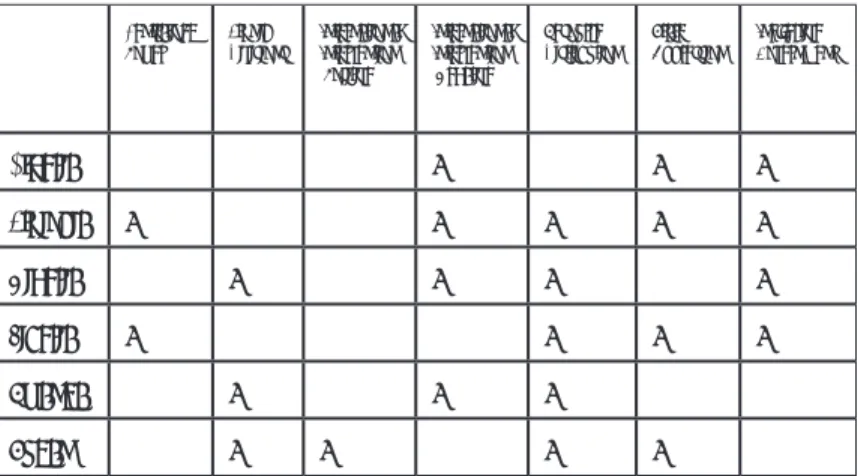
Table 1 illustrates the prevalence of factors in each comparative case of conflict.
Table 1. Case to Factor Prevalence
Centralized
Power Ethnic Divisions International Intervention (Positive)
International Intervention (Negative)
Resource
Distribution State Oppression Ineffective Government
Algeria X X X Ethiopia X X X X X Nigeria X X X X Liberia X X X X Rwanda X X X Sudan X X X X
The qualitative data from the comparative case studies are arranged in a bar graph in Figure 2 to illustrate the strength of each factor in causing conflict. The factors are referred to in the graph by initials; the two International Intervention factors are differentiated by a + (positive) or - (negative). The graph contains the factors on the x-axis with the amount of occurrence on the y-axis.
Figure 2 illustrates the prevalence of each factor, showing Resource Distribution is the most prevalent factor in conflict. This factor appeared in five of the six cases analyzed. However, Ineffective Government, State Oppression, and negative International Intervention were all equally prevalent, appearing in four of the analyzed conflicts.
Figure 2 illustrates that issues of perceived inequality
based on resource distribution are instrumental in motivating the population to engage in conflict. However, when resource distribution is accompanied by another factor, such as state oppression, it can exacerbate the conflict. Liberia exemplifies this, for while the insurgent groups were fighting to combat the oppressive regime, the population joined the opposition to fight for the equitable distribution of resources. The conflict resulted in over 250,000 deaths and a new government, illustrating how these factors can exacerbate a conflict and motivate involvement amongst the population.
The Italo-Ethiopia War involved all of the factors and led to Italy controlling Ethiopian territory until the onset of World War II. Italy was able to succeed because the Ethiopian government lacked the support of its population, as the unequal distribution of resources led to the citizens protecting themselves rather than their country. Undersupplied and outmanned, the Ethiopian government was unable to protect the nation from invasion.
Resource distribution appears frequently within the research, illustrating that it is a problem facing many countries. Different strategies can be used to address this problem, including making changes to social and political structures, such as instituting a federal system of equitable resource sharing or a change in leadership. Nations struggling with resource distribution experience a range of responses from the citizenry, from protests to civil war. A government’s response to demands for change is instrumental in determining the outcome of such demands. When a government ignores the demands of its citizens, conflicts arise. There are also many ways to prevent conflict. Efforts to establish peace during the early stages of discord are important; such efforts can begin with the establishment of the government. Newly independent states have the opportunity to assess the best means of offering fair political representation to the entire nation,
ensuring equal development and the responsible distribution of resources. However, if conflict does begin, international actors, such as the AE and UN, should seek to end the fighting through economic sanctions, peace-keeping operations, and mediation between groups.
REFERENCES
Alemazung, J. (2010). Post-colonial colonialism: An analysis of international factors and actors marring African socio-economic and political development. The Journal of Pan African Studies, 3(10), 1-20.
Baregu, M. (2002). The clones of ‘Mr. Kurtz’: Violence, war and plunder in the DRC. African Journal of Political Science /Revue Africaine De Science Politique,7(2), 11-38. doi:10.4314/ajps.v7i2.27329
Bassil, N. (2004). The failure of the state in Africa: The case of Darfur. AQ: Australian Quarterly,76(4), 23-40. doi:10.2307/20638274
Buelens, F., & Marysse, S. (2009). Returns on investments during the colonial era: The case of the Belgian Congo. The Economic History Review,62(S1), 135-166. doi:10.1111/ j.1468-0289.2009.00482.x
Carney, J. (2012). Beyond tribalism: The Hutu-Tutsi question and Catholic rhetoric in colonial Rwanda. Journal of Religion in Africa,42(2), 172-202. doi:10.2307/41725469 Chalk, P. (2007). Algeria (1954-1962). In Money in the bank: Lessons learned from past
counterinsurgency (COIN) operations (pp. 17-26). Santa Monica, CA: RAND Corporation.
Colonna, F. (2008). Training the national elites in colonial Algeria 1920-1954. Historical Social Research/Historische Sozialforschung, 33(2), 285-295. doi:10.12759/ hsr.33.2008.2.285-295
De Waal, A. (2006). Darfur! Review of African Political Economy, 33(110), 737-739. Grip, L., & Hart, J. (2009). The use of chemical weapons in the 1935–36 Italo-Ethiopian
War. SIPRI Arms Control and Non-proliferation Programmme, 1-7.
Hofmann, R. (2015). Imperial links: The Italian-Ethiopian war and Japanese new order thinking, 1935-6. Journal of Contemporary History, 50(2), 215-233. doi:10.1177/0022009414552147
Kieh, G. (2009). The roots of the second Liberian civil war. International Journal on World Peace,26(1), 7-30.
Mama, A., & Okazawa-Rey, M. (2012). Militarism, conflict and women’s activism in the global era: Challenges and prospects for women in three West African contexts.
Feminist Review,101, 97-123. doi:10.2307/41495235
McDonough, D. (2008). From guerrillas to government: Post-conflict stability in Liberia, Uganda and Rwanda. Third World Quarterly, 29(2), 357-374. doi:10.1080/01436590701806921
Michalopoulos, S., & Papaioannou, E. (2016). The long-run effects of the scramble for Africa. The American Economic Review,106(7), 1802-1848. doi:10.3386/w17620 Mycontinent.com. (2005). European colonial boundaries [image]. Retrieved from www.
mycontinent.com
Ogbaharya, D. (2008). (Re-)building governance in post-conflict Africa: The role of the state and informal institutions. Development in Practice, 18(3), 395-402.
doi:10.1080/09614520802030482
Paul, C., Clarke, C., Grill, B., & Dunigan, M. (2013). Algerian independence, 1954–1962: Case outcome: COIN loss. In Paths to victory: Detailed insurgency case studies (pp. 75-93). Santa Monica, CA: RAND Corporation.
Prochazka, P. (2013). Abyssinia: The powder barrel: A book on the most burning question of the day—1935. International Journal of Ethiopian Studies,7(1 & 2), 143-192. Reyna, S. (2010). The disasters of war in Darfur, 1950-2004. Third World Quarterly,31(8),
1297-1320. doi:10.2307/41059754
Schatzberg, M. (2012). The structural roots of the DRC’s current disasters: Deep dilemmas.
African Studies Review, 55(1), 117-121. doi:10.1353/arw.2012.0023
Smeulers, A., & Hoex, L. (2010, May). Studying the microdynamics of the Rwandan genocide. The British Journal of Criminology, 50, 435-454. doi:10.1094/bjc/azq004 Smith, A., & Jeppesen, C. (Eds.). (2017). Britain, France and the decolonization of Africa:
Future imperfect? London, UK: UCL Press. doi:10.14324/111.9781911307730 Stanard, M. (2014). Belgium, the Congo, and imperial immobility: A singular empire and
the historiography of the single analytic field. French Colonial History, 15, pp. 87-110. doi:10.14321/frencolohist.15.2014.0087
Todorov, T., & Denner, A. (2007). Torture in the Algerian war. South Central Review,24(1), 18-26. doi:10.1353/scr.2007.0018
Uche, C. (2008). Oil, British interests and the Nigerian civil war. The Journal of African History,49(1), 111-135. doi: 10.1017/S0021853708003393
Uvin, P. (2001). Reading the Rwandan genocide. International Studies Review, 3(3), 75-99. doi:10.1111/1521-9488.00245
The World Bank. (2017). Liberia GDP (current US$). Retrieved from https://data. worldbank.org/indicator/NY.GDP.MKTP.CD?locations=LR