C
OMPETITION ISSUES IN
R
ETAIL
B
ANKING
AND
P
AYMENTS
S
YSTEMS
M
ARKETS
IN THE EU
F
INANCIAL
S
ERVICES
S
UBGROUP
PUBLIC VERSION
The following people contributed to this report:
Chairman
Albert Scholten (Netherlands Competition Authority)
Secretary
Stijn van den Broek (Netherlands Competition Authority)
Working Group Members
Bundeskartellamt Henning Meyer-Flamme Ameli Köhler
Ingo Mecke
Danish Competition Authority Carsten Smit French Ministry of Economy, Finance And Industry Jean-Pierre Gerszkourez Irish Competition Authority Dave O’Connell Netherlands Competition Authority Wiesje van den Berg Office of Fair Trading Gover James
Patrick Greene Philip O’Donnell
CONTENTS
FOREWORD
EXECUTIVE SUMMARY AND RECOMMENDATIONS SECTION 1 INTRODUCTION
SECTION 2 MARKET STRUCTURES, BEHAVIOUR AND RESULTS
2.1 INTRODUCTION
2.2 CONCENTRATION, ENTRY AND EXIT 2.3 PROFITS, AGGRESSIVE COMPETITION AND
EFFICIENCY
SECTION 3 CUSTOMER MOBILITY
3.1 INTRODUCTION
3.2 TYPES OF SWITCHING COSTS 3.3 ACTUAL CUSTOMER MOBILITY
3.4 REASONS AND WILLINGNESS TO SWITCH 3.5 SWITCHING POLICIES AND RESULTS
SECTION 4 ACCESS TO PAYMENT SYSTEMS
4.1 INTRODUCTION
4.2 REGULATORY FRAMEWORK
4.3 ACCESS TO PAYMENT INFRASTRUCTURES 4.4 COMPETITION ISSUES IN NATIONAL PAYMENT
SYSTEMS
4.5 POSSIBLE SOLUTIONS IN NATIONAL PAYMENT SYSTEMS
SECTION 5 THE SINGLE EURO(PEAN) PAYMENTS AREA
5.1 THE IDEAL OF SEPA
5.2 COMPETITION ISSUES AND WAYS TO ADRESS THEM 5.3 THE ROLE OF THE NATIONAL COMPETITION
AUTHORITIES
CONCLUSIONS ANNEXES
ANNEX 1 MARKET INDICATORS
ANNEX 2 BILATERAL CLEARING IN PAYMENT SYSTEMS
ANNEX 3 PRIVATE OWNED, SINGLE PRODUCT, CENTRAL CLEARING SYSTEMS
ANNEX 4 PRIVATE OWNED, MULTIPLE PRODUCT, CENTRAL CLEARING SYSTEMS
ANNEX 5 CENTRAL BANK OWNED, MULTIPLE PRODUCT, CLEARING SYSTEMS ANNEX 6 CENTRAL BANK OWNED, SINGLE
PRODUCT, CLEARING SYSTEMS ANNEX 7 ACCESS TO CLEARING SYSTEMS
FOREWORD
This is the report of the ECA Financial Services Working Group -also known as the Financial Services Subgroup- that was set up in May 2004 to consider competition issues in Retail Banking and Payment Systems Markets in the EU.
The Subgroup examined what competition issues in retail banking currently exist as perceived by the NCAs (National Competition Authorities). The report is based on qualitative research and as such its contents and recommendations reflect the opinions and experiences of National Competition Authorities.
I am very grateful to all the individuals involved in the Subgroup for their
contributions and assistance in compiling this report and the recommendations that go with it: they are the outcome of an open, interactive and creative cooperation between National Competition Authorities.
I hope this Report and its Recommendations will be of use to the European Commission and for European NCAs, in their daily work, and thus advance
competition in retail banking markets and payment systems throughout the European Union.
Albert Scholten,
EXECUTIVE SUMMARY AND RECOMMENDATIONS
INTRODUCTION
Financial markets are of great importance to the European economy: well functioning capital markets reduce the cost of capital, channelling efficiently savings to investment and stimulating innovation. However, financial institutions do not only bring together the supply and demand of capital. They also have a direct influence on trade as
suppliers of payment services. In many cases they are also responsible for, and owners of, the infrastructure through which transfers of money are effected. Unnecessary restrictions on the dynamic process of competition in financial markets may therefore have serious negative effects on prices, innovation and efficiency.
In 2005, the ECA (European Competition Authorities) Directors-General meeting adopted the proposal for the formation of the ECA Financial Services Subgroup, which was convened with the purpose of identifying common competition problems, focusing on three areas:
• consumer mobility,
• access to payment systems, and
• SEPA (Single European Payment Area)
The objective was to publish a report and possible recommendations on competition issues, to be addressed to the European Commission. In order to be able to publish a report that would reflect the views of all ECA members, the Working Group sent out a questionnaire to all 28 ECA members1, and organised a subsequent Workshop in the
Hague, at which the Draft Report and Recommendations were discussed. The final Report and Recommendations were then presented to - and adopted by - the Directors-General meeting in Nice on 18-19 May 2006.
SUMMARY OF THE ANALYSIS AND RECOMMENDATIONS
Retail banking markets are still mainly inward-looking. In these markets, a combination of high entry barriers, high concentration ratios, the existence of network effects, a lack of transparency and high switching costs for customers lead NCAs (National
Competition Authorities) to the view that, despite their efforts in enforcing competition law, competition in national retail banking markets remains far from perfect. The methods that national public authorities employ to deal with these issues differs hugely between Member States.
With the finalisation of the FSAP (Financial Services Action Plan), the future
implementation of the Post-FSAP, the growing number of pan-European retail banks and the introduction of new distribution channels (e.g. internet), the European
1Responses were received from 17 ECA members: Belgium, Denmark, France, Germany,
Hungary, Ireland, Latvia, Lithuania, Malta, Netherlands, Norway, Poland, Portugal, Slovakia, Slovenia, Sweden and the United Kingdom.
integration of retail banking markets is slowly being realised. It is widely recognized that, in the long run, the potential benefits for end users from the integration of European retail banking markets are huge, mainly because of economies of scale and scope. If the integration leads to increased competition, this may also have significant positive effects. The impact of integration may however be less positive, or even negative, if integration leads to reduced competition and/or a reduction in choice for customers.
As national markets become more integrated, there is a growing desire for a consistent European view on competition issues in payments markets. Below is a summary of the main problems that occur in the fields of the three subjects mentioned above, as well as a set of recommendations that could help to overcome these problems2.
1. Customer mobility
NCAs agree that a lack of transparency, typically demonstrated through the inability of customers to compare services effectively, has contributed to low levels of customer mobility. Additionally, banks make it difficult, costly and often a lengthy process for customers when they do switch. As a consequence, it is not uncommon for customers to lose payments when changing bank.
Examples of switching facilities, such as those currently available in Ireland and the Netherlands, appear to have aided customer mobility. Similarly, comparison sites such as those in the Netherlands and Sweden have provided customers with the necessary product information. Therefore, if NCAs would like to facilitate greater customer mobility these models are a good basis from which to start.
Recommendations
In order to stimulate customer mobility in their national markets, the Working Group recommends NCAs, as far as possible within their respective roles in their own countries, to further consider the case for promoting:
1. Lower switching costs in retail banking markets;
2. The introduction of a consistent set of transparency rules that make it possible for consumers and SMEs to compare retail banking products, and
3. The implementation of retail banking switching facilities (e.g. objective and up-to-date comparison sites, comparison statistics, switching services).
2The objectives and the best practices in this Report are very much in line with the suggestions
pursued by the 2005 International Competition Network Annual Conference in Bonn, focussing on an increasing role for competition in the regulation of banks by adopting ten best practices to be followed by jurisdictions and competition authorities worldwide (available at:
http://www.internationalcompetitionnetwork.org/BANKS_Bonn_best_practice_suggestions. pdf).
2. Access & governance of payment systems
Technical standards and operational matters of payment systems are often set and managed through self-regulation. This may be managed through a scheme-setting body, which in many cases is also responsible for setting and enforcing access rules with regard to clearing and processing. The access conditions of these bodies can be categorised as follows:
– Setting the rules for licenses to provide payment services (banking licence
or licence from other regulated financial institution);
– Adherence to (technical) conditions; and – Payment of access fees (in some cases).
NCAs are of the opinion that in some Member States, access to payment markets may be restricted by unnecessarily high barriers, which may be
reinforced through prohibitive access conditions and the bundling of payment services.
Recommendations
4. In order to create more open national payment markets in those cases where technical and operational matters of payment systems are set and managed through one or more central self-regulating bodies, the Working Group recommends NCAs to consider the promotion of:
a. transparent, open payment standards and objective membership criteria to payment schemes (i.e. non-discriminatory access rules);
b. if workable, a clear legal (and practical) separation between management and ownership of access rules for payment schemes;
c. unbundling in the supply of payment services (e.g. branding and processing) where other, less potentially anti-competitive, solutions are available; and
d. the introduction of stakeholder-involvement (within the normal provisions of competition law) to ensure the consultation of stakeholders (customers) on access rules.
This could be done as part of an investigation into possible breaches by national payments systems of art. 81 and 82 of the Treaty (or national competition law), or through advocacy, depending on both the legal mandate and the resources of each individual NCA.
3. Single European Payment Area (SEPA)
It is not clear to NCAs that the current process towards SEPA will lead to more competition, lower prices and better services for end users. More consultation is needed on SEPA. The tight deadlines imposed on the EPC mean that time for this consultation is already running out. This Working Group would echo the views of the Commission: “Effective competition…greatly promotes user adoption of the new
products and improves legitimacy of the process”3; and that it is “…preferable to
involve users at an early stage of scheme development to ensure user requirements are met.”4
It is thought that prices may increase in the short-term – due to the substantial investment involved in making domestic payment systems SEPA-compliant – but fall in the medium to long-term, as economies of scale and scope are realised. It is clearly important that end users should benefit from these advantages of SEPA, though the degree to which these benefits will be realised may depend on the current level of competition within domestic banking markets.
Innovation and transparency of payment services are another area in which domestic conditions determine the extent to which users will benefit from SEPA. Although most of the details regarding SEPA have yet to be finalised, certain access &
governance principles identified by NCAs as best practice in their own countries – e.g. independent directors, voting thresholds, objective access criteria – could help to avoid potential problems in achieving the SEPA vision.
Additionally, there are also a few principles included in the Commission’s SEPA Incentives paper which this Working Group would support:
Market-based approach for SEPA migration;
Separation of scheme and infrastructure; and
Non-exclusion of non-bank payment service providers from governance. NCAs believe that customer mobility is also an important issue in creating SEPA. Subject to the abolition of existing legal barriers to cross-border switching, the introduction of European account numbers and ‘number portability’ could – in the long run – be the best way forward, depending on the expected costs and benefits. An alternative would be to introduce a European switching facility, or at least the
harmonisation of national switching facilities.
Clarity on the extent to which the Commission intends to implement these changes would give national authorities the possibility to adapt their national policy strategies on this point, as they may want to improve customer mobility within their own country.
Recommendations
NCAs are of the opinion that competition issues with regard to SEPA have not been properly examined so far. NCAs support the work of the Commission in improving openness, transparency and consistency in European payment systems through the New Legal Framework for Payments in the Internal Market. The Working Group:
3p.8, ‘Consultative paper on SEPA incentives’, 13 Feb 2006 4p.15, ‘Consultative paper on SEPA incentives’, 13 Feb 2006
5. Is of the opinion that the proposal for a New Legal Framework (NLF) for Payments in the Internal Market should be strengthened in order to ensure transparent and non-discriminatory terms of access for services provided by infrastructures. This can be achieved by an elaboration of article 23 in the proposed Directive COM(2005) 603 final.
6. Advises NCAs to be more active with regard to SEPA, to ensure that all participants benefit from competition in SEPA.
SECTION 1 INTRODUCTION
Background
The financial sector is of great importance to the European economy. Not only is the financial services industry of significant importance in its own right, but financial services have an impact on the performance of many other markets and the economy in general, for instance in the provision of credit and payments facilities. It is essential therefore that this market operates as efficiently and competitively as possible. The absence of sufficient competition in this sector can lead to significant consumer detriment that may be characterised by artificially high prices, a lack of innovation and inefficient capital markets.
Despite the recognised importance of the financial sector, it is often characterised by inefficiencies or restrictions on competition. The generally high degree of
concentration and the existence of network effects and entry barriers contribute to the absence of perfect competition in this market. This situation is compounded by information asymmetries for customers as well as high switching costs. Furthermore, regulatory burdens on the financial sector affect the behaviour of market players. The extensive body of national regulations and international standards (e.g. Basel II) which govern financial institutions adds to the already considerable complexity of the sector. Financial institutions come in various shapes and sizes. Across Europe institutions as diverse as financial conglomerates with global presence (e.g. HSBC, BNP Paribas, ABN AMRO), and smaller niche and local banks compete in national retail markets. Accordingly, numerous studies and investigations have been carried out, both by NCAs (National Competition Authorities) and the European Commission, with the aim of examining competition issues concerning financial institutions. With so much cross-European work there is a need for greater multilateral communication between institutions with regards to views and positions adopted on matters of financial law, regulation and policy. Where views on competition in this sector are highly divergent, the level playing field for the financial sector becomes endangered. This would be a harmful and unnecessary obstacle in view of the integration of financial markets within Europe.
Aim of the report
At their meeting in Trier on 6 May 2004 the ECA Directors-General established a Financial Services Subgroup with the intention of ‘enhancing co-operation between the European Competition Authorities through the exchange of knowledge, the sharing of enforcement experiences and the development of joint views on market structures and trends’. The overall aim of the Subgroup is to explore the opportunities for synergy among ECA members regarding competition issues in the financial services industry and to propose an agenda of activities for a new ECA Working Group.
In 2005 the Subgroup produced a comparative study5, based on the existing knowledge
and research of the four original Subgroup members: the Netherlands, Ireland, Sweden
and the UK. The outcome of the study was presented in a report at the ECA Directors-General meeting in London, on 18 April 2005. The Directors-General adopted the proposal of the Subgroup to commence a project to identify common competition problems focusing on three areas:
• Access to payment systems
• Consumer mobility, and
• SEPA (Single European Payment Area)
Ultimately, the objective was to find recommendations and solutions to problems that have been identified in the area of retail banking, which are to be addressed, inter alia, to the Commission, in particular DG Competition and DG Internal Markets. For SEPA the aim would be to address suggestions to the Commission and, possibly, the European Payments Council. The ultimate goal was that the Commission takes account of the ECA Report as part of DG Competition’s Financial Services Sector Inquiry. At the Directors-General Meeting in 2005, Denmark, France and Germany expressed their support for the preliminary work the Subgroup had undertaken and have participated in the production of this report.
Method
In order to make sure that the activities of the Working Group would complement rather than duplicate DG Competition’s Financial Services Sector Inquiry, the Working Group met with the Commission in September 2005. Both parties concluded that as the Working Group’s activities were directed to the NCAs (National Competition Authorities), and the Commission’s questionnaires were directed to individual market participants the two studies would be complementary. Both the Commission and the Working Group agreed that the combined work would improve the robustness of the analyses and the understanding of the market as a whole.
This report is based on data collected by means of a questionnaire sent to all 28 ECA Member States (the EU 25 plus Iceland, Lichtenstein and Norway). The questionnaire was mainly focused on the three issues that were suggested for further investigation. The Working Group received 17 responses to the questionnaire: Belgium, Denmark, France, Germany, Hungary, Ireland, Latvia, Lithuania, Malta, Netherlands, Norway, Poland, Portugal, Slovakia, Slovenia, Sweden and the United Kingdom. This implies the response rate was above 60% (64% when leaving out the three non-EU ECA members).
Although the responses to the questionnaire were good overall, the depth of answers was variable. Generally the quality of response to different questions depended upon the areas of the financial sector upon which NCAs had previously worked.
Unsurprisingly, methodologies and indicators that were used by NCAs also varied from country to country. And in some cases (e.g. innovation) it was clear that the starting point of their analyses influenced their responses. For practical reasons, in those cases where not all NCAs responded to a question, it was assumed that the responses available reflect the opinion of all NCAs, unless stated otherwise.
In order to ensure that all NCAs would be given the possibility to express their views on the report, the Working Group sent out a Draft Report in early April 2006. All ECA members were invited to send in their comments and suggestions on the
document. The Financial Services Working Group also organised a Workshop on April 21st in The Hague, to facilitate a more interactive exchange of views on the draft report
and the recommendations it contains. All ECA members, regardless of whether they responded to the questionnaire, were invited to send representatives to the Workshop. The 19 NCAs that were represented at the Workshop (Austria, Belgium, Czech
Republic, Denmark, Estonia, Finland, Germany, Hungary, Iceland, Ireland, Latvia, The Netherlands, Norway, Poland, Portugal, Slovakia, Slovenia, Sweden, United Kingdom) reached an agreement on the recommendations.
Early May the Working Group sent out this Final Report and Recommendations to all ECA-members, to be adopted at the Directors-General meeting in Nice on 18-19 May 2006.
SECTION 2 MARKET STRUCTURES, BEHAVIOUR AND
RESULTS
2.1 INTRODUCTION
The responses on market structures, behaviour and results vary hugely amongst the different NCAs. Both the answers themselves and the indicators and variables
provided by NCAs varied widely. For example, concentration rates were calculated in different ways (both C4 and C5 ratios, HHI). Furthermore, not all NCAs appeared to have access to data with regard to individual product markets, which undoubtedly influenced responses. In particular, responses concerning innovation and transparency depend heavily on the initial conditions prevalent in the domestic banking sectors of individual Member States. For this reason this section only contains a broad overview of the current market situation and developments over time.
While the ongoing process of harmonising the regulatory framework in the financial sector increases cross-border competition in the EU to some extent, competition in retail banking occurs predominantly at the national level. This is partially caused by the fact that, in some of these retail markets, regulatory obstacles for effective cross-border competition still remain. It is clear that in the markets for retail payments, as well as mortgages and consumer credit, the harmonisation process is far from complete. However, the integration of capital markets is at a more developed stage and with the finalisation of the Basel II framework and the introduction of International Financial Reporting Standards (IFRS), rules for capital requirements and financial reporting are fairly harmonised.
The standardisation that, according to the ECB report “EU Banking Structures” (October 2005), has taken place in the market for loans to large companies – so-called syndicated loans - shows that there may well be a business case for more
standardisation in retail lending markets. At the same time the ECB’s observations lead to the conclusion that banking activities are still focused on retail markets, in particular the mortgage market and the market for consumer lending, which together represent an increasing part of banks’ profits. The development of Directives on both retail payments (the New Legal Framework for Payments in the Internal Market), and on consumer credit (as part of the Financial Services Policy Green paper), may
substantially contribute towards the integration of retail banking markets and thus generate welfare improvements on a European level. In fact, competition in retail banking markets still tends to take place on a national rather than on an EU level. As the relevant geographic market is generally national, many current competition issues in the retail banking sector need to be addressed by national competition authorities.
2.2 CONCENTRATION, ENTRY AND EXIT Market concentration
According to our survey, national banking markets (in terms of total assets) are
moderately to highly concentrated.6 Concentration rates tend to be somewhat higher in
retail banking markets than the rates in the banking sector overall. They are especially high for lending to SMEs (Small and Medium Sized Enterprises) and deposits made by SMEs, whereas concentration in the consumer credit market and the market for the provision of deposits and mortgages to consumers appears to coincide more with the concentration rates for the sector as a whole.7
Concentration rates are generally higher in the EU-15 than in the newer Member States. There is also a striking difference between small and large Member States - generally, concentration is significantly higher in the small Member States. Even if concentration ratios appear low nationally, they can still be high at a sub-national (e.g. regional) level – for example, Germany shows a low concentration rate on national level but competition in retail banking markets is still conducted on a regional level, where concentration rates – especially in rural areas – may be quite high.
Changes in Market Structure
Between 1995 and 2000 in over half the Member States, there was a large increase in concentration, which tended to be strongest in the smallest Member States8. Opinions
indicated that this was mainly a result of anticipation of the liberalisation of European capital markets and the introduction of the Euro. Increases in concentration were also evident in the larger Member States although the rate of increase was lower.
After 2000, these increases in concentration slowed to a moderate growth in 48% of the Member States, mostly the EU 15 Member States. In most of the new Member States (except Hungary), concentration rates fell; this is likely due to the privatization of former state-owned banks and the entry of foreign banks into the market.
Furthermore, in this period Sweden and the United Kingdom also witnessed a decrease in concentration rates.
It is worth noting that, despite general perceptions of substantial entry by foreign banks into national markets, in recent years it has only significantly affected a minority of Member States. Although almost all respondents stated there had been at least some form of foreign entry over the last decade, overall, entry and exit rates were significant in only 23% of the Member States9.
6Low concentration: HHI< 1000, moderate concentration: HHI = 1000-1800, high
concentration: HHI >1800.
7See Annex 1, Table 1. 8See Annex 1, Table 2. 9See Annex 1, Table 3.
While there is some evidence to suggest that data provided by individual NCAs are not always directly comparable, it appears nonetheless that foreign entry and exit rates do not fully explain the development of concentration rates. Generally, entry and exit rates have to be treated with caution, as they are often calculated from changes in Central Bank registers. These changes may be partly the result of restructuring by corporate financial entities, thereby misrepresenting the true level of entry and exit in the market. There seems to be a tendency for larger banks in the EU to arrange authorisation with the relevant authorities in all Member States, even if they choose not to enter every market straight away. This facilitates market entry by these institutions in all EU Member States at the moment it best suits them10.
Cross-border mergers and acquisitions often do not alter the concentration rate at a national level, whereas they do influence the EU-wide concentration rate. According to the responses from some countries, market entry and exit rates are affected by merger and acquisition activities of insurers and the retail banking sector, even if there is variable success in terms of gaining market share. This is a significant observation, as such mergers may only have a small effect on the overall concentration rates in the banking sector while actually affording the merged firms far greater market power in the financial market overall. Still, according to the responses from NCAs, cross-border mergers and acquisitions of local banks have been an important entry strategy for banks in over half the national markets, as can be seen in Table 4 of Annex 1. Responses indicated that banks often enter a niche market (e.g. lending to large corporate customers), which may only have a small impact on concentration rates. Typically, entry into a niche market is through innovative services that allow for low costs, low prices, higher interest rates on deposits and more generous loans. Upon entry, niche banks tend to have narrow product offerings, but once they have
established a market position they often try to broaden the scope of their activities to full service banking.
Branch Networks
The NCAs indicated that traditional branch distribution networks still play an
important role in many Member States. However in some countries - especially those in Northern Europe - the number of local branches has decreased recently. This change is due to reduced need. It has been influenced not only by the proliferation of Point of Sale (POS) networks for electronic debit card payments and Automated Teller Machines (ATMs), but also by the introduction of new services such as e-banking, internet banking and e-brokerage. Consequently, there is a reduced need for branch facilities that has lowered costs for banks and made cross-border penetration of retail markets easier. Respondents stated that internet banking was one of the (innovative) products that often forms part of the entry strategy of foreign banks.
10This was one of the results of the study conducted by the Netherlands Competition
2.3 PROFITS, AGGRESSIVE COMPETITION AND EFFICIENCY Profit rates, aggressive competition and efficiency
According to the responses received, profitability is high in half the Member States and moderate - though generally increasing - in many other Member States.11 In only two
Member States are profits moderate and stable. A clear relationship between
concentration and profitability cannot be found. It seems, however, that in the years prior to the liberalisation of capital markets and the introduction of the Euro, profitability was decreasing in more countries than at present.
The existence of high profits in retail markets can be caused by several factors, including low corporate taxes, high levels of efficiency or an absence of competition. Banking profits are derived from a wider range of markets than those covered in this report. Additionally, some retail product markets may be used as a ‘gateway’ to open other product markets for delivering other financial services.
Efficiency and aggressive competition
Responses demonstrated clearly that some aspects of retail banking were more aggressively competitive than others. Mortgages were the most competitive with 35% of NCAs reporting aggressive competition, while this figure fell to only 12% for consumer loans, savings deposits, the market for financing corporations and internet banking. Only 6% of the NCAs stated there was aggressive competition in the credit card market, with 4% reporting competition in all market segments12.
11See Annex 1, table 5.
SECTION 3 CUSTOMER MOBILITY
3.1 INTRODUCTION
Customer mobility creates important incentives for both potential and actual suppliers and also reduces market power. Obstacles to switching may lead to customers
becoming “locked in” to a particular financial service provider. Customers often find themselves facing barriers when attempting to choose a cheaper product or more favoured product. These circumstances allow the possibility for suppliers to raise prices above competitive market levels without losing market share.
With improved consumer mobility suppliers will be faced with more elastic demand. They will lose customers if their performance level is low compared to the rest of the market, or if they attempt to raise prices above competitive market levels. Thus, customer mobility constitutes a credible threat and disciplines suppliers. Hence, a lack of customer mobility will have a direct, negative impact on the level of competition. It is therefore essential that NCAs examine the degree of customer mobility in their respective countries.
The NCAs were asked to respond to questions on complaints - both formal and informal - relating to switching in the banking sector. Overall it was observed that customer mobility in the retail banking sector is low.
3.2 TYPES OF SWITCHING COSTS
Consumer mobility may be less than perfect for a number of reasons. Research and responses to the questionnaire identified four main barriers to consumer mobility:
• Direct switching costs
In many Member States a consumer must pay a fee in order to discontinue his relationship with a bank. Such fees have a direct impact on a consumer’s decision to leave their bank, and high fees effectively ‘lock in’ customers.
• Indirect switching costs
These costs reflect the difficulties and inconveniences that consumers may face when changing bank, for instance search costs and administrative costs they have to face in attempting to find a new account. In most Member States, it is the responsibility of the customer to inform all relevant parties (employers, customers, utility companies etc.) of their new account details.
• Lack of transparency
Lack of transparency hinders customer mobility as it makes it difficult for customers to compare services and price. Whilst in many circumstances banks offer very different (heterogeneous) services, between which it is naturally difficult to compare, it remains the case that banks often have complex pricing structures,
which also include basic banking features. For example, many banks bundle products together into packages and it becomes difficult for consumers to understand the ‘real’ price of individual components.
• High transportation costs
Significant transportation costs divide a market into smaller geographic markets, with consumer mobility limited to a local area. This may result in imperfect competition between the local markets. Although the proliferation of internet and non-branch banking has expanded the definition of what constitutes a ‘local’ market, this still remains a substantial factor.
3.3 ACTUAL CUSTOMER MOBILITY
Responses from ECAs stated that mobility in the retail banking sector is quite low. In Hungary only 16 per cent of customers/account holders has ever switched banks.13 In
UK the estimated annual switching rate is 4 – 6 per cent of customers, and in France it is around 5 per cent per annum.
One of the indicators used by the Danish Competition Authority to assess competition in the economy is a mobility index showing the change in market shares from the previous year, which ranges from 0 to 100. The average mobility index for the service sector is approximately 15. Since 2000 the mobility index for the banking sector has been between 1.5 and 3 which is substantially below the average for the services sector as a whole.
In 2003, a study of the banking sector by the Norwegian Competition Authority looked at customer mobility over the period 1999-2001. The number of new customer relations constituted 7 to 8 per cent of the total number of customer relations. The Norwegian Competition Authority has additional figures for 2001 indicating that customer mobility (the number of new customers divided by the total number of customers) was 11.5 per cent.
Compared to other countries, a mobility ratio of 11.5 per cent in retail banking seems high. The increase in customer relations does not, however, necessarily mean that customers have terminated earlier bank relationships. The trend is for customers to shop around more, establishing several, parallel, customer relationships with different banks. Nevertheless, from a competition policy point of view this is a positive trend.
Actual switching behaviour
Consumer demand determines the importance of different parameters for competition in a sector. For example, if consumers particularly value the location of their bank, then location becomes a competitive parameter. In a market with a lack of competition, the product characteristics which consumers’ value most may not correspond to the suppliers’ perceived competitive parameters in the sector as there is no need to
13According to a investigation on a sample of bank customers from 2001.
respond to customer demand. The reason for this may be that there is a common understanding among the suppliers not to compete on specific parameters. Another reason may be that the market suffers from a lack of transparency which means that customers find it too expensive or troublesome to search for a better supplier. To ensure competition among retail banks, knowledge of the sector’s competitive parameters and especially factors that actually drive customers to switch banks is crucial for NCAs. Inter alia, these factors may be the number of brands, consumer trust, distribution channels, product categories and so on.
Of the thirteen responses received on this topic, the majority stated that product quality, service or product features are the most important factors for customers when choosing a bank or other relevant financial institution. Prices, trust and geography, convenience and number of counters are also important. Only two countries mentioned habit, tradition or reputation as the most important factors.
Most bank customers do not change from the bank account chosen for them by their parents. In the UK, the Competition Commission surveyed SME customers which revealed that:
• 41% of customer chose to open a business current account at a bank where they held a personal account or previous relationship with the bank;
• 16% chose their bank because it was the closest one to their business;
• 30% chose their bank because of service factors;
• 8% because it was recommended to them;
• 10% because of price factors.
3.4 REASONS AND WILLINGNESS TO SWITCH Why do people switch?
Of the 13 countries that answered these questions, the majority stated that better prices, dissatisfaction with their current bank/better service elsewhere are the most important factors causing customers to switch. Very few NCAs mentioned better products, a broader product-range, denied loans or the possibility to obtain credit as the most important factors causing customers to switch provider.
Several respondents stressed that mortgages are a key product in the retail banking market. NCAs indicated that customers tend to seek mortgage offers from a number of different banks. Switching occurred more regularly when customers chose a
mortgage lender that was not their principal bank. It is no surprise therefore to see that many NCAs described the mortgage market in their country as being aggressive.
For SMEs the UK Competition Commission report stated that:
• 31% of SME customers that have switched bank did so for reasons related to price;
• 27% switched because of a poor relationship with their bank;
• 20% switched because of a perceived better service at the new bank. These findings are confirmed by a Danish banking survey, which reported that
customers had several reasons for changing banks. The most important of these was a better offer on either interest or fees (accounting for 30 percent of all persons in the sample that had switched bank).
Full results of the Danish survey were that:
• 30 % were due to a better offer on interest or fees at new bank;
• 29 % were unsatisfied with their bank or generally unsatisfied;
• 12 % were due to geographical reasons;
• 7 % were due to being denied a loan;
• 6 % were due to socioeconomic reasons.
In addition, the UK and Danish surveys confirm that price and poor customer relationship with their current bank are two main reasons for switching to another bank.
Willingness and barriers to switch bank
Responses to the questionnaire showed that willingness for customers to switch can be based on either the ‘push’ factor of dissatisfaction with their current bank (e.g. poor product choice, lack of transparency) or the ‘pull’ factor of better products on offer with competing banks (e.g. lower prices, more attractive interest rates).
The responses from NCAs seem to show that business or personal consumers do not have a strong willingness to switch providers, but this willingness varies between different national banking markets. Overall, four issues seem important with regard to willingness to switch:
• Switching costs
• Insignificant gains from switching banks
• Personal relations with banking staff; and
• (A lack of) information/transparency.
In its survey of SMEs, the UK Competition Commission found a number of reasons for reluctance to switch supplier. These were:
• the perceived complexity of switching for little benefit;
• the perceived significance of maintaining a long term relationship with a bank to guarantee access to finance;
• the ability of the bank to negotiate lower charges for those customers who threaten to switch;
• limited price sensitivity demonstrated by SME customers; and
The Danish survey showed that 70 % of the customers would not shift banks even if it could be done without difficulties or costs. In summary the willingness to switch is highly influenced by good personal relationships with a customer’s bank.
3.5 SWITCHING POLICIES AND RESULTS Policy- actions
As part of the questionnaire, NCAs were asked to explain what had been the
significant factors that have facilitated switching in their respective countries. Several NCAs stated that complexity in the way products are explained to customers is an important barrier to switching. A number of NCAs reported that greater transparency has increased the ability of consumers to switch banks. In Denmark, the establishment of a website (www.pengepriser.dk) made it possible for the customers to compare prices on banking services more easily. The website came about as a result of cooperation between the Danish Banking Association and the Danish Consumer Association. Similar facilities exist to cover several product markets (including banking) in Germany, Ireland, Sweden and the UK.
In the Netherlands and the Republic of Ireland the introduction of a switching code (and a switching service) has altered switching patterns.
Changes in switching behaviour and influential factors
In the course of its Banking Study, the Irish Competition Authority found that the personal current account (PCA) market was characterised by high barriers to switching, and, consequently, high levels of inertia. In particular, consumers considered switching to be a slow and cumbersome process. Consumers were particularly concerned that important payments, such as wages, bills or loan repayments, would not be completed during the switching process. In order to promote switching and competition in this market, the Authority recommended that the industry implement a Switching Code, which would simplify the switching procedure for consumers.
The Irish Bankers’ Federation (IBF) launched a Switching Code in January 2005, and a version of this Code has now been adopted by all of the major retail banks, which has generally been successful in promoting switching. Permanent TSB launched a fee-free banking campaign almost immediately, with a stated aim of attracting 60,000 new customers to increase its market share beyond 12%. They claimed in May 2005 that they had opened 12,000 new accounts since the launch of the Switching Code (not all of these account openings would have used the Switching Code, however) and that 95% of consumers using the Switching Code were switching to Permanent TSB. The IBF confirmed that 10,000 customers had used the Switching Code between February and end-August 2005. This approximates to a switching rate in the region of 0.5%. Following the introduction of the personal Switching Code, a Business Current Account Switching Code will be launched at the end of June 2006. The benefit of the Switching Code lies not just in the numbers of consumers switching, but in the way it has changed banks' behaviour, by forcing them to react to increased consumer
mobility. Since the Code's introduction, all the main retail banks have introduced some form of fee-free personal current account product.
In January 2004 banks in the Netherlands also started to offer switching services (bank-Switch Support Service) to consumers. Under this system, the former bank ensures that all income, such as salary and benefits, are automatically credited to the new account for 13 months. The customer must take the initiative to inform his employer or the organisation(s) from which he receives a benefit of the amendments. With regard to debits, the new bank informs companies which submit instructions for automatic debt collection of the change in the account number. The Dutch Banking Association states in its Annual Yearbook of 2004 that some 45 000 (chiefly private) customers took advantage of this service in 2004 (some 0.6% of the total number of households in the Netherlands)14. On 1 October 2004, a special application form was
made available for the commercial market. The service is planned to be evaluated by the Ministry of Finance in 2006. At that time it will be concluded if the switching-service forms a good alternative for bank account number portability.
CONCLUSIONS
NCAs agree that a lack of transparency, typically demonstrated through the inability of customers to compare services effectively has contributed to low levels of customer mobility. Additionally, banks make it difficult, costly and often a lengthy process for customers when they do switch. As a consequence, it is not uncommon for customers to lose payments when changing bank.
Examples of switching facilities, such as those currently available in Ireland and the Netherlands, appear to have aided customer mobility. Similarly, comparison sites such as those in the Netherlands and Sweden have provided customers with the necessary product information. Therefore if NCAs would like to facilitate greater customer mobility these models are a good basis from which to start.
RECOMMENDATIONS
In order to stimulate customer mobility in their national markets, the Working Group recommends NCAs, as far as possible within their respective roles in their own countries, to further consider the case for promoting:
1. lower switching costs in retail banking markets;
2. the introduction of a consistent set of transparency rules that make it possible for consumers and SMEs to compare retail banking products, and
14The absolute value of this rate is not very high, but it is much higher than the Dutch Banking
3. the implementation of retail banking switching facilities (e.g. objective and up to date comparison sites, comparison statistics, switching services).
SECTION 4 ACCESS TO PAYMENT SYSTEMS
4.1 INTRODUCTION
Payment systems enable the transfer of funds between economic agents. Payment transactions can be completed by different means, such as cash, cheques, credit, debit or charge cards, electronic fund transfer, direct debits or standing orders. Each of these means of payment requires a mechanism to effect transfers of funds from one account to another.
The mechanics and structures of payment systems in the various Member States vary considerably. Some systems use a third party operator; others involve networks of bilateral agreements between banks. Some payments systems have competing payments systems providers (e.g. Visa and Mastercard), while many have only one network per country. The time taken to complete the transfer of value also varies across systems and across countries. Generally speaking, ownership of the payment systems rests with the incumbent institutions, or at least the larger ones. While each Member State has procedures in place for admitting new members to payment schemes and
infrastructures, there seems to be little uniformity.
In all jurisdictions, access to payment systems appears to be the most important feature that new entrants must have in order to render entry successful. This is particularly the case for those banks aiming to offer full-service retail banking. An extensive branch network, along with Automatic Teller Machines (ATM), telephone and internet banking facilities, and full membership of the payments clearing system, enabling cash withdrawal, card payments and credit transfers are identified as necessary for such entrants to be successful. Access to payment system infrastructure – or lack thereof – has given rise to competition concerns and therefore competition cases in many Member States.
In order to create a greater understanding of these concerns and cases in national markets, we first define the different roles that can be identified in payment systems. In many of the European systems some of these roles are bundled, which appears to have a huge impact on the structure of the market, and the behaviour of the different parties within it.
Description of different roles in payment systems
Participants in payment systems are – apart from regulatory authorities (central banks, financial supervision authorities) – mainly financial institutions (banks), but also third party service providers such as network service providers (NSP) and processors. This section contains a short description of different roles that exist in payment systems based on the example of debit card payments.15
15In reality there are more roles to be identified, but for the purpose of this report this short
description of the main roles adds to the understanding of the competition issues with regard to payment systems in different Member States.
Chart 1. Basic roles in debit-card and credit card systems Brand Issuer Merchant Acquirer Processor Customer Clearing house Settlement institution Terminal suppliers Netw o rk S e rvi ce providers ATM ATM ATM ATM ATM ATM Scheme 1. Scheme
A scheme is a set of minimum standards for parties that intend to offer (electronic) payment services to consumers and companies in the market for (electronic) payments. It can for example set minimum safety-standards and standards that ensure interoperability between different payment systems. Institutions can only offer services or products related to (electronic) payments on the market if they have obtained a license from the scheme to do so. The scheme also certifies third parties, such as processors and terminal suppliers, who want to offer their services within the payments system.
2. Brand
A Brand owner is a party that offers card products to the market. The brand owner is responsible for the enhancement of technical product specifications and
promotion of the brand. 3. Issuer
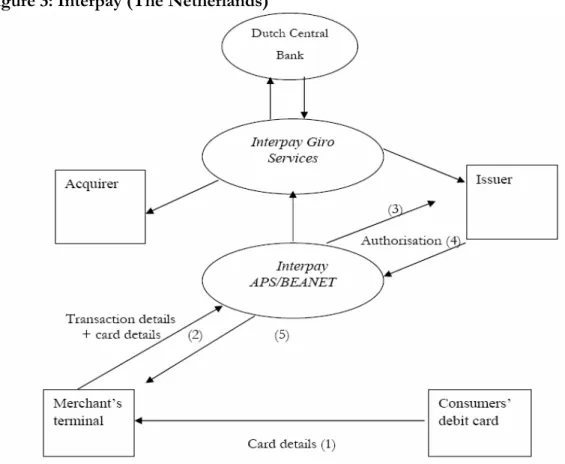
The issuer is a bank or an association that issues payment cards to its customers (consumers or companies). It is often also responsible for the authorisation of the payments. Most issuing parties offer their customers the use of ATMs (Automated Teller Machines), that may be part of their own ATM network, or the network of other parties.
4. Acquirer
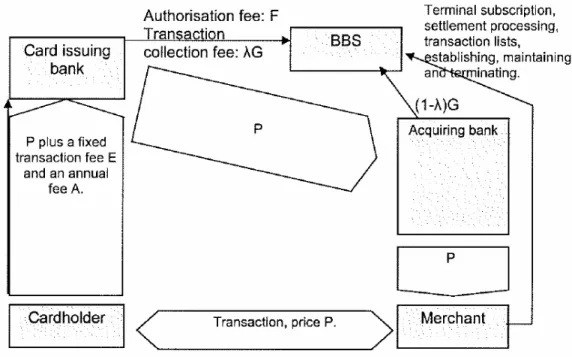
In case of a debit or a credit card payment, the acquirer contracts merchants who wish to provide their clients with the possibility to pay with a card. The acquirer is responsible for the guaranteed payment to the merchant. Besides signing up merchants to a specific payment card system the acquirer can also provide other services e.g. data-reporting services. In exchange for these services the merchant has to pay a merchant fee to the acquirer. In the case of an interchange fee the acquirer pays a per-transaction fee to the issuer.16
5. Processor
The processor is responsible for the data-transport and switching of the payment transactions between banks.
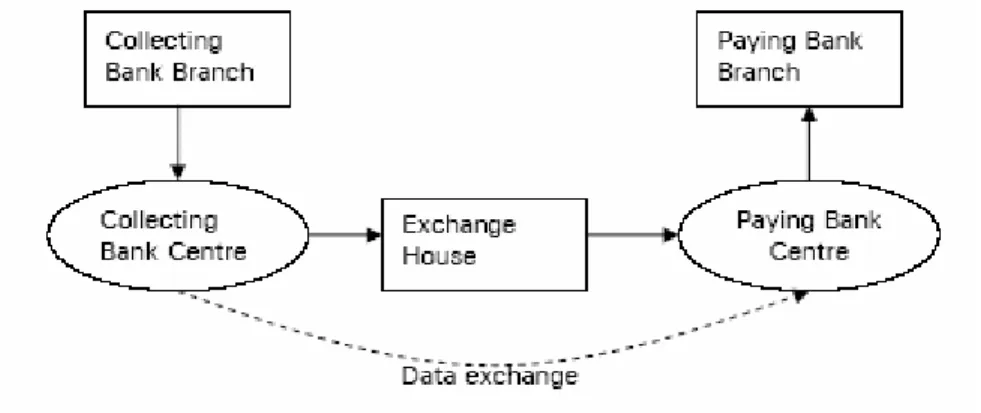
6. Clearing House
The Clearing House calculates the net amounts owed between banks over a certain period of time (e.g. daily) and sends this data to the Settlement Institution and the separate banks.
7. Settlement Institution
The Settlement Institution, which is often the Central Bank, is responsible for the payment of the net amounts calculated by the Clearing House and settles the claims between financial institutions.
8. Network Service providers
Network service providers are responsible for the physical network through which payment transactions are processed. These may be wired networks (telephone-lines, cable) or wireless networks (mobile phone networks).
In most national payment systems different roles are combined in one entity, or provided by the state. The most common combinations of these roles are described below.
4.2 REGULATORY FRAMEWORK
Financial Supervision
In order to gain access to the payments market parties must meet technical, financial and operational requirements. First of all, national financial supervisory authorities - mostly central banks - have a very clear and direct influence on access to payment systems, because they issue banking licences. According to the EU Directives concerning Banking Coordination, the status of a bank or credit institution in the Member States is regulated by law. National laws on the legal status and financial
16The acquirer may also be the owner of an ATM network that allows other banks’ customers
to use its ATM-network for cash withdrawals. In that case the issuing party pays an interchange fee to the acquirer for this ‘guest-use’
supervision of credit institutions aim to protect the savings of the public and safeguard the smooth functioning of the credit system by laying down rules for the establishment and operation of credit institutions as well as their supervision.
Oversight
In addition to prudential supervision, oversight over payment systems is often seen as essential for the stability of the financial system. Moreover, payment instruments and systems must be secure enough to maintain public confidence in the currency.
In most Member States the central bank has the responsibility of oversight for payment instruments and payment and securities settlement systems. This is due to the fact that this oversight is part of the statutory task assigned to the European System of Central Banks (ESCB).17 On an international level, central banks participate in the Committee
on Payment and Settlement Systems (CPSS). A forum for G 10 central banks to discuss issues relating to payment, settlement, clearing and securities system, the CPSS also sets standards for designing and overseeing payment systems (notably the Core Principles for Systemically Important Payment Systems18) and securities settlement
systems (especially the CPSS/IOSCO Recommendations for Securities Settlement Systems). In addition, the CPSS provides a means for central banks to coordinate oversight.
Although few people would argue against the necessity of at least some degree of supervision, it is widely acknowledged that in the process of issuing banking licences and the oversight on payment systems, no competitive aspects are considered. Despite the fact the Standard IX of these oversight standards requires that "the system should have objective and publicly disclosed criteria for participation, which permit fair and open access", financial supervisors have an intrinsic incentive to focus their efforts on stability rather than on access to payment systems.
Payment schemes
Payment schemes tend to play an important role in access to payment systems. Although they are necessary for a well-functioning and secure payment system, they may create entry barriers. This is because scheme ownership is often in the hands of those parties that have an incentive to prevent new parties from entering the payment systems market. In many Member States these access requirements are self-regulated. However, some NCAs state that regulatory institutions can be closely related to scheme members - in some cases these institutions are mentioned to be a member of scheme-setting bodies; in other Member States, they give approval of terms and conditions of the payment system and membership is compulsory. Some other NCAs
17The ESCB consists of the European Central Bank and the central banks of all EU Member
States. Article 105 (2) of the Treaty defines as a basic task of the ESCB the promotion of the smooth operation of payment systems. This provision is reiterated in Article 3.1 of the Statue of the ESCB.
18In this international context, the Bank of International Settlement (BIS) developed "Core
Principles for Systemically Important Payment Systems (Core Principles)", which have been adopted by the governing Council of the ECB and have been transformed in the "Oversight standards for Euro Retail Payment Systems" of the European Central Bank.
mention that information on rules of payment systems and names of participants (direct and indirect), including any changes, have to be handed over to supervisory institutions.19
In most countries there is no general and complete legal and regulatory framework relating to payment systems, payment service providers or payment instruments. The only exception seems to be Slovakia.20
The responses of NCAs show that scheme-regulating bodies can have as members:
– non-owning members of the payment system; – owning members of the payment system; – a board of owners;
– an association of members;
– members/owners and central bank or other overseer; and
– central bank, especially if the central bank is the operator of the system.
Most payment schemes are characterised by a high degree of self-regulation. The majority of national schemes require that issuers and acquirers must have a banking licence. Because of the home-country control principle in banking supervision, this barrier to entry seems to be quite low for new intra-EU entry of foreign banks, at least when entering the market directly. In the case of entry through a merger or acquisition this issue tends to be more complicated, since central banks, under certain
circumstances, may forbid a cross-border merger or acquisition from taking place. It is clear, however, that for non-bank parties any scheme rule that permits only banks to participate as issuers or acquirers forms an insurmountable barrier, particularly as for some (mainly non-deposit based) payment products it can be questioned if this rule is essential for stability purposes.
If the overseer is a member of the regulating body, the ability to self-regulate is aided. The overseer can easily be consulted at an early stage of the decision-making process so that the scope for conflicts is reduced. In effect, the co-operation of the regulator and overseer at an early stage encourages responsibility in self-regulation.
4.3 ACCESS TO PAYMENT INFRASTRUCTURES
Introduction
Parties must also have access to the processing and clearing circuit in order to effect payment transactions if they want to offer their services through a national payment system. Access to clearing facilities therefore plays a crucial role in the effectiveness of market entry strategies outside of a merger or acquisition. Some of those systems are directly linked to the underlying form of payments, for instance credit and debit card
19For more details see Annex 6.
20The rules for the only RTGS payment system in Slovakia are laid down in an Act of the
payment system. The National Bank of Slovakia issues the rules for the access to the payment system and both coordinates and controls access of the participants.
schemes which not only offer licences and support, but also processing and clearing services for retail payments.
In practice there are two different types of clearing systems that can be distinguished: payment systems with bilateral clearing, and payment systems with central clearing facilities.
Bilateral clearing
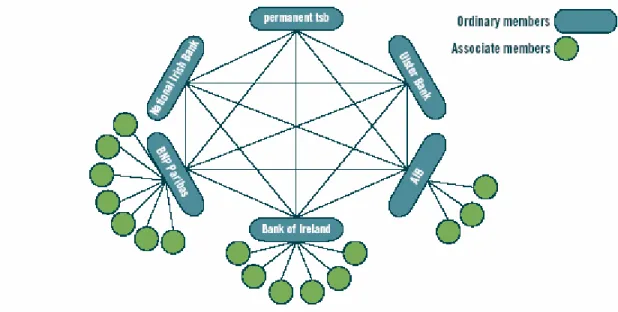
There are only a few national payment systems with payments being completed on a bilateral basis. In a bilateral system the interbank clearing of retail payments is effected by direct contact between the payer's and the payee's banks without any further involvement of third party clearing facilities. Examples for this kind of payment systems may be found in Ireland, Germany and United Kingdom21. The common
characteristic of those systems is a limited number of participants (however not necessarily limited in a regulatory sense) that could make bilateral retail payment clearing feasible from an economic point of view.
Central clearing facilities under private ownership
Central clearing facilities are often under private ownership, but in some payment systems they are operated by the central bank. Irrespective of their ownership, central clearing facilities function as a central hub with regard to retail payments and/or are intermediaries between the parties involved. In several cases these central clearing facilities also have the role of (central) payment processor.
The use of central clearing facilities operated by private companies seems to be a common standard for the clearing of retail payments in nearly all EEA countries. In some other Member States - such as Denmark, France, Ireland, the Netherlands, Norway, Poland and the United Kingdom - the clearing may be exclusively based upon these privately-operated clearing facilities, i.e. there are no additional or alternative clearing facilities for retail payments operated by the respective Central Banks.22
Clearing of payments via a privately operated central hub can either be operated for all (or at least most) payment instruments and clearing facilities or for one or two specific payment instruments only. For example, in Norway the debit card clearing system (BankAxept23) is a specific debit card system.24
Even if Central Banks are often not directly involved in the day-to-day clearing operations of privately-operated clearing facilities, they act as settlement agents as all transactions normally have to be settled in Central Bank money at the end of the
21See Annex 1.
22See Annex 2.
23See Annex 2 for a description of the system.
24Similar debit card systems also exist in Belgium (Banksys), Denmark (Dankort), Latvia
clearing process. Central Banks may also be one of the system's direct participants and sometimes even among the system's shareholders.25
Central clearing facilities under Central Bank ownership
In those cases in which the Central Banks are directly involved in the clearing system, they do not only operate those systems but are also their sole owners.26 Central clearing
facilities operated by the Central Bank are much less specialized with regard to the forms of payments that are cleared and settled by them than the privately-owned and operated payment systems. Most Central Bank clearing facilities offer their services for all or at least a multitude of retail payment instruments.
4.4 COMPETITION ISSUES IN NATIONAL PAYMENT SYSTEMS
According to the responses from NCAs, competition concerns arise particularly with respect to access barriers and a lack of price competition between incumbent
participants of payment systems.
Some NCAs also identified vertical anti-competitive agreements between banks and retailers as a serious threat to competition. More specifically, three issues arose:
• Scheme governance;
• Dominant positions; and
• Bundling of roles.
Scheme Governance
In most countries access conditions are set by the incumbent members/owners. In two countries the incumbent members/owners are indirectly represented on the body regulating access conditions. In one country (Slovenia) the access conditions set by the incumbent members/owners have to be authorised by the central bank. In two
countries the access conditions are set by the central bank, partly due to the fact that the central bank is the operator of the system.
In most payment systems the approval of prospective members' application is given by the existing members.27 In those two payment systems in which access conditions are
set by the central bank, approval of applications for access is also given by the central bank.
25The latter is the case for example in Denmark (PBS), France (SIT), Ireland (IPCC), Poland
(ELIXIR, EuroELIXIR) and United Kingdom (C&CCC).
26One exception of this rule is the Malta Clearing House (MCH) which is jointly owned by the
Maltese Central Bank and a couple of credit and financial institutions.
27A payment system can be based on multilateral agreements or a network of bilateral
agreements. In systems based on multilateral agreements, membership approval is mostly given by a central board or institution. If a bilateral system is operated, prospective members need to engage with each existing member in order to agree the details of information exchange protocols. Therefore the membership applications are assessed by the existing members. This is for example the case in the Irish clearing system.
There are a number of issues that relate to scheme governance, including objectivity of scheme rules and management, direct and indirect membership and access prices. The impact on access of each of these categories is detailed below. For further details of specific responses of individual countries, please refer to Annex 7.
Objectivity of scheme rules and management
Although some barriers to access are natural and unavoidable - and may even lead to increased reliability and efficiency - others are not (strictly) necessary for the efficient running of payment systems and need to be carefully examined to determine their effect upon competition. In many cases these rules are set by incumbent members who do not have any incentive to keep entry barriers as low as possible. Unsurprisingly, fees for using the payment systems appear to be relatively high and discriminatory.
Furthermore, prospective members do not have an opportunity to appeal against decisions, at least not with an independent arbitration body. Some NCAs stated that despite this, access has never been denied as long as the relevant access criteria were fulfilled. This may however be influenced by the perception of potential new members that their chances of being accepted are low.
Direct and indirect membership
In many Member States, there is a two-tier system of membership in payment systems – direct and indirect. However, the precise arrangements in each member state vary widely. In Belgium, for example, direct member banks are bound by contracts that protect the interests of indirect member banks. The Belgian NCA compares this two-tier system with the ‘Third Party Access’ prevailing in network industries like electricity, gas and telecommunications: Large banks have to supply a kind of ‘wholesale access service’ for the sake of smaller banks. There are similar systems in other countries, such as in Germany. In all these cases full membership is not regarded as necessary to achieve effective competition – as long as the access rules and approvals for non-members are set in a non-discriminatory way.
Access prices
Apart from regulatory obstacles to entry of a payment system, the costs - i.e. fees - for using it may prevent (or at least hinder) access of new participants.
The Danish CA is currently investigating a complaint from a smaller bank claiming that
infrastructure prices are unreasonably high and hence favour larger banks. However,
the Polish CA felt that costs of participation in its payment system did not present an
obstacle for its participants.
Access in the eyes of NCAs
Many NCAs agreed that full membership of a clearing system is important for competition. Difficulties in access to clearing services on an equal footing can create barriers to entry into other markets, such as full-service retail banking. This is because clearing access is required to provide money transmission services which in some
markets, such as Ireland, act as a key gateway product, used to cross-sell other financial products and services to consumers.28
Dominant market positions
As described in the first chapter, concentrations in the different national banking markets are moderate to high. These concentration ratios already form a risk to competition. In payment systems it can be argued that the risk of collusion is even higher, since cooperation between competitors is needed for the system to work. In addition to the lack of competition between incumbent banks and new entrants, there may also be a similar lack of competition between those credit institutions and other players within the payment system. In some cases, central clearing facilities or processors (mostly owned by banks) have a dominant market position, since it is impossible to offer payments services without their cooperation. The existence of only one network service provider or a single payment processor (e.g. in Latvia) may lead to higher than competitive prices for network services. The same is true when banks, in their role as issuers or acquirers, or service providers (NSPs, Processors) have implemented identical fees for the different services and thus eliminated price competition.
In many cases different roles that are crucial for access to payment schemes (such as clearing and processing, branding and processing) are combined by a single body. In some cases there is even only one acquirer in the market that sets the prices for merchants.
Below, we consider the implications for competition of access to ATMs, service provider fees and interchange & clearing fees. Further details of country-specific investigations are given in Annex 7.
Access to Third-Party Automatic Teller Machines
For customers, access to an Automatic Teller Machine (ATM) network – wherever and whenever they prefer cash payment – is indispensable. Thus for banks, a widespread and dense ATM network is a competitive advantage, whereas smaller banks, without such a presence, heavily depend on access to other banks´ ATMs. Due to this, competition concerns may arise firstly from restricted access to competitors´ ATMs and secondly from excessively high customer fees for using a third party’s
infrastructure.
Service provider fees
There are several investigations underway in a number of countries with regards to the fees that processors charge for retail payments.29 If these charges are found to be
excessively high, this can be evidence of collusion on the part of the banks or can lead to a lessening of competition amongst those paying the fees and potentially higher prices for consumers.
28For further details, please see Annex 7.