solving skills, and academic performance from IT
students’ perspective
University of Oulu
Faculty of Information Technology and Electrical Engineering
Master’s Thesis Xinru Chen March 2019
Abstract
The advancement in information technology has contributed to growth in different industries. One such industry that has gained prominence in recent years is the gaming industry. The game industry today has become a major platform of entertainment, amassing a large community of players across the globe. As most people consider video game play only as a form of entertainment, the existential educational benefits are missed. While it is true that violent games could negatively affect the psychological health of its players, playing games right can contribute positively to the improvement of skills and academics. The objective of this study is to investigate the relationship between video game play, problem-solving, and academic performance on Information Technology (IT) students and to understand the kinds of video games that affect their problem-solving skills in their studies. A quantitative research method was used, collecting quantitative data from students of the Faculty of Information Technology and Electrical Engineering (ITEE) of the University of Oulu through an online survey. The results of the study indicate that strategy and puzzle games significantly improve the problem-solving skills of students through analytical, logical, and creative thinking. The results of this study can be used in the future to investigate other phenomena such as how video games differently affect students with IT background from other students and how video games could be used as an effective educational tool for IT students.
Keywords
Video game play, problem-solving, academic performance, quantitative research, educational benefits, academia, IT students
Supervisor
Foreword
First of all, I would like to give my deepest appreciation to my parents, without them I would not have a chance to study in Finland. I am sincerely grateful for the ceaseless support of my entire life, especially encourage me and help me when I feel frustrated to conduct my study in Finland.
Furthermore, I would also like to thank my thesis supervisor, Prof. Marianne Kinnula form the Department of Information Processing Sciences. Thank you for having a thesis meeting with me once two weeks, which provides me lots of precious inspiration. Without your direction, suggest corrections and support, this thesis would not be written smoothly. Then, I would like to express my appreciation to my colleagues. Thanks for supporting me, without their support and encouragement, I would not be able to present the work here. Particularly, I would like to give my appreciation to Miss Yang Liu, Miss Eunice Agyei, Mr. Alorwu Andy Kojo, Mr. Hassan Mehmood, Mr. Ahmad Ghaznawii, Mr. Dat Le Quoc, Mr. Mutai Kenneth, Mr. Kevin Kiprotich, Mr. Yang Chaohui, Mr. Tang Quanwen, and Mr. Chen Shucheng.
Last but not least, I will never forget the people whom I cannot name but made contributions in various ways to complete my studies I would like to give my appreciation to all of them.
Sincerely Xinru Chen Oulu, March 2019
Abbreviations
AI Artificial Intelligence
AVG Action Video Game
GBL Game-Based Learning
GPA Grade Point Average
IT Information Technology
ITEE Information Technology and Electrical Engineering LA[W]N Local and Wide Area Network
M&E Media & Entertainment
MMORPG Massive Multiplayer Online (Role Playing) Game PISA Programme for International Student Assessment PUBG PlayerUnknown’s Battlegrounds
SAT Scholastic Aptitude Test
Contents
Abstract ... 2 Foreword ... 3 Abbreviations ... 4 Contents ... 5 1. Introduction ... 6 2. Related work ... 8 2.1 Video games ... 82.1.1 Video games genre ... 9
2.1.2 Three main types of video games ... 10
2.1.3 Video games industry ... 10
2.1.4 Video games in education... 11
2.2 Problem-solving ... 14
2.3 Problem-solving skills Vs. Video games ... 16
2.4 Problem-solving skills Vs. Academic performance... 17
3. Research Design ... 19
3.1 Quantitative research ... 19
3.2 Quantitative research process ... 20
3.3 Survey research ... 21 3.4 Research question ... 21 3.5 Sample ... 22 4. Survey implementation ... 23 4.1 Questionnaire ... 23 4.2 Measures ... 24 4.3 Data collection ... 25 4.4 Data analysis ... 25 5. Results ... 26 5.1 Demographic questions ... 26 5.2 Gaming in general ... 27 5.3 Problem-solving skills ... 29
5.4 Correlation between video games and academic performance ... 31
5.5 Educational benefits ... 34
6. Discussion ... 37
6.1 Findings of research questions ... 37
6.2 Limitations and future improvements ... 38
7. Conclusion ... 40
References ... 41
1.
Introduction
The video game industry has grown rapidly in recent years, riding on the shoulders of the growth and development within the information technology industry. More than half of the American population plays video games with nearly a billion people playing video games around the world. This has been due in part to the growth and use of mobile devices as well as online social networking websites (Gaudiosi, 2011). This has spurred a growing academic interest in video games, due to the continual growth of the game industry itself as well as its application to the academic sphere.
In effect, over the past few decades, psychologists have concentrated primarily on the relationship between video games (especially violent video games) and its shortcomings such as addiction, violence comments, and aggression (Anderson, Ihori, Bushman, Rothsetin, Shibuya & Swing, 2010). However, a lot of research has been done to investigate the positive aspects of playing video games, identifying and proving that there exist lots of benefits in playing video games.
Playing video games contributes to making cognitive training more efficient (i.e., playing video games could encourage participants to improve certain cognitive skills), especially executive control and attention focus among young people and the aged (Green & Bavelier 2006; Basak et al., 2008). Furthermore, a compelling evidence shows that playing action video games frequently can contribute to the cultivation of cognitive abilities and neural plasticity, which is one’s ability to effectively learn in general (Green, Pouget and Bavelier, 2010). Moreover, a research suggested that video games promoted reasoning and problem-solving abilities through the use of different characters and levels, which encourage gamers to stop and think about the right strategy to achieve the goal, instead of simple games that only involve moving around to accumulate as many points as possible to qualify you to the next level (Gee, 2005).
Problem-solving is an important skill in life as it has a strong positive effect not only on one's academic performance but also on one's ability to solve problems in the workplace. In addition, problem-solving skills need repetitive practice since they develop rather slowly. (Kinney, 1952)
Studying programming presents difficulty to lots of novices at higher education level as programming consists of various misunderstood concept, such as parameter passing, arrays, and recursion (Ambrosio et al., 2011; Malia & Coldwell-Neilson, 2017). Moreover, as for Information Technology (IT) students, learning to program needs a hierarchy of skills, such as abstraction, generalization, transformation, logical thinking, critical thinking, problem solving etc., (Jenkins, 2002). Therefore, it is quite necessary for research to investigate how to develop IT students’ problem-solving skills.
Video games as a form of cognitive training tool for developing problem-solving skills are yet to be well explored, additionally, they mentioned that research related to the association between cognitive skills and video gameplay has been solely concurrent and that there was no clear conclusion of the direct impacts of video game play on problem-solving skills (Boot et al., 2011). In direct support of this view, a research suggested that it is both necessary and significant to examine the direct and indirect associations among
video games, problem-solving skills, and academic performance (Asachi & Willoughby, 2013).
Video games have been a fascination for me. I have been an ardent gamer with close niche friends, 90% of which are also gamers. Having played a number of online multiplayer video games, I have realized an enhancement in the awareness of my environs, much more focused concentration, and rapid decision making as well as improved team communication. Video games have received a lot of negative criticism in recent years, mostly from people who do not play video games. While some concerns are legitimate and worth working to resolve, most of these negative concerns may be exaggerated, burying with them the advantages that come with playing video games. According to the U.S. Department of Commerce (2017), video games account for 51% of the global media and entertainment market, making it a core component of people’s entertainment.
While tremendous work has been done with considering the direct and indirect values of playing video games, the relationship between problem-solving and video games is still limited, especially in the area of academic performance. In addition, research about the impact of playing video games on problem-solving skill mainly emphasis on adolescents or general university students, less research targeted to IT background students. IT background graduates should be equipped with problem-solving skills to find solutions in algorithm. Problem-solving skills include creative thinking, which is highlighted as an important characteristic for both IT novices and qualified IT experts in benchmarks announced by the OECD (Houghton, 2004). Problem solving for IT background students is not only a skill to solve the problems (Dewar, 2006) but also an ability to express the algorithms, methods with a programming language to operate automaton (Dale & Weems, 2002).
This research will contribute to establishing an understanding of the effects of video games on IT students. The intention is to examine in what ways video game play can promote problem-solving skills and how it is related to academic performance. Furthermore, this study will help readers have a better understanding of the educational value of video games on IT students.
The aim of this study is to find out whether video game play promotes IT background students’ problem-solving skills within the academic sphere. The following research questions were considered to conduct the investigation:
1. In what ways, if any, can video game play affect problem-solving skills? 1.1. What kinds of video games can affect problem-solving skills in academia? 2. What relationship(s), if any, exist between video game play and academic
performance?
This thesis is structured in the following way: chapter 2 describes the previous research on this subject. On chapter 3, the research methods and research questions used to conduct this study are discussed. Chapter 4 details the conduction of the research. Chapter 5 focuses on the findings of the research. On chapter 6, discussion on the research questions, limitations of the research and future improvements are described. Chapter 7 presents the conclusion of this research.
2.
Related work
This chapter explains the related work of this study based on previous studies and scientific literature. What are problem-solving skills? Different genres of video games and the effect of video games on the problem-solving skills and academic performance are described in the following chapters.
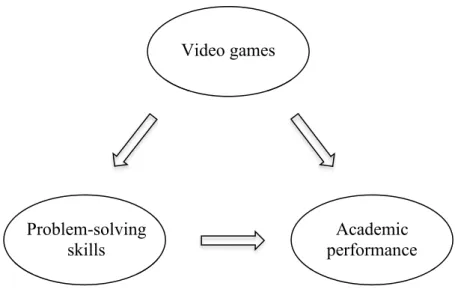
Figure 1 shows the relational graph between problem-solving, academic performance, and video games. In order to achieve the objective of this study, it is necessary to figure out the role video games play in academia as well as in problem-solving skill and understand the relationship between problem-solving and academic performance. The objective is to have an idea of the relationship that exists between video games, problem-solving skills, and academic performance, and what kinds of correlation exists among them, be it a positive influence or a negative one.
2.1 Video games
Video game can be defined as a form of interactive multimedia used mainly for entertainment that is not only played on a personal computer but also played on arcade machines or consoles. A video game console refers to the electronic machine that can be used to display the videos and simultaneously play the games, such as television, and computer monitor. The main input device of video games is a controller, which can be a mouse, gamepad, a keyboard, joystick, or other kinds of devices designed for playing the game, and it is able to receive the input. In addition, there are special purpose devices for playing video games, such as steering wheels for driving games, some instruments for musical games, and guns for shooting games. (Kirriemuir, 2002.)
Video games
Problem-solving skills
Academic performance
Figure 1. The relationship among video games, problem-solving skills, and academic performance
2.1.1 Video games genre
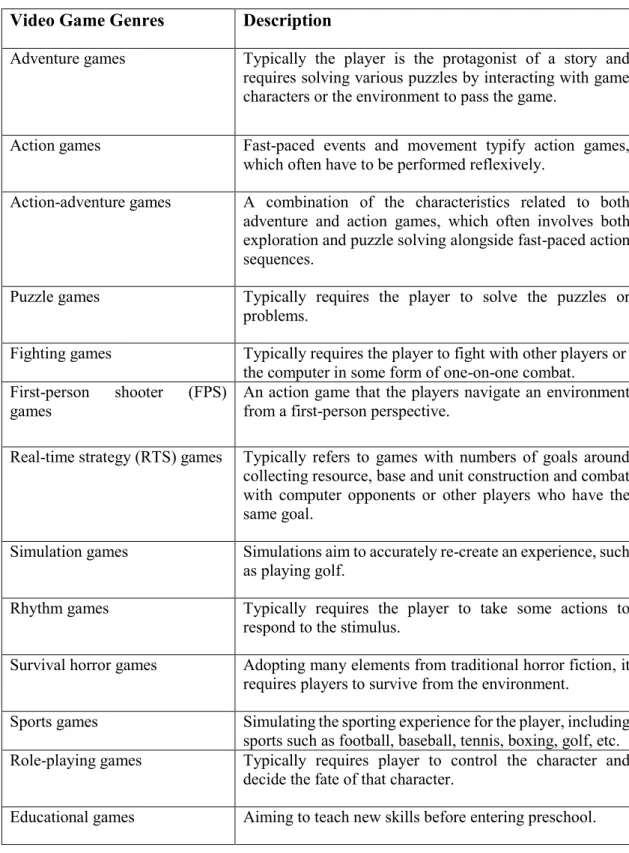
Games are often classified into genres. A game genre refers to a particular category of games related by similar gameplay characteristics or a common style. Genres are not defined by the actual content of the game and the way of playing it. Game genres can have subgenres as well, and many games can fit into multiple genres (Vince, et al., n.d.). Video game genres are various; the following is the main video game genres with a short description of each.
Table 1. Video Game Genres (Philip, n.d.)
Video Game Genres Description
Adventure games Typically the player is the protagonist of a story and
requires solving various puzzles by interacting with game characters or the environment to pass the game.
Action games Fast-paced events and movement typify action games,
which often have to be performed reflexively.
Action-adventure games A combination of the characteristics related to both
adventure and action games, which often involves both exploration and puzzle solving alongside fast-paced action sequences.
Puzzle games Typically requires the player to solve the puzzles or
problems.
Fighting games Typically requires the player to fight with other players or
the computer in some form of one-on-one combat.
First-person shooter (FPS)
games
An action game that the players navigate an environment from a first-person perspective.
Real-time strategy (RTS) games Typically refers to games with numbers of goals around collecting resource, base and unit construction and combat with computer opponents or other players who have the same goal.
Simulation games Simulations aim to accurately re-create an experience, such
as playing golf.
Rhythm games Typically requires the player to take some actions to
respond to the stimulus.
Survival horror games Adopting many elements from traditional horror fiction, it
requires players to survive from the environment.
Sports games Simulating the sporting experience for the player, including
sports such as football, baseball, tennis, boxing, golf, etc.
Role-playing games Typically requires player to control the character and
decide the fate of that character.
2.1.2 Three main types of video games
There are various types of video games, here are the three main types: Local and Wide Area Network games (LA[W]N), Stand-alone games, and Massive Multiplayer Online (Role Playing) Games (MMO(RP)G) (Yee, 2006). Wide Area Network games refer to games played with various connected computers and linked to the Internet, which means playing games together, mostly in groups or teams, and tactical combat is the main playing style of LAN games (Griffiths, Davies, & Chappell, 2003; Yee, 2006). This form of video game has become popular among ‘LAN parties’ (e.g., Counterstrike). Secondly, stand-alone games, also defined as single-player games, are those kinds of games often played by only one player, although some stand-alone games can be appropriated for multiplayer scenarios.
Multiplayer games are most often designed for players to compete against the computer, such as Killzone-PS (Griffiths, Davies, & Chappel, 2003). An MMORPG-game refers to large-scale role-playing game for a huge number of players over a computer network (Griffiths et al., 2003), such as World of Warcraft, which has more than 10 million players (Entertainment, 2005). MMORPG-games, unlike other games that allow players play online with other players, there is no equivalent (offline) stand-alone version of MMORPGs, in addition, it occurs in a well-developed multiplayer universe with a detailed and advanced world (Griffiths et al., 2003; Chan, 2007).
Although the main three types of games all belong to video games, they are different from each other in some way. The most significant difference is the degree of social interaction, which refers to the interaction between the various games characters controlled by other players, particularly in MMORPG-games. MMORPG-games are designed with the purpose of encouraging more interaction among players, even the interaction outside the video game world (Ducheneaut & Moore, 2004). MMORPG-gamers usually interact with several different players in different ways at the same time, and those regular players prefer to build new relationships during the game (Barnes, 2002; Yee, 2006). The interaction in LA[W]N-games are mostly represented in tasks and combat strategy (Yee, 2006). However, stand-alone games are designed to compete against a computer, which does not relate to social interaction.
2.1.3 Video games industry
Although there are annual variations in gameplay statistics and revenue from region to region, the general trend of global video game revenues has shown a steady increase over the years. Moreover, profits from the video game industry in the United States has reached up to the levels of the film and music industries, which were regarded as a kind of pop culture milestone (Coopers, 2017). In 2018, the profit produced by the video game industry reached up to $116 billion, beating the TV and TV streaming services, which stood at $105 billion while the music industry only managed $17 billion and the movie industry $41 billion.
In addition, the gaming industry still shows promise of an upward trend in revenue, it is worth noting that statistically, video games have become the world’s favorite form of entertainment and the most profitable one as well (Angelo, 2018). In effect, over the past few decades, psychologists have concentrated primarily on the relationship between video games (especially violent video games) and its shortcomings such as addiction, violence comments, and aggression (Anderson et al., 2010). About 97% of American
adolescents between the ages of 12 and 17 play video games. Out of that, 31% claim they play video games every day, 21% play video games nearly 3-5 days in a week. This signifies to a large extent the role-played by video games in the lives of adolescents (Lenhart et al., 2008; Gentile, 2009).
The growth of the video-game industry attracted more and more gamers and video games has become a part of our daily life, which has changed today's modern society. Video games not only influence today's history, but also shape the culture into what it is today, and it has an important effect on education as well. Video games consist of various elements, such as meaningful goals, scoring system, multiple goal structures, different difficulty levels, and award system; all those elements are a good education system should have. It is necessary to examine how much video games influence education and in what way.
2.1.4 Video games in education
A lot of research has been done to investigate the positive aspects of playing video games, identifying and proving that there exist lots of benefits in playing video games. For instance, some researchers conducted an experiment to examine the effects of video games on the prosocial behavior of gamers (Greitmeyer & Osswald, 2010). Moreover, an increasing number of researchers have seen the possibility of applying “Gamification” in many unrelated industries, with the education industry being on the forefront. Some of them argue that, although the initial purpose and design of video games was not for the educational medium, it does produce a lot of good learning principles (Gee, 2008; Squire, 2007). For example, during the 1983 Academic Conference at Harvard University, object-oriented programming pioneer Alan Kay expressed his opinion about the future of the video game industry. He talked about gaming and improving education, gaming and disability treatment, gaming and the development of artificial intelligence (AI), among others. He was keen to bring his expertise about how new technologies could improve human understanding and how to regard video games as an important role in that improvement. It was not a common phenomenon to have that kind of engagement and interaction between the video game industry and the academic research community at the time. (Squire, 2003.)
The educational value of video games
Nowadays, there is more and more research indicating that video games play a very constructive role in education at all demographics, such as fostering student cognitive skills, encourage employee productivity, and so on. Video games have become an essential part of the human social and cultural environment, especially for children and adolescents (Oblinger, 2004). Video games are considered as an effective tool that shapes children’s learning techniques due to student interest being aroused through entertainment (Kim & Baek, 2009). The challenging world of video games can motivate students’ expectation of learning and cognitive abilities, which can create an informal learning environment for students to study from outside of school. Besides that, some researchers believe those video games that consist of subjects and educational objectives tend to make learning more enjoyable, easier, more interesting and more effective (Prensky, 2001; Kim & Baek, 2009; Mumtaz, 2001). The best part of video games is that even infants can make some reaction to the glamour and shine of the video game. Video games are wildly used in educating people. As such, video games are used to improve the sensory ability
of infants, who are retarded in the growing sense. It also plays an important role in primary, secondary, high schools, and universities, from which video games act as an essential tool that contributes to improving students' efficiency of learning things in a quick and better way. In some universities, video games are adopted to train students in technical areas such as Electrical, Aeronautical, and Computer Engineering. To be specific, games can fetch students' interest, when students play video games; they use the previously learned knowledge to learn the game and try to perform better than the last time they played. Meanwhile, they are able to learn the technical knowledge of the subjects in the natural flow of gaming, which can be applied in society as well. (Vicuna, 2017; Väisänen, 2018.) There are numbers of reasons that video games constitute potentially learning environment for the players, which are as followed
1. They are able to support multi-sensory, experiential, active, and problem-based learning through watching the game interface, communicating with other players and so on.
2. They activate the player's prior knowledge due to players requiring previously learned knowledge to get the promotion.
3. They can provide immediate feedback to players, which enables players to examine their hypotheses and learn by doing.
4. They provide opportunities for players to have self-assessment through reaching different levels and score mechanism.
5. They increasingly build a more social environment for players through designing various characteristics.
All types of games could be used in an educational environment no matter it has positive effects or negative effects on gamers (Oblinger, 2004; Papastergious, 2009; Rapeepisarn, 2008).
However, video game genres are various, recent research found that not all kinds of video games contribute to improving skills that transfer from the actual operation of playing video game to new tasks and stimuli. Games that belong to Action Video Game (AVG) genre have been regarded as the most beneficial for improving human's perceptual and cognitive skills. On account of playing AVGs force players to enhance selective attention or "the processes that requires participant to select and concentrate on specific input for future processing while stifling irrelevant or distracting information at the same time” (Stevens & Bavelier, 2012, p. 30), which leads to enhance player’s performance on different kinds of tasks. The most important thing of AVGs is the high frequency of game events, a brisk demand of making predictions about future game events, and focus on peripheral vision features that build high cognitive, perceptual, and motor loads (Green, Li, & Bavelier, 2010). One research investigated the student’s cognitive skills between AVGers and non-AVGers on a mid-sized university in the Commonwealth of Kentucky through conducting a series of assessment. The participants included 20 students, which were 15 females and 5 males. And they were asked to complete a series of test in a fixed time, which covers mental rotation test, mathematics performance test, working memory operation span computer-based assessment, math anxiety and confidence in learning mathematics surveys, and cognitive load survey. The result presents that experienced AVGers have better cognitive skills than non-AVGers on average. Even though the number of the sample was relatively small, the finding was in line with previous research indicating that, on average, participants who experienced AVGs have better working memory resources, geometry, and spatial skills than those who do not play action video games. (Novak & Tassell, 2015.)
Game-based learning
Recently, the value of game-based learning (GBL) in education is undeniable and the advantages of using video games in teaching and learning are unquestionable. More and more educational institutions are starting to use video games as ideal companions to classroom instruction. Some researchers broadly define GBL as a learning and teaching process that involves using video games to overcome a specific task, to visualize the concept, and to teach subjects (Oblinger, 2004). They thought it is difficult to define GBL precisely even though the notion is relatively established (Perrotta, Featherstone, Aston, & Houghton, 2013).
According to the work of Perrotta et al. (2013), they concluded that GBL is more about the complex social dynamics and the surroundings, instead of considering the video games as a specific entity. In terms of the social dynamics of GBL, there is a common theme that the youth cultivate their interests through playing video games and join ‘affinity groups' that all members have different kinds of background, as a part of their personal development projects. In affinity groups, players participate in sophisticated forms of learning derived by the shared enthusiasm about video game play. The groups consist of various forums, from which players share ‘how to cheat the game', collaboratively developed repositories of knowledge of the games universe and so on (Salen, 2008). In addition, there is a similar popular theme about video games providing players virtual worlds (an effective learning environment), because acting in virtual worlds enables players to develop social practices and experience the identities of actual professional communities. Many commentators think that the outcomes of these soft learning are more useful and worthy than the traditional forms of education that acquire ‘outdated' knowledge from school (Shaffer, 2006.)
A study that investigated the effectiveness of implemented game-based learning in daily education among students of Taylor's University (a private tertiary institution in Malaysia). The researcher constructed a three-part questionnaire to gather student's data and opinion about GBL. The result they found was positive, the respondents were very willing to implement GBL in their learning and the majority of participants agreed GBL has a positive outcome on their studies. To conclude, video games can cultivate personal critical skills such as problem-solving, systematic thinking, creativity, critical thinking and so on. The researcher highly suggested implementing GBL in daily education and it would only make progress in education instead of regression. This research proved that games are not only a tool for entertainment but also a good choice to improve studies. (Rapeepisarn et al., 2008.)
One research studied how to use video card games to develop IT students’ observational skill. The background of this research was to help ITEE students from University of Queensland (UQ) to study the nature of designing computing technology based on human-centered design. Students were divided into a group to conduct games and wrote down what they have seen on the card and then arranged the card. After collected and discussed all card families, finally, documented themes. By using this approach, they found those game interactions allow students to observe other's work and understand a thing in a different way, which helps to develop their observational skills and consider more when design computer technology. (Brereton et al., 2003.)
Video games Vs. Academic performance
Academic performance refers to a reflection of how a student performs in school. According to previous research, academic performance can be measured with different methods. Some researchers have emphasized on grade point averages (GPA) or scholastic aptitude test (SAT) scores to measure students’ academic performance (Anand, 2007; Gentile et al., 2009; Weaver et al., 2013), while other has considered individual school subject or self-evaluated ratings between bad and excellent as an effective variable to measure the academic performance (Sharif & Sargent, 2006).
Playing video game is a very common form of entertainment among adolescents, especially in industrialized countries. Although a huge number of people think that video game play has negative impacts on academic achievement, the evidence is inconclusive. Some teachers report that children who play video games more exhibit lower GPA and more problematic behavior in school than those who play fewer video games (Anderson et al., 2007). In addition, some researchers indicated the negative correlations between college students' GPA and time of playing video games, and secondary students' school grades, however, others have found that there is no relationship between playing video games and school grades (Van & Wiegman, 1997; Ferguson, 2011). Even though the empirical evidence of negative correlations between video games and academic performance is limited, the viewpoint that playing video games may negatively influence academic performance has gained widespread media attention (Weis, 2010; Sabella, 2010). Therefore, it is necessary to have a more comprehensive examination of the relationship between academic performance and video gaming.
A two-year longitudinal study examined the relationship between playing videogames and student’s initial level of academic performance (below average, average, and above average). The research included 482 youth, 227 of them was male and the rest were female; the average age of participants was 12.19 years old. According to the results, it was elucidated that negative relationship is not constant and it depends on the initial level of academic performance and may change over time. In Year 1, it was found that videogame playing negatively affected academic performance only for children who have below average or average GPAs. For those youth, playing too much video games lead to lower GPAs, while there was no significant effect on youth who had high GPAs. The results for the second year was contrary to Year 1, from which significant and negative relationship between video gaming and GPAs were found only on youth who had high GPAs. Therefore, the researcher claimed that both initial levels of academic performance and time spent on video game playing need to be taken into consideration to understand the relationship between playing video games and academic performance. Interestingly, the finding suggested that significant and negative effects of video games only affected youth with high GPAs, thus for those with below average or average GPAs, playing video games appears to have non-negative effect on their academic performance over time. (Jackson et al., 2011.)
2.2 Problem-solving
Problem solving is an important skill that human beings need in a world with countless changes, uncertainty, and surprise. Problem-solving competency is needed in all those situations where humans have no obvious solution method for the problem. Problem-solving needs the intelligent exploration of one's surroundings, it needs the creative adoption of available knowledge or the knowledge that can be obtained from the process,
and it also needs the strategies for acquiring efficient knowledge about uncertainties. Nowadays, people may meet all kinds of problems in society because of striving for lots of ambitious goals; however, people also find solutions for various problems with their extraordinary competencies. (Benő & Joachim, 2017.)
Problem solving has been researched for several decades; many of the researchers are of the opinion that problem-solving skill is a fundamental learning process that is crucial for the knowledge society (e.g. O'Neil, 1997;Friedman & Deek, 2002; Harskamp & Suhre, 2007; Hmelo-Silver, 2004). The problem can be defined as an interactive relationship between a subject and the surrounded environment, which combines the subject resolving the inner conflict by the seeking of transitions from an initial condition to the final condition. The occurrence of conflicts does not only lead to the dynamic of activity but also builds a source of motivated activity. During the process of addressing the conflict, the subject (he/she) exceeds the stated information and existing situation is looking for new solutions (Frensch & Funke, 1995.)
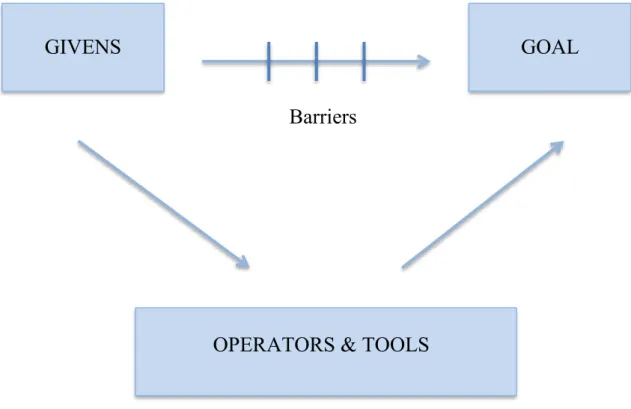
Figure 2 presents a visual version of the nature of a problem, with the given state and goal shown, and the barriers that interrupt an immediately generated solution. Thus, operations and tools are required to achieve the final goal. Problem-solving could be defined as a conclusion of the cognitive processes concentrated on the change from the given state to the result, in which the procedure of solution is not obvious (Mayer, 1992; Eysenck, 1994). The mentioned characteristic of problem-solving is accepted among experts. The given state of problem-solving characteristic refers to the individual’s initial knowledge of the problem. The operations related to the permissible activity, which aims at achieving the required result with the use of available equipment and knowledge. On the way to achieve the required result, it is necessary to overcome the obstacles or barriers (e.g. lacking related knowledge or inefficient strategies). Besides that, the obstacles not only consist of cognitive aspects but also motivational and emotional aspects. (Funke, 2010.)
Figure 2. Problem-solving situation (Frensch & Funke, 1995)
The solution of problems starts with an awareness of the existing problematic situation, which followed by understanding its essence. Before the final solution is generated, individuals may face all kinds of obstacles and meet various possible solutions from which to choose from. The human personality is a complicated system of roles and characteristics, and the interaction between them is always contradictory, which leads to human beings make a different decision on the same problem and get a different result. Problem-solving is a cognitive process, which is a personal and aimed activity, in addition, problem-solving competency is related to the human capacity to engage in this process to understand and then solve the problematic situation, engaging the individual to achieve their personal goal. (Mayer & Wittrock, 1996; John, 2017.)
One research stated that problem-solving skill is an essential skill for the 21st century, a skill that is quite important for our job, daily life as well as the study (Annetta, 2008). Problem-solving skill can be regarded as the ability to find out the reason for the problem, figure out the solution, and avoid potential problems from occurring. In addition, flexibility and effectiveness are the factors that need to be taken into consideration to evaluate a problem-solving ability, whereas flexibility reflects one's various unique responses from a problem, effectiveness will make sure that the final solution is thoroughly considered and it works on the problematic situation. (Chan & Wu, 2007.)
2.3 Problem-solving skills Vs. Video games
Over the past few decades, video game play has developed from a niche activity into a pervasive form of entertainment and become an essential part of modern life. At present, more than half of the American population play video games and with over 130 million of them being regarded as "regular" video players. According to ESA 2015, regular video game players were defined as individuals who play video games more than three hours per week. Although video games were primarily designed, and for the most part continue to serve a primary purpose of entertainment, it still has very important scientific meaning
GIVENS
GOAL
OPERATORS & TOOLS
Barriers
in that video game play may have remarkable influences on human behavior and the human brain.
A study conducted by Cho and Schunn (2003) examined seven cognitive factors that contribute to make problem resolution successful and learning more effectively through experiment. Participants were divided into two groups, and they had to work together to understand the texts while interacting with others via a text-based chat interface. The successful group proved that thinking in more depth, awareness of differences in perspectives, concerning the surroundings, constructive use of technology, and more interaction contributes to resolve a problem successfully and make learning more effective. To improve problem-solving skills, it is necessary to offer individuals rules and concepts that contribute to identify and resolve problems, after identifying and understanding the given state, concentrating on analyzing the interconnectedness of problems and providing a non-threatening practice environment for the problem. (Kapp, 2007.)
2.4 Problem-solving skills Vs. Academic performance
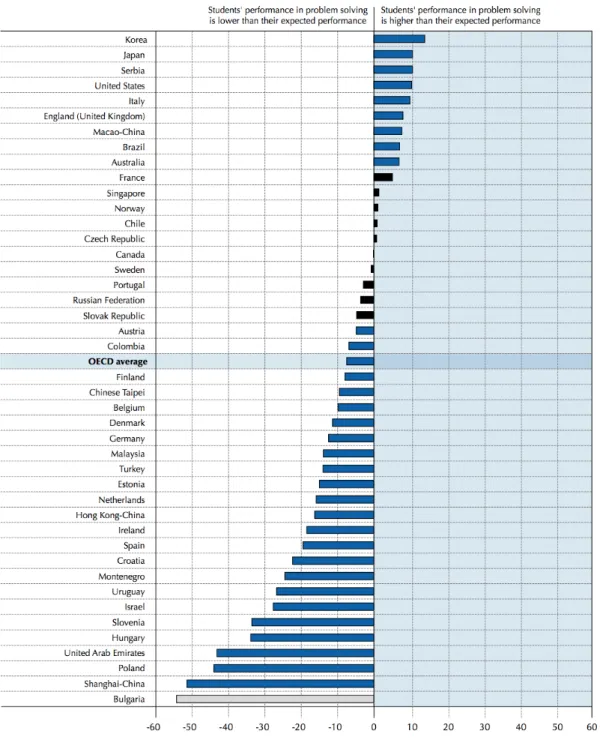
Research conducted by the OECD Programme for International Student Assessment (PISA) 2012 compared the effects of different educational systems in three main domains and on problem-solving. The results showed that even though some countries are really good at teaching mathematics, reading, and science, it is possible they are weaker in developing student’s problem-solving skills. (Benő & Joachim, 2017.)
Figure 3. Relative performance in problem solving (Benö & Joachim, 2017)
Figure 3 presents the difference between the expected performance level and the actual measured level of problem-solving. To enhance problem-solving skill requires something more than teaching. There are some countries (e. g. Poland, Shanghai-China, and United Arab Emirates) where reading, mathematics, and science performance is better than other countries in the past decade, but the performance on problem-solving is relatively low. On the contrary, countries like Korea and Japan perform well in the three main domains, but the actual measured level of problem-solving is better than their expectation. According to the variance analysis in this assessment, 32% difference cannot be explained by the performance in the main three domains, therefore, to improve problem-solving ability requires something more than teaching reading, mathematics, and science. (Benö & Joachim, 2017.)
3.
Research Design
The research design is a kind of way where a research idea is transformed into a research project that can be conducted in practice by research. Research can be defined as the term that encompasses decisions about how the research itself is conceptualized; the subsequent conduct of a specific research project, and ultimately the type of contribution the research is intended to make to the development of knowledge in a particular area. (Yilmaz, 2013.)
In this chapter, research objectives will be first established after which research questions and research process are described. Then it is followed by the research strategy.
3.1 Quantitative research
Quantitative research is the traditional scientific way to conduct research (Ruane, 2011). The principle of quantitative research is that interviewees respond closed questions that related to a variety of subjects, and then statistical methods are applied to analyze the data. The quantitative research method is able to provide a more objective analysis of a specific subject (Brus et al., 2017).
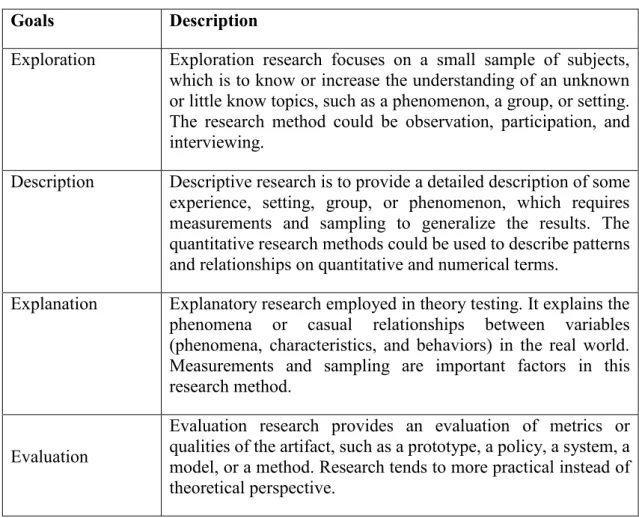
Quantitative research method is employed when the goals are exploration, description, explanation, and evaluation, which are listed in Table 2.
Table 2. Goals of Quantitative Research Method (Ruane, 2011)
Goals Description
Exploration Exploration research focuses on a small sample of subjects, which is to know or increase the understanding of an unknown or little know topics, such as a phenomenon, a group, or setting. The research method could be observation, participation, and interviewing.
Description Descriptive research is to provide a detailed description of some experience, setting, group, or phenomenon, which requires measurements and sampling to generalize the results. The quantitative research methods could be used to describe patterns and relationships on quantitative and numerical terms.
Explanation Explanatory research employed in theory testing. It explains the phenomena or casual relationships between variables (phenomena, characteristics, and behaviors) in the real world. Measurements and sampling are important factors in this research method.
Evaluation
Evaluation research provides an evaluation of metrics or qualities of the artifact, such as a prototype, a policy, a system, a model, or a method. Research tends to more practical instead of theoretical perspective.
Quantitative research methods are able to address a large variety of topics, such as behaviors, attitudes, opinions and beliefs, cognition etc. In addition, quantitative research method can be employed when the unit of analysis is individual and it also suitable for the research that requires a large target population. (Ruane, 2011.) A big advantage of this method is that results are reliable, valid and generalizable to a large group of people (“Effective Learning”, 2016).
While quantitative research method works well on investigating phenomena and behaviors within large numbers of the population, it may difficult to measure human experience or perception in natural settings. Moreover, quantitative research involves numbers, however, some of the studies are too hard to quantify in numbers, which fails to always explore how and why questions (Newman, 1998; “Effective Learning”, 2016). Sometimes, it is difficult to construct the right questions for research, under this condition; it is highly possible to get the wrong and invalid date. Another disadvantage is that people may refuse to answer the questionnaire or survey, which leads to a high rate of non-response (Ruane, 2011).
3.2 Quantitative research process
Quantitative research process can be defined as a research wheel, which elaborates research is not a linear process; it refers to a recursive cycle of steps that requires repeated over time (Rudestam & Newton, 2007).
Figure 4. The research wheel (Rudestam & Newton, 2007, p.5)
The research cycle implemented during the course of this study is presented in Figure 4. The process starts with identifying a broad area of research interest via empirical observation of some social phenomenon or a theory about a phenomenon, which aims at identifying and highlight the important variables of your own research. The significant findings from previous research are the foundation of developing current research questions and hypotheses. After that, developing research methods and instruments for
measurement. Collecting empirical data through using survey and then analyze data. Finally, evaluate and report the results (Ruane, 2011; Jonker & Pennink, 2010). The theory and research cycle includes inductive and deductive approaches. Logical deduction is used to test the hypotheses and theories. While Induction transforms to form specific observations into broad generalization (Blackstone, 2012).
As for this thesis, the start point is a preliminary research question that is defined over earlier research. Inductive logic in this study refers to the literature review, where relative data and information are collected and analyzed to create a framework. The created framework is to examine whether the facticity that a certain statement or hypotheses about a phenomenon under the study are true. Those statements and hypotheses act as a foundation for constructing the propositions, which are tested through the questionnaire to check whether playing video games contribute to improving problem-solving skills in studies. Therefore, inductive logic was applied to test the hypotheses based on empirical data collected for the purpose of this study. Inductive logic therefore serves as the tool for determining validity of the propositions generated according to the framework as shown in Figure 4.
3.3 Survey research
Surveys, experiments, and case studies are three main strategies to conduct quantitative research. (Ruane, 2011; Chen & Hirschheim, 2004) Survey research is a quantitative research method that collects data by asking a series of predetermined questions to individuals or an entire group. Meanwhile, questionnaires and surveys are the most common technique to collect quantitative data, which is regarded as an especially useful method when aiming at explaining or describing features of huge populations. In addition, survey research can also be employed when needs to rapidly obtain some details about one’s population of interest in order to plan for a more in-depth study through using time-intensive approaches (Blackstone, 2012).
In survey research, structured interviews are conducted through a face-to-face way with people in school, at work, or at home. Moreover, surveys can be done by telephone, or more commonly, online. (SSRIC, 1998)
Furthermore, time is a significant factor that determines what kinds of survey researcher should administer; cross-sectional surveys are conducted at one time, and longitudinal surveys are suitable for over time research. (Blackstone, 2012.)
As for this research, questionnaire was done with the use of software program (Webropol). The questionnaire can be delivered in a copy paper but considered time consumption, an email was sent to ITEE students to fill out the survey and then the data was automatically saved in the software.
3.4 Research question
This study mainly seeks to answer the following research questions:
RQ1. In what ways, if any, can video game play affect problem-solving skills? RQ1.1 what kinds of video games can affect problem-solving skill in academia?
Problem-solving is an essential skill for the 21st century, which is significant for our job,
daily life as well as the study (Annetta, 2010). Some research already proved that playing video games contribute to improving human's cognitive skills, such as memory, visual attention. This research question is considered to find out whether playing video games can affect problem-solving. If it does, what kinds of video games may affect IT students' problem-solving skill in academia? Some questions in the questionnaire are designed to answer this research question, and the answer will contribute to finding out the impact of playing video game on IT students.
RQ2. What relationship(s), if any, exist between video game play and academic performance?
The second research question concerns the relationships between video game play and the student's academic performance. Due to the dramatical development of the video game industry, an increasing number of people start to play video games, the majority of them are students. A hypothesis is made to explain the correlation between video game play and student's academic performance, which tests whether students who spend more time playing video game leads to a low GPA.
Hypothesis 1:
H1: Video gaming time is correlated with academic performance.
Hypothesis 2:
H2: Game frequency (how often do students play video games) is correlated with
academic performance.
3.5 Sample
This study is conducted based on the University of Oulu. There are eight faculties at University of Oulu, which are Faculty of Biochemistry and Molecular Medicine, Faculty of Education, Faculty of Humanities, Faculty of Information Technology and Electrical Engineering, Faculty of Medicine, Faculty of Science, and Oulu Business School. Considering ITEE is one of the biggest faculties in University of Oulu and all of them are IT students who study Information Processing Sciences, Computer Science and Engineering, Electronics and Communications Engineering, and Biomedical Engineering. Besides that this research is mainly focused on IT background students as problem-solving is an unquestionably significant skill for learning to program. In this case, students from ITEE faculty were chosen as the target sample for this research. An email included questionnaire link was sent to ITEE students to collect data, with the potential 774 students that can fill in the questionnaire. The number of responses was 105 representing 13.5% of the target population.
4.
Survey implementation
In this chapter, the process of questionnaire and analysis is explained, meanwhile, tools applied to design questionnaire and conduct the analysis is discussed. In addition, data collection and measurement is presented.
4.1 Questionnaire
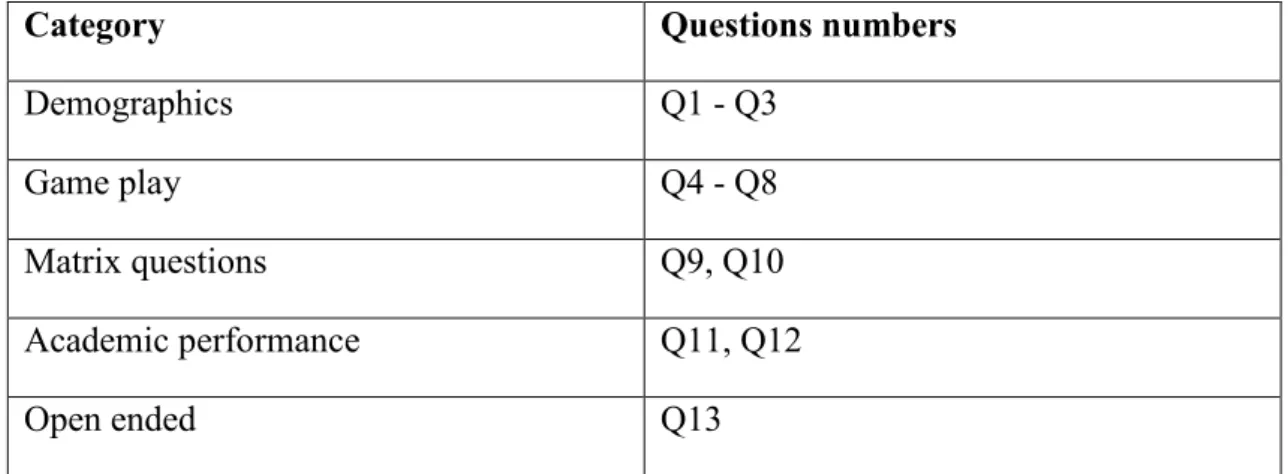
As this study used a quantitative research method, Webropol is the software used to create a survey in this study. It is an easy-to-use online survey tool and with various functionalities. It is suggested that construct closed questions rather than open-ended questions to ease the data-analyzing part. Besides that, it is significant to have a mind map and brainstorming before shaping the questions of the questionnaire, besides that, the designed questions need to relate to the main research questions. All the questions are designed based on the corroboration of this study’s variables and the findings of previous research. The final questionnaire is presented in Appendix A. The questionnaire consisted of 13 questions which are grouped in several categories. Table 3 summarizes the questions, while the subsequent sections provide more details on each category of questions.
Table 3. Detail of questionnaire
Category Questions numbers
Demographics Q1 - Q3 Game play Q4 - Q8 Matrix questions Q9, Q10 Academic performance Q11, Q12 Open ended Q13 Demographic questions
As for the first part of questionnaire, a questionnaire title and a label were added on the top of the questionnaire, which aims to tell respondents what is this questionnaire about and inform them of starting to think about related information in their mind. Some simple and general questions about age, gender were designed at the beginning of the questionnaire. The main objective of those questions is to make respondents feel relax and comfortable with their thought, meanwhile, provide enough time for them to collect general information that later could be used to fill in the questionnaire. (Böö, 2014.) Questions relate to main research questions
Questions, for example, do you like playing video games and what kinds of video games do you usually play are designed in this questionnaire. The purpose of those questions is to test the validity of the answer as this study is to investigate the relationship between video games and academic performance as well as problem-solving. If the respondent
does not play video games, the acquired data may invalid for this research. In addition, some questions are designed with alternatives that could suit everyone, for example, respondents were asked playing video games contribute to improving logical thinking, analytical thinking, and creative thinking respectively. In this case, respondent can choose alternatives among “agree”, “strongly agree”, “undecided”, “disagree”, and “strongly disagree” to express their attitude towards the given statements.
An open-ended question
The difficulty to adopt open-ended questions in questionnaire with a large number of samples is that the answer provided by respondents may be difficult to categorize and later used to present with a graph or chart (Oates, 2005; Schuman, 1983). Using structured questions to conduct questionnaire possibly limit the respondent’s responding due to the provided options may not relate to participant’s own idea and they are forced to make a choice, therefore, they are unable to truly express their own opinion. (Oates, 2005). In order to minimize this problem, an open-ended question (what kinds of educational benefits you attained from playing video games?) was added at the end of questionnaire. Also, instead of question 9 (Do you think playing video games contribute to improve those factors in your studies? choose from 1-5), respondents were allowed to specify their own opinion if the options are not fit in with their mind.
4.2 Measures
Gaming time & Gaming frequency
Question 6 (how often do you play video games?) and question 7 (How much time do you spend on video game play per week?) were designed to measure the student's gaming frequency and gaming time, which adopted from Sharif and Sargent (2006). Gaming time is associated with the time (hours) that students spend on playing video games per week. The main purpose of asking respondents about the gaming time is to test hypothesis 1 – the correlation between gaming time and students' GPA. In addition, the game frequency is also considered as an important variable to observe the correlation between video game play and academic performance. Thus, respondents were asked about how often do they play video games and the results can be used to test hypothesis 2.
Problem-solving skills
Question 9 (e.g. whether playing video games contributes to improving analytical thinking, logical thinking, and creative thinking) and question 10 (e.g. whether playing video games can improve problem-solving skills) were statements related to problem-solving skills. As it was mentioned before, logical thinking, analytical thinking are essential to learning how to program, students were asked their attitudes towards whether playing video games can improve those abilities. It applied a 5-point scale (1 = "strongly agree", to 5 = "strongly disagree") to measure what kinds of problem-solving skills can be improved in video game play. Problem-solving skills require distinct types of mental skills, such as analytical thinking, logical thinking, and creative thinking. Therefore, respondents were asked about the impact of playing video games on improving logical thinking, analytical thinking, and creative thinking.
Academic performance
Question 11 (what is your GPA?) and question 12 (have you ever submitted your assignment late or with poor quality because of playing too many games?) are related to academic performance. Participants were asked to estimate their own GPA for the past year based on a 5-point scale (1= pass, 2 = satisfactory, 3 = good, 4 = very good, 5 = excellent). In addition, academic performance not only relates to exam grade, but we also concern the situation of assignment as an important factor of academic performance, therefore, respondents were asked about whether they submit an assignment late or with poor quality because of playing video games. Moreover, students were directly asked about (question 10:attitudes towards the negative impact of video game play on academic performance by using a 5-point scale (1 = "strongly agree", to 5 = "strongly disagree").
4.3 Data collection
The purpose of data collection is to gather as much data as possible and then provide support for data analysis. Questionnaire and email is the main tool selected to collect data in this study, where the questionnaire is designed to collect response and email is to provide access to respondents. The questionnaire is made via an online survey tool that is named Webropol. Webropol provides three collecting methods, of which SMS survey and Email survey are employed for private links and Weblink is used for the public link. In order to collect as much data as possible, a notification email included an active weblink was sent to the students who are studying in Information Technology and Electrical Engineering. The notice email provided information about the purpose of the research and what is this questionnaire about, which aims to attract potential sample’s attention and encourage more students who are interested in video games to response the survey. Moreover, students were told that the survey is confidential and a statement that it is voluntary to answer the questionnaire and concludes with a thank you message are mentioned at the end of the notification email. Since the majority of students have different schedule and some of them may be part-time students who study and work at the same time, sending email is the most appropriate method to collect the data, which ensures the questionnaire did reach out the entire populations of this study.
4.4 Data analysis
Once data was acquired on the Webropol, it automatically generates a brief statistical analysis. However, the basic analysis such as table and graph fail to explain the correlation between different variables. Therefore, the acquired data was downloaded as SPSS file and later import to the statistical program that is called Statistical Package for the Social Sciences (SPSS), which is applied as a tool to calculate and analyze complex statistical data. The open-ended answer was analyzed with five steps by using Excel: (1) import all the data into Excel document, (2) identify response categories, (3) record the individual response, (4) organize the categories, and (5) represent data visually with the graph.
5.
Results
There were a hundred and five students who had filled out the video game play questionnaire. Since the target sample is students, the questionnaire was sent to ITEE group students' email address that they had registered as their main school email address, however, 103 of the 105 respondents identified as students, and two of them declared they are not students. The majority of the respondents (84%) were 18-29 years old, 15 of them were around 30-39 years old, and only 2 respondents from age group 40-49. There were 59 of the 105 participants (56%) identified as male and 38 (36%) participant as female, and the remaining 8 students (7.7%) prefer not to answer the gender question.
5.1 Demographic questions
Table 4. AgeFrequency Percent Valid Percent
Cumulative Percent Valid 18 - 29 88 83,8 83,8 83,8 30 - 39 15 14,3 14,3 98,1 40 - 49 2 1,9 1,9 100,0 Total 105 100,0 100,0
Table 4 presents the data about the age of the respondent. Most of them are from the age group 18 to 29. But there are 15 respondents who are around 30 to 39 years old and 2 of them are more than 40 years old.
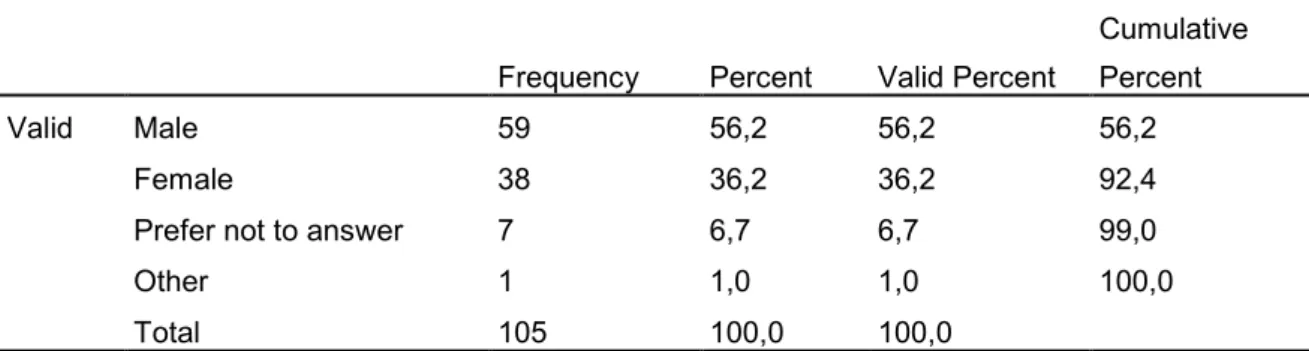
Table 5. Gender
Frequency Percent Valid Percent
Cumulative Percent Valid Male 59 56,2 56,2 56,2
Female 38 36,2 36,2 92,4 Prefer not to answer 7 6,7 6,7 99,0 Other 1 1,0 1,0 100,0 Total 105 100,0 100,0
Table 5 shows that more than half of the participants were male and 36.2% respondent were female. In addition, 7 students prefer not to tell the gender and 1 respondent chose others. The notice email was sent to ITEE students with the subject "Do you like playing video games?” In addition, students were told that it is voluntary to answer this questionnaire, under this condition, and combine the data from table 4, it can be concluded that in this study, more than half of respondents were male.
Table 6. Number of students in the sample
Frequency Percent Valid Percent
Cumulative Percent Valid Yes 103 98,1 98,1 98,1
No 2 1,9 1,9 100,0 Total 105 100,0 100,0
The objective of asking this question (are you a student?) is to make sure all the respondents are students as this research is to investigate the relationship between video game play and problem-solving in academia. As is shown in table 6, even though the questionnaire was sent to ITEE students via school email, there were still 2 respondents who said they are not students. In this case, the validity of the gathered data may be influenced.
5.2 Gaming in general
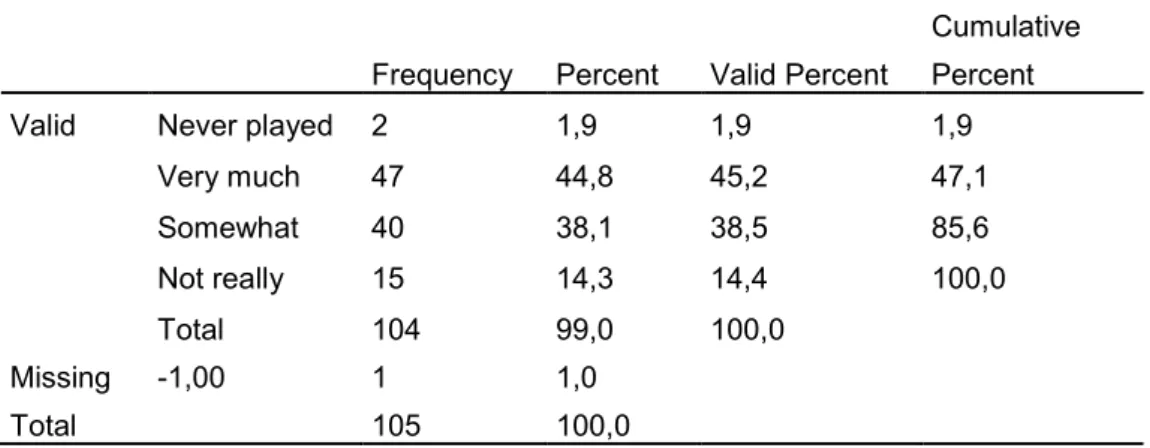
Table 7. Do you like playing video games
Frequency Percent Valid Percent
Cumulative Percent Valid Never played 2 1,9 1,9 1,9
Very much 47 44,8 45,2 47,1 Somewhat 40 38,1 38,5 85,6 Not really 15 14,3 14,4 100,0 Total 104 99,0 100,0 Missing -1,00 1 1,0 Total 105 100,0
Table 7 presents all the data related to Question 4 (do you like to play video games.) This question is mainly designed to observe the attitude of the selected sample towards video games. If the answer is positive, their answer to the following question can be more reliable. It can be seen from the table, 47 respondents said they like playing video games very much and 40 of them chose somewhat, in total, 83% of IT students like playing video games. By this data, conclusions can be generated that most of IT students responding to the survey like playing video games.
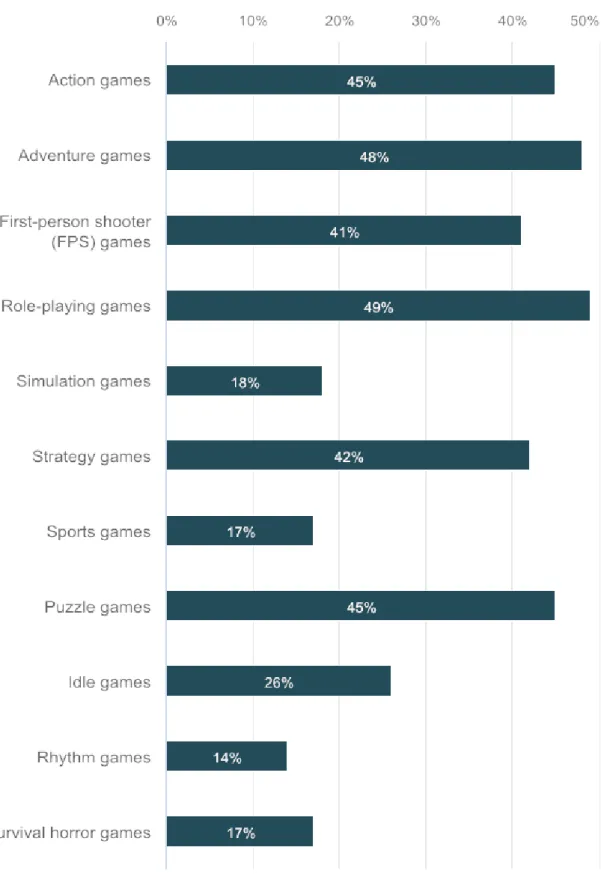
Figure 5. Respondents' preference for Video games
In this research, respondents' preference for video games were asked in order to investigate the RQ1.1 what kinds of video games can affect problem-solving skill. Video games genres are various and different video games can have a different influence on the gamer. It can be seen from Figure 5, role-playing game and adventure games are the most popular games among the sample, then action games and puzzle games occupied 45%, respectively. In addition, strategy games and FPS games were quite popular as well.
Based on the data shown in Figure 5, a conclusion can be made that ITEE students prefer to play games such as action games, adventure games, role-playing game, action games, puzzle games, strategy games, and FPS games. Then, it can be integrated with other data to analyze what kinds of video game can improve problem-solving skill later.
5.3 Problem-solving skills
The analysis assessed the problem-solving skills (playing video game precedes and improves problem-solving skills). Considering problem-solving requires distinct mental skill, participants were asked their attitude towards logical thinking, analytical thinking, and creative thinking respectively () based on a 5-point scale (1 = "strongly agree", to 5 = "strongly disagree").
Figure 6. The answer to question nine
Some estimation related to personal problem-solving skill in academia were made in order to investigate in what ways if any, can video game play affect problem-solving in academia. Figure 6 shows that nearly 31% of student agreed that playing video games help them to choose and maintain a positive attitude at studies. There were 47% of respondents who thought video game play contribute to managing anxiety effectively in studies, while only 9% of respondents considered that video games play can lead them to set high and realistic study goals.
Figure 7.Respondents’ attitude towards provided statements
About analytical thinking, logical thinking, and creative thinking, the majority of students thought that could be improved by playing video games. Figure 7 shows the analysis of respondents’ attitude towards playing video games improve various mental skills that are included in problem-solving skills. In total, there are 81% respondents that agree that playing video games contributes to improving their analytical thinking, nearly 86% of them agree video game play improves logical thinking, and 77% respondents agree it can enhance creative thinking. Only 6 % of them disagree with those statements. In a word, playing video games contributes to enhancing problem-solving skills through improving human's logical thinking, analytical thinking, and creative thinking.
In this case, it can be confirmed that video game play has less effect on IT students in maintaining a positive attitude at studies and managing their pressure or anxiety from studies. But video game play helps them developing analytical thinking, logical thinking, and creative thinking, then it more or less contributes to learning programming, as study how to program requires logical, analytical and creative thinking.
Figure 8. The answer to question ten
Figure 8 shows that the majority of respondents (98%) thought problem-solving is a significant skill in academia. And nearly 83% respondent agreed playing video game
could improve problem-solving skill. As for the attitude towards the statement of playing video games has the negative impact on academic performance, which shows 27.62% respondents agreed this statement, 31.43% of them failed to make choice, and 36.19% ITEE students selected disagree. It can be confirmed that problem-solving is a quite important skill for IT students in academia, especial in programming, which consist of what Gomes & Mendes (2007) said. Moreover, video game play contributes to improving problem-solving skill, which will be extended deeper by analyzing an open-ended question.
Table 8. Playing video game can improve problem-solving skills
Frequency Percent Valid Percent
Cumulative Percent Valid 1 (Strongly Agree) 18 17,1 17,1 17,1
2 (Agree) 70 66,7 66,7 83,8 3 (Undecided) 8 7,6 7,6 91,4
4 (Disagree) 9 8,6 8,6 100,0 Total 105 100,0 100,0
Participants were asked their abstract attitude on problem-solving skills, most of them thought that problem solving is an important skill in academia. Table 8 shows the analysis of respondents' attitude towards playing video games improve problem-solving skills. In total, there were 83.8% participants agree that playing video games contributes to improve problem-solving skills, to be specific, 18 participants chose 1 (strongly agree) and 70 participants selected 2 (agree). Only 15 participants chose 3 (undecided) and 4 (disagree).
5.4 Correlation between video games and academic performance
This analysis includes three steps to investigate the association between video game play and academic performance. Firstly, we tested the hypothesis 1 (the correlation between gaming time and GPA). Second, we tested the correlation between game frequency and GPA. Finally, we analyzed participant attitude toward playing video game has a negative impact on academic performance and then concluded the results based on our finding and previous research.
Table 9.Correlations between different variables
Gaming time GPA
Game frequency Spearman's rho Gaming time Correlation Coefficient 1,000 -,226* -,639**
Sig. (2-tailed) . ,020 ,000 N 105 105 102 GPA Correlation Coefficient -,226* 1,000 ,177
Sig. (2-tailed) ,020 . ,075 N 105 105 102 Game frequency Correlation Coefficient -,639** ,177 1,000
Sig. (2-tailed) ,000 ,075 . N 102 102 102 *. Correlation is significant at the 0.05 level (2-tailed).
**. Correlation is significant at the 0.01 level (2-tailed).
Hypothesis 1
H0: Video gaming time is not correlated with academic performance.
Ha: Video gaming time is correlated with academic performance.
Table 9 reveals that there is a small correlation (-.226*) between gaming time and GPA.
The negative number means that if one variable increase, then the other one will decrease, thus, if students spend too much time playing video games, the GPA will decrease. In addition, taking a look of p-value, H0 is rejected because of the result shows that the
p-value is .020, which is smaller than 5% significant level. Therefore, we accept Ha which
states that time spent on video games is correlated with academic performance, which shows a negative correlation between two variables in this study. This result consists with the previous research that spends too much time on playing video games has a negative effect on GPA (Weaver et al, 2013; Burgess et al., 2012).
Hypothesis 2
H0: Game playing frequency is not correlated with academic performance.
Ha: Game playing frequency is correlated with academic performance.
Table 9 shows that the correlation coefficient between the two variables (game playing frequency) and (GPA) is .177. This indicates that once the game playing frequency increased, student's GPA will increase as well. By looking at the p-value (.075), which is larger than 5% significant level, one can see that there is weak evidence against the null hypothesis, which means that H0 cannot be rejected at this level of significance. Thus, we fail to conclude a significant difference exists and there is no correlation between game frequency and GPA.