TU Dortmund University
Faculty of Education, Psychology and Sociology
The influence of mental representations
on eye movement patterns under uncertainty
Doctoral Dissertation Submitted in Partial Fulfillment of the Requirements for
the Degree Doctor of Philosophy (Dr. phil.)
by
Johanna Renker
born in Herne
Reviewer:
PD Dr. phil. Gerhard Rinkenauer
Prof. Dr. Josef F. Krems
December 2017
Dortmund, Germany
Acknowledgments
At first, I would like to thank Gerhard Rinkenauer for his great support and engagement all the time. He inspired me as a supervisor as well as a person, and his constantly friendly manner always calmed me down. I would also like to thank my Canadian supervisor Alan Kingstone for his warm welcome at UBC and helping me to have a great experience abroad, which had a formative influence on my personal development. Another thank goes to Josef Krems for being my second assessor. My thesis would not have been successful without the technical support by Hanno and Aswin. Both helped me with programming the experiments, data preparation and analysis. Many special thanks go to Hanno for his continuous support and openness to new ideas to deal with all the eye movement data. More valuable support was done by Martin, Tanja and Carola for the data collection. I would like to express special thanks to Martin for his thorough and conscientious work. I also would like to thank all the participants taking part in the experiments who tried their best even if the experiments became annoying after a while. Special thanks also go to all the colleagues who made me feel comfortable at the institute and who contributed to a warm atmosphere. In particular, I would like to mention Oliver and Tobias who provided me helpful feedback on the thesis and Christine, who always had an open door to listen to me and became a friend for life. Finally, Magali was the best new colleague I could imagine and she gave me an incredible support to finish the thesis.
Outside of the institute, another special thank goes to Nele Rußwinkel for being my mentor, spending time with me to discuss all my issues of the scientific world and finally, integrating me into her working group by offering me time for the presentation of my work. I would also like to thank Agnes Scholz for showing me the work at the TU Chemnitz and giving me useful tips for my thesis. At a personal level, I would like to thank for the support of my family. A very special thank goes to my brother for providing me helpful feedback with regard to the English language and my parents for trying to understand what
I’m doing and always being there for me no matter what the situation. They always felt solidarity with me. Further, I would like to thank my friends from school, university, improvisation theatre, canoeing, orienteering and Swedish Tandem class. They all helped me to relax after work, gave me inspiration and motivated me to keep going. A warm thank goes to Knut as well as to Nicolas who always stand behind me and take care for my mental well-being.
The Research Training Group 1855 “Discrete Optimization of technical systems under uncertainty”
funded this thesis and would not have been possible without this funding. Furthermore, it was a pleasure to get to know all the people from the Research Training Group and to work interdisciplinarily even if it was not always a simple matter. Special thanks go to Stephan for initiating our cooperation project and being an open-minded and valuable communication partner. Last but not least, I would
Summary
This thesis investigates the acquisition of mental representations under uncertainty. Five experiments were conducted. The aim of the experiments was to assess if visual search behavior reflects the accuracy of the mental representations and the degree of uncertainty during the acquisition process. In order to induce uncertainty, a visual spatial search task was developed with likely and unlikely target locations. Each of three targets was associated to one of the three target locations with a higher probability and with a lower probability to the other locations. The probability distribution remained
constant for all experiments except for Experiment 5. Participants’ task was twofold: First, they had to
predict the location of target object presentation in a prediction task. Second, they had to respond to color changes of the target object during the presentation of the target object in a subsequent reaction task. It is expected that participants develop a mental representation about the likelihoods of target locations that allows them to predict the location of the target objects more accurately. During the development of the mental representation, the degree of the participants’ uncertainty should be
indicated by eye movements which reflect searching for relevant information and inhibiting irrelevant or ambiguous information.
In Experiment 1, a new experimental paradigm was introduced to manipulate the probability of target locations. Participants were instructed to predict the locations of three different targets and to respond when they appeared on the screen. Prediction time, reaction time and the time course of eye movement patterns (e.g., fixation frequency, fixation duration, gaze shifts) were analyzed. Eye movement patterns changed over the time course of the task with increasing learning and reduced task uncertainty. The extensive visual search at the beginning of the experimental session became more focused towards the end of the session. Further, behavioral data suggests that participants
developed a “Take The Best” decision strategy, i.e. lower probabilities were ignored and the most probable option was chosen. The new experimental design appeared to be useful for the purpose of the study and was therefore used in further experiments.
The aim of Experiment 2 was to assess to what extent search difficulty affects the development of the mental representation. Thus, targets were presented at an unstructured white-gray patterned background in order to degrade the target stimuli. The fixation frequency in Experiment 2 was significantly higher compared to the first experiment. Contrary to the former assumptions the developed mental representation was equally accurate.
Experiment 3 was designed as a relearning experiment to investigate if eye movement patterns indicate changes of probability concepts during the development of a mental representation. First,
participants had to learn a probability concept. Then, they had to relearn another concept which required the adaptation of the initial mental representation. The results of Experiment 3 suggest that eye movement patterns indicate different phases during relearning. The beginning of the relearning phase was immediately signalized by an increase of fixation frequency whereas the increase in fixation duration was temporally delayed. However, performance differences between learning and relearning were smaller than expected.
In Experiment 4, a prediction and a reaction task were assessed separately. The aim of this experiment was to elucidate which task is dominating the development of the mental representation. Participants developed an almost accurate mental representation of the probability concept in the prediction task, but not in the reaction task. Thus, the mental representation acquired during the performance of the visual spatial search task seems to rely mainly on the prediction task. Interestingly, this difference in the accuracy of the mental representation was only indicated by gaze shift activity.
In Experiment 5, two probability distributions were employed to manipulate the degree of uncertainty. Participants had to learn a higher and a lower probability distribution of the object-exit associations. However, eye movement patterns did not differ between the performances of both probability distributions. Further, behavioral data suggests that the “Take The Best” decision strategy was employed in both distribution conditions.
The results of this thesis demonstrate that eye movements give insights into the development of mental representations under uncertainty and thus, inform about the state of the participant. The results suggest that eye movement patterns reflect the learning state as well as the subjective uncertainty of the participant, viz. the usage of decision strategies and strategies to cope with uncertainty. Further, it was demonstrated that eye movements dependent on the design of the task (Experiment 1-2) and the initial knowledge (Experiment 3). However, processing depth was not reflected by eye movement parameters (Experiment 4). In addition, the manipulation of the objective uncertainty by varying the probability distribution did not seem to affect the degree of subjective uncertainty as intended (Experiment 5).
Zusammenfassung
Diese Dissertation beschäftigt sich mit der Entwicklung mentaler Repräsentationen unter Unsicherheit. Fünf Experimente wurden dafür konzipiert und durchgeführt. Ziel der Experimente war es, zu untersuchen, ob visuelles Suchverhalten die Genauigkeit der mentalen Repräsentation sowie den Grad der Unsicherheit während des Entwicklungsprozesses wiederspiegelt. Um Unsicherheit zu induzieren wurde eine visuell-räumliche Suchaufgabe entwickelt, mit wahrscheinlichen und unwahrscheinlichen Zielpositionen. Jedes der drei Zielobjekte erschien an einer von drei Zielpositionen mit einer höheren Wahrscheinlichkeit und an den anderen mit einer niedrigeren Wahrscheinlichkeit. Die Wahrscheinlichkeitsverteilung blieb über alle Experimente hinweg konstant mit Ausnahme von Experiment 5. Die Aufgabe der Versuchspersonen war zweigeteilt: Zunächst mussten sie vorhersagen an welcher Position die Zielobjekte erscheinen (Vorhersageaufgabe). Nachfolgend mussten sie während des Auftretens des Zielobjekts auf Farbveränderungen reagieren (Reaktionsaufgabe). Es wurde erwartet, dass Versuchspersonen nach und nach eine mentale Repräsentation über die Wahrscheinlichkeiten der Zielpositionen entwickeln, die es ermöglicht das Auftreten der Zielobjekte genauer vorherzusagen. Dabei sollte das Ausmaß an Unsicherheit, das von den Versuchspersonen empfunden wurde, anhand von Augenbewegungsmustern sichtbar werden, da diese die Suche nach relevanten Informationen und die Inhibition von irrelevanten oder mehrdeutigen Informationen wiederspiegeln.
In Experiment 1 wurde ein neues Paradigma eingeführt, um die Wahrscheinlichkeit der Zielpositionen zu manipulieren. Die Versuchspersonen wurden instruiert die Positionen von drei verschiedenen Zielobjekten vorherzusagen und gegebenenfalls zu reagieren, wenn diese auftreten. Die Vorhersagezeit, die Reaktionszeit sowie der zeitliche Verlauf der Augenbewegungsparameter (u.a. Fixationshäufigkeit, Fixationsdauer, Blickwechsel) wurden analysiert. Augenbewegungsmuster veränderten sich über den zeitlichen Verlauf der Aufgabe mit gesteigertem Wissen und reduzierter Aufgabenunsicherheit. Das extensive visuelle Suchverhalten wurde zum Ende des Experiments
fokussierter. Zusätzlich deuten Verhaltensdaten darauf hin, dass Versuchspersonen eine „Take The Best“ Entscheidungsstrategie entwickeln, d.h. dass niedrige Wahrscheinlichkeiten ignoriert werden und eher die wahrscheinlichere Option gewählt wird. Das neue Paradigma schien für den Zweck der Studie angemessen zu sein und wurde somit auch für die weiteren Experimente benutzt.
Das Ziel von Experiment 2 war es, zu untersuchen inwieweit Schwierigkeiten bei der visuellen Suche die Entwicklung der mentalen Repräsentation beeinträchtigen. Dazu wurden die Zielobjekte auf einem gemusterten Hintergrund präsentiert und waren somit schwer erkenntlich. Die Anzahl der Fixationen war in Experiment 2 signifikant hört als in Experiment 1. Jedoch wurde konträr zu der anfänglichen Annahme eine mentale Repräsentation entwickelt, die ähnlich akkurat war wie in Experiment 1.
Experiment 3 wurde als Umlernexperiment konzipiert, um herauszufinden inwieweit Augen-bewegungen auf Veränderungen von Wahrscheinlichkeitskonzepten bei der Entwicklung einer mentalen Repräsentation hindeuten. Zunächst mussten Versuchspersonen ein Wahrscheinlichkeits-konzept erlernen. Danach musste ein bestehendes Konzept umgelernt und die vorherige mentale Repräsentation angepasst werden. Die Ergebnisse des Experiments zeigten, dass Augenbewegungsmuster auf verschiedene Phasen während des Umlernprozess hinweisen. Der Beginn der Umlernphase wurde durch einen sofortigen Anstieg der Fixationshäufigkeit gekennzeichnet, wohingegen der Anstieg der Fixationsdauer zeitverzögert eintrat.
In Experiment 4 wurden die Vorhersageaufgabe und die Reaktionsaufgabe getrennt betrachtet. Ziel des Experiments war es, aufzuklären welche der Aufgaben hauptsächlich den Aufbau der mentalen Repräsentation beeinflusst. Versuchspersonen entwickelten eine nahezu akkurate mentale Repräsentation des Wahrscheinlichkeitskonzepts in der Vorhersageaufgabe, nicht aber in der
Reaktionsaufgabe. Daher scheint die mentale Repräsentation, die während der Durchführung der visuell-räumlichen Aufgabe entsteht, hauptsächlich auf der Vorhersageaufgabe zu basieren. Interessanterweise spiegelten Blickwechsel diesen Unterschied der Genauigkeit der mentalen Repräsentation wieder.
In Experiment 5 wurden zwei Wahrscheinlichkeitsverteilungen verwendet, um den Grad der Unsicherheit zu manipulieren. Versuchspersonen mussten eine höhere und eine niedrigere Wahrscheinlichkeitsverteilung lernen. Augenbewegungsmuster zeigten jedoch keine Unterschiede zwischen dem Lernen der beiden Wahrscheinlichkeitsverteilungen. Weiterhin deuten die Verhaltensdaten darauf hin, dass die „Take TheBest“ Entscheidungsstrategie bei beiden Bedingungen benutzt wurde und es somit auch bei der Wahl der Strategie keine Unterschiede gab.
Die Ergebnisse der Arbeit verdeutlichen, dass Augenbewegungen Einblicke in den Entwicklungsprozess von mentalen Repräsentationen unter Unsicherheit geben und somit über den Zustand der Versuchsperson informieren. Augenbewegungsmuster spiegelten den Lernstand sowie die subjektive Unsicherheit der Versuchsperson wieder, d.h. die Nutzung von Entscheidungsstrategien und die Nutzung von Strategien, um mit Unsicherheit umzugehen. Darüber hinaus zeigte sich, dass Augenbewegungen sowohl abhängig vom Aufgabendesign (Experiment 1-2) als auch vom Vorwissen sind (Experiment 3). Jedoch können Augenbewegungsmuster die Tiefe der kognitiven Verarbeitung nicht widerspiegeln (Experiment 4). Zudem wirkte sich die Manipulation der objektiven Unsicherheit durch die Variierung der Wahrscheinlichkeitsverteilung nicht auf die subjektive Unsicherheit aus (Experiment 5).
Table of Contents
1
Introduction ... 1
1.1 Mental Model Theory and Probabilistic Mental Models (PMM) ... 4
1.2 Decision Making under Uncertainty ... 8
1.3 Eye Movements, Attention and Learning ... 12
1.4 Further Evidence: Eye Movements and Mental Representations ... 15
1.5 Overview and Research Objectives ... 17
1.5.1 Experiment I: Predicting the Appearance of Geometric Objects ... 19
1.5.2 Experiment II: Degradation of Search Targets... 20
1.5.3 Experiment III: Dynamic Relearning ... 20
1.5.3 Experiment IV: Separate Tasks ... 20
1.5.4 Experiment V: Learning Different Probabilities ... 20
2
General Method... 22
2.1 Participants ... 22
2.2 Occluded Visual Spatial Search Task (OVSST) ... 22
2.3 Pre- and post-tests ... 24
2.4 Design and Procedure ... 25
2.5 Eye Tracking ... 26
2.7 Data Analysis ... 27
2.7.1 Data Preparation ... 27
2.7.2 Independent and Dependent Variables ... 28
2.7.3 Recurrence Quantification Analysis... 29
2.7.4 Statistical Methods ... 31
3 Experiment I
–
Predicting the Appearance of Geometric Objects ... 32
3.1 Introduction ... 32
3.1.1 Research Question and Hypotheses ... 34
3.2 Method ... 35 3.2.1 Participants ... 35 3.2.2 Procedure ... 35 3.2.3 Data Analysis ... 36 3.3 Results ... 38 3.4 Discussion ... 48 3.5 Conclusion ... 53
4 Experiment II
–
Degradation of Search Targets ... 54
4.1 Introduction ... 54
4.1.1 Research Question and Hypotheses ... 55
4.2 Method ... 56 4.2.1 Participants ... 56 4.2.2 Procedure ... 56 4.2.3 Data Analysis ... 57 4.3 Results ... 58 4.4 Discussion ... 62 4.5 Conclusion ... 66
5 Experiment III
–
Dynamic Relearning ... 67
5.1 Introduction ... 67
5.1.1 Research Question and Hypotheses ... 69
5.2 Method ... 69 5.2.1 Participants ... 69 5.2.2 Procedure ... 70 5.2.3 Data Analysis ... 70 5.3 Results ... 71 5.4 Discussion ... 78 5.5 Conclusion ... 81
6 Experiment IV - Separate Tasks ... 82
6.1 Introduction ... 82
6.1.1 Research Question and Hypotheses ... 84
6.2 Method ... 85 6.2.1 Participants ... 85 6.2.2 Procedure ... 85 6.2.3 Data Analysis ... 87 6.3 Results ... 88 6.3.1 Prediction Task ... 88 6.3.3 Reaction Task ... 91
6.3.2 Comparison of the Prediction and the Reaction Task ... 91
6.4 Discussion ... 94
7 Experiment V
–
Learning Different Probabilities ... 99
7.1 Introduction ... 99
7.1.1 Research Question and Hypotheses ... 100
7.2 Pilot Studies ... 101
7.2.1 Participants ... 101
7.2.2 Procedure ... 101
7.2.3 Data Analysis ... 102
7.2.4 Results ... 102
7.2.5 Discussion & Conclusion of the pilot studies ... 104
7.3 Method ... 105
7.3.1 Participants ... 105
7.3.2 Procedure ... 105
7.3.3 Data Analysis ... 106
7.4 Results ... 107
7.4.1 High Probability Concept ... 107
7.4.2 Low Probability Concept ... 111
7.4.3 Comparison of the Low and High Probability Concept ... 114
7.4.4 Comparison of Different Stimulus Presentations ... 116
7.4.5 Analysis of Control Variables ... 117
7.5 Discussion ... 117 7.5 Conclusion ... 121
8 General Discussion ... 122
8.1 Summary ... 122 8.2 Practical Relevance ... 129 8.3 Limitations ... 1308.4 Directions for Future Research... 132
8.5 Conclusion ... 134
Reference List ...
Fehler! Textmarke nicht definiert.
Appendix A: Concept Awareness Questionnaire ... i
Appendix B: Procedure and Results of the Eye Tracking Validation Study ... ii
List of Figures
Figure 1.1: Simplified depiction of the OVSST 3
Figure 1.2: Flow diagram for the 5 steps of the Take The Best heuristic 7 Figure 1.3: Task uncertainty consisting of subjective and objective uncertainty 8 Figure 1.4: Framework for the 5 processes during decision making 10
Figure 1.5: The three-stage models in comparison 18
Figure 2.1: Schematic description of one trial of the OVSST 24
Figure 2.2: Experimental setup 26
Figure 2.3: The four AOIs of the display 29
Figure 2.4: Example of a recurrence plot for the current task (OVSST) 30 Figure 3.1: Box plot for the number of correct predictions in the 100% condition
of Experiment I 36
Figure 3.2: Trial analysis separated into two intervals 37
Figure 3.3: Judgment Times in Experiment I 39
Figure 3.4: Results of the variables in Experiment I 41
Figure 3.5: Response frequencies in Experiment I 44
Figure 3.6: Blinks in Experiment I 47
Figure 4.1: Unstructured background of the screen 57
Figure 4.2: Box plot for the number of correct predictions in the 100% condition
of Experiment II 57
Figure 4.3: Judgment Times in Experiment II 59
Figure 4.4: Results of the variables in Experiment II 60
Figure 5.1: Box plot for the number of correct predictions in the 100% condition
of Experiment III 71
Figure 5.2: Judgment Times in Experiment III 72
Figure 5.3: Results of the variables in Experiment III 74
Figure 6.1: The OVSST with fuzzy Gabor figures in Experiment IV 85
Figure 6.2: Temporal sequence of Experiment IV 86
Figure 6.3: Judgment Times in Experiment IV 89
Figure 6.4: Results of the variables in the prediction task of Experiment IV 90 Figure 6.5: Comparison of eye movement parameters in the prediction and the
and the reaction task in Experiment V 93
Figure 7.1: The OVSST with a new set of Gabor figures in Experiment V 102 Figure 7.2: Judgment Times in Experiment V in the high probability condition 108 Figure 7.3: Results of variables of the high-probability condition in Experiment V 110 Figure 7.4: Judgment Times in Experiment V in the low probability condition 112 Figure 7.5: Results of variables of the low probability condition in Experiment V 113 Figure 7.6: Comparison of predictions in the low and high-probability condition
in Experiment V 115
List of Tables
Table 3.1: Memory representation of the probability concept and behavioral
probabilities in Experiment I 43
Table 3.2: Trial analysis in Experiment I 45
Table 3.3: Descriptive statistics of the Performance Cluster in Experiment I 46
Table 4.1: Memory representation of the probability concept and behavioral 62 probabilities in Experiment I
Table 5.1: Probability concept I in Experiment III - Memory representation and
behavioral probabilities during learning and relearning the concept 77 Table 5.2: Probability concept II in Experiment III - Memory representation and
behavioral probabilities during learning and relearning the concept 77 Table 6.1: Statistics of the Performance Cluster and Number of Gaze Shifts
in Experiment IV 91
Table 6.2: Memory representation of the probability concept of the prediction
and reaction task in Experiment IV 92
Table 7.1: Memory representation of the probability concept of two lower probability
distributions in Pilot Study I 103
Table 7.2: Memory representation of the probability concept of two lower probability
distributions in Pilot Study II 104
Table 7.3: AOI classifications and definitions in Experiment V 106 Table 7.4: Results of eye movements in the AOIs in the high probability condition
for correctly in comparison to incorrectly predicted trials of Experiment V 111 Table 7.5: Results of eye movements in the AOIs in the low probability condition for correctly in comparison to incorrectly predicted trials of Experiment V 114 Table 7.6: Subjective probability concept in the high and low probability condition
Chapter 1: Introduction 1
1
Introduction
What are the mental mechanisms underlying the interaction between users and technical systems? And how behave users if working with a technical system does not proceed as expected? If users interact with technical systems like a computer program or a ticket machine, they develop a mental representation or also called mental model of functioning of the system. Based on their mental model, users establish expectations concerning the technical system and behave accordingly. The technical system either strengthens these expectations or contradicts them. If it contradicts them, users have to adapt their mental model by building new associations (Preim & Dachselt, 2010, p. 94). The mental model becomes more detailed with increasing expertise. However, as mental models are only a reduced representation of the reality and complex systems cannot provide a complete set of information, errors still occur during the interaction. Thus, users have to handle a certain degree of task uncertainty due to a lack of knowledge concerning the cause-and-effect relationship, especially when expertise with a system is still low (Thompson, 1967). The task uncertainty involves the subjective uncertainty perceived by the participants as well as the objective uncertainty which is provided by the system, for instance, by the degree of complexity. Task uncertainty can be manipulated and be diminished by supporting the development of the mental model, for example, by introducing a help system, so that a more accurate mental model can be established in a shorter time period. Generally, user’s system performance improve with more accurate mental models (Donnell, 1996).
The acquisition of accurate mental models can be supported by designing user friendly interfaces because an improved interaction environment reduces task uncertainty (e.g., Bennett & Flach, 2011; Brown, 1999; Galitz, 2007; Johnson, 2014). For instance, Jipp (2016) studied expertise development while participants had to control air traffic. Two different types of automation design were used within this scenario, information automation and decision automation. Information automation refers to the automation of the information acquisition and analysis, for example, by highlighting relevant information. During decision automation, the selection of the decision was additionally automated, for example, the system advises the participants of the ideal speed of the aircraft which is relevant for the task. Results of the study showed that decision automation leads to more accurate mental models than information automation because of an increased need to process information. Thus, the interaction automation also affects the acquisition of the mental model. However, in addition to a user-friendly interface and automation, the user might be also supported more individually during the interaction with the system. For example, determining at which point the users’ individual mental
Chapter 1: Introduction 2 model is incomplete and task uncertainty is high, is essential for further smooth processing and the main focus of the thesis.
This thesis seeks to find appropriate mechanisms and indicators for task uncertainty. Lipshitz and Strauss (1997) report different strategies people apply to cope with uncertainty. Humans might reduce uncertainty by searching for additional information or by waiting until additional information is available. Ignoring or distorting ambiguous information, in the way that they fit to the existing information, are other strategies known to suppress uncertainty. All these strategies deal with information search which is connected to attentional processes and visual search behavior. Consequently, visual search behavior and thus eye movement patterns might be a suitable indicator for the degree of task uncertainty. Eye movements are fast, frequent and automatic actions that reflect to which location users pay attention and thereby may allow insights into strategies of information accumulation (Hoffman & Rehder, 2010; Spivey & Dale, 2011). However, not only is information accumulation important for goal-directed behavior but also information processing. Findings of research on reading already provided evidence that stimuli are cognitively processed about the same amount of time the person has fixated them, for example the gaze duration for infrequent words was longer than for frequent (more familiar) words (Just & Carpenter, 1980). On the basis of such findings, Just and Carpenter (1980) proposed the eye-mind hypothesis assuming a strong causal relationship between attention and information processing. There should be “no appreciable lag between what is being fixated and what is being processed” (Just & Carpenter, 1980, p. 331). Transferring this idea to the present thesis, eye movement patterns might inform about an inadequate information processing or misunderstanding during the acquisition of mental models and thus, also about the degree of subjective uncertainty. The fixation on rather relevant than irrelevant information combined with less visual search, for example, may imply more accurate mental models and less subjective uncertainty. There is a considerable amount of studies in basic and applied research investigating eye movements to draw conclusions about visual information processing (Jacob & Karn, 2003, for review). This thesis tries to advance the present research by focusing on eye movements under uncertainty in the context of human-computer interaction (HCI). The purpose of the experimental research is to provide a first foundation for further studies in this context. Liversedge et al. (2011) already mentioned that knowledge about uncertainty and eye movements is limited and thus, stresses the importance for further research. In this thesis, I use input from different research fields, namely decision making, learning, working memory, information processing and eye movement research, to gain deeper insights into the described research topic.
Chapter 1: Introduction 3 In the following, the theoretical background of the thesis is summarized and a research framework is developed. At the end of Chapter 1 an overview of the relevant research questions and an outlook about the experimental setup is given. In Chapter 2 the experimental paradigm is outlined together with the General Method of the studies. In Chapters 3-7 the motivations of five successively developed experiments are described in detail as well as their methods and results. At the end of each chapter, the findings and implications are discussed. Finally, in Chapter 8 the research findings of all experiments are integrated and discussed in the context of the proposed research model. In addition, limitations of the studies are considered and an outlook for future research is presented.
For the purpose of the study a new experimental paradigm is developed: the Occluded Visual Spatial Search Task (OVSST). The experimental paradigm will be shortly introduced already at this point due to its high relevance for the comprehension of the introduction. The experimental task, however, will be explained in more detail later in the General Method section. Participants have to observe target objects that appear at one of three target locations with a certain probability (Fig. 1.1). They are asked to perform two tasks: predicting the target location of the objects and, subsequently, reacting to changes of the color intensity when the object appears. After the experiment, participants are asked to estimate the probabilities via questionnaire. The OVSST allows to investigate the acquisition of a new mental model of a simplified decision task inhering spatial uncertainty. Further, the conscious as well as unconscious understanding of the underlying probability concept is assessed via subjective as well as objective measurements. Furthermore, the OVSST allows to vary the degree of objective uncertainty by varying the probabilities of the target locations.
Figure 1.1: Simplified depiction of the OVSST. Target objects can appear at three different target locations presented on a computer screen.
Chapter 1: Introduction 4
1.1
Mental Model Theory and Probabilistic Mental Models (PMM)
Originally, the idea of mental models as cognitive representations of the real world was developed by Craik (1943) and later revived by Johnson-Laird (1983) who defined a mental model as a reasoning mechanism that is integrated in working memory. Nowadays, this vague definition of mental models is only one of many different definitions depending on the context. Mental models can be considered, for example, in the context of business, education or HCI and on an individual level or in teams. Mental models associated with teams, for example the context of sports, “[…] are organized mental representations of the key elements within a team’s relevant environment that are shared across team members.” (Mohammed, Ferzandi, & Hamilton, 2010, p. 1) and part of collective strategies in decision making. On the individual level Young and Veen (2008) emphasize the usefulness of mental models in business decisions. The authors describe methods like interview techniques to assess mental models which help to understand people’s motivation and thought-processes.
In this thesis, mental models are considered in the context of HCI as long-term knowledge structures which represent the user’s understanding of situation-specific system functioning (Durso & Gronlund, 1999). At the beginning of the mental model development, mental models are often incomplete and systematic faults may occur due to the abstract and schematic knowledge structure of mental models (Chalmers, 2003; Durso & Gronlund, 1999; Johnson-Laird, 2010). Chi and Roscoe (2002) report in their study about conceptual changes, for instance, that over half of the tested students in their study had coherent, but flawed mental models concerning the circulatory system of the human body. They assumed incorrectly that the circulatory system is a “single-loop” in which the blood flows from the
heart to all parts of the body and not a “double-loop” from the heart to the body and from the heart to the lungs. Thus, systematic errors occurred which can be fixed with greater knowledge and adaption of the mental model. However, mental models seem to be resistant to change once proved useful. If information is once stored and an understanding is built up (e.g., when playing cards and having an understanding of the specific rules), it is difficult to change the model and adapt to new situations. This is comparable to the accommodation process described earlier by Piaget (1952), who states that existing knowledge has to be changed when no longer applicable.
Mental models become more detailed over time when users are more experienced. However, as already indicated by the word “model”, mental models do not contain all available information, since perception and memory capacities are limited. Thus, mental models are characterized by a reduced copy of the reality. Further, a range of interindividual differences regarding the mental model development are based on different experiences and cognitive abilities of people (Jipp, 2016). In addition, mental models are hypothetic, imaginary and represent only what is true, but not what is
Chapter 1: Introduction 5 false (Dutke, 1994; Johnson-Laird & Savary, 1996) probably to minimize the load in working memory. If someone, for instance, acquires a mental model about the electricity flow that is similar to how water is flowing, then this mental model does not contain the fact that water cannot flow upwards like electricity. In contrast, it implies that there is some time between the starting and the end point of the flow which is true for electricity as well as for water flows. This phenomenon of information accumulation is comparable to the confirmation bias describing the search for evident information that fits the existing beliefs and expectations (Nickerson, 1998). Summarizing the above, mental models share some specific characteristics and have to be differentiated from conceptual models and situation models. Conceptual models of an application describe the application on a high-level, viz. it describes the functioning of the application and concepts users need to understand and use this application (Gentner & Stevens, 1983; Johnson & Henderson, 2012). Mental models also have to be differentiated from a situation model that is build up in a particular situation and contains information about the environment of this situation (Durso & Gronlund, 1999; van Dijk & Kintsch, 1992). Thus, one mental model can be evoked by several situations with particular characteristics.
In contrast to the above mentioned aspects of mental model theory, the theory of Probabilistic Mental Models (PMM) by Gigerenzer et al. (1991) proposes a more specific view on mental models with concrete behavioral predictions in the context of uncertainty. This theory assumes that during problem solving, people build up a mental model about a relevant aspect of the reality. The uncertainty arising from the process of representation is also part of the model, for instance, if the problem solver clearly knows the solution for the problem, then uncertainty is not present. However, if uncertainty about the solution exists, then a PPM is established (Jungermann, Fischer, & Pfister, 2010, p. 177). A PMM considers the problem to be solved in a larger context by using a network of variables and “[…] connects the specific structure of the task with a probability structure of a corresponding natural environment (stored in long-term memory).” (Gigerenzer et al., 1991, p. 4). If, for instance, a decision between two options has to be made, a reference class activates all information relevant for the decision and enables to elicit valid probability cues which work as a predictor for the correct decision based on a probability estimation. Gigerenzer assumes that these probabilistic inferences are purely cognitively processed (Gigerenzer et al., 1991). PMM is based on different strategies like Take The Best (TTB), Take The Last (TTL) and minimalist strategy, assuming a random generation of cues until a discriminatory cue is found that allows to distinguish between different options (Dougherty, Franco-Watkins, & Thomas, 2008). The first strategy seems to be most relevant for this work, as studies showed that non-compensatory strategies, especially TTB, enable to predict the inference of decision makers under time pressure and when cue information has to be retrieved from memory (Rieskamp
Chapter 1: Introduction 6 & Hoffrage, 2005). The experimental task used in this thesis comprises of similar characteristics. In the following, TTB is presented in detail (cf. Bergert & Nosofsky, 2007).
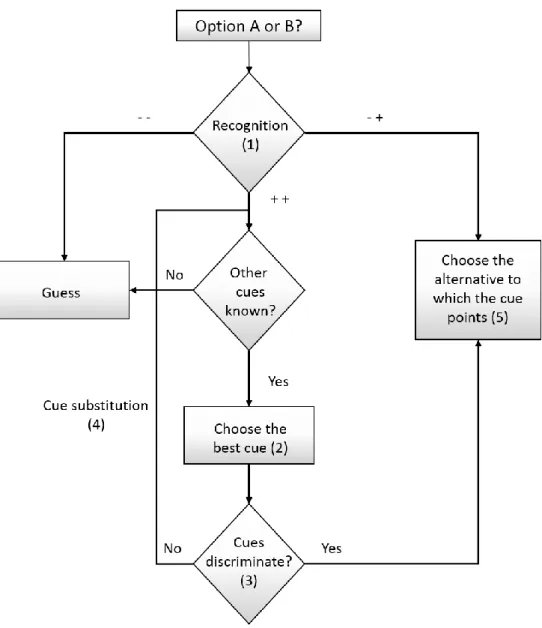
TTB can be divided into five-steps in order to decide, for example, between two options as shown in Figure 1.2. A possible task might be to decide which of two football clubs has more supporters. The first step entails the recognition processes. If only one of two options is recognized, then the recognized option is chosen, for example, if only one football club is known, then this club is chosen. If both events are not recognized, then the decision maker guesses and chooses the football club with the most supporters by chance. If both football clubs are recognized, then the decision maker follows Step 2: searching for validity cues that provide information about the environment of the options, for example, whether the football club is located in a city that is a state capital or not. Thereafter, these cues are ranked from memory with regard to the relevance for the decision. After finishing this procedure, the decision maker chooses the highest ranked cue that seems to be most relevant for the decision and finds out if the chosen cue discriminates between the options (Step 3), for example, the size of population the city the football club is located in might be a cue that discriminates between the two football clubs. Step 4 stops the cue search if the cue discriminates between the options and the decision maker proceeds to Step 5. If there is no cue discrimination, then the decision maker returns to Step 2 and takes the next best cue which seems to be relevant for the decision and so on. Finally, Step 5 leads the decision maker to choose the alternative with the best cue value. If, for example, one of the football clubs is located in a bigger city than the other, this club is chosen. If there is no validity cue that discriminates between the options, then the decision maker chooses the event randomly, viz. they guess one of the options (Dougherty et al., 2008).
Chapter 1: Introduction 7
Figure 1.2: Flow diagram for the 5 steps of the Take The Best heuristic for choosing one of two options. Either no options (--), one of the options (-+) or both options (--) are known in advance influencing the further decision process. Adapted from “Psychological Plausibility of the Theory of Probabilistic Mental Models and the Fast and Frugal Heuristics”, by Dougherty et al. (2008, p.201).
Chapter 1: Introduction 8
1.2 Decision Making under Uncertainty
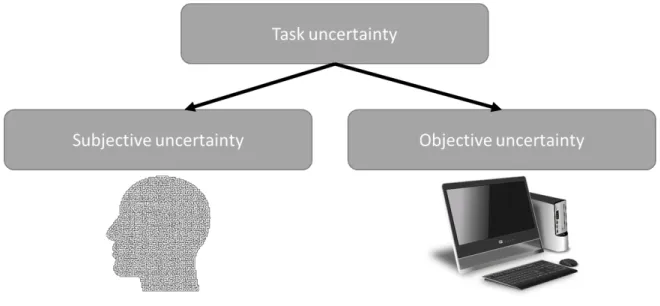
Mental models develop during decision making about relevant information as aforementioned and contain to a degree uncertainty about the outcome as described by PPM (Gigerenzer et al., 1991). Uncertainty is a broad concept and requires defining before it can be operationalized in scientific research. In the following, theories about uncertainty in the context of decision making are described in more detail. Lipshitz and Strauss (1997) provide distinct conceptualizations of uncertainty, for example, uncertainty related to ambiguity, risk or conflict. As mentioned earlier, task uncertainty is based on a lack of knowledge concerning the cause-and-effect relationship and leads to an inability to make a decision deterministically (Lipshitz & Strauss, 1997). As a working model, we assumed that uncertainty contains subjective uncertainty as well as objective uncertainty (Fig. 1.3). Subjective uncertainty describes the perceived uncertainty by the individual. In contrast, objective uncertainty is provided by the system and directly manipulable
Figure 1.3: Task uncertainty is defined as the combination of subjective and objective uncertainty. Subjective uncertainty is perceived by the human and objective uncertainty is provided by the system.
Generally, humans try to minimize task uncertainty and therefore develop coping strategies (Camerer & Weber, 1992; Camerer & Weber, 1992; Smithson, 2009; Weber & Camerer, 1987). Typical examples for strategies to cope with uncertainty reported in literature are information search, suppression of ambiguous information or information reduction (Lipshitz & Strauss, 1997). During information search decision makers search for relevant information to discriminate between alternatives and finally to confirm their decision (Betsch, Funke, & Plessner, 2011). If there is much ambiguous information, decision makers often use the suppression strategy, viz. they ignore or distort undesirable information
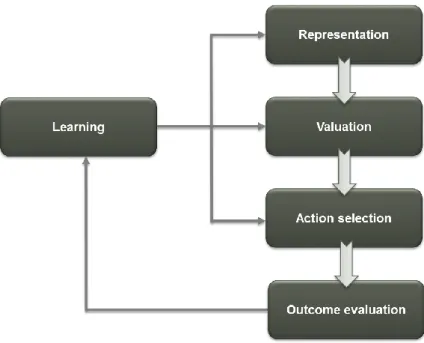
Chapter 1: Introduction 9 to reduce subjective uncertainty in the way that their preferences and beliefs align with their decision (Lipshitz & Strauss, 1997). Information reduction is a similar concept to suppression, but decision makers rather reduce the amount of task information and focus only on relevant information. Haider and Frensch (1999) state in the information-reduction hypothesis that task-relevant information is distinguished from task-irrelevant information with practice. Consequently, mainly task-relevant information is processed, resulting in better task performance and reduced uncertainty as, for instance, the number of alternatives is reduced. Another way to make decisions under risk or uncertainty is addressed in the so called expected utility theory (Neumann & Morgenstern, 1947; Neumann & Morgenstern, 1947). In this theory decision makers compare the subjective expected utility values of the risky or uncertain prospects to make their choice. However, these strategies are not always applicable in the real world as access to information is usually limited. Therefore, new theories of so called “bounded rationality” were developed, which emphasize the inability to consider all relevant information during decision making as a reason for uncertainty, lack of knowledge and costly information (Simon, 2000). Consequently, humans often make irrational decisions due to the limited information. They use cognitive heuristics – rules of thumb – to simplify the decision making process like the earlier mentioned TTB heuristic (Gigerenzer & Gaissmaier, 2011). Another cognitive heuristic is the satisficing rule which describes a decision strategy whereby the search for an alternative stops as soon as a satisfactory result is found, but not necessarily the optimal result (Simon, 2000). This fast and frugal characteristic of heuristics enables people to make economic decisions that, however, may lead to erroneous judgments (Kahneman & Tversky, 1973). There are also other characteristics of human thinking that lead to incorrect decisions, for example, the tendency to search for a causal relationship even if there is none. In contrast, some animals like rats choose a better strategy in these random decision situations as they do not tend to search for causality and are able to respond more randomly (Wolford, Miller, & Gazzaniga, 2000). Nevertheless, humans have the advantage to be able to learn which decision strategy might be optimal in non-random decision situations. Rieskamp and Otto (2006) suggest a theory about strategy selection learning (SSL) that is based on reinforcement learning, i.e. learning from the consequences of the decisions. Within SSL it is assumed that individuals select a decision strategy by considering their expectations that base on past experiences and improve the strategy selection through feedback over time. Thereby the learning effects, i.e. the behavioral change due to the learned decision-outcome expectations, are stronger at the beginning than at the end. The importance of learning in the decision making process is also shown in a general model of decision making provided by the framework of Rangel et al. (2008). This framework assumes different processes involved in the decision making process (Figure 1.4).
Chapter 1: Introduction 10
Figure 1.4: Framework for the 5 processes during decision making. Adapted from “A framework for
studying the neurobiology of value-based decision making”, by Rangel et al. (2008, p. 546). For more details see main text.
At first, the decision maker creates a representation of the decision problem which involves internal as well as external states. Examples for an internal state might be fatigue level and for an external state threat level, for example, the difficulty of a task. This representation works as the basis for the second process, the valuation of different options. During the valuation process, the different decision options are weighted with regard to the likelihood to evoke a desirable state as a kind of preference formation. Then, the different options are compared with each other in the third process leading to action selection. Finally, the decision maker chooses the preferred option. After making the decision, the outcome of the decision is evaluated and finally used as feedback in learning processes to improve future decisions. Learning updates the other processes, i.e. the representation, the valuation as well as the action selection, except for outcome evaluation. These five processes presented in the framework, however, are not rigid with regard to the sequence and give only a rough overview (Rangel et al., 2008). The framework by Rangel et al. (2008) clearly shows that learning is an essential process during decision making that is closely linked to the representation of the decision problem. The aspect of uncertainty is not explicitly assumed in the presented framework, but it is integrated in the valuation process as the likelihood of the different decision options is taken into account. Thus, probabilities create uncertainty in the decision process as the outcome is not predetermined.
In literature different tasks are suggested to study decision making under uncertainty in laboratory settings that are based on a probability structure like lotteries (Arieli, Ben-Ami, & Rubinstein, 2011) or
Chapter 1: Introduction 11 gambling tasks, for instance, the IOWA Gambling task (IGT; Bechara, Damasio, Tranel, & Damasio, 2005). In the IGT participants are instructed to maximize their profit during the selection of cards with monetary gain and losses. They have to decide between four decks of cards whereby two decks are riskier and have shortcomings in the long run. However, participants are not aware of that difference (Buelow & Suhr, 2009). The probabilities of losses and gains concerning the four decks can be varied to increase or decrease objective uncertainty. Nevertheless, the use of gambling tasks like the IGT in research has also disadvantages. For example, pathological gamblers show performance impairments in the IGT (Buelow & Suhr, 2009) and thus, gamblers’ personalities might bias the results. Therefore, a task without gambling characteristics is chosen for the current experiments. Another bias might arise from the probability structure. Humans have difficulties to estimate probabilities accurately as numbers are abstract and often biased depending on memory performance as well as heuristics (Gigerenzer & Gaissmaier, 2011; Gigerenzer & Goldstein, 1996). For instance, high probabilities are often underestimated und low probabilities are often overestimated, because of regression to the mean (Beuer-Krüssel & Krumpal, 2009; Fischhoff & Beyth, 1975). In general, not only the probability structure, but also the induced uncertainty might evoke bias, as individual differences in perceiving uncertainty exist. For instance, people prone to sensation-seeking might perceive uncertainty as a motivating factor (Zuckerman, 1979) whereas other people more commonly associate uncertainty with anxiety as an inhibitory factor (Bammer & Smithson, 2008). In addition, the questionnaire-based study by Shuper et al. (2004) showed that also cultural differences exist with regard to the way how people deal with uncertainty. The results of the study indicated that Canadian students were more uncertainty oriented, i.e. they seek for information during uncertain situations, in comparison to Japanese students. In conclusion, studying probabilities seems to be biased in different ways. Nevertheless, the usage of probabilities to vary uncertainty systematically is the common method up till now (Smithson, 2009).
Evidence from neuroscience studies also suggests that uncertainty affects decision making. Functional magnetic resonance imaging (fMRI) experiments show that the activation of the prefrontal cortex is related to learning processes in uncertain situations (Fellows & Farah, 2007; Paulus et al., 2001; Platt & Huettel, 2008). In contrast, other studies report a larger neural circuit with the involvement of the orbitofrontal cortex and the amygdala that respond to the degree of uncertainty (Hsu, Bhatt, Adolphs, Tranel, & Camerer, 2005). Furthermore, other authors like Paulus et al. (2001) discuss a network of prefrontal, parietal and cingulate cortex during decision making under uncertainty. Overall, there seem to be many different brain regions involved in decision making under uncertainty, presumably indicating that uncertainty evokes more complex cognitive processing. The aim of the current work, however, is to assess uncertainty on a rather behavioral basis with the main focus on eye movement
Chapter 1: Introduction 12 behavior. The following chapter explains how eye movements might provide an additional path to explore the central nervous system during the investigation of decision making under uncertainty.
1.3 Eye Movements, Attention and Learning
As already mentioned eye movements may be an important indicator to elucidate search behavior and several strategies respectively. Eye movements are motor skills used to rotate the eyeball in all directions consciously or unconsciously by the oculomotor system which is part of the central nervous system. The three most studied eye movement patterns are saccades, fixations and smooth pursuit movements. Saccades are rapid eye movements with a velocity between 30 and 500°/s lasting 30-80 ms (Holmqvist, Nyström, & Andersson, 2011, p. 23). They can be voluntarily and reflexively used to move the fovea to another position in the visual environment. The fovea is a small area of the visual field not larger than 2° in which humans have full visual acuity and are able to process the perceived information most efficiently (Holmqvist et al., 2011, p. 21). However, there is a field of view surrounding the fovea called perceptual span in which information is also processed even if the acuity is reduced. The size of the perceptual span depends on the nature of the task and can be at least 24°, for instance, during driving (Holmqvist et al., 2011, p. 381). During fixations, the eyes do virtually not move. However, this phase is characterized by micro-movements consisting of tremor, drift and microsaccades lasting 200-300 ms. Thus, fixations are often defined as a timespan in which the eyes remain relatively still. A series of both, fixations and saccades, is called scanpath. Smooth pursuits are used to track a moving target with the eyes driven by parts of the brain that are not activated during saccades (Duchowski, 2007, p. 46; Holmqvist et al., 2011, pp. 22–23). Some authors suggest that only during fixations new information is processed (Gilchrist, 2011; Rayner, 2009). Nevertheless, gaze shifts seem also to facilitate stimulus processing and influence the development of the mental representation (Irwin, 2004). Further, it “[…] seems reasonable to assume that fixation location corresponds to the spatial locus of cognitive processing and fixation or gaze duration corresponds to
the spatial locus of cognitive processing of the material located at fixation.” (Irwin, 2004, p. 106). In other words, eye movements and attentional processes seem to have an impact on which stimuli are cognitively processed in what manner. This idea was earlier expressed in the aforementioned eye-mind hypothesis by Just and Carpenter (1980), stating a strong coupling between eye movements and attention (cf. Theeuwes, Belopolsky, & Olivers, 2009). Hence, a stimulus is cognitively processed for the same amount of time the person has fixated on it. This hypothesis, however, has its limits, for example, when considering memory retrieval processes as already shown by Anderson et al. (2004). The authors assume that retrieval processes are not necessarily reflected by eye movements. Moreover, Irwin (2004) highlights four main issues regarding the eye-mind hypothesis: First, the attentional focus of cognitive processing within the complete field of view may be wider than the
Chapter 1: Introduction 13 fixation location as information is also processed in the visual periphery (cf. Fox, Merwin, Marsh, McConkie, & Kramer, 1996). Second, the focus of cognitive processing is often separated from the fixation location. Third, salient stimuli that pop out can guide the eye without cognitive control and without active search (bottom-up driven). Fourth, cognitive processing may happen during saccadic eye movements and during fixations. Further, Hyönä (2010) mentions that even if a learner attends to the relevant stimulus for a while, there is no necessity that the learner adequately comprehends the stimulus. In contrast, if the learner adequately comprehends the stimulus, the stimulus had to be attended to initially (top-down driven). Thus, attentional processes are at least partly reflected by eye movements and essential for information processing and further cognitive processing, for instance, learning.
The relation between the allocation of attentional resources and cognitive processing is already described by Wickens and Hollands (2000) in their model of human information processing. Their framework gives an overview of the processes which are involved in information processing and underlines the relevance of sensory and perceptual processes as the basis for cognitive processes which are relevant in the current thesis. There are a series of stages during information processing: sensory processing, perception, cognition, memory, response selection and execution. Perceptual processing is driven by bottom-up controlled sensory input as well as by top-down controlled input from long term memory including past experiences (Wickens & Hollands, 2000). Shifts of attention are either bottom-up driven (stimulus-driven), for example, if a salient stimulus captures attention automatically, or volitional, top-down driven (goal-driven) as knowledge about the task is activated (Buschman & Miller, 2007). The activated information is temporarily stored in working memory which is involved in all cognitive processing that is conscious and resource limited. In addition, a feedback loop is used for the evaluation of the goal achievement and suggests that there is no defined starting point for the flow of information. Finally, the model also takes into account that attention has to be allocated as resources are limited. These relations have to be considered when developing the experimental design of the thesis.
In order to investigate sensory and perceptual processes of visual stimuli, the visual search task (VST) was developed. This standard paradigm of visual search in basic research involves the detection of a target object amongst distractors (Eckstein, 2011; Huang & Pashler, 2005; Treisman & Gelade, 1980; Wolfe, 1994). Most commonly, set size and target-distractor discriminability are varied and the effect of this variation on reaction times is studied. The higher the target-distractor similarity, the longer the reaction time. However, the standard paradigm of visual search considers rather attention allocation
Chapter 1: Introduction 14 than eye movements as attention shifts precede gaze shifts (Kristjánsson, 2011). In the following the term visual search behavior also implies eye movements.
Eye movements seem to be strongly coupled with attention as neuronal mechanism of attention and eye movements overlap to a great extent. Further, the evidence that attention is shifted before eye movements follow, reinforces the coupling between eye movements and attentional processes (Kristjánsson, 2011). Attentional processes and thus, also eye movements, are essential for cognitive processing already shown by top-down processes which rely on prior knowledge and guide attention voluntarily. Some authors summarized that eye movement metrics are related to cognitive processes reported in literature about evaluating the usability of technical systems (Ehmke & Wilson, 2007; Poole & Ball, 2006). They mainly mention that eye movement metrics, like fixation duration and number of fixations, indicate the efficiency of visual search and the importance or saliency of presented elements (Goldberg & Kotval, 1999). Other authors argue directly that eye movements “[…] provide an excellent
on-line indication of the cognitive processes underlying visual search and reading.” (Liversedge & Findlay, 2000, p. 6).
Besides of eye movements even blinks seem to be related to information processing (Wascher, Heppner, Möckel, Kobald, & Getzmann, 2015). Blinks describe the unconscious closure of the eye for a short moment and lead to a temporary loss of visual information. They are inhibited more often during the presentation of relevant information and thereby reflect the amount of information processing (Fogarty & Stern, 1989). Thus, it seems to be obvious that eye movement and blink behavior does not reflect only sensory but also cognitive processing. Especially top-down processes which are driven by experience and expectations should be reflected by eye movement behavior. Experience and expectations, however, are also strongly related to mental models.
Eye movement tracking technology has improved considerably in the last 10 years. Therefore, many studies investigated eye movements in relation to attention and learning processes. Eye movements are automatic, fast and frequent (Irwin, 2004; Spivey & Dale, 2011). These characteristics make eye movements an ideal dependent variable because they imply objectivity, might respond quickly to experimental manipulations and provide sufficient data for statistical analysis. Eye movements are not randomly distributed, but rather systematic and driven by automatic bottom-up and volitional top-down processes (Theeuwes, 2010). Additionally, eye movements seem to differentiate between experts and novices as experts usually possess a more accurate mental model than novices. In their study, Charness et al. (2001) report different eye movement patterns during chess for expert and intermediate players. Intermediate chess players showed a higher fixation frequency and smaller amplitudes of saccades, i.e. smaller angular distances of the saccades, than experts. Also Tai et al.
Chapter 1: Introduction 15 (2006) found fewer eye fixations and fewer gaze shifts between the displayed elements for experts than for novices during a science assessment amongst students studying different disciplines of science. Finally, developing expertise also depends on information processing abilities and working-memory capacity as described by Jipp (2016) which might be reflected by eye-movements.
Lai et al. (2013) emphasize in their review that eye movements enable to gain insights into the relationship of effects of learning and other cognitive activities. Learning processes are involved in the development of mental models and often measured by using methods like questionnaires, think-aloud protocols, diaries or interviews that are subjective and require a certain amount of consciousness (Lai et al., 2013). However, these methods seem to interfere with cognitive processing (Ericsson & Simon, 1980; Schooler, Ohlsson, & Brooks, 1993) and additionally do not allow to study stimulus driven processes people are not aware of. Thus, studying eye movements as a more objective measurement might give new insights into the development of mental representations.
1.4 Further Evidence: Eye Movements and Mental Representations
Eye movements could inform about cognitive states of the human in different field of application, for example, in decision making, problem solving, skill and knowledge acquisition described in the following.
Decision making:
Orquin and Mueller Loose (2013) published a review about eye movements in the context of decision making. In their review, they described that only stimuli that are fixated or inside the perceptual span of the nearest fixation can be considered within the decision-making process. Further, there is a robust gaze bias towards the finally chosen object indicated by fixation duration or/and fixation frequency (Glaholt & Reingold, 2009; Glaholt, Wu, & Reingold, 2010; Hegarty, Mayer, & Green, 1992; Shimojo, Simion, Shimojo, & Scheier, 2003; Tsai, Hou, Lai, Liu, & Yang, 2012) and might be used to predict selection, for example, of preferred faces (Glaholt, Wu, & Reingold, 2009). Thus, eye movements are often seen as a useful measurement to study decision making, as fixations can reveal the decision beforehand (Glaholt et al., 2010).
Problem solving:
In the field of problem solving researchers make use of eye tracking as it allows to get insights into the development of the mental model that also encloses the solution knowledge of the problem. Studies, for instance, already showed that eye movements and attentional processes can discriminate between successful and unsuccessful problem solvers. Successful problem solvers, for instance, focus more on relevant cues than unsuccessful problem solvers (Grant & Spivey, 2003; Tsai et al., 2012). Further, Ellis
Chapter 1: Introduction 16 (2012) investigated solving anagrams while eye movements were monitored. At the beginning of the experiment participants focused on distractors and target objects for the same duration of time. However, this pattern changed over time. Viewing times on the target object increased while simultaneously decreasing viewing times of the distractors.
Skill and knowledge acquisition:
In skill acquisition research studies showed that eye movements can discriminate between novices and experts, for instance, experts attend earlier and longer on task-relevant information comparable with the findings in the context of problem solving (Charness et al., 2001; Hyönä, 2010; Jarodzka, Scheiter, Gerjets, & van Gog, 2010; Tai et al., 2006). A greater visual focus lies on the relevant stimulus as shown by Jacob and Hochstein (2009), who report higher fixation frequency and longer fixation duration of detected card pairs than undetected card pairs in the Identity Search Task. This task requires to find two identical card pairs amongst twelve cards. They assume a three-stage model of the perceptual recognition process while searching for card pairs. This model seems to be highly relevant for the current thesis with regard to the interaction between learning processes and eye movements. In the first stage fixations seem to be randomly allocated whereas in a second stage, an implicit recognition of the card pairs may guide eye movements to the target location. In the last stage, the implicit knowledge develops into explicit knowledge which leads directly to an attention allocation on the target stimulus and accelerates reaction times.
This model seems to fit well to the three stages of the mental model acquisition reported by Schumacher and Czerwinski (2014) which was inspired by memory theories. Schumacher and Czerwinski (2014) also assume a three stage process, however, in contrast to Jacob and Hochstein (2009), the emphasis of their research lies on the acquisition of expert knowledge in the context of physical systems. The first pretheoretic stage is based on the fact that earlier experiences, as similarities to prior events, are used to understand the functioning of a physical system. The second experiential stage includes the development of some understanding of causal relationships and first abstractions that arises from recognition of similar characteristics across instances. In the final expert stage abstractions across different system representations take place even if dissimilarities exist superficially. In this stage users are able to recognize systemic patterns and retrieve prior knowledge about the system. Finally, knowledge can be easily transferred. Thus, experts developed a more abstract mental model including less irrelevant information than novices.
A further theoretical approach is provided by Ackerman (1988), who also suggests three phases of skill acquisition and complements the aforementioned models. The author proposes that the three
skill-Chapter 1: Introduction 17 acquisition phases are linked with three ability classes: general intelligence, perceptual speed and psychomotor abilities which are a basis of individual differences in performance. However, this theory ignores individual experiences and internal processes during skill learning (Langan-Fox, Armstrong, Balvin, & Anglim, 2002). The first phase of Ackermann’s skill acquisition theory is mainly associated with general abilities and demands cognitive abilities such as knowledge retrieval or reasoning. The influence of this intellectual ability on performance diminishes with practice. In the next phase, perceptual speed becomes more important for performance when rules for performance are adopted by the learners and attentional demands are reduced. Finally, in the third phase, processes become more autonomous and almost free of attentional demands. Thus, performance is more reliant on psychomotor skills (Ackerman, 1990). This last phase might be comparable with the proceduralization process, as declarative knowledge is no longer required and processes are transferred into automated actions (Anderson, 1982; Pomerol & Brézillon, 2003; Pomerol & Brézillon, 2003). In the following, the reviewed literature about cognitive processes, behavioral aspects and eye movements are brought together.
1.5 Overview and Research Objectives
The three aforementioned theoretical concepts of perceptual recognition (Jacob & Hochstein, 2009), mental model acquisition (Schumacher & Czerwinski, 2014) and skill acquisition (Ackerman, 1988) all assume a three-staged process and show a comparable structure from an novice to a more experienced state. These models might be strongly related to each other, as perceptual recognition processes are part of the mental model acquisition which in turn is also part of the skill acquisition. In other words, a mental model can only be developed if information is perceived and if the information stored in the mental model is finally used to prepare and execute actions. Thus, it seems reasonable to suggest that the stages of the models run in parallel and influence each other. If this is the case, fixations should reflect the state of learning as well as the state of the mental representation (see Figure 1.5). The combination of the three models would lead to the assumption that at the initiation of the mental model eye fixations are more randomly distributed because information has to be accumulated. With increasing expertise and a more abstract mental model, eye movements should become more focused on relevant stimuli information, because knowledge about the learning environment is still available. Studies already showed that the acquisition of mental representations is reflected by eye movements especially if participants look at “nothing”. The “looking at nothing”
phenomenon describes people’s focus on spatial locations to retrieve information from memory which were present at these locations, even if the information is no longer available there. In other words, they are looking at nothing to facilitate memory retrieval (Scholz, Helversen, & Rieskamp, 2015). It seems to be obvious that the acquired knowledge should also influence visual search behavior.
Chapter 1: Introduction 18 Bowden (1997) already described that a mental representation is created first and then the stored information is used for searching additional relevant information in the environment as well as in memory. In the current study, an initial mental representation is developed by instructions informing about the task procedure and training trials before the actual experiment. Further, the validity and accuracy of the mental model is assessed via questionnaire. However, Gentner (2001) already stated that it is not sufficient to ask people directly about their mental model as they are often unable to verbalize their knowledge. Thus, additional behavioral data is needed to ensure that a mental representation has actually developed. In general, performance should increase over the time course of the task, as a more accurate mental representation develops simultaneously. In parallel reaction times are expected to speed up as actions become more autonomous with increasing knowledge as shown by Jacob and Hochstein (2009).
Figure 1.5: The three-stage models in comparison. Depicting the main statements of the proposed model by Jacob and Hochstein (2009) including perceptual processes and eye movements and the two learning processes concerning skill acquisition by Ackermann (1988) and mental model acquisition by Schumacher and Czerwinski (2014).
This thesis aims to study eye movements during the learning of a probability concept in an experimental setting. As mentioned earlier, probabilities are a common method to manipulate uncertainty and the results of the probability learning can be inquired explicitly. The research focus on representations of uncertain concepts is relevant for the investigation of mental models even though not much attention has been paid to uncertainty so far. In decision making, uncertainty is often