Persistent link: http://hdl.handle.net/2345/bc-ir:107998
This work is posted on eScholarship@BC,
Boston College University Libraries.
Boston College Electronic Thesis or Dissertation, 2018
Copyright is held by the author, with all rights reserved, unless otherwise noted.
Racial Disproportionality as Experienced
by Educators of Color: The Evaluation
Process and Educators of Color
BOSTON COLLEGE Lynch School of Education
Department of
Educational Leadership and Higher Education Professional School Administrator Program (PSAP)
RACIAL DISPROPORTIONALITY AS EXPERIENCED BY EDUCATORS OF COLOR: THE EVALUATION PROCESS AND EDUCATORS OF COLOR
Dissertation in Practice by
RODERICK V. MACNEAL, JR.
with Charles J. Drane III, Diana Guzzi, Leslie M. Patterson, Nancy Robbins Taylor, and Joan M. Woodward
submitted in partial fulfillment of the requirements for the degree of
Doctor of Education May 2018
© Copyright by Charles J. Drane III, Diana Guzzi, Roderick V. MacNeal, Jr., Leslie M. Patterson, Nancy Robbins Taylor, and Joan M. Woodward 2018
RACIAL DISPROPORTIONALITY AS EXPERIENCED BY EDUCATORS OF COLOR: THE EVALUATION PROCESS AND EDUCATORS OF COLOR
by
RODERICK V. MACNEAL, JR. Dr. Lauri Johnson (Chair)
Dr. Oh Myo Kim Dr. James Marini (Readers)
Abstract
The purpose of this individual study was to address the gap in research and answer the following research question: How do educators of color perceive the evaluation process and its impact on their professional growth and development? It was part of a larger group case study that sought to capture the perceptions of educators of color related to racial disproportionality and its impact on the educator pipeline and schools. As educators of color work to maintain a presence within the educational system, it is essential to study how perceived biases related to race may impact the evaluation process. This single case study attempted to capture how five administrators of color and five teachers of color employed by the Cityside Public School District perceived the evaluation process used within their district. Additionally, a document review of union contracts was used to ascertain the evaluation process used by Cityside. The Critical Race Theory tenets of permanence of racism, counter storytelling and critique of liberalism provided a theoretical framework to analyze the responses given by each participant who participated in semi-structured interviews. Findings reveal that the majority of the
participants do not believe the evaluation process has improved their growth and development. Other findings revealed that the racial identity and the level of cultural
competency of the evaluator impacted whether or not participants believed their race was a factor in how they were evaluated.
Acknowledgements
First and foremost, I would like to thank God for providing me with the strength and stamina that allowed me to complete this three-year journey. I would like to thank my wife, Erikka, and my children Bailey, Blake and Raye for their patience and support as I worked to meet the rigors of school and work.
I would like to also acknowledge my very high functioning DIP group (Charlie, Diana, Leslie, Joan, and Nancy) that consistently worked together as one unit. We supported each other through the challenges by using teamwork and lots of laughter. Go Team Utz!
Finally, I would like to acknowledge the support we received from our chair Dr. Lauri Johnson and mentor Dr. James Marini. Your feedback pushed and challenged us to become more insightful as practitioners and researchers. In addition, your guidance and commitment to social justice will have a lasting impact on me as I continue my quest to provide equal access and equity for all students in my role as an educator. I would also like to thank Dr. Oh Myo Kim who provided valuable feedback as our third reader. Congratulations to her on the birth of her son Theo Haneul Kim!
ii Dedication
To my parents, Roderick V. MacNeal, Sr. Esq, and Barbara MacNeal, retired teacher. You provided me with the foundation that helped me to realize how education can provide unlimited access to opportunity. To my sister, Kelly MacNeal, Esq. for always striving for excellence.
To my wife Erikka, for her constant prayers and endearing love as I worked to fulfill this lofty goal! I thank you from the bottom of my heart for your tireless support!
To my children, Bailey, Blake, and Raye, I pray that my accomplishment will inspire you to utilize the gifts that God has bestowed upon you to fulfill your wildest dreams!
In memory of my Grandparents, Harry and Sarah MacNeal, Etta Pickett, and John Pickett, whose legacy lives within me.
TABLE OF CONTENTS
Acknowledgements ... i
Dedication ... ii
Table of Contents ... iii
List of Tables ...x
List of Figures ... xi
CHAPTER 1. PROBLEM STATEMENT AND LITERATURE REVIEW ...1
Statement of Problem and Purpose ...1
Conceptual Framework ...4
The Permanence of Racism ...5
Counter Storytelling ...7
Critique of Liberalism ...8
Whiteness as Property ...9
Literature Review ...10
The Importance of Educators of Color ...10
Social justice change agents ...11
Role models ...12
Proponents of culturally responsive practices ...13
Student achievement ...13
Educator Pipeline ...15
Educator preparation ...16
Recruitment ...19
iv
Discipline ...22
Retention of educators of color: Evaluation and satisfaction ...23
Retention of teachers of color ...24
Job satisfaction of teachers of color ...25
Evaluation of teachers of color ...26
Retention of administrators of color ...26
Job satisfaction of administrators of color ...26
Evaluation of administrators of color ...27
Conclusion ...28
CHAPTER 2. METHODOLOGY AND LIMITATIONS ...29
Methodology ...29
Study Design ...29
Site Selection ...30
Data Collection and Analysis ...30
Job satisfaction online survey ...31
Multigroup Ethnic Identity Measure (MEIM) ...31
Semi-structured interviews ...32
Interview participants ...33
Interview research teams ...35
Interview analysis ...36
Document review ...37
Positionality of the Researchers ...37
CHAPTER 3. INDIVIDUAL STUDY ...39
Summary of the DIP Team Project ...39
Description of the Research Question ...41
Description of How the Individual Study Relates to the Group Project…………43
Conceptual Framework ...43
Literature Review………...44
Evaluation Practices………..44
Building administrators………..…………..44
Challenges with administrator evaluation ...45
Classroom teachers………..46
Challenges with teacher evaluation ...47
Methods……….……….………48
Design of the Study………...48
Sampling……….……….49 Data Collection……….49 Interviews……….………....49 Document Review…….………...50 Data Analysis………50 Findings………..……….………….………50
The Role of Race in the Evaluation Process…….………51
A lack of cultural competence of the evaluator…….….……….51
High level of cultural competence of the evaluator…….….…...55
vi The impact of the evaluation process on growth and
development…….……….…..……….58
The evaluation process does not improve growth and development…….…...………...………59
Usefulness of informal feedback…....……...……59
Importance of trust………...……….61
The evaluation process positively impacts growth development………...………62
How the Evaluation Process Can be Improved..….……….…………...63
The skill and knowledge base of the evaluator………….……..63
Observation requirements and tools………64
Discussion………..………….………65
Permanence of Racism………..………66
Counter Storytelling……...…...………67
The Evaluation Process…………...………...69
Limitations………..………...………69
Research Design………...……….70
Interviews………...……….70
CHAPTER 4. DISCUSSION AND RECOMMENDATIONS ...72
District Context ...73
Discussion ...74
Race as an Asset ...74
Role model for students ...74
Satisfaction ...75
The importance of students seeing people like them (or not like them) ...75
Providing career-related examples for students ...76
Culturally responsive discipline ...77
Race as an asset in relationships with adults ...78
Social networks ...78 Mentors ...80 Evaluator/educator relationships ...81 Permanence of Racism ...82 Isolation ...82 Pre-service ...83 Disrespect/microaggressions ...84 Work harder ...86 Connectedness to District ...88
Recommendations for Practice ...91
Culturally Proficient Practices ...91
Implicit racial bias ...91
Recruiting and hiring educators of color ...92
Affinity work groups ...93
viii
Connections and relationships with students ...93
Culturally responsive pedagogy ...94
Culturally responsive discipline ...94
Mentors ...94
Evaluation ...95
Equity audit ...95
Limitations and Recommendations for Future Research ...95
Conclusion ...97
REFERENCES ...98
APPENDICES ...114
Appendix A: Abstract for Charles Drane’s Individual Study ...114
Appendix B: Abstract for Leslie Patterson’s Individual Study ...115
Appendix C: Abstract for Nancy Robbins Taylor’s Individual Study ...116
Appendix D: Abstract for Joan Woodward’s Individual Study ...117
Appendix E: Abstract for Diana Guzzi’s Individual Study ...118
Appendix F: Cityside Public School’s Participant Recruitment Email ...119
Appendix G: Boston College Research Study Invitation and Information Recruitment Email ...120
Appendix H: Online Job Satisfaction Survey ...121
Appendix I: Multigroup Ethnic Identity Measure (MEIM) ...129
Appendix J: Interview Protocol Pre-service, Recruiting and Hiring ...133
Appendix K: Interview Protocol Recruiting and Hiring ...135
Appendix M: Interview Protocol for Evaluation and Job Satisfaction ...139 Appendix N: Educator of Color Consent Form ...141 Appendix O: Building or District Level Administrator Consent Form ...144
x List of Tables
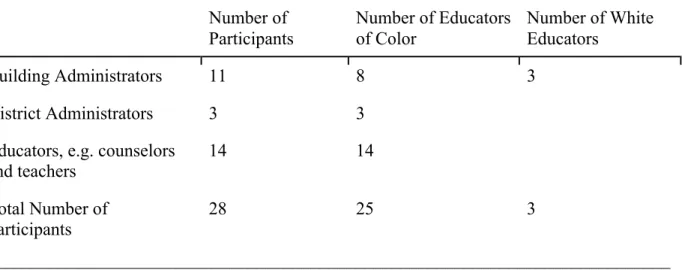
Table 1: Researchers’ Focus Areas ...4 Table 2: Interview Participants ...34 Table 3: Participants in the Study…………...………...49
List of Figures
Figure 1: Race and/or Ethnicity of Interviewed Participants ...35 Figure 2: U.S. Population of Public School Students (Prek-12) ...39 Figure 3: U.S. Population of Public School Teachers………...………...40
1
CHAPTER 11
PROBLEM STATEMENT AND LITERATURE REVIEW Statement of Problem and Purpose
The demographics of the United States population are shifting dramatically. This shift is due to increased birth rates within populations of color and immigration (Boser, 2014). As a result, schools that once catered to a mostly White student body are now educating children from a number of different races and ethnicities (Frey, 2011). This is true in almost every state
(Boser, 2014) and in urban (Achinstein, Ogawa, Sexton, & Freitas, 2010; Justiz & Kameen,1988), suburban (Lee, 2013; Mabokela & Madsen, 2003), and rural (Castaneda, Kambutu, & Rios, 2006) districts. Though the percentage of minority students is increasing significantly, the racial and ethnic diversity among educators has not kept pace (Ahmad & Boser, 2014; Ingersoll & May, 2011; Justiz & Kameen,1988). The National Center for Education Statistics (NCES, 2016a) reported the distribution of U.S. public school students in the fall of 2015 as 49.2% White, 15.5% Black, 26.1% Hispanic, 5.3% Asian/Pacific Islander, 1.0%
American Indian/Alaska Native, and 2.9% two or more races. The NCES (2016b) also reported the 2015 – 2016 distribution of public school teachers as 80% White non-Hispanic, 9% Hispanic, 7% non-Hispanic Black, and 2% non-Hispanic Asian.
This phenomenon has gripped the state of Massachusetts. The Massachusetts Department for Elementary and Secondary Education (DESE) reported that during the 2016-2017 school year, 38.7% of MA public school students were students of color (Massachusetts Department of Elementary and Secondary Education, 2017), while teachers of color accounted
1 This chapter was jointly written by the authors listed and reflects the team approach of this project: Charles J. Drane III, Diana Guzzi, Roderick V. MacNeal, Jr., Leslie M. Patterson, Nancy Robbins Taylor, and Joan M. Woodward.
for only 9.7% of the educator workforce (Massachusetts Department of Elementary and Secondary Education, 2017). This racial disproportionality is even more apparent when
considering specific MA school districts. For example, in Brockton Public Schools, the disparity is 79.6% students of color to 8.2% teachers of color (Massachusetts Department of Elementary and Secondary Education, 2017). Similarly, in Lowell Public Schools the disparity is 71.7% students of color to 10.4% teachers of color (Massachusetts Department of Elementary and Secondary Education, 2017). These districts are just two examples among many in
Massachusetts that are experiencing this significant diversity gap.
This imbalance is troubling and a matter of urgency for several reasons. First, educators of color have the potential to be social justice change agents (Villegas & Davis, 2007). Second, educators of color can serve as exemplary role models for all students, and perhaps even more so for students of color (Branch, 2001; Graham, 1987). Third, educators of color have the power to successfully enact culturally responsive practices (Villegas & Irvine, 2010). Finally, perhaps the most compelling reason is that educators of color can positively impact student achievement (Dee, 2004; Irvine, 1989).
Practitioners and policymakers have attempted to address the racial disproportionality in schools through the development and implementation of effective hiring and retention
strategies. These strategies include alternative certification pathways such as Teach for America and the New Teacher Project-Fellowship, and formalized supports such as mentoring and
induction programs (Bireda & Chait, 2011). Specifically, in Massachusetts, to increase hiring rates of a diverse staff, educational leaders have relied on various forms of networking,
relationships with colleges of education, and job fairs (Pohle, 2016). Additionally, educational leaders are promoting the teaching profession to high school students with the hope that these
3 same students will eventually want to return to teach in their home district (Rocheleau,
2017). Furthermore, to help retain teachers of color, school districts utilize support programs such as one created by Travis Bristol, an education professor at Boston University. This
program, active in Boston Public Schools, “allows minority teachers to network with one another and discuss the challenges of navigating a white-dominated system” (“Mass. should diversify,” 2017, p. 4). In spite of these numerous established strategies, the minority student-teacher imbalance remains, and in fact, continues to grow (Boser, 2014).
Despite the imperative to hire and retain more educators of color, and a growing body of literature related to this topic, there is a gap in research. Best practices with regard to the
recruitment, hiring, evaluation, and retention for this particular group of educators have yet to be established. Additionally, there is a significant gap in the existing research related to how educators of color view their pre-service preparation programs, perceive the impact of their racial/ethnic identity on their work, and experience issues related to student
discipline. Furthermore, the fact that first-hand perspectives of educators of color are not consistently included in the conversation contributes to this research gap.
Therefore, the purpose of this study was to capture the perceptions of educators of color related to racial disproportionality and its impact on the educator pipeline and schools. The educator pipeline refers to preparation, recruitment, professional experiences related to students and colleagues, and retention of educators. (The definition of “educator pipeline” is discussed later in this chapter.) A primary goal of this study was to hear directly from those most
impacted. Accordingly, this study was guided by the following research question: How do educators of color experience racial disproportionality within the educator pipeline and
related to pre-service programs, recruitment and hiring, student discipline, their racial/ethnic identity as it impacts students, evaluation, and job satisfaction. The primary research questions for these individual studies are noted in Table 1.1. An abstract for each individual study can be found in Appendices A through E.
Table 1
Researchers’ Focus Areas
______________________________________________________________________________
Last Name Category Focus Area
______________________________________________________________________________
Drane Pipeline How do educators of color perceive their pre-service
preparation?
Patterson Pipeline How do educators of color experience the recruitment and
hiring process? Which practices and policies do school and district level leaders implement in the recruitment/ hiring process for educators of color?
Woodward Schools How do educators of color perceive the impact of their
racial/ethnic identity on their work with students?
Taylor Schools How do educators of color perceive the role of race on the
discipline system in their district?
MacNeal Pipeline/Schools How do educators of color perceive the evaluation process and its impact on their professional growth and
development?
Guzzi Pipeline/Schools What are factors that influence job satisfaction for teachers and administrators of color? How do teachers and
administrators of color perceive the factors of job satisfaction to influence their retention?
______________________________________________________________________________ Conceptual Framework
The conceptual framework used for this study is critical race theory (CRT). The basic principle of CRT espouses that racism has become a normalized practice within our society (Ladson-Billings & Tate, 1995). The use of CRT provides a lens for identifying the inequities
5 that have plagued the experiences of people of color in this country (Ladson-Billings, 1998). In education, the use of CRT considers the perspectives of people of color to provide a counter story to the majoritarian viewpoint connected to positions of privilege and power acquired based upon race (Capper, 2015; DeCuir & Dixson, 2004).
Critical Race Theory evolved from critical legal studies (CLS) which scholars have used as a lens to advocate that legal policy and doctrine has contributed to an ideology that “create, support, and legitimate America's present class structure” (Crenshaw, 1988, p. 1350). Absent within CLS, was an emphasis on race, thus CRT was created in order to provide another lens for analysis (Capper, 2015; Ladson-Billings, 1998). Since its inception, CRT has been used to underscore the notion that racism has become normalized within American society and the law. This has become particularly true for citizens of color and individuals who possess a lower economic status (Capper, 2015; Ladson-Billings, 1998).
Ladson-Billings and Tate (1995) first used CRT to examine the inequities that exist within the educational system. Subsequent research has used the tenets contained within CRT to provide insight as to how structures within the educational system support White privilege over the needs of people of color. The tenets used for this study include permanence of racism, counter storytelling, critique of liberalism, and Whiteness as property (Capper, 2015). The Permanence of Racism
The permanence of racism professes that racism is a constant fixture in society which “appears both normal and natural to people in this culture” (Ladson-Billings, 1998, p.
11). López (2003) states that racism is an endemic part of society that is not just defined by overt acts of oppression or violence. DeCuir and Dixson (2004) highlight how racism dictates the various structures of influence within our society, notwithstanding the field of
education. Within the context of educational leadership, CRT has been useful with highlighting how the permanence of racism has influenced the development, hiring, and retention of
educators of color (Capper, 2015).
In their study, which took place in a Southeastern state, McCray, Wright, and Beachum (2007) examined the placement of African-American secondary principals by surveying all public secondary school principals in that specific Southeastern state. Findings from the study reveal that White principals received a greater opportunity to serve in majority Black and White school settings than their African-American counterparts. (Note: throughout our paper, the terms African-American and Black will be used interchangeably, often determined by the author being cited.) The use of race as a pre-determinant factor to fulfill principal vacancies is an example how the permanence of racism impacts placement options.
In another study by Knaus (2014), preliminary interviews were conducted to identify three case studies. The case studies included semi-structured interviews of three principals who identified two teachers in each of their buildings who exhibited the most promise for school leadership positions. The pairings included one African-American teacher and one White teacher. The principals were asked how they provided leadership opportunities for each of the identified teachers. Each teacher was interviewed about professional development and
leadership positions offered to them. Findings from the study highlighted how principals categorized African-American and White teachers based upon race rather than evidence from direct observations. White teachers were perceived to be more effective at teaching the standards. In comparison, the African-American teachers in the study were relegated to being culturally responsive teaching experts and heralded for their excellent classroom management skills. In comparison, the White teachers received more responsibilities and increased
7 opportunities to serve in leadership roles. Based upon the findings, the cultural background of the African-American teachers influenced how their White principals viewed them and
precluded them from receiving opportunities for leadership positions. Counter Storytelling
The use of counter storytelling (also referred to as “counter stories” or “counter narratives”) provides an alternate perspective to the majoritarian viewpoint which is used by Whites to explain racial inequities that are “embedded with racialized omissions, distortions, and stereotypes” (Ladson-Billings, 1998, p. 18). In the context of education, counter stories of principals and other leaders of color are extremely important when seeking to provide equity (Capper, 2015).
In the study by Knaus (2014), African-American teachers who were identified by their White principal as “most promising” (p. 424) were interviewed. The findings use the input of African-American teachers to provide insight as to how they were treated differently than their White counterparts. The African-American teachers provided a counter story that conflicted with the perspectives of their supervisors.
In a study by Lynn (2002), African-American male teachers who work in South Central Los Angeles were interviewed regarding whether their racial identity informed their pedagogy, and how their racial and gender status impacted the relationships with their students. The schools in which the participants worked were majority Hispanic and African-American with 84% of the student population receiving free and reduced lunch. The participants in the study consistently exhibited a passion for working to improve the conditions of their students through teaching. The personal stories provided by interview data challenged prior research that gave a less than appealing description of educators of color.
Critique of Liberalism
Proponents of CRT advocate that liberal movements are often characterized by colorblind and neutral ideologies that fail to address the historical impact race has had in society (DeCuir & Dixson, 2004; Ladson-Billings, 1998). Color blindness, or the state of not viewing race as a relative difference, is identified as a significant contributing factor in the perpetuation of
institutional racism. Researchers have discovered that when organizations, including educational systems, demonstrate colorblindness and it becomes formal or informal policy, the effects seem to be predominantly adverse for minorities (e.g., Lewis, 2001; Schofield & Anderson, 1986; Tarca, 2005). López (2003) posits that it is a fallacy to believe that a race neutral political agenda will effectively resolve racism. Substantial change can only come from a deep
examination of how the impact of race has been interwoven into society which includes the field of education. Educators who fail to recognize race and one’s ethnic background “are
unconscious about the ways schools are not racially neutral but reflect White culture” (Capper, 2015, p. 817).
A study by Evans (2007) examined how educators in three suburban high schools responded to the racial and demographic change that took place between 1990-2000. The participants who were interviewed included school staff, principals, and superintendents. Findings from the study reveal how teachers resisted an effort by district administration to initiate multicultural professional development. Faculty resisted under the belief that children are all the same. However, the teachers and administrators expressed a deficit perspective regarding the incoming African-American students. It was widely believed by the teachers that their new students were coming from school environments which held low academic
9 expectations. The examples highlighted by this study exemplify how colorblind perspectives perpetuate discriminatory practices that disregard the needs of students of color.
Whiteness as Property
The concept of Whiteness as property can be linked to a legal system that is based upon protecting its membership and excluding all others (Harris, 1993). Thus, this tenet espouses that the rights and privileges that are connected to being White are exclusive and can only be shared by those from this majoritarian class. Within the context of education, Whiteness as property has been utilized to explain how curriculum and the right to upper-level Advanced Placement
courses have been implemented to perpetuate privilege and exclude those from marginalized backgrounds (Pollack & Zirkel, 2013). Ladson-Billings (1998) explains how remnants of African-American culture are often omitted from school curriculum. As a result, a false representation of true events distills the significance of African-American figures who have made major contributions to our society and the world.
Decuir and Dixson (2004) highlight a school that created a culture that prohibited students from wearing clothing that represented African culture. School policies aligned with White culture dictated that students must suppress or find inventive ways to express their individual ethnic or racial culture through dress. An example includes a student who wanted to wear an African headwrap during graduation, but could not because all graduates were required to wear white. To conform to the policy, the student wore a white head wrap that featured African symbols in white.
We used CRT to examine how race impacts the experience of educators of color within the Cityside Public School District. Each tenet provided a specific lens to analyze data and assist with developing an understanding of the overall research question, how educators of color
experience racial disproportionality within the educator pipeline and schools. The use of
permanence of racism assisted with identifying examples of implicit bias and overt acts of racism for participants of this study. The use of counter storytelling provided a voice to participants as they shared their experiences while working in the district. The use of critique of liberalism provided a perspective as to how the use of race is considered when examining various policies and practices that help to shape the working environment in Cityside. Finally, the use of Whiteness as property helped examine how participants perceive their opportunities to build relationships, make connections, grow and achieve positions of leadership within the school district. Overall, the use of CRT provided us with a framework for assessing the conditions which educators of color need to navigate in order to thrive within the Cityside Public School District.
Literature Review
The value of a diverse educator workforce has been a research topic explored by many. Currently, scholars are making more efforts to highlight the voices of educators of color in their studies. This literature review was grounded in a discussion of the importance of educators of color and followed by a discussion of topics related to the experiences of educators of color within the pipeline and schools. These topics include: pre-service programs, recruitment and hiring, student discipline, racial/ethnic identity as it impacts students, evaluation, and job satisfaction.
The Importance of Educators of Color
As stated in this chapter’s introduction, educators of color can positively impact the school experiences for all students. They can do this through their capacity as social justice change agents, role models, and proponents of culturally responsive practices. Additionally, the
11 presence and approaches of educators of color can lead to increased levels of student
achievement.
Social justice change agents. Villegas and Davis (2007) claim that teacher candidates of color, if provided with the necessary preparation, will be able to successfully translate “their commitment to making schools more equitable and just for students of color” (p. 146) into positive outcomes. Supporting this, scholars have found that some educators of color devote significant energy to explicitly addressing racism with their students (Villegas & Irvine, 2010). Specifically, these educators tackle issues pertaining to societal and institutional power, resulting in students of color more successfully navigating their world. Beauboeuf-Lafontant (1999) posits that numerous African-American teachers have “recognized the existence of oppression in their students’ lives and sought to use their personal, professional, and social power to encourage children to understand and undermine their subordination” (p. 702).
Several scholars have supported these claims through their related research. After interviewing thirty-six Black male teachers employed by the Los Angeles Unified School District, Lynn (2002) found that most of these study participants felt called “to change the lives of African American youth” (p. 125), and that teaching was a way to make this happen. They focused specifically on their work with students living in working-class and poor communities, expressing clearly that their goal was to empower these students and help them to overcome social, political, and economic barriers. Similarly, Ladson-Billings and Henry (1990) studied successful teachers of Black students in the United States and Canada. Of the thirteen teacher participants, ten of them were either African-American or Afro-Caribbean. Ladson-Billings and Henry (1990) found that these teachers engaged their students in conversations about the realities of life, addressing controversial topics that others might have determined only appropriate for
adult discussions. These teachers made sure that students contemplated the “responsibilities they have to make life better for everyone” (Ladson-Billings & Henry, 1990, p. 79).
Role models. Graham (1987) posits that academically successful Black teachers serve as needed role models for Black students as well as non-Black students; for all of these children need to recognize that Black people are essential members of society. Similarly, Irvine (1988) stated that “white students need black teachers as role models so that they can gain accurate perceptions of our multiethnic society” (p. 506). Branch (2001) emphatically addresses this issue:
Not enough has been said, however, about the role models that teachers of color can be for European-Americans in schools. Though teachers are not paid nearly what they are worth, they are still held in high esteem by much of the populace. … Now, children of all races are developing these positive notions about an overwhelming number of European-American teachers and very few teachers of color . . . erroneous assumptions about the intelligence of African-Americans, Latinos, and other people of color may be reinforced merely by their absence as teachers in the nation’s classrooms. (p. 258) Also, Irvine (1988) recognizes the role that Black teachers play in negating hurtful stereotypes about their race. On a related note, Stewart, Meier, and England (1989) speak to the importance of Black teachers specifically for Black students, as they state that the mere presence of Black teachers positively impacts Black students because of the influential power of same-race role models.
It is important to highlight that while role modeling is often recognized by scholars as an important attribute of educators of color in schools, this position has not been well researched (Villegas & Irvine, 2010). In fact, Irvine (1989) and Villegas and Irvine (2010) critique the high
13 status that has been given to the “black teachers as role models” argument, with Villegas and Irvine (2010) noting that during the course of their research, they did not encounter any related empirical studies.
Proponents of culturally responsive practices. Branch (2001) addresses culturally responsive practices as he recognizes that teachers of color can play a critical role in ensuring the existence of culturally relevant curriculum. Irvine (1989) offers that Black teachers are most qualified to be “cultural translators” (p. 55) as they help marginalized Black students navigate a school culture that is not aligned with their home culture. Similarly, Villegas and Irvine (2010) discuss the idea that because teachers of color can genuinely connect with the cultural
experiences of students of color, this particular type of student-teacher matching is critical. This claim is supported by the work of Ladson-Billings and Henry (1990). During their study of successful teachers of Black students, they found that these teachers connected the curriculum directly to students’ lived experiences and also employed pedagogical strategies that were based on students’ cultural roots (e.g. incorporating proverbs, call-and-response interactions, and hymns).
Student achievement. Irvine (1989) claims that Black teachers’ distinct approach to teaching is likely responsible for Black students’ academic success. Supporting this claim, Dee (2004) found that after one year of elementary school, students learning from Black teachers saw their math and reading scores rise. The study of Egalite, Kisida, and Winters (2015) resulted in similar findings. After analyzing a large dataset provided by the Florida Department of
Education that linked approximately three million students to 92,000 teachers from the fall of 2002 to the spring of 2009, they concluded that when students are paired with a teacher of their same race/ethnicity, reading achievement was positively impacted for Black and White students
and math achievement was positively impacted for Black, White, and Asian/Pacific Island students. Another study, with a less direct though still important connection to student achievement, was conducted by Fox (2016). Fox, analyzing survey data from the 2002 Educational Longitudinal Study, found that Black teachers in comparison to their White
counterparts held higher expectations for their Black students. These Black teachers were more likely to believe that their Black students would continue their formal education past high school. Fox (2016) speaks to the significance of this finding:
Once a teacher forms academic expectations for students, he or she may teach in a way that is consistent with those expectations; thus, if differential expectations result in differential treatment, there is the potential for such treatment to result in differential student learning and achievement. (p. 3)
Taken together, these studies provide evidence that educators of color can significantly influence the academic trajectory of their students.
While this research supporting the importance of educators of color (especially when focused on racially congruent teacher-student pairings) may lead some to draw the conclusion that racially segregated schools are beneficial, Boser (2014) highlights that it “is important for all students to interact with people who look and act differently than they do in order to build social trust and create a wider sense of community” (p. 3). Additionally, in a recent student perception study utilizing 50,000 sixth through ninth grade student reports on 1680 classroom teachers, Cherng and Halpin (2016) concluded that students (independent of race) feel more favorable towards Latino and Black teachers than towards White teachers. This finding further supports the notion that “minority teachers can translate their experiences and identities to form rapports with students that do not share the same race or ethnicity” (Cherng & Halpin, 2016, p. 10). In
15 sum, this research adds significant credence to the claim that educators of color can positively impact all students.
Educator Pipeline
The term teacher pipeline or educator pipeline is routinely found in literature on the education workforce. Villegas and Lucas (2004) offer this term as a metaphor that traces the path of people in the teaching profession back to elementary school. They present the pipeline as elementary students who become secondary students, who become college students enrolled in teacher education programs, and who then become educators.
Often, when the educator pipeline is described, authors characterize it as “broken” (Ladson-Billings, 2005, p. 230), a “revolving door” (Ingersoll, 2002, p. 23; Lau, Dandy, & Hoffman, 2007, p. 27), or “leaky” (Butty & Brown, 1999, p. 282). Lau, Dandy, and Hoffman (2007) go so far as to describe the education workforce as a “sieve” (p. 27). Throughout the educational research literature, scholars have examined many of the points where the flow of the pipeline is interrupted (Achinstein et al., 2010; Cochran-Smith, 2004; Evans & Leonard, 2013; Haddix, 2017; Kohli, 2009; Villegas & Lucas, 2004). Ultimately, these studies converge on the same conclusion that no matter the source of the leaks or the point in time when they surface, the leaky pipeline is having a negative impact on the availability of educators of color in schools today.
In response to the detrimental consequences of a failing pipeline, Villegas and Lucas (2004) assert that:
nothing less than a comprehensive and coordinated initiative to expand the number of students of color in the pipeline and to stop the leak of human potential at the identified
critical junctures will alter the demographic makeup of the teacher workforce in any significant way. (p. 83)
It is important to note that Villegas and Lucas contend that two things must happen. First, the number of people of color in the pipeline must grow. Second, the departure of educators of color from the profession must be stemmed. The first point speaks to educator preparation and
recruitment, and the second to retention.
For the purposes of this study and drawing from the work of Villegas and Lucas (2004) and others, we will take the previous definition of an educator pipeline, which stops when the educator is hired, and extend it to include the retention of educators. The work of Ingersoll and May (2011) support the need to be attentive to not only the inflow of educators into the pipeline, but also to the “exit end of the pipeline” (p. 4). Additionally, while definitions of the educator pipeline extend as far back as elementary school, we will begin our examination of the pipeline with university schools of education. In short, we will consider the educator pipeline to consist of the preparation, recruitment, and professional experiences related to students and colleagues, as well as retention of educators.
Educator preparation. Eighty-five percent of teachers come from traditional education programs (Barth, Dillon, Hull, & Higgins, 2016). For that reason, it is essential to examine the experiences of pre-service educators of color in university schools of education. While many factors have been uncovered as reasons for the smaller-than-optimal pool of educators of color, four emerge most often: the current demographics of colleges and universities, the make-up of schools of education, barrier exams, and the curriculum in schools of education (Branch, 2001; Brown, 2005).
17 Both in American universities in general and their schools of education specifically, people of color are disproportionately represented. Considering that enrolling in a university is contingent upon previous educational attainment, Achinstein et al. (2010) and Aud, Fox, and KewalRamani (2010) describe how disadvantageous earlier schooling opportunities have led to the presence of a disproportionately low number of people of color in American universities. Narrowing down to schools of education, Cochran-Smith (2004) and Evans and Leonard (2013) describe school of education demographics as overwhelmingly consisting of White
females. Consequently, it is in relation to both previous educational disadvantages and the existence of large numbers of White females in schools of education that the current
demographics do not work in favor of a diversified workforce of educators. Also, negatively impacting the pool of educators of color is the increasing opportunity for people of color to be employed in fields other than education. While this is a positive result of the Civil Rights Movement and desegregation (Madkins, 2011), the field of education is feeling the impact nonetheless (Wilder, 2000).
As with demographics, both in admission to universities in general and schools of education specifically, entrance requirements such as SATs/ACTs or the Praxis I exam work counter to creating a more diverse field. Nettles, Scatton, Steinberg, and Tyler (2011) examined results of the Praxis I exam, a requirement for entrance into many education programs, and found that approximately 80% of White students pass on the first try while 40% of African-American students pass on the first try. This statistic is even more disheartening when recognizing that success on a barrier exam like the Praxis I is not even a predictor for success in the field of education (Darling-Hammond, 2000). So, both barrier exams required in order to be accepted
into universities and other exams required to enroll in education programs are serving to limit the number of students of color available in the workforce.
Another factor affecting the availability of educators of color in Massachusetts is the need to pass the Massachusetts Test for Educator Licensure (MTEL). An April 2008 memo from the Acting Commissioner of the Massachusetts Department of Elementary and Secondary
Education (DESE) informed the DESE Board that 77% of White test takers pass the MTEL while 46% of African-American test takers and 48% of Hispanic test takers pass the exam (http://www.doe.mass.edu/boe/docs/FY2008/0408.pdf). The memo goes on to report that these pass rates mirror what is found on the Praxis II exam. Data available on the DESE website for 2015-2016 is encouraging in that pass rates for all three racial groups have gone up, but a gap of 13 to 20 percentage points remains
(http://www.doe.mass.edu/mtel/2016ResultsByCategory.html).
Brown (2014), Cochran-Smith (2004), and Montecinos (2016) contend that another factor limiting the pool of people of color in the field of education is the curriculum in university
schools of education. Cochran-Smith (2004) argues that a way to fix this issue is “by incorporating their [people of color] perspectives into the curriculum and finding ways to decrease the alienation they often experience” (p. 390). Achinstein et al. (2010) conclude that programs of education that concentrated on recruiting and supporting pre-service educators of color showed higher educator retention than the teaching force as a whole.
Just as literature has focused on the factors leading to the disparity in people of color in university schools of education, research has also suggested answers to this disproportionality. While a number of possibilities have been posited, two such suggestions stand out in the frequency with which they appear. First, Schmitz, Nourse, and Ross (2012) suggest that more
19 communication between schools of education and departments of education could help to produce college graduates in fields better aligned with disciplines most in need of educators. A second suggestion is to provide pre-service teachers with better clinical experiences so that they are more likely to remain on track to become an educator (Achinstein et al., 2010).
Recruitment. While teacher preparation is a vital phase of the educator pipeline, it is teacher recruitment that Barth et al. (2016) describe as “the leakiest section” (p. 11). Three reasons were offered for why this portion of the pipeline is so leaky. First, graduates of schools of education do not necessarily enter the field of education. Next, the need to pay off loans adversely impacts the ability to enter the field of education. And, a clinical experience too late in the training process can lead to a late change out of the field of education.
Because states generally do not keep data on the jobs that graduates from schools of education pursue, it has been left to the research community to attempt to quantify this data. Studies differ in their conclusions of how many graduates from university schools of education do not remain in education, but even the varying findings speak to a problem in the
system. Barth et al. (2016) conclude that between 25-50% of education school graduates do not go on to teach. This high number of teacher education graduates who do not follow through and teach only exacerbates the already small number of candidates in schools of education.
While some graduates of schools of education may want to enter the field of education, Barth et al. (2016) found that the need to pay off school loans coupled with the perception that education is not a lucrative profession has led some people to choose a different field. Ladson-Billings (2005) and Shipp (1999) report that the decline of people of color in the field of
education coincides with increases in fields with higher paying jobs, like law and medicine. As will be discussed later, loan forgiveness programs can be a way to counter this trend.
As noted with regard to the teacher preparation aspect of the pipeline, clinical (practicum) experiences can cause some educators of color to fail to graduate from schools of
education. Torres, Santos, Peck, and Cortes (2004) examine the timing of these experiences. They conclude that clinical experiences that are scheduled toward the end of the degree program force some students to go far down the path toward being an educator before a field experience gives them pause to reconsider. Those same students choose to graduate with a degree in education, but do not pursue a job in that field.
Recent literature proposes three successful strategies for improving recruitment of educators of color. School residencies, such as the Boston Teacher Residency Program, have been shown to increase the number of educators of color available to be placed in teaching positions (Solomon, 2009). Second, given the high cost of university education, Villegas and Davis (2007) assert that an important recruitment effort has been programs that reduce or remove college loans for people who teach for a set amount of time after college. Finally, a good amount has been written about programs that seek to interest high school and even elementary school students in the field of education, known as “grow your own” programs.
Impact on students. As stated previously, there is significant research on the impact that educators of color have on their students. When considering this impact, two themes emerge in the literature. The first relates to how educators of color may serve as role models to students and the second addressed how the racial and ethnic backgrounds of educators of color positively impact curriculum and learning.
The work of Atkins, Fertig, and Wilkins (2014) and Beady and Hansell (1981) explain the motivating influence that educators of color have on students of color. When students of color see all races represented in the faculty of their school, they are exposed to greater
21 expectations for their own futures. Additionally, these authors note that the presence of educators of color positively affects the perceptions of students of color by making them feel a part of the school. This sense of student belonging results in greater student engagement and connectedness, which are important factors in a student’s ability to be successful.
Castañeda et al. (2006) conducted a study that explored the perceptions of educators of color working in diasporic rural settings in Wyoming and the inevitable challenges these educators face. Although challenges are noted, the participants’ influence as role models, to bring cultural authenticity, inspiration, and multiplicity of perspective to all students in ways that White teachers could not, serves as an example of the importance of employing educators of color.
When educators of color bring cultural authenticity, inspiration, and a multicultural perspective to the schoolhouse, racial inequities are reduced. Supporting this research, Goodwin (2004) conducted a study with seven post-secondary educators of color to explore what
educators of color feel they bring to their work and the teaching profession. From this research, it was found that “teacher educators of color possess an empathic understanding of the lives of children of color, which results in a strong desire to engage in social action and redress inequities” (p. 22).
To address the inequities in educating students, Gist (2014) conducted a study that investigated the pedagogy of three socio-politically conscious teacher educators in teacher preparation programs to understand how to tailor teacher preparation for educators of color as a means to equip these teachers with the skills necessary to provide culturally responsive pedagogy to the students they will eventually teach. From this study, Gist purports that teachers of color are situated to make meaningful contributions to the teaching profession at a time when “the
educational community is attempting to more precisely define aspects of effective instruction for students of color” (p. 280).
Discipline. The fact that Black students are suspended or excluded from schools at a remarkably higher rate than their White peers was first studied and published in 1975 by the Children’s Defense Fund (1975). In the four decades that followed, this finding of racial disproportionality in school discipline has remained consistent (Costenbader & Markson, 1998; Glackman et al., 1978; Gregory, 1997; Gregory, Skiba, & Noguera, 2010; Skiba, Michael, Nardo, & Peterson, 2002). However, understanding the perceptions that educators of color and White educators may have regarding how race may or may not influence the school discipline system has not been studied extensively. While pre-service programs and the hiring process ultimately impact students, discipline has a direct and immediate impact. The research speaks to three components of the impact of discipline: the role of the educator, the subjectivity of the educator, and interplay between the educator and student.
The role that the educator plays in discipline speaks to the influence of educators as role models enhancing student attendance and achievement. Simply put, the presence of African-American educators increases the connection of students of color to schools (Villegas & Irvine, 2010). This connection can improve student attendance rates, and better attendance is logically linked to increased academic achievement. Therefore, educators of color play a crucial role at the start of this continuum. The work of Lindsay and Hart (2017) promotes educator diversity as a means of increasing academic achievement of Black students. In this study, Lindsay and Hart found evidence that supports a decrease in discipline and an increase in the reading scores of Black students when these students are taught by same-race teachers.
23 Given that discipline is meted out by human beings, it is important to consider the possible impact of subjectivity on patterns of discipline. One way to understand educators’ subjectivity is to explore their individual perceptions of expected student behavior and if those expectations are applied differently to Black students. Two themes emerge when looking at the subjectivity of discipline: subjectivity of the interpretation of behavior and subjectivity in the assigned consequences. Skiba et al. (2002) assert that the consequences for disciplinary
infractions by African-American students are subjective because an educator’s own beliefs and assumptions about Black students may influence how behavior is managed based on
preconceived ideas. Skiba et al. (2002) conclude that significant discrepancies in school discipline between White and Black students indicates a systemic bias.
Interactions between students and educators are inherently complex. When educators and students come from different racial and cultural backgrounds, this complexity is enhanced and may influence the relevancy of the discipline (Gregory & Mosely, 2004). These authors refer to Culturally Relevant Discipline (CRD) as a frame through which to more critically examine student discipline. CRD posits that for an individual student’s discipline to be relevant, an educator must consider cultural and racial factors as well as previous discipline experiences in each disciplinary incident (Gregory & Mosely, 2004).
Retention of educators of color: Evaluation and satisfaction. Research regarding the retention of educators has been narrow because of limited data, especially at the national level (Ingersoll, 2002). In order to gain a better understanding of topics related to the experiences of teachers and principals, the NCES conducted educational surveys beginning in 1987. These surveys focused on general school conditions, including student demographics as well as hiring and retention practices (http://www.nces.org). Using the data from the NCES educational
surveys, Ingersoll (2002) found that teacher retention was influenced by varying factors
including retirement, school staffing decisions, personal reasons, interest in pursuing another job, and/or job dissatisfaction. The data also showed that 39% of entering teachers leave the
profession within the first five years of teaching (Ingersoll, 2002). This lack of retention of teachers in the first five years was related to the aforementioned factors, with the exception of retirement.
Principal retention was more likely to be influenced by factors like school level and setting as well as student demographics and achievement, while personal characteristics such as age, race, and gender had a smaller influence on principal retention rates (Fuller & Young, 2009). After the 2011-2012 school year, 78% of principals remained at the same school while 6% of principals moved to another school, and 12% of principals left the role of principal (Taie, & Goldring, 2017). DiPaolo and Tschannen-Moran (2003) found that within five years 26% of principals would retire, 11% of principals would seek central office positions, and 2% of principals planned to leave the profession. When asked about filling the anticipated vacancies, principals expressed that they believed a principalship was not a desirable position. The primary reasons given were job-related stress and hours required of the position (DiPaolo & Tschannen-Moran, 2003). National survey data like this, as well as single case studies and other
independent studies, have been used to better understand the retention of educators of color. Retention of teachers of color. The preparation and recruitment process does not solely limit the number of teachers of color in the educator pipeline. The disproportionality between teachers of color entering the profession and those leaving the profession also has an
influence. In the beginning of the 2003-2004 school year, 47,600 teachers of color entered teaching, however, by the end of the year, 56,000 teachers of color left teaching (Ingersoll &
25 May, 2011). Since 1988, the turnover rate of teachers of color has gradually increased. From 1988-1989 to 2008-2009, the annual turnover rate of teachers of color has grown from 15.1% to 19.3%. Attrition of teachers of color is influenced by one or more of the following factors: 32.9% of teachers of color identified leaving teaching because of retirement; 45.3% of teachers of color identified leaving teaching for personal reasons; 35.4% of teachers of color identified leaving to pursue another job; and 35.3% of teachers of color identified leaving because of job dissatisfaction (Ingersoll & May, 2011). Only one-third of the teachers of color are leaving the profession because of retirement, while two-thirds of teachers of color are leaving their jobs because of personal reasons, to pursue another job, and/or job dissatisfaction.
Job satisfaction of teachers of color. Ingersoll and May (2011) found that organizational conditions, like faculty decision-making influence and teacher autonomy, have a more
significant impact on job satisfaction for teachers of color than for White teachers. While administrative leadership and support, as well as salary and resources have an influence on retention rates, there is a similar significance for all teachers. Factors like student demographics, including higher rates of low socioeconomic status or population of minority students, did not influence the turnover of teachers of color (Ingersoll & May, 2011). These findings validate an earlier study completed by Ingersoll (2006) which reported that organizational conditions such as administration, accountability testing, student discipline, influence and autonomy, workplace conditions, classroom intrusions, salary and benefits, teaching assignments, and class size influence public school teachers of color, independent of school and student population. In summary, organizational conditions and administrative support contribute to the job satisfaction of teachers of color.
Evaluation of teachers of color. The evaluation of teachers has been impacted by
legislation focused on accountability and student achievement. As a result, school districts have worked to add reforms to how teachers are observed and evaluated (Clifford & Ross, 2011; McCleary, 1979; McQuinn, 2012). A model evaluation has been defined as one that links instructional practices to student learning outcomes and ensures accountability (Phillips, Balan, & Manko, 2014). Other effective characteristics include a focus on reflective conversations with teachers, standards-based criteria, procedures for collecting multiple sets of data, detailed scoring rubrics, and methods for assessing specific teacher behaviors (Danielson, 2010; Odden, 2004; Toch, 2008). Despite efforts to create reforms, the teacher evaluation system still has challenges linked to subjectivity and a lack of training of the building principal who in most cases is
responsible for evaluating teachers (Cosner, Kimball, Barkowski, Carl, & Jones, 2014;
Danielson, 2010). Consequently, the subjectivity and lack of training of principals can lead to inequities that impact the ability of teachers of color to grow and receive opportunities for leadership positions (Knaus, 2014).
Retention of administrators of color. According to the NCES, 20% of public school principals were educators of color in 2011-2012 (Hill, Ottem, & DeRoche, 2016). This represents a slight increase since the 2003-2004 school year when 18% of public school principals were educators of color. While the percentage of Black principals has not
dramatically changed, the percentage of Hispanic principals has slightly increased from 3% in 1987-1988 to 7% in 2011-2012. However, the percentage of White principals has decreased from 87% to 80% during this same time period (Hill et al., 2016).
Job satisfaction of administrators of color. When studying school characteristics, White et al. (2011) identified how factors like student demographics, school climate, parent support,
27 and school location influenced the job satisfaction of principals of color. Bitterman, Goldring, and Gray (2013) reported preliminary data gathered from public school and private school principals, with a 20% participation rate of principals of color, however, they did not control for race or ethnicity. Principals reported how their level of influence on school based experiences including setting student performance standards, establishing curriculum, determining
professional development, evaluating teachers, hiring teachers, setting discipline policy and overseeing budget influenced their job satisfaction. With limited research published about the job satisfaction of principals and administrators of color, it is evident that there is a gap in research.
Evaluation of administrators of color. Over the years, the responsibilities of the building administrator have become more complex. Along with ensuring student growth and
achievement, the modern-day building administrator is also responsible for managing resources and maintaining a myriad of relationships inside and outside the school community (Davis & Hensley, 1999). As a result, the administrator evaluation needs to be comprehensive, equitable, and provide for reflective feedback from both the evaluator and the administrator (Clifford & Ross, 2011). Despite reform efforts there remains a gap in research that offers a clear and consistent theoretical framework for conducting an effective evaluation (Reeves, 2005). As a result, there is a void in research literature that examines how current evaluation systems impact the growth and development of administrators of color (Glasman & Heck, 1990; Goldring et al., 2009).
While there have been studies that identify the factors related to retention of
administrators (DiPaolo & Tschannen-Moran, 2003; Papa, 2007; Whitaker, 2001), fewer studies have explored the factors that influence the retention of administrators of color. This is a gap in
the research that needs to be addressed as the number of administrators of color gradually
increases. Additional research will also help to identify the factors that influence the retention of administrators of color and refine practices and policies that will increase the number of
administrators of color.
Conclusion
In this chapter, we examined the issue of the experiences of educators of color in recruitment, hiring, and retention, and identified the impact that the lack of diversity has on the educational environment. We presented research questions that we studied as a group hoping to fill the current research gap that is connected to this issue.
The statistical data we reviewed indicate that educators of color working in U.S. public schools are greatly underrepresented. This disparity becomes more significant as the population of students within public schools becomes more diverse. To understand the impact of this phenomenon, we have reviewed literature that considers the experience of educators of color and their perceptions related to pre-service programs, recruitment and hiring, student discipline, how their race and ethnicity impact students, how they experience the evaluation process, as well as their job satisfaction and retention. Our efforts have unveiled a lack of literature that is able to provide successful strategies that offer viable and effective solutions. As a result, we constructed a study that collected data to answer the research question: How do educators of color experience racial disproportionality within the educator pipeline and schools? The counter narratives
provided by educators of color gave us a unique perspective based upon their experiences. It is our hope that the data collected from our study will help to inform further research studies and provide guidance to schools and districts who are interested in creating a more diverse staff. Chapter 2 will describe the methodology used in this study.
29
CHAPTER 22
METHODOLOGY AND LIMITATIONS Methodology
All researchers for this study designed protocols and practices for collecting and
analyzing data. The research team was divided into three pairs based on the relatedness of their individual research studies. Collected data contributed to the overall study’s findings while individual team members analyzed data independently as it related to their individual study. This chapter will outline the study design, shared protocols and practices for data collection and analysis, as well as the study limitations.
Study Design
The purpose of this single-site case study was to explore and understand the experiences of educators of color in light of the persisting racial disproportionality within the educator pipeline and schools in a Massachusetts district. The team employed a single-bounded case study of Cityside Public Schools (pseudonym) to explore how a sample of educators of color perceived their experiences of preservice education, recruitment and hiring experiences, the impact of their race on students and student discipline, educator evaluation processes, and job satisfaction. This case study relied on data consisting of a job satisfaction survey, Multigroup Ethnic Identity Measure (MEIM) protocol, semi-structured interviews, and document analysis. The rationale for implementing this design was to utilize different data collection forms at the same time in order to both confirm and triangulate findings, as well as enrich our collective understanding of the research problem (Creswell, 2012; Merriam & Tisdell, 2016). As the
2 This chapter was jointly written by the authors listed and reflects the team approach of this project: Charles J. Drane III, Diana Guzzi, Roderick V. MacNeal, Jr., Leslie M. Patterson, Nancy Robbins Taylor, and Joan M. Woodward.
research was limited to one district, the study was delineated by the time allotted for data collection within the district, November through December of 2017, and the time allotted for subsequent analysis, December 2017 through March 2018.
Site Selection
According to the Massachusetts Department of Elementary and Secondary Education (2017a), in 2016-2017 9.7% of educators in Massachusetts were identified as non-White. For this study, research was conducted in Cityside Public Schools (CPS), an urban district in eastern Massachusetts. This district employs the second-largest percentage of educators of color (26%) in the Commonwealth. More specifically, the CPS Office of Human Resources reported 22% teachers of color teach a non-White student population of 60.1%. Site selection was also determined by the following criteria: a hiring and retention process thatfocuses on increasing educator diversity, the current employment of educators of color, and a diverse student population as identified by and reported to the Massachusetts Department of Elementary and Secondary Education (2017b) which included the following race(s) and/or ethnic groups:
American Indian or Alaska Native, Asian, Black or African-American, Native Hawaiian or Other Pacific Islander, as well as Hispanic or Latino. Additionally, the site selection was ultimately determined by Cityside’s willingness to participate in the research.
Data Collection and Analysis
Data collected for this case study was generated through recruitment emails (See
Appendices F and G), a job satisfaction survey (See Appendix H), the Multigroup Ethnic Identity Measure (MEIM) protocol (See Appendix I), semi-structured face-to-face recorded individual interviews (See Appendices J through M), and document analysis. Documents that were
31 Hiring Committee Selection Process document, [Cityside] Public Schools Staff Diversity Recruitment, Hiring and Retention Programs and Initiative document, DESE staff and student demographics and discipline report data, and Cityside’s collective bargaining agreements for Unit A and Unit B.
Job satisfaction online survey. The job satisfaction online survey designed for this study was adapted from the Teacher Follow-Up Survey: Questionnaire for Former Teachers, 2012-2013 School Year (TFS) administered by the NCES (2013). In order to assess job
satisfaction, the following areas were presented to participants in a four point Likert scale survey online addressing areas which included student discipline, administrative support, decision-making participation, job stress, colleague-to-colleague relations, gender, family support systems, overall job satisfaction, as well as demographic and employment information. The online survey link was shared in the initial recruitment email to all CPS educators of color. This data was then synthesized and compared to some of the semi-structured interviews.
Multigroup Ethnic Identity Measure. Phinney (1992) developed the MEIM protocol used to determine how individuals identify with their ethnicity and their sense of belonging within their ethnic group. Study participants who were interviewed were asked to complete this protocol. The MEIM has been used in multiple studies and been shown to be a reliable identity tool (Roberts et al., 1999). While the MEIM is typically considered a quantitative methodology tool, the limited sample size in this case study was not large enough to complete a statistical analysis. Instead, this data was used to gain awareness of how participants identify themselves ethnically and was examined to inform the qualitative data gained from the participant