LICENSES PLATE RECOGNITION SYSTEM
1
Aman Raj,
2Shivang Singh Pundhir,
5
SrinivasaRao Inbathini
1, 2, 3, 5
School of Electronics Engineering, VIT University, India
4Vel Tech High Tech Dr. Rangarajan
6
International Maritime College Oman, Sultanate of Oman
ARTICLE INFO ABSTRACT
This paper
help in the detection of number plates of authorized and unauthorized vehicles. This approach based on simple but efficient morphological operation
This approach is simplified to segmented all the letters and numbers used in the number plate by using bounding box method. After segmentation of numbers and characters present on number plate, template matching approach is
given to locate the number plate region properly to segment all the number and letters to number separately
Copyright©2016, Aman Raj et al. This is an open access
distribution, and reproduction in any medium, provided the original work is properly cited.
INTRODUCTION
In Intelligent Transportation System the automatic number plate recognition system plays important role. In current days, vehicles play important role in transportation and the use of vehicles is also increasing due to population growth and human needs. It is used for the effective control of these vehicles. It is an image processing technology that identifies vehicles by tracking their number plate without direct human intervention. Automatic Number Plate Recognition is also known by various other terms as automatic license plate recognition, automatic license plate reader, number plate tracking, car plate recognition, vehicle number plate recognition, automatic vehicle identification etc.
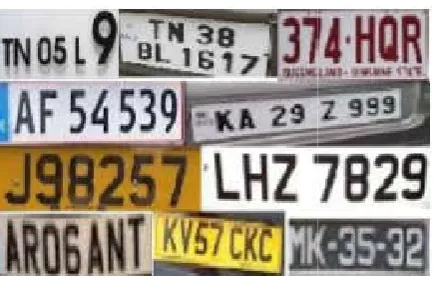
the number plates are maintained strictly in all almost a developed and developing countries. The traits of number plate are background color of number plate, character color, character size, aspect ratio of number plate; font style, script etc. are maintained strictly. In Fig 1. We
number plates used in India. The aspect ratio is very important factor and in all developed and developing country vehicles number plate has same aspect ratio where aspect ratio of a region is calculated as ratio of length to width of that region as
*Corresponding author: JasminPemeena Priyadarisini, M. School of Electronics Engineering, VIT University, India
ISSN: 0975-833X
Vol.
Article History:
Received 23rd September, 2016 Received in revised form 12th October, 2016
Accepted 19th November, 2016
Published online 30th December,2016
Key words:
Number Plate Recognition (CNPR), Character Segmentation,
Optical Character Recognition, Template Matching.
Citation: Aman Raj, Shivang Singh Pundhir, M. Jasmin
“Licenses Plate Recognition System”, International Journal of Current Research
RESEARCH ARTICLE
LICENSES PLATE RECOGNITION SYSTEM
Shivang Singh Pundhir,
3,*Jasmine Pemeena Priyadarisini
SrinivasaRao Inbathini and
6Sardar Basha
School of Electronics Engineering, VIT University, India
Dr. Rangarajan Dr. Sakunthala Engineering College, India
International Maritime College Oman, Sultanate of Oman
ABSTRACT
paper proposes a method for the detection and identification of vehicle number plate that will help in the detection of number plates of authorized and unauthorized vehicles. This
approach based on simple but efficient morphological operation
This approach is simplified to segmented all the letters and numbers used in the number plate by using bounding box method. After segmentation of numbers and characters present on number plate, template matching approach is used to recognition of numbers and characters. The concentrate is given to locate the number plate region properly to segment all the number and letters to
number separately)
is an open access article distributed under the Creative Commons Attribution License, which distribution, and reproduction in any medium, provided the original work is properly cited.
Intelligent Transportation System the automatic number plate recognition system plays important role. In current days, vehicles play important role in transportation and the use of vehicles is also increasing due to population growth and used for the effective control of these vehicles. It is an image processing technology that identifies vehicles by tracking their number plate without direct human intervention. Automatic Number Plate Recognition is also tomatic license plate recognition, automatic license plate reader, number plate tracking, car plate recognition, vehicle number plate recognition, automatic vehicle identification etc. The traits of the number plates are maintained strictly in all almost all developed and developing countries. The traits of number plate are background color of number plate, character color, character size, aspect ratio of number plate; font style, script can see different ates used in India. The aspect ratio is very important factor and in all developed and developing country vehicles number plate has same aspect ratio where aspect ratio of a region is calculated as ratio of length to width of that region as
asminPemeena Priyadarisini, M. School of Electronics Engineering, VIT University, India.
Aspect ratio= Length/Width
In India, two types of number plates are used:
For private vehicles, the number plates consist of white background with black letter on it.
For commercial vehicles, number plates consist of
yellow background with black.
In India there is no standard followed for the aspect ratio of Indian number plates. The extraction of Indian number plate is difficult compared to the foreign number plate. There are number of applications of ANPR system such as automatic toll collection at toll plaza, traffic monitoring and control, border control, stolen vehicle detection, automatic ticketing of vehicles, access control etc. The basic model of automatic number plate recognition system consists of 4 main phases:
Image Acquisition and Preprocessing phase
Number Plate Extraction
Character Segmentation
Character Recognition phase.
The main objective of this work is to locate the license plate regions from vehicle’s image. Quality of image forms an important part of this technique so preprocessing the image helps in improving the quality.
Available online at http://www.journalcra.com
International Journal of Current Research Vol. 8, Issue, 12, pp.43593-43598, December, 2016
INTERNATIONAL
Aman Raj, Shivang Singh Pundhir, M. Jasmine Pemeena Priyadarisini, Murugesan, K., SrinivasaRao Inbathini and Sardar Basha International Journal of Current Research, 8, (12), 43593-43598.
z
Pemeena Priyadarisini, M.,
4Murugesan, K.,
School of Electronics Engineering, VIT University, India
Dr. Sakunthala Engineering College, India
International Maritime College Oman, Sultanate of Oman
proposes a method for the detection and identification of vehicle number plate that will help in the detection of number plates of authorized and unauthorized vehicles. This paper presents an approach based on simple but efficient morphological operation and Sobel edge detection method. This approach is simplified to segmented all the letters and numbers used in the number plate by using bounding box method. After segmentation of numbers and characters present on number plate, used to recognition of numbers and characters. The concentrate is given to locate the number plate region properly to segment all the number and letters to identify each
ribution License, which permits unrestricted use,
ypes of number plates are used:
For private vehicles, the number plates consist of white background with black letter on it.
For commercial vehicles, number plates consist of yellow background with black.
In India there is no standard followed for the aspect ratio of Indian number plates. The extraction of Indian number plate is pared to the foreign number plate. There are number of applications of ANPR system such as automatic toll collection at toll plaza, traffic monitoring and control, border control, stolen vehicle detection, automatic ticketing of c. The basic model of automatic number plate recognition system consists of 4 main phases:
Image Acquisition and Preprocessing phase Number Plate Extraction
Character Segmentation Character Recognition phase.
The main objective of this work is to locate the license plate regions from vehicle’s image. Quality of image forms an important part of this technique so preprocessing the image helps in improving the quality.
INTERNATIONAL JOURNAL OF CURRENT RESEARCH
Figure 1. Different number plates
The complication of smart license number plate recognition work varies throughout the world. For the typical number plate, the system is easier to read and identify. This task becomes much difficult due to variation in plate model and their size. Different vehicles have plates located on different position. The proposed system control of vehicles is becoming a big problem and much more difficult to solve. Automatic Number plate recognition systems are used for the purpose of effective control.The scope of the dissertation is to identify the number plate using Template Matching algorithm of OCR methods. First the input color image is converted to gray scale image for easy to handle and simple way to find the location in the number plate. This system uses blurry regions and different font style and sizes using the character reorganization. This work has reduced the error, and time. An average increase in the number of cars on roads and highways facing numerous problems for example: documentation of stolen cars, smuggling of cars, invalid license plate, usage of cars in terrorist attacks and illegal activities.
Related Works
Morphology (SahilShaikh et al., 2013; NorizamSulaiman,
2013) is used to extract the license plate from the original image. It helps to remove unwanted small parts from license plate. A survey of image thresholding methods is conducted categorized and formulated under a uniform notation and then evaluate the performance comparison presented in paper Du et al., 2013). They categorized the thresholding methods such as histogram shape, measurement space clustering, entropy, object attributes, spatial correction and local
surface. In (Reza Azad and Hamid Reza Shayegh, Optical Character Recognition is technique in image processing. It is used to classify/ scan alphanumeric text into computer – readable text to recognize the license plate. It requires preprocessing stage to remove the boundaries which helps in recognizing the characters. It process information more quickly, accurately and efficiently and also minimizes the errors. Template Matching (Sourav Roy et al.,
test the characters with templates which are designed. It is useful for recognizing fixed size characters and non
finds small blocks of an image and match with template image. Template design is vital part of template matching. Template design must match templates to it corresponding image also have some amount of mismatch to other templates. Ch. Jaya Lakshmi, Dr. A. Jhansi Rani, Dr K.Sri Ramakrishna, M. kantiKiran and V.R Siddhartha proposed a novel approach for Indian license plate recognition system (Rashmi
Wavelet transform based method is us
Parasuraman et al., 2010) for the extraction of important Different number plates
The complication of smart license number plate recognition work varies throughout the world. For the typical number plate, the system is easier to read and identify. This task becomes much difficult due to variation in plate model and vehicles have plates located on different position. The proposed system control of vehicles is becoming a big problem and much more difficult to solve. Automatic Number plate recognition systems are used for the purpose of he dissertation is to identify the number plate using Template Matching algorithm of OCR methods. First the input color image is converted to gray scale image for easy to handle and simple way to find the location in ry regions and different font style and sizes using the character reorganization. This work has reduced the error, and time. An average increase in the number of cars on roads and highways facing numerous problems for example: documentation of stolen cars, smuggling of cars, invalid license plate, usage of cars in
NorizamSulaiman, is used to extract the license plate from the original image. It helps to remove unwanted small parts from license plate. A survey of image thresholding methods is conducted categorized and formulated under a uniform notation and then ance comparison presented in paper (Shan They categorized the thresholding methods such as histogram shape, measurement space clustering, entropy, object attributes, spatial correction and local-gray level Reza Shayegh, 2013) Optical Character Recognition is technique in image processing. It is used to classify/ scan alphanumeric text into readable text to recognize the license plate. It requires preprocessing stage to remove the boundaries which helps in recognizing the characters. It process information more quickly, accurately and efficiently and also minimizes the
et al., 2013) is used to test the characters with templates which are designed. It is for recognizing fixed size characters and non-broken. It finds small blocks of an image and match with template image. Template design is vital part of template matching. Template design must match templates to it corresponding image also of mismatch to other templates. Ch. Jaya Lakshmi, Dr. A. Jhansi Rani, Dr K.Sri Ramakrishna, M. kantiKiran and V.R Siddhartha proposed a novel approach for Rashmi et al., 2014). A Wavelet transform based method is used in (Kumar
for the extraction of important
contrast features used as guides to search for desired license plates. The major advantage of wavelet transform, when applied for license plate location, is the fact that it can locate multiple plates with different orientations in one image.
PROPOSED WORK
Morphology (SahilShaikh et al.,
2013) is used to extract the license plate from the original image. It helps to remove unwanted small parts from license plate. A study of image thresholding methods is conducted categorized and formulated under a uniform notation and then evaluate the performance comparison presented in paper Du et al., 2013). They categorized the thresholding methods such as histogram shape, measurement space clustering, entropy, object attributes, spatial correction and local level surface. In image processing
Reza Shayegh, 2013), OCR technique is used to scan alphanumeric text into computer
the license plate. It requires preprocessing stage to remove the boundaries which helps in recognizing the characters. It process information more quickly, precisely and resourcefully and also reduces the errors. Template Matching
al., 2013) is used to test the characters with templates which are designed. Template Matching is useful for recognizing fixed size characters and non-broken. It finds small blocks of an image and match with template image. Template design is vital part of template matching. It must match templates to it corresponding image also have some amount of mismatch to other templates. Ch. Jaya Laksh
Sri Ramakrishna, M. Kantikiran
a novel approach for Indian license plate recognition system A Wavelet transform based method is used in Parasuraman et al., 2010) for the extraction of im contrast features used as guides to search for desired license plates. The major advantage of wavelet transform, when applied for license plate location, is the fact that it can locate multiple plates with different orientations in one image.
METHODOLOGY
The proposed work has following stages such as (shown in Figure 3)
Image Acquisition
Pre Processing
Edge Detection
Morphological operations
Filling Regions Of Image
Erosion using line as structural element
Selecting regions of pixels Area more
Image segmentation
Template matching
The identification task is challenging because of the nature of the light. The location error will increase if the color of the number plate is very similar to the background. Noise on the number plates some time cause of error and low accuracy. There are some limitation that led to failure in most practical application due to the diversity of the number plate characteristics and the complexity of the natural environment like rain, snow, dust for etc. So, a fle
for solved this task. This report will explore and elaborate the proposed algorithm for ALPR for Indian license plate.
contrast features used as guides to search for desired license plates. The major advantage of wavelet transform, when applied for license plate location, is the fact that it can locate multiple plates with different orientations in one image.
et al., 2013; NorizamSulaiman, is used to extract the license plate from the original image. It helps to remove unwanted small parts from license plate. A study of image thresholding methods is conducted categorized and formulated under a uniform notation and then ce comparison presented in paper (Shan They categorized the thresholding methods such as histogram shape, measurement space clustering, entropy, object attributes, spatial correction and local-gray level surface. In image processing (Reza Azad and Hamid OCR technique is used to scan alphanumeric text into computer – readable text to recognize the license plate. It requires preprocessing stage to remove the boundaries which helps in recognizing the characters. It s information more quickly, precisely and resourcefully and also reduces the errors. Template Matching (Sourav Roy et
is used to test the characters with templates which are designed. Template Matching is useful for recognizing broken. It finds small blocks of an image and match with template image. Template design is vital part of template matching. It must match templates to it corresponding image also have some amount of mismatch to other templates. Ch. Jaya Lakshmi, Dr. A. Jhansi Rani, Dr. K. Kantikiran and V.R Siddhartha proposed a novel approach for Indian license plate recognition system. A Wavelet transform based method is used in (Kumar
for the extraction of important contrast features used as guides to search for desired license plates. The major advantage of wavelet transform, when applied for license plate location, is the fact that it can locate multiple plates with different orientations in one image.
The proposed work has following stages such as (shown in
Morphological operations Filling Regions Of Image
Erosion using line as structural element Selecting regions of pixels Area more than 100
ALPR process consists of four stages: 1) Preprocessing 2) License plates localization 3) Character segmentation and 4) Character recognition. In first stage, acquired image is enhanced by converting RGB image to gray image, thresholding, median filtering etc. In the second stage, license plate localization which is difficult but most important stage is obtained, based on the features of license plates. Features commonly employed have been derived from the license plate format. The features of license plate format include shape, symmetry, height-to-width ratio, area in comparison to image size. In third stage, characters are segmented using bounding box analysis. Fourth stage, character recognition is achieved using template matching.
Figure 2. Block Diagram
A. Image Acquisition
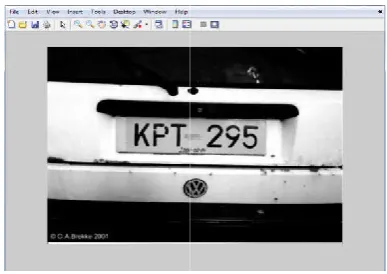
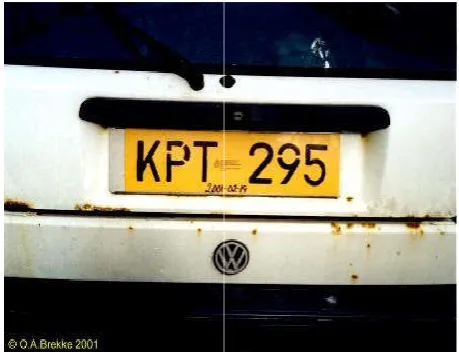
The first stage of any vision system is the image acquisition. The input image is taken either from low resolution camera or from database as per the application. Fig. 3(a) shows the acquired image of car below which is consider as original or raw image of car.
B. Pre-Processing
RGB to Grayscale Conversion
In RGB format, each Pixel has three color components: Red, Green, and Blue. In pre-processing step, the color image is given as an input and it is converted into grayscale image. The first step to digitize a “black and white” image composed of an array of gray shades is to divide the image into a number of pixels, depending on the required spatial resolution. This range is represented in abstract way as a range fro
(white), with any fractional values. Below we can see the grayscale image of the license plate and in Figure 3 we can see the comparison between the original and a gray scale image. involves conversion of RGB image into a gray scale im is more convenient and easier to deal with one component (intensity) in gray scale images than three color components (red, green, blue) in color images.
G(x, y) = 0.3R + 0.59G + 0.11B ……..………
Template Matching Image Segmentation
Selecting Regions of Pixel Area More Than 100 Erosion Using Line as Structural Element
Filling Regions of Image Morphological operations
Edge Detection Pre processing Image Acquisition
43595 International Journal of Current Research,
ALPR process consists of four stages: 1) Preprocessing 2) License plates localization 3) Character segmentation and 4) Character recognition. In first stage, acquired image is enhanced by converting RGB image to gray image, tc. In the second stage, license plate localization which is difficult but most important stage is obtained, based on the features of license plates. Features commonly employed have been derived from the license plate format include shape, width ratio, area in comparison to image size. In third stage, characters are segmented using bounding box analysis. Fourth stage, character recognition is achieved
The first stage of any vision system is the image acquisition. The input image is taken either from low resolution camera or from database as per the application. Fig. 3(a) shows the s consider as original or
In RGB format, each Pixel has three color components: Red, processing step, the color image is grayscale image. The first step to digitize a “black and white” image composed of an array of gray shades is to divide the image into a number of pixels, depending on the required spatial resolution. This range is represented in abstract way as a range from 0 (black) and 1 (white), with any fractional values. Below we can see the grayscale image of the license plate and in Figure 3 we can see the comparison between the original and a gray scale image. It involves conversion of RGB image into a gray scale image. It is more convenient and easier to deal with one component (intensity) in gray scale images than three color components
……… (2)
(a)
Figure 3. Comparison between original and gray scale image
Noise reduction
Median filtering technique can used to reduce the pepper and salt noise. In this case we used a 3 x 3 mask to detect eight neighboring pixels of the central
intensity value. If we represent the input image as f(x,y) and if we represent the resultant image as g(x,y), Median filtering can be used for noise removal as :
g(x,y)=f(x,y)*h(x,y) ………
[image:3.595.39.277.215.431.2]Where h(x,y) is transfer function of filter. Noise removal is an important aspect of license plate recognition because it affects the recognition efficiency of the system to a great extent. In Figure 4 we can see the license plate after the filtration process.
Figure 4. License plate after the filtering process
C. Edge Detection
The main objective of edge detection in image processing is to reduce the amount of data in an image and at the same time it is required to retain the properties of the image for further image processing significantly. In edge detection we locate edges by detecting sharp discontinuities in an image. This is the most efficient method for detecting variations in intensity values of an image. An edge is a boundary between two regions of an image which have different gray level intensities. In edge detection, we implement many operations such as sobel, log, canny, prewitt. In Canny operator, we take a gray scale image as input, and in output we produce an image which represents the variations in intensity levels of two regions in an image. Example figure for Edge detection is given below
D. Morphological operations
Morphology is a broad set of image processing operations that process images based on shapes. Morphological operations
Selecting Regions of Pixel Area More Than 100 Erosion Using Line as Structural Element
International Journal of Current Research, Vol. 08, Issue, 12, pp. 43593-43598, December,
(a) (b)
Comparison between original and gray scale image
Median filtering technique can used to reduce the pepper and salt noise. In this case we used a 3 x 3 mask to detect eight neighboring pixels of the central pixel and their corresponding intensity value. If we represent the input image as f(x,y) and if we represent the resultant image as g(x,y), Median filtering can
……… (2)
transfer function of filter. Noise removal is an important aspect of license plate recognition because it affects the recognition efficiency of the system to a great extent. In Figure 4 we can see the license plate after the filtration
4. License plate after the filtering process
The main objective of edge detection in image processing is to reduce the amount of data in an image and at the same time it is required to retain the properties of the image for further image processing significantly. In edge detection we locate detecting sharp discontinuities in an image. This is the most efficient method for detecting variations in intensity values of an image. An edge is a boundary between two regions of an image which have different gray level intensities.
we implement many operations such as sobel, log, canny, prewitt. In Canny operator, we take a gray scale image as input, and in output we produce an image which represents the variations in intensity levels of two regions in an
ge detection is given below
Morphology is a broad set of image processing operations that process images based on shapes. Morphological operations
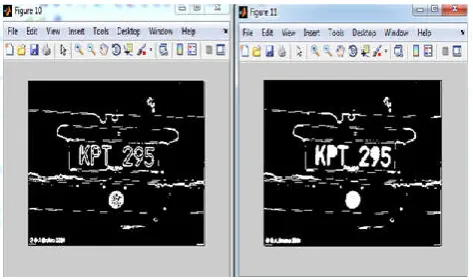
[image:3.595.335.529.407.544.2]apply a structuring element to an input image, creating an output image of the same size. The most basic morphological operations are dilation and erosion. Dilation performed by adding pixels to the boundaries of objects for all the pixels in the input pixel's neighborhood. In a binary image, if any of the pixels is set to the value 1, the output pixel is set to 1. Dilation is used for the purpose of increasing thickness of the number plate edges. So we can find the numbers easily.
(a) (b)
Figure 4. (a) Grayscale image (b) Canny edge detection
(a) (b)
Figure 5. (a) Dilation (b) Erosion
E. Filling Regions of Image
[image:4.595.42.284.154.299.2]We start by taking an input image and selecting a target region which has to be removed or filled. The source region can be calculated by subtracting target region from original image. It can be calculated as a dilated region around the target region or it can be manually calculated. We set a default window size of 3x3 pixels but while performing it is supposed to be set it to a slightly smaller than the largest distinguishable texture element in the region.
Figure 6. Region filling in Images
After calculating these values, the region filling starts. In this method every pixel has a particular value and it also holds a confidence value which reflects our confidence in the pixel value and these values are frozen once a pixel has been filled. Patches along the fill front are also given a temporary priority value and by using this this we determine the order in which they are filled.
F. Erosion Using Line as Structural Element
Morphological processing are techniques performed on an image based on the properties of a pre-defined structural element which are known as kernels. All the values of pixels in the output image are based on the comparison of the considered pixel with its neighbouring pixel. We can choose the shape and the value of the pixels in the kernel based on our requirement. By changing the shape and size of the structural elements, we can make the kernel sensitive to the image. Two of the most basic morphological operations are erosion and dilation. Dilation adds pixel to the neighbouring pixels and erosion does exactly the opposite.
Structural Elements
[image:4.595.46.277.329.476.2]A structuring element is a matrix with 0s and 1s. This matrix is used to find the regions in an image with certain properties. These structural elements are of different shapes and sizes. We can set the shape and size of a structural element depending on the property of the image which we want to retrieve. A structural element can be shapes like lines, diamonds, and periodic lines. For e.g.:- as shown in figure 7, we create linear structuring element to finds line in an image.
Figure 7. Erosion Using Line As Structural Element
G. Selecting Regions of Pixels Area More Than 100
[image:4.595.320.545.430.573.2] [image:4.595.38.275.630.770.2]Figure 8. Selecting regions of Pixels Area more than 100
H. Image Segmentation
Image segmentation is the process in image processing in which we partition an image in multiple segments (i.e. sets of pixels). We do segmentation to extract some particular data from an image which we can use for different processing techniques. Image segmentation is mainly used for identifying objects and boundaries in an image. It is basi
attaching labels to a group of pixels such that the pixels which have the same label have something in common. Each pixel in a segment has something in common with other pixels of that segment. It can be colour, intensity, texture etc. A region of a segment is significantly different than the segment. When we apply image segmentation to a group of images, especially in medical imaging, the resulting contours after image segmentation can be used to create 3D reconstructions with the help of interpolation algorithms like marching cubes. Recently, many techniques have been developed for using the idea of segmentation of an image using threshold principle. The key idea is that, unlike methods like Otsu's the thresholds are derived from the radiographs instead of the (reconstructed) image.
Figure 9. Image segmentation
I. Template Matching
[image:5.595.310.544.160.265.2]The goal of Optical Character Recognition (OCR) is to classify optical patterns (often contained in a digital image) corresponding to alphanumeric or other characters. The character has been extracted after the filtering. This character has been matched with the pre-defined characters. The predefined characters have the data like Alphabets A 43597 International Journal of Current Research,
Figure 8. Selecting regions of Pixels Area more than 100
Image segmentation is the process in image processing in multiple segments (i.e. sets of pixels). We do segmentation to extract some particular data from an image which we can use for different processing techniques. Image segmentation is mainly used for identifying objects and boundaries in an image. It is basically a process of attaching labels to a group of pixels such that the pixels which have the same label have something in common. Each pixel in a segment has something in common with other pixels of that segment. It can be colour, intensity, texture etc. Adjacent region of a segment is significantly different than the segment. When we apply image segmentation to a group of images, especially in medical imaging, the resulting contours after image segmentation can be used to create 3D reconstructions help of interpolation algorithms like marching cubes. Recently, many techniques have been developed for using the idea of segmentation of an image using threshold principle. The key idea is that, unlike methods like Otsu's the thresholds the radiographs instead of the (reconstructed)
Figure 9. Image segmentation
The goal of Optical Character Recognition (OCR) is to classify optical patterns (often contained in a digital image) or other characters. The character has been extracted after the filtering. This character defined characters. The predefined characters have the data like Alphabets A-Z,
numeric character 0-9. This pre
the images. Using these images the template has been matched with the segmented characters of the number plate.
[image:5.595.318.548.502.678.2]Matching is one of the most common classification methods. In Template Matching, the features that the classification is based on are the individual pixels. An image is compared with predefined images, which are referred to as templates. The template are given below in figure 10.
Figure 10. Template
RESULTS AND ANALYSIS
The character segmentation algorithm is used to segment the character. Due to this character segmentation process noise is added and that noise is removed using the filter.
removed character is matched with template using template matching algorithm and finally the character is extracted in notepad. After performing image processing techniques like RGB to Grey, erosion, dilation, subtraction and segmentation, we were able to successfully extract the characters from the image of number plates. After extracting these characters we compared them with already available database of templates using correlation. And thus we were able to determine the vehicle number from the image of vehicle number plate. We compared the number which we got as output with the available database of owners and displayed the details of the owner.
Figure 11. Sample Input
Analysis
Testing is done on the various images to this system. Check the correct number plate from the result. If the result is failed the column is given as Result is failure. In Table 1 number of car images was tested for successful result at the same time the failure case also detected. In this work the image no 7 was failure case and the reason is the image has been not cleared. International Journal of Current Research, Vol. 08, Issue, 12, pp. 43593-43598, December,
9. This pre-defined data are in the form of the images. Using these images the template has been matched with the segmented characters of the number plate. Template Matching is one of the most common classification methods. In Template Matching, the features that the classification is based on are the individual pixels. An image is compared with predefined images, which are referred to as templates. The
[image:5.595.35.290.510.676.2]ate are given below in figure 10.
Figure 10. Template
RESULTS AND ANALYSIS
The character segmentation algorithm is used to segment the character. Due to this character segmentation process noise is added and that noise is removed using the filter. The noise removed character is matched with template using template matching algorithm and finally the character is extracted in After performing image processing techniques like RGB to Grey, erosion, dilation, subtraction and segmentation, e able to successfully extract the characters from the image of number plates. After extracting these characters we compared them with already available database of templates using correlation. And thus we were able to determine the image of vehicle number plate. We compared the number which we got as output with the available database of owners and displayed the details of the
Figure 11. Sample Input
Testing is done on the various images to this system. Check the correct number plate from the result. If the result is failed the column is given as Result is failure. In Table 1 number of car images was tested for successful result at the same time the failure case also detected. In this work the image no 7 was
Figure 12. Sample Output
Table 1. Tested Images
Conclusion
The proposed work is the automatic vehicle identification system using vehicle license plate is presented. The system is implemented in MATLAB and it performance is tested on real images. A number plate recognition system is one kind of an Intelligent Transport System. In this document, template matching algorithm has been used to extract the vehicle number plate. The automatic vehicle identification system
plays an important role in detecting security threat. Here, character segmentation for separating individual characters. Finally, match with template using template match algorithm and extract the number plate in notepad.We compared the number which we got as output with the available database of owners and displayed the details of the owner.
REFERENCES
Christos-Nikolaos E. Anagnostopoulos, 2014. “License Plate Recognition: A Brief Tutorial”, Intelligent Transportation Systems Magazine IEEE, Vol.6, Issue.1, pp.59 – 67. Dingyun, W., Lihong, Z., and Yingbo, L., 2010. “A New
Algorithm for License Plate Recognition Based on Improved Edge Detection and Mathematical Morphology”, IEEE International Conference on Information Science and Engineering , pp.1724-1727.
Huang, Y., P., Lai, S. Y., and Chuang, W. P. 2004. “A Template-Based Model for License Plate Recognition”, IEEE International Conference on Networking, Sensing & Control, pp.737-742.
Kumar Parasuraman, P.Vasantha Kumar, 2010. “An Efficient Method for Indian Vehicle License Plate Extraction and Character Segmentation,” IEEE International Conference on Computational Intelligence and Computing Research. Lakshmi Priya, V. 2014. “Detecting the Car Number Plate
Using Segmentation” IJECS Volume 3 Issue 10, October.
MandeepKaur, Dr. V. Nelson, C., and Babu, K. 2010. “A License Plate Localization using Morphology and Recognition”, IEEE India conference, pp.34-39, 2008. Mehmet Sezgin and BulentSankur, 2004. "Survey over image
thresholding techniques and quantitative performance evaluation", Journal of Electronic Imaging, pp. 146-165, January.
NorizamSulaiman, 2013. “Development of Automatic Vehicle Plate Detection System”, 3rd International Conference on System Engineering and Technology, pp.130-135, IEEE. Rashmi, Mukesh Kumar, and RohiniSaxena, 2014. “Algorithm
And Technique On Various Edge Detection: A Survey Signal & Image Processing: An International Journal (SIPIJ) Vol.4, No.3, June 20130181, Vol. 3 - Issue 3, March.
Reza Azad and Hamid Reza Shayegh, 2013. “New Method for Optimization of License Plate Recognition system with Use of Edge Detection and Connected Component”, 3rd International Conference on Computer and Knowledge Engineering (ICCKE 2013), pp. 21 – 25, IEEE,
SahilShaikh, BornikaLahiri, Gopi Bhatt and NiravRaja, 2013. “A novel approach for Automatic Number Plate Recognition”, International Conference on Intelligent Systems and Signal Processing (ISSP), pp.275 – 380, IEEE.
Shan Du, Mahmoud Ibrahim, Mohamed Shehata and WaelBadawy, 2013. “Automatic License Plate Recognition (ALPR):A State-of-the-Art Review”, IEEE Transactions on Circuits & Systems for Video Technology, Vol. 23, Issue.2, pp.311-325, IEEE.
Sourav Roy, AmitavaChoudhury, Joydeep Mukherjee, 2013. “An Approach towards Detection of Indian Number Plate
from Vehicle”, IJITEE, ISSN: 2278-3075, Volume-2,
Issue-4, March.